

Ultra-Sensitive Detection of Plasmodium falciparum by Amplification of Multi-Copy Subtelomeric Targets
Open accessThe DOI matches its Crossref record; 75 of the 76 references it cites were found in a registry or an index, and 1 are not checked yet.
Abstract
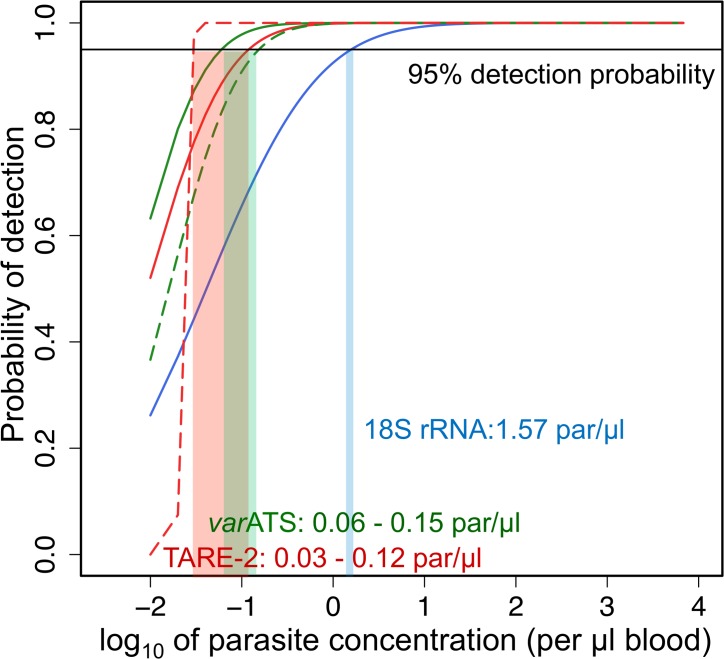
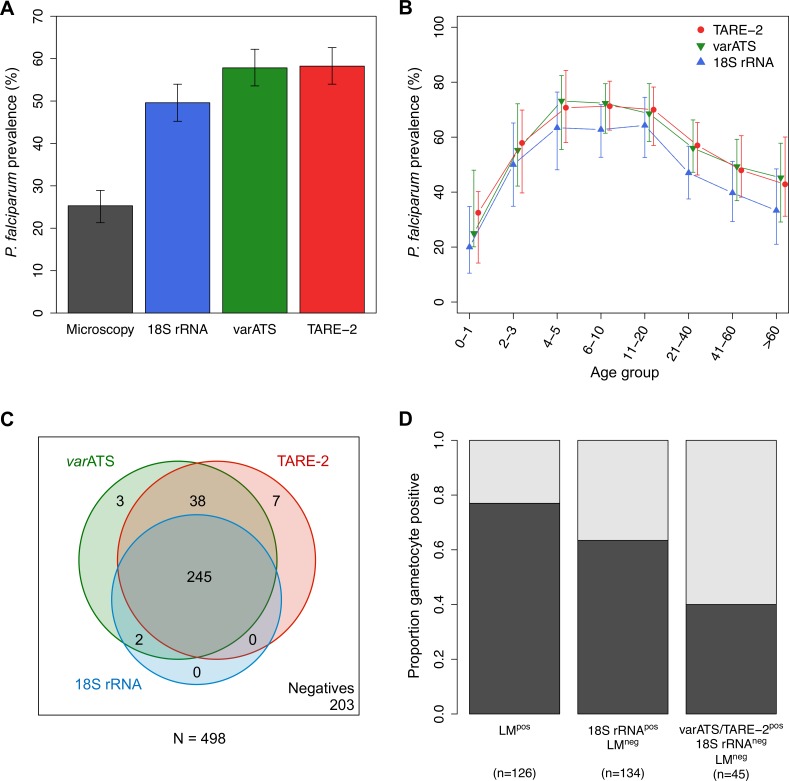
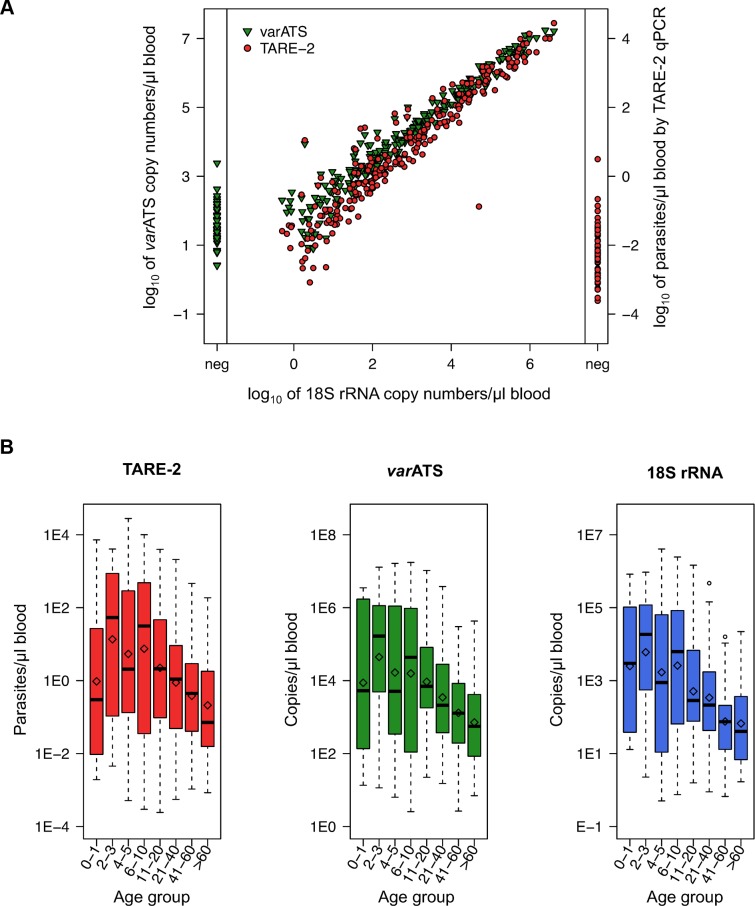
BACKGROUND: Planning and evaluating malaria control strategies relies on accurate definition of parasite prevalence in the population. A large proportion of asymptomatic parasite infections can only be identified by surveillance with molecular methods, yet these infections also contribute to onward transmission to mosquitoes. The sensitivity of molecular detection by PCR is limited by the abundance of the target sequence in a DNA sample; thus, detection becomes imperfect at low densities. We aimed to increase PCR diagnostic sensitivity by targeting multi-copy genomic sequences for reliable detection of low-density infections, and investigated the impact of these PCR assays on community prevalence data. METHODS AND FINDINGS: Two quantitative PCR (qPCR) assays were developed for ultra-sensitive detection of Plasmodium falciparum, targeting the high-copy telomere-associated repetitive element 2 (TARE-2, ∼250 copies/genome) and the var gene acidic terminal sequence (varATS, 59 copies/genome). Our assays reached a limit of detection of 0.03 to 0.15 parasites/μl blood and were 10× more sensitive than standard 18S rRNA qPCR. In a population cross-sectional study in Tanzania, 295/498 samples tested positive using ultra-sensitive assays. Light microscopy missed 169 infections (57%). 18S rRNA qPCR failed to identify 48 infections (16%), of which 40% carried gametocytes detected by pfs25 quantitative reverse-transcription PCR. To judge the suitability of the TARE-2 and varATS assays for high-throughput screens, their performance was tested on sample pools. Both ultra-sensitive assays correctly detected all pools containing one low-density P. falciparum-positive sample, which went undetected by 18S rRNA qPCR, among nine negatives. TARE-2 and varATS qPCRs improve estimates of prevalence rates, yet other infections might still remain undetected when absent in the limited blood volume sampled. CONCLUSIONS: Measured malaria prevalence in communities is largely determined by the sensitivity of the diagnostic tool used. Even when applying standard molecular diagnostics, prevalence in our study population was underestimated by 8% compared to the new assays. Our findings highlight the need for highly sensitive tools such as TARE-2 and varATS qPCR in community surveillance and for monitoring interventions to better describe malaria epidemiology and inform malaria elimination efforts.
Overview
The claims and statistics of this paper haven’t been checked yet.
Free: it reads the open-access text and checks the first 5 claims that cite a source we can check. Create a free account to check every claim.
Integrity signals
Registry
Cites
Statistics
Figures
Verification
Claims the paper makes
The claims and statistics of this paper haven’t been checked yet.
Free: it reads the open-access text and checks the first 5 claims that cite a source we can check. Create a free account to check every claim.
Self-check
Percentages, sums and reported differences re-computed from the paper’s own numbers.
The self-check needs the paper’s full text.
Citations
Cites
Genome sequence of the human malaria parasite Plasmodium falciparum
Gardner, M. J., Hall, N., Fung, E., White, O., Berriman, M., Hyman, R. W., Carlton, J. M., Pain, A., Nelson, K. E., Bowman, S., et al. (2002) · Nature · doi:10.1038/nature01097 · Cited by 4,407
Su, X.-Z., Heatwole, V. M., Wertheimer, S. P., Guinet, F., Herrfeldt, J. A., Peterson, D. S., Ravetch, J. A., & Wellems, T. E. (1995) · Cell · doi:10.1016/0092-8674(95)90055-1 · Cited by 1,219
Okell, L. C., Bousema, T., Griffin, J. T., Ouédraogo, A. L., Ghani, A. C., & Drakeley, C. J. (2012) · Nature Communications · doi:10.1038/ncomms2241 · Cited by 664 · cited 5×
“A meta-analysis of infection prevalence across the endemicity spectrum has indicated that submicroscopic infections are generally more prevalent in low-transmission settings than in high-transmission areas [5], probably as a result of a recently reduced force of infection and the long duration of asymptomatic untreate…”
BackgroundInfluentialSingh, B., Bobogare, A., Cox-Singh, J., Snounou, G., Abdullah, M. S., & Rahman, H. A. (1999) · The American journal of tropical medicine and hygiene · doi:10.4269/ajtmh.1999.60.687 · Cited by 590 · cited 2×
“and include nested PCR [17–22], quantitative PCR (qPCR) [23–31], loop-mediated isothermal amplification (LAMP) [32–35], isothermal recombinase polymerase amplification (RPA) [36], and alternative PCR-based detection methods [19,37–41].”
MethodAndrews, K. G., Fergus, C. A., Aregawi, M. W., Cibulskis, R. E., & Zamani, G. (2014) · Cited by 569
Okell, L. C., Ghani, A. C., Lyons, E., & Drakeley, C. J. (2009) · The Journal of Infectious Diseases · doi:10.1086/644781 · Cited by 532
Rougemont, M., Van Saanen, M., Sahli, R., Hinrikson, H. P., Bille, J., & Jaton, K. (2004) · Journal of Clinical Microbiology · doi:10.1128/jcm.42.12.5636-5643.2004 · Cited by 469 · cited 2×
“and include nested PCR [17–22], quantitative PCR (qPCR) [23–31], loop-mediated isothermal amplification (LAMP) [32–35], isothermal recombinase polymerase amplification (RPA) [36], and alternative PCR-based detection methods [19,37–41].”
MethodPerandin, F., Manca, N., Calderaro, A., Piccolo, G., Galati, L., Ricci, L., Medici, M. C., Arcangeletti, M. C., Snounou, G., Dettori, G., et al. (2004) · Journal of Clinical Microbiology · doi:10.1128/jcm.42.3.1214-1219.2004 · Cited by 354 · cited 2×
“and include nested PCR [17–22], quantitative PCR (qPCR) [23–31], loop-mediated isothermal amplification (LAMP) [32–35], isothermal recombinase polymerase amplification (RPA) [36], and alternative PCR-based detection methods [19,37–41].”
MethodTargeting Asymptomatic Malaria Infections: Active Surveillance in Control and Elimination
Sturrock, H. J. W., Hsiang, M. S., Cohen, J. M., Smith, D. L., Greenhouse, B., Bousema, T., & Gosling, R. D. (2013) · PLoS Medicine · doi:10.1371/journal.pmed.1001467 · Cited by 341 · cited 2×
“Accurate and sensitive detection of malaria parasites is a key factor in planning, targeting, and evaluating malaria control efforts, and requires different strategies at different elimination stages [1–3].”
BackgroundSUBMICROSCOPIC PLASMODIUM FALCIPARUM GAMETOCYTE DENSITIES FREQUENTLY RESULT IN MOSQUITO INFECTION
SCHNEIDER, P., BOUSEMA, J. T., GOUAGNA, L. C., OTIENO, S., VAN DE VEGTE-BOLMER, M., OMAR, S. A., & SAUERWEIN, R. W. (2007) · The American Journal of Tropical Medicine and Hygiene · doi:10.4269/ajtmh.2007.76.470 · Cited by 317 · cited 1×
“A modeling analysis using data from Cameroon found that asexual densities did not predict the proportion of infected mosquitoes, contrary to gametocyte densities, which exhibited a complex and non-linear correlation with transmission success [58,67,68].”
Method
Cited by
Items 101–200 of 401
An Optimized Real-Time qPCR Method for the Effective Detection of Human Malaria Infections
Sazed, S. A., Kibria, M. G., & Alam, M. S. (2021) · Diagnostics · doi:10.3390/diagnostics11050736 · Cited by 38
“15 parasites/μL for detection of Pf [42] while 18s rRNA target based approach in clinical isolates resulted in detection of Pf and Pv wih LOD of 1–10 parasites/μL with 100% sensitivity [43].”
MethodHolzschuh, A., Lerch, A., Gerlovina, I., Fakih, B. S., Al-mafazy, A.-W. H., Reaves, E. J., Ali, A., Abbas, F., Ali, M. H., Ali, M. A., et al. (2023) · Nature Communications · doi:10.1038/s41467-023-39417-1 · Cited by 33
The detection of cryptic Plasmodium infection among villagers in Attapeu province, Lao PDR
Iwagami, M., Keomalaphet, S., Khattignavong, P., Soundala, P., Lorphachan, L., Matsumoto-Takahashi, E. L. A., Strobel, M., Reinharz, D., Phommasansack, M., Hongvanthong, B., et al. (2017) · PLoS neglected tropical diseases · doi:10.1371/journal.pntd.0006148 · Cited by 33
Murungi, M., Fulton, T. M., Reyes, R., Matte, M., Ntaro, M., Mulogo, E. M., Nyehangane, D., Juliano, J. J., Siedner, M. J., Boum, Y., et al. (2017) · Journal of Clinical Microbiology · doi:10.1128/jcm.00130-17 · Cited by 27
Kamya, M. R., Kakuru, A., Muhindo, M. K., Arinaitwe, E., Nankabirwa, J. I., Rek, J. C., Bigira, V., Kapisi, J., Wanzira, H., Achan, J., et al. (2020) · American Journal of Tropical Medicine and Hygiene · doi:10.4269/ajtmh.20-0100 · Cited by 30
“15 parasites per microliter as previously described.(23) In all studies, participants with asymptomatic parasitemia were not provided antimalarial treatment, in accordancewith local guidelines.”
MethodOuédraogo, A. L., Eckhoff, P. A., Luty, A. J. F., Roeffen, W., Sauerwein, R. W., Bousema, T., & Wenger, E. A. (2018) · PLoS Pathogens · doi:10.1371/journal.ppat.1007034 · Cited by 31
Kamya, M. R., Nankabirwa, J. I., Arinaitwe, E., Rek, J. C., Zedi, M., Maiteki‐Sebuguzi, C., Opigo, J., Staedke, S. G., Oruni, A., Donnelly, M. J., et al. (2024) · PLOS Global Public Health · doi:10.1371/journal.pgph.0003254 · Cited by 32
Zainabadi, K. (2020) · Journal of Clinical Microbiology · doi:10.1128/jcm.01508-20 · Cited by 29
“In this regard, molecular methods with their increased sensitivity may provide an added advantage, allowing for pooling of samples to decrease the overall workload (14, 49, 50).”
BackgroundMethodOboh, M. A., Oriero, E. C., Ndiaye, T., Badiane, A. S., Ndiaye, D., & Amambua‐Ngwa, A. (2021) · International Journal of Infectious Diseases · doi:10.1016/j.ijid.2021.05.049 · Cited by 27
Tadele, G., Jaiteh, F. K., Oboh, M. A., Oriero, E. C., Dugassa, S., Amambua‐Ngwa, A., & Golassa, L. (2022) · Malaria Journal · doi:10.1186/s12936-022-04394-1 · Cited by 27
“DNA extraction was done from DBS using the Chelex protocol as earlier described [22] Plasmodium falciparum detection was performed by var gene acidic terminal sequence (varATS) real-time PCR as previously described [23].”
MethodAlho, R. C. R. M., Machado, K. V. A., Val, F., Fraiji, N. A., Alexandre, M. A. A., de Melo, G. C., Recht, J., Siqueira, A. M., Monteiro, W. M., & Lacerda, M. (2017) · Malaria Journal · doi:10.1186/s12936-017-1726-y · Cited by 31
“Recently, increased PCR diagnostic sensitivity was achieved by targeting multi-copy genomic sequences [55] and by increasing the volume of blood for DNA extraction [56].”
BackgroundStrengthening Surveillance Systems for Malaria Elimination by Integrating Molecular and Genomic Data
Nsanzabana, C. (2019) · Tropical Medicine and Infectious Disease · doi:10.3390/tropicalmed4040139 · Cited by 29
“, from dried blood spots) Requires good laboratory infrastructure and well-trained staff [33]”
BackgroundGavina, K., Arango, E., Álvarez-Larrotta, C., Maestre, A., & Yanow, S. K. (2017) · Parasite Epidemiology and Control · doi:10.1016/j.parepi.2017.04.001 · Cited by 25
Dieng, C. C., González, L. E., Pestana, K., Dhikrullahi, S. B., Amoah, L. E., Afrane, Y. A., & Lo, E. (2019) · Genes · doi:10.3390/genes10070538 · Cited by 26
“Recently, an ultra-sensitive marker Telomere Associated Repetitive Element 2 (TARE-2) has demonstrated better performance than the conventional 18S rRNA marker in detecting low density parasite infections, especially in active case surveillance [10].”
BackgroundInfluentialHashimoto, M., Bando, M., Kido, J., Yokota, K., Mita, T., Kajimoto, K., & Kataoka, M. (2019) · Parasitology International · doi:10.1016/j.parint.2019.101941 · Cited by 24
Dabira, E. D., Soumaré, H., Lindsay, S. W., Conteh, B., Ceesay, F., Bradley, J., Kositz, C., Broekhuizen, H., Kandeh, B., Fehr, A. E., et al. (2020) · JMIR Research Protocols · doi:10.2196/20904 · Cited by 26
“The primary clinical endpoint was the prevalence of malaria infection measured by qPCR in all age groups [25] via a yearly cross-sectional survey at the peak of the transmission season in November.”
Functional DNA structures for cytosensing
Liu, H., Chen, Y., & Ju, H. (2023) · TrAC Trends in Analytical Chemistry · doi:10.1016/j.trac.2023.116933 · Cited by 23
Colbert, A. J., Co, K., Lima-Cooper, G., Lee, D. H., Clayton, K. N., Wereley, S. T., John, C. C., Linnes, J. C., & Kinzer‐Ursem, T. L. (2021) · Malaria Journal · doi:10.1186/s12936-021-03894-w · Cited by 26
Guillochon, É., Fraering, J., Joste, V., Kamaliddin, C., Vianou, B., Houzé, L., Baudrin, L. G., Faucher, J., Aubouy, A., Houzé, S., et al. (2022) · The Journal of Infectious Diseases · doi:10.1093/infdis/jiac086 · Cited by 28
Kattenberg, J. H., Nguyen, H. V. T., Nguyen, H. L., Sauve, E., Nguyen, N. T. H., Chopo-Pizarro, A., Trimarsanto, H., Monsieurs, P., Guetens, P., Nguyen, X. X., et al. (2022) · Frontiers in Cellular and Infection Microbiology · doi:10.3389/fcimb.2022.953187 · Cited by 24
“Parasite species was identified and quantified by qPCR [targeting varATS (Hofmann et al., 2015) or Pv mtCOX1 (Gruenberg et al.”
MethodNew molecular detection methods of malaria parasites with multiple genes from genomes
Gupta, H., Srivastava, S., Chaudhari, S., Vasudevan, T. G., Hande, M., D’Souza, S. C., Umakanth, S., & Satyamoorthy, K. (2016) · Acta Tropica · doi:10.1016/j.actatropica.2016.04.013 · Cited by 24
Chaisi, M. E., Baxter, J. R., Hove, P., Choopa, C. N., Oosthuizen, M. C., Brayton, K. A., Khumalo, Z. T. H., Mutshembele, A., MTSHALI, M. S., & Collins, N. E. (2017) · Onderstepoort Journal of Veterinary Research · doi:10.4102/ojvr.v84i1.1262 · Cited by 23
“As these low infections can only be effectively detected using molecular methods (Hofmann et al. 2015; Schotthoefer et al. 2013; Strik et al. 2007), various assays have been developed to detect A. marginale and A. centrale DNA in vectors and hosts in different parts of the world.”
BackgroundInfluentialPringle, J. C., Tessema, S. K., Wesolowski, A., Chen, A., Murphy, M., Carpi, G., Shields, T. M., Hamapumbu, H., Searle, K. M., Kobayashi, T., et al. (2018) · The Journal of Infectious Diseases · doi:10.1093/infdis/jiy640 · Cited by 28
Niyukuri, D., Sinzinkayo, D., Troth, E. V., Oduma, C. O., Barengayabo, M., Ndereyimana, M., Holzschuh, A., Vera-Arias, C. A., Gebre, Y., Badu, K., et al. (2022) · PLOS Global Public Health · doi:10.1371/journal.pgph.0000828 · Cited by 24
Kattenberg, J. H., Erhart, A., Truong, M. H., Rovira-Vallbona, E., Vu, K., Nguyen, T. H. N., Nguyen, V. H., Nguyen, V. V., Bannister-Tyrrell, M., Theisen, M., et al. (2018) · Malaria Journal · doi:10.1186/s12936-018-2326-1 · Cited by 26
“, increasing the volume of blood on filter paper or the amount of blood spots in the extraction [48], or targeting other genes [49]) and/or better coverage of the entire population (> 80% at each survey) might have increased the likelihood of detecting ongoing infections with qPCR.”
BackgroundDetecting eukaryotic microbiota with single-cell sensitivity in human tissue
Lager, S., de Goffau, M. C., Sovio, U., Peacock, S. J., Parkhill, J., Charnock‐Jones, D. S., & Smith, G. C. S. (2018) · Microbiome · doi:10.1186/s40168-018-0529-x · Cited by 23
“Plasmodium qPCR detecting high-copy telomere-associated repetitive elements has also achieved single genome copy sensitivity [28].”
BackgroundRahi, M., Sharma, R., Saroha, P., Chaturvedi, R., Bharti, P. K., & Sharma, A. K. (2022) · American Journal of Tropical Medicine and Hygiene · doi:10.4269/ajtmh.21-0966 · Cited by 26
Wide range of G6PD activities found among ethnic groups of the Chittagong Hill Tracts, Bangladesh
Ley, B., Kibria, M. G., Khan, W. A., Auburn, S., Phru, C. S., Jahan, N., Johora, F. T., Thriemer, K., Ami, J. Q., Hossain, M. S., et al. (2020) · PLoS neglected tropical diseases · doi:10.1371/journal.pntd.0008697 · Cited by 26
“Cox1 is a mitochondrial gene and present in ~10 copies per genome [34,35].”
BackgroundMulticopy targets for Plasmodium vivax and Plasmodium falciparum detection by colorimetric LAMP
Nolasco, O., Montoya, J., Rosas, A. L. R., Barrientos, S., Rosanas‐Urgell, A., & Gamboa, D. (2021) · Malaria Journal · doi:10.1186/s12936-021-03753-8 · Cited by 21
“The best approach may be to use multicopy targets with genes with high copy number to improve sensitivity and detect low-density and mixed parasite infections [35, 36].”
BackgroundSanosyan, A., de Maudave, A. F., Bolloré, K., Zimmermann, V. S., Foulongne, V., de Perre, P. V., & Tuaillon, É. (2017) · PLoS ONE · doi:10.1371/journal.pone.0183856 · Cited by 21
Gruenberg, M., Hofmann, N., Nate, E., Karl, S., Robinson, L. J., Lanke, K. H. W., Smith, T. A., Bousema, T., & Felger, I. (2019) · The Journal of Infectious Diseases · doi:10.1093/infdis/jiz420 · Cited by 24
Self-citationOduma, C. O., Ogolla, S., Atieli, H., Ondigo, B. N., Lee, M., Githeko, A. K., Dent, A. E., Kazura, J. W., Yan, G., & Koepfli, C. (2021) · BMC Infectious Diseases · doi:10.1186/s12879-020-05761-6 · Cited by 23
Holzschuh, A., Lerch, A., Fakih, B. S., Aliy, S. M., Ali, M. H., Ali, M. A., Bruzzese, D. J., Yukich, J. O., Hetzel, M. W., & Koepfli, C. (2024) · PLOS Global Public Health · doi:10.1371/journal.pgph.0002743 · Cited by 22
Taylor, S. M., Sumner, K. M., Freedman, E., Mangeni, J. N., Obala, A. A., & O’Meara, W. P. (2019) · American Journal of Tropical Medicine and Hygiene · doi:10.4269/ajtmh.19-0558 · Cited by 25
Costa, G. L., de Alvarenga, D. A. M., Aguiar, A. C. C., Louzada, J., Pereira, D. B., de Oliveira, T. F., Júnior, A. A. F., de Carvalho, L. H., de Brito, C. F. A., & de Sousa, T. N. (2022) · Frontiers in Microbiology · doi:10.3389/fmicb.2022.882530 · Cited by 23
“In recent years, increasingly sensitive PCR methods have emerged targeting multicopy genes in the parasite genome (Lucchi et al., 2013; Hofmann et al., 2015; Lloyd et al., 2018).”
BackgroundGrabias, B. M., Essuman, E. E., Quakyi, I. A., & Kumar, S. (2019) · Malaria Journal · doi:10.1186/s12936-019-2743-9 · Cited by 20
Nayebare, P., Asua, V., Conrad, M. D., Kajubi, R., Kakuru, A., Nankabirwa, J. I., Muhanguzi, D., Dorsey, G., Kamya, M. R., Nsobya, S. L., et al. (2020) · Antimicrobial Agents and Chemotherapy · doi:10.1128/aac.01047-20 · Cited by 23
“falciparum was performed as previously described (32).”
Okebe, J., Dabira, E. D., Jaiteh, F., Mohammed, N. I., Bradley, J., Drammeh, N. F., Bah, A. S., Masunaga, Y., Achan, J., Ribera, J. M., et al. (2021) · Malaria Journal · doi:10.1186/s12936-021-03761-8 · Cited by 21
“5 μL of extracted DNA was used in an ultrasensitive real-time PCR assay [31] with 3D7 standards of known parasite concentration serially diluted and used to generate standard curves and set limits of parasite DNA detection.”
MethodZoonotic Blood-Borne Pathogens in Non-Human Primates in the Neotropical Region: A Systematic Review
Carrillo-Bilbao, G. A., Martin-Solano, S., & Saegerman, C. (2021) · Pathogens · doi:10.3390/pathogens10081009 · Cited by 19
Jongo, S. A., Church, L. W. P., Milando, F. A., Qassim, M., Schindler, T., Rashid, M. A., Tumbo, A., Nyaulingo, G. D., Bakari, B. M., Mbaga, T. A., et al. (2024) · Journal of Clinical Investigation · doi:10.1172/jci169060 · Cited by 19
“…by the PlasQ assay, a multiplex qPCR assay targeting the pan-Plasmodium spp. 18S rDNA (69) and the high copy number Pf-specific varATS region (70), which has an overall lower limit of detection of 50 parasites/mL (71), using a sample volume of the systemseRology R package (version 1.0)…”
MethodInfluentialThe Role of Ultrasensitive Molecular Methods for Detecting Malaria—The Broader Perspective
Kamaliddin, C., Sutherland, C. J., Houzé, S., Cottrell, G., Briand, V., Castañeda-Mogollón, D., & Pillai, D. R. (2021) · Clinical Infectious Diseases · doi:10.1093/cid/ciab221 · Cited by 20
Hofer, L. M., Kweyamba, P. A., Sayi, R. M., Chabo, M. S., Maitra, S. L., Moore, S., & Tambwe, M. M. (2023) · Parasites & Vectors · doi:10.1186/s13071-023-05761-w · Cited by 19
“Plasmodium falciparum infections were detected and quantified using the PlasQ qPCR assay [23, 24].”
MethodComparison of three rapid diagnostic tests for Plasmodium falciparum diagnosis in Ghana
Kayode, A. T., Addo, A. K., Addison, T. K., Tweneboah, A., Afriyie, S. O., Abbas, D. A., Seth, A., Badu-Tawiah, A. K., Badu, K., & Koepfli, C. (2024) · Malaria Journal · doi:10.1186/s12936-024-05073-z · Cited by 20
“To estimate parasite density, qPCR of the P. falciparum var ATS multi-copy gene was carried out using a previously described protocol with 4 µL DNA as target resulting in a 95% limit of detection of 0.3 parasites/µL blood [38].”
MethodInfluentialFrickmann, H., Wegner, C., Ruben, S., Behrens, C., Kollenda, H., Hinz, R., Rojak, S., Schwarz, N. G., Hagen, R. M., & Tannich, E. (2019) · Travel Medicine and Infectious Disease · doi:10.1016/j.tmaid.2019.06.013 · Cited by 25
Gruenberg, M., Moniz, C. A., Hofmann, N., Koepfli, C., Robinson, L. J., Nate, E., Monteiro, W. M., de Melo, G. C., Kuehn, A., Siqueira, A. M., et al. (2020) · Malaria Journal · doi:10.1186/s12936-020-03374-7 · Cited by 21
Self-citationAnopheline and human drivers of malaria risk in northern coastal, Ecuador: a pilot study
Martin, J. A., Hendershot, A. L., Portilla, I. A. S., English, D. J., Woodruff, M., Vera-Arias, C. A., Salazar-Costa, B. E., Bustillos, J. J., Saénz, F. E., Ocaña-Mayorga, S., et al. (2020) · Malaria Journal · doi:10.1186/s12936-020-03426-y · Cited by 19
Can malaria parasites be spontaneously cleared?
Roe, M., O’Flaherty, K., & Fowkes, F. J. I. (2022) · Trends in Parasitology · doi:10.1016/j.pt.2022.02.005 · Cited by 19
Hosch, S., Yoboue, C. A., Donfack, O. T., Guirou, E. A., Dangy, J., Mpina, M., Nyakurungu, E., Blöchliger, K., Guerra, C. A., Phiri, W. P., et al. (2021) · Malaria Journal · doi:10.1186/s12936-022-04043-7 · Cited by 20
“falciparum-specific varATS region [28] and the pan-Plasmodium 18S rDNA gene were targeted [29, 30].”
BackgroundParr, J. B., Belson, C., Patel, J. C., Hoffman, I., Kamthunzi, P., Martinson, F. E. A., Tegha, G., Thengolose, I., DRAKELEY, C. J., Meshnick, S. R., et al. (2016) · American Journal of Tropical Medicine and Hygiene · doi:10.4269/ajtmh.16-0156 · Cited by 19
Bottieau, E., Mbow, M., Brosius, I., Roucher, C., Gueye, C. T., Mbodj, O. T., Faye, B. T., Hondt, A. D., Smekens, B., Arango, D., et al. (2024) · Nature Medicine · doi:10.1038/s41591-023-02719-4 · Cited by 20
“Five microliters of DNA were used for qPCR analysis targeting P. falciparum var gene acidic terminal sequence (varATS, ~59 copies per genome) as previously described 41 .”
Fogang, B., Lellouche, L., Ceesay, S., Drammeh, S., Jaiteh, F. K., Guery, M.-A., Landier, J., Haanappel, C. P., Fröberg, J., Conway, D. J., et al. (2024) · Malaria Journal · doi:10.1186/s12936-024-04836-y · Cited by 21
“118 For samples collected from July to December 2016, DNA was extracted from dry blood spot 119 (DBS) by Chelex method [23] and analyzed by 18S small subunit of ribosomal RNA (rRNA) 120 qPCR and var gene acid terminal sequence (varATS) qPCR [24], as detailed in Supplementary 121 Figure 1.”
MethodHutchins, H. B., Pretorius, E., Bradley, J., da Silva, E. T., Vasileva, H., Ndiath, M. O., Jones, R. G., Soumaré, H. M., Nyang, H., Prom, A., et al. (2024) · The Lancet Infectious Diseases · doi:10.1016/s1473-3099(24)00580-2 · Cited by 21
Medzihradsky, O. F., Kleinschmidt, I., Mumbengegwi, D. R., Roberts, K. W., McCreesh, P., Dufour, M. K., Uusiku, P., Katokele, S. T., Bennett, A. F., Smith, J. L., et al. (2018) · BMJ Open · doi:10.1136/bmjopen-2017-019294 · Cited by 18
“44 In light of reports demonstrating faster processing time and comparable sensitivity relative to conventional PCR, 45–47 loop-mediated isothermal amplification (LAMP) will be used to test samples collected in RACD or rfMDA.”
MethodOvercoming challenges in the diagnosis and treatment of parasitic infectious diseases in migrants
Norman, F., Comeche, B., Chamorro-Tojeiro, S., & López‐Vélez, R. (2020) · Expert Review of Anti-infective Therapy · doi:10.1080/14787210.2020.1713099 · Cited by 20
“Themost sensitive and specific tests are those based on molecular techniques, especially PCR-based assays, but these methods are time-consuming, require expensive instruments for the initial laboratory set up as well as expert personnel [28,29].”
BackgroundWirth, J. P., Sesay, F., Mbai, J., Ali, S. I., Donkor, W. E. S., Woodruff, B. A., Pilane, Z., Mohamud, K. M., Muse, A., Yussuf, H. O., et al. (2022) · Maternal & Child Nutrition · doi:10.1111/mcn.13254 · Cited by 17
“Regardless, due to the low prevalence measured using rapid diagnostic tests, public health officials in Somalia can consider more sensitive methods for detecting asymptomatic malaria infection, such as molecular methods that measure the presence of malaria antigens (Hofmann et al., 2015).”
BackgroundMooney, J. P., DonVito, S. M., Jahateh, M., Bittaye, H., Keith, M., Galloway, L. J., Ndow, M., Cunnington, A. J., D’Alessandro, U., Bottomley, C., et al. (2022) · Frontiers in Immunology · doi:10.3389/fimmu.2022.780525 · Cited by 18
“falciparum was performed as described previously (15).”
Mshani, I. H., Jackson, F. M., Mwanga, R. Y., Kweyamba, P. A., Mwanga, E. P., Tambwe, M. M., Hofer, L. M., Siria, D. J., González‐Jiménez, M., Wynne, K., et al. (2024) · Malaria Journal · doi:10.1186/s12936-024-05011-z · Cited by 20
Extension of efficacy range for targeted malaria-elimination interventions due to spillover effects
Benjamin‐Chung, J., Li, H., Nguyen, A., Heitmann, G. B., Bennett, A. F., Ntuku, H., Prach, L. M., Tambo, M., Wu, L. C., DRAKELEY, C. J., et al. (2024) · Nature Medicine · doi:10.1038/s41591-024-03134-z · Cited by 19
“Field staff collected dried blood spots on filter paper (Whatman 3 Corporation) by finger prick, and qPCR was performed targeting the acidic terminal sequence of the var gene 52 .”
Schnoz, A., Beuret, C., Concu, M., Hosch, S., Rutaihwa, L. K., Golumbeanu, M., & Nsanzabana, C. (2024) · The Lancet Microbe · doi:10.1016/s2666-5247(24)00153-8 · Cited by 17
Kho, S., Marfurt, J., Handayuni, I., Pava, Z., Noviyanti, R., Kusuma, A., Piera, K. A., Burdam, F. H., Kenangalem, E., Lampah, D. A., et al. (2016) · Malaria Journal · doi:10.1186/s12936-016-1382-7 · Cited by 17
“1 parasites per μl [9–12].”
Lolabattu, S. R., Kamath, S., Shetty, M. C., Satpathi, S., Mohanty, D., Ghosh, S. K., Kolluri, N., Klapperich, C. M., Cabodi, M., Padmanaban, G., et al. (2019) · Journal of Molecular Diagnostics · doi:10.1016/j.jmoldx.2019.04.004 · Cited by 18
Infection length and host environment influence on Plasmodium falciparum dry season reservoir
Andrade, C. M., Carrasquilla, M., Dabbas, U., Briggs, J. J., van Dijk, H., Sergeev, N. V., Sissoko, A., Niangaly, M., Ntalla, C., LaVerriere, E., et al. (2024) · EMBO Molecular Medicine · doi:10.1038/s44321-024-00127-w · Cited by 16
“Parasite quanti fi cation was achieved by qRT-PCR targeting the var gene acidic terminal sequence (varATS) following a previously described protocol (Hofmann et al, 2015) with TaqMan Multiplex Master Mix (Applied Biosystems), varATS primers (ATS-fwd: 5´-CCCATACACAACCAAYTGGA-3´, ATS-rev: 5´-TTCGCACA…”
MethodInfluentialSan, N. N., Kien, N. X., Manh, N. D., Thành, N. V., Chavchich, M., Binh, N. T. H., Long, T. K., Edgel, K. A., Rovira-Vallbona, E., Edstein, M. D., et al. (2022) · Malaria Journal · doi:10.1186/s12936-022-04060-6 · Cited by 18
“Moreover, we cannot exclude that the sub-microscopic reservoir was larger if using alternate molecular methods that offered greater sensitivity, such as ultrasensitive quantitative PCR assays that use high blood volume (2–3 mL of venous blood; LOD as low as 22 parasites/mL) [9, 31], or assays targeting multi-copy gene…”
BackgroundHutchins, H., Bradley, J., Pretorius, E., da Silva, E. T., Vasileva, H., Jones, R. G., Ndiath, M. O., Soumaré, H. M., Mabey, D. C. W., Nante, E., et al. (2023) · BMJ Open · doi:10.1136/bmjopen-2023-072347 · Cited by 17
Ajibaye, O., Olukosi, Y. A., Oriero, E. C., Oboh, M. A., Iwalokun, B. A., Nwankwo, I. C., Nnam, C. F., Adaramoye, V. O., Chukwemeka, S., Okanazu, J. C., et al. (2024) · Frontiers in Cellular and Infection Microbiology · doi:10.3389/fcimb.2024.1366563 · Cited by 21
“Genotyping msp2 employs nested-PCR to amplify the block 3 of msp2 containing two allelic families (Snounou, 2002; Snounou and Beck, 2002; Hofmann et al., 2015).”
MethodMu, J., Andersen, J. F., Valenzuela, J. G., & Wellems, T. E. (2017) · The Journal of Infectious Diseases · doi:10.1093/infdis/jix369 · Cited by 16
“falciparum histidine-rich protein II (PfHRP-II) antigen–based RDTs with detection 8–16 times better than conventional RDTs [10], and polymerase chain reaction (PCR)–based assays that can detect very low parasitemias (≤1 parasite/μL), although the expertise and laboratory requirements for these assays remain high and s…”
BackgroundGuirou, E. A., Schindler, T., Hosch, S., Donfack, O. T., Yoboue, C. A., Krähenbühl, S., Deal, A., Cosi, G., Gondwe, L., Mwangoka, G., et al. (2020) · Scientific Reports · doi:10.1038/s41598-020-69268-5 · Cited by 18
Haanshuus, C. G., & Mørch, K. (2020) · Malaria Journal · doi:10.1186/s12936-020-03367-6 · Cited by 16
Katrak, S. S., Murphy, M., Nayebare, P., Rek, J. C., Smith, M. J., Arinaitwe, E., Nankabirwa, J. I., Kamya, M. R., Dorsey, G., Rosenthal, P. J., et al. (2017) · American Journal of Tropical Medicine and Hygiene · doi:10.4269/ajtmh.17-0225 · Cited by 16
Kakuru, A., Kizza, J., Aguti, M., Adrama, H., Ategeka, J., Olwoch, P., Nakalembe, M., Nankabirwa, J. I., Opira, B., Özarslan, N., et al. (2025) · PLoS Medicine · doi:10.1371/journal.pmed.1004582 · Cited by 17
Abdul-Ghani, R. A., Basco, L. K., Beier, J. C., & Mahdy, M. A. K. (2015) · Malaria Journal · doi:10.1186/s12936-015-0936-4 · Cited by 19
“, 5–15 ml) of venous blood, quantitative nucleic acid sequence based amplification, PCR with intronspanning primers, and alternative molecular targets with multiple copies [52–55].”
Okebe, J., Ribera, J. M., Balen, J., Jaiteh, F., Masunaga, Y., Nwakanma, D. C., Bradley, J., Yeung, S., Grietens, K. P., & D’Alessandro, U. (2018) · Trials · doi:10.1186/s13063-018-2506-x · Cited by 16
“falciparum infection by using a qPCR assay targeting the var gene acidic terminal sequence (varATS) [24].”
MethodAtuh, N. I., Anong, D. N., Fru-Cho, J., Oriero, E. C., Mohammed, N. I., D’Alessandro, U., & Amambua‐Ngwa, A. (2021) · Pathogens and Global Health · doi:10.1080/20477724.2021.1953686 · Cited by 17
Portugaliza, H. P., Natama, H. M., Guetens, P., Rovira-Vallbona, E., Somé, A. M., Millogo, A., Ouédraogo, D. F., Valéa, I., Sorgho, H., Tinto, H., et al. (2022) · EBioMedicine · doi:10.1016/j.ebiom.2022.104198 · Cited by 19
Turnbull, L. B., Ayodo, G., Knight, V., John, C. C., McHenry, M. S., & Tran, T. M. (2022) · Malaria Journal · doi:10.1186/s12936-022-04351-y · Cited by 17
“falciparum [3, 18], and outperform field microscopy for infections with 1–100 pRBC/ μL.”
BackgroundInfluentialMcGuire, K. A., Miura, K., Wiethoff, C. M., & Williamson, K. C. (2017) · Malaria Journal · doi:10.1186/s12936-017-1896-7 · Cited by 15
Collins, K. A., Ouédraogo, A., Guelbeogo, M. W., Awandu, S. S., Stone, W. J., Soulama, I., Ouattara, M. S., Nombré, A., Diarra, A., Bradley, J., et al. (2019) · BMJ Open · doi:10.1136/bmjopen-2019-030598 · Cited by 19
“falciparum parasitaemia by quantitative PCR (qPCR) targeting varATS.(23) qPCR-positive individuals (ie, those with parasites, not T roical M edcine.”
Molecular diagnosis of infectious parasites in the post-COVID-19 era
Parija, S., & Poddar, A. (2021) · Tropical parasitology · doi:10.4103/tp.tp_12_21 · Cited by 16
“[36,37] Likewise, ITS regions of rRNA have been another popular target choice for the primer construction targeting flanking and/or within the genes.”
Ansah, F., Suurbaar, J., Darko, D., Anabire, N. G., Blankson, S. O., Domson, B. S. K., Soulama, A., Kpasra, P., Chirawurah, J. D., Amenga-Etego, L. N.-K., et al. (2021) · Journal of Molecular Diagnostics · doi:10.1016/j.jmoldx.2021.07.022 · Cited by 14
Musiime, A. K., Krezanoski, P. J., Smith, D. L., Kilama, M., Conrad, M. D., Otto, G., Kyagamba, P., Rwatooro, J. A., Rek, J. C., Nankabirwa, J. I., et al. (2022) · PLOS Global Public Health · doi:10.1371/journal.pgph.0000063 · Cited by 17
“falciparum DNA via a highly sensitive qPCR assay targeting the multicopy conserved var gene acidic terminal sequence, with a lower limit of detection of 1 parasite/mL [26].”
MethodTadele, G., Jawara, A., Oboh, M., Oriero, E., Dugassa, S., Amambua-Ngwa, A., & Golassa, L. (2023) · Malaria Journal · doi:10.1186/s12936-023-04602-6 · Cited by 12
“Plasmodium falciparum detection was performed by var gene acidic terminal sequence (varATS) real-time PCR as previously described [44].”
MethodMolecular tools are crucial for malaria elimination
Gupta, H., Sharma, S., Gilyazova, I. R., & Satyamoorthy, K. (2024) · Molecular Biology Reports · doi:10.1007/s11033-024-09496-4 · Cited by 16
“This limitation is primarily attributed to the requirement for relatively expensive equipment and advanced training, which hinders their widespread adoption in such settings [37, 40 ].”
InfluentialApinjoh, T. O., Tangi, L. N., Oriero, E. C., Drammeh, S., Ntui, V. N., Etoketim, B. N., Fru, H., Kwi, P. N., Njie, B., Oboh, M. A., et al. (2024) · BMC Infectious Diseases · doi:10.1186/s12879-024-09935-4 · Cited by 14
“Thermocycling conditions involved one cycle of pre-incubation at 50 °C for 2 min, one cycle initial denaturation at 95 °C for 10 min, followed by 45 cycles of a two-step denaturation and annealing/elongation at 95 °C for 15 s and 55 °C for 1 min [40].”
MethodInfluentialNtuku, H., Whittemore, B., Dausab, L., Jang, I. K., Golden, A., Sheahan, W. D., Wu, X., Slater, H., Domingo, G. J., Das, S., et al. (2024) · EBioMedicine · doi:10.1016/j.ebiom.2024.105489 · Cited by 16
Oyebola, K. M., Aina, O. O., Idowu, E. T., Olukosi, Y. A., Ajibaye, O., Otubanjo, O. A., Awolola, T. S., Awandare, G. A., & Amambua‐Ngwa, A. (2018) · BMC Infectious Diseases · doi:10.1186/s12879-018-3314-3 · Cited by 17
Natama, H. M., Rovira-Vallbona, E., Krit, M., Guetens, P., Sorgho, H., Somé, M. A., Traoré‐Coulibaly, M., Valéa, I., Mens, P. F., Schallig, H. D. F. H., et al. (2021) · Malaria Journal · doi:10.1186/s12936-021-03628-y · Cited by 15
Plasmodium falciparum Genomic Surveillance Reveals a Diversity of Kelch 13 Mutations in Zambia
Aranda-Díaz, A., Mwanza, S., Makhanthisa, T. I., Lauterbach, S. B., Amaral, F. D., Chisenga, M., Mangena, B., Routledge, I., Letinić, B. D., Kasonde, B., et al. (2025) · American Journal of Tropical Medicine and Hygiene · doi:10.4269/ajtmh.25-0110 · Cited by 19
Marquart, L., Webb, L., O'Rourke, P. K., Gatton, M. L., Hsiang, M. S., Kalnoky, M., Jang, I. K., Ntuku, H., Mumbengegwi, D. R., Domingo, G. J., et al. (2022) · Malaria Journal · doi:10.1186/s12936-022-04245-z · Cited by 14
Goodwin, J., Kajubi, R., Wang, K., Li, F., Wade, M., Orukan, F., Huang, L., Whalen, M. E., Aweeka, F. T., Mwebaza, N., et al. (2024) · Nature Communications · doi:10.1038/s41467-024-48210-7 · Cited by 16
Assessment of diagnostic methods for imported malaria in mainland France
Kamaliddin, C., Bouar, M. L., Berry, A., Fenneteau, O., Gillet, P., Godineau, N., Candolfi, E., & Houzé, S. (2019) · Médecine et Maladies Infectieuses · doi:10.1016/j.medmal.2019.07.007 · Cited by 13
Kirosingh, A. S., Delmastro, A. C., Kakuru, A., van der Ploeg, K., Bhattacharya, S., Press, K. D., Ty, M., de la Parte, L., Kizza, J., Muhindo, M. K., et al. (2023) · EBioMedicine · doi:10.1016/j.ebiom.2023.104772 · Cited by 15
Ultrasensitive electrochemical genosensors for species-specific diagnosis of malaria
Ansah, F., Krampa, F. D., Donkor, J. K., Owusu-Appiah, C., Ashitei, S., Kornu, V. E., Danku, R. K., Chirawurah, J. D., Awandare, G. A., Aniweh, Y., et al. (2022) · Electrochimica Acta · doi:10.1016/j.electacta.2022.140988 · Cited by 12
Tadele, G., Jaiteh, F. K., Oboh, M. A., Oriero, E. C., Dugassa, S., Amambua‐Ngwa, A., & Golassa, L. (2022) · Antimicrobial Agents and Chemotherapy · doi:10.1128/aac.00002-22 · Cited by 13
“falciparum detection was performed by var gene acidic terminal sequence (varATS) real-time PCR using the Bio-Rad CFX96 real-time PCR machine as previously described (45).”
BackgroundMethodMwakibete, L. L., Takahashi, S., Ahyong, V., Black, A., Rek, J. C., Ssewanyana, I., Kamya, M. R., Dorsey, G., Jagannathan, P., Rodríguez-Barraquer, I., et al. (2023) · PLOS Global Public Health · doi:10.1371/journal.pgph.0001675 · Cited by 14
“In addition, a sample was collected for subsequent testing via ultrasensitive qPCR for Plasmodium falciparum malaria[19].”
Clinical immunity to malaria involves epigenetic reprogramming of innate immune cells
Nideffer, J., Ty, M., Donato, M., Rek, J. C., Kajubi, R., Ji, X., Nankya, F., Musinguzi, K., Press, K. D., Yang, N., et al. (2024) · PNAS Nexus · doi:10.1093/pnasnexus/pgae325 · Cited by 16
“In the Tororo cohorts, parasit - emia was detected by microscopy (PRISM1) or an ultrasensitive qPCR assay (46, 47) (PRISM2).”
MethodNoninvasive in vivo photoacoustic detection of malaria with Cytophone in Cameroon
Yadem, A. C., Armstrong, J. N., Sarimollaoglu, M., Massa, C. K., Ndifo, J.-M., Menyaev, Y. A., Mbe, A., Richards, K., Wade, M., Zeng, Y., et al. (2024) · Nature Communications · doi:10.1038/s41467-024-53243-z · Cited by 14
Groger, M., Lutete, G. T., Mombo‐Ngoma, G., Ntamabyaliro, N. Y., Mesia, G. K., Mujobu, T. B. M., Mbadinga, L. B. D., Manego, R. Z., Egger‐Adam, D., Borghini-Fuhrer, I., et al. (2022) · The Lancet Microbe · doi:10.1016/s2666-5247(22)00092-1 · Cited by 11
Huwe, T., Kibria, M. G., Johora, F. T., Phru, C. S., Jahan, N., Hossain, M. S., Khan, W. A., Price, R. N., Ley, B., Alam, M. S., et al. (2022) · Malaria Journal · doi:10.1186/s12936-022-04236-0 · Cited by 11
“falciparum using the varATS assay [20], and for P.”
MethodHolzschuh, A., Ewnetu, Y., Carlier, L., Lerch, A., Gerlovina, I., Baker, S. C., Yewhalaw, D., Haileselassie, W., Berhane, N., Lemma, W., et al. (2024) · Molecular Ecology · doi:10.1111/mec.17292 · Cited by 13
Ahmad, A., Prom, A., Bradley, J., Ndiath, M. O., Etoketim, B. N., Bah, M., Geertruyden, J. V., DRAKELEY, C. J., Bousema, T., Achan, J., et al. (2021) · Malaria Journal · doi:10.1186/s12936-021-03706-1 · Cited by 12
Metadata
- Authors
- Hofmann, N., Mwingira, F., Shekalaghe, S., Robinson, L. J., Mueller, I., & Felger, I.
- Affiliations
- Swiss Tropical and Public Health Institute (CH)
- Ifakara Health Institute (TZ)
- The University of Melbourne (AU)
- Corresponding author
- Felger, Ingrid
- Venue
- PLOS Medicine
- Publisher
- Public Library of Science (PLoS)
- Published
- 2015-03-03
- Volume
- 12
- Issue
- 3
- Pages
- e1001788
- ISSN
- 1549-1277 (ISSN-L)
- 1549-1676
- PMC
- PMC4348198
- OpenAlex
- W2091490176
- Cited by
- 413
- References
- 75
- Citations by year
- 2026: 33 · 2025: 56 · 2024: 48 · 2023: 39 · 2022: 46 · 2021: 46 · 2020: 35 · 2019: 37 · 2018: 26 · 2017: 26 · 2016: 13 · 2015: 8
- FWCI
- 26.04
- Type
- journal article
- Language
- en
- Open access
- gold
- doi.org
- Licence
- Locations
- PLoS Medicine (publishedVersion, cc-by)
- Europe PMC (PubMed Central) (publishedVersion, cc-by)
- PubMed Central (publishedVersion, cc-by)
- PubMed (publishedVersion)
- RECERCAT (Consorci de Serveis Universitaris de Catalunya) (publishedVersion, other-oa)
- edoc (University of Basel) (acceptedVersion)
- Minerva Access (University of Melbourne) (submittedVersion, cc-by)
- Dipòsit Digital de la Universitat de Barcelona (Universitat de Barcelona) (submittedVersion, cc-by)
- DOAJ (DOAJ: Directory of Open Access Journals) (submittedVersion, cc-by-sa)
- Figshare (submittedVersion, cc-by)
- edoc (University of Basel)
- Funders
- National Science Foundation
- Bill and Melinda Gates Foundation (OPP1034577)
- Schweizerischer Nationalfonds zur Förderung der Wissenschaftlichen Forschung (134889, 310030)
- National Health and Medical Research Council (1043345)
- National Institute of Allergy and Infectious Diseases (U19AI089686)
- Topics
- Health Sciences › Medicine › Public Health, Environmental and Occupational Health › Malaria Research and Control
- Life Sciences › Immunology and Microbiology › Parasitology › Bird parasitology and diseases
- Life Sciences › Biochemistry, Genetics and Molecular Biology › Molecular Biology › Molecular Biology Techniques and Applications
- Keywords
- Plasmodium falciparum, ultrasensitive detection, malaria prevalence, asymptomatic malaria, gametocytes, Pfs25, sample pooling, malaria surveillance, malaria elimination, Tanzania
- MeSH terms
- Cross-Sectional Studies, Humans, Microscopy, Plasmodium falciparum, Repetitive Sequences, Nucleic Acid, RNA, Ribosomal, 18S, Tanzania, Prevalence, DNA, Protozoan, Telomere, Malaria, Falciparum, Molecular Epidemiology, Nucleic Acid Amplification Techniques, Molecular Diagnostic Techniques, Real-Time Polymerase Chain Reaction
About these checks
Registry, retraction, Cites and statistics results are computed, not judged, with one exception: a printed reference that no index lists is read once by a model before it counts as a citation error. Claims are extracted by a model and kept only when their quote appears verbatim in the text; each cited source is then checked, with a model’s help, for whether it says what the claim relies on. Those verdicts can be wrong — read the claim’s quote and the cited source before relying on one.
Statistics and arithmetic are recomputed, not judged.
Confidence bands are shown only for fields calibrated on our annotated test set. None is calibrated yet, so no band is shown.
What counts as a claim ›How we measure confidence ›How we check this ›
Are you an author, or do you see a problem with this page? Request a review
Data sources
Bibliographic data: Semantic Scholar, OpenAlex, Crossref.
Contains information from the Semantic Scholar Academic Graph Datasets, made available under the ODC Attribution License (ODC-BY 1.0).
Semantic Scholar’s data is described in: Kinney, R., et al. (2023). The Semantic Scholar Open Data Platform. arXiv:2301.10140.
