

Ultra-Sensitive Detection of Plasmodium falciparum by Amplification of Multi-Copy Subtelomeric Targets
Open accessThe DOI matches its Crossref record; 75 of the 76 references it cites were found in a registry or an index, and 1 are not checked yet.
Abstract
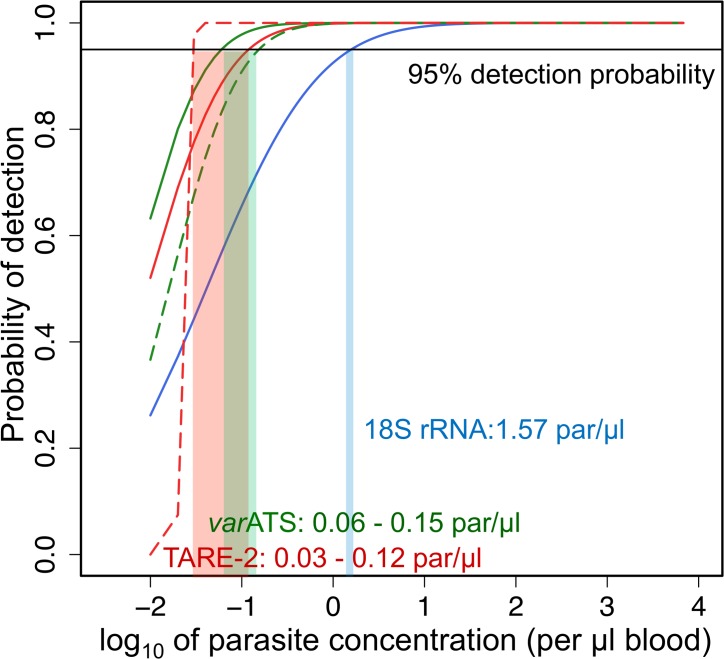
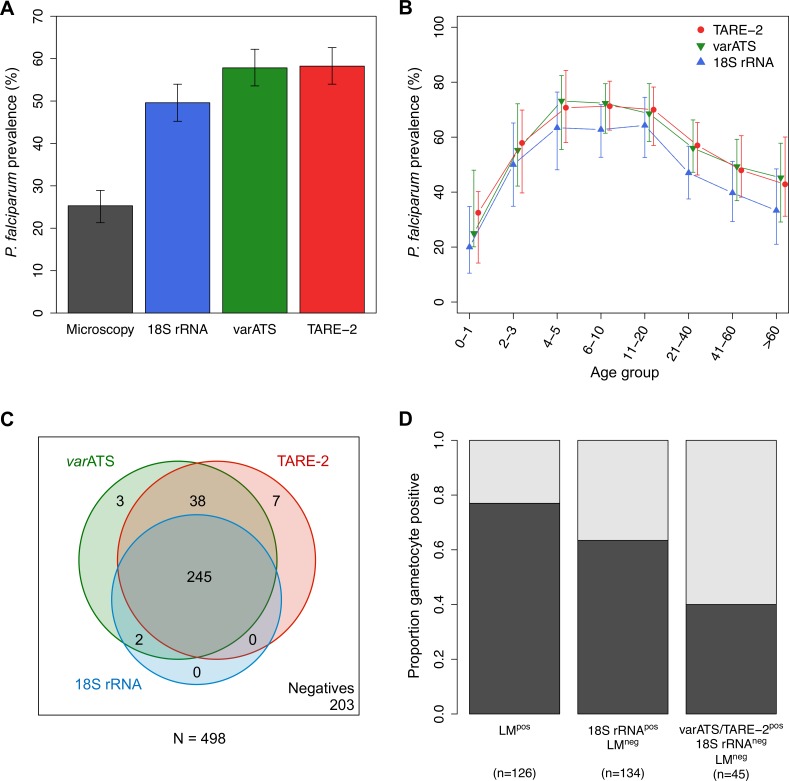
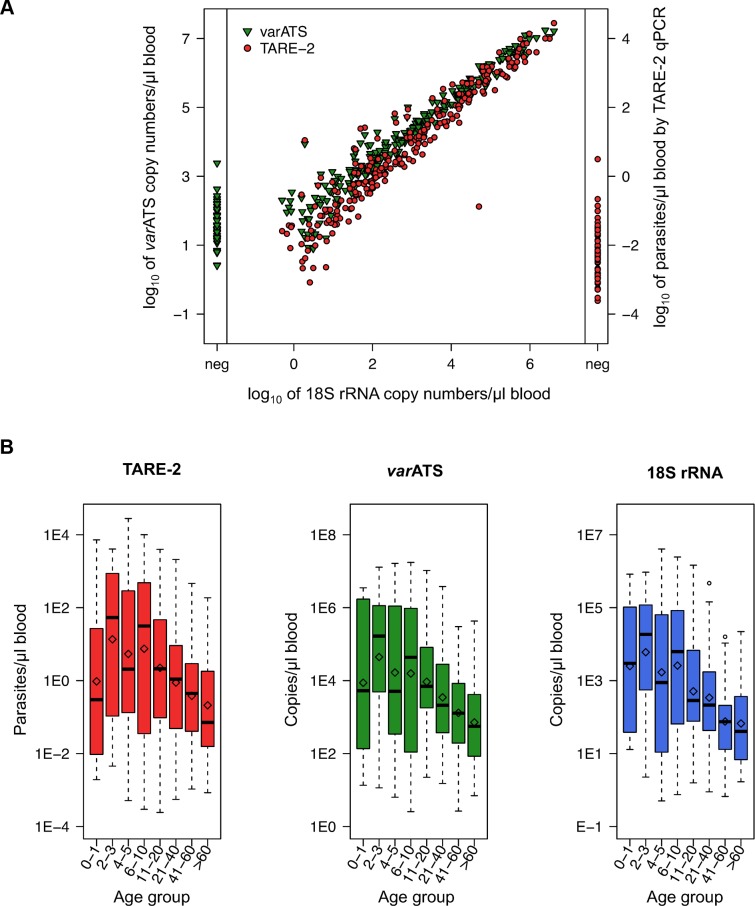
BACKGROUND: Planning and evaluating malaria control strategies relies on accurate definition of parasite prevalence in the population. A large proportion of asymptomatic parasite infections can only be identified by surveillance with molecular methods, yet these infections also contribute to onward transmission to mosquitoes. The sensitivity of molecular detection by PCR is limited by the abundance of the target sequence in a DNA sample; thus, detection becomes imperfect at low densities. We aimed to increase PCR diagnostic sensitivity by targeting multi-copy genomic sequences for reliable detection of low-density infections, and investigated the impact of these PCR assays on community prevalence data. METHODS AND FINDINGS: Two quantitative PCR (qPCR) assays were developed for ultra-sensitive detection of Plasmodium falciparum, targeting the high-copy telomere-associated repetitive element 2 (TARE-2, ∼250 copies/genome) and the var gene acidic terminal sequence (varATS, 59 copies/genome). Our assays reached a limit of detection of 0.03 to 0.15 parasites/μl blood and were 10× more sensitive than standard 18S rRNA qPCR. In a population cross-sectional study in Tanzania, 295/498 samples tested positive using ultra-sensitive assays. Light microscopy missed 169 infections (57%). 18S rRNA qPCR failed to identify 48 infections (16%), of which 40% carried gametocytes detected by pfs25 quantitative reverse-transcription PCR. To judge the suitability of the TARE-2 and varATS assays for high-throughput screens, their performance was tested on sample pools. Both ultra-sensitive assays correctly detected all pools containing one low-density P. falciparum-positive sample, which went undetected by 18S rRNA qPCR, among nine negatives. TARE-2 and varATS qPCRs improve estimates of prevalence rates, yet other infections might still remain undetected when absent in the limited blood volume sampled. CONCLUSIONS: Measured malaria prevalence in communities is largely determined by the sensitivity of the diagnostic tool used. Even when applying standard molecular diagnostics, prevalence in our study population was underestimated by 8% compared to the new assays. Our findings highlight the need for highly sensitive tools such as TARE-2 and varATS qPCR in community surveillance and for monitoring interventions to better describe malaria epidemiology and inform malaria elimination efforts.
Overview
The claims and statistics of this paper haven’t been checked yet.
Free: it reads the open-access text and checks the first 5 claims that cite a source we can check. Create a free account to check every claim.
Integrity signals
Registry
Cites
Statistics
Figures
Verification
Claims the paper makes
The claims and statistics of this paper haven’t been checked yet.
Free: it reads the open-access text and checks the first 5 claims that cite a source we can check. Create a free account to check every claim.
Self-check
Percentages, sums and reported differences re-computed from the paper’s own numbers.
The self-check needs the paper’s full text.
Citations
Cites
Genome sequence of the human malaria parasite Plasmodium falciparum
Gardner, M. J., Hall, N., Fung, E., White, O., Berriman, M., Hyman, R. W., Carlton, J. M., Pain, A., Nelson, K. E., Bowman, S., et al. (2002) · Nature · doi:10.1038/nature01097 · Cited by 4,407
Su, X.-Z., Heatwole, V. M., Wertheimer, S. P., Guinet, F., Herrfeldt, J. A., Peterson, D. S., Ravetch, J. A., & Wellems, T. E. (1995) · Cell · doi:10.1016/0092-8674(95)90055-1 · Cited by 1,219
Okell, L. C., Bousema, T., Griffin, J. T., Ouédraogo, A. L., Ghani, A. C., & Drakeley, C. J. (2012) · Nature Communications · doi:10.1038/ncomms2241 · Cited by 664 · cited 5×
“A meta-analysis of infection prevalence across the endemicity spectrum has indicated that submicroscopic infections are generally more prevalent in low-transmission settings than in high-transmission areas [5], probably as a result of a recently reduced force of infection and the long duration of asymptomatic untreate…”
BackgroundInfluentialSingh, B., Bobogare, A., Cox-Singh, J., Snounou, G., Abdullah, M. S., & Rahman, H. A. (1999) · The American journal of tropical medicine and hygiene · doi:10.4269/ajtmh.1999.60.687 · Cited by 590 · cited 2×
“and include nested PCR [17–22], quantitative PCR (qPCR) [23–31], loop-mediated isothermal amplification (LAMP) [32–35], isothermal recombinase polymerase amplification (RPA) [36], and alternative PCR-based detection methods [19,37–41].”
MethodAndrews, K. G., Fergus, C. A., Aregawi, M. W., Cibulskis, R. E., & Zamani, G. (2014) · Cited by 569
Okell, L. C., Ghani, A. C., Lyons, E., & Drakeley, C. J. (2009) · The Journal of Infectious Diseases · doi:10.1086/644781 · Cited by 532
Rougemont, M., Van Saanen, M., Sahli, R., Hinrikson, H. P., Bille, J., & Jaton, K. (2004) · Journal of Clinical Microbiology · doi:10.1128/jcm.42.12.5636-5643.2004 · Cited by 469 · cited 2×
“and include nested PCR [17–22], quantitative PCR (qPCR) [23–31], loop-mediated isothermal amplification (LAMP) [32–35], isothermal recombinase polymerase amplification (RPA) [36], and alternative PCR-based detection methods [19,37–41].”
MethodPerandin, F., Manca, N., Calderaro, A., Piccolo, G., Galati, L., Ricci, L., Medici, M. C., Arcangeletti, M. C., Snounou, G., Dettori, G., et al. (2004) · Journal of Clinical Microbiology · doi:10.1128/jcm.42.3.1214-1219.2004 · Cited by 354 · cited 2×
“and include nested PCR [17–22], quantitative PCR (qPCR) [23–31], loop-mediated isothermal amplification (LAMP) [32–35], isothermal recombinase polymerase amplification (RPA) [36], and alternative PCR-based detection methods [19,37–41].”
MethodTargeting Asymptomatic Malaria Infections: Active Surveillance in Control and Elimination
Sturrock, H. J. W., Hsiang, M. S., Cohen, J. M., Smith, D. L., Greenhouse, B., Bousema, T., & Gosling, R. D. (2013) · PLoS Medicine · doi:10.1371/journal.pmed.1001467 · Cited by 341 · cited 2×
“Accurate and sensitive detection of malaria parasites is a key factor in planning, targeting, and evaluating malaria control efforts, and requires different strategies at different elimination stages [1–3].”
BackgroundSUBMICROSCOPIC PLASMODIUM FALCIPARUM GAMETOCYTE DENSITIES FREQUENTLY RESULT IN MOSQUITO INFECTION
SCHNEIDER, P., BOUSEMA, J. T., GOUAGNA, L. C., OTIENO, S., VAN DE VEGTE-BOLMER, M., OMAR, S. A., & SAUERWEIN, R. W. (2007) · The American Journal of Tropical Medicine and Hygiene · doi:10.4269/ajtmh.2007.76.470 · Cited by 317 · cited 1×
“A modeling analysis using data from Cameroon found that asexual densities did not predict the proportion of infected mosquitoes, contrary to gametocyte densities, which exhibited a complex and non-linear correlation with transmission success [58,67,68].”
Method
Cited by
Items 201–300 of 401
Adomako‐Ankomah, Y., Chenoweth, M. S., Durfee, K., Doumbia, S., Konate, D. S., Doumbouya, M., Keita, A. S., Nikolaeva, D., Tullo, G., Anderson, J. M., et al. (2017) · PLoS ONE · doi:10.1371/journal.pone.0170948 · Cited by 11
“The effects of host age on cross-sectional Pf prevalence have been previously reported; in Senegal [6] and Tanzania [31], for example, Pf prevalence was consistently lower in younger children and adults relative to the intervening age groups.”
Lamien‐Meda, A., Fuehrer, H., Leitsch, D., & Noedl, H. (2021) · Malaria Journal · doi:10.1186/s12936-021-03662-w · Cited by 10
Quang, H. H., Chavchich, M., Trinh, N. T. M., Manh, N. D., Edstein, M. D., Martin, N. J., & Edgel, K. A. (2021) · PLoS ONE · doi:10.1371/journal.pone.0258580 · Cited by 13
Jarquín‐Díaz, V. H., Balard, A., Ferreira, S. C. M., Mittné, V., Murata, J. M., & Heitlinger, E. G. (2022) · Parasites & Vectors · doi:10.1186/s13071-021-05119-0 · Cited by 10
Raman, J., Mabona, M., Nyawo, Q., Mangena, B., Kok, G., Mathaba, L., Malatje, G., Lauterbach, S. B., Makhanthisa, T. I., Gwarinda, H. B., et al. (2025) · American Journal of Tropical Medicine and Hygiene · doi:10.4269/ajtmh.25-0204 · Cited by 9
Development and Clinical Validation of Iso-IMRS: A Novel Diagnostic Assay for P. falciparum Malaria
Kolluri, N., Kamath, S., Lally, P., Zanna, M., Galagan, J. E., Gitaka, J., Kamita, M., Cabodi, M., Lolabattu, S. R., & Klapperich, C. M. (2021) · Analytical Chemistry · doi:10.1021/acs.analchem.0c03847 · Cited by 10
qPCR in a suitcase for rapid Plasmodium falciparum and Plasmodium vivax surveillance in Ethiopia
Carlier, L., Baker, S. C., Huwe, T., Yewhalaw, D., Haileselassie, W., & Koepfli, C. (2022) · PLOS Global Public Health · doi:10.1371/journal.pgph.0000454 · Cited by 9
Robinson, D. R., Pennisi, I., Cavuto, M. L., Kiemdé, F., Chamai, M., Some, D. Y., Quigley, E., Malpartida-Cardenas, K., Ndiath, M. O., Correa, S., et al. (2025) · Nature Communications · doi:10.1038/s41467-025-64027-4 · Cited by 8
“The DBS-qPCR testing was conducted at the MRCG following a standardised protocol 51 .”
Msellemu, D. F., Ross, A. J., Temu, L., Moshi, I. R., Hofer, L. M., Mwanziva, C. E., Kohi, Y. M., & Moore, S. (2021) · Trials · doi:10.1186/s13063-021-05801-9 · Cited by 9
“falciparum–speci c acidic terminal sequence of the var genes (PfvarATS) [41].”
BackgroundPrevalence of Malaria Infection in Pregnant Women Attending Antenatal Clinics in Southern Senegal
Diouf, M. P., Kande, S., Oboh, M. A., Manga, I. A., Tairou, F., Seck, A. M., Diallo, A., Lô, A. C., Sow, D., Sylla, K., et al. (2024) · American Journal of Tropical Medicine and Hygiene · doi:10.4269/ajtmh.23-0164 · Cited by 11
Sagna, A. B., Gebre, Y., Vera-Arias, C. A., Traoré, D. F., Tchiekoi, B. N., Assi, S.-B., Koffi, A. A., Rogier, C., Remoué, F., & Koepfli, C. (2024) · Scientific Reports · doi:10.1038/s41598-024-70215-x · Cited by 10
“Four (4) microliters of extracted DNA was screened for P. falciparum using ultrasensitive qPCR, which amplifies a conserved region of the var gene Acidic Terminal Sequence ( var ATS) according to a previously published protocol 45 .”
MethodBriggs, J. J., Kuchta, A. L., Murphy, M., Tessema, S. K., Arinaitwe, E., Rek, J. C., Chen, A., Nankabirwa, J. I., DRAKELEY, C. J., Smith, D. L., et al. (2021) · Malaria Journal · doi:10.1186/s12936-021-03603-7 · Cited by 11
Krezanoski, P. J., Roh, M. E., Rek, J. C., Nankabirwa, J. I., Arinaitwe, E., Staedke, S. G., Nayiga, S., Hsiang, M. S., Smith, D. L., Kamya, M. R., et al. (2021) · BMC Medicine · doi:10.1186/s12916-021-02167-2 · Cited by 8
“The molecular methods employed were loop-mediated isothermal amplification (LAMP) in the first cohort and quantitative PCR (qPCR) in the second cohort as previously described [1, 10].”
MethodMooney, J. P., DonVito, S. M., Jahateh, M., Bittaye, H., Bottomley, C., D’Alessandro, U., & Riley, E. M. (2022) · Malaria Journal · doi:10.1186/s12936-022-04184-9 · Cited by 10
“More recently, more abundant molecular targets have been identified that have increased sensitivity of molecular diagnosis: there are between ~ 50 and ~ 150 copies per genome of the varATS gene and 250 copies per genome of the telomereassociated repetitive element 2 (TARE-2), with straindependent variation [19].”
InfluentialBal, M., Ghosal, J., Das, A., Sandeepta, S., Pati, S., Dutta, A., & Ranjit, M. (2023) · Journal of Epidemiology and Global Health · doi:10.1007/s44197-022-00082-0 · Cited by 8
Bechtold, P., Wagner, P., Hosch, S., Gregorini, M., Stark, W. J., Gody, J. C., Kodia-Lenguetama, E. R., Pagonendji, M. S., Donfack, O. T., Phiri, W. P., et al. (2023) · PLOS Global Public Health · doi:10.1371/journal.pgph.0001516 · Cited by 10
Stratifying malaria receptivity in Bangladesh using archived rapid diagnostic tests
Sagna, A. B., Kibria, M. G., Naher, S., Islam, S., Aktaruzzaman, M. M., Alam, M. S., & Koepfli, C. (2020) · Malaria Journal · doi:10.1186/s12936-020-03418-y · Cited by 8
Oduma, C. O., Ombok, M., Zhao, X., Huwe, T., Ondigo, B. N., Kazura, J. W., Grieco, J. P., Achee, N. L., Liu, F., Ochomo, E., et al. (2023) · PLOS Global Public Health · doi:10.1371/journal.pgph.0001505 · Cited by 7
Kattenberg, J. H., Mutsaers, M., Nguyen, V. H., Nguyen, T. H. N., Umugwaneza, A., Lara-Escandell, M., Nguyen, X. X., Nguyen, T. H. B., & Rosanas‐Urgell, A. (2024) · Frontiers in Genetics · doi:10.3389/fgene.2024.1478706 · Cited by 11
Katairo, T., Asua, V., Nsengimaana, B., Tukwasibwe, S., Semakuba, F. D., Wiringilimaana, I., Kagurusi, B. A., Mwubaha, C., Nakasaanya, J., Garg, S., et al. (2025) · Malaria Journal · doi:10.1186/s12936-025-05441-3 · Cited by 12
“Parasite density of field samples was determined by varATS quantitative PCR (qPCR) [22] using 3D7 controls with known parasite densities of 1, 10, 100, 1000 and 10,000 parasites/ µL as standards.”
Hofer, L. M., Kweyamba, P. A., Sayi, R. M., Chabo, M. S., Mwanga, R. Y., Maitra, S. L., Somboka, M., Schnoz, A., Golumbeanu, M., Schneeberger, P. H. H., et al. (2024) · Scientific Reports · doi:10.1038/s41598-024-67990-y · Cited by 8
“Plasmodium falciparum infection was detected using a multiplex TaqMan based qPCR assay targeting the P. falciparum specific acidic terminal sequence of the var genes ( PfvarATS ) and the Pan Plasmodium 18S rRNA sequence ( Pspp18S ) as described previously 32,46 .”
MethodSadler, J. M., Simkin, A., Tchuenkam, V. P. K., Gyuricza, I. G., Fola, A. A., Wamae, K., Assefa, A., Niaré, K., Thwai, K. L., White, S. J., et al. (2025) · Frontiers in Parasitology · doi:10.3389/fpara.2024.1509261 · Cited by 9
“Samples with low estimated parasitemia on initial real-time PCR runs, when re-extracted, were checked for DNA concentration using a Qubit fl uorometer (Invitrogen, Carlsbad, California) and Qubit 1X HS dsDNA quanti fi cation reagent to ensure proper extraction occurred.”
Serra‐Casas, E., Guetens, P., Chiheb, D., Gamboa, D., & Rosanas‐Urgell, A. (2019) · Acta Tropica · doi:10.1016/j.actatropica.2019.105125 · Cited by 7
Roucher, C., Brosius, I., Mbow, M., Faye, B. T., Hondt, A. D., Smekens, B., Arango, D., Burm, C., Tsoumanis, A., Paredis, L., et al. (2021) · BMJ Open · doi:10.1136/bmjopen-2020-047147 · Cited by 7
Fever in the Returned Pediatric Traveler
Abdel‐Haq, N., & Asmar, B. I. (2021) · Global Pediatric Health · doi:10.1177/2333794x211026188 · Cited by 10
Chughlay, M. F., Chalon, S., Gaaloul, M. E., Gobeau, N., Möhrle, J. J., Berghmans, P.-J., Leuven, K. V., Marx, M. W., Rosanas‐Urgell, A., Flynn, J., et al. (2022) · American Journal of Tropical Medicine and Hygiene · doi:10.4269/ajtmh.21-1297 · Cited by 7
“Parasitemia level was determined by qPCR at the Institute of Tropical Medicine, Antwerp, Belgium, by a specific qPCR targeting the varATS (the acidic terminal segment in Plasmodium falciparum var genes) multigenic family ( 59 copies per genome), as previously described.(53) Briefly, DNA was extracted from 200 mL of bl…”
MethodLiu, Y., Mwapasa, V., Khairallah, C., Thwai, K. L., Kalilani‐Phiri, L., ter Kuile, F. O., Meshnick, S., & Taylor, S. M. (2016) · American Journal of Tropical Medicine and Hygiene · doi:10.4269/ajtmh.16-0356 · Cited by 7
Schindler, T., Jongo, S. A., Studer, F., Mpina, M., Mwangoka, G., Mswata, S., Kassimu, K. R., Sax, J., Church, L. W. P., Richie, T. L., et al. (2019) · Malaria Journal · doi:10.1186/s12936-019-2787-x · Cited by 8
Thompson, T. A., Touré, M., Sanogo, D., Shaffer, J. G., Doumbia, S., & Krogstad, D. J. (2020) · Malaria Journal · doi:10.1186/s12936-020-03365-8 · Cited by 7
Viral Load Measurements for Kaposi Sarcoma Herpesvirus (KSHV/HHV8): Review and an Updated Assay
Cano, P., Seltzer, T., Seltzer, J., Peng, A., Landis, J. T., Pluta, L., & Dittmer, D. P. (2024) · Journal of Medical Virology · doi:10.1002/jmv.70105 · Cited by 6
“Targeting PCR primers to repeat regions has been reported and is used to detect many infectious agents [106].”
Asymptomatic malaria reservoirs are the last challenge in the elimination in Cambodia
Doum, D., McIver, D. J., Chen, I., Keo, V., Sovannaroth, S., Lek, D., Cunningham, J. M., Lovin, D. D., Daniel, N. W., Quan, M., et al. (2025) · Malaria Journal · doi:10.1186/s12936-025-05343-4 · Cited by 9
Seth, A., Lee, S., Muralikrishnan, G., Garcia, E., Odei, J. B., Mutala, A., Badu, K., & Badu-Tawiah, A. K. (2025) · Analytical Chemistry · doi:10.1021/acs.analchem.5c01324 · Cited by 6
Oduma, C. O., Lulu, B., Ewnetu, Y., Lown, L. A., Kayode, A. T., Hawaria, D., & Koepfli, C. (2025) · PLoS neglected tropical diseases · doi:10.1371/journal.pntd.0013307 · Cited by 9
João, M. F., Aranda-Díaz, A., Amaral, F. D., Makhanthisa, T. I., Lauterbach, S. B., Chisenga, M., Mangena, B., Máquina, P., Routledge, I., Sikaala, C., et al. (2026) · American Journal of Tropical Medicine and Hygiene · doi:10.4269/ajtmh.25-0226 · Cited by 7
Ramjith, J., Andolina, C., Bousema, T., & Jonker, M. A. (2022) · Frontiers in Applied Mathematics and Statistics · doi:10.3389/fams.2022.1035393 · Cited by 6
“At each follow up, parasite densities were determined microscopically and by ultrasensitive varATS qPCR [50].”
MethodHenry-Ajala, A. N., Oboh, M. A., Faal, F., Adeniji, O. E., Ajibaye, O., Idowu, E. T., & Amambua‐Ngwa, A. (2024) · BMC Research Notes · doi:10.1186/s13104-024-06763-2 · Cited by 6
Chishimba, S., Mwenda, M., Mambwe, B., Mulube, C., Chalwe, V., Moonga, H. B., Hamainza, B., Chizema-Kawesha, E., Steketee, R. W., Domingo, G. J., et al. (2020) · American Journal of Tropical Medicine and Hygiene · doi:10.4269/ajtmh.19-0668 · Cited by 6
Ceesay, S., Kampmann, M., Votborg-Novél, L., Hansson, H. S., Jensen, R. W., Carrasquilla, M., Cisse, H., Turner, L., Dabbas, U., Ntalla, C., et al. (2025) · PLoS Pathogens · doi:10.1371/journal.ppat.1013210 · Cited by 8
“…investigated the overall var transcript level per parasite in clinical malaria cases compared to asymptomatic infections using qRT-PCR primers targeting the acidic terminal segment ( var ATS) [61] in 66 samples collected along the year (startDry n = 17, endDry n = 16, MAL n = 19, midWet n = 14).”
InfluentialSustained high prevalence of multiple antimalarial drug resistance markers in Uganda in 2023–2024
Katairo, T., Asua, V., Semakuba, F. D., Nsengimaana, B., Kiyaga, S., Hathaway, N. J., Murie, K., Tukwasibwe, S., Wiringilimaana, I., Nakasaanya, J., et al. (2026) · Antimicrobial Agents and Chemotherapy · doi:10.1128/aac.00361-26 · Cited by 10
Natama, H. M., Traoré, T. E., Rouamba, T., Somé, M. A., Zango, S. H., Rovira-Vallbona, E., Sorgho, H., Guetens, P., Traoré‐Coulibaly, M., Valéa, I., et al. (2023) · Journal of Parasitic Diseases · doi:10.1007/s12639-023-01566-x · Cited by 8
Zhang, M., Htun, N. S. N., Islam, S., Sen, A., Islam, A., Neogi, A. K., Tripura, R., Lek, D., Perrone, C., Chew, R., et al. (2024) · BMJ Open · doi:10.1136/bmjopen-2023-081079 · Cited by 9
Mandefro, A., Messele, A., Mekonen, B., Katsvanga, M., Cham, F., Etoketim, B. N., Oriero, E. C., Amambua‐Ngwa, A., & Golassa, L. (2024) · Malaria Journal · doi:10.1186/s12936-024-05093-9 · Cited by 6
“P. falciparum identification was confirmed by var gene acidic terminal sequence ( varATS ) real-time PCR using the Bio-Rad CFX96 real-time PCR machine as previously described [39].”
MethodPlasmodium falciparum gametocyte burden in a Tanzanian heterogeneous transmission setting
Mulamba, C., Odufuwa, O. G., Kweyamba, P. A., Lazaro, L. O., Chabo, M. S., Kamage, J. J., Kreppel, K. S., Olotu, A., & Williams, C. L. (2025) · Malaria Journal · doi:10.1186/s12936-025-05270-4 · Cited by 5
“The standard curves for gametocyte quantification were prepared using RNA standards (obtained from the Department of Medical Microbiology, Radboud University Medical Center, Nijmegen, The Netherlands) for sex-sorted gametocytes [26, 28].”
Deora, N., Khan, M. R., Singh, P., Zehra, N., Sircar, S., Pande, V., Mallick, P. K., & Sinha, A. (2025) · Malaria Journal · doi:10.1186/s12936-025-05424-4 · Cited by 8
“…a qPCR assay was developed using telomere-associated repetitive element 2 (TARE-2 with ∼ 250 copies/genome) and the var gene acidic terminal sequence (varATS with 59 copies/genome) for the detection of P. falciparum, which was reported to be 10 × more sensitive than 18S rRNA gene-based assays [39].”
Connelly, S. V., Muller, J., Ali, M. H., Ngasala, B., Hassan, W. S., Mohamed, B., Thwai, K. L., Sadler, J. M., Marglous, J., Fola, A. A., et al. (2025) · The Journal of Infectious Diseases · doi:10.1093/infdis/jiaf431 · Cited by 10
“Parasitemias were estimated by ultrasensitive real-time polymerase chain reaction targeting the varats gene with mock blood spots at various concentrations as controls [7].”
Obase, B. N., Esemu, L. F., Awanakam, H., Zeukeng, F., Annie, A. B., Loic, N., Bigoga, J. D., Leke, R. G. F., & Nsagha, D. S. (2023) · Journal of Tropical Medicine · doi:10.1155/2023/2056524 · Cited by 5
Dionne‐Odom, J., Anchang-Kimbi, J. K., Hao, J., Long, D. M., Apinjoh, T. O., Tih, P. M., Mbah, R., Ngah, E. N., Juliano, J. J., Kahn, M. J., et al. (2024) · Open Forum Infectious Diseases · doi:10.1093/ofid/ofae274 · Cited by 5
“The assay was carried out using Roche Universal Probe MasterMix on a BioRad CFX384, and otherwise unchanged [20].”
MethodMshani, I. H., Jackson, F. M., Minja, E. G., Abbasi, S., Lilolime, N. S., Makala, F. E., Lazaro, A. B., Mchola, I. S., Mukabana, L. N., Kahamba, N. F., et al. (2024) · Malaria Journal · doi:10.1186/s12936-024-05191-8 · Cited by 6
Oboh, M. A., Isaac, C., Schroeter, M. N., Morenikeji, O. B., Amambua‐Ngwa, A., Meremikwu, M. M., & Thomas, B. N. (2022) · Infection Genetics and Evolution · doi:10.1016/j.meegid.2022.105369 · Cited by 6
Gebretsadik, A., Huwe, T., Koepfli, C., Assefa, A., Tessema, S. K., Messele, A., Golassa, L., & Mamo, H. (2023) · Malaria Journal · doi:10.1186/s12936-023-04814-w · Cited by 5
Gaither, C., Morgan, C., Kirby, R., Karema, C., Gashema, P., White, S., Topazian, H. M., Giesbrecht, D., Thwai, K. L., Young, N. W., et al. (2024) · medRxiv · doi:10.1101/2024.01.09.24301054 · Cited by 6
Multiplication rate variation of malaria parasites from hospital cases and community infections
Stewart, L. B., Lantero, E., Philpott, J., Claessens, A., Amambua‐Ngwa, A., & Conway, D. J. (2025) · Scientific Reports · doi:10.1038/s41598-024-82916-4 · Cited by 4
Mutala, A., Afriyie, S. O., Addison, T. K., Antwi, K. B., Troth, E. V., Vera-Arias, C. A., Badu-Tawiah, A. K., Addo, M. G., Koepfli, C., & Badu, K. (2025) · BMC Infectious Diseases · doi:10.1186/s12879-025-10897-4 · Cited by 5
“This gene is present in approximately 60 copies per parasite genome, of which approximately 20 copies are amplified [28].”
Hawaria, D., Amanuel, T., Anbesie, A., Zhong, D., Kibret, S., Lee, M., Zhou, G., Wang, X., Chen, J., Matewos, T., et al. (2025) · Insects · doi:10.3390/insects16050462 · Cited by 7
Gaither, C., Morgan, C., Kirby, R., Karema, C., Gashema, P., Zuromski, J., White, S. J., Topazian, H. M., Giesbrecht, D., Thwai, K. L., et al. (2025) · PLoS ONE · doi:10.1371/journal.pone.0330480 · Cited by 6
Epstein, A., Aramanzan, O., Nabende, I., Kayondo, T. M., Obbo, M., Tumwesigye, R., Wiringilimaana, I., Mbabazi, M., Kagurusi, B. A., Tukwasibwe, S., et al. (2026) · The Journal of Infectious Diseases · doi:10.1093/infdis/jiag008 · Cited by 5
“Quantitative PCR (qPCR) was performed to detect P. falciparum and quantify parasitemia (parasites/µL) using a sensitive var gene acidic terminal sequence qPCR assay [13].”
Nhlengethwa, N., Aranda-Díaz, A., Vilakati, S., Hubbard, A., Routledge, I., Lauterbach, S. B., Makhanthisa, T. I., Amaral, F. D., Chisenga, M., Mangena, B., et al. (2026) · American Journal of Tropical Medicine and Hygiene · doi:10.4269/ajtmh.25-0487 · Cited by 4
Malaria mitochondrial diagnosis: challenges and pitfalls
Costa, G. L., de Alvarenga, D. A. M., de Assis, G. M. P., Aguiar, A. C. C., Louzada, J., Pereira, D. B., de Pina-Costa, A., Hirano, Z. M. B., Moreira, S. B., Pissinatti, A., et al. (2023) · Frontiers in Tropical Diseases · doi:10.3389/fitd.2023.1204195 · Cited by 4
Inoue, J., Huber, N., Fendel, R., & Held, J. (2024) · Malaria Journal · doi:10.1186/s12936-024-05227-z · Cited by 7
Carey-Ewend, K., Marten, A., Muller, J. G., Peter, E. E., Odas, M., Msolo, D. C., Muller, M., Chhetri, S., Amagai, K., Rutha, I. J., et al. (2025) · The Journal of Infectious Diseases · doi:10.1093/infdis/jiaf498 · Cited by 4
Preservation and Extraction of Malaria Parasite DNA from Dried Blood Spots
Hansson, H. S., Saidi, Q., & Alifrangis, M. (2022) · Methods in molecular biology · doi:10.1007/978-1-0716-2189-9_4 · Cited by 4
Wowern, F. V., Makenga, G., Thomsen, S. W., Wellmann, L., Hocke, E. F., Baraka, V., Opot, B., Minja, D. T. R., Lusingu, J., Geertruyden, J. V., et al. (2024) · International Journal of Infectious Diseases · doi:10.1016/j.ijid.2024.107102 · Cited by 6
Low-density Plasmodium falciparum infection: “Even a parasite will turn”
Kagaya, W. (2025) · Parasitology International · doi:10.1016/j.parint.2025.103052 · Cited by 3
Aung, P. L., Soe, M. T., Soe, T. N., Zhao, Y., Cao, Y., Aung, P. P., Oo, T. L., Lawpoolsri, S., Nguitragool, W., Sattabongkot, J., et al. (2025) · Open Forum Infectious Diseases · doi:10.1093/ofid/ofaf465 · Cited by 3
Some, D. Y., Kiemdé, F., Sorgho, H., Tahita, M. C., Bere, A. W., Ouédraogo, A., Banao, S. V., Bagre, K., Djiri, G., Somé, G., et al. (2025) · Malaria Journal · doi:10.1186/s12936-025-05500-9 · Cited by 3
“Five (5) µL of DNA were used as template for qPCR analysis targeting P. falciparum var gene acidic terminal sequence (varATS, ≈ 59 copies per genome) as previously described [20]. qPCR was run on StepOnePlus Real-Time PCR (Applied Biosystems ™ , Thermo Fisher Scientific, Waltham, MA, USA).”
Bungei, J., Ouma, C., Zhong, D., Oyweri, J., Lee, M., Zhou, G., Atieli, H., Githure, J. I., Wang, C., & Yan, G. (2025) · Malaria Journal · doi:10.1186/s12936-025-05570-9 · Cited by 4
“…DNA samples were further detected for P. falciparum infections using real-time/quantitative polymerase chain reaction (RT/qPCR) (Thermo Fisher Scientific, Carlsbad, CA) with species-specific probes and primers targeting the acid terminal sequence of the var gene ( Pfvar ATS) (PF3D7_0617400) [15].”
White, S. J., Tchuenkam, V. P. K., Mbouh, M., Gaither, C., Bouopda-Tuedom, A. G., Kiam, B. C., Popkin-Hall, Z. R., Sadler, J. M., Carey-Ewend, K., Hand, E., et al. (2025) · PLoS neglected tropical diseases · doi:10.1371/journal.pntd.0013549 · Cited by 4
“Parasitemia was determined by semi-quantitative real-time PCR (qPCR) for P. falciparum , P. vivax and P. ovale . using species-specific 18S rRNA assays run to 45 cycles (Table B in S1 Text) [9,15,42].”
Aguti, M., Nankabirwa, J. I., Kizza, J., Kakuru, A., Ssemukuye, T., Adrama, H., Olwoch, P., Opira, B., Odongo, B., Camanag, K., et al. (2026) · American Journal of Tropical Medicine and Hygiene · doi:10.4269/ajtmh.25-0695 · Cited by 3
Andrianaranjaka, V., Ravaoarisoa, É., Rakotomanga, T. A., Ralinoro, F., Rakoto, D. A. D., Randrianarivo, R., Jeannoda, V., & Ratsimbasoa, A. C. (2022) · Malaria Journal · doi:10.1186/s12936-022-04246-y · Cited by 3
Gore‐Langton, G. R., Madanitsa, M., Barsosio, H. C., Minja, D. T. R., Mosha, J. F., Kavishe, R. A., Mtove, G. A., Gesase, S., Msemo, O. A., Kariuki, S., et al. (2024) · BMJ Public Health · doi:10.1136/bmjph-2023-000501 · Cited by 5
Kabbale, K. D., Nsengimaana, B., Semakuba, F. D., Kagurusi, B. A., Mwubaha, C., Wiringilimaana, I., Katairo, T., Kiyaga, S., Mbabazi, M., Gonahasa, S., et al. (2025) · Malaria Journal · doi:10.1186/s12936-025-05379-6 · Cited by 8
“The presence and quantity of P. falciparum DNA in discordant samples was established using a highly sensitive varATS qPCR for detecting P. falciparum [18].”
InfluentialNew molecular settings to support in vivo anti-malarial assays
Rosa, N. B., Alejandre, A. R., Gomez, V., Viera, S., Gómez-Lorenzo, M. G., Sanz, L. M., & Mendoza-Losana, A. (2016) · Malaria Journal · doi:10.1186/s12936-016-1205-x · Cited by 3
“Detection of Plasmodium DNA by amplification techniques based on PCR from dried blood on filter paper has been effectively used for sexual and asexual parasites even in studies conducted over decades [3, 9, 19, 20].”
MethodBerg, Å., Patel, S., Tellevik, M. G., Haanshuus, C. G., Dalen, I., Otterdal, K., Ueland, T., Moyo, S. J., Aukrust, P., & Langeland, N. (2020) · Infection · doi:10.1007/s15010-020-01399-3 · Cited by 6
Saidi, Q., Minja, D. T. R., Njau, J., Hansson, H. S., Kavishe, R. A., & Alifrangis, M. (2021) · American Journal of Tropical Medicine and Hygiene · doi:10.4269/ajtmh.21-0496 · Cited by 3
Bachman, C. M., Cate, D. M., Grant, B., Burkot, S., Mulondo, J., Hsieh, H. V., Chamai, M., Odongo, B., Olwoch, P., Nalubega, M., et al. (2022) · American Journal of Tropical Medicine and Hygiene · doi:10.4269/ajtmh.21-0956 · Cited by 3
Chen, Y.-A., Vickers, E. N., Aranda-Díaz, A., Murphy, M., Gerlovina, I., Rerolle, F., Dantzer, E., Hongvanthong, B., Chang, H., Lover, A. A., et al. (2024) · PLoS Pathogens · doi:10.1371/journal.ppat.1012194 · Cited by 3
Mgawe, C., Shiluli, C., Nyanjom, S. G., Odari, E. O., Linnes, J. C., Kanoi, B. N., Gitaka, J., & Ochola, L. B. (2023) · Frontiers in Malaria · doi:10.3389/fmala.2023.1303980 · Cited by 3
Lado, P., Gray, L. I., Sougue, E., Knight, A. L., Sorensen, M. R., Leon, A.-S., Ring, M. E., Pugh, G., Randall, J. E., Coffin, K. L., et al. (2026) · American Journal of Tropical Medicine and Hygiene · doi:10.4269/ajtmh.25-0745 · Cited by 4
Ultralow-density Plasmodium falciparum Infections in African Settings
Awandu, S. S., Raman, J., Bousema, T., & Birkholtz, L. (2019) · Clinical Infectious Diseases · doi:10.1093/cid/ciz147 · Cited by 3
“The 18S rRNA PCR [5], TARE-2 qPCR [6], and multiplicity of infections [7] were based on established protocols, using 4.”
MethodGolassa, L., Cheaveau, J., Mohon, A. N., & Pillai, D. R. (2019) · Clinical Infectious Diseases · doi:10.1093/cid/ciz148 · Cited by 3
Connelly, S. V., Muller, J., Ali, M., Ngasala, B., Hassan, W. S., Mohamed, B., Thwai, K. L., Sadler, J. M., Marglous, J., Fola, A. A., et al. (2025) · medRxiv · doi:10.1101/2025.03.22.25323829 · Cited by 4
Oboh, M. A., Torbit, S. M., Jacob, S., Schroeter, M. N., Tucker, A. R., Ojurongbe, O. D., & Thomas, B. N. (2023) · BMC Research Notes · doi:10.1186/s13104-023-06479-9 · Cited by 2
“In addition to using the msp-1 and 2 allele specific typing for determining P. falciparum parasite diversity, we also utilized the real-time PCR (RT-PCR) assay targeting the P. falciparum multi-copy var acidic terminal sequences (varATS) gene, for confirmation purposes [28].”
MethodAnsah, F., Nyame, K., Laryea, R., Owusu, R., Amon, D. N. K., Boyetey, M.-J. B., Ayeke, D. Y., Razak, N., Kornu, V. E., Ashitei, S., et al. (2023) · Malaria Journal · doi:10.1186/s12936-023-04712-1 · Cited by 2
“These observed discrepancies may be explained by factors including the lower detection limit of PCR compared to microscopy [9], and the technical expertise and high quality control required for microscopy [41–44].”
BackgroundInfluentialReynders, M., Tweneboah, A., Abbas, D. A., Afriyie, S. O., Nketsiah, S. N., Badu, K., & Koepfli, C. (2024) · Malaria Journal · doi:10.1186/s12936-024-05096-6 · Cited by 2
“Samples were tested for P. falciparum using the DNA-based var ATS qPCR [15].”
MethodGallalee, S., Kande, D., Thiam, T., Ntuku, H., Guinovart, C., Merriman, L., Sall, A., Cissé, M., Diouf, A. B., Mamadou, D. I. O. P., et al. (2025) · PLOS Global Public Health · doi:10.1371/journal.pgph.0004569 · Cited by 3
Kambou, S. A. E., Sondo, P., Kaboré, B., Bayala, I. M. C., Kouevi, A. F. C., Compaore, E. W., Millogo, K. S., Bouda, I., Rouamba, T., Kazienga, A., et al. (2025) · Malaria Journal · doi:10.1186/s12936-025-05453-z · Cited by 2
“A real time PCR (qPCR) assay targeting the var acidic terminal sequence ( va rATS) gene exhibits high sensitivity for detecting low level of P. falciparum para-sitaemia, with a reported limit of detection of 0.03 parasites/microlitre of blood [24, 25].”
InfluentialMulamba, C., Kalinga, W. F., Mtaka, I. M., Lazaro, L. O., Kamage, J. J., Nkumama, I. N., Odufuwa, O. G., Kreppel, K. S., Mekhaiel, D., Miura, K., et al. (2025) · Frontiers in Immunology · doi:10.3389/fimmu.2025.1589061 · Cited by 2
Nankabirwa, J. I., Abel, A., Nguyen, A., Roh, M. E., Aguti, M., Adrama, H., Kizza, J., Olwoch, P., Camanag, K., Benjamin‐Chung, J., et al. (2026) · Clinical Infectious Diseases · doi:10.1093/cid/ciag253 · Cited by 3
Faraglia, F., Vita, S., Kontogiannis, D., Bartoli, T. A., Rosati, S., Bevilacqua, N., Maffongelli, G., Corpolongo, A., Bartolini, B., Vulcano, A., et al. (2025) · Infectious Diseases of Poverty · doi:10.1186/s40249-025-01379-5 · Cited by 2
“Recent work suggests that ultra-sensitive methods, such as high-volume qPCR or nested PCR, could further improve detection in this context [18, 19].”
Patterson, C., Nabarro, L., Kumar, S., Nolder, D., & Chiodini, P. L. (2025) · Journal of Travel Medicine · doi:10.1093/jtm/taaf099 · Cited by 4
“…repetitive element 2 (TARE02) and the var gene acidic terminal sequence, and report it to be 10 times more sensitive than standard 18S rRNA qPCR. 42 Despite it being widely recognized that PCR is more sensitive than LM and RDTs for the diagnosis of CM, it is not clear whether a positive…”
Kiemdé, F., Rouamba, T., Some, D. Y., Kaboré, B., Valia, D., Natama, H. M., Bere, A. W., Mens, P. F., Tinto, H., & Schallig, H. D. F. H. (2025) · Malaria Journal · doi:10.1186/s12936-025-05767-y · Cited by 2
“The qPCR analysis was performed using five (5) µL of DNA template, targeting P. falciparum var gene acidic terminal sequence (varATS, ≈ 59 copies per genome) [31].”
Prajapati, S. K., Dong, J., Morahan, B. J., Dotrang, T., Barbeau, M. C., Williams, A. E., Hupalo, D. N., Wilkerson, M. D., Dalgard, C. L., Kafsack, B. F. C., et al. (2026) · Nature Communications · doi:10.1038/s41467-026-68416-1 · Cited by 2
Mazigo, E., Jun, H., Lee, W.-J., Louis, J. M., Fitriana, F., Syahada, J. H., Muh, F., Chun, W., Park, W., Lee, S. J., et al. (2026) · Infectious Diseases of Poverty · doi:10.1186/s40249-025-01397-3 · Cited by 2
“These findings are consistent with previous studies on clinical samples, which also showed that LM missed more cases than RDT [34–36].”
Drammeh, N. F., Bojang, F., Nganyewo, N. N., Jawara, A. S., Manneh, B., Correa, S., Amambua-Ngwa, B. N., Mbye, H., Oriero, E. C., Sutherland, C. J., et al. (2026) · Journal of Global Antimicrobial Resistance · doi:10.1016/j.jgar.2026.04.003 · Cited by 4
Wotodjo, A. N., Oboh, M. A., Doucouré, S., Diagne, N., Sarr, F. D., Niang, M., Trape, J., Sokhna, C., Amambua‐Ngwa, A., & D’Alessandro, U. (2023) · Malaria Journal · doi:10.1186/s12936-023-04694-0 · Cited by 3
“Real time PCR (RT-PCR) targeting the var gene multi-copy acidic terminal sequence (varATS) was performed on the extracted DNA to confirm P. falciparum positivity as previously described [29].”
MethodKarani, L., Otinga, M., Ombati, M., Osano, M., Wangechi, L., Wangechi, L., Gesusu, N., Aluvaala, E., Onchieku, N. M., & Kimani, F. (2024) · Journal of Biotechnology and Biomedicine · doi:10.26502/jbb.2642-91280157 · Cited by 2
Subclinical malaria among pregnant women living in refugee settlements in Northern Uganda
Kibone, W., Bongomin, F., Lebu, S., Ochaya, S., Nantale, R., Okot, J., Awekonimungu, B., Beardsley, R., Muoghalu, C., & Manga, M. (2024) · Therapeutic Advances in Infectious Disease · doi:10.1177/20499361241296002 · Cited by 3
Mandefro, A., Messele, A., Katsvanga, M., Cham, F., Oriero, E. C., Amambua‐Ngwa, A., & Golassa, L. (2025) · Scientific Reports · doi:10.1038/s41598-025-00140-0 · Cited by 2
“The extracted DNA was then shipped to the Medical Research Council Unit at The Gambia, London School of Hygiene and Tropical Medicine, for further analysis and quantification using VarATS 21 .”
Jebiwott, S., Gutapaka, N., Sumari, D., Loss, G. J., Athuman, T., Nyandele, J. P., Cummins, H., Chemba, M., Benjamin‐Chung, J., Gangar, P., et al. (2024) · BMJ Open · doi:10.1136/bmjopen-2023-082227 · Cited by 4
Smith, J. L., Ntuku, H., Rerolle, F., Burke, A., Mwema, T., Turcios, K., Uusiku, P., Haikali, J. K., Lifasi, M., Gueye, C. S., et al. (2025) · BMJ Global Health · doi:10.1136/bmjgh-2024-015565 · Cited by 2
“27 34 To explore heterogeneity of intervention impact, a triple difference term was estimated using a DID estimate (ie, interaction term) as above, but considering as the coverage/malaria outcome a difference between dichotomised groups: (a) sex: men versus women; (b) age: ≥ 50 years vs <50 years;…”
Metadata
- Authors
- Hofmann, N., Mwingira, F., Shekalaghe, S., Robinson, L. J., Mueller, I., & Felger, I.
- Affiliations
- Swiss Tropical and Public Health Institute (CH)
- Ifakara Health Institute (TZ)
- The University of Melbourne (AU)
- Corresponding author
- Felger, Ingrid
- Venue
- PLOS Medicine
- Publisher
- Public Library of Science (PLoS)
- Published
- 2015-03-03
- Volume
- 12
- Issue
- 3
- Pages
- e1001788
- ISSN
- 1549-1277 (ISSN-L)
- 1549-1676
- PMC
- PMC4348198
- OpenAlex
- W2091490176
- Cited by
- 413
- References
- 75
- Citations by year
- 2026: 33 · 2025: 56 · 2024: 48 · 2023: 39 · 2022: 46 · 2021: 46 · 2020: 35 · 2019: 37 · 2018: 26 · 2017: 26 · 2016: 13 · 2015: 8
- FWCI
- 26.04
- Type
- journal article
- Language
- en
- Open access
- gold
- doi.org
- Licence
- Locations
- PLoS Medicine (publishedVersion, cc-by)
- Europe PMC (PubMed Central) (publishedVersion, cc-by)
- PubMed Central (publishedVersion, cc-by)
- PubMed (publishedVersion)
- RECERCAT (Consorci de Serveis Universitaris de Catalunya) (publishedVersion, other-oa)
- edoc (University of Basel) (acceptedVersion)
- Minerva Access (University of Melbourne) (submittedVersion, cc-by)
- Dipòsit Digital de la Universitat de Barcelona (Universitat de Barcelona) (submittedVersion, cc-by)
- DOAJ (DOAJ: Directory of Open Access Journals) (submittedVersion, cc-by-sa)
- Figshare (submittedVersion, cc-by)
- edoc (University of Basel)
- Funders
- National Science Foundation
- Bill and Melinda Gates Foundation (OPP1034577)
- Schweizerischer Nationalfonds zur Förderung der Wissenschaftlichen Forschung (134889, 310030)
- National Health and Medical Research Council (1043345)
- National Institute of Allergy and Infectious Diseases (U19AI089686)
- Topics
- Health Sciences › Medicine › Public Health, Environmental and Occupational Health › Malaria Research and Control
- Life Sciences › Immunology and Microbiology › Parasitology › Bird parasitology and diseases
- Life Sciences › Biochemistry, Genetics and Molecular Biology › Molecular Biology › Molecular Biology Techniques and Applications
- Keywords
- Plasmodium falciparum, ultrasensitive detection, malaria prevalence, asymptomatic malaria, gametocytes, Pfs25, sample pooling, malaria surveillance, malaria elimination, Tanzania
- MeSH terms
- Cross-Sectional Studies, Humans, Microscopy, Plasmodium falciparum, Repetitive Sequences, Nucleic Acid, RNA, Ribosomal, 18S, Tanzania, Prevalence, DNA, Protozoan, Telomere, Malaria, Falciparum, Molecular Epidemiology, Nucleic Acid Amplification Techniques, Molecular Diagnostic Techniques, Real-Time Polymerase Chain Reaction
About these checks
Registry, retraction, Cites and statistics results are computed, not judged, with one exception: a printed reference that no index lists is read once by a model before it counts as a citation error. Claims are extracted by a model and kept only when their quote appears verbatim in the text; each cited source is then checked, with a model’s help, for whether it says what the claim relies on. Those verdicts can be wrong — read the claim’s quote and the cited source before relying on one.
Statistics and arithmetic are recomputed, not judged.
Confidence bands are shown only for fields calibrated on our annotated test set. None is calibrated yet, so no band is shown.
What counts as a claim ›How we measure confidence ›How we check this ›
Are you an author, or do you see a problem with this page? Request a review
Data sources
Bibliographic data: Semantic Scholar, OpenAlex, Crossref.
Contains information from the Semantic Scholar Academic Graph Datasets, made available under the ODC Attribution License (ODC-BY 1.0).
Semantic Scholar’s data is described in: Kinney, R., et al. (2023). The Semantic Scholar Open Data Platform. arXiv:2301.10140.
