

Ultra-Sensitive Detection of Plasmodium falciparum by Amplification of Multi-Copy Subtelomeric Targets
Open accessThe DOI matches its Crossref record; 75 of the 76 references it cites were found in a registry or an index, and 1 are not checked yet.
Abstract
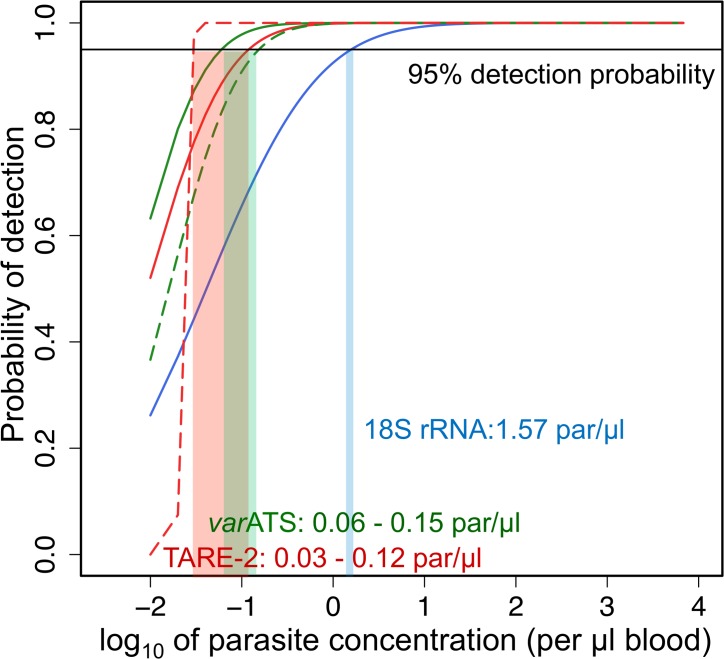
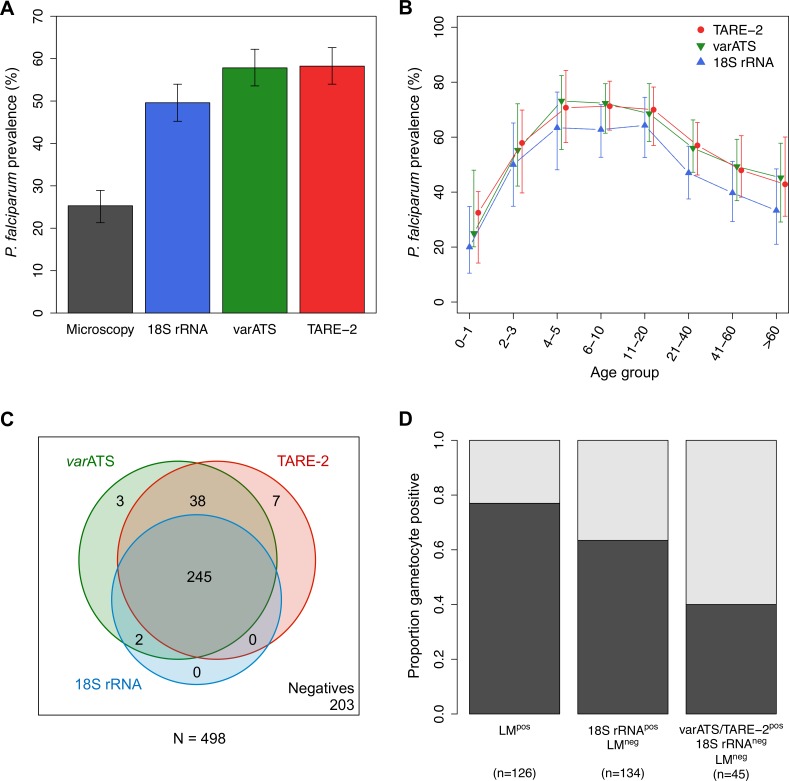
BACKGROUND: Planning and evaluating malaria control strategies relies on accurate definition of parasite prevalence in the population. A large proportion of asymptomatic parasite infections can only be identified by surveillance with molecular methods, yet these infections also contribute to onward transmission to mosquitoes. The sensitivity of molecular detection by PCR is limited by the abundance of the target sequence in a DNA sample; thus, detection becomes imperfect at low densities. We aimed to increase PCR diagnostic sensitivity by targeting multi-copy genomic sequences for reliable detection of low-density infections, and investigated the impact of these PCR assays on community prevalence data. METHODS AND FINDINGS: Two quantitative PCR (qPCR) assays were developed for ultra-sensitive detection of Plasmodium falciparum, targeting the high-copy telomere-associated repetitive element 2 (TARE-2, ∼250 copies/genome) and the var gene acidic terminal sequence (varATS, 59 copies/genome). Our assays reached a limit of detection of 0.03 to 0.15 parasites/μl blood and were 10× more sensitive than standard 18S rRNA qPCR. In a population cross-sectional study in Tanzania, 295/498 samples tested positive using ultra-sensitive assays. Light microscopy missed 169 infections (57%). 18S rRNA qPCR failed to identify 48 infections (16%), of which 40% carried gametocytes detected by pfs25 quantitative reverse-transcription PCR. To judge the suitability of the TARE-2 and varATS assays for high-throughput screens, their performance was tested on sample pools. Both ultra-sensitive assays correctly detected all pools containing one low-density P. falciparum-positive sample, which went undetected by 18S rRNA qPCR, among nine negatives. TARE-2 and varATS qPCRs improve estimates of prevalence rates, yet other infections might still remain undetected when absent in the limited blood volume sampled. CONCLUSIONS: Measured malaria prevalence in communities is largely determined by the sensitivity of the diagnostic tool used. Even when applying standard molecular diagnostics, prevalence in our study population was underestimated by 8% compared to the new assays. Our findings highlight the need for highly sensitive tools such as TARE-2 and varATS qPCR in community surveillance and for monitoring interventions to better describe malaria epidemiology and inform malaria elimination efforts.
Overview
The claims and statistics of this paper haven’t been checked yet.
Free: it reads the open-access text and checks the first 5 claims that cite a source we can check. Create a free account to check every claim.
Integrity signals
Registry
Cites
Statistics
Figures
Verification
Claims the paper makes
The claims and statistics of this paper haven’t been checked yet.
Free: it reads the open-access text and checks the first 5 claims that cite a source we can check. Create a free account to check every claim.
Self-check
Percentages, sums and reported differences re-computed from the paper’s own numbers.
The self-check needs the paper’s full text.
Citations
Cites
Genome sequence of the human malaria parasite Plasmodium falciparum
Gardner, M. J., Hall, N., Fung, E., White, O., Berriman, M., Hyman, R. W., Carlton, J. M., Pain, A., Nelson, K. E., Bowman, S., et al. (2002) · Nature · doi:10.1038/nature01097 · Cited by 4,407
Su, X.-Z., Heatwole, V. M., Wertheimer, S. P., Guinet, F., Herrfeldt, J. A., Peterson, D. S., Ravetch, J. A., & Wellems, T. E. (1995) · Cell · doi:10.1016/0092-8674(95)90055-1 · Cited by 1,219
Okell, L. C., Bousema, T., Griffin, J. T., Ouédraogo, A. L., Ghani, A. C., & Drakeley, C. J. (2012) · Nature Communications · doi:10.1038/ncomms2241 · Cited by 664 · cited 5×
“A meta-analysis of infection prevalence across the endemicity spectrum has indicated that submicroscopic infections are generally more prevalent in low-transmission settings than in high-transmission areas [5], probably as a result of a recently reduced force of infection and the long duration of asymptomatic untreate…”
BackgroundInfluentialSingh, B., Bobogare, A., Cox-Singh, J., Snounou, G., Abdullah, M. S., & Rahman, H. A. (1999) · The American journal of tropical medicine and hygiene · doi:10.4269/ajtmh.1999.60.687 · Cited by 590 · cited 2×
“and include nested PCR [17–22], quantitative PCR (qPCR) [23–31], loop-mediated isothermal amplification (LAMP) [32–35], isothermal recombinase polymerase amplification (RPA) [36], and alternative PCR-based detection methods [19,37–41].”
MethodAndrews, K. G., Fergus, C. A., Aregawi, M. W., Cibulskis, R. E., & Zamani, G. (2014) · Cited by 569
Okell, L. C., Ghani, A. C., Lyons, E., & Drakeley, C. J. (2009) · The Journal of Infectious Diseases · doi:10.1086/644781 · Cited by 532
Rougemont, M., Van Saanen, M., Sahli, R., Hinrikson, H. P., Bille, J., & Jaton, K. (2004) · Journal of Clinical Microbiology · doi:10.1128/jcm.42.12.5636-5643.2004 · Cited by 469 · cited 2×
“and include nested PCR [17–22], quantitative PCR (qPCR) [23–31], loop-mediated isothermal amplification (LAMP) [32–35], isothermal recombinase polymerase amplification (RPA) [36], and alternative PCR-based detection methods [19,37–41].”
MethodPerandin, F., Manca, N., Calderaro, A., Piccolo, G., Galati, L., Ricci, L., Medici, M. C., Arcangeletti, M. C., Snounou, G., Dettori, G., et al. (2004) · Journal of Clinical Microbiology · doi:10.1128/jcm.42.3.1214-1219.2004 · Cited by 354 · cited 2×
“and include nested PCR [17–22], quantitative PCR (qPCR) [23–31], loop-mediated isothermal amplification (LAMP) [32–35], isothermal recombinase polymerase amplification (RPA) [36], and alternative PCR-based detection methods [19,37–41].”
MethodTargeting Asymptomatic Malaria Infections: Active Surveillance in Control and Elimination
Sturrock, H. J. W., Hsiang, M. S., Cohen, J. M., Smith, D. L., Greenhouse, B., Bousema, T., & Gosling, R. D. (2013) · PLoS Medicine · doi:10.1371/journal.pmed.1001467 · Cited by 341 · cited 2×
“Accurate and sensitive detection of malaria parasites is a key factor in planning, targeting, and evaluating malaria control efforts, and requires different strategies at different elimination stages [1–3].”
BackgroundSUBMICROSCOPIC PLASMODIUM FALCIPARUM GAMETOCYTE DENSITIES FREQUENTLY RESULT IN MOSQUITO INFECTION
SCHNEIDER, P., BOUSEMA, J. T., GOUAGNA, L. C., OTIENO, S., VAN DE VEGTE-BOLMER, M., OMAR, S. A., & SAUERWEIN, R. W. (2007) · The American Journal of Tropical Medicine and Hygiene · doi:10.4269/ajtmh.2007.76.470 · Cited by 317 · cited 1×
“A modeling analysis using data from Cameroon found that asexual densities did not predict the proportion of infected mosquitoes, contrary to gametocyte densities, which exhibited a complex and non-linear correlation with transmission success [58,67,68].”
Method
Cited by
Items 301–400 of 401
Kiyaga, S., Mbabazi, M., Katairo, T., Kabbale, K. D., Asua, V., Nsengimaana, B., Wiringilimaana, I., Semakuba, F. D., Mwubaha, C., Nakasaanya, J., et al. (2026) · Malaria Journal · doi:10.1186/s12936-026-05836-w · Cited by 3
“Parasite density was determined using the var ATS quantitative PCR (qPCR) assay targeting multicopy subtelomeric sequences of Plasmodium falciparum [34].”
Assessing naturally acquired immune response and malaria treatment outcomes in Lagos, Nigeria
Oyebola, K. M., Aina, O. O., Bah, M., Ajibaye, O., Correa, S., Awandare, G. A., & Amambua‐Ngwa, A. (2018) · AAS Open Research · doi:10.12688/aasopenres.12828.1 · Cited by 2
“The var gene acidic terminal sequence (varATS) quantitative PCR was used to detect multi-copy genomic sequences of infections (Hofmann et al., 2015).”
MethodNankabirwa, J. I., Arinaitwe, E., Briggs, J. J., Rek, J. C., Rosenthal, P. J., Kamya, M. R., Olwoch, P., Smith, D. L., Rodríguez-Barraquer, I., Dorsey, G., et al. (2022) · American Journal of Tropical Medicine and Hygiene · doi:10.4269/ajtmh.21-0953 · Cited by 2
Malaria Diagnostic Platform, PCR and RT-PCR
Murphy, S. C. (2017) · Springer eBooks · doi:10.1007/978-1-4614-8326-7_108 · Cited by 3
Colbert, A. J., Co, K., Lima-Cooper, G., Lee, D. H., Clayton, K. N., Wereley, S. T., John, C. C., Linnes, J. C., & Kinzer‐Ursem, T. L. (2021) · Research Square · doi:10.21203/rs.3.rs-335992/v1 · Cited by 2
Sissoko, S., Koné, A., Dara, A., Oboh, M. A., Fofana, B., Sangare, C. P. O., Dembele, D., Haidara, A., Diallo, N., Touré, S., et al. (2023) · Research Square · doi:10.21203/rs.3.rs-3083860/v1 · Cited by 2
Species-level enumeration of low-concentration lactic acid bacteria in breast milk
Sun, Y., Li, Q., Hu, M., Wu, Y., Wa, Y., Lu, H., Jiang, S., Wang, H., Wei, Q., Huang, Y., et al. (2025) · Food Chemistry Molecular Sciences · doi:10.1016/j.fochms.2025.100269 · Cited by 2
“The multi-copy nature of the 16S – 23S rDNA region can enhance qPCR sensitivity (Hofmann et al., 2015).”
Imported Malaria and Congenital Acquisition in Infant, Portugal, 2024
Lopes, I., Dias, J. G., Neves, E. D., Morais, M., Santos-Reis, A., Garcı́a, A. M., Varandas, L., & Lopes, D. (2025) · Emerging infectious diseases · doi:10.3201/eid3109.250536 · Cited by 1
“For instance, the use of multicopy subtelomeric targets has been shown to improve the detection of low-density infections that might otherwise be missed using standard assays such as 18ssRNA PCR ( 6 ).”
Lin, J. T., Mathias, D. K., Yang, G., Loya, M., Muller, M., Basham, C., Nyasembe, V. O., Amagai, K., Rutha, I. J., Gaither, C., et al. (2025) · The Journal of Infectious Diseases · doi:10.1093/infdis/jiaf634 · Cited by 1
Bungei, J., Ouma, C., Zhong, D., Oyweri, J., Lee, M., Zhou, G., Atieli, H., Githure, J. I., Wang, C., & Yan, G. (2025) · Malaria Journal · doi:10.1186/s12936-025-05755-2 · Cited by 2
“…then stored at − 20 °C. Real-time/quantitative polymerase chain reaction (RT/ qPCR) was performed on QuantStudio 3 system (Thermo Fisher Scientific, Carlsbad, CA) using species-specific primers and probes to detect the P. falciparum var gene acid terminal sequence ( Pfvar ATS) (PF3D7_0617400) [23].”
Tangara, B., Barsosio, H. C., Marlais, T., Kaboré, J. M. T., Tiono, A. B., Otieno, K., Wanjiku, M., Achieng, M., Onyango, E., Ondieki, E. D., et al. (2026) · EClinicalMedicine · doi:10.1016/j.eclinm.2025.103735 · Cited by 1
Ewnetu, Y., Kayode, T. A., Oduma, C. O., Adeyemi-Kayode, T. M., Zemene, A., Lemma, W., Berhane, N., & Koepfli, C. (2026) · Open Forum Infectious Diseases · doi:10.1093/ofid/ofag247 · Cited by 1
“Five punches, each ∼ 3 mm in diameter, were used for extraction; 4 µL of DNA was added to a total reaction volume of 12 µL and screened for P. falciparum using the multicopy var ATS assay, and for P. vivax an assay targeting the mitochondrial cox1 gene was used [17, 18].”
Wotodjo, A. N., Oboh, M. A., Sokhna, C., Diagne, N., Sarr, F. D., Trape, J., Doucouré, S., Amambua‐Ngwa, A., & D’Alessandro, U. (2023) · Infection Genetics and Evolution · doi:10.1016/j.meegid.2023.105535 · Cited by 2
Millat-Martínez, P., Baró, B., Kasian, B., Lorry, L., Sanz, S., Wali, C., Raulo, S., Elizah, A., Koleala, T., Ome‐Kaius, M., et al. (2023) · Malaria Journal · doi:10.1186/s12936-023-04804-y · Cited by 1
“Finally, in cases where qPCR QMAL positive samples yielded negative results in the species-specific qPCR, ultra-sensitive qPCRs targeting Pf-varATS for P. falciparum and Pv-mtCOX1 for P. vivax were conducted [19, 20].”
BackgroundOuédraogo, D. F., Natama, H. M., Sorgho, H., Kabore, S., Somé, M. A., Millogo, A., Ouédraogo, A.-R., Guetens, P., Kattenberg, J. H., Savadogo, A., et al. (2025) · Acta Parasitologica · doi:10.1007/s11686-025-01070-7 · Cited by 1
Dabira, E. D., Natama, H. M., Jaiteh, F., Grietens, K. P., Bocoum, F. Y., Ndiath, M. O., Mohammed, N. I., Gibba, B., Hill, A. V. S., Ghani, A. C., et al. (2025) · Trials · doi:10.1186/s13063-025-09048-6 · Cited by 1
“The extracted DNA will be temporarily stored at 4 °C before varATS qPCR. Long-term storage will be at − 80 °C. Extracted DNA will be analysed in duplicate with var-ATS qPCR using 5 µL of extracted DNA per assay [21].”
Benabdelmoumen, G., Itani, O., Joste, V., Houzé, S., Hardy, D., Bavozet, F., Sylla, M., Kho, S., Anstey, N. M., Consigny, P., et al. (2026) · PLoS neglected tropical diseases · doi:10.1371/journal.pntd.0013897 · Cited by 1
“Given a recent history of P. falciparum malaria, we also searched for P. falciparum gDNA [9] (limit of detection ~0.1 p/µL).”
InfluentialOdesola, D. E., Olorunfemi, A. B., Suliman, S. A. R., Alabi, A. O., Funwei, R. I., Ahmed, A., Abdulraheem, K. A., Akinyemi, O., Junaid, O. Q., Daskum, A. M., et al. (2026) · Scientific Reports · doi:10.1038/s41598-026-68048-x · Cited by 1
Kizza, J., Katairo, T., Kakuru, A., Nsengimaana, B., Esilu, T. E., Wiringilimaana, I., Semakuba, F. D., Gerlovina, I., Hathaway, N. J., Briggs, J. J., et al. (2026) · The Journal of Infectious Diseases · doi:10.1093/infdis/jiag074 · Cited by 4
Host iron deficiency protects against Plasmodium infection and drives parasite molecular reprofiling
Clucas, D. B., Bennett, C., Harding, R., Pettikiriarachchi, A., Baldi, A., Randall, L. M., Steel, R. W. J., Mellin, R., Hobbs, M., Caiazzo, S., et al. (2026) · Science Advances · doi:10.1126/sciadv.aeb0828 · Cited by 1
Ariffin, M. M., Syaripuddin, K., Kadir, K. A., Lubim, D., Yaman, K., & Divis, P. C. S. (2026) · Malaria Journal · doi:10.1186/s12936-026-05955-4 · Cited by 1
“This level of sensitivity is particularly important for detecting low-density infections, where parasite burdens are often low and may be missed by less sensitive detection methods, including microscopy [40, 43].”
Artificial Intelligence–Supported Automated Microscopy for Malaria Diagnosis: A Multicenter Study
Hawaria, D., Ewnetu, Y., Kamugisha, H., Mutala, A., Lulu, B., Oduma, C. O., Brobbey-Kyei, I. A., Kayode, T. A., Lemma, W., Berhane, N., et al. (2026) · Clinical Infectious Diseases · doi:10.1093/cid/ciag484 · Cited by 1
Are ultra-sensitive molecular tools needed to detect malaria transmitters?
Rosanas‐Urgell, A., & Kattenberg, J. H. (2018) · The Lancet Infectious Diseases · doi:10.1016/s1473-3099(18)30432-8 · Cited by 1
Progress in Parasite Genomics and Its Application to Current Challenges in Malaria Control
Dieng, C. C., Ford, C. T., Huynh, J., Amoah, L. E., Afrane, Y. A., Janies, D. A., & Lo, E. Y. Y. (2021) · Infectious diseases · doi:10.5772/intechopen.96530 · Cited by 3
van Bergen, K. J. M., Stuitje, A. R., Akkers, R. C., Vermeer, H. J., Castel, R., & Mank, T. G. (2023) · Malaria Journal · doi:10.1186/s12936-023-04617-z · Cited by 3
Solimam, R. H., Ramírez, A. M., Rubio, J. M., Khalifa, E. A., Hussein, B. E., Wahab, M. M., Lanza, M., & Hawash, Y. A. (2023) · Acta Protozoologica · doi:10.4467/16890027ap.23.002.17903 · Cited by 1
“falciparum with target in the var gene acidic terminal sequence (Us-PCR varATS) (Hofmann et al. 2015): It was performed using EvaGreen (1 ×) and carried out in a real-time thermal cycler.”
BackgroundMethodInfluentialOriero, E. C., Olukosi, A. Y., Oduwole, O. A., DJIMDÉ, A. A., D’Alessandro, U., Meremikwu, M. M., & Amambua‐Ngwa, A. (2019) · bioRxiv (Cold Spring Harbor Laboratory) · doi:10.1101/725796 · Cited by 1
“falciparum was detected using a highly sensitive qPCR assay (varATS qPCR) targeting multi-copy subtelomeric sequences (19).”
MethodGoel, V., Hassan, W. S., Murphy, C., Choloi, B. B., Ali, M., Mohamed, B., Zacharia, A., Msolo, D. C., Thwai, K. L., Mohammed, S., et al. (2025) · medRxiv · doi:10.1101/2025.05.20.25328026 · Cited by 1
“Plasmodium falciparum parasitemia was determined using a quantitative real-time PCR targeting varATS as previously described [19, 20].”
Oriero, E. C., Njie, B. K., Cham, F., Mohammed, N. I., Amambua-Ngwa, B. N., Diop, M. F., Oboh, M., Bittaye, H., Wadda, K., Okebe, J., et al. (2025) · medRxiv · doi:10.1101/2025.06.29.25330511 · Cited by 2
Gavina, K. (2018) · ERA: Education and Research Archive (University of Alberta) · doi:10.7939/r3w08wz46
The Genetic Diversity of Plasmodium Falciparum in Ghana
Dawson-Amoah, M. E. (2018)
van Dijk, H., Kampmann, M., Lima, N. F., Gabel, M., Dabbas, U., Doumbo, S., Cisse, H., Li, S., Jeninga, M., Thomson-Luque, R., et al. (2021) · bioRxiv (Cold Spring Harbor Laboratory) · doi:10.1101/2021.11.05.467456
“falciparum parasite 269 and gametocyte density in blood samples were measured by RT-qPCR of multi copy conserved 270 var gene acidic terminal sequence (46) and P25 (P25, PF3D7_1031000), respectively.”
Method(2017) · Internal Medicine Research – Open Journal · doi:10.31038/imroj.2017221
Designing Microfluidic PCR Chip Device Using CFD Software for the Detection of Malaria
Austria, M. R., Garcia, J. P. T., Caparanga, A. R., Tayo, L. L., & Doma, B. T. (2023) · Computation · doi:10.3390/computation11100190
Huwe, T., Kibria, M. G., Johora, F. T., Phru, C. S., Jahan, N., Hossain, M. S., Khan, W. A., Price, R. N., Ley, B., Alam, M. S., et al. (2022) · Figshare · doi:10.6084/m9.figshare.20317807
Huwe, T., Kibria, M. G., Johora, F. T., Phru, C. S., Jahan, N., Hossain, M. S., Khan, W. A., Price, R. N., Ley, B., Alam, M. S., et al. (2022) · Figshare · doi:10.6084/m9.figshare.20317804
Marquart, L., Webb, L., O'Rourke, P. K., Gatton, M. L., Hsiang, M. S., Kalnoky, M., Jang, I. K., Ntuku, H., Mumbengegwi, D. R., Domingo, G. J., et al. (2022) · Figshare · doi:10.6084/m9.figshare.20430594
Challenges For Diagnosis, Treatment And Elimination Of Malaria
(2024) · Frontiers research topics · doi:10.3389/978-2-8325-4843-1
Genetic Diversity of Plasmodium falciparum in Korhogo Health District, Northern Côte d’Ivoire
Benié, E. M. A., Beuret, C., Schnoz, A., Cantoreggi, S. L., Ding, X. C., Silué, K. D., & Nsanzabana, C. (2025) · Tropical Medicine and Infectious Disease · doi:10.3390/tropicalmed10090255
“Quantitative PCR (qPCR) were performed to confirm and quantify P. falciparum infections using P. falciparum var acidic terminal sequence (varATS) as described elsewhere [21].”
Aung, P. L., Sripoorote, P., Petchvijit, P., Suk-aum, K., Htwe, K. Z. Z., Lawpoolsri, S., Nguitragool, W., Cui, L., Kaewkungwal, J., & Sattabongkot, J. (2025) · The Journal of Infectious Diseases · doi:10.1093/infdis/jiaf473
“All individual samples positive for Plasmodium were subsequently analyzed by species-specific qPCR for P. falciparum [24] and P. vivax [25].”
Disentangling the roles of different vector species during a malaria resurgence in Eastern Uganda
McClure, M., Oruni, A., Arinaitwe, E., Musiime, A. K., Kyagamba, P., Otto, G., Adiga, J., Rwatooro, J. A., Kilama, M., Krezanoski, P. J., et al. (2025) · PLOS Global Public Health · doi:10.1371/journal.pgph.0004436
Galatas, B., Mayor, A. G., Gupta, H., Balanza, N., Jang, I. K., Nhamússua, L., Simone, W., Cisteró, P., Chidimatembue, A., Munguambe, H., et al. (2020) · Figshare · doi:10.6084/m9.figshare.13346587
Teyssier, N. B., Chen, A., Duarte, E. M., Sit, R. V., Greenhouse, B., & Tessema, S. K. (2021) · Figshare · doi:10.6084/m9.figshare.14129373
Lamien‐Meda, A., Fuehrer, H.-P., Leitsch, D., & Noedl, H. (2021) · Figshare · doi:10.6084/m9.figshare.14131308
Oduma, C. O., Ogolla, S., Atieli, H., Ondigo, B. N., Lee, M.-C., Githeko, A. K., Dent, A. E., Kazura, J. W., Yan, G., & Koepfli, C. (2021) · Figshare · doi:10.6084/m9.figshare.13550709
San, N. N., Kien, N. X., Manh, N. D., Van Thanh, N., Chavchich, M., Binh, N. T. H., Long, T. K., Edgel, K. A., Rovira-Vallbona, E., Edstein, M. D., et al. (2022) · Figshare · doi:10.6084/m9.figshare.19143125
Additional file 2 of Performance and utility of more highly sensitive malaria rapid diagnostic tests
Slater, H., Ding, X. C., Knudson, S., Bridges, D. J., Moonga, H. B., Saad, N. J., Smet, M. D., Bennett, A., Dittrich, S., Slutsker, L., et al. (2022) · Figshare · doi:10.6084/m9.figshare.19127670
Hofer, L. M., Kweyamba, P. A., Sayi, R. M., Chabo, M. S., Maitra, S. L., Moore, S. J., & Tambwe, M. M. (2024) · Figshare · doi:10.6084/m9.figshare.26601211
Salgado, C., Ayodo, G., Macklin, M. D., Gould, M. P., Nallandhighal, S., Odhiambo, E. O., Obala, A. A., O'Meara, W. P., John, C. C., & Tran, T. M. (2021) · Figshare · doi:10.6084/m9.figshare.16639654
Additional file 3 of Performance and utility of more highly sensitive malaria rapid diagnostic tests
Slater, H., Ding, X. C., Knudson, S., Bridges, D. J., Moonga, H. B., Saad, N. J., Smet, M. D., Bennett, A., Dittrich, S., Slutsker, L., et al. (2022) · Figshare · doi:10.6084/m9.figshare.19127676
Wotodjo, A. N., Oboh, M. A., Doucouré, S., Diagne, N., Sarr, F. D., Niang, M., Trape, J., Sokhna, C., Amambua‐Ngwa, A., & D’Alessandro, U. (2023) · Figshare · doi:10.6084/m9.figshare.24091676
Krezanoski, P. J., Roh, M. E., Rek, J. C., Nankabirwa, J. I., Arinaitwe, E., Staedke, S. G., Nayiga, S., Hsiang, M. S., Smith, D., Kamya, M., et al. (2021) · Figshare · doi:10.6084/m9.figshare.17097898
Millat-Martínez, P., Baró, B., Kasian, B., Lorry, L., Sergi, S., Wali, C., Raulo, S., Elizah, A., Koleala, T., Ome‐Kaius, M., et al. (2023) · Figshare · doi:10.6084/m9.figshare.24669849
Kyabayinze, D. J., Opigo, J., Mbabazi, P. N., Amutuhaire, M., Rutazana, D., Kajungu, D., Kawooya, M., & Rutazaana, D. (2023) · Research Square · doi:10.21203/rs.3.rs-3722053/v1
Natama, H. M., Rovira-Vallbona, E., Krit, M., Guetens, P., Sorgho, H., Somé, M. A., Traoré‐Coulibaly, M., Valéa, I., Mens, P. F., Schallig, H. D. F. H., et al. (2021) · Figshare · doi:10.6084/m9.figshare.14053059
Gebretsadik, A., Huwe, T., Koepfli, C., Assefa, A., Tessema, S. K., Messele, A., Golassa, L., & Mamo, H. (2024) · Figshare · doi:10.6084/m9.figshare.26652492
Wotodjo, A. N., Oboh, M. A., Doucouré, S., Diagne, N., Sarr, F. D., Niang, M., Trape, J., Sokhna, C., Amambua‐Ngwa, A., & D’Alessandro, U. (2023) · Figshare · doi:10.6084/m9.figshare.24091673
Mooney, J. P., DonVito, S. M., Jahateh, M., Bittaye, H., Bottomley, C., D’Alessandro, U., & Riley, E. M. (2022) · Figshare · doi:10.6084/m9.figshare.20024888
Fogang, B., Lellouche, L., Ceesay, S., Drammeh, S., Jaiteh, F., Guery, M.-A., Landier, J., Haanappel, C. P., Fröberg, J., Conway, D. J., et al. (2024) · Figshare · doi:10.6084/m9.figshare.25010393
Additional file 1 of Performance and utility of more highly sensitive malaria rapid diagnostic tests
Slater, H., Ding, X. C., Knudson, S., Bridges, D. J., Moonga, H. B., Saad, N. J., Smet, M. D., Bennett, A., Dittrich, S., Slutsker, L., et al. (2022) · Figshare · doi:10.6084/m9.figshare.19127667
Flaherty, B. R., Barratt, J., Lane, M., Talundzic, E., & Bradbury, R. S. (2021) · Figshare · doi:10.6084/m9.figshare.13514638
Martin, J. A., Hendershot, A. L., Portilla, I. A. S., English, D. J., Woodruff, M., Vera-Arias, C. A., Salazar-Costa, B. E., Bustillos, J. J., Saénz, F. E., Ocaña-Mayorga, S., et al. (2020) · Figshare · doi:10.6084/m9.figshare.13047326
Ibekpobaoku, A. N., Oboh, M. A., Faal, F., Adeniji, O. E., Ajibaye, O., Idowu, E. T., & Amambua‐Ngwa, A. (2024) · Figshare · doi:10.6084/m9.figshare.26718372
Gebretsadik, A., Huwe, T., Koepfli, C., Assefa, A., Tessema, S. K., Messele, A., Golassa, L., & Mamo, H. (2024) · Figshare · doi:10.6084/m9.figshare.26652495
Hofer, L. M., Kweyamba, P. A., Sayi, R. M., Chabo, M. S., Maitra, S. L., Moore, S. J., & Tambwe, M. M. (2024) · Figshare · doi:10.6084/m9.figshare.26601208
Briggs, J. J., Kuchta, A. L., Murphy, M., Tessema, S., Arinaitwe, E., Rek, J. C., Chen, A., Nankabirwa, J. I., Drakeley, C., Smith, D. L., et al. (2021) · Figshare · doi:10.6084/m9.figshare.14411216
Gruenberg, M., Moniz, C. A., Hofmann, N., Koepfli, C., Robinson, L. J., Nate, E., Monteiro, W. M., de Melo, G. C., Kuehn, A., Siqueira, A. M., et al. (2020) · Figshare · doi:10.6084/m9.figshare.12916210
Self-citationSagna, A. B., Kibria, M. G., Naher, S., Islam, S., Aktaruzzaman, M. M., Alam, M. S., & Koepfli, C. (2020) · Figshare · doi:10.6084/m9.figshare.12997441
Msellemu, D. F., Ross, A., Temu, L., Moshi, I., Hofer, L. M., Mwanziva, C. E., Kohi, Y. M., & Moore, S. J. (2021) · Figshare · doi:10.6084/m9.figshare.17058702
Reynders, M., Tweneboah, A., Abbas, D. A., Afriyie, S. O., Nketsiah, S. N., Badu, K., & Koepfli, C. (2024) · Figshare · doi:10.6084/m9.figshare.26981837
Marquart, L., Webb, L., O'Rourke, P. K., Gatton, M. L., Hsiang, M. S., Kalnoky, M., Jang, I. K., Ntuku, H., Mumbengegwi, D. R., Domingo, G. J., et al. (2022) · Figshare · doi:10.6084/m9.figshare.20430591
Kayode, T. A., Addo, A. K., Addison, T. K., Tweneboah, A., Afriyie, S. O., Abbas, D. A., Seth, A., Badu-Tawiah, A. K., Badu, K., & Koepfli, C. (2024) · Figshare · doi:10.6084/m9.figshare.26944398
Additional file 4 of Performance and utility of more highly sensitive malaria rapid diagnostic tests
Slater, H., Ding, X. C., Knudson, S., Bridges, D. J., Moonga, H. B., Saad, N. J., Smet, M. D., Bennett, A., Dittrich, S., Slutsker, L., et al. (2022) · Figshare · doi:10.6084/m9.figshare.19127682
Gruenberg, M., Moniz, C. A., Hofmann, N., Koepfli, C., Robinson, L. J., Nate, E., Monteiro, W. M., de Melo, G. C., Kuehn, A., Siqueira, A. M., et al. (2020) · Figshare · doi:10.6084/m9.figshare.12916207
Self-citationNatama, H. M., Rovira-Vallbona, E., Krit, M., Guetens, P., Sorgho, H., Somé, M. A., Traoré‐Coulibaly, M., Valéa, I., Mens, P. F., Schallig, H. D. F. H., et al. (2021) · Figshare · doi:10.6084/m9.figshare.14053065
Colbert, A. J., Co, K., Lima-Cooper, G., Lee, D. H., Clayton, K. N., Wereley, S. T., John, C. C., Linnes, J. C., & Kinzer‐Ursem, T. L. (2021) · Figshare · doi:10.6084/m9.figshare.16681652
Galatas, B., Mayor, A. G., Gupta, H., Balanza, N., Jang, I. K., Nhamússua, L., Simone, W., Cisteró, P., Chidimatembue, A., Munguambe, H., et al. (2020) · Figshare · doi:10.6084/m9.figshare.13346590
van Bergen, K. J. M., Stuitje, A. R., Akkers, R. C., Vermeer, H. J., Castel, R., & Mank, T. G. (2023) · Figshare · doi:10.6084/m9.figshare.23564771
Kalepu, R., Poojary, R., Shruptha, P., Krishna, R. M., Satyamoorthy, K., & Paul, B. (2026) · Genome · doi:10.1139/gen-2025-0027
Imported malaria predominates in near-elimination settings in Southwestern Uganda
Mbabazi, M., Kiyaga, S., Katairo, T., Kabbale, K. D., Asua, V., Kagurusi, B. A., Wiringilimaana, I., Nsengimaana, B., Semakuba, F. D., Nakasaanya, J., et al. (2026) · PLOS Global Public Health · doi:10.1371/journal.pgph.0005951 · Cited by 3
Hien, D. F. D. S., & Bilgo, E. M. (2026) · American Journal of Molecular Biology · doi:10.4236/ajmb.2026.162009
Goel, V., Hassan, W. S., Murphy, C., Choloi, B. B., Ali, M., Mohamed, B., Zacharia, A., Msolo, D. C., Thwai, K., Mohammed, S., et al. (2026) · Open Forum Infectious Diseases · doi:10.1093/ofid/ofag051 · Cited by 1
“Plasmodium falciparum parasitemia was determined using a quantitative real-time PCR targeting varATS as previously described [19, 20].”
Strauss, R. A., Wafula, S. T., Kobbe, R., Lorenz, E., Ascofaré, O. M., Winter, D., Awuah, A. A.-A., Amuasi, J., Coulibaly, B., Sie, A. B., et al. (2026) · Open Forum Infectious Diseases · doi:10.1093/ofid/ofag078
“The assay for malaria detection was based on Hoffmann et al [24] targeting the high-copy var gene acidic terminal sequence of P. falciparum (varATS) using a HotStarTaq Mastermix (Qiagen) on a LightCycler 480II (Roche).”
Nayyab, D.-E., Khan, K., Ibrahim, M., Khan, H. M., Arif, S., & Riaz, H. (2025) · Indus journal of bioscience research. · doi:10.70749/ijbr.v3i7.2932
Diop, M. F., Amambua-Ngwa, B. N., Demba, M. A., Bah, M., Njie, B. K., Cham, F., Mendy, M., Bojang, F., Ndiath, M. O., Correa, A., et al. (2026) · Research Square · doi:10.21203/rs.3.rs-8844410/v1
Control of chronic Epstein-Barr virus infection : consequences of altered B lymphocyte activation
Sanosyan, A. (2016) · theses.fr (ABES) · doi:10.70675/2c4c2972z2dadz4c2azbe8ezb99eee8ba41e
Legendre, E. (2023) · theses.fr (ABES) · doi:10.70675/34a4381ezde62z4b78za425zb84aca5f1fe1 · Cited by 1
Forconi, C. S., Oduor, C. I., Lakshmi, P. S., Racenet, Z. J., Fujimori, G., M’Bana, V., Matta, A. M., Melo, J., Läderach, F., Maina, T. K., et al. (2026) · bioRxiv (Cold Spring Harbor Laboratory) · doi:10.64898/2026.04.15.718702
Montoia, G., Sanchez, M. C. A., Lima-Cooper, G., Farinas, M. D. L. R. N., Inoue, J., & Santi, S. M. D. (2026) · Tropical Medicine & International Health · doi:10.1111/tmi.70142
“Molecular diagnosis offers the advantage of identifying and distinguishing Plasmodium species with high sensitivity and specificity, even at low parasitemia levels, with limits of detection (LoD) reaching 0.03 parasites/μL [5].”
InfluentialBoukili, Y. D.-E., Rovira-Vallbona, E., Guetens, P., Chiheb, D., Kattenberg, J. H., Kestens, L., Enosse, S. M., Rosanas‐Urgell, A., & Arnaldo, P. (2026) · Pathogens · doi:10.3390/pathogens15050504
“Molecular detection of P. falciparum infections was performed by qPCR using a TaqMan probe-based assay as previously described [41] (see Table S1 in [41] for full assay details).”
Plasmodium vivax malaria in India: microbiological barriers to diagnosis, treatment, and elimination
Kumar, C., Bharti, P. K., & Gupta, H. (2026) · Clinical Microbiology Reviews · doi:10.1128/cmr.00025-26 · Cited by 2
Cissé, M., Soulama, A., Silga, E. W., & Gomgnimbou, M. K. (2026) · Parasite · doi:10.1051/parasite/2026035
Some, D. Y., Kiemdé, F., Kaboré, B., Valia, D., Rouamba, T., Sawadogo, S., Somé, M. A., Sorgho, H., Nana, M., Nombré, Y., et al. (2026) · PLoS ONE · doi:10.1371/journal.pone.0351990
“A volume of five (5) µL of DNA were used as template for qPCR analysis targeting P. falciparum var gene acidic terminal sequence (varATS, ≈ 59 copies per genome) as previously described [13].”
Khote, F. L., Raposo, M., Maseko, T., Kanyamukenge, D. B., Hachizovu, S., Makenga, G., Mukomena, E., Kakudji, A., Mutombo, A. M., Kikunda, G., et al. (2026) · Malaria Journal · doi:10.1186/s12936-026-06016-6
“Primers and probe targeting the multi-copy varATS sequence were obtained from Eurofins Genomics (MWG-Biotech AG, Edersberg, Germany), according to the protocol [35], to enable sensitive detection of P. falciparum infection.”
Boukili, Y. D.-E., Kühne, V., Natama, H. M., Moris, P., Tintó-Font, E., Bere, A. W., Goovaerts, O., Guetens, P., Moreno-Murillo, A., Valgaerts, Y., et al. (2026) · PLoS Pathogens · doi:10.1371/journal.ppat.1014542
“Negative infection with P. falciparum was confirmed by var ATS qPCR, using five μl of DNA (extracted with QIAamp DNA Mini Kit, Qiagen Germany), as previously described [117,119] (S1 Fig).”
Semakuba, F. D., Nsengimaana, B., Mbabazi, M., Katairo, T., Murie, K., Hathaway, N. J., Wiringilimaana, I., Muwanika, J. V., Lum, K., Davlieva, M., et al. (2026) · bioRxiv (Cold Spring Harbor Laboratory) · doi:10.64898/2026.09.26.754026
Mwingira, F. (2026) · Tanzania Journal of Science · doi:10.65085/2507-7961.2271
Self-citationRaman, J., Aranda-Díaz, A., Mabona, M., Chisenga, M., João, M. F., Jandondo, D., Dimbu, P. R., Nhlengethwa, N., Dlamini, S. V., Eloff, L., et al. (2026) · American Journal of Tropical Medicine and Hygiene · doi:10.4269/ajtmh.26-0299 · Cited by 1
Ayashi, M. A., Muyidi, A. A., Wakid, M. H., Baakdah, F. M., Alghanmi, M. S., Gattan, H. S., Zalah, A. A., Wasili, E. E. A., Bajawi, A. Y., & Brek, T. M. (2026) · Journal of Tropical Medicine · doi:10.1155/jotm/8453252
Safety and immunogenicity in age de-escalation of PfSPZ Vaccine in Tanzania
Jongo, S. (2022) · ImmPort · doi:10.21430/m383dylcoe
Metadata
- Authors
- Hofmann, N., Mwingira, F., Shekalaghe, S., Robinson, L. J., Mueller, I., & Felger, I.
- Affiliations
- Swiss Tropical and Public Health Institute (CH)
- Ifakara Health Institute (TZ)
- The University of Melbourne (AU)
- Corresponding author
- Felger, Ingrid
- Venue
- PLOS Medicine
- Publisher
- Public Library of Science (PLoS)
- Published
- 2015-03-03
- Volume
- 12
- Issue
- 3
- Pages
- e1001788
- ISSN
- 1549-1277 (ISSN-L)
- 1549-1676
- PMC
- PMC4348198
- OpenAlex
- W2091490176
- Cited by
- 413
- References
- 75
- Citations by year
- 2026: 33 · 2025: 56 · 2024: 48 · 2023: 39 · 2022: 46 · 2021: 46 · 2020: 35 · 2019: 37 · 2018: 26 · 2017: 26 · 2016: 13 · 2015: 8
- FWCI
- 26.04
- Type
- journal article
- Language
- en
- Open access
- gold
- doi.org
- Licence
- Locations
- PLoS Medicine (publishedVersion, cc-by)
- Europe PMC (PubMed Central) (publishedVersion, cc-by)
- PubMed Central (publishedVersion, cc-by)
- PubMed (publishedVersion)
- RECERCAT (Consorci de Serveis Universitaris de Catalunya) (publishedVersion, other-oa)
- edoc (University of Basel) (acceptedVersion)
- Minerva Access (University of Melbourne) (submittedVersion, cc-by)
- Dipòsit Digital de la Universitat de Barcelona (Universitat de Barcelona) (submittedVersion, cc-by)
- DOAJ (DOAJ: Directory of Open Access Journals) (submittedVersion, cc-by-sa)
- Figshare (submittedVersion, cc-by)
- edoc (University of Basel)
- Funders
- National Science Foundation
- Bill and Melinda Gates Foundation (OPP1034577)
- Schweizerischer Nationalfonds zur Förderung der Wissenschaftlichen Forschung (134889, 310030)
- National Health and Medical Research Council (1043345)
- National Institute of Allergy and Infectious Diseases (U19AI089686)
- Topics
- Health Sciences › Medicine › Public Health, Environmental and Occupational Health › Malaria Research and Control
- Life Sciences › Immunology and Microbiology › Parasitology › Bird parasitology and diseases
- Life Sciences › Biochemistry, Genetics and Molecular Biology › Molecular Biology › Molecular Biology Techniques and Applications
- Keywords
- Plasmodium falciparum, ultrasensitive detection, malaria prevalence, asymptomatic malaria, gametocytes, Pfs25, sample pooling, malaria surveillance, malaria elimination, Tanzania
- MeSH terms
- Cross-Sectional Studies, Humans, Microscopy, Plasmodium falciparum, Repetitive Sequences, Nucleic Acid, RNA, Ribosomal, 18S, Tanzania, Prevalence, DNA, Protozoan, Telomere, Malaria, Falciparum, Molecular Epidemiology, Nucleic Acid Amplification Techniques, Molecular Diagnostic Techniques, Real-Time Polymerase Chain Reaction
About these checks
Registry, retraction, Cites and statistics results are computed, not judged, with one exception: a printed reference that no index lists is read once by a model before it counts as a citation error. Claims are extracted by a model and kept only when their quote appears verbatim in the text; each cited source is then checked, with a model’s help, for whether it says what the claim relies on. Those verdicts can be wrong — read the claim’s quote and the cited source before relying on one.
Statistics and arithmetic are recomputed, not judged.
Confidence bands are shown only for fields calibrated on our annotated test set. None is calibrated yet, so no band is shown.
What counts as a claim ›How we measure confidence ›How we check this ›
Are you an author, or do you see a problem with this page? Request a review
Data sources
Bibliographic data: Semantic Scholar, OpenAlex, Crossref.
Contains information from the Semantic Scholar Academic Graph Datasets, made available under the ODC Attribution License (ODC-BY 1.0).
Semantic Scholar’s data is described in: Kinney, R., et al. (2023). The Semantic Scholar Open Data Platform. arXiv:2301.10140.
