

Ultra-Sensitive Detection of Plasmodium falciparum by Amplification of Multi-Copy Subtelomeric Targets
Open accessThe DOI matches its Crossref record; 75 of the 76 references it cites were found in a registry or an index, and 1 are not checked yet.
Abstract
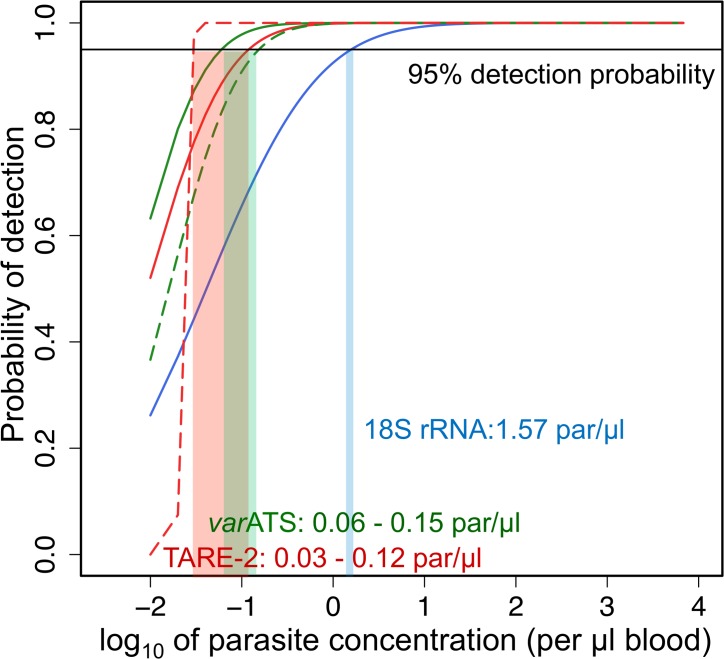
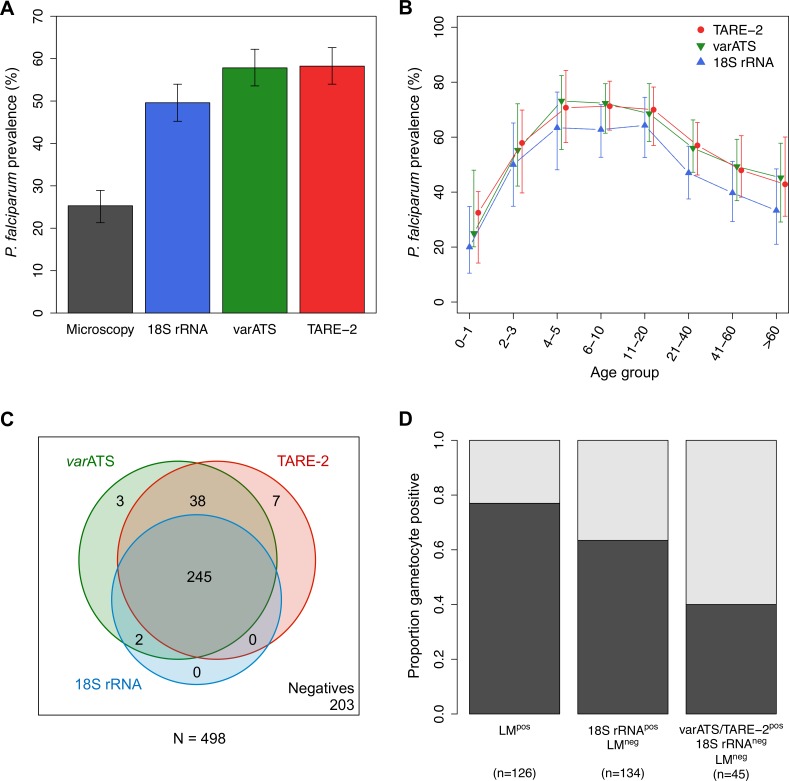
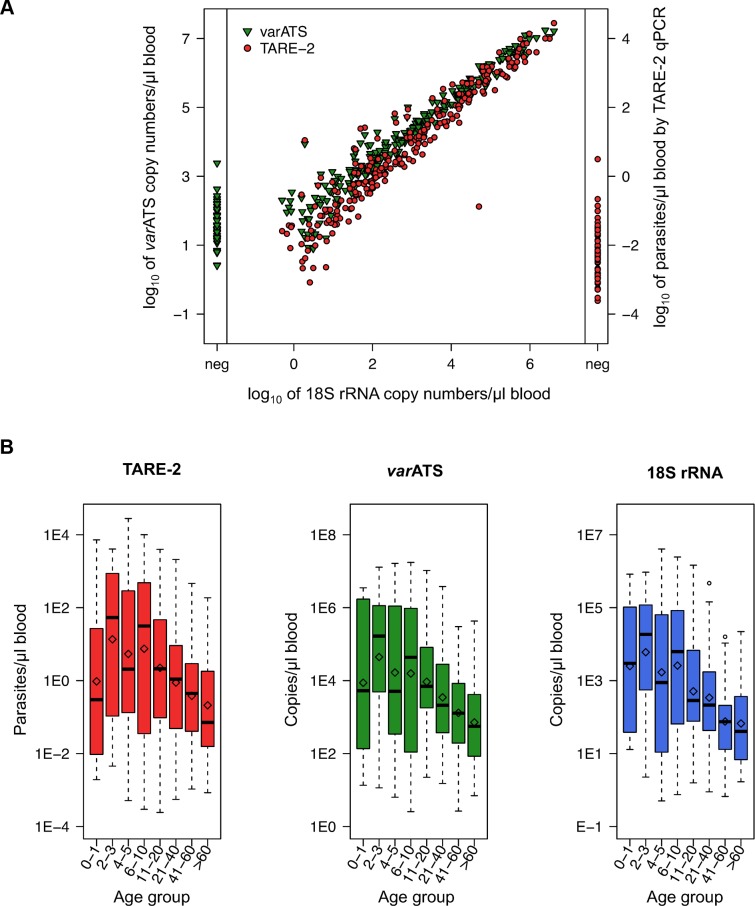
BACKGROUND: Planning and evaluating malaria control strategies relies on accurate definition of parasite prevalence in the population. A large proportion of asymptomatic parasite infections can only be identified by surveillance with molecular methods, yet these infections also contribute to onward transmission to mosquitoes. The sensitivity of molecular detection by PCR is limited by the abundance of the target sequence in a DNA sample; thus, detection becomes imperfect at low densities. We aimed to increase PCR diagnostic sensitivity by targeting multi-copy genomic sequences for reliable detection of low-density infections, and investigated the impact of these PCR assays on community prevalence data. METHODS AND FINDINGS: Two quantitative PCR (qPCR) assays were developed for ultra-sensitive detection of Plasmodium falciparum, targeting the high-copy telomere-associated repetitive element 2 (TARE-2, ∼250 copies/genome) and the var gene acidic terminal sequence (varATS, 59 copies/genome). Our assays reached a limit of detection of 0.03 to 0.15 parasites/μl blood and were 10× more sensitive than standard 18S rRNA qPCR. In a population cross-sectional study in Tanzania, 295/498 samples tested positive using ultra-sensitive assays. Light microscopy missed 169 infections (57%). 18S rRNA qPCR failed to identify 48 infections (16%), of which 40% carried gametocytes detected by pfs25 quantitative reverse-transcription PCR. To judge the suitability of the TARE-2 and varATS assays for high-throughput screens, their performance was tested on sample pools. Both ultra-sensitive assays correctly detected all pools containing one low-density P. falciparum-positive sample, which went undetected by 18S rRNA qPCR, among nine negatives. TARE-2 and varATS qPCRs improve estimates of prevalence rates, yet other infections might still remain undetected when absent in the limited blood volume sampled. CONCLUSIONS: Measured malaria prevalence in communities is largely determined by the sensitivity of the diagnostic tool used. Even when applying standard molecular diagnostics, prevalence in our study population was underestimated by 8% compared to the new assays. Our findings highlight the need for highly sensitive tools such as TARE-2 and varATS qPCR in community surveillance and for monitoring interventions to better describe malaria epidemiology and inform malaria elimination efforts.
Overview
The claims and statistics of this paper haven’t been checked yet.
Free: it reads the open-access text and checks the first 5 claims that cite a source we can check. Create a free account to check every claim.
Integrity signals
Registry
Cites
Statistics
Figures
Verification
Claims the paper makes
The claims and statistics of this paper haven’t been checked yet.
Free: it reads the open-access text and checks the first 5 claims that cite a source we can check. Create a free account to check every claim.
Self-check
Percentages, sums and reported differences re-computed from the paper’s own numbers.
The self-check needs the paper’s full text.
Citations
Cites
Genome sequence of the human malaria parasite Plasmodium falciparum
Gardner, M. J., Hall, N., Fung, E., White, O., Berriman, M., Hyman, R. W., Carlton, J. M., Pain, A., Nelson, K. E., Bowman, S., et al. (2002) · Nature · doi:10.1038/nature01097 · Cited by 4,407
Su, X.-Z., Heatwole, V. M., Wertheimer, S. P., Guinet, F., Herrfeldt, J. A., Peterson, D. S., Ravetch, J. A., & Wellems, T. E. (1995) · Cell · doi:10.1016/0092-8674(95)90055-1 · Cited by 1,219
Okell, L. C., Bousema, T., Griffin, J. T., Ouédraogo, A. L., Ghani, A. C., & Drakeley, C. J. (2012) · Nature Communications · doi:10.1038/ncomms2241 · Cited by 664 · cited 5×
“A meta-analysis of infection prevalence across the endemicity spectrum has indicated that submicroscopic infections are generally more prevalent in low-transmission settings than in high-transmission areas [5], probably as a result of a recently reduced force of infection and the long duration of asymptomatic untreate…”
BackgroundInfluentialSingh, B., Bobogare, A., Cox-Singh, J., Snounou, G., Abdullah, M. S., & Rahman, H. A. (1999) · The American journal of tropical medicine and hygiene · doi:10.4269/ajtmh.1999.60.687 · Cited by 590 · cited 2×
“and include nested PCR [17–22], quantitative PCR (qPCR) [23–31], loop-mediated isothermal amplification (LAMP) [32–35], isothermal recombinase polymerase amplification (RPA) [36], and alternative PCR-based detection methods [19,37–41].”
MethodAndrews, K. G., Fergus, C. A., Aregawi, M. W., Cibulskis, R. E., & Zamani, G. (2014) · Cited by 569
Okell, L. C., Ghani, A. C., Lyons, E., & Drakeley, C. J. (2009) · The Journal of Infectious Diseases · doi:10.1086/644781 · Cited by 532
Rougemont, M., Van Saanen, M., Sahli, R., Hinrikson, H. P., Bille, J., & Jaton, K. (2004) · Journal of Clinical Microbiology · doi:10.1128/jcm.42.12.5636-5643.2004 · Cited by 469 · cited 2×
“and include nested PCR [17–22], quantitative PCR (qPCR) [23–31], loop-mediated isothermal amplification (LAMP) [32–35], isothermal recombinase polymerase amplification (RPA) [36], and alternative PCR-based detection methods [19,37–41].”
MethodPerandin, F., Manca, N., Calderaro, A., Piccolo, G., Galati, L., Ricci, L., Medici, M. C., Arcangeletti, M. C., Snounou, G., Dettori, G., et al. (2004) · Journal of Clinical Microbiology · doi:10.1128/jcm.42.3.1214-1219.2004 · Cited by 354 · cited 2×
“and include nested PCR [17–22], quantitative PCR (qPCR) [23–31], loop-mediated isothermal amplification (LAMP) [32–35], isothermal recombinase polymerase amplification (RPA) [36], and alternative PCR-based detection methods [19,37–41].”
MethodTargeting Asymptomatic Malaria Infections: Active Surveillance in Control and Elimination
Sturrock, H. J. W., Hsiang, M. S., Cohen, J. M., Smith, D. L., Greenhouse, B., Bousema, T., & Gosling, R. D. (2013) · PLoS Medicine · doi:10.1371/journal.pmed.1001467 · Cited by 341 · cited 2×
“Accurate and sensitive detection of malaria parasites is a key factor in planning, targeting, and evaluating malaria control efforts, and requires different strategies at different elimination stages [1–3].”
BackgroundSUBMICROSCOPIC PLASMODIUM FALCIPARUM GAMETOCYTE DENSITIES FREQUENTLY RESULT IN MOSQUITO INFECTION
SCHNEIDER, P., BOUSEMA, J. T., GOUAGNA, L. C., OTIENO, S., VAN DE VEGTE-BOLMER, M., OMAR, S. A., & SAUERWEIN, R. W. (2007) · The American Journal of Tropical Medicine and Hygiene · doi:10.4269/ajtmh.2007.76.470 · Cited by 317 · cited 1×
“A modeling analysis using data from Cameroon found that asexual densities did not predict the proportion of infected mosquitoes, contrary to gametocyte densities, which exhibited a complex and non-linear correlation with transmission success [58,67,68].”
Method
Cited by
Quan, J., Langelier, C., Kuchta, A., Batson, J., Teyssier, N., Lyden, A., Caldera, S., McGeever, A., Dimitrov, B., King, R., et al. (2019) · Nucleic Acids Research · doi:10.1093/nar/gkz418 · Cited by 261
Slater, H. C., Ross, A., Felger, I., Hofmann, N. E., Robinson, L., Cook, J., Gonçalves, B. P., Björkman, A., Ouedraogo, A. L., Morris, U., et al. (2019) · Nature Communications · doi:10.1038/s41467-019-09441-1 · Cited by 200
Self-citationAndolina, C., Rek, J. C., Briggs, J., Okoth, J., Musiime, A., Ramjith, J., Teyssier, N., Conrad, M., Nankabirwa, J. I., Lanke, K., et al. (2021) · The Lancet Infectious Diseases · doi:10.1016/s1473-3099(21)00072-4 · Cited by 200
Quakyi, I., Tornyigah, B., Houze, P., Kusi, K. A., Coleman, N., Escriou, G., Laar, A., Cot, M., Fobil, J., Asare, G. Q., et al. (2019) · Scientific Reports · doi:10.1038/s41598-019-55046-5 · Cited by 183
Ouédraogo, A. L., Gonçalves, B. P., Gnémé, A., Wenger, E. A., Guelbeogo, M. W., Ouédraogo, A., Gerardin, J., Bever, C. A., Lyons, H., Pitroipa, X., et al. (2016) · Journal of Infectious Diseases · doi:10.1093/infdis/jiv370 · Cited by 180
“A greater challenge lies in detecting infections that are truly submicroscopic, with densities of both asexual parasites and gametocytes being below the threshold for detection with microscopy [18].”
BackgroundFlaherty, B. R., Barratt, J., Lane, M., Talundzic, E., & Bradbury, R. S. (2021) · Microbiome · doi:10.1186/s40168-020-00939-1 · Cited by 156
Jongo, S. A., Shekalaghe, S., Church, L. W. P., Ruben, A. J., Schindler, T., Zenklusen, I., Rutishauser, T., Rothen, J., Tumbo, A., Mkindi, C., et al. (2018) · American Journal of Tropical Medicine and Hygiene · doi:10.4269/ajtmh.17-1014 · Cited by 165
Self-citationSlater, H., Ross, A. J., Ouédraogo, A. L., White, L. J., Nguon, C., Walker, P. G. T., Ngor, P., Aguas, R. J., Silal, S. P., Dondorp, A. M., et al. (2015) · Nature · doi:10.1038/nature16040 · Cited by 141
Sensitive and accurate quantification of human malaria parasites using droplet digital PCR (ddPCR)
Koepfli, C., Nguitragool, W., Hofmann, N., Robinson, L. J., Ome‐Kaius, M., Sattabongkot, J., Felger, I., & Müeller, I. (2016) · Scientific Reports · doi:10.1038/srep39183 · Cited by 129
Self-citationAfriyie, S. O., Addison, T. K., Gebre, Y., Mutala, A., Antwi, K. B., Abbas, D. A., Addo, K. A., Tweneboah, A., Ayisi‐Boateng, N. K., Koepfli, C., et al. (2023) · Malaria Journal · doi:10.1186/s12936-023-04506-5 · Cited by 141
“falciparum has been developed and proven to be 10 times more sensitive than conventional 18S rRNA PCR [25].”
BackgroundMethodResultInfluentialKajubi, R., Ochieng, T., Kakuru, A., Jagannathan, P., Nakalembe, M., Ruel, T., Opira, B., Ochokoru, H., Ategeka, J., Nayebare, P., et al. (2019) · The Lancet · doi:10.1016/s0140-6736(18)32224-4 · Cited by 135
Tessema, S., Wesolowski, A., Chen, A., Murphy, M., Wilheim, J., Mupiri, A.-R., Ruktanonchai, N. W., Alegana, V. A., Tatem, A. J., Tambo, M., et al. (2019) · eLife · doi:10.7554/elife.43510 · Cited by 124
“For all samples extracted from DBS, parasite density was quantified using var-ATS ultra-sensitive qPCR (Hofmann et al., 2015) and samples with more than 10 parasites/mL of blood were genotyped.”
MethodHofmann, N., Gruenberg, M., Nate, E., Ura, A., Rodríguez-Rodríguez, D., Salib, M., Müeller, I., Smith, T. A., Laman, M., Robinson, L. J., et al. (2018) · The Lancet Infectious Diseases · doi:10.1016/s1473-3099(18)30411-0 · Cited by 117
Self-citationSex-based differences in clearance of chronic Plasmodium falciparum infection
Briggs, J. J., Teyssier, N., Nankabirwa, J. I., Rek, J. C., Jagannathan, P., Arinaitwe, E., Bousema, T., DRAKELEY, C. J., Murray, M., Crawford, E. D., et al. (2020) · eLife · doi:10.7554/elife.59872 · Cited by 120
“DNA was extracted using the PureLink Genomic DNA Mini Kit (Invitrogen) and parasitemia was quantified using an ultrasensitive varATS qPCR assay with a lower limit of detection of 0.05 parasites/mL (Hofmann et al., 2015).”
MethodInfluentialAssessing the infectious reservoir of falciparum malaria: past and future
Stone, W. J., Gonçalves, B. P., Bousema, T., & DRAKELEY, C. J. (2015) · Trends in Parasitology · doi:10.1016/j.pt.2015.04.004 · Cited by 110
Cunningham, C. H., Hennelly, C. M., Lin, J. T., Ubalee, R., Boyce, R. M., Mulogo, E. M., Hathaway, N. J., Thwai, K. L., Phanzu, F., Kalonji, A. N., et al. (2021) · EBioMedicine · doi:10.1016/j.ebiom.2021.103415 · Cited by 106
“More recently developed “ultrasensitive PCR” assays that target RNA and/or multicopy genes have achieved analytical sensitivities as low as 0¢02 parasites/mL, but their use in low-resource laboratory settings is limited by the need to protect against RNA degradation and/or the requirement for large-volume samples [32,…”
BackgroundMalaria diagnosis for malaria elimination
Zimmerman, P. A., & Howes, R. E. (2015) · Current Opinion in Infectious Diseases · doi:10.1097/qco.0000000000000191 · Cited by 105
“Assays targeting stevor, TARE-2 and Pvr64 are limited by their single species focus; 18S rRNA gene and mtDNA [20] assays are developed to identify all human malaria species].”
BackgroundInfluentialEscalante, A. A., Ferreira, M. U., Vinetz, J. M., Volkman, S. K., Cui, L., Gamboa, D., Krogstad, D. J., Barry, A. E., Carlton, J. M., van Eijk, A. M., et al. (2015) · American Journal of Tropical Medicine and Hygiene · doi:10.4269/ajtmh.15-0005 · Cited by 102
“At the southwest Pacific ICEMR, two new quantitative polymerase chain reaction (qPCR) assays have been developed for Plasmodium falciparum that target repetitive genomic sequences, substantially increasing diagnostic sensitivity without requiring laborious sampling of large blood volumes or elaborate sample processing…”
BackgroundSelf-citationMalaria and the ‘last’ parasite: how can technology help?
Pham, N. M., Karlen, W., Beck, H., & Delamarche, E. (2018) · Malaria Journal · doi:10.1186/s12936-018-2408-0 · Cited by 90
“Microscopy Microscopy is the reference standard for visualization of parasites in blood smears with an analytical sensitivity under normal circumstances approximately tenfold inferior than that of molecular testing [26].”
Roh, M. E., Tessema, S. K., Murphy, M., Nhlabathi, N., Mkhonta, N., Vilakati, S., Ntshalintshali, N., Saini, M., Maphalala, G. P., Chen, A., et al. (2019) · The Journal of Infectious Diseases · doi:10.1093/infdis/jiz305 · Cited by 82
“A second DBS from all index cases and LAMP-positive individuals from RACD was collected for subsequent quantitative polyermase chain reaction (PCR) testing at the University of California, San Francisco (UCSF) using the varATS method [28].”
MethodAsymptomatic malaria in the clinical and public health context
Cheaveau, J., Castañeda-Mogollón, D., Mohon, A. N., Golassa, L., Yewhalaw, D., & Pillai, D. R. (2019) · Expert Review of Anti-infective Therapy · doi:10.1080/14787210.2019.1693259 · Cited by 92
“based ultrasensitive qPCR found the actual prevalence rate to be 58% on the same sample set [87].”
BackgroundNguitragool, W., Müeller, I., Kumpitak, C., Saeseu, T., Bantuchai, S., Yorsaeng, R., Yimsamran, S., Maneeboonyang, W., Sa-angchai, P., Chaimungkun, W., et al. (2017) · Parasites & Vectors · doi:10.1186/s13071-017-2407-y · Cited by 86
“Assuming the same parasite density distribution and the detection limit of ~ two parasites/μl for our protocol [30, 33], we would have underestimated the true prevalence of Plasmodium by approximately two-fold.”
BackgroundSelf-citationTadesse, F. G., van den Hoogen, L. L., Lanke, K. H. W., Schildkraut, J. A., Tetteh, K. K. A., Aseffa, A., Mamo, H., Sauerwein, R. W., Felger, I., DRAKELEY, C. J., et al. (2017) · Malaria Journal · doi:10.1186/s12936-017-1749-4 · Cited by 94
“Higher blood volume PCR [5] or more sensitive PCR targets [35] may reduce the proportion of false-negative PCR samples although it is likely that a fraction of infections will remain undetected with currently available diagnostics [5].”
BackgroundSelf-citationTowards lab-on-a-chip diagnostics for malaria elimination
Kolluri, N., Klapperich, C. M., & Cabodi, M. (2017) · Lab on a Chip · doi:10.1039/c7lc00758b · Cited by 86
Jongo, S. A., Church, L. W. P., Mtoro, A. T., Chakravarty, S., Ruben, A. J., Swanson, P. A., Kassim, K. R., Mpina, M., Tumbo, A., Milando, F. A., et al. (2019) · American Journal of Tropical Medicine and Hygiene · doi:10.4269/ajtmh.18-0835 · Cited by 86
Transmission, T. M. R. C. P. O. C. T. R. A. M. (2017) · PLoS Medicine · doi:10.1371/journal.pmed.1002452 · Cited by 81
“The development of highly sensitive nucleic acid–based tests for parasite detection [78,79], and hemozoin detection using nuclear magnetic resonance [80,81], is also ongoing and may be promising.”
BackgroundPlasmodium knowlesi: the game changer for malaria eradication
Lee, W.-C., Cheong, F. W., Amir, A., Lai, M. Y., Tan, J. H., Phang, W. K., Shahari, S., & Lau, Y. L. (2022) · Malaria Journal · doi:10.1186/s12936-022-04131-8 · Cited by 85
“Hofmann et al. reported that most of the PCR-based diagnoses possess a common lowest detection limit of one parasites/µL [107].”
BackgroundGupta, H., Matambisso, G., Galatas, B., Cisteró, P., Nhamússua, L., Simone, W., Cunningham, J. A., Rabinovich, N. R., Alonso, P. L., Saúte, F., et al. (2017) · Malaria Journal · doi:10.1186/s12936-017-2061-z · Cited by 83
“falciparum isolates (n = 164) were detected by real time PCR but not by nested PCR, given lower sensitivity of the latter [18], and consequently were not eligible for hrp2/hrp3 assessment.”
MethodHsiang, M. S., Ntuku, H., Roberts, K. W., Dufour, M. K., Whittemore, B., Tambo, M., McCreesh, P., Medzihradsky, O. F., Prach, L. M., Siloka, G., et al. (2020) · The Lancet · doi:10.1016/s0140-6736(20)30470-0 · Cited by 94
Adjah, J., Fiadzoe, B., Ayanful-Torgby, R., & Amoah, L. E. (2018) · BMC Infectious Diseases · doi:10.1186/s12879-018-3350-z · Cited by 73
Malaria Molecular Epidemiology: An Evolutionary Genetics Perspective
Escalante, A. A., & Pacheco, M. A. (2019) · Microbiology Spectrum · doi:10.1128/microbiolspec.ame-0010-2019 · Cited by 89
Asymptomatic and sub-microscopic malaria infection in Kayah State, eastern Myanmar
Zaw, M. T., Thant, M. M., Hlaing, T. M., Aung, N. Z., Thu, M., Phumchuea, K., Phusri, K., Saeseu, T., Yorsaeng, R., Nguitragool, W., et al. (2017) · Malaria Journal · doi:10.1186/s12936-017-1789-9 · Cited by 74
“falciparum, the varATS qPCR assay was used [23].”
MethodSelf-citationPortugal, S., Tran, T. M., Ongoïba, A., Bathily, A., Li, S., Doumbo, S., Skinner, J., Doumtabé, D., Koné, Y., Sangala, J. A., et al. (2016) · Clinical Infectious Diseases · doi:10.1093/cid/ciw849 · Cited by 74
“falciparum infection than previously appreciated [44, 45].”
Homann, M. V., Emami, S. N., Yman, V., Stenström, C., Sondén, K., Ramström, H., Karlsson, M., Asghar, M., & Färnert, A. (2017) · EBioMedicine · doi:10.1016/j.ebiom.2017.10.003 · Cited by 69
“Whether application ofmore sensitivemethods such as ultrasensitive PCR (Hofmann et al., 2015; Imwong et al., 2014) would result in even longer duration of PCR-positivity post treatment, remains to be addressed in future studies.”
BackgroundPava, Z., Burdam, F. H., Handayuni, I., Trianty, L., Utami, R. A. S., Tirta, Y. K., Kenangalem, E., Lampah, D. A., Kusuma, A., Wirjanata, G., et al. (2016) · PLoS ONE · doi:10.1371/journal.pone.0165340 · Cited by 69
Jongo, S. A., Church, L. W. P., Mtoro, A. T., Schindler, T., Chakravarty, S., Ruben, A. J., Swanson, P. A., Kassim, K. R., Mpina, M., Tumbo, A., et al. (2019) · Clinical Infectious Diseases · doi:10.1093/cid/ciz1152 · Cited by 74
Petry, N., Jallow, B., Sawo, Y., Darboe, M. K., Barrow, S., Sarr, A., Ceesay, P. O., Fofana, M. N., Prentice, A. M., Wegmüller, R., et al. (2019) · Nutrients · doi:10.3390/nu11102275 · Cited by 65
“Sub-clinical malaria was assessed by extracting DNA [14] and determining presence of Plasmodium falciparum using the ultra-sensitive quantitative polymerase chain reaction (PCR) methods [15].”
MethodMesserli, C., Hofmann, N., Beck, H., & Felger, I. (2016) · Antimicrobial Agents and Chemotherapy · doi:10.1128/aac.01500-16 · Cited by 63
“falciparum 18S rRNA gene using a serial dilution of ring-stage parasites as quantification standards (22, 23).”
MethodSelf-citationMwesigwa, J. N., Slater, H., Bradley, J., Saidy, B., Ceesay, F., Whittaker, C., Kandeh, B., Nkwakamna, D., DRAKELEY, C. J., Geertruyden, J. V., et al. (2019) · Malaria Journal · doi:10.1186/s12936-019-2929-1 · Cited by 70
Vera-Arias, C. A., Holzschuh, A., Oduma, C. O., Badu, K., Mutala, A., Yukich, J. O., Hetzel, M. W., Fakih, B. S., Ali, A., Ferreira, M. U., et al. (2022) · eLife · doi:10.7554/elife.72083 · Cited by 73
Plasmodium vivax molecular diagnostics in community surveys: pitfalls and solutions
Gruenberg, M., Moniz, C. A., Hofmann, N., Wampfler, R., Koepfli, C., Müeller, I., Monteiro, W. M., Lacerda, M., de Melo, G. C., Kuehn, A., et al. (2018) · Malaria Journal · doi:10.1186/s12936-018-2201-0 · Cited by 69
“falciparum that targets the conserved C-terminus of the var gene family [19], P.”
BackgroundSelf-citationNankabirwa, J. I., Arinaitwe, E., Rek, J. C., Kilama, M., Kizza, T., Staedke, S. G., Rosenthal, P. J., Rodríguez-Barraquer, I., Briggs, J. J., Greenhouse, B., et al. (2020) · American Journal of Tropical Medicine and Hygiene · doi:10.4269/ajtmh.20-0250 · Cited by 65
“falciparum DNA via a highly sensitive qPCR assay targeting the multi-copy conserved var gene acidic terminal sequence, with a lower limit of detection of 1 parasite/ mL.(12) All samples that were positive for asexual parasites by microscopy but negative for P.”
Rypien, C., Chow, B. L., Chan, W. W. M., Church, D. L., & Pillai, D. R. (2017) · Journal of Clinical Microbiology · doi:10.1128/jcm.00806-17 · Cited by 59
Zhao, Y., Zeng, J., Zhao, Y., Liu, Q., He, Y., Zhang, J., Yang, Z., Fan, Q., Wang, Q., Cui, L., et al. (2018) · Malaria Journal · doi:10.1186/s12936-018-2398-y · Cited by 59
Okiring, J., Olwoch, P., Kakuru, A., Okou, J., Ochokoru, H., Ochieng, T. A., Kajubi, R., Kamya, M. R., Dorsey, G., & Tusting, L. S. (2019) · Malaria Journal · doi:10.1186/s12936-019-2779-x · Cited by 63
Dabira, E. D., Soumaré, H. M., Conteh, B., Ceesay, F., Ndiath, M. O., Bradley, J., Mohammed, N., Kandeh, B., Smit, M. R., Slater, H., et al. (2021) · The Lancet Infectious Diseases · doi:10.1016/s1473-3099(21)00557-0 · Cited by 56
Diagnostic tools in childhood malaria
Amir, A., Cheong, F. W., Silva, J. R. D., & Lau, Y. L. (2018) · Parasites & Vectors · doi:10.1186/s13071-018-2617-y · Cited by 64
“Ngasala et al. [37] showed that microscopic diagnosis is useful in primary healthcare facilities as it helped to improve the appropriate management of non-malarial fevers and reduced the prescription of antimalarial drugs to children in Tanzania.”
InfluentialCharpentier, É., Benichou, E., Pagès, A., Chauvin, P., Fillaux, J., Valentin, A., Guegan, H., Guémas, E., Salabert, A., Armengol, C., et al. (2019) · Clinical Microbiology and Infection · doi:10.1016/j.cmi.2019.05.010 · Cited by 59
Alvar, J., Alves, F. P., Bucheton, B., Burrows, L., Büscher, P., Carrillo, E., Felger, I., Hübner, M. P., Moreno, J., Pinazo, M., et al. (2020) · Seminars in Immunopathology · doi:10.1007/s00281-020-00796-y · Cited by 56
Self-citationAchan, J., Serwanga, A., Wanzira, H., Kyagulanyi, T., Nuwa, A., Magumba, G., Kusasira, S., Sewanyana, I., Tetteh, K., Drakeley, C., et al. (2021) · The Lancet Microbe · doi:10.1016/s2666-5247(21)00240-8 · Cited by 54
Hofmann, N., Moniz, C. A., Holzschuh, A., Keitel, K., Boillat‐Blanco, N., Kagoro, F., Samaka, J., Mbarack, Z., Ding, X. C., González, I. J., et al. (2018) · The Journal of Infectious Diseases · doi:10.1093/infdis/jiy676 · Cited by 54
Self-citationAmaral, L. C., Robortella, D. R., Guimarães, L. F. F., Limongi, J. E., Fontes, C. J. F., Pereira, D. B., de Brito, C. F. A., Kano, F. S., de Sousa, T. N., & de Carvalho, L. H. (2019) · Malaria Journal · doi:10.1186/s12936-019-2781-3 · Cited by 50
Schindler, T., Robaina, T., Sax, J., Bijeri, J. R., Mpina, M., Gondwe, L., Pupu, L. A., García, G. A., Cortes, C., Maas, C. D., et al. (2019) · Malaria Journal · doi:10.1186/s12936-019-2639-8 · Cited by 56
Natama, H. M., Rovira-Vallbona, E., Somé, M. A., Zango, S. H., Sorgho, H., Guetens, P., Traoré‐Coulibaly, M., Valéa, I., Mens, P. F., Schallig, H. D. F. H., et al. (2018) · Malaria Journal · doi:10.1186/s12936-018-2315-4 · Cited by 49
“falciparum var gene acidic terminal sequence (varATS, ≈59 copies per genome) as previously described [38].”
MethodTeyssier, N., Chen, A., Duarte, E. M., Sit, R. V., Greenhouse, B., & Tessema, S. K. (2021) · Malaria Journal · doi:10.1186/s12936-021-03630-4 · Cited by 57
Aranda-Díaz, A., Vickers, E. N., Murie, K., Palmer, B., Hathaway, N. J., Gerlovina, I., Boene, S. S., García-Ulloa, M. I., Cisteró, P., Katairo, T., et al. (2025) · Scientific Reports · doi:10.1038/s41598-025-94716-5 · Cited by 53
“P . falciparum parasite density was quantified in all samples, including midgut extracts, by varATS 54 or 18S 55 qPCR using standards made from DBS spotted with serial dilutions of cultured P . falciparum in uninfected blood (Supplementary Text).”
Morris, U., Khamis, M., Aydin-Schmidt, B., Abass, A. K., Msellem, M. I., Nassor, M. H., González, I. J., Mårtensson, A., Ali, A., Björkman, A., et al. (2015) · Malaria Journal · doi:10.1186/s12936-015-0731-2 · Cited by 47
“03 parasites/μL blood [22, 23].”
Hemozoin-catalyzed precipitation polymerization as an assay for malaria diagnosis
Rifaie‐Graham, O., Pollard, J., Raccio, S., Balog, S., Rusch, S., Hernández-Castañeda, M. A., Mantel, P., Beck, H., & Bruns, N. (2019) · Nature Communications · doi:10.1038/s41467-019-09122-z · Cited by 48
Determinants of Malaria Transmission at the Population LevelPreprint
Bousema, T., & Drakeley, C. (2017) · Cold Spring Harbor Perspectives in Medicine · doi:10.1101/cshperspect.a025510 · Cited by 49
“hand, the proportion of populations that is diagnosed with malaria infections is increasing with the improvement of molecular diagnostics that examine larger blood volumes or use more sensitive molecular targets (Bousema et al. 2014; Hofmann et al. 2015).”
BackgroundHolzschuh, A., & Koepfli, C. (2022) · Malaria Journal · doi:10.1186/s12936-022-04122-9 · Cited by 45
“falciparum DNA was amplified directly from either 5 × 3 mm hole-punches or 15 μL whole blood targeting the conserved C-terminal region of the multi-copy var gene family [27].”
MethodInfluentialTadesse, F. G., Lanke, K. H. W., Nébié, I., Schildkraut, J. A., Gonçalves, B. P., Tiono, A. B., Sauerwein, R. W., DRAKELEY, C. J., Bousema, T., & Rijpma, S. R. (2017) · American Journal of Tropical Medicine and Hygiene · doi:10.4269/ajtmh.16-0893 · Cited by 43
“Our criteria included detectability of asexual parasites at densities below 1,000 parasites/mL, the approximate detection threshold for nested PCR or qPCR.(31) Although the exact”
BackgroundMethodAssessment of malaria real-time PCR methods and application with focus on low-level parasitaemia
Haanshuus, C. G., Mørch, K., Blomberg, B., Strom, G., Langeland, N., Hanevik, K., & Mohn, S. C. (2019) · PLoS ONE · doi:10.1371/journal.pone.0218982 · Cited by 43
Performance and utility of more highly sensitive malaria rapid diagnostic tests
Slater, H., Ding, X. C., Knudson, S., Bridges, D. J., Moonga, H. B., Saad, N. J., Smet, M. D., Bennett, A. F., Dittrich, S., Slutsker, L., et al. (2022) · BMC Infectious Diseases · doi:10.1186/s12879-021-07023-5 · Cited by 43
“3, the red and mauve data points are from the same samples from Papua New Guinea (PNG); however, the mauve point shows prevalence as estimated using a standard PCR assay whereas the red point shows prevalence obtained by assuming any one of three PCR assays being positive means the sample is positive, including an ult…”
BackgroundAdvances in molecular diagnosis of malaria
(2017) · Advances in Clinical Chemistry · doi:10.1016/bs.acc.2016.11.006 · Cited by 41
Diagnosis of clinical malaria in endemic settings
Varo, R., Balanza, N., Mayor, A. G., & Bassat, Q. (2020) · Expert Review of Anti-infective Therapy · doi:10.1080/14787210.2020.1807940 · Cited by 54
Use of a highly-sensitive rapid diagnostic test to screen for malaria in pregnancy in Indonesia
Unwin, V. T., Ahmed, R., Noviyanti, R., Puspitasari, A. M., Utami, R. A. S., Trianty, L., Lukito, T., Syafruddin, D., Poespoprodjo, J. R., Santana-Morales, M. A., et al. (2020) · Malaria Journal · doi:10.1186/s12936-020-3110-6 · Cited by 43
Collins, K. A., Ceesay, S., Drammeh, S., Jaiteh, F. K., Guery, M.-A., Lanke, K. H. W., Grignard, L., Stone, W. J., Conway, D. J., D’Alessandro, U., et al. (2022) · The Journal of Infectious Diseases · doi:10.1093/infdis/jiac116 · Cited by 46
“falciparum was assessed using VarATS qPCR as described in [23] from 109 fingerprick (start December screening) or venous blood samples (monthly end December to May).”
MethodGwarinda, H. B., Tessema, S. K., Raman, J., Greenhouse, B., & Birkholtz, L. (2021) · Malaria Journal · doi:10.1186/s12936-021-03635-z · Cited by 40
Kemleu, S., Guelig, D., Moukoko, C. E. E., Essangui, E., Diesburg, S., Mouliom, A., Melingui, B., Manga, J., Donkeu, C. J., Epote, A. R., et al. (2016) · PLoS ONE · doi:10.1371/journal.pone.0165506 · Cited by 40
Accrombessi, M., Yovo, E., Cottrell, G., Agbota, G., Gartner, A., Martin‐Prével, Y., Fanou‐Fogny, N., Djossinou, D., Zeitlin, J. A., Ndam, N. T., et al. (2018) · BMJ Open · doi:10.1136/bmjopen-2017-019014 · Cited by 49
Plasmodium Gametocytes in Field Studies: Do We Measure Commitment to Transmission or Detectability?
Koepfli, C., & Yan, G. (2018) · Trends in Parasitology · doi:10.1016/j.pt.2018.02.009 · Cited by 40
Kolia-Diafouka, P., Carrère‐Kremer, S., Lounnas, M., BOURDIN, A. A., Kremer, L., de Perre, P. V., Godreuil, S., & Tuaillon, É. (2019) · Diagnostic Microbiology and Infectious Disease · doi:10.1016/j.diagmicrobio.2019.02.008 · Cited by 40
Malaria infection prevalence and sensitivity of reactive case detection in Zanzibar
Stuck, L. H., Fakih, B. S., Al-mafazy, A.-W. H., Hofmann, N., Holzschuh, A., Grossenbacher, B., Bennett, A. F., Cotter, C., Reaves, E. J., Ali, A., et al. (2020) · International Journal of Infectious Diseases · doi:10.1016/j.ijid.2020.06.017 · Cited by 41
“Primers targeted the conserved C-terminal region of the multi-copy var gene family (varATS) (Hofmann et al., 2015).”
BackgroundSelf-citationUltrasensitive and rapid detection of malaria using graphene-enhanced surface plasmon resonance
Wu, F., Singh, J. P., Thomas, P. A., Ge, Q., Kravets, V. G., Day, P. J., & Grigorenko, A. N. (2020) · 2D Materials · doi:10.1088/2053-1583/aba88e · Cited by 38
Salgado, C., Ayodo, G., Macklin, M. D., Gould, M. P., Nallandhighal, S., Odhiambo, E. O., Obala, A. A., O’Meara, W. P., John, C. C., & Tran, T. M. (2021) · Malaria Journal · doi:10.1186/s12936-021-03905-w · Cited by 39
Galatas, B., Mayor, A. G., Gupta, H., Balanza, N., Jang, I. K., Nhamússua, L., Simone, W., Cisteró, P., Chidimatembue, A., Munguambe, H., et al. (2020) · Malaria Journal · doi:10.1186/s12936-020-03526-9 · Cited by 39
Kobayashi, T., Gamboa, D., Ndiaye, D., Cui, L., Sutton, P. L., & Vinetz, J. M. (2015) · American Journal of Tropical Medicine and Hygiene · doi:10.4269/ajtmh.15-0004 · Cited by 44
Plasmodium malariaePrevalence andcspGene Diversity, Kenya, 2014 and 2015
Lo, E. Y. Y., Nguyen, K., Nguyen, J. H. G., Hemming‐Schroeder, E., Xu, J., Etemesi, H., Githeko, A. K., & Yan, G. (2017) · Emerging infectious diseases · doi:10.3201/eid2304.161245 · Cited by 37
“More accurate prevalence data may be obtained from ultrasensitive PCR that targets multicopy regions of the parasite genome (45) or reverse transcription PCR of parasite RNA extracted from whole blood (46).”
BackgroundNatama, H. M., Ouedraogo, D. F., Sorgho, H., Rovira-Vallbona, E., Serra-Casas, E., Somé, M. A., Coulibaly-Traoré, M., Mens, P. F., Kestens, L., Tinto, H., et al. (2017) · Scientific Reports · doi:10.1038/s41598-017-02173-6 · Cited by 37
Schindler, T., Deal, A., Fink, M., Guirou, E. A., Moser, K. A., Mwakasungula, S., Mihayo, M., Jongo, S. A., Chaki, P., Abdulla, S., et al. (2019) · Scientific Reports · doi:10.1038/s41598-019-49389-2 · Cited by 39
Shimizu, S., Chotirat, S., Dokkulab, N., Hongchad, I., Khowsroy, K., Kiattibutr, K., Maneechai, N., Manopwisedjaroen, K., Petchvijit, P., Phumchuea, K., et al. (2020) · International Journal of Infectious Diseases · doi:10.1016/j.ijid.2020.05.022 · Cited by 39
Arnaldo, P., Rovira-Vallbona, E., Langa, J. S., Salvador, C., Guetens, P., Chiheb, D., Xavier, B., Kestens, L., Enosse, S. M., & Rosanas‐Urgell, A. (2018) · Malaria Journal · doi:10.1186/s12936-018-2255-z · Cited by 44
Ding, X. C., Ade, M. P., Baird, J. K., Cheng, Q., Cunningham, J. A., Dhorda, M., DRAKELEY, C. J., Felger, I., Gamboa, D., Harbers, M., et al. (2017) · PLoS neglected tropical diseases · doi:10.1371/journal.pntd.0005516 · Cited by 36
“Multi-copy target genes or reverse transcription reactions can help to detect a single parasite in the large blood volume sampled [48,49].”
Self-citationChughlay, M. F., Gaaloul, M. E., Donini, C., Campo, B., Berghmans, P.-J., Lucardie, A., Marx, M. W., Cherkaoui‐Rbati, M. H., Langdon, G., Angulo‐Barturen, Í., et al. (2021) · American Journal of Tropical Medicine and Hygiene · doi:10.4269/ajtmh.20-1165 · Cited by 36
“falciparum var gene acidic terminal sequence ( 59 copies per genome), as previously described.(20) The limit of detection was 50 parasites/mL.”
BackgroundMeulenaere, K. D., Cuypers, W. L., Gauglitz, J. M., Guetens, P., Rosanas‐Urgell, A., Laukens, K., & Cuypers, B. (2023) · mBio · doi:10.1128/mbio.01967-23 · Cited by 41
“Parasite density (parasites/µL) was determined by varATS qPCR, based on a protocol adapted from Hofmann et al. (30).”
MethodWilliams, S. H., Cordey, S., Bhuva, N., Laubscher, F., Hartley, M., Boillat‐Blanco, N., Mbarack, Z., Samaka, J., Mlaganile, T., Jain, K., et al. (2018) · mSphere · doi:10.1128/msphere.00311-18 · Cited by 38
PCR-based detection of Plasmodium falciparum in saliva using mitochondrial cox3 and varATS primers
Lloyd, Y. M., Esemu, L. F., Antallan, J., Thomas, B. J. I., Yunga, S. T., Obase, B. N., Christine, N., Leke, R. G. F., Culleton, R. L., Mfuh, K. O., et al. (2018) · Tropical Medicine and Health · doi:10.1186/s41182-018-0100-2 · Cited by 33
“The other gene is the var gene acidic terminal sequence (varATS), ~ 59 copies/Pf genome [4, 10, 11].”
BackgroundMethodBriggs, J. J., Ategeka, J., Kajubi, R., Ochieng, T., Kakuru, A., Ssemanda, C., Wasswa, R., Jagannathan, P., Greenhouse, B., Rodríguez-Barraquer, I., et al. (2019) · The Journal of Infectious Diseases · doi:10.1093/infdis/jiz130 · Cited by 38
“15 parasites per microliter (p/μL) [10].”
Umunnakwe, F. A., Idowu, E. T., Ajibaye, O., Etoketim, B., Akindele, S., Shokunbi, A. O., Otubanjo, O. A., Awandare, G. A., Amambua-Ngwa, A., & Oyebola, K. M. (2019) · Malaria Journal · doi:10.1186/s12936-019-3073-7 · Cited by 31
Katrak, S. S., Day, N., Ssemmondo, E., Kwarisiima, D., Midekisa, A. A., Greenhouse, B., Kamya, M. R., Havlir, D. V., & Dorsey, G. (2016) · The Journal of Infectious Diseases · doi:10.1093/infdis/jiw057 · Cited by 31
“patterns reflect an inability to detect low-density infections in adults [39, 40].”
BackgroundPett, H., Gonçalves, B. P., Dicko, A., Nébié, I., Tiono, A. B., Lanke, K. H. W., Bradley, J., Chen, I., Diawara, H., Mahamar, A., et al. (2016) · Malaria Journal · doi:10.1186/s12936-016-1584-z · Cited by 33
Self-citationMoyo, S. J., Manyahi, J., Blomberg, B., Tellevik, M. G., Masoud, N. S., Aboud, S., Manji, K. P., Roberts, A. P., Hanevik, K., Mørch, K., et al. (2020) · Frontiers in Microbiology · doi:10.3389/fmicb.2020.02118 · Cited by 37
“This concurs with the findings of a multicenter study by Imwong et al. (2015).”
BackgroundResultInfluentialCheaveau, J., Nguyen, H., Chow, B. L., Marasinghe, D. H., Mohon, A. N., Yuan, H., Viana, G. M. R., van Schalkwyk, D. A., Church, D. L., Chan, W. W. M., et al. (2018) · Open Forum Infectious Diseases · doi:10.1093/ofid/ofy260 · Cited by 31
“Molecular testing such as polymerase chain reaction (PCR) can achieve an LOD of 1 parasites/μL with improved sensitivity, but these tests are expensive and simply not feasible without a well-equipped laboratory and expertise [14].”
BackgroundGrossenbacher, B., Holzschuh, A., Hofmann, N., Omar, K. A., Stuck, L. H., Fakih, B. S., Ali, A., Yukich, J. O., Hetzel, M. W., & Felger, I. (2020) · Malaria Journal · doi:10.1186/s12936-020-3127-x · Cited by 31
Self-citationHartley, M., Hofmann, N., Keitel, K., Kagoro, F., Moniz, C. A., Mlaganile, T., Samaka, J., Masimba, J., Said, Z., Temba, H., et al. (2020) · PLoS Medicine · doi:10.1371/journal.pmed.1003318 · Cited by 31
“Our group, however, has reported only marginal improvements on sensitivity using ultrasensitive qPCR as a gold standard (75% versus 73%) [6].”
BackgroundSelf-citationAndolina, C., Ramjith, J., Rek, J. C., Lanke, K. H. W., Okoth, J., Grignard, L., Arinaitwe, E., Briggs, J. J., Bailey, J. A., Aydemir, Ö., et al. (2023) · Scientific Reports · doi:10.1038/s41598-023-33657-3 · Cited by 29
Assessment of subpatent Plasmodium infection in northwestern Ethiopia
Assefa, A., Ahmed, A. A., Deressa, W. A., Wilson, G. G., Kebede, A., Mohammed, H., Sassine, M., Haile, M., Dilu, D., Teka, H., et al. (2020) · Malaria Journal · doi:10.1186/s12936-020-03177-w · Cited by 34
Oriero, E. C., Olukosi, A. Y., Oduwole, O. A., DJIMDÉ, A. A., D’Alessandro, U., Meremikwu, M. M., & Amambua‐Ngwa, A. (2020) · American Journal of Tropical Medicine and Hygiene · doi:10.4269/ajtmh.20-0593 · Cited by 29
“falciparum was detected 132 using a highly sensitive qPCR assay (varATS qPCR) targeting multi-copy subtelomeric sequences.(18) 133 Amplification reaction was done using 1× qPCR Taqman Universal Master Mix (ThermoFischer 134 Scientific, USA).”
MethodNankabirwa, J. I., Bousema, T., Blanken, S. L., Rek, J. C., Arinaitwe, E., Greenhouse, B., Rosenthal, P. J., Kamya, M. R., Staedke, S. G., & Dorsey, G. (2022) · PLoS ONE · doi:10.1371/journal.pone.0279464 · Cited by 29
Seroprevalence of Antibodies to SARS-CoV-2 in Rural Households in Eastern Uganda, 2020-2022
Briggs, J. J., Takahashi, S., Nayebare, P., Cuu, G., Rek, J. C., Zedi, M., Kizza, T., Arinaitwe, E., Nankabirwa, J. I., Kamya, M. R., et al. (2023) · JAMA Network Open · doi:10.1001/jamanetworkopen.2022.55978 · Cited by 33
Metadata
- Authors
- Hofmann, N., Mwingira, F., Shekalaghe, S., Robinson, L. J., Mueller, I., & Felger, I.
- Affiliations
- Swiss Tropical and Public Health Institute (CH)
- Ifakara Health Institute (TZ)
- The University of Melbourne (AU)
- Corresponding author
- Felger, Ingrid
- Venue
- PLOS Medicine
- Publisher
- Public Library of Science (PLoS)
- Published
- 2015-03-03
- Volume
- 12
- Issue
- 3
- Pages
- e1001788
- ISSN
- 1549-1277 (ISSN-L)
- 1549-1676
- PMC
- PMC4348198
- OpenAlex
- W2091490176
- Cited by
- 413
- References
- 75
- Citations by year
- 2026: 33 · 2025: 56 · 2024: 48 · 2023: 39 · 2022: 46 · 2021: 46 · 2020: 35 · 2019: 37 · 2018: 26 · 2017: 26 · 2016: 13 · 2015: 8
- FWCI
- 26.04
- Type
- journal article
- Language
- en
- Open access
- gold
- doi.org
- Licence
- Locations
- PLoS Medicine (publishedVersion, cc-by)
- Europe PMC (PubMed Central) (publishedVersion, cc-by)
- PubMed Central (publishedVersion, cc-by)
- PubMed (publishedVersion)
- RECERCAT (Consorci de Serveis Universitaris de Catalunya) (publishedVersion, other-oa)
- edoc (University of Basel) (acceptedVersion)
- Minerva Access (University of Melbourne) (submittedVersion, cc-by)
- Dipòsit Digital de la Universitat de Barcelona (Universitat de Barcelona) (submittedVersion, cc-by)
- DOAJ (DOAJ: Directory of Open Access Journals) (submittedVersion, cc-by-sa)
- Figshare (submittedVersion, cc-by)
- edoc (University of Basel)
- Funders
- National Science Foundation
- Bill and Melinda Gates Foundation (OPP1034577)
- Schweizerischer Nationalfonds zur Förderung der Wissenschaftlichen Forschung (134889, 310030)
- National Health and Medical Research Council (1043345)
- National Institute of Allergy and Infectious Diseases (U19AI089686)
- Topics
- Health Sciences › Medicine › Public Health, Environmental and Occupational Health › Malaria Research and Control
- Life Sciences › Immunology and Microbiology › Parasitology › Bird parasitology and diseases
- Life Sciences › Biochemistry, Genetics and Molecular Biology › Molecular Biology › Molecular Biology Techniques and Applications
- Keywords
- Plasmodium falciparum, ultrasensitive detection, malaria prevalence, asymptomatic malaria, gametocytes, Pfs25, sample pooling, malaria surveillance, malaria elimination, Tanzania
- MeSH terms
- Cross-Sectional Studies, Humans, Microscopy, Plasmodium falciparum, Repetitive Sequences, Nucleic Acid, RNA, Ribosomal, 18S, Tanzania, Prevalence, DNA, Protozoan, Telomere, Malaria, Falciparum, Molecular Epidemiology, Nucleic Acid Amplification Techniques, Molecular Diagnostic Techniques, Real-Time Polymerase Chain Reaction
About these checks
Registry, retraction, Cites and statistics results are computed, not judged, with one exception: a printed reference that no index lists is read once by a model before it counts as a citation error. Claims are extracted by a model and kept only when their quote appears verbatim in the text; each cited source is then checked, with a model’s help, for whether it says what the claim relies on. Those verdicts can be wrong — read the claim’s quote and the cited source before relying on one.
Statistics and arithmetic are recomputed, not judged.
Confidence bands are shown only for fields calibrated on our annotated test set. None is calibrated yet, so no band is shown.
What counts as a claim ›How we measure confidence ›How we check this ›
Are you an author, or do you see a problem with this page? Request a review
Data sources
Bibliographic data: Semantic Scholar, OpenAlex, Crossref.
Contains information from the Semantic Scholar Academic Graph Datasets, made available under the ODC Attribution License (ODC-BY 1.0).
Semantic Scholar’s data is described in: Kinney, R., et al. (2023). The Semantic Scholar Open Data Platform. arXiv:2301.10140.
