

The DOI matches its Crossref record; 73 of the 74 references it cites were found in a registry or an index.
APOE-related risk of mild cognitive impairment and dementia for prevention trials: An analysis of four cohorts
Open accessAbstract
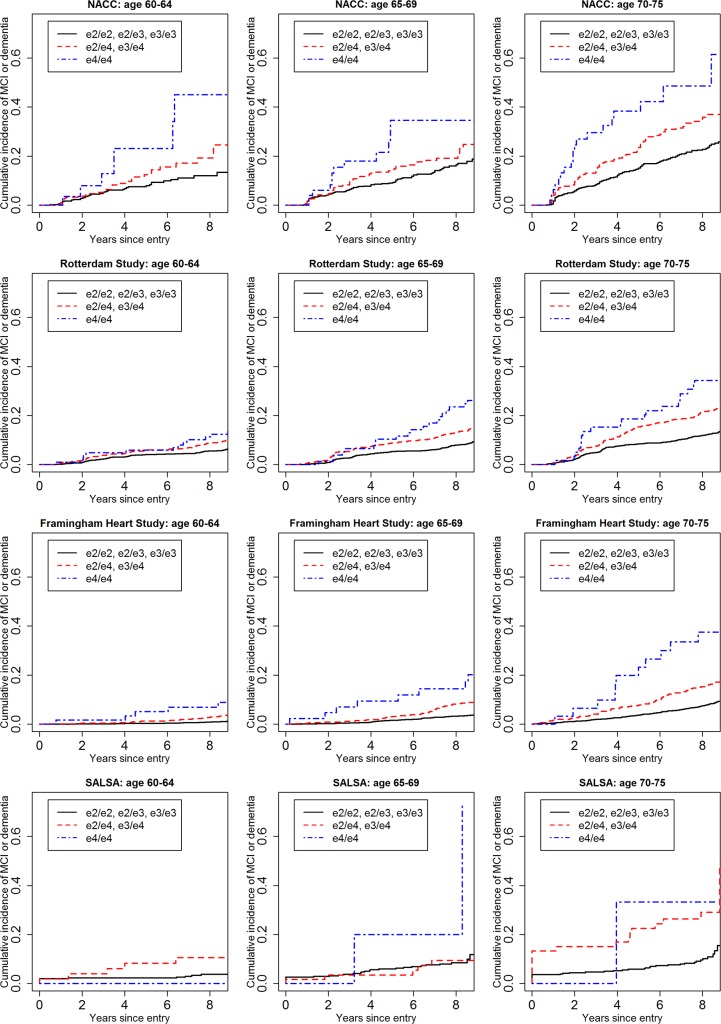
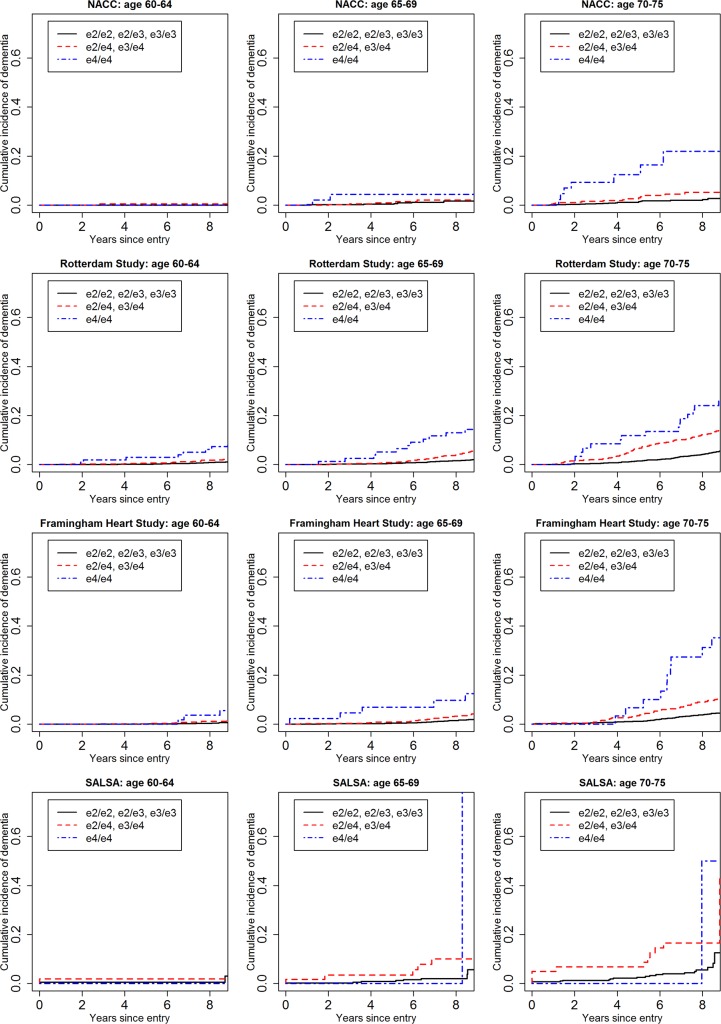
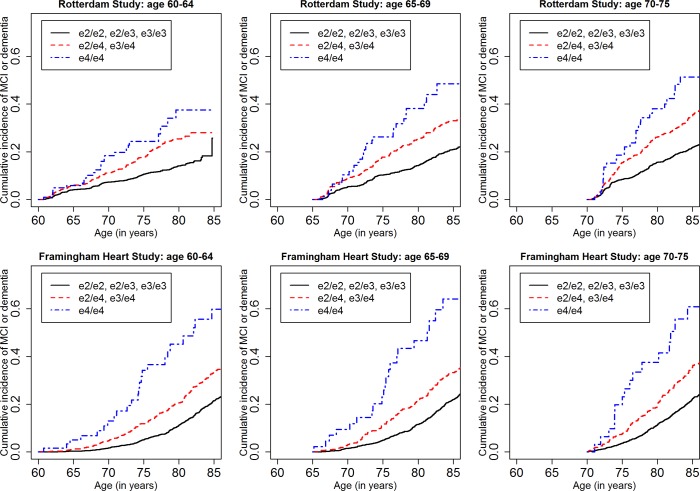
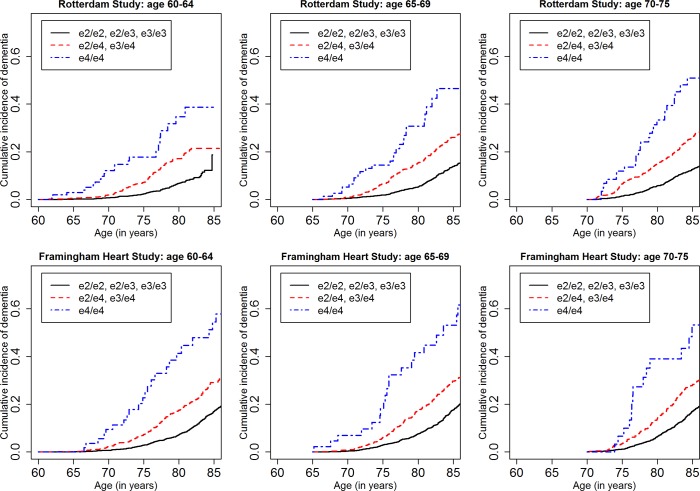
BACKGROUND: With the onset of prevention trials for individuals at high risk for Alzheimer disease, there is increasing need for accurate risk prediction to inform study design and enrollment, but available risk estimates are limited. We developed risk estimates for the incidence of mild cognitive impairment (MCI) or dementia among cognitively unimpaired individuals by APOE-e4 dose for the genetic disclosure process of the Alzheimer's Prevention Initiative Generation Study, a prevention trial in cognitively unimpaired APOE-e4/e4 homozygote individuals. METHODS AND FINDINGS: We included cognitively unimpaired individuals aged 60-75 y, consistent with Generation Study eligibility criteria, from the National Alzheimer's Coordinating Center (NACC) (n = 5,073, 158 APOE-e4/e4), the Rotterdam Study (n = 6,399, 156 APOE-e4/e4), the Framingham Heart Study (n = 4,078, 67 APOE-e4/e4), and the Sacramento Area Latino Study on Aging (SALSA) (n = 1,294, 11 APOE-e4/e4). We computed stratified cumulative incidence curves by age (60-64, 65-69, 70-75 y) and APOE-e4 dose, adjusting for the competing risk of mortality, and determined risk of MCI and/or dementia by genotype and baseline age. We also used subdistribution hazard regression to model relative hazard based on age, APOE genotype, sex, education, family history of dementia, vascular risk, subjective memory concerns, and baseline cognitive performance. The four cohorts varied considerably in age, education, ethnicity/race, and APOE-e4 allele frequency. Overall, cumulative incidence was uniformly higher in NACC than in the population-based cohorts. Among APOE-e4/e4 individuals, 5-y cumulative incidence was as follows: in the 60-64-y age stratum, it ranged from 0% to 5.88% in the three population-based cohorts versus 23.06% in NACC; in the 65-69-y age stratum, from 9.42% to 10.39% versus 34.62%; and in the 70-75-y age stratum, from 18.64% to 33.33% versus 38.34%. Five-year incidence of dementia was negligible except for APOE-e4/e4 individuals and those over 70 y. Lifetime incidence (to age 80-85 y) of MCI or dementia for the APOE-e4/e4 individuals in the long-term Framingham and Rotterdam cohorts was 34.69%-38.45% at age 60-64 y, 30.76%-40.26% at 65-69 y, and 33.3%-35.17% at 70-75 y. Confidence limits for these estimates are often wide, particularly for APOE-e4/e4 individuals and for the dementia outcome at 5 y. In regression models, APOE-e4 dose and age both consistently increased risk, as did lower education, subjective memory concerns, poorer baseline cognitive performance, and family history of dementia. We discuss several limitations of the study, including the small numbers of APOE-e4/e4 individuals, missing data and differential dropout, limited ethnic and racial diversity, and differences in definitions of exposure and outcome variables. CONCLUSIONS: Estimates of the absolute risk of MCI or dementia, particularly over short time intervals, are sensitive to sampling and a variety of methodological factors. Nonetheless, such estimates were fairly consistent across the population-based cohorts, and lower than those from a convenience cohort and those estimated in prior studies-with implications for informed consent and design for clinical trials targeting high-risk individuals.
Overview
The claims and statistics of this paper haven’t been checked yet.
Run the check — free, no account needed. It reads the open-access text and checks the sources it cites.
Integrity signals
Registry
Cites
Statistics
Figures
Verification
Claims the paper makes
The claims and statistics of this paper haven’t been checked yet.
Run the check — free, no account needed. It reads the open-access text and checks the sources it cites.
Claims other papers make about this one
Each is checked against this paper’s own text: does it say what the citing paper says it does?
The source backs part of the claim, not all of it — or backs it for a different population, condition or comparison.
In the citing paper
“For example, based on data from a study in Europe and a study in the United States, of people age 65‐69, the risk of developing dementia by the early to mid‐80s was 5% to 7% among those with no copies of the e4 form, 15% to 16% among those with one copy, and 31% to 40% among those with two copies.”
From 2024 Alzheimer's disease facts and figures (2024) · cites this paper as [82]
Experimental — accuracy not yet measuredThe source backs part of the claim, not all of it — or backs it for a different population, condition or comparison.
In the citing paper
“the lifetime risk up to age 80–85 years for mild cognitive impairment or dementia owing to AD has been estimated as 30–55% for APOEε4 homozygotes, 20–25% for APOEε3/ε4 carriers and 10–15% for APOEε3 homozygotes according to population-based studies with a majority of individuals of European ancestry17,18.”
From Multifaceted roles of APOE in Alzheimer disease (2024) · cites this paper as [17]
Experimental — accuracy not yet measured
Self-check
Percentages, sums and reported differences re-computed from the paper’s own numbers.
The self-check needs the paper’s full text.
Citations
Cites
R: A Language and Environment for Statistical Computing
R Core Team (2000) · doi:10.32614/r.manuals · Cited by 355,817
Meta-analysis in clinical trials
DerSimonian, R., & Laird, N. (1986) · Controlled Clinical Trials · doi:10.1016/0197-2456(86)90046-2 · Cited by 39,552
Hirono, N., Mori, E., Ikejiri, Y., Imamura, T., Shimomura, T., Hashimoto, M., Yamashita, H., & Ikeda, M. (1997) · PubMed · Cited by 21,010
A Proportional Hazards Model for the Subdistribution of a Competing Risk
Fine, J. P., & Gray, R. J. (1999) · Journal of the American Statistical Association · doi:10.1080/01621459.1999.10474144 · Cited by 14,290 · cited 1×
“We used subdistribution hazard regression models [50] because they directly link the regression coefficients with the cumulative incidence function (in contrast to cause-specific hazards regression [51], where the direct link cannot be made [52]; in preliminary analyses we also fit these models, and results were very…”
MethodMild Cognitive Impairment: Clinical Characterization and Outcome
Petersen, R. C., Smith, G. E., Waring, S. C., Ivnik, R. J., Tangalos, E. G., & Kokmen, E. (1999) · Archives of Neurology · doi:10.1001/archneur.56.3.303 · Cited by 8,980
A New Clinical Scale for the Staging of Dementia
Hughes, C. P., Berg, L., Danziger, W., Coben, L. A., & Martin, R. L. (1982) · British Journal of Psychiatry · doi:10.1192/bjp.140.6.566 · Cited by 7,056
A Class of $K$-Sample Tests for Comparing the Cumulative Incidence of a Competing Risk
Gray, R. J. (1988) · The Annals of Statistics · doi:10.1214/aos/1176350951 · Cited by 4,957
2013 ACC/AHA Guideline on the Assessment of Cardiovascular Risk
Goff, D. C., Lloyd-Jones, D. M., Bennett, G., Coady, S., D’Agostino, R. B., Gibbons, R., Greenland, P., Lackland, D. T., Levy, D., O’Donnell, C. J., et al. (2014) · Journal of the American College of Cardiology · doi:10.1016/j.jacc.2013.11.005 · Cited by 4,945
Goff, D. C., Lloyd-Jones, D. M., Bennett, G., Coady, S., D’Agostino, R. B., Gibbons, R., Greenland, P., Lackland, D. T., Levy, D., O’Donnell, C. J., et al. (2014) · Circulation · doi:10.1161/01.cir.0000437741.48606.98 · Cited by 3,697
Ngandu, T., Lehtisalo, J., Solomon, A., Levälahti, E., Ahtiluoto, S., Antikainen, R., Bäckman, L., Hänninen, T., Jula, A., Laatikainen, T., et al. (2015) · The Lancet · doi:10.1016/s0140-6736(15)60461-5 · Cited by 3,689
Cited by
Sorted by citations
2024 Alzheimer's disease facts and figures
(2024) · Alzheimer's & Dementia · doi:10.1002/alz.13809 · Cited by 2,536
López, J. A., González, H. M., & Léger, G. C. (2019) · Handbook of clinical neurology · doi:10.1016/b978-0-12-804766-8.00013-3 · Cited by 884
Vermunt, L., Sikkes, S. A. M., van den Hout, A., Handels, R., Bos, I., van der Flier, W. M., Kern, S., Ousset, P., Maruff, P., Skoog, I., et al. (2019) · Alzheimer's & Dementia · doi:10.1016/j.jalz.2019.04.001 · Cited by 570
“The effects of setting on disease progression are consistent with other AD studies [40,41].”
Result2025 Alzheimer's disease facts and figures
(2025) · Alzheimer s & Dementia · doi:10.1002/alz.70235 · Cited by 602
State of the science on mild cognitive impairment (MCI)
Anderson, N. D. (2019) · CNS Spectrums · doi:10.1017/s1092852918001347 · Cited by 587
The Rotterdam Study: 2018 update on objectives, design and main results
Ikram, M. A., Brusselle, G., Murad, S. D., van Duijn, C. M., Franco, O. H., Goedegebure, A., Klaver, C. C. W., Nijsten, T. E. C., Peeters, R. P., Stricker, B. H. C., et al. (2017) · European Journal of Epidemiology · doi:10.1007/s10654-017-0321-4 · Cited by 447
Self-citationAPOE and Alzheimer’s Disease: From Lipid Transport to Physiopathology and Therapeutics
Husain, M. A., Laurent, B., & Plourde, M. (2021) · Frontiers in Neuroscience · doi:10.3389/fnins.2021.630502 · Cited by 353
The “rights” of precision drug development for Alzheimer’s disease
Cummings, J. L., Feldman, H., & Scheltens, P. (2019) · Alzheimer s Research & Therapy · doi:10.1186/s13195-019-0529-5 · Cited by 247
Pase, M. P., Beiser, A., Himali, J. J., Satizábal, C. L., Aparicio, H. J., DeCarli, C. S., Chêne, G., Dufouil, C., & Seshadri, S. S. (2019) · JAMA Neurology · doi:10.1001/jamaneurol.2018.4666 · Cited by 208
Self-citationMultifaceted roles of APOE in Alzheimer disease
Jackson, R. J., Hyman, B. T., & Serrano-Pozo, A. (2024) · Nature Reviews Neurology · doi:10.1038/s41582-024-00988-2 · Cited by 193
Alternative splicing in neurodegenerative disease and the promise of RNA therapies
Nikom, D., & Zheng, S. (2023) · Nature reviews. Neuroscience · doi:10.1038/s41583-023-00717-6 · Cited by 191
Multifactorial Hypothesis and Multi-Targets for Alzheimer’s Disease
Gong, C., Liu, F., & Iqbal, K. (2018) · Journal of Alzheimer s Disease · doi:10.3233/jad-179921 · Cited by 188
Gharbi‐Meliani, A., Dugravot, A., Sabia, S., Régy, M., Fayossé, A., Schnitzler, A., Mika Kivimaki, B., Singh‐Manoux, A., & Dumurgier, J. (2021) · Alzheimer s Research & Therapy · doi:10.1186/s13195-020-00740-0 · Cited by 193
Lifetime risk and projected burden of dementia
Fang, M., Hu, J., Weiss, J., Knopman, D. S., Albert, M., Windham, B. G., Walker, K. A., Sharrett, A. R., Gottesman, R. F., Lutsey, P. L., et al. (2025) · Nature Medicine · doi:10.1038/s41591-024-03340-9 · Cited by 153
The Important Interface Between Apolipoprotein E and Neuroinflammation in Alzheimer’s Disease
Kloske, C. M., & Wilcock, D. M. (2020) · Frontiers in Immunology · doi:10.3389/fimmu.2020.00754 · Cited by 152
Meat consumption and risk of incident dementia: cohort study of 493,888 UK Biobank participants
Zhang, H., Greenwood, D. C., Risch, H. A., Bunce, D. J., Hardie, L. J., & Cade, J. E. (2021) · American Journal of Clinical Nutrition · doi:10.1093/ajcn/nqab028 · Cited by 135
Neurobiological Highlights of Cognitive Impairment in Psychiatric Disorders
Morozova, A. Y., Zorkina, Y., Abramova, O. V., Pavlova, O., Ka, P., Soloveva, K., Volkova, M., Alekseeva, P. A., Andryshchenko, A., Kostyuk, G. P., et al. (2022) · International Journal of Molecular Sciences · doi:10.3390/ijms23031217 · Cited by 132
Lopez Lopez, C., Tariot, P. N., Caputo, A., Langbaum, J. B., Liu, F., Riviere, M., Langlois, C., Rouzade‐Dominguez, M., Zalesak, M., Hendrix, S., et al. (2019) · Alzheimer's & Dementia: Translational Research & Clinical Interventions · doi:10.1016/j.trci.2019.02.005 · Cited by 116
Self-citationSphingolipids in neurodegeneration (with focus on ceramide and S1P)
Wang, G., & Bieberich, E. (2018) · Advances in Biological Regulation · doi:10.1016/j.jbior.2018.09.013 · Cited by 99
Absolute 10-year risk of dementia by age, sex and APOE genotype: a population-based cohort study
Rasmussen, K. L., Tybjærg-Hansen, A., Nordestgaard, B. G., & Frikke-Schmidt, R. (2018) · Canadian Medical Association Journal · doi:10.1503/cmaj.180066 · Cited by 91
Dementia and aging populations—A global priority for contextualized research and health policy
Brayne, C., & Miller, B. L. (2017) · PLoS Medicine · doi:10.1371/journal.pmed.1002275 · Cited by 93
Walker, R. M., Vaher, K., Bermingham, M. L., Morris, S. W., Bretherick, A. D., Zeng, Y., Rawlik, K., Amador, C., Campbell, A., Haley, C., et al. (2021) · Genome Medicine · doi:10.1186/s13073-020-00808-4 · Cited by 87
Higher CSF sTREM2 attenuates ApoE4-related risk for cognitive decline and neurodegeneration
Franzmeier, N., Suárez‐Calvet, M., Frontzkowski, L. K., Moore, A. M., Hohman, T. J., Morenas‐Rodríguez, E., Nuscher, B., Shaw, L. M. J., Trojanowski, J. Q., Dichgans, M., et al. (2020) · Molecular Neurodegeneration · doi:10.1186/s13024-020-00407-2 · Cited by 77
Self-citationFu, C., Hao, W., Shrestha, N., Virani, S. S., Mishra, S. R., & Zhu, D. (2021) · EClinicalMedicine · doi:10.1016/j.eclinm.2021.101236 · Cited by 69
APOE ε4, white matter hyperintensities, and cognition in Alzheimer and Lewy body dementia
Mirza, S. S., Saeed, U., Knight, J., Ramirez, J., Stuss, D. T., Keith, J., Nestor, S. M., Yu, D., Swardfager, W., Rogaeva, E., et al. (2019) · Neurology · doi:10.1212/wnl.0000000000008377 · Cited by 67
Polygenic hazard scores in preclinical Alzheimer disease
Tan, C. H., Hyman, B. T., Tan, J. J. X., Hess, C. P., Dillon, W. P., Schellenberg, G. D., Besser, L. M., Kukull, W. A., Kauppi, K., McEvoy, L. K., et al. (2017) · Annals of Neurology · doi:10.1002/ana.25029 · Cited by 68
Genetic testing for neurodegenerative diseases: Ethical and health communication challenges
Roberts, J. S., Patterson, A. K., & Uhlmann, W. R. (2020) · Neurobiology of Disease · doi:10.1016/j.nbd.2020.104871 · Cited by 71
Self-citation2026 Alzheimer's disease facts and figures
(2026) · Alzheimer s & Dementia · doi:10.1002/alz.71345 · Cited by 67
Diabetes and cognitive decline
Bellia, C., Lombardo, M., Meloni, M., Della‐Morte, D., Bellia, A., & Lauro, D. (2022) · Advances in clinical chemistry · doi:10.1016/bs.acc.2021.07.006 · Cited by 58
Langbaum, J. B. S., Karlawish, J. H., Roberts, J. S., Wood, E. M., Bradbury, A. R., High, N. M., Walsh, T. L., Gordon, D., Aggarwal, R., Davis, P., et al. (2019) · Alzheimer s & Dementia · doi:10.1016/j.jalz.2018.12.007 · Cited by 57
Self-citationShen, X., Li, J., Wang, H., Li, H., Huang, Y., Yang, Y., Tan, L., Dong, Q., Yu, J., & Initiative, A. D. N. (2020) · Alzheimer's & Dementia: Diagnosis, Assessment & Disease Monitoring · doi:10.1002/dad2.12104 · Cited by 57
Symptomatic, Genetic, and Mechanistic Overlaps between Autism and Alzheimer’s Disease
Nadeem, M. S., Hosawi, S. B. I., Alshehri, S., Ghoneim, M. M., Imam, S. S., Murtaza, B. N., & Kazmi, I. A. (2021) · Biomolecules · doi:10.3390/biom11111635 · Cited by 61
Jack, C. R., Therneau, T. M., Lundt, E. S., Wiste, H. J., Mielke, M. M., Knopman, D. S., Graff‐Radford, J., Lowe, V. J., Vemuri, P., Schwarz, C. G., et al. (2022) · Brain Communications · doi:10.1093/braincomms/fcac017 · Cited by 59
Characterizing Demographic, Racial, and Geographic Diversity in Dementia Research
Mooldijk, S. S., Licher, S., & Wolters, F. J. (2021) · JAMA Neurology · doi:10.1001/jamaneurol.2021.2943 · Cited by 56
Self-citationWolters, F. J., Tinga, L. M., Dhana, K., Koudstaal, P. J., Albert Hofman, D., Bos, D., Franco, O. H., & Ikram, M. A. (2018) · American Journal of Epidemiology · doi:10.1093/aje/kwy234 · Cited by 52
Self-citationLanglois, C. M., Bradbury, A. R., Wood, E. M., Roberts, J. S., Kim, S. Y. H., Riviere, M., Liu, F., Reiman, E. M., Tariot, P. N., Karlawish, J. H., et al. (2019) · Alzheimer s & Dementia Translational Research & Clinical Interventions · doi:10.1016/j.trci.2019.09.013 · Cited by 50
Self-citationSun, Y. B., Chen, C., Yu, Y., Zhang, H., Tan, X. W., Zhang, J., Qi, L., Lu, Y., & Wang, N. (2022) · Journal of sport and health science/Journal of Sport and Health Science · doi:10.1016/j.jshs.2022.11.005 · Cited by 49
Cacciaglia, R., Molinuevo, J. L., Sánchez‐Benavides, G., Falcón, C., Gramunt, N., Brugulat‐Serrat, A., Grau‐Rivera, O., Gispert, J. D., & Study, F. T. A. (2018) · Human Brain Mapping · doi:10.1002/hbm.24306 · Cited by 46
González, H. M., Tarraf, W., Jian, X., Vásquez, P. M., Kaplan, R. C., Thyagarajan, B., Daviglus, M. L., Lamar, M., Gallo, L. C., Zeng, D., et al. (2018) · Scientific Reports · doi:10.1038/s41598-018-35573-3 · Cited by 44
APOE ε4 and the Influence of Sex, Age, Vascular Risk Factors, and Ethnicity on Cognitive Decline
Makkar, S. R., Lipnicki, D. M., Crawford, J. D., Kochan, N. A., Costa, E., Lima‐Costa, M. F., Diniz, B. S., Brayne, C., Stephan, B. C. M., Matthews, F. E., et al. (2020) · The Journals of Gerontology Series A · doi:10.1093/gerona/glaa116 · Cited by 47
Self-citationRiaz, M., Huq, A. J., Ryan, J. L., Orchard, S. G., Tiller, J. M., Lockery, J. E., Woods, R. L., Wolfe, R. S., Renton, A. E., Goate, A., et al. (2021) · Aging Cell · doi:10.1111/acel.13384 · Cited by 44
Predictive Genetic Counseling for Neurodegenerative Diseases: Past, Present, and FuturePreprint
Goldman, J. S. (2019) · Cold Spring Harbor Perspectives in Medicine · doi:10.1101/cshperspect.a036525 · Cited by 43
Abushakra, S. R., Porsteinsson, A. P., Sabbagh, M. N., Bracoud, L., Schaerer, J., Power, A., Hey, J. A., Scott, D., Suhy, J., Tolar, M., et al. (2020) · Alzheimer s & Dementia Translational Research & Clinical Interventions · doi:10.1002/trc2.12117 · Cited by 40
Acute ACAT1/SOAT1 Blockade Increases MAM Cholesterol and Strengthens ER-Mitochondria Connectivity
Harned, T. C., Stan, R. V., Cao, Z., Chakrabarti, R., Higgs, H. N., Chang, C. C. Y., & Chang, T. (2023) · International Journal of Molecular Sciences · doi:10.3390/ijms24065525 · Cited by 41
Oken, B., Kaplan, J., Klee, D., & Gallegos, A. M. (2024) · Frontiers in Human Neuroscience · doi:10.3389/fnhum.2024.1380002 · Cited by 39
Gonzales, M. M., Samra, J. K., O’Donnell, A., Mackin, R. S., Salinas, J., Jacob, M. E., Satizábal, C. L., Aparicio, H. J., Thibault, E. G., Sanchez, J. S., et al. (2021) · Journal of Alzheimer s Disease · doi:10.3233/jad-210232 · Cited by 39
Self-citationAPOE and immunity: Research highlights
Kloske, C. M., Barnum, C. J., Batista, A. F., Bradshaw, E. M., Brickman, A. M., Bu, G., Dennison, J. L., Gearon, M. D., Goate, A., Haass, C., et al. (2023) · Alzheimer s & Dementia · doi:10.1002/alz.13020 · Cited by 38
Self-citationLópez, C. L., Caputo, A., Liu, F., Riviere, M., Rouzade‐Dominguez, M., Thomas, R. G., Langbaum, J. B. S., Lenz, R., Reiman, E. M., Graf, A., et al. (2017) · The Journal of Prevention of Alzheimer s Disease · doi:10.14283/jpad.2017.37 · Cited by 36
Self-citationStudy partners should be required in preclinical Alzheimer’s disease trials
Grill, J. D., & Karlawish, J. H. (2017) · Alzheimer s Research & Therapy · doi:10.1186/s13195-017-0327-x · Cited by 36
Self-citationGhisays, V., Goradia, D. D., Protas, H. D., Bauer, R. J., III, Devadas, V., Tariot, P. N., Lowe, V. J., Knopman, D. S., Petersen, R. C., Jack, C. R., et al. (2019) · Alzheimer s & Dementia · doi:10.1016/j.jalz.2019.08.195 · Cited by 35
Self-citationIf Human Brain Organoids Are the Answer to Understanding Dementia, What Are the Questions?
Ooi, L., Dottori, M., Cook, A. L., Engel, M., Gautam, V., Grubman, A., Hernández, D., King, A. E., Maksour, S., Anastacio, H. T. D., et al. (2020) · The Neuroscientist · doi:10.1177/1073858420912404 · Cited by 35
Tin, A., Bressler, J., Simino, J., Sullivan, K. J., Mei, H., Windham, B. G., Griswold, M., Gottesman, R. F., Boerwinkle, E., Fornage, M., et al. (2022) · Neurology · doi:10.1212/wnl.0000000000200520 · Cited by 33
Disclosing genetic risk for Alzheimer's dementia to individuals with mild cognitive impairment
Christensen, K. D., Karlawish, J. H., Roberts, J. S., Uhlmann, W. R., Harkins, K. A., Wood, E. M., Obisesan, T. O., Le, L. Q., Cupples, L. A., Zoltick, E. S., et al. (2020) · Alzheimer s & Dementia Translational Research & Clinical Interventions · doi:10.1002/trc2.12002 · Cited by 33
Self-citationLargent, E. A., Bhardwaj, T., Abera, M., Stites, S. D., Harkins, K. A., Lerner, A. J., Bradbury, A. R., & Karlawish, J. H. (2021) · Journal of Alzheimer s Disease · doi:10.3233/jad-210675 · Cited by 34
Self-citationMarshe, V. S., Gorbovskaya, I., Kanji, S., Kish, M., & Müller, D. J. (2018) · Journal of Neural Transmission · doi:10.1007/s00702-018-1934-9 · Cited by 31
Influence of apolipoprotein-E genotype on brain amyloid load and longitudinal trajectories
Lopresti, B. J., Campbell, E. M., Yu, Z., Anderson, S., Cohen, A. D., Minhas, D. S., Snitz, B. E., Royse, S. K., Becker, C. R., Aizenstein, H. J., et al. (2020) · Neurobiology of Aging · doi:10.1016/j.neurobiolaging.2020.05.012 · Cited by 32
Lancaster, C. L., Koychev, I. G., Blane, J., Chinner, A., Chatham, C. H., Taylor, K. I., & Hinds, C. (2020) · Journal of Clinical and Experimental Neuropsychology · doi:10.1080/13803395.2020.1714551 · Cited by 29
Riviere, M., Langbaum, J. B., Turner, R. S., Rinne, J. O., Sui, Y., Cazorla, P., Ricart, J., Meneses, K., Caputo, A., Tariot, P. N., et al. (2024) · Alzheimer's & Dementia · doi:10.1002/alz.13532 · Cited by 28
Self-citationGenetics of Alzheimer’s disease
König, T., & Stögmann, E. (2021) · Wiener Medizinische Wochenschrift · doi:10.1007/s10354-021-00819-9 · Cited by 31
Life expectancy with and without dementia in persons with mild cognitive impairment in the community
Mooldijk, S. S., Yaqub, A., Wolters, F. J., Licher, S., Koudstaal, P. J., Ikram, M. K., & Ikram, M. A. (2021) · Journal of the American Geriatrics Society · doi:10.1111/jgs.17520 · Cited by 28
Self-citationFactors Influencing Alzheimer’s Disease Risk: Whether and How They are Related to the APOE Genotype
Zhang, R., Xu, X., Yu, H., Xu, X., Wang, M., & Le, W. (2022) · Neuroscience Bulletin · doi:10.1007/s12264-021-00814-5 · Cited by 29
Slachevsky, A., Pedro Zitko, M., Martínez‐Pernía, D., Forno, G., Court, F. A., Lillo, P., Villagra, R., Duran-Aniotz, C. A., Parrao, T., Assar, R., et al. (2020) · BMC Geriatrics · doi:10.1186/s12877-020-01866-4 · Cited by 27
Mhatre‐Winters, I., Eid, A., Han, Y., Tieu, K., & Richardson, J. R. (2022) · International Journal of Molecular Sciences · doi:10.3390/ijms23179829 · Cited by 26
Avilés-Santa, L. M., Hsu, L., Lam, T. K., Arteaga, S. S., Artiles, L., Coady, S., Cooper, L. S., Curry, J. S., Desvigne-Nickens, P. M., Nicastro, H. L., et al. (2020) · Frontiers in Public Health · doi:10.3389/fpubh.2020.00330 · Cited by 25
Rubin, L., Ingram, L. A., Resciniti, N. V., Ashford‐Carroll, B., Leith, K. H., Rose, A., Ureña, S., McCollum, Q., & Friedman, D. B. (2021) · Frontiers in Public Health · doi:10.3389/fpubh.2021.784958 · Cited by 27
Yu, C., Ryan, J. L., Orchard, S. G., Robb, C. E., Woods, R. L., Wolfe, R. S., Renton, A. E., Goate, A., Brodtmann, A. G., Shah, R. C., et al. (2023) · Alzheimer s & Dementia · doi:10.1002/alz.13113 · Cited by 24
Richardson, T. E., Walker, J. M., Farrell, K. W., Oliveira, T. G., White, C. L., & Crary, J. F. (2025) · Acta Neuropathologica · doi:10.1007/s00401-025-02943-x · Cited by 22
Braak, H., Mayer, B., Feldengut, S., Schön, M., & Tredici, K. D. (2025) · Acta Neuropathologica · doi:10.1007/s00401-025-02862-x · Cited by 20
Gao, H.-B., Zhao, S.-Y., Gu, Z., Wang, X., Zhao, R., Pan, Z., Li, H., Lü, F., & Shen, M. (2023) · Computers in Biology and Medicine · doi:10.1016/j.compbiomed.2023.107411 · Cited by 20
Tariot, P. N., Riviere, M., Salloway, S., Burns, J. M., Snædal, J., Borowsky, B., Lopez, C. L., Liu, F., Rouzade‐Dominguez, M., Cazorla, P., et al. (2024) · Alzheimer s & Dementia · doi:10.1002/alz.14237 · Cited by 20
Self-citationQin, Y., Tian, Y., Han, H., Liu, L., Ge, X., Xue, H., Wang, T., Zhou, L., Liang, R., & Yu, H. (2019) · Psychiatry Research · doi:10.1016/j.psychres.2019.05.027 · Cited by 19
Carral, J. M. C., LÓPEZ-RODRÍGUEZ, A., & Mollinedo-Cardalda, I. (2021) · Journal of Exercise Rehabilitation · doi:10.12965/jer.2142130.065 · Cited by 20
Weiss, J., Hossain, S. A., Maldonado, A. I., Shen, B., Beydoun, H. A., Mika Kivimaki, B., Evans, M. K., Zonderman, A. B., & Beydoun, M. A. (2021) · Scientific Reports · doi:10.1038/s41598-021-98117-2 · Cited by 19
Lutz, M. W., Casanova, R., Saldana, S. J., Kuchibhatla, M. N., Plassman, B. L., & Hayden, K. M. (2019) · Neurobiology of Aging · doi:10.1016/j.neurobiolaging.2018.10.028 · Cited by 19
Hypertension and Hypercholesterolemia Modify Dementia Risk in Relation to APOE ɛ4 Status
Pillai, J. A., Kou, L., Bena, J., Penn, L., & Leverenz, J. B. (2021) · Journal of Alzheimer s Disease · doi:10.3233/jad-201609 · Cited by 20
Multicrossover Randomized Controlled Trial Designs in A lzheimer Disease
Arnold, S. E., & Betensky, R. A. (2018) · Annals of Neurology · doi:10.1002/ana.25280 · Cited by 18
Self-citationInteraction between aluminum exposure and ApoEε4 gene on cognitive function of in-service workers.
Wang, S., Xue, Y., Zhang, J., Meng, H., Zhang, J., Li, X., Zhang, Z., Li, H., Pan, B., Lu, X., et al. (2023) · Chemosphere · doi:10.1016/j.chemosphere.2023.138282 · Cited by 17
The Application of Intelligent Data Models for Dementia Classification
AlShboul, R., Thabtah, F., Scott, A. J. W., & Wang, Y. (2023) · Applied Sciences · doi:10.3390/app13063612 · Cited by 18
Tangwongchai, S., Supasitthumrong, T., Hemrunroj, S., Tunvirachaisakul, C., Chuchuen, P., Houngngam, N., Snabboon, T., Tawankanjanachot, I., Likitchareon, Y., Phanthumchindad, K., et al. (2018) · Molecular Neurobiology · doi:10.1007/s12035-017-0848-0 · Cited by 17
APOE ɛ4 Allele Testing and Risk of Alzheimer Disease
Choudhury, P., Ramanan, V. K., & Boeve, B. F. (2021) · JAMA · doi:10.1001/jama.2020.15085 · Cited by 17
Kang, Y., Feng, Z., Zhang, Q., Liu, M., Li, Y., Yang, H., Zheng, L., Cheng, C., Zhou, W., Lou, D., et al. (2024) · Alzheimer s & Dementia · doi:10.1002/alz.14443 · Cited by 16
Wefel, J. S., Ryan, C. J., Van, J., Jackson, J. C., & Morgans, A. K. (2022) · CNS Drugs · doi:10.1007/s40263-022-00913-5 · Cited by 17
Alzheimer’s disease as a multistage process: an analysis from a population-based cohort study
Licher, S., van der Willik, K. D., Vinke, E. J., Yilmaz, P., Fani, L., Schagen, S. B., Ikram, M. A., & Ikram, M. K. (2019) · Aging · doi:10.18632/aging.101816 · Cited by 16
Self-citationEmerging microglial biology highlights potential therapeutic targets for Alzheimer's disease
Fan, X., Chen, H., He, W., & Zhang, J. (2024) · Ageing Research Reviews · doi:10.1016/j.arr.2024.102471 · Cited by 15
The Risk of Alzheimer Disease in APOE4 Homozygotes
Reiman, E. M., Ghisays, V., & Langbaum, J. B. S. (2025) · JAMA Neurology · doi:10.1001/jamaneurol.2025.0639 · Cited by 14
Self-citationNakahata, N., Nakamura, T., Kawarabayashi, T., Seino, Y., Ichii, S., Ikeda, Y., Amari, M., Takatama, M., Murashita, K., Ihara, K., et al. (2021) · Journal of Alzheimer s Disease · doi:10.3233/jad-210699 · Cited by 14
Lan, G., Du, J., Chen, X., Wang, Q., Han, Y., & Guo, T. (2023) · Neurobiology of Aging · doi:10.1016/j.neurobiolaging.2023.09.012 · Cited by 13
Prevalence of Mild Cognitive Impairment in the Lothian Birth Cohort 1936
Welstead, M., Luciano, M., Terrera, G. M., Taylor, A. M., & Russ, T. C. (2021) · Alzheimer Disease & Associated Disorders · doi:10.1097/wad.0000000000000433 · Cited by 13
Wimo, A. B., Handels, R. L. H., Blennow, K., Kirsebom, B., Selnes, P., Bon, J., Emeršič, A., González‐Ortiz, F., Kramberger, M. G., Sköldunger, A., et al. (2025) · Journal of Alzheimer s Disease · doi:10.1177/13872877251323231 · Cited by 12
Benzodiazepine use and risk of incident MCI and dementia in a community sample
Teverovsky, E., Gildengers, A. G., Ran, X., Jacobsen, E. P., Chang, C. H., & Ganguli, M. (2023) · International Psychogeriatrics · doi:10.1017/s1041610223000455 · Cited by 13
Abraham, M., Seidenberg, M., Kelly, D. A., Nielson, K. A., Woodard, J. L., Smith, J. C., Durgerian, S., & Rao, S. M. (2020) · Journal of the International Neuropsychological Society · doi:10.1017/s1355617720000181 · Cited by 12
Early CA2 Tau Inclusions Do Not Distinguish an Age-Related Tauopathy from Early Alzheimer’s Disease
Tredici, K. D., Schön, M., Feldengut, S., Ghebremedhin, E., Kaufman, S. K., Wiesner, D., Roselli, F., Mayer, B., Amunts, K., & Braak, H. (2024) · Journal of Alzheimer s Disease · doi:10.3233/jad-240483 · Cited by 11
Brain health registry GenePool study: A novel approach to online genetics research
Fockler, J., Kwang, W., Ashford, M. T., Flenniken, D., Hwang, J. C., Truran, D., Mackin, R. S., Jin, C., O'Hara, R. M., Hallmayer, J. F., et al. (2021) · Alzheimer s & Dementia Translational Research & Clinical Interventions · doi:10.1002/trc2.12118 · Cited by 11
Factors associated with dropout in the longitudinal Vogel study of cognitive decline
Haberstumpf, S., Leinweber, J., Lauer, M., Polak, T. T., Deckert, J., & Herrmann, M. J. (2021) · European Journal of Neuroscience · doi:10.1111/ejn.15446 · Cited by 11
Dementia risk and thalamic nuclei volumetry in healthy midlife adults: the PREVENT Dementia study
Shah, S., Dounavi, M., Malhotra, P., LAWLOR, B. A., Naçi, L., Koychev, I. G., Ritchie, C. W., Ritchie, K. A., & O'Brien, J. T. (2024) · Brain Communications · doi:10.1093/braincomms/fcae046 · Cited by 11
Private payer coverage policies for ApoE-e4 genetic testing
Arias, J. J., Tyler, A. M., Douglas, M. P., & Phillips, K. A. (2021) · Genetics in Medicine · doi:10.1038/s41436-020-01042-4 · Cited by 11
Sárkány, Z., Damásio, J., Macedo‐Ribeiro, S., & Martins, P. M. (2025) · Alzheimer s & Dementia · doi:10.1002/alz.70213 · Cited by 10
Predicting Alzheimer's disease with practice effects, APOE genotype and brain metabolism
Oltra‐Cucarella, J., Sánchez‐SanSegundo, M., & Ferrer‐Cascales, R. (2022) · Neurobiology of Aging · doi:10.1016/j.neurobiolaging.2021.12.011 · Cited by 11
The role of Apolipoprotein E4 on cognitive impairment in Parkinson’s disease and Parkinsonisms
Rosal, A. E., Martin, S. L., & Strafella, A. P. (2025) · Frontiers in Neuroscience · doi:10.3389/fnins.2025.1515374 · Cited by 10
Johnson, E. E. H., Alexander, C., Lee, G. J., Angers, K., Ndiaye, D., & Suhr, J. A. (2021) · The Clinical Neuropsychologist · doi:10.1080/13854046.2021.1940299 · Cited by 10
Metadata
- Authors
- Qian, J., Wolters, F. J., Beiser, A., Haan, M., Ikram, M. A., Karlawish, J., Langbaum, J. B., Neuhaus, J. M., Reiman, E. M., Roberts, J. S., Seshadri, S., Tariot, P. N., Woods, B. M., Betensky, R. A., & Blacker, D.
- Affiliations
- University of Massachusetts Amherst (US)
- Erasmus MC (NL)
- Boston University (US)
- University of California, San Francisco (US)
- University of Pennsylvania (US)
- Banner Alzheimer’s Institute (US)
- Translational Genomics Research Institute (US)
- University of Michigan (US)
- Harvard University (US)
- Corresponding author
- Blacker, Deborah
- ORCID
- Venue
- PLOS Medicine
- Publisher
- Public Library of Science (PLoS)
- Published
- 2017-03-21
- Volume
- 14
- Issue
- 3
- Pages
- e1002254
- ISSN
- 1549-1277 (ISSN-L)
- 1549-1676
- PMC
- PMC5360223
- OpenAlex
- W2600450442
- Cited by
- 169
- References
- 74
- Citations by year
- 2026: 10 · 2025: 23 · 2024: 15 · 2023: 15 · 2022: 12 · 2021: 35 · 2020: 20 · 2019: 19 · 2018: 12 · 2017: 8
- FWCI
- 13.24
- Type
- journal article
- Language
- en
- Open access
- gold
- doi.org
- Licence
- Locations
- PLoS Medicine (publishedVersion, cc-by)
- PubMed Central (publishedVersion, cc-by)
- PubMed (publishedVersion)
- EUR Research Repository (Erasmus University Rotterdam) (publishedVersion, other-oa)
- UA Campus Repository (The University of Arizona) (acceptedVersion, cc-by)
- eScholarship (California Digital Library) (submittedVersion, cc-by)
- Digital Access to Scholarship at Harvard (DASH) (Harvard University) (submittedVersion, cc-by)
- National University of Singapore (submittedVersion, cc-by)
- EUR Research Repository (Erasmus University Rotterdam) (submittedVersion, other-oa)
- RePub (Erasmus University Rotterdam) (submittedVersion, other-oa)
- RePEc: Research Papers in Economics (submittedVersion)
- DOAJ (DOAJ: Directory of Open Access Journals) (submittedVersion, cc-by-sa)
- eScholarship (California Digital Library) (submittedVersion)
- Figshare (submittedVersion, cc-by)
- Funders
- National Institute on Aging (P30AG053760, P30AG010129, R01AG012975, U01AG016976, P30AG010124, R21AG053695, UF1AG046150, P30AG019610, P50AG005134, R01AG008122, P01AG036694)
- National Institute of Neurological Disorders and Stroke (R01NS017950)
- Topics
- Health Sciences › Medicine › Psychiatry and Mental health › Dementia and Cognitive Impairment Research
- Life Sciences › Neuroscience › Cellular and Molecular Neuroscience › Alzheimer's disease research and treatments
- Social Sciences › Psychology › Experimental and Cognitive Psychology › Cognitive Abilities and Testing
- Keywords
- APOE ε4, Alzheimer's disease, mild cognitive impairment, dementia, risk prediction, cumulative incidence, cognitively unimpaired older adults, competing risk of death, family history of dementia, vascular risk
- MeSH terms
- Aged, Apolipoproteins E, Dementia, Female, Gene Frequency, Genotype, Humans, Male, Middle Aged, Netherlands, Risk Factors, United States, Cohort Studies, Cognitive Dysfunction
About these checks
Registry, retraction, Cites and statistics results are computed, not judged, with one exception: a printed reference that no index lists is read once by a model before it counts as a citation error. Claims are extracted by a model and kept only when their quote appears verbatim in the text; each cited source is then checked, with a model’s help, for whether it says what the claim relies on. Those verdicts can be wrong — read the claim’s quote and the cited source before relying on one.
Statistics and arithmetic are recomputed, not judged.
Confidence bands are shown only for fields calibrated on our annotated test set. None is calibrated yet, so no band is shown.
What counts as a claim ›How we measure confidence ›How we check this ›
Are you an author, or do you see a problem with this page? Request a review
