

The DOI matches its Crossref record; 73 of the 74 references it cites were found in a registry or an index.
APOE-related risk of mild cognitive impairment and dementia for prevention trials: An analysis of four cohorts
Open accessAbstract
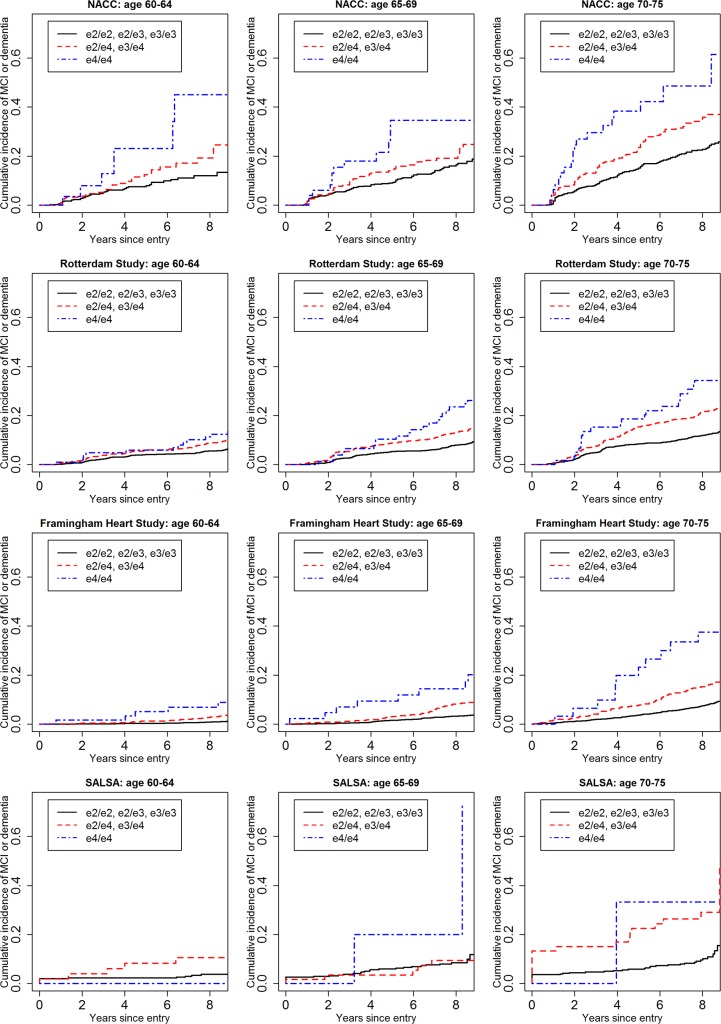
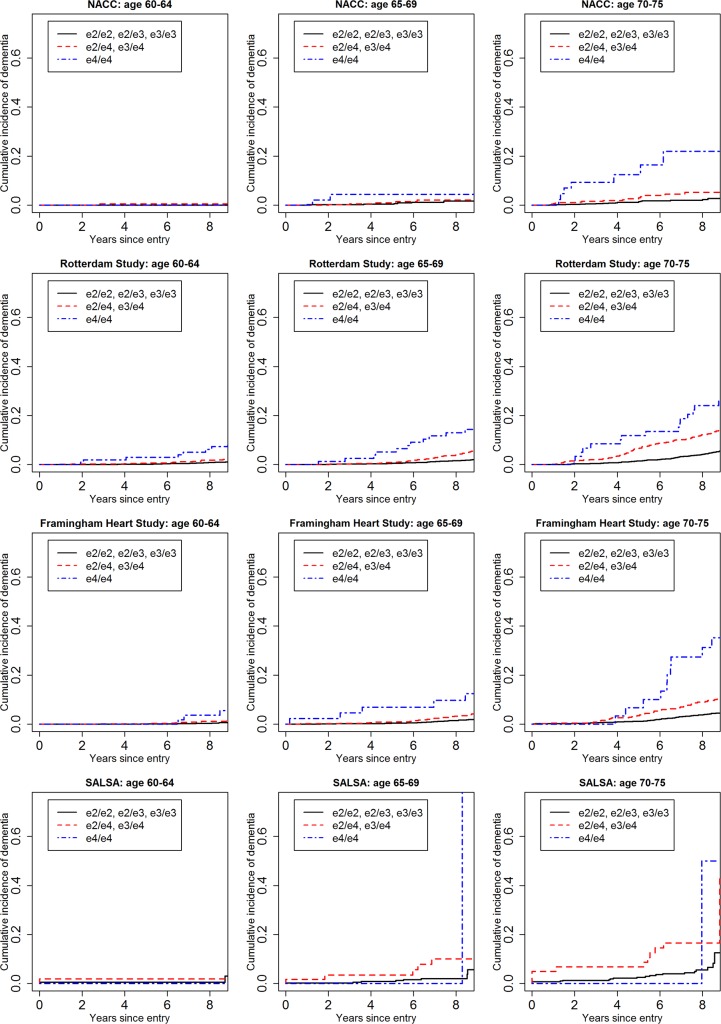
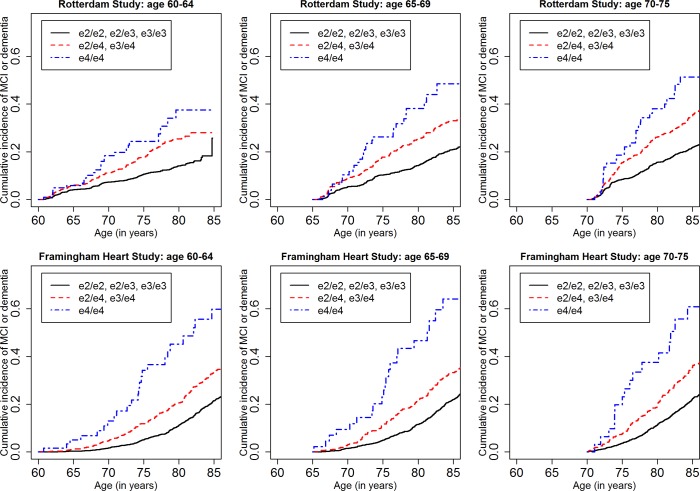
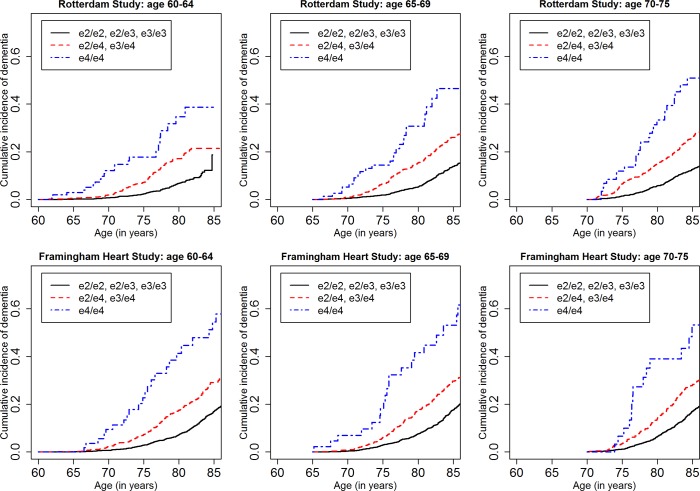
BACKGROUND: With the onset of prevention trials for individuals at high risk for Alzheimer disease, there is increasing need for accurate risk prediction to inform study design and enrollment, but available risk estimates are limited. We developed risk estimates for the incidence of mild cognitive impairment (MCI) or dementia among cognitively unimpaired individuals by APOE-e4 dose for the genetic disclosure process of the Alzheimer's Prevention Initiative Generation Study, a prevention trial in cognitively unimpaired APOE-e4/e4 homozygote individuals. METHODS AND FINDINGS: We included cognitively unimpaired individuals aged 60-75 y, consistent with Generation Study eligibility criteria, from the National Alzheimer's Coordinating Center (NACC) (n = 5,073, 158 APOE-e4/e4), the Rotterdam Study (n = 6,399, 156 APOE-e4/e4), the Framingham Heart Study (n = 4,078, 67 APOE-e4/e4), and the Sacramento Area Latino Study on Aging (SALSA) (n = 1,294, 11 APOE-e4/e4). We computed stratified cumulative incidence curves by age (60-64, 65-69, 70-75 y) and APOE-e4 dose, adjusting for the competing risk of mortality, and determined risk of MCI and/or dementia by genotype and baseline age. We also used subdistribution hazard regression to model relative hazard based on age, APOE genotype, sex, education, family history of dementia, vascular risk, subjective memory concerns, and baseline cognitive performance. The four cohorts varied considerably in age, education, ethnicity/race, and APOE-e4 allele frequency. Overall, cumulative incidence was uniformly higher in NACC than in the population-based cohorts. Among APOE-e4/e4 individuals, 5-y cumulative incidence was as follows: in the 60-64-y age stratum, it ranged from 0% to 5.88% in the three population-based cohorts versus 23.06% in NACC; in the 65-69-y age stratum, from 9.42% to 10.39% versus 34.62%; and in the 70-75-y age stratum, from 18.64% to 33.33% versus 38.34%. Five-year incidence of dementia was negligible except for APOE-e4/e4 individuals and those over 70 y. Lifetime incidence (to age 80-85 y) of MCI or dementia for the APOE-e4/e4 individuals in the long-term Framingham and Rotterdam cohorts was 34.69%-38.45% at age 60-64 y, 30.76%-40.26% at 65-69 y, and 33.3%-35.17% at 70-75 y. Confidence limits for these estimates are often wide, particularly for APOE-e4/e4 individuals and for the dementia outcome at 5 y. In regression models, APOE-e4 dose and age both consistently increased risk, as did lower education, subjective memory concerns, poorer baseline cognitive performance, and family history of dementia. We discuss several limitations of the study, including the small numbers of APOE-e4/e4 individuals, missing data and differential dropout, limited ethnic and racial diversity, and differences in definitions of exposure and outcome variables. CONCLUSIONS: Estimates of the absolute risk of MCI or dementia, particularly over short time intervals, are sensitive to sampling and a variety of methodological factors. Nonetheless, such estimates were fairly consistent across the population-based cohorts, and lower than those from a convenience cohort and those estimated in prior studies-with implications for informed consent and design for clinical trials targeting high-risk individuals.
Overview
The claims and statistics of this paper haven’t been checked yet.
Run the check — free, no account needed. It reads the open-access text and checks the sources it cites.
Integrity signals
Registry
Cites
Statistics
Figures
Verification
Claims the paper makes
The claims and statistics of this paper haven’t been checked yet.
Run the check — free, no account needed. It reads the open-access text and checks the sources it cites.
Claims other papers make about this one
Each is checked against this paper’s own text: does it say what the citing paper says it does?
The source backs part of the claim, not all of it — or backs it for a different population, condition or comparison.
In the citing paper
“For example, based on data from a study in Europe and a study in the United States, of people age 65‐69, the risk of developing dementia by the early to mid‐80s was 5% to 7% among those with no copies of the e4 form, 15% to 16% among those with one copy, and 31% to 40% among those with two copies.”
From 2024 Alzheimer's disease facts and figures (2024) · cites this paper as [82]
Experimental — accuracy not yet measuredThe source backs part of the claim, not all of it — or backs it for a different population, condition or comparison.
In the citing paper
“the lifetime risk up to age 80–85 years for mild cognitive impairment or dementia owing to AD has been estimated as 30–55% for APOEε4 homozygotes, 20–25% for APOEε3/ε4 carriers and 10–15% for APOEε3 homozygotes according to population-based studies with a majority of individuals of European ancestry17,18.”
From Multifaceted roles of APOE in Alzheimer disease (2024) · cites this paper as [17]
Experimental — accuracy not yet measured
Self-check
Percentages, sums and reported differences re-computed from the paper’s own numbers.
The self-check needs the paper’s full text.
Citations
Cites
R: A Language and Environment for Statistical Computing
R Core Team (2000) · doi:10.32614/r.manuals · Cited by 355,817
Meta-analysis in clinical trials
DerSimonian, R., & Laird, N. (1986) · Controlled Clinical Trials · doi:10.1016/0197-2456(86)90046-2 · Cited by 39,552
Hirono, N., Mori, E., Ikejiri, Y., Imamura, T., Shimomura, T., Hashimoto, M., Yamashita, H., & Ikeda, M. (1997) · PubMed · Cited by 21,010
A Proportional Hazards Model for the Subdistribution of a Competing Risk
Fine, J. P., & Gray, R. J. (1999) · Journal of the American Statistical Association · doi:10.1080/01621459.1999.10474144 · Cited by 14,290 · cited 1×
“We used subdistribution hazard regression models [50] because they directly link the regression coefficients with the cumulative incidence function (in contrast to cause-specific hazards regression [51], where the direct link cannot be made [52]; in preliminary analyses we also fit these models, and results were very…”
MethodMild Cognitive Impairment: Clinical Characterization and Outcome
Petersen, R. C., Smith, G. E., Waring, S. C., Ivnik, R. J., Tangalos, E. G., & Kokmen, E. (1999) · Archives of Neurology · doi:10.1001/archneur.56.3.303 · Cited by 8,980
A New Clinical Scale for the Staging of Dementia
Hughes, C. P., Berg, L., Danziger, W., Coben, L. A., & Martin, R. L. (1982) · British Journal of Psychiatry · doi:10.1192/bjp.140.6.566 · Cited by 7,056
A Class of $K$-Sample Tests for Comparing the Cumulative Incidence of a Competing Risk
Gray, R. J. (1988) · The Annals of Statistics · doi:10.1214/aos/1176350951 · Cited by 4,957
2013 ACC/AHA Guideline on the Assessment of Cardiovascular Risk
Goff, D. C., Lloyd-Jones, D. M., Bennett, G., Coady, S., D’Agostino, R. B., Gibbons, R., Greenland, P., Lackland, D. T., Levy, D., O’Donnell, C. J., et al. (2014) · Journal of the American College of Cardiology · doi:10.1016/j.jacc.2013.11.005 · Cited by 4,945
Goff, D. C., Lloyd-Jones, D. M., Bennett, G., Coady, S., D’Agostino, R. B., Gibbons, R., Greenland, P., Lackland, D. T., Levy, D., O’Donnell, C. J., et al. (2014) · Circulation · doi:10.1161/01.cir.0000437741.48606.98 · Cited by 3,697
Ngandu, T., Lehtisalo, J., Solomon, A., Levälahti, E., Ahtiluoto, S., Antikainen, R., Bäckman, L., Hänninen, T., Jula, A., Laatikainen, T., et al. (2015) · The Lancet · doi:10.1016/s0140-6736(15)60461-5 · Cited by 3,689
Cited by
Sorted by citations
Items 101–168 of 168
Lan, Y.-T., Blacker, D., Yuan, C., Chibnik, L. B., Albert Hofman, D., & Ma, Y. (2021) · Journal of Alzheimer s Disease · doi:10.3233/jad-210625 · Cited by 10
Self-citationCrespo, D. P., Carrasco, P. M., Mardomingo, C. D., Villalba‐Mora, E., & Montenegro-Peña, M. (2023) · Journal of Alzheimer s Disease · doi:10.3233/jad-230901 · Cited by 10
Aranda, M., Liang, J., Wang, X., Schneider, L. S. S., & Chui, H. C. (2023) · Frontiers in Psychiatry · doi:10.3389/fpsyt.2023.1165262 · Cited by 10
Graf, A., Risson, V., Gustavsson, A., Bezlyak, V., Caputo, A., Tariot, P. N., Langbaum, J. B. S., López, C. L., & Viglietta, V. (2019) · The Journal of Prevention of Alzheimer s Disease · doi:10.14283/jpad.2018.49 · Cited by 9
Self-citationOltra‐Cucarella, J., Sánchez‐SanSegundo, M., & Ferrer‐Cascales, R. (2018) · Neurobiology of Aging · doi:10.1016/j.neurobiolaging.2018.08.004 · Cited by 9
Evans, S., McRae‐McKee, K., Hadjichrysanthou, C., Wong, M. M., Ames, D. J., López, O. L., de Wolf, F., Anderson, R. M., Initiative, A. D. N., ageing, A. I. B. A. L. F. S. O., et al. (2019) · Alzheimer s & Dementia Translational Research & Clinical Interventions · doi:10.1016/j.trci.2019.04.005 · Cited by 11
Fu, Y., Wei, J., Li, B., Gao, L., Xia, P., Wen, Y., & Xu, S. (2020) · Experimental and Therapeutic Medicine · doi:10.3892/etm.2020.9198 · Cited by 9
Ryan, M. M., Cox, C. G., Witbracht, M. G., Hoang, D. K., Gillen, D. L., & Grill, J. D. (2020) · Alzheimer Disease & Associated Disorders · doi:10.1097/wad.0000000000000421 · Cited by 9
Langbaum, J. B. S., Bradbury, A. R., Egleston, B. L., Wood, E. M., Langlois, C. M., Largent, E. A., Harkins, K. A., Erickson, C. M., Stites, S. D., Oyen, E., et al. (2025) · The Lancet Healthy Longevity · doi:10.1016/j.lanhl.2025.100778 · Cited by 8
Self-citationPrograma de detección del alelo APOE-E4 en adultos mayores mexicanos con deterioro cognitivo
Mendoza, A. D. G., Martínez‐Magaña, J. J., Bojórquez, C., Téllez‐Martínez, J. A., Jiménez-Genchi, J., Roche, A., Bojorge, A., Chávez, M., Castañeda, C., Guzmán, R., et al. (2018) · Gaceta Médica de México · doi:10.24875/gmm.18003784 · Cited by 8
Genetic Counselling Improves the Molecular Characterisation of Dementing Disorders
Zampatti, S., Ragazzo, M., Peconi, C., Luciano, S., Gambardella, S., Caputo, V., Strafella, C., Cascella, R., Caltagirone, C., & Giardina, E. (2021) · Journal of Personalized Medicine · doi:10.3390/jpm11060474 · Cited by 8
Exploring the combined effects of sleep apnea and APOE-e4 on biomarkers of Alzheimer’s disease
Turner, A. D., Locklear, C. E., Oruru, D., Briggs, A., Bubu, O. M., & Seixas, A. A. (2023) · Frontiers in Aging Neuroscience · doi:10.3389/fnagi.2022.1017521 · Cited by 9
Patients asking about APOE gene test results? Here’s what to tell them
Stites (2022) · The Journal of Family Practice · doi:10.12788/jfp.0397 · Cited by 7
A profile of brain reserve in adults at genetic risk of Alzheimer's disease
Coughlan, G., Zhukovsky, P., Voineskos, A. N., & Grady, C. L. (2021) · Alzheimer s & Dementia Diagnosis Assessment & Disease Monitoring · doi:10.1002/dad2.12208 · Cited by 9
Context is everything: From cardiovascular disease to cerebral microbleeds
Charidimou, A., Blacker, D., & Viswanathan, A. (2017) · International Journal of Stroke · doi:10.1177/1747493017730907 · Cited by 7
Self-citationJiang, Z., Yu, Y., Qi, J., Liu, Y., Jiang, Y., Zhang, H., Chen, H., Guan, X., Zhang, P., Wang, T., et al. (2025) · The Journals of Gerontology Series A · doi:10.1093/gerona/glaf046 · Cited by 6
Quantifying natural amyloid plaque accumulation in the continuum of Alzheimer’s disease using ADNI
Elhefnawy, M. E., Patson, N., Mouksassi, S., Pillai, G. C., Shcherbinin, S., Chigutsa, E., & Gueorguieva, I. (2025) · Journal of Pharmacokinetics and Pharmacodynamics · doi:10.1007/s10928-024-09959-y · Cited by 6
Fisiología del envejecimiento: Actualización y perspectiva genética
López-Delgado, D. S., Andrade, G. L. C., Narváez, C. A., Santacruz, J. C. Z., & Galindo, C. Y. R. (2025) · Medicina de Familia SEMERGEN · doi:10.1016/j.semerg.2025.102452 · Cited by 6
Han, E. H., Lim, M. K., Lee, S., Lee, S. H., Yun, S. M., Yu, H.-J., Ryu, S., & Lim, Y. (2020) · Journal of Medicinal Food · doi:10.1089/jmf.2019.4678 · Cited by 6
Stites, S. D., Dedhia, M., Harkins, K. A., Karlawish, J. H., Langbaum, J. B. S., Mather, M., & Barber, S. J. (2026) · Psychology and Aging · doi:10.1037/pag0000970 · Cited by 5
Self-citationStickel, A. M., McKinnon, A. C., Matijevic, S., Grilli, M. D., Ruiz, J. M., & Ryan, L. (2021) · Frontiers in Aging Neuroscience · doi:10.3389/fnagi.2021.627322 · Cited by 5
Exploration of Alzheimer’s Disease MRI Biomarkers Using APOE4 Carrier Status in the UK BiobankPreprint
Du, J., Liu, Z., Hanford, L. C., Anderson, K. M., Feng, J., Ge, T., & Buckner, R. L. (2021) · medRxiv · doi:10.1101/2021.09.09.21263324 · Cited by 6
Arterial stiffness, pulsatile hemodynamics, and the vascular contributions to dementia
Meyer, M. L., & Hughes, T. M. (2022) · Elsevier eBooks · doi:10.1016/b978-0-323-91391-1.00041-8 · Cited by 3
Language deficits across PET‐based Braak stages of tau accumulation in Alzheimer's disease
Marier, A., Arias, J. F., Aumont, É., Hall, B. J., Macedo, A. C., Rahmouni, N., Bezgin, G., Vitali, P., Rosa‐Neto, P., & Montembeault, M. (2026) · Alzheimer s & Dementia · doi:10.1002/alz.71286 · Cited by 3
ApoE potential in CNS drugs targeting and as CNS therapeutic
Ahmed, S., Pande, A. H., & Sharma, S. S. (2024) · Elsevier eBooks · doi:10.1016/b978-0-443-23841-3.00005-4 · Cited by 3
Effect Modifiers of the Association of Blood Pressure With Brain Amyloid and Tau Pathology
Cai, W., Neitzel, J., Glodzik, L., Blacker, D., & Ma, Y. (2025) · Neurology · doi:10.1212/wnl.0000000000213441 · Cited by 3
Self-citationKumar, A., Pal, A., Singh, P., Rani, I., Tondolo, V., Rongioletti, M. C. A., & Squitti, R. (2023) · Biological Trace Element Research · doi:10.1007/s12011-023-03932-5 · Cited by 3
Dynamic measurements of β-amyloid accumulation
Sánchez‐Juan, P., & Seshadri, S. S. (2017) · Neurology · doi:10.1212/wnl.0000000000004344 · Cited by 3
Self-citationIdentifiability-Guided Assessment of Digital Twins in Alzheimer’s Disease Clinical Research and CarePreprint
Jiang, J., Petrella, J. R., Hao, W., & Initiative, T. A. D. N. (2025) · bioRxiv (Cold Spring Harbor Laboratory) · doi:10.1101/2025.08.17.670697 · Cited by 3
Real-world Site Experiences With GeneMatch
Bardach, S. H., Langbaum, J. B. S., Kebodeaux, C. S., & Jicha, G. A. (2020) · Alzheimer Disease & Associated Disorders · doi:10.1097/wad.0000000000000425 · Cited by 2
Self-citationIs it time for a paradigm shift? Inclusion of APOE on genetic dyslipidemia panels
Ison, H. E., Mowaswes, M., Durst, R. Y., Leucker, T. M., Knowles, J. W., & Brown, E. E. (2024) · Journal of Genetic Counseling · doi:10.1002/jgc4.1889 · Cited by 2
Nerve Growth Factor Compromise in Down Syndrome
Carmo, S. D., Kannel, B., & Cuello, A. C. (2021) · Frontiers in Aging Neuroscience · doi:10.3389/fnagi.2021.719507 · Cited by 2
Cochran, J. N., McKinley, E., Cochran, M., Amaral, M. D., Moyers, B. A., Lasseigne, B. N., Gray, D. E., Lawlor, J. M. J., Prokop, J. W., Geier, E. G., et al. (2019) · bioRxiv (Cold Spring Harbor Laboratory) · doi:10.1101/748046 · Cited by 2
APOE, Inflammation, and T Cells in Translational Disease Models and Clinical Medicine
Adlimoghaddam, A., Cervantes, D., & Wheeler, C. J. (2026) · Springer eBooks · doi:10.1007/978-3-031-96089-5_35 · Cited by 1
Caro, D. D., Rodriguez, S., Uhlmann, W. R., Goldman, J. S., McCain, S., Wetmore, J. B., Cabán, M., Chung, W. K., Roberts, J. S., Siegel, K., et al. (2026) · Journal of Alzheimer s Disease · doi:10.1177/13872877261435633 · Cited by 1
Self-citationNow is the time: the need to update guidance to expand access to APOE genetic testing
Uhlmann, W. R., Chan, A. K., & Goldman, J. S. (2026) · Frontiers in Dementia · doi:10.3389/frdem.2026.1808512 · Cited by 1
Cruz-Sesé, J., Miron-Alcala, M., Alfonso-Triguero, M., Olalde, J., Ruiz, L., Galbis-Gramage, N., Cortés, L., Escobar, L., Preman, P., Snellinx, A., et al. (2026) · Cell Reports · doi:10.1016/j.celrep.2026.117803 · Cited by 1
New Study Characterizing APOE4 Homozygosity as Distinct Form of Alzheimer's Sparks Debate
Shaw, G. (2024) · Neurology Today · doi:10.1097/01.nt.0001025440.05254.14 · Cited by 1
Detecting cognitive impairment in diabetics based on retinal photos by a deep learning method
Xing, X., Ye, M., Zhang, Z., 刘欧, Wei, C., Dong, Q., Li, X., He, Z., Smith, G., Wang, Z., et al. (2025) · Knowledge-Based Systems · doi:10.1016/j.knosys.2025.114165 · Cited by 1
Mendoza, A. D. G., Martínez‐Magaña, J. J., Bojórquez, C., Téllez‐Martínez, J. A., Jiménez-Genchi, J., Roche, A., Bojorge, A., Chávez, M., Castañeda, C. A. N., Guzmán, R., et al. (2018) · Gaceta Médica de México · doi:10.24875/gmm.m18000189 · Cited by 1
Copolymer-1 as a potential therapy for mild cognitive impairment
Abraham, D. I., Salazar, F. E., & Ibarra, A. (2022) · Brain and Cognition · doi:10.1016/j.bandc.2022.105892 · Cited by 1
Identification of epigenome-wide DNA methylation differences between carriers of APOE ε4 and APOE ε2Preprint
Walker, R. M., Vaher, K., Bermingham, M. L., Morris, S. W., Bretherick, A. D., Zeng, Y., Rawlik, K., Amador, C., Campbell, A., Haley, C. S., et al. (2019) · bioRxiv (Cold Spring Harbor Laboratory) · doi:10.1101/815035 · Cited by 2
Polygenic hazard scores in preclinical Alzheimer’s diseasePreprint
Tan, C. H., Sugrue, L. P., Broce, I., Tong, E., Tan, J. J. X., Hess, C. P., Dillon, W. P., Bonham, L. W., Yokoyama, J. S., Rabinovici, G. D., et al. (2017) · bioRxiv (Cold Spring Harbor Laboratory) · doi:10.1101/156331
da Costa, R. Q. M. (2020) · Digital Library of Theses and Dissertations (Universidade de São Paulo) · doi:10.11606/t.5.2020.tde-15092021-155025
Pedraza, O. L., Camacho, I., Sierra, F., Gómez, C. R., Salazar, A. M., Montalvo, M. C., Morillo, H. D., Lozano, A. G., Gutiérrez-Castañeda, L. D., Torres-Tobar, L. A., et al. (2021) · Dementia & Neuropsychologia · doi:10.1590/1980-57642021dn15-040011
Copolímero-1 como terapia potencial para el deterioro cognitivo leve
Fuentes-Fernández-Cueto, M., & Ibarra, A. (2023) · Neurología, Neurocirugía y Psiquiatría · doi:10.35366/115406
Genetic Research in Alzheimer’s Disease
Tepgeç, F., & Uyguner, Z. O. (2024) · doi:10.69860/nobel.9786053359166.8
Elsalhy, N. A., Eissa, N. R., Ragab, S. M., Abd‐Allah, G. M., & Sayed, S. M. (2024) · Journal of The Arab Society for Medical Research · doi:10.4103/jasmr.jasmr_16_24
Multimodal multiview bilinear graph convolutional network for mild cognitive impairment diagnosis
Wu, G., Li, X., Xu, Y., & Wei, B. (2025) · Biomedical Physics & Engineering Express · doi:10.1088/2057-1976/ada8af
Chaudhary, U. (2025) · Springer eBooks · doi:10.1007/978-3-031-78991-5_6
Estimation of events in cohort studies based on probability of cognitive impairment
Park, J., Abner, E. L., Wang, P., Liu, C., Jicha, G. A., Harp, J. P., Schmitt, F. A., & Kryscio, R. J. (2025) · Journal of Alzheimer s Disease · doi:10.1177/13872877251351337
Ernst, M. E., Sheets, K. M., Webb, K. L., Fravel, M. A., Woods, R. L., Beilin, L. J., Orchard, S. G., Shah, R. C., Polkinghorne, K. R., Reid, C. M., et al. (2025) · Journal of Human Hypertension · doi:10.1038/s41371-025-01087-5
Apoe genotype knowledge and its impact on cognitive beliefs and performance
Barber, S. J., Menon, M., Shoemaker, K. J., Mather, M., Langbaum, J. B. S., & Karlawish, J. H. (2025) · Aging Neuropsychology and Cognition · doi:10.1080/13825585.2025.2587702
Self-citationAPOE and Genetic Counseling for Dementia in Clinical Practice
Rumbaugh, M. C., & Chan, A. K. (2025) · Springer eBooks · doi:10.1007/978-3-031-52641-1_71-1
Gharbi‐Meliani, A., Dugravot, A., Sabia, S., Régy, M., Fayossé, A., Schnitzler, A., Mika Kivimaki, B., Singh‐Manoux, A., & Dumurgier, J. (2021) · Figshare · doi:10.6084/m9.figshare.13521163
Gharbi‐Meliani, A., Dugravot, A., Sabia, S., Régy, M., Fayossé, A., Schnitzler, A., Mika Kivimaki, B., Singh‐Manoux, A., & Dumurgier, J. (2021) · Figshare · doi:10.6084/m9.figshare.13521160
Franzmeier, N., Suárez‐Calvet, M., Frontzkowski, L. K., Moore, A. M., Hohman, T. J., Morenas‐Rodríguez, E., Nuscher, B., Shaw, L. M. J., Trojanowski, J. Q., Dichgans, M., et al. (2020) · Figshare · doi:10.6084/m9.figshare.13071124
Walker, R. M., Vaher, K., Bermingham, M. L., Morris, S. W., Bretherick, A. D., Zeng, Y., Rawlik, K., Amador, C., Campbell, A., Haley, C. S., et al. (2021) · Figshare · doi:10.6084/m9.figshare.13521105
Slachevsky, A., Pedro Zitko, M., Martínez‐Pernía, D., Forno, G., Court, F. A., Lillo, P., Villagra, R., Duran-Aniotz, C. A., Parrao, T., Assar, R., et al. (2020) · Figshare · doi:10.6084/m9.figshare.13290634
Walker, R. M., Vaher, K., Bermingham, M. L., Morris, S. W., Bretherick, A. D., Zeng, Y., Rawlik, K., Amador, C., Campbell, A., Haley, C. S., et al. (2021) · Figshare · doi:10.6084/m9.figshare.13521102
Tangwongchai, S., Tawankanjanachot, I., Tunvirachaisakul, C., Supasitthumrong, T., Hemrunroj, S., Chuchuen, P., Snabboon, T., Carvalho, A., & Maes, M. (2019) · Preprints.org · doi:10.20944/preprints201905.0377.v1
Gharbi‐Meliani, A., Dugravot, A., Sabia, S., Régy, M., Fayossé, A., Schnitzler, A., Mika Kivimaki, B., Singh‐Manoux, A., & Dumurgier, J. (2021) · Figshare · doi:10.6084/m9.figshare.13521157
APOE, Inflammation, and T Cells in Translational Disease Models and Clinical Medicine
Adlimoghaddam, A., Cervantes, D., & Wheeler, C. J. (2026) · Springer eBooks · doi:10.1007/978-3-031-52641-1_35-1
Tailoring treatments: pharmacogenomics in the management of neurodegenerative diseases
Roy, K. K., Kumari, R., Upadhyay, A. K., & Mohanty, S. (2026) · Acta Neurologica Belgica · doi:10.1007/s13760-025-02919-4
The role of the α7 nicotinic acetylcholine receptor in a model of amyloid pathology
Santos, D. G. (2024) · theses.fr (ABES) · doi:10.70675/b3ed4de5zcd9ez4421za129z0a05130d86b9
APOE‐ε4 carriership and dementia risk over 10 years among Asian American and White older adults
Wu, Y., Rojas‐Saunero, L. P., Zhou, Y., Hayes‐Larson, E., Fong, J. O., Mobley, T. M., Brenowitz, W. D., Hoffmann, T. J., Deters, K., Whitmer, R. A., et al. (2026) · Alzheimer s & Dementia · doi:10.1002/alz.71615
Returning APOE and pTau-217 Results: the eSMARTER Randomized Noninferiority Clinical TrialPreprint
Langbaum, J. B. S., Erickson, C. M., Langlois, C. M., Wood, E. M., Egleston, B. L., Harkins, K. A., Mim, R., John, S., Brown, C., Brown, S., et al. (2026) · medRxiv · doi:10.64898/2026.08.27.26361535
Self-citationRelationships between extended high frequency hearing, cognition, and speech-in-noise performance
Dorey, C. M., Eddins, D. A., Eddins, A. C., Higgins, N. C., Secor, C. A., Sánchez, V., & Ozmeral, E. J. (2026) · Frontiers in Neuroscience · doi:10.3389/fnins.2026.1933436
Metadata
- Authors
- Qian, J., Wolters, F. J., Beiser, A., Haan, M., Ikram, M. A., Karlawish, J., Langbaum, J. B., Neuhaus, J. M., Reiman, E. M., Roberts, J. S., Seshadri, S., Tariot, P. N., Woods, B. M., Betensky, R. A., & Blacker, D.
- Affiliations
- University of Massachusetts Amherst (US)
- Erasmus MC (NL)
- Boston University (US)
- University of California, San Francisco (US)
- University of Pennsylvania (US)
- Banner Alzheimer’s Institute (US)
- Translational Genomics Research Institute (US)
- University of Michigan (US)
- Harvard University (US)
- Corresponding author
- Blacker, Deborah
- ORCID
- Venue
- PLOS Medicine
- Publisher
- Public Library of Science (PLoS)
- Published
- 2017-03-21
- Volume
- 14
- Issue
- 3
- Pages
- e1002254
- ISSN
- 1549-1277 (ISSN-L)
- 1549-1676
- PMC
- PMC5360223
- OpenAlex
- W2600450442
- Cited by
- 169
- References
- 74
- Citations by year
- 2026: 10 · 2025: 23 · 2024: 15 · 2023: 15 · 2022: 12 · 2021: 35 · 2020: 20 · 2019: 19 · 2018: 12 · 2017: 8
- FWCI
- 13.24
- Type
- journal article
- Language
- en
- Open access
- gold
- doi.org
- Licence
- Locations
- PLoS Medicine (publishedVersion, cc-by)
- PubMed Central (publishedVersion, cc-by)
- PubMed (publishedVersion)
- EUR Research Repository (Erasmus University Rotterdam) (publishedVersion, other-oa)
- UA Campus Repository (The University of Arizona) (acceptedVersion, cc-by)
- eScholarship (California Digital Library) (submittedVersion, cc-by)
- Digital Access to Scholarship at Harvard (DASH) (Harvard University) (submittedVersion, cc-by)
- National University of Singapore (submittedVersion, cc-by)
- EUR Research Repository (Erasmus University Rotterdam) (submittedVersion, other-oa)
- RePub (Erasmus University Rotterdam) (submittedVersion, other-oa)
- RePEc: Research Papers in Economics (submittedVersion)
- DOAJ (DOAJ: Directory of Open Access Journals) (submittedVersion, cc-by-sa)
- eScholarship (California Digital Library) (submittedVersion)
- Figshare (submittedVersion, cc-by)
- Funders
- National Institute on Aging (P30AG053760, P30AG010129, R01AG012975, U01AG016976, P30AG010124, R21AG053695, UF1AG046150, P30AG019610, P50AG005134, R01AG008122, P01AG036694)
- National Institute of Neurological Disorders and Stroke (R01NS017950)
- Topics
- Health Sciences › Medicine › Psychiatry and Mental health › Dementia and Cognitive Impairment Research
- Life Sciences › Neuroscience › Cellular and Molecular Neuroscience › Alzheimer's disease research and treatments
- Social Sciences › Psychology › Experimental and Cognitive Psychology › Cognitive Abilities and Testing
- Keywords
- APOE ε4, Alzheimer's disease, mild cognitive impairment, dementia, risk prediction, cumulative incidence, cognitively unimpaired older adults, competing risk of death, family history of dementia, vascular risk
- MeSH terms
- Aged, Apolipoproteins E, Dementia, Female, Gene Frequency, Genotype, Humans, Male, Middle Aged, Netherlands, Risk Factors, United States, Cohort Studies, Cognitive Dysfunction
About these checks
Registry, retraction, Cites and statistics results are computed, not judged, with one exception: a printed reference that no index lists is read once by a model before it counts as a citation error. Claims are extracted by a model and kept only when their quote appears verbatim in the text; each cited source is then checked, with a model’s help, for whether it says what the claim relies on. Those verdicts can be wrong — read the claim’s quote and the cited source before relying on one.
Statistics and arithmetic are recomputed, not judged.
Confidence bands are shown only for fields calibrated on our annotated test set. None is calibrated yet, so no band is shown.
What counts as a claim ›How we measure confidence ›How we check this ›
Are you an author, or do you see a problem with this page? Request a review
