

Polycystic ovary syndrome, androgen excess, and the risk of nonalcoholic fatty liver disease in women: A longitudinal study based on a United Kingdom primary care database
Open accessThe DOI matches its Crossref record; 59 of the 59 references it cites were found in a registry or an index.
Abstract
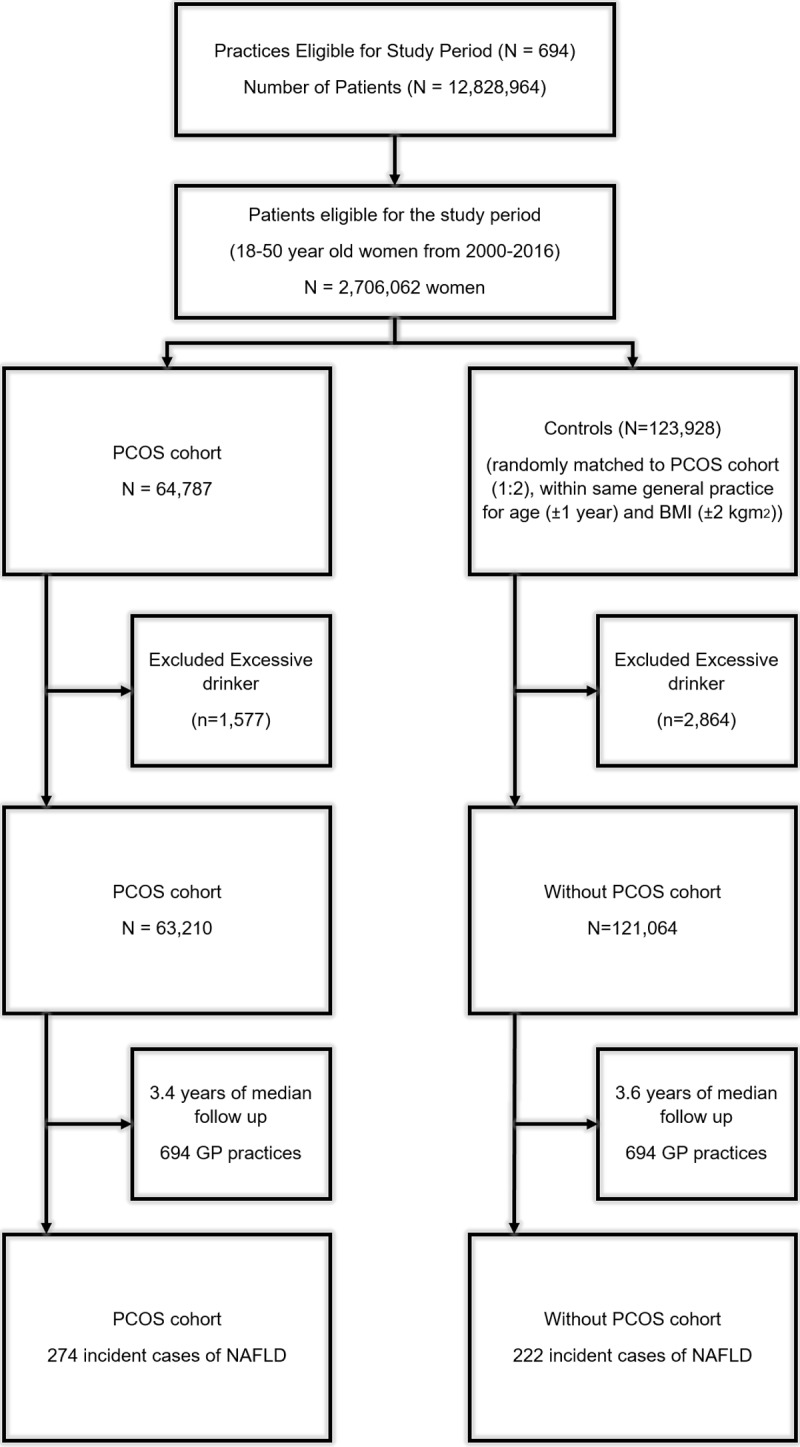
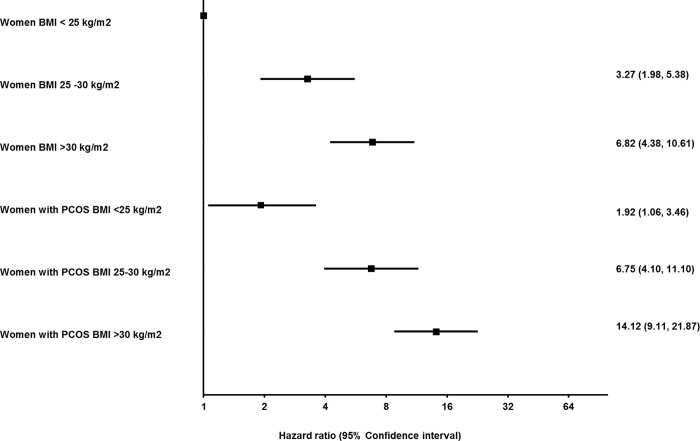
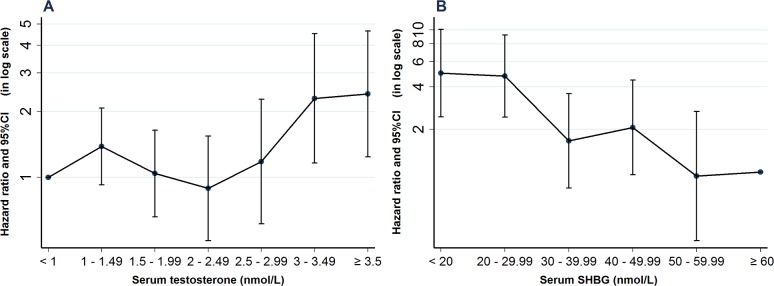
BACKGROUND: Androgen excess is a defining feature of polycystic ovary syndrome (PCOS), which affects 10% of women and represents a lifelong metabolic disorder, with increased risk of type 2 diabetes, hypertension, and cardiovascular events. Previous studies have suggested an increased risk of nonalcoholic fatty liver disease (NAFLD) in individuals with PCOS and implicated androgen excess as a potential driver. METHODS AND FINDINGS: We carried out a retrospective longitudinal cohort study utilizing a large primary care database in the United Kingdom, evaluating NAFLD rates in 63,120 women with PCOS and 121,064 age-, body mass index (BMI)-, and location-matched control women registered from January 2000 to May 2016. In 2 independent cohorts, we also determined the rate of NAFLD in women with a measurement of serum testosterone (n = 71,061) and sex hormone-binding globulin (SHBG; n = 49,625). We used multivariate Cox models to estimate the hazard ratio (HR) for NAFLD and found that women with PCOS had an increased rate of NAFLD (HR = 2.23, 95% CI 1.86-2.66, p < 0.001), also after adjusting for BMI or dysglycemia. Serum testosterone >3.0 nmol/L was associated with an increase in NAFLD (HR = 2.30, 95% CI 1.16-4.53, p = 0.017 for 3-3.49 nmol/L and HR = 2.40, 95% CI 1.24-4.66, p = 0.009 for >3.5 nmol/L). Mirroring this finding, SHBG <30 nmol/L was associated with increased NAFLD hazard (HR = 4.75, 95% CI 2.44-9.25, p < 0.001 for 20-29.99 nmol/L and HR = 4.98, 95% CI 2.45-10.11, p < 0.001 for <20 nmol/L). Limitations of this study include its retrospective nature, absence of detailed information on criteria used to diagnosis PCOS and NAFLD, and absence of data on laboratory assays used to measure serum androgens. CONCLUSIONS: We found that women with PCOS have an increased rate of NAFLD. In addition to increased BMI and dysglycemia, androgen excess contributes to the development of NAFLD in women with PCOS. In women with PCOS-related androgen excess, systematic NAFLD screening should be considered.
Overview
The claims and statistics of this paper haven’t been checked yet.
Free: it reads the open-access text and checks the first 5 claims that cite a source we can check. Create a free account to check every claim.
Integrity signals
Registry
Cites
Statistics
Figures
Verification
Claims the paper makes
The claims and statistics of this paper haven’t been checked yet.
Free: it reads the open-access text and checks the first 5 claims that cite a source we can check. Create a free account to check every claim.
Claims other papers make about this one
Each is checked against this paper’s own text: does it say what the citing paper says it does?
The check wasn’t confident either way, so it gives no verdict — never disputed.
In the citing paper
“Some studies however, reported higher prevalence of OSA irrespective of BMI in PCOS, raising the possibility that body fat distribution rather than total body mass may be more useful in determining OSAS risk in PCOS or that other factors may contribute to this association (8, 27, 28).”
From Obstructive sleep apnea syndrome in polycystic ovary syndrome: a systematic review and meta-analysis (2025) · cites this paper as [8]
Experimental — accuracy not yet measured
Self-check
Percentages, sums and reported differences re-computed from the paper’s own numbers.
The self-check needs the paper’s full text.
Citations
Cites
Younossi, Z. M., Koenig, A. B., Abdelatif, D., Fazel, Y., Henry, L., & Wymer, M. (2016) · Hepatology · doi:10.1002/hep.28431 · Cited by 10,781
(2004) · Fertility and Sterility · doi:10.1016/j.fertnstert.2003.10.004 · Cited by 9,050
Benchimol, E. I., Smeeth, L., Guttmann, A., Harron, K., Moher, D., Petersen, I., Sørensen, H. T., von Elm, E., Langan, S. M., & RECORD Working Committee (2015) · PLOS Medicine · doi:10.1371/journal.pmed.1001885 · Cited by 5,749
Multiple significance tests: the Bonferroni method
Bland, J. M., & Altman, D. G. (1995) · BMJ · doi:10.1136/bmj.310.6973.170 · Cited by 3,341
The Diagnosis of Polycystic Ovary Syndrome during Adolescence
Witchel, S. F., Oberfield, S., Rosenfield, R. L., Codner, E., Bonny, A., Ibáñez, L., Pena, A., Horikawa, R., Gomez-Lobo, V., Joel, D., et al. (2015) · Hormone Research in Paediatrics · doi:10.1159/000375530 · Cited by 3,113
Franks, S. (1995) · New England Journal of Medicine · doi:10.1056/nejm199509283331307 · Cited by 2,463
Insulin Resistance and the Polycystic Ovary Syndrome: Mechanism and Implications for Pathogenesis*
Dunaif, A. (1997) · Endocrine Reviews · doi:10.1210/edrv.18.6.0318 · Cited by 2,458
Men at risk: occupation and male infertility
Claman, P. (2004) · Fertility and Sterility · doi:10.1016/s0015-0282(03)01188-9 · Cited by 2,387
Fauser, B. C. J. M., Tarlatzis, B. C., Rebar, R. W., Legro, R. S., Balen, A. H., Lobo, R., Carmina, E., Chang, J., Yildiz, B. O., Laven, J. S. E., et al. (2012) · Fertility and Sterility · doi:10.1016/j.fertnstert.2011.09.024 · Cited by 1,976
Wong, R. J., Aguilar, M., Cheung, R., Perumpail, R. B., Harrison, S. A., Younossi, Z. M., & Ahmed, A. (2015) · Gastroenterology · doi:10.1053/j.gastro.2014.11.039 · Cited by 1,819
Cited by
Items 101–200 of 208
Zhang, X., & Nguyen, M. H. (2025) · Metabolism · doi:10.1016/j.metabol.2025.156190 · Cited by 14
Metabolic-associated fatty liver disease and the role of hormones in its aetiopathogenesis
Suwała, S., & Junik, R. (2024) · Endokrynologia Polska · doi:10.5603/ep.99689 · Cited by 17
Ni, C.-M., Huang, W., Jiang, Y., Xu, J., Duan, R., Zhu, Y., Zhu, X., Fan, X., Luo, G., Wang, Y., et al. (2020) · Trials · doi:10.1186/s13063-020-4060-6 · Cited by 13
Non-alcoholic fatty liver disease, obesity and other illnesses
Tarantino, G. (2008) · Clinical and investigative medicine · doi:10.25011/cim.v31i5.4876 · Cited by 13
Enya, J. I., Okoliko, U., Aminu, I., Kopada, A., Olorunnado, S., & Akinola, O. B. (2022) · Basic and Clinical Neuroscience Journal · doi:10.32598/bcn.2022.2985.1 · Cited by 12
“In clinical studies, Milsom and colleagues have reported the elevation of LH or LH/FSH ratio to correlate with the increased risk of infertility and menstrual cycle disturbance Milsom et al. (2003). The hormonal level of LH and FSH in PCOS rats was significantly increased when compared to control rats in this study.”
ResultMetabolic Syndrome, Hepatic Steatosis and Testosterone: A Matter of Sex
Gangitano, E., Scannapieco, F., Lubrano, C., & Gnessi, L. (2024) · Livers · doi:10.3390/livers4040038 · Cited by 11
“Women with PCOS showed a higher rate of NAFLD, and, in particular, serum testosterone levels above 3 nmol/L and SHBG levels below 30 nmol/L were associated with an increased risk of NAFLD [102].”
Fecal propionate is a signature of insulin resistance in polycystic ovary syndrome
Dong, S., Yao, X., Jiao, J., Lin, B., Yan, F., & Wang, X. (2025) · Frontiers in Cellular and Infection Microbiology · doi:10.3389/fcimb.2024.1394873 · Cited by 10
Zhu, B., Chen, Y., Xu, F., Shen, X., Chen, X., Lv, J., & Zhang, S. (2021) · Endocrine Connections · doi:10.1530/ec-20-0608 · Cited by 11
de Medeiros, S. F., Barbosa, B. B., de Medeiros, M. A. S., Yamamoto, A. K. L. W., & Yamamoto, M. M. W. (2022) · Revista Brasileira Ginecologia e Obstetrícia · doi:10.1055/s-0041-1741030 · Cited by 11
Shahbaz, M., Almatooq, H., Foucambert, P., Esbrand, F. D., Zafar, S., Panthangi, V., Kurupp, A. R. C., Raju, A., Luthra, G., & Khan, S. (2022) · Cureus · doi:10.7759/cureus.29928 · Cited by 16
“that women with serum testosterone levels greater than three nmol/L and sex hormone binding globulin (SHBG) less than 30 nmol/L had an increased rate of NAFLD occurrence [22].”
BackgroundInfluentialHu, R., Long, S.-L., Luo, M., Tang, B., Tan, T., Dong, W., Wang, Q., & Zhang, J. (2024) · Molecular Nutrition & Food Research · doi:10.1002/mnfr.202300915 · Cited by 11
Nandi, A., Singh, K. D., & Sharma, K. (2025) · Microchimica Acta · doi:10.1007/s00604-025-07187-w · Cited by 14
“…stroke [9], carotid intima-media thickness [10]), metabolic risk (obesity [11], insulin resistance [12], nonalcoholic fatty liver disease [13], obstructive sleep apnea [14]), endometrial cancer [15], and mental health and neurological disease (depression, anxiety [16], eating disorder…”
Cavalcante, R. B. D. M., Leão, L. M. C. S. M., Tavares, A. B. W., Lopes, K. G., Terra, C., Salgado, Â. A., & Kraemer‐Aguiar, L. G. (2024) · Endocrine · doi:10.1007/s12020-024-04077-8 · Cited by 9
“…multivariate logistic regression, reported that the association between NAFLD and IR in PCOS did not persist, consistent with our fi ndings; they suggested that hyperandrogenism, rather than IR, plays a pivotal role in the onset of hepatic fat deposition in PCOS, as previously reported [14, 41, 47].”
Sarkar, M. A., & Suzuki, A. (2020) · Clinical Liver Disease · doi:10.1002/cld.955 · Cited by 11
Liu, Y., Chen, Y., Xie, X., Yin, A., Yin, Y., Liu, Y., Dong, L., Zhu, Z., Zhou, J., Zeng, Q., et al. (2020) · Oxidative Medicine and Cellular Longevity · doi:10.1155/2020/8096847 · Cited by 12
“Estrogens can reduce drug-induced liver injury in mice [37], while androgen excess drives progression to liver inflammation and increases the risk of NAFLD in women with polycystic ovary syndrome [38].”
BackgroundPolycystic ovary syndrome and nonalcoholic fatty liver disease
Georgescu, C. E. (2021) · Elsevier eBooks · doi:10.1016/b978-0-12-823045-9.00007-9 · Cited by 10
Eslami, B., Aletaha, N., Maleki‐Hajiagha, A., Sepidarkish, M., & Moini, A. (2022) · Journal of Research in Medical Sciences · doi:10.4103/jrms.jrms_292_20 · Cited by 11
“Some studies have suggested that androgen excess levels such as free testosterone and free androgen index indicate the increased risk of NAFLD in PCOS women.[18,23,24] In this study, we did not measure the androgen levels and we are unable to explain the effect of androgenicity on the risk of NAFLD and it was another…”
ResultLü, N., Shan, C., Fu, J.-R., Zhang, Y., Wang, Y., Zhu, Y., Yu, J., Cai, J., Li, S., Tao, T., et al. (2023) · Journal of Clinical Medicine · doi:10.3390/jcm12020451 · Cited by 9
“Hyperandrogenism may also be implicated in NAFLD through direct action in hepatic lipid metabolism [7].”
BackgroundResultSmyk, W., Papapostoli, I., Żorniak, M., Sklavounos, P., Blukacz, Ł., Madej, P., Koutsou, A., Weber, S. N., Friesenhahn‐Ochs, B., Cebula, M., et al. (2023) · Liver International · doi:10.1111/liv.15527 · Cited by 10
Considerations in the Diagnoses and Management of Hepatic Disease in Older Adults
Brown, C. L., & Bajaj, J. S. (2025) · The American Journal of Gastroenterology · doi:10.14309/ajg.0000000000003641.07 · Cited by 10
Fu, C. S., Minjie, C., Zhang, W., Yin, H., Chen, G., Qingxia, H., Xiaoping, Y., Lan, C., Ping, W., Chu-jia, L., et al. (2020) · HORMONES · doi:10.1007/s42000-020-00219-5 · Cited by 8
EUS imaging for the diagnosis of nonalcoholic fatty liver disease
Silva-Santisteban, A., Agnihotri, A., Cruz‐Romero, C., Nasser, I. A., Malvar, G. L., Nsubuga, J. P., Villafuerte-Gálvez, J., Bonder, A., Pleskow, D. K., Berzin, T. M., et al. (2021) · Gastrointestinal Endoscopy · doi:10.1016/j.gie.2021.11.048 · Cited by 10
Perng, W., Fitz, V. W., Salmon, K., Hivert, M., Kazemi, M., Rifas‐Shiman, S. L., Shifren, J. L., Oken, E., & Chavarro, J. E. (2024) · American Journal of Epidemiology · doi:10.1093/aje/kwae179 · Cited by 9
Duan, H., Gong, M., Yuan, G., & Wang, Z. (2024) · Journal of Clinical and Experimental Hepatology · doi:10.1016/j.jceh.2024.102459 · Cited by 9
Wierman, M. E. (2021) · Endocrinology and Metabolism Clinics of North America · doi:10.1016/j.ecl.2020.12.003 · Cited by 8
Das polyzystische Ovarsyndrom als genderspezifischer kardiometabolischer Risikofaktor
van Baal, L., & Tan, S. (2023) · Die Innere Medizin · doi:10.1007/s00108-023-01529-7 · Cited by 8
Olaniyi, K. S., & Areloegbe, S. E. J. (2023) · Canadian Journal of Physiology and Pharmacology · doi:10.1139/cjpp-2023-0169 · Cited by 11
Differential Effects of Various Androgens on Polycystic Ovary Syndrome
de Medeiros, S. F., Barbosa, B. B., de Medeiros, A. K. L. W. Y., de Medeiros, M. A. S., & Yamamoto, M. M. W. (2021) · Hormone and Metabolic Research · doi:10.1055/a-1422-3243 · Cited by 7
Hong, S., Sung, Y., Hong, Y. S., Song, D. K., Jung, H., Jeong, K., Chung, H., & Lee, H. (2025) · Frontiers in Endocrinology · doi:10.3389/fendo.2025.1480528 · Cited by 7
Bril, F. (2026) · Diabetes Obesity and Metabolism · doi:10.1111/dom.70553 · Cited by 7
“47 Most studies have focused only on the relationship with hepatic steatosis and metabolic risk factors, rather than with the prevalence of clinically significant liver fibrosis.”
Wu, Z., Liang, G., Zhang, Y., & Li, R. (2025) · Endocrine Practice · doi:10.1016/j.eprac.2025.01.011 · Cited by 7
Sherif, K., Coborn, J., Hoovler, A., & Gill, L. A. (2022) · Postgraduate Medicine · doi:10.1080/00325481.2022.2140511 · Cited by 9
“NAFLD is another adiposity-based chronic disease associated with metabolic syndrome [29].”
BackgroundInfluentialJin, B.-H., Xu, H., Zhang, Z., Fan, Y.-H., Jiang, C., Qi, S., Xiao, C.-Y., Fu, X., & Qian, L.-B. (2025) · International Journal of Molecular Medicine · doi:10.3892/ijmm.2025.5630 · Cited by 5
“%) compared with the general population (14‑34%), with patients experiencing a greater severity of hepatic steatosis and fibrosis (4,5).”
Menstrual and Hormonal Dysfunction
Teasdale, A., Gale, K., & Holloway, D. (2019) · Springer eBooks · doi:10.1007/978-3-030-16115-6_2 · Cited by 8
Extrahepatic manifestation of metabolic dysfunction-associated steatotic liver disease
Shenoy, A., Ahmed, A., & Kim, D. (2025) · Metabolism and Target Organ Damage · doi:10.20517/mtod.2025.73 · Cited by 10
Bazmi, S., Soleimani-Meigoli, M. S., Fardaei, M., Mohammadi, Z., Homayounfar, R., Kazemi, M., Pezeshki, B., & Farjam, M. (2025) · Scientific Reports · doi:10.1038/s41598-025-26483-2 · Cited by 4
“Insulin resistance dysregulates SHGB, leading to higher androgen bioavailability, which plays a crucial role in AGA and hepatic fat accumulation in MASLD 48,49 .”
Polycystic ovary syndrome and nonalcoholic fatty liver disease
Butt, A. S., & Devi, J. R. (2023) · Elsevier eBooks · doi:10.1016/b978-0-323-87932-3.00021-9 · Cited by 4
Prevalence and Clinical Management of Adrenal Tumour-Related Hyperandrogenism: A Narrative Review
Medenica, S., Živanović, D., Milardi, D., Bruno, C., Batkoska, L., Traini, E., & Pontecorvi, A. (2024) · Life · doi:10.3390/life14030360 · Cited by 4
Non-alcoholic Steatohepatitis: From Pathophysiology to Clinical Practice
Schwartz, S. L., Lucas, J., DeLegge, M. H., & IQVIA, R. (2021) · touchREVIEWS in Endocrinology · doi:10.17925/ee.2021.17.2.112 · Cited by 4
“001), even when controlling for additional risk factors, such as the presence of diabetes or pre-diabetes.(37)”
BackgroundLi, X., Lin, X., Zhuang, Z., Luo, Y., Li, Y., Isse, S. A., Chen, Z., Meng, F., Luo, Q., Zhu, B., et al. (2025) · Environment & Health · doi:10.1021/envhealth.5c00156 · Cited by 5
Aksun, S., Eroğlu, B. Ç., Güneşli, I., İdilman, İ. S., Karçaaltıncaba, M., & Yıldız, B. O. (2025) · Maturitas · doi:10.1016/j.maturitas.2025.108810 · Cited by 3
Metabolic Syndrome in Polycystic Ovary Syndrome
Hsieh, Y.-C., Yang, P.-K., & Chen, M. (2021) · Fertility & Reproduction · doi:10.1142/s2661318221500158 · Cited by 4
Xiao, C.-W., Carbonel, A. A. F., Lima, P., Hendry, A., & Tsang, B. K. (2024) · British Journal Of Nutrition · doi:10.1017/s0007114524001296 · Cited by 3
“For instance, the prevalence of non-alcoholic fatty liver diseases (NAFLD) in patients with PCOS (5) ranged from 34 to 70 % compared with 14 to 34 % in healthy women.”
Serum testosterone mirrors inflammation parameters in females hospitalized with COVID-19
Birtolo, M. F., Vena, W., Pizzocaro, A., Lavezzi, E., Brunetti, A., Jaafar, S., Betella, N., Bossi, A. C., Mazziotti, G., Lania, A. G., et al. (2022) · Journal of Endocrinological Investigation · doi:10.1007/s40618-022-01957-6 · Cited by 5
“Moreover, hyperandrogenism is a primary driver of increased risk of diabetes and fatty liver disease in PCOS women [21, 22].”
BackgroundJacobi, N., Rodin, H., Erdősi, G., & Khowaja, A. A. (2019) · Integrative Food Nutrition and Metabolism · doi:10.15761/ifnm.1000260 · Cited by 3
Cherlin, T., Mohammed, S., Strydesky, S., Ottey, S., Sherif, K., & Verma, S. S. (2025) · eLife · doi:10.7554/elife.103875 · Cited by 6
Kochanowicz, M., Rhaiem, T. B., Owczarek, A. J., Wójtowicz, M., Madej, P., Chudek, J. T., & Olszanecka‐Glinianowicz, M. (2026) · Biomedicines · doi:10.3390/biomedicines14010187 · Cited by 2
“The SHBG cut-off point below 43 nmol/L estimated empirically in our study is located between those estimated in women with PCOS for assessment of the risk of the development of NAFLD (below 30 nmol/L) [16] and the risk of type 2 diabetes development in the general population (below 50 nmol/L) [12].”
Liao, X., & Cao, S. (2020) · Genetic Testing and Molecular Biomarkers · doi:10.1089/gtmb.2019.0229 · Cited by 3
“Second, it has been reported that PCOS is always accompanied by PCOS-associated metabolic abnormalities (Le et al. , 2018) and androgen excess (Kumarendran et al. , 2018), which might confound the effects of SHBG polymorphisms on serum SHBG concentrations.”
Vincenzo, A. D., Russo, L., Doroldi, C. G., Vettor, R., & Rossato, M. A. (2021) · Exploration of Medicine · doi:10.37349/emed.2021.00049 · Cited by 2
“[36] Observational Women aged 18-50 with and without PCOS Patients with PCOS have an increased rate of NAFLD irrespective of BMI or impaired glucose metabolism Sarkar et al.”
BackgroundSPECIFIC FEATURES OF METABOLIC DISORDERS IN MALES AND FEMALES WITH NON-ALCOHOLIC FATTY LIVER DISEASE
Shaabani, S., & Pchelin, I. Y. (2020) · Juvenis scientia · doi:10.32415/jscientia_2020_6_6_18-32 · Cited by 3
“Еще одно крупное исследование, включившее 63120 женщин с СПКЯ и 121064 женщин без данной патологии, показало, что риск развития стеатоза возрастает при уровне общего тестостерона >3 нмоль/л и снижении уровня глобулина, связывающего половые гормоны, <30 нмоль/л [72].”
Non-alcoholic steatohepatitis in patients with endocrine pathology. Review
Ткач, С. М., & Чеверда, Т. Л. (2021) · Clinical endocrinology and endocrine surgery · doi:10.30978/cees-2021-2-82 · Cited by 2
Cruz, J. F., Ferrari, Y. A. C., González, T. R. A., Barros, A. O., Mota, A. V. H., Machado, C. P., Santana, J. T., Santana, N. N., Castro, L. R., & Lima, S. O. (2020) · Revista Eletrônica Acervo Saúde · doi:10.25248/reas.e4105.2020 · Cited by 2
Impact of Chronic Liver Disease on Nutrition, Growth and Puberty in Adolescence
Kyrana, E. (2022) · In clinical practice · doi:10.1007/978-3-030-98808-1_1 · Cited by 3
Лазарева, Л. М., Atalyan, A. V., Васильевна, Б. Л., Николаевна, Д. И., Nadeliaeva, I. G., Махарамович, Ш. Э., Egorova, I. Y., Babaeva, N. I., Salimova, M. D., & Сутурина, Л. В. (2023) · Fundamental and Clinical Medicine · doi:10.23946/2500-0764-2023-8-2-42-52 · Cited by 1
Síndrome de ovario poliquístico, más allá de una afección en la reproducción.
Fuentes-Ibarra, J., Valencia‐Ortega, J., González-Reynoso, R., & Saucedo, R. (2023) · Educación y Salud Boletín Científico Instituto de Ciencias de la Salud Universidad Autónoma del Estado de Hidalgo · doi:10.29057/icsa.v12i23.10678 · Cited by 3
Approach to the patient: investigation of postmenopausal androgen excess
Madden-Doyle, L., Bowers, K., Sherlock, M., & O’Reilly, M. (2026) · The Journal of Clinical Endocrinology & Metabolism · doi:10.1210/clinem/dgag221 · Cited by 1
Self-citationMetabolic dysfunction-associated steatotic liver disease in women across the life course
Okigbo, C. C., Springel, E. H., Blaney, H. L., & Sanyal, A. J. (2026) · The Lancet Obstetrics Gynaecology & Women s Health · doi:10.1016/s3050-5038(26)00177-9 · Cited by 1
Polycystic Ovary Syndrome and Obstructive Sleep Apnea
Aubuchon, M. (2020) · Current clinical neurology · doi:10.1007/978-3-030-40842-8_13 · Cited by 2
王, 亚. (2024) · Medical Diagnosis · doi:10.12677/md.2024.141018 · Cited by 1
The impact of type 2 diabetes on polycystic ovary syndrome in patients undergoing sleeve gastrectomy
Zhu, T., Zhao, Y., Bi, X., Zhao, P., Liu, T., Li, Y., Li, S., Zhao, S., Liu, S., & Huang, X. (2024) · Human Reproduction · doi:10.1093/humrep/deae159 · Cited by 1
Polycystic ovary syndrome and cardiovascular risk
Popova, P., Gorelova, I. V., & Grineva, E. N. (2019) · Arterial’naya Gipertenziya (Arterial Hypertension) · doi:10.18705/1607-419x-2018-24-6-654-665 · Cited by 1
Rastogi, A., Prasad, M., Ramalingam, A., & Kapil, U. (2022) · Indian Journal of Community Health · doi:10.47203/ijch.2022.v34i01.002 · Cited by 1
“hormone-binding globulin was associated with increased NAFLD hazard ratio(54).”
BackgroundKamble, S. C., & Ghosh, P. (2024) · Current Opinion in Biomedical Engineering · doi:10.1016/j.cobme.2024.100534 · Cited by 1
The Endocrinology of Liver Disease
George, J., & Eslam, M. (2022) · doi:10.1093/med/9780198870197.003.0206 · Cited by 1
Association between nonalcoholic fatty liver disease and infertility in reproductive-aged femalesPreprint
Zhao, J., Liang, A., & Li, Z. (2024) · Research Square · doi:10.21203/rs.3.rs-4963920/v1 · Cited by 1
NAFLD, Diabetes, and Other Endocrine Diseases: Clinical Implications
Targher, G., & Mantovani, A. (2020) · Springer eBooks · doi:10.1007/978-3-319-95828-6_8
Polycystic Ovarian Syndrome and Diabetes Mellitus: What's New?
Nasr, M. Y., Alhuqayl, T. A., Alshammari, H. A., Alkhudhayri, H., Alzin, M. B., & Sulimani, R. A. (2021) · Journal of Nature and Science of Medicine · doi:10.4103/jnsm.jnsm_140_20
Identification the key genes between polycystic ovary syndrome and Non-Alcoholic Fatty Liver DiseasePreprint
Yifu, P. (2021) · Research Square · doi:10.21203/rs.3.rs-1145395/v1
Марущак, М. І., & Габор, Г. Г. (2021) · Bulletin Of Medical And Biological Research · doi:10.11603/bmbr.2706-6290.2021.3.12569
O PROCESSO DE TRABALHO EM SAÚDE E A EDUCAÇÃO PERMANENTE: DESAFIOS E POSSIBILIDADES
Freire, F. D. F. D. S., Melo, F. N. D. P., Melo, D. F. C., Holanda, D. X. T., Soares, M. K. P., Oliveira, A. K. D. S., Veríssimo, F. A. D. S., & Gomes, A. M. D. A. (2021) · Brazilian Journals Editora eBooks · doi:10.35587/brj.ed.0000642
Paul, J., Syeda Khanam, P., Jain, P., & Abinaya., T. (2021) · International Journal of Medical and Exercise Science · doi:10.36678/ijmaes.2021.v07i04.003
Polycystic Ovary Syndrome: Metabolic Aspects
Ehrmann, D. A., & Sam, S. (2022) · doi:10.1093/med/9780198870197.003.0160
(2022) · American Registry of PathologyArlington, Virginia eBooks · doi:10.55418/9781933477183-9
ASSOCIAÇÃO DA SÍNDROME DOS OVÁRIOS POLICÍSTICOS COM A DOENÇA HEPÁTICA GORDUROSA NÃO ALCOÓLICA.
Ithiara Correia, L. I. M. A., Maia, L. C. D. A., ROCHA, L. C. P. M., VERÇOSA, W. M., RODRIGUES, W. W., & MARQUES, A. E. F. M. (2022) · Visão Acadêmica · doi:10.5380/acd.v23i3.86260
The Relationship Between Metabolic Syndrome and PCOS: A Review for the Obstetrician/Gynecologist
Hodge, S., Marchetto, N. M., & Morelli, S. S. (2021) · Topics in Obstetrics & Gynecology · doi:10.1097/01.pgo.0000771968.30823.68
Liu, D., Gao, X., Pan, X., Zhou, T., Zhu, C., Li, F. R., Fan, J., Targher, G., & Zhao, J. (2023) · Figshare · doi:10.6084/m9.figshare.22610861
Zhang, Y., Zhou, W., Su, Q., & Chen, Q. (2025) · Combinatorial Chemistry & High Throughput Screening · doi:10.2174/0113862073325251241101054306
Understanding Pain in Polycystic Ovary Syndrome: Health Risks and Treatment EffectivenessPreprint
Cherlin, T., Mohammed, S., Ottey, S., Sherif, K., & Verma, S. S. (2025) · eLife · doi:10.7554/elife.103875.1 · Cited by 5
Addressing a Key Metabolic Component of PCOS: Insulin
Hopkins, D., & Chappell, A. (2025) · Obstetrics and gynecology. · doi:10.5772/intechopen.1010981
Polyzystisches Ovarsyndrom als geschlechtsspezifisches kardiometabolisches Risiko
Lee-Barkey, Y. H., Stratmann, B., Opacic, T., Klose, J. M., & Reger-Tan, S. (2025) · Die Diabetologie · doi:10.1007/s11428-025-01349-3
Polyzystisches Ovarsyndrom: Sinnvolle Betreuung über die Gynäkologie hinaus
Lee-Barkey, Y. H., Stratmann, B., Klose, J. M., & Reger-Tan, S. (2025) · Deutsches Ärzteblatt · doi:10.3238/persgyn.2025.10.17.05
Vusirikala, A., Taverner, T., Bhala, N., Tahrani, A. A., Thomas, G. N., & Nirantharakumar, K. (2020) · Figshare · doi:10.6084/m9.figshare.12593187
Self-citationSubramanian, A., Lee, S. I., Phillips, K., Toulis, K. A., Kempegowda, P., O’Reilly, M. W., Adderley, N. J., Thangaratinam, S., Arlt, W., & Nirantharakumar, K. (2022) · Figshare · doi:10.6084/m9.figshare.20727641
Self-citationLiu, D., Gao, X., Pan, X.-F., Zhou, T., Zhu, C., Li, F., Fan, J.-G., Targher, G., & Zhao, J. (2023) · Figshare · doi:10.6084/m9.figshare.22610864
Subramanian, A., Lee, S. I., Phillips, K., Toulis, K. A., Kempegowda, P., O’Reilly, M. W., Adderley, N. J., Thangaratinam, S., Arlt, W., & Nirantharakumar, K. (2022) · Figshare · doi:10.6084/m9.figshare.20727644
Self-citationSubramanian, A., Lee, S. I., Phillips, K., Toulis, K. A., Kempegowda, P., O’Reilly, M. W., Adderley, N. J., Thangaratinam, S., Arlt, W., & Nirantharakumar, K. (2022) · Figshare · doi:10.6084/m9.figshare.20727647
Self-citationSubramanian, A., Lee, S. I., Phillips, K., Toulis, K. A., Kempegowda, P., O’Reilly, M. W., Adderley, N. J., Thangaratinam, S., Arlt, W., & Nirantharakumar, K. (2022) · Figshare · doi:10.6084/m9.figshare.20727653
Self-citationSubramanian, A., Lee, S. I., Phillips, K., Toulis, K. A., Kempegowda, P., O’Reilly, M. W., Adderley, N. J., Thangaratinam, S., Arlt, W., & Nirantharakumar, K. (2022) · Figshare · doi:10.6084/m9.figshare.20727650
Self-citationDas polyzystische Ovarsyndrom (PCOS) – mehr als Insulinresistenz und Androgene
Reger-Tan, S., Lee-Barkey, Y. H., Klose, J. M., & Stratmann, B. (2026) · Diabetologie und Stoffwechsel · doi:10.1055/a-2595-2031
“Neben Schwangerschafts-und Typ Diabetes mellitus (T2D) umfasst die Diagnose PCOS auch kardiovaskuläre Risikofaktoren wie Hypertonie, Dys-lipidämie, Adipositas, mit metabolischer Dysfunktion as-soziierte Lebererkrankung (MASLD) und kardiovaskuläre Ereignisse in jungen Jahren ( Abb.1 ) [5, 6 kar-diometabolische Risiken,…”
InfluentialInfluence du sexe dans la susceptibilité aux hépatopathies métaboliques
Smati, S. (2019) · theses.fr (ABES) · doi:10.70675/01997f55za990z41e6z96baz8221de2a6281
La nécroptose : une nouvelle cible thérapeutique dans la stéatohépatite non-alcoolique
Majdi, A. (2020) · theses.fr (ABES) · doi:10.70675/94f28bbaz6c2dz4b48zb1aaze6b48ca72708
Riscos de infecção por SARS-CoV-2 e COVID-19 em mulheres com síndrome dos ovários policísticos
de Medeiros, S. F., de Medeiros, M. A. S., Carvalho, A. B. D. S., Yamamoto, A. K. L. W., & Yamamoto, M. M. W. (2022) · Femina · doi:10.61622/0100-72545010202208 · Cited by 1
Devas, N., Sidhu, S. K., Kolli, S., Lofton, H. F., Tsai, A. Y., Faulx, G., Murphy, S., & Popov, V. (2026) · Journal of Clinical Gastroenterology · doi:10.1097/mcg.0000000000002399
Mehal, K., Pielich, W. M., Siusta, N., Gałan, K., Kuczyńska, S., & Balicka-Dworczak, N. (2026) · International Journal of Innovative Technologies in Social Science · doi:10.31435/ijitss.2(50).2026.5908
Lonardo, A., Jamalinia, M., & Weiskirchen, R. (2026) · Livers · doi:10.3390/livers6050086 · Cited by 1
Dutta, S., Daneshpazhouh, M., Muzammil, H. F., Al-Nuaimy, Y., Jalkhi, T., Pardasani, P., Shaju, R. E., Siby, A., Kalita, J. C., Rosas, I. M., et al. (2026) · Biochemistry and Biophysics Reports · doi:10.1016/j.bbrep.2026.102777 · Cited by 1
Polycystic ovary syndrome phenotypes in Iranian infertile women: a cross-sectional study
Borujerdi, N. R., Khales, S. A., Esmaily, H., & Mahmoudinia, M. (2026) · Middle East Fertility Society Journal · doi:10.1186/s43043-026-00358-6
Martini, A., & Adler, J. (2026) · Trillium Diagnostik · doi:10.47184/td.2026.03.07
Oral Contraceptive Use and Risk of Hepatic Complications: Two Cohort StudiesPreprint
Nasr, D., Kaur, A., Nasr, J., Nawaz, A., Brown, K., & Ali, A. (2026) · Research Square · doi:10.21203/rs.3.rs-10909423/v1
Metadata
- Authors
- Kumarendran, B., O’Reilly, M. W., Manolopoulos, K. N., Toulis, K. A., Gokhale, K. M., Sitch, A. J., Wijeyaratne, C. N., Coomarasamy, A., Arlt, W., & Nirantharakumar, K.
- Affiliations
- University of Kelaniya (LK)
- University of Birmingham (GB)
- University of Colombo (LK)
- Corresponding author
- Arlt, Wiebke
- Nirantharakumar, Krishnarajah
- ORCID
- Venue
- PLOS Medicine
- Publisher
- Public Library of Science (PLoS)
- Published
- 2018-03-28
- Volume
- 15
- Issue
- 3
- Pages
- e1002542
- ISSN
- 1549-1277 (ISSN-L)
- 1549-1676
- PMC
- PMC5873722
- OpenAlex
- W2794855941
- Cited by
- 206
- References
- 59
- Citations by year
- 2026: 20 · 2025: 27 · 2024: 20 · 2023: 20 · 2022: 37 · 2021: 34 · 2020: 23 · 2019: 19 · 2018: 5
- FWCI
- 21.60
- Type
- journal article
- Language
- en
- Open access
- gold
- doi.org
- Licence
- Locations
- PLoS Medicine (publishedVersion, cc-by)
- Europe PMC (PubMed Central) (publishedVersion, cc-by)
- PubMed Central (publishedVersion, cc-by)
- PubMed (publishedVersion)
- DOAJ (DOAJ: Directory of Open Access Journals) (submittedVersion, cc-by-sa)
- Figshare (submittedVersion, cc-by)
- University of Birmingham Research Portal (University of Birmingham) (submittedVersion, cc-by)
- Spiral (Imperial College London) (submittedVersion, cc-by)
- Funders
- Wellcome Trust (099909, 092283)
- Topics
- Health Sciences › Medicine › Reproductive Medicine › Ovarian function and disorders
- Health Sciences › Medicine › Hepatology › Liver Disease Diagnosis and Treatment
- Health Sciences › Medicine › Endocrinology, Diabetes and Metabolism › Diabetes, Cardiovascular Risks, and Lipoproteins
- Keywords
- polycystic ovary syndrome, hyperandrogenism, non-alcoholic fatty liver disease, women, serum testosterone, sex hormone-binding globulin, NAFLD risk, primary care, metabolic disorders, dysglycemia, body mass index, type 2 diabetes, cardiovascular risk, hypertension, insulin resistance, dyslipidemia, polycystic ovary morphology
- MeSH terms
- Adolescent, Adult, Androgens, Diabetes Mellitus, Type 2, Female, United Kingdom, Humans, Insulin Resistance, Longitudinal Studies, Male, Middle Aged, Polycystic Ovary Syndrome, Retrospective Studies, Risk Factors, Body Mass Index, Prevalence, Multivariate Analysis, Proportional Hazards Models, Young Adult, Non-alcoholic Fatty Liver Disease
About these checks
Registry, retraction, Cites and statistics results are computed, not judged, with one exception: a printed reference that no index lists is read once by a model before it counts as a citation error. Claims are extracted by a model and kept only when their quote appears verbatim in the text; each cited source is then checked, with a model’s help, for whether it says what the claim relies on. Those verdicts can be wrong — read the claim’s quote and the cited source before relying on one.
Statistics and arithmetic are recomputed, not judged.
Confidence bands are shown only for fields calibrated on our annotated test set. None is calibrated yet, so no band is shown.
What counts as a claim ›How we measure confidence ›How we check this ›
Are you an author, or do you see a problem with this page? Request a review
Data sources
Bibliographic data: Semantic Scholar, OpenAlex, Crossref.
Contains information from the Semantic Scholar Academic Graph Datasets, made available under the ODC Attribution License (ODC-BY 1.0).
Semantic Scholar’s data is described in: Kinney, R., et al. (2023). The Semantic Scholar Open Data Platform. arXiv:2301.10140.
