

Polycystic ovary syndrome, androgen excess, and the risk of nonalcoholic fatty liver disease in women: A longitudinal study based on a United Kingdom primary care database
Open accessThe DOI matches its Crossref record; 59 of the 59 references it cites were found in a registry or an index.
Abstract
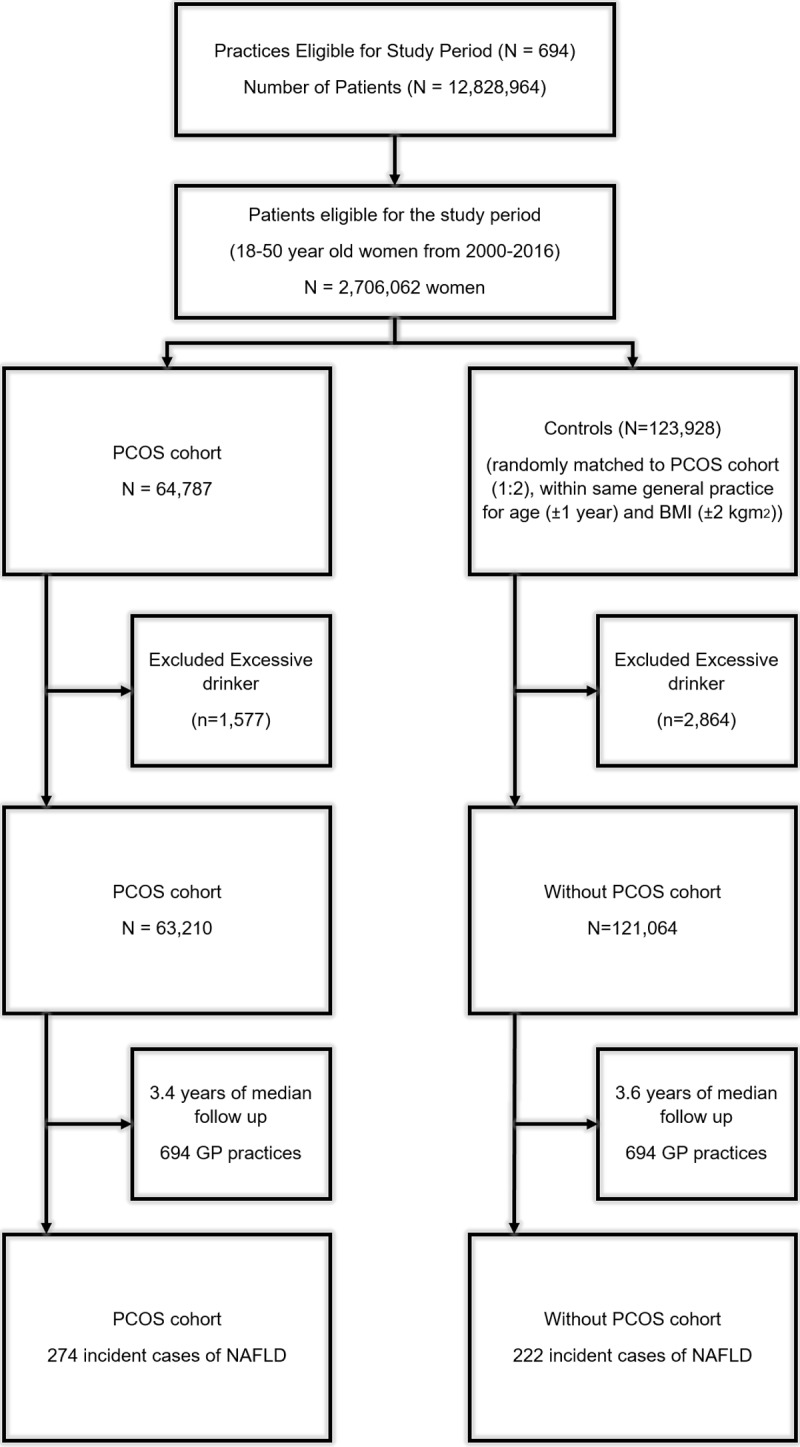
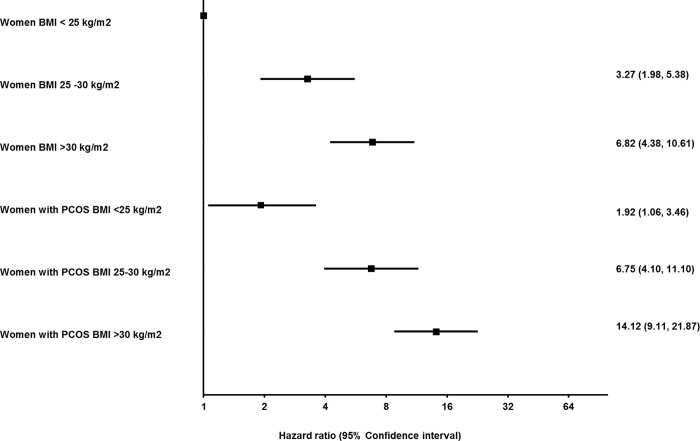
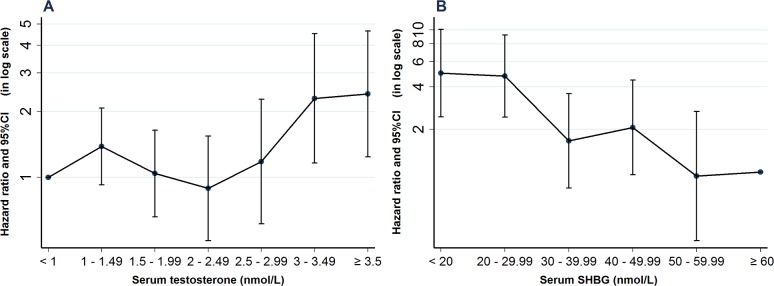
BACKGROUND: Androgen excess is a defining feature of polycystic ovary syndrome (PCOS), which affects 10% of women and represents a lifelong metabolic disorder, with increased risk of type 2 diabetes, hypertension, and cardiovascular events. Previous studies have suggested an increased risk of nonalcoholic fatty liver disease (NAFLD) in individuals with PCOS and implicated androgen excess as a potential driver. METHODS AND FINDINGS: We carried out a retrospective longitudinal cohort study utilizing a large primary care database in the United Kingdom, evaluating NAFLD rates in 63,120 women with PCOS and 121,064 age-, body mass index (BMI)-, and location-matched control women registered from January 2000 to May 2016. In 2 independent cohorts, we also determined the rate of NAFLD in women with a measurement of serum testosterone (n = 71,061) and sex hormone-binding globulin (SHBG; n = 49,625). We used multivariate Cox models to estimate the hazard ratio (HR) for NAFLD and found that women with PCOS had an increased rate of NAFLD (HR = 2.23, 95% CI 1.86-2.66, p < 0.001), also after adjusting for BMI or dysglycemia. Serum testosterone >3.0 nmol/L was associated with an increase in NAFLD (HR = 2.30, 95% CI 1.16-4.53, p = 0.017 for 3-3.49 nmol/L and HR = 2.40, 95% CI 1.24-4.66, p = 0.009 for >3.5 nmol/L). Mirroring this finding, SHBG <30 nmol/L was associated with increased NAFLD hazard (HR = 4.75, 95% CI 2.44-9.25, p < 0.001 for 20-29.99 nmol/L and HR = 4.98, 95% CI 2.45-10.11, p < 0.001 for <20 nmol/L). Limitations of this study include its retrospective nature, absence of detailed information on criteria used to diagnosis PCOS and NAFLD, and absence of data on laboratory assays used to measure serum androgens. CONCLUSIONS: We found that women with PCOS have an increased rate of NAFLD. In addition to increased BMI and dysglycemia, androgen excess contributes to the development of NAFLD in women with PCOS. In women with PCOS-related androgen excess, systematic NAFLD screening should be considered.
Overview
The claims and statistics of this paper haven’t been checked yet.
Free: it reads the open-access text and checks the first 5 claims that cite a source we can check. Create a free account to check every claim.
Integrity signals
Registry
Cites
Statistics
Figures
Verification
Claims the paper makes
The claims and statistics of this paper haven’t been checked yet.
Free: it reads the open-access text and checks the first 5 claims that cite a source we can check. Create a free account to check every claim.
Claims other papers make about this one
Each is checked against this paper’s own text: does it say what the citing paper says it does?
The check wasn’t confident either way, so it gives no verdict — never disputed.
In the citing paper
“Some studies however, reported higher prevalence of OSA irrespective of BMI in PCOS, raising the possibility that body fat distribution rather than total body mass may be more useful in determining OSAS risk in PCOS or that other factors may contribute to this association (8, 27, 28).”
From Obstructive sleep apnea syndrome in polycystic ovary syndrome: a systematic review and meta-analysis (2025) · cites this paper as [8]
Experimental — accuracy not yet measured
Self-check
Percentages, sums and reported differences re-computed from the paper’s own numbers.
The self-check needs the paper’s full text.
Citations
Cites
Younossi, Z. M., Koenig, A. B., Abdelatif, D., Fazel, Y., Henry, L., & Wymer, M. (2016) · Hepatology · doi:10.1002/hep.28431 · Cited by 10,781
(2004) · Fertility and Sterility · doi:10.1016/j.fertnstert.2003.10.004 · Cited by 9,050
Benchimol, E. I., Smeeth, L., Guttmann, A., Harron, K., Moher, D., Petersen, I., Sørensen, H. T., von Elm, E., Langan, S. M., & RECORD Working Committee (2015) · PLOS Medicine · doi:10.1371/journal.pmed.1001885 · Cited by 5,749
Multiple significance tests: the Bonferroni method
Bland, J. M., & Altman, D. G. (1995) · BMJ · doi:10.1136/bmj.310.6973.170 · Cited by 3,341
The Diagnosis of Polycystic Ovary Syndrome during Adolescence
Witchel, S. F., Oberfield, S., Rosenfield, R. L., Codner, E., Bonny, A., Ibáñez, L., Pena, A., Horikawa, R., Gomez-Lobo, V., Joel, D., et al. (2015) · Hormone Research in Paediatrics · doi:10.1159/000375530 · Cited by 3,113
Franks, S. (1995) · New England Journal of Medicine · doi:10.1056/nejm199509283331307 · Cited by 2,463
Insulin Resistance and the Polycystic Ovary Syndrome: Mechanism and Implications for Pathogenesis*
Dunaif, A. (1997) · Endocrine Reviews · doi:10.1210/edrv.18.6.0318 · Cited by 2,458
Men at risk: occupation and male infertility
Claman, P. (2004) · Fertility and Sterility · doi:10.1016/s0015-0282(03)01188-9 · Cited by 2,387
Fauser, B. C. J. M., Tarlatzis, B. C., Rebar, R. W., Legro, R. S., Balen, A. H., Lobo, R., Carmina, E., Chang, J., Yildiz, B. O., Laven, J. S. E., et al. (2012) · Fertility and Sterility · doi:10.1016/j.fertnstert.2011.09.024 · Cited by 1,976
Wong, R. J., Aguilar, M., Cheung, R., Perumpail, R. B., Harrison, S. A., Younossi, Z. M., & Ahmed, A. (2015) · Gastroenterology · doi:10.1053/j.gastro.2014.11.039 · Cited by 1,819
Cited by
Items 201–208 of 208
Das polyendokrine metabolische Ovarialsyndrom (PMOS) – mehr als Insulinresistenz und Androgene
Reger-Tan, S., Lee-Barkey, Y. H., Klose, J. M., & Stratmann, B. (2026) · Aktuelle Ernährungsmedizin · doi:10.1055/a-2929-4250
Síndrome de ovario poliquístico y riesgo cardiometabólico en mujeres: revisión sistemática
León-Pallasco, D. A., Paredes-Tobar, O. S., & Coque, E. J. P. (2026) · Sanitas. Revista arbitrada de ciencias de la salud. · doi:10.62574/8dk0nx87
Endocrine determinants of MASLD: mechanisms and therapeutic targets
Chaturvedi, R., Mathew, A., Pradhan, A., Goyal, M., Sharma, M., Kachroo, V., Agrawal, C., Krishnamurthy, A., Atreja, S. M., & Atreja, A. (2026) · Frontiers in Endocrinology · doi:10.3389/fendo.2026.1967494
Prasad, A., Kishan, A., & Keezhadath, S. (2026) · Metabolites · doi:10.3390/metabo16100758
Cheng, X., Li, Y., Zhu, M., 蔡亞潔, Wei, N., Liu, Y., & Liu, Y. (2026) · Chinese Herbal Medicines · doi:10.1016/j.chmed.2026.10.002
Yetim, Z., Şevgin, K., & Yakut, S. (2026) · European Journal of Therapeutics · doi:10.58600/eurjther3148
“Non-alcoholic fatty liver disease (NAFLD), which is the hepatic reflection of these metabolic disorders, has been identified as the most prevalent liver pathology in PCOS [4,5].”
Metabolic homeostasis and women’s reproductive health
Liu, X., 杨利丽, Jiang, J., Chang, H., & Mu, L. (2026) · Nature Metabolism · doi:10.1038/s42255-026-01646-1 · Cited by 1
Das polyendokrine metabolische Ovarialsyndrom (PMOS) – mehr als Insulinresistenz und Androgene
Reger-Tan, S., Lee-Barkey, Y. H., Klose, J. M., & Stratmann, B. (2026) · Frauenheilkunde up2date · doi:10.1055/a-2954-8686
Metadata
- Authors
- Kumarendran, B., O’Reilly, M. W., Manolopoulos, K. N., Toulis, K. A., Gokhale, K. M., Sitch, A. J., Wijeyaratne, C. N., Coomarasamy, A., Arlt, W., & Nirantharakumar, K.
- Affiliations
- University of Kelaniya (LK)
- University of Birmingham (GB)
- University of Colombo (LK)
- Corresponding author
- Arlt, Wiebke
- Nirantharakumar, Krishnarajah
- ORCID
- Venue
- PLOS Medicine
- Publisher
- Public Library of Science (PLoS)
- Published
- 2018-03-28
- Volume
- 15
- Issue
- 3
- Pages
- e1002542
- ISSN
- 1549-1277 (ISSN-L)
- 1549-1676
- PMC
- PMC5873722
- OpenAlex
- W2794855941
- Cited by
- 206
- References
- 59
- Citations by year
- 2026: 20 · 2025: 27 · 2024: 20 · 2023: 20 · 2022: 37 · 2021: 34 · 2020: 23 · 2019: 19 · 2018: 5
- FWCI
- 21.60
- Type
- journal article
- Language
- en
- Open access
- gold
- doi.org
- Licence
- Locations
- PLoS Medicine (publishedVersion, cc-by)
- Europe PMC (PubMed Central) (publishedVersion, cc-by)
- PubMed Central (publishedVersion, cc-by)
- PubMed (publishedVersion)
- DOAJ (DOAJ: Directory of Open Access Journals) (submittedVersion, cc-by-sa)
- Figshare (submittedVersion, cc-by)
- University of Birmingham Research Portal (University of Birmingham) (submittedVersion, cc-by)
- Spiral (Imperial College London) (submittedVersion, cc-by)
- Funders
- Wellcome Trust (099909, 092283)
- Topics
- Health Sciences › Medicine › Reproductive Medicine › Ovarian function and disorders
- Health Sciences › Medicine › Hepatology › Liver Disease Diagnosis and Treatment
- Health Sciences › Medicine › Endocrinology, Diabetes and Metabolism › Diabetes, Cardiovascular Risks, and Lipoproteins
- Keywords
- polycystic ovary syndrome, hyperandrogenism, non-alcoholic fatty liver disease, women, serum testosterone, sex hormone-binding globulin, NAFLD risk, primary care, metabolic disorders, dysglycemia, body mass index, type 2 diabetes, cardiovascular risk, hypertension, insulin resistance, dyslipidemia, polycystic ovary morphology
- MeSH terms
- Adolescent, Adult, Androgens, Diabetes Mellitus, Type 2, Female, United Kingdom, Humans, Insulin Resistance, Longitudinal Studies, Male, Middle Aged, Polycystic Ovary Syndrome, Retrospective Studies, Risk Factors, Body Mass Index, Prevalence, Multivariate Analysis, Proportional Hazards Models, Young Adult, Non-alcoholic Fatty Liver Disease
About these checks
Registry, retraction, Cites and statistics results are computed, not judged, with one exception: a printed reference that no index lists is read once by a model before it counts as a citation error. Claims are extracted by a model and kept only when their quote appears verbatim in the text; each cited source is then checked, with a model’s help, for whether it says what the claim relies on. Those verdicts can be wrong — read the claim’s quote and the cited source before relying on one.
Statistics and arithmetic are recomputed, not judged.
Confidence bands are shown only for fields calibrated on our annotated test set. None is calibrated yet, so no band is shown.
What counts as a claim ›How we measure confidence ›How we check this ›
Are you an author, or do you see a problem with this page? Request a review
Data sources
Bibliographic data: Semantic Scholar, OpenAlex, Crossref.
Contains information from the Semantic Scholar Academic Graph Datasets, made available under the ODC Attribution License (ODC-BY 1.0).
Semantic Scholar’s data is described in: Kinney, R., et al. (2023). The Semantic Scholar Open Data Platform. arXiv:2301.10140.
