

Polycystic ovary syndrome, androgen excess, and the risk of nonalcoholic fatty liver disease in women: A longitudinal study based on a United Kingdom primary care database
Open accessThe DOI matches its Crossref record; 59 of the 59 references it cites were found in a registry or an index.
Abstract
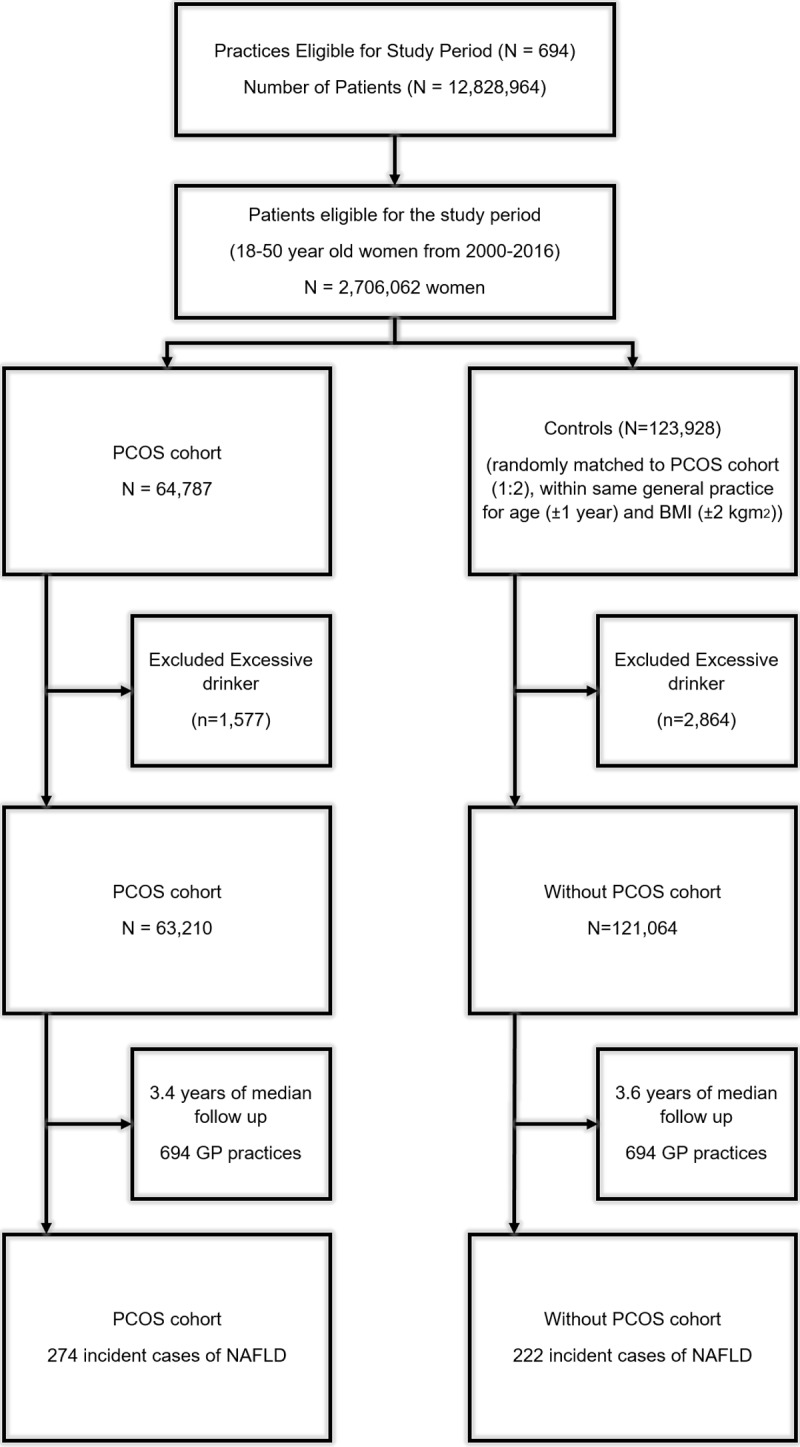
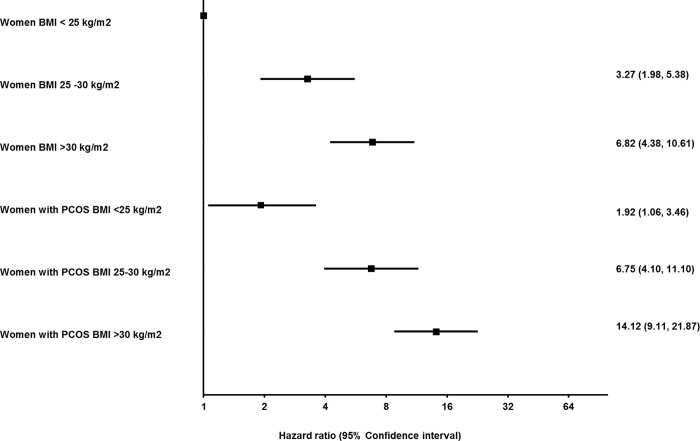
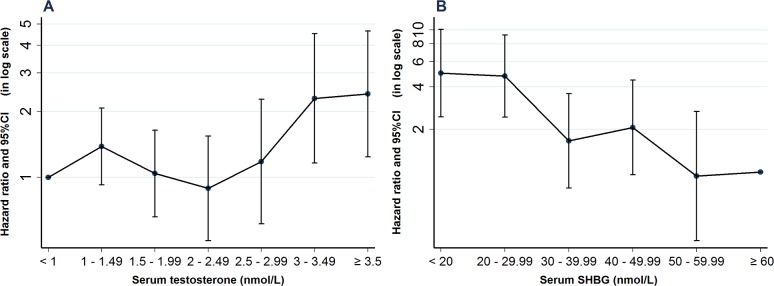
BACKGROUND: Androgen excess is a defining feature of polycystic ovary syndrome (PCOS), which affects 10% of women and represents a lifelong metabolic disorder, with increased risk of type 2 diabetes, hypertension, and cardiovascular events. Previous studies have suggested an increased risk of nonalcoholic fatty liver disease (NAFLD) in individuals with PCOS and implicated androgen excess as a potential driver. METHODS AND FINDINGS: We carried out a retrospective longitudinal cohort study utilizing a large primary care database in the United Kingdom, evaluating NAFLD rates in 63,120 women with PCOS and 121,064 age-, body mass index (BMI)-, and location-matched control women registered from January 2000 to May 2016. In 2 independent cohorts, we also determined the rate of NAFLD in women with a measurement of serum testosterone (n = 71,061) and sex hormone-binding globulin (SHBG; n = 49,625). We used multivariate Cox models to estimate the hazard ratio (HR) for NAFLD and found that women with PCOS had an increased rate of NAFLD (HR = 2.23, 95% CI 1.86-2.66, p < 0.001), also after adjusting for BMI or dysglycemia. Serum testosterone >3.0 nmol/L was associated with an increase in NAFLD (HR = 2.30, 95% CI 1.16-4.53, p = 0.017 for 3-3.49 nmol/L and HR = 2.40, 95% CI 1.24-4.66, p = 0.009 for >3.5 nmol/L). Mirroring this finding, SHBG <30 nmol/L was associated with increased NAFLD hazard (HR = 4.75, 95% CI 2.44-9.25, p < 0.001 for 20-29.99 nmol/L and HR = 4.98, 95% CI 2.45-10.11, p < 0.001 for <20 nmol/L). Limitations of this study include its retrospective nature, absence of detailed information on criteria used to diagnosis PCOS and NAFLD, and absence of data on laboratory assays used to measure serum androgens. CONCLUSIONS: We found that women with PCOS have an increased rate of NAFLD. In addition to increased BMI and dysglycemia, androgen excess contributes to the development of NAFLD in women with PCOS. In women with PCOS-related androgen excess, systematic NAFLD screening should be considered.
Overview
The claims and statistics of this paper haven’t been checked yet.
Free: it reads the open-access text and checks the first 5 claims that cite a source we can check. Create a free account to check every claim.
Integrity signals
Registry
Cites
Statistics
Figures
Verification
Claims the paper makes
The claims and statistics of this paper haven’t been checked yet.
Free: it reads the open-access text and checks the first 5 claims that cite a source we can check. Create a free account to check every claim.
Claims other papers make about this one
Each is checked against this paper’s own text: does it say what the citing paper says it does?
The check wasn’t confident either way, so it gives no verdict — never disputed.
In the citing paper
“Some studies however, reported higher prevalence of OSA irrespective of BMI in PCOS, raising the possibility that body fat distribution rather than total body mass may be more useful in determining OSAS risk in PCOS or that other factors may contribute to this association (8, 27, 28).”
From Obstructive sleep apnea syndrome in polycystic ovary syndrome: a systematic review and meta-analysis (2025) · cites this paper as [8]
Experimental — accuracy not yet measured
Self-check
Percentages, sums and reported differences re-computed from the paper’s own numbers.
The self-check needs the paper’s full text.
Citations
Cites
Younossi, Z. M., Koenig, A. B., Abdelatif, D., Fazel, Y., Henry, L., & Wymer, M. (2016) · Hepatology · doi:10.1002/hep.28431 · Cited by 10,781
(2004) · Fertility and Sterility · doi:10.1016/j.fertnstert.2003.10.004 · Cited by 9,050
Benchimol, E. I., Smeeth, L., Guttmann, A., Harron, K., Moher, D., Petersen, I., Sørensen, H. T., von Elm, E., Langan, S. M., & RECORD Working Committee (2015) · PLOS Medicine · doi:10.1371/journal.pmed.1001885 · Cited by 5,749
Multiple significance tests: the Bonferroni method
Bland, J. M., & Altman, D. G. (1995) · BMJ · doi:10.1136/bmj.310.6973.170 · Cited by 3,341
The Diagnosis of Polycystic Ovary Syndrome during Adolescence
Witchel, S. F., Oberfield, S., Rosenfield, R. L., Codner, E., Bonny, A., Ibáñez, L., Pena, A., Horikawa, R., Gomez-Lobo, V., Joel, D., et al. (2015) · Hormone Research in Paediatrics · doi:10.1159/000375530 · Cited by 3,113
Franks, S. (1995) · New England Journal of Medicine · doi:10.1056/nejm199509283331307 · Cited by 2,463
Insulin Resistance and the Polycystic Ovary Syndrome: Mechanism and Implications for Pathogenesis*
Dunaif, A. (1997) · Endocrine Reviews · doi:10.1210/edrv.18.6.0318 · Cited by 2,458
Men at risk: occupation and male infertility
Claman, P. (2004) · Fertility and Sterility · doi:10.1016/s0015-0282(03)01188-9 · Cited by 2,387
Fauser, B. C. J. M., Tarlatzis, B. C., Rebar, R. W., Legro, R. S., Balen, A. H., Lobo, R., Carmina, E., Chang, J., Yildiz, B. O., Laven, J. S. E., et al. (2012) · Fertility and Sterility · doi:10.1016/j.fertnstert.2011.09.024 · Cited by 1,976
Wong, R. J., Aguilar, M., Cheung, R., Perumpail, R. B., Harrison, S. A., Younossi, Z. M., & Ahmed, A. (2015) · Gastroenterology · doi:10.1053/j.gastro.2014.11.039 · Cited by 1,819
Cited by
Rinella, M. E., Neuschwander-Tetri, B. A., Siddiqui, M. S., Abdelmalek, M. F., Caldwell, S., Barb, D., Kleiner, D. E., & Loomba, R. (2023) · Hepatology · doi:10.1097/hep.0000000000000323 · Cited by 2,667
Cusi, K., Isaacs, S., Barb, D., Basu, R., Caprio, S., Garvey, W. T., Kashyap, S., Mechanick, J. I., Mouzaki, M., Nadolsky, K., et al. (2022) · Endocrine Practice · doi:10.1016/j.eprac.2022.03.010 · Cited by 1,021
KASL clinical practice guidelines: Management of nonalcoholic fatty liver disease
Kang, S. H., Lee, H. W., Yoo, J.-J., Cho, Y., Kim, S. U., Lee, T. H., Jang, B. K., Kim, S. G., Ahn, S. B., Kim, H., et al. (2021) · Clinical and Molecular Hepatology · doi:10.3350/cmh.2021.0178 · Cited by 267
“2 times.(62) In addition, obstructive sleep apnea,(63) hypopituitarism,(64) hypogonadism,(65) pancreatoduodenal resection,(66) and psoriasis(67) increase the prevalence of NAFLD.”
BackgroundBeyond fertility: polycystic ovary syndrome and long-term health
Cooney, L. G., & Dokras, A. (2018) · Fertility and Sterility · doi:10.1016/j.fertnstert.2018.08.021 · Cited by 270
Nonalcoholic fatty liver disease in women with polycystic ovary syndrome
Paschou, S. A., Polyzos, S. A., Anagnostis, P., Goulis, D. G., Kanaka-Gantenbein, C., Lambrinoudaki, I., Georgopoulos, N. A., & Vryonidou, A. (2020) · Endocrine · doi:10.1007/s12020-019-02085-7 · Cited by 231
Qu, X., & Donnelly, R. (2020) · International Journal of Molecular Sciences · doi:10.3390/ijms21218191 · Cited by 210
“This large clinical study has pointed out that androgen excess contributes to the development of NAFLD in women with PCOS [91].”
BackgroundSexual dimorphism of metabolic dysfunction-associated steatotic liver disease
Cherubini, A., Torre, S. D., Pelusi, S., & Valenti, L. V. C. (2024) · Trends in Molecular Medicine · doi:10.1016/j.molmed.2024.05.013 · Cited by 181
Reproductive Endocrinology of Nonalcoholic Fatty Liver Disease
Grossmann, M., Wierman, M. E., Angus, P., & Handelsman, D. J. (2019) · Endocrine Reviews · doi:10.1210/er.2018-00158 · Cited by 142
Witchel, S. F., Teede, H. J., & Peña, A. S. (2019) · Pediatric Research · doi:10.1038/s41390-019-0615-1 · Cited by 159
Lonardo, A., Mantovani, A., Lugari, S., & Targher, G. (2019) · International Journal of Molecular Sciences · doi:10.3390/ijms20112841 · Cited by 120
“Further to increased BMI and dysglycemia, these authors also identified hyperandrogenism as an additional risk factor potentially contributing to the development of NAFLD in women with PCOS [34].”
BackgroundMethodHepatic sexual dimorphism — implications for non-alcoholic fatty liver disease
Lefèbvre, P., & Staels, B. (2021) · Nature Reviews Endocrinology · doi:10.1038/s41574-021-00538-6 · Cited by 144
Muthiah, M. D., Cheng Han, N., & Sanyal, A. J. (2022) · Diabetes, Obesity and Metabolism · doi:10.1111/dom.14521 · Cited by 108
“risk of developing incident NAFLD independent of BMI or abnormal glucose metabolism.(78)”
BackgroundAdipocyte and steroidogenic cell cross-talk in polycystic ovary syndrome
de Medeiros, S. F., Rodgers, R. J., & Norman, R. J. (2021) · Human Reproduction Update · doi:10.1093/humupd/dmab004 · Cited by 102
Yang, Y., Zhou, W., Wu, S., Tang, W., Wang, Z., Zhou, Z., Li, Z.-W., Huang, Q.-F., He, Y., & Zhou, H. (2021) · Endocrinology · doi:10.1210/endocr/bqab118 · Cited by 113
“Women with PCOS have a high risk of obesity (2), diabetes (2), metabolic syndrome (3), nonalcoholic fatty liver disease (4), cardiovascular disease (5), and endometrial cancer (6).”
BackgroundMethodPolycystic ovary syndrome (PCOS) is associated with NASH severity and advanced fibrosis
Sarkar, M., Terrault, N., Chan, W., Cedars, M. I., Huddleston, H. G., Duwaerts, C. C., Balitzer, D., & Gill, R. M. (2020) · Liver International · doi:10.1111/liv.14279 · Cited by 99
Increased COVID-19 infections in women with polycystic ovary syndrome: a population-based study
Subramanian, A., Anand, A., Adderley, N. J., Okoth, K., Toulis, K. A., Gokhale, K. M., Sainsbury, C. A. R., O’Reilly, M., Arlt, W., & Nirantharakumar, K. (2021) · European Journal of Endocrinology · doi:10.1530/eje-20-1163 · Cited by 104
“PCOS is a lifelong condition associated with severe health consequences in women, including a significantly increased risk of T2DM, NAFLD and cardiovascular disease (15, 16).”
InfluentialSelf-citationApproach to androgen excess in women: Clinical and biochemical insights
Cussen, L., McDonnell, T., Bennett, G., Thompson, C. J., Sherlock, M., & O’Reilly, M. (2022) · Clinical Endocrinology · doi:10.1111/cen.14710 · Cited by 110
Self-citationNikolaou, N., Gathercole, L. L., Marchand, L., Althari, S., Dempster, N. J., Green, C. J., van de Bunt, M., McNeil, C., Arvaniti, A., Hughes, B. A., et al. (2019) · Metabolism · doi:10.1016/j.metabol.2019.153947 · Cited by 84
Self-citationLiu, D., Gao, X., Pan, X., Zhou, T., Zhu, C., Li, F., Fan, J., Targher, G., & Zhao, J. (2023) · BMC Medicine · doi:10.1186/s12916-023-02775-0 · Cited by 94
“Linkages between PCOS and non-alcoholic fatty liver disease (NAFLD), which is characterized by excessive hepatic fat accumulation (steatosis) in the absence of significant alcohol consumption [5], have been consistently reported [6, 7], and recent large-scale cohort and meta-analysis studies observed that women with P…”
ResultLean NAFLD: an underrecognized and challenging disorder in medicine
Maier, S., Wieland, A. C., Cree‐Green, M., Nadeau, K. J., Sullivan, S. A., Lanaspa, M. A., Johnson, R. J., & Jensen, T. (2021) · Reviews in Endocrine and Metabolic Disorders · doi:10.1007/s11154-020-09621-1 · Cited by 85
“Similar to NAFLD in obese populations, Lean NAFLD has been associated with a number of co-morbid conditions including PCOS, T2DM, and MetS [98].”
BackgroundInfluentialPathophysiology of NASH in endocrine diseases
Gariani, K., & Jornayvaz, F. R. (2021) · Endocrine Connections · doi:10.1530/ec-20-0490 · Cited by 87
Nonalcoholic Fatty Liver Disease in Women and Girls With Polycystic Ovary Syndrome
Falzarano, C., Lofton, T., Osei‐Ntansah, A., OLIVER, T. R., Southward, T., Stewart, S., & Andrisse, S. (2021) · The Journal of Clinical Endocrinology & Metabolism · doi:10.1210/clinem/dgab658 · Cited by 82
Carmina, E., Dréno, B., LUCKY, W., Agak, G. W., Dokras, A., Kim, J., Løbo, R. A., Tehrani, F. R., & Dumesic, D. A. (2022) · Journal of the Endocrine Society · doi:10.1210/jendso/bvac003 · Cited by 105
Implicating androgen excess in propagating metabolic disease in polycystic ovary syndrome
Kempegowda, P., Melson, E., Manolopoulos, K. N., Arlt, W., & O’Reilly, M. W. (2020) · Therapeutic Advances in Endocrinology and Metabolism · doi:10.1177/2042018820934319 · Cited by 70
Self-citationLong‐term health outcomes in young women with polycystic ovary syndrome: A narrative review
Allen, L. A., Shrikrishnapalasuriyar, N., & Rees, D. A. (2022) · Clinical Endocrinology · doi:10.1111/cen.14609 · Cited by 62
“2‐fold increased risk of NAFLD in young women with PCOS after adjustment for BMI or dysglycaemia.(55) They extended their findings to show an association of raised total testosterone and lowered sex hormone‐binding globulin (SHBG) with”
BackgroundFatty Liver Disease-Alcoholic and Non-Alcoholic: Similar but Different
Malnick, S. D. H., Alin, P., Somin, M., & Neuman, M. G. (2022) · International Journal of Molecular Sciences · doi:10.3390/ijms232416226 · Cited by 93
“In addition to obesity, other conditions that are associated with NAFLD include polycystic ovary syndrome [3], hypothyroidism, obstructive sleep apnea, hypopituitarism and hypogonadism [4].”
BackgroundO’Reilly, M. W., Glisic, M., Kumarendran, B., Subramanian, A., Manolopoulos, K. N., Tahrani, A. A., Keerthy, D., Muka, T., Toulis, K. A., Hanif, W., et al. (2019) · Clinical Endocrinology · doi:10.1111/cen.13862 · Cited by 72
Self-citationNon-alcoholic fatty liver disease in women – Current knowledge and emerging concepts
Eng, P. C., Forlano, R., Tan, T., Manousou, P., Dhillo, W. S., & Izzi‐Engbeaya, C. N. (2023) · JHEP Reports · doi:10.1016/j.jhepr.2023.100835 · Cited by 86
Kumarendran, B., Sumilo, D., O’Reilly, M. W., Toulis, K. A., Gokhale, K. M., Wijeyaratne, C. N., Coomarasamy, A., Arlt, W., Tahrani, A. A., & Nirantharakumar, K. (2019) · European Journal of Endocrinology · doi:10.1530/eje-18-0693 · Cited by 66
Self-citationHillman, S. C., Bryce, C., Caleyachetty, R., & Dale, J. (2020) · British Journal of General Practice · doi:10.3399/bjgp20x708881 · Cited by 54
Ramezani Tehrani, F., Behboudi-Gandevani, S., Bidhendi Yarandi, R., Saei Ghare Naz, M., & Carmina, E. (2021) · Gynecological Endocrinology · doi:10.1080/09513590.2020.1859474 · Cited by 59
“In addition, three studies were conducted in the Australia [32,61,83], eight in USA and Canada [24,25,41,49,50,57,64,68], one in Chile [48], seven in Europe including Denmark, Finland, Greece, Italy, and UK [28,29,35,40,42,70,81], two in southeast Asia including Thailand and Vietnam [33,36], 12 in east Asia including…”
BackgroundCardiometabolic risk in polycystic ovary syndrome
Bajuk Studen, K., & Pfeifer, M. (2018) · Endocrine Connections · doi:10.1530/ec-18-0129 · Cited by 64
The clinical and biochemical significance of 11-oxygenated androgens in human health and disease
Storbeck, K.-H., & O’Reilly, M. W. (2023) · European Journal of Endocrinology · doi:10.1093/ejendo/lvad047 · Cited by 63
Self-citationVignera, S. L., Condorelli, R. A., Calogero, A. E., Cannarella, R., & Aversa, A. (2023) · Journal of Clinical Medicine · doi:10.3390/jcm12020672 · Cited by 73
“The authors found higher noninvasive indices of NAFLD, but not liver fibrosis, compared to men with higher testosterone levels.”
BackgroundInfluentialYang, Y., Cheng, J., Liu, C., Zhang, X., Ma, N., Zhou, Z., Lu, W., & Wu, C. (2024) · EClinicalMedicine · doi:10.1016/j.eclinm.2024.102884 · Cited by 67
“2 PCOS is linked to obesity, insulin resistance, metabolic syndrome, cardiovascular disease and cancer, 3 posing a considerable burden on public health systems and the affected women.”
BackgroundCox, M. J., Edwards, M. C., Paris, V. R., Aflatounian, A., Ledger, W. J., Gilchrist, R. B., Padmanabhan, V., Handelsman, D. J., & Walters, K. A. (2020) · Endocrinology · doi:10.1210/endocr/bqaa061 · Cited by 62
Epigenetic/circadian clocks and PCOS
Vatier, C., & Christin‐Maître, S. (2024) · Human Reproduction · doi:10.1093/humrep/deae066 · Cited by 66
Obesity, Male Reproductive Function and Bariatric Surgery
Vincenzo, A. D., Busetto, L., Vettor, R., & Rossato, M. A. (2018) · Frontiers in Endocrinology · doi:10.3389/fendo.2018.00769 · Cited by 66
“Furthermore, it has been reported that the relationship between testosterone plasma levels and non-alcoholic fatty liver disease (NAFLD) shows a gender difference: low testosterone levels are independently associated with NAFLD in men and post-menopausal women (36), whereas testosterone levels are inversely associated…”
BackgroundAssociation of non-alcoholic fatty liver disease and polycystic ovarian syndrome
Asfari, M. M., Sarmini, M. T., Baidoun, F., Al‐Khadra, Y., Ezaizi, Y., Dasarathy, S., & McCullough, A. J. (2020) · BMJ Open Gastroenterology · doi:10.1136/bmjgast-2019-000352 · Cited by 65
Pathogenesis and Consequences of Disordered Sleep in PCOS
Sam, S., & Ehrmann, D. A. (2019) · Clinical Medicine Insights: Reproductive Health · doi:10.1177/1179558119871269 · Cited by 51
Dietary and Pharmacological Treatment of Nonalcoholic Fatty Liver Disease
Jeznach-Steinhagen, A. E., Ostrowska, J., Czerwonogrodzka–Senczyna, A., Boniecka, I., Shahnazaryan, U., & Kuryłowicz, A. (2019) · Medicina · doi:10.3390/medicina55050166 · Cited by 58
“9 kg/m2) and obese (BMI ≥ 30 kg/m2) patients weight reduction by 5%–10% results in a 20%–80% decrease in intrahepatic triglyceride content and serum aminotransferase activity [1,7,8,34,35].”
BackgroundWang, Q., Sun, Y., Xu, Q., Liu, W., Wang, P., Yao, J., Zhao, A., Chen, Y., & Wang, W. (2022) · Nutrition Research · doi:10.1016/j.nutres.2021.12.006 · Cited by 49
Non-alcoholic fatty liver disease in polycystic ovary syndrome women
Won, Y. B., Seo, S. K., Yun, B. H., Cho, S., Choi, Y. S., & Lee, B. S. (2021) · Scientific Reports · doi:10.1038/s41598-021-86697-y · Cited by 53
Harsha Varma, S., Tirupati, S., Pradeep, T. V. S., Sarathi, V., & Kumar, D. (2019) · Diabetes & Metabolic Syndrome: Clinical Research & Reviews · doi:10.1016/j.dsx.2018.12.020 · Cited by 47
Sudhakaran, G., Guru, A., Haridevamuthu, B., Murugan, R., Arshad, A., & Arockiaraj, J. (2022) · Life Sciences · doi:10.1016/j.lfs.2021.120276 · Cited by 48
Yang, Y., Li, X., Liu, Z., Ruan, X., Wang, H. H., Zhang, Q., Cao, L., Song, L., Chen, Y., & Sun, Y. (2022) · Nutrients · doi:10.3390/nu14224910 · Cited by 48
“Poor dietary habits are highly associated with the development of NAFLD [25].”
BackgroundLavrentaki, A., Thomas, T. R., Subramanian, A., Valsamakis, G., Thomas, G. N., Toulis, K. A., Wang, J., Daly, B. M., Saravanan, P., Šumilo, D., et al. (2019) · Journal of Diabetes and its Complications · doi:10.1016/j.jdiacomp.2019.06.006 · Cited by 52
Self-citationRoy, S., Abudu, A., Salinas, I., Sinha, N., Cline-Fedewa, H. M., Yaw, A. M., Qi, W., Lydic, T. A., Takahashi, D. L., Hennebold, J. D., et al. (2022) · Endocrinology · doi:10.1210/endocr/bqac127 · Cited by 47
Hong, S., Sung, Y., Hong, Y. S., Song, D. K., Jung, H., Jeong, K., Chung, H., & Lee, H. (2023) · Scientific Reports · doi:10.1038/s41598-023-39428-4 · Cited by 46
“Some studies have found that PCOS women with hyperandrogenism had higher hepatic steatosis compared to PCOS women with normal androgens, independent of insulin resistance 7,8 .”
BackgroundInfluentialArvanitakis, K., Chatzikalil, E., Kalopitas, G., Patoulias, D., Popovic, D. S., Metallidis, S., Kotsa, K., Germanidis, G. S., & Koufakis, T. (2024) · Journal of Clinical Medicine · doi:10.3390/jcm13144243 · Cited by 45
“Furthermore, evidence demonstrated that the presence of PCOS is an independent risk factor for MASLD development, increasing liver steatosis, and fibrosis in female patients [28,29].”
BackgroundLi, G., Liu, Z., Ren, F., Shi, H., Zhao, Q., Song, Y., Fan, X., Ma, X., & Qin, G. (2022) · Frontiers in Microbiology · doi:10.3389/fmicb.2022.911992 · Cited by 52
Xu, Q., Zhang, J., Lu, Y., & Wu, L. Y. (2024) · iScience · doi:10.1016/j.isci.2024.108783 · Cited by 50
Vusirikala, A., Thomas, T. R., Bhala, N. B., Tahrani, A. A., Thomas, G. N., & Nirantharakumar, K. (2020) · BMC Endocrine Disorders · doi:10.1186/s12902-020-00582-9 · Cited by 42
“Selection of Read codes for excessive alcohol intake was based on a previous study which used Read codes related to hazardous drinking or conditions related to hazardous drinking [19] (Appendix 1).”
BackgroundMethodSelf-citationSex differences in chronic liver disease and benign liver lesions
Cooper, K. M., Delk, M., Devuni, D., & Sarkar, M. (2023) · JHEP Reports · doi:10.1016/j.jhepr.2023.100870 · Cited by 38
Szczuko, M., Hawryłkowicz, V., Kikut, J., & Drozd, A. (2019) · The Journal of Steroid Biochemistry and Molecular Biology · doi:10.1016/j.jsbmb.2019.105570 · Cited by 39
Growth Hormone/Insulin Growth Factor Axis in Sex Steroid Associated Disorders and Related Cancers
Bleach, R., Sherlock, M., O’Reilly, M., & McIlroy, M. (2021) · Frontiers in Cell and Developmental Biology · doi:10.3389/fcell.2021.630503 · Cited by 44
Self-citationShengir, M., Krishnamurthy, S., Ghali, P., Deschênes, M., Wong, P. Y. N., Chen, T., & Sebastiani, G. (2020) · World Journal of Gastroenterology · doi:10.3748/wjg.v26.i44.7046 · Cited by 41
Improving the sexual activity and reproduction of female zebrafish with high testosterone levels
Liu, C., Yue, S., Solarz, J., Lee, J., & Li, L. (2021) · Scientific Reports · doi:10.1038/s41598-021-83085-4 · Cited by 41
Wang, X., Xie, J., Pang, J., Zhang, H., Chen, X., Lin, J.-S., Li, Q., Chen, Q., Ma, J., Xu, X., et al. (2019) · The Journal of Clinical Endocrinology & Metabolism · doi:10.1210/clinem/dgz244 · Cited by 39
Taranto, D. O. D. L., Guimarães, T. C. M., Couto, C. A., Cândido, A. L., Azevedo, R. C., Mattos, F. S., Elias, M. L. C., dos Reis, F. M., Rocha, A. L. L., & Faria, L. C. (2020) · Archives of Endocrinology and Metabolism · doi:10.20945/2359-3997000000242 · Cited by 37
“In a longitudinal study that evaluated the risk of NAFLD in 63,000 women with PCOS and in a control group including 121,000 women with similar age and BMI (26), women with PCOS presented an increased risk of NAFLD, which was higher than the expected due to obesity alone.”
BackgroundNonalcoholic Fatty Liver Disease and Endocrine Axes—A Scoping Review
von Hafe, M., Borges‐Canha, M., Vale, C., Leite, A. R., Neves, J. S., Carvalho, D. M., & Leite-Moreira, A. F. (2022) · Metabolites · doi:10.3390/metabo12040298 · Cited by 37
Rashidi, B. H., Hosseinzadeh, F. M., Alipoor, E., Asghari, S., Yekaninejad, M. S., & Hosseinzadeh‐Attar, M. J. (2019) · Biological Trace Element Research · doi:10.1007/s12011-019-01954-6 · Cited by 33
Nonalcoholic fatty liver disease and obstructive sleep apnea in women with polycystic ovary syndrome
Doycheva, I., & Ehrmann, D. A. (2022) · Fertility and Sterility · doi:10.1016/j.fertnstert.2022.03.020 · Cited by 40
Targeting bile acid signaling for the treatment of liver diseases: From bench to bed
Duan, S., Li, X., Fan, G., & Liu, R. (2022) · Biomedicine & Pharmacotherapy · doi:10.1016/j.biopha.2022.113154 · Cited by 33
DHT causes liver steatosis via transcriptional regulation of SCAP in normal weight female mice
Seidu, T. A., McWhorter, P., Myer, J., Alamgir, R., Eregha, N., Bogle, D., Lofton, T., ECELBARGER, C. A., & Andrisse, S. (2021) · Journal of Endocrinology · doi:10.1530/joe-21-0040 · Cited by 35
Association between Nonalcoholic Fatty Liver Disease and Endocrinopathies: Clinical Implications
Sîngeap, A.-M., Stanciu, C., Huiban, L., Muzica, C. M., Cuciureanu, T., Gîrleanu, I., Chiriac, S. A., Zenovia, S., Năstasă, R., Sfarti, C. V., et al. (2021) · Canadian Journal of Gastroenterology and Hepatology · doi:10.1155/2021/6678142 · Cited by 33
“demonstrated in a retrospective cohort study, which included over 63000 women with PCOS and 121000 age-, BMI-, and location-matched women, that PCOS subjects had an increased incidence of NAFLD, hyperandrogenism being a risk factor for NAFLD development in women with PCOS [36].”
Stasi, V. D., Maseroli, E., Rastrelli, G., Scavello, I., Cipriani, S., Todisco, T., Marchiani, S., Sorbi, F., Fambrini, M., Petraglia, F., et al. (2021) · Frontiers in Endocrinology · doi:10.3389/fendo.2021.641446 · Cited by 30
Non-alcoholic fatty liver disease across endocrinopathies: Interaction with sex hormones
Arefhosseini, S., Ebrahimi‐Mameghani, M., Najafipour, F., & Tutunchi, H. (2022) · Frontiers in Endocrinology · doi:10.3389/fendo.2022.1032361 · Cited by 31
The Role of Serum Anti-Mullerian Hormone Measurement in the Diagnosis of Polycystic Ovary Syndrome
Sivanandy, M. S., & Ha, S. K. (2023) · Diagnostics · doi:10.3390/diagnostics13050907 · Cited by 46
“The syndrome encompasses gynecological symptoms such as oligomenorrhea, amenorrhea, infertility; dermatological symptoms such as hirsutism, acne, alopecia; and metabolic complications such as prediabetes, type 2 diabetes [4], obesity, dyslipidemia [5], non-alcoholic fatty liver disease (NAFLD) [6], metabolic syndrome…”
Tantanavipas, S., Vallibhakara, O., Sobhonslidsuk, A., Phongkitkarun, S., Vallibhakara, S. A.-O., Promson, K., & Sophonsritsuk, A. (2019) · BioMed Research International · doi:10.1155/2019/9047324 · Cited by 32
Subramanian, A., Lee, S. I., Phillips, K. W., Toulis, K. A., Kempegowda, P., O’Reilly, M., Adderley, N. J., Thangaratinam, S., Arlt, W., & Nirantharakumar, K. (2022) · BMC Medicine · doi:10.1186/s12916-022-02473-3 · Cited by 39
“Due to underdiagnosis of PCOS within primary care, we also considered records of polycystic ovaries (PCOs) [20, 25], or a combination of symptom codes indicating a missed PCOS diagnoses based on Rotterdam criteria [(1) anovulation and (2) biochemical or symptomatic presentation of hyperandrogenism; a Read code record…”
MethodSelf-citationAt the Crossroads of Health and Disease: Consequences of Fat in the Liver
Dukewich, M., Yuan, L., & Terrault, N. A. (2025) · Annual Review of Physiology · doi:10.1146/annurev-physiol-022724-105515 · Cited by 39
Pathogenesis of Reproductive and Metabolic PCOS Traits in a Mouse Model
Paris, V. R., Edwards, M. C., Aflatounian, A., Bertoldo, M. J., Ledger, W. J., Handelsman, D. J., Gilchrist, R. B., & Walters, K. A. (2021) · Journal of the Endocrine Society · doi:10.1210/jendso/bvab060 · Cited by 31
“There is an increased rate of nonalcoholic fatty liver disease (NAFLD) in women and adolescents with PCOS [60, 61].”
BackgroundPolycystic ovary syndrome and risks for COVID-19 infection: A comprehensive review
de Medeiros, S. F., Yamamoto, M. M. W., de Medeiros, M. A. S., Yamamoto, A. K. L. W., & Barbosa, B. B. (2022) · Reviews in Endocrine and Metabolic Disorders · doi:10.1007/s11154-022-09715-y · Cited by 34
Melson, E., Davitadze, M., Malhotra, K., PCOS SEva working group, Mousa, A., Teede, H. J., Boivin, J., Thondan, M., Tay, C. T., & Kempegowda, P. (2023) · Frontiers in Endocrinology · doi:10.3389/fendo.2023.1217468 · Cited by 34
Society for Endocrinology Clinical Practice Guideline for the Evaluation of Androgen Excess in Women
Elhassan, Y., Hawley, J. M., Cussen, L., Abbara, A., Clarke, S. A., Kempegowda, P., Dhillon‐Smith, R. K., Thadani, P., Busby, M., Owusu‐Darkwah, L., et al. (2025) · Clinical Endocrinology · doi:10.1111/cen.15265 · Cited by 31
Self-citationZargar, A. H., Bhansali, A. K., Majumder, A., Maheshwari, A., Bhattacharyya, A., Dasgupta, A., Saboo, B., Sethi, B. K., Sanyal, D., Seshadri, K., et al. (2025) · Diabetes Obesity and Metabolism · doi:10.1111/dom.16496 · Cited by 29
Dysregulated Liver Metabolism and Polycystic Ovarian Syndrome
Khan, M. S., Kim, H., Kim, R., Yoon, S. H., & Kim, S. G. (2023) · International Journal of Molecular Sciences · doi:10.3390/ijms24087454 · Cited by 27
“Recent studies show the high prevalence of NAFLD in PCOS patients [13].”
BackgroundThe Role of the Liver in the Pathophysiology of PCOS: A Literature Review
Alhermi, A., Perks, H., Vadassery, V. N., Altahoo, N., Atkin, S. L., & Butler, A. E. (2025) · Biomolecules · doi:10.3390/biom15010051 · Cited by 27
The Ovary–Liver Axis: Molecular Science and Epidemiology
Weiskirchen, R., & Lonardo, A. (2025) · International Journal of Molecular Sciences · doi:10.3390/ijms26136382 · Cited by 25
“This pathogenic mechanism may be leveraged clinically using serum testosterone concentrations greater than 3.0 nmol/L as a cut-off value for defining PCOS women at a higher NAFLD risk [48].”
InfluentialBiernacka-Bartnik, A., Kocełak, P., Owczarek, A. J., Choręza, P. S., Puzianowska‐Kuźnicka, M., Markuszewski, L., Madej, P., Chudek, J. T., & Olszanecka‐Glinianowicz, M. (2022) · International Journal of Endocrinology · doi:10.1155/2022/6498768 · Cited by 30
“Despite it, finding low SHBG level should prompt further clinical review and recommendation of standard diagnostic tests for NAFLD.”
BackgroundInfluentialZaman, C. F., Sultana, J., Dey, P., Dutta, J., Mustarin, S., Tamanna, N., Roy, A., Bhowmick, N., Khanam, M., Sultana, S., et al. (2022) · Cureus · doi:10.7759/cureus.29657 · Cited by 31
“Women who are diagnosed with PCOS-related androgen excess should have systematic NAFLD screening [37].”
BackgroundPolycystic Ovary Syndrome and Reproductive Health: A Comprehensive Review
Hussein, R., Dayel, S. B., & Abahussein, O. (2024) · Clinical and Experimental Obstetrics & Gynecology · doi:10.31083/j.ceog5112269 · Cited by 27
Pecani, M., Andreozzi, P., Cangemi, R., Corica, B., Miglionico, M., Romiti, G. F., Stefanini, L., Raparelli, V., & Basili, S. (2025) · Journal of Clinical Medicine · doi:10.3390/jcm14082750 · Cited by 29
Rasmussen, J., Selmer, C., Frøssing, S., Schou, M., Faber, J. O., Torp-Pedersen, C. T., Gislason, G., Køber, L., HOUGAARD, D. M., Cohen, A. S., et al. (2020) · Journal of the Endocrine Society · doi:10.1210/jendso/bvaa050 · Cited by 26
“The impact of hyperandrogenism on insulin resistance in women has been investigated in several observational studies; although not fully understood, the potential mechanisms include hyperandrogenism induced: hepatic steatosis increased visceral adipose tissue, and dysfunctional adipose tissue [9-11].”
BackgroundKumarendran, B., O’Reilly, M., Subramanian, A., Šumilo, D., Toulis, K. A., Gokhale, K. M., Wijeratne, C. N., Coomarasamy, A., Tahrani, A. A., Azoulay, L., et al. (2021) · Diabetes Care · doi:10.2337/dc21-0437 · Cited by 26
“Exposure was ascertained by Read codes for “Polycystic ovary syndrome (PCOS)” or “Polycystic ovaries (PCO)” (3), as this composite code list reflects community prevalence (21).”
BackgroundMethodResultSelf-citationMedical Treatment and Comorbidity in Polycystic Ovary Syndrome: An Updated Review
Glintborg, D., & Andersen, M. (2020) · Current Opinion in Endocrine and Metabolic Research · doi:10.1016/j.coemr.2020.02.014 · Cited by 20
Premenopausal Syndrome and NAFLD: A New Approach Based on Gender Medicine
Carrieri, L., Osella, A. R., Ciccacci, F., Giannelli, G., & Scavo, M. P. (2022) · Biomedicines · doi:10.3390/biomedicines10051184 · Cited by 20
“The incidence is around 6–10% of the world female population [23].”
BackgroundMonti, F., Perazza, F., Leoni, L., Stefanini, B., Ferri, S., Tovoli, F., Zavatta, G., Piscaglia, F., Petroni, M. L., & Ravaioli, F. (2024) · International Journal of Molecular Sciences · doi:10.3390/ijms25179193 · Cited by 23
“IR also plays a major role in polycystic ovary syndrome (PCOS), and people with PCOS indeed have an increased risk of MASLD [59,60].”
BackgroundCussen, L., McDonnell, T., Miller, C., McIlroy, M., & O’Reilly, M. (2025) · Reproduction · doi:10.1530/rep-25-0102 · Cited by 23
Self-citationUrbano, F., Chiarito, M., Lattanzio, C., Messa, A., Ferrante, M., Francavilla, M., Mehmeti, I., Lassandro, G., Giordano, P., & Faienza, M. F. (2022) · Children · doi:10.3390/children9111748 · Cited by 19
“We found that NAFLD PCOS adolescents had higher BMI, in line with previous studies [31,32], and higher WC and WC/H than the non-NAFLD PCOS adolescents.”
BackgroundInfluentialJamalinia, M., Saeian, S., Nikkhoo, N., Nazerian, A., & Lankarani, K. B. (2025) · Metabolism and Target Organ Damage · doi:10.20517/mtod.2025.131 · Cited by 20
Lavor, C. B. H., Júnior, A. B. V., & Medeiros, F. D. C. (2022) · Revista Brasileira Ginecologia e Obstetrícia · doi:10.1055/s-0041-1741032 · Cited by 23
Yao, K., Zheng, H., & Peng, H. (2023) · Endokrynologia Polska · doi:10.5603/ep.93291 · Cited by 17
Oğuz, S. H., İdilman, İ. S., Helvacı, N., Guzelce, E. C., Eyüpoğlu, D., Karçaaltıncaba, M., & Yıldız, B. O. (2020) · Reproductive BioMedicine Online · doi:10.1016/j.rbmo.2020.04.024 · Cited by 17
Szczuko, M., Szydłowska, I., & Nawrocka-Rutkowska, J. (2021) · Nutrients · doi:10.3390/nu13030746 · Cited by 16
“Furthermore, the fat build-up of internal organs, particularly, the presence of NAFLD, is the domain of women [3,4].”
BackgroundObstructive sleep apnea syndrome in polycystic ovary syndrome: a systematic review and meta-analysis
Abdul Jafar, N. K., Al Balushi, A., Subramanian, A., Lee, S. I., Bennett, C. J., Moran, L. J., Mousa, A., Tay, C. T., Teede, H. J., & Mansfield, D. R. (2025) · Frontiers in Endocrinology · doi:10.3389/fendo.2025.1532519 · Cited by 15
Schiffer, L., Oestlund, I., Snoep, J. L., Gilligan, L. C., TAYLOR, A. E. R., Sinclair, A. J., Singhal, R., Freeman, A., Ajjan, R., Tiganescu, A., et al. (2024) · The FASEB Journal · doi:10.1096/fj.202302131r · Cited by 18
“43 Moreover, there is growing evidence that androgens drive the risk of common metabolic disorders, including type 2 diabetes, hypertension, cardiovascular disease and MASLD, 15,43–52 , 67– 69 in with PCOS where androgen excess is a hallmark.”
BackgroundSelf-citationRelationship between MASLD and women’s health: A review
Jančová, P., Ismail, K. M., & Vištějnová, L. (2025) · Women s Health · doi:10.1177/17455057251376883 · Cited by 24
Malekinejad, H., Zeynali-Moghaddam, S., Rezaei-Golmisheh, A., Alenabi, A., Malekinejad, F., Alizadeh, A., & Shafiei‐Irannejad, V. (2023) · Research in Pharmaceutical Sciences · doi:10.4103/1735-5362.383710 · Cited by 15
“Recent findings revealed that in addition to insulin resistance, excessive androgens also play a key role in the development of NAFLD in women with PCOS (13).”
Background
Metadata
- Authors
- Kumarendran, B., O’Reilly, M. W., Manolopoulos, K. N., Toulis, K. A., Gokhale, K. M., Sitch, A. J., Wijeyaratne, C. N., Coomarasamy, A., Arlt, W., & Nirantharakumar, K.
- Affiliations
- University of Kelaniya (LK)
- University of Birmingham (GB)
- University of Colombo (LK)
- Corresponding author
- Arlt, Wiebke
- Nirantharakumar, Krishnarajah
- ORCID
- Venue
- PLOS Medicine
- Publisher
- Public Library of Science (PLoS)
- Published
- 2018-03-28
- Volume
- 15
- Issue
- 3
- Pages
- e1002542
- ISSN
- 1549-1277 (ISSN-L)
- 1549-1676
- PMC
- PMC5873722
- OpenAlex
- W2794855941
- Cited by
- 206
- References
- 59
- Citations by year
- 2026: 20 · 2025: 27 · 2024: 20 · 2023: 20 · 2022: 37 · 2021: 34 · 2020: 23 · 2019: 19 · 2018: 5
- FWCI
- 21.60
- Type
- journal article
- Language
- en
- Open access
- gold
- doi.org
- Licence
- Locations
- PLoS Medicine (publishedVersion, cc-by)
- Europe PMC (PubMed Central) (publishedVersion, cc-by)
- PubMed Central (publishedVersion, cc-by)
- PubMed (publishedVersion)
- DOAJ (DOAJ: Directory of Open Access Journals) (submittedVersion, cc-by-sa)
- Figshare (submittedVersion, cc-by)
- University of Birmingham Research Portal (University of Birmingham) (submittedVersion, cc-by)
- Spiral (Imperial College London) (submittedVersion, cc-by)
- Funders
- Wellcome Trust (099909, 092283)
- Topics
- Health Sciences › Medicine › Reproductive Medicine › Ovarian function and disorders
- Health Sciences › Medicine › Hepatology › Liver Disease Diagnosis and Treatment
- Health Sciences › Medicine › Endocrinology, Diabetes and Metabolism › Diabetes, Cardiovascular Risks, and Lipoproteins
- Keywords
- polycystic ovary syndrome, hyperandrogenism, non-alcoholic fatty liver disease, women, serum testosterone, sex hormone-binding globulin, NAFLD risk, primary care, metabolic disorders, dysglycemia, body mass index, type 2 diabetes, cardiovascular risk, hypertension, insulin resistance, dyslipidemia, polycystic ovary morphology
- MeSH terms
- Adolescent, Adult, Androgens, Diabetes Mellitus, Type 2, Female, United Kingdom, Humans, Insulin Resistance, Longitudinal Studies, Male, Middle Aged, Polycystic Ovary Syndrome, Retrospective Studies, Risk Factors, Body Mass Index, Prevalence, Multivariate Analysis, Proportional Hazards Models, Young Adult, Non-alcoholic Fatty Liver Disease
About these checks
Registry, retraction, Cites and statistics results are computed, not judged, with one exception: a printed reference that no index lists is read once by a model before it counts as a citation error. Claims are extracted by a model and kept only when their quote appears verbatim in the text; each cited source is then checked, with a model’s help, for whether it says what the claim relies on. Those verdicts can be wrong — read the claim’s quote and the cited source before relying on one.
Statistics and arithmetic are recomputed, not judged.
Confidence bands are shown only for fields calibrated on our annotated test set. None is calibrated yet, so no band is shown.
What counts as a claim ›How we measure confidence ›How we check this ›
Are you an author, or do you see a problem with this page? Request a review
Data sources
Bibliographic data: Semantic Scholar, OpenAlex, Crossref.
Contains information from the Semantic Scholar Academic Graph Datasets, made available under the ODC Attribution License (ODC-BY 1.0).
Semantic Scholar’s data is described in: Kinney, R., et al. (2023). The Semantic Scholar Open Data Platform. arXiv:2301.10140.
