

Reduced cognitive function during a heat wave among residents of non-air-conditioned buildings: An observational study of young adults in the summer of 2016
Open accessThe DOI matches its Crossref record; 62 of the 64 references it cites were found in a registry or an index; 25 of the 51 sources its claims cite were checked for support.
Abstract
BACKGROUND: In many regions globally, buildings designed for harnessing heat during the cold exacerbate thermal exposures during heat waves (HWs) by maintaining elevated indoor temperatures even when high ambient temperatures have subdued. While previous experimental studies have documented the effects of ambient temperatures on cognitive function, few have observed HW effects on indoor temperatures following subjects' habitual conditions. The objective was to evaluate the differential impact of having air conditioning (AC) on cognitive function during a HW among residents of AC and non-AC buildings using a prospective observational cohort study. METHODS: We followed 44 students (mean age = 20.2 years; SD = 1.8 years) from a university in the Greater Boston area, Massachusetts in the United States living in AC (n = 24) and non-AC (n = 20) buildings before, during, and after a HW. Two cognition tests were self-administered daily for a period of 12 days (July 9-July 20, 2016), the Stroop color-word test (STROOP) to assess selective attention/processing speed and a 2-digit, visual addition/subtraction test (ADD) to evaluate cognitive speed and working memory. The effect of the HW on cognitive function was evaluated using difference-in-differences (DiD) modelling. FINDINGS: Mean indoor temperatures in the non-AC group (mean = 26.3°C; SD = 2.5°C; range = 19.6-30.4°C) were significantly higher (p < 0.001) than in the AC group (mean = 21.4°C; SD = 1.9°C; range = 17.5-25.0°C). DiD estimates show an increase in reaction time (STROOP = 13.4%, p < 0001; ADD = 13.3%, p < 0.001) and reduction in throughput (STROOP = -9.9%, p < 0.001; ADD = -6.3%, p = 0.08) during HWs among non-AC residents relative to AC residents at baseline. While ADD showed a linear relationship with indoor temperatures, STROOP was described by a U-shaped curve with linear effects below and above an optimum range (indoor temperature = 22°C-23°C), with an increase in reaction time of 16 ms/°C and 24 ms/°C for STROOP and ADD, respectively. Cognitive tests occurred right after waking, so the study is limited in that it cannot assess whether the observed effects extended during the rest of the day. Although the range of students' ages also represents a limitation of the study, the consistent findings in this young, healthy population might indicate that greater portions of the population are susceptible to the effects of extreme heat. CONCLUSIONS: Cognitive function deficits resulting from indoor thermal conditions during HWs extend beyond vulnerable populations. Our findings highlight the importance of incorporating sustainable adaptation measures in buildings to preserve educational attainment, economic productivity, and safety in light of a changing climate.
Overview
CoChat Summary
TL;DR
In a 12-day prospective cohort during a July 2016 heat wave in Greater Boston, university students living in non-air-conditioned buildings had higher indoor temperatures and worse cognitive test performance than students in air-conditioned buildings. The authors conclude that heat-related cognitive deficits can occur in young, healthy adults and are not limited to traditionally vulnerable populations.
Key findings
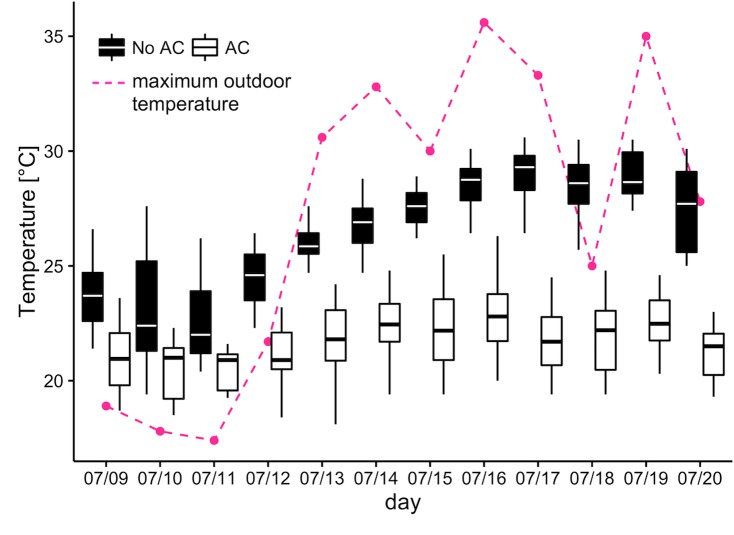
- Mean indoor temperatures were significantly higher in non-AC residences (26.3°C; SD 2.5°C; range 19.6–30.4°C) than AC residences (21.4°C; SD 1.9°C; range 17.5–25.0°C; p < 0.001).
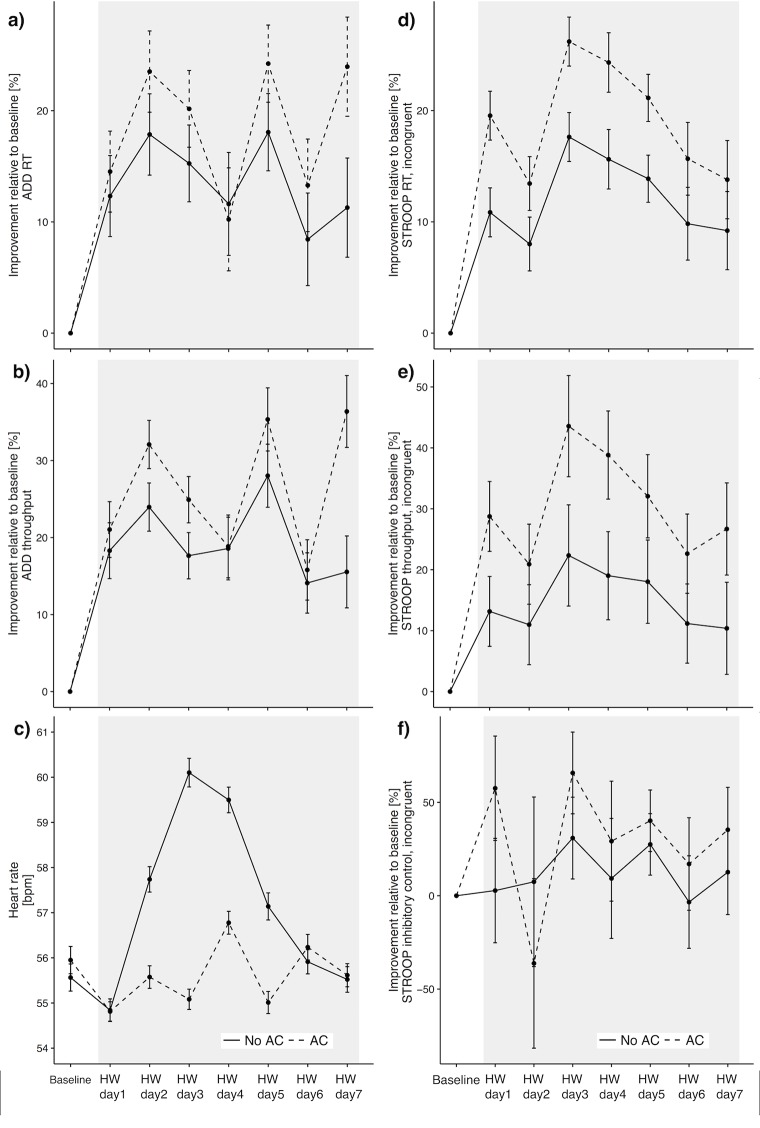
- Difference-in-differences estimates showed worse performance in non-AC residents during the heat wave relative to AC residents: STROOP reaction time increased by 155 ms (13.4%), STROOP inhibitory control increased by 22 ms (13.3%), ADD reaction time increased by 288 ms (11.4%), and STROOP throughput decreased by 9.91%; ADD throughput decreased by 6.3% but was not statistically significant (p = 0.08).
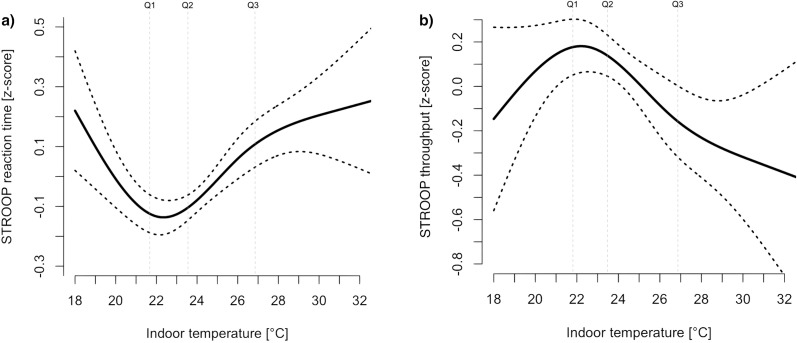
- Indoor temperature effects were domain-specific: ADD reaction time, ADD throughput, and STROOP inhibitory control showed linear associations with temperature, while STROOP reaction time and throughput followed U-shaped/inverted U-shaped curves with an optimum around 22°C–23°C.
- A 1°C increase in overnight indoor temperature was associated with a 2.74-minute decrease in total sleep time (95% CI −2.77 to −2.71; p < 0.001), and mediation analysis suggested sleep significantly mediated the effect for ADD reaction time, representing 8.4% of the total effect.
Methods
- Prospective observational cohort of 44 university students (mean age 20.2 years; SD 1.8 years) living in AC (n = 24) and non-AC (n = 20) campus residence halls, followed for 12 consecutive days (July 9–July 20, 2016) before, during, and after a heat wave.
- Participants self-administered daily smartphone cognitive tests after waking: the Stroop color-word test (STROOP) for selective attention/processing speed and a 2-digit visual addition/subtraction test (ADD) for cognitive speed and working memory; indoor environmental monitors and actigraphy-based sleep/HR trackers were also deployed.
- Main analyses used difference-in-differences with generalized linear mixed-effect models, generalized additive mixed models for environmental exposures, and mediation analysis with total sleep time as a potential mediator.
Limitations
- The paper states that cognitive tests occurred right after waking, so the study cannot assess whether effects extended during the rest of the day; it also notes the limited age range, the heating-dominated climate, and that small sample size and limited actigraphy-based total sleep time reliability preclude conclusive mediation results.
- The paper notes that lacking information on location and concurrent environmental exposures during the day limited assessment of prolonged effects, and that air pollution may differ between buildings during heat waves but was not directly addressed.
- Evident from the text: housing assignment was not randomized, though the authors assumed exchangeability; hydration was self-reported, and baseline STROOP differences between groups were present despite z-score transformation to reduce learning effects.
Model-written summary. Check it against the paper before relying on it.
Integrity signals
Registry
Cites
Statistics
Figures
Verification
Claims the paper makes
17 Valid · 2 Not valid · 10 Not checked · 83 Own results and interpretations
Some cited sources support this claim and some don’t — read each source’s verdict below.
In the paper
“The tracker has proven to be most accurate when collecting measurements at rest [34,35].”
§ Reduced cognitive function during a heat wave among residents of non-air-conditioned buildings: An observational study of young adults in the summer of 2016 > Methods > Environmental and physiological measures
What the sources say
- Partly supportedcites [34] 34. Wang R, Blackburn G, Desai M, Phelan D, Gillinov L, Houghtaling P, et al. Accuracy of wrist-worn heart rate monitors. Jama cardiology. 2017;2(1):104–6. doi: 10.1001/jamacardio.2016.3340 sourceExperimental — accuracy not yet measured
The Discussion (provided as passage [3] under Abstract; page not given) says wrist-worn heart-rate monitors were generally most accurate at rest. The paper assessed heart-rate readings, not the accuracy of an actigraphy-based sleep tracker or its sleep measurements. (LLM, conf=0.86)
- Disputedcites [35] 35. Stahl SE, An H-S, Dinkel DM, Noble JM, Lee J-M. How accurate are the wrist-based heart rate monitors during walking and running activities? Are they accurate enough? BMJ Open Sport. 2016;2(1). doi: 10.1136/bmjsem-2015-000106 sourceExperimental — accuracy not yet measured
The Discussion (page unavailable) says the tested heart-rate trackers had their lowest measurement error at the highest running speed, not at rest. The paper evaluates heart-rate measurements, not the accuracy of an actigraphy-based sleep tracker. (LLM, conf=0.87)
Checked by a reasoning model — may be wrong.
plainstates an association- Asserted: passes — The authors put it forward as true.
- Checkable: passes — It can be checked against evidence.
- Load-bearing: passes — The paper’s conclusions depend on it.
- Based: passes — The paper gives a reason why it holds.
- Partly supported
The cited sources support only part of this claim — read each source’s verdict below.
In the paper
“The impacts of extreme heat are compounded in real life by behavioral factors that modify exposure [23–25] (e.g., sleep, hydration, physical activity, or air conditioning [AC]).”
§ Reduced cognitive function during a heat wave among residents of non-air-conditioned buildings: An observational study of young adults in the summer of 2016 > Introduction
What the sources say
- Not checked — no full text of the sourcecites [23] 23. Gopinathan P, Pichan G, Sharma V. Role of dehydration in heat stress-induced variations in mental performance. Archives of Environmental Health: An International Journal. 1988;43(1):15–7. doi: 10.1080/00039896.1988.9934367 source
- Partly supportedcites [24] 24. Obradovich N, Fowler JH. Climate change may alter human physical activity patterns. Nature Human Behaviour. 2017;1:0097 doi: 10.1038/s41562-017-0097 sourceExperimental — accuracy not yet measured
The main text (page not specified) says people often forgo outdoor physical activity when it is too hot, supporting physical activity as a heat-responsive behavior. The paper does not show that this behavior compounds the impacts of extreme heat or measure how it changes heat exposure; it does not address sleep or hydration. (LLM, conf=0.84)
- Not checked — no full text of the sourcecites [25] 25. Kinney PL, O’Neill MS, Bell ML, Schwartz J. Approaches for estimating effects of climate change on heat-related deaths: challenges and opportunities. Environmental Science & Policy. 2008;11(1):87–96. https://doi.org/10.1016/j.envsci.2007.08.001. source
plainstates a cause- Asserted: passes — The authors put it forward as true.
- Checkable: passes — It can be checked against evidence.
- Load-bearing: passes — The paper’s conclusions depend on it.
- Based: passes — The paper gives a reason why it holds.
Every source the paper cites for this claim was checked and supports it.
In the paper
“Adults in the US, however, spend about 90% of their time indoors [19], making past heat-related health research subject to exposure misclassification if the outdoor temperature values do not represent the indoor exposures.”
§ Reduced cognitive function during a heat wave among residents of non-air-conditioned buildings: An observational study of young adults in the summer of 2016 > Introduction
What the sources say
- Supportedcites [19] 19. Klepeis N, Nelson W, Ott W, Robinson J, Tsang A, Switzer P, et al. The National Human Activity Pattern Survey (NHAPS): a resource for assessing exposure to environmental pollutants. Journal of Exposure Analysis and Environmental Epidemiology. 2001;11(3):231–52. doi: 10.1038/sj.jea.7500165 PubMed PMID: WOS:000170077100008. source
The Summary and Conclusions reports that Americans spend an average of 87% of their time indoors, which reasonably supports “about 90%.” The Historical Perspective also reports an estimate of 92% for employed people in the US. (LLM, conf=0.90)
plain- Asserted: passes — The authors put it forward as true.
- Checkable: passes — It can be checked against evidence.
- Load-bearing: passes — The paper’s conclusions depend on it.
- Based: passes — The paper gives a reason why it holds.
- Supported
The cited sources support only part of this claim — read each source’s verdict below.
In the paper
“These tests have been used previously based on their sensitivity measuring the effects of hyperthermia on executive control reaction time and working memory [22,27–29].”
§ Reduced cognitive function during a heat wave among residents of non-air-conditioned buildings: An observational study of young adults in the summer of 2016 > Methods > Survey instruments
What the sources say
- Not checked — no full text of the sourcecites [22] 22. Liu W, Zhong W, Wargocki P. Performance, acute health symptoms and physiological responses during exposure to high air temperature and carbon dioxide concentration. Building and Environment. 2017;114:96–105. https://doi.org/10.1016/j.buildenv.2016.12.020. source
- Not checked — no full text of the sourcecites [27] 27. Lan L, Wargocki P, Lian Z. Quantitative measurement of productivity loss due to thermal discomfort. Energy and Buildings. 2011;43(5):1057–62. source
- Not checked — no full text of the sourcecites [28] 28. Wright KP, Hull JT, Hughes RJ, Ronda JM, Czeisler CA. Sleep and wakefulness out of phase with internal biological time impairs learning in humans. Journal of Cognitive Neuroscience. 2006;18(4):508–21. doi: 10.1162/jocn.2006.18.4.508 PubMed PMID: WOS:000237084200002. source
- Partly supportedcites [29] 29. Gaoua N, Racinais S, Grantham J, El Massioui F. Alterations in cognitive performance during passive hyperthermia are task dependent. International Journal of Hyperthermia. 2011;27(1):1–9. doi: 10.3109/02656736.2010.516305 sourceExperimental — accuracy not yet measured
The Methodology sections describe tests of reaction time and working memory, and the Results show that the working-memory test detected an effect of passive hyperthermia. However, the Results report no reaction-time differences between conditions, so this paper does not establish the claimed sensitivity to hyperthermia’s effects on reaction time. Page numbers were not available in our copy. (LLM, conf=0.82)
plain- Asserted: passes — The authors put it forward as true.
- Checkable: passes — It can be checked against evidence.
- Load-bearing: passes — The paper’s conclusions depend on it.
- Based: passes — The paper gives a reason why it holds.
The sources with a verdict support this claim; the rest weren’t checked yet, have no full text we could read, or their verdicts aren’t rated yet.
In the paper
“A significant improvement in reaction time and throughput in STROOP was associated with higher decibel levels, which is consistent with previous findings of antagonistic effects of noise and temperature exposures [47,48].”
§ Reduced cognitive function during a heat wave among residents of non-air-conditioned buildings: An observational study of young adults in the summer of 2016 > Discussion > Relationship between other environmental exposures and cognitive function
What the sources say
- Not checked — no full text of the sourcecites [47] 47. Hygge S, Knez I. Effects of noise, heat and indoor lighting on cognitive performance and self-reported affect. Journal of Environmental Psychology. 2001;21(3):291–9. https://doi.org/10.1006/jevp.2001.0222. source
- Supportedcites [48] 48. Thomas W, WD P., Geo C. The effects of moderate heat stress and open‐plan office noise distraction on SBS symptoms and on the performance of office work. Indoor Air. 2004;14(s8):30–40. doi: 10.1111/j.1600-0668.2004.00305.x source
The Results report a noise–temperature interaction in the addition task: the effect of warmth on errors was less under noise. The Discussion interprets this as evidence that raised temperatures may counteract noise’s arousing effect. The source supports the cited comparison, though it does not report the citing study’s STROOP result. (LLM, conf=0.91)
plainstates an association- Asserted: passes — The authors put it forward as true.
- Checkable: passes — It can be checked against evidence.
- Load-bearing: unclear — It is unclear whether the paper’s conclusions depend on it.
- Based: passes — The paper gives a reason why it holds.
58 more claims · 1 with their cited sources checked
Create a free account to see all 112 claims and to verify the 1 reference still open.
- Probably not a substantial claim. 33
- It may state two separate claims as one. 23
Claims other papers make about this one
Each is checked against this paper’s own text: does it say what the citing paper says it does?
In the citing paper
“It is broadly established that heat waves and cold spells are associated with thermal discomfort, decreased physical and cognitive performance [36], and increased mortality [37].”
From Drivers of diversity in human thermal perception – A review for holistic comfort models (2018) · cites this paper as [36]
Self-check
Percentages, sums and reported differences re-computed from the paper’s own numbers.
Each contradiction between two passages listed here was confirmed by an independent check.
Rated minor: it would not touch a result — a value no result rests on, a p-value that stays on the same side of the significance level, or a conflict that is clerical, resolved elsewhere in the paper, or outside its own findings.
In the paper
§ Reduced cognitive function during a heat wave among residents of non-air-conditioned buildings: An observational study of young adults in the summer of 2016 > Methods > Study design
“Our criteria for abnormally high temperature threshold was based on a daily maximum outdoor temperature (Tout,max) of 32.2°C (90°F)”
§ Reduced cognitive function during a heat wave among residents of non-air-conditioned buildings: An observational study of young adults in the summer of 2016 > Methods > Study design
“the HW period, consisting of 5 days of abnormally high temperatures (mean Tout,max = 33.4°C; range = 27.8–35.6°C)”
Rated minor: it would not touch a result — a value no result rests on, a p-value that stays on the same side of the significance level, or a conflict that is clerical, resolved elsewhere in the paper, or outside its own findings.
In the paper
§ Reduced cognitive function during a heat wave among residents of non-air-conditioned buildings: An observational study of young adults in the summer of 2016 > Results > Effects of indoor environmental factors
“| CO2[ppb] | −0.006(−0.04 to 0.02) | −0.06(−0.17 to 0.06) | 0.01(−0.05 to 0.07) | −0.001(−0.13 to 0.13) | CS**(p = 0.01) |”
§ Reduced cognitive function during a heat wave among residents of non-air-conditioned buildings: An observational study of young adults in the summer of 2016 > Methods > Environmental and physiological measures
“The monitor measured indoor dry-bulb temperature (°C), relative humidity (%), CO2 concentration (ppm), and noise (dBa).”
Rated minor: it would not touch a result — a value no result rests on, a p-value that stays on the same side of the significance level, or a conflict that is clerical, resolved elsewhere in the paper, or outside its own findings.
In the paper
“| Excellent self-assessment of health | 8 (38.1%) | 6 (25.0%) | 0.34 | | Very good to good self-assessment of health | 13 (61.9%) | 17 (70.8%) | 0.53 |”
§ Reduced cognitive function during a heat wave among residents of non-air-conditioned buildings: An observational study of young adults in the summer of 2016 > Methods > Study participants
Reported 20 · recomputed 21
Rated minor: it would not touch a result — a value no result rests on, a p-value that stays on the same side of the significance level, or a conflict that is clerical, resolved elsewhere in the paper, or outside its own findings.
In the paper
§ Reduced cognitive function during a heat wave among residents of non-air-conditioned buildings: An observational study of young adults in the summer of 2016 > Abstract > Findings
“DiD estimates show an increase in reaction time (STROOP = 13.4%, p < 0001; ADD = 13.3%, p < 0.001)”
§ Reduced cognitive function during a heat wave among residents of non-air-conditioned buildings: An observational study of young adults in the summer of 2016 > Results > DiD results
“ADD reaction time in the non-AC group had a mean z-score increase of 0.12 (p = 0.0001) with respect to the AC group, equivalent to 288 ms (11.4%).”
Rated minor: it would not touch a result — a value no result rests on, a p-value that stays on the same side of the significance level, or a conflict that is clerical, resolved elsewhere in the paper, or outside its own findings.
In the paper
§ Reduced cognitive function during a heat wave among residents of non-air-conditioned buildings: An observational study of young adults in the summer of 2016 > Discussion > Relationship between behavioral factors and cognitive function
“an intake below the median in the study (i.e., 6 glasses of liquid per day) was associated with cognitive function deficits in all evaluated metrics.”
§ Reduced cognitive function during a heat wave among residents of non-air-conditioned buildings: An observational study of young adults in the summer of 2016 > Results > Effects of indoor environmental factors
“| Liquid intake[<6 glasses per day] | 0.14*(0.01–0.27) | −0.46*(−0.91 to −0.01) | 0.12(−0.14 to 0.38) | 0.23(−0.23 to 0.70) | 0.08(−0.07 to 0.23) |”
Citations
Cites
(2007) · Medical Entomology and Zoology · Cited by 9,612
KLEPEIS, N. E., NELSON, W. C., OTT, W. R., ROBINSON, J. P., TSANG, A. M., SWITZER, P., BEHAR, J. V., HERN, S. C., & ENGELMANN, W. H. (2001) · Journal of Exposure Science & Environmental Epidemiology · doi:10.1038/sj.jea.7500165 · Cited by 4,803
More Intense, More Frequent, and Longer Lasting Heat Waves in the 21st Century
Meehl, G. A., & Tebaldi, C. (2004) · Science · doi:10.1126/science.1098704 · Cited by 4,322
Subjective and objective sleepiness in the active individual
Åkerstedt, T., & Gillberg, M. (1990) · International Journal of Neuroscience · doi:10.3109/00207459008994241 · Cited by 3,088
Mortality risk attributable to high and low ambient temperature: a multicountry observational study
Gasparrini, A., Guo, Y., Hashizume, M., Lavigne, E., Zanobetti, A., Schwartz, J., Tobias, A., Tong, S., Rocklöv, J., Forsberg, B., et al. (2015) · The Lancet · doi:10.1016/s0140-6736(14)62114-0 · Cited by 2,965
Self-citationScalable-manufactured randomized glass-polymer hybrid metamaterial for daytime radiative cooling
Zhai, Y., Ma, Y., David, S. N., Zhao, D., Lou, R., Tan, G., Yang, R., & Yin, X. (2017) · Science · doi:10.1126/science.aai7899 · Cited by 2,421
Semiparametric Difference-in-Differences Estimators
Abadie, A. (2005) · The Review of Economic Studies · doi:10.1111/0034-6527.00321 · Cited by 2,286
Death toll exceeded 70,000 in Europe during the summer of 2003
Robine, J.-M., Cheung, S. L. K., Le Roy, S., Van Oyen, H., Griffiths, C., Michel, J.-P., & Herrmann, F. R. (2007) · Comptes Rendus. Biologies · doi:10.1016/j.crvi.2007.12.001 · Cited by 2,127
Thomas, M., Sing, H., Belenky, G., Holcomb, H., Mayberg, H., Dannals, R., Wagner JR., H., Thorne, D., Popp, K., Rowland, L., et al. (2000) · Journal of Sleep Research · doi:10.1046/j.1365-2869.2000.00225.x · Cited by 1,066
Research works printed but not linked: 2
- 14. Kunkel KE, Stevens LE, Stevens SE, Sun L, Janssen E, Wuebbles D, et al. Regional climate trends and scenarios for the US national climate assessment. Part. 2013;3:142–3.
- 15. Solomon S. Climate change 2007-the physical science basis: Working group I contribution to the fourth assessment report of the IPCC: Cambridge University Press; 2007.
Cited by
Wolkoff, P., Azuma, K., & Carrer, P. (2021) · International Journal of Hygiene and Environmental Health · doi:10.1016/j.ijheh.2021.113709 · Cited by 279
Yin, J., Arfaei, N., MacNaughton, P., Catalano, P. J., Allen, J. G., & Spengler, J. D. (2019) · Indoor Air · doi:10.1111/ina.12593 · Cited by 250
Self-citationHow indoor environmental quality affects occupants’ cognitive functions: A systematic review
Wang, C., Zhang, F., Wang, J., Doyle, J. K., Hancock, P. A., Mak, C. M., & Liu, S. (2021) · Building and Environment · doi:10.1016/j.buildenv.2021.107647 · Cited by 243
Drivers of diversity in human thermal perception – A review for holistic comfort models
Schweiker, M., Huebner, G. M., Kingma, B. R. M., Kramer, R., & Pallubinsky, H. (2018) · Temperature · doi:10.1080/23328940.2018.1534490 · Cited by 231
“It is broadly established that heat waves and cold spells are associated with thermal discomfort, decreased physical and cognitive performance [36], and increased mortality [37].”
BackgroundIndoor CO 2 concentrations and cognitive function: A critical review
Du, B., Tandoc, M. C., Mack, M. L., & Siegel, J. A. (2020) · Indoor Air · doi:10.1111/ina.12706 · Cited by 190
Improving the SDG energy poverty targets: Residential cooling needs in the Global South
Mastrucci, A., Byers, E., Pachauri, S., & Rao, N. D. (2019) · Energy and Buildings · doi:10.1016/j.enbuild.2019.01.015 · Cited by 174
Fan, C. C., Marshall, A., Smolker, H., Gonzalez, M. R., Tapert, S. F., Barch, D. M., Sowell, E., Dowling, G. J., Cardenas-Iniguez, C., Ross, J., et al. (2021) · Developmental Cognitive Neuroscience · doi:10.1016/j.dcn.2021.101030 · Cited by 139
A systematic review of ambient heat and sleep in a warming climate
Chevance, G., Minor, K., Vielma, C., Campi, E., O’Callaghan-Gordo, C., Basagaña, X., Ballester, J., & Bernard, P. (2024) · Sleep Medicine Reviews · doi:10.1016/j.smrv.2024.101915 · Cited by 150
Healthy Design and Urban Planning Strategies, Actions, and Policy to Achieve Salutogenic Cities
Capolongo, S., Rebecchi, A., Dettori, M., Appolloni, L., Azara, A., Buffoli, M., Capasso, L., Casuccio, A., Conti, G. O., D’Amico, A., et al. (2018) · International Journal of Environmental Research and Public Health · doi:10.3390/ijerph15122698 · Cited by 161
Boubekri, M., Lee, J., MacNaughton, P., Woo, M. K., Schuyler, L., Tinianov, B. D., & Satish, U. (2020) · International Journal of Environmental Research and Public Health · doi:10.3390/ijerph17093219 · Cited by 158
Lan, L., Tang, J., Wargocki, P. L., Wyon, D. P., & Lian, Z. (2021) · Indoor Air · doi:10.1111/ina.12916 · Cited by 144
Housing as a critical determinant of heat vulnerability and health
Samuelson, H. W., Baniassadi, A., Lin, A., González, P. I., Brawley, T., & Narula, T. (2020) · The Science of The Total Environment · doi:10.1016/j.scitotenv.2020.137296 · Cited by 121
The impacts of heat stress on animal cognition: Implications for adaptation to a changing climate
Soravia, C., Ashton, B. J., Thornton, A., & Ridley, A. R. (2021) · Wiley Interdisciplinary Reviews Climate Change · doi:10.1002/wcc.713 · Cited by 112
Williams, A. A., Spengler, J. D., Catalano, P. J., Allen, J. G., & Laurent, J. G. C. (2019) · International Journal of Environmental Research and Public Health · doi:10.3390/ijerph16132373 · Cited by 104
Self-citationPascal, M., Goria, S., Wagner, V., Sabastia, M., Guillet, A., Cordeau, E., Mauclair, C., & Host, S. (2021) · Environment International · doi:10.1016/j.envint.2021.106441 · Cited by 89
Sherman, P. J., Lin, H., & McElroy, M. B. (2022) · Energy and Buildings · doi:10.1016/j.enbuild.2022.112198 · Cited by 94
Climate Change and Children’s Health: Building a Healthy Future for Every Child
Ahdoot, S., Baum, C. R., Cataletto, M. B., Hogan, P., Wu, C. B., Bernstein, A. S., Bole, A., Balk, S. J., Byron, L. G., Huerta-Montañez, G. M., et al. (2024) · PEDIATRICS · doi:10.1542/peds.2023-065505 · Cited by 121
Lan, L., Xia, L., Hejjo, R., Wyon, D. P., & Wargocki, P. L. (2020) · Indoor Air · doi:10.1111/ina.12685 · Cited by 89
Biophilic Design and Climate Change: Performance Parameters for Health
Africa, J. K., HEERWAGEN, J. H., Loftness, V., & Balagtas, C. R. (2019) · Frontiers in Built Environment · doi:10.3389/fbuil.2019.00028 · Cited by 103
“Circadian-effective lighting strategies support overall health and, specifically, help regulate sleepwake cycles that are projected to be further disrupted by elevated nighttime temperatures (Laurent et al., 2018).”
BackgroundEnergy Poverty and Entrepreneurship
Cheng, Z., Tani, M., & Wang, H. (2021) · Energy Economics · doi:10.1016/j.eneco.2021.105469 · Cited by 87
Adding A Climate Lens To Health Policy In The United States
Salas, R. N., Friend, T. H., Bernstein, A. S., & Jha, A. K. (2020) · Health Affairs · doi:10.1377/hlthaff.2020.01352 · Cited by 83
López-Bueno, J. A., Díaz, J., Sánchez, C. S.-G., Martínez, G. S., Franco, M., Gullón, P., Peiró, M. N., Valero, I., & Linares, C. (2020) · Environmental Research · doi:10.1016/j.envres.2020.109993 · Cited by 82
Developing A Definition Of Climate And Health Literacy
Limaye, V. S., Grabow, M., Stull, V. J., & Patz, J. A. (2020) · Health Affairs · doi:10.1377/hlthaff.2020.01116 · Cited by 76
Luoto, S. (2018) · Adaptive Human Behavior and Physiology · doi:10.1007/s40750-018-0103-6 · Cited by 62
“Recent empirical findings on the effects of heat on cognitive function provide some support for this hypothesis (Cedeño Laurent et al. 2018).”
Climate change threatens the achievement of effective universal healthcare
Salas, R. N., & Jha, A. K. (2019) · BMJ · doi:10.1136/bmj.l5302 · Cited by 82
Laurent, J. G. C., MacNaughton, P., Jones, E. R., Young, A. S., Bliss, M., Flanigan, S. S., Vallarino, J., Chen, L., Cao, X., & Allen, J. G. (2021) · Environmental Research Letters · doi:10.1088/1748-9326/ac1bd8 · Cited by 118
Self-citationUnderstanding systemic cooling poverty
Mazzone, A., Cian, E. D., Falchetta, G., Jani, A. R., Mistry, M., & Khosla, R. (2023) · Nature Sustainability · doi:10.1038/s41893-023-01221-6 · Cited by 107
“Given the heterogeneity in cooling needs for different vulnerable individuals and populations as well as the systemic nature of cooling poverty, it is essential that solutions are codesigned and implemented with multistakeholder input.”
Zhou, W., Wang, Q., Li, R., Zhang, Z., Wang, W., Zhou, F., & Ling, L. (2023) · The Science of The Total Environment · doi:10.1016/j.scitotenv.2023.166534 · Cited by 70
Yan, Z., Liu, Y., Wu, W., Jiang, Y., & Zhuo, L. (2022) · The Science of The Total Environment · doi:10.1016/j.scitotenv.2022.159599 · Cited by 61
Khan, A. M., Finlay, J., Clarke, P. J., Sol, K., Melendez, R. A., Judd, S. E., & Gronlund, C. J. (2021) · BMC Public Health · doi:10.1186/s12889-021-11533-x · Cited by 69
Chauhan, N. R., Kumar, R., Gupta, A., Meena, R. C., Nanda, S., Mishra, K. P., & Singh, S. B. (2020) · Behavioural Brain Research · doi:10.1016/j.bbr.2020.112895 · Cited by 57
Hampo, C. C., Schinasi, L. H., & Hoque, S. (2024) · Heliyon · doi:10.1016/j.heliyon.2024.e25801 · Cited by 78
“Several studies have established the direct human physiological responses and threshold temperature values to indoor heat stress, such as circulatory and respiratory [55,56], blood pressure [57,58], mental health [59], and cognition, dizziness, and fatigue [60,61].”
BackgroundResultInfluentialCo-benefits of energy efficiency in residential buildings
Baniassadi, A., Heusinger, J., González, P. I., Weber, S., & Samuelson, H. W. (2021) · Energy · doi:10.1016/j.energy.2021.121768 · Cited by 53
Review of thermal comfort infused with the latest big data and modeling progresses in public health
Jiang, Y., Luo, Z., Wang, Z., & Lin, B. (2019) · Building and Environment · doi:10.1016/j.buildenv.2019.106336 · Cited by 53
Hu, J., Wen, Y., Duan, Y., Yan, S., Liao, Y., Pan, H., Zhu, J., Yin, P., Cheng, J., & Jiang, H. (2020) · Environmental Pollution · doi:10.1016/j.envpol.2020.114156 · Cited by 48
Wearables for Measuring Health Effects of Climate Change–Induced Weather Extremes: Scoping Review
Koch, M., Matzke, I., Huhn, S., Gunga, H.-C., Maggioni, M. A., Munga, S., Obor, D., Sié, A., Boudo, V., Bunker, A., et al. (2022) · JMIR mHealth and uHealth · doi:10.2196/39532 · Cited by 44
Aylward, B., Cunsolo, A., Vriezen, R., & Harper, S. L. (2022) · International Review of Psychiatry · doi:10.1080/09540261.2022.2029368 · Cited by 44
The future of IEQ in green building certifications
Licina, D., Wargocki, P. L., Pyke, C. R., & Altomonte, S. (2021) · Buildings and Cities · doi:10.5334/bc.148 · Cited by 58
Ciuha, U., Pogačar, T., Bogataj, L. K., Gliha, M., Nybo, L., Flouris, A. D., & Mekjavic, I. B. (2019) · Weather, Climate, and Society · doi:10.1175/wcas-d-19-0024.1 · Cited by 40
Tian, W., Yang, Y., Wang, L., Zong, L., Zhang, Y., & Liu, D. (2023) · Urban Climate · doi:10.1016/j.uclim.2023.101474 · Cited by 46
Teyton, A., Tremblay, M., Tardif, I., Lemieux, M.-A., Nour, K., & Benmarhnia, T. (2022) · Environmental Health Perspectives · doi:10.1289/ehp10291 · Cited by 52
Wang, C., Zhang, H., Ma, Z., et al. (2024) · Sustainability · doi:10.3390/su16103946 · Cited by 40
O’Lenick, C. R., Baniassadi, A., Michael, R., Monaghan, A. J., Boehnert, J., Yu, X. Q., Hayden, M. H., Wiedinmyer, C., Zhang, K., Crank, P. J., et al. (2020) · Environmental Health Perspectives · doi:10.1289/ehp6340 · Cited by 47
“…in indoor temperatures may be connected to a variety of health e ff ects, including respiratory emergency calls (Uejio et al. 2016), sleep disturbance (van Loenhout et al. 2016), and cognitive decline (Cedeño Laurent et al. 2018), as well as declines in respiratory function (McCormack et al. 2016).”
Climate Change and Children’s Health: Building a Healthy Future for Every Child
Ahdoot, S., Baum, C. R., Cataletto, M. B., Hogan, P., Wu, C. B., Bernstein, A. S., Bole, A., Balk, S. J., Byron, L. G., Huerta-Montañez, G. M., et al. (2024) · PEDIATRICS · doi:10.1542/peds.2023-065504 · Cited by 74
Azam, M., & Awan, A. M. (2022) · Social Indicators Research · doi:10.1007/s11205-022-02904-x · Cited by 37
The Changing Climate: Managing Health Impacts.
Parker, C. L., Wellbery, C., & Mueller, M. R. (2019) · PubMed · Cited by 50
A review of research on the impact of the classroom physical environment on schoolchildren's health
Fang, Y., Luo, X., & Lu, J. (2022) · Journal of Building Engineering · doi:10.1016/j.jobe.2022.105430 · Cited by 55
Climate change and health: Moving from theory to practice
Patz, J. A., & Thomson, M. C. (2018) · PLoS Medicine · doi:10.1371/journal.pmed.1002628 · Cited by 41
Scale-dependent response of the urban heat island to the European heatwave of 2018
Shreevastava, A., Prasanth, S., Ramamurthy, P., & Rao, P. S. C. (2021) · Environmental Research Letters · doi:10.1088/1748-9326/ac25bb · Cited by 31
Dwelling Characteristics Influence Indoor Temperature and May Pose Health Threats in LMICs
Teare, J., Mathee, A., Naicker, N., Swanepoel, C., Kapwata, T., Balakrishna, Y., du Preez, D. J., Millar, D. A., & Wright, C. Y. (2020) · Annals of Global Health · doi:10.5334/aogh.2938 · Cited by 36
“Some studies on these effects have been done in, among other countries, the United Kingdom (UK) [5] and the United States (US) [6].”
BackgroundEffects of heat strain on cognitive function among a sample of miners
Yeoman, K., Weakley, A. M., DuBose, W., Honn, K. A., McMurry, T. L., Eiter, B. M., Baker, B. A., & Poplin, G. S. (2022) · Applied Ergonomics · doi:10.1016/j.apergo.2022.103743 · Cited by 41
Comparing energy and comfort metrics for building benchmarking
Guillén, E. E., Samuelson, H. W., & Laurent, J. G. C. (2019) · Energy and Buildings · doi:10.1016/j.enbuild.2019.109539 · Cited by 31
Self-citationBaecker, L., Iyengar, U., Piccolo, M. C. D., & Mechelli, A. (2025) · The Journal of Climate Change and Health · doi:10.1016/j.joclim.2025.100446 · Cited by 55
Sleep and the human impacts of climate change
Obradovich, N., & Migliorini, R. (2018) · Sleep Medicine Reviews · doi:10.1016/j.smrv.2018.09.002 · Cited by 28
Heat and learning in elementary and middle school
Roach, T., & Whitney, J. M. (2021) · Education Economics · doi:10.1080/09645292.2021.1931815 · Cited by 36
Recognition and prediction of elderly thermal sensation based on outdoor facial skin temperature
Wang, J., Li, Q., Zhu, G., Kong, W., Peng, H., & Wei, M. (2024) · Building and Environment · doi:10.1016/j.buildenv.2024.111326 · Cited by 31
Ambient temperatures associated with reduced cognitive function in older adults in China
Hou, K., & Xu, X. (2023) · Scientific Reports · doi:10.1038/s41598-023-44776-2 · Cited by 33
Gignac, F., Righi, V., Toran, R., Errandonea, L. P., Ortiz, R., Mijling, B., Naranjo, A., Nieuwenhuijsen, M. J., Creus, J., & Basagaña, X. (2022) · Environment International · doi:10.1016/j.envint.2022.107284 · Cited by 37
Climate Changes Affect Human Capital
Caruso, G. D., de Marcos, I., & Noy, I. (2024) · Economics of Disasters and Climate Change · doi:10.1007/s41885-023-00140-2 · Cited by 39
Young, A. S., Parikh, S., Dedesko, S., Bliss, M., Xu, J., Zanobetti, A., Miller, S. L., & Allen, J. G. (2024) · Building and Environment · doi:10.1016/j.buildenv.2024.111551 · Cited by 36
Self-citationClimate change and its implications for developing brains – In utero to youth: A scoping review
Kidd, S. A., Gong, J., Massazza, A., Bezgrebelna, M., Zhang, Y., & Hajat, S. (2023) · The Journal of Climate Change and Health · doi:10.1016/j.joclim.2023.100258 · Cited by 33
Kuhn, S., Kutzner, F., & Thøgersen, J. B. (2021) · Energy Research & Social Science · doi:10.1016/j.erss.2021.102320 · Cited by 33
Bringing Nature Indoors With Virtual Reality: Human Reponses to Biophilic Design in Buildings
Yin, J. (2019) · Digital Access to Scholarship at Harvard (DASH) (Harvard University) · Cited by 33
Lin, X., Guo, C., Wargocki, P. L., Tanabe, S., Tham, K. W., & Lan, L. (2024) · Building and Environment · doi:10.1016/j.buildenv.2024.112488 · Cited by 31
Climate anomalies and childhood growth in Peru
Nicholas, K., Campbell, L., Paul, E., Skeltis, G., Wang, W., & Gray, C. (2021) · Population and Environment · doi:10.1007/s11111-021-00376-8 · Cited by 29
Tate, D. F., Dennis, E. L., Adams, J. T., Adamson, M. M., Belanger, H. G., Bigler, E. D., Bouchard, H. C., Clark, A. L., Delano‐Wood, L., Disner, S. G., et al. (2021) · Brain Imaging and Behavior · doi:10.1007/s11682-020-00423-2 · Cited by 24
“Many of these factors have been examined independently and have shown deleterious effects on clinical and cognitive function separate from TBI (Barrett et al. 2001; Cedeño Laurent et al. 2018; Chao 2017; Cooper et al. 2018; Gopinath et al. 2019; Martin et al. 2019; Veitch et al. 2013).”
BackgroundCortesi, A., Vardopoulos, I., & Salvati, L. (2022) · Urban Science · doi:10.3390/urbansci6040069 · Cited by 24
“Indoor air quality, ventilation, thermal comfort, water quality, moisture control, safety, and security, lighting, and views, noise control, and the limitation of dust and pests are among the elements considered most important for the inhabitants of any building [31].”
BackgroundEstimations of the weather effects on brain functions using functional MRI : A cautionary note
Di, X., Woelfer, M., Kühn, S., Zhang, Z., & Biswal, B. B. (2022) · Human Brain Mapping · doi:10.1002/hbm.25576 · Cited by 17
“We analyzed longitudinal resting-state fMRI data from eight individuals from three datasets, where the individuals were scanned over periods of months to years (Choe et al., 2015; Filevich et al., 2017; Poldrack et al., 2015).”
BackgroundMethodResultInfluentialLo, Y. C., Su, W.-P., Mei, S.-H., Jou, Y., & Huang, H.-B. (2021) · BMJ Open · doi:10.1136/bmjopen-2021-049160 · Cited by 23
Vasilakopoulou, K., & Santamouris, M. (2025) · PLOS Climate · doi:10.1371/journal.pclm.0000618 · Cited by 25
Xiang, W., Lyu, K., Li, Y., Yin, B., Ke, L., & Di, Q. (2024) · Environmental Research · doi:10.1016/j.envres.2024.120348 · Cited by 29
Baniassadi, A., Sailor, D. J., O’Lenick, C. R., Wilhelmi, O. V., Crank, P. J., Chester, M., & Reddy, A. T. (2019) · ASME Journal of Engineering for Sustainable Buildings and Cities · doi:10.1115/1.4045678 · Cited by 22
Chen, J., & Delina, L. L. (2025) · Environmental Research Communications · doi:10.1088/2515-7620/ada735 · Cited by 22
An Experimental Simulation of Heat Effects on Cognition and Workload of Surgical Team Members
Ward, M. K., Yam, C. M. H., Palejwala, Z., Wallman, K. E., Taggart, S. M., Wood, F. M., & Parker, S. K. (2020) · Annals of Surgery · doi:10.1097/sla.0000000000004598 · Cited by 18
“Consistent with these findings, interactions of heat and time in this study show observable decrements in cognitive performance after heat exposure of 60 minutes or longer.(8,9,13) In line with previous research, effect of heat on cognitive speed and accuracy varied by test.”
ResultHealth and Climate Benefits of Heat Adaptation Strategies in Single-Family Residential Buildings
Williams, A. A., Baniassadi, A., González, P. I., Buonocore, J. J., Laurent, J. G. C., & Samuelson, H. W. (2020) · Frontiers in Sustainable Cities · doi:10.3389/frsc.2020.561828 · Cited by 18
Self-citationWilliams, A. A., Allen, J. G., Catalano, P. J., Buonocore, J. J., & Spengler, J. D. (2020) · American Journal of Public Health · doi:10.2105/ajph.2019.305563 · Cited by 24
Self-citationResidential indoor temperatures and health: A scoping review of observational studies
Edwards, J. R., Roos, A. J. D., Hampo, C. C., Huang, W., Lincoln, E., Hoque, S., & Schinasi, L. H. (2025) · The Science of The Total Environment · doi:10.1016/j.scitotenv.2025.179377 · Cited by 25
“…indicate the rooms in which the sensors were placed, although in two papers the authors said that they installed monitors away from heat sources (e.g., computer screen, direct solar radiation, etc.) and sources of draft (e.g., air conditioners) (Cedeño Laurent et al., 2018; Williams et al., 2019).”
Indoor environment and brain health across the life course: A systematic review
Lu, J., Wu, J., & Chen, Y. (2024) · Building and Environment · doi:10.1016/j.buildenv.2024.112156 · Cited by 18
Contrasting Intraurban Signatures of Humid and Dry Heatwaves over Southern California
Shreevastava, A., Raymond, C., & Hulley, G. (2023) · Journal of Applied Meteorology and Climatology · doi:10.1175/jamc-d-22-0149.1 · Cited by 17
The Influence of Extreme Heat on Police and Fire Department Services in 23 U.S. Cities
Williams, A. A., McDonogh‐Wong, L., & Spengler, J. D. (2020) · GeoHealth · doi:10.1029/2020gh000282 · Cited by 30
Self-citationChersich, M., Scorgie, F., Wright, C. Y., Mullick, S., Mathee, A., Hess, J., Richter, M. L., & Rees, H. (2019) · South African Medical Journal · doi:10.7196/samj.2019.v109i9.14327 · Cited by 19
“Many health practitioners have little insight into the impacts of heat on outcomes such as comfort while at school and cognition more generally,[10] education attainment and violence.”
BackgroundHeidenreich, A., Buchner, M., Walz, A., & Thieken, A. H. (2021) · Weather Climate and Society · doi:10.1175/wcas-d-21-0027.1 · Cited by 17
Weather Woes? Exploring Potential Links between Precipitation and Age-Related Cognitive Decline
Finlay, J., Khan, A. M., Gronlund, C. J., Sol, K., Jang, J. B., Melendez, R. A., Judd, S. E., & Clarke, P. J. (2020) · International Journal of Environmental Research and Public Health · doi:10.3390/ijerph17239011 · Cited by 16
Cognitive decline in relation to later-life high temperature exposure in a Chinese nationwide cohort
Huang, Y., Zhang, L., Yang, J., Wang, F., Wang, Y., Zhu, L., Zhang, Y., Deng, B., Xiang, Q.-Q., & Zhang, Y.-Q. (2024) · Advances in Climate Change Research · doi:10.1016/j.accre.2024.11.002 · Cited by 17
Sui, Y., Feng, X., Ma, Y., Zou, Y., Liu, Y., Huang, J., Zhu, X., & Wang, J. (2024) · CNS Neuroscience & Therapeutics · doi:10.1111/cns.14840 · Cited by 12
Ye, Z., Li, X., Lang, H., Xin, J., Xu, H., & Fang, Y. (2024) · International Journal of Geriatric Psychiatry · doi:10.1002/gps.6063 · Cited by 20
Gronlund, C. J., Ketenci, K. C., Reames, T. G., Larson, P. S., Schott, J., Rowe, Z. E., Jenkins, Q. S., Sanca, M. O., Tournat, T., Sol, K., et al. (2021) · Indoor Air · doi:10.1111/ina.12972 · Cited by 20
Climate change and human health in Montana: a special report of the Montana Climate Assessment
Adams, A., Byron, R., Maxwell, B., Higgins, S., Eggers, M., Byron, L., & Whitlock, C. (2020) · doi:10.15788/c2h22021 · Cited by 13
Temperature exposure and health inequality
Zhang, X., Chen, F., Chen, Z., & Zhang, J. (2024) · Journal of Asian Economics · doi:10.1016/j.asieco.2024.101748 · Cited by 13
Rational Inattention in the Infield
Bhattacharya, V., & Howard, G. (2022) · American Economic Journal Microeconomics · doi:10.1257/mic.20200310 · Cited by 20
A nationwide analysis of heat and workplace injuries in the United States
Alahmad, B., Kessler, W., Alwadi, Y., Schwartz, J. D., Wagner, G. R., & Michaels, D. (2025) · Environmental Health · doi:10.1186/s12940-025-01231-1 · Cited by 21
A mental health focus to amplify climate resilience actions
Mishra, J., Han, H. C., & Ramanathan, V. (2025) · npj Climate Action · doi:10.1038/s44168-025-00263-0 · Cited by 14
Building a Framework to Understand the Energy Needs of Adaptation
Davide, M., Cian, E. D., & Bernigaud, A. (2019) · Sustainability · doi:10.3390/su11154085 · Cited by 15
“Access to air conditioning positively affects children cognitive functions during heatwaves [76].”
BackgroundThe combined effects of sleep and extreme heat exposure on cognitive function among older adults
Zhou, W., Li, X., Wang, Q., Ling, L., & Zhang, H. (2025) · Ecotoxicology and Environmental Safety · doi:10.1016/j.ecoenv.2025.117683 · Cited by 13
Wan, C., Zhou, Y., & Geng, L. (2024) · Journal of Cleaner Production · doi:10.1016/j.jclepro.2024.144271 · Cited by 13
Exposure of African ape sites to climate change impacts
Kiribou, I. A. R., Tehoda, P., Chukwu, O., Bempah, G., Kühl, H. S., Ferreira, J., Sop, T., Carvalho, J. S., Mengel, M., Kulik, L., et al. (2024) · PLOS Climate · doi:10.1371/journal.pclm.0000345 · Cited by 10
“…of immune system observed for birds [22]); high temperatures can lead to reduced performance (e.g., reduced cognitive performance found for humans [23]) high temperatures lead to reduced physiological performance; energy and time allocated to thermoregulation lead to physiological and behavioural…”
BackgroundHome Ambient Temperature and Self-Reported Attention in Community-Dwelling Older Adults
Baniassadi, A., Yu, W., Travison, T. G., Day, R., Lipsitz, L. A., & Manor, B. D. (2024) · The Journals of Gerontology Series A · doi:10.1093/gerona/glae286 · Cited by 13
Protective effects of taurine on heat Stress-Induced cognitive impairment through Npas4 and Lcn2
Li, B., Du, L., Wu, S., & Yin, Y. (2024) · International Immunopharmacology · doi:10.1016/j.intimp.2024.113376 · Cited by 12
In situ psycho-cognitive assessments support self-determined urban green exercise time
Tomasso, L. P., Spengler, J. D., Catalano, P. J., Chen, J. T., & Laurent, J. G. C. (2023) · Urban forestry & urban greening · doi:10.1016/j.ufug.2023.128005 · Cited by 12
Self-citationCryptic Reproductive Costs of Heatwaves for Animal Populations
Morosinotto, C., Gasparini, C., Pilastro, A., Rosenthal, G. G., & Breedveld, M. C. (2025) · Global Change Biology · doi:10.1111/gcb.70558 · Cited by 12
Metadata
- Authors
- Cedeño Laurent, J. G., Williams, A., Oulhote, Y., Zanobetti, A., Allen, J. G., & Spengler, J. D.
- Affiliations
- Harvard University (US)
- Venue
- PLoS Medicine
- Publisher
- Public Library of Science (PLoS)
- Published
- 2018-07-10
- Volume
- 15
- Issue
- 7
- Pages
- e1002605
- ISSN
- 1549-1277 (ISSN-L)
- 1549-1676
- PMC
- PMC6039003
- OpenAlex
- W2820447063
- Semantic Scholar
- 535c350ab7f5b0775585d4f1cdfd416ed6bdc763
- Cited by
- 205
- References
- 64
- Citations by year
- 2026: 22 · 2025: 40 · 2024: 34 · 2023: 18 · 2022: 21 · 2021: 22 · 2020: 24 · 2019: 19 · 2018: 5
- FWCI
- 8.62
- Type
- journal article
- Language
- en
- Open access
- gold
- doi.org
- Licence
- Locations
- PLoS Medicine (publishedVersion, cc-by)
- Europe PMC (PubMed Central) (publishedVersion, cc-by)
- PubMed Central (publishedVersion, cc-by)
- PubMed (publishedVersion)
- RePEc: Research Papers in Economics (submittedVersion)
- DOAJ (DOAJ: Directory of Open Access Journals) (submittedVersion, cc-by-sa)
- Figshare (submittedVersion, cc-by)
- Funders
- Harvard University
- Topics
- Physical Sciences › Environmental Science › Health, Toxicology and Mutagenesis › Climate Change and Health Impacts
- Health Sciences › Medicine › Physiology (medical) › Thermoregulation and physiological responses
- Life Sciences › Agricultural and Biological Sciences › Animal Science and Zoology › Effects of Environmental Stressors on Livestock
- Keywords
- heat waves, cognitive function, indoor temperature, air conditioning, thermal comfort, young adults, reaction time, working memory, selective attention, Stroop task, non-air-conditioned buildings, U-shaped curve, ambient temperature, university students
- MeSH terms
- Adolescent, Adult, Age Factors, Air Conditioning, Attention, Boston, Cognition, Cognition Disorders, Facility Design and Construction, Female, Hot Temperature, Humans, Male, Memory, Short-Term, Prospective Studies, Risk Factors, Seasons, Students, Time Factors, Young Adult, Stroop Test
About these checks
Registry, retraction, Cites and statistics results are computed, not judged, with one exception: a printed reference that no index lists is read once by a model before it counts as a citation error. Claims are extracted by a model and kept only when their quote appears verbatim in the text; each cited source is then checked, with a model’s help, for whether it says what the claim relies on. Those verdicts can be wrong — read the claim’s quote and the cited source before relying on one.
The claim verdicts this report counts are experimental: their accuracy is not yet measured.
A language model drew the claims from the paper on 2026-09-30, under version 3 of the claim definition (model deepseek-v4.1-flash, prompt extract-v3).
A second model labelled each claim on 2026-09-30 (model jev-1.13-20260917, definition revision gold-guideline-v0.2).
Cited sources are checked with a language model’s help (gpt-6-sol).
Statistics and arithmetic are recomputed, not judged.
Confidence bands are shown only for fields calibrated on our annotated test set. None is calibrated yet, so no band is shown.
What counts as a claim ›How we measure confidence ›How we check this ›
Are you an author, or do you see a problem with this page? Request a review
Data sources
Bibliographic data: Semantic Scholar, OpenAlex, Crossref.
Contains information from the Semantic Scholar Academic Graph Datasets, made available under the ODC Attribution License (ODC-BY 1.0).
Semantic Scholar’s data is described in: Kinney, R., et al. (2023). The Semantic Scholar Open Data Platform. arXiv:2301.10140.
