

Quadrupling Muscle Mass in Mice by Targeting TGF-ß Signaling Pathways
Open accessThe DOI matches its Crossref record; 26 of the 27 references it cites were found in a registry or an index.
Abstract
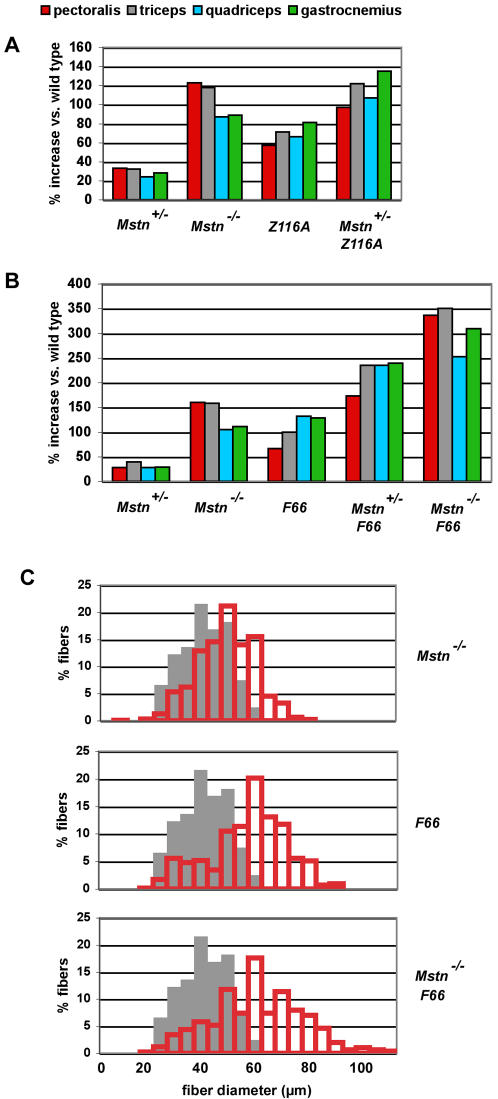
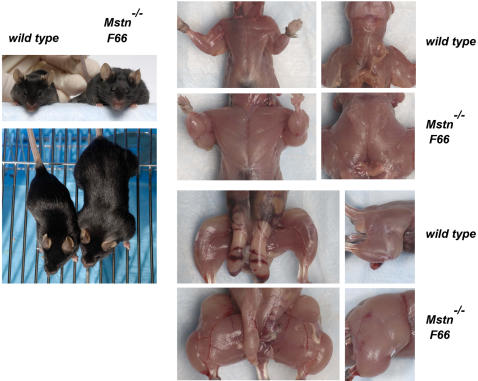
Myostatin is a transforming growth factor-beta family member that normally acts to limit skeletal muscle growth. Mice genetically engineered to lack myostatin activity have about twice the amount of muscle mass throughout the body, and similar effects are seen in cattle, sheep, dogs, and a human with naturally occurring loss-of-function mutations in the myostatin gene. Hence, there is considerable interest in developing agents capable of inhibiting myostatin activity for both agricultural and human therapeutic applications. We previously showed that the myostatin binding protein, follistatin, can induce dramatic increases in muscle mass when overexpressed as a transgene in mice. In order to determine whether this effect of follistatin results solely from inhibition of myostatin activity, I analyzed the effect of this transgene in myostatin-null mice. Mstn(-/-) mice carrying a follistatin transgene had about four times the muscle mass of wild type mice, demonstrating the existence of other regulators of muscle mass with similar activity to myostatin. The greatest effect on muscle mass was observed in offspring of mothers homozygous for the Mstn mutation, raising the possibility that either myostatin itself or a downstream regulator may normally be transferred from the maternal to fetal circulations. These findings demonstrate that the capacity for increasing muscle growth by manipulating TGF-beta signaling pathways is much more extensive than previously appreciated and suggest that muscle mass may be controlled at least in part by a systemic mode of action of myostatin.
Overview
The claims and statistics of this paper haven’t been checked yet.
Free: it reads the open-access text and checks the first 5 claims that cite a source we can check. Create a free account to check every claim.
Integrity signals
Registry
Cites
Statistics
Figures
Verification
Claims the paper makes
The claims and statistics of this paper haven’t been checked yet.
Free: it reads the open-access text and checks the first 5 claims that cite a source we can check. Create a free account to check every claim.
Claims other papers make about this one
Each is checked against this paper’s own text: does it say what the citing paper says it does?
The source backs part of the claim, not all of it — or backs it for a different population, condition or comparison.
In the citing paper
“The function of MSTN in muscle is at least partially redundant with that of another TGF-β family member, activin A (13–16).”
From Targeting myostatin/activin A protects against skeletal muscle and bone loss during spaceflight (2020) · cites this paper as [14]
Experimental — accuracy not yet measuredThe cited source says what the claim attributes to it.
In the citing paper
“If the loss of myostatin is combined with the overexpression of a follistatin transgene, then muscle mass quadruples, suggesting that myostatin is not the only muscle mass regulator in the TGFβ-Smad system (79).”
From The Hippo signal transduction network for exercise physiologists (2016) · cites this paper as [79]
Self-check
Percentages, sums and reported differences re-computed from the paper’s own numbers.
The self-check needs the paper’s full text.
Citations
Cites
Regulation of skeletal muscle mass in mice by a new TGF-p superfamily member
McPherron, A. C., Lawler, A. M., & Lee, S.-J. (1997) · Nature · doi:10.1038/387083a0 · Cited by 4,013 · cited 1×
“gene have about a doubling of skeletal muscle mass throughout the body as a result of a combination of muscle fiber hyperplasia and hypertrophy”
Self-citationDouble muscling in cattle due to mutations in the myostatin gene
McPherron, A. C., & Lee, S.-J. (1997) · Proceedings of the National Academy of Sciences · doi:10.1073/pnas.94.23.12457 · Cited by 2,039 · cited 1×
“The function of myostatin appears to have been conserved across species, as inactivating mutations in the myostatin gene have been demonstrated to cause increased muscling in cattle [8–11] , sheep [12], dogs [13] and humans [14].”
Self-citationRegulation of myostatin activity and muscle growth
Lee, S.-J., & McPherron, A. C. (2001) · Proceedings of the National Academy of Sciences · doi:10.1073/pnas.151270098 · Cited by 1,616
Self-citationA deletion in the bovine myostatin gene causes the double–muscled phenotype in cattle
Grobet, L., Royo Martin, L. J., Poncelet, D., Pirottin, D., Brouwers, B., Riquet, J., Schoeberlein, A., Dunner, S., Ménissier, F., Massabanda, J., et al. (1997) · Nature Genetics · doi:10.1038/ng0997-71 · Cited by 1,556 · cited 1×
“can also lead to significant muscle growth. Hence, myostatin appears to play as least two distinct roles, one to regulate the number of muscle fibers that are formed during development and a second to regulate growth of muscle fibers postnatally. The function of myostatin appears to have been conserved across species,…”
Myostatin Mutation Associated with Gross Muscle Hypertrophy in a Child
Schuelke, M., Wagner, K. R., Stolz, L. E., Hübner, C., Riebel, T., Kömen, W., Braun, T., Tobin, J. F., & Lee, S.-J. (2004) · New England Journal of Medicine · doi:10.1056/nejmoa040933 · Cited by 1,399
Self-citationClop, A., Marcq, F., Takeda, H., Pirottin, D., Tordoir, X., Bibé, B., Bouix, J., Caiment, F., Elsen, J.-M., Eychenne, F., et al. (2006) · Nature Genetics · doi:10.1038/ng1810 · Cited by 1,260
Mutations in myostatin ( GDF8 ) in Double-Muscled Belgian Blue and Piedmontese Cattle
Kambadur, R., Sharma, M., Smith, T. P. L., & Bass, J. J. (1997) · Genome Research · doi:10.1101/gr.7.9.910 · Cited by 1,204 · cited 1×
“The function of myostatin appears to have been conserved across species, as inactivating mutations in the myostatin gene have been demonstrated to cause increased muscling in cattle [8–11] , sheep [12], dogs [13] and humans [14].”
Induction of Cachexia in Mice by Systemically Administered Myostatin
Zimmers, T. A., Davies, M. V., Koniaris, L. G., Haynes, P., Esquela, A. F., Tomkinson, K. N., McPherron, A. C., Wolfman, N. M., & Lee, S.-J. (2002) · Science · doi:10.1126/science.1069525 · Cited by 907
Self-citationFunctional improvement of dystrophic muscle by myostatin blockade
Bogdanovich, S., Krag, T. O. B., Barton, E. R., Morris, L. D., Whittemore, L.-A., Ahima, R. S., & Khurana, T. S. (2002) · Nature · doi:10.1038/nature01154 · Cited by 831
Mosher, D. S., Quignon, P., Bustamante, C. D., Sutter, N. B., Mellersh, C. S., Parker, H. G., & Ostrander, E. A. (2007) · PLoS Genetics · doi:10.1371/journal.pgen.0030079 · Cited by 826
Cited by
Items 201–300 of 325
Zhang, L., An, G., Wu, S., Wang, J., Yang, D., Zhang, Y., & Li, X. (2021) · Journal of Ovarian Research · doi:10.1186/s13048-021-00851-8 · Cited by 14
Harris, A. W., & Butchbach, M. E. R. (2015) · Neuromuscular Disorders · doi:10.1016/j.nmd.2015.05.008 · Cited by 14
“In support of this premise, transgenic overexpression of follistatin more strongly increases muscle mass in myostatin nullizygous mice [28].”
BackgroundDNA-Mediated Gene Therapy in a Mouse Model of Limb Girdle Muscular Dystrophy 2B
Ma, J., Pichavant, C., du Bois, H., Bhakta, M. S., & Calos, M. P. (2017) · Molecular Therapy — Methods & Clinical Development · doi:10.1016/j.omtm.2017.10.005 · Cited by 15
“Follistatin can stimulate muscle growth even in myostatin null mice by inhibiting additional TGF-b family members, including activin.(33) The 344-aa isoform of human FST that we used here has been tested in a human clinical trial that claimed a possible therapeutic benefit in Becker muscular dystrophy patients.”
MethodAlterations in Adiposity and Glucose Homeostasis in Adult Gasp-1 Overexpressing Mice
Pèrié, L., Parenté, A., Baraige, F., Magnol, L., & Blanquet, V. (2017) · Cellular Physiology and Biochemistry · doi:10.1159/000485878 · Cited by 13
Myostatin's marvels: From muscle regulator to diverse implications in health and disease
Sharma, S., & Patil, A. (2024) · Cell Biochemistry and Function · doi:10.1002/cbf.4106 · Cited by 13
Brameld, J. M., Greenwood, P. L., & Bell, A. W. (2009) · Springer eBooks · doi:10.1007/978-90-481-3135-8_4 · Cited by 14
Abdel-Raouf, K. M. A., Rezgui, R., Stefanini, C., Teo, J. C. M., & Christoforou, N. (2021) · Biology · doi:10.3390/biology10060539 · Cited by 14
When should I run—the role of exercise timing in metabolic health
Kirchner, H., Weisner, L., & Wilms, B. (2023) · Acta Physiologica · doi:10.1111/apha.13953 · Cited by 12
Liu, H., Wang, J., Yu, H., Zhang, R., Chen, X., Jin, H., Dai, F., Li, L., & Xu, F. (2012) · Applied Microbiology and Biotechnology · doi:10.1007/s00253-012-3908-4 · Cited by 12
“Interestingly, FST over-expression in MSTN knockout mice leads to a muscle mass increase of nearly four times the normal levels (Lee 2007).”
BackgroundJørgensen, L. H., Sellathurai, J., Davis, E. E., Thedchanamoorthy, T., Al-Bader, R. W. A., Jensen, C. H., & Schrøder, H. D. (2013) · PLoS ONE · doi:10.1371/journal.pone.0060692 · Cited by 12
“Targeting of the myostatin signaling pathway could be an element in Dlk1 induced muscular hypertrophy due to an antagonizing effect of Follistatin [36] combined with a direct down regulation of Myostatin levels [26].”
BackgroundMolecular Mechanisms Mediating Adaptation to Exercise
Gholamnezhad, Z., Mégarbane, B., & Rezaee, R. (2020) · Advances in experimental medicine and biology · doi:10.1007/978-981-15-1792-1_3 · Cited by 13
Identification of TGF-β, inhibin βA and follistatin paralogs in the rainbow trout genome
de Mello, F., Streit, D. P., Sabin, N., & Gabillard, J. (2014) · Comparative Biochemistry and Physiology Part B Biochemistry and Molecular Biology · doi:10.1016/j.cbpb.2014.07.006 · Cited by 12
Pharmacology of manipulating lean body mass
Sepulveda, P. V., Bush, E. D., & Baar, K. (2014) · Clinical and Experimental Pharmacology and Physiology · doi:10.1111/1440-1681.12320 · Cited by 15
Follistatin during pregnancy and its potential role as an ovarian suppressing agent
Köninger, A., Schmidt, B., Damaske, D., Birdir, C., Enekwe, A., Kimmig, R., Strowitzki, T., & Gellhaus, A. (2017) · European Journal of Obstetrics & Gynecology and Reproductive Biology · doi:10.1016/j.ejogrb.2017.03.001 · Cited by 11
Tavoian, D., Arnold, W. D., Mort, S. C., & Lacalle, S. D. (2019) · PLoS ONE · doi:10.1371/journal.pone.0225283 · Cited by 12
“Additionally, follistatin is a binding protein capable of blocking MSTN activity, ultimately increasing muscle mass [77].”
BackgroundBongiorni, S., Valentini, A., & Chillemi, G. (2016) · Frontiers in Genetics · doi:10.3389/fgene.2016.00014 · Cited by 12
“Inhibition of this pathway results in muscle hyperplasia (Lee and McPherron, 2001; Lee, 2007).”
BackgroundHong, K.-B., Lee, H.-S., Kim, D. H., Moon, J. M., & Park, Y. (2020) · Evidence-based Complementary and Alternative Medicine · doi:10.1155/2020/4319398 · Cited by 10
Cawthon, P. M., Patel, S., Newman, A. B., Bhasin, S., Peng, L., Tracy, R. P., Kizer, J. R., Lee, S., Ferrucci, L., Ganz, P., et al. (2023) · The Journals of Gerontology Series A · doi:10.1093/gerona/glad045 · Cited by 11
Self-citationPlasmid-Mediated Gene Therapy in Mouse Models of Limb Girdle Muscular Dystrophy
Guha, T. K., Pichavant, C., & Calos, M. P. (2019) · Molecular Therapy — Methods & Clinical Development · doi:10.1016/j.omtm.2019.10.002 · Cited by 12
Dushyanth, K., Shukla, R., CHATTERJEE, R. N., & Bhattacharya, T. K. (2020) · Animal Biotechnology · doi:10.1080/10495398.2020.1838917 · Cited by 14
Ma, S., Lin, J., Yang, M., Wang, J.-J., Lu, L., Liang, Y., Yang, Y., Liu, Y., Wang, D., & Yang, Y. (2024) · Journal of Orthopaedic Translation · doi:10.1016/j.jot.2024.08.009 · Cited by 10
Discovery and refinement of muscle weight QTLs in B6 × D2 advanced intercross mice
Carbonetto, P. S., Cheng, R., Gyekis, J. P., Parker, C. C., Blizard, D. A., Palmer, A. A., & Lionikas, A. (2014) · Physiological Genomics · doi:10.1152/physiolgenomics.00055.2014 · Cited by 10
Masticatory HyperMuscularity is not Related to Reduced Cranial Volume in Myostatin‐Knockout Mice
Cray, J., Kneib, J., Vecchione, L., Byron, C. D., Cooper, G. M., Losee, J. E., Siegel, M. I., Hamrick, M. W., Sciote, J. J., & Mooney, M. P. (2011) · The Anatomical Record · doi:10.1002/ar.21412 · Cited by 10
“Other theories suggest that dietary changes led to somatic growth and metabolic changes during the process of brain enlargement during human evolution (Foley and Lee, 1991; Leonard et al., 2003; Leonard et al., 2007).”
BackgroundRossi, S., Stoppani, E., Gobbo, M., Caroli, A., & Fanzani, A. (2010) · BioMed Research International · doi:10.1155/2010/326909 · Cited by 10
Lee, S.-J. (2012) · Muscle · doi:10.1016/b978-0-12-381510-1.00079-x · Cited by 8
Self-citationNguyen, H. Q., Iskenderian, A., Ehmann, D. E., Jasper, P., Zhang, Z., Rong, H., Welty, D. F., & Narayanan, R. (2020) · CPT Pharmacometrics & Systems Pharmacology · doi:10.1002/psp4.12518 · Cited by 9
“Transgenic mouse studies have shown that myostatin is not the sole regulator of muscle mass and follistatin can promote muscle growth by blocking not only myostatin but also other ligands with similar activity to myostatin.(3) This hypothesis was verified by our recent studies using FS-EEE-Fc, an engineered recombinan…”
BackgroundZhu, P., Li, H., Huang, G., Cui, J., Zhang, R., Cui, K., Yang, S., & Shi, D. (2017) · Animal Biotechnology · doi:10.1080/10495398.2017.1289941 · Cited by 11
“It was reported that homozygous MSTN null mice (MSTN) are viable and fertile and increased muscle weight is seen in the offspring of female MSTN mice crossed with wild type males compared to offspring of wild type females crossed with MSTN males(12).”
BackgroundZhao, W., Li, Z., Liu, Q., Xie, S., Li, M., Wang, Y., & Li, C. (2021) · Scientific Reports · doi:10.1038/s41598-021-94014-w · Cited by 8
Production of bioactive chicken (Gallus gallus) follistatin-type proteins in E. coli
Lee, S. B., Park, S., & Kim, Y. (2015) · AMB Express · doi:10.1186/s13568-015-0142-3 · Cited by 9
“Interestingly, the muscle mass increase in transgenic mice overexpressing FST was significantly greater than that in MSTN null mice (Lee and McPherron 2001), and recent results suggest that enhancement of muscle growth by FST is not only via MSTN suppression but also involves activindependent mechanisms (Gilson et al.…”
BackgroundSelf-citationEffect of variation in ovine WFIKKN2 on growth traits appears to be gender-dependent
Wang, J., Zhou, H., Fang, Q., Liu, X., Luo, Y., & Hickford, J. G. H. (2015) · Scientific Reports · doi:10.1038/srep12347 · Cited by 11
Wang, G., & Lu, Q. (2013) · Molecular Pharmaceutics · doi:10.1021/mp400310r · Cited by 8
Effects of Growth Hormone on Muscle and Bone in Female Mice: Role of Follistatin
Ohira, T., Kawao, N., Takafuji, Y., Mizukami, Y., & Kaji, H. (2022) · Experimental and Clinical Endocrinology & Diabetes · doi:10.1055/a-2003-5704 · Cited by 8
Qiu, M., Zhang, X., Liao, L., Zhang, N., & Liu, M. (2024) · International Journal of Molecular Sciences · doi:10.3390/ijms252211988 · Cited by 7
Transcriptomic profile of semitendinosus muscle of bulls of different breed and performance
Ciecierska, A., Motyl, T., & Sadkowski, T. (2020) · Journal of Applied Genetics · doi:10.1007/s13353-020-00577-1 · Cited by 7
“…myostatin consists in the capacity to bind myostatin, thus disabling its binding with activin type II receptor (ActRII), preventing reduction of expression of genes responsible for the growth and differentiation of myogenic cells (Lee 2007; Lee et al. 2012; Lie et al. 2015; Formicola et al. 2018).”
BackgroundTreatment strategies for spinal muscular atrophy
Fuller, H. R., Barišić, M., Šešo-Šimić, Đ., Špeljko, T., Morris, G., & Šimić, G. (2010) · Translational Neuroscience · doi:10.2478/v10134-010-0045-4 · Cited by 8
Discovery of intestinal microorganisms that affect the improvement of muscle strength
Ahn, J., Kim, H.-M., Han, E.-J., Hong, S., & Chung, H. (2025) · Scientific Reports · doi:10.1038/s41598-025-15222-2 · Cited by 6
“7f) 30,31 .”
Dumonceaux, J., & Amthor, H. (2009) · Neuromuscular Disorders · doi:10.1016/j.nmd.2009.08.001 · Cited by 6
“Se-Jin Lee also reminded us that over-expressing follistatin (F66 transgenic mice) resulted in excessive muscle superior to myostatin knockout, suggesting the existence of other ligands in addition to myostatin [7].”
Functional verification of a porcine myostatin propeptide mutant
Ma, D., Jiang, S., Gao, P., Qian, L., Wang, Q., Cai, C., Xiao, G., Yang, J., & Cui, W. (2015) · Transgenic Research · doi:10.1007/s11248-015-9896-2 · Cited by 6
“Myostatin exerts its activity by binding to receptor type IIB (Acvr2b) to inhibit muscle mass, therefore, inactivation or inhibition of myostatin activity by genetic mutations or by its inhibitors could lead to an increase in muscle mass (Zhu et al. 2000; Lee 2007).”
Muscle-specific transgenic expression of porcine myostatin propeptide enhances muscle growth in mice
Wang, K., Li, Z., Li, Y., Zeng, J., Chang, H., Yang, J., Liu, D., & Wu, Z. (2013) · Transgenic Research · doi:10.1007/s11248-013-9709-4 · Cited by 8
“…propeptide (Yang et al. 2001; Lee and McPherron 2001; Pirottin et al. 2005), follistatin (Lee and McPherron 2001), the follistatin related protein (Lee 2007), mutant activin type P receptor-b (Lee and McPherron 2001), have been demonstrated to cause dramatic increase of muscle mass in mice.”
BackgroundTgf-β Signaling In Duchenne Muscular Dystrophy
Kemaladewi, D. U., Hoen, P. A. C. ’., ten Dijke, P., van Ommen, G. J., & Hoogaars, W. M. H. (2012) · Future Neurology · doi:10.2217/fnl.12.3 · Cited by 6
Greenwood, P. L., Walmsley, B. J., & Oddy, V. H. (2019) · Energy and protein metabolism and nutrition · doi:10.3920/978-90-8686-891-9_4 · Cited by 6
Taghibeikzadehbadr, P., Shirian, S., & Sabouri, M. (2020) · Molecular Biology Reports · doi:10.1007/s11033-020-06017-x · Cited by 6
“Myostatin knockout in mice has been associated with a 2–3 fold increase in the size of myofibrils [20].”
BackgroundSkeletal Muscle‐Specific Deletion of E3 Ligase Asb2 Enhances Muscle Mass and Strength
Jang, H. R., Park, S., Lee, Y., Lee, D., Lee, J., Cho, Y., Choi, C. S., & Lee, H. (2025) · Journal of Cachexia Sarcopenia and Muscle · doi:10.1002/jcsm.70007 · Cited by 5
Opoku, R., DeCata, J. A., Phillips, C. L., & Schulz, L. C. (2023) · Metabolites · doi:10.3390/metabo13060719 · Cited by 5
Wong, K., Cheung, H. W., Choi, Y., To, N. S., Wan, T. S. M., & Ho, E. N. M. (2023) · Drug Testing and Analysis · doi:10.1002/dta.3540 · Cited by 5
La myostatine : un régulateur négatif de la masse musculaire chez les vertébrés
Chelh, I., Rodríguez, J., Bonnieu, A., Cassar‐Malek, I., Cottin, P., Gabillard, J., Leibovitch, S. A., Sassi, A. H., Seiliez, I., & Picard, B. B. (2009) · INRAE Productions Animales · doi:10.20870/productions-animales.2009.22.5.3364 · Cited by 9
Patel, U. A., Patel, A. K., & Joshi, C. G. (2014) · Biotechnology Progress · doi:10.1002/btpr.2022 · Cited by 5
“MSTN dysfunction resulted in dramatic increase in animal muscle mass due to hypertrophy and hyperplasia of muscle fibers.(35,36) Although the prodigious enhancement in the muscle mass was attributed to myostatin blockade, MSTN is accompanied by reduction in female fertility, abnormal overheating during exercise, lower…”
BackgroundTransgenic chicken/poultry birds: serving us for survival
Golkar‐Narenji, A., Petitte, J. N., & Mozdziak, P. E. (2019) · Elsevier eBooks · doi:10.1016/b978-0-12-816352-8.00009-6 · Cited by 5
Herman, J. L., Dornbos, P., Landheer, K., Geraghty, B. J., Egerman, M. A., Phan, D., Germino, M., Mastaitis, J. W., Walls, J. R., Lotta, L. A., et al. (2026) · Nature Communications · doi:10.1038/s41467-026-70422-2 · Cited by 9
“…between the MSTN gene burden and lower LV wall thickness ( p =0.03), with the Ile225Thr variant also showing a nominal associationin the same direction ( p =0.04),contrary to the increase in wall thickness that would be observed with hypertrophic cardiomyopathy (Supplementary Data 7).”
InfluentialTorres-Velarde, J. M., Ibarra‐Castro, L., Rodríguez-Ibarra, L. E., Sifuentes‐Romero, I., Hernández-Cornejo, R., & García-Gasca, A. (2015) · Journal of Fish Biology · doi:10.1111/jfb.12772 · Cited by 4
“Also, MSTN-null mice Mus musculus show a substantial increment of muscle mass, twice as much as their wild-type counterparts (McPherron et al., 1997; Lee, 2007).”
BackgroundWang, Q., Su, R., Lv, X. Y., Gao, W., Chen, L., Bao, J. J., Yu, J., Wang, L. H., & Sun, W. (2016) · Genetics and Molecular Research · doi:10.4238/gmr.15028133 · Cited by 4
“Blocking the expression of MSTN by using RNA interference or gene knockout technology leads to double muscular traits (Lee, 2007; Liu et al., 2008), and the number of muscle fibers and fiber diameter of transgenic mice increase significantly.”
Solomon, M. B., Eastridge, J. S., & Paroczay, E. W. (2008) · Springer eBooks · doi:10.1007/978-0-387-79382-5_1 · Cited by 4
“production traits, greasy fleece weight and mean fiber diameter, were not different from the controls. Adams, Briegel, and Ward (2002) also examined the effects of a TG encoding”
BackgroundViral vector delivery of follistatin enhances recovery of reinnervated muscle
Isaacs, J. E., Feger, M. A., Mallu, S., Yager, D., Shall, M. S., Patel, G., Protzuk, O. A., & Graham, L. (2019) · Muscle & Nerve · doi:10.1002/mus.26653 · Cited by 4
“muscle effect,” suggesting FS has independent muscle anabolic effects beyond merely blocking myostatin.(30) Rodents with denervation atrophy have elevated levels of myostatin(31) and levels decrease with re-innervation.”
BackgroundFollistatin Protein Enhances Satellite Cell Counts in Reinnervated Muscle
Feger, M. A., Isaacs, J. E., Mallu, S., Yager, D., Shall, M. S., Patel, G., Protzuk, O. A., & Bokkisam, A. S. (2022) · Journal of Brachial Plexus and Peripheral Nerve Injury · doi:10.1055/s-0042-1748535 · Cited by 3
Takemasa, T., Yakushiji, N., Kikuchi, D. M., Deocaris, C. C., Widodo, N., Machida, M., & Kiyosawa, H. (2012) · Europe PMC (PubMed Central) · Cited by 6
Novel Strategies for Improving Physical Function
Bhasin, S., Jasuja, R., Tu, P., Storer, T. W., & Guo, W. (2011) · Hormone Research in Paediatrics · doi:10.1159/000329148 · Cited by 3
Morphometric assessments in the double-muscled Belgian Blue beef breed
Coopman, F. (2008) · Ghent University Academic Bibliography (Ghent University) · Cited by 8
PETERS, S. O., Wilson, J. A., & Boyette, J. L. (2020) · Journal of Equine Veterinary Science · doi:10.1016/j.jevs.2020.103226 · Cited by 2
Cadena, S. M., Bogdanovich, S., Khurana, T. S., Pullen, A. E., Pearsall, R. S., Curran, E., Faucette, R., Lane, J., Seehra, J. S., Lachey, J. L., et al. (2026) · PLoS ONE · doi:10.1371/journal.pone.0342666 · Cited by 2
“In contrast, deficiency of either or both ligands in the form of genetic deletion [12–17] or pharmacological inhibition [17–22] results in increased muscle mass and rescue of muscle loss in models of muscle wasting.”
Rooks, D., Yates, D. P., Neelakantham, S., Praestgaard, J., Cury, R. C., Lamb, H. J., Roubenoff, R., Pétricoul, O., Lach‐Trifilieff, E., & Svensson, E. C. (2026) · The Journal of Clinical Endocrinology & Metabolism · doi:10.1210/clinem/dgag091 · Cited by 4
Lam, P. M. W., Zygmunt, D. A., Ashbrook, A., Bennett, M., Vetter, T. A., & Martin, P. T. (2024) · Molecular Therapy · doi:10.1016/j.ymthe.2024.06.028 · Cited by 2
IGF-1 Regulation of Skeletal Muscle Hypertrophy and Atrophy
Glass, D. J. (2009) · Research and perspectives in endocrine interactions · doi:10.1007/978-3-642-04302-4_7 · Cited by 2
Advancing puberty in female sheep: it's all about fat and muscle
Rosales-Nieto, C. A. (2013) · Cited by 2
Li, X., Wang, J., Liu, H., Wang, H., Sun, L., Yang, C., Li, L., & Zheng, Y. (2014) · Electronic Journal of Biotechnology · doi:10.1016/j.ejbt.2014.07.002 · Cited by 2
“MSTN knock-out mice displayed a two-fold increase in muscle mass compared with wild-type mice [6], and over-expression of FST in these animals lead to an increase in muscle mass that was four-fold greater than in normal mice [11].”
BackgroundHuang, Y., Hu, N., Si, Y., Li, S., Wu, S., Zhang, M., Wen, H., Li, J., Li, Y., & He, F. (2018) · Journal of Ocean University of China · doi:10.1007/s11802-018-3712-6 · Cited by 3
“Moreover, Fst can induce muscle fiber hypertrophy by activating muscle satellite cells and stimulating protein synthesis (Gilson et al., 2009; Lee, 2007; Suryawan et al., 2006).”
BackgroundMaternal Health and Safety Outcomes of Prenatal Myostatin Inhibition in Osteogenesis Imperfecta Mice
Crawford, T. K., Lafaver, B. N., Oestreich, A. K., Davis, B. R., Cooper, C. S., Chapman, I. M., Luhmann, M. K., Opoku, R., Schulte, A. K., Mastaitis, J. W., et al. (2025) · Endocrinology · doi:10.1210/endocr/bqaf080 · Cited by 1
Gao, Y., Li, S., Chen, W., Zhang, J., Ren, Z., Ma, Z., Wang, Y., & Zeng, Y. (2025) · Genes · doi:10.3390/genes16060701 · Cited by 1
“Previous studies have confirmed that potential targets of DE lncRNAs during porcine embryonic development are primarily enriched in the TGF-β signaling pathway [29], which also plays a crucial role in muscle development in mice [30].”
Taneera, J., Mohammed, A. K., Shaireh, H. A., Hajji, A. A., Alhajji, A., Gharaibeh, M. F. A., Dewedar, H., Alkhaja, F., & Hamad, M. A. (2026) · Cell Biochemistry and Function · doi:10.1002/cbf.70226 · Cited by 1
Myostatin Signaling in Skeletal Muscle: Implications for Athletic Performance
Chandel, S., Uvarajan, D., Iyer, M., HariKrishnaReddy, D., Siama, Z., Giridharan, B., Narayanasamy, A., John, M., Wander, A., & Vellingiri, B. (2026) · Comprehensive physiology · doi:10.1002/cph4.70190 · Cited by 1
“Although the inhibition of these ligands has been documented to elicit greater muscle hypertrophy than solely targeting myo-statin (Lee 2007), it may also lead to significant adverse effects in other tissues (Suh et al. 2020).”
Myostatin as a Potential Therapeutic Target for Obesity and Insulin Resistance
Jeong, K., & Choi, C. S. (2011) · The Korean Journal of Obesity · doi:10.7570/kjo.2011.20.3.91 · Cited by 1
Se-Jin Lee, myostatin discoverer, elected to the National Academy of Science
Glass, D. J., & Spiegelman, B. M. (2012) · Skeletal Muscle · doi:10.1186/2044-5040-2-11 · Cited by 2
Health Conditions and Behaviors as Surfaces
Hollar, D. (2017) · Springer eBooks · doi:10.1007/978-3-319-59626-6_11 · Cited by 1
Wackerhage, H., Oesen, S., Hofmann, M., & Tschan, H. (2017) · Springer eBooks · doi:10.1007/978-3-7091-1591-6_12 · Cited by 2
Ravindran, S. (2020) · Proceedings of the National Academy of Sciences · doi:10.1073/pnas.2023335117 · Cited by 1
Anabolic and anticatabolic agents in kidney disease and kidney failure
Chiang, J. M., & Johansen, K. L. (2021) · Elsevier eBooks · doi:10.1016/b978-0-12-818540-7.00040-9 · Cited by 1
Gentechnologie bij landbouwhuisdieren
Kleter, G. A., Groot, M., Hiemstra, S. J., Peeters, B. P. H., Smits, M. A., van der Waaij, E. H., van de Wiel, D. F. M., & Woelders, H. (2009) · Wageningen University & Research Publications · Cited by 1
Han, J. (2012) · Lincoln University Research Archive (Lincoln University) · Cited by 1
The Physiology of Bodyweight Regulation
Coll, A. P. (2022) · doi:10.1093/med/9780198870197.003.0222 · Cited by 1
Jaffe, I. M. (2013) · Digital Commons - URI (University of Rhode Island) · doi:10.23860/thesis-jaffe-ian-2013
Phelps, M., & Bradley, T. M. (2011) · Wiley eBooks · doi:10.1002/9780470963159.ch19
The Effect of a Myostatin Antagonist on the Healing of Burn Wounds in Skin.
Fieten, D. J. (2009) · Research Commons (University of Waikato)
Metabonomic study of the biochemical profiles of heterozygous myostatin knockout swine
XU, D. P. J., Dengke, P. A. N., Jie, Z. H. A. O., Jianwu, W. A. N. G., Xiaohong, H. E., Yuehui, M. A., & Ning, L. I. (2015) · Frontiers of Agricultural Science and Engineering · doi:10.15302/j-fase-2015045
Hulmi, J. J. (2009) · Jyväskylä University Digital Archive (University of Jyväskylä) · Cited by 1
Mighty mice could yield human treatments
Hopkin, M. (2007) · Nature · doi:10.1038/news070827-3
Fulmer, T. (2008) · Science-Business eXchange · doi:10.1038/scibx.2008.226
The Effect of Myostatin on Glucose Metabolism and Insulin Sensitivity
Ghozlan, M. (2013) · Libraries and Cultural Resources (University of Calgary) · doi:10.11575/prism/28087
Genetic Association of the Tenomodulin Gene (TNMD) with
Tolppanen, A. (2009)
Hadjipavlou, G. (2010) · ERA
Myostatin as a regulator of fiber size
Solecki, M. (2010) · Spectrum Research Repository (Concordia University)
Pèrié, L. (2015) · theses.fr (ABES) · doi:10.70675/170d45f8z0f9ez4da3za377z56b41df27c3c · Cited by 1
CALL FOR PAPERS Physiological Genomics of Exercise in Health and Disease
Carbonetto, P. S., Cheng, R., Parker, C. C., Blizard, D. A., Palmer, A. A., & Lionikas, A. (2014)
Khurana, T. S., Pistilli, E. E., Bogdanovich, S., Mosqueira, M., Lachey, J. L., Kunkel, L. M., Wagner, K. R., Rahimov, F., King, O. D., Warsing, L. C., et al. (2011)
Gene Therapy Clinical Trials for Muscular Dystrophy
Rodino‐Klapac, L. R., & Mendell, J. R. (2015) · CRC Press eBooks · doi:10.1201/b18002-47
Principles and Practice of Molecular Therapies
Rodino‐Klapac, L. R., & Mendell, J. R. (2014) · Elsevier eBooks · doi:10.1016/b978-0-12-417044-5.00051-2
Biomarkers of Sarcopenia and Mitochondrial Dysfunction
Arbit, B., Lee, E., & Taub, P. R. (2016) · Springer eBooks · doi:10.1007/978-3-319-42982-3_25
Visions & Reflections (Minireview) Myostatin as a therapeutic target for musculoskeletal disease
Bradley, L. A., Yaworsky, P. J., & Walsh, F. S. (2008)
Disrupting dynamic f-actin enhances skeletal muscle contraction due to mechanical softening
Sivathanu, V. (2018) · DSpace@MIT (Massachusetts Institute of Technology)
Metadata
- Authors
- Lee, S.-J.
- Affiliations
- Johns Hopkins University (US)
- Corresponding author
- Lee, Se-Jin
- ORCID
- Lee, Se-Jin
- Venue
- PLoS ONE
- Publisher
- Public Library of Science (PLoS)
- Published
- 2007-08-29
- Volume
- 2
- Issue
- 8
- Pages
- e789
- ISSN
- 1932-6203 (ISSN-L)
- PMC
- PMC1949143
- OpenAlex
- W2097171062
- Cited by
- 316
- References
- 27
- Citations by year
- 2026: 7 · 2025: 5 · 2024: 7 · 2023: 8 · 2022: 12 · 2021: 13 · 2020: 19 · 2019: 11 · 2018: 18 · 2017: 12 · 2016: 18 · 2015: 13 · 2014: 26 · 2013: 23 · 2012: 20
- FWCI
- 10.62
- Type
- journal article
- Language
- en
- Open access
- gold
- doi.org
- Locations
- PLoS ONE (publishedVersion, cc-by)
- PubMed Central (publishedVersion, cc-by)
- PubMed (publishedVersion)
- DOAJ (DOAJ: Directory of Open Access Journals) (submittedVersion, cc-by-sa)
- Funders
- Muscular Dystrophy Association
- Johns Hopkins University
- National Institutes of Health
- National Institute of Arthritis and Musculoskeletal and Skin Diseases (U54AR052646, US4AR052646)
- Eunice Kennedy Shriver National Institute of Child Health and Human Development (R01HD035887)
- Topics
- Life Sciences › Biochemistry, Genetics and Molecular Biology › Molecular Biology › Muscle Physiology and Disorders
- Life Sciences › Biochemistry, Genetics and Molecular Biology › Molecular Biology › TGF-β signaling in diseases
- Life Sciences › Agricultural and Biological Sciences › Animal Science and Zoology › Meat and Animal Product Quality
- Keywords
- myostatin, follistatin, TGF-beta signaling, muscle mass, skeletal muscle growth, transgenic mice, maternal-fetal transfer, systemic signaling, muscle hypertrophy
- MeSH terms
- Animals, Mice, Transgenic, Mutation, Proteins, Signal Transduction, Muscle, Skeletal, Follistatin-Related Proteins, Mice, Myostatin
About these checks
Registry, retraction, Cites and statistics results are computed, not judged, with one exception: a printed reference that no index lists is read once by a model before it counts as a citation error. Claims are extracted by a model and kept only when their quote appears verbatim in the text; each cited source is then checked, with a model’s help, for whether it says what the claim relies on. Those verdicts can be wrong — read the claim’s quote and the cited source before relying on one.
Statistics and arithmetic are recomputed, not judged.
Confidence bands are shown only for fields calibrated on our annotated test set. None is calibrated yet, so no band is shown.
What counts as a claim ›How we measure confidence ›How we check this ›
Are you an author, or do you see a problem with this page? Request a review
Data sources
Bibliographic data: Semantic Scholar, OpenAlex, Crossref.
Contains information from the Semantic Scholar Academic Graph Datasets, made available under the ODC Attribution License (ODC-BY 1.0).
Semantic Scholar’s data is described in: Kinney, R., et al. (2023). The Semantic Scholar Open Data Platform. arXiv:2301.10140.
