

Quadrupling Muscle Mass in Mice by Targeting TGF-ß Signaling Pathways
Open accessThe DOI matches its Crossref record; 26 of the 27 references it cites were found in a registry or an index.
Abstract
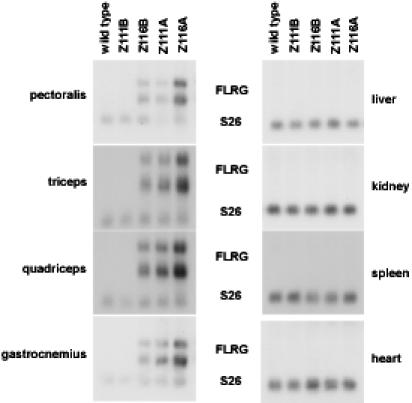
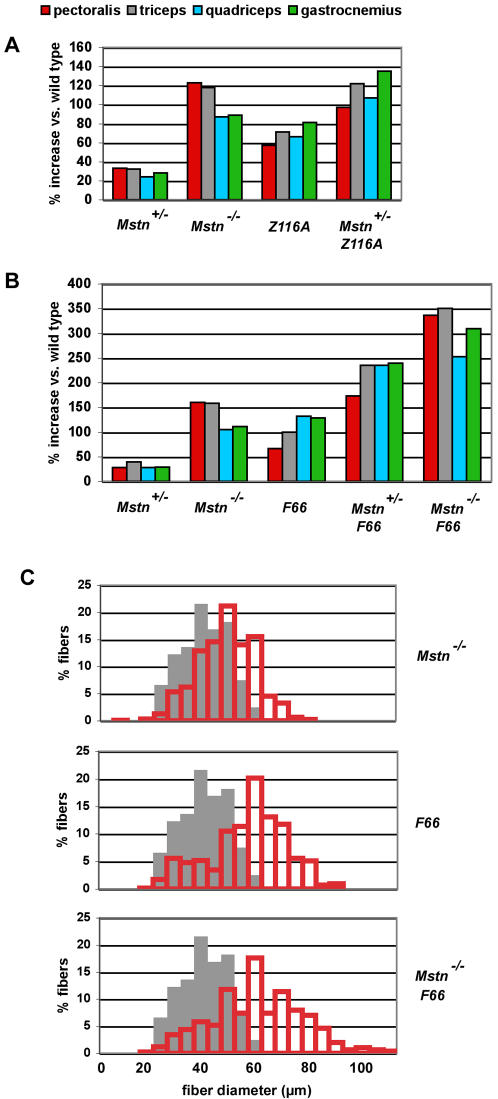
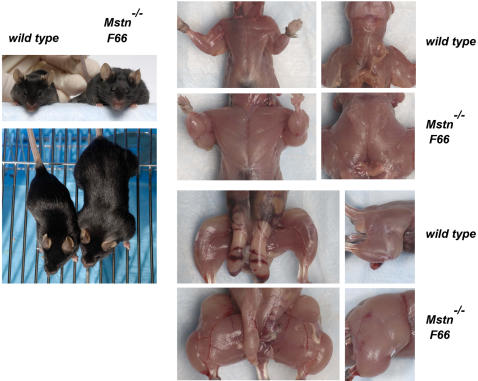
Myostatin is a transforming growth factor-beta family member that normally acts to limit skeletal muscle growth. Mice genetically engineered to lack myostatin activity have about twice the amount of muscle mass throughout the body, and similar effects are seen in cattle, sheep, dogs, and a human with naturally occurring loss-of-function mutations in the myostatin gene. Hence, there is considerable interest in developing agents capable of inhibiting myostatin activity for both agricultural and human therapeutic applications. We previously showed that the myostatin binding protein, follistatin, can induce dramatic increases in muscle mass when overexpressed as a transgene in mice. In order to determine whether this effect of follistatin results solely from inhibition of myostatin activity, I analyzed the effect of this transgene in myostatin-null mice. Mstn(-/-) mice carrying a follistatin transgene had about four times the muscle mass of wild type mice, demonstrating the existence of other regulators of muscle mass with similar activity to myostatin. The greatest effect on muscle mass was observed in offspring of mothers homozygous for the Mstn mutation, raising the possibility that either myostatin itself or a downstream regulator may normally be transferred from the maternal to fetal circulations. These findings demonstrate that the capacity for increasing muscle growth by manipulating TGF-beta signaling pathways is much more extensive than previously appreciated and suggest that muscle mass may be controlled at least in part by a systemic mode of action of myostatin.
Overview
The claims and statistics of this paper haven’t been checked yet.
Free: it reads the open-access text and checks the first 5 claims that cite a source we can check. Create a free account to check every claim.
Integrity signals
Registry
Cites
Statistics
Figures
Verification
Claims the paper makes
The claims and statistics of this paper haven’t been checked yet.
Free: it reads the open-access text and checks the first 5 claims that cite a source we can check. Create a free account to check every claim.
Claims other papers make about this one
Each is checked against this paper’s own text: does it say what the citing paper says it does?
The source backs part of the claim, not all of it — or backs it for a different population, condition or comparison.
In the citing paper
“The function of MSTN in muscle is at least partially redundant with that of another TGF-β family member, activin A (13–16).”
From Targeting myostatin/activin A protects against skeletal muscle and bone loss during spaceflight (2020) · cites this paper as [14]
Experimental — accuracy not yet measuredThe cited source says what the claim attributes to it.
In the citing paper
“If the loss of myostatin is combined with the overexpression of a follistatin transgene, then muscle mass quadruples, suggesting that myostatin is not the only muscle mass regulator in the TGFβ-Smad system (79).”
From The Hippo signal transduction network for exercise physiologists (2016) · cites this paper as [79]
Self-check
Percentages, sums and reported differences re-computed from the paper’s own numbers.
The self-check needs the paper’s full text.
Citations
Cites
Regulation of skeletal muscle mass in mice by a new TGF-p superfamily member
McPherron, A. C., Lawler, A. M., & Lee, S.-J. (1997) · Nature · doi:10.1038/387083a0 · Cited by 4,013 · cited 1×
“gene have about a doubling of skeletal muscle mass throughout the body as a result of a combination of muscle fiber hyperplasia and hypertrophy”
Self-citationDouble muscling in cattle due to mutations in the myostatin gene
McPherron, A. C., & Lee, S.-J. (1997) · Proceedings of the National Academy of Sciences · doi:10.1073/pnas.94.23.12457 · Cited by 2,039 · cited 1×
“The function of myostatin appears to have been conserved across species, as inactivating mutations in the myostatin gene have been demonstrated to cause increased muscling in cattle [8–11] , sheep [12], dogs [13] and humans [14].”
Self-citationRegulation of myostatin activity and muscle growth
Lee, S.-J., & McPherron, A. C. (2001) · Proceedings of the National Academy of Sciences · doi:10.1073/pnas.151270098 · Cited by 1,616
Self-citationA deletion in the bovine myostatin gene causes the double–muscled phenotype in cattle
Grobet, L., Royo Martin, L. J., Poncelet, D., Pirottin, D., Brouwers, B., Riquet, J., Schoeberlein, A., Dunner, S., Ménissier, F., Massabanda, J., et al. (1997) · Nature Genetics · doi:10.1038/ng0997-71 · Cited by 1,556 · cited 1×
“can also lead to significant muscle growth. Hence, myostatin appears to play as least two distinct roles, one to regulate the number of muscle fibers that are formed during development and a second to regulate growth of muscle fibers postnatally. The function of myostatin appears to have been conserved across species,…”
Myostatin Mutation Associated with Gross Muscle Hypertrophy in a Child
Schuelke, M., Wagner, K. R., Stolz, L. E., Hübner, C., Riebel, T., Kömen, W., Braun, T., Tobin, J. F., & Lee, S.-J. (2004) · New England Journal of Medicine · doi:10.1056/nejmoa040933 · Cited by 1,399
Self-citationClop, A., Marcq, F., Takeda, H., Pirottin, D., Tordoir, X., Bibé, B., Bouix, J., Caiment, F., Elsen, J.-M., Eychenne, F., et al. (2006) · Nature Genetics · doi:10.1038/ng1810 · Cited by 1,260
Mutations in myostatin ( GDF8 ) in Double-Muscled Belgian Blue and Piedmontese Cattle
Kambadur, R., Sharma, M., Smith, T. P. L., & Bass, J. J. (1997) · Genome Research · doi:10.1101/gr.7.9.910 · Cited by 1,204 · cited 1×
“The function of myostatin appears to have been conserved across species, as inactivating mutations in the myostatin gene have been demonstrated to cause increased muscling in cattle [8–11] , sheep [12], dogs [13] and humans [14].”
Induction of Cachexia in Mice by Systemically Administered Myostatin
Zimmers, T. A., Davies, M. V., Koniaris, L. G., Haynes, P., Esquela, A. F., Tomkinson, K. N., McPherron, A. C., Wolfman, N. M., & Lee, S.-J. (2002) · Science · doi:10.1126/science.1069525 · Cited by 907
Self-citationFunctional improvement of dystrophic muscle by myostatin blockade
Bogdanovich, S., Krag, T. O. B., Barton, E. R., Morris, L. D., Whittemore, L.-A., Ahima, R. S., & Khurana, T. S. (2002) · Nature · doi:10.1038/nature01154 · Cited by 831
Mosher, D. S., Quignon, P., Bustamante, C. D., Sutter, N. B., Mellersh, C. S., Parker, H. G., & Ostrander, E. A. (2007) · PLoS Genetics · doi:10.1371/journal.pgen.0030079 · Cited by 826
Cited by
Items 101–200 of 325
Managing the Prenatal Environment to Enhance Livestock Productivity
Greenwood, P. L., Bell, A. W., Vercoe, P. E., & Viljoen, G. J. (2009) · Springer eBooks · doi:10.1007/978-90-481-3135-8 · Cited by 73
“Vieira and Moran [80] suggested that the gluconeogenesis occurring in the pre- to post-hatch period leads to the depletion of muscle protein reserves, thereby limiting early growth and development [80, 81].”
BackgroundFollistatin: A Novel Therapeutic for the Improvement of Muscle Regeneration
Yaden, B. C., Croy, J. E., Wang, Y., Wilson, J. M., Datta‐Mannan, A., Shetler, P. K., Milner, A., Bryant, H. U., Andrews, J., Dai, G., et al. (2014) · Journal of Pharmacology and Experimental Therapeutics · doi:10.1124/jpet.113.211169 · Cited by 65
“Another TGFb superfamily member, follistatin (FST), has also been found to play a significant role in themanagement of skeletal muscle size andmass (Amthor et al., 2004; Lee, 2007).”
BackgroundGeneration of biallelic knock-out sheep via gene-editing and somatic cell nuclear transfer
Li, H., Wang, G., Hao, Z., Zhang, G., Qing, Y., Liu, S., Qing, L., Pan, W., Chen, L., Liu, G., et al. (2016) · Scientific Reports · doi:10.1038/srep33675 · Cited by 71
Windelinckx, A., Mars, G. D., Huygens, W., Peeters, M., Vincent, B., Wijmenga, C., Lambrechts, D., Delecluse, C., Roth, S. M., Metter, E. J., et al. (2010) · European Journal of Human Genetics · doi:10.1038/ejhg.2010.173 · Cited by 64
Kalista, S., Schakman, O., Gilson, H., Lause, P., Demeulder, B., Bertrand, L., Pende, M., & Thissen, J. (2011) · Endocrinology · doi:10.1210/en.2011-1687 · Cited by 62
Lee, S.-J., Lehar, A., Liu, Y., Ly, C. H., Pham, Q.-M., Michaud, M., Rydzik, R., Youngstrom, D. W., Shen, M. M., Kaartinen, V., et al. (2020) · Proceedings of the National Academy of Sciences · doi:10.1073/pnas.2019263117 · Cited by 59
Self-citationKnockdown of Myostatin Expression by RNAi Enhances Muscle Growth in Transgenic Sheep
Hu, S., Ni, W., Sai, W., Zi, H., Qiao, J., Wang, P., Sheng, J., & Chen, C. (2013) · PLoS ONE · doi:10.1371/journal.pone.0058521 · Cited by 61
Iskenderian, A., Liu, N., Deng, Q., Huang, Y. L., Shen, C., Palmieri, K. J., Crooker, R., Lundberg, D. M., Kastrapeli, N., Pescatore, B., et al. (2018) · Skeletal Muscle · doi:10.1186/s13395-018-0180-z · Cited by 59
“of myostatin alone [35, 36] and the additional pharmacology of follistatin has been attributed to its sequestration of activin A in addition to myostatin [22].”
Verbrugge, S. A. J., Schönfelder, M., Becker, L., Yaghoob Nezhad, F., Hrabě de Angelis, M., & Wackerhage, H. (2018) · Frontiers in Physiology · doi:10.3389/fphys.2018.00553 · Cited by 56
“For example, the combined knock out ofMstn and the expression of a Fst transgene roughly quadrupled muscle weight suggesting that the hypertrophy-inducing genes can have additive effects (Lee, 2007).”
BackgroundDevelopment of Novel Activin-Targeted Therapeutics
Chen, J. L., Walton, K. L., Al-Musawi, S. L., Kelly, E. K., Qian, H., La, M., Lu, L., Lovrecz, G., Ziemann, M., Lazarus, R., et al. (2015) · Molecular Therapy · doi:10.1038/mt.2014.221 · Cited by 54
Myostatin — From the Mighty Mouse to cardiovascular disease and cachexia
Dschietzig, T. B. (2014) · Clinica Chimica Acta · doi:10.1016/j.cca.2014.03.021 · Cited by 58
Dual exon skipping in myostatin and dystrophin for Duchenne muscular dystrophy
Kemaladewi, D. U., Hoogaars, W. M. H., van Heiningen, S. H., Terlouw, S., de Gorter, D. J. J., den Dunnen, J. T., van Ommen, G. J. B., Aartsma-Rus, A. M., ten Dijke, P., & Hoen, P. A. C. ’. (2011) · BMC Medical Genomics · doi:10.1186/1755-8794-4-36 · Cited by 54
“Finally, several studies have shown that members of the TGF-beta family other than myostatin are responsible in inhibiting muscle differentiation [35,50,51].”
BackgroundBish, L. T., Sleeper, M. M., Forbes, S. C., Morine, K., Reynolds, C., Singletary, G. E., Trafny, D. J., Pham, J., Bogan, J. R., Kornegay, J. N., et al. (2011) · Human Gene Therapy · doi:10.1089/hum.2011.102 · Cited by 56
“Indeed, loss-of-function mutations leading to increased muscle mass have been described in several species (Lee, 2007b), including humans (Schuelke et al. , 2004), and investigators using gene transfer approaches have demonstrated that inhibition of myostatin can increase muscle mass and attenuate…”
Molecular mechanisms and therapeutic interventions in sarcopenia
Park, S. S., Kwon, E., & Kwon, K. (2017) · Osteoporosis and Sarcopenia · doi:10.1016/j.afos.2017.08.098 · Cited by 58
“Myostatin (growth differentiation factor-8, GDF8), a member of TGFb superfamily, is a negative regulator of myogenesis, because the absence of myostatin increased muscle size in mice and cattle [67].”
BackgroundMyostatin inhibition: a potential performance enhancement strategy?
Fedoruk, M. N., & Rupert, J. L. (2008) · Scandinavian Journal of Medicine & Science in Sports · doi:10.1111/j.1600-0838.2007.00759.x · Cited by 49
“In addition to FST (and FSTrelated protein), recent studies have shown that multiple TGF-b-related ligands may normally cooperate with myostatin to suppress muscle growth (Lee, 2007) raising the possibility of manipulating multiple TGF-b signaling pathway regulators to promote muscle growth.”
BackgroundBrandt, C., Hansen, R. H., Hansen, J. B., Olsen, C. H., Galle, P., Mandrup-Poulsen, T. R., Gehl, J., Pedersen, B. K., & Højman, P. (2014) · Metabolism · doi:10.1016/j.metabol.2014.10.007 · Cited by 55
Jespersen, J. G., Nedergaard, A., Reitelseder, S., Mikkelsen, U. R., Dideriksen, K., Agergaard, J., Kreiner, F. F., Pott, F. C., Schjerling, P., & Kjær, M. (2011) · PLoS ONE · doi:10.1371/journal.pone.0018090 · Cited by 57
Myostatin levels in skeletal muscle of hibernating ground squirrels
Brooks, N. E., Myburgh, K. H., & Storey, K. B. (2011) · Journal of Experimental Biology · doi:10.1242/jeb.055764 · Cited by 51
The Hippo signal transduction network for exercise physiologists
Gabriel, B. M., Hamilton, D. L., Tremblay, A. M., & Wackerhage, H. (2016) · Journal of Applied Physiology · doi:10.1152/japplphysiol.01076.2015 · Cited by 48
Targeting the Skeletal Muscle–Metabolism Axis in Prostate-Cancer Therapy
Basaria, S. S., & Bhasin, S. (2012) · New England Journal of Medicine · doi:10.1056/nejmcibr1203160 · Cited by 49
Dalbo, V. J., Roberts, M. D., Sunderland, K. L., Poole, C. N., Stout, J. R., Beck, T. W., Bemben, M., & Kerksick, C. M. (2011) · The Journals of Gerontology Series A: Biological Sciences and Medical Sciences · doi:10.1093/gerona/glr091 · Cited by 47
Hulmi, J. J., Kovanen, V., Lisko, I., Selänne, H., & Mero, A. A. (2007) · European Journal of Applied Physiology · doi:10.1007/s00421-007-0579-4 · Cited by 47
“Lee (2007) showed recently that transgenic expression of FLRG in mice increased muscle mass in a dose-dependent manner.”
Insulin‐Like Growth Factor I Regulation and Its Actions in Skeletal Muscle
Vassilakos, G., & Barton, E. R. (2018) · Comprehensive physiology · doi:10.1002/cphy.c180010 · Cited by 49
Conforto, R., Rizzo, V., Russo, R., Mazza, E., Maurotti, S., Pujia, C., Succurro, E., Arturi, F., Ferro, Y., Sciacqua, A., et al. (2024) · Metabolism · doi:10.1016/j.metabol.2024.156052 · Cited by 48
Similar sequences but dissimilar biological functions of GDF11 and myostatin
Suh, J., & Lee, Y. (2020) · Experimental & Molecular Medicine · doi:10.1038/s12276-020-00516-4 · Cited by 50
Nanotechnology: The Social and Ethical Issues
Sandler, R. L. (2009) · InterNano Nanomanufacturing Library · Cited by 70
Bish, L. T., Morine, K., Sleeper, M. M., & Sweeney, H. L. (2010) · PLoS ONE · doi:10.1371/journal.pone.0010230 · Cited by 49
“It is obvious from recent studies that at least one other unidentified factor has a significant influence on the regulation of skeletal muscle mass since the myostatin null mouse will experience a further increase in muscle mass if treated with soluble activin IIB receptor [7] or crossed with a follistatin transgenic…”
Hoogaars, W. M. H., & Jaspers, R. T. (2018) · Advances in experimental medicine and biology · doi:10.1007/978-981-13-1435-3_8 · Cited by 45
Tsuchida, K. (2008) · PubMed Central · Cited by 51
Mendias, C. L., Lynch, E. B., Gumucio, J. P., Flood, M. D., Rittman, D. S., Pelt, D. W. V., Roche, S. M., & Davis, C. S. (2015) · The Journal of Physiology · doi:10.1113/jphysiol.2014.287144 · Cited by 43
“The Journal of Physiology C© 2015 The Physiological Society 2006; Mendias et al. 2006; Lee, 2007; Gentry et al. 2011).”
BackgroundINVITED REVIEW: Inhibitors of myostatin as methods of enhancing muscle growth and development1
Chen, P. R., & Lee, K. (2016) · Journal of Animal Science · doi:10.2527/jas.2016-0532 · Cited by 45
Chan, S. (2009) · Journal of Medical Ethics · doi:10.1136/jme.2009.029512 · Cited by 42
“Another class of proposed human enhancement is increased physical capabilities, for example to improve athletic performance. Genes controlling muscle development in both mice and humans have been identified, and genetically engineered mice displaying significantly increased muscle growth have already been produced,”
Baligand, C., Gilson, H., Ménard, J., Schakman, O., Wary, C., Thissen, J. P., & Carlier, P. G. (2009) · Gene Therapy · doi:10.1038/gt.2009.141 · Cited by 41
Paracrine and endocrine modes of myostatin action
Lee, Y.-S., Huynh, T. V., & Lee, S.-J. (2016) · Journal of Applied Physiology · doi:10.1152/japplphysiol.00874.2015 · Cited by 37
“Specifically, these studies have shown that systemic overexpression of myostatin in adult mice can cause significant muscle loss throughout the body (26), that heart-specific deletion of Mstn can prevent cardiac cachexia, that is, the loss of skeletal muscle mass in the setting of heart failure (9), and that the Mstn…”
Self-citationShi, S., Hoogaars, W. M. H., de Gorter, D. J. J., van Heiningen, S. H., Lin, H. Y.-F., Hong, C. C., Kemaladewi, D. U., Aartsma-Rus, A. M., ten Dijke, P., & Hoen, P. A. C. ’. (2010) · Neurobiology of Disease · doi:10.1016/j.nbd.2010.10.003 · Cited by 43
“Intriguingly, it is known that overexpression of follistatin or a soluble form of the type 2 receptor kinase ActrIIB, both proteins that inhibit the activity of BMPs, myostatin and activin, result in an excessive increase in muscle mass that cannot solely be explained by the neutralizing of myostatin (Gilson et al., 2…”
BackgroundMyostatin inhibits proliferation of human urethral rhabdosphincter satellite cells
Akita, Y., Sumino, Y., Mori, K., Nomura, T., Sato, F., & Mimata, H. (2012) · International Journal of Urology · doi:10.1111/j.1442-2042.2012.03186.x · Cited by 39
Regenerative pharmacology in the treatment of genetic diseases: The paradigm of muscular dystrophy
Mozzetta, C., Minetti, G., & Puri, P. (2008) · The International Journal of Biochemistry & Cell Biology · doi:10.1016/j.biocel.2008.08.033 · Cited by 44
Yaden, B. C., Wang, Y. X., Wilson, J. M., Culver, A. E., Milner, A., Datta‐Mannan, A., Shetler, P. K., Croy, J. E., Dai, G., & Krishnan, V. (2014) · American Journal Of Pathology · doi:10.1016/j.ajpath.2013.12.029 · Cited by 42
Ohsawa, Y., Okada, T., Nishimatsu, S., Ishizaki, M., Suga, T., Fujino, M., Murakami, T., Uchino, M., Tsuchida, K., Noji, S., et al. (2012) · Laboratory Investigation · doi:10.1038/labinvest.2012.78 · Cited by 38
SB431542 treatment promotes the hypertrophy of skeletal muscle fibers but decreases specific force
Watt, K. I., Jaspers, R. T., Atherton, P., Smith, K., Rennie, M. J., Ratkevičius, A., & Wackerhage, H. (2010) · Muscle & Nerve · doi:10.1002/mus.21573 · Cited by 41
Biotechnology applications for the sustainable management of goat genetic resources
Gama, L. T., & Bressan, M. C. (2011) · Small Ruminant Research · doi:10.1016/j.smallrumres.2011.03.031 · Cited by 40
Foster, K., Graham, I. R., Otto, A., Foster, H., Trollet, C., Yaworsky, P. J., Walsh, F. S., Bickham, D. C., Curtin, N. A., Kawar, S. L., et al. (2009) · Rejuvenation Research · doi:10.1089/rej.2008.0815 · Cited by 41
Ubiquitous Gasp1 overexpression in mice leads mainly to a hypermuscular phenotype
Monestier, O., Brun, C. E., Heu, K., Passet, B., Malhouroux, M. M., Magnol, L., Vilotte, J., & Blanquet, V. (2012) · BMC Genomics · doi:10.1186/1471-2164-13-541 · Cited by 37
“The increase in muscle mass observed in transgenic mice overexpressing FS in muscle is even significantly larger than that observed in Gdf8 mice [15].”
BackgroundUpdate on emerging drugs for sarcopenia – age-related muscle wasting
Lynch, G. S. (2008) · Expert Opinion on Emerging Drugs · doi:10.1517/14728210802544476 · Cited by 35
“It has attracted considerable attention since it was determined that an absence of myostatin resulted in increased muscle size, known as ‘double muscling’, in mice and cattle [141,142] .”
Effective MSTN Gene Knockout by AdV-Delivered CRISPR/Cas9 in Postnatal Chick Leg Muscle
Xu, K., Han, C., Zhou, H., Ding, J. M., Xu, Z., Yang, L., He, C., Akinyemi, F. T., Zheng, Y. M., Qin, C., et al. (2020) · International Journal of Molecular Sciences · doi:10.3390/ijms21072584 · Cited by 42
“The mutations and inhibition of MSTN expression can increase muscle mass or result in a double-muscling phenotype in many animals, including cattle [9], pigs [10], chicken [11], mice [12], and dogs [13], as well as humans [14].”
BackgroundEvolution of follistatin in teleosts revealed through phylogenetic, genomic and expression analyses
Macqueen, D. J., & Johnston, I. A. (2007) · Development Genes and Evolution · doi:10.1007/s00427-007-0194-8 · Cited by 35
“…Andrews, Fife KY16 8LB Scotland, UK e-mail: iaj@st-andrews.ac.uk D. J. Macqueen e-mail: djm59@st-andrews.ac.uk mice, Fst induced an even greater increase in muscle mass, principally though fibre hypertrophy, indicating a capacity to affect other ligands involved in muscle fibre growth (Lee 2007).”
RNA-seq reveals transcriptome changes in goats following myostatin gene knockout
Wang, L., Cai, B., Zhou, S., Zhu, H., Qu, L., Wang, X., & Chen, Y. (2017) · PLoS ONE · doi:10.1371/journal.pone.0187966 · Cited by 37
Myostatin deficiency partially rescues the bone phenotype of osteogenesis imperfecta model mice
Oestreich, A. K., Carleton, S. M., Yao, X., Gentry, B. A., Raw, C. E., Brown, M., Pfeiffer, F. M., Wang, Y., & Phillips, C. L. (2015) · Osteoporosis International · doi:10.1007/s00198-015-3226-7 · Cited by 35
Muscle development and obesity: Is there a relationship?
Maltin, C. A. (2008) · Organogenesis · doi:10.4161/org.4.3.6312 · Cited by 49
WFIKKN1 and WFIKKN2: “Companion” proteins regulating TGFB activity
Monestier, O., & Blanquet, V. (2016) · Cytokine & Growth Factor Reviews · doi:10.1016/j.cytogfr.2016.06.003 · Cited by 35
“Indeed, the phenotypes observed after the overexpression or the knockout of Wfikkn are far from those observed with other myostatin inhibitors like FST or FSTL-3 [69,110–112].”
BackgroundRindt, H., Buckley, D. M., Vale, S. M., Krogman, M. M., Rose, F. F., Garcia, M. L., & Lorson, C. L. (2011) · Neuromuscular Disorders · doi:10.1016/j.nmd.2011.10.012 · Cited by 38
Wang, G., Burczynski, F. J., Hasinoff, B. B., Zhang, K., Lu, Q., & Anderson, J. E. (2009) · Molecular Pharmaceutics · doi:10.1021/mp800226z · Cited by 37
Foley, J. W., Bercury, S. D., Finn, P. F., Cheng, S. H., Scheule, R. K., & Ziegler, R. J. (2010) · Molecular Therapy · doi:10.1038/mt.2010.110 · Cited by 31
Shi, T., Hu, W., Hou, H., Zhao, Z., Shang, M., & Zhang, L. (2020) · Genes · doi:10.3390/genes11050508 · Cited by 29
“We used Bowtie2 [21] and Tophat2 [27] to map reads to the genome of donkey, and assembled the reads for each sample using StringTie [28].”
BackgroundMethodLiver fibrosis-induced muscle atrophy is mediated by elevated levels of circulating TNFα
Kurosawa, T., Goto, M., Kaji, N., Aikiyo, S., Mihara, T., Ikemoto‐Uezumi, M., Toyoda, M., Kanazawa, N., Nakazawa, T., Hori, M., et al. (2021) · Cell Death and Disease · doi:10.1038/s41419-020-03353-5 · Cited by 31
Follistatin-288-Fc Fusion Protein Promotes Localized Growth of Skeletal Muscle
Castonguay, R., Lachey, J. L., Wallner, S., Strand, J., Liharska, K., Watanabe, A. E., Cannell, M., Davies, M. V., Sako, D., Troy, M., et al. (2018) · Journal of Pharmacology and Experimental Therapeutics · doi:10.1124/jpet.118.252304 · Cited by 30
“For example, transgenic mice overexpressing FST288 specifically in skeletalmuscle exhibit greatermuscle growth than do mice deficient in myostatin alone (Lee and McPherron, 2001; Lee, 2007).”
BackgroundRole of MicroRNAs and Long Non-Coding RNAs in Sarcopenia
Lee, J., & Kang, H. (2022) · Cells · doi:10.3390/cells11020187 · Cited by 30
“For example, TGF-β1, activin A/B, myostatin (growth differentiation factor 8, GDF8), and GDF11 are well-known negative regulators of muscle development and growth [35,37,38].”
BackgroundSystemic administration of Follistatin288 increases muscle mass and reduces fat accumulation in mice
Gangopadhyay, S. S. (2013) · Scientific Reports · doi:10.1038/srep02441 · Cited by 31
Hénin, G., Lanthier, N., & Dahlqvist, G. (2022) · Acta gastro-enterologica belgica · doi:10.51821/85.4.10899 · Cited by 31
Molecular Biotechnology of Development and Growth in Fish Muscle
Johnston, I. A., Macqueen, D. J., & Watabe, S. (2008) · Cited by 38
Muscle growth in teleost fish is regulated by factors utilizing the activin II B receptor
Phelps, M., Jaffe, I. M., & Bradley, T. M. (2013) · Journal of Experimental Biology · doi:10.1242/jeb.086660 · Cited by 33
“This is supported by the fact that injection of a soluble form of the ACVR2B or overexpression of follistatin, both of which inhibit several TGF-β molecules, increases muscle mass in myostatin-null mice (Lee et al., 2005; Lee, 2007).”
BackgroundTidyman, W. E., Goodwin, A. F., Maeda, Y., Klein, O. D., & Rauen, K. A. (2021) · Disease Models & Mechanisms · doi:10.1242/dmm.049166 · Cited by 26
“In addition to the role of the PI3K/AKT pathway in stimulating muscle hypertrophy, it also directly inhibits the expression of the E3 ubiquitin ligases, MurF1 and MAFbx/atrogin-1, which are the primary proteins responsible for muscle atrophy (Bodine and Baehr, 2014; Lee, 2007; Park et al., 2005).”
BackgroundInfluentialLodberg, A., van der Eerden, B. C. J., Boers-Sijmons, B., Thomsen, J. S., Brüel, A., van Leeuwen, J. P. T. M., & Eijken, M. (2019) · The FASEB Journal · doi:10.1096/fj.201801969rr · Cited by 25
Pistilli, E. E., Bogdanovich, S., Mosqueira, M., Lachey, J. L., Seehra, J. S., & Khurana, T. S. (2009) · American Journal of Physiology-Regulatory, Integrative and Comparative Physiology · doi:10.1152/ajpregu.00138.2009 · Cited by 28
MIF1 and MIF2 Myostatin Peptide Inhibitors as Potent Muscle Mass Regulators
Lee, E. J., Shaikh, S., Baig, M. H., Park, S., Lim, J. H., Ahmad, S. S., Ali, S. M., Ahmad, K., & Choi, I. (2022) · International Journal of Molecular Sciences · doi:10.3390/ijms23084222 · Cited by 24
“Follistatin, another TGF-β superfamily member, has also been reported to be involved in the regulation of muscle size and mass [19,20].”
BackgroundPuthumana, J., Chandrababu, A., Sarasan, M., Joseph, V., & Singh, I. S. B. (2024) · 3 Biotech · doi:10.1007/s13205-023-03891-7 · Cited by 27
“Mutation of the mstn gene produced skeletal muscle enhancement in mammals (Kambadur et al. 1997; McPherron et al. 1997; Lee 2007) and model fish, such as medaka and zebrafish (Chisada et al. 2011; Gao et al. 2016).”
Regenerating Skeletal Muscle in the Face of Aging and Disease
Jasuja, R., & LeBrasseur, N. K. (2014) · American Journal of Physical Medicine & Rehabilitation · doi:10.1097/phm.0000000000000118 · Cited by 26
“This has partly resulted from the finding that transgenic musclespecific overexpression of follistatin caused a further doubling, or in sum, a quadrupling of muscle mass in the double-muscled myostatin null mouse.(52) This suggests that follistatin also drives skeletal muscle growth through a mechanism other than inhi…”
BackgroundPrajapati-DiNubila, M., Benito‐Gonzalez, A., Golden, E., Zhang, S., & Doetzlhofer, A. (2019) · eLife · doi:10.7554/elife.47613 · Cited by 25
“In this line a cassette encoding the human FST-288 isoform is under the control of a tetracycline-responsive promoter element (tetO) (Lee, 2007; Roby et al., 2012).”
BackgroundMotevalli, M. S., Dalbo, V. J., Attarzadeh, R. S., Rashidlamir, A., Tucker, P. S., & Scanlan, A. T. (2014) · International Journal of Sports Physiology and Performance · doi:10.1123/ijspp.2013-0475 · Cited by 24
Soft Biological Actuators for Meter-Scale Homeostatic Biohybrid Robots
Heisser, R. H., Bawa, M., Shah, J., Bu, A., & Raman, R. (2025) · Chemical Reviews · doi:10.1021/acs.chemrev.4c00785 · Cited by 25
Wang, Q., Yan, Y., Tao, Y., Lu, S., Xu, P., & Qiang, J. (2023) · Marine Biotechnology · doi:10.1007/s10126-023-10252-1 · Cited by 25
“Previous studies have shown that mstn mutants display increased muscle mass and a double-muscle phenotype, not only in mammals (Kambadur et al. 1997; Lee 2007; McPherron et al. 1997; Mosher et al. 2007) but also in fish (Chisada et al. 2011; Gao et al. 2019).”
de Mello, F., Streit, D. P., Sabin, N., & Gabillard, J. (2014) · General and Comparative Endocrinology · doi:10.1016/j.ygcen.2014.10.011 · Cited by 21
Spinal muscular atrophy disease: a literature review for therapeutic strategies.
Stavarachi, M., Apostol, P., Toma, M., Cimponeriu, D., & Gavrilă, L. (2010) · PubMed Central · Cited by 24
Impaired Follistatin Secretion in Cirrhosis
Rinnov, A. R., Plomgaard, P., Pedersen, B. K., & Gluud, L. L. (2016) · The Journal of Clinical Endocrinology & Metabolism · doi:10.1210/jc.2016-1923 · Cited by 20
“Conversely, a muscle specific overexpression of follistatin induces muscle hypertrophy (2, 3).”
Jasuja, R., Costello, J. C., Singh, R., Gupta, V., Spina, C. S., Toraldo, G., Jang, H., Hu, L., Serra, C., Guo, W., et al. (2013) · Aging Cell · doi:10.1111/acel.12174 · Cited by 20
“Indeed, follistatin has been shown to increase skeletal muscle mass (Lee, 2007; Kota et al., 2009); however, the data on its effects on the prostate and adipose tissue have been discordant (McPherson et al.”
InfluentialThe expression and potential functions of placental myostatin
Peiris, H. N., & Mitchell, M. D. (2012) · Placenta · doi:10.1016/j.placenta.2012.06.021 · Cited by 23
Liu, Y., Lehar, A., Rydzik, R., Chandok, H., Lee, Y., Youngstrom, D. W., George, J., Matzuk, M. M., Germain‐Lee, E. L., & Lee, S. (2021) · Proceedings of the National Academy of Sciences · doi:10.1073/pnas.2111401118 · Cited by 21
Self-citationTsompanidis, A., Vafiadaki, E., Blüher, S., Kalozoumi, G., Sanoudou, D., & Mantzoros, C. S. (2016) · Metabolism · doi:10.1016/j.metabol.2016.03.005 · Cited by 22
“[41] Lee SJ.”
Inferring the in vivo cellular program of developing bovine skeletal muscle from expression data
Hudson, N. J., Lyons, R. E., Reverter, A., Greenwood, P. L., & Dalrymple, B. P. (2013) · Gene Expression Patterns · doi:10.1016/j.gep.2013.02.001 · Cited by 19
“TGFb family signalling molecules Members of the TGFb family and proteins involved in their regulation are major players in the determination of mammalian muscle mass (Lee, 2007).”
BackgroundChen, P. R., Suh, Y., Shin, S., Woodfint, R. M., Hwang, S., & Lee, K. (2019) · International Journal of Molecular Sciences · doi:10.3390/ijms20184617 · Cited by 29
Marozzo, R., Pegoraro, V., & Angelini, C. I. (2020) · Diagnostics · doi:10.3390/diagnostics10090713 · Cited by 19
“It is known that the myostatin antagonist is follistatin (FST), a glycosylated secreted protein that controls muscle mass through different pathways [24].”
BackgroundRoby, Y. A., Bushey, M. A., Cheng, L. E., Kulaga, H. M., Lee, S., & Reed, R. R. (2012) · Journal of Neuroscience · doi:10.1523/jneurosci.6190-11.2012 · Cited by 18
“(Laneetal., 2010)andtherobustdevelopmentalresponseinmicecarryingthe samehFSTgene(Lee,2007),suggeststhatthehFSTissecretedasa biologically active and functional protein.”
Self-citationSpirulina supplementation during gradual weight loss in competitive wrestlers
Bagheri, R., Negaresh, R., Motevalli, M. S., Wong, A., Ashtary‐Larky, D., Kargarfard, M., & Rashidlamir, A. (2021) · British Journal Of Nutrition · doi:10.1017/s000711452100091x · Cited by 19
“Moreover, MST knockout or FST overexpression results in increased SMM(16,17) and decreased body fatness(18,19).”
BackgroundPan, J., Nilsson, J. Å., Engström, G., & Marinis, Y. Z. D. (2023) · Nutrition Metabolism and Cardiovascular Diseases · doi:10.1016/j.numecd.2023.09.012 · Cited by 18
Lipps, D. B., Oh, Y. K., Ashton‐Miller, J. A., & Wojtys, E. M. (2013) · Journal of Orthopaedic Research® · doi:10.1002/jor.22531 · Cited by 19
“Muscle tensile stiffness can be increased by both muscle hypertrophy(15) as well as by increased muscle activation,(16) both of which can be affected by training targeting the innervation and size of the fibers within a muscle through expression of the AKT pathway(17) or inhibition of transforming growth factor-b sign…”
BackgroundGenetic and genomic analyses of musculoskeletal differences between BEH and BEL strains
Lionikas, A., Kilikevičius, A., Bünger, L., Meharg, C., Carroll, A. M., Ratkevičius, A., Venckūnas, T., & Blizard, D. A. (2013) · Physiological Genomics · doi:10.1152/physiolgenomics.00109.2013 · Cited by 17
“Yet only a limited number of genes driving variation in muscle mass are currently identified (19, 32).”
BackgroundDuddy, W. J., Cohen, T. V., Duguez, S., & Partridge, T. A. (2011) · Experimental Cell Research · doi:10.1016/j.yexcr.2011.05.013 · Cited by 17
O'Connell, K. E., Guo, W., Serra, C., Beck, M., Wachtman, L. M., Hoggatt, A. F., Xia, D., Pearson, C., Knight, H., O’Connell, M., et al. (2014) · The FASEB Journal · doi:10.1096/fj.14-257543 · Cited by 16
“Lee (56, 57) shown that genetic disruption of other members of the TGF-b/activin family, such as Activin A, in addition to myostatin, leads to more pronounced gains in muscle mass than disruption of myostatin alone.”
BackgroundNovel therapeutic approaches for inclusion body myositis
Lloyd, T. E. (2010) · Current Opinion in Rheumatology · doi:10.1097/bor.0b013e32833f0f4a · Cited by 17
The transgenic expression of human follistatin-344 increases skeletal muscle mass in pigs
Chang, F., Fang, R., Wang, M., Zhao, X., Chang, W., Zhang, Z., Li, N., & Meng, Q. (2016) · Transgenic Research · doi:10.1007/s11248-016-9985-x · Cited by 16
“Moreover, quadrupled muscle mass was observed in myostatin-null mice carrying a follistatin transgene, which had approximately twice the muscle mass as the MSTN mice (Lee 2007).”
BackgroundCRISPR/Cas9-mediated mutation of Mstn confers growth performance in Culter alburnus juveniles
Zheng, J., Liu, S., Jiang, W., Li, F., Chi, M., Cheng, S., & Liu, Y. (2023) · Aquaculture and Fisheries · doi:10.1016/j.aaf.2023.04.008 · Cited by 17
Neonatal Systemic AAV-Mediated Gene Delivery of GDF11 Inhibits Skeletal Muscle Growth
Jin, Q., Qiao, C., Li, J., Li, J., & Xiao, X. (2018) · Molecular Therapy · doi:10.1016/j.ymthe.2018.01.016 · Cited by 15
Rosales-Nieto, C. A., Thompson, A. N., & Martin, G. B. (2018) · Animal Production Science · doi:10.1071/an17787 · Cited by 18
Bijeh, N., Ahmadi, M. M., Moghadam, B. H., Eskandari, M., & Golestani, F. (2022) · Biological Research For Nursing · doi:10.1177/10998004211073123 · Cited by 16
“The elimination of the follistatin and myostatin gene leads to the loss of skeletal muscle mass and excessive muscle growth, respectively (Lee, 2007).”
BackgroundOestreich, A. K., Kamp, W. M., McCray, M. G., Carleton, S. M., Karasseva, N. G., Lenz, K. L., Jeong, Y., Daghlas, S. A., Yao, X., Wang, Y., et al. (2016) · Proceedings of the National Academy of Sciences · doi:10.1073/pnas.1607644113 · Cited by 15
Genética, performance física humana e doping genético: o senso comum versus a realidade científica
Dias, R. G. (2011) · Revista Brasileira de Medicina do Esporte · doi:10.1590/s1517-86922011000100012 · Cited by 27
“Em um outro estudo, animais knockout para o gene GDF-8 e knockin para o gene da folistatina apresentaram volume de massa muscular aproximadamente quatro vezes maior, em comparação aos animais controle(32).”
BackgroundThe myostatin null mutation and clenbuterol administration elicit additive effects in mice
Dilger, A. C., Gabriel, S. R., Kutzler, L. W., MCKEITH, F. K., & Killefer, J. (2009) · animal · doi:10.1017/s1751731109991297 · Cited by 18
“normal Mstn null mice – nearly a quadrupling of muscle mass compared with wild-type mice (Lee, 2007).”
BackgroundSun, L., Lǚ, K., Liu, H., Wang, H., Li, X., Yang, C., Li, L., & Wang, J. (2013) · Molecular and Cellular Biochemistry · doi:10.1007/s11010-013-1581-2 · Cited by 29
“More interesting, FST gene transfer to myostatin-null mice induced a nearly fourfold increase in muscle mass [34].”
BackgroundDuran, B. O. D. S., de la serrana, D. G., Zanella, B. T. T., Perez, E. S., Mareco, E. A., dos Santos, V. B., Carvalho, R. F., & Dal‐Pai‐Silva, M. (2021) · PLoS ONE · doi:10.1371/journal.pone.0255006 · Cited by 16
When Less Means More: Impact of Myostatin in Animal Breeding
Georges, M. (2010) · Immunology Endocrine & Metabolic Agents - Medicinal Chemistry · doi:10.2174/187152210793663793 · Cited by 17
Metadata
- Authors
- Lee, S.-J.
- Affiliations
- Johns Hopkins University (US)
- Corresponding author
- Lee, Se-Jin
- ORCID
- Lee, Se-Jin
- Venue
- PLoS ONE
- Publisher
- Public Library of Science (PLoS)
- Published
- 2007-08-29
- Volume
- 2
- Issue
- 8
- Pages
- e789
- ISSN
- 1932-6203 (ISSN-L)
- PMC
- PMC1949143
- OpenAlex
- W2097171062
- Cited by
- 316
- References
- 27
- Citations by year
- 2026: 7 · 2025: 5 · 2024: 7 · 2023: 8 · 2022: 12 · 2021: 13 · 2020: 19 · 2019: 11 · 2018: 18 · 2017: 12 · 2016: 18 · 2015: 13 · 2014: 26 · 2013: 23 · 2012: 20
- FWCI
- 10.62
- Type
- journal article
- Language
- en
- Open access
- gold
- doi.org
- Locations
- PLoS ONE (publishedVersion, cc-by)
- PubMed Central (publishedVersion, cc-by)
- PubMed (publishedVersion)
- DOAJ (DOAJ: Directory of Open Access Journals) (submittedVersion, cc-by-sa)
- Funders
- Muscular Dystrophy Association
- Johns Hopkins University
- National Institutes of Health
- National Institute of Arthritis and Musculoskeletal and Skin Diseases (U54AR052646, US4AR052646)
- Eunice Kennedy Shriver National Institute of Child Health and Human Development (R01HD035887)
- Topics
- Life Sciences › Biochemistry, Genetics and Molecular Biology › Molecular Biology › Muscle Physiology and Disorders
- Life Sciences › Biochemistry, Genetics and Molecular Biology › Molecular Biology › TGF-β signaling in diseases
- Life Sciences › Agricultural and Biological Sciences › Animal Science and Zoology › Meat and Animal Product Quality
- Keywords
- myostatin, follistatin, TGF-beta signaling, muscle mass, skeletal muscle growth, transgenic mice, maternal-fetal transfer, systemic signaling, muscle hypertrophy
- MeSH terms
- Animals, Mice, Transgenic, Mutation, Proteins, Signal Transduction, Muscle, Skeletal, Follistatin-Related Proteins, Mice, Myostatin
About these checks
Registry, retraction, Cites and statistics results are computed, not judged, with one exception: a printed reference that no index lists is read once by a model before it counts as a citation error. Claims are extracted by a model and kept only when their quote appears verbatim in the text; each cited source is then checked, with a model’s help, for whether it says what the claim relies on. Those verdicts can be wrong — read the claim’s quote and the cited source before relying on one.
Statistics and arithmetic are recomputed, not judged.
Confidence bands are shown only for fields calibrated on our annotated test set. None is calibrated yet, so no band is shown.
What counts as a claim ›How we measure confidence ›How we check this ›
Are you an author, or do you see a problem with this page? Request a review
Data sources
Bibliographic data: Semantic Scholar, OpenAlex, Crossref.
Contains information from the Semantic Scholar Academic Graph Datasets, made available under the ODC Attribution License (ODC-BY 1.0).
Semantic Scholar’s data is described in: Kinney, R., et al. (2023). The Semantic Scholar Open Data Platform. arXiv:2301.10140.
