

Haptic Guidance Improves the Visuo-Manual Tracking of Trajectories
Open accessThe DOI matches its Crossref record; 18 of the 19 references it cites were found in a registry or an index.
Abstract
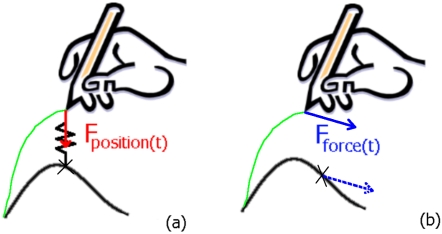
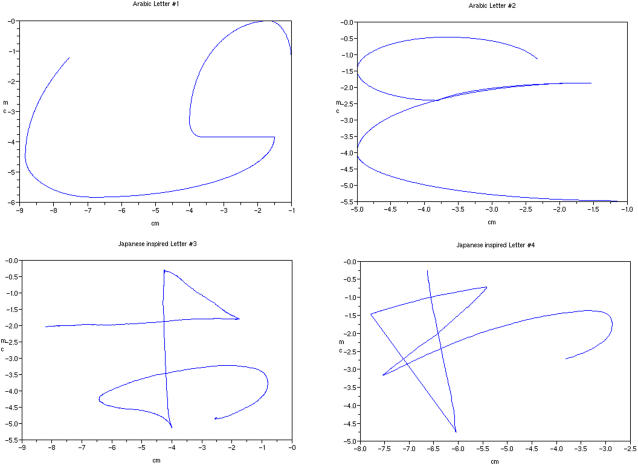
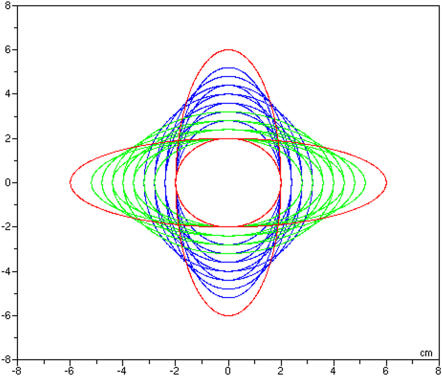
BACKGROUND: Learning to perform new movements is usually achieved by following visual demonstrations. Haptic guidance by a force feedback device is a recent and original technology which provides additional proprioceptive cues during visuo-motor learning tasks. The effects of two types of haptic guidances-control in position (HGP) or in force (HGF)-on visuo-manual tracking ("following") of trajectories are still under debate. METHODOLOGY/PRINCIPALS FINDINGS: Three training techniques of haptic guidance (HGP, HGF or control condition, NHG, without haptic guidance) were evaluated in two experiments. Movements produced by adults were assessed in terms of shapes (dynamic time warping) and kinematics criteria (number of velocity peaks and mean velocity) before and after the training sessions. Trajectories consisted of two Arabic and two Japanese-inspired letters in Experiment 1 and ellipses in Experiment 2. We observed that the use of HGF globally improves the fluency of the visuo-manual tracking of trajectories while no significant improvement was found for HGP or NHG. CONCLUSION/SIGNIFICANCE: These results show that the addition of haptic information, probably encoded in force coordinates, play a crucial role on the visuo-manual tracking of new trajectories.
Overview
The claims and statistics of this paper haven’t been checked yet.
Free: it reads the open-access text and checks the first 5 claims that cite a source we can check. Create a free account to check every claim.
Integrity signals
Registry
Cites
Statistics
Figures
Verification
Claims the paper makes
The claims and statistics of this paper haven’t been checked yet.
Free: it reads the open-access text and checks the first 5 claims that cite a source we can check. Create a free account to check every claim.
Claims other papers make about this one
Each is checked against this paper’s own text: does it say what the citing paper says it does?
The cited source says what the claim attributes to it.
In the citing paper
“However, force control facilitated learning of kinematic aspects in terms of movement fluidity-that is, number of velocity peaks and mean velocity.”
From Augmented visual, auditory, haptic, and multimodal feedback in motor learning: A review (2013) · cites this paper as Bluteau et al., 2008
Experimental — accuracy not yet measuredThe cited source says what the claim attributes to it.
In the citing paper
“Neither of the controllers facilitated learning of shape aspects of the writing task.”
From Augmented visual, auditory, haptic, and multimodal feedback in motor learning: A review (2013) · cites this paper as Bluteau et al., 2008
The cited source says what the claim attributes to it.
In the citing paper
“In a study on drawing different shapes, Bluteau et al. (2008) showed that the addition of haptic to visual concurrent feedback did not further enhance learning of shape drawing.”
From Augmented visual, auditory, haptic, and multimodal feedback in motor learning: A review (2013) · cites this paper as Bluteau et al., 2008
The cited source says what the claim attributes to it.
In the citing paper
“Instead, movement fluidity was improved by additional haptic guidance, but only if it was force controlled and not position controlled (Bluteau et al., 2008).”
From Augmented visual, auditory, haptic, and multimodal feedback in motor learning: A review (2013) · cites this paper as Bluteau et al., 2008
Self-check
Percentages, sums and reported differences re-computed from the paper’s own numbers.
The self-check needs the paper’s full text.
Citations
Cites
Motor Control and Learning: A Behavioral Emphasis
Schmidt, R. A. (1982) · Cited by 4,770
Internal models for motor control and trajectory planning.
Kawato, M. (1999) · Current Opinion in Neurobiology · doi:10.1016/s0959-4388(99)00028-8 · Cited by 2,685 · cited 1×
“We could also discuss these results with respect to different internal representation stages of motor knowledge, which evolve from children to adults (creation of internal representation-internal inverse models [18] or generalized motor plan- or adjustment of this knowledge).”
ResultIndependent learning of internal models for kinematic and dynamic control of reaching
Krakauer, J. W., Ghilardi, M.-F., & Ghez, C. (1999) · Nature Neuroscience · doi:10.1038/14826 · Cited by 784 · cited 1×
“observed that HGP increased mean velocity with children. This suggests that HGP may be less suitable for adults since adults would have better knowledge of the shape they had to draw and better kinesthetic control of their upper limbs. The global superiority of HGF over HGP suggested that learned information for this…”
MethodThe law relating the kinematic and figural aspects of drawing movements
Lacquaniti, F., Terzuolo, C., & Viviani, P. (1983) · Acta Psychologica · doi:10.1016/0001-6918(83)90027-6 · Cited by 674 · cited 3×
“principles [9,10,11]: The homothety principle which states that the trajectory keeps its shape characteristics whatever its size, and the isochrony principle which states that the velocity for tracing increases as function of its size.”
BackgroundTrajectory determines movement dynamics
Viviani, P., & Terzuolo, C. (1982) · Neuroscience · doi:10.1016/0306-4522(82)90277-9 · Cited by 551
Is movement variability important for sports biomechanists?
Bartlett, R., Wheat, J., & Robins, M. (2007) · Sports Biomechanics · doi:10.1080/14763140701322994 · Cited by 538 · cited 1×
“This proposes that a motor learning task (as drawing) would be improved by variability of required movements as evidenced in sports [19].”
BackgroundHaptic guidance: experimental evaluation of a haptic training method for a perceptual motor skill
Feygin, D., Keehner, M., & Tendick, R. (2003) · Proceedings 10th Symposium on Haptic Interfaces for Virtual Environment and Teleoperator Systems. HAPTICS 2002 · doi:10.1109/haptic.2002.998939 · Cited by 394 · cited 2×
“Virtual simulators, in which haptic and visual cues are provided, seem to be an efficient way to teach complex movements [2-5].”
BackgroundA developmental study of the relationship between geometry and kinematics in drawing movements.
Viviani, P., & Schneider, R. (1991) · Journal of Experimental Psychology: Human Perception and Performance · doi:10.1037//0096-1523.17.1.198 · Cited by 246 · cited 3×
“principles [9,10,11]: The homothety principle which states that the trajectory keeps its shape characteristics whatever its size, and the isochrony principle which states that the velocity for tracing increases as function of its size.”
BackgroundHaptic Feedback Enhances Force Skill Learning
Morris, D., Tan, H., Barbagli, F., Chang, T., & Salisbury, K. (2007) · Second Joint EuroHaptics Conference and Symposium on Haptic Interfaces for Virtual Environment and Teleoperator Systems (WHC'07) · doi:10.1109/whc.2007.65 · Cited by 208 · cited 3×
“These results were consistent with our hypotheses and within previous literature [12,13].”
BackgroundResultA robotic teacher of Chinese handwriting
Teo, C. L., Burdet, E., & Lim, H. P. (2003) · Proceedings 10th Symposium on Haptic Interfaces for Virtual Environment and Teleoperator Systems. HAPTICS 2002 · doi:10.1109/haptic.2002.998977 · Cited by 142 · cited 1×
“Finally, other studies in adults [2,4] confirmed the positive effect of visuo-haptic training sessions using proportional derivative position controller but most of them mainly describe the technical aspects.”
Background
Research works printed but not linked: 1
- Niels R 2004 Dynamic Time Warping: An intuitive way of handwriting recognition? Radboud University Nijmegen, Faculty of Social Sciences, Department of Artificial Intelligence/Cognitive Science Master's thesis
Cited by
Augmented visual, auditory, haptic, and multimodal feedback in motor learning: A review
Sigrist, R., Rauter, G., Riener, R., & Wolf, P. (2013) · Psychonomic Bulletin & Review · doi:10.3758/s13423-012-0333-8 · Cited by 1,416
“In visuo-manual writing tasks, the impact of position control has also been contrasted with force control — that is, when the robot follows a predefined force profile instead of a predefined path (Bluteau, Coquillart, Payan, & Gentaz, 2008).”
BackgroundInfluentialLosey, D. P., McDonald, C. G., Battaglia, E., & O'Malley, M. K. (2018) · Applied Mechanics Reviews · doi:10.1115/1.4039145 · Cited by 392
“Studies on drawing different shapes [149] and on handwriting [150] have demonstrated an improvement in movement fluidity by the addition of haptic feedback during training.”
BackgroundCan proprioceptive training improve motor learning?
Wong, J. D., Kistemaker, D. A., Chin, A., & Gribble, P. L. (2012) · Journal of Neurophysiology · doi:10.1152/jn.00122.2012 · Cited by 176
“Previous work involving active demonstration—movements with the aid of a robotic manipulandum— has also reported little or no benefit to positional accuracy (Bluteau et al. 2008; Feygin et al. 2002; Liu et al. 2006).”
BackgroundThe effect of haptic guidance, aging, and initial skill level on motor learning of a steering task
Marchal-Crespo, L., McHughen, S., Cramer, S. C., & Reinkensmeyer, D. J. (2010) · Experimental Brain Research · doi:10.1007/s00221-009-2026-8 · Cited by 143
“…has been evaluated in recent studies, which found a positive effect of guidance on the time-related components of the dynamic task, such as an increase in speed and smoothness in tracking trajectories (Bluteau et al. 2008), and a better learning of temporal patterns of force (Morris et al. 2007).”
BackgroundMilot, M.-H., Marchal-Crespo, L., Green, C. S., Cramer, S. C., & Reinkensmeyer, D. J. (2010) · Experimental Brain Research · doi:10.1007/s00221-009-2014-z · Cited by 139
“Some studies found that haptic guidance had a positive impact on performance during learning calligraphy (Bluteau et al. 2008), steering a wheel (Marchal-Crespo and Reinkens-meyer 2008b), slalom movements (Wulf and Toole 1999), or learning to move the hand after stroke (Takahashi et al. 2008),…”
BackgroundHaptics in teaching handwriting: The role of perceptual and visuo-motor skills
Bara, F., & Gentaz, É. (2011) · Human Movement Science · doi:10.1016/j.humov.2010.05.015 · Cited by 191
Explant‐derived human dental pulp stem cells enhance differentiation and proliferation potentials
Spath, L., Rotilio, V., Alessandrini, M., Gambara, G., Angelis, L. D., Mancini, M., Mitsiadis, T. A., Vivarelli, E., Naro, F., Filippini, A., et al. (2010) · Journal of Cellular and Molecular Medicine · doi:10.1111/j.1582-4934.2009.00848.x · Cited by 142
“Almost all adult tissues contain stem cells, including bone marrow, peripheral blood, brain, spinal cord, blood vessels, skeletal muscle, epithelia of the skin and digestive system, cornea, retina, liver and pancreas [9–12].”
BackgroundLee, J., & Choi, S. (2010) · 2010 IEEE Haptics Symposium · doi:10.1109/haptic.2010.5444635 · Cited by 118
“[2], haptic guidance improved the fluidity of movements, but not the shape matching score related to spatial performance.”
BackgroundSigrist, R., Rauter, G., Riener, R., & Wolf, P. (2013) · Journal of Motor Behavior · doi:10.1080/00222895.2013.826169 · Cited by 134
The effect of haptic guidance and visual feedback on learning a complex tennis task
Marchal–Crespo, L., van Raai, M. A., Rauter, G., Wolf, P., & Riener, R. (2013) · Experimental Brain Research · doi:10.1007/s00221-013-3690-2 · Cited by 126
“…on the time-related components of a continuous visuomanual tracking task, such as an increase in speed and smoothness in tracking trajectories (Bluteau et al. 2008), and better learning of temporal patterns of force (Morris et al. 2007). thus, based on these previous studies, haptic guidance…”
InfluentialBasic and supplementary sensory feedback in handwriting
Danna, J., & Velay, J.-L. (2015) · Frontiers in Psychology · doi:10.3389/fpsyg.2015.00169 · Cited by 94
“One year later, Bluteau et al. (2008) tested the efficiency of two kinds of haptic guidance in adults, based on position or force errors.”
BackgroundMethodBasalp, E., Wolf, P., & Marchal–Crespo, L. (2021) · IEEE Transactions on Haptics · doi:10.1109/toh.2021.3104518 · Cited by 104
A robotic wheelchair trainer: design overview and a feasibility study
Marchal-Crespo, L., Furumasu, J., & Reinkensmeyer, D. J. (2010) · Journal of NeuroEngineering and Rehabilitation · doi:10.1186/1743-0003-7-40 · Cited by 80
“In the same line, recent work [10,31,32] found a benefit of haptic guidance from a robot in learning to reproduce the temporal, but not spatial, characteristics of a complex spatiotemporal curve.”
BackgroundPalsbo, S. E., & Hood-Szivek, P. (2012) · American Journal of Occupational Therapy · doi:10.5014/ajot.2012.004556 · Cited by 75
The effect of real-time auditory feedback on learning new characters
Danna, J., Fontaine, M., Paz‐Villagràn, V., Gondre, C., Thoret, E., Aramaki, M., Kronland-Martinet, R., Ystad, S., & Velay, J. (2014) · Human Movement Science · doi:10.1016/j.humov.2014.12.002 · Cited by 70
“A priori, proprioception would be more adapted to help writers to perceive the correct movement: Indeed, teachers do just this when they hold a child’s hand and guide his/her movement (e.g. Bluteau, Coquillard, Payan, & Gentaz, 2008; Teo, Burdet, & Lim, 2002).”
BackgroundMotor Learning Perspectives on Haptic Training for the Upper Extremities
Williams, C. K., & Carnahan, H. (2014) · IEEE Transactions on Haptics · doi:10.1109/toh.2013.2297102 · Cited by 65
“[30], where participants were required to manually track a visually presented trajectory, the authors used two training paradigms: haptic guidance in position and haptic guidance in force.”
BackgroundMethodA “virtually minimal” visuo-haptic training of attention in severe traumatic brain injury
Dvorkin, A. Y., Ramaiya, M., Larson, E. B., Zollman, F. S., Hsu, N. H., Pacini, S., Shah, A. K., & Patton, J. L. (2013) · Journal of NeuroEngineering and Rehabilitation · doi:10.1186/1743-0003-10-92 · Cited by 58
“Moreover, studies have shown that integrating visual and tactile stimuli results in better performance compared with individual presentations in either modality alone [31-33].”
Brokaw, E. B., Murray, T. M., Nef, T., & Lum, P. S. (2011) · The Journal of Rehabilitation Research and Development · doi:10.1682/jrrd.2010.04.0064 · Cited by 56
“found that in a drawing task, haptic guidance with a position-based controller similar to our TD training mode was inferior to a force-based controller for motor learning [84].”
Labat, H., Écalle, J., Baldy, R., & Magnan, A. (2013) · Learning and Individual Differences · doi:10.1016/j.lindif.2013.09.016 · Cited by 55
“…involving visual–auditory and haptic explorations has also been found to enhance the acquisition of reading (Bara et al., 2007, 2004; Gentaz et al., 2003; Hillairet de Boisferon, Bara, Gentaz, & Colé, 2007) and writing movements (Bara & Gentaz, 2011; Bluteau et al., 2008; Fredembach et al., 2009).”
BackgroundEffects of robotically modulating kinematic variability on motor skill learning and motivation
Duarte, J. E., & Reinkensmeyer, D. J. (2015) · Journal of Neurophysiology · doi:10.1152/jn.00163.2014 · Cited by 52
“Different forms of haptic guidance have been developed (Bluteau et al. 2008; Liu et. al.”
BackgroundInfluentialRobot assistance of motor learning: A neuro-cognitive perspective
Heuer, H., & Lüttgen, J. (2015) · Neuroscience & Biobehavioral Reviews · doi:10.1016/j.neubiorev.2015.07.005 · Cited by 50
Passive haptic learning of typing skills facilitated by wearable computers
Seim, C., Quigley, D. P., & Starner, T. E. (2014) · CHI Conference Extended Abstracts on Human Factors in Computing Systems (CHI EA) · doi:10.1145/2559206.2581329 · Cited by 40
“Introduction Haptic systems can help users learn manual tasks [1, 2, 3].”
BackgroundJafari, N., Adams, K. D., & Tavakoli, M. (2016) · Journal of Rehabilitation and Assistive Technologies Engineering · doi:10.1177/2055668316668147 · Cited by 47
Influences of haptic communication on a shared manual task
Chellali, A., Dumas, C., & Milleville-Pennel, I. (2011) · Interacting with Computers · doi:10.1016/j.intcom.2011.05.002 · Cited by 40
“While some authors show the importance of haptic information for teaching motor skills (Bluteau et al., 2008; Solis et al., 2003), others question the this information (Botden et al.”
BackgroundTraining Toddlers Seated on Mobile Robots to Drive Indoors Amidst Obstacles
Chen, X., Ragonesi, C. B., Galloway, J. C., & Agrawal, S. K. (2011) · IEEE Transactions on Neural Systems and Rehabilitation Engineering · doi:10.1109/tnsre.2011.2114370 · Cited by 45
“In [ 16 ], researchers used a similar pre-testtraining‐post-test paradigm to our experiment for movement learning with a PHANToM device.”
MethodNeuromotor Noise Is Malleable by Amplifying Perceived Errors
Hasson, C. J., Zhang, Z., Abe, M., & Sternad, D. (2016) · PLoS Computational Biology · doi:10.1371/journal.pcbi.1005044 · Cited by 40
Jolly, C., & Gentaz, É. (2014) · Frontiers in Psychology · doi:10.3389/fpsyg.2013.01022 · Cited by 41
“All tracks were monitored using specific software (Hennion et al., 2005; Bluteau et al., 2008, 2010; Jolly et al., 2010), which extracts 9 different parameters for each track: (1) “nb strokes” corresponds to the number of pen strokes which constitute the letter; (2) “in-air time” corresponds to the…”
MethodEvaluation of flexible endoscope steering using haptic guidance
Reilink, R., Stramigioli, S., Kappers, A. M. L., & Misra, S. (2011) · International Journal of Medical Robotics and Computer Assisted Surgery · doi:10.1002/rcs.386 · Cited by 36
“Haptic cues can be used to improve the physician’s performance (5,6).”
BackgroundÖzgür, A. G., Özgür, A., Asselborn, T., Johal, W., Yadollahi, E., Bruno, B., Skweres, M., & Dillenbourg, P. (2020) · Frontiers in Robotics and AI · doi:10.3389/frobt.2020.00029 · Cited by 37
“To enhance the visual perception as well as the visuomotor coordination, it is shown that using more sensory information ranging from audio and visual to kinesthetic feedback is important (Hayes, 1982; Bluteau et al., 2008; Bara and Gentaz, 2011; Danna and Velay, 2015).”
BackgroundHaptic Communication to Support Biopsy Procedures Learning in Virtual Environments
Chellali, A., Dumas, C., & Milleville-Pennel, I. (2012) · PRESENCE Virtual and Augmented Reality · doi:10.1162/pres_a_00128 · Cited by 33
“Some authors have shown the importance of haptic information for teaching motor skills (Bluteau, Coquillart, Payan, & Gentaz, 2008; Solis, Avizzano, & Bergamasco, 2003).”
Semeraro, C., Coppola, G., Cassibba, R., & Lucangeli, D. (2019) · PLoS ONE · doi:10.1371/journal.pone.0209978 · Cited by 56
The Effect of Haptic Guidance on Learning a Hybrid Rhythmic-Discrete Motor Task
Marchal–Crespo, L., Bannwart, M., Riener, R., & Vallery, H. (2014) · IEEE Transactions on Haptics · doi:10.1109/toh.2014.2375173 · Cited by 37
“a positive effect of guidance on the time-related components of a dynamic task, such as an increase in movement speed and smoothness [16], and better learning of temporal force patterns [17].”
BackgroundResultPassive haptic learning of Braille typing
Seim, C., Chandler, J., DesPortes, K., Dhingra, S., Park, M., & Starner, T. E. (2014) · ACM International Symposium on Wearable Computers (ISWC) · doi:10.1145/2634317.2634330 · Cited by 32
“Haptic guidance can help users learn manual skills [3, 5].”
BackgroundAssisting Versus Repelling Force-Feedback for Learning of a Line Following Task in a Wheelchair
Chen, X., & Agrawal, S. K. (2013) · IEEE Transactions on Neural Systems and Rehabilitation Engineering · doi:10.1109/tnsre.2013.2245917 · Cited by 37
“The effectiveness of such haptic assistance as a motor training strategy is still an open question, probably because the user may start relying on the assistance provided during the training and fail to learn the required motor commands to perform the actual task [15], [16].”
BackgroundCombining Full and Partial Haptic Guidance Improves Handwriting Skills Development
Teranishi, A., Κορρές, Γ., Park, W., & Eid, M. A. (2018) · IEEE Transactions on Haptics · doi:10.1109/toh.2018.2851511 · Cited by 30
“erature [6], [7], we did not consider a control group that do”
BackgroundThe influence of haptic guidance on the production of spatio-temporal patterns
Lüttgen, J., & Heuer, H. (2011) · Human Movement Science · doi:10.1016/j.humov.2011.07.002 · Cited by 32
Guideband: Intuitive 3d multilevel force guidance on a wristband in virtual reality.
Tsai, H.-R., Chang, Y.-C., Wei, T.-Y., Tsao, C.-A., Koo, X. C.-Y., Wang, H.-C., & Chen, B.-Y. (2021) · Proceedings of the 2021 CHI Conference on Human Factors in Computing Systems · doi:10.1145/3411764.3445262 · Cited by 25
“Grounded force feedback devices, such as Phantom, Novint Falcon and L-EXOS, are well-designed and commercialized for motion guidance and motor learning [8, 18, 20, 25].”
BackgroundWilliams, C. K., Tremblay, L., & Carnahan, H. (2016) · Frontiers in Psychology · doi:10.3389/fpsyg.2016.02010 · Cited by 35
Bringing letters to life: handwriting with haptic-enabled tangible robots
Asselborn, T., Özgür, A. G., Mrini, K., Yadollahi, E., Özgür, A., Johal, W., & Dillenbourg, P. (2018) · ACM International Conference on Interaction Design and Children (IDC) · doi:10.1145/3202185.3202747 · Cited by 28
“To enhance the visual perception as well as the visual-motor coordination, it is shown that using more sensory information ranging from audio, visual to kinesthetic feed-back is important [3, 7, 10, 15].”
BackgroundResultHandwriting Movement Sonification for the Rehabilitation of Dysgraphia
Danna, J., Velay, J., Paz‐Villagràn, V., Capel, A., Petroz, C., Gondre, C., Thoret, E., Aramaki, M., Ystad, S., & Kronland-Martinet, R. (2013) · HAL · Cited by 24
Haptics Assisted Training (HAT) System for children's handwriting
Kim, Y.-S., Collins, M., Bulmer, W., Sharma, S., & Mayrose, J. (2013) · World Haptics Conference · doi:10.1109/whc.2013.6548469 · Cited by 30
“Bluteau [9] used haptic guidance to improve handwriting trajectories.”
MethodTraining Toddlers Seated on Mobile Robots to Steer Using Force-Feedback Joystick
Agrawal, S. K., Chen, X., Ragonesi, C. B., & Galloway, J. C. (2011) · IEEE Transactions on Haptics · doi:10.1109/toh.2011.67 · Cited by 29
“In a recent study [20], researchers used a similar pre-test-training-post-test paradigm as our experiment for movement learning using a PHANToM device, and found that certain types of haptic guidance improve learning while others did not.”
Huang, K., Chitrakar, D., Rydén, F., & Chizeck, H. J. (2019) · Intelligent Service Robotics · doi:10.1007/s11370-019-00283-w · Cited by 24
“In [5], various haptic feedback modes for visuo-manual tracking for learning predefined trajectories, namely writing different Arabic and Japanese characters, were evaluated.”
BackgroundMarchal–Crespo, L., Wolf, P., Gerig, N., Rauter, G., Jaeger, L., Vallery, H., & Riener, R. (2015) · International Conference on Rehabilitation Robotics · doi:10.1109/icorr.2015.7281191 · Cited by 23
“A positive effect of haptic guidance on learning the time-related components of a visuo-manual tracking task has been found, such as an increase in speed and smoothness in tracking trajectories [9], and better learning of temporal patterns of force [10].”
BackgroundJolly, C., & Gentaz, É. (2013) · Sciences et Technologies de l Information et de la Communication pour l Éducation et la Formation · doi:10.3406/stice.2013.1080 · Cited by 38
“Let Me Hear Your Handwriting!” Evaluating the Movement Fluency from Its Sonification
Danna, J., Paz‐Villagràn, V., Gondre, C., Aramaki, M., Kronland-Martinet, R., Ystad, S., & Velay, J. (2015) · PLoS ONE · doi:10.1371/journal.pone.0128388 · Cited by 25
Investigating Haptic Guidance Methods for Teaching Children Handwriting Skills
Park, W., Κορρές, Γ., Moonesinghe, T., & Eid, M. A. (2019) · IEEE Transactions on Haptics · doi:10.1109/toh.2019.2922284 · Cited by 21
“The study in [12] found that the addition of haptic information in the form of force coordinates plays a crucial role on the visuo-manual tracking of new trajectories.”
BackgroundRobotic guidance benefits the learning of dynamic, but not of spatial movement characteristics
Lüttgen, J., & Heuer, H. (2012) · Experimental Brain Research · doi:10.1007/s00221-012-3190-9 · Cited by 28
“The former uses spatial coordinates, whereas the latter plays back forces that have previously generated and recorded by an expert (for an overview, see Bluteau et al. 2008).”
BackgroundSynthesis and control of an assistive robotic tennis trainer
Marchal-Crespo, L., Rauter, G., Wyss, D., von Zitzewitz, J., & Riener, R. (2012) · 2012 4th IEEE RAS & EMBS International Conference on Biomedical Robotics and Biomechatronics (BioRob) · doi:10.1109/biorob.2012.6290262 · Cited by 20
“Authors in [10] showed a benefit of haptic guidance in learning to reproduce the temporal, but not spatial, characteristics of a complex spatiotemporal curve.”
BackgroundExperience-based virtual training system for knee arthroscopic inspection
Lyu, S., Lin, Y., Huang, S.-T., & Yau, H. (2013) · BioMedical Engineering OnLine · doi:10.1186/1475-925x-12-63 · Cited by 23
“Various studies [13-18] have shown that force guidance can effectively shorten the learning curves in many fields.”
BackgroundTowards a modified consumer haptic device for robotic-assisted fine-motor repetitive motion training
Palsbo, S. E., Marr, D., Streng, T., Bay, B. K., & Norblad, A. W. (2011) · Disability and Rehabilitation: Assistive Technology · doi:10.3109/17483107.2010.532287 · Cited by 18
Task-based hybrid shared control for training through forceful interaction
Fitzsimons, K., Kalinowska, A., Dewald, J. P. A., & Murphey, T. D. (2020) · The International Journal of Robotics Research · doi:10.1177/0278364920933654 · Cited by 23
“Robotically assisting subjects to perform these normative movements has led to moderate improvements in training outcomes compared to unassisted practice (Kahn et al. 2006; Bluteau et al. 2008; Marchal-Crespo and Reinkensmeyer 2008).”
BackgroundInfluence of visual control on the quality of graphic gesture in children with handwriting disorders
Lopez, C., & Vaivre‐Douret, L. (2021) · Scientific Reports · doi:10.1038/s41598-021-02969-7 · Cited by 24
Hatira, A., & Saraç, M. (2024) · Advanced Intelligent Systems · doi:10.1002/aisy.202300731 · Cited by 17
Kim, Y., Đurić, Z., Gerber, N. L., Palsbo, A. R., & Palsbo, S. E. (2009) · IEEE Symposium on 3D User Interfaces (3DUI) · doi:10.1109/3dui.2009.4811228 · Cited by 18
“Several research groups [3, 9, 8, 10, 4] have developed hand-writing systems using a haptic interface, and recently the positive effect of haptic training sessions have been reported [2, 6].”
BackgroundMechanism of a Learning Robot Manipulator for Laparoscopic Surgical Training
Yang, T., Liu, J., Huang, W., Yang, L., Chui, C. K., Ang, M. H., Su, Y., & Chang, S. K.-Y. (2012) · Studies in computational intelligence · doi:10.1007/978-3-642-35485-4_25 · Cited by 16
“Researchers have explored the application of robotic assistance in teaching calligraphy and trajectories guidance [6, 7] to train motor skills.”
BackgroundGeorge, L., Marchal, M., Glondu, L., & Lécuyer, A. (2012) · Lecture notes in computer science · doi:10.1007/978-3-642-31401-8_12 · Cited by 16
“[12] have compared different types of guidance and showed that the addition of haptic information plays an important role on the visuo-manual tracking of new trajectories, especially when forces are used for the guidance.”
BackgroundLi, Q., & Yang, S. (2024) · Computers in Human Behavior · doi:10.1016/j.chb.2024.108280 · Cited by 16
Toward improved surgical training: Delivering smoothness feedback using haptic cues
Jantscher, W. H., Pandey, S. K., Agarwal, P., Richardson, S. H., Lin, B. R., Byrne, M. D., & O’Malley, M. K. (2018) · IEEE Haptics Symposium · doi:10.1109/haptics.2018.8357183 · Cited by 16
“Studies on drawing different shapes [23] and on handwriting [24] have demonstrated an improvement in movement fluidity by the addition of haptic feedback during training, a strong parallel to our desire to train smooth tool manipulation in a surgical navigation task.”
BackgroundTouchscreen Haptic Augmentation Effects on Tapping, Drag and Drop, and Path Following
Gordon, M., & Zhai, S. (2019) · CHI Conference on Human Factors in Computing Systems · doi:10.1145/3290605.3300603 · Cited by 16
“The task is very similar to force-feedback based path learning tasks in studies such as [9].”
MethodErgonomic evaluation of 3D plane positioning using a mouse and a haptic device
Paul, L., Cartiaux, O., Docquier, P., & Banse, X. (2009) · International Journal of Medical Robotics and Computer Assisted Surgery · doi:10.1002/rcs.275 · Cited by 15
George, L., Marchal, M., Glondu, L., & Lécuyer, A. (2013) · Cited by 14
Bouchard, A. E., Corriveau, H., & Milot, M.-H. (2015) · Frontiers in Systems Neuroscience · doi:10.3389/fnsys.2015.00052 · Cited by 17
“The results of our study further supported studies that used HG or EA robotic trainings, where faster execution times (Feygin et al., 2002; Bluteau et al., 2008) and improved timed movement for the task (Marchal Crespo and Reinkensmeyer, 2008; Luttgen and Heuer, 2013; Marchal-Crespo et al., 2013,…”
ResultGerber, L. H., Narber, C., Vishnoi, N., Johnson, S. L., Chan, L. E., & Đurić, Z. (2014) · Journal of NeuroEngineering and Rehabilitation · doi:10.1186/1743-0003-11-117 · Cited by 14
“There is an increasing level of interest in this technology because it is engaging, provides objective performance data and permits development of varied and flexible simulated environments [27,28].”
BackgroundJolly, C., Huron, C., & Gentaz, É. (2014) · L’Année psychologique · doi:10.4074/s0003503314003017 · Cited by 17
A fine motor skill training system using multi-fingered haptic interface robot
Endo, T., & Kawasaki, H. (2015) · International Journal of Human-Computer Studies · doi:10.1016/j.ijhcs.2015.08.006 · Cited by 13
Optimal Action-based or User Prediction-based Haptic Guidance: Can You Do Even Better?
Moon, H.-S., & Seo, J. (2021) · CHI Conference on Human Factors in Computing Systems · doi:10.1145/3411764.3445115 · Cited by 13
“To model the optimal action, we can either apply reinforcement learning in simulated environments, which is not limited to the self-play-based learning, or use the movement of skillful experts as in [5, 38, 51].”
BackgroundMethodInfluentialComparing Haptic and Visual Training Method of Learning Chinese Handwriting with a Haptic Guidance
Xiong, M., Milleville-Pennel, I., Dumas, C., & Palluel-Germain, R. (2013) · Journal of Computers · doi:10.4304/jcp.8.7.1815-1820 · Cited by 13
“…display system [6]; a robotic teacher to ensure undistorted hand-eye coordination [7]; a haptic virtual reality technology for transferring a teacher’s skill to a student [8]; an interactive haptic interface to improve Japanese handwriting [9]; and a haptic guidance in position and force.”
BackgroundMethodZahedi, E., Dargahi, J., Kia, M., & Zadeh, M. (2017) · IEEE Robotics and Automation Letters · doi:10.1109/lra.2017.2660071 · Cited by 15
“HG provides forces to users when they perform a visuo-motor learning task [3].”
BackgroundBara, F., Fredembach, B., & Gentaz, É. (2010) · L’Année psychologique · doi:10.4074/s0003503310002022 · Cited by 22
WYFIWIF: A Haptic Communication Paradigm For Collaborative Motor Skills Learning
Chellali, A., Dumas, C., & Milleville-Pennel, I. (2010) · Cited by 13
Haptic Feedback Based on Movement Smoothness Improves Performance in a Perceptual-Motor Task
Sullivan, J. L., Pandey, S., Byrne, M. D., & O'Malley, M. K. (2021) · IEEE Transactions on Haptics · doi:10.1109/toh.2021.3126017 · Cited by 15
“For example, studies on drawing different shapes [25] and on handwriting [26] have demonstrated an improvement in movement fluidity by the addition of haptic feedback during training.”
BackgroundEffects of robotic guidance on sensorimotor control: Planning vs. online control?
Manson, G. A., Alekhina, M. I., Srubiski, S. L., Williams, C. K., Bhattacharjee, A., & Tremblay, L. (2014) · Neurorehabilitation · doi:10.3233/nre-141168 · Cited by 17
“As well, the absence of any compelling influence of robotic guidance on spatial measures is in line with other studies involving neurologically healthy individuals (Bluteau et al., 2008; Liu et al., 2006).”
ResultMotor learning with fading and growing haptic guidance
Heuer, H., & Lüttgen, J. (2014) · Experimental Brain Research · doi:10.1007/s00221-014-3914-0 · Cited by 16
Duarte, J. E., Gebrekristos, B., Pérez, S. M., Rowe, J. B., Sharp, K., & Reinkensmeyer, D. J. (2013) · International Conference on Rehabilitation Robotics · doi:10.1109/icorr.2013.6650461 · Cited by 14
Bouchard, A. E., Corriveau, H., & Milot, M.-H. (2016) · Disability and Rehabilitation · doi:10.1080/09638288.2016.1205151 · Cited by 14
Assisting versus repelling force-feedback for human learning of a line following task
Chen, X., & Agrawal, S. K. (2012) · 2012 4th IEEE RAS & EMBS International Conference on Biomedical Robotics and Biomechatronics (BioRob) · doi:10.1109/biorob.2012.6290678 · Cited by 10
Assessment of Environmental Effects on Collaborative Haptic Guidance
Khademian, B., Apkarian, J., & Hashtrudi-Zaad, K. (2011) · PRESENCE Virtual and Augmented Reality · doi:10.1162/pres_a_00044 · Cited by 9
“Bluteau, Coquillart, Payan, and Gentaz (2008) reported a benefit of haptic guidance in trajectory-following.”
BackgroundActive and efficient motor skill learning method used in a haptic teleoperated system
Garcia-Hernandez, N., & Parra-Vega, V. (2009) · RO-MAN 2009 - The 18th IEEE International Symposium on Robot and Human Interactive Communication · doi:10.1109/roman.2009.5326132 · Cited by 9
“[8] uses three haptic guidance techniques, a control guidance in position, in force or without haptic”
MethodMarchal–Crespo, L., Baumann, T., Imobersteg, M., Maassen, S., & Riener, R. (2017) · Frontiers in Robotics and AI · doi:10.3389/frobt.2017.00019 · Cited by 11
“…tracking task has been evaluated in several studies, which found a positive effect of guidance on the time-related components of a dynamic task, such as an increase in movement speed and smoothness (Bluteau et al., 2008) and better learning of temporal force patterns (Morris et al., 2007).”
BackgroundTraining toddlers seated on mobile robots to drive indoors amidst obstacles
Chen, X., Ragonesi, C., Agrawal, S. K., & Galloway, J. C. (2010) · 2010 3rd IEEE RAS & EMBS International Conference on Biomedical Robotics and Biomechatronics · doi:10.1109/biorob.2010.5627809 · Cited by 8
“In [21], researchers used a similar pre-test–training–post-test paradigm as our experiment for movement learning using a PHANToM device.”
MethodTraining children aged 5–10 years in manual compliance control to improve drawing and handwriting
Bingham, G. P., & Snapp‐Childs, W. (2018) · Human Movement Science · doi:10.1016/j.humov.2018.04.002 · Cited by 9
Movement Strategy Discovery during Training via Haptic Guidance
Gibo, T. L., & Abbink, D. A. (2016) · IEEE Transactions on Haptics · doi:10.1109/toh.2016.2516984 · Cited by 11
“In contrast to the more rigidly defined tasks of trajectory recall or tracking [3], [4], [5], [6], enforcing a single ideal movement may be too restrictive for complex systems in which there are”
BackgroundResultInfluentialMechanism of a Learning Robot Manipulator for Laparoscopic Surgical Training
Yang, T., Liu, J., Huang, W., Su, Y., Yang, L., Chui, C. K., Ang, M. H., & Chang, S. K.-Y. (2012) · Advances in intelligent systems and computing · doi:10.1007/978-3-642-33932-5_3 · Cited by 8
Haptic guidance interferes with learning to make movements at an angle to stimulus direction
Heuer, H., & Rapp, K. (2013) · Experimental Brain Research · doi:10.1007/s00221-013-3775-y · Cited by 8
Electro-tactile Cues for a Haptic Multimedia Finger Motoric Learning System
Pamungkas, D. S., & Turnip, A. (2019) · Proceeding of International Conference on Sustainable Engineering and Creative Computing · doi:10.1109/icsecc.2019.8906989 · Cited by 10
“The significant usage of a haptic technology combined with audio and visual information mainly occur in writing characters [1, 2].”
BackgroundMethodUllah, S., Liu, X., Otmane, S., Richard, P., & Mallem, M. (2011) · Lecture notes in computer science · doi:10.1007/978-3-642-21605-3_16 · Cited by 7
Augmented Visuotactile Feedback Support Sensorimotor Synchronization Skill for Rehabilitation
Feng, F., & Stockman, T. (2019) · CHI Conference Extended Abstracts on Human Factors in Computing Systems (CHI EA) · doi:10.1145/3290607.3312812 · Cited by 9
“Based on this calculation, the number of velocity peaks was derived as the indicator of movement smoothness [3].”
BackgroundMethodVisual haptic approach complements learning process of Jawi handwriting skills
Amin, M. M., Zaman, H. B., & Ahmad, A. (2013) · International Conference on Information and Communication Technology for the Muslim World (ICT4M) · doi:10.1109/ict4m.2013.6518888 · Cited by 7
“According to Hamdan [10-11], among the similarities and differences between the characteristics of the Arabic and Jawi system are as follows: • All Arabic letters consist of consonants and no vowels.”
BackgroundInfluentialLabat, H., Magnan, A., & Écalle, J. (2011) · L’Année psychologique · doi:10.4074/s0003503311004027 · Cited by 16
The Role of Haptic Interactions with Robots for Promoting Motor Learning
Beckers, N., & Marchal–Crespo, L. (2022) · Springer eBooks · doi:10.1007/978-3-031-08995-4_12 · Cited by 7
Contactless Kinesthetic Feedback to Support Handwriting Using Magnetic Force
Κορρές, Γ., Park, W., & Eid, M. A. (2021) · IEEE Transactions on Haptics · doi:10.1109/toh.2021.3083702 · Cited by 8
“Many techniques for haptic guidance to support handwriting are explored in previous studies [27] [28] [9].”
BackgroundA finger skill transfer system using a multi-fingered haptic interface robot and a hand motion image
Endo, T., Kobayashi, M., & Kawasaki, H. (2013) · Robotica · doi:10.1017/s0263574713000465 · Cited by 6
Perception in Hand-Worn Haptics: Placement, Simultaneous Stimuli, and Vibration Motor Comparisons
Seim, C., Hallam, J. A., Raghu, S., Le, T.-A., Bishop, G. T., & Starner, T. E. (2015) · SMARTech Repository (Georgia Institute of Technology) · Cited by 6
Augmented Haptic Guidance for Needle Insertion with a 2-DoF Wrist-Worn Haptic Device
Saraç, M., Loke, D., Evans, M., Chong, O., Saunders, J., Makled, B., Okamura, A. M., & Hallett, K. (2021) · IEEE World Haptics Conference (WHC) · doi:10.1109/whc49131.2021.9517164 · Cited by 5
“Haptic guidance can provide an additional perceptual cue to improve learning of complex visuo-motor tasks [1].”
BackgroundHow does physical guidance affect motor learning and learner’s workload?
Yamaguchi, K., Akizuki, K., Yamamoto, R., Yabuki, J., & Ohashi, Y. (2020) · Journal of Physical Therapy Science · doi:10.1589/jpts.32.621 · Cited by 7
Does modifying visual feedback facilitate learning to write new pseudoletters?
Connan, J.-F., Jover, M., Saint-Cast, A., & Danna, J. (2022) · Human Movement Science · doi:10.1016/j.humov.2022.103046 · Cited by 6
“For example, during execution, it is possible to correct handwriting movements with haptic guidance (Bluteau et al., 2008), to provide additional auditory FB with handwriting sonification (e.”
Ullah, S. (2011) · theses.fr (ABES) · doi:10.70675/e5881cb0z26eaz4d01za845zd60b46e7594b · Cited by 19
Preliminary Study on Haptic Approach in Learning Jawi Handwriting Skills
Amin, M. M., Zaman, H. B., & Ahmad, A. (2011) · Lecture notes in computer science · doi:10.1007/978-3-642-25200-6_17 · Cited by 5
Muramatsu, H., Itaguchi, Y., Yamada, C., Yoshizawa, H., & Katsura, S. (2024) · IEEE Transactions on Neural Systems and Rehabilitation Engineering · doi:10.1109/tnsre.2024.3427319 · Cited by 4
“However, there is no consistent agreement on the type of robotic assistance, called haptic guidance [12], that is effective for robot-assisted motor learning [13], [14], [15], [16].”
BackgroundResultInfluential
Metadata
- Authors
- Bluteau, J., Coquillart, S., Payan, Y., & Gentaz, E.
- Affiliations
- Université Pierre Mendès France (FR)
- Institut national de recherche en sciences et technologies du numérique (FR)
- Venue
- PLoS ONE
- Publisher
- Public Library of Science (PLoS)
- Published
- 2008-03-12
- Volume
- 3
- Issue
- 3
- Pages
- e1775
- ISSN
- 1932-6203 (ISSN-L)
- PMC
- PMC2258003
- OpenAlex
- W2142784426
- Cited by
- 153
- References
- 19
- Citations by year
- 2026: 3 · 2025: 3 · 2024: 3 · 2023: 5 · 2022: 2 · 2021: 10 · 2020: 8 · 2019: 7 · 2018: 7 · 2017: 5 · 2016: 9 · 2015: 9 · 2014: 15 · 2013: 21 · 2012: 15
- FWCI
- 5.34
- Type
- journal article
- Language
- en
- Open access
- gold
- doi.org
- Locations
- PLoS ONE (publishedVersion, cc-by)
- PubMed Central (publishedVersion, cc-by)
- PubMed (publishedVersion)
- arXiv (Cornell University) (submittedVersion)
- HAL (submittedVersion, other-oa)
- RePEc: Research Papers in Economics (submittedVersion)
- DOAJ (DOAJ: Directory of Open Access Journals) (submittedVersion, cc-by-sa)
- arXiv (Cornell University)
- Topics
- Life Sciences › Neuroscience › Cognitive Neuroscience › Motor Control and Adaptation
- Life Sciences › Neuroscience › Cognitive Neuroscience › Tactile and Sensory Interactions
- Physical Sciences › Engineering › Mechanical Engineering › Teleoperation and Haptic Systems
- Keywords
- haptic guidance, trajectory tracking, force feedback, proprioception, position control, movement fluency, movement kinematics, dynamic time warping
- MeSH terms
- Adolescent, Adult, Humans, Movement, Vision, Ocular
About these checks
Registry, retraction, Cites and statistics results are computed, not judged, with one exception: a printed reference that no index lists is read once by a model before it counts as a citation error. Claims are extracted by a model and kept only when their quote appears verbatim in the text; each cited source is then checked, with a model’s help, for whether it says what the claim relies on. Those verdicts can be wrong — read the claim’s quote and the cited source before relying on one.
Statistics and arithmetic are recomputed, not judged.
Confidence bands are shown only for fields calibrated on our annotated test set. None is calibrated yet, so no band is shown.
What counts as a claim ›How we measure confidence ›How we check this ›
Are you an author, or do you see a problem with this page? Request a review
Data sources
Bibliographic data: Semantic Scholar, OpenAlex, Crossref.
Contains information from the Semantic Scholar Academic Graph Datasets, made available under the ODC Attribution License (ODC-BY 1.0).
Semantic Scholar’s data is described in: Kinney, R., et al. (2023). The Semantic Scholar Open Data Platform. arXiv:2301.10140.
