

Erythropoietin: A Potent Inducer of Peripheral Immuno/Inflammatory Modulation in Autoimmune EAE
Open accessThe DOI matches its Crossref record; 54 of the 54 references it cites were found in a registry or an index.
Abstract
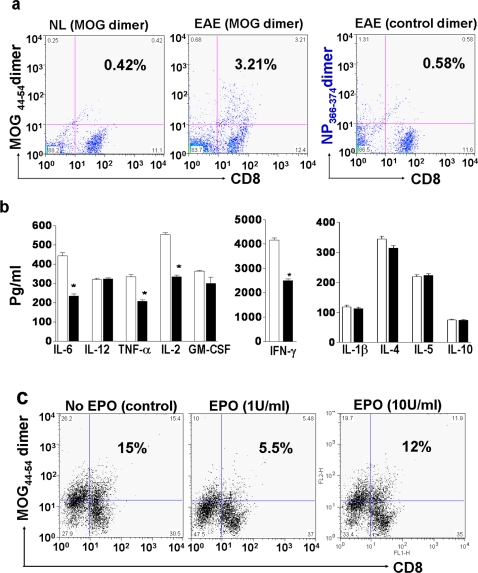
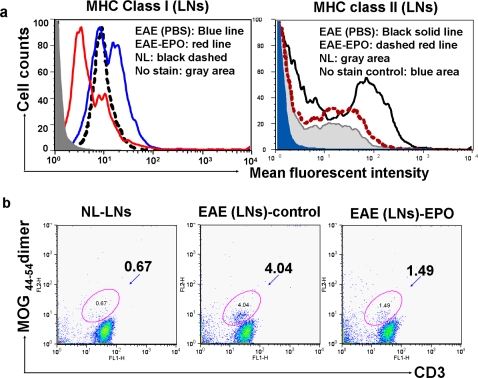
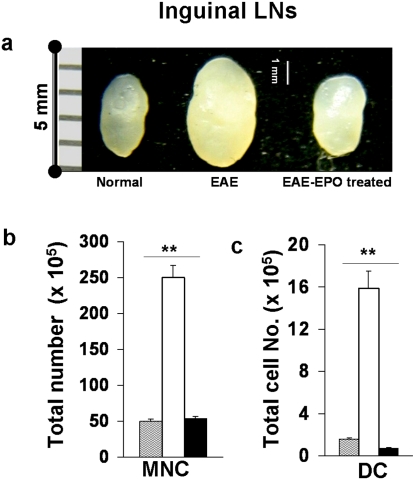
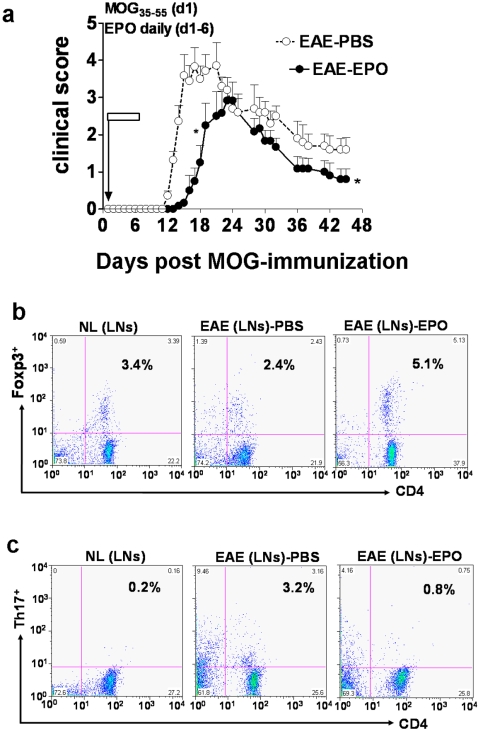
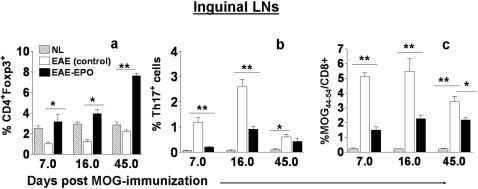
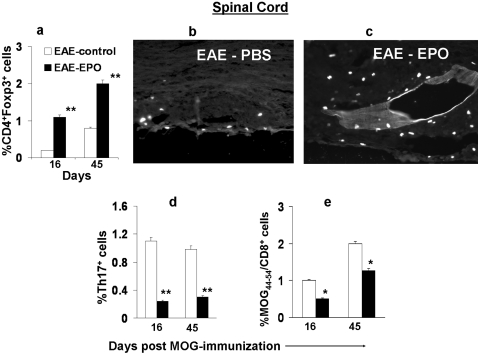
BACKGROUND: Beneficial effects of short-term erythropoietin (EPO) therapy have been demonstrated in several animal models of acute neurologic injury, including experimental autoimmune encephalomyelitis (EAE)--the animal model of multiple sclerosis. We have found that EPO treatment substantially reduces the acute clinical paralysis seen in EAE mice and this improvement is accompanied by a large reduction in the mononuclear cell infiltration and downregulation of glial MHC class II expression within the inflamed CNS. Other reports have recently indicated that peripherally generated anti-inflammatory CD4(+)Foxp3(+) regulatory T cells (Tregs) and the IL17-producing CD4+ T helper cell (Th17) subpopulations play key antagonistic roles in EAE pathogenesis. However, no information regarding the effects of EPO therapy on the behavior of the general mononuclear-lymphocyte population, Tregs or Th17 cells in EAE has emerged. METHODS AND FINDINGS: We first determined in vivo that EPO therapy markedly suppressed MOG specific T cell proliferation and sharply reduced the number of reactive dendritic cells (CD11c positive) in EAE lymph nodes during both inductive and later symptomatic phases of MOG(35-55) induced EAE. We then determined the effect in vivo of EPO on numbers of peripheral Treg cells and Th17 cells. We found that EPO treatment modulated immune balance in both the periphery and the inflamed spinal cord by promoting a large expansion in Treg cells, inhibiting Th17 polarization and abrogating proliferation of the antigen presenting dendritic cell population. Finally we utilized tissue culture assays to show that exposure to EPO in vitro similarly downregulated MOG-specific T cell proliferation and also greatly suppressed T cell production of pro-inflammatory cytokines. CONCLUSIONS: Taken together, our findings reveal an important new locus whereby EPO induces substantial long-term tissue protection in the host through signaling to several critical subsets of immune cells that reside in the peripheral lymphatic system.
Overview
The claims and statistics of this paper haven’t been checked yet.
Free: it reads the open-access text and checks the first 5 claims that cite a source we can check. Create a free account to check every claim.
Integrity signals
Registry
Cites
Statistics
Figures
Verification
Claims the paper makes
The claims and statistics of this paper haven’t been checked yet.
Free: it reads the open-access text and checks the first 5 claims that cite a source we can check. Create a free account to check every claim.
Claims other papers make about this one
Each is checked against this paper’s own text: does it say what the citing paper says it does?
The source backs part of the claim, not all of it — or backs it for a different population, condition or comparison.
In the citing paper
“This cytokine rise coincided with the decline in serum erythropoietin and, in the setting of hemoglobin levels and renal function similar to those of the other patients, may have indicated that erythropoietin was immunomodulatory in this setting [37, 38].”
From Immune reconstitution and clinical recovery following anti-CD28 antibody (TGN1412)-induced cytokine storm (2021) · cites this paper as [38]
Experimental — accuracy not yet measured
Self-check
Percentages, sums and reported differences re-computed from the paper’s own numbers.
The self-check needs the paper’s full text.
Citations
Cites
Foxp3 programs the development and function of CD4+CD25+ regulatory T cells
Fontenot, J. D., Gavin, M. A., & Rudensky, A. Y. (2003) · Nature Immunology · doi:10.1038/ni904 · Cited by 7,745 · cited 1×
“maintenance of peripheral tolerance and in controlling the destructive self-reactive T cells found in autoimmune animal models of arthritis, multiple sclerosis, diabetes, and inflammatory bowel disease [10,11,12].”
BackgroundSakaguchi, S. (2005) · Nature Immunology · doi:10.1038/ni1178 · Cited by 2,669 · cited 1×
“Antiinflammatory regulatory T cells have been found to be an important CD4 cell subpopulation for controlling the development of autoimmune disease [12,34,35,36,37,38].”
BackgroundLoss of Functional Suppression by CD4+CD25+ Regulatory T Cells in Patients with Multiple Sclerosis
Viglietta, V., Baecher-Allan, C., Weiner, H. L., & Hafler, D. A. (2004) · The Journal of Experimental Medicine · doi:10.1084/jem.20031579 · Cited by 1,856 · cited 1×
“Antiinflammatory regulatory T cells have been found to be an important CD4 cell subpopulation for controlling the development of autoimmune disease [12,34,35,36,37,38].”
BackgroundRegulatory T cells prevent catastrophic autoimmunity throughout the lifespan of mice
Kim, J. M., Rasmussen, J. P., & Rudensky, A. Y. (2007) · Nature Immunology · doi:10.1038/ni1428 · Cited by 1,820 · cited 1×
“and inflammatory bowel disease [26,27,28,29].”
IL-17 plays an important role in the development of experimental autoimmune encephalomyelitis
Komiyama, Y., Nakae, S., Matsuki, T., Nambu, A., Ishigame, H., Kakuta, S., Sudo, K., & Iwakura, Y. (2006) · The Journal of Immunology · doi:10.4049/jimmunol.177.1.566 · Cited by 1,536
Erythropoietin crosses the blood–brain barrier to protect against experimental brain injury
Brines, M. L., Ghezzi, P., Keenan, S., Agnello, D., de Lanerolle, N. C., Cerami, C., Itri, L. M., & Cerami, A. (2000) · Proceedings of the National Academy of Sciences · doi:10.1073/pnas.97.19.10526 · Cited by 1,402 · cited 1×
“Beneficial therapeutic effects of exogenously administered whole molecule EPO have been described in several animal models of neurologic injury, including occlusive cerebral vascular disease, acute brain trauma, epilepsy, as well as in both autoimmune arthritis and EAE [14,45,46].”
BackgroundSutton, C., Brereton, C., Keogh, B., Mills, K. H. G., & Lavelle, E. C. (2006) · The Journal of Experimental Medicine · doi:10.1084/jem.20060285 · Cited by 1,010 · cited 1×
“inflammation [5,6,7,8,9].”
Myelin-specific regulatory T cells accumulate in the CNS but fail to control autoimmune inflammation
Korn, T., Reddy, J., Gao, W., Bettelli, E., Awasthi, A., Petersen, T. R., Bäckström, B. T., Sobel, R. A., Wucherpfennig, K. W., Strom, T. B., et al. (2007) · Nature Medicine · doi:10.1038/nm1564 · Cited by 811 · cited 2×
“Mononuclear cells from the spinal cord were isolated following a published protocol by Korn T et al [54].”
MethodDerivatives of Erythropoietin That Are Tissue Protective But Not Erythropoietic
Leist, M., Ghezzi, P., Grasso, G., Bianchi, R., Villa, P., Fratelli, M., Savino, C., Bianchi, M., Nielsen, J., Gerwien, J., et al. (2004) · Science · doi:10.1126/science.1098313 · Cited by 803 · cited 1×
“Other EPO molecular preparations, such as an asialo-form of EPO, carbamylated EPO (CEPO), or certain EPO mutants, have been reported to have protective effects in animals following experimental traumatic spinal cord injury or acute stroke without provoking an increase in red cell mass [47,48,49].”
BackgroundKohm, A. P., Carpentier, P. A., Anger, H. A., & Miller, S. D. (2002) · The Journal of Immunology · doi:10.4049/jimmunol.169.9.4712 · Cited by 782
Research works printed but not linked: 1
- Yuan RR Li W Maeda Y Cook S Dowling P Novel small erythropoietin-derived peptides that retain CNS neuroprotective effects while lacking hematopoietic activity. Ann Neurol 58(5) A20 2005:
Cited by
Advances in islet encapsulation technologies
Desai, T., & Shea, L. D. (2017) · Nature Reviews Drug Discovery · doi:10.1038/nrd.2016.232 · Cited by 427
Brines, M., & Cerami, A. (2008) · Journal of Internal Medicine · doi:10.1111/j.1365-2796.2008.02024.x · Cited by 333
Animal models of multiple sclerosis—Potentials and limitations
Mix, E., Meyer-Rienecker, H., Hartung, H.-P., & Zettl, U. K. (2010) · Progress in Neurobiology · doi:10.1016/j.pneurobio.2010.06.005 · Cited by 210
The pleiotropic effects of erythropoietin in infection and inflammation
Nairz, M., Sonnweber, T., Schroll, A., Theurl, I., & Weiss, G. (2012) · Microbes and Infection · doi:10.1016/j.micinf.2011.10.005 · Cited by 161
“Recent studies have characterized EPO as a potent antiinflammatory cytokine in chronic inflammatory disorders and infectious diseases [25,30,36,41].”
BackgroundSargin, D., Friedrichs, H., El-Kordi, A., & Ehrenreich, H. (2010) · Best Practice & Research Clinical Anaesthesiology · doi:10.1016/j.bpa.2010.10.005 · Cited by 152
Erlandsson, A., Lin, C.-H. A., Yu, F., & Morshead, C. M. (2010) · Experimental Neurology · doi:10.1016/j.expneurol.2010.05.018 · Cited by 128
“An interesting possibility is that growth factors may be modulating the immune responses or conversely, the immunosuppression is elevating levels of endogenous factors at the ischemic lesion (Yuan et al., 2008).”
Neuroplasticity and the next wave of antidepressant strategies
Hayley, S., & Litteljohn, D. (2013) · Frontiers in Cellular Neuroscience · doi:10.3389/fncel.2013.00218 · Cited by 92
Erythropoietin, a Novel Versatile Player Regulating Energy Metabolism beyond the Erythroid System
Wang, L., Di, L., & Noguchi, C. T. (2014) · International Journal of Biological Sciences · doi:10.7150/ijbs.9518 · Cited by 96
“The administration of EPO also inhibits the inflammatory response and delays the onset of an autoimmune disease of the CNS and multiple sclerosis [214-217].”
BackgroundMix, E., Meyer-Rienecker, H., & Zettl, U. K. (2008) · Journal of Neurology · doi:10.1007/s00415-008-6003-0 · Cited by 105
Coping with hypoxemia: Could erythropoietin (EPO) be an adjuvant treatment of COVID-19?
Soliz, J., Gasser, E. M. S., Arias‐Reyes, C., Aliaga‐Raduán, F., Poma-Machicao, L., Zubieta-Calleja, G. R., Furuya, W. I., Trevizan‐Baú, P., Dhingra, R. R., & Dutschmann, M. (2020) · Respiratory Physiology & Neurobiology · doi:10.1016/j.resp.2020.103476 · Cited by 96
“Anti-inflammatory effects of EPO were evident in animal models of chronic inflammation and infectious diseases (Cuzzocrea et al., 2005; Nairz et al., 2011; Yuan et al., 2008).”
The role of regulatory T cells in neurodegenerative diseases
HeFeng, F. Q., & Balling, R. (2013) · WIREs Systems Biology and Medicine · doi:10.1002/wsbm.1187 · Cited by 79
Erythropoietin, a multifaceted protein with innate and adaptive immune modulatory activity
Cantarelli, C., Angeletti, A., & Cravedi, P. (2019) · American Journal of Transplantation · doi:10.1111/ajt.15369 · Cited by 79
Immunosuppressive Effects of Erythropoietin on Human Alloreactive T Cells
Cravedi, P., Manrique, J., Hanlon, K. E., Reid‐Adam, J., Brody, J., Prathuangsuk, P., Mehrotra, A., & Heeger, P. S. (2014) · Journal of the American Society of Nephrology · doi:10.1681/asn.2013090945 · Cited by 70
Th17 cells: The emerging reciprocal partner of regulatory T cells in the liver
ZHAO, L., QIU, D. K., & MA, X. (2010) · Journal of Digestive Diseases · doi:10.1111/j.1751-2980.2010.00428.x · Cited by 66
Basile, L. A., Ellefson, D., Gluzman-Poltorak, Z., Junes-Gill, K., Mar, V., Mendonca, S., Miller, J. D., Tom, J., Trinh, A., & Gallaher, T. K. (2012) · PLoS ONE · doi:10.1371/journal.pone.0030434 · Cited by 64
“shown to suppress the inflammatory response related to IFN-c in an animal model of multiple sclerosis [29].”
BackgroundInfluentialErythropoietin in Brain Development and Beyond
Alnaeeli, M., Wang, L., Piknova, B., Rogers, H. M., Li, X., & Noguchi, C. T. (2012) · Anatomy Research International · doi:10.1155/2012/953264 · Cited by 69
“Although the exact mechanisms underlying the anti-inflammatory effects of EPO remain unknown, EPO might act by reducing leukocyte transmigration through endothelial cells, since it enhances the resistance of endothelial cells toward ischemia [104] and could be mediated by activating immune suppressive lymphocyte respo…”
BackgroundPurroy, C., Fairchild, R. L., Tanaka, T., Baldwin, W. M., Manrique, J., Madsen, J. C., Colvin, R. B., Alessandrini, A., Blazar, B. R., Fribourg, M., et al. (2017) · Journal of the American Society of Nephrology · doi:10.1681/asn.2016101100 · Cited by 62
Erythropoietin and Nrf2: key factors in the neuroprotection provided by apo-lactoferrin
Zakharova, E. T., Av, S., Павличенко, Н. Н., Kostevich, V. A., Abdurasulova, I. N., Владимирович, Ч. А., Voynova, I. V., Elizarova, A. Y., Kolmakov, N. N., Bass, M. G., et al. (2018) · BioMetals · doi:10.1007/s10534-018-0111-9 · Cited by 62
Zhou, Z., Li, F., Zheng, Z., Li, Y., Chen, T., Gao, W., Chen, J., & Zhang, J. (2017) · Brain and Behavior · doi:10.1002/brb3.827 · Cited by 62
“…can alleviate motor and cognitive deficit, axonal pathology, and neuroinflammation in the models of cerebral ischemia (Villa et al., 2003), experimental autoimmune encephalomyelitis (EAE) (Yuan et al., 2008), and diffuse axonal injury (DAI) (Hellewell, Yan, Alwis, Bye, & Morganti- Kossmann, 2013).”
BackgroundResultInfluentialNon-erythroid activities of erythropoietin: Functional effects on murine dendritic cells
Lifshitz, L., Prutchi‐Sagiv, S., Avneon, M., Gassmann, M., Mittelman, M., & Neumann, D. (2008) · Molecular Immunology · doi:10.1016/j.molimm.2008.10.004 · Cited by 59
“In that respect, it should be noted that EPO treatment in a murine model of multiple sclerosis reduced the number of reactive DCs in the lymph nodes (Yuan et al., 2008).”
BackgroundAlnaeeli, M., Raaka, B. M., Gavrilova, O., Teng, R., Chanturiya, T., & Noguchi, C. T. (2014) · Diabetes · doi:10.2337/db13-0883 · Cited by 58
“Although, proposed to occur via antiapoptotic rather than “direct” anti-inflammatory effects on cells of the immune system (32), it can also occur directly via inhibiting Mv and/or activating immune suppressive lymphocytes (33,34).”
Erythropoietin Pathway: A Potential Target for the Treatment of Depression
Ma, C., Cheng, F., Wang, X., Zhai, C., Yue, W., Lian, Y., & Wang, Q. (2016) · International Journal of Molecular Sciences · doi:10.3390/ijms17050677 · Cited by 57
“EPO is considered to have potential anti-inflammatory capacities, especially as evidenced by its successful application in a number of animal models of chronic inflammation [183,184].”
BackgroundChen, S., Wang, A. Y. L., Lo, W., Wu, C.-C., Hsieh, C., Huang, C., Lan, Y.-H., Wang, C., Chang, D., & Sytwu, H. (2010) · Clinical & Experimental Immunology · doi:10.1111/j.1365-2249.2010.04238.x · Cited by 51
Controlled release strategies for modulating immune responses to promote tissue regeneration
Dumont, C. M., Park, J., & Shea, L. D. (2015) · Journal of Controlled Release · doi:10.1016/j.jconrel.2015.08.014 · Cited by 48
“CTLA-4 T ↓IFN-γ, T activation [130, 131] Dkk3 T ↑ MHC-1 mismatch protection; ↓ IFN-γ [132] EPO DC, T ↓DC, Th17, IL-6, TNF-α, IL-2; ↑Tregs [133]”
Hand, C. C., & Brines, M. L. (2011) · Journal of Investigative Medicine · doi:10.2310/jim.0b013e3181ed30bf · Cited by 47
Chen, S., Wang, A. Y. L., Fan, H., Lo, W., Wang, C., & Sytwu, H. (2011) · Clinical and Developmental Immunology · doi:10.1155/2012/970789 · Cited by 47
“These results show that APCs, including DCs, are essential for the GA-mediated shift in Th-cell phenotypes and indicate that DCs are an important target of the immunomodulatory effects of GA. Patients with MS show a threefold to fourfold increase in the expression of the α4 subunit of the integrin VLA4, which is norma…”
BackgroundInfluentialTissue Engineering Approaches to Modulate the Inflammatory Milieu following Spinal Cord Injury
Dumont, C. M., Margul, D. J., & Shea, L. D. (2016) · Cells Tissues Organs · doi:10.1159/000446646 · Cited by 49
“Hepatocyte growth factor (HGF), erythropoietin, and IL-33 have been used independently to limit or modulate the aberrant T cell response [Yuan et al., 2008; Benkhoucha et al., 2010; Pomeshchik et al., 2015].”
BackgroundErythropoietin Attenuates Neurological and Histological Consequences of Toxic Demyelination in Mice
Hagemeyer, N., Boretius, S., Ott, C., von Streitberg, A., Welpinghus, H., Sperling, S., Frahm, J., Simons, M., Ghezzi, P., & Ehrenreich, H. (2012) · Molecular Medicine · doi:10.2119/molmed.2011.00457 · Cited by 44
Mausberg, A. K., zu Hörste, G. M., Dehmel, T., Stettner, M., Lehmann, H. C., Sheikh, K. A., & Kieseier, B. C. (2011) · PLoS ONE · doi:10.1371/journal.pone.0026280 · Cited by 45
“The neuroprotective capacity of EPO has been demonstrated in various animal models affecting the nervous system, including stroke (hypoxia/ischemia), spinal cord injury, experimental autoimmune encephalomyelitis (EAE), but also models affecting the peripheral nerve, such as peripheral nerve crush injury [4,13–16].”
BackgroundThorne, M., Moore, C. S., & Robertson, G. S. (2009) · Journal of Neuroimmunology · doi:10.1016/j.jneuroim.2009.04.003 · Cited by 39
Bartels, C., Späte, K., Krampe, H., & Ehrenreich, H. (2008) · Therapeutic Advances in Neurological Disorders · doi:10.1177/1756285608098422 · Cited by 42
“Encouraged by the manifold neuroprotective effects of EPO in experimental models of MS [Chopp et al. 2008, Yuan et al. 2008; Savino et al. 2006; Diem et al. 2005; Zhang et al. 2005; Li et al. 2004; Sättler et al. 2004; Agnello et al. 2002; Brines et al. 2000] as well as by the success of our human…”
BackgroundKo, C.-Y., Wu, L., Nair, A., Tsai, Y., Lin, V. K., & Tang, L. (2011) · Biomaterials · doi:10.1016/j.biomaterials.2011.10.002 · Cited by 42
“It has also been demonstrated in murine model that EPO mediates an augmented B-cell response [75], and may thus play a role in immunomodulation [76].”
Erythropoietin inhibits SGK1-dependent Th17 cell induction and Th17 cell–dependent kidney disease
Donadei, C., Angeletti, A., Cantarelli, C., D’Agati, V. D., Manna, G. L., Fiaccadori, E., Horwitz, J. K., Xiong, H., Guglielmo, C., Hartzell, S., et al. (2019) · JCI Insight · doi:10.1172/jci.insight.127428 · Cited by 41
Huntemann, N., Rolfes, L., Pawlitzki, M., Ruck, T., Pfeuffer, S., Wiendl, H., & Meuth, S. G. (2021) · Drugs · doi:10.1007/s40265-021-01526-w · Cited by 36
Caris, A. V., Lira, F. S., de Mello, M. T., Oyama, L. M., & dos Santos, R. V. T. (2014) · Nutrition · doi:10.1016/j.nut.2014.03.019 · Cited by 41
“It has been demonstrated that treatment with EPO reduced inflammation in an encephalomyelitis model [43], and it also has been suggested that EPO could enhance the activity of dendritic cell in cancer patients [44].”
Silva, I., Alípio, C., Pinto, R. M. A., & Mateus, V. (2021) · Biomedicine & Pharmacotherapy · doi:10.1016/j.biopha.2021.111558 · Cited by 41
Erythropoietin enhances immunostimulatory properties of immature dendritic cells
Rocchetta, F., Solini, S., Mister, M., Mele, C., Cassis, P., Noris, M., Remuzzi, G., & Aiello, S. (2011) · Clinical & Experimental Immunology · doi:10.1111/j.1365-2249.2011.04417.x · Cited by 33
Emerson, M. R., Gallagher, R. J., Marquis, J. G., & LeVine, S. M. (2009) · PubMed Central · Cited by 42
Erythropoietin Protects against Murine Cerebral Malaria through Actions on Host Cellular Immunity
Xu, W., Li, Y., Sun, X., Zhu, X., Feng, Y., Liu, J., Jiang, Y., Shang, H., Cui, L., & Cao, Y. (2013) · Infection and Immunity · doi:10.1128/iai.00929-13 · Cited by 33
Watanabe, M., Lundgren, T., Saito, Y., Cerami, A., Brines, M. L., Östenson, C., & Kumagai‐Braesch, M. (2015) · Transplantation · doi:10.1097/tp.0000000000001026 · Cited by 32
Kidney pericyte hypoxia-inducible factor regulates erythropoiesis but not kidney fibrosis
Pan, S., Tsai, P., Chou, Y., Chang, Y., Chang, F., Chiu, Y., Chiang, W., Hsu, T., Chen, Y., Chu, T., et al. (2021) · Kidney International · doi:10.1016/j.kint.2021.01.017 · Cited by 32
Yuan, R., Wang, B., Lü, W., Maeda, Y., & Dowling, P. C. (2015) · Neurotherapeutics · doi:10.1007/s13311-015-0379-1 · Cited by 29
Self-citationCervellini, I., Annenkov, A. E., Brenton, T., Chernajovsky, Y., Ghezzi, P., & Mengozzi, M. (2013) · Molecular Medicine · doi:10.2119/molmed.2013.00013 · Cited by 30
“In the context of MS, EPO has antiinflammatory (7,8) and immunoregulatory properties (9,10).”
BackgroundNeuroprotection and CD131/GDNF/AKT Pathway of Carbamylated Erythropoietin in Hypoxic Neurons
Ding, J., Wang, J., Li, Q., Yu, J., Ma, C., Wang, X., Lü, C., & Xiao, B. (2016) · Molecular Neurobiology · doi:10.1007/s12035-016-0022-0 · Cited by 30
Viruez-Soto, A., López-Dávalos, M. M., Rada‐Barrera, G., Merino‐Luna, A., Molano-Franco, D., Tinoco-Solórzano, A., Zubieta-DeUrioste, N., Zubieta-Calleja, G. R., Arias‐Reyes, C., & Soliz, J. (2021) · Respiratory Physiology & Neurobiology · doi:10.1016/j.resp.2021.103709 · Cited by 28
“EPO-mediated anti-inflammatory effects have been demonstrated in chronic inflammatory diseases and infectious diseases, including stimulation with bacterial lipopolysaccharide (LPS) and Salmonella sp. infection (Cuzzocrea et al., 2005; Nairz et al., 2012; Yuan et al., 2008).”
Moransard, M., Bednar, M., Frei, K., Gassmann, M., & Ogunshola, O. O. (2017) · Journal of Neuroinflammation · doi:10.1186/s12974-017-0976-5 · Cited by 25
“Similarly, we did not detect any changes in regulatory T cells in our mice, in contrast to a report showing Epo can promote expansion of regulatory T cell populations [32].”
ResultChen, H., Luo, B., Yang, X., Xiong, J., Liu, Z., Jiang, M., Shi, R., Yan, C., Wu, Y., & Zhang, Z. (2014) · Journal of Neuroimmunology · doi:10.1016/j.jneuroim.2014.01.006 · Cited by 25
“…activation, reducing pro-inflammatory cytokine production and altering T helper cell differentiation (Agnello et al., 2002; Savino et al., 2006; Yuan et al., 2008; Chen et al., 2010; Zhang et al., 2012), which indicates that EPO could effectively repress inflammatory response and is an…”
BackgroundBorhani‐Haghighi, A., Ghodsi, M., Razeghinejad, R., Mardani, S., Mardani, M., Nikseresht, A. R., Safari, A., & Bagheri, M. H. (2012) · Neurosciences · doi:10.17712/1658-3183.1937 · Cited by 22
Sternberg, Z. (2015) · Autoimmunity Reviews · doi:10.1016/j.autrev.2015.04.012 · Cited by 22
Maggioni, D., Nicolini, G., Chiorazzi, A., Meregalli, C., Cavaletti, G., & Tredici, G. (2010) · Journal of Neuroscience Research · doi:10.1002/jnr.22465 · Cited by 22
“EPO’s beneficial effects have been demonstrated in several models of nervous system injury, including CIPN (Siren et al., 2001; Campana and Myers, 2003; Weishaupt et al., 2004; Yamasaki et al., 2005; Bianchi et al., 2007; Yuan et al., 2008).”
BackgroundInfluentialErythropoietin treatment in murine multiple myeloma: immune gain and bone loss
Deshet‐Unger, N., Hiram‐Bab, S., Ohana, Y. H., Mittelman, M., Gabet, Y., & Neumann, D. (2016) · Scientific Reports · doi:10.1038/srep30998 · Cited by 20
Cibinetide dampens innate immune cell functions thus ameliorating the course of experimental colitis
Nairz, M., Haschka, D., Dichtl, S., Sonnweber, T., Schroll, A., Aßhoff, M., Mindur, J. E., Moser, P. L., Wolf, D. G. F., Świrski, F. K., et al. (2017) · Scientific Reports · doi:10.1038/s41598-017-13046-3 · Cited by 22
Cervellini, I., Ghezzi, P., & Mengozzi, M. (2013) · Methods in molecular biology · doi:10.1007/978-1-62703-308-4_10 · Cited by 20
Linking erythropoietin to Treg-dependent allograft survival through myeloid cells
Horwitz, J. K., Bin, S., Fairchild, R. L., Keslar, K. S., Yi, Z., Zhang, W., Pavlov, V. I., Li, Y., Madsen, J. C., Cravedi, P., et al. (2022) · JCI Insight · doi:10.1172/jci.insight.158856 · Cited by 21
“CD4+ Tregs are vital negative regulators of alloresponses induced to transplanted organs.”
BackgroundInfluentialZhao, P., Chen, X., Han, X., Wang, Y., Shi, Y., Ji, J., Lei, Y., Liu, Y., Kong, Q., Mu, L., et al. (2021) · International Immunopharmacology · doi:10.1016/j.intimp.2021.107811 · Cited by 17
Beneficial Effect of Erythropoietin Short Peptide on Acute Traumatic Brain Injury
Wang, B., Kang, M., Marchese, M. E., Rodríguez, E., Lü, W., Li, X., Maeda, Y., & Dowling, P. C. (2015) · Neurotherapeutics · doi:10.1007/s13311-015-0418-y · Cited by 17
“environment into an immune system of relatively normal activity, limiting peripheral and CNS infiltration by CD4+ and CD8+ T cells, reducing number of mononuclear cells and dendritic cells while suppressing Th17 cells, IFN- ɣ and TNF mRNA [29-32].”
BackgroundSelf-citationPanoskaltsis, N., McCarthy, N. E., Stagg, A. J., Mummery, C. J., Husni, M., Arebi, N., Greenstein, D., Price, C. L., Al-Hassi, H. O., Koutinas, M., et al. (2021) · Cancer Immunology, Immunotherapy · doi:10.1007/s00262-020-02725-2 · Cited by 16
Alnaeeli, M., & Noguchi, C. T. (2015) · Adipocyte · doi:10.4161/21623945.2014.978654 · Cited by 16
“TNF-a in experimental models of multiple sclerosis and ischemia-induced injury.(11,12) In the context of obesity, we and others showed that EPO improved glucose intolerance and decreased body weight and fat mass accumulation.”
MethodAn Overview of Peptide-Based Molecules as Potential Drug Candidates for Multiple Sclerosis
Gatto, A. D., Saviano, M., & Zaccaro, L. (2021) · Molecules · doi:10.3390/molecules26175227 · Cited by 16
“Beneficial immunomodul tory and anti-inflammatory effects of Erythropoietin (Epo) have been demonstrated in the MOG-Induced Monophasic EAE model [81].”
BackgroundInfluentialAnti-Inflammatory Effect of Erythropoietin Therapy on Experimental Autoimmune Encephalomyelitis
Zhang, X., Li, Q., & Xiao, B. (2011) · International Journal of Neuroscience · doi:10.3109/00207454.2011.648761 · Cited by 16
Choi, Y., Dunn-Meynell, A. A., Marchese, M. E., Blumberg, B. M., Gaindh, D., Dowling, P. C., & Lü, W. (2021) · Alzheimer s Research & Therapy · doi:10.1186/s13195-020-00766-4 · Cited by 14
Self-citationErythropoietin Treatment Ameliorates Lupus Nephritis of MRL/lpr Mice
Zhang, Z., Liu, D., Zhang, X., & Wang, X. (2018) · Inflammation · doi:10.1007/s10753-018-0832-5 · Cited by 15
Тодосенко, Н. М., Шмаров, В. А., Malashchenko, V. V., Menyailo, M. E., Melashchenko, O. B., Газатова, Н. Д., Гончаров, А. Г., & Seledtsov, V. I. (2016) · International Immunopharmacology · doi:10.1016/j.intimp.2016.05.006 · Cited by 14
Mirzaie, J., Raoofi, A., Jamalpoor, Z., Nezhadi, A., & Golmohammadi, R. (2020) · Journal of Chemical Neuroanatomy · doi:10.1016/j.jchemneu.2020.101750 · Cited by 15
Splenomegaly induced by anemia impairs T cell movement in the spleen partially via EPO
Li, Y., Yue, H., Yang, S., Yuan, D., Li, L., Zhao, J., & Zhao, L. (2019) · Molecular Immunology · doi:10.1016/j.molimm.2019.06.021 · Cited by 14
Shin, T., Ahn, M., Moon, C., & Kim, S. (2012) · Anatomy & Cell Biology · doi:10.5115/acb.2012.45.4.215 · Cited by 12
“that EPO treatment in mice with EAE [37] and Lewis rats”
BackgroundZhou, J., Bai, Y., Jiang, Y., Tarun, P., Feng, Y., Huang, R., & Fu, P. (2020) · Immunopharmacology and Immunotoxicology · doi:10.1080/08923973.2019.1706555 · Cited by 12
“Erythropoietin (EPO) is produced by fibroblast-like cells in the renal interstitium and in response to anemia and hypoxia [29,30].”
BackgroundProlonged Beneficial Effect of Brief Erythropoietin Peptide JM4 Therapy on Chronic Relapsing EAE
Gaindh, D., Choi, Y., Marchese, M. E., Dowling, P. C., Cook, S. D., Blumberg, B. M., Park, J. H., & Lü, W. (2020) · Neurotherapeutics · doi:10.1007/s13311-020-00923-5 · Cited by 11
“Here, we present in vivo BLI and histopathological lines of evidence to support that JM4’s CNS intracellular mechanism operates by promoting the neuroprotective A2 astrocyte over the cytotoxic C3-expressing A1 astrocyte population and by rapidly repairing the leaky neurovascular unit.”
BackgroundInfluentialSelf-citationRegulatory T cells exhibit neuroprotective effect in a mouse model of traumatic brain injury
Yu, Y., Cao, F., Ran, Q., & Sun, X. (2016) · Molecular Medicine Reports · doi:10.3892/mmr.2016.5954 · Cited by 10
RetractedBin, S., Cantarelli, C., Horwitz, J. K., Gentile, M., Podestà, M. A., Manna, G. L., Heeger, P. S., & Cravedi, P. (2023) · Frontiers in Immunology · doi:10.3389/fimmu.2023.1195662 · Cited by 10
Ahn, M., Moon, C., Jeong, C., Matsumoto, Y., Koh, C., & Shin, T. (2010) · Brain Research · doi:10.1016/j.brainres.2010.03.072 · Cited by 8
Ding, J., Li, Q., Yu, J., Wang, X., Lü, C., Ma, C., & Xiao, B. (2012) · Journal of Neuroscience Research · doi:10.1002/jnr.23124 · Cited by 8
Regulatory T cells exhibit neuroprotective effect in a mouse model of traumatic brain injury
Yu, Y., Cao, F., Ran, Q., & Sun, X. (2017) · Molecular Medicine Reports · doi:10.3892/mmr.2017.6299 · Cited by 8
“They have also shown to regulate immunity and inflammation in several diseases, including brain ischemia, viral myocarditis, inflammatory bowel disease, and myasthenia gravis (16,17).”
RetractedWhen Erythropoietin Meddles in Immune Affairs
Martinez, F., & Pallet, N. (2014) · Journal of the American Society of Nephrology · doi:10.1681/asn.2014030240 · Cited by 6
Deshet‐Unger, N., Oster, H. S., Prutchi‐Sagiv, S., Maaravi, N., Golishevski, N., Neumann, D., & Mittelman, M. (2016) · Leukemia Research · doi:10.1016/j.leukres.2016.11.002 · Cited by 6
Improvement of Islet Allograft Function Using Cibinetide, an Innate Repair Receptor Ligand
Yao, M. H., Watanabe, M., Sun, S., Tokodai, K., Cerami, A., Brines, M. L., Östenson, C., Ericzon, B., Lundgren, T., & Kumagai‐Braesch, M. (2020) · Transplantation · doi:10.1097/tp.0000000000003284 · Cited by 6
“EPO downregulates proinflammatory immune effector pathways in response to lipopolysaccharide (LPS) stimulation(22) and chemical tissue damage.(23,24) However, clinical use of EPO can cause side effects, such as increased hematocrit levels, and thrombocyte reactivity and aggregation, with the risk of thromboembolism.”
BackgroundCha, J.-R., Kim, S., & Heo, T. (2011) · Biomedicine & Pharmacotherapy · doi:10.1016/j.biopha.2011.04.019 · Cited by 7
Erythropoietin in Lupus: Unanticipated Immune Modulating Effects of a Kidney Hormone
Eswarappa, M. S., Cantarelli, C., & Cravedi, P. (2021) · Frontiers in Immunology · doi:10.3389/fimmu.2021.639370 · Cited by 5
“EPO treatment increases Treg also in vivo in experimental models of autoimmune encephalitis (85), SLE (76, 78) and organ transplantation (79).”
BackgroundCD71 + erythroid cell expansion in late‐onset systemic lupus erythematosus
Hao, J., Cui, Y., Du, J., Cui, J., Qu, H., Qi, F., Wang, H., Zhang, N., Li, J., & Wei, W. (2025) · Journal of Internal Medicine · doi:10.1111/joim.70027 · Cited by 2
Mehrotra, A. (2012) · Journal of the American Society of Nephrology · doi:10.1681/asn.2011121220 · Cited by 2
Liu, S., Ren, J., & Li, J. (2013) · Nutrition in Clinical Practice · doi:10.1177/0884533613487220 · Cited by 2
Effects of recombinant human erythropoietin in the cuprizone mouse model of de- and remyelination
Hagemeyer, N. (2012) · eDiss (Georg-August-Universität Göttingen) · doi:10.53846/goediss-1472 · Cited by 2
Erythropoietin Ameliorates Experimental Autoimmune Myasthenia Gravis
Reuveni, D., Lapter, S., Aricha, R., Mittleman, M., Fuchs, S., Neumann, D., & Souroujon, M. C. (2015) · Cited by 1
Fan, S.-J. C. H.-C., & Sytwu, H. (2012) · InTech eBooks · doi:10.5772/31085
“Furthermore, Yuan et delineated a novel potential of EPO on peripheral inflammatory modulation in a murine MOG-EAE model [Yuan et al., 2008].”
BackgroundNeuroprotective and Neurogenic Effects of Erythropoietin
Lehmann, H. C., & Höke, A. (2011) · Wiley eBooks · doi:10.1002/9783527633968.ch15
Erythropoietin and Its Role in Regenerative Medicine
Günter, C. I., & Machens, H. (2013) · Current therapies in regenerative medicine · doi:10.1142/9789814299541_0014
Directs effects of erythropoietin on functional properties of human monocytes/macrophages
Melashchenko, O. B., Meniailo, M. E., Malashchenko, V. V., Газатова, Н. Д., Гончаров, А. Г., & Seledtsov, V. I. (2018) · Nauchno-prakticheskii zhurnal «Patogenez» · doi:10.25557/2310-0435.2018.01.26-33
Stroke Treatment: Focus on Neuroprotection and EPO
BHScc, V. A. H., & Hebb, A. L. O. (2021) · Neuro Research
Koul, R., Lü, W., Torres, T., & Choi, Y. (2025) · Multiple Sclerosis and Related Disorders · doi:10.1016/j.msard.2025.106463 · Cited by 1
The Kidney–immune Axis: How Erythropoietin Regulates Tolerance and Rejection
Cantarelli, C., Bin, S., Angeletti, A., Manrique, J., & Cravedi, P. (2026) · Transplantation · doi:10.1097/tp.0000000000005683
Beyond traditional roles: vitamin D and erythropoietin as immune modulators in kidney diseases
Magagnoli, L., Bin, S., Cravedi, P., & Cozzolino, M. G. (2026) · Clinical Kidney Journal · doi:10.1093/ckj/sfag120
Highlands as a natural neuroprotection laboratory: hypoxia and neurodegenerative processes
Yusupov, F. A., & Abdykadyrov, M. (2026) · S S Korsakov Journal of Neurology and Psychiatry · doi:10.17116/jnevro202612609115
Metadata
- Authors
- Yuan, R., Maeda, Y., Li, W., Lu, W., Cook, S., & Dowling, P.
- Affiliations
- VA New Jersey Health Care System (US)
- Corresponding author
- Dowling, Peter
- ORCID
- Maeda, Yasuhiro
- Venue
- PLoS ONE
- Publisher
- Public Library of Science (PLoS)
- Published
- 2008-04-02
- Volume
- 3
- Issue
- 4
- Pages
- e1924
- ISSN
- 1932-6203 (ISSN-L)
- PMC
- PMC2271128
- OpenAlex
- W2044376274
- Cited by
- 94
- References
- 54
- Citations by year
- 2026: 3 · 2025: 2 · 2023: 1 · 2022: 1 · 2021: 10 · 2020: 6 · 2019: 3 · 2018: 3 · 2017: 5 · 2016: 8 · 2015: 6 · 2014: 7 · 2013: 7 · 2012: 10
- FWCI
- 5.20
- Type
- journal article
- Language
- en
- Open access
- gold
- doi.org
- Licence
- Locations
- PLoS ONE (publishedVersion, public-domain)
- PubMed Central (publishedVersion, public-domain)
- PubMed (publishedVersion)
- DOAJ (DOAJ: Directory of Open Access Journals) (submittedVersion, cc-by-sa)
- The HKU Scholars Hub (University of Hong Kong) (submittedVersion, cc-by-nc-nd)
- Funders
- National Multiple Sclerosis Society
- Topics
- Health Sciences › Medicine › Clinical Neurology › Multiple Sclerosis Research Studies
- Health Sciences › Medicine › Hematology › Erythropoietin and Anemia Treatment
- Life Sciences › Immunology and Microbiology › Immunology › T-cell and B-cell Immunology
- Keywords
- erythropoietin, experimental autoimmune encephalomyelitis, multiple sclerosis, regulatory T cells, Th17 cells, dendritic cells, inflammatory cytokines, neuroinflammation, anti-inflammatory therapy
- MeSH terms
- Animals, Autoimmune Diseases, Central Nervous System, Encephalomyelitis, Autoimmune, Experimental, Erythropoietin, Genes, MHC Class II, Inflammation, Leukocytes, Mononuclear, Lymph Nodes, Mice, Inbred C57BL, CD4-Positive T-Lymphocytes, Cytokines, Interleukin-17, Mice, Forkhead Transcription Factors
About these checks
Registry, retraction, Cites and statistics results are computed, not judged, with one exception: a printed reference that no index lists is read once by a model before it counts as a citation error. Claims are extracted by a model and kept only when their quote appears verbatim in the text; each cited source is then checked, with a model’s help, for whether it says what the claim relies on. Those verdicts can be wrong — read the claim’s quote and the cited source before relying on one.
Statistics and arithmetic are recomputed, not judged.
Confidence bands are shown only for fields calibrated on our annotated test set. None is calibrated yet, so no band is shown.
What counts as a claim ›How we measure confidence ›How we check this ›
Are you an author, or do you see a problem with this page? Request a review
Data sources
Bibliographic data: Semantic Scholar, OpenAlex, Crossref.
Contains information from the Semantic Scholar Academic Graph Datasets, made available under the ODC Attribution License (ODC-BY 1.0).
Semantic Scholar’s data is described in: Kinney, R., et al. (2023). The Semantic Scholar Open Data Platform. arXiv:2301.10140.
