

INK4/ARF Transcript Expression Is Associated with Chromosome 9p21 Variants Linked to Atherosclerosis
Open accessThe DOI matches its Crossref record; 44 of the 44 references it cites were found in a registry or an index.
Abstract
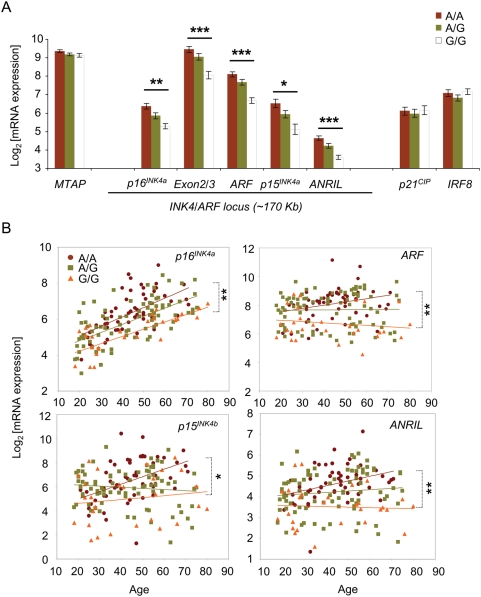
BACKGROUND: Genome-wide association studies (GWAS) have linked common single nucleotide polymorphisms (SNPs) on chromosome 9p21 near the INK4/ARF (CDKN2A/B) tumor suppressor locus with risk of atherosclerotic diseases and type 2 diabetes mellitus. To explore the mechanism of this association, we investigated whether expression of proximate transcripts (p16(INK4a), p15(INK4b), ARF, ANRIL and MTAP) correlate with genotype of representative 9p21 SNPs. METHODOLOGY/PRINCIPAL FINDINGS: We analyzed expression of 9p21 transcripts in purified peripheral blood T-cells (PBTL) from 170 healthy donors. Samples were genotyped for six selected disease-related SNPs spanning the INK4/ARF locus. Correlations among these variables were determined by univariate and multivariate analysis. Significantly reduced expression of all INK4/ARF transcripts (p15(INK4b), p16(INK4a), ARF and ANRIL) was found in PBTL of individuals harboring a common SNP (rs10757278) associated with increased risk of coronary artery disease, stroke and aortic aneurysm. Expression of MTAP was not influenced by rs10757278 genotype. No association of any these transcripts was noted with five other tested 9p21 SNPs. CONCLUSIONS/SIGNIFICANCE: Genotypes of rs10757278 linked to increased risk of atherosclerotic diseases are also associated with decreased expression in PBTL of the INK4/ARF locus, which encodes three related anti-proliferative transcripts of known importance in tumor suppression and aging.
Overview
The claims and statistics of this paper haven’t been checked yet.
Free: it reads the open-access text and checks the first 5 claims that cite a source we can check. Create a free account to check every claim.
Integrity signals
Registry
Cites
Statistics
Figures
Verification
Claims the paper makes
The claims and statistics of this paper haven’t been checked yet.
Free: it reads the open-access text and checks the first 5 claims that cite a source we can check. Create a free account to check every claim.
Claims other papers make about this one
Each is checked against this paper’s own text: does it say what the citing paper says it does?
The source backs part of the claim, not all of it — or backs it for a different population, condition or comparison.
In the citing paper
“Knock-out of p16 INK4a, p19 ARF, p21, and p53 had a pro-atherosclerotic effect in mice.203–205”
From Senescence-induced inflammation: an important player and key therapeutic target in atherosclerosis (2020) · cites this paper as [204]
Experimental — accuracy not yet measured
Self-check
Percentages, sums and reported differences re-computed from the paper’s own numbers.
The self-check needs the paper’s full text.
Citations
Cites
Analysis of Relative Gene Expression Data Using Real-Time Quantitative PCR and the 2−ΔΔCT Method
Livak, K. J., & Schmittgen, T. D. (2001) · Methods · doi:10.1006/meth.2001.1262 · Cited by 180,860
Genome-wide association study of 14,000 cases of seven common diseases and 3,000 shared controls
The Wellcome Trust Case Control Consortium, Management Committee, Burton, P. R., Clayton, D. G., Cardon, L. R., Craddock, N., Deloukas, P., Duncanson, A., Kwiatkowski, D. P., McCarthy, M. I., et al. (2007) · Nature · doi:10.1038/nature05911 · Cited by 9,442
A haplotype map of the human genome
The International HapMap Consortium (2005) · Nature · doi:10.1038/nature04226 · Cited by 5,858
Functional Demarcation of Active and Silent Chromatin Domains in Human HOX Loci by Noncoding RNAs
Rinn, J. L., Kertesz, M., Wang, J. K., Squazzo, S. L., Xu, X., Brugmann, S. A., Goodnough, L. H., Helms, J. A., Farnham, P. J., Segal, E., et al. (2007) · Cell · doi:10.1016/j.cell.2007.05.022 · Cited by 4,244 · cited 1×
“On the other hand, ANRIL could also influence the expression of other genes in trans- as has been recently reported for HOTAIR at Hox loci [39].”
BackgroundMutation of the mouse klotho gene leads to a syndrome resembling ageing
Kuro-o, M., Matsumura, Y., Aizawa, H., Kawaguchi, H., Suga, T., Utsugi, T., Ohyama, Y., Kurabayashi, M., Kaname, T., Kume, E., et al. (1997) · Nature · doi:10.1038/36285 · Cited by 3,837
Genome-wide association analysis identifies loci for type 2 diabetes and triglyceride levels
Saxena, R., Voight, B. F., Lyssenko, V., Burtt, N. P., de Bakker, P. I. W., Chen, H., Roix, J. J., Kathiresan, S., Hirschhorn, J. N., Daly, M. J., et al. (2007) · Science · doi:10.1126/science.1142358 · Cited by 2,843
A genome-wide association study of type 2 diabetes in Finns detects multiple susceptibility variants
Scott, L. J., Mohlke, K. L., Bonnycastle, L. L., Willer, C. J., Li, Y., Duren, W. L., Erdos, M. R., Stringham, H. M., Chines, P. S., Jackson, A. U., et al. (2007) · Science · doi:10.1126/science.1142382 · Cited by 2,753
Self-citationThe Wellcome Trust Case Control Consortium, U.K.
Mossman, K. (2008) · Scientific American · doi:10.1038/scientificamerican0108-42a · Cited by 2,684
Replication of Genome-Wide Association Signals in UK Samples Reveals Risk Loci for Type 2 Diabetes
Zeggini, E., Weedon, M. N., Lindgren, C. M., Frayling, T. M., Elliott, K. S., Lango, H., Timpson, N. J., Perry, J. R. B., Rayner, N. W., Freathy, R. M., et al. (2007) · Science · doi:10.1126/science.1142364 · Cited by 2,194 · cited 6×
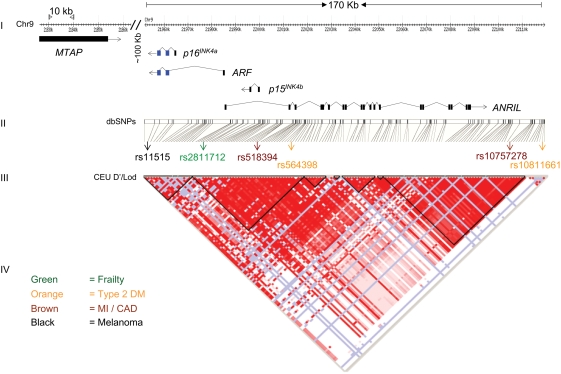
“We selected six SNPs for genotyping based on strength of association in previous studies: two associated with atherosclerosis (rs10757278 and rs518394) [1,2,3,4], two with T2DM (rs10811661 and rs564398) [8,9,10], one with frailty (rs2811712) [16], and one with melanoma (rs11515, in the 39 UTR of p16INK4a and ARF)[17]…”
BackgroundMethodInfluentialGenomewide Association Analysis of Coronary Artery Disease
Samani, N. J., Erdmann, J., Hall, A. S., Hengstenberg, C., Mangino, M., Mayer, B., Dixon, R. J., Meitinger, T., Braund, P., Wichmann, H.-E., et al. (2007) · New England Journal of Medicine · doi:10.1056/nejmoa072366 · Cited by 2,044 · cited 5×
“1), could mediate disease associations [3,4].”
BackgroundMethodInfluential
Research works printed but not linked: 1
- Helgadottir A Thorleifsson G Manolescu A Gretarsdottir S Blondal T 2007 A common variant on chromosome 9p21 affects the risk of myocardial infarction. Science 316 1491 1493 17478679 · DOI · Paper page
Cited by
Items 101–200 of 248
Chromosome 9p21 Variant Predicts Mortality After Coronary Artery Bypass Graft Surgery
Muehlschlegel, J. D., Liu, K.-Y., Perry, T. E., Fox, A. A., Collard, C. D., Shernan, S. K., & Body, S. C. (2010) · Circulation · doi:10.1161/circulationaha.109.924233 · Cited by 41
Impact papers on aging in 2009
Blagosklonny, M. V., Campisi, J., Sinclair, D. A., Bartke, A., Blasco, M. A., Bonner, W. M., Bohr, V. A., Brosh, R. M., Brunet, A., DePinho, R. A., et al. (2010) · Aging · doi:10.18632/aging.100132 · Cited by 47
“The same group also provided further understanding of the observed linkage of SNPs near the CDKN2a/b locus (which encodes the p16, p15 and ARF tumor suppressors) with human atherosclerotic disease [57].”
BackgroundSelf-citationSOX2 expression diminishes with ageing in several tissues in mice and humans
Carrasco‐García, E., Moreno‐Cugnon, L., García, I., Borrás, C., Revuelta, M., Izeta, A., López‐Lluch, G., de Pancorbo, M. M., Vergara, I., Viña, J., et al. (2018) · Mechanisms of Ageing and Development · doi:10.1016/j.mad.2018.03.008 · Cited by 40
Poi, M. J., Li, J., Sborov, D. W., VanGundy, Z., Cho, Y. K., Lamprecht, M., Pichiorri, F., Phelps, M. A., & Hofmeister, C. C. (2017) · Molecular Carcinogenesis · doi:10.1002/mc.22626 · Cited by 41
Mostowska, A., Gaczkowska, A. D., Żukowski, K., Ludwig, K. U., Hozyasz, K. K., Wójcicki, P., Mangold, E., Böhmer, A. C., Heilmann‐Heimbach, S., Knapp, M., et al. (2017) · Clinical Genetics · doi:10.1111/cge.13141 · Cited by 43
“Additionally a number of the GWAS SNPs associated with various diseases have been identified within or around the natural AS genes, however their role in relation to the disease phenotype in mostly unknown.(49,50) These SNPs might affect the expression level of AS RNAs or might alter their function by causing alternat…”
BackgroundEpigenetic and lncRNA regulation of cardiac pathophysiology
Chang, C., & Han, P. (2016) · Biochimica et Biophysica Acta (BBA) - Molecular Cell Research · doi:10.1016/j.bbamcr.2016.03.005 · Cited by 38
Hindy, G., Ericson, U., Hamrefors, V., Drake, I., Wirfält, E., Melander, O., & Orho‐Melander, M. (2014) · BMC Medical Genetics · doi:10.1186/s12881-014-0138-x · Cited by 37
Regulators of gene expression as biomarkers for prostate cancer.
Willard, S. S., & Koochekpour, S. (2012) · PubMed Central · Cited by 42
Chromosome 9p21 Haplotypes and Prognosis in White and Black Patients With Coronary Artery Disease
Gong, Y., Beitelshees, A. L., Cooper‐DeHoff, R. M., Lobmeyer, M. T., Langaee, T. Y., Wu, J., Cresci, S., Province, M. A., Spertus, J. A., Pepine, C. J., et al. (2011) · Circulation Cardiovascular Genetics · doi:10.1161/circgenetics.110.959296 · Cited by 36
Noncoding RNAs in Vascular Aging
Cao, Q., Wu, J., Wang, X., & Song, C. (2020) · Oxidative Medicine and Cellular Longevity · doi:10.1155/2020/7914957 · Cited by 36
“For example, antisense noncoding RNA in the INK4 locus (ANRIL), a lncRNA encoded in the chromosome 9p21 region, regulates its neighbor, tumor suppressor CDKN2A/B, via epigenetic mechanisms and thereby regulates cell proliferation and senescence [113].”
BackgroundChou, S. H.-Y., Shulman, J. M., Keenan, B. T., Secor, E. A., Buchman, A. S., Schneider, J., Bennett, D. A., & De Jager, P. L. (2013) · Cerebrovascular Diseases · doi:10.1159/000352054 · Cited by 34
González‐Navarro, H., Vinué, Á., Sanz, M. J., Delgado, M., Pozo, M. A., Serrano, M., Burks, D. J., & Andrés, V. (2013) · Aging Cell · doi:10.1111/acel.12023 · Cited by 33
“In further support of a beneficial effect of the Ink4/Arf locus on aging-associated diseases, in the case of the human SNP linked to atherosclerosis, the susceptibility allele is associated with lower levels of Ink4/Arf expression than the normal allele (Liu et al., 2009).”
BackgroundMehramiz, M., Ghasemi, F., Esmaily, H., Tayefi, M., Hassanian, S. M., Sadeghzade, M., Sadabadi, F., Moohebati, M., Azarpazhooh, M. R., Parizadeh, S. M. R., et al. (2016) · Clinical Nutrition · doi:10.1016/j.clnu.2016.12.018 · Cited by 34
Genetic “lnc”-age of noncoding RNAs to human disease
Troy, A., & Sharpless, N. E. (2012) · Journal of Clinical Investigation · doi:10.1172/jci66645 · Cited by 32
Self-citationLong non-coding RNAs: Novel links in respiratory diseases (Review)
Liu, Y., Zhang, R., & Ying, K. (2015) · Molecular Medicine Reports · doi:10.3892/mmr.2015.3290 · Cited by 33
“Of note, several human diseases have been demonstrated to be associated with mutated and dysregulated lncRNA expression, including numerous types of cancer (18-23), ca rdiovascular diseases (24-26) and neurological diseases (27-29).”
Self-citationHoppmann, P., Erl, A., Türk, S., Tiroch, K. A., Mehilli, J., Schömig, A., Kastrati, A., & Koch, W. (2009) · JACC: Cardiovascular Interventions · doi:10.1016/j.jcin.2009.08.021 · Cited by 31
Nutrigenetics and Nutrigenomics of Atherosclerosis
Merched, A. J., & Chan, L. (2013) · Current Atherosclerosis Reports · doi:10.1007/s11883-013-0328-6 · Cited by 36
“However, studies in human tissue and cell culture have failed to demonstrate a consistent relationship between the levels of the genes flanking 9p21, the noncoding transcript ANRIL (CDKN2BAS), and the 9p21 risk alleles [13–16].”
BackgroundAssociation of a sequence variant in DAB2IP with coronary heart disease
Harrison, S. C., Cooper, J. A., Li, K., Talmud, P. J., Sofat, R., Stephens, J. W., Hamsten, A., Juhan-Vague, I., Margaglione, M., Minno, G. D., et al. (2011) · European Heart Journal · doi:10.1093/eurheartj/ehr075 · Cited by 32
Non-Coding RNAs and Lipid Metabolism
Smolle, E., & Haybaeck, J. (2014) · International Journal of Molecular Sciences · doi:10.3390/ijms150813494 · Cited by 32
Tumor suppressor mechanisms in immune aging
Liu, Y., & Sharpless, N. E. (2009) · Current Opinion in Immunology · doi:10.1016/j.coi.2009.05.011 · Cited by 30
Self-citationKahoul, Y., Oger, F., Montaigne, J., Froguel, P., Breton, C., & Annicotte, J. (2020) · Biomolecules · doi:10.3390/biom10091350 · Cited by 31
Association between genetic variation on chromosome 9p21 and aneurysmal subarachnoid haemorrhage
Olsson, S., Csajbok, L. Z., Jood, K., Nylén, K., Nellgård, B., & Jern, C. (2010) · Journal of Neurology Neurosurgery & Psychiatry · doi:10.1136/jnnp.2009.187427 · Cited by 29
“Furthermore, studies indicate that genetic variations on 9p21 influence the expression of ANRIL.”
BackgroundGenetic analysis of the 9p21.3 CAD risk locus in Asian Indians
Arvind, P., Jambunathan, S., Nair, J., Kakkar, V. V., & Shanker, J. (2014) · Thrombosis and Haemostasis · doi:10.1160/th13-08-0706 · Cited by 28
“In the same year, Liu et al reported reduced expression of all INK4A/ARF transcripts in the peripheral blood from healthy donors (34).”
BackgroundThe Role of Long Noncoding RNAs in the Biology of Pituitary Adenomas
Beylerli, O., Фанилевич, Г. И., Павлов, В. Н., Chen, X., & Zhao, S. (2019) · World Neurosurgery · doi:10.1016/j.wneu.2019.10.137 · Cited by 34
Long Noncoding RNA ANRIL as a Novel Biomarker in Human Cancer
Lou, N., Liu, G., & Pan, Y. (2020) · Future Oncology · doi:10.2217/fon-2020-0470 · Cited by 33
Preliminary Evidence of a Genetic Association Between Chromosome 9p21.3 and Human Longevity
Emanuele, E., Fontana, J. M., Minoretti, P., & Geroldi, D. (2010) · Rejuvenation Research · doi:10.1089/rej.2009.0970 · Cited by 29
Rivera, N. V., Carreras‐Torres, R., Roncarati, R., Anselmi, C. V., Micco, F. D., Mezzelani, A., Koch, W., Hoppmann, P., Kastrati, A., Stewart, A. F. R., et al. (2013) · BMC Medical Genetics · doi:10.1186/1471-2350-14-11 · Cited by 31
“3 locus in atherosclerosis is influenced by gene expression [37,38] and a transcriptional and translational control mechanism presumably caused by cis- and trans-acting elements located in the vicinity of this region.”
BackgroundTowards a Molecular Systems Model of Coronary Artery Disease
Abraham, G., Bhalala, O. G., de Bakker, P. I. W., Ripatti, S., & Inouye, M. (2014) · Current Cardiology Reports · doi:10.1007/s11886-014-0488-1 · Cited by 31
“The mediator be-tween 9p21 and downstream genes may be ANRIL , a noncoding RNA in the region, which can alter downstream gene expression [19, 20].”
BackgroundAssociation oflincRNA-p21Haplotype with Coronary Artery Disease in a Chinese Han Population
Tang, S.-S., Cheng, J., Cai, M., Yang, X.-L., Liu, X., Zheng, B., & Xiong, X. (2016) · Disease Markers · doi:10.1155/2016/9109743 · Cited by 27
“A growing body of evidence suggests that polymorphisms in lncRNAs gene contribute to CAD and myocardial infarction (MI) susceptibility [9–13].”
Cardenas, J. C., Owens, A. P., Krishnamurthy, J., Sharpless, N. E., Whinna, H. C., & Church, F. (2011) · Arteriosclerosis Thrombosis and Vascular Biology · doi:10.1161/atvbaha.110.221721 · Cited by 29
Self-citationLe, B., Nawaz, M. A., Rehman, H. M., Thu Nu Anh, L. E., Yang, S. H., Golokhvast, K. S., Son, E.-H., & Chung, G. (2016) · Genes & Genomics · doi:10.1007/s13258-016-0462-y · Cited by 31
“The group IV contained 12 GmARFs, 6 PvARFs, and AtARF10, 16, and 17 which were shown to affect root patterning, gravitropism, and auxin sensitivity from germination to post-germination stages under the regulation of the microRNA160 family (Blilou et al. 2005; Liu et al. 2009).”
BackgroundRecent Advances in Gene Therapy of Endometriosis
Shubina, A., Egorova, A., Баранов, В. С., & Kiselev, A. (2014) · Recent Patents on DNA & Gene Sequences · doi:10.2174/18722156113079990021 · Cited by 28
“CDKN2BAS attracts interest as it is expressed in the uterus and regulates the tumor suppressor genes CDKN2A and CDKN2B [50-52].”
BackgroundPatel, R. S., & Ye, S. (2011) · Heart · doi:10.1136/hrt.2010.219675 · Cited by 34
“Studies have in fact shown that the risk genotype is correlated with the expression of these genes.”
BackgroundAn update on the role of long non-coding RNAs in psoriasis
Song, J., Yin, S., Li, W., Li, X., Luo, Y., Luo, Y., Xing, M., Li, B., & Kuai, L. (2020) · Chinese Medical Journal · doi:10.1097/cm9.0000000000001243 · Cited by 28
“Four ANRIL SNPs (rs1333045, rs1333048, rs4977574, and rs10757278) were selected, which have been shown to play a role in immune-related diseases and appeared to be related to cancer risk,([50-53]) for genotype analyses in patients with psoriasis and in healthy controls.”
BackgroundThe novel roles of circular RNAs in metabolic organs
Zhang, Z., Guo, X., & Li, X. (2017) · Genes & Diseases · doi:10.1016/j.gendis.2017.12.002 · Cited by 27
The cis and trans effects of the risk variants of coronary artery disease in the Chr9p21 region
Zhao, W., Smith, J. A., Mao, G., Fornage, M., Peyser, P. A., Sun, Y. V., Turner, S. T., & Kardia, S. L. R. (2015) · BMC Medical Genomics · doi:10.1186/s12920-015-0094-0 · Cited by 25
“For example, earlier studies found that a CAD risk variant was associated with reduced expression levels of ANRIL in purified peripheral blood T-cells, whole blood cells and vascular smooth muscle cells [22,24,27].”
The chromosome 9p21 region and myocardial infarction in a European population
Koch, W., Türk, S., Erl, A., Hoppmann, P., Pfeufer, A., King, L. A., Schömig, A., & Kastrati, A. (2011) · Atherosclerosis · doi:10.1016/j.atherosclerosis.2011.03.014 · Cited by 26
Yari, M., Bitarafan, S., Broumand, M. A., Fazeli, Z., Rahimi, M., Ghaderian, S. M. H., Mirfakhraie, R., & Omrani, M. D. (2018) · PubMed Central · doi:10.22088/ijmcm.bums.7.1.1 · Cited by 24
“The previous studies showed that there was a significant association between risk alleles of ANRIL gene and risk of atherosclerosis (12, 18).”
BackgroundVinué, Á., Martínez‐Hervás, S., Herrero-Cervera, A., Sánchez‐García, V., Andrés‐Blasco, I., Piqueras, L., Sanz, M., Real, J. T., Ascaso, J. F., Burks, D. J., et al. (2018) · Translational research · doi:10.1016/j.trsl.2018.08.003 · Cited by 28
Expression pattern in human macrophages dependent on 9p21.3 coronary artery disease risk locus
Zollbrecht, C., Grassl, M., Fenk, S., Höcherl, R., Hubauer, U., Reinhard, W., Esslinger, U. B., Ebert, S., Langmann, T., Stark, K. J., et al. (2013) · Atherosclerosis · doi:10.1016/j.atherosclerosis.2012.12.030 · Cited by 25
Aarabi, G., Zeller, T., Heydecke, G., Munz, M., Schäfer, A. S., & Seedorf, U. (2018) · Frontiers in Cardiovascular Medicine · doi:10.3389/fcvm.2018.00047 · Cited by 32
“Earlier studies suggested associations between CAD risk variants and lower ANRIL expression in vascular smooth muscle cells, whole blood cells and purified peripheral blood T-cells (49, 53, 54).”
Svensson, P., Wahlstrand, B., Olsson, M. M., Froguel, P., Falchi, M., Bergman, R. N., McTernan, P. G., Hedner, T., Carlsson, L. M. S., & Jacobson, P. (2014) · Biochemical and Biophysical Research Communications · doi:10.1016/j.bbrc.2014.03.075 · Cited by 29
“Per-Arne Svensson a,1, Björn Wahlstrand a,1, Maja Olsson a, Philippe Froguel b, Mario Falchi b, Richard N. Bergman c, Philip G. McTernan d, Thomas Hedner a, Lena M.S. Carlsson a, Peter Jacobson a,⇑ a Institute of Medicine, The Sahlgrenska Academy at University of Gothenburg, Sweden b Department of Genomics of Common D…”
BackgroundRakhshan, A., Zarrinpour, N., Moradi, A., Ahadi, M., Omrani, M. D., Ghafouri‐Fard, S., & Taheri, M. N. (2019) · International Immunopharmacology · doi:10.1016/j.intimp.2019.106053 · Cited by 27
Muniz, L., Lazorthes, S., Delmas, M., Ouvrard, J., Aguirrebengoa, M., Trouche, D., & Nicolas, E. (2020) · RNA Biology · doi:10.1080/15476286.2020.1812910 · Cited by 23
“…that ANRIL can participate in the full activation of INK4 gene expression [8,63], as we show here during RAF1-induced senescence, could provide the basis for data showing a positive correlation between ANRIL and protein-coding INK4 gene expression in normal and pathological tissues [4,41,64–70].”
Systematic review regulatory principles of non-coding RNAs in cardiovascular diseases
Li, Y., Huo, C., Pan, T., Li, X., Jin, X., Lin, X., Chen, J., Zhang, J., Guo, Z., Xu, J., et al. (2017) · Briefings in Bioinformatics · doi:10.1093/bib/bbx095 · Cited by 25
Genome-wide studies of gene expression relevant to coronary artery disease
Hsu, J., & Smith, J. D. (2012) · Current Opinion in Cardiology · doi:10.1097/hco.0b013e3283522198 · Cited by 24
“This is consistent with findings from other large studies in which the CAD associated SNPs also did not correlate with monocyte CDKN2B expression [16,17], although others have found a correlation in peripheral blood T cells [18] and whole blood [19].”
ResultCostarelli, L., Giacconi, R., Malavolta, M., Basso, A., Piacenza, F., Provinciali, M., Maggio, M. G., Corsonello, A., & Lattanzio, F. (2016) · Biogerontology · doi:10.1007/s10522-016-9675-3 · Cited by 23
“In humans, a reduced expression of p16 was found in peripheral blood T-cells from healthy donors carrying a genotype with a well-established link to increased risk of atherosclerotic diseases (Liu et al. 2009).”
Transcriptional regulation of INK4/ARF locus by cis and trans mechanisms
Farooq, U., & Notani, D. (2022) · Frontiers in Cell and Developmental Biology · doi:10.3389/fcell.2022.948351 · Cited by 27
“Furthermore, individuals with the risk allele rs10757278, which has been related to an increased risk of atherosclerosis, have lower expression of all three INK4/ARF genes and even ANRIL in peripheral blood T-cells (Liu et al., 2009).”
BackgroundLiu, K.-Y., Muehlschlegel, J. D., Perry, T. E., Fox, A. A., Collard, C. D., Body, S. C., & Shernan, S. K. (2009) · Journal of Thoracic and Cardiovascular Surgery · doi:10.1016/j.jtcvs.2009.06.032 · Cited by 21
Do senescence markers correlate in vitro and in situ within individual human donors?
Waaijer, M. E. C., Gunn, D. A., van Heemst, D., Slagboom, P. E., Sedivy, J. M., Dirks, R. W., Tanke, H. J., Westendorp, R. G. J., & Maier, A. B. (2018) · Aging · doi:10.18632/aging.101389 · Cited by 21
“In human peripheral blood T-cells, one atherosclerotic diseaserelated SNP was shown to associate with decreased expression of INK4/ARF transcripts [30].”
BackgroundHong, L., Xue, Q., & Shao, H. J. (2021) · Journal of Inflammation Research · doi:10.2147/jir.s294809 · Cited by 22
Harrison, S. C., Holmes, M. V., Agu, O., & Humphries, S. E. (2011) · Atherosclerosis · doi:10.1016/j.atherosclerosis.2011.02.045 · Cited by 22
Osiński, M., Mostowska, A., Wirstlein, P., Wender-Ożegowska, E., Jagodziński, P. P., & Szczepańska, M. (2018) · Ginekologia Polska · doi:10.5603/gp.a2018.0052 · Cited by 19
Schaffer, B. S., Leland-Wavrin, K. M., Kurz, S. G., Colletti, J. A., Seiler, N. L., Warren, C. L., & Shull, J. D. (2013) · Cancer Prevention Research · doi:10.1158/1940-6207.capr-12-0346-t · Cited by 19
Wang, W., Oh, S., Koester, M., Abramowicz, S., Wang, N., Tall, A. R., & Welch, C. L. (2016) · Circulation Cardiovascular Genetics · doi:10.1161/circgenetics.115.001294 · Cited by 20
“3 risk alleles is associated with decreased ANRIL and CDKN2A transcript levels.(17) We have previously reported moderately increased atherosclerosis in a C57BL/6J-Ldlr (B6-Ldlr) subcongenic strain carrying Background—Genome-wide association studies for coronary artery disease/myocardial infarction revealed a 58 kb ris…”
BackgroundA distant, cis-acting enhancer drives induction of Arf by Tgfβ in the developing eye
Zheng, Y., Devitt, C. C., Liu, J., Mei, J., & Skapek, S. X. (2013) · Developmental Biology · doi:10.1016/j.ydbio.2013.05.003 · Cited by 21
“Others have previously linked alterations in the expression of genes in the Cdkn2a/b locus to polymorphisms in the CAD risk interval (Liu et al., 2009) and, as mentioned above, in the mouse model (Visel et al., 2010).”
BackgroundProteomic approaches to understanding the role of the cytoskeleton in host-defense mechanisms
Radulović, M., & Godovac‐Zimmermann, J. (2011) · Expert Review of Proteomics · doi:10.1586/epr.10.91 · Cited by 21
Mocchegiani, E., Basso, A., Giacconi, R., Piacenza, F., Costarelli, L., Pierpaoli, S., & Malavolta, M. (2010) · Biogerontology · doi:10.1007/s10522-010-9276-5 · Cited by 20
“The silencing of this locus delays ageing and prevents frailty syndrome, at least in mice (Liu et al. 2009).”
BackgroundExpression analysis of inflammatory response-associated genes in coronary artery disease
Ebadi, N., Ghafouri‐Fard, S., Taheri, M. N., Arsang‐Jang, S., & Omrani, M. D. (2020) · Archives of Physiology and Biochemistry · doi:10.1080/13813455.2019.1708953 · Cited by 18
“A certain single nucleotide variant in vicinity of ANRIL gene has been associated with increased risk of atherosclerotic diseases and decreased expression ANRIL (Liu et al. 2009).”
BackgroundInfluentialHaplotypes on 9p21 Modify the Risk for Coronary Artery Disease Among Indians
AshokKumar, M., Emmanuel, C., Dhandapany, P. S., Rani, D. S., SaiBabu, R., Cherian, K. M., & Kumarasamy Thangaraj, K. (2010) · DNA and Cell Biology · doi:10.1089/dna.2010.1046 · Cited by 17
“A number of follow-up studies have been performed on the SNPs located in the chromosome region 9p21 with functional experiments (Broadbent et al., 2008; Liu et al., 2009) to unravel the exact mechanism by which this region is pathologically involved in atherosclerosis.”
Cellular Senescence and Ageing
Reed, R., & Miwa, S. (2023) · Sub-cellular biochemistry/Subcellular biochemistry · doi:10.1007/978-3-031-21410-3_7 · Cited by 16
Martínez‐Hervás, S., Sánchez‐García, V., Herrero-Cervera, A., Vinué, Á., Real, J. T., Ascaso, J. F., Burks, D. J., & Navarro, H. G. (2019) · Journal of Translational Medicine · doi:10.1186/s12967-019-1977-1 · Cited by 20
“An atheroprotective function has therefore been suggested for these genes, since genetic inactivation of Cdkn2a variants in mice increases atherosclerosis [12, 15] and reduced expression of the transcripts has been found in atherosclerosis patients [16].”
BackgroundChromosome 9p21.3 Locus for Coronary Artery Disease
McPherson, R. (2013) · Journal of the American College of Cardiology · doi:10.1016/j.jacc.2013.07.032 · Cited by 16
Golchin, M. M., Ghaderian, S. M. H., Akhavan‐Niaki, H., Jalalian, R., Heidari, L., & Salami, S. A. (2017) · PubMed Central · Cited by 16
Fuster, J. J., Molina-Sánchez, P., Jovani-Sales, D., Vinué, Á., Serrano, M., & Andrés, V. (2011) · Atherosclerosis · doi:10.1016/j.atherosclerosis.2011.12.013 · Cited by 16
Hua, L., Yuan, J., He, S., Zhao, C., Jia, Q., Zhang, J., An, F., Chen, Z.-H., Li, L., Wang, L., et al. (2020) · BMC Medical Genetics · doi:10.1186/s12881-020-0965-x · Cited by 16
Loinard, C., Basatemur, G., Masters, L. M., Baker, L. L., Harrison, J. E., Figg, N. L., Vilar, J., Sage, A. P., & Mallat, Z. (2014) · Circulation Cardiovascular Genetics · doi:10.1161/circgenetics.114.000696 · Cited by 16
Kim, D. S., Smith, J. A., Bielak, L. F., Wu, C. Y., Sun, Y. V., Sheedy, P. F., Turner, S. T., Peyser, P. A., & Kardia, S. L. R. (2014) · BMC Medical Genetics · doi:10.1186/s12881-014-0089-2 · Cited by 20
The Chromosome 9p21 CVD- and T2D-Associated Regions in a Norwegian Population (The HUNT2 Survey)
Helgeland, Ø., Hertel, J. K., Molven, A., Ræder, H., Platou, C. G. P., Midthjell, K., Hveem, K., Nygard, O. K., Njølstad, P. R., & Johansson, S. (2015) · International Journal of Endocrinology · doi:10.1155/2015/164652 · Cited by 13
“The rs10757278 SNP has been highlighted as a potential functional variant for the association with atherosclerotic disease based on effects on expression of the INK4/ARF locus (p15INK4b, p16INK4a, ARF and CDKN2BAS) [50–52].”
BackgroundDissecting the Causal Genetic Mechanisms of Coronary Heart Disease
Miller, C. L., Assimes, T. L., Montgomery, S. B., & Quertermous, T. (2014) · Current Atherosclerosis Reports · doi:10.1007/s11883-014-0406-4 · Cited by 14
Nawaz, S. K., Noreen, A., Rani, A., Yousaf, M., & Arshad, M. (2015) · The Anatolian Journal of Cardiology · doi:10.5152/akd.2014.5470 · Cited by 13
“3 locus affects the expression of various transcripts of ANRIL have mostly relied on data taken from circulating blood cells, and the results were contrasting (13, 14).”
ResultSalido, E., Vieira, C. D. M., Mosquera, J. V., Zade, R., Parikh, P., Suryavanshi, S., Miller, C. L., & Sardo, V. L. (2025) · Arteriosclerosis Thrombosis and Vascular Biology · doi:10.1161/atvbaha.124.322045 · Cited by 13
Rodríguez‐Esparragón, F., Companioni, O., García-Bello, M., Buset-Ríos, N., & Pérez, J. C. R. (2012) · Disease Markers · doi:10.1155/2012/908642 · Cited by 13
9p21 Polymorphisms increase the risk of peripheral artery disease in the Han Chinese population
Tian, L., Fang, H., Gao, L., Tan, Z., Zhen, Y., Tian, J., Zhang, Y., Sun, X., Qin, J., Sun, Y.-N., et al. (2013) · Journal of International Medical Research · doi:10.1177/0300060512474569 · Cited by 12
“The increased risk of atherosclerosis is mediated via effects on the expression of cyclin-dependent kinase inhibitor 2A (CDKN2A, also known as INK4/ARF).(9,15,16) Peripheral arterial disease (PAD) is a common form of atherosclerotic disease that has a similar aetiology and pathogenesis to CAD and ischaemic stroke.”
BackgroundMeckelmann, S. W., Hawksworth, J. I., White, D., Andrews, R., Rodrigues, P. D. S., O’Connor, A., Álvarez-Jarreta, J., Tyrrell, V. J., Hinz, C., Zhou, Y., et al. (2020) · Circulation Genomic and Precision Medicine · doi:10.1161/circgen.119.002806 · Cited by 14
Bellary, K., Murthy, D. K., Balakrishna, N., & Tupurani, M. A. (2019) · Indian Heart Journal · doi:10.1016/j.ihj.2019.04.005 · Cited by 11
Genomic Research to Identify Novel Pathways in the Development of Abdominal Aortic Aneurysm
Harrison, S. C., Kalea, A. Z., Holmes, M. V., Agu, O., & Humphries, S. E. (2012) · Cardiology Research and Practice · doi:10.1155/2012/852829 · Cited by 13
“Specifically, variants associated with CHD (and AAA) disrupt binding of the transcription factor STAT1, which results in altered expression CDKN2A and CDKN2B, MTAP (methylthioadenosine phosphorylase, an enzyme that plays a major role in polyamine metabolism), and IFNA21 (interferon alpha-21).”
BackgroundInfluentialNiemiec, P., Górczyńska-Kosiorz, S. B., Iwanicki, T., Krauze, J., Trautsolt, W., Grzeszczak, W., Bochenek, A. A., & Żak, I. (2012) · Genetic Testing and Molecular Biomarkers · doi:10.1089/gtmb.2012.0046 · Cited by 12
“3 locus is a link between the genetic susceptibility to CAD and vascular growth, remodeling, as well as inflammation signaling (Liu et al., 2009; Burd et al., 2010; Harismendy et al., 2011).”
BackgroundOsmak, G. J., Titov, B. V., Matveeva, N. A., Bashinskaya, V. V., Shakhnovich, R. M., Sukhinina, T. S., Kukava, N. G., Ruda, M. Y., & Favorova, O. O. (2018) · Gene · doi:10.1016/j.gene.2018.01.036 · Cited by 10
Akan, G., Nyawawa, E., Nyangasa, B., Türkcan, M. K., Mbugi, E. V., Janabi, M., & Atalar, F. (2023) · Journal of Cellular and Molecular Medicine · doi:10.1111/jcmm.18093 · Cited by 12
“48,49 In recent years, MAT has also gained increasing attention due its contribution to the development of atherosclerosis.”
BackgroundANRILou l’étrange histoire d’un grand ARN non codant
Pasmant, É., Laurendeau, I., Sabbagh, A., Parfait, B., Vidaud, M., Vidaud, D., & Bièche, I. (2010) · médecine/sciences · doi:10.1051/medsci/2010266-7564 · Cited by 9
“26, juin-juillet 2010 fut confirmé dans un second temps par des études d’expression qui montrèrent une corrélation entre l’augmentation du risque cardiovasculaire et le taux de transcrits d’ANRIL dans les lymphocytes du sang périphérique [6].”
BackgroundChen, J., Jiang, Y., Liu, X., Qin, Z., Dai, J., Jin, G., Ma, H., Wang, S., Wang, X., Hu, Z., et al. (2011) · Breast Cancer Research and Treatment · doi:10.1007/s10549-011-1927-y · Cited by 9
“7), is associated with the expression levels of CDKN2A and CDKN2B in lymphocytes and was also included in our study [23].”
ResultCDKN2B gene expression is affected by 9p21.3 rs10757278 in CAD patients, six months after the MI
Životić, I., Djurić, T., Stanković, A., Milašinović, D., Stankovic, G. R., Dekleva, M., Marković, N., Alavantić, D., & Živković, M. (2019) · Clinical Biochemistry · doi:10.1016/j.clinbiochem.2019.08.003 · Cited by 8
Ye, S., Willeit, J., Xiao, Q., Motterle, A., Laxton, R. C., Oberhollenzer, F., Kiechl, S. J., & Xu, Q. (2009) · Atherosclerosis · doi:10.1016/j.atherosclerosis.2009.08.006 · Cited by 8
Melk, A., Schildhorn, C., Hömme, M., Knoch, M., Schmidt, B. M. W., Serth, J., Scherer, S., Döhler, B., & Opelz, G. (2013) · Transplantation · doi:10.1097/tp.0b013e318282f2b1 · Cited by 8
Welch, C. L. (2012) · Arteriosclerosis Thrombosis and Vascular Biology · doi:10.1161/atvbaha.111.232694 · Cited by 8
Association of CDKN2A/CDKN2B with inflammatory bowel disease in Koreans
Lee, H., Lee, S., Kim, B. M., Hong, M., Jung, S., Hong, J., Baek, J., Han, B., Oh, S. H., Kim, K. M., et al. (2017) · Journal of Gastroenterology and Hepatology · doi:10.1111/jgh.14031 · Cited by 9
Kettunen, S., Suoranta, T., Beikverdi, S., Heikkilä, M., Slita, A., Räty, I., Ylä‐Herttuala, E., Öörni, K., Ruotsalainen, A., & Ylä‐Herttuala, S. (2024) · Cells · doi:10.3390/cells13110983 · Cited by 9
“B ) and methylthioadenosine phosphorylase ( MTAP ) neighbor the ANRIL sequence, and there is evidence to suggest that ANRIL contributes to their regulation in a tissue-specific manner [11–14].”
BackgroundRhees, B. K., & Wingrove, J. A. (2015) · Journal of Cardiovascular Translational Research · doi:10.1007/s12265-015-9641-5 · Cited by 8
Genetic variation in 9p21 is associated with fasting insulin in women but not men
Mahdavi, S., Jenkins, D. J. A., & El‐Sohemy, A. (2018) · PLoS ONE · doi:10.1371/journal.pone.0202365 · Cited by 7
Li, J., Seligson, N. D., ZHANG, X., Johnson, J. A., VanGundy, Z., Wang, D., Phelps, M. A., Hofmeister, C. C., Sadée, W., & Poi, M. J. (2020) · Anticancer Research · doi:10.21873/anticanres.14585 · Cited by 7
Sattari, A., Nicknafs, F., & Noroozi, R. (2020) · Ecological Genetics and Genomics · doi:10.1016/j.egg.2020.100071 · Cited by 7
Forearm vasodilator reactivity in homozygous carriers of the 9p21·3 rs1333049 G>C polymorphism
Aschauer, S., Mittermayer, F., Wagner, C. C., Schmidt, W. M., Brunner, M., Haslacher, H., Wolzt, M., & Müller, M. (2010) · European Journal of Clinical Investigation · doi:10.1111/j.1365-2362.2010.02321.x · Cited by 6
Increase in tumor suppressor Arf compensates gene dysregulation in in vitro aged adipocytes
Hasan, A. U., Ohmori, K., Hashimoto, T., Kamitori, K., Yamaguchi, F., Konishi, K., Noma, T., Igarashi, J., Yamashita, T., Hirano, K., et al. (2016) · Biogerontology · doi:10.1007/s10522-016-9661-9 · Cited by 7
Kouprina, N., Liskovykh, M. A., Lee, N., Noskov, V. N., Waterfall, J. J., Walker, R. L., Meltzer, P. S., Topol, E. J., & Larionov, V. (2018) · Oncotarget · doi:10.18632/oncotarget.24567 · Cited by 6
“It has also been postulated that ANRIL could play a similar role in PcG-mediated repression of the INK4b-ARF-INK4a gene cluster [41].”
BackgroundHuang, D., Chen, Q.-F., Wang, W., Huang, Z., Li, T., Li, J., & Wang, F. (2018) · PubMed Central · Cited by 9
Baas, A. F., & Kranendonk, S. E. (2010) · Springer eBooks · doi:10.1007/978-1-84996-471-5_27 · Cited by 7
Pharmacogenomics – 10 Years of Progress: A Cardiovascular Perspective
Winkelmann, B. R., & Herrington, D. M. (2010) · Pharmacogenomics · doi:10.2217/pgs.10.68 · Cited by 5
The Impact of Aging on Cancer Progression and Treatment
He, S., & Sharpless, N. E. (2015) · Springer eBooks · doi:10.1007/978-3-319-23246-1_3 · Cited by 5
Self-citationŽivotić, I., Djurić, T., Stanković, A., Djordjević, A., KONCAR, I. B., Davidovic, L. B., Alavantić, D., & Živković, M. (2016) · Experimental Biology and Medicine · doi:10.1177/1535370216636718 · Cited by 4
“As we already described, in this study, we chose to analyze the SNP with proposed functional role.(17) Nevertheless, the single SNP analysis is always the limitation and the use of additional SNPs may improve the definition of the risk haplotype of 9p21 locus.”
BackgroundMethod
Metadata
- Authors
- Liu, Y., Sanoff, H. K., Cho, H., Burd, C. E., Torrice, C., Mohlke, K. L., Ibrahim, J. G., Thomas, N. E., & Sharpless, N. E.
- Affiliations
- University of North Carolina at Chapel Hill (US)
- Corresponding author
- Sharpless, Norman E.
- ORCID
- Venue
- PLoS ONE
- Publisher
- Public Library of Science (PLoS)
- Published
- 2009-04-03
- Volume
- 4
- Issue
- 4
- Pages
- e5027
- ISSN
- 1932-6203 (ISSN-L)
- PMC
- PMC2660422
- OpenAlex
- W2171205956
- Cited by
- 248
- References
- 44
- Citations by year
- 2026: 2 · 2025: 3 · 2024: 2 · 2023: 6 · 2022: 2 · 2021: 4 · 2020: 15 · 2019: 13 · 2018: 16 · 2017: 15 · 2016: 18 · 2015: 14 · 2014: 22 · 2013: 17 · 2012: 26
- FWCI
- 19.18
- Type
- journal article
- Language
- en
- Open access
- gold
- doi.org
- Locations
- PLoS ONE (publishedVersion, cc-by)
- PubMed Central (publishedVersion, cc-by)
- PubMed (publishedVersion)
- Carolina Digital Repository (University of North Carolina at Chapel Hill) (submittedVersion)
- DOAJ (DOAJ: Directory of Open Access Journals) (submittedVersion, cc-by-sa)
- Figshare (submittedVersion, cc-by)
- UNC Libraries
- Funders
- Burroughs Wellcome Fund
- Ellison Medical Foundation
- National Institutes of Health (5r01ag024379-15, AG024379)
- National Institute on Aging (AG024379, R01-AG024379)
- National Cancer Institute (T32CA009156, R01CA112243, CA009156-34)
- National Institute of Diabetes and Digestive and Kidney Diseases (DK-072193, R01DK072193)
- National Institute of Environmental Health Sciences (T32ES007126)
- National Center for Research Resources (RR023248, K12RR023248)
- Topics
- Life Sciences › Biochemistry, Genetics and Molecular Biology › Genetics › Genetic Associations and Epidemiology
- Life Sciences › Immunology and Microbiology › Immunology › Atherosclerosis and Cardiovascular Diseases
- Life Sciences › Biochemistry, Genetics and Molecular Biology › Clinical Biochemistry › Paraoxonase enzyme and polymorphisms
- Keywords
- INK4/ARF locus, chromosome 9p21, CDKN2A, CDKN2B, p16INK4a, ARF, ANRIL, MTAP, rs10757278, single nucleotide polymorphisms, gene expression, peripheral blood T cells, atherosclerosis, coronary artery disease, stroke, aortic aneurysm, type 2 diabetes, tumor suppressor, genetic association
- MeSH terms
- Chromosomes, Human, Pair 9, Genotype, Humans, RNA, Messenger, Polymorphism, Single Nucleotide, Atherosclerosis, Cyclin-Dependent Kinase Inhibitor Proteins, Genome-Wide Association Study
About these checks
Registry, retraction, Cites and statistics results are computed, not judged, with one exception: a printed reference that no index lists is read once by a model before it counts as a citation error. Claims are extracted by a model and kept only when their quote appears verbatim in the text; each cited source is then checked, with a model’s help, for whether it says what the claim relies on. Those verdicts can be wrong — read the claim’s quote and the cited source before relying on one.
Statistics and arithmetic are recomputed, not judged.
Confidence bands are shown only for fields calibrated on our annotated test set. None is calibrated yet, so no band is shown.
What counts as a claim ›How we measure confidence ›How we check this ›
Are you an author, or do you see a problem with this page? Request a review
Data sources
Bibliographic data: Semantic Scholar, OpenAlex, Crossref.
Contains information from the Semantic Scholar Academic Graph Datasets, made available under the ODC Attribution License (ODC-BY 1.0).
Semantic Scholar’s data is described in: Kinney, R., et al. (2023). The Semantic Scholar Open Data Platform. arXiv:2301.10140.
