

INK4/ARF Transcript Expression Is Associated with Chromosome 9p21 Variants Linked to Atherosclerosis
Open accessThe DOI matches its Crossref record; 44 of the 44 references it cites were found in a registry or an index.
Abstract
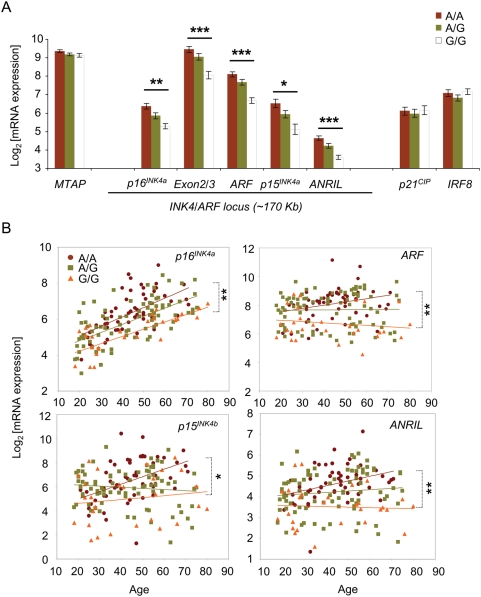
BACKGROUND: Genome-wide association studies (GWAS) have linked common single nucleotide polymorphisms (SNPs) on chromosome 9p21 near the INK4/ARF (CDKN2A/B) tumor suppressor locus with risk of atherosclerotic diseases and type 2 diabetes mellitus. To explore the mechanism of this association, we investigated whether expression of proximate transcripts (p16(INK4a), p15(INK4b), ARF, ANRIL and MTAP) correlate with genotype of representative 9p21 SNPs. METHODOLOGY/PRINCIPAL FINDINGS: We analyzed expression of 9p21 transcripts in purified peripheral blood T-cells (PBTL) from 170 healthy donors. Samples were genotyped for six selected disease-related SNPs spanning the INK4/ARF locus. Correlations among these variables were determined by univariate and multivariate analysis. Significantly reduced expression of all INK4/ARF transcripts (p15(INK4b), p16(INK4a), ARF and ANRIL) was found in PBTL of individuals harboring a common SNP (rs10757278) associated with increased risk of coronary artery disease, stroke and aortic aneurysm. Expression of MTAP was not influenced by rs10757278 genotype. No association of any these transcripts was noted with five other tested 9p21 SNPs. CONCLUSIONS/SIGNIFICANCE: Genotypes of rs10757278 linked to increased risk of atherosclerotic diseases are also associated with decreased expression in PBTL of the INK4/ARF locus, which encodes three related anti-proliferative transcripts of known importance in tumor suppression and aging.
Overview
The claims and statistics of this paper haven’t been checked yet.
Free: it reads the open-access text and checks the first 5 claims that cite a source we can check. Create a free account to check every claim.
Integrity signals
Registry
Cites
Statistics
Figures
Verification
Claims the paper makes
The claims and statistics of this paper haven’t been checked yet.
Free: it reads the open-access text and checks the first 5 claims that cite a source we can check. Create a free account to check every claim.
Claims other papers make about this one
Each is checked against this paper’s own text: does it say what the citing paper says it does?
The source backs part of the claim, not all of it — or backs it for a different population, condition or comparison.
In the citing paper
“Knock-out of p16 INK4a, p19 ARF, p21, and p53 had a pro-atherosclerotic effect in mice.203–205”
From Senescence-induced inflammation: an important player and key therapeutic target in atherosclerosis (2020) · cites this paper as [204]
Experimental — accuracy not yet measured
Self-check
Percentages, sums and reported differences re-computed from the paper’s own numbers.
The self-check needs the paper’s full text.
Citations
Cites
Analysis of Relative Gene Expression Data Using Real-Time Quantitative PCR and the 2−ΔΔCT Method
Livak, K. J., & Schmittgen, T. D. (2001) · Methods · doi:10.1006/meth.2001.1262 · Cited by 180,860
Genome-wide association study of 14,000 cases of seven common diseases and 3,000 shared controls
The Wellcome Trust Case Control Consortium, Management Committee, Burton, P. R., Clayton, D. G., Cardon, L. R., Craddock, N., Deloukas, P., Duncanson, A., Kwiatkowski, D. P., McCarthy, M. I., et al. (2007) · Nature · doi:10.1038/nature05911 · Cited by 9,442
A haplotype map of the human genome
The International HapMap Consortium (2005) · Nature · doi:10.1038/nature04226 · Cited by 5,858
Functional Demarcation of Active and Silent Chromatin Domains in Human HOX Loci by Noncoding RNAs
Rinn, J. L., Kertesz, M., Wang, J. K., Squazzo, S. L., Xu, X., Brugmann, S. A., Goodnough, L. H., Helms, J. A., Farnham, P. J., Segal, E., et al. (2007) · Cell · doi:10.1016/j.cell.2007.05.022 · Cited by 4,244 · cited 1×
“On the other hand, ANRIL could also influence the expression of other genes in trans- as has been recently reported for HOTAIR at Hox loci [39].”
BackgroundMutation of the mouse klotho gene leads to a syndrome resembling ageing
Kuro-o, M., Matsumura, Y., Aizawa, H., Kawaguchi, H., Suga, T., Utsugi, T., Ohyama, Y., Kurabayashi, M., Kaname, T., Kume, E., et al. (1997) · Nature · doi:10.1038/36285 · Cited by 3,837
Genome-wide association analysis identifies loci for type 2 diabetes and triglyceride levels
Saxena, R., Voight, B. F., Lyssenko, V., Burtt, N. P., de Bakker, P. I. W., Chen, H., Roix, J. J., Kathiresan, S., Hirschhorn, J. N., Daly, M. J., et al. (2007) · Science · doi:10.1126/science.1142358 · Cited by 2,843
A genome-wide association study of type 2 diabetes in Finns detects multiple susceptibility variants
Scott, L. J., Mohlke, K. L., Bonnycastle, L. L., Willer, C. J., Li, Y., Duren, W. L., Erdos, M. R., Stringham, H. M., Chines, P. S., Jackson, A. U., et al. (2007) · Science · doi:10.1126/science.1142382 · Cited by 2,753
Self-citationThe Wellcome Trust Case Control Consortium, U.K.
Mossman, K. (2008) · Scientific American · doi:10.1038/scientificamerican0108-42a · Cited by 2,684
Replication of Genome-Wide Association Signals in UK Samples Reveals Risk Loci for Type 2 Diabetes
Zeggini, E., Weedon, M. N., Lindgren, C. M., Frayling, T. M., Elliott, K. S., Lango, H., Timpson, N. J., Perry, J. R. B., Rayner, N. W., Freathy, R. M., et al. (2007) · Science · doi:10.1126/science.1142364 · Cited by 2,194 · cited 6×
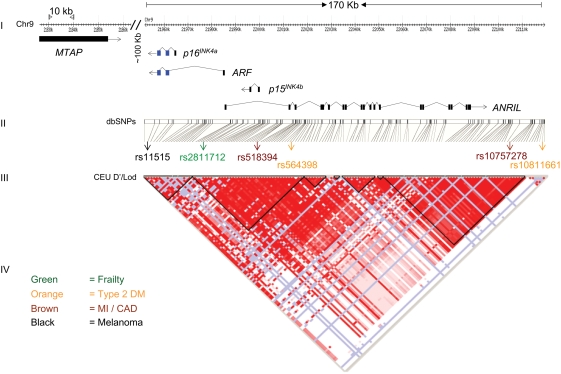
“We selected six SNPs for genotyping based on strength of association in previous studies: two associated with atherosclerosis (rs10757278 and rs518394) [1,2,3,4], two with T2DM (rs10811661 and rs564398) [8,9,10], one with frailty (rs2811712) [16], and one with melanoma (rs11515, in the 39 UTR of p16INK4a and ARF)[17]…”
BackgroundMethodInfluentialGenomewide Association Analysis of Coronary Artery Disease
Samani, N. J., Erdmann, J., Hall, A. S., Hengstenberg, C., Mangino, M., Mayer, B., Dixon, R. J., Meitinger, T., Braund, P., Wichmann, H.-E., et al. (2007) · New England Journal of Medicine · doi:10.1056/nejmoa072366 · Cited by 2,044 · cited 5×
“1), could mediate disease associations [3,4].”
BackgroundMethodInfluential
Research works printed but not linked: 1
- Helgadottir A Thorleifsson G Manolescu A Gretarsdottir S Blondal T 2007 A common variant on chromosome 9p21 affects the risk of myocardial infarction. Science 316 1491 1493 17478679 · DOI · Paper page
Cited by
Cellular senescence: from physiology to pathology
Muñoz-Espín, D., & Serrano, M. (2014) · Nature Reviews Molecular Cell Biology · doi:10.1038/nrm3823 · Cited by 2,818
Senescence in Health and Disease
He, S., & Sharpless, N. E. (2017) · Cell · doi:10.1016/j.cell.2017.05.015 · Cited by 1,766
Self-citationCellular Senescence: Aging, Cancer, and Injury
Calcinotto, A., Kohli, J., Zagato, E., Pellegrini, L., Demaria, M., & Alimonti, A. (2019) · Physiological Reviews · doi:10.1152/physrev.00020.2018 · Cited by 1,270
“Indeed, individuals carrying polymorphisms in CDKN2A, which result in decreased p16 expression and potentially inability to enter senescence, are at increased risk for developing the disease (212).”
BackgroundBurd, C. E., Jeck, W. R., Liu, Y., Sanoff, H. K., Wang, Z., & Sharpless, N. E. (2010) · PLoS Genetics · doi:10.1371/journal.pgen.1001233 · Cited by 902
“harboring the risk alleles demonstrating reduced levels of p15, p16, ARF and ANRIL [16].”
BackgroundInfluentialSelf-citationGenome-wide association study identifies five new breast cancer susceptibility loci
The Breast Cancer Susceptibility Collaboration (UK), Turnbull, C., Ahmed, S., Morrison, J., Pernet, D., Renwick, A., Maranian, M., Seal, S., Ghoussaini, M., Hines, S., et al. (2010) · Nature Genetics · doi:10.1038/ng.586 · Cited by 687
9p21 DNA variants associated with coronary artery disease impair interferon-γ signalling response
Harismendy, O., Notani, D., Song, X., Rahim, N. G., Tanasa, B., Heintzman, N., Ren, B., Fu, X.-D., Topol, E. J., Rosenfeld, M. G., et al. (2011) · Nature · doi:10.1038/nature09753 · Cited by 611
Expression of p16 INK4a in peripheral blood T‐cells is a biomarker of human aging
Liu, Y., Sanoff, H. K., Cho, H., Burd, C. E., Torrice, C., Ibrahim, J. G., Thomas, N. E., & Sharpless, N. E. (2009) · Aging Cell · doi:10.1111/j.1474-9726.2009.00489.x · Cited by 509
“S4D), and no association with BMI was found in p16INK4a in human aging, Y. Liu et al. ª 2009 The Authors Journal compilation ª Blackwell Publishing Ltd/Anatomical Society of Great Britain and Ireland 2009 442 multivariate analysis (Table 2, see also multiple regression sec- tion below).”
BackgroundMethodInfluentialSelf-citationTargeted deletion of the 9p21 non-coding coronary artery disease risk interval in mice
Visel, A., Zhu, Y., May, D., Afzal, V., Gong, E., Attanasio, C., Blow, M. J., Cohen, J. C., Rubin, E. M., & Pennacchio, L. A. (2010) · Nature · doi:10.1038/nature08801 · Cited by 462
Molecular Biology of Atherosclerosis
Hopkins, P. N. (2013) · Physiological Reviews · doi:10.1152/physrev.00004.2012 · Cited by 459
ANRIL Expression Is Associated With Atherosclerosis Risk at Chromosome 9p21
Holdt, L. M., Beutner, F., Scholz, M., Gielen, S., Gäbel, G., Bergert, H., Schuler, G., Thiery, J., & Teupser, D. (2010) · Arteriosclerosis, Thrombosis, and Vascular Biology · doi:10.1161/atvbaha.109.196832 · Cited by 451
ANRIL , a long, noncoding RNA, is an unexpected major hotspot in GWAS
Pasmant, E., Sabbagh, A., Vidaud, M., & Bièche, I. (2011) · The FASEB Journal · doi:10.1096/fj.10-172452 · Cited by 431
“Indeed, genotypes of common singlenucleotide polymorphisms (SNPs) in ANRIL linked to increased risk of atherosclerotic diseases have been associated with decreased expression of ANRIL transcripts in purified peripheral blood T cells (11).”
BackgroundHoldt, L. M., Hoffmann, S., Sass, K., Langenberger, D., Scholz, M., Krohn, K., Finstermeier, K., Stahringer, A., Wilfert, W., Beutner, F., et al. (2013) · PLoS Genetics · doi:10.1371/journal.pgen.1003588 · Cited by 397
“In contrast, a clear association of ANRIL with the Chr9p21 genotype has been established in several studies, even though the direction of effects is still a matter of dispute [5,6,8,11–13].”
BackgroundChromosome 9p21 SNPs Associated with Multiple Disease Phenotypes Correlate with ANRIL Expression
Cunnington, M. S., Santibanez Koref, M., Mayosi, B. M., Burn, J., & Keavney, B. (2010) · PLoS Genetics · doi:10.1371/journal.pgen.1000899 · Cited by 379
“They also found no association for two SNPs associated with diabetes (rs10811661 and rs564398), the frailty risk SNP rs2811712, and a melanoma risk SNP (rs11515) [37].”
BackgroundResultInfluentialMolecular roles and function of circular RNAs in eukaryotic cells
Holdt, L. M., Kohlmaier, A., & Teupser, D. (2018) · Cellular and Molecular Life Sciences · doi:10.1007/s00018-017-2688-5 · Cited by 343
Cells exhibiting strong p16 INK4a promoter activation in vivo display features of senescence
Liu, J.-Y., Souroullas, G. P., Diekman, B. O., Krishnamurthy, J., Hall, B. M., Sorrentino, J. A., Parker, J. S., Sessions, G. A., Gudkov, A. V., & Sharpless, N. E. (2019) · Proceedings of the National Academy of Sciences · doi:10.1073/pnas.1818313116 · Cited by 306
“Motivated by human genome-wide association studies linking the CDKN2a/b locus to atherosclerotic disease, we previously showed reduced INK4a/ARF expression in humans harboring risk alleles for atherosclerosis (52), a model supported by murine studies suggesting Ink4a/Arf expression in macrophages prevents atherosclero…”
BackgroundSelf-citationO'Donnell, C. J., Kavousi, M., Smith, A. V., Kardia, S. L. R., Feitosa, M. F., Hwang, S.-J., Sun, Y. V., Province, M. A., Aspelund, T., Dehghan, A., et al. (2011) · Circulation · doi:10.1161/circulationaha.110.974899 · Cited by 304
Self-citationUno, S., Zembutsu, H., Hirasawa, A., Takahashi, A., Kubo, M., Akahane, T., Aoki, D., Kamatani, N., Hirata, K., & Nakamura, Y. (2010) · Nature Genetics · doi:10.1038/ng.612 · Cited by 259
“CDKN2BAS is expressed in the uterus, according to a gene expression database for normal tissues (data not shown), and previous studies indicated that CDKN2BAS regulates the expression of CDKN2B, CDKN2A and AR”
ResultLong Noncoding RNA, Polycomb, and the Ghosts Haunting INK4b-ARF-INK4a Expression
Aguilo, F., Zhou, M.-M., & Walsh, M. J. (2011) · Cancer Research · doi:10.1158/0008-5472.can-10-4379 · Cited by 255
“Many singlenucleotide polymorphisms (SNP) in this locus alter ANRIL structure (27) and ANRIL gene expression (29, 30), mediating the susceptibility to a variety of chronic diseases and cancer predisposition.”
Long non-coding RNAs in cancer progression
Tano, K., & Akimitsu, N. (2012) · Frontiers in Genetics · doi:10.3389/fgene.2012.00219 · Cited by 251
Long non-coding RNA ANRIL regulates inflammatory responses as a novel component of NF-κB pathway
Zhou, X., Han, X., Wittfeldt, A., Sun, J., Liu, C., Wang, X., Gan, L.-M., Cao, H., & Liang, Z. (2016) · RNA Biology · doi:10.1080/15476286.2015.1122164 · Cited by 240
Rahmioglu, N., Nyholt, D. R., Morris, A. P., Missmer, S. A., Montgomery, G. W., & Zondervan, K. T. (2014) · Human Reproduction Update · doi:10.1093/humupd/dmu015 · Cited by 238
“CDKN2B-AS1 has been shown to be involved in the regulation of CDKN2B, CDKN2A and ARF expression (Pasmant et al., 2007; Jarinova et al., 2009; Liu et al., 2009).”
BackgroundBochenek, G., Häsler, R., El Mokhtari, N.-E., König, I. R., Loos, B. G., Jepsen, S., Rosenstiel, P., Schreiber, S., & Schaefer, A. S. (2013) · Human Molecular Genetics · doi:10.1093/hmg/ddt299 · Cited by 213
ANRIL: A lncRNA at the CDKN2A/B Locus With Roles in Cancer and Metabolic Disease
Kong, Y., Hsieh, C.-H., & Alonso, L. C. (2018) · Frontiers in Endocrinology · doi:10.3389/fendo.2018.00405 · Cited by 207
Bown, M. J., Jones, G. T., Harrison, S. C., Wright, B. J., Bumpstead, S., Baas, A. F., Gretarsdottir, S., Badger, S. A., Bradley, D. T., Burnand, K., et al. (2011) · The American Journal of Human Genetics · doi:10.1016/j.ajhg.2011.10.002 · Cited by 207
Review: a meta‐analysis of GWAS and age‐associated diseases
Jeck, W. R., Siebold, A. P., & Sharpless, N. E. (2012) · Aging Cell · doi:10.1111/j.1474-9726.2012.00871.x · Cited by 204
“3 variants have been suggested to influence expression both of the nearby tumor suppressor proteins of the INK4a ⁄ ARF locus and IFNa21, a more distant (approximately 1 Mb) regulator of inflammation (Liu et al., 2009; Harismendy et al., 2011).”
BackgroundSelf-citationEpigenetic regulation of the INK4b-ARF-INK4a locus: In sickness and in health
Popov, N., & Gil, J. (2010) · Epigenetics · doi:10.4161/epi.5.8.12996 · Cited by 202
Circular RNAs in Cardiovascular Disease: An Overview
Fan, X., Weng, X., Zhao, Y., Chen, W., Gan, T., & Xu, D. (2017) · BioMed Research International · doi:10.1155/2017/5135781 · Cited by 194
Holdt, L. M., & Teupser, D. (2012) · Arteriosclerosis, Thrombosis, and Vascular Biology · doi:10.1161/atvbaha.111.232678 · Cited by 189
Senescence-induced inflammation: an important player and key therapeutic target in atherosclerosis
Stojanović, S. D., Fiedler, J., Bauersachs, J., Thum, T., & Sedding, D. G. (2020) · European Heart Journal · doi:10.1093/eurheartj/ehz919 · Cited by 188
Folkersen, L., Kyriakou, T., Goel, A., Peden, J., Mälarstig, A., Paulsson-Berne, G., Hamsten, A., consortia, H. W. O. B. O. T. P., Franco-Cereceda, A., Gabrielsen, A., et al. (2009) · PLoS ONE · doi:10.1371/journal.pone.0007677 · Cited by 169
“It is not known in which exons these expression measurements are performed [7].”
BackgroundInfluentialHannou, S. A., Wouters, K., Paumelle, R., & Staels, B. (2015) · Trends in Endocrinology & Metabolism · doi:10.1016/j.tem.2015.01.008 · Cited by 159
Motterle, A., Pu, X., Wood, H., Xiao, Q., Gor, S., Liang Ng, F., Chan, K., Cross, F., Shohreh, B., Poston, R. N., et al. (2012) · Human Molecular Genetics · doi:10.1093/hmg/dds224 · Cited by 160
“Previous studies have shown that expression levels of the long transcript of ANRIL were decreased and the short variants increased, in individuals homozygous for the 9p21 high-risk allele compared with those carrying two copies of the low-risk allele (17,21).”
Genes and Coronary Artery Disease
Roberts, R., & Stewart, A. F. R. (2012) · Journal of the American College of Cardiology · doi:10.1016/j.jacc.2011.12.062 · Cited by 187
Cyclin-dependent kinase inhibitor 2B regulates efferocytosis and atherosclerosis
Kojima, Y., Downing, K., Kundu, R., Miller, C., Dewey, F., Lancero, H., Raaz, U., Perisic, L., Hedin, U., Schadt, E., et al. (2014) · Journal of Clinical Investigation · doi:10.1172/jci70391 · Cited by 148
“Though a variety of associations have been reported (8–12), reduced expression of the nearby tumor-suppressor gene CDKN2B has now been observed in several tissues from carriers of the risk allele, including adipose tissue and circulating cells (8, 13), as well as in the end organ, including atherosclerotic plaque and…”
Expression of Chr9p21 genes CDKN2B (p15), CDKN2A (p16, p14) and MTAP in human atherosclerotic plaque
Holdt, L. M., Sass, K., Gäbel, G., Bergert, H., Thiery, J., & Teupser, D. (2011) · Atherosclerosis · doi:10.1016/j.atherosclerosis.2010.06.029 · Cited by 143
Genetics of Coronary Artery Disease
Roberts, R. (2014) · Circulation Research · doi:10.1161/circresaha.114.302692 · Cited by 163
“In the same studies, they found no association between the expression of 9p21 risk variant and that of methylthioadenosine phosphorylase.(61) They concluded that the risk of 9p21 is through decreased expression of the cyclin-dependent kinase inhibitors CDKN2a or CDKN2ab.”
miRNAs and long noncoding RNAs as biomarkers in human diseases
Van Roosbroeck, K., Pollet, J., & Calin, G. A. (2013) · Expert Review of Molecular Diagnostics · doi:10.1586/erm.12.134 · Cited by 134
Nakaoka, H., Tajima, A., Yoneyama, T., Hosomichi, K., Kasuya, H., Mizutani, T., & Inoue, I. (2014) · Stroke · doi:10.1161/strokeaha.114.005851 · Cited by 144
“Downregulations of CDKN2A/2B have been reported in association with the 9p21 risk allele through a noncoding RNA overlying the locus, ANRIL (or CDKN2B-AS1).(39) Target deletion of the mice genome orthologous to the human 9p21 risk locus exhibited decreased expressions of Cdkn2a/2b and abnormal proliferation of vascula…”
BackgroundCudejko, C., Wouters, K., Fuentes, L., Hannou, S. A., Paquet, C., Bantubungi, K., Bouchaert, E., Vanhoutte, J., Fleury, S., Remy, P., et al. (2011) · Blood · doi:10.1182/blood-2010-10-313106 · Cited by 125
Folkersen, L., Hooft, F. V., Chernogubova, E., Agardh, H. E., Hansson, G. K., Hedin, U., Liska, J., Syvänen, A.-C., Paulsson-Berne, G., Franco-Cereceda, A., et al. (2010) · Circulation: Cardiovascular Genetics · doi:10.1161/circgenetics.110.948935 · Cited by 125
“discrete developmental stages, and a complex transcript isoform structure [25, 27].”
BackgroundLoss of CDKN2B Promotes p53-Dependent Smooth Muscle Cell Apoptosis and Aneurysm Formation
Leeper, N. J., Raiesdana, A., Kojima, Y., Kundu, R. K., Cheng, H., Maegdefessel, L., Toh, R., Ahn, G.-O., Ali, Z. A., Anderson, D. R., et al. (2013) · Arteriosclerosis, Thrombosis, and Vascular Biology · doi:10.1161/atvbaha.112.300399 · Cited by 117
“For CDKN2B, expression quantitative trait locus studies have associated noncoding C9CAR risk single-nucleotide polymorphisms with reduced CDKN2B expression in man, including adipose tissue and circulating leukocytes.(4,17) Importantly, recent studies have extended these mapping efforts into vascular tissue and found r…”
BackgroundExpression of p16INK4a prevents cancer and promotes aging in lymphocytes
Liu, Y., Johnson, S. M., Fedoriw, Y., Rogers, A. B., Yuan, H., Krishnamurthy, J., & Sharpless, N. E. (2011) · Blood · doi:10.1182/blood-2010-09-304402 · Cited by 114
Self-citationGenetics of myocardial infarction: a progress report
Schunkert, H., Erdmann, J., & Samani, N. J. (2010) · European Heart Journal · doi:10.1093/eurheartj/ehq038 · Cited by 107
“ANRIL is expressed in tissues and cell types that are affected by atherosclerosis.20 Liu et al.21 analysed the expression of 9p21.”
BackgroundHoldt, L. M., & Teupser, D. (2018) · Frontiers in Cardiovascular Medicine · doi:10.3389/fcvm.2018.00145 · Cited by 112
González-Navarro, H., Abu Nabah, Y. N., Vinué, Á., Andrés-Manzano, M. J., Collado, M., Serrano, M., & Andrés, V. (2010) · Journal of the American College of Cardiology · doi:10.1016/j.jacc.2010.01.026 · Cited by 102
“recently reported reduced expression of the CDKN2A transcripts p16, p14 and the non-coding RNA named ANRIL (antisense noncoding RNA in the INK4 locus) in purified peripheral blood Tcells of individuals carrying in homozygosis the atherosclerosis risk G-allele of rs10757278 (26).”
InfluentialTian, X., Azpurua, J., Ke, Z., Augereau, A., Zhang, Z. D., Vijg, J., Gladyshev, V. N., Gorbunova, V., & Seluanov, A. (2015) · Proceedings of the National Academy of Sciences · doi:10.1073/pnas.1418203112 · Cited by 101
Control of cell proliferation in atherosclerosis: insights from animal models and human studies
Fuster, J. J., Fernandez, P., Navarro, H. G., Silvestre, C., Nabah, Y. N. A., & Andrés, V. (2009) · Cardiovascular Research · doi:10.1093/cvr/cvp363 · Cited by 119
“Strikingly, expression of all INK4/ARF transcripts is reduced in the peripheral blood T-cells of individuals homozygotic for a common 9p21 SNP associated with increased risk of atherosclerosis (rs10757278).(107) This provides a direct link between these atherosclerosis-associated SNPs and the INK4/ARF locus and sugges…”
BackgroundInk4‐Arf locus in cancer and aging
Sherr, C. J. (2012) · WIREs Developmental Biology · doi:10.1002/wdev.40 · Cited by 98
Long Non-coding RNA ANRIL and Polycomb in Human Cancers and Cardiovascular Disease
Aguiló, F., Cecilia, S. D., & Walsh, M. J. (2015) · Current topics in microbiology and immunology · doi:10.1007/82_2015_455 · Cited by 109
Transcriptional regulation of cellular senescence
Lanigan, F., Geraghty, J. G., & Bracken, A. P. (2011) · Oncogene · doi:10.1038/onc.2011.34 · Cited by 95
“…of both CBX7 and ANRIL are elevated in prostate cancer tissues, concurrent with a decrease in INK4A expression levels (Yap et al., 2010), which would seem to contradict the previously mentioned reports of a positive correlation between ANRIL, INK4A and ARF (Pasmant et al., 2007; Liu et al., 2009).”
Rôle des longs ARN non codants dans le développement normal et pathologique
Mathieu, È.-L., Belhocine, M., Dao, L. T. M., Puthier, D., & Spicuglia, S. (2014) · médecine/sciences · doi:10.1051/medsci/20143008018 · Cited by 114
“divers cancers [33-35]”
BackgroundIslet biology, the CDKN2A/B locus and type 2 diabetes risk
Kong, Y., Sharma, R. B., Nwosu, B. U., & Alonso, L. C. (2016) · Diabetologia · doi:10.1007/s00125-016-3967-7 · Cited by 105
“7 (CBX7 [PRC1]) and suppressor of zeste 12 (SUZ12 [PRC2]) to modulate epigenetic repression by H3K27 methylation [70, 72, 73, 90, 190].”
Deep Insights in Circular RNAs: from biogenesis to therapeutics
Mumtaz, P. T., Taban, Q., Dar, M. A., Mir, S., Haq, Z. U., Zargar, S. M., Shah, R. A., & Ahmad, S. M. (2020) · Biological Procedures Online · doi:10.1186/s12575-020-00122-8 · Cited by 100
Zhuang, J., Peng, W., Li, H., Wang, W. T., Wei, Y., Li, W., & Xu, Y. (2012) · PLoS ONE · doi:10.1371/journal.pone.0047193 · Cited by 98
“Further studies find that multiple SNPs in the risk haplotype region may have substantial influences on ANRIL expression levels or ANRIL splices, while ANRIL epigenetically regulates INK4/ARF expression [12,13,14,15,16,17,18,19,20].”
BackgroundAgeing as developmental decay: insights from p16INK4a.
Martin, N., Beach, D., & Gil, J. (2014) · Trends in Molecular Medicine · doi:10.1016/j.molmed.2014.09.008 · Cited by 76
Beyond Endometriosis Genome-Wide Association Study: From Genomics to Phenomics to the Patient
Rahmioglu, N., Morris, A., Nyholt, D., Montgomery, G., Becker, C., Missmer, S., & Zondervan, K. (2016) · Seminars in Reproductive Medicine · doi:10.1055/s-0036-1585408 · Cited by 84
Large Scale Association Analysis Identifies Three Susceptibility Loci for Coronary Artery Disease
Saadé, S., Cazier, J., Ghassibe‐Sabbagh, M., Youhanna, S. C., Badro, D. A., Kamatani, Y., Hager, J., Yeretzian, J. S., Khazen, G., Haber, M., et al. (2011) · PLoS ONE · doi:10.1371/journal.pone.0029427 · Cited by 93
“While it still needs to be elucidated, implication of ANRIL in the pathophysiology of coronary artery syndrome has been strongly supported by expression studies [26,27,28].”
BackgroundGenetics of Coronary Artery Disease
Musunuru, K., & Kathiresan, S. (2010) · Annual Review of Genomics and Human Genetics · doi:10.1146/annurev-genom-082509-141637 · Cited by 83
Cellular senescence: Implications for metabolic disease
Schafer, M. J., Miller, J. D., & LeBrasseur, N. K. (2017) · Molecular and Cellular Endocrinology · doi:10.1016/j.mce.2016.08.047 · Cited by 83
Zhang, W., Chen, Y., Liu, P., Chen, J., Song, L., Tang, Y., Wang, Y., Liu, J., Hu, F. B., & Hui, R. (2011) · Stroke · doi:10.1161/strokeaha.111.625442 · Cited by 80
Genomewide Association Studies in Cardiovascular Disease—An Update 2011
Zeller, T., Blankenberg, S., & Diemert, P. (2012) · Clinical Chemistry · doi:10.1373/clinchem.2011.170431 · Cited by 88
LncRNA-ANRIL inhibits cell senescence of vascular smooth muscle cells by regulating miR-181a/Sirt1
Tan, P., Guo, Y., Zhan, J., Long, L., Xu, M., Ye, L., Ma, X., Cui, X., & Wang, H. (2019) · Biochemistry and Cell Biology · doi:10.1139/bcb-2018-0126 · Cited by 84
Molecular genetics of coronary artery disease
Ozaki, K., & Tanaka, T. (2015) · Journal of Human Genetics · doi:10.1038/jhg.2015.70 · Cited by 87
Cdkn2a Is an Atherosclerosis Modifier Locus That Regulates Monocyte/Macrophage Proliferation
Kuo, C.-L., Murphy, A. J., Sayers, S., Li, R., Yvan-Charvet, L., Davis, J. Z., Krishnamurthy, J., Liu, Y., Puig, O., Sharpless, N. E., et al. (2011) · Arteriosclerosis, Thrombosis, and Vascular Biology · doi:10.1161/atvbaha.111.234492 · Cited by 73
Self-citationEpigenetic associations in relation to cardiovascular prevention and therapeutics
Voelter‐Mahlknecht, S. (2016) · Clinical Epigenetics · doi:10.1186/s13148-016-0170-0 · Cited by 81
Insights into assessing the genetics of endometriosis
Rahmioglu, N., Missmer, S. A., Montgomery, G. W., & Zondervan, K. T. (2012) · Current Obstetrics and Gynecology Reports · doi:10.1007/s13669-012-0016-5 · Cited by 71
“CDKN2BAS is an interesting candidate because it is expressed in the uterus and regulates the expression ofCDKN2B (p15),CDKN2A (p16), and ARF (p14), which are tumor suppressor genes [44–46].”
BackgroundSchaefer, A. S., Richter, G. M., Dommisch, H., Reinartz, M., Nothnagel, M., Noack, B., Laine, M. L., Folwaczny, M., Groessner-Schreiber, B., Loos, B. G., et al. (2011) · Journal of Medical Genetics · doi:10.1136/jmg.2010.078998 · Cited by 70
Musunuru, K., Post, W. S., Herzog, W. R., Shen, H., O’Connell, J. R., McArdle, P. F., Ryan, K. A., Gibson, Q., Cheng, Y.-C., Clearfield, E., et al. (2010) · Circulation Cardiovascular Genetics · doi:10.1161/circgenetics.109.923508 · Cited by 78
ANRIL is implicated in the regulation of nucleus and potential transcriptional target of E2F1
Yoshida (2010) · Oncology Reports · doi:10.3892/or_00000910 · Cited by 69
Iacobucci, I., Sazzini, M., Garagnani, P., Ferrari, A., Boattini, A., Lonetti, A., Papayannidis, C., Mantovani, V., Marasco, E., Ottaviani, E., et al. (2011) · Leukemia Research · doi:10.1016/j.leukres.2011.02.020 · Cited by 72
Defining the toxicology of aging
Sorrentino, J. A., Sanoff, H. K., & Sharpless, N. E. (2014) · Trends in Molecular Medicine · doi:10.1016/j.molmed.2014.04.004 · Cited by 75
“For example, measurement in RNA from whole blood has been unreliable, and informative analyses of this tissue have generally required isolation of peripheral blood T lymphocytes [32, 64, 65].”
Self-citationSynergy of Homocysteine, MicroRNA, and Epigenetics: A Novel Therapeutic Approach for Stroke
Kalani, A., Kamat, P. K., Tyagi, S. C., & Tyagi, N. (2013) · Molecular Neurobiology · doi:10.1007/s12035-013-8421-y · Cited by 69
“Another lncRNA, ANRIL (NCBI ID 100048912), is associated with the development of atherosclerosis through smooth muscle proliferation and migration [56–62].”
Long non-coding RNA ANRIL in gene regulation and its duality in atherosclerosis
Chi, J., Li, J.-Z., Jia, J., Zhang, T., Liu, X.-M., & Yi, L. (2017) · Current Medical Science · doi:10.1007/s11596-017-1812-y · Cited by 78
The genetics of coronary heart disease
Swerdlow, D. I., Holmes, M. V., Harrison, S. C., & Humphries, S. E. (2012) · British Medical Bulletin · doi:10.1093/bmb/lds009 · Cited by 66
From genotype to phenotype in human atherosclerosis - recent findings
Holdt, L. M., & Teupser, D. (2013) · Current Opinion in Lipidology · doi:10.1097/mol.0b013e3283654e7c · Cited by 62
Johnson, A. D., Hwang, S., Voorman, A., Morrison, A. C., Peloso, G. M., Hsu, Y., Thanassoulis, G., Newton‐Cheh, C., Rogers, I. S., Hoffmann, U., et al. (2013) · Circulation · doi:10.1161/circulationaha.112.111559 · Cited by 63
CDKN2B Regulates TGF β Signaling and Smooth Muscle Cell Investment of Hypoxic Neovessels
Nanda, V., Downing, K. P., Ye, J., Xiao, S., Kojima, Y., Spin, J. M., DiRenzo, D., Nead, K. T., Connolly, A. J., Dandona, S., et al. (2016) · Circulation Research · doi:10.1161/circresaha.115.307906 · Cited by 60
Next Steps in Cardiovascular Disease Genomic Research—Sequencing, Epigenetics, and Transcriptomics
Schnabel, R. B., Baccarelli, A., Lin, H., Ellinor, P. T., & Benjamin, E. J. (2012) · Clinical Chemistry · doi:10.1373/clinchem.2011.170423 · Cited by 65
Ernst, F. D., Uhr, K., Teumer, A., Fanghänel, J., Schulz, S., Noack, B., Gonzales, J. R., Reichert, S., Eickholz, P., Holtfreter, B., et al. (2010) · BMC Medical Genetics · doi:10.1186/1471-2350-11-119 · Cited by 67
“and 1333045 analyzed extensively in the studies of [26] and [25], respectively (illustration adopted from [26] and modified, by courtesy of”
BackgroundInfluentialElucidating the contributory role of microRNA to cardiovascular diseases (a review)
Johnson, J. L. (2018) · Vascular Pharmacology · doi:10.1016/j.vph.2018.10.010 · Cited by 63
Wooten, E. C., Iyer, L. K., Montefusco, M. C., Kelley-Hedgepeth, A., Payne, D. D., Kapur, N. K., Housman, D. E., Mendelsohn, M. E., & Huggins, G. S. (2010) · PLoS ONE · doi:10.1371/journal.pone.0008830 · Cited by 63
“diseases including coronary artery disease [10,11].”
Taheri, M. N., Pouresmaeili, F., Omrani, M. D., Habibi, M., Sarrafzadeh, S., Noroozi, R., Rakhshan, A., Sayad, A., & Ghafouri‐Fard, S. (2017) · Biomarkers in Medicine · doi:10.2217/bmm-2016-0378 · Cited by 58
Molecular functions and specific roles of circRNAs in the cardiovascular system
Holdt, L. M., Kohlmaier, A., & Teupser, D. (2018) · Non-coding RNA Research · doi:10.1016/j.ncrna.2018.05.002 · Cited by 58
Murray, R. J. S., Bryant, J., Titcombe, P., Barton, S. J., Inskip, H. M., Harvey, N. C., Cooper, C. C., Lillycrop, K. A., Hanson, M. A., & Godfrey, K. M. (2016) · Clinical Epigenetics · doi:10.1186/s13148-016-0259-5 · Cited by 57
“[3–5] The functional role of ANRIL in cardiovascular disease has also been investigated in vascular smooth muscle, where ANRIL knockdown altered the expression of genes involved in the remodelling of the extracellular matrix, suggesting that ANRIL impacts on CHD risk via the modulation of these processes [6], leading…”
BackgroundZhang, T., Zhu, B., Tao, S., Fan, Y., Li, X., Pan, H., & Ye, D. (2019) · Frontiers in Immunology · doi:10.3389/fimmu.2019.02529 · Cited by 59
“Two SNPs (rs10757278 and rs1333045) in ANRIL, which had been highlighted as potential causal variants for the association with CAD, were reported to be associated with abnormal ANRIL expression level in Peripheral blood (34, 35).”
BackgroundGirelli, D., Martinelli, N., Peyvandi, F., & Olivieri, O. (2009) · Seminars in Thrombosis and Hemostasis · doi:10.1055/s-0029-1242721 · Cited by 59
Conway, C., Beswick, S., Elliott, F., Chang, Y., Randerson‐Moor, J. A., Harland, M., Affleck, P., Marsden, J., Sanders, D. S., Boon, A., et al. (2010) · Genes Chromosomes and Cancer · doi:10.1002/gcc.20753 · Cited by 56
“There is evidence that ANRIL may influence transcription of the CDKN2A and CDKN2B genes (Jarinova et al., 2009; Liu et al., 2009).”
BackgroundEffect of 9p21.3 Coronary Artery Disease Locus Neighboring Genes on Atherosclerosis in Mice
Kim, J. B., Deluna, A., Mungrue, I. N., Vu, C., Pouldar, D., Civelek, M., Orozco, L., Wu, J., Wang, X., Charugundla, S., et al. (2012) · Circulation · doi:10.1161/circulationaha.111.064881 · Cited by 52
Increased Arf/p53 activity in stem cells, aging and cancer
Carrasco‐García, E., Moreno, M., Moreno‐Cugnon, L., & Matheu, A. (2017) · Aging Cell · doi:10.1111/acel.12574 · Cited by 54
“as to additional age-related diseases such as type 2 diabetes or glaucoma (Liu et al., 2009; Jeck et al., 2012).”
BackgroundLong noncoding RNA in cardiac aging and disease
Lozano‐Vidal, N., Bink, D. I., & Boon, R. A. (2019) · Journal of Molecular Cell Biology · doi:10.1093/jmcb/mjz046 · Cited by 53
“ANRIL is described to bind two proteins in the PRC1 and PRC2 complexes to induce histone methylation and D ow nloaded from https://academ ic.oup.com /jm cb/article-abstract/11/10/860/5509866 by guest on 09 M ay 2020 silencing of the CDKN2A/B locus, which is a key for cell survival (Congrains et al., 2013).”
BackgroundLong Non-Coding RNAs in Haematological Malignancies
Garitano-Trojaola, A., Agirre, X., Prósper, F., & Fortes, P. (2013) · International Journal of Molecular Sciences · doi:10.3390/ijms140815386 · Cited by 66
“Several single nucleotide polymorphisms (SNP) in this locus alter ANRIL structure [180] and ANRIL gene expression [181,182], mediating susceptibility to disease.”
BackgroundPilbrow, A. P., Folkersen, L., Pearson, J. F., Brown, C. M., McNoe, L. A., Wang, N. M., Sweet, W. E., Tang, W. H. W., Black, M. A., Troughton, R. W., et al. (2012) · PLoS ONE · doi:10.1371/journal.pone.0039574 · Cited by 48
“These effects may be mediated by disruption of enhancer elements within the risk locus [35] and/or by altering expression of ANRIL splice variants or overall transcript levels [35,36,37,38,39,40].”
BackgroundResultInfluentialZhao, G. (2018) · Journal of Medical Genetics · doi:10.1136/jmedgenet-2018-105387 · Cited by 46
Epigenetics of Cardiovascular Disease: A New ‘Beat' in Coronary Artery Disease
Turgeon, P. J., Sukumar, A. N., & Marsden, P. A. (2014) · Medical Epigenetics · doi:10.1159/000360766 · Cited by 49
The Emerging Role of Epigenetics in Stroke
Qureshi, I., & Mehler, M. F. (2010) · Archives of Neurology · doi:10.1001/archneurol.2010.300 · Cited by 44
Huang, Y., Ye, H., Hong, Q., Xu, X., Jiang, D., Xu, L., Dai, D., Sun, J., Gao, X., & Duan, S. (2014) · International Journal of Molecular Sciences · doi:10.3390/ijms151017478 · Cited by 42
“CDKN2BAS gene is a large antisense non–coding RNA, which is differentially expressed in a variety of tissues such as vascular endothelial cells and smooth coronary muscle cells [8–11].”
BackgroundGenetic Mechanisms Mediating Atherosclerosis Susceptibility at the Chromosome 9p21 Locus
Cunnington, M. S., & Keavney, B. D. (2011) · Current Atherosclerosis Reports · doi:10.1007/s11883-011-0178-z · Cited by 44
Long noncoding RNA variations in cardiometabolic diseases
Dechamethakun, S., & Muramatsu, M. (2016) · Journal of Human Genetics · doi:10.1038/jhg.2016.70 · Cited by 46
A quantitative model for age-dependent expression of the p16INK4a tumor suppressor
Tsygankov, D., Liu, Y., Sanoff, H. K., Sharpless, N. E., & Elston, T. C. (2009) · Proceedings of the National Academy of Sciences · doi:10.1073/pnas.0904405106 · Cited by 42
“3) is strongly associated with a subject’s genotype of a SNP (rs10757278) 120 kb centromeric to the INK4/ARF tumor suppressor locus (25).”
BackgroundSelf-citationGenetics and Genomics of Coronary Artery Disease
Pjanic, M., Miller, C. L., Wirka, R. C., Kim, J. B., DiRenzo, D. M., & Quertermous, T. (2016) · Current Cardiology Reports · doi:10.1007/s11886-016-0777-y · Cited by 44
Metadata
- Authors
- Liu, Y., Sanoff, H. K., Cho, H., Burd, C. E., Torrice, C., Mohlke, K. L., Ibrahim, J. G., Thomas, N. E., & Sharpless, N. E.
- Affiliations
- University of North Carolina at Chapel Hill (US)
- Corresponding author
- Sharpless, Norman E.
- ORCID
- Venue
- PLoS ONE
- Publisher
- Public Library of Science (PLoS)
- Published
- 2009-04-03
- Volume
- 4
- Issue
- 4
- Pages
- e5027
- ISSN
- 1932-6203 (ISSN-L)
- PMC
- PMC2660422
- OpenAlex
- W2171205956
- Cited by
- 248
- References
- 44
- Citations by year
- 2026: 2 · 2025: 3 · 2024: 2 · 2023: 6 · 2022: 2 · 2021: 4 · 2020: 15 · 2019: 13 · 2018: 16 · 2017: 15 · 2016: 18 · 2015: 14 · 2014: 22 · 2013: 17 · 2012: 26
- FWCI
- 19.18
- Type
- journal article
- Language
- en
- Open access
- gold
- doi.org
- Locations
- PLoS ONE (publishedVersion, cc-by)
- PubMed Central (publishedVersion, cc-by)
- PubMed (publishedVersion)
- Carolina Digital Repository (University of North Carolina at Chapel Hill) (submittedVersion)
- DOAJ (DOAJ: Directory of Open Access Journals) (submittedVersion, cc-by-sa)
- Figshare (submittedVersion, cc-by)
- UNC Libraries
- Funders
- Burroughs Wellcome Fund
- Ellison Medical Foundation
- National Institutes of Health (5r01ag024379-15, AG024379)
- National Institute on Aging (AG024379, R01-AG024379)
- National Cancer Institute (T32CA009156, R01CA112243, CA009156-34)
- National Institute of Diabetes and Digestive and Kidney Diseases (DK-072193, R01DK072193)
- National Institute of Environmental Health Sciences (T32ES007126)
- National Center for Research Resources (RR023248, K12RR023248)
- Topics
- Life Sciences › Biochemistry, Genetics and Molecular Biology › Genetics › Genetic Associations and Epidemiology
- Life Sciences › Immunology and Microbiology › Immunology › Atherosclerosis and Cardiovascular Diseases
- Life Sciences › Biochemistry, Genetics and Molecular Biology › Clinical Biochemistry › Paraoxonase enzyme and polymorphisms
- Keywords
- INK4/ARF locus, chromosome 9p21, CDKN2A, CDKN2B, p16INK4a, ARF, ANRIL, MTAP, rs10757278, single nucleotide polymorphisms, gene expression, peripheral blood T cells, atherosclerosis, coronary artery disease, stroke, aortic aneurysm, type 2 diabetes, tumor suppressor, genetic association
- MeSH terms
- Chromosomes, Human, Pair 9, Genotype, Humans, RNA, Messenger, Polymorphism, Single Nucleotide, Atherosclerosis, Cyclin-Dependent Kinase Inhibitor Proteins, Genome-Wide Association Study
About these checks
Registry, retraction, Cites and statistics results are computed, not judged, with one exception: a printed reference that no index lists is read once by a model before it counts as a citation error. Claims are extracted by a model and kept only when their quote appears verbatim in the text; each cited source is then checked, with a model’s help, for whether it says what the claim relies on. Those verdicts can be wrong — read the claim’s quote and the cited source before relying on one.
Statistics and arithmetic are recomputed, not judged.
Confidence bands are shown only for fields calibrated on our annotated test set. None is calibrated yet, so no band is shown.
What counts as a claim ›How we measure confidence ›How we check this ›
Are you an author, or do you see a problem with this page? Request a review
Data sources
Bibliographic data: Semantic Scholar, OpenAlex, Crossref.
Contains information from the Semantic Scholar Academic Graph Datasets, made available under the ODC Attribution License (ODC-BY 1.0).
Semantic Scholar’s data is described in: Kinney, R., et al. (2023). The Semantic Scholar Open Data Platform. arXiv:2301.10140.
