

Antitumor Activity and Mechanism of Action of the Cyclopenta[b]benzofuran, Silvestrol
Open accessThe DOI matches its Crossref record; 51 of the 52 references it cites were found in a registry or an index.
Abstract
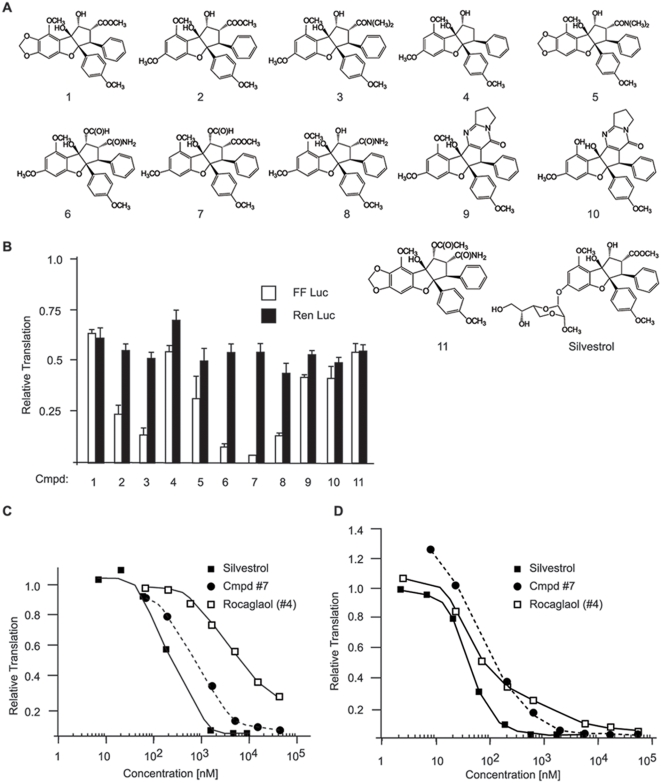
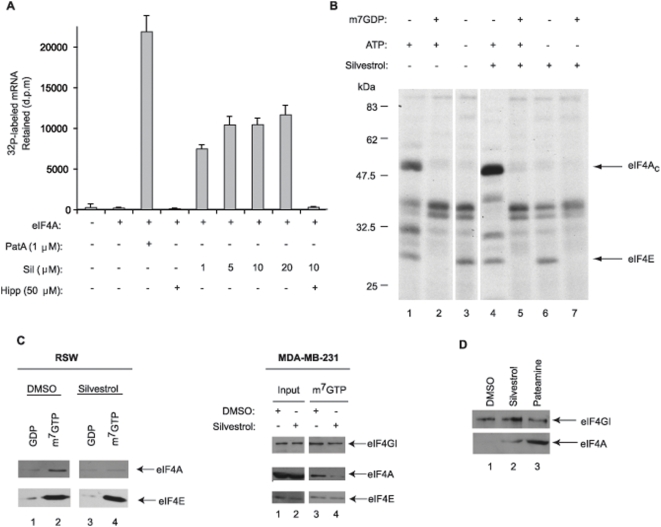
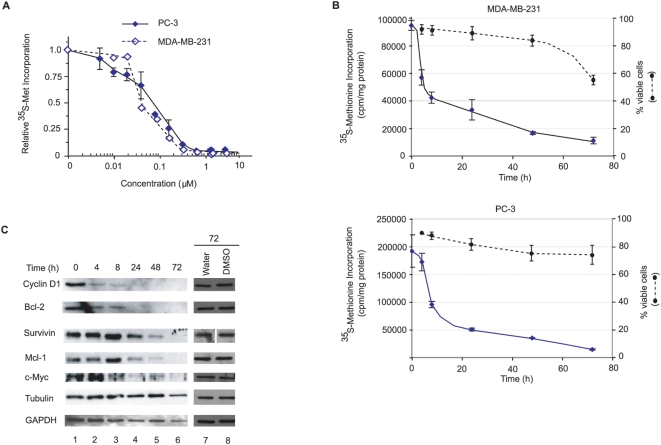
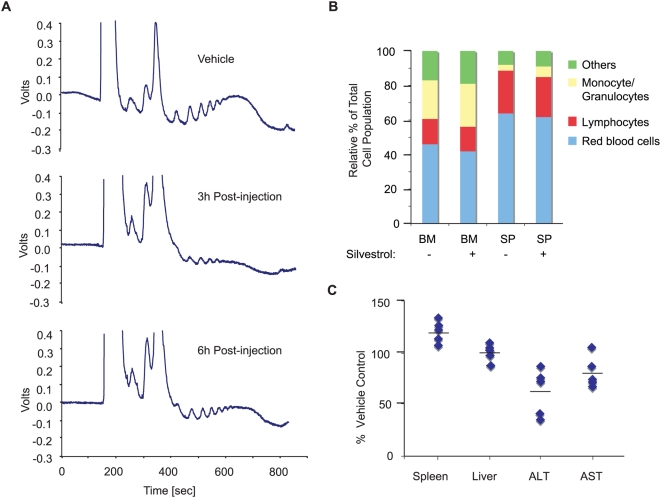
BACKGROUND: Flavaglines are a family of natural products from the genus Aglaia that exhibit anti-cancer activity in vitro and in vivo and inhibit translation initiation. They have been shown to modulate the activity of eIF4A, the DEAD-box RNA helicase subunit of the eukaryotic initiation factor (eIF) 4F complex, a complex that stimulates ribosome recruitment during translation initiation. One flavagline, silvestrol, is capable of modulating chemosensitivity in a mechanism-based mouse model. METHODOLOGY/PRINCIPAL FINDINGS: Among a number of flavagline family members tested herein, we find that silvestrol is the more potent translation inhibitor among these. We find that silvestrol impairs the ribosome recruitment step of translation initiation by affecting the composition of the eukaryotic initiation factor (eIF) 4F complex. We show that silvestrol exhibits significant anticancer activity in human breast and prostate cancer xenograft models, and that this is associated with increased apoptosis, decreased proliferation, and inhibition of angiogenesis. We demonstrate that targeting translation by silvestrol results in preferential inhibition of weakly initiating mRNAs. CONCLUSIONS/SIGNIFICANCE: Our results indicate that silvestrol is a potent anti-cancer compound in vivo that exerts its activity by affecting survival pathways as well as angiogenesis. We propose that silvestrol mediates its effects by preferentially inhibiting translation of malignancy-related mRNAs. Silvestrol appears to be well tolerated in animals.
Overview
The claims and statistics of this paper haven’t been checked yet.
Free: it reads the open-access text and checks the first 5 claims that cite a source we can check. Create a free account to check every claim.
Integrity signals
Registry
Cites
Statistics
Figures
Verification
Claims the paper makes
The claims and statistics of this paper haven’t been checked yet.
Free: it reads the open-access text and checks the first 5 claims that cite a source we can check. Create a free account to check every claim.
Claims other papers make about this one
Each is checked against this paper’s own text: does it say what the citing paper says it does?
The source backs part of the claim, not all of it — or backs it for a different population, condition or comparison.
In the citing paper
“eIF4A inhibitors, which target both isoforms, suppress translation of key oncogenes and have demonstrated antitumor activity in a variety of cancers (15, 17, 19–22).”
From Targeting eIF4A-dependent translation in genetically complex sarcoma (2026) · cites this paper as [21]
Experimental — accuracy not yet measuredThe source backs part of the claim, not all of it — or backs it for a different population, condition or comparison.
In the citing paper
“This supports the idea that increased expression of eIF4A2 may protect cells from the effects of eIF4A1 inhibition; rocaglates such as [-]CR-1-31B inhibit both isoforms, which may contribute to their efficacy (21, 34).”
From Targeting eIF4A-dependent translation in genetically complex sarcoma (2026) · cites this paper as [21]
Experimental — accuracy not yet measuredThe cited source says what the claim attributes to it.
In the citing paper
“Our results build on studies in mouse models of other cancers, including lymphoma, leukemia, breast, prostate, and pancreatic cancer, supporting the tolerability and efficacy of eIF4A inhibitors (15, 17, 20, 21, 38).”
From Targeting eIF4A-dependent translation in genetically complex sarcoma (2026) · cites this paper as [21]
The check wasn’t confident either way, so it gives no verdict — never disputed.
In the citing paper
“A synthetic eIF4A inhibitor, CR-1-31B, has shown potent activity against many cancer cell lines and promising efficacy in several mouse models (15, 17, 20, 21, 32, 33).”
From Targeting eIF4A-dependent translation in genetically complex sarcoma (2026) · cites this paper as [21]
Experimental — accuracy not yet measured
Self-check
Percentages, sums and reported differences re-computed from the paper’s own numbers.
The self-check needs the paper’s full text.
Citations
Cites
New Colorimetric Cytotoxicity Assay for Anticancer-Drug Screening
Skehan, P., Storeng, R., Scudiero, D., Monks, A., McMahon, J., Vistica, D., Warren, J. T., Bokesch, H., Kenney, S., & Boyd, M. R. (1990) · JNCI Journal of the National Cancer Institute · doi:10.1093/jnci/82.13.1107 · Cited by 9,766 · cited 1×
“Cell proliferation was monitored using the sulforhodamine B (SRB) assay [52].”
MethodChou, T.-C., & Talalay, P. (1984) · Advances in Enzyme Regulation · doi:10.1016/0065-2571(84)90007-4 · Cited by 7,178 · cited 1×
“. Drug interaction was assessed by the combination index method of Chou and Talalay using CalcuSyn software (BioSoft, Cambridge, UK)”
MethodCore Signaling Pathways in Human Pancreatic Cancers Revealed by Global Genomic Analyses
Jones, S., Zhang, X., Parsons, D. W., Lin, J. C.-H., Leary, R. J., Angenendt, P., Mankoo, P., Carter, H., Kamiyama, H., Jimeno, A., et al. (2008) · Science · doi:10.1126/science.1164368 · Cited by 3,969 · cited 1×
“. Recently, integrated genomic analysis of human glioblastoma multiforme, pancreatic cancers, breast and colon cancers revealed that human cancers contain a large number of genetic alterations (e.g. an average of 63 genetic alterations for pancreatic cancers) that define a core set of cellular signaling pathways and p…”
BackgroundMalignant transformation by a eukaryotic initiation factor subunit that binds to mRNA 5' cap
Lazaris-Karatzas, A., Montine, K. S., & Sonenberg, N. (1990) · Nature · doi:10.1038/345544a0 · Cited by 956 · cited 1×
“The deregulation of the PI3k/Akt/mTOR signaling axis in human cancers, the finding that ectopic expression of eIF4E is oncogenic”
BackgroundSurvival signalling by Akt and eIF4E in oncogenesis and cancer therapy
Wendel, H.-G., Stanchina, E. D., Fridman, J. S., Malina, A., Ray, S., Kogan, S., Cordon-Cardo, C., Pelletier, J., & Lowe, S. W. (2004) · Nature · doi:10.1038/nature02369 · Cited by 951 · cited 1×
“The deregulation of the PI3k/Akt/mTOR signaling axis in human cancers, the finding that ectopic expression of eIF4E is oncogenic [15,16], and the demonstration that targeted downregulation of eIF4E displays therapeutic benefit in xenograft mouse models [17] suggest that the process of translation initiation is a poten…”
BackgroundSelf-citationAn RNA G-quadruplex in the 5′ UTR of the NRAS proto-oncogene modulates translation
Kumari, S., Bugaut, A., Huppert, J. L., & Balasubramanian, S. (2007) · Nature Chemical Biology · doi:10.1038/nchembio864 · Cited by 822 · cited 1×
“, G-Q(+6)/RL). The G-quadruplex was modeled on one previously described to be present within the 5′ UTR of NRAS RNA and shown to mediate translational repression”
MethodMolecular mechanisms of translation initiation in eukaryotes
Pestova, T. V., Kolupaeva, V. G., Lomakin, I. B., Pilipenko, E. V., Shatsky, I. N., Agol, V. I., & Hellen, C. U. T. (2001) · Proceedings of the National Academy of Sciences · doi:10.1073/pnas.111145798 · Cited by 742 · cited 1×
“eIF4F is composed of three subunits: eIF4E, which binds to the cap structure present at the 59 end of mRNAs; eIF4A, a DEAD-box RNA helicase implicated in preparing a ribosome landing pad for 43S pre-initiation complexes (40S ribosomal subunit and associated factors) by unwinding 59 mRNA structure; and eIF4G, a large s…”
BackgroundS6K1- and ßTRCP-Mediated Degradation of PDCD4 Promotes Protein Translation and Cell Growth
Dorrello, N. V., Peschiaroli, A., Guardavaccaro, D., Colburn, N. H., Sherman, N. E., & Pagano, M. (2006) · Science · doi:10.1126/science.1130276 · Cited by 731
Pestova, T. V., Shatsky, I. N., Fletcher, S. P., Jackson, R. J., & Hellen, C. U. T. (1998) · Genes & Development · doi:10.1101/gad.12.1.67 · Cited by 729 · cited 1×
“. As an internal control, we utilized a construct in which the HCV IRES was driving expression of firefly luciferase, an element known to recruit ribosomes in an eIF4F-independent manner”
MethodeIF-4E expression and its role in malignancies and metastases
De Benedetti, A., & Graff, J. R. (2004) · Oncogene · doi:10.1038/sj.onc.1207545 · Cited by 728 · cited 2×
“These mRNAs typically harbor lengthy, G+C rich, highlystructured 59 UTRs that encumber efficient RNA unwinding by the eIF4F complex and subsequently prevent efficient ribosome loading [14].”
Background
Research works printed but not linked: 1
- Raught B Gingras A-C Sonenberg N 2000 Sonenberg N Hershey JWB Mathews MB Regulation of Ribosome Recruitment in Eukaryotes Cold Spring Harbor Cold Spring Harbor Laboratory Press 245 293
Cited by
Items 101–200 of 307
Translation initiation: a critical signalling node in cancer
Robert, F., & Pelletier, J. (2009) · Expert Opinion on Therapeutic Targets · doi:10.1517/14728220903241625 · Cited by 48
“Survivin, a member of the IAP family, has also been reported to be an eIF4E-responsive transcript [19,114,129].”
BackgroundInfluentialSelf-citationTargeting Translation of mRNA as a Therapeutic Strategy in Cancer
Pal, I., Safari, M., Jovanovic, M., Bates, S. E., & Deng, C. (2019) · Current Hematologic Malignancy Reports · doi:10.1007/s11899-019-00530-y · Cited by 46
Inhibitors of Translation Initiation as Cancer Therapeutics
Lindqvist, L., & Pelletier, J. (2009) · Future Medicinal Chemistry · doi:10.4155/fmc.09.122 · Cited by 45
Self-citationPeters, T. L., Tillotson, J., Yeomans, A., Wilmore, S., Lemm, E. A., Jiménez-Romero, C., Amador, L. A., Li, L., Amin, A. D., Pongtornpipat, P., et al. (2018) · Clinical Cancer Research · doi:10.1158/1078-0432.ccr-17-3645 · Cited by 51
“5 mg/kg (4), potentially offsetting the potency difference between the compounds seen in vitro.”
BackgroundKong, T., Xue, Y., Cencic, R., Zhu, X., Monast, A., Fu, Z., Pilon, V., Sangwan, V., Guiot, M., Foulkes, W. D., et al. (2019) · Molecular Cancer Therapeutics · doi:10.1158/1535-7163.mct-19-0162 · Cited by 48
“Therefore, silvestrol and CR-1-31-B, while also being well tolerated in animals, suppress translation of these oncogenic mRNAs and block proliferation in breast, prostate, lymphoma, and acute lymphoblastic leukemia cancer models (15, 22, 23, 25).”
BackgroundSelf-citationRNA-binding proteins in cancer drug discovery
Bertoldo, J. B., Müller, S., & Hüttelmaier, S. (2023) · Drug Discovery Today · doi:10.1016/j.drudis.2023.103580 · Cited by 54
Beyond molecular tumor heterogeneity: protein synthesis takes control
y Cajal, S. R., Castellví, J., Hümmer, S., Peg, V., Pelletier, J., & Sonenberg, N. (2018) · Oncogene · doi:10.1038/s41388-018-0152-0 · Cited by 47
“[33] ) are directed against, the expression of eIF4E [75, 76] , the interaction between eIF4E-4G [77, 78] , the binding of eIF4F complex to the 5′-cap structure [79, 80] , the eIF4A helicase activity [81] [82] [83] [84] , the phosphorylation status of eIF2α [85, 86] , and the kinase activity of MNK1/2 [87] [88] [89] […”
BackgroundSelf-citationAlong the Central Dogma—Controlling Gene Expression with Small Molecules
Schneider‐Poetsch, T., & Yoshida, M. (2018) · Annual Review of Biochemistry · doi:10.1146/annurev-biochem-060614-033923 · Cited by 50
Müller, D., Shin, S., Goullet de Rugy, T., Samain, R., Baer, R., Strehaiano, M., Masvidal-Sanz, L., Guillermet-Guibert, J., Jean, C., Tsukumo, Y., et al. (2019) · JCI Insight · doi:10.1172/jci.insight.121951 · Cited by 43
Flavaglines target primitive leukemia cells and enhance anti-leukemia drug activity
Callahan, K. P., Minhajuddin, M., Corbett, C. A., Lagadinou, E. D., Rossi, R., Grose, V., Balys, M. M., Pan, L., Jacob, S.-J. Y., Frontier, A. J., et al. (2014) · Leukemia · doi:10.1038/leu.2014.93 · Cited by 47
“Studies have shown that silvestrol promotes an aberrant interaction between capped mRNA and eIF4A, thereby interfering with the assembly of the eIF4F translation complex and blocking translation initiation (13, 14).”
BackgroundSchatz, J. H. (2011) · Current Oncology Reports · doi:10.1007/s11912-011-0187-7 · Cited by 47
“Among the best studied of these is the plant-derived compound silvestrol, which disrupts the function of eIF4A, an RNA helicase that is part of the eIF4F complex [ 49 ].”
BackgroundTherapeutic Opportunities in Eukaryotic Translation
Chu, J., & Pelletier, J. (2018) · Cold Spring Harbor Perspectives in Biology · doi:10.1101/cshperspect.a032995 · Cited by 47
“In addition, ∼1/3 of silvestrol-responsive mRNAs harbored a putative Gquadruplex, a feature previously shown to confer rocaglate responsiveness (Cencic et al. 2009).”
BackgroundSelf-citationAlinari, L., Prince, C. J., Edwards, R. B., Towns, W. H., Mani, R., Lehman, A., Zhang, X., Jarjoura, D. G., Pan, L., Kinghorn, A. D., et al. (2012) · Clinical Cancer Research · doi:10.1158/1078-0432.ccr-12-0839 · Cited by 48
Iyer, K. R., Whitesell, L. J., Porco, J. A. J., Henkel, T. O., Brown, L. E., Robbins, N., & Cowen, L. E. (2020) · mBio · doi:10.1128/mbio.03329-19 · Cited by 48
Self-citationBecker, M. S., Schmezer, P., Breuer, R., Haas, S. F., Essers, M. A. G., Krammer, P. H., & Li-Weber, M. (2014) · Cell Death and Disease · doi:10.1038/cddis.2013.528 · Cited by 47
“Roc-A has been well documented to inhibit protein translation.(18,19,38,39) Thus, we hypothesized that Roc-A-mediated suppression of genotoxin-induced p53 upregulation may be caused by inhibition of p53 protein synthesis.”
BackgroundTargeting eIF4A-Dependent Translation of KRAS Signaling Molecules
Singh, K., Lin, J., Lecomte, N., Mohan, P., Gokce, A., Sanghvi, V. R., Jiang, M., Grbovic-Huezo, O., Burčul, A., Stark, S. G., et al. (2021) · Cancer Research · doi:10.1158/0008-5472.can-20-2929 · Cited by 39
“, CR-1–31B) have shown promise in models of leukemia and lymphoma (2, 11, 12).”
BackgroundA comparative study of small molecules targeting eIF4A
Naineni, S. K., Maïga, R. I., Cencic, R., Putnam, A. A., Amador, L. A., Rodríguez, A. D., Jankowsky, E., & Pelletier, J. (2020) · RNA · doi:10.1261/rna.072884.119 · Cited by 46
“In contrast, pateamine A and rocaglates stabilize RNA-bound eIF4A and deplete eIF4A from the eIF4F complex (Bordeleau et al. 2005, 2008; Low et al. 2005; Cencic et al. 2009; Iwasaki et al. 2016).”
BackgroundSelf-citationSilencing of translation initiation factor eIF3b promotes apoptosis in osteosarcoma cells
Choi, Y. J., Lee, Y. S., Lee, H. W., Shim, D. M., & Seo, S. W. (2017) · Bone and Joint Research · doi:10.1302/2046-3758.63.bjr-2016-0151.r2 · Cited by 39
Acquired Dependence of Acute Myeloid Leukemia on the DEAD-Box RNA Helicase DDX5
Mazurek, A., Park, Y., Miething, C., Wilkinson, J. E., Gillis, J., Lowe, S. W., Vakoc, C. R., & Stillman, B. (2014) · Cell Reports · doi:10.1016/j.celrep.2014.05.019 · Cited by 42
Cytotoxic Rocaglate Derivatives from Leaves of Aglaia perviridis
An, F., Wang, X., Wang, H., Li, Z., Yang, M., Luo, J., & Kong, L. (2016) · Scientific Reports · doi:10.1038/srep20045 · Cited by 37
“The similar ECD spectra of 1 and silvestrol (10) indicated that the absolute stereochemistry of the basic skeleton of 1 was the same as that of silvestrol.”
BackgroundInfluentialWilmore, S., Rogers‐Broadway, K., Taylor, J., Lemm, E. A., Fell, R., Stevenson, F. K., Forconi, F., Steele, A. J., Coldwell, M. J., Packham, G., et al. (2021) · Cellular and Molecular Life Sciences · doi:10.1007/s00018-021-03910-x · Cited by 36
Regulatory T cells suppress CD4+ effector T cell activation by controlling protein synthesis
So, L., Obata‐Ninomiya, K., Hu, A. K., MUIR, V. S., Takamori, A., Song, J., Buckner, J. H., Savan, R., & Ziegler, S. F. (2023) · The Journal of Experimental Medicine · doi:10.1084/jem.20221676 · Cited by 45
Neumann, J., Boerries, M., Köhler, R., Giaisi, M., Krammer, P. H., Busch, H. S., & Li‐Weber, M. (2013) · International Journal of Cancer · doi:10.1002/ijc.28521 · Cited by 40
“Roc has previously been shown to inhibit tumor proliferation by blocking protein synthesis.(8,10,11) Also, we have recently shown that translational down-regulation of several regulatory proteins for the G1-S transition is involved in Roc-mediated inhibition of cell cycle progression.”
BackgroundOblinger, J. L., Burns, S. S., Akhmametyeva, E. M., Huang, J., Li, P., Ren, Y., Shen, R. Z., Miles‐Markley, B. A., Moberly, A. C., Kinghorn, A. D., et al. (2016) · Neuro-Oncology · doi:10.1093/neuonc/now032 · Cited by 38
“Our observation that silvestrol treatment induced both G2/M arrest and a profound reduction of multiple cyclins and kinases in both MPNST and VS cells is consistent with reports indicating that silvestrol causes rapid cyclin loss and subsequent cell cycle arrest.(14,21) As cyclins D and E are translationally regulated…”
ResultATP-competitive, marine derived natural products that target the DEAD box helicase, eIF4A
Tillotson, J., Kędzior, M., Guimarães, L. A., Ross, A. B., Peters, T. L., Ambrose, A. J., Schmidlin, C. J., Zhang, D. D., Costa-Lotufo, L. V., Rodríguez, A. D., et al. (2017) · Bioorganic & Medicinal Chemistry Letters · doi:10.1016/j.bmcl.2017.07.045 · Cited by 36
Melanson, G., Timpano, S., & Uniacke, J. (2017) · Oxidative Medicine and Cellular Longevity · doi:10.1155/2017/6098107 · Cited by 38
“Interestingly, eIF4A is also part of eIF4F, and drugs inhibiting this RNA helicase have displayed high preclinical potency, especially silvestrol, in mouse models of tumor progression [93].”
BackgroundZhang, W., Liu, S., Maïga, R. I., Pelletier, J., Brown, L. E., Wang, T. T., & Porco, J. A. J. (2018) · Journal of the American Chemical Society · doi:10.1021/jacs.8b11477 · Cited by 34
Self-citationRocaglates as dual-targeting agents for experimental cerebral malaria
Langlais, D., Cencic, R., Moradin, N., Kennedy, J. M., Ayi, K., Brown, L. E., Crandall, I., Tarry, M. J., Schmeing, M., Kain, K. C., et al. (2018) · Proceedings of the National Academy of Sciences · doi:10.1073/pnas.1713000115 · Cited by 41
“The ability of different compounds to affect binding and retention of eIF4A to RNA templates was determined using purified recombinant proteins and [(32)P]-labeled RNA templates as previously described (31).”
BackgroundMethodSelf-citationThe Evolution of the Total Synthesis of Rocaglamide
Zhou, Z., Dixon, D. D., Jolit, A., & Tius, M. A. (2016) · Chemistry - A European Journal · doi:10.1002/chem.201603312 · Cited by 34
Fukao, A., Aoyama, T., & Fujiwara, T. (2015) · RNA Biology · doi:10.1080/15476286.2015.1073436 · Cited by 35
Yi, T., Kabha, E., Papadopoulos, E., & Wagner, G. (2014) · Oncotarget · doi:10.18632/oncotarget.2112 · Cited by 34
“Several agents targeting translation initiation have been developed[30, 31], including the small molecule 4EGI1[32].”
BackgroundZhang, W., Chu, J., Cyr, A. M., Yueh, H., Brown, L. E., Wang, T. T., Pelletier, J., & Porco, J. A. J. (2019) · Journal of the American Chemical Society · doi:10.1021/jacs.9b06446 · Cited by 33
Self-citationGreger, H. (2021) · Phytochemistry Reviews · doi:10.1007/s11101-021-09761-5 · Cited by 34
“It is now known that this effect is due to the binding of flavaglines to the translation initiation factor eIF4A, an ATP-dependent DEAD-box RNA helicase (Bordeleau et al. 2008; Cencic et al. 2009; Sadlish et al. 2013).”
BackgroundInfluentialSelf-citationTranslation Inhibitors Activate Autophagy Master Regulators TFEB and TFE3
Dang, T. T., & Back, S. H. (2021) · International Journal of Molecular Sciences · doi:10.3390/ijms222112083 · Cited by 33
Gupta, I., & Gaykalova, D. A. (2024) · Seminars in Cancer Biology · doi:10.1016/j.semcancer.2024.08.004 · Cited by 35
Howard, C. M., Estrada, M. D., Terrero, D., Tiwari, A. K., & Raman, D. (2020) · Cancers · doi:10.3390/cancers12082169 · Cited by 35
“For example, silvestrol significantly inhibited the growth of MDA-MB-231 orthotopic xenograft tumors [20].”
BackgroundLiedmann, S., Liu, X., Guy, C. S., Crawford, J. C., Rodríguez, D. A., Kuzuoğlu‐Öztürk, D., Guo, A., Verbist, K., Temirov, J. P., Chen, J., et al. (2022) · Molecular Cell · doi:10.1016/j.molcel.2022.04.016 · Cited by 30
Identification of Cardiac Glycoside Molecules as Inhibitors of c-Myc IRES-Mediated Translation
Didiot, M.-C., Hewett, J. W., Varin, T. V., Freuler, F., Selinger, D. W., Nick, H., Reinhardt, J., Buckler, A., Myer, V. E., Schuffenhauer, A., et al. (2012) · SLAS DISCOVERY · doi:10.1177/1087057112466698 · Cited by 33
Zhao, N., Kabotyanski, E. B., Saltzman, A. B., Malovannaya, A., Yuan, X., Reineke, L. C., Lieu, N., Gao, Y., Pedroza, D. A., Calderon, S. J., et al. (2023) · Journal of Clinical Investigation · doi:10.1172/jci172503 · Cited by 30
“It is important to note that rocaglate treatment may not phenocopy the loss of eIF4A activity (13, 48), probably because of its unique mechanism of action.”
Patton, J. T., Lustberg, M. E., Lozanski, G., Garman, S. L., Towns, W. H., Drohan, C. M., Lehman, A., Zhang, X., Bolon, B. N., Li, P., et al. (2014) · Oncotarget · doi:10.18632/oncotarget.2098 · Cited by 33
“This effect interferes with normal recruitment of mRNA to the eIF4F initiation complex, thus preventing the rapid synthesis of pro-survival and pro-growth proteins and leading to tumor cell death via caspase-dependent apoptosis [9-12].”
BackgroundResultInfluentialInhibitors of Eukaryotic Translational Machinery as Therapeutic Agents
Fan, A. P., & Sharp, P. P. (2021) · Journal of Medicinal Chemistry · doi:10.1021/acs.jmedchem.0c01746 · Cited by 31
Ho, J. J. D., Cunningham, T. A., Manara, P., Coughlin, C. A., Arumov, A., Roberts, E. R., Osteen, A., Kumar, P., Bilbao, D., Krieger, J. R., et al. (2021) · Cell Reports · doi:10.1016/j.celrep.2021.109806 · Cited by 30
“The potency of these classic translation ‘‘inhibitors’’ across cancers raises key questions as to whether results inferred from RNA-based approaches provide a complete picture (Alachkar et al., 2013; Bordeleau et al., 2008; Cencic et al., 2009; Lucas et al., 2009; Schatz et al., 2011).”
BackgroundFukao, A., Tomohiro, T., & Fujiwara, T. (2021) · Cells · doi:10.3390/cells10071711 · Cited by 36
Chatterjee, S., Yabaji, S. M., Rukhlenko, O. S., Bhattacharya, B., Waligurski, E., Vallavoju, N., Ray, S., Kholodenko, B. Ν., Brown, L. E., Beeler, A. B., et al. (2021) · iScience · doi:10.1016/j.isci.2021.102845 · Cited by 35
Self-citationWu, Y., Giaisi, M., Köhler, R., Chen, W., Krammer, P. H., & Li‐Weber, M. (2016) · Cancer Letters · doi:10.1016/j.canlet.2016.12.010 · Cited by 28
Paliouras, M., Zaman, N., Lumbroso, R., Kapogeorgakis, L., Beitel, L. K., Wang, E., & Trifiro, M. A. (2011) · Integrative Biology · doi:10.1039/c1ib00038a · Cited by 32
Sela, Y., Li, J., Maheswaran, S., Norgard, R. J., Yuan, S., Hubbi, M. E., Doepner, M., Xu, J. P., Ho, E. S., Mesaros, C., et al. (2022) · Cancer Research · doi:10.1158/0008-5472.can-22-0431 · Cited by 28
Cencic, R., Im, Y. K., Naineni, S. K., Moustafa-Kamal, M., Jovanovic, P., Sabourin, V., Annis, M. G., Robert, F., Schmeing, T. M., Koromilas, A. E., et al. (2024) · Proceedings of the National Academy of Sciences · doi:10.1073/pnas.2318093121 · Cited by 32
“These compounds demonstrate selectivity toward transformed cells (23, 30) and anti - tumor activity in vivo (23, 30, 31).”
BackgroundSelf-citationEukaryotic Initiation Factor 4F: A Vulnerability of Tumor Cells
Lee, T., & Pelletier, J. (2011) · Future Medicinal Chemistry · doi:10.4155/fmc.11.150 · Cited by 33
Self-citationThe anticancer phytochemical rocaglamide inhibits Rho GTPase activity and cancer cell migration
Becker, M. S., Müller, P. M., Bajorat, J., Schroeder, A., Giaisi, M., Amin, E., Ahmadian, M. R., Rocks, O., Köhler, R., Krammer, P. H., et al. (2016) · Oncotarget · doi:10.18632/oncotarget.10188 · Cited by 28
“com/oncotarget studies have shown that flavaglines/rocaglamides are new candidate drugs for the treatment of cancer [10-14].”
The Search for Anticancer Agents from Tropical Plants
Henkin, J. M., Ren, Y., Soejarto, D. D., & Kinghorn, A. D. (2018) · Fortschritte der Chemie Organischer Naturstoffe/Fortschritte der Chemie organischer Naturstoffe/Progress in the chemistry of organic natural products · doi:10.1007/978-3-319-93506-5_1 · Cited by 32
Hu, T., Hou, W., Xiao, E., & Long, M. (2021) · Genes & Diseases · doi:10.1016/j.gendis.2021.02.005 · Cited by 30
Happy Birthday: 30 Years of RNA Helicases
Valentini, M., & Linder, P. (2020) · Methods in molecular biology · doi:10.1007/978-1-0716-0935-4_2 · Cited by 31
RNA Helicases as Shadow Modulators of Cell Cycle Progression
Sergeeva, O. V., & Zatsepin, T. S. (2021) · International Journal of Molecular Sciences · doi:10.3390/ijms22062984 · Cited by 28
“Also, RNA viruses can hijack RNA helicases in the host cell to maintain their life cycle [40].”
BackgroundPeters, T. L., Li, L., Tula-Sanchez, A. A., Pongtornpipat, P., & Schatz, J. H. (2016) · Oncotarget · doi:10.18632/oncotarget.11457 · Cited by 28
Wen, L., He, J., Wu, D., Jiang, Y., Prasad, K. N., Zhao, M., Lin, S., Jiang, G., Luo, W., & Yang, B. J. (2014) · Journal of Functional Foods · doi:10.1016/j.jff.2014.02.017 · Cited by 24
Translation Inhibition by Rocaglates Is Independent of eIF4E Phosphorylation Status
Chu, J., Cencic, R., Wang, W., Porco, J. A. J., & Pelletier, J. (2016) · Molecular Cancer Therapeutics · doi:10.1158/1535-7163.mct-15-0409 · Cited by 29
“Concentrations tested ranged from 10 nM to 100 nM, as rocaglates have been previously reported to be effective inhibitors of translation at nanomolar concentrations (2).”
BackgroundMethodInfluentialSelf-citationNguyen, T. M., Kabotyanski, E. B., Dou, Y., Reineke, L. C., Zhang, P., Zhang, X. H.-F., Malovannaya, A., Jung, S. Y., Mo, Q., Roarty, K. P., et al. (2018) · Cancer Research · doi:10.1158/0008-5472.can-18-0631 · Cited by 25
“PDCD4 is thought to inhibit EIF4A activity and subsequent translation by competing with EIF4G and with RNA for binding to EIF4A (45).”
BackgroundMethodResultInfluentialHoward, C. M., Bearss, N. R., Subramaniyan, B., Tilley, A. M. C., Sridharan, S., Villa, N., Fraser, C. S., & Raman, D. (2019) · Frontiers in Oncology · doi:10.3389/fonc.2019.00284 · Cited by 27
“Silvestrol, a flavagline family member of Rocaglamide A, was found to have an IC50 value of 60 nM in MDA-MB-231 cells (60).”
BackgroundSmall-molecule RNA therapeutics to target prostate cancer
Kuzuoglu-Ozturk, D., Nguyen, H. G., Xue, L., Figueredo, E., Subramanyam, V., Liu, I., Bonitto, K., Noronha, A., Dabrowska, A., Cowan, J. E., et al. (2025) · Cancer Cell · doi:10.1016/j.ccell.2025.02.027 · Cited by 24
Inhibitors of Translation Targeting Eukaryotic Translation Initiation Factor 4A
Cencic, R., Galicia-Vázquez, G., & Pelletier, J. (2012) · Methods in enzymology on CD-ROM/Methods in enzymology · doi:10.1016/b978-0-12-396546-2.00020-6 · Cited by 25
Self-citationChang, L.-S., Oblinger, J. L., Burns, S. S., Huang, J., Anderson, L. W., Hollingshead, M. G., Shen, R., Pan, L., Agarwal, G., Ren, Y., et al. (2020) · Molecular Cancer Therapeutics · doi:10.1158/1535-7163.mct-19-0809 · Cited by 22
“Like silvestrol, rocaglamides exert their potent growth-inhibitory and antitumor activities mainly through inhibition of eIF4A and protein translation (43, 44).”
BackgroundChambers, J. M., Huang, D. C. S., Lindqvist, L., Savage, G. P., White, J. M., & Rizzacasa, M. A. (2012) · Journal of Natural Products · doi:10.1021/np300376f · Cited by 23
Harigua‐Souiai, E., Abdelkrim, Y. Z., Bassoumi-Jamoussi, I., Zakraoui, O., Bouvier, G., Essafi‐Benkhadir, K., Banroques, J., Desdouits, N., Munier‐Lehmann, H., Barhoumi, M., et al. (2018) · PLoS neglected tropical diseases · doi:10.1371/journal.pntd.0006160 · Cited by 25
MNK, mTOR or eIF4E-selecting the best anti-tumor target for blocking translation initiation
Li, S., Chen, J., Li, X., bai, X., & Shi, D. (2023) · European Journal of Medicinal Chemistry · doi:10.1016/j.ejmech.2023.115781 · Cited by 24
Major vault protein plays important roles in viral infection
Wang, W., Xiong, L., Wang, P., Wang, F., & Ma, Q. (2019) · IUBMB Life · doi:10.1002/iub.2200 · Cited by 22
Promising Terpenes as Natural Antagonists of Cancer: An In-Silico Approach
Muhseen, Z. T., & Li, G. (2019) · Molecules · doi:10.3390/molecules25010155 · Cited by 23
A parasitic fungus employs mutated eIF4A to survive on rocaglate-synthesizing Aglaia plants
Chen, M., Kumakura, N., Saito, H., Muller, R. Y., Nishimoto, M., Mito, M., Gan, P., Ingolia, N. T., Shirasu, K., Ito, T., et al. (2023) · eLife · doi:10.7554/elife.81302 · Cited by 20
“In addition to its antifungal properties, this group of compounds is of particular interest because of its antitumor activities (Alachkar et al., 2013; Bordeleau et al., 2008; Cencic et al., 2009; Chan et al., 2019; Ernst et al., 2020; Lucas et al., 2009; Manier et al., 2017; Nishida et al., 2021; Santagata et al., 20…”
BackgroundLargeot, A., Klapp, V., Viry, E., Gonder, S., Botana, I. F., Blomme, A., Benzarti, M., Pierson, S., Duculty, C., Marttila, P., et al. (2023) · Blood · doi:10.1182/blood.2022017839 · Cited by 29
Simplified Silvestrol Analogues with Potent Cytotoxic Activity
Hawkins, B. C., Lindqvist, L., Nhu, D., Sharp, P. P., Segal, D., Powell, A. K., Campbell, M., Ryan, E., Chambers, J. M., White, J. M., et al. (2014) · ChemMedChem · doi:10.1002/cmdc.201400024 · Cited by 21
Garrido, M. F., Martin, N. J.-P., Bertrand, M., Gaudin, C., Commo, F., Kalaany, N. E., Nakouzi, N. A., Fazli, L., Nery, E. D., Camonis, J., et al. (2019) · Clinical Cancer Research · doi:10.1158/1078-0432.ccr-18-0704 · Cited by 23
“We tested silvestrol, an eIF4A inhibitor that is known to provide therapeutic benefits in prostate cancer xenografts (28).”
MethodInhibition of translation by cytotrienin A—a member of the ansamycin family
Lindqvist, L., Robert, F., Merrick, W. C., Kakeya, H., Fraser, C. S., Osada, H., & Pelletier, J. (2010) · RNA · doi:10.1261/rna.2307710 · Cited by 21
“In addition, translation initiation inhibitors have been shown to exert antiangiogenic activities, a property that may contribute to their anti-cancer activity (Graff et al. 2007; Cencic et al. 2009).”
BackgroundMethodInfluentialSelf-citationMedicinal chemistry approaches to target the MNK–eIF4E axis in cancer
Fernandez, A., Monsen, P. J., Platanias, L. C., & Schiltz, G. E. (2023) · RSC Medicinal Chemistry · doi:10.1039/d3md00121k · Cited by 21
Cyclopenta[b]benzofuran and Secodammarane Derivatives from the Stems of Aglaia stellatopilosa
Othman, N., Li, P., Mejin, M., Voong, J. C. L., Chai, H., Pannell, C. M., Kinghorn, A. D., & Yeo, T. C. (2016) · Journal of Natural Products · doi:10.1021/acs.jnatprod.5b00810 · Cited by 21
Cramer, Z., Sadek, J., Galicia-Vázquez, G., Marco, S. D., Pause, A., Pelletier, J., & Gallouzi, I. (2018) · Scientific Reports · doi:10.1038/s41598-018-26625-9 · Cited by 21
Self-citationThe Secret Life of Translation Initiation in Prostate Cancer
Hernández, G., Ramírez, J. L., Pedroza‐Torres, A., Herrera, L. A., & Jiménez-Ríos, M. Á. (2019) · Frontiers in Genetics · doi:10.3389/fgene.2019.00014 · Cited by 23
“It mediates its effects by preferentially inhibiting translation of malignancy-related mRNAs (Cencic et al., 2009).”
BackgroundBiologically active constituents ofAglaia erythrosperma
Phongmaykin, J., Kumamoto, T., Ishikawa, T., Saifah, E., & Suttisri, R. (2011) · Natural Product Research · doi:10.1080/14786419.2010.508038 · Cited by 20
“Flavaglines are known to be cytotoxic against several types of cancer cells, both in vitro and in vivo (Cencic et al, 2009 ; Lee, Cui, Mehta, Kinghorn, & Pezzuto, 1998 ; Ohse, Ohba, Yamamoto, Koyano, & Umezawa, 1996 ; Rivero-Cruz et al, 2004 ; Wu et al, 1997 ).”
BackgroundSynergistic effects of eIF4A and MEK inhibitors on proliferation of NRAS-mutant melanoma cell lines
Malka-Mahieu, H., Girault, I., Rubington, M., Leriche, M., Welsch, C., Kamsu-Kom, N., Zhao, Q., Désaubry, L., Vagner, S., & Robert, C. (2016) · Cell Cycle · doi:10.1080/15384101.2016.1208862 · Cited by 21
“We first tested the effect of silvestrol, a naturally occurring member of the flavagline family, known to inhibit capdependent translation by targeting eIF4A.(9,10) Interestingly, MEKiresistant cell lines were as sensitive to silvestrol as MEKi-sensitive cell lines (Fig.”
BackgroundStrategy to induce apoptosis and circumvent resistance in chronic lymphocytic leukaemia
Chen, R., & Plunkett, W. K. (2010) · Best Practice & Research Clinical Haematology · doi:10.1016/j.beha.2010.01.003 · Cited by 20
New insights into 4E-BP1-regulated translation in cancer progression and metastasis
Wang, J., Ye, Q., & She, Q. (2014) · Cancer Cell & Microenvironment · doi:10.14800/ccm.331 · Cited by 20
“Indeed, several translation initiation inhibitors, including eIF4E antisense-oligonucleotides and silvestrol that inhibits the RNA helicase eIF4A, have recently produced encouraging anti-tumor effects with limited toxicity in mouse; some of these inhibitors have been tested in clinical studies ([61-64]).”
Tambunan, U. S. F., & Nasution, M. A. F. (2017) · AIP conference proceedings · doi:10.1063/1.4991195 · Cited by 18
Strategies targeting FLT3 beyond the kinase inhibitors
Almatani, M. F., Ali, A., Onyemaechi, S., Zhao, Y., Gutierrez, L., Vaikari, V. P., & Alachkar, H. (2021) · Pharmacology & Therapeutics · doi:10.1016/j.pharmthera.2021.107844 · Cited by 22
Regulation of mRNA Translation by Hormone Receptors in Breast and Prostate Cancer
Xie, J., Kusnadi, E. P., Furic, L., & Selth, L. A. (2021) · Cancers · doi:10.3390/cancers13133254 · Cited by 20
Update on Phytochemical and Biological Studies on Rocaglate Derivatives from Aglaia Species
Agarwal, G., Chang, L., Soejarto, D. D., & Kinghorn, A. D. (2021) · Planta Medica · doi:10.1055/a-1401-9562 · Cited by 21
“Future Virol 2017; 11: 243–245 [61] Parsyan A, Svitkin Y, Shahbazian D, Gkogkas C, Lasko P, Merrick WC, Sonenberg N. mRNA helicases: the tacticians of translational control.”
BackgroundInfluentialLi, F., Fang, J., Yu, Y., Hao, S., Zou, Q., Zeng, Q., & Yang, X. (2023) · Nature Communications · doi:10.1038/s41467-023-36290-w · Cited by 21
Structurally Modified Cyclopenta[b]benzofuran Analogues Isolated from Aglaia perviridis
Agarwal, G., Wilson, J. R., Kurina, S. J., Anaya‐Eugenio, G. D., Ninh, T. N., Burdette, J. E., Soejarto, D. D., Cheng, X., de Blanco, E. J. C., Harinantenaina, L., et al. (2019) · Journal of Natural Products · doi:10.1021/acs.jnatprod.9b00631 · Cited by 17
Measurement of the Unfolded Protein Response to Investigate Its Role in Adipogenesis and Obesity
Han, J., & Kaufman, R. J. (2014) · Methods in enzymology on CD-ROM/Methods in enzymology · doi:10.1016/b978-0-12-800280-3.00008-6 · Cited by 21
“However, unspliced Xbp1 mRNA encodes a nonfunctional protein that is rapidly degraded by the proteasome (Cencic et al., 2009).”
BackgroundeIF4A1 is a promising new therapeutic target in ER-negative breast cancer
Stoneley, M., & Willis, A. E. (2015) · Cell Death and Differentiation · doi:10.1038/cdd.2014.210 · Cited by 17
Translational Control of Metabolism and Cell Cycle Progression in Hepatocellular Carcinoma
Scagliola, A., Miluzio, A., & Biffo, S. (2023) · International Journal of Molecular Sciences · doi:10.3390/ijms24054885 · Cited by 21
“Mechanistically, it interacts with polypurine sequences in the 5′-untranslated region (UTR) of selected mRNAs, thereby clamping the RNA substrate into eIF4A and causing inhibition of the translation initiation complex [151].”
BackgroundWang, Y., Li, G., Deng, M., Liu, X., Huang, W., Zhang, Y., Liu, M., & Chen, Y. (2020) · Pharmacology & Therapeutics · doi:10.1016/j.pharmthera.2020.107783 · Cited by 16
Yang, F., Sun, X., Shen, J., Yu, L.-P., Liang, J., Zheng, H., & Wu, Z. (2013) · Parasitology Research · doi:10.1007/s00436-012-3260-8 · Cited by 16
Targeted cancer therapy: What if the driver is just a messenger?
Schatz, J. H., & Wendel, H. (2011) · Cell Cycle · doi:10.4161/cc.10.22.18288 · Cited by 15
Harmouch, E., Seitlinger, J., Chaddad, H., Ubeaud-Séquier, G., Barths, J., Sani, S., Désaubry, L., Grandemange, S., Massfelder, T., Fuhrmann, G., et al. (2020) · Scientific Reports · doi:10.1038/s41598-020-70820-6 · Cited by 17
Eukaryotic Translation Initiation Factor 4AI: A Potential Novel Target in Neuroblastoma
Skofler, C., Kleinegger, F., Krassnig, S., Birkl-Toeglhofer, A. M., Singer, G., Till, H., Benesch, M., Cencic, R., Porco, J. A. J., Pelletier, J., et al. (2021) · Cells · doi:10.3390/cells10020301 · Cited by 18
“In this regard, eIF4A was reported to be a direct target of rocaglates, a family of small-molecule inhibitors with a cyclopenta[b]benzofuran backbone initially isolated from Aglaia genus such as silvestrol [19,20].”
BackgroundSelf-citationA Solitary Stalled 80S Ribosome Prevents mRNA Recruitment to Stress Granules
Fedorovskiy, A. G., Burakov, A. V., Terenin, I. M., Bykov, D. A., Lashkevich, K. A., Попенко, В. И., Makarova, N. E., Sorokin, I. I., Sukhinina, A. P., Prassolov, V., et al. (2023) · Biochemistry (Moscow) · doi:10.1134/s000629792311010x · Cited by 16
Degen, M., Barron, P., Natarajan, E., Widlund, H. R., & Rheinwald, J. G. (2013) · PLoS ONE · doi:10.1371/journal.pone.0078979 · Cited by 16
“Several natural and synthetic eIF4A inhibitors have been identified and are being studied for their specificity, toxicity, and potential activity as anti-cancer agents [52-54].”
BackgroundRegulation of Eukaryotic Initiation Factor 4AII by MyoD during Murine Myogenic Cell Differentiation
Galicia-Vázquez, G., Marco, S. D., Lian, X. J., Ma, J. F., Gallouzi, I., & Pelletier, J. (2014) · PLoS ONE · doi:10.1371/journal.pone.0087237 · Cited by 15
Self-citationFine-tuning of macrophage activation using synthetic rocaglate derivatives
Bhattacharya, B., Chatterjee, S., Devine, W. G., Kobzik, L., Beeler, A. B., Porco, J. A. J., & Kramnik, I. (2016) · Scientific Reports · doi:10.1038/srep24409 · Cited by 16
“Both are known to suppress the cap-dependent translation initiation complex eIF4F by binding to and inhibiting an RNA helicase (eIF4A) 22,42,43 .”
Self-citationThrowing a monkey wrench in the motor: Targeting DExH/D box proteins with small molecule inhibitors
Cencic, R., & Pelletier, J. (2013) · Biochimica et Biophysica Acta (BBA) - Gene Regulatory Mechanisms · doi:10.1016/j.bbagrm.2013.01.008 · Cited by 17
Self-citationCompounds for selective translational inhibition
Shichino, Y., & Iwasaki, S. (2022) · Current Opinion in Chemical Biology · doi:10.1016/j.cbpa.2022.102158 · Cited by 12
Metadata
- Authors
- Cencic, R., Carrier, M., Galicia-Vázquez, G., Bordeleau, M.-E., Sukarieh, R., Bourdeau, A., Brem, B., Teodoro, J. G., Greger, H., Tremblay, M. L., Porco, J. A., & Pelletier, J.
- Affiliations
- McGill University (CA)
- Sunnybrook Health Science Centre (CA)
- University of Vienna (AT)
- Boston University (US)
- Corresponding author
- Pelletier, Jerry
- ORCID
- Venue
- PLoS ONE
- Publisher
- Public Library of Science (PLoS)
- Published
- 2009-04-29
- Volume
- 4
- Issue
- 4
- Pages
- e5223
- ISSN
- 1932-6203 (ISSN-L)
- PMC
- PMC2671147
- OpenAlex
- W2031035517
- Cited by
- 302
- References
- 52
- Citations by year
- 2026: 8 · 2025: 10 · 2024: 10 · 2023: 24 · 2022: 12 · 2021: 22 · 2020: 15 · 2019: 23 · 2018: 28 · 2017: 14 · 2016: 25 · 2015: 13 · 2014: 24 · 2013: 18 · 2012: 18
- FWCI
- 7.64
- Type
- journal article
- Language
- en
- Open access
- gold
- doi.org
- Locations
- PLoS ONE (publishedVersion, cc-by)
- PubMed Central (publishedVersion, cc-by)
- PubMed (publishedVersion)
- Phaidra (Universität Wien) (submittedVersion, cc-by-nc-nd)
- DOAJ (DOAJ: Directory of Open Access Journals) (submittedVersion, cc-by-sa)
- eScholarship@McGill (McGill) (submittedVersion, cc-by)
- Figshare (submittedVersion, cc-by)
- OpenBU (Boston University) (submittedVersion)
- Funders
- Canadian Breast Cancer Research Alliance
- National Institutes of Health
- Canadian Institutes of Health Research
- National Institute of General Medical Sciences (R01GM073855)
- Topics
- Life Sciences › Biochemistry, Genetics and Molecular Biology › Molecular Biology › RNA and protein synthesis mechanisms
- Life Sciences › Biochemistry, Genetics and Molecular Biology › Molecular Biology › PI3K/AKT/mTOR signaling in cancer
- Life Sciences › Immunology and Microbiology › Immunology › Toxin Mechanisms and Immunotoxins
- Keywords
- silvestrol, flavaglines, anticancer activity, translation initiation inhibition, eIF4A, eIF4F, ribosome recruitment, apoptosis, angiogenesis inhibition, breast cancer, prostate cancer, xenograft models, Aglaia
- MeSH terms
- Animals, Antineoplastic Agents, Phytogenic, Base Sequence, Benzofurans, Breast Neoplasms, Cells, Cultured, Female, Humans, Male, Mice, Nude, Neoplasm Transplantation, Neovascularization, Pathologic, Prostatic Neoplasms, RNA, Messenger, RNA, Neoplasm, Protein Biosynthesis, Transplantation, Heterologous, Triterpenes, Eukaryotic Initiation Factor-4E, Cell Line, Tumor, Mice
About these checks
Registry, retraction, Cites and statistics results are computed, not judged, with one exception: a printed reference that no index lists is read once by a model before it counts as a citation error. Claims are extracted by a model and kept only when their quote appears verbatim in the text; each cited source is then checked, with a model’s help, for whether it says what the claim relies on. Those verdicts can be wrong — read the claim’s quote and the cited source before relying on one.
Statistics and arithmetic are recomputed, not judged.
Confidence bands are shown only for fields calibrated on our annotated test set. None is calibrated yet, so no band is shown.
What counts as a claim ›How we measure confidence ›How we check this ›
Are you an author, or do you see a problem with this page? Request a review
Data sources
Bibliographic data: Semantic Scholar, OpenAlex, Crossref.
Contains information from the Semantic Scholar Academic Graph Datasets, made available under the ODC Attribution License (ODC-BY 1.0).
Semantic Scholar’s data is described in: Kinney, R., et al. (2023). The Semantic Scholar Open Data Platform. arXiv:2301.10140.
