

Antitumor Activity and Mechanism of Action of the Cyclopenta[b]benzofuran, Silvestrol
Open accessThe DOI matches its Crossref record; 51 of the 52 references it cites were found in a registry or an index.
Abstract
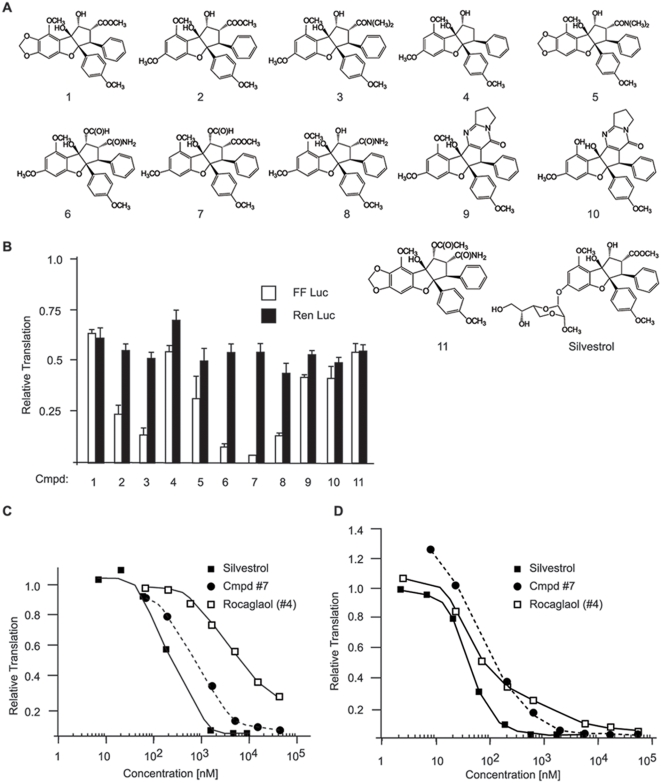
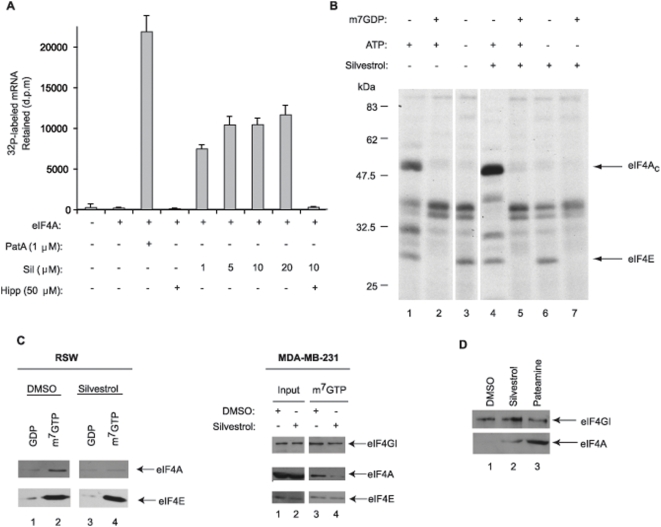
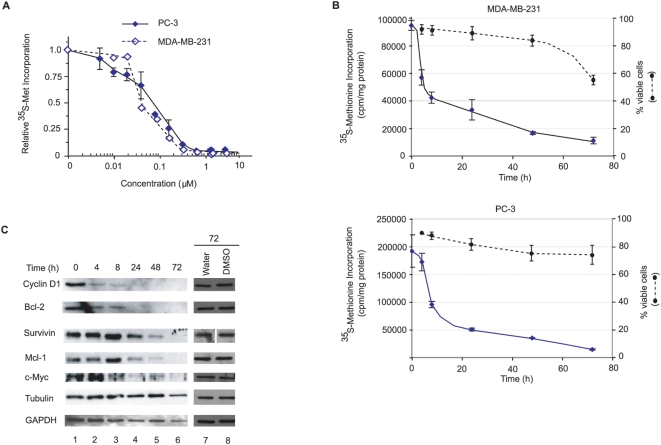
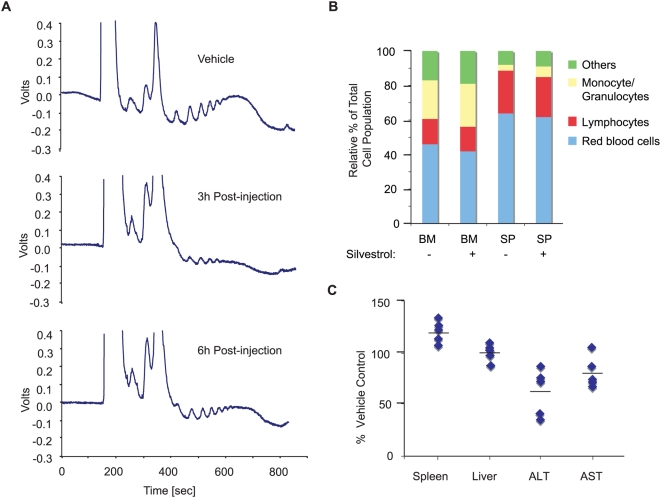
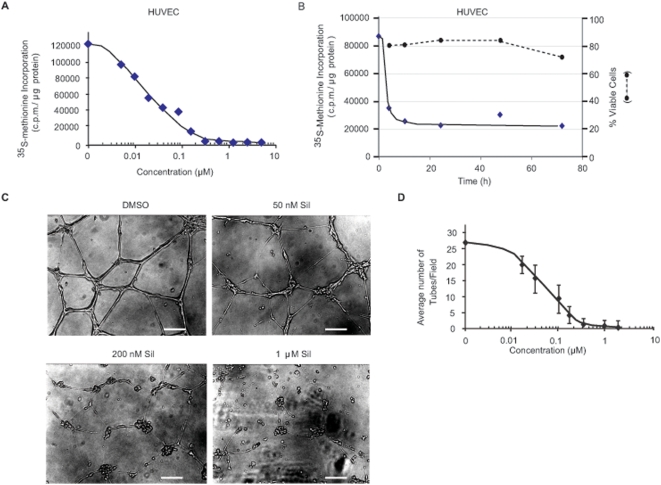
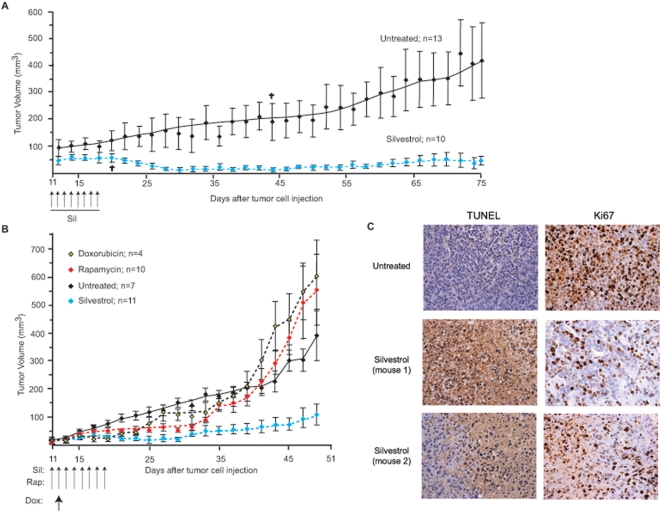
BACKGROUND: Flavaglines are a family of natural products from the genus Aglaia that exhibit anti-cancer activity in vitro and in vivo and inhibit translation initiation. They have been shown to modulate the activity of eIF4A, the DEAD-box RNA helicase subunit of the eukaryotic initiation factor (eIF) 4F complex, a complex that stimulates ribosome recruitment during translation initiation. One flavagline, silvestrol, is capable of modulating chemosensitivity in a mechanism-based mouse model. METHODOLOGY/PRINCIPAL FINDINGS: Among a number of flavagline family members tested herein, we find that silvestrol is the more potent translation inhibitor among these. We find that silvestrol impairs the ribosome recruitment step of translation initiation by affecting the composition of the eukaryotic initiation factor (eIF) 4F complex. We show that silvestrol exhibits significant anticancer activity in human breast and prostate cancer xenograft models, and that this is associated with increased apoptosis, decreased proliferation, and inhibition of angiogenesis. We demonstrate that targeting translation by silvestrol results in preferential inhibition of weakly initiating mRNAs. CONCLUSIONS/SIGNIFICANCE: Our results indicate that silvestrol is a potent anti-cancer compound in vivo that exerts its activity by affecting survival pathways as well as angiogenesis. We propose that silvestrol mediates its effects by preferentially inhibiting translation of malignancy-related mRNAs. Silvestrol appears to be well tolerated in animals.
Overview
The claims and statistics of this paper haven’t been checked yet.
Free: it reads the open-access text and checks the first 5 claims that cite a source we can check. Create a free account to check every claim.
Integrity signals
Registry
Cites
Statistics
Figures
Verification
Claims the paper makes
The claims and statistics of this paper haven’t been checked yet.
Free: it reads the open-access text and checks the first 5 claims that cite a source we can check. Create a free account to check every claim.
Claims other papers make about this one
Each is checked against this paper’s own text: does it say what the citing paper says it does?
The source backs part of the claim, not all of it — or backs it for a different population, condition or comparison.
In the citing paper
“eIF4A inhibitors, which target both isoforms, suppress translation of key oncogenes and have demonstrated antitumor activity in a variety of cancers (15, 17, 19–22).”
From Targeting eIF4A-dependent translation in genetically complex sarcoma (2026) · cites this paper as [21]
Experimental — accuracy not yet measuredThe source backs part of the claim, not all of it — or backs it for a different population, condition or comparison.
In the citing paper
“This supports the idea that increased expression of eIF4A2 may protect cells from the effects of eIF4A1 inhibition; rocaglates such as [-]CR-1-31B inhibit both isoforms, which may contribute to their efficacy (21, 34).”
From Targeting eIF4A-dependent translation in genetically complex sarcoma (2026) · cites this paper as [21]
Experimental — accuracy not yet measuredThe cited source says what the claim attributes to it.
In the citing paper
“Our results build on studies in mouse models of other cancers, including lymphoma, leukemia, breast, prostate, and pancreatic cancer, supporting the tolerability and efficacy of eIF4A inhibitors (15, 17, 20, 21, 38).”
From Targeting eIF4A-dependent translation in genetically complex sarcoma (2026) · cites this paper as [21]
The check wasn’t confident either way, so it gives no verdict — never disputed.
In the citing paper
“A synthetic eIF4A inhibitor, CR-1-31B, has shown potent activity against many cancer cell lines and promising efficacy in several mouse models (15, 17, 20, 21, 32, 33).”
From Targeting eIF4A-dependent translation in genetically complex sarcoma (2026) · cites this paper as [21]
Experimental — accuracy not yet measured
Self-check
Percentages, sums and reported differences re-computed from the paper’s own numbers.
The self-check needs the paper’s full text.
Citations
Cites
New Colorimetric Cytotoxicity Assay for Anticancer-Drug Screening
Skehan, P., Storeng, R., Scudiero, D., Monks, A., McMahon, J., Vistica, D., Warren, J. T., Bokesch, H., Kenney, S., & Boyd, M. R. (1990) · JNCI Journal of the National Cancer Institute · doi:10.1093/jnci/82.13.1107 · Cited by 9,766 · cited 1×
“Cell proliferation was monitored using the sulforhodamine B (SRB) assay [52].”
MethodChou, T.-C., & Talalay, P. (1984) · Advances in Enzyme Regulation · doi:10.1016/0065-2571(84)90007-4 · Cited by 7,178 · cited 1×
“. Drug interaction was assessed by the combination index method of Chou and Talalay using CalcuSyn software (BioSoft, Cambridge, UK)”
MethodCore Signaling Pathways in Human Pancreatic Cancers Revealed by Global Genomic Analyses
Jones, S., Zhang, X., Parsons, D. W., Lin, J. C.-H., Leary, R. J., Angenendt, P., Mankoo, P., Carter, H., Kamiyama, H., Jimeno, A., et al. (2008) · Science · doi:10.1126/science.1164368 · Cited by 3,969 · cited 1×
“. Recently, integrated genomic analysis of human glioblastoma multiforme, pancreatic cancers, breast and colon cancers revealed that human cancers contain a large number of genetic alterations (e.g. an average of 63 genetic alterations for pancreatic cancers) that define a core set of cellular signaling pathways and p…”
BackgroundMalignant transformation by a eukaryotic initiation factor subunit that binds to mRNA 5' cap
Lazaris-Karatzas, A., Montine, K. S., & Sonenberg, N. (1990) · Nature · doi:10.1038/345544a0 · Cited by 956 · cited 1×
“The deregulation of the PI3k/Akt/mTOR signaling axis in human cancers, the finding that ectopic expression of eIF4E is oncogenic”
BackgroundSurvival signalling by Akt and eIF4E in oncogenesis and cancer therapy
Wendel, H.-G., Stanchina, E. D., Fridman, J. S., Malina, A., Ray, S., Kogan, S., Cordon-Cardo, C., Pelletier, J., & Lowe, S. W. (2004) · Nature · doi:10.1038/nature02369 · Cited by 951 · cited 1×
“The deregulation of the PI3k/Akt/mTOR signaling axis in human cancers, the finding that ectopic expression of eIF4E is oncogenic [15,16], and the demonstration that targeted downregulation of eIF4E displays therapeutic benefit in xenograft mouse models [17] suggest that the process of translation initiation is a poten…”
BackgroundSelf-citationAn RNA G-quadruplex in the 5′ UTR of the NRAS proto-oncogene modulates translation
Kumari, S., Bugaut, A., Huppert, J. L., & Balasubramanian, S. (2007) · Nature Chemical Biology · doi:10.1038/nchembio864 · Cited by 822 · cited 1×
“, G-Q(+6)/RL). The G-quadruplex was modeled on one previously described to be present within the 5′ UTR of NRAS RNA and shown to mediate translational repression”
MethodMolecular mechanisms of translation initiation in eukaryotes
Pestova, T. V., Kolupaeva, V. G., Lomakin, I. B., Pilipenko, E. V., Shatsky, I. N., Agol, V. I., & Hellen, C. U. T. (2001) · Proceedings of the National Academy of Sciences · doi:10.1073/pnas.111145798 · Cited by 742 · cited 1×
“eIF4F is composed of three subunits: eIF4E, which binds to the cap structure present at the 59 end of mRNAs; eIF4A, a DEAD-box RNA helicase implicated in preparing a ribosome landing pad for 43S pre-initiation complexes (40S ribosomal subunit and associated factors) by unwinding 59 mRNA structure; and eIF4G, a large s…”
BackgroundS6K1- and ßTRCP-Mediated Degradation of PDCD4 Promotes Protein Translation and Cell Growth
Dorrello, N. V., Peschiaroli, A., Guardavaccaro, D., Colburn, N. H., Sherman, N. E., & Pagano, M. (2006) · Science · doi:10.1126/science.1130276 · Cited by 731
Pestova, T. V., Shatsky, I. N., Fletcher, S. P., Jackson, R. J., & Hellen, C. U. T. (1998) · Genes & Development · doi:10.1101/gad.12.1.67 · Cited by 729 · cited 1×
“. As an internal control, we utilized a construct in which the HCV IRES was driving expression of firefly luciferase, an element known to recruit ribosomes in an eIF4F-independent manner”
MethodeIF-4E expression and its role in malignancies and metastases
De Benedetti, A., & Graff, J. R. (2004) · Oncogene · doi:10.1038/sj.onc.1207545 · Cited by 728 · cited 2×
“These mRNAs typically harbor lengthy, G+C rich, highlystructured 59 UTRs that encumber efficient RNA unwinding by the eIF4F complex and subsequently prevent efficient ribosome loading [14].”
Background
Research works printed but not linked: 1
- Raught B Gingras A-C Sonenberg N 2000 Sonenberg N Hershey JWB Mathews MB Regulation of Ribosome Recruitment in Eukaryotes Cold Spring Harbor Cold Spring Harbor Laboratory Press 245 293
Cited by
Functional 5′ UTR mRNA structures in eukaryotic translation regulation and how to find them
Leppek, K., Das, R., & Barna, M. (2018) · Nature Reviews Molecular Cell Biology · doi:10.1038/nrm.2017.103 · Cited by 949
Translational control in cancer
Silvera, D., Formenti, S. C., & Schneider, R. J. (2010) · Nature Reviews Cancer · doi:10.1038/nrc2824 · Cited by 821
“Silvestrol also has potent anticancer activity in breast and prostate tumour xenograft model”
BackgroundTargeting the translation machinery in cancer
Bhat, M., Robichaud, N., Hulea, L., Sonenberg, N., Pelletier, J., & Topisirovic, I. (2015) · Nature Reviews Drug Discovery · doi:10.1038/nrd4505 · Cited by 799
Self-citationStress granules and neurodegeneration
Wolozin, B., & Ivanov, P. (2019) · Nature Reviews Neuroscience · doi:10.1038/s41583-019-0222-5 · Cited by 810
Stress Granules and Processing Bodies in Translational Control
Ivanov, P., Kedersha, N., & Anderson, P. (2019) · Cold Spring Harbor Perspectives in Biology · doi:10.1101/cshperspect.a032813 · Cited by 496
“Specific helicases eIF4A, DDX3, and DDX6 contribute to SG and PB formation and resolution (Bordeleau et al. 2006; Dang et al. 2006; Ohn et al. 2008; Shih et al. 2008; Cencic et al. 2009; Ayache et al. 2015; Iwasaki et al. 2016).”
BackgroundStress granules, P-bodies and cancer
Anderson, P., Kedersha, N., & Ivanov, P. (2015) · Biochimica et Biophysica Acta (BBA) - Gene Regulatory Mechanisms · doi:10.1016/j.bbagrm.2014.11.009 · Cited by 409
New frontiers in translational control of the cancer genome
Truitt, M. L., & Ruggero, D. (2016) · Nature Reviews Cancer · doi:10.1038/nrc.2016.27 · Cited by 378
Mechanistic insights into mammalian stress granule dynamics
Panas, M. D., Ivanov, P., & Anderson, P. (2016) · Journal of Cell Biology · doi:10.1083/jcb.201609081 · Cited by 374
“, 2013); and (d) silvestrol, a rocaglate isolated from the plant genus Aglaia, that stimulates the RNA-binding and helicase activities of eIF4A, resulting in sequestration of eIF4A from the eIF4F complex (Fig. 1 B3; Bordeleau et al., 2008; Cencic et al., 2009; Kogure et al., 2013).”
BackgroundTargeting the eIF4F Translation Initiation Complex: A Critical Nexus for Cancer Development
Pelletier, J., Graff, J., Ruggero, D., & Sonenberg, N. (2015) · Cancer Research · doi:10.1158/0008-5472.can-14-2789 · Cited by 367
“of metastatic outgrowth without substantially affecting normal cellular and organismal function (120, 129, 137, 173).”
BackgroundInfluentialSelf-citationRocaglates convert DEAD-box protein eIF4A into a sequence-selective translational repressor
Iwasaki, S., Floor, S. N., & Ingolia, N. T. (2016) · Nature · doi:10.1038/nature17978 · Cited by 313
“Because RocA enhances the RNA affinity of eIF4A 1,2,6 , we suspected that it could induce effects beyond the simple loss of eIF4A activity.”
Erratum: New frontiers in translational control of the cancer genome
Truitt, M. L., & Ruggero, D. (2017) · Nature Reviews Cancer · doi:10.1038/nrc.2017.30 · Cited by 303
Cytoplasmic stress granules: Dynamic modulators of cell signaling and disease
Mahboubi, H., & Stochaj, U. (2017) · Biochimica et Biophysica Acta (BBA) - Molecular Basis of Disease · doi:10.1016/j.bbadis.2016.12.022 · Cited by 288
Tight Coordination of Protein Translation and HSF1 Activation Supports the Anabolic Malignant State
Santagata, S., Mendillo, M. L., Tang, Y.-C., Subramanian, A., Perley, C. C., Roche, S. P., Wong, B., Narayan, R., Kwon, H., Koeva, M., et al. (2013) · Science · doi:10.1126/science.1238303 · Cited by 285
Self-citationThe Relevance of Higher Plants in Lead Compound Discovery Programs
Kinghorn, A. D., Pan, L., Fletcher, J. N., & Chai, H. (2011) · Journal of Natural Products · doi:10.1021/np200391c · Cited by 282
Translational control of tumor immune escape via the eIF4F–STAT1–PD-L1 axis in melanoma
Cerezo, M., Guemiri, R., Druillennec, S., Girault, I., Malka-Mahieu, H., Shen, S., Allard, D., Martineau, S., Welsch, C., Agoussi, S., et al. (2018) · Nature Medicine · doi:10.1038/s41591-018-0217-1 · Cited by 254
Prohibitin Ligands in Cell Death and Survival: Mode of Action and Therapeutic Potential
Thuaud, F., Ribeiro, N., Nebigil, C. G., & Désaubry, L. (2013) · Chemistry & Biology · doi:10.1016/j.chembiol.2013.02.006 · Cited by 208
“Silvestrol is the flavagline that has been the most studied in vivo for its anticancer properties (Alinari et al., 2012; Bordeleau et al., 2008; Cencic et al., 2009; Hwang et al., 2004; Kim et al., 2007; Mi et al., 2006a; Robert et al., 2009; Schatz et al., 2011).”
BackgroundInfluentialMüller, C., Schulte, F. W., Lange-Grünweller, K., Obermann, W., Madhugiri, R., Pleschka, S., Ziebuhr, J., Hartmann, R. K., & Grünweller, A. (2018) · Antiviral Research · doi:10.1016/j.antiviral.2017.12.010 · Cited by 200
“proposed that targeting eIF4A by silvestrol might lead to mRNA discrimination during translation (Cencic et al., 2009; Rubio et al., 2014).”
BackgroundInfluentialRubio, C. A., Weisburd, B., Holderfield, M., Arias, C., Fang, E., DeRisi, J. L., & Fanidi, A. (2014) · Genome Biology · doi:10.1186/s13059-014-0476-1 · Cited by 200
“This compound has been shown to selectively target the RNA helicase activity of eIF4A both in vitro and in vivo, thereby impairing translation initiation [21,22], and is known to have robust anti-cancer effects [23,24].”
BackgroundThe Translation Inhibitor Rocaglamide Targets a Bimolecular Cavity between eIF4A and Polypurine RNA
Iwasaki, S., Iwasaki, W., Takahashi, M., Sakamoto, A., Watanabe, C., Shichino, Y., Floor, S. N., Fujiwara, K., Mito, M., Dodo, K., et al. (2019) · Molecular Cell · doi:10.1016/j.molcel.2018.11.026 · Cited by 190
“, 2016) — was also suggested as a mechanism of RocA-mediated translation repression (Cencic et al., 2009).”
BackgroundReversing chemoresistance by small molecule inhibition of the translation initiation complex eIF4F
Cencic, R., Hall, D. R., Robert, F., Du, Y., Min, J., Li, L., Qui, M., Lewis, I., Kurtkaya, S., Dingledine, R., et al. (2011) · Proceedings of the National Academy of Sciences · doi:10.1073/pnas.1011477108 · Cited by 185
“However, we favor the interpretation that 4E1RCat acts through disruption of eIF4E:eIF4G interaction because this would be consistent with results demonstrating that blocking the eIF4A subunit of eIF4F from loading onto mRNA templates (13, 14) shows similar chemosensitizing properties.”
BackgroundMethodResultSelf-citationTargeting Eukaryotic Translation Initiation Factor 4E (eIF4E) in Cancer
Hsieh, A. C., & Ruggero, D. (2010) · Clinical Cancer Research · doi:10.1158/1078-0432.ccr-10-0433 · Cited by 186
Modelska, A., Turro, E., Russell, R., Beaton, J., Sbarrato, T., Spriggs, K., Miller, J., Gräf, S., Provenzano, E., Blows, F., et al. (2015) · Cell Death & Disease · doi:10.1038/cddis.2014.542 · Cited by 172
“models, eIF4A inhibition enhanced apoptosis and diminished tumor angiogenesis and proliferation.(21) Recently, several”
BackgroundPolier, G., Neumann, J., Thuaud, F., Ribeiro, N., Gelhaus, C., Schmidt, H., Giaisi, M., Köhler, R., Müller, W. W., Proksch, P., et al. (2012) · Chemistry & Biology · doi:10.1016/j.chembiol.2012.07.012 · Cited by 166
Herdy, B., Mayer, C., Varshney, D., Marsico, G., Murat, P., Taylor, C., D'Santos, C., Tannahill, D., & Balasubramanian, S. (2018) · Nucleic Acids Research · doi:10.1093/nar/gky861 · Cited by 160
“A possible explanation is that rG4 association with eIF4AI can only be detected under conditions when eIF4AI is hampered by small molecules and is part of the translation initiation complex eIF4F (19,52).”
BackgroundThe continuing search for antitumor agents from higher plants
Pan, L., Chai, H., & Kinghorn, A. D. (2010) · Phytochemistry Letters · doi:10.1016/j.phytol.2009.11.005 · Cited by 158
“The antineoplastic activity of silvestrol is associated with increased apoptosis, decreased proliferation, and inhibition of angiogenesis, and it acts as a strong translation inhibitor of malignancy-related mRNA by modulating the activity of initiation factor elF4A (Bordeleau et al., 2008;Cencic et al., 2009).”
The biological and therapeutic relevance of mRNA translation in cancer
Blagden, S. P., & Willis, A. E. (2011) · Nature Reviews Clinical Oncology · doi:10.1038/nrclinonc.2011.16 · Cited by 181
“This effect depletes eIF4A from the eIF4F complex and reduces ribosomal recruitment to the mRNA transcript”
BackgroundInsights into the mechanisms of eukaryotic translation gained with ribosome profiling
Andreev, D. E., O’Connor, P. B. F., Loughran, G., Dmitriev, S. E., Baranov, P. V., & Shatsky, I. N. (2016) · Nucleic Acids Research · doi:10.1093/nar/gkw1190 · Cited by 164
“This drug increases binding of eIF4A to RNA (64) and thus impairs the activity of eIF4F.”
MicroRNAs Trigger Dissociation of eIF4AI and eIF4AII from Target mRNAs in Humans
Fukao, A., Mishima, Y., Takizawa, N., Oka, S., Imataka, H., Pelletier, J., Sonenberg, N., Thoma, C., & Fujiwara, T. (2014) · Molecular Cell · doi:10.1016/j.molcel.2014.09.005 · Cited by 181
“To address this question, we made use of a pharmacological inhibitor of eIF4A, silvestrol, which locks eIF4A onto mRNA (Bordeleau et al., 2008; Cencic et al., 2009; Malina et al., 2011).”
Self-citationRocaglamide, silvestrol and structurally related bioactive compounds from Aglaia species
Pan, L., Woodard, J. L., Lucas, D. M., Fuchs, J. R., & Douglas Kinghorn, A. (2014) · Nat. Prod. Rep. · doi:10.1039/c4np00006d · Cited by 131
Evidence for a Functionally Relevant Rocaglamide Binding Site on the eIF4A–RNA Complex
Sadlish, H., Galicia-Vazquez, G., Paris, C. G., Aust, T., Bhullar, B., Chang, L., Helliwell, S. B., Hoepfner, D., Knapp, B., Riedl, R., et al. (2013) · ACS Chemical Biology · doi:10.1021/cb400158t · Cited by 127
Self-citationComparative Structural Analysis of Human DEAD-Box RNA Helicases
Schutz, P., Karlberg, T., van den Berg, S., Collins, R., Lehtiö, L., Högbom, M., Holmberg-Schiavone, L., Tempel, W., Park, H., Hammarström, M., et al. (2010) · PLoS ONE · doi:10.1371/journal.pone.0012791 · Cited by 144
Schatz, J. H., Oricchio, E., Wolfe, A. L., Jiang, M., Linkov, I., Maragulia, J., Shi, W., Zhang, Z., Rajasekhar, V. K., Pagano, N. C., et al. (2011) · Journal of Experimental Medicine · doi:10.1084/jem.20110846 · Cited by 119
Self-citationCurrent status and contemporary approaches to the discovery of antitumor agents from higher plants
Agarwal, G., Carcache, P. J. B., Addo, E. M., & Kinghorn, A. D. (2019) · Biotechnology Advances · doi:10.1016/j.biotechadv.2019.01.004 · Cited by 146
Blocking eIF4E-eIF4G Interaction as a Strategy To Impair Coronavirus Replication
Cencic, R., Desforges, M., Hall, D. R., Kozakov, D., Du, Y., Min, J., Dingledine, R., Fu, H., Vajda, S., Talbot, P. J., et al. (2011) · Journal of Virology · doi:10.1128/jvi.00078-11 · Cited by 107
“Hippuristanol prevents eIF4A from binding to RNA (2), whereas silvestrol sequesters eIF4A from the eIF4F complex (3, 6).”
BackgroundSelf-citationRNA helicases in infection and disease
Steimer, L., & Klostermeier, D. (2012) · RNA Biology · doi:10.4161/rna.20090 · Cited by 121
eIF4A supports an oncogenic translation program in pancreatic ductal adenocarcinoma
Chan, K., Robert, F., Oertlin, C., Kapeller-Libermann, D., Avizonis, D., Gutierrez, J., Handly-Santana, A., Doubrovin, M., Park, J., Schoepfer, C., et al. (2019) · Nature Communications · doi:10.1038/s41467-019-13086-5 · Cited by 106
Self-citationDiscovery of Anticancer Agents of Diverse Natural Origin
Kinghorn, A. D., de Blanco, E. J. C., Lucas, D. M., RAKOTONDRAIBE, H. L., Orjala, J., Soejarto, D. D., Oberlies, N. H., Pearce, C. J., Wani, M. C., Stockwell, B. R., et al. (2016) · Anticancer Research · doi:10.21873/anticanres.11146 · Cited by 105
Tumor suppression by small molecule inhibitors of translation initiation
Chen, L., Aktas, B. H., Wang, Y., He, X., Sahoo, R., Zhang, N., Denoyelle, S., Kabha, E., Yang, H., Yefidoff Freedman, R., et al. (2012) · Oncotarget · doi:10.18632/oncotarget.598 · Cited by 104
“com/oncotarget silvestrol - reduce the activity of the eIF4F complex by modulating the activity of eIF4A thereby suppressing translation initiation [36-38].”
BackgroundTranslation Regulation as a Therapeutic Target in Cancer
Grzmil, M., & Hemmings, B. A. (2012) · Cancer Research · doi:10.1158/0008-5472.can-12-0026 · Cited by 103
Translational control of aberrant stress responses as a hallmark of cancer
El-Naggar, A. M., & Sorensen, P. H. B. (2018) · The Journal of Pathology · doi:10.1002/path.5030 · Cited by 114
“These eIF4A inhibitors have shown promising results in preclinical settings [221,222].”
BackgroundPotential of Plant-Derived Natural Products in the Treatment of Leukemia and Lymphoma
Lucas, D. M., Still, P. C., Pérez, L. B., Grever, M. R., & Kinghorn, A. D. (2010) · Current Drug Targets · doi:10.2174/138945010791320809 · Cited by 122
“More recently, extensive and elegant work by Pelletier and colleagues has defined the inhibition of translation initiation as a key mechanism in the cytotoxic activity of silvestrol [103,110].”
BackgroundInfluentialThe natural compound silvestrol is a potent inhibitor of Ebola virus replication
Biedenkopf, N., Lange‐Grünweller, K., Schulte, F. W., Weißer, A., Müller, C., Becker, D., Becker, S., Hartmann, R. K., & Grünweller, A. (2016) · Antiviral Research · doi:10.1016/j.antiviral.2016.11.011 · Cited by 108
Discovery of new anticancer agents from higher plants
Li, P. (2011) · Frontiers in Bioscience-Scholar · doi:10.2741/257 · Cited by 100
Dysregulation of protein synthesis and disease
Quesne, J. P. C. L., Spriggs, K. A., Bushell, M., & Willis, A. E. (2009) · The Journal of Pathology · doi:10.1002/path.2627 · Cited by 116
Chu, J., Galicia-Vázquez, G., Cencic, R., Mills, J. R., Katigbak, A., Porco, J. A., & Pelletier, J. (2016) · Cell Reports · doi:10.1016/j.celrep.2016.05.005 · Cited by 95
“, 2008), exhibit anti-tumor activity in a number of pre-clinical models (Bordeleau et al., 2008; Cencic et al., 2009; Wolfe et al., 2014), and are thought to exert their effects by preferentially inhibiting the translation of key oncogenic mRNAs (e.”
BackgroundSelf-citationTranscription and Translation Inhibitors in Cancer Treatment
Laham-Karam, N., Pinto, G., Poso, A., & Kokkonen, P. (2020) · Frontiers in Chemistry · doi:10.3389/fchem.2020.00276 · Cited by 95
“Silvestrol inhibits the translation initiation by binding to the initiation factor eIF-4A which prevents the ribosome loading onto the mRNA template (Cencic et al., 2009).”
BackgroundStress granule: A promising target for cancer treatment
Gao, X., Jiang, L., Gong, Y., Chen, X., Ying, M., Zhu, H., He, Q., Yang, B., & Cao, J. (2019) · British Journal of Pharmacology · doi:10.1111/bph.14790 · Cited by 99
“Silvestrol, one of the flavagline derivatives, had a strong effect on the eIF4F complex, inhibiting translation initiation and exhibiting strong anti‐cancer activity in human prostate and breast cancer (Cencic et al., 2009).”
BackgroundEbada, S. S., Lajkiewicz, N., Porco, J. A., Li-Weber, M., & Proksch, P. (2011) · Fortschritte der Chemie organischer Naturstoffe / Progress in the Chemistry of Organic Natural Products · doi:10.1007/978-3-7091-0748-5_1 · Cited by 92
Self-citationTargeting Synthetic Lethal Interactions between Myc and the eIF4F Complex Impedes Tumorigenesis
Lin, C.-J., Nasr, Z., Premsrirut, P. K., Porco, J. A., Hippo, Y., Lowe, S. W., & Pelletier, J. (2012) · Cell Reports · doi:10.1016/j.celrep.2012.02.010 · Cited by 90
“We have not observed a loss in body weight with the use of silvestrol even when administered daily for 4 weeks (data not shown) consistent with previous studies documenting that long-term administration of this compound is well tolerated - affecting neither spleen or liver weights, nor altering liver aminotransferase…”
BackgroundResultSelf-citationDiscovery of new anticancer agents from higher plants
Kinghorn, A. D. (2012) · Frontiers in Bioscience-Scholar · doi:10.2741/s257 · Cited by 92
Dual targeting of DDX3 and eIF4A by the translation inhibitor rocaglamide A
Chen, M., Asanuma, M., Takahashi, M., Shichino, Y., Mito, M., Fujiwara, K., Saito, H., Floor, S. N., Ingolia, N. T., Sodeoka, M., et al. (2020) · Cell chemical biology · doi:10.1016/j.chembiol.2020.11.008 · Cited by 82
“This group of drugs has shown promise in a number of preclinical trials (Bordeleau et al., 2008; Cencic et al., 2009; Santagata et al., 2013; Wolfe et al., 2014; Manier et al., 2017; Chan et al., 2019), and a derivative (zotatifin or eFT226) (Ernst et al.”
BackgroundTargeting RNA helicases in cancer: The translation trap
van Voss, M. R. H., van Diest, P. J., & Raman, V. (2017) · Biochimica et Biophysica Acta (BBA) - Reviews on Cancer · doi:10.1016/j.bbcan.2017.09.006 · Cited by 100
The natural compound silvestrol inhibits hepatitis E virus (HEV) replication in vitro and in vivo
Tödt, D., Moeller, N., Praditya, D., Kinast, V., Friesland, M., Engelmann, M., Verhoye, L., Sayed, I. M., Behrendt, P., Thi, V. L. D., et al. (2018) · Antiviral Research · doi:10.1016/j.antiviral.2018.07.010 · Cited by 97
“The natural compound silvestrol, which has been identified in this study as a novel HEV inhibitor, has been reported to have the ability of modulating translation by preventing ribosome loading onto mRNA templates by targeting this eIF4A eukaryotic initiation factor (Bordeleau et al., 2008; Cencic et al., 2009).”
BackgroundResultmi RISC and the CCR 4– NOT complex silence mRNA targets independently of 43S ribosomal scanning
Kuzuoğlu‐Öztürk, D., Bhandari, D., Huntzinger, E., Fauser, M., Helms, S., & Izaurralde, E. (2016) · The EMBO Journal · doi:10.15252/embj.201592901 · Cited by 86
“We further confirmed that translation of the TISU reporter was independent of scanning, and thus of eIF4A activity, using silve-strol, a compound that stimulates eIF4A1/2 RNA-binding activity, reducing the pool of the protein available for translation (Bordeleau et al , 2008; Cencic et al , 2009).”
Synthetic Silvestrol Analogues as Potent and Selective Protein Synthesis Inhibitors
Liu, T., Nair, S. J., Lescarbeau, A., Belani, J., Peluso, S., Conley, J., Tillotson, B., O’Hearn, P., Smith, S., Slocum, K., et al. (2012) · Journal of Medicinal Chemistry · doi:10.1021/jm3011542 · Cited by 84
Self-citationeIF4F suppression in breast cancer affects maintenance and progression
Nasr, Z., Robert, F., Porco, J. A., Muller, W. J., & Pelletier, J. (2013) · Oncogene · doi:10.1038/onc.2012.105 · Cited by 81
Self-citationGupta, S. V., Sass, E. J., Davis, M. E., Edwards, R. B., Lozanski, G., Heerema, N. A., Lehman, A., Zhang, X., Jarjoura, D., Byrd, J. C., et al. (2011) · The AAPS Journal · doi:10.1208/s12248-011-9276-7 · Cited by 81
“As a potential therapeutic agent, silvestrol is nearly unique in that its target within the cell is the initiation step of translation (11,12), the step at which most cellular regulation of translation occurs.”
BackgroundTargeting the eIF4A RNA helicase as an anti-neoplastic approach
Chu, J., & Pelletier, J. (2014) · Biochimica et Biophysica Acta (BBA) - Gene Regulatory Mechanisms · doi:10.1016/j.bbagrm.2014.09.006 · Cited by 91
Self-citationA Quick Guide to Small-Molecule Inhibitors of Eukaryotic Protein Synthesis
Dmitriev, S. E., Vladimirov, D. O., & Lashkevich, K. A. (2020) · Biochemistry (Moscow) · doi:10.1134/s0006297920110097 · Cited by 90
Total Synthesis of (±)-Rocaglamide via Oxidation-Initiated Nazarov Cyclization
Malona, J. A., Cariou, K., Spencer, W. T. I., & Frontier, A. J. (2012) · The Journal of Organic Chemistry · doi:10.1021/jo202366c · Cited by 78
Flavaglines: Potent Anticancer Drugs that Target Prohibitins and the Helicase eIF4A
Basmadjian, C., Thuaud, F., Ribeiro, N., & Désaubry, L. (2013) · Future Medicinal Chemistry · doi:10.4155/fmc.13.177 · Cited by 89
Repurposing host-based therapeutics to control coronavirus and influenza virus
Li, C.-C., Wang, X.-J., & Wang, H. R. (2019) · Drug Discovery Today · doi:10.1016/j.drudis.2019.01.018 · Cited by 72
“Silvestrol, a natural compound isolated from the plant Aglaia foveolata, is an inhibitor of eIF4A [79] .”
BackgroundBioactive Flavaglines and Other Constituents Isolated from Aglaia perviridis
Li, P., Acuña, U. M., Li, J., Jena, N., Ninh, T. N., Pannell, C. M., Chai, H., Fuchs, J. R., de Blanco, E. J. C., Soejarto, D. D., et al. (2013) · Journal of Natural Products · doi:10.1021/np3007588 · Cited by 76
eIF4E-Dependent Translational Control: A Central Mechanism for Regulation of Pain Plasticity
Uttam, S., Wong, C., Price, T. J., & Khoutorsky, A. (2018) · Frontiers in Genetics · doi:10.3389/fgene.2018.00470 · Cited by 84
Stress granules: functions and mechanisms in cancer
Zhou, H., Luo, J., Mou, K., Peng, L., Li, X., Lei, Y., Wang, J., Lin, S., Luo, Y., & Li, X. (2023) · Cell & Bioscience · doi:10.1186/s13578-023-01030-6 · Cited by 80
“In addition, SGs inhibitors psammaplysin F and silvestrol have been found to inhibit tumor growth and promote the effect of chemotherapy [126, 144, 147].”
BackgroundHu, M., Bogoyevitch, M. A., & Jans, D. A. (2020) · Physiological Reviews · doi:10.1152/physrev.00030.2019 · Cited by 81
Inhibition of Zika Virus Replication by Silvestrol
Elgner, F., Sabino, C., Basic, M., Ploen, D., Grünweller, A., & Hildt, E. (2018) · Viruses · doi:10.3390/v10040149 · Cited by 77
Lin, C.-J., Robert, F., Sukarieh, R., Michnick, S., & Pelletier, J. (2010) · Cancer Research · doi:10.1158/0008-5472.can-09-4072 · Cited by 69
“As well, targeting the translation initiation pathway using antisense oligonucleotides to eIF4E (2) or a small-molecule inhibitor of eIF4F activity (17, 18) curtails tumor growth in xenograft and the Eμ-myc lymphoma models, respectively.”
MethodSelf-citationGarzia, A., Meyer, C., & Tuschl, T. (2021) · Cell Reports · doi:10.1016/j.celrep.2021.109468 · Cited by 67
Therapeutic Potential of the Translation Inhibitor Silvestrol in Hepatocellular Cancer
Kogure, T., Kinghorn, A. D., Yan, I., Bolon, B., Lucas, D. M., Grever, M. R., & Patel, T. (2013) · PLoS ONE · doi:10.1371/journal.pone.0076136 · Cited by 68
“As Mcl-1 can act as an anti-apoptotic factor to block the release of cytochrome C from mitochondria, we examined the effect of silvestrol on mitochondrial integrity.”
BackgroundInfluentialTumor suppressor Pdcd4 attenuates Sin1 translation to inhibit invasion in colon carcinoma
Wang, Q., Zhu, J., Wang, Y.-W., Dai, Y., Wang, Y.-L., Wang, C., Liu, J., Baker, A., Colburn, N. H., & Yang, H.-S. (2017) · Oncogene · doi:10.1038/onc.2017.228 · Cited by 67
The translation inhibitor pateamine A prevents cachexia-induced muscle wasting in mice
Di Marco, S., Cammas, A., Lian, X. J., Kovacs, E. N., Ma, J. F., Hall, D. T., Mazroui, R., Richardson, J., Pelletier, J., & Gallouzi, I. E. (2012) · Nature Communications · doi:10.1038/ncomms1899 · Cited by 67
Self-citationModifying chemotherapy response by targeted inhibition of eukaryotic initiation factor 4A
Cencic, R., Robert, F., Galicia-Vázquez, G., Malina, A., Ravindar, K., Somaiah, R., Pierre, P., Tanaka, J., Deslongchamps, P., & Pelletier, J. (2013) · Blood Cancer Journal · doi:10.1038/bcj.2013.25 · Cited by 66
Self-citationLindqvist, L., Vikstrom, I. B., Chambers, J. M., McArthur, K., Anderson, M. A., Henley, K. J., Happo, L., Cluse, L. A., Johnstone, R. W., Roberts, A. W., et al. (2012) · Cell Death and Disease · doi:10.1038/cddis.2012.149 · Cited by 68
“Other cell death pathways have also been implicated because translation inhibitors reduce the levels of cyclin D1, c-Myc, XIAP and cFlip.(15,22,23,26) However, most attempts to determine the mechanisms by which translation inhibitors cause cell death are based on observational and correlative data (e.”
BackgroundEmerging Therapeutics Targeting mRNA Translation
Malina, A., Mills, J. R., & Pelletier, J. (2012) · Cold Spring Harbor Perspectives in Biology · doi:10.1101/cshperspect.a012377 · Cited by 65
“This is also what is seen for human AML cell lines, where silvestrol synergizes with the standard-of-care drugs daunorubicin and cytarabine (Cencic et al. 2009b).”
BackgroundSelf-citationTranslation initiation factor eIF4F modifies the dexamethasone response in multiple myeloma
Robert, F., Roman, W., Bramoullé, A., Fellmann, C., Roulston, A., Shustik, C., Porco, J. A., Shore, G. C., Sebag, M., & Pelletier, J. (2014) · Proceedings of the National Academy of Sciences · doi:10.1073/pnas.1402650111 · Cited by 64
“Median effect analysis was performed essentially as described (26).”
BackgroundMethodSelf-citationLi‐Weber, M. (2014) · International Journal of Cancer · doi:10.1002/ijc.29013 · Cited by 72
“5 mg/kg/day for 8 days.(26) Significant delay in growth and tumor size (p value5 0.”
BackgroundLi, P., Kardono, L. B. S., Riswan, S., Chai, H., de Blanco, E. J. C., Pannell, C. M., Soejarto, D. D., McCloud, T. G., Newman, D. J., & Kinghorn, A. D. (2010) · Journal of Natural Products · doi:10.1021/np100503q · Cited by 64
Hippuristanol - A potent steroid inhibitor of eukaryotic initiation factor 4A
Cencic, R., & Pelletier, J. (2016) · Translation · doi:10.1080/21690731.2015.1137381 · Cited by 62
“has shown activity in a variety of pre-clinical cancer models.(31,50,51,61-63) Presumably, these physiological”
BackgroundSelf-citationLiu, S., Wang, W., Brown, L. E., Qiu, C., Lajkiewicz, N. J., Zhao, T., Zhou, J., Porco, J. A. J., & Wang, T. T. (2015) · EBioMedicine · doi:10.1016/j.ebiom.2015.09.018 · Cited by 63
Self-citationCencic, R., Carrier, M., Trnkus, A., Porco, J. A. J., Minden, M. D., & Pelletier, J. (2009) · Leukemia Research · doi:10.1016/j.leukres.2009.07.043 · Cited by 69
Self-citationNovel Flavaglines Displaying Improved Cytotoxicity
Thuaud, F., Ribeiro, N., Gaiddon, C., Cresteil, T., & Désaubry, L. (2010) · Journal of Medicinal Chemistry · doi:10.1021/jm101318b · Cited by 60
Alachkar, H., Santhanam, R., Harb, J. G., Lucas, D. M., Oaks, J. J., Hickey, C. J., Li, P., Kinghorn, A. D., Caligiuri, M. A., Perrotti, D., et al. (2013) · Journal of Hematology & Oncology · doi:10.1186/1756-8722-6-21 · Cited by 60
“This inhibition of protein synthesis results in a preferential depletion of proteins with short half-lives, such as MCL1, to which leukemia and cancer cells may be addicted and thrive on [22,24].”
BackgroundInfluentialRocaglamide and silvestrol: a long story from anti-tumor to anti-coronavirus compounds
Schulz, G., Victoria, C., Kirschning, A., & Steinmann, E. (2020) · Natural Product Reports · doi:10.1039/d0np00024h · Cited by 62
Recent advances in the biology and chemistry of the flavaglines
Ribeiro, N., Thuaud, F., Nebigil, C. G., & Désaubry, L. (2011) · Bioorganic & Medicinal Chemistry · doi:10.1016/j.bmc.2011.10.048 · Cited by 61
Cai, W., Ye, Q., & She, Q.-B. (2014) · Oncotarget · doi:10.18632/oncotarget.2109 · Cited by 58
“Indeed, several of those translation initiation inhibitors, including eIF4E antisense-oligonucleotides and silvestrol that inhibits the RNA helicase eIF4A, have recently produced encouraging anti-tumor effects with limited toxicity profiles in mouse; and some of these inhibitors have been tested in clinical studies [4…”
Chambers, J. M., Lindqvist, L., Webb, A. I., Huang, D. C. S., Savage, G. P., & Rizzacasa, M. A. (2013) · Organic Letters · doi:10.1021/ol400401d · Cited by 58
Slaine, P. D., Kleer, M., Smith, N. K., Khaperskyy, D. A., & McCormick, C. (2017) · Viruses · doi:10.3390/v9120388 · Cited by 58
“Both molecules induce eIF4A dimerization and force an engagement with RNA, thereby depleting eIF4A from eIF4F complexes and inhibiting cap-dependent translation [14,25].”
BackgroundTargeting Translation Dependence in Cancer
Malina, A., Cencic, R., & Pelletier, J. (2011) · Oncotarget · doi:10.18632/oncotarget.218 · Cited by 67
“The compound does not cause distress, weight loss or liver damage, and does not appear to immunosuppress in the mouse [133, 134].”
BackgroundSelf-citationRole of stress granules in tumorigenesis and cancer therapy
Li, T., Zeng, Z., Fan, C., & Xiong, W. (2023) · Biochimica et Biophysica Acta (BBA) - Reviews on Cancer · doi:10.1016/j.bbcan.2023.189006 · Cited by 64
Choi, M.-H., Jo, H., Park, H.-J., Kumar, A. S., Lee, J., Yun, J., Kim, Y., Han, S., Jung, J., Cho, J., et al. (2015) · Bioorganic & Medicinal Chemistry Letters · doi:10.1016/j.bmcl.2015.04.050 · Cited by 59
Inhibition of Hepatitis E Virus Spread by the Natural Compound Silvestrol
Glitscher, M., Himmelsbach, K., Woytinek, K., Johne, R., Reuter, A., Spirić, J., Schwaben, L., Grünweller, A., & Hildt, E. (2018) · Viruses · doi:10.3390/v10060301 · Cited by 58
Discovery of Anticancer Agents of Diverse Natural Origin
Aldrich, L. N., Burdette, J. E., de Blanco, E. J. C., Coss, C. C., Eustáquio, A. S., Fuchs, J. R., Kinghorn, A. D., MacFarlane, A. S., Mize, B. K., Oberlies, N. H., et al. (2022) · Journal of Natural Products · doi:10.1021/acs.jnatprod.2c00036 · Cited by 60
Perturbations of RNA helicases in cancer
Robert, F., & Pelletier, J. (2013) · Wiley Interdisciplinary Reviews - RNA · doi:10.1002/wrna.1163 · Cited by 56
Self-citationTargeting translation: eIF4E as an emerging anticancer drug target
Lu, C., Makala, L., Wu, D., & Cai, Y. (2016) · Expert Reviews in Molecular Medicine · doi:10.1017/erm.2015.20 · Cited by 53
Saradhi, U. V. R. V., Gupta, S. V., Chiu, M., Wang, J., Ling, Y., Liu, Z., Newman, D. J., Covey, J. M., Kinghorn, A. D., Marcucci, G., et al. (2011) · The AAPS Journal · doi:10.1208/s12248-011-9273-x · Cited by 50
“Silvestrol has previously been administered to mice using a PEG 400/Tween 80 vehicle (13,14), although the bioavailability in this formulation has not been reported.”
BackgroundMethodZhou, Z., & Tius, M. A. (2015) · Angewandte Chemie International Edition · doi:10.1002/anie.201501374 · Cited by 49
Silvestrol induces early autophagy and apoptosis in human melanoma cells
Chen, W.-L., Li, P., Kinghorn, A. D., Swanson, S. M., & Burdette, J. E. (2016) · BMC Cancer · doi:10.1186/s12885-015-1988-0 · Cited by 52
“mRNA template by targeting the eukaryotic initiation factor, eIF-4A [10, 11].”
BackgroundDysregulation of mRNA translation and energy metabolism in cancer
Leibovitch, M., & Topisirović, I. (2017) · Advances in Biological Regulation · doi:10.1016/j.jbior.2017.11.001 · Cited by 53
“Indeed, recent studies have shown that eIF4A inhibitors at doses that eradicate cancer cells exert only minimal toxicity in nontransformed cells and mice (Cencic et al., 2009; Cencic et al., 2013; Nasr et al., 2013).”
BackgroundTargeting the eIF4A RNA helicase blocks translation of the MUC1-C oncoprotein
Jin, C., Rajabi, H. N., Rodrigo, C. M., Porco, J. A. J., & Kufe, D. W. (2012) · Oncogene · doi:10.1038/onc.2012.236 · Cited by 49
“Silvestrol inhibits eIF4A by inducing dimerization of eIF4A and RNA (8) and preferentially blocks the translation of mRNAs with highly structured 5′UTRs that require efficient unwinding by the eIF4F complex (43).”
BackgroundSelf-citation
Metadata
- Authors
- Cencic, R., Carrier, M., Galicia-Vázquez, G., Bordeleau, M.-E., Sukarieh, R., Bourdeau, A., Brem, B., Teodoro, J. G., Greger, H., Tremblay, M. L., Porco, J. A., & Pelletier, J.
- Affiliations
- McGill University (CA)
- Sunnybrook Health Science Centre (CA)
- University of Vienna (AT)
- Boston University (US)
- Corresponding author
- Pelletier, Jerry
- ORCID
- Venue
- PLoS ONE
- Publisher
- Public Library of Science (PLoS)
- Published
- 2009-04-29
- Volume
- 4
- Issue
- 4
- Pages
- e5223
- ISSN
- 1932-6203 (ISSN-L)
- PMC
- PMC2671147
- OpenAlex
- W2031035517
- Cited by
- 302
- References
- 52
- Citations by year
- 2026: 8 · 2025: 10 · 2024: 10 · 2023: 24 · 2022: 12 · 2021: 22 · 2020: 15 · 2019: 23 · 2018: 28 · 2017: 14 · 2016: 25 · 2015: 13 · 2014: 24 · 2013: 18 · 2012: 18
- FWCI
- 7.64
- Type
- journal article
- Language
- en
- Open access
- gold
- doi.org
- Locations
- PLoS ONE (publishedVersion, cc-by)
- PubMed Central (publishedVersion, cc-by)
- PubMed (publishedVersion)
- Phaidra (Universität Wien) (submittedVersion, cc-by-nc-nd)
- DOAJ (DOAJ: Directory of Open Access Journals) (submittedVersion, cc-by-sa)
- eScholarship@McGill (McGill) (submittedVersion, cc-by)
- Figshare (submittedVersion, cc-by)
- OpenBU (Boston University) (submittedVersion)
- Funders
- Canadian Breast Cancer Research Alliance
- National Institutes of Health
- Canadian Institutes of Health Research
- National Institute of General Medical Sciences (R01GM073855)
- Topics
- Life Sciences › Biochemistry, Genetics and Molecular Biology › Molecular Biology › RNA and protein synthesis mechanisms
- Life Sciences › Biochemistry, Genetics and Molecular Biology › Molecular Biology › PI3K/AKT/mTOR signaling in cancer
- Life Sciences › Immunology and Microbiology › Immunology › Toxin Mechanisms and Immunotoxins
- Keywords
- silvestrol, flavaglines, anticancer activity, translation initiation inhibition, eIF4A, eIF4F, ribosome recruitment, apoptosis, angiogenesis inhibition, breast cancer, prostate cancer, xenograft models, Aglaia
- MeSH terms
- Animals, Antineoplastic Agents, Phytogenic, Base Sequence, Benzofurans, Breast Neoplasms, Cells, Cultured, Female, Humans, Male, Mice, Nude, Neoplasm Transplantation, Neovascularization, Pathologic, Prostatic Neoplasms, RNA, Messenger, RNA, Neoplasm, Protein Biosynthesis, Transplantation, Heterologous, Triterpenes, Eukaryotic Initiation Factor-4E, Cell Line, Tumor, Mice
About these checks
Registry, retraction, Cites and statistics results are computed, not judged, with one exception: a printed reference that no index lists is read once by a model before it counts as a citation error. Claims are extracted by a model and kept only when their quote appears verbatim in the text; each cited source is then checked, with a model’s help, for whether it says what the claim relies on. Those verdicts can be wrong — read the claim’s quote and the cited source before relying on one.
Statistics and arithmetic are recomputed, not judged.
Confidence bands are shown only for fields calibrated on our annotated test set. None is calibrated yet, so no band is shown.
What counts as a claim ›How we measure confidence ›How we check this ›
Are you an author, or do you see a problem with this page? Request a review
Data sources
Bibliographic data: Semantic Scholar, OpenAlex, Crossref.
Contains information from the Semantic Scholar Academic Graph Datasets, made available under the ODC Attribution License (ODC-BY 1.0).
Semantic Scholar’s data is described in: Kinney, R., et al. (2023). The Semantic Scholar Open Data Platform. arXiv:2301.10140.
