

Antitumor Activity and Mechanism of Action of the Cyclopenta[b]benzofuran, Silvestrol
Open accessThe DOI matches its Crossref record; 51 of the 52 references it cites were found in a registry or an index.
Abstract
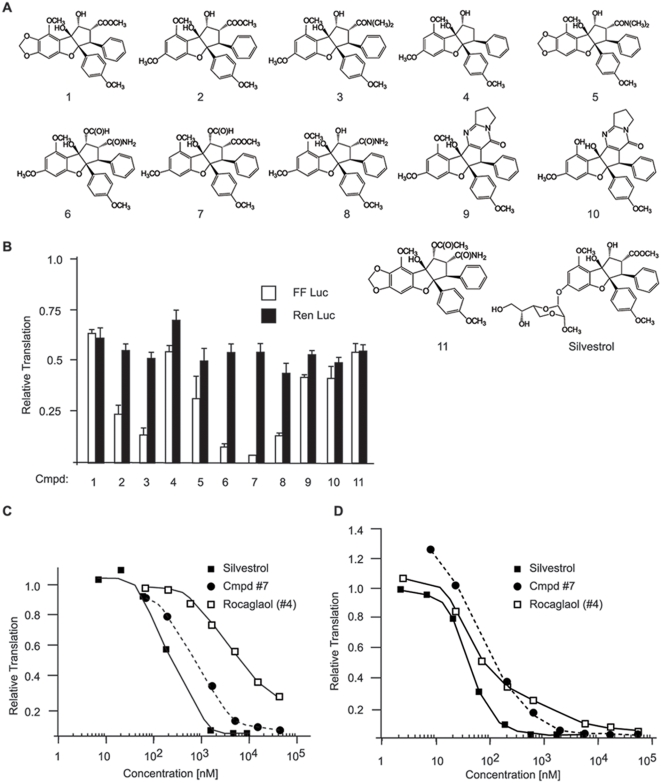
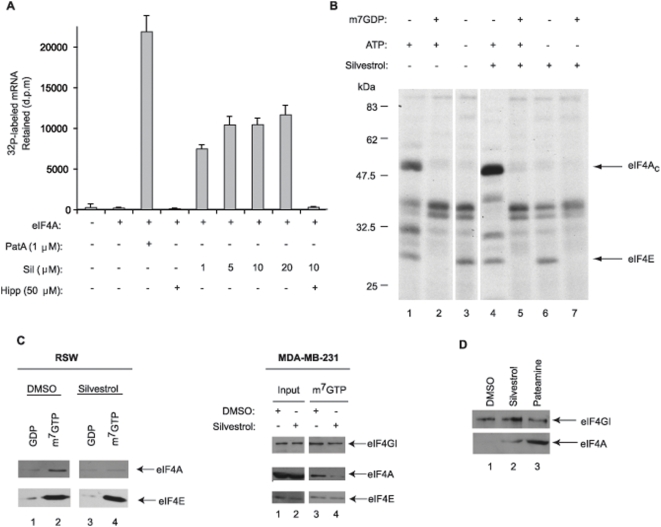
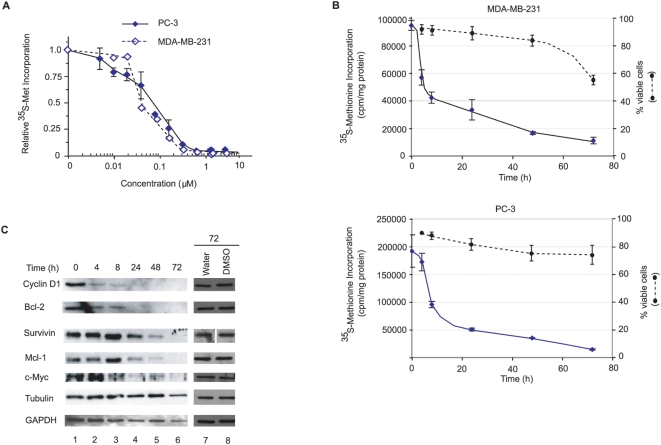
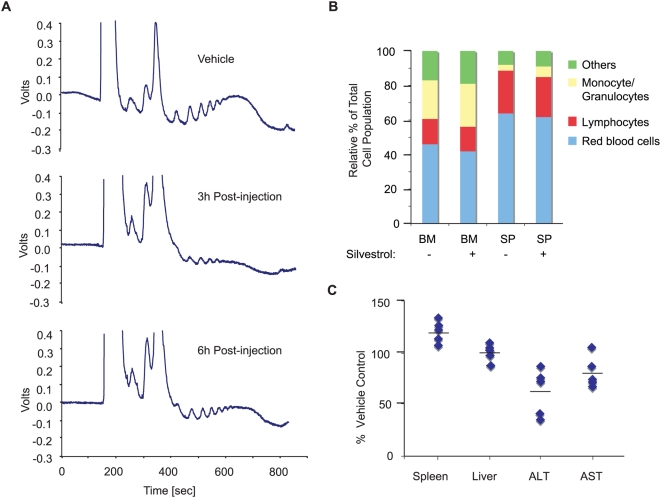
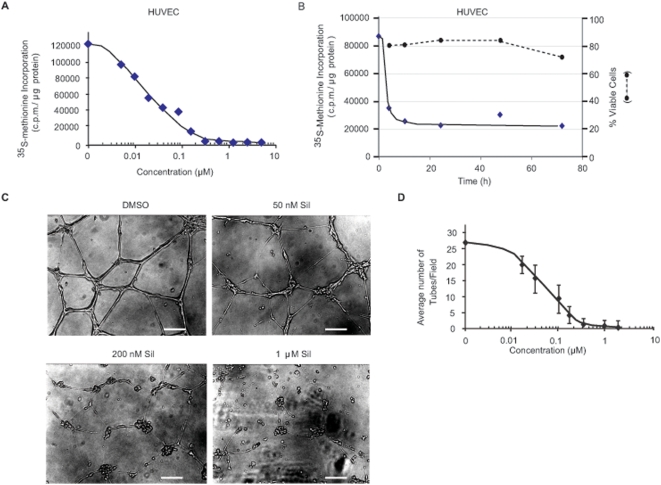
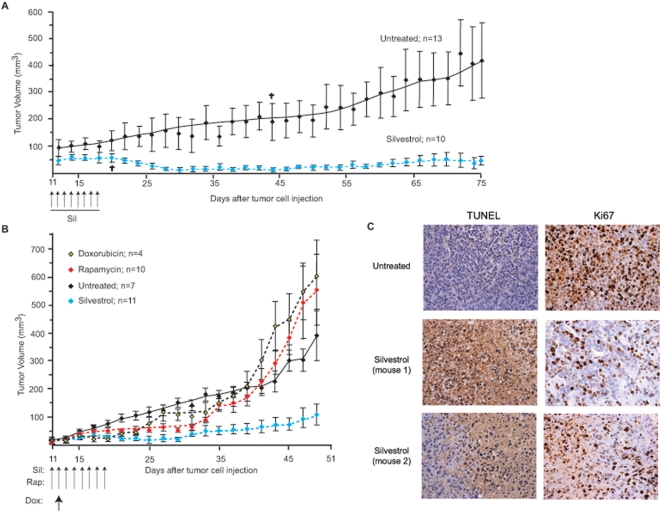
BACKGROUND: Flavaglines are a family of natural products from the genus Aglaia that exhibit anti-cancer activity in vitro and in vivo and inhibit translation initiation. They have been shown to modulate the activity of eIF4A, the DEAD-box RNA helicase subunit of the eukaryotic initiation factor (eIF) 4F complex, a complex that stimulates ribosome recruitment during translation initiation. One flavagline, silvestrol, is capable of modulating chemosensitivity in a mechanism-based mouse model. METHODOLOGY/PRINCIPAL FINDINGS: Among a number of flavagline family members tested herein, we find that silvestrol is the more potent translation inhibitor among these. We find that silvestrol impairs the ribosome recruitment step of translation initiation by affecting the composition of the eukaryotic initiation factor (eIF) 4F complex. We show that silvestrol exhibits significant anticancer activity in human breast and prostate cancer xenograft models, and that this is associated with increased apoptosis, decreased proliferation, and inhibition of angiogenesis. We demonstrate that targeting translation by silvestrol results in preferential inhibition of weakly initiating mRNAs. CONCLUSIONS/SIGNIFICANCE: Our results indicate that silvestrol is a potent anti-cancer compound in vivo that exerts its activity by affecting survival pathways as well as angiogenesis. We propose that silvestrol mediates its effects by preferentially inhibiting translation of malignancy-related mRNAs. Silvestrol appears to be well tolerated in animals.
Overview
The claims and statistics of this paper haven’t been checked yet.
Free: it reads the open-access text and checks the first 5 claims that cite a source we can check. Create a free account to check every claim.
Integrity signals
Registry
Cites
Statistics
Figures
Verification
Claims the paper makes
The claims and statistics of this paper haven’t been checked yet.
Free: it reads the open-access text and checks the first 5 claims that cite a source we can check. Create a free account to check every claim.
Claims other papers make about this one
Each is checked against this paper’s own text: does it say what the citing paper says it does?
The source backs part of the claim, not all of it — or backs it for a different population, condition or comparison.
In the citing paper
“eIF4A inhibitors, which target both isoforms, suppress translation of key oncogenes and have demonstrated antitumor activity in a variety of cancers (15, 17, 19–22).”
From Targeting eIF4A-dependent translation in genetically complex sarcoma (2026) · cites this paper as [21]
Experimental — accuracy not yet measuredThe source backs part of the claim, not all of it — or backs it for a different population, condition or comparison.
In the citing paper
“This supports the idea that increased expression of eIF4A2 may protect cells from the effects of eIF4A1 inhibition; rocaglates such as [-]CR-1-31B inhibit both isoforms, which may contribute to their efficacy (21, 34).”
From Targeting eIF4A-dependent translation in genetically complex sarcoma (2026) · cites this paper as [21]
Experimental — accuracy not yet measuredThe cited source says what the claim attributes to it.
In the citing paper
“Our results build on studies in mouse models of other cancers, including lymphoma, leukemia, breast, prostate, and pancreatic cancer, supporting the tolerability and efficacy of eIF4A inhibitors (15, 17, 20, 21, 38).”
From Targeting eIF4A-dependent translation in genetically complex sarcoma (2026) · cites this paper as [21]
The check wasn’t confident either way, so it gives no verdict — never disputed.
In the citing paper
“A synthetic eIF4A inhibitor, CR-1-31B, has shown potent activity against many cancer cell lines and promising efficacy in several mouse models (15, 17, 20, 21, 32, 33).”
From Targeting eIF4A-dependent translation in genetically complex sarcoma (2026) · cites this paper as [21]
Experimental — accuracy not yet measured
Self-check
Percentages, sums and reported differences re-computed from the paper’s own numbers.
The self-check needs the paper’s full text.
Citations
Cites
New Colorimetric Cytotoxicity Assay for Anticancer-Drug Screening
Skehan, P., Storeng, R., Scudiero, D., Monks, A., McMahon, J., Vistica, D., Warren, J. T., Bokesch, H., Kenney, S., & Boyd, M. R. (1990) · JNCI Journal of the National Cancer Institute · doi:10.1093/jnci/82.13.1107 · Cited by 9,766 · cited 1×
“Cell proliferation was monitored using the sulforhodamine B (SRB) assay [52].”
MethodChou, T.-C., & Talalay, P. (1984) · Advances in Enzyme Regulation · doi:10.1016/0065-2571(84)90007-4 · Cited by 7,178 · cited 1×
“. Drug interaction was assessed by the combination index method of Chou and Talalay using CalcuSyn software (BioSoft, Cambridge, UK)”
MethodCore Signaling Pathways in Human Pancreatic Cancers Revealed by Global Genomic Analyses
Jones, S., Zhang, X., Parsons, D. W., Lin, J. C.-H., Leary, R. J., Angenendt, P., Mankoo, P., Carter, H., Kamiyama, H., Jimeno, A., et al. (2008) · Science · doi:10.1126/science.1164368 · Cited by 3,969 · cited 1×
“. Recently, integrated genomic analysis of human glioblastoma multiforme, pancreatic cancers, breast and colon cancers revealed that human cancers contain a large number of genetic alterations (e.g. an average of 63 genetic alterations for pancreatic cancers) that define a core set of cellular signaling pathways and p…”
BackgroundMalignant transformation by a eukaryotic initiation factor subunit that binds to mRNA 5' cap
Lazaris-Karatzas, A., Montine, K. S., & Sonenberg, N. (1990) · Nature · doi:10.1038/345544a0 · Cited by 956 · cited 1×
“The deregulation of the PI3k/Akt/mTOR signaling axis in human cancers, the finding that ectopic expression of eIF4E is oncogenic”
BackgroundSurvival signalling by Akt and eIF4E in oncogenesis and cancer therapy
Wendel, H.-G., Stanchina, E. D., Fridman, J. S., Malina, A., Ray, S., Kogan, S., Cordon-Cardo, C., Pelletier, J., & Lowe, S. W. (2004) · Nature · doi:10.1038/nature02369 · Cited by 951 · cited 1×
“The deregulation of the PI3k/Akt/mTOR signaling axis in human cancers, the finding that ectopic expression of eIF4E is oncogenic [15,16], and the demonstration that targeted downregulation of eIF4E displays therapeutic benefit in xenograft mouse models [17] suggest that the process of translation initiation is a poten…”
BackgroundSelf-citationAn RNA G-quadruplex in the 5′ UTR of the NRAS proto-oncogene modulates translation
Kumari, S., Bugaut, A., Huppert, J. L., & Balasubramanian, S. (2007) · Nature Chemical Biology · doi:10.1038/nchembio864 · Cited by 822 · cited 1×
“, G-Q(+6)/RL). The G-quadruplex was modeled on one previously described to be present within the 5′ UTR of NRAS RNA and shown to mediate translational repression”
MethodMolecular mechanisms of translation initiation in eukaryotes
Pestova, T. V., Kolupaeva, V. G., Lomakin, I. B., Pilipenko, E. V., Shatsky, I. N., Agol, V. I., & Hellen, C. U. T. (2001) · Proceedings of the National Academy of Sciences · doi:10.1073/pnas.111145798 · Cited by 742 · cited 1×
“eIF4F is composed of three subunits: eIF4E, which binds to the cap structure present at the 59 end of mRNAs; eIF4A, a DEAD-box RNA helicase implicated in preparing a ribosome landing pad for 43S pre-initiation complexes (40S ribosomal subunit and associated factors) by unwinding 59 mRNA structure; and eIF4G, a large s…”
BackgroundS6K1- and ßTRCP-Mediated Degradation of PDCD4 Promotes Protein Translation and Cell Growth
Dorrello, N. V., Peschiaroli, A., Guardavaccaro, D., Colburn, N. H., Sherman, N. E., & Pagano, M. (2006) · Science · doi:10.1126/science.1130276 · Cited by 731
Pestova, T. V., Shatsky, I. N., Fletcher, S. P., Jackson, R. J., & Hellen, C. U. T. (1998) · Genes & Development · doi:10.1101/gad.12.1.67 · Cited by 729 · cited 1×
“. As an internal control, we utilized a construct in which the HCV IRES was driving expression of firefly luciferase, an element known to recruit ribosomes in an eIF4F-independent manner”
MethodeIF-4E expression and its role in malignancies and metastases
De Benedetti, A., & Graff, J. R. (2004) · Oncogene · doi:10.1038/sj.onc.1207545 · Cited by 728 · cited 2×
“These mRNAs typically harbor lengthy, G+C rich, highlystructured 59 UTRs that encumber efficient RNA unwinding by the eIF4F complex and subsequently prevent efficient ribosome loading [14].”
Background
Research works printed but not linked: 1
- Raught B Gingras A-C Sonenberg N 2000 Sonenberg N Hershey JWB Mathews MB Regulation of Ribosome Recruitment in Eukaryotes Cold Spring Harbor Cold Spring Harbor Laboratory Press 245 293
Cited by
Items 201–300 of 307
In Vitro Safety, Off-Target and Bioavailability Profile of the Antiviral Compound Silvestrol
Schiffmann, S., Gunne, S., Ulshöfer, T., Henke, M., Roser, L. A., Schneider, A., Cinatl, J. J., Thomas, D., Schreiber, Y., Wagner, P. V., et al. (2022) · Pharmaceuticals · doi:10.3390/ph15091086 · Cited by 16
“Silvestrol, originally described as a potent anti-tumor compound [28], was recently identified as a promising antiviral drug candidate with broad-spectrum activity [3,6].”
BackgroundDaker, M., YEO, J.-T., Bakar, N., RAHMAN, A. S. A. A. A., Ahmad, M., Yeo, T. C., & Khoo, A. S. B. (2016) · Experimental and Therapeutic Medicine · doi:10.3892/etm.2016.3201 · Cited by 14
“Previous studies have shown that tumour cells can be sensitized by silvestrol to standard chemotherapeutic agents such as doxorubicin (8,25) or daunorubicin, etoposide or cytarabinose‑”
InfluentialAdjibade, P., & Mazrouï, R. (2023) · Frontiers in RNA Research · doi:10.3389/frnar.2023.1226610 · Cited by 14
Protein–RNA interactions mediated by silvestrol—insight into a unique molecular clamp
Naineni, S. K., Bhatt, G., Jiramongkolsiri, E., Robert, F., Cencic, R., Huang, S., Nagar, B., & Pelletier, J. (2024) · Nucleic Acids Research · doi:10.1093/nar/gkae824 · Cited by 13
Self-citationZhou, Z., & Tius, M. A. (2015) · Angewandte Chemie · doi:10.1002/ange.201501374 · Cited by 12
eIF4A1 Is a Prognostic Marker and Actionable Target in Human Hepatocellular Carcinoma
Steinmann, S. M., Sánchez-Martín, A., Tanzer, E., Cigliano, A., Pes, G. M., Simile, M. M., Désaubry, L., Marín, J. J. G., Evert, M., & Calvisi, D. F. (2023) · International Journal of Molecular Sciences · doi:10.3390/ijms24032055 · Cited by 13
Saini, M., Ngwa, C. J., Marothia, M., Verma, P., Ahmad, S., Kumari, J., Anand, S., Vandana, V., Goyal, B., Chakraborti, S., et al. (2023) · Biochemical Pharmacology · doi:10.1016/j.bcp.2023.115567 · Cited by 12
Chapter 7 The Regulation of Protein Synthesis in Cancer
Cuesta, R., Gupta, M., & Schneider, R. J. (2009) · Progress in molecular biology and translational science · doi:10.1016/s1877-1173(09)90007-2 · Cited by 17
Chu, J., y Cajal, S. R., Sonenberg, N., & Pelletier, J. (2017) · Current Opinion in Genetics & Development · doi:10.1016/j.gde.2017.11.002 · Cited by 13
“Rocaglates and pateamine have also been shown to cause eIF4A to clamp onto RNA (f) [15,52,53,], with rocaglates dictating a preference for polypurine stretches [51 ]. a large scaffolding protein that recruits the 40S ribosome and associated factors (43S pre-initiation complex [PIC]).”
BackgroundSelf-citationNilewski, C., Michels, T., Xiang, A. X., Packard, G. K., Sprengeler, P. A., Eam, B., Fish, S., Thompson, P. A., Wegerski, C. J., Ernst, J. T., et al. (2020) · Organic Letters · doi:10.1021/acs.orglett.0c01944 · Cited by 12
Biswas, B., Guemiri, R., Cadix, M., Labbé, C. M., Chakraborty, A., Dutertre, M., Robert, C., & Vagner, S. (2022) · Cancers · doi:10.3390/cancers14051177 · Cited by 12
de Blanco, E. J. C., Addo, E. M., Rakotondraibe, H. L., Soejarto, D. D., & Kinghorn, A. D. (2023) · Natural Product Reports · doi:10.1039/d2np00080f · Cited by 11
Plant-based natural products in cancer therapeutics
Mahato, R., Behera, D. K., Patra, B., Das, S., Lakra, K., Pradhan, S. N., Abbas, S. J., & Ali, S. (2024) · Journal of drug targeting · doi:10.1080/1061186x.2024.2315474 · Cited by 13
Peron, G., Mastinu, A., Peña‐Corona, S. I., Hernández‐Parra, H., Leyva‐Gómez, G., Călina, D. C., & Sharifi‐Rad, J. (2024) · Biomedicine & Pharmacotherapy · doi:10.1016/j.biopha.2024.117047 · Cited by 12
Suppression of eukaryotic initiation factor 4E prevents chemotherapy-induced alopecia
Nasr, Z., Dow, L. E., Paquet, M., Chu, J., Kontham, R., Ragam, S., Deslongchamps, P., Porco, J. A. J., Lowe, S. W., & Pelletier, J. (2013) · BMC Pharmacology and Toxicology · doi:10.1186/2050-6511-14-58 · Cited by 12
“Two strains that we generated enabled inducible and reversible suppression of eIF4E at the organismal level - the effects of which are well tolerated in the mouse [14,19].”
Self-citationThe Marine Polyketide Myriaporone 3/4 Stalls Translation by Targeting the Elongation Phase
Muthukumar, Y., Roy, M., Raja, A., Taylor, R. E., & Sasse, F. (2013) · ChemBioChem · doi:10.1002/cbic.201200522 · Cited by 10
Singh, N., Kushwaha, P., Gupta, A., & Prakash, O. (2018) · Current Cancer Therapy Reviews · doi:10.2174/1573394715666181129101502 · Cited by 12
Oxo-aglaiastatin-Mediated Inhibition of Translation Initiation
Maïga, R. I., Cencic, R., Chu, J., Waller, D. D., Brown, L. E., Devine, W. G., Zhang, W., Sébag, M., Porco, J. A. J., & Pelletier, J. (2019) · Scientific Reports · doi:10.1038/s41598-018-37666-5 · Cited by 11
Self-citationTaylor, J., Yeomans, A., & Packham, G. K. (2020) · Exploration of Targeted Anti-tumor Therapy · doi:10.37349/etat.2020.00002 · Cited by 11
“complexed within eIF4F) and mRNA [105, 106] and preferentially reduces translation of mRNAs with highly structured 5'-UTRs [33, 34].”
BackgroundTranslating from cancer to the brain: regulation of protein synthesis by eIF4F
Kats, I. R., & Klann, E. (2019) · Learning & Memory · doi:10.1101/lm.050047.119 · Cited by 12
“Silvestrol has been shown to decrease the amount of eIF4A in the eIF4F complex, and to decrease cap-dependent protein synthesis and tumor growth in a breast and prostate xenograft cancer model (Cencic et al. 2009).”
BackgroundTambunan, U. S. F., Parikesit, A. A., Nasution, M. A. F., Hapsari, A., & Kerami, D. (2017) · PubMed Central · Cited by 9
The dark side of mRNA translation and the translation machinery in glioblastoma
Montiel‐Dávalos, A., Ayala, Y., & Hernández, G. (2023) · Frontiers in Cell and Developmental Biology · doi:10.3389/fcell.2023.1086964 · Cited by 10
“Silvestrol is an eIF4A inhibitor able to kill tumor cells in colorectal carcinoma, acute lymphoblastic leukemia, breast, and prostate cancer in mice and human cells (Figure 7C) (Cencic et al., 2009; Alachkar et al., 2013; Kogure et al., 2013).”
BackgroundTargeting EBV‐encoded products: Implications for drug development in EBV‐associated diseases
Lv, M., Ding, Y., Zhang, Y., & Liu, S. (2023) · Reviews in Medical Virology · doi:10.1002/rmv.2487 · Cited by 8
Inhibition of Translation Initiation as a Novel Paradigm for Cancer Therapy
Aktas, B. H., Halperin, J. A., Wagner, G., & Chorev, M. (2011) · Annual reports in medicinal chemistry · doi:10.1016/b978-0-12-386009-5.00015-1 · Cited by 8
Exploiting Translation Machinery for Cancer Therapy: Translation Factors as Promising Targets
Sehrawat, U. (2024) · International Journal of Molecular Sciences · doi:10.3390/ijms251910835 · Cited by 8
“The natural rocaglate silvestrol works by dimerizing eIF4A and RNA, leading to limited loading of eIF4A onto the eIF4F cap complex that, in turn, inhibits global protein translation [90].”
BackgroundTherapeutic Management of Ebola Virus: Targeting Oxidative Stress and Inflammatory Pathways
Ndayambaje, M., Wahnou, H., Naya, A., & Oudghiri, M. (2025) · BioChem · doi:10.3390/biochem5010003 · Cited by 8
“While silvestrol is primarily researched for its potent antiviral and anticancer activities [97], its structural similarity to other flavaglines suggests a potential to mitigate oxidative damage in cellular systems [98].”
Eukaryotic translation initiation factor 4F: functional properties and physiological role
Shuvalova, E., Sheikh, W. A., Shuvalov, A. V., Terenin, I. M., & Alkalaeva, E. Z. (2025) · Nucleic Acids Research · doi:10.1093/nar/gkaf1351 · Cited by 8
“Approaches include eIF4E suppression using antisense oligonucleotides or shRNA [ 348 , 349 ], eIF4A inhibition with compounds like silvestrol [ 350–354 ], mTOR pathway inhibition [ 355 , 356 ], and MNK inhibitors that induce apoptosis and suppress metastasis [ 357 ].”
Webb, T. E., Davies, M., Maher, J. F., & Sarker, D. (2020) · Clinical and Translational Radiation Oncology · doi:10.1016/j.ctro.2020.07.002 · Cited by 7
A forward genetic screen identifies modifiers of rocaglate responsiveness
Shen, L. L., Pugsley, L., Cencic, R., Wang, H., Robert, F., Naineni, S. K., Sahni, A., Morin, G., Zhang, W., Nijnik, A., et al. (2021) · Scientific Reports · doi:10.1038/s41598-021-97765-8 · Cited by 6
Self-citationHPIP promotes gastric cancer cell proliferation through activation of cap-dependent translation
Chen, B., Zhao, J. H., Zhang, S., Zhang, Y., & Huang, Z.-H. (2016) · Oncology Reports · doi:10.3892/or.2016.5157 · Cited by 9
Zhang, J., Wang, T., Shetty, K., Alkan, S., Xu, S., Gong, Q., Liu, X., Li, Y., Hu, Z., Huang, W., et al. (2022) · Blood Advances · doi:10.1182/bloodadvances.2021006709 · Cited by 6
“By inhibiting eIF4F, which is important for ef fi cient translation of RNA containing G-quadruplex structures such as MYC and BCL2, silvestrol has shown powerful activities in human breast and prostate cancer xenograft models, 14 as well as MYC-induced lymphomagenesis.”
Potent anti-coronaviral activity of pateamines and new insights into their mode of action
Magari, F., Messner, H., Salisch, F., Schmelzle, S. M., van Zandbergen, G., Fürstner, A., Ziebuhr, J., Heine, A., Müller, C., & Grünweller, A. (2024) · Heliyon · doi:10.1016/j.heliyon.2024.e33409 · Cited by 5
Discovery of RNA-Protein Molecular Clamps Using Proteome-Wide Stability Assays
Goldstein, S. I., Fan, A. C., Wang, Z., Naineni, S. K., Cencic, R., Garcia-Gutierrez, S. B., Patel, K., Huang, S., Brown, L. E., Emili, A., et al. (2025) · Journal of Proteome Research · doi:10.1021/acs.jproteome.4c01129 · Cited by 6
Self-citationThe continuing need for taxonomic input in phytochemical research
Soejarto, D. D., Addo, E. M., & Kinghorn, A. D. (2025) · Journal of Ethnopharmacology · doi:10.1016/j.jep.2025.120474 · Cited by 5
Pedroni, L., Dellafiora, L., Varrà, M. O., Galaverna, G., & Ghidini, S. (2022) · Scientific Reports · doi:10.1038/s41598-022-19818-w · Cited by 5
Role and therapeutic potential of DEAD-box RNA helicase family in colorectal cancer
Zheng, B., Chen, X., Ling, Q., Cheng, Q., & Ye, S. (2023) · Frontiers in Oncology · doi:10.3389/fonc.2023.1278282 · Cited by 5
Translational Control of Cancer: Implications for Targeted Therapy
Bitterman, P. B., & Polunovsky, V. A. (2009) · Humana Press eBooks · doi:10.1007/978-1-60327-271-1_12 · Cited by 6
“Recently, the plant cyclopenta[b]benzofuran flavagline silvestrol was found to interact with eIF4A and suppress translation and cancer cell growth through a mechanism similar to pateamine A – but with less toxicity [106, 107].”
BackgroundA cautionary note on the use of cap analogue affinity resins
Cencic, R., & Pelletier, J. (2018) · Analytical Biochemistry · doi:10.1016/j.ab.2018.09.001 · Cited by 5
Self-citationKrishnathas, G. M., Strödke, B., Mittmann, L., Zech, T., Berger, L. M., Reichel, C. A., Rösser, S., Schmid, T., Knapp, S., Müller, S., et al. (2021) · The FASEB Journal · doi:10.1096/fj.202100037r · Cited by 7
A solitary stalled 80S ribosome prevents mRNA recruitment to stress granules
Fedorovskiy, A. G., Burakov, A. V., Terenin, I. M., Bykov, D. A., Lashkevich, K. A., Попенко, В. И., Makarova, N. E., Sorokin, I. I., & Sukhinina, A. P. (2023) · Biochemistry (Moscow) · doi:10.31857/s0320972523110118 · Cited by 5
Nasution, M. A. F., Alkaff, A. H., & Tambunan, U. S. F. (2018) · AIP conference proceedings · doi:10.1063/1.5064052 · Cited by 4
Nilewski, C., Michels, T., Packard, G. K., Xiang, A. X., Sprengeler, P. A., Eam, B., Fish, S., Thompson, P. A., Wegerski, C. J., Nevarez, A. J., et al. (2021) · Bioorganic & Medicinal Chemistry Letters · doi:10.1016/j.bmcl.2021.128111 · Cited by 4
AN OVERVIEW ON THE BIOLOGICAL PERSPECTIVES OF AGLAIA SPECIES
Priya, R. M., Sowmiya, P., & Sundaram, M. (2018) · Asian Journal of Pharmaceutical and Clinical Research · doi:10.22159/ajpcr.2018.v11i9.26436 · Cited by 4
Collective Learnings of Studies of Stress Granule Assembly and Composition
Sidibé, H., & Velde, C. V. (2022) · Methods in molecular biology · doi:10.1007/978-1-0716-1975-9_13 · Cited by 4
Bioactive Flavaglines: Synthesis and Pharmacology
Basmadjian, C., Zhao, Q., Gramont, A. D. E., Serova, M., Faivre, S. J., Raymond, É., Vagner, S., Robert, C., Nebigil, C. G., & Désaubry, L. (2014) · Wiley eBooks · doi:10.1002/9783527684403.ch7 · Cited by 5
“Probably, the most impressive result was observed by Pelletier and colleagues who showed that silvestrol suppresses the growth of xenografted breast tumors addicted to eIF4A signaling [26].”
BackgroundResultInfluentialWang, Q., He, W., Han, S., Li, M., Wang, Y., Zaytseva, Y. Y., Chen, L., Zhu, J., & Yang, H. (2025) · Cancer Medicine · doi:10.1002/cam4.71145 · Cited by 3
Hausmann, S., Geiser, J., & Valentini, M. (2022) · Biochemical Pharmacology · doi:10.1016/j.bcp.2022.115194 · Cited by 2
Targeting translation initiation in breast cancer
Akçakanat, A., Hong, D. S., & Meric‐Bernstam, F. (2014) · Translation · doi:10.4161/trla.28968 · Cited by 6
“Silvestrol is a compound with a similar mechanism, promoting interaction between eIF4A and capped RNA, interfering with the assembly of eIF4F complex, and thus inhibiting translation initiation.(51,121) This drug was shown to inhibit translation and anticancer activity in breast and prostate cancer xenograft models an…”
BackgroundZhao, N., Kabotyanski, E. B., Saltzman, A. B., Malovannaya, A., Yuan, X., Reineke, L. C., Lieu, N., Gao, Y., Pedroza, D. A., Calderon, S. J., et al. (2023) · bioRxiv (Cold Spring Harbor Laboratory) · doi:10.1101/2023.09.28.559973 · Cited by 3
“It is important to note that Rocaglate treatment may not phenocopy the loss of eIF4A activity (13, 50), probably because of its unique mechanism of action.”
Synthesis and biological activity of 6-substituted 5-acetyl-4,7-dimethoxybenzofuran derivatives
Krawiecka, M., Kuran, B., Kossakowski, J., Kierzkowska, M., Młynarczyk, G., Kaźmierczak-Barańska, J., Królewska‐Golińska, K., & Cieślak, M. (2013) · Heterocyclic Communications · doi:10.1515/hc-2013-0081 · Cited by 2
Remedy of Targeting Cancer and Cancer Stem Cells with Botanicals
Ajumeera, R., Thipparapu, G., & Challa, S. (2018) · Springer eBooks · doi:10.1007/978-981-10-8064-7_13 · Cited by 2
Haikal, M. C., Nasution, M. A. F., Saputro, L., & Tambunan, U. S. F. (2019) · IOP Conference Series Materials Science and Engineering · doi:10.1088/1757-899x/509/1/012082 · Cited by 2
Zhou, L., ZHANG, Q., TIAN, B., & Yang, F. J. (2024) · Biocell · doi:10.32604/biocell.2024.049878 · Cited by 3
“It has been identi fi ed as an inhibitor of eukaryotic initiation factor 4A (eIF4A), one of the eukaryotic translation initiation factors, and is noted for its high speci fi city and tolerability in animal models [8].”
Wang, D., TEZEREN, M. A., Hamdan, H. A., Yu, P., Nebigil, C. G., & Désaubry, L. (2021) · Current Chinese chemistry · doi:10.2174/2666001601666211126091737 · Cited by 1
Xu, Z., You, H., Gu, J., Jiang, J., Yan, Z., & Jin, X. (2025) · Gene · doi:10.1016/j.gene.2025.149776 · Cited by 2
Kaweesa, E. N., Benson, N., Wilson, T. A., Addo, E. M., Miglo, J., Bazioli, J. M., Lantvit, D. D., Agarwal, G., Kinghorn, A. D., Fuchs, J. R., et al. (2026) · Journal of Natural Products · doi:10.1021/acs.jnatprod.5c01544 · Cited by 1
Hu, X., Xie, J., Li, Y., Li, K., & Wang, B. (2026) · Biochimica et Biophysica Acta (BBA) - Reviews on Cancer · doi:10.1016/j.bbcan.2026.189602 · Cited by 2
mTOR, Aging, and Cancer: A Dangerous Link
Sharp, Z. D., & Hasty, P. (2015) · Springer eBooks · doi:10.1007/978-2-8178-0492-7_13 · Cited by 3
Seitzer, N., Reschke, M., Clohessy, J. G., & Pandolfi, P. P. (2014) · Springer eBooks · doi:10.1007/978-94-017-9078-9_33 · Cited by 1
Bioinformatics Approach to Screening and Developing Drug against Ebola
Tambunan, U. S. F., Alkaff, A. H., & Nasution, M. A. F. (2018) · InTech eBooks · doi:10.5772/intechopen.72278 · Cited by 1
RNA Helicases and Their Cofactors
Shahbazian, D., Pelletier, J., Svitkin, Y. V., Hershey, J. W. B., & Parsyan, A. E. (2014) · Springer eBooks · doi:10.1007/978-94-017-9078-9_5 · Cited by 1
Self-citationTargeting eIF4A-dependent translation in genetically complex sarcoma
Kim, Y.-M., Mohan, P., Sehrawat, U., Seffar, E., De Queiroz, R. M., Chadalavada, K., Persaud, N., Okada, T., Kulkarni, A., Lin, J., et al. (2026) · JCI Insight · doi:10.1172/jci.insight.192936
“This supports the idea that increased expression of eIF4A2 may protect cells from the effects of eIF4A1 inhibition; rocaglates such as [-]CR-1-31B inhibit both isoforms, which may contribute to their efficacy (21, 34).”
The Molecular Pharmacology of Pateamine A
Matthews, J. H. (2010) · Open Access Victoria University of Wellington | Te Herenga Waka (Figshare) · doi:10.26686/wgtn.16992643.v1 · Cited by 5
Current and Emerging Therapies Targeting Translation
Galicia-Vázquez, G., & Pelletier, J. (2014) · Springer eBooks · doi:10.1007/978-94-017-9078-9_14
Self-citationDownstream from mTOR: Therapeutic Approaches to Targeting the eIF4F Translation Initiation Complex
Pelletier, J., & Graff, J. R. (2009) · Humana Press eBooks · doi:10.1007/978-1-60327-271-1_13
Self-citationRelocalization of eIF4E by its binding partners upon stress
Sukarieh, R. (2010) · eScholarship@McGill (McGill) · doi:10.82308/50383
Self-citationIntegration of AKT and ERK Signaling Pathways in Cancer: Biological and Therapeutic
She, Q. (2013) · Cited by 10
What do RNAs chat about when they gather at granules?
Hagihara, K. (2016) · Folia Pharmacologica Japonica · doi:10.1254/fpj.147.370
Tillotson, J. (2016) · UA Campus Repository (The University of Arizona)
Neumann, J. (2012) · heiDOK (Heidelberg University) · doi:10.11588/heidok.00013237
“Several rocaglamide derivates were then extensively tested in various mouse tumour models (Cencic et al., 2009; Hwang et al., 2004; Lee et al., 1998; Zhu et al., 2009).”
BackgroundChemical and CRISPR/Cas9 Tools for Functional Characterization of RNA Helicases
Chu, J., & Pelletier, J. (2018) · Springer eBooks · doi:10.1007/978-981-10-8372-3_14
Self-citationEffect of knockdown of eIF4A1 by shRNA on the biological characteristics of glioma cells
WenHua, F. A. N., ZHANG, J., Chen, H., Huang, B.-R., Liu, F., & Sheng, F. A. N. G. (2019) · Scientia Sinica Vitae · doi:10.1360/ssv-2019-0108 · Cited by 1
Chatterjee, S., Yabaji, S. M., Bhattacharya, B., Waligurski, E., Vallavoju, N., Ray, S., Brown, L. E., Beeler, A. B., Ivanov, A. R., Kobzik, L., et al. (2019) · bioRxiv (Cold Spring Harbor Laboratory) · doi:10.1101/691808 · Cited by 1
“365 Mechanistically, synthetic and natural rocaglamide derivatives have been shown to 366 inhibit translation by binding to a component of the eIF4F translation initiation complex – the 367 RNA helicase eIF4A – that prevents its incorporation into the eIF4F complex (51).”
BackgroundSelf-citationBalunas, M. J., Cragg, G. M. L., Gibbons, S., & Mata, R. (2021) · Journal of Natural Products · doi:10.1021/acs.jnatprod.0c01371
El silvestrol como agente antiviral de amplio espectro
Fuel, M., & Cangui-Panchi, S. P. (2021) · Revista Bases de la Ciencia · doi:10.33936/rev_bas_de_la_ciencia.v6i2.2814
Parsyan, A. E., Gonzalez-Angulo, A. M., Zardavas, D., Piccart, M. J., & Meterissian, S. H. (2014) · Springer eBooks · doi:10.1007/978-94-017-9078-9_26
Brar, G. A. (2019) · Faculty Opinions – Post-Publication Peer Review of the Biomedical Literature · doi:10.3410/f.734699271.793555940
Sela, Y., Li, J., Maheswaran, S., Norgard, R. J., Yuan, S., Hubbi, M. E., Doepner, M., Xu, J. P., Ho, E. S., Mesaros, C., et al. (2023) · doi:10.1158/0008-5472.c.6513802.v1
Data from Targeting eIF4A-Dependent Translation of KRAS Signaling Molecules
Singh, K., Lin, J., Lecomte, N., Mohan, P., Askan, G., Sanghvi, V. R., Jiang, M., Grbovic-Huezo, O., Burčul, A., Stark, S. G., et al. (2023) · doi:10.1158/0008-5472.c.6513651.v1
Singh, S., Saha, P., Rai, N., Kumari, S., & Rai, S. P. (2023) · Springer eBooks · doi:10.1007/978-981-99-0749-6_11
Rosenfeld, P., Singh, G., Herrera, A. P., Ji, J., Seufzer, B. J., Heng, X., Boris‐Lawrie, K., & Cochrane, A. (2024) · Viruses · doi:10.3390/v16091506
Daker, M., Ahmad, M., Khoo, A. S. B., Tan, L., Chin, S., Hwang, S. S., & Neilsen, P. M. (2025) · Molecular and Clinical Oncology · doi:10.3892/mco.2025.2890
“Silvestrol showed significant anti‑ neoplastic activity in lymphoma and solid tumor xenograft models (17,18).”
Jakob, C., Streicher, F., Lopez-Nieto, M., Eke, L., Lee, D., Wu, J., Taylor, J. P., Matia‐González, A. M., Jouvenet, N., & Locker, N. (2025) · bioRxiv (Cold Spring Harbor Laboratory) · doi:10.1101/2025.11.13.688208
Malka-Mahieu, H. (2015) · theses.fr (ABES) · doi:10.70675/0885c423zadabz4b67zad92zc16c642a3d08
Development of new approaches for the synthesis of flavaglines
Basmadjian, C. (2015) · theses.fr (ABES) · doi:10.70675/7d68b550za64ez450ez9652z105c70164939
Conséquences traductionnelles de la perte de 4E-BP1 dans l'adénocarcinome pancréatique
Müller, D. (2016) · theses.fr (ABES) · doi:10.70675/1f894fb2zc2daz446fza7f2z2b28408eb6e2
Rôle de la kinase ARAF dans le mélanome cutané muté NRAS
Estrada, C. (2020) · theses.fr (ABES) · doi:10.70675/e84b4f6az1676z4c2dz80e4zd8668460d3c5
Chaddad, H. (2019) · theses.fr (ABES) · doi:10.70675/e2786a5az288az46d4za2afz98cdafddfe5b · Cited by 2
Long, F. N. V. (2019) · theses.fr (ABES) · doi:10.70675/12a8367cz6b6bz4592zbd98zf68b8cd5151d
From 2D to 3D cell culture based in vitro test systems for glioblastoma anticancer drug screening
Harmouch, E. (2021) · theses.fr (ABES) · doi:10.70675/f8ad9a5ez2561z46d7z915ezdfdf7fecef48
Welsch, S., Magari, F., Mokosch, A. S., Haeberlein, S., Gerbig, S., Spengler, B., Grünweller, A., & Grevelding, C. G. (2026) · Scientific Reports · doi:10.1038/s41598-026-63203-w
The cellular landscape of druggable RNA-binding proteins
Timoteo, G. D., George, B. M., Abdel-Wahab, O. I., Flynn, R. A., & Tzelepis, K. (2026) · Nature Reviews Drug Discovery · doi:10.1038/s41573-026-01531-2 · Cited by 1
Plant-derived phytoconstituents with therapeutic potential against leukemia
Pathak, R. S., Vyas, K., Kurup, S., Kikani, A., & Patel, P. K. (2026) · Phytochemistry Reviews · doi:10.1007/s11101-026-10308-9
Mechanistic role of eIF4E in the hallmarks of cancer: A translational control perspective
Effiong, M. E., Effiong, P. E., Roy, S., Okafor, C. E., Schober, J. M., In, L. L. A., & Patel, B. A. (2026) · Critical Reviews in Oncology/Hematology · doi:10.1016/j.critrevonc.2026.105623
Vrubliauskas, D., Yahuafai, J., Nuntapong, N., Peypala, D., Khamwong, P., Onchan, T., Borwonnirattisai, N., Thaveewatthanakitboworn, D., FIRDAUS, Y. F. H., Triluksanavilai, N., et al. (2026) · European Journal of Medicinal Chemistry · doi:10.1016/j.ejmech.2026.119394
BindingDB Entry 50020008: Medicinal chemistry approaches to target the MNK-eIF4E axis in cancer.
BindingDB (2024) · UC San Diego · doi:10.7270/q2xw4q6v
BindingDB Entry 50039820: The relevance of higher plants in lead compound discovery programs.
BindingDB (2013) · UC San Diego · doi:10.7270/q28k7b4j
Metadata
- Authors
- Cencic, R., Carrier, M., Galicia-Vázquez, G., Bordeleau, M.-E., Sukarieh, R., Bourdeau, A., Brem, B., Teodoro, J. G., Greger, H., Tremblay, M. L., Porco, J. A., & Pelletier, J.
- Affiliations
- McGill University (CA)
- Sunnybrook Health Science Centre (CA)
- University of Vienna (AT)
- Boston University (US)
- Corresponding author
- Pelletier, Jerry
- ORCID
- Venue
- PLoS ONE
- Publisher
- Public Library of Science (PLoS)
- Published
- 2009-04-29
- Volume
- 4
- Issue
- 4
- Pages
- e5223
- ISSN
- 1932-6203 (ISSN-L)
- PMC
- PMC2671147
- OpenAlex
- W2031035517
- Cited by
- 302
- References
- 52
- Citations by year
- 2026: 8 · 2025: 10 · 2024: 10 · 2023: 24 · 2022: 12 · 2021: 22 · 2020: 15 · 2019: 23 · 2018: 28 · 2017: 14 · 2016: 25 · 2015: 13 · 2014: 24 · 2013: 18 · 2012: 18
- FWCI
- 7.64
- Type
- journal article
- Language
- en
- Open access
- gold
- doi.org
- Locations
- PLoS ONE (publishedVersion, cc-by)
- PubMed Central (publishedVersion, cc-by)
- PubMed (publishedVersion)
- Phaidra (Universität Wien) (submittedVersion, cc-by-nc-nd)
- DOAJ (DOAJ: Directory of Open Access Journals) (submittedVersion, cc-by-sa)
- eScholarship@McGill (McGill) (submittedVersion, cc-by)
- Figshare (submittedVersion, cc-by)
- OpenBU (Boston University) (submittedVersion)
- Funders
- Canadian Breast Cancer Research Alliance
- National Institutes of Health
- Canadian Institutes of Health Research
- National Institute of General Medical Sciences (R01GM073855)
- Topics
- Life Sciences › Biochemistry, Genetics and Molecular Biology › Molecular Biology › RNA and protein synthesis mechanisms
- Life Sciences › Biochemistry, Genetics and Molecular Biology › Molecular Biology › PI3K/AKT/mTOR signaling in cancer
- Life Sciences › Immunology and Microbiology › Immunology › Toxin Mechanisms and Immunotoxins
- Keywords
- silvestrol, flavaglines, anticancer activity, translation initiation inhibition, eIF4A, eIF4F, ribosome recruitment, apoptosis, angiogenesis inhibition, breast cancer, prostate cancer, xenograft models, Aglaia
- MeSH terms
- Animals, Antineoplastic Agents, Phytogenic, Base Sequence, Benzofurans, Breast Neoplasms, Cells, Cultured, Female, Humans, Male, Mice, Nude, Neoplasm Transplantation, Neovascularization, Pathologic, Prostatic Neoplasms, RNA, Messenger, RNA, Neoplasm, Protein Biosynthesis, Transplantation, Heterologous, Triterpenes, Eukaryotic Initiation Factor-4E, Cell Line, Tumor, Mice
About these checks
Registry, retraction, Cites and statistics results are computed, not judged, with one exception: a printed reference that no index lists is read once by a model before it counts as a citation error. Claims are extracted by a model and kept only when their quote appears verbatim in the text; each cited source is then checked, with a model’s help, for whether it says what the claim relies on. Those verdicts can be wrong — read the claim’s quote and the cited source before relying on one.
Statistics and arithmetic are recomputed, not judged.
Confidence bands are shown only for fields calibrated on our annotated test set. None is calibrated yet, so no band is shown.
What counts as a claim ›How we measure confidence ›How we check this ›
Are you an author, or do you see a problem with this page? Request a review
Data sources
Bibliographic data: Semantic Scholar, OpenAlex, Crossref.
Contains information from the Semantic Scholar Academic Graph Datasets, made available under the ODC Attribution License (ODC-BY 1.0).
Semantic Scholar’s data is described in: Kinney, R., et al. (2023). The Semantic Scholar Open Data Platform. arXiv:2301.10140.
