

Reelin Secreted by GABAergic Neurons Regulates Glutamate Receptor Homeostasis
Open accessThe DOI matches its Crossref record; 41 of the 41 references it cites were found in a registry or an index.
Abstract
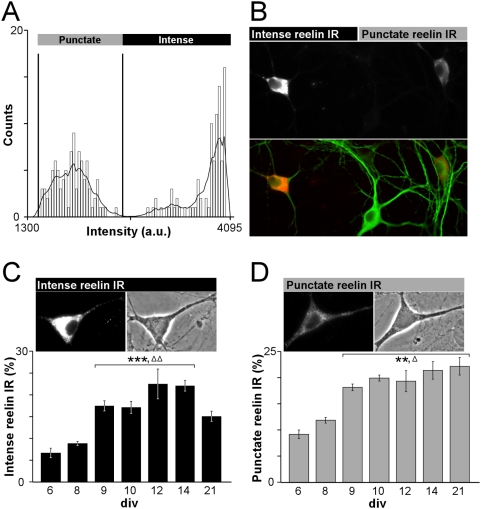
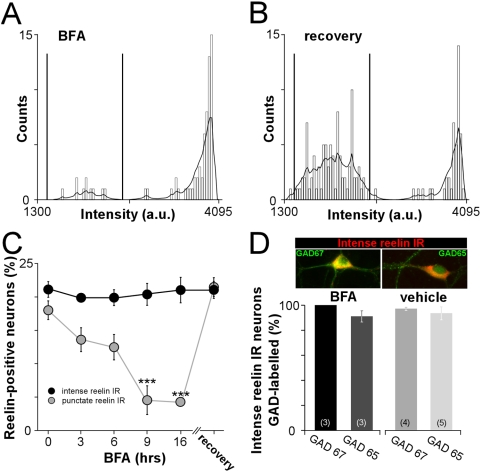
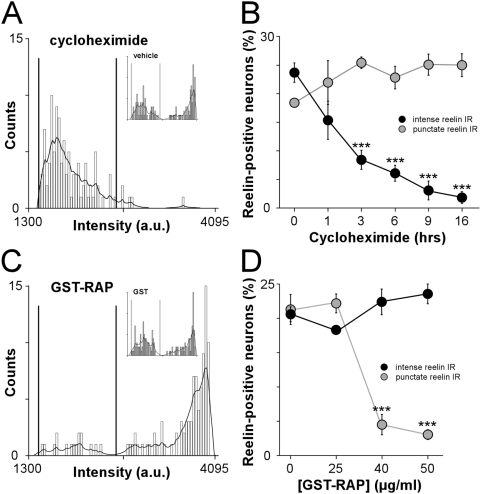
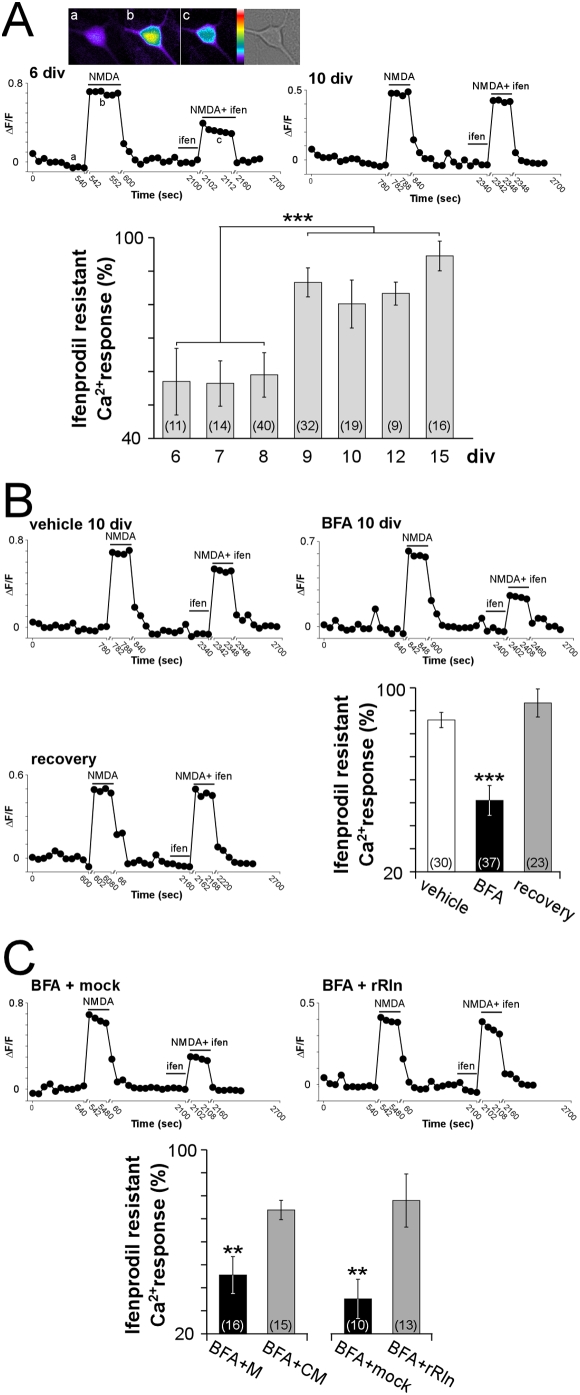
BACKGROUND: Reelin is a large secreted protein of the extracellular matrix that has been proposed to participate to the etiology of schizophrenia. During development, reelin is crucial for the correct cytoarchitecture of laminated brain structures and is produced by a subset of neurons named Cajal-Retzius. After birth, most of these cells degenerate and reelin expression persists in postnatal and adult brain. The phenotype of neurons that bind secreted reelin and whether the continuous secretion of reelin is required for physiological functions at postnatal stages remain unknown. METHODOLOGY/PRINCIPAL FINDINGS: Combining immunocytochemical and pharmacological approaches, we first report that two distinct patterns of reelin expression are present in cultured hippocampal neurons. We show that in hippocampal cultures, reelin is secreted by GABAergic neurons displaying an intense reelin immunoreactivity (IR). We demonstrate that secreted reelin binds to receptors of the lipoprotein family on neurons with a punctate reelin IR. Secondly, using calcium imaging techniques, we examined the physiological consequences of reelin secretion blockade. Blocking protein secretion rapidly and reversibly changes the subunit composition of N-methyl-D-aspartate glutamate receptors (NMDARs) to a predominance of NR2B-containing NMDARs. Addition of recombinant or endogenously secreted reelin rescues the effects of protein secretion blockade and reverts the fraction of NR2B-containing NMDARs to control levels. Therefore, the continuous secretion of reelin is necessary to control the subunit composition of NMDARs in hippocampal neurons. CONCLUSIONS/SIGNIFICANCE: Our data show that the heterogeneity of reelin immunoreactivity correlates with distinct functional populations: neurons synthesizing and secreting reelin and/or neurons binding reelin. Furthermore, we show that continuous reelin secretion is a strict requirement to maintain the composition of NMDARs. We propose that reelin is a trans-neuronal messenger secreted by GABAergic neurons that regulates NMDARs homeostasis in postnatal hippocampus. Defects in reelin secretion could play a major role in the development of neuropsychiatric disorders, particularly those associated with deregulation of NMDARs such as schizophrenia.
Overview
The claims and statistics of this paper haven’t been checked yet.
Free: it reads the open-access text and checks the first 5 claims that cite a source we can check. Create a free account to check every claim.
Integrity signals
Registry
Cites
Statistics
Figures
Verification
Claims the paper makes
The claims and statistics of this paper haven’t been checked yet.
Free: it reads the open-access text and checks the first 5 claims that cite a source we can check. Create a free account to check every claim.
Claims other papers make about this one
Each is checked against this paper’s own text: does it say what the citing paper says it does?
The source backs part of the claim, not all of it — or backs it for a different population, condition or comparison.
In the citing paper
“Notable examples are interactions of ECM molecules with ‘neuronal activity-regulated pentraxin’ (Narp) complexes and integrins, shown to regulate AMPA and NMDA receptor subunit composition, synaptic clustering and homeostatic synaptic scaling in GABAergic neurons (Campo et al., 2009; Chang et al., 2010; Cingolani et al., 2008; Dityatev et al., 2010; Frischknecht and Gundelfinger, 2012).”
From Losing the sugar coating: Potential impact of perineuronal net abnormalities on interneurons in schizophrenia (2015) · cites this paper as Campo et al., 2009
Experimental — accuracy not yet measuredThe cited source says what the claim attributes to it.
In the citing paper
“Given that Reln is expressed in inhibitory neurons in the adult brain”
From Deletion of neuronal Idol ameliorates Alzheimer's disease–related pathologies via APOE receptors (2025) · cites this paper as [83]
In the citing paper
“Alternately, this switch is prevented by inhibiting Reelin signaling via antisense knockdown of Reelin, perfusion with a Reelin antibody (CR-50), or blocking the GABAergic release of Reelin (18,19).”
From Reelin: Neurodevelopmental Architect and Homeostatic Regulator of Excitatory Synapses (2017) · cites this paper as [19]
In the citing paper
“Relevant to the pathophysiology of several psychiatric disorders, Reelin plays a key role in these latter mechanisms, interacting with integrins to regulate NMDA receptor subunit composition (Campo et al., 2009).”
From Losing the sugar coating: Potential impact of perineuronal net abnormalities on interneurons in schizophrenia (2015) · cites this paper as Campo et al., 2009
Self-check
Percentages, sums and reported differences re-computed from the paper’s own numbers.
The self-check needs the paper’s full text.
Citations
Cites
Monyer, H., Burnashev, N., Laurie, D. J., Sakmann, B., & Seeburg, P. H. (1994) · Neuron · doi:10.1016/0896-6273(94)90210-0 · Cited by 3,535 · cited 1×
“In the mammalian forebrain, NMDAR assembly is regulated during development from predominance of NR2B-containing to NR2A-containing NMDARs [18,24,26–28].”
BackgroundChanging subunit composition of heteromeric NMDA receptors during development of rat cortex
Sheng, M., Cummings, J., Roldan, L. A., Jan, Y. N., & Jan, L. Y. (1994) · Nature · doi:10.1038/368144a0 · Cited by 1,377 · cited 1×
“As expected from the developmental loss of NR2B subunits [18,30,33,34], the sensitivity of the NMDA-stimulated Ca influx to ifenprodil was substantially greater in 6 div neurons compared to 10 div neurons (Figure 4A).”
BackgroundGuidotti, A., Auta, J., Davis, J. M., Gerevini, V. D., Dwivedi, Y., Grayson, D. R., Impagnatiello, F., Pandey, G., Pesold, C., Sharma, R., et al. (2000) · Archives of General Psychiatry · doi:10.1001/archpsyc.57.11.1061 · Cited by 1,206
Mice with Reduced NMDA Receptor Expression Display Behaviors Related to Schizophrenia
Mohn, A. R., Gainetdinov, R. R., Caron, M. G., & Koller, B. H. (1999) · Cell · doi:10.1016/s0092-8674(00)81972-8 · Cited by 1,075 · cited 1×
“Particularly those associated with deregulation of NMDARs homeostasis and lower expression levels of reelin, such as schizophrenia [39,40].”
BackgroundLippincott-Schwartz, J., Donaldson, J. G., Schweizer, A., Berger, E. G., Hauri, H.-P., Yuan, L. C., & Klausner, R. D. (1990) · Cell · doi:10.1016/0092-8674(90)90096-w · Cited by 967
Hiesberger, T., Trommsdorff, M., Howell, B. W., Goffinet, A., Mumby, M. C., Cooper, J. A., & Herz, J. (1999) · Neuron · doi:10.1016/s0896-6273(00)80861-2 · Cited by 916 · cited 1×
“It prevents the binding of reelin to lipoprotein receptors [22], in turn disrupting the physiological functions of reelin [12,17,18,23].”
BackgroundOgawa, M., Miyata, T., Nakajimat, K., Yagyu, K., Seike, M., Ikenaka, K., Yamamoto, H., & Mikoshibat, K. (1995) · Neuron · doi:10.1016/0896-6273(95)90329-1 · Cited by 889 · cited 2×
“During embryonic development, reelin is secreted by Cajal-Retzius neurons [1,13].”
BackgroundWilliams, K. (1993) · Molecular Pharmacology · doi:10.1016/s0026-895x(25)13275-6 · Cited by 853
Reelin Is a Ligand for Lipoprotein Receptors
D'Arcangelo, G., Homayouni, R., Keshvara, L., Rice, D. S., Sheldon, M., & Curran, T. (1999) · Neuron · doi:10.1016/s0896-6273(00)80860-0 · Cited by 808
Role of Distinct NMDA Receptor Subtypes at Central Synapses
Cull-Candy, S. G., & Leszkiewicz, D. N. (2004) · Science's STKE · doi:10.1126/stke.2552004re16 · Cited by 804
Cited by
Shrestha, S., & Offer, S. M. (2016) · Medical Epigenetics · doi:10.1159/000444713 · Cited by 8,914
Apolipoprotein E and Apolipoprotein E Receptors: Normal Biology and Roles in Alzheimer Disease
Holtzman, D. M., Herz, J., & Bu, G. (2012) · Cold Spring Harbor Perspectives in Medicine · doi:10.1101/cshperspect.a006312 · Cited by 782
“2005) and for the maintenance of normal NR2A/B ratios (Campo et al. 2009).”
InfluentialExtracellular Matrix: Functions in the Nervous System
Barros, C. S., Franco, S. J., & Muller, U. (2011) · Cold Spring Harbor Perspectives in Biology · doi:10.1101/cshperspect.a005108 · Cited by 506
“Additionally, reelin participates in the recruitment, trafficking, and composition of NMDAr, contributing to the developmental switch of NMDAr subunits from NR2B to NR2A (Sinagra et al. 2005; Groc et al. 2007; Campo et al. 2009).”
BackgroundExtracellular matrix abnormalities in schizophrenia
Berretta, S. (2012) · Neuropharmacology · doi:10.1016/j.neuropharm.2011.08.010 · Cited by 179
Shaping Synapses by the Neural Extracellular Matrix
Ferrer-Ferrer, M., & Dityatev, A. (2018) · Frontiers in Neuroanatomy · doi:10.3389/fnana.2018.00040 · Cited by 169
“This switch is blocked in cultured hippocampal neurons by inhibiting reelin signaling or its release from GABAergic neurons (Campo et al., 2009).”
BackgroundThe Brain’s Extracellular Matrix and Its Role in Synaptic Plasticity
Frischknecht, R., & Gundelfinger, E. D. (2012) · Advances in Experimental Medicine and Biology · doi:10.1007/978-3-7091-0932-8_7 · Cited by 156
“Blockade of reelin secretion reversibly increases the fraction of juvenile GluN2B-containing NMDA receptors, and addition of exogenous reelin can rescue this effect (Campo et al. 2009).”
BackgroundBerretta, S., Pantazopoulos, H., Markota, M., Brown, C., & Batzianouli, E. T. (2015) · Schizophrenia Research · doi:10.1016/j.schres.2014.12.040 · Cited by 152
“Notable examples are interactions of ECMmoleculeswith ‘neuronal activity-regulated pentraxin’ (Narp) complexes and integrins, shown to regulate AMPA and NMDA receptor subunit composition, synaptic clustering and homeostatic synaptic scaling in GABAergic neurons (Cingolani et al., 2008; Campo et al., 2009; Chang et al.…”
Reelin signaling antagonizes β-amyloid at the synapse
Durakoglugil, M. S., Chen, Y., White, C. L., Kavalali, E. T., & Herz, J. (2009) · Proceedings of the National Academy of Sciences · doi:10.1073/pnas.0908176106 · Cited by 153
“Although it is likely that Reelin activates the ApoE receptor-dependent signaling pathway directly at the synapse (20), it is possible that Reelin is also activating NMDA receptors extra-synaptically and that part of the effect of Reelin on antagonizing amyloid-induced synaptic dysfunction is caused by altering the sy…”
BackgroundConverting juvenile into adult plasticity: a role for the brain's extracellular matrix
Gundelfinger, E. D., Frischknecht, R., Choquet, D., & Heine, M. (2010) · European Journal of Neuroscience · doi:10.1111/j.1460-9568.2010.07253.x · Cited by 136
Iafrati, J., Orejarena, M. J., Lassalle, O., Bouamrane, L., & Chavis, P. (2014) · Molecular Psychiatry · doi:10.1038/mp.2013.66 · Cited by 132
Self-citationHeterozygous Reelin Mutations Cause Autosomal-Dominant Lateral Temporal Epilepsy
Dazzo, E., Fanciulli, M., Serioli, E., Minervini, G., Pulitano, P., Binelli, S., Bonaventura, C. D., Luisi, C., Pasini, E., Striano, S., et al. (2015) · The American Journal of Human Genetics · doi:10.1016/j.ajhg.2015.04.020 · Cited by 135
Reelin in the years: controlling neuronal migration and maturation in the mammalian brain
D'Arcangelo, G. (2014) · Advances in Neuroscience · doi:10.1155/2014/597395 · Cited by 120
“[182] C.”
BackgroundReelin: Neurodevelopmental Architect and Homeostatic Regulator of Excitatory Synapses
Wasser, C. R., & Herz, J. (2017) · Journal of Biological Chemistry · doi:10.1074/jbc.r116.766782 · Cited by 111
“Alternately, this switch is prevented by inhibiting Reelin signaling via antisense knockdown of Reelin, perfusion with a Reelin antibody (CR-50), or blocking the GABAergic release of Reelin (18, 19).”
BackgroundIn Sickness and in Health: Perineuronal Nets and Synaptic Plasticity in Psychiatric Disorders
Pantazopoulos, H., & Berretta, S. (2016) · Neural Plasticity · doi:10.1155/2016/9847696 · Cited by 119
Maloku, E., Covelo, I. R., Hanbauer, I., Guidotti, A., Kadriu, B., Hu, Q., Davis, J. M., & Costa, E. (2010) · Proceedings of the National Academy of Sciences · doi:10.1073/pnas.0914483107 · Cited by 103
Ventruti, A., Kazdoba, T. M., Niu, S., & D’Arcangelo, G. (2011) · Neuroscience · doi:10.1016/j.neuroscience.2011.05.050 · Cited by 107
Krishnaswamy, V. R., Benbenishty, A., Blinder, P., & Sagi, I. (2019) · Cellular and Molecular Life Sciences · doi:10.1007/s00018-019-03182-6 · Cited by 89
RELN Mutations in Autism Spectrum Disorder
Lammert, D. B., & Howell, B. W. (2016) · Frontiers in Cellular Neuroscience · doi:10.3389/fncel.2016.00084 · Cited by 106
Functional Roles of the Interaction of APP and Lipoprotein Receptors
Pohlkamp, T., Wasser, C. R., & Herz, J. (2017) · Frontiers in Molecular Neuroscience · doi:10.3389/fnmol.2017.00054 · Cited by 92
“, 2011) as well as synapse formation and function (Glantz and Lewis, 2000; Sinagra et al., 2005; Groc et al., 2007; Qiu and Weeber, 2007; Niu et al., 2008; Campo et al., 2009; Dumanis et al., 2011; Hellwig et al., 2011; Bal et al., 2013).”
BackgroundYang, K., Trepanier, C. H., Sidhu, B., Xie, Y., Li, H., Lei, G., Salter, M. W., Orser, B. A., Nakazawa, T., Yamamoto, T. S., et al. (2011) · The EMBO Journal · doi:10.1038/emboj.2011.453 · Cited by 105
Harvey, L., & Boksa, P. (2011) · Neuropharmacology · doi:10.1016/j.neuropharm.2011.11.022 · Cited by 105
Dab1 Is Required for Synaptic Plasticity and Associative Learning
Trotter, J., Lee, G. H., Kazdoba, T. M., Crowell, B., Domogauer, J., Mahoney, H. M., Franco, S. J., Müller, U., Weeber, E. J., & D'Arcangelo, G. (2013) · The Journal of Neuroscience · doi:10.1523/jneurosci.2010-13.2013 · Cited by 90
Reelin-mediated signaling in neuropsychiatric and neurodegenerative diseases
Knuesel, I. (2010) · Progress in Neurobiology · doi:10.1016/j.pneurobio.2010.04.002 · Cited by 89
Hypervulnerability of the adolescent prefrontal cortex to nutritional stress via reelin deficiency
Labouesse, M. A., Lassalle, O., Richetto, J., Iafrati, J., Weber-Stadlbauer, U., Notter, T., Gschwind, T., Pujadas, L., Soriano, E., Reichelt, A. C., et al. (2017) · Molecular Psychiatry · doi:10.1038/mp.2016.193 · Cited by 74
Self-citationThe tetrapartite synapse: a key concept in the pathophysiology of schizophrenia
Chelini, G., Pantazopoulos, H., Durning, P. T., & Berretta, S. (2018) · European Psychiatry · doi:10.1016/j.eurpsy.2018.02.003 · Cited by 79
Glutamatergic neuron-targeted loss of LGI1 epilepsy gene results in seizures
Boillot, M., Huneau, C., Marsan, E., Lehongre, K., Navarro, V., Ishida, S., Dufresnois, B., Özkaynak, E., Garrigue, J., Miles, R., et al. (2014) · Brain · doi:10.1093/brain/awu259 · Cited by 74
Reelin induces EphB activation
Bouché, E., Romero-Ortega, M. I., Henkemeyer, M., Catchpole, T., Leemhuis, J., Frotscher, M., May, P., Herz, J., & Bock, H. H. (2013) · Cell Research · doi:10.1038/cr.2013.7 · Cited by 68
Deshpande, K., Martirosian, V., Nakamura, B. N., Iyer, M., Julian, A., Eisenbarth, R., Shao, L., Attenello, F. J., & Neman, J. (2021) · Neuro-Oncology · doi:10.1093/neuonc/noab290 · Cited by 69
Neural ECM in addiction, schizophrenia, and mood disorder
Lubbers, B. R., Smit, A. B., Spijker, S., & van den Oever, M. C. (2014) · Progress in brain research · doi:10.1016/b978-0-444-63486-3.00012-8 · Cited by 68
Baker, K. D., & Reichelt, A. C. (2016) · Neurobiology of Learning and Memory · doi:10.1016/j.nlm.2016.10.002 · Cited by 59
Ducharme, G., Lowe, G. C., Goutagny, R., & Williams, S. (2012) · PLoS ONE · doi:10.1371/journal.pone.0029754 · Cited by 62
Wierenga, C. J., Müllner, F. E., Rinke, I., Keck, T., Stein, V., & Bonhoeffer, T. (2010) · PLoS ONE · doi:10.1371/journal.pone.0015915 · Cited by 52
Characterization and Distribution of Reelin-Positive Interneuron Subtypes in the Rat Barrel Cortex
Pohlkamp, T., Dávid, C., Cauli, B., Gallopin, T., Bouché, E., Karagiannis, A., May, P., Herz, J., Frotscher, M., Staiger, J. F., et al. (2014) · Cerebral Cortex · doi:10.1093/cercor/bht161 · Cited by 47
Ampuero, E., Jury, N., Härtel, S., Marzolo, M., & van Zundert, B. (2016) · Journal of Cellular Physiology · doi:10.1002/jcp.25605 · Cited by 49
Kimoto, S., Muraki, K., Toritsuka, M., Mugikura, S.-I., Kajiwara, K., Kishimoto, T., Illingworth, E. A., & Tanigaki, K. (2012) · Translational Psychiatry · doi:10.1038/tp.2012.70 · Cited by 51
The Role of Reelin Signaling in Alzheimer’s Disease
Yu, N., Tan, M., Yu, J., Xie, A., & Tan, L. (2015) · Molecular Neurobiology · doi:10.1007/s12035-015-9459-9 · Cited by 52
Jin, H., Komita, M., & Aoe, T. (2017) · Frontiers in Molecular Neuroscience · doi:10.3389/fnmol.2017.00222 · Cited by 52
Reelin-Related Disturbances in Depression: Implications for Translational Studies
Caruncho, H. J., Brymer, K., Romay-Tallón, R., Mitchell, M. A., Rivera-Baltanás, T., Botterill, J., Olivares, J. M., & Kalynchuk, L. E. (2016) · Frontiers in Cellular Neuroscience · doi:10.3389/fncel.2016.00048 · Cited by 42
Schroeder, A., Buret, L., Hill, R., & van den Buuse, M. (2015) · Behavioural Brain Research · doi:10.1016/j.bbr.2015.03.063 · Cited by 45
Early-life stress leads to impaired spatial learning and memory in middle-aged ApoE4-TR mice
Lin, L.-Y., Zhang, J., Dai, X.-M., Xiao, N.-A., Wu, X.-L., Wei, Z., Fang, W.-T., Zhu, Y.-G., & Chen, X.-C. (2016) · Molecular Neurodegeneration · doi:10.1186/s13024-016-0107-2 · Cited by 41
Brosda, J., Dietz, F., & Koch, M. (2011) · Neurobiology of Disease · doi:10.1016/j.nbd.2011.07.008 · Cited by 37
Bosch, C., Muhaisen, A., Pujadas, L., Soriano, E., & Martínez, A. (2016) · Frontiers in Cellular Neuroscience · doi:10.3389/fncel.2016.00138 · Cited by 38
Lammert, D. B., Middleton, F. A., Pan, J. Q., Olson, E. C., & Howell, B. W. (2017) · Journal of Neurochemistry · doi:10.1111/jnc.14045 · Cited by 43
van den Buuse, M., Halley, P., Hill, R., Labots, M., & Martin, S. (2012) · Progress in Neuro-Psychopharmacology and Biological Psychiatry · doi:10.1016/j.pnpbp.2012.02.005 · Cited by 36
Genomics and Pharmacogenomics of Schizophrenia
Cacabelos, R., & Martínez‐Bouza, R. (2010) · CNS Neuroscience & Therapeutics · doi:10.1111/j.1755-5949.2010.00187.x · Cited by 38
Bouamrane, L., Scheyer, A. F., Lassalle, O., Iafrati, J., Thomazeau, A., & Chavis, P. (2017) · Frontiers in Cellular Neuroscience · doi:10.3389/fncel.2016.00308 · Cited by 34
“Additionally, previous data from our laboratory have shown that reelin is necessary for the maturation of NMDA receptors (Sinagra et al., 2005; Groc et al., 2007; Campo et al., 2009).”
Self-citationKumar, K., Patro, N., & Patro, I. K. (2013) · Cellular and Molecular Neurobiology · doi:10.1007/s10571-013-9942-7 · Cited by 32
Reelin has a preventive effect on phencyclidine-induced cognitive and sensory-motor gating deficits
Ishii, K., Nagai, T., Hirota, Y., Noda, M., Nabeshima, T., Yamada, K., Kubo, K., & Nakajima, K. (2015) · Neuroscience Research · doi:10.1016/j.neures.2014.12.013 · Cited by 31
Genomics of schizophrenia and pharmacogenomics of antipsychotic drugs
Cacabelos, R., Cacabelos, P., & Aliev, G. (2013) · Open Journal of Psychiatry · doi:10.4236/ojpsych.2013.31008 · Cited by 35
Microinjection of Reelin into the mPFC prevents MK-801-induced recognition memory impairment in mice
Sawahata, M., Asano, H., Nagai, T., Ito, N., Kohno, T., Nabeshima, T., Hattori, M., & Yamada, K. (2021) · Pharmacological Research · doi:10.1016/j.phrs.2021.105832 · Cited by 27
Zhang, J., Lin, L., Dai, X., Xiao, N., Ye, Q., & Chen, X. (2021) · Journal of Psychiatric Research · doi:10.1016/j.jpsychires.2021.09.029 · Cited by 27
Reelin expression in brain endothelial cells: an electron microscopy study
Pérez‐Costas, E., Fenton, E. Y., & Caruncho, H. J. (2015) · BMC Neuroscience · doi:10.1186/s12868-015-0156-4 · Cited by 27
mGlu1α-dependent recruitment of excitatory GABAergic input to neocortical Cajal-Retzius cells
Cosgrove, K. E., & Maccaferri, G. (2012) · Neuropharmacology · doi:10.1016/j.neuropharm.2012.04.025 · Cited by 28
Iafrati, J., Malvache, A., Campo, C. G., Orejarena, M. J., Lassalle, O., Bouamrane, L., & Chavis, P. (2016) · Scientific Reports · doi:10.1038/srep35504 · Cited by 23
Self-citationPahle, J., Muhia, M., Wagener, R. J., Tippmann, A., Bock, H. H., Graw, J., Herz, J., Staiger, J. F., Drakew, A., Kneussel, M., et al. (2019) · Cerebral Cortex · doi:10.1093/cercor/bhz196 · Cited by 23
Glutamatergic cerebellar granule neurons synthesize and secrete reelin in vitro
Sinagra, M., Gonzalez Campo, C., Verrier, D., Moustié, O., Manzoni, O. J., & Chavis, P. (2008) · Neuron Glia Biology · doi:10.1017/s1740925x09990214 · Cited by 15
Self-citationModulation of Hippocampal Gamma Oscillations by Dopamine in Heterozygous Reeler Mice in vitro
Wang, L., Zhao, D., Wang, M., Wang, Y., Vreugdenhil, M., Lin, J., & Lu, C. (2020) · Frontiers in Cellular Neuroscience · doi:10.3389/fncel.2019.00586 · Cited by 12
Romay-Tallón, R., Dopeso‐Reyes, I. G., Lussier, A. L., Kalynchuk, L. E., & Caruncho, H. J. (2010) · Neural Plasticity · doi:10.1155/2010/130429 · Cited by 12
Marucci, G., Farnedi, A., & Giulioni, M. (2011) · Neurological Sciences · doi:10.1007/s10072-011-0895-7 · Cited by 12
Filho, A. J. M. C., Mottin, M., Lós, D. B., Andrade, C. H., & Macêdo, D. S. (2022) · Biochimie · doi:10.1016/j.biochi.2022.07.015 · Cited by 13
McMurtrey, R. J. (2016) · Journal of Tissue Engineering · doi:10.1177/2041731416671926 · Cited by 13
Development of Disease-Modifying Treatment of Schizophrenia
Bespalov, A., Klein, C., Behl, B., Groß, G., & Schoemaker, H. (2012) · Handbook of experimental pharmacology · doi:10.1007/978-3-642-25758-2_14 · Cited by 11
Romay-Tallón, R., Baltanás, T. R., Kalynchuk, L. E., & Caruncho, H. J. (2014) · Brain Research · doi:10.1016/j.brainres.2014.10.050 · Cited by 12
Vázquez, P. M., Peña, E., Rico, C., Noto, M., Miller, N., Cohon, D., Acosta, J. M. R., Ibarra, M. E., & Loidl, C. F. (2016) · Developmental Neuroscience · doi:10.1159/000448244 · Cited by 12
Demir, E. A., Duran, G. G., Küçük, M. U., Doğan, H. D., Tutuk, O., Açıkgül, F. Ç., Bayırlı, M., Tümer, C., & Duran, N. (2022) · Molecular Neurobiology · doi:10.1007/s12035-022-02831-5 · Cited by 8
Altered expression of schizophrenia-related genes in mice lacking mGlu5 receptors
Luoni, A., Gass, P., Brambilla, P., Ruggeri, M., Riva, M. A., & Inta, D. (2016) · European Archives of Psychiatry and Clinical Neuroscience · doi:10.1007/s00406-016-0728-z · Cited by 9
Schroeder, A., van den Buuse, M., & Hill, R. (2018) · Brain Sciences · doi:10.3390/brainsci8070118 · Cited by 8
Vázquez‐Borsetti, P., Peña, E., Rojo, Y., Acuña, A., & Loidl, C. F. (2018) · The Journal of Comparative Neurology · doi:10.1002/cne.24539 · Cited by 10
Uysal, M., Çelikten, M., Beker, M., Polat, N., Hüseyinbaş, Ö., Uşak, Ş. T., & Elibol, B. (2023) · Acta Neurobiologiae Experimentalis · doi:10.55782/ane-2023-2427 · Cited by 10
Dieni, S., Nestel, S., Sibbe, M., Frotscher, M., & Hellwig, S. (2015) · Frontiers in Synaptic Neuroscience · doi:10.3389/fnsyn.2015.00018 · Cited by 10
Neuroimmune regulation of the prefrontal cortex tetrapartite synapse
Liss, A., Siddiqi, M. T., Marsland, P., & Varodayan, F. P. (2025) · Neuropharmacology · doi:10.1016/j.neuropharm.2025.110335 · Cited by 8
AKT-independent Reelin signaling requires interactions of heterotrimeric Go and Src
Cho, S.-K., Choi, J.-M., Kim, J.-M., Cho, J. Y., Kim, S., Hong, S., Suh‐Kim, H., & Lee, Y. (2015) · Biochemical and Biophysical Research Communications · doi:10.1016/j.bbrc.2015.09.167 · Cited by 6
Tissue Engineering Approaches for Motor Neuron Pathway Regeneration
Farrell, K. W., & Kothapalli, C. R. (2012) · Journal of Regenerative Medicine · doi:10.4172/2325-9620.1000102 · Cited by 5
Different activity patterns control various stages of Reelin synthesis in the developing neocortex
Engeroff, K., Warm, D., Bittner, S., & Blanquie, O. (2023) · Cerebral Cortex · doi:10.1093/cercor/bhad210 · Cited by 5
Mota, B., Brás, A. R., Araújo-Andrade, L., Silva, A., Pereira, P. A., Madeira, M. D., & Cardoso, A. (2024) · International Journal of Molecular Sciences · doi:10.3390/ijms25105524 · Cited by 7
Regulation of CNS Plasticity Through the Extracellular Matrix
Warren, P. M., Dickens, S., Gigout, S., Fawcett, J. W., & Kwok, J. C. F. (2018) · Oxford University Press eBooks · doi:10.1093/oxfordhb/9780190635374.013.11 · Cited by 5
Marafiga, J. R., & Calcagnotto, M. E. (2023) · Advances in neurobiology · doi:10.1007/978-3-031-36159-3_3 · Cited by 7
Tavitian, A., Lax, E., Song, W., Szyf, M., & Schipper, H. M. (2025) · Biochimica et Biophysica Acta (BBA) - Molecular Cell Research · doi:10.1016/j.bbamcr.2025.119899 · Cited by 5
Silva-Hurtado, T. J., Giua, G., Lassalle, O., Makrini, L., Strauss, B., Wager‐Miller, J., Freyermuth, J., Mackie, K., Valjent, E., Manzoni, O. J., et al. (2024) · Biological Psychiatry Global Open Science · doi:10.1016/j.bpsgos.2024.100426 · Cited by 6
Self-citationThomas, J. A., Morris, P. A., & Seigel, E. (2018) · World Journal of Neuroscience · doi:10.4236/wjns.2018.82019 · Cited by 4
Deletion of neuronal Idol ameliorates Alzheimer's disease–related pathologies via APOE receptors
Karahan, H., Hartigan, K., Al‐Amin, M. M., John, S. K., McCord, B., Wijeratne, H. R. S., Acri, D. J., Smith, D. C., Dabin, L. C., Cordero, H. M. R., et al. (2025) · Alzheimer's & Dementia · doi:10.1002/alz.70949 · Cited by 3
“Given that Reln is expressedininhibitoryneuronsintheadultbrain 81–83 andoursnRNA-seqanalysisidentifiedthemostsignificantchangesininhibitoryneuron populations in 5XFAD;Neu cKO mice (Figure 7), VLDLR and APOER2 likely play a role in the observed phenotypes.”
Yu, J., Cho, E., Choi, Y.-G., Jeong, Y. K., Na, Y., Kim, J., Cho, S., Woo, J., & Bae, S. (2020) · ACS Synthetic Biology · doi:10.1021/acssynbio.0c00090 · Cited by 1
Examining reelin expression and neural plasticity in animal models of depression
Lussier, A. L. (2012) · University Library - University of Saskatchewan (University of Saskatchewan)
Role of Reelin in synaptogenesis and synaptic stabilization in the adult brain
Piñol, C. B. (2014) · Dipòsit Digital de la Universitat de Barcelona (Universitat de Barcelona)
Kiser, P. J., Liu, Z., Wilt, S. D., & Mower, G. D. (2011) · Brain Research · doi:10.1016/j.brainres.2011.01.117 · Cited by 1
Epigenetic Animal Models of GABAergic Deficit in Mental Disorders
Tueting, P. A., Costa, E., & Guidotti, A. (2011) · Neuromethods · doi:10.1007/978-1-61779-157-4_11
22q11 欠損症候群モデルマウスにおける Comt によるGABA システムの制御
谷垣, 健. (2015) · 日本生物学的精神医学会誌 = Japanese journal of biological psychiatry · doi:10.11249/jsbpjjpp.26.4_175
Liu, S. C. (2017) · Illinois Digital Environment for Access to Learning and Scholarship (University of Illinois at Urbana-Champaign)
Comparison of the structural organisation of reeler hippocampal CA1 region with wild type CA1.Preprint
Yousuf, M., Zhao, S., & Frotscher, M. (2018) · bioRxiv (Cold Spring Harbor Laboratory) · doi:10.1101/508648
Sokolenko, E. (2019) · Minerva Access (University of Melbourne)
SEX-SPECIFIC TRAJECTORIES OF REELIN-DEPENDENT MATURATION OF DEEP LAYER PREFRONTAL NEURONSPreprint
Silva-Hurtado, T. J., Lassalle, O., Ameloot, A., & Chavis, P. (2021) · bioRxiv (Cold Spring Harbor Laboratory) · doi:10.1101/2021.12.23.473977 · Cited by 1
Self-citationAnalysis of candidate plasticity genes in visual cortex.
Kiser, P. J. (2010) · ThinkIR: The University of Louisville's Institutional Repository (University of Louisville) · doi:10.18297/etd/758
Early postnatal reelin treatment suppresses epileptic spasms in a rat model of cortical malformation
Lee, M., Kim, E.-J., & Yum, M.-S. (2025) · Neuropharmacology · doi:10.1016/j.neuropharm.2025.110637
Lin, L., Lai, Y., Mei, A., Chen, Y., & Fan, L. (2025) · Neurobiology of Learning and Memory · doi:10.1016/j.nlm.2025.108101
Bouamrane, L. (2015) · theses.fr (ABES) · doi:10.70675/00597159za953z4221z95b8z57a6c1d48c8e
Altérations de la connectivité corticale au cours de périodes critiques du développement
Druart, M. (2020) · theses.fr (ABES) · doi:10.70675/b4f48d73za850z42b2z8dadzfad47d4f0a69
Reelin in vulnerability and sex-dependent maturational trajectories of the prefrontal cortex
Silva-Hurtado, T. J. (2021) · theses.fr (ABES) · doi:10.70675/ecf0031ez1ac8z4688za735za4cd9acfc52c
Molecular mechanisms underlying the surface organization of the NMDA receptors during development
Bénac, N. (2024) · theses.fr (ABES) · doi:10.70675/e3508a2ezb62ez4f99zb27bz156201271974
Metadata
- Authors
- Campo, C. G., Sinagra, M., Verrier, D., Manzoni, O. J., & Chavis, P.
- Affiliations
- Université de Bordeaux (FR)
- Corresponding author
- Chavis, Pascale
- Venue
- PLoS ONE
- Publisher
- Public Library of Science (PLoS)
- Published
- 2009-05-11
- Volume
- 4
- Issue
- 5
- Pages
- e5505
- ISSN
- 1932-6203 (ISSN-L)
- PMC
- PMC2675077
- OpenAlex
- W1980571647
- Cited by
- 100
- References
- 41
- Citations by year
- 2025: 5 · 2024: 3 · 2023: 3 · 2022: 2 · 2021: 5 · 2020: 3 · 2019: 3 · 2018: 7 · 2017: 5 · 2016: 13 · 2015: 11 · 2014: 5 · 2013: 6 · 2012: 9
- FWCI
- 3.82
- Type
- journal article
- Language
- en
- Open access
- gold
- doi.org
- Locations
- PLoS ONE (publishedVersion, cc-by)
- PubMed Central (publishedVersion, cc-by)
- PubMed (publishedVersion)
- DOAJ (DOAJ: Directory of Open Access Journals) (submittedVersion, cc-by-sa)
- Figshare (submittedVersion, cc-by)
- Funders
- Agence Nationale de la Recherche
- Institut National de la Santé et de la Recherche Médicale
- Topics
- Life Sciences › Neuroscience › Cellular and Molecular Neuroscience › Neuroscience and Neuropharmacology Research
- Life Sciences › Biochemistry, Genetics and Molecular Biology › Genetics › Genetics and Neurodevelopmental Disorders
- Life Sciences › Neuroscience › Cellular and Molecular Neuroscience › Axon Guidance and Neuronal Signaling
- Keywords
- reelin, GABAergic neurons, NMDA receptor subunit composition, NR2B, protein secretion, hippocampal neurons, schizophrenia, postnatal brain development, Cajal-Retzius cells
- MeSH terms
- Reelin Protein, Animals, Animals, Newborn, Calcium, Cells, Cultured, Cycloheximide, gamma-Aminobutyric Acid, Hippocampus, Homeostasis, Immunohistochemistry, Nerve Tissue Proteins, Neurons, Protein Synthesis Inhibitors, Recombinant Proteins, Serine Endopeptidases, Time Factors, Cell Adhesion Molecules, Neuronal, Receptors, N-Methyl-D-Aspartate, Extracellular Matrix Proteins, Receptors, Glutamate, Brefeldin A, Mice
About these checks
Registry, retraction, Cites and statistics results are computed, not judged, with one exception: a printed reference that no index lists is read once by a model before it counts as a citation error. Claims are extracted by a model and kept only when their quote appears verbatim in the text; each cited source is then checked, with a model’s help, for whether it says what the claim relies on. Those verdicts can be wrong — read the claim’s quote and the cited source before relying on one.
Statistics and arithmetic are recomputed, not judged.
Confidence bands are shown only for fields calibrated on our annotated test set. None is calibrated yet, so no band is shown.
What counts as a claim ›How we measure confidence ›How we check this ›
Are you an author, or do you see a problem with this page? Request a review
Data sources
Bibliographic data: Semantic Scholar, OpenAlex, Crossref.
Contains information from the Semantic Scholar Academic Graph Datasets, made available under the ODC Attribution License (ODC-BY 1.0).
Semantic Scholar’s data is described in: Kinney, R., et al. (2023). The Semantic Scholar Open Data Platform. arXiv:2301.10140.
