

Surface-Associated Plasminogen Binding of Cryptococcus neoformans Promotes Extracellular Matrix Invasion
Open accessThe DOI matches its Crossref record; 92 of the 93 references it cites were found in a registry or an index.
Abstract
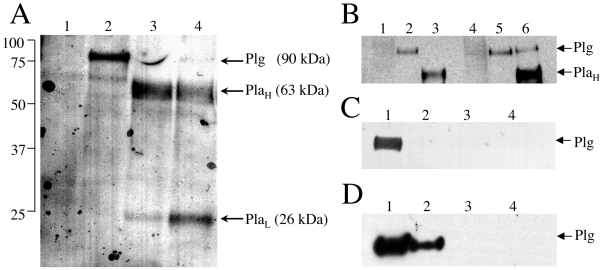
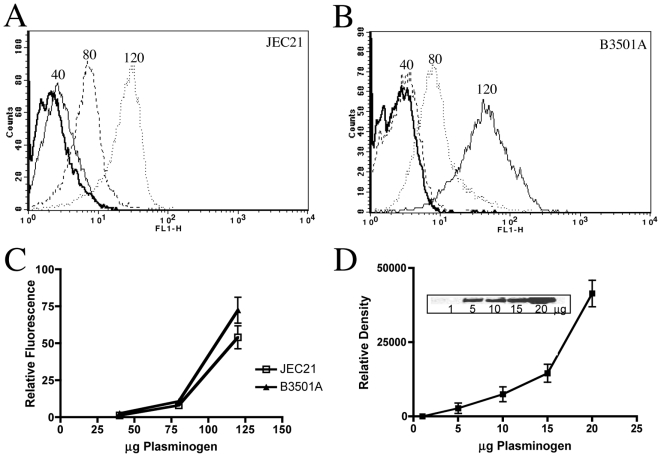
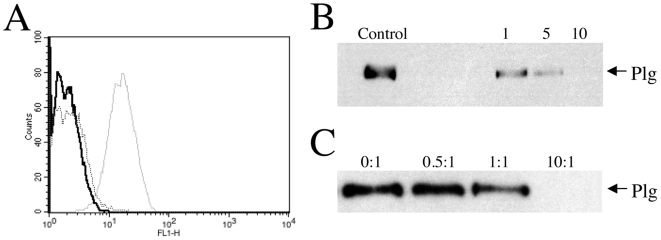
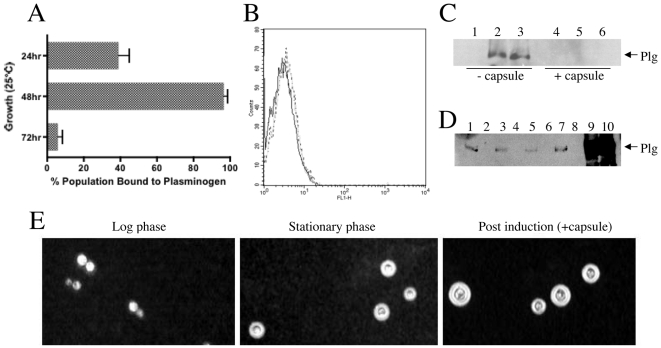
BACKGROUND: The fungal pathogen Cryptococcus neoformans is a leading cause of illness and death in persons with predisposing factors, including: malignancies, solid organ transplants, and corticosteroid use. C. neoformans is ubiquitous in the environment and enters into the lungs via inhalation, where it can disseminate through the bloodstream and penetrate the central nervous system (CNS), resulting in a difficult to treat and often-fatal infection of the brain, called meningoencephalitis. Plasminogen is a highly abundant protein found in the plasma component of blood and is necessary for the degradation of fibrin, collagen, and other structural components of tissues. This fibrinolytic system is utilized by cancer cells during metastasis and several pathogenic species of bacteria have been found to manipulate the host plasminogen system to facilitate invasion of tissues during infection by modifying the activation of this process through the binding of plasminogen at their surface. METHODOLOGY: The invasion of the brain and the central nervous system by penetration of the protective blood-brain barrier is a prerequisite to the establishment of meningoencephalitis by the opportunistic fungal pathogen C. neoformans. In this study, we examined the ability of C. neoformans to subvert the host plasminogen system to facilitate tissue barrier invasion. Through a combination of biochemical, cell biology, and proteomic approaches, we have shown that C. neoformans utilizes the host plasminogen system to cross tissue barriers, providing support for the hypothesis that plasminogen-binding may contribute to the invasion of the blood-brain barrier by penetration of the brain endothelial cells and underlying matrix. In addition, we have identified the cell wall-associated proteins that serve as plasminogen receptors and characterized both the plasminogen-binding and plasmin-activation potential for this significant human pathogen. CONCLUSIONS: The results of this study provide evidence for the cooperative role of multiple virulence determinants in C. neoformans pathogenesis and suggest new avenues for the development of anti-infective agents in the prevention of fungal tissue invasion.
Overview
The claims and statistics of this paper haven’t been checked yet.
Free: it reads the open-access text and checks the first 5 claims that cite a source we can check. Create a free account to check every claim.
Integrity signals
Registry
Cites
Statistics
Figures
Verification
Claims the paper makes
The claims and statistics of this paper haven’t been checked yet.
Free: it reads the open-access text and checks the first 5 claims that cite a source we can check. Create a free account to check every claim.
Claims other papers make about this one
Each is checked against this paper’s own text: does it say what the citing paper says it does?
The source backs part of the claim, not all of it — or backs it for a different population, condition or comparison.
In the citing paper
“Cryptococcal cells can bind and activate host plasminogen, a plasma protein and central component of the fibrinolytic system. This interaction promotes the conversion of plasminogen to the serine protease plasmin via the urokinase-type plasminogen activator (uPA) [159–161].”
From Mechanisms of fungal dissemination (2021) · cites this paper as [159]
Experimental — accuracy not yet measuredIn the citing paper
“Plasmin digests components of the BBB, as well as activates matrix metalloproteinases, which are capable of damaging tight junction components [159].”
From Mechanisms of fungal dissemination (2021) · cites this paper as [159]
Self-check
Percentages, sums and reported differences re-computed from the paper’s own numbers.
The self-check needs the paper’s full text.
Citations
Cites
Improved silver staining of plant proteins, RNA and DNA in polyacrylamide gels
Blum, H., Beier, H., & Gross, H. J. (1987) · ELECTROPHORESIS · doi:10.1002/elps.1150080203 · Cited by 4,150 · cited 2×
“Duplicate gels were silver stained [62] or transferred to PVDF for plasminogen ligand blotting.”
MethodDynamics of cell wall structure in Saccharomyces cerevisiae
Klis, F. (2002) · FEMS Microbiology Reviews · doi:10.1016/s0168-6445(02)00087-6 · Cited by 1,005 · cited 1×
“. The fungal cell wall is unique among cellular organelles in that it provides mechanical strength and acts as a physical barrier to protect the cell from damage. In addition to its structural role, the cell wall is also an important mediator of events necessary for cell-to-cell recognition, growth and morphogenesis,…”
BackgroundCell Wall and Secreted Proteins of Candida albicans: Identification, Function, and Expression
Chaffin, W. L., López-Ribot, J. L., Casanova, M., Gozalbo, D., & Martínez, J. P. (1998) · Microbiology and Molecular Biology Reviews · doi:10.1128/mmbr.62.1.130-180.1998 · Cited by 726 · cited 1×
“While the presence of cytosol-derived proteins within the fungal cell wall has been extensively described, the method by which these ‘‘moonlighting’’ proteins become incorporated into the cell wall has not been established, as they generally lack the classical signal sequences necessary for secretion (reviewed in [25,…”
BackgroundThe Genome of the Basidiomycetous Yeast and Human Pathogen Cryptococcus neoformans
Loftus, B. J., Fung, E., Roncaglia, P., Rowley, D., Amedeo, P., Bruno, D., Vamathevan, J., Miranda, M., Anderson, I. J., Fraser, J. A., et al. (2005) · Science · doi:10.1126/science.1103773 · Cited by 694 · cited 2×
“While the significance of this finding is not known, it may partially explain the differential virulence properties associated with these two genetically similar strains [66].”
BackgroundSelf-citationRodrigues, M. L., Nakayasu, E. S., Oliveira, D. L., Nimrichter, L., Nosanchuk, J. D., Almeida, I. C., & Casadevall, A. (2008) · Eukaryotic Cell · doi:10.1128/ec.00370-07 · Cited by 558 · cited 1×
“neoformans manifests a complex secretion mechanism that may facilitate the delivery of atypical cell wall proteins, as well as other pathogenesis-related molecules [77].”
BackgroundMiles, L. A., Dahlberg, C. M., Plescia, J., Felez, J., Kato, K., & Plow, E. F. (1991) · Biochemistry · doi:10.1021/bi00220a034 · Cited by 451 · cited 1×
“. Several proteins have been found to play a major role in microbial recruitment of plasminogen, including enolase, glyceraldehyde-3-phosphate dehydrogenase (GAPDH), and phosphoglycerate kinase (PGK). These are carbohydrate-active molecules that, though predominantly found in soluble form within the cytosol, are capab…”
BackgroundBergmann, S., Rohde, M., Chhatwal, G. S., & Hammerschmidt, S. (2001) · Molecular Microbiology · doi:10.1046/j.1365-2958.2001.02448.x · Cited by 423
The cell biology of the plasminogen system
Plow, E. F., Herren, T., Redlitz, A., Miles, L. A., & Hoover‐Plow, J. L. (1995) · The FASEB Journal · doi:10.1096/fasebj.9.10.7615163 · Cited by 420 · cited 1×
“neoformans was found to be lysine-dependent, a feature that is common to all plasminogen-binding species [41,49,67].”
BackgroundSerologic Evidence for Cryptococcus neoformans Infection in Early Childhood
Goldman, D. L., Khine, H., Abadi, J., Lindenberg, D. J., Pirofski, L.-A., Niang, R., & Casadevall, A. (2001) · Pediatrics · doi:10.1542/peds.107.5.e66 · Cited by 413 · cited 1×
“Although the immunosuppressed are at greatest risk of infection and death, healthy individuals can also contract the disease due to the widespread presence of the fungus in the environment [17].”
BackgroundCryptococcus neoformans melanin and virulence: mechanism of action
Wang, Y., Aisen, P., & Casadevall, A. (1995) · Infection and Immunity · doi:10.1128/iai.63.8.3131-3136.1995 · Cited by 404
Cited by
Singh, B., Fleury, C., Jalalvand, F., & Riesbeck, K. (2012) · FEMS Microbiology Reviews · doi:10.1111/j.1574-6976.2012.00340.x · Cited by 302
“, 2008) and Cryptococcus neoformans (Stie et al., 2009).”
Kim, J., Lee, K.-T., Lee, J. S., Shin, J., Cui, B., Yang, K., Choi, Y. S., Choi, N., Lee, S. H., Lee, J.-H., et al. (2021) · Nature Biomedical Engineering · doi:10.1038/s41551-021-00743-8 · Cited by 172
Mechanisms of fungal dissemination
Strickland, A. B., & Shi, M. (2021) · Cellular and Molecular Life Sciences · doi:10.1007/s00018-020-03736-z · Cited by 127
Candela, M., Centanni, M., Fiori, J., Biagi, E., Turroni, S., Orrico, C., Bergmann, S., Hammerschmidt, S., & Brigidi, P. (2010) · Microbiology · doi:10.1099/mic.0.038307-0 · Cited by 123
“For instance, affecting the accessibility of Plg receptors, changes in the B. animalis subsp. lactis cell-surface structure may occur in response to bile adaptation (Ruiz et al., 2007) and may influence the bacterial affinity for human Plg (Stie et al., 2009).”
BackgroundNogueira, S. V., Fonseca, F. L., Rodrigues, M. L., Mundodi, V., Abi-Chacra, E. A., Winters, M. S., Alderete, J. F., & Soares, C. M. D. A. (2010) · Infection and Immunity · doi:10.1128/iai.00221-10 · Cited by 103
“Functional studies to address the significance of plasminogen binding in the invasiveness of Cryptococcus neoformans demonstrated that plasmin-coated organisms possess an increased potential to penetrate the ECM in vitro (47).”
BackgroundInfluential
Metadata
- Authors
- Stie, J., Bruni, G., & Fox, D.
- Affiliations
- Louisiana State University (US)
- ETH Zurich (CH)
- Corresponding author
- Fox, Deborah
- ORCID
- Bruni, Gillian
- Venue
- PLoS ONE
- Publisher
- Public Library of Science (PLoS)
- Published
- 2009-06-03
- Volume
- 4
- Issue
- 6
- Pages
- e5780
- ISSN
- 1932-6203 (ISSN-L)
- PMC
- PMC2685986
- OpenAlex
- W2103993315
- Cited by
- 85
- References
- 93
- Citations by year
- 2026: 2 · 2025: 4 · 2024: 5 · 2023: 6 · 2022: 10 · 2021: 6 · 2020: 4 · 2019: 4 · 2018: 4 · 2017: 2 · 2016: 4 · 2015: 6 · 2014: 4 · 2013: 7 · 2012: 8
- FWCI
- 3.80
- Type
- journal article
- Language
- en
- Open access
- gold
- doi.org
- Locations
- PLoS ONE (publishedVersion, cc-by)
- PubMed Central (publishedVersion, cc-by)
- PubMed (publishedVersion)
- DOAJ (DOAJ: Directory of Open Access Journals) (submittedVersion, cc-by-sa)
- Figshare (submittedVersion, cc-by)
- Funders
- Louisiana Board of Regents
- National Institutes of Health
- National Institute of Allergy and Infectious Diseases (K22AI055302, AI055302)
- Topics
- Health Sciences › Medicine › Infectious Diseases › Fungal Infections and Studies
- Life Sciences › Immunology and Microbiology › Microbiology › Bacterial Infections and Vaccines
- Health Sciences › Medicine › Infectious Diseases › Antifungal resistance and susceptibility
- Keywords
- Cryptococcus neoformans, plasminogen binding, plasminogen receptor, extracellular matrix invasion, blood-brain barrier, meningoencephalitis, cell wall-associated proteins, plasmin activation, fungal virulence factors, brain endothelial cells
- MeSH terms
- Amino Acid Sequence, Brain, Cell Wall, Central Nervous System, Collagen, Cryptococcus neoformans, Extracellular Matrix, Fibrin, Fibrinolysis, Humans, Lung, Meningoencephalitis, Molecular Sequence Data, Plasminogen, Surface Properties, Proteomics
About these checks
Registry, retraction, Cites and statistics results are computed, not judged, with one exception: a printed reference that no index lists is read once by a model before it counts as a citation error. Claims are extracted by a model and kept only when their quote appears verbatim in the text; each cited source is then checked, with a model’s help, for whether it says what the claim relies on. Those verdicts can be wrong — read the claim’s quote and the cited source before relying on one.
Statistics and arithmetic are recomputed, not judged.
Confidence bands are shown only for fields calibrated on our annotated test set. None is calibrated yet, so no band is shown.
What counts as a claim ›How we measure confidence ›How we check this ›
Are you an author, or do you see a problem with this page? Request a review
How to cite
Cite CoChat for the checks on this page, and the paper for its own findings.
- This page
- CoChat. (2026). Citation check: Surface-Associated Plasminogen Binding of Cryptococcus neoformans Promotes Extracellular Matrix Invasion. https://app.cochat.ai/papers/10.1371/journal.pone.0005780
- The paper
- Stie, J., Bruni, G., & Fox, D. (2009). Surface-Associated Plasminogen Binding of Cryptococcus neoformans Promotes Extracellular Matrix Invasion. PLoS ONE. https://doi.org/10.1371/journal.pone.0005780
Data sources
Bibliographic data: Semantic Scholar, OpenAlex, Crossref.
Contains information from the Semantic Scholar Academic Graph Datasets, made available under the ODC Attribution License (ODC-BY 1.0).
Semantic Scholar’s data is described in: Kinney, R., et al. (2023). The Semantic Scholar Open Data Platform. arXiv:2301.10140.
