

Surface-Associated Plasminogen Binding of Cryptococcus neoformans Promotes Extracellular Matrix Invasion
Open accessThe DOI matches its Crossref record; 92 of the 93 references it cites were found in a registry or an index.
Abstract
BACKGROUND: The fungal pathogen Cryptococcus neoformans is a leading cause of illness and death in persons with predisposing factors, including: malignancies, solid organ transplants, and corticosteroid use. C. neoformans is ubiquitous in the environment and enters into the lungs via inhalation, where it can disseminate through the bloodstream and penetrate the central nervous system (CNS), resulting in a difficult to treat and often-fatal infection of the brain, called meningoencephalitis. Plasminogen is a highly abundant protein found in the plasma component of blood and is necessary for the degradation of fibrin, collagen, and other structural components of tissues. This fibrinolytic system is utilized by cancer cells during metastasis and several pathogenic species of bacteria have been found to manipulate the host plasminogen system to facilitate invasion of tissues during infection by modifying the activation of this process through the binding of plasminogen at their surface. METHODOLOGY: The invasion of the brain and the central nervous system by penetration of the protective blood-brain barrier is a prerequisite to the establishment of meningoencephalitis by the opportunistic fungal pathogen C. neoformans. In this study, we examined the ability of C. neoformans to subvert the host plasminogen system to facilitate tissue barrier invasion. Through a combination of biochemical, cell biology, and proteomic approaches, we have shown that C. neoformans utilizes the host plasminogen system to cross tissue barriers, providing support for the hypothesis that plasminogen-binding may contribute to the invasion of the blood-brain barrier by penetration of the brain endothelial cells and underlying matrix. In addition, we have identified the cell wall-associated proteins that serve as plasminogen receptors and characterized both the plasminogen-binding and plasmin-activation potential for this significant human pathogen. CONCLUSIONS: The results of this study provide evidence for the cooperative role of multiple virulence determinants in C. neoformans pathogenesis and suggest new avenues for the development of anti-infective agents in the prevention of fungal tissue invasion.
Overview
The claims and statistics of this paper haven’t been checked yet.
Free: it reads the open-access text and checks the first 5 claims that cite a source we can check. Create a free account to check every claim.
Integrity signals
Registry
Cites
Statistics
Figures
Verification
Claims the paper makes
The claims and statistics of this paper haven’t been checked yet.
Free: it reads the open-access text and checks the first 5 claims that cite a source we can check. Create a free account to check every claim.
Claims other papers make about this one
Each is checked against this paper’s own text: does it say what the citing paper says it does?
The source backs part of the claim, not all of it — or backs it for a different population, condition or comparison.
In the citing paper
“Cryptococcal cells can bind and activate host plasminogen, a plasma protein and central component of the fibrinolytic system. This interaction promotes the conversion of plasminogen to the serine protease plasmin via the urokinase-type plasminogen activator (uPA) [159–161].”
From Mechanisms of fungal dissemination (2021) · cites this paper as [159]
Experimental — accuracy not yet measuredIn the citing paper
“Plasmin digests components of the BBB, as well as activates matrix metalloproteinases, which are capable of damaging tight junction components [159].”
From Mechanisms of fungal dissemination (2021) · cites this paper as [159]
Self-check
Percentages, sums and reported differences re-computed from the paper’s own numbers.
The self-check needs the paper’s full text.
Citations
Cites
Improved silver staining of plant proteins, RNA and DNA in polyacrylamide gels
Blum, H., Beier, H., & Gross, H. J. (1987) · ELECTROPHORESIS · doi:10.1002/elps.1150080203 · Cited by 4,150 · cited 2×
“Duplicate gels were silver stained [62] or transferred to PVDF for plasminogen ligand blotting.”
MethodDynamics of cell wall structure in Saccharomyces cerevisiae
Klis, F. (2002) · FEMS Microbiology Reviews · doi:10.1016/s0168-6445(02)00087-6 · Cited by 1,005 · cited 1×
“. The fungal cell wall is unique among cellular organelles in that it provides mechanical strength and acts as a physical barrier to protect the cell from damage. In addition to its structural role, the cell wall is also an important mediator of events necessary for cell-to-cell recognition, growth and morphogenesis,…”
BackgroundCell Wall and Secreted Proteins of Candida albicans: Identification, Function, and Expression
Chaffin, W. L., López-Ribot, J. L., Casanova, M., Gozalbo, D., & Martínez, J. P. (1998) · Microbiology and Molecular Biology Reviews · doi:10.1128/mmbr.62.1.130-180.1998 · Cited by 726 · cited 1×
“While the presence of cytosol-derived proteins within the fungal cell wall has been extensively described, the method by which these ‘‘moonlighting’’ proteins become incorporated into the cell wall has not been established, as they generally lack the classical signal sequences necessary for secretion (reviewed in [25,…”
BackgroundThe Genome of the Basidiomycetous Yeast and Human Pathogen Cryptococcus neoformans
Loftus, B. J., Fung, E., Roncaglia, P., Rowley, D., Amedeo, P., Bruno, D., Vamathevan, J., Miranda, M., Anderson, I. J., Fraser, J. A., et al. (2005) · Science · doi:10.1126/science.1103773 · Cited by 694 · cited 2×
“While the significance of this finding is not known, it may partially explain the differential virulence properties associated with these two genetically similar strains [66].”
BackgroundSelf-citationRodrigues, M. L., Nakayasu, E. S., Oliveira, D. L., Nimrichter, L., Nosanchuk, J. D., Almeida, I. C., & Casadevall, A. (2008) · Eukaryotic Cell · doi:10.1128/ec.00370-07 · Cited by 558 · cited 1×
“neoformans manifests a complex secretion mechanism that may facilitate the delivery of atypical cell wall proteins, as well as other pathogenesis-related molecules [77].”
BackgroundMiles, L. A., Dahlberg, C. M., Plescia, J., Felez, J., Kato, K., & Plow, E. F. (1991) · Biochemistry · doi:10.1021/bi00220a034 · Cited by 451 · cited 1×
“. Several proteins have been found to play a major role in microbial recruitment of plasminogen, including enolase, glyceraldehyde-3-phosphate dehydrogenase (GAPDH), and phosphoglycerate kinase (PGK). These are carbohydrate-active molecules that, though predominantly found in soluble form within the cytosol, are capab…”
BackgroundBergmann, S., Rohde, M., Chhatwal, G. S., & Hammerschmidt, S. (2001) · Molecular Microbiology · doi:10.1046/j.1365-2958.2001.02448.x · Cited by 423
The cell biology of the plasminogen system
Plow, E. F., Herren, T., Redlitz, A., Miles, L. A., & Hoover‐Plow, J. L. (1995) · The FASEB Journal · doi:10.1096/fasebj.9.10.7615163 · Cited by 420 · cited 1×
“neoformans was found to be lysine-dependent, a feature that is common to all plasminogen-binding species [41,49,67].”
BackgroundSerologic Evidence for Cryptococcus neoformans Infection in Early Childhood
Goldman, D. L., Khine, H., Abadi, J., Lindenberg, D. J., Pirofski, L.-A., Niang, R., & Casadevall, A. (2001) · Pediatrics · doi:10.1542/peds.107.5.e66 · Cited by 413 · cited 1×
“Although the immunosuppressed are at greatest risk of infection and death, healthy individuals can also contract the disease due to the widespread presence of the fungus in the environment [17].”
BackgroundCryptococcus neoformans melanin and virulence: mechanism of action
Wang, Y., Aisen, P., & Casadevall, A. (1995) · Infection and Immunity · doi:10.1128/iai.63.8.3131-3136.1995 · Cited by 404
The contribution of cell wall proteins to the organization of the yeast cell wall
Kapteyn, J. C., Van Den Ende, H., & Klis, F. M. (1999) · Biochimica et Biophysica Acta (BBA) - General Subjects · doi:10.1016/s0304-4165(98)00137-8 · Cited by 386
Encapsulation and melanin formation as indicators of virulence in Cryptococcus neoformans
Kwon-Chung, K. J., & Rhodes, J. C. (1986) · Infection and Immunity · doi:10.1128/iai.51.1.218-223.1986 · Cited by 341
Walsh, T. J., & Groll, A. H. (1999) · Transplant Infectious Disease · doi:10.1034/j.1399-3062.1999.010404.x · Cited by 294
Chang, Y. C., Stins, M. F., McCaffery, M. J., Miller, G. F., Pare, D. R., Dam, T., Paul-Satyasee, M., Kim, K. S., & Kwon-Chung, K. J. (2004) · Infection and Immunity · doi:10.1128/iai.72.9.4985-4995.2004 · Cited by 278 · cited 1×
“, though the mechanism by which this organism invades the BBB has not been definitively established”
Backgroundde Groot, P. W. J., de Boer, A. D., Cunningham, J., Dekker, H. L., de Jong, L., Hellingwerf, K. J., de Koster, C., & Klis, F. M. (2004) · Eukaryotic Cell · doi:10.1128/ec.3.4.955-965.2004 · Cited by 266
Litvintseva, A. P., Thakur, R., Vilgalys, R., & Mitchell, T. G. (2006) · Genetics · doi:10.1534/genetics.105.046672 · Cited by 265 · cited 2×
“neoformans: JEC21 (MATa), JEC20 (MATa), B3501A (MATa), FCH78 (MATa cap59::nat) and FCH79 (MATa CAP59 CA59::nat) and the serotype A (genotype A1/M1) strains C23 and A1 38-2 [56].”
BackgroundPitarch, A., Sánchez, M., Nombela, C., & Gil, C. (2002) · Molecular & Cellular Proteomics · doi:10.1074/mcp.m200062-mcp200 · Cited by 257 · cited 2×
“While the presence of cytosol-derived proteins within the fungal cell wall has been extensively described, the method by which these ‘‘moonlighting’’ proteins become incorporated into the cell wall has not been established, as they generally lack the classical signal sequences necessary for secretion (reviewed in [25,…”
BackgroundMethodBergmann, S., Rohde, M., & Hammerschmidt, S. (2004) · Infection and Immunity · doi:10.1128/iai.72.4.2416-2419.2004 · Cited by 248
Candida albicans binds human plasminogen: identification of eight plasminogen‐binding proteins
Crowe, J. D., Sievwright, I. K., Auld, G. C., Moore, N. R., Gow, N. A. R., & Booth, N. A. (2003) · Molecular Microbiology · doi:10.1046/j.1365-2958.2003.03390.x · Cited by 246 · cited 1×
“albicans and bacterial pathogens such as the Neisseria and Streptococcal species [44].”
BackgroundBacterial metastasis: the host plasminogen system in bacterial invasion
Lähteenmäki, K., Edelman, S., & Korhonen, T. K. (2005) · Trends in Microbiology · doi:10.1016/j.tim.2004.12.003 · Cited by 244 · cited 2×
“Plasmin also activates other proteolytic enzymes, such as matrix metalloproteinases (MMPs), that degrade the tight junction components of microvascular endothelial cells [41].”
BackgroundThe capsule of Cryptococcus neoformans passively inhibits phagocytosis of the yeast by macrophages
Kozel, T. R., & Gotschlich, E. C. (1983) · The Journal of Immunology · doi:10.4049/jimmunol.130.4.1994 · Cited by 239
Cell wall α‐1,3‐glucan is required to anchor the Cryptococcus neoformans capsule
Reese, A. J., & Doering, T. L. (2003) · Molecular Microbiology · doi:10.1046/j.1365-2958.2003.03780.x · Cited by 232
van Duin, D., Casadevall, A., & Nosanchuk, J. D. (2002) · Antimicrobial Agents and Chemotherapy · doi:10.1128/aac.46.11.3394-3400.2002 · Cited by 232
Plasminogen: a structural review
Ponting, C. P., Marshall, J. M., & Cederholm-Williams, S. A. (1992) · Blood Coagulation & Fibrinolysis · doi:10.1097/00001721-199210000-00012 · Cited by 216 · cited 1×
“Plasminogen is an abundant protein found in the plasma component of blood and is a central component of the fibrinolytic system that counteracts procoagulative activities to maintain proper flow and multi-system homeostasis. The soluble form of plasminogen within blood plasma exists as an inactive proenzyme that is su…”
BackgroundCharlier, C., Chrétien, F., Baudrimont, M., Mordelet, E., Lortholary, O., & Dromer, F. (2005) · The American Journal of Pathology · doi:10.1016/s0002-9440(10)62265-1 · Cited by 215
Jong, A. Y., Chen, S. H. M., Stins, M. F., Kim, K. S., Tuan, T.-L., & Huang, S.-H. (2003) · Journal of Medical Microbiology · doi:10.1099/jmm.0.05060-0 · Cited by 206 · cited 2×
“Although multiple factors contribute to fungal virulence, including the expression of extracellular proteases, morphogenic switching, adherence, hydrolytic enzymes, and capsule production, the conserved ability of fungal pathogens to subvert the host plasminogen system suggests that plasminogen binding may be an addit…”
BackgroundThe capsule of cryptococcus neoformans passively inhibits phagocytosis of the yeast by macrophages.
Kozel, T. R., & Gotschlich, E. C. (1982) · The Journal of Immunology · doi:10.4049/jimmunol.129.4.1675 · Cited by 205
Borrelia burgdorferi binds plasminogen, resulting in enhanced penetration of endothelial monolayers
Coleman, J. L., Sellati, T. J., Testa, J. E., Kew, R. R., Furie, M. B., & Benach, J. L. (1995) · Infection and Immunity · doi:10.1128/iai.63.7.2478-2484.1995 · Cited by 204
Decreased virulence in stable, acapsular mutants ofCryptococcus neoformans
Fromtling, R. A., Shadomy, H. J., & Jacobson, E. S. (1982) · Mycopathologia · doi:10.1007/bf00636177 · Cited by 202
Pathogenesis of Cerebral Cryptococcus neoformans Infection after Fungemia
Chrétien, F., Lortholary, O., Kansau, I., Neuville, S., Gray, F., & Dromer, F. (2002) · The Journal of Infectious Diseases · doi:10.1086/341564 · Cited by 201
Differential regulation of cell wall biogenesis during growth and development in yeast
Smits, G. J., van den Ende, H., & Klis, F. M. (2001) · Microbiology · doi:10.1099/00221287-147-4-781 · Cited by 191
Chen, S. H. M., Stins, M. F., Huang, S.-H., Chen, Y. H., Kwon-Chung, K. J., Chang, Y., Kim, K. S., Suzuki, K., & Jong, A. Y. (2003) · Journal of Medical Microbiology · doi:10.1099/jmm.0.05230-0 · Cited by 189
Barbosa, M. S., Báo, S. N., Andreotti, P. F., de Faria, F. P., Felipe, M. S. S., dos Santos Feitosa, L., Mendes-Giannini, M. J. S., & de Almeida Soares, C. M. (2006) · Infection and Immunity · doi:10.1128/iai.74.1.382-389.2006 · Cited by 189
Pathogenesis of pulmonary Cryptococcus neoformans infection in the rat
Goldman, D., Lee, S. C., & Casadevall, A. (1994) · Infection and Immunity · doi:10.1128/iai.62.11.4755-4761.1994 · Cited by 183
Maligie, M. A., & Selitrennikoff, C. P. (2005) · Antimicrobial Agents and Chemotherapy · doi:10.1128/aac.49.7.2851-2856.2005 · Cited by 178
Fox, D. S., Cruz, M. C., Sia, R. A. L., Ke, H., Cox, G. M., Cardenas, M. E., & Heitman, J. (2001) · Molecular Microbiology · doi:10.1046/j.1365-2958.2001.02295.x · Cited by 175 · cited 1×
“The CAP59 gene was disrupted by homologous recombination with a cassette containing the nourseothricin (NAT) resistance marker [57,58].”
MethodSelf-citationMoonlighting Proteins in Yeasts
Gancedo, C., & Flores, C.-L. (2008) · Microbiology and Molecular Biology Reviews · doi:10.1128/mmbr.00036-07 · Cited by 164 · cited 1×
“While the presence of cytosol-derived proteins within the fungal cell wall has been extensively described, the method by which these ‘‘moonlighting’’ proteins become incorporated into the cell wall has not been established, as they generally lack the classical signal sequences necessary for secretion (reviewed in [25,…”
BackgroundPlasminogen Alleles Influence Susceptibility to Invasive Aspergillosis
Zaas, A. K., Liao, G., Chien, J. W., Weinberg, C., Shore, D., Giles, S. S., Marr, K. A., Usuka, J., Burch, L. H., Perera, L., et al. (2008) · PLoS Genetics · doi:10.1371/journal.pgen.1000101 · Cited by 153 · cited 2×
“Although multiple factors contribute to fungal virulence, including the expression of extracellular proteases, morphogenic switching, adherence, hydrolytic enzymes, and capsule production, the conserved ability of fungal pathogens to subvert the host plasminogen system suggests that plasminogen binding may be an addit…”
BackgroundCryptococcus neoformans I. Nonencapsulated Mutants
Bulmer, G. S., Sans, M. D., & Gunn, C. M. (1967) · Journal of Bacteriology · doi:10.1128/jb.94.5.1475-1479.1967 · Cited by 147
Eisenman, H. C., Nosanchuk, J. D., Webber, J. B. W., Emerson, R. J., Camesano, T. A., & Casadevall, A. (2005) · Biochemistry · doi:10.1021/bi047731m · Cited by 144
Perfect, J. R., DURACK, D. T., & Gallis, H. A. (1983) · Medicine · doi:10.1097/00005792-198303000-00003 · Cited by 144
Traversal of Candida albicans across Human Blood-Brain Barrier In Vitro
Jong, A. Y., Stins, M. F., Huang, S.-H., Chen, S. H. M., & Kim, K. S. (2001) · Infection and Immunity · doi:10.1128/iai.69.7.4536-4544.2001 · Cited by 142 · cited 1×
“Although multiple factors contribute to fungal virulence, including the expression of extracellular proteases, morphogenic switching, adherence, hydrolytic enzymes, and capsule production, the conserved ability of fungal pathogens to subvert the host plasminogen system suggests that plasminogen binding may be an addit…”
BackgroundA new dominant selectable marker for use in Cryptococcus neoformans
McDade, H. C., & Cox, G. M. (2001) · Medical Mycology · doi:10.1080/714030997 · Cited by 141 · cited 1×
“The CAP59 gene was disrupted by homologous recombination with a cassette containing the nourseothricin (NAT) resistance marker [57,58].”
MethodGpm1p Is a Factor H-, FHL-1-, and Plasminogen-binding Surface Protein of Candida albicans
Poltermann, S., Kunert, A., von der Heide, M., Eck, R., Hartmann, A., & Zipfel, P. F. (2007) · Journal of Biological Chemistry · doi:10.1074/jbc.m707280200 · Cited by 135 · cited 2×
“Although multiple factors contribute to fungal virulence, including the expression of extracellular proteases, morphogenic switching, adherence, hydrolytic enzymes, and capsule production, the conserved ability of fungal pathogens to subvert the host plasminogen system suggests that plasminogen binding may be an addit…”
BackgroundEffects of Melanin upon Susceptibility of Cryptococcus to Antifungals
Ikeda, R., Sugita, T., Jacobson, E. S., & Shinoda, T. (2003) · Microbiology and Immunology · doi:10.1111/j.1348-0421.2003.tb03395.x · Cited by 131
Angiolella, L., Facchin, M., Stringaro, A., Maras, B., Simonetti, N., & Cassone, A. (1996) · Journal of Infectious Diseases · doi:10.1093/infdis/173.3.684 · Cited by 129
Molecular architecture of the Cryptococcus neoformans capsule
Gates, M. A., Thorkildson, P., & Kozel, T. R. (2004) · Molecular Microbiology · doi:10.1111/j.1365-2958.2003.03957.x · Cited by 125 · cited 1×
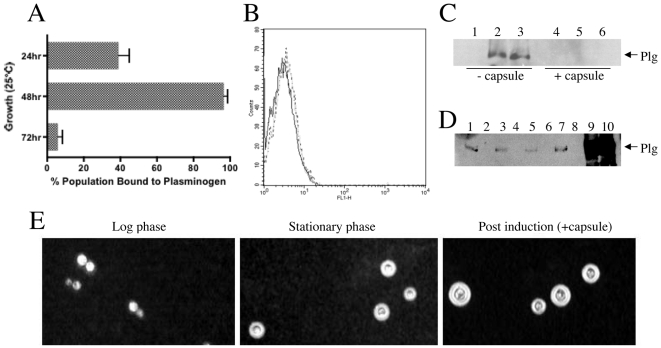
“As treatment with DMSO has been shown to remove capsular polysaccharides from encapsulated cells [64,65], we also examined the potential for masked plasminogen binding on the cell wall surface in the presence of intact capsule.”
BackgroundHuang, S.-H., & Jong, A. Y. (2001) · Cellular Microbiology · doi:10.1046/j.1462-5822.2001.00116.x · Cited by 124 · cited 1×
“intracellular pathogen is transported across endothelial barriers within host cells [5].”
BackgroundDerbise, A., Song, Y. P., Parikh, S., Fischetti, V. A., & Pancholi, V. (2004) · Infection and Immunity · doi:10.1128/iai.72.1.94-105.2004 · Cited by 124
Borrelia burgdorferi, Host-Derived Proteases, and the Blood-Brain Barrier
Grab, D. J., Perides, G., Dumler, J. S., Kim, K. J., Park, J., Kim, Y. V., Nikolskaia, O., Choi, K. S., Stins, M. F., & Kim, K. S. (2005) · Infection and Immunity · doi:10.1128/iai.73.2.1014-1022.2005 · Cited by 123
Drug resistance in Cryptococcus neoformans
Perfect, J. R., & Cox, G. M. (1999) · Drug Resistance Updates · doi:10.1054/drup.1999.0090 · Cited by 123
Jong, A., Wu, C.-H., Chen, H.-M., Luo, F., Kwon-Chung, K. J., Chang, Y. C., LaMunyon, C. W., Plaas, A., & Huang, S.-H. (2007) · Eukaryotic Cell · doi:10.1128/ec.00120-07 · Cited by 113 · cited 1×
“Although multiple factors contribute to fungal virulence, including the expression of extracellular proteases, morphogenic switching, adherence, hydrolytic enzymes, and capsule production, the conserved ability of fungal pathogens to subvert the host plasminogen system suggests that plasminogen binding may be an addit…”
BackgroundFUNGAL INFECTIONS IN SOLID ORGAN TRANSPLANT RECIPIENTS
Hadley, S., & Karchmer, A. W. (1995) · Infectious Disease Clinics of North America · doi:10.1016/s0891-5520(20)30714-5 · Cited by 112
Cytosolic Proteins Contribute to Surface Plasminogen Recruitment of Neisseria meningitidis
Knaust, A., Weber, M. V. R., Hammerschmidt, S., Bergmann, S., Frosch, M., & Kurzai, O. (2007) · Journal of Bacteriology · doi:10.1128/jb.01966-06 · Cited by 109 · cited 1×
“, which utilize plasminogen recruitment to promote infection, may also exploit the host plasminogen system during selected phases of the infection cycle, such as dissemination and tissue invasion, when encapsulation is not as favorable”
BackgroundNovokhatny, V. V., Kudinov, S. A., & Privalov, P. L. (1984) · Journal of Molecular Biology · doi:10.1016/0022-2836(84)90466-2 · Cited by 107
Serological, electrophoretic, and biological properties of Cryptococcus neoformans antigens
Murphy, J. W., Mosley, R. L., Cherniak, R., Reyes, G. H., Kozel, T. R., & Reiss, E. (1988) · Infection and Immunity · doi:10.1128/iai.56.2.424-431.1988 · Cited by 106
Temperature-Regulated Transcription in the Pathogenic Fungus Cryptococcus neoformans
Steen, B. R., Lian, T., Zuyderduyn, S., MacDonald, W. K., Marra, M., Jones, S. J. M., & Kronstad, J. W. (2002) · Genome Research · doi:10.1101/gr.80202 · Cited by 100 · cited 1×
“While the presence of cytosol-derived proteins within the fungal cell wall has been extensively described, the method by which these ‘‘moonlighting’’ proteins become incorporated into the cell wall has not been established, as they generally lack the classical signal sequences necessary for secretion (reviewed in [25,…”
BackgroundA study of the Candida albicans cell wall proteome
Castillo, L., Calvo, E., Martínez, A. I., Ruiz‐Herrera, J., Valentín, E., Lopez, J. A., & Sentandreu, R. (2008) · PROTEOMICS · doi:10.1002/pmic.200800110 · Cited by 99
Huang, C., Nong, S.-H., Mansour, M. K., Specht, C. A., & Levitz, S. M. (2002) · Infection and Immunity · doi:10.1128/iai.70.10.5485-5493.2002 · Cited by 99 · cited 1×
“is relatively understudied, although several extracellular proteases and immunomodulatory mannoproteins have been identified”
BackgroundSar, B. (2004) · Journal of Antimicrobial Chemotherapy · doi:10.1093/jac/dkh361 · Cited by 98
Use of the plasminogen activation system by microorganisms
Coleman, J. L., & Benach, J. L. (1999) · Journal of Laboratory and Clinical Medicine · doi:10.1016/s0022-2143(99)90095-1 · Cited by 97 · cited 1×
“The minimal biochemical and structural requirements for plasminogen recruitment predisposes the plasminogen system to pathogen-manipulation for use during invasion of tissue barriers [42].”
BackgroundKolberg, J., Aase, A., Bergmann, S., Herstad, T. K., Rødal, G., Frank, R., Rohde, M., & Hammerschmidt, S. (2006) · Microbiology · doi:10.1099/mic.0.28747-0 · Cited by 92
Crystal structure of the kringle 2 domain of tissue plasminogen activator at 2.4-.ANG. resolution
de Vos, A. M., Ultsch, M. H., Kelley, R. F., Padmanabhan, K., Tulinsky, A., Westbrook, M. L., & Kossiakoff, A. A. (1992) · Biochemistry · doi:10.1021/bi00116a037 · Cited by 88
Eigenheer, R. A., Lee, Y. J., Blumwald, E., Phinney, B. S., & Gelli, A. (2007) · FEMS Yeast Research · doi:10.1111/j.1567-1364.2006.00198.x · Cited by 88
Lai, H.-Y., Tam, M. F., Tang, R.-B., Chou, H., Chang, C.-Y., Tsai, J.-J., & Shen, H.-D. (2002) · International Archives of Allergy and Immunology · doi:10.1159/000053862 · Cited by 84
Ibrahim, A. S., Filler, S. G., Alcouloumre, M. S., Kozel, T. R., Edwards, J. E., & Ghannoum, M. A. (1995) · Infection and Immunity · doi:10.1128/iai.63.11.4368-4374.1995 · Cited by 83
The highly immunogenic enolase and Hsp70p are adventitious Candida albicans cell wall proteins
Eroles, P., Sentandreu, M., Elorza, M. V., & Sentandreu, R. (1997) · Microbiology · doi:10.1099/00221287-143-2-313 · Cited by 83
Levitz, S. M., & DiBenedetto, D. J. (1989) · The Journal of Immunology · doi:10.4049/jimmunol.142.2.659 · Cited by 82
Olson, G. M., Fox, D. S., Wang, P., Alspaugh, J. A., & Buchanan, K. L. (2007) · Eukaryotic Cell · doi:10.1128/ec.00182-06 · Cited by 80 · cited 2×
“001% bromphenol blue (Bio-Rad)) prior to 2D PAGE, as previously described [60].”
MethodSelf-citationGenetic and proteomic evidences support the localization of yeast enolase in the cell surface
López-Villar, E., Monteoliva, L., Larsen, M. R., Sachon, E., Shabaz, M., Pardo, M., Pla, J., Gil, C., Roepstorff, P., & Nombela, C. (2006) · PROTEOMICS · doi:10.1002/pmic.200500479 · Cited by 78
Bryan, R. A., Zaragoza, O., Zhang, T., Ortiz, G., Casadevall, A., & Dadachova, E. (2005) · Eukaryotic Cell · doi:10.1128/ec.4.2.465-475.2005 · Cited by 78 · cited 1×
“As treatment with DMSO has been shown to remove capsular polysaccharides from encapsulated cells [64,65], we also examined the potential for masked plasminogen binding on the cell wall surface in the presence of intact capsule.”
BackgroundProtective Efficacy of Antigenic Fractions in Mouse Models of Cryptococcosis
Mansour, M. K., Yauch, L. E., Rottman, J. B., & Levitz, S. M. (2004) · Infection and Immunity · doi:10.1128/iai.72.3.1746-1754.2004 · Cited by 70
Rodrigues, M. L., dos Reis, F. C. G., Puccia, R., Travassos, L. R., & Alviano, C. S. (2003) · Microbial Pathogenesis · doi:10.1016/s0882-4010(02)00195-x · Cited by 68
Role of Mannoprotein in Induction and Regulation of Immunity toCryptococcus neoformans
Pietrella, D., Cherniak, R., Strappini, C., Perito, S., Mosci, P., Bistoni, F., & Vecchiarelli, A. (2001) · Infection and Immunity · doi:10.1128/iai.69.5.2808-2814.2001 · Cited by 67
Plasminogen-binding activity of enolase in the opportunistic pathogen Pneumocystis carinii
Fox, D., & Smulian, A. G. (2001) · Medical Mycology · doi:10.1080/714031070 · Cited by 65
Self-citationLähteenmäki, K., Kuusela, P., & Korhonen, T. (2000) · Methods · doi:10.1006/meth.2000.0983 · Cited by 63
Localization of mannoprotein in Cryptococcus neoformans
Vartivarian, S. E., Reyes, G. H., Jacobson, E. S., James, P. G., Cherniak, R., Mumaw, V. R., & Tingler, M. J. (1989) · Journal of Bacteriology · doi:10.1128/jb.171.12.6850-6852.1989 · Cited by 63
KAKEYA, H., UDONO, H., MAESAKI, S., SASAKI, E., KAWAMURA, S., HOSSAIN, M. A., YAMAMOTO, Y., SAWAI, T., FUKUDA, M., MITSUTAKE, K., et al. (2001) · Clinical and Experimental Immunology · doi:10.1046/j.1365-2249.1999.00821.x · Cited by 56
Andronicos, N. M., Ranson, M., Bognacki, J. J., & Baker, M. S. (1997) · Biochimica et Biophysica Acta (BBA) - Protein Structure and Molecular Enzymology · doi:10.1016/s0167-4838(96)00146-x · Cited by 55
Kakeya, H., Udono, H., Ikuno, N., Yamamoto, Y., Mitsutake, K., Miyazaki, T., Tomono, K., Koga, H., Tashiro, T., Nakayama, E., et al. (1997) · Infection and Immunity · doi:10.1128/iai.65.5.1653-1658.1997 · Cited by 54
Orendi, J., Verheul, A. F. M., Vos, N., Visser, M. R., Snippe, H., Cherniak, R., Vaishnav, V. V., Rijkers, G. T., & Verhoef, J. (1997) · Clinical & Experimental Immunology · doi:10.1111/j.1365-2249.1997.283-ce1169.x · Cited by 35
Nosocomial Transmission of Cryptococcosis
Wang, C.-Y., Wu, H., & Hsueh, P. (2005) · New England Journal of Medicine · doi:10.1056/nejm200503243521225 · Cited by 32
Pitzurra, L., Vecchiarelli, A., Peducci, R., Cardinali, A., & Bistoni, F. (1997) · Medical Mycology · doi:10.1080/02681219780001321 · Cited by 23
Miles, L. A., & Plow, E. F. (1986) · Biochemistry · doi:10.1021/bi00370a028 · Cited by 22
[Nosocomial fungal infections, analysis of 149 cases].
Liu, Z.-Y., Sheng, R.-Y., Li, X.-L., Li, T., & Wang, A. (2003) · PubMed · Cited by 13
Assembly of the Plasminogen System on Cell Surfaces
Plow, E. F., Redlitz, A., HAWLEY, S. B., Xue, S., Herren, T., Hoover-Plow, J. L., & Miles, L. A. (2001) · Handbook of experimental pharmacology · doi:10.1007/978-3-642-56637-0_6 · Cited by 11
The expression of Candida albicans enolase is not heat shock inducible
Franklyn, K. M., & Warmington, J. R. (1994) · FEMS Microbiology Letters · doi:10.1111/j.1574-6968.1994.tb06831.x · Cited by 9
Opportunistic/nosocomial infections. Treatment and developmental therapeutics. I. Cryptococcosis
Georgiev, V. S. (1993) · Medicinal Research Reviews · doi:10.1002/med.2610130405 · Cited by 8
Biotinylation and characterization of Cryptococcus neoformans cell surface proteins
Foster, A. J., Bird, R. A., & Smith, S. N. (2007) · Journal of Applied Microbiology · doi:10.1111/j.1365-2672.2006.03259.x · Cited by 7 · cited 2×
“hydroxysuccinimide (NHS) ester of biotin used for these studies is membrane impermeable and thus confined to cell surfaces [59].”
BackgroundMethod[Fungemia in patients with HIV infection].
Santos, J. C. D. C., Muñoz, R. P., Esteve, A., García, V., Rivero, A., & Márquez, M. (1998) · PubMed · Cited by 6
Nosocomial fungal infections analysis of 92 cases
Zhao, J. (2004) · Zhongguo weishengtaixue zazhi · Cited by 6
5-Fluorocytosine resistance in clinical isolates of Cryptococcus neoformans.
Cs, C., Cheong, Y. M., & Wong, Y. H. (1989) · PubMed · Cited by 4
Cited by
Singh, B., Fleury, C., Jalalvand, F., & Riesbeck, K. (2012) · FEMS Microbiology Reviews · doi:10.1111/j.1574-6976.2012.00340.x · Cited by 302
“, 2008) and Cryptococcus neoformans (Stie et al., 2009).”
Kim, J., Lee, K.-T., Lee, J. S., Shin, J., Cui, B., Yang, K., Choi, Y. S., Choi, N., Lee, S. H., Lee, J.-H., et al. (2021) · Nature Biomedical Engineering · doi:10.1038/s41551-021-00743-8 · Cited by 172
Mechanisms of fungal dissemination
Strickland, A. B., & Shi, M. (2021) · Cellular and Molecular Life Sciences · doi:10.1007/s00018-020-03736-z · Cited by 127
Candela, M., Centanni, M., Fiori, J., Biagi, E., Turroni, S., Orrico, C., Bergmann, S., Hammerschmidt, S., & Brigidi, P. (2010) · Microbiology · doi:10.1099/mic.0.038307-0 · Cited by 123
“For instance, affecting the accessibility of Plg receptors, changes in the B. animalis subsp. lactis cell-surface structure may occur in response to bile adaptation (Ruiz et al., 2007) and may influence the bacterial affinity for human Plg (Stie et al., 2009).”
BackgroundNogueira, S. V., Fonseca, F. L., Rodrigues, M. L., Mundodi, V., Abi-Chacra, E. A., Winters, M. S., Alderete, J. F., & Soares, C. M. D. A. (2010) · Infection and Immunity · doi:10.1128/iai.00221-10 · Cited by 103
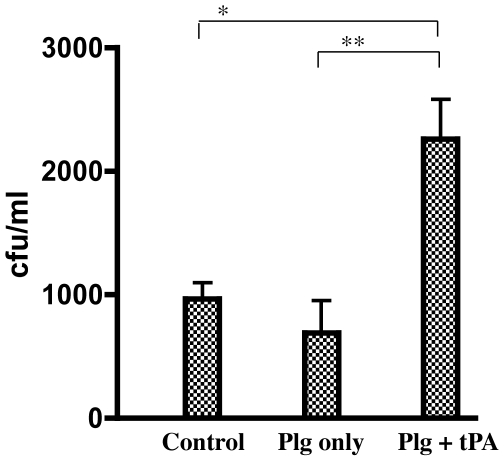
“Functional studies to address the significance of plasminogen binding in the invasiveness of Cryptococcus neoformans demonstrated that plasmin-coated organisms possess an increased potential to penetrate the ECM in vitro (47).”
BackgroundInfluential
Metadata
- Authors
- Stie, J., Bruni, G., & Fox, D.
- Affiliations
- Louisiana State University (US)
- ETH Zurich (CH)
- Corresponding author
- Fox, Deborah
- ORCID
- Bruni, Gillian
- Venue
- PLoS ONE
- Publisher
- Public Library of Science (PLoS)
- Published
- 2009-06-03
- Volume
- 4
- Issue
- 6
- Pages
- e5780
- ISSN
- 1932-6203 (ISSN-L)
- PMC
- PMC2685986
- OpenAlex
- W2103993315
- Cited by
- 85
- References
- 93
- Citations by year
- 2026: 2 · 2025: 4 · 2024: 5 · 2023: 6 · 2022: 10 · 2021: 6 · 2020: 4 · 2019: 4 · 2018: 4 · 2017: 2 · 2016: 4 · 2015: 6 · 2014: 4 · 2013: 7 · 2012: 8
- FWCI
- 3.80
- Type
- journal article
- Language
- en
- Open access
- gold
- doi.org
- Locations
- PLoS ONE (publishedVersion, cc-by)
- PubMed Central (publishedVersion, cc-by)
- PubMed (publishedVersion)
- DOAJ (DOAJ: Directory of Open Access Journals) (submittedVersion, cc-by-sa)
- Figshare (submittedVersion, cc-by)
- Funders
- Louisiana Board of Regents
- National Institutes of Health
- National Institute of Allergy and Infectious Diseases (K22AI055302, AI055302)
- Topics
- Health Sciences › Medicine › Infectious Diseases › Fungal Infections and Studies
- Life Sciences › Immunology and Microbiology › Microbiology › Bacterial Infections and Vaccines
- Health Sciences › Medicine › Infectious Diseases › Antifungal resistance and susceptibility
- Keywords
- Cryptococcus neoformans, plasminogen binding, plasminogen receptor, extracellular matrix invasion, blood-brain barrier, meningoencephalitis, cell wall-associated proteins, plasmin activation, fungal virulence factors, brain endothelial cells
- MeSH terms
- Amino Acid Sequence, Brain, Cell Wall, Central Nervous System, Collagen, Cryptococcus neoformans, Extracellular Matrix, Fibrin, Fibrinolysis, Humans, Lung, Meningoencephalitis, Molecular Sequence Data, Plasminogen, Surface Properties, Proteomics
About these checks
Registry, retraction, Cites and statistics results are computed, not judged, with one exception: a printed reference that no index lists is read once by a model before it counts as a citation error. Claims are extracted by a model and kept only when their quote appears verbatim in the text; each cited source is then checked, with a model’s help, for whether it says what the claim relies on. Those verdicts can be wrong — read the claim’s quote and the cited source before relying on one.
Statistics and arithmetic are recomputed, not judged.
Confidence bands are shown only for fields calibrated on our annotated test set. None is calibrated yet, so no band is shown.
What counts as a claim ›How we measure confidence ›How we check this ›
Are you an author, or do you see a problem with this page? Request a review
Data sources
Bibliographic data: Semantic Scholar, OpenAlex, Crossref.
Contains information from the Semantic Scholar Academic Graph Datasets, made available under the ODC Attribution License (ODC-BY 1.0).
Semantic Scholar’s data is described in: Kinney, R., et al. (2023). The Semantic Scholar Open Data Platform. arXiv:2301.10140.
