

Hypoxia and TGF-β Drive Breast Cancer Bone Metastases through Parallel Signaling Pathways in Tumor Cells and the Bone Microenvironment
Open accessThe DOI matches its Crossref record; 110 of the 110 references it cites were found in a registry or an index.
Abstract
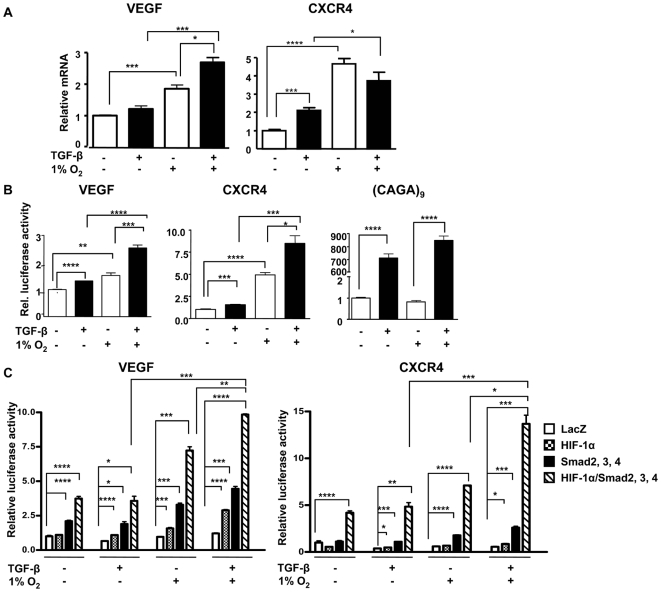
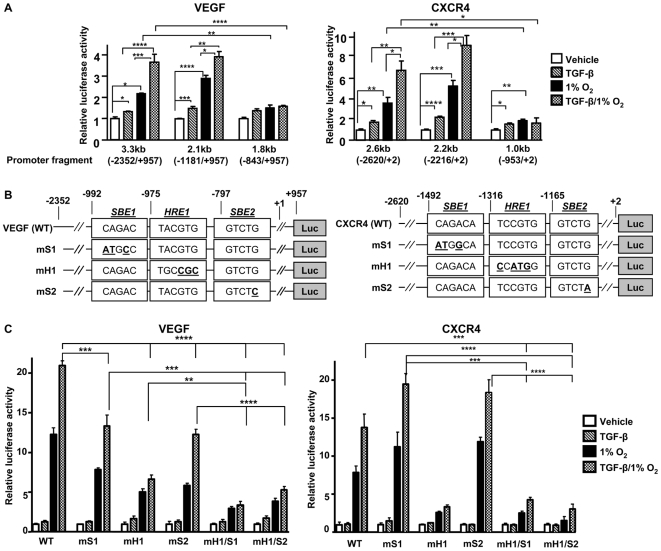
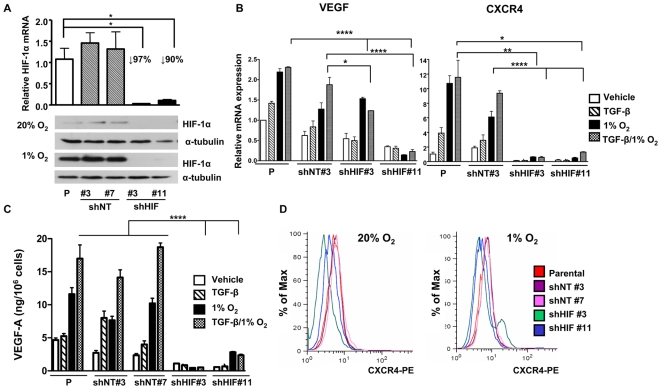
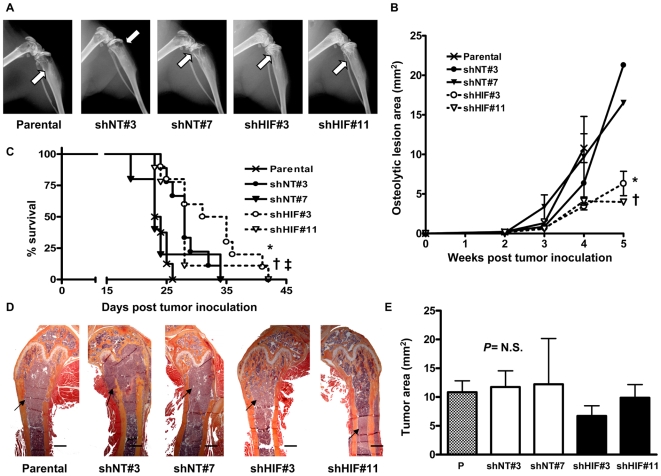
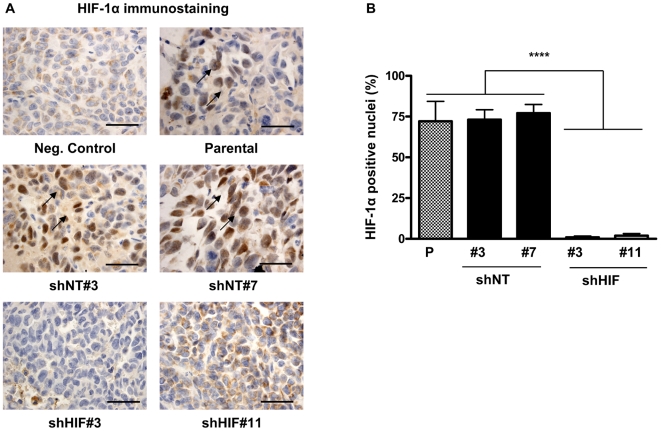
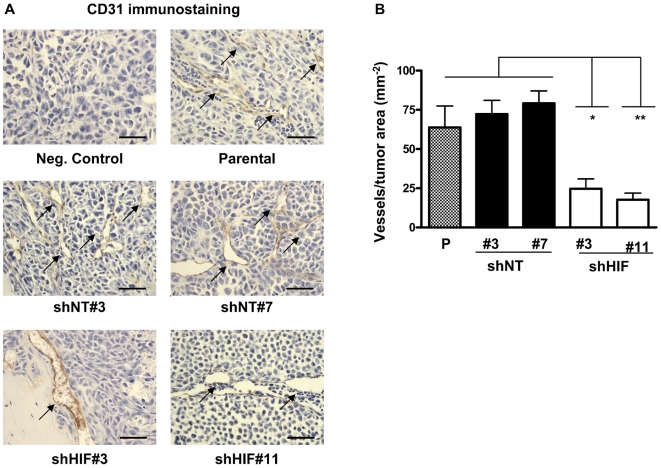
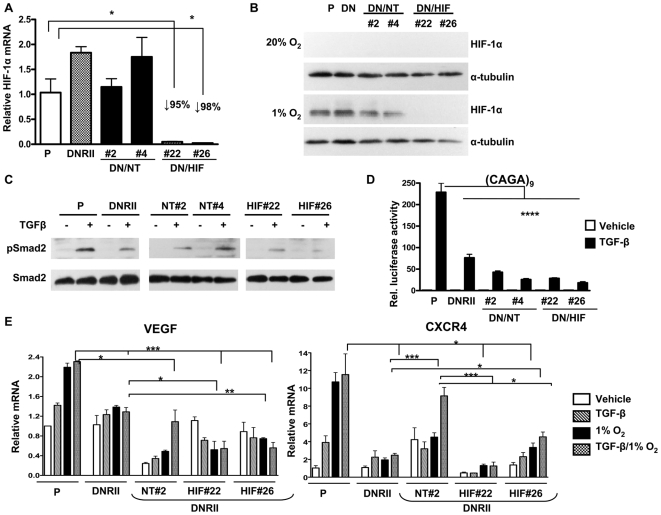
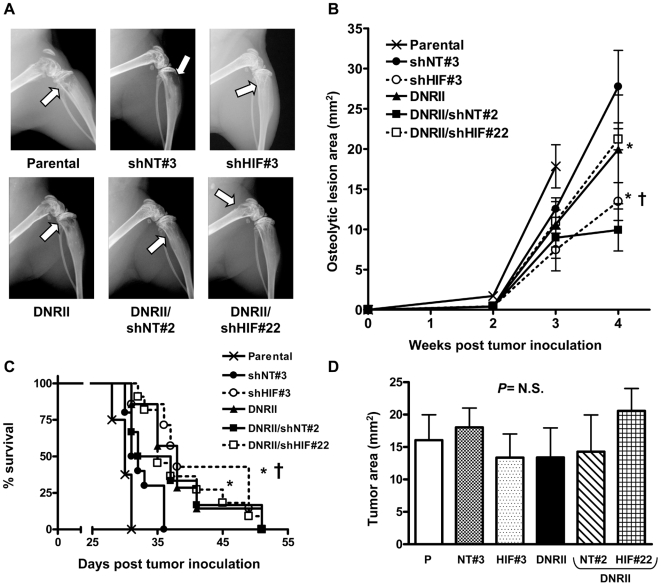
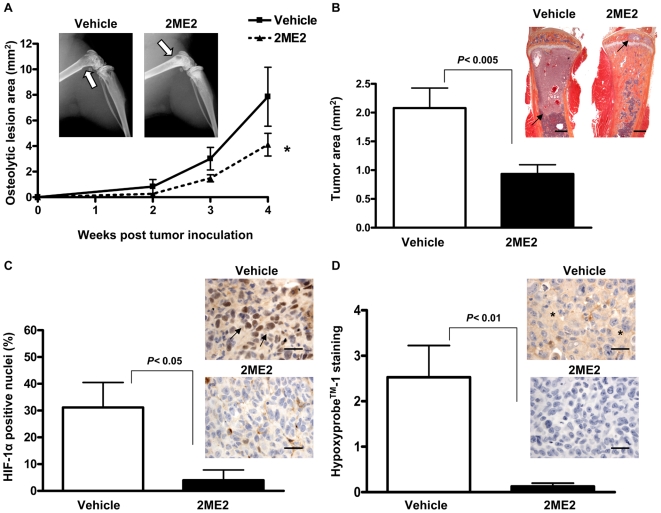
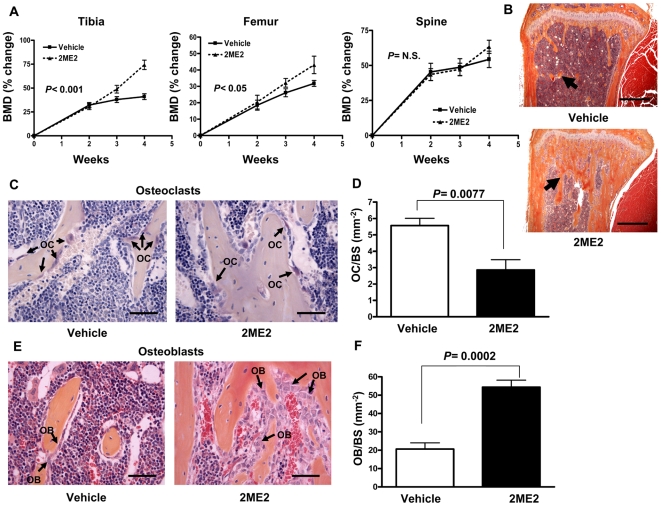
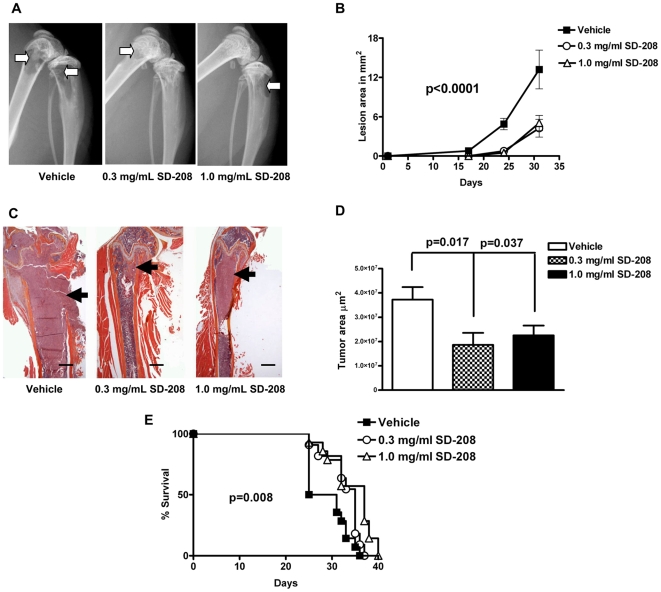
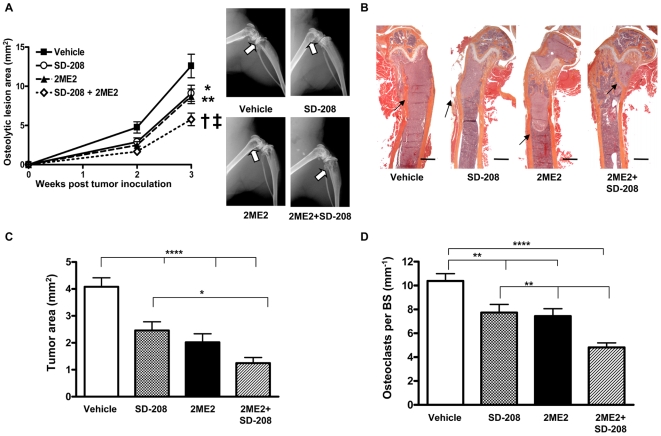
BACKGROUND: Most patients with advanced breast cancer develop bone metastases, which cause pain, hypercalcemia, fractures, nerve compression and paralysis. Chemotherapy causes further bone loss, and bone-specific treatments are only palliative. Multiple tumor-secreted factors act on the bone microenvironment to drive a feed-forward cycle of tumor growth. Effective treatment requires inhibiting upstream regulators of groups of prometastatic factors. Two central regulators are hypoxia and transforming growth factor (TGF)- beta. We asked whether hypoxia (via HIF-1alpha) and TGF-beta signaling promote bone metastases independently or synergistically, and we tested molecular versus pharmacological inhibition strategies in an animal model. METHODOLOGY/PRINCIPAL FINDINGS: We analyzed interactions between HIF-1alpha and TGF-beta pathways in MDA-MB-231 breast cancer cells. Only vascular endothelial growth factor (VEGF) and the CXC chemokine receptor 4 (CXCR4), of 16 genes tested, were additively increased by both TGF-beta and hypoxia, with effects on the proximal promoters. We inhibited HIF-1alpha and TGF-beta pathways in tumor cells by shRNA and dominant negative receptor approaches. Inhibition of either pathway decreased bone metastasis, with no further effect of double blockade. We tested pharmacologic inhibitors of the pathways, which target both the tumor and the bone microenvironment. Unlike molecular blockade, combined drug treatment decreased bone metastases more than either alone, with effects on bone to decrease osteoclastic bone resorption and increase osteoblast activity, in addition to actions on tumor cells. CONCLUSIONS/SIGNIFICANCE: Hypoxia and TGF-beta signaling in parallel drive tumor bone metastases and regulate a common set of tumor genes. In contrast, small molecule inhibitors, by acting on both tumor cells and the bone microenvironment, additively decrease tumor burden, while improving skeletal quality. Our studies suggest that inhibitors of HIF-1alpha and TGF-beta may improve treatment of bone metastases and increase survival.
Overview
The claims and statistics of this paper haven’t been checked yet.
Free: it reads the open-access text and checks the first 5 claims that cite a source we can check. Create a free account to check every claim.
Integrity signals
Registry
Cites
Statistics
Figures
Verification
Claims the paper makes
The claims and statistics of this paper haven’t been checked yet.
Free: it reads the open-access text and checks the first 5 claims that cite a source we can check. Create a free account to check every claim.
Claims other papers make about this one
Each is checked against this paper’s own text: does it say what the citing paper says it does?
The cited source says what the claim attributes to it.
In the citing paper
“Because BCCs were injected directly into the circulation, these studies do not provide compelling evidence that HIF-1 is required for spontaneous metastasis from breast to bone as opposed to a more limited requirement for bone colonization by circulating tumor cells.”
From The hypoxic tumor microenvironment: A driving force for breast cancer progression (2016) · cites this paper as [33]
Self-check
Percentages, sums and reported differences re-computed from the paper’s own numbers.
The self-check needs the paper’s full text.
Citations
Cites
Targeting HIF-1 for cancer therapy
Semenza, G. L. (2003) · Nature Reviews Cancer · doi:10.1038/nrc1187 · Cited by 6,717 · cited 1×
“When oxygen is limiting, HIF-1a heterodimerizes with HIF-1b in the nucleus and mediates the transcription of hypoxia-regulated target genes [20,23].”
BackgroundHypoxia — a key regulatory factor in tumour growth
Harris, A. L. (2002) · Nature Reviews Cancer · doi:10.1038/nrc704 · Cited by 5,177 · cited 2×
“When oxygen is limiting, HIF-1a heterodimerizes with HIF-1b in the nucleus and mediates the transcription of hypoxia-regulated target genes [20,23].”
BackgroundMassagué, J. (2008) · Cell · doi:10.1016/j.cell.2008.07.001 · Cited by 3,907
Exploiting tumour hypoxia in cancer treatment
Brown, J. M., & Wilson, W. R. (2004) · Nature Reviews Cancer · doi:10.1038/nrc1367 · Cited by 2,828 · cited 1×
“may contribute to the incurability of bone metastases [21].”
BackgroundMetastasis to bone: causes, consequences and therapeutic opportunities
Mundy, G. R. (2002) · Nature Reviews Cancer · doi:10.1038/nrc867 · Cited by 2,777
Roodman, G. D. (2004) · New England Journal of Medicine · doi:10.1056/nejmra030831 · Cited by 2,755 · cited 2×
“Breast cancers frequently metastasize to bone, where they disrupt normal bone remodeling to cause bone destruction, pain, pathologic fracture, hypercalcemia, and nerve compression [1].”
BackgroundA multigenic program mediating breast cancer metastasis to bone
Kang, Y., Siegel, P. M., Shu, W., Drobnjak, M., Kakonen, S. M., Cordón-Cardo, C., Guise, T. A., & Massagué, J. (2003) · Cancer Cell · doi:10.1016/s1535-6108(03)00132-6 · Cited by 2,597 · cited 1×
“TGF-b-regulated factors, such as CTGF, IL-11, CXCR4 [13,26], and MMP-1 [24,25] are involved in multiple steps of the metastatic cascade, including invasion, homing, angiogenesis, and osteolysis [5] and constitute a gene signature for tumors that metastasize preferentially to bone [8] (Table 1).”
BackgroundSelf-citationRole of HIF-1α in hypoxia-mediated apoptosis, cell proliferation and tumour angiogenesis
Carmeliet, P., Dor, Y., Herbert, J.-M., Fukumura, D., Brusselmans, K., Dewerchin, M., Neeman, M., Bono, F., Abramovitch, R., Maxwell, P., et al. (1998) · Nature · doi:10.1038/28867 · Cited by 2,502 · cited 1×
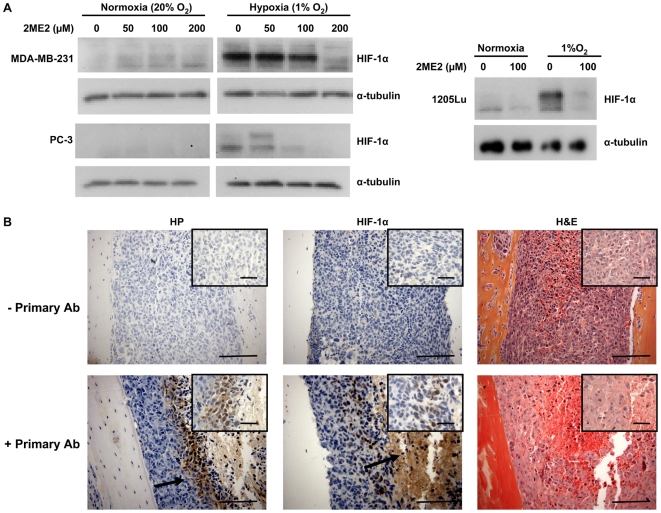
“We next determined whether MDA-MB-231 breast cancer bone metastases are hypoxic in vivo by Hypoxyprobe-1 staining [35–38].”
BackgroundMassagué, J., Seoane, J., & Wotton, D. (2005) · Genes & Development · doi:10.1101/gad.1350705 · Cited by 2,452 · cited 1×
“translocates to the nucleus and mediates gene transcription by binding to Smad binding elements (SBEs) in the promoters of target genes [4].”
Background(1999) · PubMed · Cited by 2,204
Cited by
Cancer to bone: a fatal attraction
Weilbaecher, K. N., Guise, T. A., & McCauley, L. K. (2011) · Nature Reviews Cancer · doi:10.1038/nrc3055 · Cited by 1,285
“Tumour expression of HIF1α inhibits osteoblast differentiation and promotes osteoclast differentiation, supporting HIF1α as a factor that promotes tumour osteolysis and tumour growth in bon”
Self-citationHypoxia and hypoxia-inducible factors: master regulators of metastasis
Lu, X., & Kang, Y. (2010) · Clinical Cancer Research · doi:10.1158/1078-0432.ccr-10-1360 · Cited by 723
“models, establishing HIF-1a as a promising therapeutic target for treating metastasis at multiple sites (25, 45).”
BackgroundThe hypoxic tumor microenvironment: A driving force for breast cancer progression
Semenza, G. L. (2016) · Biochimica et Biophysica Acta (BBA) - Molecular Cell Research · doi:10.1016/j.bbamcr.2015.05.036 · Cited by 535
Understanding the Bone in Cancer Metastasis
Fornetti, J., Welm, A. L., & Stewart, S. A. (2018) · Journal of Bone and Mineral Research · doi:10.1002/jbmr.3618 · Cited by 526
“One way in which bone metastasis increases angiogenesis is through increased vascular endothelial growth factor (VEGF) production downstream of hypoxiainducible factor 1a (HIF-1a) and PTHrP signaling in tumor cells.((73,74)) In addition to contributing to angiogenesis, the bone marrow endothelium was recently identifi…”
BackgroundWang, T., Gilkes, D. M., Takano, N., Xiang, L., Luo, W., Bishop, C. J., Chaturvedi, P., Green, J. J., & Semenza, G. L. (2014) · Proceedings of the National Academy of Sciences · doi:10.1073/pnas.1410041111 · Cited by 493
“Further studies are required to determine whether RAB22A promotes breast cancer metastasis to other sites, such as bone, in which involvement of HIFs has also been implicated (47, 48).”
Background
Metadata
- Authors
- Dunn, L. K., Mohammad, K. S., Fournier, P. G. J., McKenna, C. R., Davis, H. W., Niewolna, M., Peng, X. H., Chirgwin, J. M., & Guise, T. A.
- Affiliations
- University of Virginia (US)
- Corresponding author
- Guise, Theresa A.
- Venue
- PLoS ONE
- Publisher
- Public Library of Science (PLoS)
- Published
- 2009-09-03
- Volume
- 4
- Issue
- 9
- Pages
- e6896
- ISSN
- 1932-6203 (ISSN-L)
- PMC
- PMC2731927
- OpenAlex
- W2002267320
- Cited by
- 212
- References
- 109
- Citations by year
- 2026: 4 · 2025: 3 · 2024: 6 · 2023: 6 · 2022: 9 · 2021: 14 · 2020: 13 · 2019: 11 · 2018: 16 · 2017: 16 · 2016: 9 · 2015: 15 · 2014: 12 · 2013: 21 · 2012: 16
- FWCI
- 7.51
- Type
- journal article
- Language
- en
- Open access
- gold
- doi.org
- Locations
- PLoS ONE (publishedVersion, cc-by)
- PubMed Central (publishedVersion, cc-by)
- PubMed (publishedVersion)
- DOAJ (DOAJ: Directory of Open Access Journals) (submittedVersion, cc-by-sa)
- Figshare (submittedVersion, cc-by)
- Funders
- U.S. Department of Defense
- University of Virginia
- UVA Cancer Center
- National Institutes of Health (CA69158)
- National Cancer Institute (R01CA069158, R01 CA 69158, PC051194, BC073157, PC040341, PC061185, T32CA009109)
- National Institute of General Medical Sciences (T32GM007267)
- Topics
- Life Sciences › Biochemistry, Genetics and Molecular Biology › Molecular Biology › TGF-β signaling in diseases
- Life Sciences › Biochemistry, Genetics and Molecular Biology › Cancer Research › Cancer, Hypoxia, and Metabolism
- Health Sciences › Medicine › Oncology › Bone health and treatments
- Keywords
- breast cancer bone metastasis, hypoxia, HIF-1α, TGF-beta signaling, bone microenvironment, vascular endothelial growth factor, CXCR4, osteoclast resorption, osteoblast activity, small molecule inhibitors, combination therapy, MDA-MB-231 cells, tumor-secreted factors
- MeSH terms
- Animals, Hypoxia, Bone and Bones, Bone Neoplasms, Breast Neoplasms, Female, Humans, Neoplasm Metastasis, Signal Transduction, Gene Expression Regulation, Neoplastic, Transforming Growth Factor beta, Receptors, CXCR4, Vascular Endothelial Growth Factor A, Cell Line, Tumor, Mice, Hypoxia-Inducible Factor 1, alpha Subunit
About these checks
Registry, retraction, Cites and statistics results are computed, not judged, with one exception: a printed reference that no index lists is read once by a model before it counts as a citation error. Claims are extracted by a model and kept only when their quote appears verbatim in the text; each cited source is then checked, with a model’s help, for whether it says what the claim relies on. Those verdicts can be wrong — read the claim’s quote and the cited source before relying on one.
Statistics and arithmetic are recomputed, not judged.
Confidence bands are shown only for fields calibrated on our annotated test set. None is calibrated yet, so no band is shown.
What counts as a claim ›How we measure confidence ›How we check this ›
Are you an author, or do you see a problem with this page? Request a review
How to cite
Cite CoChat for the checks on this page, and the paper for its own findings.
- This page
- CoChat. (2026). Citation check: Hypoxia and TGF-β Drive Breast Cancer Bone Metastases through Parallel Signaling Pathways in Tumor Cells and the Bone Microenvironment. https://app.cochat.ai/papers/10.1371/journal.pone.0006896
- The paper
- Dunn, L. K., Mohammad, K. S., Fournier, P. G. J., McKenna, C. R., Davis, H. W., Niewolna, M., Peng, X. H., Chirgwin, J. M., & Guise, T. A. (2009). Hypoxia and TGF-β Drive Breast Cancer Bone Metastases through Parallel Signaling Pathways in Tumor Cells and the Bone Microenvironment. PLoS ONE. https://doi.org/10.1371/journal.pone.0006896
Data sources
Bibliographic data: Semantic Scholar, OpenAlex, Crossref.
Contains information from the Semantic Scholar Academic Graph Datasets, made available under the ODC Attribution License (ODC-BY 1.0).
Semantic Scholar’s data is described in: Kinney, R., et al. (2023). The Semantic Scholar Open Data Platform. arXiv:2301.10140.
