

Normative Data for the 12 Item WHO Disability Assessment Schedule 2.0
Open accessThe DOI matches its Crossref record; 10 of the 10 references it cites were found in a registry or an index.
Abstract
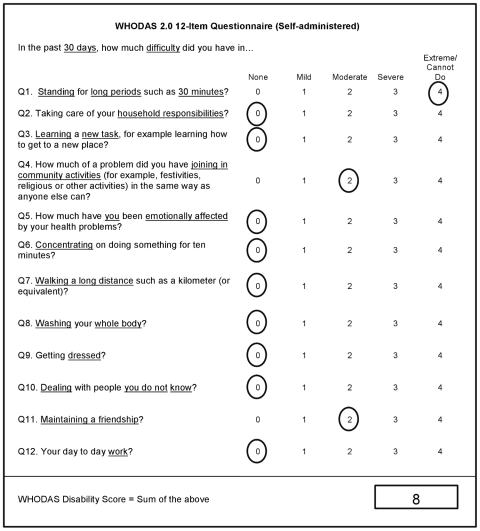
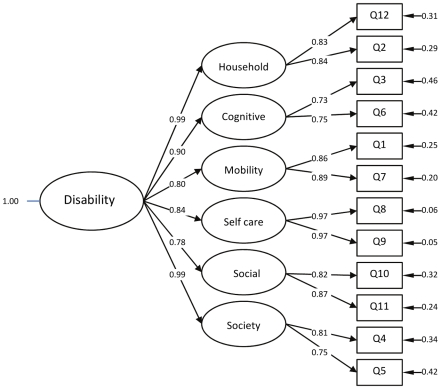
BACKGROUND: The World Health Organization Disability Assessment Schedule (WHODAS 2.0) measures disability due to health conditions including diseases, illnesses, injuries, mental or emotional problems, and problems with alcohol or drugs. METHOD: The 12 Item WHODAS 2.0 was used in the second Australian Survey of Mental Health and Well-being. We report the overall factor structure and the distribution of scores and normative data (means and SDs) for people with any physical disorder, any mental disorder and for people with neither. FINDINGS: A single second order factor justifies the use of the scale as a measure of global disability. People with mental disorders had high scores (mean 6.3, SD 7.1), people with physical disorders had lower scores (mean 4.3, SD 6.1). People with no disorder covered by the survey had low scores (mean 1.4, SD 3.6). INTERPRETATION: The provision of normative data from a population sample of adults will facilitate use of the WHODAS 2.0 12 item scale in clinical and epidemiological research.
Overview
The claims and statistics of this paper haven’t been checked yet.
Free: it reads the open-access text and checks the first 5 claims that cite a source we can check. Create a free account to check every claim.
Integrity signals
Registry
Cites
Statistics
Figures
Verification
Claims the paper makes
The claims and statistics of this paper haven’t been checked yet.
Free: it reads the open-access text and checks the first 5 claims that cite a source we can check. Create a free account to check every claim.
Claims other papers make about this one
Each is checked against this paper’s own text: does it say what the citing paper says it does?
The cited source says what the claim attributes to it.
In the citing paper
“Functional impairment was assessed with the 12-item WHO Disability Assessment Schedule (WHODAS) 2.0 [42].”
From Intolerance-of-uncertainty therapy versus metacognitive therapy for generalized anxiety disorder in primary health care: A randomized controlled pilot trial (2023) · cites this paper as [42]
The cited source says what the claim attributes to it.
In the citing paper
“The questionnaire yields a global disability score and has good psychometric properties (Rehm et al., 1999; Andrews et al., 2009).”
From Online mindfulness-enhanced cognitive behavioural therapy for anxiety and depression: Outcomes of a pilot trial (2018) · cites this paper as Andrews et al., 2009
The check wasn’t confident either way, so it gives no verdict — never disputed.
In the citing paper
“Research suggests that systematic assessment and feedback to clinicians can improve treatment outcomes.41”
From Acceptance-based Behavior Therapy for Depression With Psychosis (2015) · cites this paper as [41]
Experimental — accuracy not yet measured
Self-check
Percentages, sums and reported differences re-computed from the paper’s own numbers.
The self-check needs the paper’s full text.
Citations
Cites
Tabachnick, B. G., & Fidell, L. S. (1983) · Cited by 80,042
STATISTICAL METHODS FOR ASSESSING AGREEMENT BETWEEN TWO METHODS OF CLINICAL MEASUREMENT
Martin Bland, J., & Altman, D. (1986) · The Lancet · doi:10.1016/s0140-6736(86)90837-8 · Cited by 47,965
Statistical methods for assessing agreement between two methods of clinical measurement
Bland, J. M., & Altman, D. G. (2010) · International Journal of Nursing Studies · doi:10.1016/j.ijnurstu.2009.10.001 · Cited by 5,220 · cited 1×
“The data was scored using both scoring methods and compared to each other using Pearson’s correlation and the Bland-Altman method for assessing agreement between two measures [7].”
MethodThe Importance of the Normality Assumption in Large Public Health Data Sets
Lumley, T., Diehr, P., Emerson, S., & Chen, L. (2002) · Annual Review of Public Health · doi:10.1146/annurev.publhealth.23.100901.140546 · Cited by 1,803
2007 National Survey of Mental Health and Wellbeing: Methods and Key Findings
Slade, T., Johnston, A., Oakley Browne, M. A., Andrews, G., & Whiteford, H. (2009) · Australian & New Zealand Journal of Psychiatry · doi:10.1080/00048670902970882 · Cited by 832
Self-citationDisability and treatment of specific mental and physical disorders across the world
Ormel, J., Petukhova, M., Chatterji, S., Aguilar-Gaxiola, S., Alonso, J., Angermeyer, M. C., Bromet, E. J., Burger, H., Demyttenaere, K., de Girolamo, G., et al. (2008) · British Journal of Psychiatry · doi:10.1192/bjp.bp.107.039107 · Cited by 389
Rehm, J., Üstün, T. B., Saxena, S., Nelson, C. B., Chatterji, S., Ivis, F., & Adlaf, E. (1999) · International Journal of Methods in Psychiatric Research · doi:10.1002/mpr.61 · Cited by 287 · cited 2×
“0 [1] with a simple sum scoring method.”
BackgroundMethodFerrie, J. E., Kivimäki, M., Head, J., Shipley, M. J., Vahtera, J., & Marmot, M. G. (2005) · Occupational and Environmental Medicine · doi:10.1136/oem.2004.013896 · Cited by 226
The Accuracy of Self-Reported Disability Days
REVICKI, D. A., IRWIN, D., REBLANDO, J., & SIMON, G. E. (1994) · Medical Care · doi:10.1097/00005650-199404000-00008 · Cited by 137 · cited 1×
“. Furthermore, a growing body of research has evaluated the agreement of self-report measures of disability with objective measures of disability, finding good agreement”
BackgroundValidity of an illness severity measure for headache in a population sample of migraine sufferers
Stewart, W. F., Lipton, R. B., Simon, D., Liberman, J., & Von Korff, M. (1999) · Pain · doi:10.1016/s0304-3959(98)00181-x · Cited by 117
Research works printed but not linked: 1
- [3]3. Von Korff M, Andrews G, Delves M. Progress in assessing activity limitations and global disability among adults. 2009. Proceedings of the 2009 American Psychopathological Association meetings Mar 5–7; New York City, U.S (in press)
Cited by
Items 201–300 of 453
Abdin, E., Seet, V. A. L., Jeyagurunathan, A., Tan, S. C., Mok, Y. M., Verma, S. K., Lee, E. S., & Subramaniam, M. (2023) · PLoS ONE · doi:10.1371/journal.pone.0294908 · Cited by 17
Carmichael, J. J., Ponsford, J. L., Gould, K. R., Tiego, J., Forbes, M. K., Kotov, R., Fornito, A., & Spitz, G. (2024) · Journal of Neurotrauma · doi:10.1089/neu.2024.0006 · Cited by 20
“Scores were compared with general community normative data from publications on the IDAS-II, 39 SSS-8, 40 and WHODAS 2.0, 48 and the authors of the HiTOP Digital Assessment Tracker 38 were contacted for the CAT-PD-SF normative data.”
InfluentialLi, I., Millard, M., Haskelberg, H., Hobbs, M. J., Luu, J., & Mahoney, A. (2021) · Behavioural and Cognitive Psychotherapy · doi:10.1017/s1352465821000448 · Cited by 18
“Evidence of temporal stability reliability (r= 0.98 within 7 days) and construct validity (including treatment sensitivity) has been provided (Andrews et al., 2009; Üstün et al., 2010).”
BackgroundInfluentialSaltychev, M., Mattie, R., McCormick, Z. L., & Laimi, K. (2016) · Clinical Rehabilitation · doi:10.1177/0269215516652930 · Cited by 17
Application of Problem Solving Therapy for Late-Life Anxiety
Beaudreau, S. A., Gould, C. E., Mashal, N. M., Huh, J. W. T., & Fairchild, J. K. (2018) · Cognitive and Behavioral Practice · doi:10.1016/j.cbpra.2018.05.003 · Cited by 20
Report of audit of disability research in Australia
Llewellyn, G. M. (2014) · Cited by 28
Monitoring of Functioning Status in Subjects With Chronic Stroke in South Korea Using WHODAS II
Kwon, S., Hong, S. E., Kim, E. J., Kim, C.-H., Joa, K., & Jung, H. Y. (2016) · Annals of Rehabilitation Medicine · doi:10.5535/arm.2016.40.1.111 · Cited by 17
“The severity of each domain was graded according to the existing standard; total scores of 1–4 belong to mild disability, 5–9 moderate disability, and 10–48 severe disability [8].”
Global disability burden and its predictors among adult Nigerians living with Type- 2 diabetes
Oyewole, O. O., Odusan, O., & Ale, A. O. (2019) · Ghana Medical Journal · doi:10.4314/gmj.v53i2.8 · Cited by 16
Clinimetrics: World Health Organization Disability Assessment Schedule 2.0
Paton, M., & Lane, R. (2020) · Journal of physiotherapy · doi:10.1016/j.jphys.2020.03.002 · Cited by 20
Brown, D. A., O’Brien, K. K., Harding, R., Sedgwick, P. M., Nelson, M. R., Boffito, M., & Lewko, A. (2022) · PLoS ONE · doi:10.1371/journal.pone.0267271 · Cited by 19
Paton, M., Lane, R., Paul, E. M., Linke, N. J., Shehabi, Y., & Hodgson, C. L. (2022) · Australian Critical Care · doi:10.1016/j.aucc.2022.05.006 · Cited by 20
Voorhees, E. E. V., Dillon, K. H., Wilson, S. M., Dennis, P. A., Neal, L. C., Medenblik, A. M., Calhoun, P. S., Dedert, E. A., Caron, K. M., Chaudhry, N., et al. (2019) · Journal of Interpersonal Violence · doi:10.1177/0886260519873335 · Cited by 20
Daza, J. F., Cuthbertson, B. H., Myles, P. S., Shulman, M. A., Wijeysundera, D. N., 6MWT-METS Substudy Investigators, Cuthbertson, B. H., Wijeysundera, D. N., Pearse, R. M., Myles, P. S., et al. (2022) · British journal of surgery · doi:10.1093/bjs/znac263 · Cited by 16
Gaudiano, B. A., Wenze, S. J., Weinstock, L. M., Tezanos, K. M., & Miller, I. W. (2017) · The Journal of Nervous and Mental Disease · doi:10.1097/nmd.0000000000000533 · Cited by 20
“The brief version of the World Health Organization Disability Assessment Schedule (WHODAS 2.0; Andrews et al., 2009) is a 12-item self-report measure that has evidence of reliability and validity for assessing various aspects of psychosocial and physical disability over the past month.”
MethodInfluentialIlie, G., Adlaf, E. M., Mann, R. E., Ialomiteanu, A., Hamilton, H. A., Rehm, J. T., Asbridge, M., & Cusimano, M. D. (2018) · PLoS ONE · doi:10.1371/journal.pone.0188908 · Cited by 18
Morin, R. T., Insel, P. S., Bickford, D. D., Nelson, C. J., & Mackin, R. S. (2019) · Clinical Gerontologist · doi:10.1080/07317115.2019.1699882 · Cited by 16
“Indeed, a diagnosis of depression at any point in the lifespan has been associated with a fivefold increase in risk for disability (as measured by the World Health Organization Disability Assessment Schedule; WHODAS II (Andrews, Kemp, Sunderland, Von Korff, & Ustun, 2009)).”
MethodComorbidity Profiles of Psychotic Patients in Emergency Psychiatry
Lecomte, T., Giguère, C., Cloutier, B., Potvin, S., & the Signature Consortium (2020) · Journal of Dual Diagnosis · doi:10.1080/15504263.2020.1713425 · Cited by 18
Gérain, P., & Zech, E. (2021) · Health & Social Care in the Community · doi:10.1111/hsc.13684 · Cited by 16
Joshi, V. L., Borregaard, B., Mikkelsen, T. B., Tang, L. H., Nordström, E., Bruvik, S. M., Wieghorst, A., Zwisler, A., & Wagner, M. K. (2024) · Resuscitation · doi:10.1016/j.resuscitation.2024.110162 · Cited by 16
Sasso, E. M., Muraki, K., Eaton-Fitch, N., Smith, P., Jeremijenko, A. M., Griffin, P., & Marshall‐Gradisnik, S. (2024) · Frontiers in Immunology · doi:10.3389/fimmu.2024.1264702 · Cited by 13
“Low percentage scores were associated to no disability while full disability was represented by 100% (62).”
BackgroundSairam, N., Buch, A., Zenker, M., Dillenardt, L., Coenen, M., Thieken, A. H., & Jung‐Sievers, C. (2025) · GeoHealth · doi:10.1029/2024gh001135 · Cited by 16
Xenouli, G., Xenoulis, K., Sarafis, P., Niakas, D. A., & Alexopoulos, E. C. (2016) · Disability and health journal · doi:10.1016/j.dhjo.2016.01.009 · Cited by 16
Kirchberger, I., Heier, M., Amann, U., Kuch, B., Thilo, C., & Meisinger, C. (2016) · Preventive Medicine · doi:10.1016/j.ypmed.2016.03.009 · Cited by 17
Vatavu, R.-D., Ungurean, O.-C., & Bilius, L.-B. (2022) · ACM Symposium on User Interface Software and Technology (UIST) · doi:10.1145/3526113.3545662 · Cited by 18
“[1] based on 8,841 respondents, individuals scoring between 20 and 100 on the WHODAS scale are in the top 10% of the population distribution likely to have clinically significant disabilities.”
Bussmann, S., Vaganian, L., Gerlach, A. L., Kusch, M., Labouvie, H., & Cwik, J. C. (2022) · European Journal of Oncology Nursing · doi:10.1016/j.ejon.2022.102240 · Cited by 17
Lim, M. L., van Schooten, K. S., Radford, K. A., Menant, J. C., Lord, S. R., Sachdev, P. S., Brodaty, H., & Delbaere, K. (2020) · Age and Ageing · doi:10.1093/ageing/afaa213 · Cited by 18
Yan, E., Butris, N., Alhamdah, Y., Kapoor, P., Lovblom, L. E., Wong, J., Islam, S., Saripella, A., Tang‐Wai, D. F., Mah, L., et al. (2024) · Journal of Clinical Anesthesia · doi:10.1016/j.jclinane.2024.111681 · Cited by 15
Long-term self-reported health and disability after COVID-19 in public employees
Kröönström, L. A., Krause, J., Larsson, S. B., Sigström, R., & Sunnerhagen, K. S. (2022) · BMC Public Health · doi:10.1186/s12889-022-14820-3 · Cited by 14
Bennett, R. J., Larsson, J., Gotowiec, S., & Ferguson, M. (2023) · Ear and Hearing · doi:10.1097/aud.0000000000001449 · Cited by 14
“Psychometric evaluation indicates that these two scoring methods yield highly similar scores within samples ( r s > 0.98; Andrews et al. 2009).”
InfluentialAdapting World Health Organization Disability Assessment Schedule 2.0 for Nepal
Risal, A., Kunwar, D., Karki, E., Adhikari, S. P., Bimali, I., Shrestha, B., Khadka, S., & Holen, A. (2021) · BMC Psychology · doi:10.1186/s40359-021-00550-5 · Cited by 15
“Likewise, the Australian study underlined the possibility of cross-national variations in the standards for disability measures [9].”
BackgroundMethodInfluentialImpact of cognitive reserve on bipolar disorder: a systematic review
Matsumoto, K., & Hamatani, S. (2024) · Frontiers in Psychiatry · doi:10.3389/fpsyt.2023.1341991 · Cited by 16
Capin, J. J., Wilson, M. P., Hare, K., Vempati, S., Little, C. E., McGregor, D. V., Castillo‐Mancilla, J., Stevens‐Lapsley, J. E., Jolley, S. E., & Erlandson, K. M. (2022) · BMC Geriatrics · doi:10.1186/s12877-022-02854-6 · Cited by 13
“0, in our study participants compared to normative data [25].”
MethodResultMahoney, A., Newby, J. M., Hobbs, M. J., Williams, A. D., & Andrews, G. (2017) · Internet Interventions · doi:10.1016/j.invent.2017.11.004 · Cited by 15
“Factor analyses indicate a hierarchical structure, with one underlying Global Disability latent variable (Andrews et al., 2009).”
BackgroundSelf-citationTarvonen-Schröder, S., Kaljonen, A., & Laimi, K. (2018) · Journal of Rehabilitation Medicine · doi:10.2340/16501977-2501 · Cited by 13
“Total scores of 1–4 indicate mild disability, 5–9 moderate disability, and 10–48 severe disability (14, 15, 22, 29, 30).”
van Spijker, B. A. J., Batterham, P. J., Calear, A. L., Wong, Q. J. J., Werner‐Seidler, A., & Christensen, H. M. (2019) · Journal of Affective Disorders · doi:10.1016/j.jad.2019.11.050 · Cited by 15
“As noted by Andrews et al. (2009) people scoring between 10 and 48 on the 12-item WHODAS 2.0 are in the top 10% of the population distribution and likely to have clinically significant disability.”
BackgroundMethodInfluentialPapadopoulou, Μ., Stasi, S., Bakalidou, D., Papageorgiou, E. G., Tsokani, A., Bratsi, T., & Papathanasiou, G. (2020) · Journal of Developmental and Physical Disabilities · doi:10.1007/s10882-019-09721-0 · Cited by 15
van Heerden, A. C., Poudyal, A., Hagaman, A. K., Maharjan, S. M., Byanjankar, P., Bemme, D., Thapa, A., & Kohrt, B. A. (2024) · Scientific Reports · doi:10.1038/s41598-024-63232-3 · Cited by 13
Carlozzi, N. E., Boileau, N. R., Roberts, A., Dayalu, P., Hanifan, D. L., Miner, J. A., Claassen, D. O., & Provost, E. M. (2020) · Quality of Life Research · doi:10.1007/s11136-020-02608-0 · Cited by 14
Rawlinson, R., Aslam, R. W., Burnside, G., Chiumento, A., Eriksson-Lee, M., Humphreys, A., Khan, N., Lawrence, D., Mahzir, I., McCluskey, R., et al. (2020) · Trials · doi:10.1186/s13063-020-04310-5 · Cited by 15
Basavarajappa, C., Sureshkumar, K., Suresh, V. C., Kumar, C. N., Ravishankar, V., Vanamoorthy, U., Mehta, U. M., Waghmare, A., & Sivakumar, T. (2016) · Journal of Psychosocial Rehabilitation and Mental Health · doi:10.1007/s40737-016-0053-x · Cited by 12
“0 in clinical and epidemiological research [32].”
Sung, S. C., Rush, A. J., Earnest, A., Lim, L. E. C., Pek, P. P., CHOI, J. M. F., NG, M. P. K., & Ong, M. E. H. (2018) · Journal of Psychiatric Practice · doi:10.1097/pra.0000000000000283 · Cited by 12
Health Care Utilization and Out-of-Pocket Payments among Elderly with Cognitive Frailty in Malaysia
Alkhodary, A. A., Aljunid, S. M., Ismail, A., Nur, A. M., & Shahar, S. (2022) · International Journal of Environmental Research and Public Health · doi:10.3390/ijerph19063361 · Cited by 11
“With reference to Andrews, Kemp [27], this assessment schedule (WHODAS 2.”
MethodInfluentialSunderland, M., Carragher, N., Buchan, H., Batterham, P. J., & Slade, T. N. (2013) · Australian & New Zealand Journal of Psychiatry · doi:10.1177/0004867413512382 · Cited by 11
“The WHODAS has sound psychometric properties including a stable factor structure and has established normative data (Andrews et al., 2009).”
Self-citationFischer, B., Ialomiteanu, A., Aeby, S., Rudzinski, K., Kurdyak, P. A., & Rehm, J. T. (2016) · Journal of Psychoactive Drugs · doi:10.1080/02791072.2016.1264648 · Cited by 11
“The values of the WHODAS assessment, in fact, correspond to a level of disability for both genders worse than 85% of the general population of the same age (Andrews et al. 2009; Üstün et al. 2010b).”
BackgroundMethodDisability and natural hazard emergency preparedness in an Australian sample
McLennan, J., Every, D., & Reynolds, A. C. (2021) · Natural Hazards · doi:10.1007/s11069-021-04642-8 · Cited by 11
Saltychev, M., Bärlund, E., & Laimi, K. (2017) · International Journal of Rehabilitation Research · doi:10.1097/mrr.0000000000000262 · Cited by 11
“0, the 12-item scale has been used especially frequently because of its easiness and its quick filling (Andrews et al., 2009; Federicim and Meloni, 2010; World Health Organisation, 2014b; World Health Organisation, 2014c).”
MethodInfluentialBastiaens, L., Galus, J., & Goodlin, M. (2014) · Psychiatric Quarterly · doi:10.1007/s11126-014-9322-6 · Cited by 13
Kilkki, M., Stolt, M., Rannikko, S., Pasanen, M., & Tarvonen-Schröder, S. (2023) · Disability and Rehabilitation · doi:10.1080/09638288.2023.2173813 · Cited by 11
“The 12-item WHODAS sum score is ranging from 0 to 48 and was further categorized as follows: 0 ¼ no disability, 1–4 ¼ mild disability, 5–9 ¼ moderate disability, and 10– 48 ¼ severe disability [27].”
BackgroundMethodReabilitação ambulatorial da COVID longa: uma chamada à ação
Imamura, M., Shinzato, G. T., Uchiyama, S. S. T., Pretto, L. R. D., Ayres, D. V. M., Oshiro, S. H., Leite, V. D., Rossi, D. A. M. A., Kaihami, H. N., Lopes, R. A. D. F., et al. (2021) · Acta Fisiátrica · doi:10.11606/issn.2317-0190.v28i4a192649 · Cited by 14
“0 provides a profile and a general measure of functionality and disability that is trans culturally reliable and applicable for all its domains.(33) We used the version with validation for the Portuguese language.”
MethodDixon, R., Derrett, S., Samaranayaka, A., Harcombe, H., Wyeth, E., Beaver, C., & Sullivan, M. (2023) · Quality of Life Research · doi:10.1007/s11136-022-03313-w · Cited by 10
“Each item was allocated a score between 0 (none) and 4 (extreme/cannot do) to provide a total score between 0 (no disability) and 48 (maximum disability) [37].”
BackgroundSmedema, S. M., Ruiz, D., & Mohr, M. J. (2017) · Rehabilitation Research Policy and Education · doi:10.1891/2168-6653.31.1.7 · Cited by 12
“The odd-numbered participants were used to conduct the secondary RRPE31-1_PTR_A2_007-020.indd 13 2/7/17 2:04 PM injuries with respect to the ICF model (Andrews et al., 2009; WHO, 2004).”
MethodResultInfluentialTarvonen-Schröder, S., Kaljonen, A., & Laimi, K. (2018) · International Journal of Rehabilitation Research · doi:10.1097/mrr.0000000000000292 · Cited by 11
Are single item mood scales (SIMS) valid for people with traumatic brain injury?
Gertler, P., & Tate, R. L. (2020) · Brain Injury · doi:10.1080/02699052.2020.1733087 · Cited by 11
“(20) conducted a factor analysis and identified six domains within the WHODAS 2.”
MethodMakali, S. L., Malembaka, E. B., Lambert, A.-S., Karemere, H. B., Eboma, C. M., Mwembo, A. T.-A.-N., Ssali, S. B., Bisimwa, G. B., Donnen, P., & Macq, J. (2021) · Conflict and Health · doi:10.1186/s13031-021-00387-0 · Cited by 10
“consensus on the cut-point defining people with an altered health condition from the WHODAS score [40], our results confirm that the populations living in UHZ have a more impaired health status than those living in stable areas.”
BackgroundMethodResultInfluentialShahar, S., Vanoh, D., Razali, R., Din, N. C., Yahya, H. M., & Omar, A. (2016) · Clinical Interventions in Aging · doi:10.2147/cia.s102925 · Cited by 10
af Winklerfelt Hammarberg, S., Toth-Pal, E., Jansson-Fröjmark, M., Lundgren, T., Westman, J., & Bohman, B. (2023) · PLoS ONE · doi:10.1371/journal.pone.0287171 · Cited by 9
Williams, A. D., Blackwell, S. E., Holmes, E. A., & Andrews, G. (2013) · BMJ Open · doi:10.1136/bmjopen-2013-004049 · Cited by 9
“Each of these domains loads significantly onto one underlying latent factor of global disability.(32) Scores range from 0 to 60, with higher scores indicating greater disability.”
BackgroundSelf-citationTolchard, B. (2016) · Journal of Addictions Nursing · doi:10.1097/jan.0000000000000141 · Cited by 9
Pitkänen, T., Levola, J. M., de la Fuente, J., & Cabello, M. (2018) · Disability and Rehabilitation · doi:10.1080/09638288.2018.1493543 · Cited by 9
“The disability measure has been developed to operationalize the ICF with the aim of developing a single generic measure for assessing health status and disability [17] and the 12-item version has been recommended as a reliable and valid measure of global disability [30].”
MethodResultHarcombe, H., Samaranayaka, A., & Derrett, S. (2016) · Physical Therapy · doi:10.2522/ptj.20160038 · Cited by 9
Standardized Assessment of Global activities in the Elderly scale in adult cardiac surgery patients
Spence, J. D., Bosch, J., Chongsi, E., Lee, S. F., Thabane, L., Mendoza, P. A., Belley‐Côté, E. P., Whitlock, R. P., Brady, K., McIntyre, W. F., et al. (2021) · British Journal of Anaesthesia · doi:10.1016/j.bja.2021.05.037 · Cited by 10
Preoperative nonmedical predictors of functional impairment after brain tumor surgery
Schiavolin, S., Mariniello, A., Broggi, M. A., DiMeco, F., Ferroli, P., & Leonardi, M. (2022) · Supportive Care in Cancer · doi:10.1007/s00520-021-06732-6 · Cited by 9
Sullivan, K., Kintzle, S. M., Barr, N., Gilreath, T. D., & Castro, C. A. (2018) · Journal of Military Veteran and Family Health · doi:10.3138/jmvfh.2017-0008 · Cited by 9
Gourlay, E., Banfill, K., Merchant, Z., Goodley, P., Brown, L., Murphy, J., Moore, J., & Evison, M. (2025) · Lung Cancer · doi:10.1016/j.lungcan.2025.108572 · Cited by 8
Stellman, S. D., Kaiser, A. P., Smith, B. N., Spiro, A., & Stellman, J. M. (2025) · Journal of Occupational and Environmental Medicine · doi:10.1097/jom.0000000000003321 · Cited by 8
Mwesiga, E. K., Ssemata, A. S., Gumikiriza, J. L., Nanteza, A., Nakitende, A. J., Nakku, J. E. M., Akena, D. H., & Nakasujja, N. (2022) · Health and Quality of Life Outcomes · doi:10.1186/s12955-022-02020-x · Cited by 9
Awuviry‐Newton, K., Abekah‐Carter, K., Ofori‐Dua, K., Gyasi, R. M., Newton, C. N., Agyemang‐Duah, W., Kowal, P. R., & Dintrans, P. V. (2022) · PLOS Global Public Health · doi:10.1371/journal.pgph.0000863 · Cited by 8
“As defined by the WHO Joint Monitoring Programme (WHO-JMP) [28], when all four variables met the criteria for improvement (detail given below), overall housing quality was considered as improved [29,30].”
Therrien, F., Ward, C., Chokka, P. R., Habert, J., Ismail, Z., McIntyre, R. S., & MacKenzie, E. M. (2024) · The Canadian Journal of Psychiatry · doi:10.1177/07067437241233965 · Cited by 9
Amosun, S. L., & Harris, F. (2018) · Physiotherapy Theory and Practice · doi:10.1080/09593985.2018.1508262 · Cited by 8
Gearry, R. B., FRAMPTON, C. M. A., Inns, S. J., Poppelwell, D., Rademaker, M., & Suppiah, R. (2019) · Current Medical Research and Opinion · doi:10.1080/03007995.2019.1634952 · Cited by 8
Migrants and disability following injury: findings from a prospective study in New Zealand
Baker, W., Samaranayaka, A., Wyeth, E., Ameratunga, S. N., & Derrett, S. (2019) · Australian and New Zealand Journal of Public Health · doi:10.1111/1753-6405.12927 · Cited by 8
Health and Disability Among Persons Experiencing Homelessness
Rider, J. V., Selim, J., & Garcia, A. (2021) · Occupational Therapy in Mental Health · doi:10.1080/0164212x.2021.1975010 · Cited by 8
“Our findings on people experiencing homelessness indicate higher total WHODAS 2.0 mean scores (mean ¼ 13.7, SD ¼ 10.90) than the general population and both sub-populations of mental and physical disorders as reported by Andrews et al. (2009).”
BackgroundMethodInfluentialDevelopment of the Global Disability Scale (Glo.Di.S): preliminary results
Fountoulakis, K. Ν., Lekka, I., Kouidi, E. J., Chouvarda, I., Deligiannis, A. P., & Maglaveras, N. (2012) · Annals of General Psychiatry · doi:10.1186/1744-859x-11-14 · Cited by 8
“The short version might represent a single factor [27,28].”
BackgroundSeverity of disability in persons with schizophrenia and its sociodemographic and illness correlates
Philip, B. V., Cherian, A. V., Shankar, R. G., & Rajaram, P. (2020) · Indian Journal of Social Psychiatry · doi:10.4103/ijsp.ijsp_3_19 · Cited by 8
“It is similar with few prospective studies which highlighted that most of the persons with schizophrenia had moderate level of disability, irrespective of the settings, had remained stable over a period of time with minimal fluctuations,[31,32] and with the duration of illness of 2–5 years.”
ResultBergmann, J., Egger, M., Müller, F., & Jahn, K. (2024) · BMJ Open · doi:10.1136/bmjopen-2023-083553 · Cited by 9
Development of cognitive frailty screening tool among community-dwelling older adults
Rivan, N. F. M., Shahar, S., Singh, D. K. A., Din, N. C., Mahadzir, H., You, Y. X., & Kamaruddin, M. Z. A. (2024) · Heliyon · doi:10.1016/j.heliyon.2024.e34223 · Cited by 8
Mewton, L. R., Hodge, A., Gates, N. J., Visontay, R., & Teesson, M. (2017) · BMJ Open · doi:10.1136/bmjopen-2017-017721 · Cited by 9
Psychological assessment of individuals with Mal de Débarquement Syndrome
Riley, J. D., Gleghorn, D., Doudican, B. C., & Cha, Y. (2021) · Journal of Neurology · doi:10.1007/s00415-021-10767-4 · Cited by 7
Fountaine, M. F. L., Cirnigliaro, C. M., Hobson, J. C., Lombard, A. T., Specht, A. F., Dyson‐Hudson, T. A., Kirshblum, S., & Bauman, W. A. (2019) · Scientific Reports · doi:10.1038/s41598-019-53753-7 · Cited by 7
Uyama, K., Ida, M., Wang, X., Naito, Y., & Kawaguchi, M. (2022) · European Journal of Pain · doi:10.1002/ejp.1918 · Cited by 7
“According to a complex method of scoring called the ‘item- responsetheory’ in the WHO’s guidelines, the total score ranges from 0% to 100% (where 0% = no disability; 100% = complete disability) and the severity of the disability is divided into the following five categories: none (0– 4), mild (5– 24), moderate (25– 49…”
BackgroundMethodMental Disorder, Psychological Distress, and Functional Status in Canadian Military Personnel
Sampasa‐Kanyinga, H., Zamorski, M. A., & Colman, I. (2018) · The Canadian Journal of Psychiatry · doi:10.1177/0706743718762098 · Cited by 12
Tarvonen-Schröder, S., & Koivisto, M. A. (2023) · Journal of Rehabilitation Medicine · doi:10.2340/jrm.v55.6531 · Cited by 6
“Total scores 1–4 mean mild, 5–9 moderate, and 10–48 severe disability (8, 12, 13).”
BackgroundBuse, E. R., Grunow, J. J., Spies, C., Weiß, B., & Paul, N. (2025) · Critical Care · doi:10.1186/s13054-025-05399-3 · Cited by 7
“WHODAS 2.0 domain scores range from 0 to 8 points median WHODAS 2.0 sum scores correspond to the 90-95th percentile of a representative population sample of 8,841 Australian adults [31].”
InfluentialTaru, M. Y., Bamidele, L. I., Faith, A. O., Philip, T. F., Allagoa, E. L. P., & Izevbokun, O. H. (2022) · Journal of Biosciences and Medicines · doi:10.4236/jbm.2022.109008 · Cited by 11
Mohammed, H. A. O., Reavis, K. M., Thapa, S., Thielman, E. J., Helt, W. J., Carlson, K. F., & Hughes, C. K. (2024) · Otology & Neurotology · doi:10.1097/mao.0000000000004332 · Cited by 6
Same-Day Counseling: Study Protocol for the Evaluation of a New Mental Health Service
Ewen, V., Mushquash, A. R., Bailey, K., Haggarty, J. M., Dama, S., & Mushquash, C. J. (2016) · JMIR Research Protocols · doi:10.2196/resprot.5206 · Cited by 7
“The WHODAS 2.0 has been used worldwide, and is psychometrically validated for use among individuals with common mental health disorders (eg, internal consistency alpha=.89; convergent validity r =.58) [31,32].”
MethodInfluential"I couldn’t even do normal chores": a qualitative study of the impacts of injury for Māori
Lambert, M. V., Wyeth, E., Brausch, S., Harwood, M. L. N., Anselm, D., Wright-Tawha, T., METZGER, B. B., Ellison, P., & Derrett, S. (2019) · Disability and Rehabilitation · doi:10.1080/09638288.2019.1701102 · Cited by 6
“Participants were considered to be experiencing considerable disability if their summed WHODAS score was 10 [19,22,36,37].”
BackgroundHuffman, M., Cloeren, M., Ware, O. D., Frey, J. J., Greenblatt, A. D., Mosby, A., Oliver, M., Imboden, R., Bazell, A. T., Clement, J., et al. (2022) · Substance Abuse Research and Treatment · doi:10.1177/11782218221098418 · Cited by 8
“68 for quality of life (Q-LES-Q-SF) converted into a percentage maximum score (1-100) of 56.”
BackgroundLife-space mobility in older adults with Alzheimer's-type dementia
Langelli, T. D. C. O., de Andrade, L. P., Roscani, M. G., Cezar, N. O. D. C., Gomes, W. D. L., Barreiros, B. A., de Oliveira, M. P. B., & Takahashi, A. C. D. M. (2023) · Brazilian Journal of Physical Therapy · doi:10.1016/j.bjpt.2023.100480 · Cited by 5
Disability patterns over the first year after a diagnosis of epilepsy
Xu, Y. H., Neuen, D. R., Glozier, N., Nikpour, A., Somerville, E. R., Bleasel, A., Ireland, C., Anderson, C. S., & Hackett, M. L. (2019) · Clinical Neurology and Neurosurgery · doi:10.1016/j.clineuro.2019.02.022 · Cited by 6
Coutinho, C., Santos, S., Queirós, A., & Silva, A. G. (2019) · Physical & Occupational Therapy In Geriatrics · doi:10.1080/02703181.2019.1617379 · Cited by 6
“In addition, individual domain scores were also calculated by summing the scores of the two items in each domain.(14,28)”
MethodButcher, E., Walker, R. J., Wyeth, E., Samaranayaka, A., Schollum, J. B. W., & Derrett, S. (2022) · Canadian Journal of Kidney Health and Disease · doi:10.1177/20543581221094712 · Cited by 6
Doran, C. M., Bryant, J., Langham, E., Bainbridge, R. G., Shakeshaft, A. P., Hobden, B., Farnbach, S., & Freund, M. (2025) · Quality of Life Research · doi:10.1007/s11136-025-03956-5 · Cited by 5
Joshi, Y. B., Gonzalez, C. E., Molina, J. L., MacDonald, L. R., Din, J. M., Minhas, J., Leposke, T., Nordberg, B. A., Li, F., Talledo, J., et al. (2023) · Psychiatry Research · doi:10.1016/j.psychres.2023.115215 · Cited by 5
“…several studies reporting that a full course of ATCT improves verbal learning in SZs in early-phase, chronic, and treatment-refractory populations (Biagianti et al., 2016; Eack et al., 2010; Fisher et al., 2009; Hochberger et al., 2019; Joshi et al., 2019; Loewy et al., 2022; Molina et al., 2021,…”
InfluentialHuang, H., Chen, M., Ding, P., Xia, X., Dai, Q., Feng, L., Xu, L., Shu, J., & Li, L. (2024) · Spinal Cord · doi:10.1038/s41393-024-01040-2 · Cited by 6
“Higher scores indicate a higher degree of disability [13].”
Beauchet, O., & Vilcocq, C. (2015) · Journal of the American Geriatrics Society · doi:10.1111/jgs.13222 · Cited by 5
“The World Health Organization recommends the use of self-administered questionnaires (SAQs) to improve the health and functional status of adults.(2,3) SAQs may be digitized and administrable through Web platforms accessible by computer, touchpad, or smartphone.”
Exploration of Internet Gaming Disorder Among the Esports Community
Woolhouse, R., & Patton, R. (2023) · Journal of Electronic Gaming and Esports · doi:10.1123/jege.2022-0013 · Cited by 5
Gaudiano, B. A., Primack, J. M., & Miller, I. W. (2016) · Journal of Psychiatric Intensive Care · doi:10.20299/jpi.2016.015 · Cited by 5
“Research suggests that the WHODAS-12 has one factor and is reliable and valid when used with people with mental disorders (Andrews et al., 2009).”
BackgroundInfluentialBrasil, F., Brasil, A. M., & Correr, C. J. (2018) · Neuropsychiatry · doi:10.4172/neuropsychiatry.1000397 · Cited by 6
“Furthermore, despite isolated studies with people aged 15 to 17 years [23-25] and the release of an unofficial version directed at children and adolescents [26], one limitation of the WHODAS 2.”
BackgroundKeyser, L. E., Myer, E. N. B., McKinney, J. L., Maroyi, R., Mukwege, D. M., & Chen, C. C. G. (2021) · International Journal of Gynecology & Obstetrics · doi:10.1002/ijgo.13740 · Cited by 5
Metadata
- Authors
- Andrews, G., Kemp, A., Sunderland, M., Von Korff, M., & Ustun, T. B.
- Affiliations
- UNSW Sydney (AU)
- Corresponding author
- Andrews, Gavin
- Venue
- PLoS ONE
- Publisher
- Public Library of Science (PLoS)
- Published
- 2009-12-17
- Volume
- 4
- Issue
- 12
- Pages
- e8343
- ISSN
- 1932-6203 (ISSN-L)
- PMC
- PMC2791224
- OpenAlex
- W1993518198
- Semantic Scholar
- e42043e91955e5ff5e03e7372b91bc528696467a
- Cited by
- 437
- References
- 10
- Citations by year
- 2026: 20 · 2025: 26 · 2024: 29 · 2023: 32 · 2022: 45 · 2021: 45 · 2020: 36 · 2019: 31 · 2018: 36 · 2017: 33 · 2016: 38 · 2015: 15 · 2014: 19 · 2013: 14 · 2012: 9
- FWCI
- 13.34
- Type
- journal article
- Language
- en
- Open access
- gold
- doi.org
- Locations
- PLoS ONE (publishedVersion, cc-by)
- PubMed Central (publishedVersion, cc-by)
- PubMed (publishedVersion)
- UNSWorks (University of New South Wales, Sydney, Australia) (submittedVersion, cc-by-nc-nd)
- RePEc: Research Papers in Economics (submittedVersion)
- DOAJ (DOAJ: Directory of Open Access Journals) (submittedVersion, cc-by-sa)
- Funders
- Medical Research Council
- National Health and Medical Research Council (510137)
- Topics
- Social Sciences › Economics, Econometrics and Finance › Economics and Econometrics › Health Systems, Economic Evaluations, Quality of Life
- Health Sciences › Medicine › Public Health, Environmental and Occupational Health › Aging, Health, and Disability
- Social Sciences › Decision Sciences › Management Science and Operations Research › Psychometric Methodologies and Testing
- Keywords
- WHODAS 2.0, disability assessment, reference values, global disability, factor structure, mental illness, physical disorders, adults
- MeSH terms
- Adolescent, Adult, Aged, Aged, 80 and over, Mental Disorders, Disability Evaluation, Persons with Disabilities, Health Surveys, Humans, Middle Aged, Surveys and Questionnaires, World Health Organization, Models, Statistical, Young Adult
About these checks
Registry, retraction, Cites and statistics results are computed, not judged, with one exception: a printed reference that no index lists is read once by a model before it counts as a citation error. Claims are extracted by a model and kept only when their quote appears verbatim in the text; each cited source is then checked, with a model’s help, for whether it says what the claim relies on. Those verdicts can be wrong — read the claim’s quote and the cited source before relying on one.
Statistics and arithmetic are recomputed, not judged.
Confidence bands are shown only for fields calibrated on our annotated test set. None is calibrated yet, so no band is shown.
What counts as a claim ›How we measure confidence ›How we check this ›
Are you an author, or do you see a problem with this page? Request a review
Data sources
Bibliographic data: Semantic Scholar, OpenAlex, Crossref.
Contains information from the Semantic Scholar Academic Graph Datasets, made available under the ODC Attribution License (ODC-BY 1.0).
Semantic Scholar’s data is described in: Kinney, R., et al. (2023). The Semantic Scholar Open Data Platform. arXiv:2301.10140.
