

Normative Data for the 12 Item WHO Disability Assessment Schedule 2.0
Open accessThe DOI matches its Crossref record; 10 of the 10 references it cites were found in a registry or an index.
Abstract
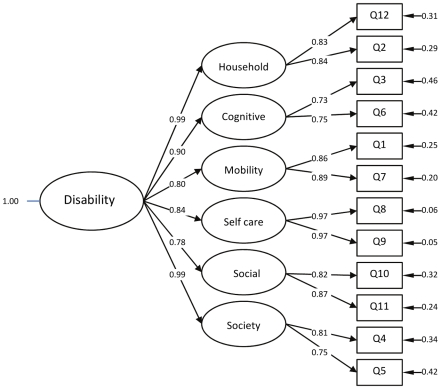
BACKGROUND: The World Health Organization Disability Assessment Schedule (WHODAS 2.0) measures disability due to health conditions including diseases, illnesses, injuries, mental or emotional problems, and problems with alcohol or drugs. METHOD: The 12 Item WHODAS 2.0 was used in the second Australian Survey of Mental Health and Well-being. We report the overall factor structure and the distribution of scores and normative data (means and SDs) for people with any physical disorder, any mental disorder and for people with neither. FINDINGS: A single second order factor justifies the use of the scale as a measure of global disability. People with mental disorders had high scores (mean 6.3, SD 7.1), people with physical disorders had lower scores (mean 4.3, SD 6.1). People with no disorder covered by the survey had low scores (mean 1.4, SD 3.6). INTERPRETATION: The provision of normative data from a population sample of adults will facilitate use of the WHODAS 2.0 12 item scale in clinical and epidemiological research.
Overview
The claims and statistics of this paper haven’t been checked yet.
Free: it reads the open-access text and checks the first 5 claims that cite a source we can check. Create a free account to check every claim.
Integrity signals
Registry
Cites
Statistics
Figures
Verification
Claims the paper makes
The claims and statistics of this paper haven’t been checked yet.
Free: it reads the open-access text and checks the first 5 claims that cite a source we can check. Create a free account to check every claim.
Claims other papers make about this one
Each is checked against this paper’s own text: does it say what the citing paper says it does?
The cited source says what the claim attributes to it.
In the citing paper
“Functional impairment was assessed with the 12-item WHO Disability Assessment Schedule (WHODAS) 2.0 [42].”
From Intolerance-of-uncertainty therapy versus metacognitive therapy for generalized anxiety disorder in primary health care: A randomized controlled pilot trial (2023) · cites this paper as [42]
The cited source says what the claim attributes to it.
In the citing paper
“The questionnaire yields a global disability score and has good psychometric properties (Rehm et al., 1999; Andrews et al., 2009).”
From Online mindfulness-enhanced cognitive behavioural therapy for anxiety and depression: Outcomes of a pilot trial (2018) · cites this paper as Andrews et al., 2009
The check wasn’t confident either way, so it gives no verdict — never disputed.
In the citing paper
“Research suggests that systematic assessment and feedback to clinicians can improve treatment outcomes.41”
From Acceptance-based Behavior Therapy for Depression With Psychosis (2015) · cites this paper as [41]
Experimental — accuracy not yet measured
Self-check
Percentages, sums and reported differences re-computed from the paper’s own numbers.
The self-check needs the paper’s full text.
Citations
Cites
Tabachnick, B. G., & Fidell, L. S. (1983) · Cited by 80,042
STATISTICAL METHODS FOR ASSESSING AGREEMENT BETWEEN TWO METHODS OF CLINICAL MEASUREMENT
Martin Bland, J., & Altman, D. (1986) · The Lancet · doi:10.1016/s0140-6736(86)90837-8 · Cited by 47,965
Statistical methods for assessing agreement between two methods of clinical measurement
Bland, J. M., & Altman, D. G. (2010) · International Journal of Nursing Studies · doi:10.1016/j.ijnurstu.2009.10.001 · Cited by 5,220 · cited 1×
“The data was scored using both scoring methods and compared to each other using Pearson’s correlation and the Bland-Altman method for assessing agreement between two measures [7].”
MethodThe Importance of the Normality Assumption in Large Public Health Data Sets
Lumley, T., Diehr, P., Emerson, S., & Chen, L. (2002) · Annual Review of Public Health · doi:10.1146/annurev.publhealth.23.100901.140546 · Cited by 1,803
2007 National Survey of Mental Health and Wellbeing: Methods and Key Findings
Slade, T., Johnston, A., Oakley Browne, M. A., Andrews, G., & Whiteford, H. (2009) · Australian & New Zealand Journal of Psychiatry · doi:10.1080/00048670902970882 · Cited by 832
Self-citationDisability and treatment of specific mental and physical disorders across the world
Ormel, J., Petukhova, M., Chatterji, S., Aguilar-Gaxiola, S., Alonso, J., Angermeyer, M. C., Bromet, E. J., Burger, H., Demyttenaere, K., de Girolamo, G., et al. (2008) · British Journal of Psychiatry · doi:10.1192/bjp.bp.107.039107 · Cited by 389
Rehm, J., Üstün, T. B., Saxena, S., Nelson, C. B., Chatterji, S., Ivis, F., & Adlaf, E. (1999) · International Journal of Methods in Psychiatric Research · doi:10.1002/mpr.61 · Cited by 287 · cited 2×
“0 [1] with a simple sum scoring method.”
BackgroundMethodFerrie, J. E., Kivimäki, M., Head, J., Shipley, M. J., Vahtera, J., & Marmot, M. G. (2005) · Occupational and Environmental Medicine · doi:10.1136/oem.2004.013896 · Cited by 226
The Accuracy of Self-Reported Disability Days
REVICKI, D. A., IRWIN, D., REBLANDO, J., & SIMON, G. E. (1994) · Medical Care · doi:10.1097/00005650-199404000-00008 · Cited by 137 · cited 1×
“. Furthermore, a growing body of research has evaluated the agreement of self-report measures of disability with objective measures of disability, finding good agreement”
BackgroundValidity of an illness severity measure for headache in a population sample of migraine sufferers
Stewart, W. F., Lipton, R. B., Simon, D., Liberman, J., & Von Korff, M. (1999) · Pain · doi:10.1016/s0304-3959(98)00181-x · Cited by 117
Research works printed but not linked: 1
- [3]3. Von Korff M, Andrews G, Delves M. Progress in assessing activity limitations and global disability among adults. 2009. Proceedings of the 2009 American Psychopathological Association meetings Mar 5–7; New York City, U.S (in press)
Cited by
Items 301–400 of 453
Alzahrani, A. M., Emam, L. S., Alsharif, M. S., Hakami, A. Y., & Aga, S. S. (2022) · Biochemistry Research International · doi:10.1155/2022/6341645 · Cited by 6
“Furthermore, the World Health Organization recommends using self-rated tools to rate and monitor individuals’ health [23, 24].”
MethodDowrick, C. F., Rosala‐Hallas, A., Rawlinson, R., Khan, N., Winrow, E., Chiumento, A., Burnside, G., Aslam, R. W., Billows, L., Eriksson-Lee, M., et al. (2022) · Public Health Research · doi:10.3310/nzxa0081 · Cited by 8
Тимрук-Скоропад, К. А., Muzyka, O., & Павлова, Ю. (2022) · Physiotherapy Quarterly · doi:10.5114/pq.2023.116343 · Cited by 4
“As a result, it can be used to assess disability in the general population and compare the disabilities and impacts of rehabilitation in individuals with various health conditions, diseases, injuries, mental or emotional problems, and alcohol or drug problems [2, 3].”
BackgroundFamily Support of Older Caregivers: Factors Influencing Change in Quality of Life
Samuel, P. S., Marsack‐Topolewski, C. N., Janks, E., Raoufi, G., & Milberger, S. (2024) · American Journal on Intellectual and Developmental Disabilities · doi:10.1352/1944-7558-129.4.308 · Cited by 5
Daza, J. F., Mitani, A., Alibhai, S. M. H., Smith, P. M., Kennedy, E. D., Shulman, M. A., Myles, P. S., & Wijeysundera, D. N. (2024) · Journal of Clinical Epidemiology · doi:10.1016/j.jclinepi.2024.111553 · Cited by 6
Rivan, N. F. M., Murukesu, R. R., Shahar, S., Rajab, N. F., Subramaniam, P., Ooi, T. C., Kamaruddin, M. Z. A., & Singh, D. K. A. (2024) · BMC Geriatrics · doi:10.1186/s12877-024-05057-3 · Cited by 7
“…in daily activities and social participation resulting from health problems in the past month, The World Health Organization Disability Assessment Schedule (WHODAS, version 2.0), a 12-item questionnaire with a five-point Likert scale (ranging from 0 for none to 4 for very severe) was used [31].”
MethodInfluentialĆwirlej-Sozańska, A. B., Sozański, B., Kupczyk, M., Leszczak, J., Kwołek, A., Wilmowska-Pietruszyńska, A., & Wiśniowska-Szurlej, A. (2021) · Journal of Clinical Medicine · doi:10.3390/jcm10051053 · Cited by 4
“In addition, individual domain results were also calculated, adding the results of two items in each domain [15].”
Martins, F., Gonçalves, F. D. T., Imamura, M., Barboza, D. S., Matheus, D., Pereira, M. F. B., Marques, H. H. D. S., Correa‐Silva, S., Montenegro, M. M., Fink, T. T., et al. (2023) · Frontiers in Public Health · doi:10.3389/fpubh.2023.1117854 · Cited by 4
“0 12 item score showed that the majority of subjects with similar age of the present study (bracket age from 35 to 54 years old) had a mild disability (33).”
BackgroundTarvonen-Schröder, S., & Koivisto, M. A. (2023) · Journal of Rehabilitation Medicine · doi:10.2340/jrm.v55.16274 · Cited by 4
Lee, M., Lin, G., Wang, Y., Lee, S., & Hsieh, C. (2025) · Parkinsonism & Related Disorders · doi:10.1016/j.parkreldis.2025.107316 · Cited by 4
Impacts of long COVID on disability, function and quality of life for adults living in Australia
Hitch, D., Botha, T., Tesfay, F. H., Holton, S., Said, C. M., Hensher, M., Richards, K., Angeles, M. R., Bennett, C. M., Pépin, G., et al. (2025) · Australian Journal of Primary Health · doi:10.1071/py25033 · Cited by 4
Harcombe, H., Davie, G. S., Wyeth, E., Ameratunga, S. N., Powell, D., & Derrett, S. (2020) · Injury · doi:10.1016/j.injury.2019.12.038 · Cited by 5
Endarti, A. T., Andriani, N., & Pambudi, E. S. (2020) · Media Kesehatan Masyarakat Indonesia · doi:10.30597/mkmi.v16i4.9826 · Cited by 5
You, Y. X., Rivan, N. F. M., Singh, D. K. A., Rajab, N. F., Ludin, A. F. M., Din, N. C., Chin, A., Fenech, M. F., Kamaruddin, M. Z. A., & Shahar, S. (2022) · International Journal of Environmental Research and Public Health · doi:10.3390/ijerph19158943 · Cited by 4
“0) was used to determine their disability ranking [23].”
MethodRichardson, L., Minh, A., McCormack, D., Laing, A., Barbic, S. P., Hayashi, K., Milloy, M., Huyser, K. R., Leahy, K., & Li, J. (2022) · International Journal of Environmental Research and Public Health · doi:10.3390/ijerph191610456 · Cited by 17
Ungurean, O.-C., & Vatavu, R.-D. (2022) · Lecture notes in networks and systems · doi:10.1007/978-3-031-06894-2_2 · Cited by 4
“[1] based on 8,841 respondents of the 12-item WHODAS 2.”
Functional improvement by behavioural activation for depressed older adults
Janssen, N. P., Voshaar, R. C. O., Wassink‐Vossen, S., & Hendriks, G. (2023) · European Psychiatry · doi:10.1192/j.eurpsy.2023.2433 · Cited by 5
“However, compared to a sample of 65- to 85-year-old people with at least one mental disorder, the baseline level of functional limitations of participants in this study was considered high [24].”
BackgroundMethodInfluentialConway, A., & Duff, J. S. (2016) · Journal of Advanced Nursing · doi:10.1111/jan.13027 · Cited by 4
Gandy, M., Wu, W., & Dear, B. F. (2025) · Journal of Psychosomatic Research · doi:10.1016/j.jpsychores.2025.112367 · Cited by 3
Sharma, P., Yan, E., Cui, A., Kukkadi, R., Au, E., Englesakis, M. F., & Chung, F. F. (2025) · Anaesthesia Critical Care & Pain Medicine · doi:10.1016/j.accpm.2025.101623 · Cited by 3
Sasso, E. M., Er, T., Eaton-Fitch, N., Hool, L. C., Muraki, K., & Marshall‐Gradisnik, S. (2026) · Frontiers in Medicine · doi:10.3389/fmed.2025.1703924 · Cited by 3
Using the ascertain dementia eight-item questionnaire to identify at-risk older surgical patients
Yan, E., Alhamdah, Y., Butris, N., Kapoor, P., He, D., Lovblom, L. E., Tartaglia, M. C., Tang‐Wai, D. F., Saripella, A., Islam, S., et al. (2026) · Journal of Clinical Anesthesia · doi:10.1016/j.jclinane.2026.112256 · Cited by 3
Mueller‐Stierlin, A. S., Röhrig, J., Götzl, C., Krausz, M. R., Lehle, J., Prestin, E., Schoch, V.-E., Sutter, L., Westenberg, J. N., & Cabanis, M. (2022) · Trials · doi:10.1186/s13063-022-06343-4 · Cited by 3
“0 is a valid, reliable self-report instrument for the assessment of functioning and generic disability [36].”
BackgroundSpritzer, D. T., Machado, W. D. L., Yates, M. B., Király, O., Demetrovics, Z., Billieux, J., King, D. L., Kaliszewska-Czeremska, K., Laconi, S., Passos, I. C., et al. (2024) · Trends in Psychiatry and Psychotherapy · doi:10.47626/2237-6089-2023-0622 · Cited by 4
Awuviry‐Newton, K., Amoah, D., Doh, D., Agyemang‐Duah, W., Ofori‐Dua, K., Kowal, P. R., & Appiah, S. C. Y. (2024) · PLoS ONE · doi:10.1371/journal.pone.0293016 · Cited by 3
“…six broad areas comprising of participation in society, engaging in life activities, getting along with people, caring for self, moving around and cognition [30] Similar to other studies, we scored the 12 items between 0 and 100 inclusive to determine functional disability severity [9, 31, 32].”
MethodSilva, S. D. L., Derhon, V., Nunes, A. C. L., Guimarães, M. E. A., Teixeira, J. A., Andrade, A. L. A., Schuch, F. B., & de Jesus‐Moraleida, F. R. (2024) · Journal of Psychiatric Research · doi:10.1016/j.jpsychires.2024.09.047 · Cited by 3
Dream Enactment Behaviour in Post-Traumatic Stress Disorder
Asah, C., Sandahl, H., Baandrup, L., Carlsson, J. M., & Jennum, P. (2025) · European Journal of Psychotraumatology · doi:10.1080/20008066.2024.2444743 · Cited by 3
“There is no specific cut-off, but a score of ≥ 10 is indicative of significant clinical difficulty (Andrews et al., 2009).”
Yu, B. H.-W., Chau, A. K. C., Chiu, C., & So, S. H. (2025) · Social Psychiatry and Psychiatric Epidemiology · doi:10.1007/s00127-025-02992-3 · Cited by 3
“The nor - mative mean for the general population was 3.1 [46].”
InfluentialHall, E., Tam, E., Liang, M., Zhang, Q., Liu, L., Wong, L., Sarabia, S., Yeung, S. H. M., Gill, G., Eng, L., et al. (2018) · Supportive Care in Cancer · doi:10.1007/s00520-018-4333-8 · Cited by 4
“Although CAPLET-derived WHODAS 12-item simple scores and HAQ-DI scores did vary compared to WHODAS/HAQDI derived scores, these differences were not clinically meaningful [27, 28].”
ResultDenby, E., Sakel, M., Wilkinson, D. T., Murphy, D., & Busuttil, W. (2019) · Archives of Physical Medicine and Rehabilitation · doi:10.1016/j.apmr.2019.10.083 · Cited by 3
Brinck, E. A., Fry, H. E., & Smedema, S. M. (2020) · Journal of Applied Rehabilitation Counseling · doi:10.1891/jarc-d-20-00006 · Cited by 3
Kassel, M. T., Kryza‐Lacombe, M., Insel, P. S., Rhodes, E., Satre, D. D., Nelson, J. C., Tosun, D., Mathews, C. A., & Mackin, R. S. (2023) · American Journal of Geriatric Psychiatry · doi:10.1016/j.jagp.2023.08.009 · Cited by 3
Ladha, K. S., Lu, J. Y., McIsaac, D. I., van Vlymen, J. M., Lebovic, G., Ehtesham, S., Pazmino‐Canizares, J., Clarke, H. A., Parotto, M., Lorello, G. R., et al. (2023) · BMJ Open · doi:10.1136/bmjopen-2023-073612 · Cited by 4
Theotokatos, G., Escorpizo, R. S., Angelopoulos, T. J., Chrysagis, N., Bickenbach, J., Venieri, A., Karteroliotis, K. E., Grammatopoulou, E. P., & Skordilis, E. K. (2023) · Cureus · doi:10.7759/cureus.48588 · Cited by 3
Chabake, S. A., Daigneault, I., Giguère, C., & Lecomte, T. (2025) · Schizophrenia Research · doi:10.1016/j.schres.2025.06.020 · Cited by 3
Bailey, S., Mushquash, C. J., & Haggarty, J. M. (2017) · Healthcare · doi:10.3390/healthcare5020018 · Cited by 3
“The simple sum scoring method was proposed and tested by Andrews and colleagues [26] and found to have good reliability and validity in clinical and community samples of adults.”
MethodBanchani, E., Tenkorang, E. Y., & Midodzi, W. K. (2022) · Ageing and Society · doi:10.1017/s0144686x22000241 · Cited by 4
“The validity of the ICF as a tool for understanding disability has been confirmed in Western countries (Andrews et al ., 2009; Luciano et al ., 2010; Almazán-Isla et al ., 2017; Papelard et al ., 2019), but it has not been applied in non-Western contexts, e.g. sub-Saharan Africa and Ghana.”
MethodTrinh, L., Sabiston, C. M., Alibhai, S. M. H., Jones, J. M., Arbour‐Nicitopoulos, K. P., Mina, D. S., Campbell, K. L., & Faulkner, G. (2022) · BMC Public Health · doi:10.1186/s12889-022-13218-5 · Cited by 4
“, cognition, mobility, self-care, getting along, life activities, and participation) [59].”
Srisurapanont, M., Kunchanaphongphan, T., Chokemaitree, N., Prachason, T., Kanchanatawan, B., Suttajit, S., Sanguanvichaikul, T., Trisukon, W., Dendumrongkul, P., Chinvararak, C., et al. (2022) · Asian Journal of Psychiatry · doi:10.1016/j.ajp.2022.103044 · Cited by 2
Wells, R., Klein, L. A., Mohsin, M., Greene, M. C., Fisher, J., Silove, D. M., Steel, Z., & Rees, S. J. (2024) · Women · doi:10.3390/women4030024 · Cited by 3
The incidence and outcomes of traumatic cauda equina syndrome in Victoria, Australia
Zubenko, X., Liew, S. M., Reeder, S. C., Yang, Y., Humadi, A., & Gabbe, B. J. (2024) · North American Spine Society Journal (NASSJ) · doi:10.1016/j.xnsj.2024.100558 · Cited by 2
Khalaf, M., Rosen, H. E., Paichadze, N., Siddiqi, S., Neki, K., Seager, J. E., Mitra, S., Wang, Y., Rahman, F., & Hyder, A. A. (2024) · Disability and Rehabilitation · doi:10.1080/09638288.2024.2425755 · Cited by 3
“Additionally, the eFA results confirmed the one-factor solution obtained from the cFA. similar studies in different LmIcs have also shown a one-factor structure for the 12-item WHodAs 2.0 including for patients with rtIs [28,31,50,72,73].”
InfluentialSchrader, S. W., Bell, M. D., Reilly, S. E., Weinstein, A. J., & Fiszdon, J. M. (2025) · Psychiatric Rehabilitation Journal · doi:10.1037/prj0000662 · Cited by 2
Humer, E. C., Schaffler, Y., Haider, K., Pieh, C., Haid, B., Schimböck, W., Stippl, P., Schigl, B., & Probst, T. (2025) · Counselling and Psychotherapy Research · doi:10.1002/capr.70074 · Cited by 2
Gandy, M., Wu, W., Balakumar, T., Francis, H., Oxenham, V., Bisby, M. A., Titov, N., & Dear, B. F. (2026) · Journal of Affective Disorders · doi:10.1016/j.jad.2026.121403 · Cited by 2
Agreement between patient self-reported and assessor-rated frailty using the Clinical Frailty Scale
Alkadri, J., Hladkowicz, E., DesAutels, K., Taljaard, M., Amado, L. A., Bryson, G. L., Golian, M., Beaulé, P. E., Gagné, S., Huang, A. R., et al. (2026) · British Journal of Anaesthesia · doi:10.1016/j.bja.2026.05.029 · Cited by 2
Boerlage, R. M., van Dartel, D., Vernooij, J. E. M., Koning, N. J., Posthuma, L. M., Kalkman, C. J., Doggen, C. J. M., & Preckel, B. (2026) · Anaesthesia · doi:10.1111/anae.70287 · Cited by 2
“0score(sumscoreormetricsummaryscore) - CiteatleastonepublicationasrequiredbytheWorldHealthOrganization[1,6,11]”
InfluentialUmucu, E., Schlegelmilch, A., Brinck, E. A., Hartman, E. C., Iwanaga, K., Estala-Gutierrez, V. Y., Roskowski, M., Lee, B., Anderson, C. A., & Tansey, T. N. (2020) · Rehabilitation Counseling Bulletin · doi:10.1177/0034355220962176 · Cited by 2
“Confirmatory factor analysis (CFA) was conducted to verify a second-order, one-factor solution with six first-order factors as the best model fit, which is consistent with the six domains of functioning (Andrews et al., 2009).”
BackgroundMethodResultInfluentialZendegui, E. A., Bennett, S., Desai, P., Schild, J. S., Beaumont, R., & Chiu, A. W. (2021) · Journal of Emotional & Behavioral Disorders · doi:10.1177/10634266211039759 · Cited by 1
“For example, the World Health Organization Disability Assessment Schedule (WHODAS) 2.0 is a 12-item scale with self-report and proxy-report (e.g., caregivers) versions that measures disability related to physical and mental health problems (Andrews et al., 2009; Rehm et al., 1999).”
BackgroundMethodInfluentialGum, A. M., Jensen, C., Schonfeld, L. I., Conner, K. O., & Guerra, L. (2022) · Journal of Clinical Psychology in Medical Settings · doi:10.1007/s10880-022-09864-x · Cited by 3
“7 (ages 75–85); 50th percentile for ages 55–74 = 1, 50th percentile for ages 75–85 = 3 (Andrews et al., 2009)”
Philipson, A., Hagberg, L., Hermansson, L., Karlsson, J., Ohlsson‐Nevo, E., & Ryen, L. (2023) · PharmacoEconomics - Open · doi:10.1007/s41669-023-00425-y · Cited by 2
Anglemyer, A. T., Wyeth, E., & Derrett, S. (2023) · Journal of Immigrant and Minority Health · doi:10.1007/s10903-023-01526-w · Cited by 2
“This includes six domains of adult functioning (cognition, getting along, self-care, mobility, life activities, and participation) [21, 22].”
BackgroundMethodHaworth, L., May, K., Janssen, J., Selfe, J., & Chohan, A. (2023) · Prosthetics and Orthotics International · doi:10.1097/pxr.0000000000000277 · Cited by 2
Theotokatos, G., Escorpizo, R. S., Angelopoulos, T. J., Chrysagis, N., Venieri, A., Bickenbach, J., Karteroliotis, K. E., Grammatopoulou, E. P., & Skordilis, E. K. (2024) · Cureus · doi:10.7759/cureus.55614 · Cited by 2
Marshall‐Gradisnik, S., Sasso, E. M., Eaton-Fitch, N., Smith, P. K., Baraniuk, J. N., & Muraki, K. (2024) · PLoS ONE · doi:10.1371/journal.pone.0305704 · Cited by 2
Phillips, L. A., Lesnewich, L. M., Bloeser, K. J., Lin, Y., Boska, R. L., Hyde, J. K., Bayley, P. J., Chandler, H. K., Reinhard, M. J., Santos, S. L., et al. (2025) · Annals of Behavioral Medicine · doi:10.1093/abm/kaaf028 · Cited by 2
“39 43”
Ursu, E., Mikolić, A., Tong, B., Silverberg, N. D., Parag, N., Foster, D., Sekhon, M. S., Panenka, W. J., Thiara, S., & Griesdale, D. E. G. (2025) · Canadian Journal of Anesthesia/Journal canadien d anesthésie · doi:10.1007/s12630-025-02965-9 · Cited by 2
“27 The domains most severely affected were life activities (domestic responsibilities, leisure, work, and school), participation in community activities, and mobility.”
Freeman, A. J. (2013) · Cited by 4
Would quantified self prevent obesity and diabetes among adults in Saudi Arabia?
Alelyani, S., & Ibrahim, A. (2017) · International Conference on Informatics, Health & Technology (ICIHT) · doi:10.1109/iciht.2017.7899149 · Cited by 2
“They have reported that older adults were capable of evaluating their own health with accurate information using paper and pencil [6].”
BackgroundLam, C. N., Ruth, C., Chou, C., & Black, D. S. (2020) · Medical Acupuncture · doi:10.1089/acu.2020.1471 · Cited by 3
Karaytuğ, M. O., Tamam, L., Demirkol, M. E., Namlı, Z., & Gürbüz, M. (2021) · Journal of Clinical Psychiatry · doi:10.5505/kpd.2021.82957 · Cited by 2
Taru, M. Y., Faith, A. O., Bamidele, L. I., & Philip, T. F. (2022) · Open Journal of Psychiatry · doi:10.4236/ojpsych.2022.121008 · Cited by 2
Knee pain and knee pain related disability in adults of the Western Development Region of Nepal
Kshetri, D. B. B. (2017) · CLOK (University of Central Lancashire) · Cited by 7
Iheme, L. (2019) · UWSpace (University of Waterloo) · Cited by 4
Psychological Distress and Mental Illness in Emerging Adults with Learning Disabilities
Chown, S. L. (2021) · UWSpace (University of Waterloo) · Cited by 4
Early improvement in patient reported disability after bariatric surgery
Spann, M. D., Wang, E., Hurt, S. E., Koch, R., Gupta, R. K., & McEvoy, M. D. (2019) · Surgery for Obesity and Related Diseases · doi:10.1016/j.soard.2019.08.004 · Cited by 1
Paul, F. A., & Bora, D. (2022) · The Malaysian journal of psychiatry · doi:10.4103/mjp.mjp_18_22 · Cited by 1
Chalker, S. A., Pozun, C. T., & Ehret, B. C. (2023) · Practice Innovations · doi:10.1037/pri0000213 · Cited by 1
Seydı, K. A., Söylemez, B. A., Dokuzlar, Ö., Mutlay, F., Bulut, E. A., & Işık, A. T. (2024) · Applied Neuropsychology Adult · doi:10.1080/23279095.2024.2420252 · Cited by 1
“This conclusion was supported by the utilization of various assessment measures, including the Digit Symbol Substitution Test (DSST) (Kaplan, 1991), the Barthel Activity of Daily Living Scale (BADL) (Wade & Collin, 1988), the Lawton-Brody Activity of Daily Living Scale (IADL) (Graf, 2008), the Timed Up and Go Test (TU…”
Carmichael, J. J., Spitz, G., Marzolla, M. C., Gould, K. R., Olver, J., Heugten, C. M. V., & Ponsford, J. L. (2025) · Annals of Physical and Rehabilitation Medicine · doi:10.1016/j.rehab.2025.101993 · Cited by 1
Outcomes and complications among nonagenarians undergoing cardiac surgery: A scoping review
Weinberg, L., Ludski, J. S., Carp, B., Suh, J. M., Koshy, A. N., Haywood, C. J., Churilov, B., Lee, D. K., & Yii, M. Y. (2025) · PLoS ONE · doi:10.1371/journal.pone.0331755 · Cited by 1
“…and at home, as many as 30, 90 or 180 days after surgery [65–68] • Unplanned hospital readmissions • Patient-reported outcome measures (PROMs) [68–69] • Patient-reported experience measure (PREMs) [70] • Health economic measures https://doi.org/10.1371/journal.pone.0331755.t003 performed in the…”
InfluentialNiedtfeld, I., Hofmann, M. K. N., Hepp, J., Schmitz, S. E., Steinmann, S., & Witt, S. H. (2026) · Borderline Personality Disorder and Emotion Dysregulation · doi:10.1186/s40479-026-00340-8 · Cited by 1
“Normative evaluations are available for interpretation [88].”
Magawa, C. T., Eaton-Fitch, N., Muraki, K., & Marshall‐Gradisnik, S. (2026) · BMC Immunology · doi:10.1186/s12865-026-00849-1 · Cited by 1
“Low percentage scores were associated with no disability while a high degree of difficulty or greater disability was represented by higher percentages [36].”
Ebsen, S., Petersson, N. B., Wieghorst, A., Frisch, H. B. L., Joshi, V. L., Zwisler, A. D., & Borregaard, B. (2026) · European Journal of Cardiovascular Nursing · doi:10.1093/eurjcn/zvag154 · Cited by 1
Murukesu, R. R., Shahar, S., Subramaniam, P., Rasdi, H. F. M., & Singh, D. K. A. (2026) · Discover Aging · doi:10.1007/s44518-026-00006-1 · Cited by 1
Gasperetti, C. E., & Hong, J. J. (2021) · Clinical Case Studies · doi:10.1177/15346501211041388 · Cited by 1
“While there is no agreed upon cutoff for significant disability, proposed scores are no disability (0), mild disability (1–4), moderate disability (5– 9), and clinically significant disability (10–48) (Andrews et al., 2009).”
BackgroundChapter 10. Measuring Disability Across Physical, Mental, and Cognitive Disorders
Prince, M. J., Glozier, N., Sousa, R., & Dewey, M. E. (2010) · American Psychiatric Association Publishing eBooks · doi:10.1176/appi.books.9781615378111.lg10 · Cited by 3
Pons, T., Shipton, E. A., Williman, J. A., & Mulder, R. (2017) · The Open Pain Journal · doi:10.2174/1876386301710010005 · Cited by 1
“Clinically important changes are represented in the QuickDASH as a change of 15 points [26]; WHODAS as 15 [27]; MPQ PRI as 5 with NRS as 3 [28]; FFI as 10 [21].”
MethodEnhanced Recovery After Neurosurgery
Neeley, R. C., Smith, R. S., & Mathews, L. (2021) · Current anesthesiology reports · doi:10.1007/s40140-021-00478-x · Cited by 1
“Many outcomes measured by PROMs relate to quality of life and degree of independence [2], and these are captured by metrics such as the World Health Organization’s Disability Assessment Score [3] (WHODAS).”
BackgroundNeurological involvement associated with COVID-19 disease: a study on psychosocial factors
Mariniello, A., Schiavolin, S., Magnani, F. G., Cristillo, V., Piccinelli, S. C., Zoppi, N., Bonzi, G., Sattin, D., Silvaggi, F., Raggi, A., et al. (2022) · Neurological Sciences · doi:10.1007/s10072-022-05907-1 · Cited by 1
“Specifically, patients with mild NIV had higher WHODAS-12 score (median = 18.75) than both patients with unspecific NIV (median = 6.25; U = 173; p = 0.002.) and no NIV (median = 4.16; U = 61; p < 0.001) (see Fig.”
MethodInfluentialWeber, R. L., & Abraham, K. M. (2022) · Psychiatric Quarterly · doi:10.1007/s11126-022-09995-2 · Cited by 1
“The version used in the present study was a 12-item interviewer-administered version [16] with items scored on a scale ranging from none to extremely or cannot do.”
MethodBeauchet, O., Matskiv, J., Gaudreau, P., Allali, G., Vaillant-Ciszewicz, A.-J., Guérin, O., & Gros, A. (2023) · Journal of Alzheimer s Disease · doi:10.3233/jad-230006 · Cited by 1
“Amongtheinterventionsdedicatedtopromote ahealthylifestyle,thoseincorporatingelectronic health (e-health) tools receive increasing attention for their potential [21, 22].”
Anbasse, G., Tessema, W., Negash, A., & Alenko, A. (2024) · Neuropsychiatric Disease and Treatment · doi:10.2147/ndt.s452866 · Cited by 3
Carmichael, J. J., Fernando, D., Ponsford, J. L., Spitz, G., Hicks, A. J., Johnston, L., & Gould, K. R. (2025) · Neuropsychological Rehabilitation · doi:10.1080/09602011.2025.2556743 · Cited by 1
“…symptoms, and functional disability in our sample, we statistically compared participants’ scores on the original IDAS-II scales and WHODAS 2.0 with normative data from general community samples in the United States (Watson et al., 2012) and Australia (Andrews et al., 2009), respectively.”
InfluentialClosing the mental health treatment gap: study protocol for a pilot feasibility trial
Savani, S., Sirrianni, L., Germany, A., Droesch, R. M., & Smith, D. S. (2025) · Social Work in Mental Health · doi:10.1080/15332985.2025.2557850 · Cited by 1
“Participants need a score of 5 or above on the WHODAS 2.0 (as used in Andrews et al., 2009) to be eligible.”
InfluentialFerrer, M. L. P. (2018) · Digital Library of Theses and Dissertations (Universidade de São Paulo) · doi:10.11606/t.6.2018.tde-23032018-094707 · Cited by 6
Makali, S. L., Malembaka, E. B., Lambert, A.-S., Karemere, H. B., Eboma, C. M., Mwembo, A. T.-A.-N., Ssali, S. B., Bisimwa, G. B., Donnen, P., & Macq, J. (2020) · Research Square · doi:10.21203/rs.3.rs-127388/v1 · Cited by 1
Gardner, A. (2015) · The British Journal of Psychiatry · doi:10.1192/bjp.bp.114.153296
Olanbiwonnu, T. (2016) · TSpace (University of Toronto)
Lombard-Vance, R. (2017) · Dublin City University Open Access Institutional Repository (Dublin City University)
Role of emotion regulation and internal ageism on adjustment and satisfaction with retirement
Ramírez‐Ruiz, B. (2016) · ERA
The utility of functioning in predicting health service use by people with common mental disorders
Twomey, C. D. (2017) · ePrints Soton (University of Southampton)
Balco, E. M. (2018) · Digital Library of Theses and Dissertations (Universidade de São Paulo) · doi:10.11606/d.17.2018.tde-24072018-154612
Injured Migrant Study (IMS): A prospective study of post-injury outcomes in New Zealand
Baker, W. J. (2018) · Otago University Research Archive (University of Otago)
Posta, G. L. (2019) · oURspace (University of Regina) · doi:10.82465/1179
Carlsberg, M. (2019) · theses.fr (ABES) · doi:10.70675/0f5747a7z54f6z4181z811bz34ded15e751f · Cited by 4
Psychological treatments for depression following brain injury
Gertler, P. (2020) · The Sydney eScholarship Repository (The University of Sydney) · Cited by 1
Internet Gaming Disorder: Associated Cognitions, Measures and Clinical Utility.
Pearcy, B. T. D. (2019) · eSpace (Curtin University) · Cited by 1
Correspondence: Reply to Castro
Paton, M., & Lane, R. (2020) · Journal of physiotherapy · doi:10.1016/j.jphys.2020.11.003
Jacbs, R. S. W., & BILLING., G. C. (2018)
Metadata
- Authors
- Andrews, G., Kemp, A., Sunderland, M., Von Korff, M., & Ustun, T. B.
- Affiliations
- UNSW Sydney (AU)
- Corresponding author
- Andrews, Gavin
- Venue
- PLoS ONE
- Publisher
- Public Library of Science (PLoS)
- Published
- 2009-12-17
- Volume
- 4
- Issue
- 12
- Pages
- e8343
- ISSN
- 1932-6203 (ISSN-L)
- PMC
- PMC2791224
- OpenAlex
- W1993518198
- Semantic Scholar
- e42043e91955e5ff5e03e7372b91bc528696467a
- Cited by
- 437
- References
- 10
- Citations by year
- 2026: 20 · 2025: 26 · 2024: 29 · 2023: 32 · 2022: 45 · 2021: 45 · 2020: 36 · 2019: 31 · 2018: 36 · 2017: 33 · 2016: 38 · 2015: 15 · 2014: 19 · 2013: 14 · 2012: 9
- FWCI
- 13.34
- Type
- journal article
- Language
- en
- Open access
- gold
- doi.org
- Locations
- PLoS ONE (publishedVersion, cc-by)
- PubMed Central (publishedVersion, cc-by)
- PubMed (publishedVersion)
- UNSWorks (University of New South Wales, Sydney, Australia) (submittedVersion, cc-by-nc-nd)
- RePEc: Research Papers in Economics (submittedVersion)
- DOAJ (DOAJ: Directory of Open Access Journals) (submittedVersion, cc-by-sa)
- Funders
- Medical Research Council
- National Health and Medical Research Council (510137)
- Topics
- Social Sciences › Economics, Econometrics and Finance › Economics and Econometrics › Health Systems, Economic Evaluations, Quality of Life
- Health Sciences › Medicine › Public Health, Environmental and Occupational Health › Aging, Health, and Disability
- Social Sciences › Decision Sciences › Management Science and Operations Research › Psychometric Methodologies and Testing
- Keywords
- WHODAS 2.0, disability assessment, reference values, global disability, factor structure, mental illness, physical disorders, adults
- MeSH terms
- Adolescent, Adult, Aged, Aged, 80 and over, Mental Disorders, Disability Evaluation, Persons with Disabilities, Health Surveys, Humans, Middle Aged, Surveys and Questionnaires, World Health Organization, Models, Statistical, Young Adult
About these checks
Registry, retraction, Cites and statistics results are computed, not judged, with one exception: a printed reference that no index lists is read once by a model before it counts as a citation error. Claims are extracted by a model and kept only when their quote appears verbatim in the text; each cited source is then checked, with a model’s help, for whether it says what the claim relies on. Those verdicts can be wrong — read the claim’s quote and the cited source before relying on one.
Statistics and arithmetic are recomputed, not judged.
Confidence bands are shown only for fields calibrated on our annotated test set. None is calibrated yet, so no band is shown.
What counts as a claim ›How we measure confidence ›How we check this ›
Are you an author, or do you see a problem with this page? Request a review
Data sources
Bibliographic data: Semantic Scholar, OpenAlex, Crossref.
Contains information from the Semantic Scholar Academic Graph Datasets, made available under the ODC Attribution License (ODC-BY 1.0).
Semantic Scholar’s data is described in: Kinney, R., et al. (2023). The Semantic Scholar Open Data Platform. arXiv:2301.10140.
