

Normative Data for the 12 Item WHO Disability Assessment Schedule 2.0
Open accessThe DOI matches its Crossref record; 10 of the 10 references it cites were found in a registry or an index.
Abstract
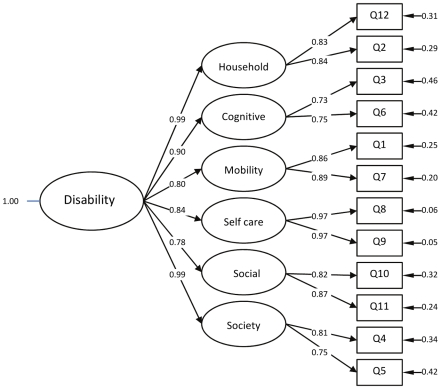
BACKGROUND: The World Health Organization Disability Assessment Schedule (WHODAS 2.0) measures disability due to health conditions including diseases, illnesses, injuries, mental or emotional problems, and problems with alcohol or drugs. METHOD: The 12 Item WHODAS 2.0 was used in the second Australian Survey of Mental Health and Well-being. We report the overall factor structure and the distribution of scores and normative data (means and SDs) for people with any physical disorder, any mental disorder and for people with neither. FINDINGS: A single second order factor justifies the use of the scale as a measure of global disability. People with mental disorders had high scores (mean 6.3, SD 7.1), people with physical disorders had lower scores (mean 4.3, SD 6.1). People with no disorder covered by the survey had low scores (mean 1.4, SD 3.6). INTERPRETATION: The provision of normative data from a population sample of adults will facilitate use of the WHODAS 2.0 12 item scale in clinical and epidemiological research.
Overview
The claims and statistics of this paper haven’t been checked yet.
Free: it reads the open-access text and checks the first 5 claims that cite a source we can check. Create a free account to check every claim.
Integrity signals
Registry
Cites
Statistics
Figures
Verification
Claims the paper makes
The claims and statistics of this paper haven’t been checked yet.
Free: it reads the open-access text and checks the first 5 claims that cite a source we can check. Create a free account to check every claim.
Claims other papers make about this one
Each is checked against this paper’s own text: does it say what the citing paper says it does?
The cited source says what the claim attributes to it.
In the citing paper
“Functional impairment was assessed with the 12-item WHO Disability Assessment Schedule (WHODAS) 2.0 [42].”
From Intolerance-of-uncertainty therapy versus metacognitive therapy for generalized anxiety disorder in primary health care: A randomized controlled pilot trial (2023) · cites this paper as [42]
The cited source says what the claim attributes to it.
In the citing paper
“The questionnaire yields a global disability score and has good psychometric properties (Rehm et al., 1999; Andrews et al., 2009).”
From Online mindfulness-enhanced cognitive behavioural therapy for anxiety and depression: Outcomes of a pilot trial (2018) · cites this paper as Andrews et al., 2009
The check wasn’t confident either way, so it gives no verdict — never disputed.
In the citing paper
“Research suggests that systematic assessment and feedback to clinicians can improve treatment outcomes.41”
From Acceptance-based Behavior Therapy for Depression With Psychosis (2015) · cites this paper as [41]
Experimental — accuracy not yet measured
Self-check
Percentages, sums and reported differences re-computed from the paper’s own numbers.
The self-check needs the paper’s full text.
Citations
Cites
Tabachnick, B. G., & Fidell, L. S. (1983) · Cited by 80,042
STATISTICAL METHODS FOR ASSESSING AGREEMENT BETWEEN TWO METHODS OF CLINICAL MEASUREMENT
Martin Bland, J., & Altman, D. (1986) · The Lancet · doi:10.1016/s0140-6736(86)90837-8 · Cited by 47,965
Statistical methods for assessing agreement between two methods of clinical measurement
Bland, J. M., & Altman, D. G. (2010) · International Journal of Nursing Studies · doi:10.1016/j.ijnurstu.2009.10.001 · Cited by 5,220 · cited 1×
“The data was scored using both scoring methods and compared to each other using Pearson’s correlation and the Bland-Altman method for assessing agreement between two measures [7].”
MethodThe Importance of the Normality Assumption in Large Public Health Data Sets
Lumley, T., Diehr, P., Emerson, S., & Chen, L. (2002) · Annual Review of Public Health · doi:10.1146/annurev.publhealth.23.100901.140546 · Cited by 1,803
2007 National Survey of Mental Health and Wellbeing: Methods and Key Findings
Slade, T., Johnston, A., Oakley Browne, M. A., Andrews, G., & Whiteford, H. (2009) · Australian & New Zealand Journal of Psychiatry · doi:10.1080/00048670902970882 · Cited by 832
Self-citationDisability and treatment of specific mental and physical disorders across the world
Ormel, J., Petukhova, M., Chatterji, S., Aguilar-Gaxiola, S., Alonso, J., Angermeyer, M. C., Bromet, E. J., Burger, H., Demyttenaere, K., de Girolamo, G., et al. (2008) · British Journal of Psychiatry · doi:10.1192/bjp.bp.107.039107 · Cited by 389
Rehm, J., Üstün, T. B., Saxena, S., Nelson, C. B., Chatterji, S., Ivis, F., & Adlaf, E. (1999) · International Journal of Methods in Psychiatric Research · doi:10.1002/mpr.61 · Cited by 287 · cited 2×
“0 [1] with a simple sum scoring method.”
BackgroundMethodFerrie, J. E., Kivimäki, M., Head, J., Shipley, M. J., Vahtera, J., & Marmot, M. G. (2005) · Occupational and Environmental Medicine · doi:10.1136/oem.2004.013896 · Cited by 226
The Accuracy of Self-Reported Disability Days
REVICKI, D. A., IRWIN, D., REBLANDO, J., & SIMON, G. E. (1994) · Medical Care · doi:10.1097/00005650-199404000-00008 · Cited by 137 · cited 1×
“. Furthermore, a growing body of research has evaluated the agreement of self-report measures of disability with objective measures of disability, finding good agreement”
BackgroundValidity of an illness severity measure for headache in a population sample of migraine sufferers
Stewart, W. F., Lipton, R. B., Simon, D., Liberman, J., & Von Korff, M. (1999) · Pain · doi:10.1016/s0304-3959(98)00181-x · Cited by 117
Research works printed but not linked: 1
- [3]3. Von Korff M, Andrews G, Delves M. Progress in assessing activity limitations and global disability among adults. 2009. Proceedings of the 2009 American Psychopathological Association meetings Mar 5–7; New York City, U.S (in press)
Cited by
Items 101–200 of 453
Cabanas, H., Muraki, K., Eaton-Fitch, N., Staines, D., & Marshall‐Gradisnik, S. (2021) · Frontiers in Immunology · doi:10.3389/fimmu.2021.687806 · Cited by 44
“The SF-36 and WHODAS surveys were used to determine participant healthrelated-quality of life (Table 2) (36, 37).”
MethodGómez-Olivé, F. X., Schröders, J., Aboderin, I., Byass, P., Chatterji, S., Davies, J. I., Debpuur, C. Y., Hirve, S. S., Hodgson, A., Juvekar, S. K., et al. (2017) · BMJ Global Health · doi:10.1136/bmjgh-2017-000508 · Cited by 43
Cabanas, H., Muraki, K., Balinas, C., Eaton-Fitch, N., Staines, D., & Marshall‐Gradisnik, S. (2019) · Molecular Medicine · doi:10.1186/s10020-019-0083-4 · Cited by 43
“The 36-Item Short Form Survey (SF-36) and World Health Organization Disability Assessment Schedule (WHODAS) were used to determine participant healthrelated-quality of life (Andrews et al., 2009; SF-36 interim norms for Australian data, Summary, 2019).”
MethodAbedzadeh‐Kalahroudi, M., Razi, E., Sehat, M., & Asadi‐Lari, M. (2015) · Injury · doi:10.1016/j.injury.2015.11.046 · Cited by 46
“neurosurgeries and patients with mental disorders also showed the one-factor structure of the 12-item WHODAS II [10,12].”
BackgroundMethodInfluentialThe Curious Neglect of High Functioning After Psychopathology: The Case of Depression
Rottenberg, J., Devendorf, A. R., Kashdan, T. B., & Disabato, D. J. (2018) · Perspectives on Psychological Science · doi:10.1177/1745691618769868 · Cited by 40
Joshi, V. L., Tang, L. H., Mikkelsen, T. B., Nielsen, J. F., Zinckernagel, L., Borregaard, B., Agarwal, S., Ersbøll, A. K., Yonis, H. G. H., Kragholm, K. H., et al. (2022) · Resuscitation · doi:10.1016/j.resuscitation.2022.11.005 · Cited by 44
Pearcy, B. T. D., Roberts, L. D., & McEvoy, P. M. (2016) · Cyberpsychology Behavior and Social Networking · doi:10.1089/cyber.2015.0534 · Cited by 44
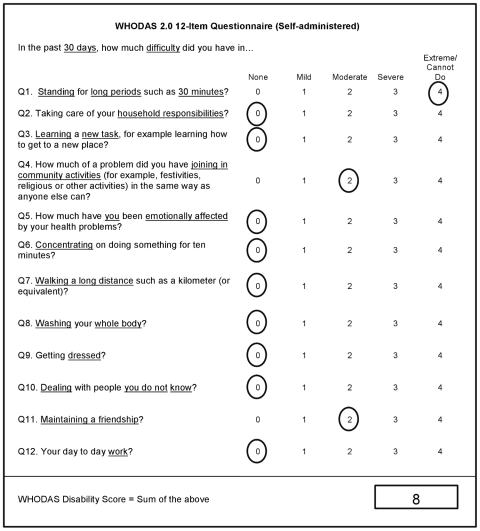
“16 The WHODAS has a response scale from none (0) to extreme or cannot do (5) in response to questions including ‘‘standing for long periods, such as 30 minutes?’’”
InfluentialGandy, M., Karin, E., McDonald, S., Meares, S., Scott, A. J., Titov, N., & Dear, B. F. (2020) · Journal of Psychosomatic Research · doi:10.1016/j.jpsychores.2020.110173 · Cited by 36
Sasso, E. M., Muraki, K., Eaton-Fitch, N., Smith, P. K., Lesslar, O. J. L., Deed, G., & Marshall‐Gradisnik, S. (2022) · Molecular Medicine · doi:10.1186/s10020-022-00528-y · Cited by 41
Snell, D. L., Iverson, G. L., Panenka, W. J., & Silverberg, N. D. (2017) · Journal of Neurotrauma · doi:10.1089/neu.2017.5234 · Cited by 42
“18 The WHODAS 2.0 36 item version and, to a lesser extent, the 12 item version has been used widely and validated in psychiatry, neurology, rehabilitation, and chronic disease research, 19–24 and in general community samples, 25–27 but not in mTBI research.”
InfluentialPredictors of return to work in survivors of critical illness
Hodgson, C. L., Haines, K. J., Bailey, M., Barrett, J. A., Bellomo, R., Bucknall, T. K., Gabbe, B. J., Higgins, A. M., Iwashyna, T. J., Hunt-Smith, J., et al. (2018) · Journal of Critical Care · doi:10.1016/j.jcrc.2018.08.005 · Cited by 43
Saltychev, M., Bärlund, E., Mattie, R., McCormick, Z. L., Paltamaa, J., & Laimi, K. (2016) · Clinical Rehabilitation · doi:10.1177/0269215516631385 · Cited by 39
Adrion, C., Weiß, B., Paul, N., Berger, E., Busse, R., Marschall, U., Caumanns, J., Rosseau, S., Mansmann, U., & Spies, C. (2020) · BMJ Open · doi:10.1136/bmjopen-2019-036096 · Cited by 44
“Higher scores indicate greater disability;[50, 51] 15”
A Home-Based Rehabilitation Intervention for Adults Living With HIV: A Randomized Controlled Trial
Cobbing, S., Hanass‐Hancock, J., & Myezwa, H. (2016) · Journal of the Association of Nurses in AIDS Care · doi:10.1016/j.jana.2016.08.008 · Cited by 38
Acceptance-based Behavior Therapy for Depression With Psychosis
GAUDIANO, B. A., BUSCH, A. M., WENZE, S. J., NOWLAN, K., EPSTEIN-LUBOW, G., & MILLER, I. W. (2015) · Journal of Psychiatric Practice · doi:10.1097/pra.0000000000000092 · Cited by 37
Kladnitski, N., Smith, J., Allen, A., Andrews, G., & Newby, J. M. (2018) · Internet Interventions · doi:10.1016/j.invent.2018.06.003 · Cited by 37
“a global disability score and has good psychometric properties (Rehm et al., 1999; Andrews et al., 2009).”
BackgroundSelf-citationDerrett, S., Beaver, C., Sullivan, M. J., Herbison, P., Acland, R., & Paul, C. (2012) · Injury Prevention · doi:10.1136/injuryprev-2011-040266 · Cited by 43
Shafer, L. A., Walker, J. R., Restall, G. J., Chhibba, T., Ivekovic, M., Singh, H., Targownik, L. E., & Bernstein, C. N. (2018) · Inflammatory Bowel Diseases · doi:10.1093/ibd/izy236 · Cited by 37
Nakku, J. E. M., Nalwadda, O., Garman, E. C., Honikman, S., Hanlon, C., Kigozi, F. N., & Lund, C. (2021) · BMC Pregnancy and Childbirth · doi:10.1186/s12884-021-04043-6 · Cited by 33
Rüsch, N., Malzer, A., Oexle, N., Waldmann, T., Staiger, T., Bahemann, A., Wigand, M. E., Becker, T. M., & Corrigan, P. W. (2019) · The Journal of Nervous and Mental Disease · doi:10.1097/nmd.0000000000000914 · Cited by 38
Denby, E., Murphy, D., Busuttil, W., Sakel, M., & Wilkinson, D. T. (2019) · Journal of Head Trauma Rehabilitation · doi:10.1097/htr.0000000000000468 · Cited by 36
Tarvonen-Schröder, S., Hurme, S. A. M., & Laimi, K. (2019) · Journal of Rehabilitation Medicine · doi:10.2340/16501977-2583 · Cited by 36
“Total scores of 1–4 belong to mild disability, 5–9 to moderate disability, and 10–48 to severe disability (18, 19, 30, 31) (http//www.”
BackgroundFowler, J. C., Clapp, J. D., Madan, A., Allen, J. G., Frueh, B. C., Fonagy, P., & Oldham, J. M. (2018) · Journal of Affective Disorders · doi:10.1016/j.jad.2017.12.054 · Cited by 32
Wenze, S. J., Gaudiano, B. A., Weinstock, L. M., Tezanos, K. M., & Miller, I. W. (2015) · Psychiatry Research · doi:10.1016/j.psychres.2015.06.005 · Cited by 35
“CARS-M¼Clinician-Administered Rating Scale for Mania; MCQ¼Medication Compliance Questionnaire; QIDS-C¼Quick Inventory of Depressive Symptoms-ClinicianRated; TAF¼Treatment Adherence Form; TLFB¼Time Line Follow Back; WHODAS 2.0¼World Health Organization Disability Assessment Schedule 2.0. a Z4 psychotropic medications (…”
InfluentialThe Epidemiology of DSM-IV Alcohol Use Disorders amongst Young Adults in the Australian Population
Mewton, L. R., Teesson, M., Slade, T. N., & Grove, R. (2010) · Alcohol and Alcoholism · doi:10.1093/alcalc/agq091 · Cited by 44
Tarvonen-Schröder, S., Tenovuo, O. S., Kaljonen, A., & Laimi, K. (2018) · Journal of Rehabilitation Medicine · doi:10.2340/16501977-2345 · Cited by 34
Gierk, B., Kohlmann, S., Hagemann-Goebel, M., Löwe, B., & Nestoriuc, Y. (2017) · General Hospital Psychiatry · doi:10.1016/j.genhosppsych.2017.07.002 · Cited by 33
“However, all of the instruments have a tradition in clinical studies and were well validated.[22,28,29] We believe that an expert rating is likely to show the same results because there is no special reason why patients should dissimulate symptom severity at post assessment (i.”
BackgroundResultForbes, D., Lockwood, E., Creamer, M. C., Bryant, R. A., McFARLANE, A. C., Silove, D. M., Nickerson, A., & O'Donnell, M. L. (2015) · The British Journal of Psychiatry · doi:10.1192/bjp.bp.114.150078 · Cited by 36
The Long-Term Psychiatric Sequelae of Severe Injury: A 6-Year Follow-Up Study
O'Donnell, M. L., Alkemade, N., Creamer, M. C., McFARLANE, A. C., Silove, D. M., Bryant, R. A., & Forbes, D. (2016) · The Journal of Clinical Psychiatry · doi:10.4088/jcp.14m09721 · Cited by 36
Tradução e validação para português do WHODAS 2.0 ‐ 12 itens em pessoas com 55 ou mais anos
Moreira, A. C., Alvarelhão, J., Silva, A. G., Costa, R. J. D., & Queirós, A. (2015) · Revista Portuguesa de Saúde Pública · doi:10.1016/j.rpsp.2015.06.003 · Cited by 36
Vatavu, R.-D., & Ungurean, O.-C. (2022) · CHI Conference on Human Factors in Computing Systems · doi:10.1145/3491102.3501964 · Cited by 33
“[3] based on 8,841 respondents, individuals scoring between 20 and 100 on the WHODAS scale are in the top 10% of the population distribution likely to have clinically signifcant disabilities.”
BackgroundMewton, L. R., Slade, T. N., & Teesson, M. (2013) · Journal of Studies on Alcohol and Drugs · doi:10.15288/jsad.2013.74.614 · Cited by 35
Sunderland, M., & Slade, T. N. (2014) · Journal of Affective Disorders · doi:10.1016/j.jad.2014.09.012 · Cited by 31
“The use of higher order dimensions of psychopathology also has the advantage of simplifying the complex presentation and multiple comorbidities between various disorders as well as suggesting valid constructs that can be the focus of future investigations that link psychopathology with personality, biological, and gen…”
BackgroundResultInfluentialSelf-citationSchmitz, N., Gariépy, G., Smith, K. J., MALLA, A. K., Boyer, R., Strychar, I. M., LESAGE, A. D., & Wang, J. (2013) · PLoS ONE · doi:10.1371/journal.pone.0083088 · Cited by 31
Ćwirlej-Sozańska, A. B., Wiśniowska-Szurlej, A., Wilmowska-Pietruszyńska, A., & Sozański, B. (2020) · Annals of Agricultural and Environmental Medicine · doi:10.26444/aaem/115020 · Cited by 30
“Data coming from highly developed countries indicates differences in the incidence of disability between men and women [11, 19].”
BackgroundHendriks, T. C. C., Botman, M., de Haas, L. E. M., Mtui, G. S., Nuwass, E. Q., Jaspers, M. E. H., Niemeijer, A. S., Nieuwenhuis, M. K., Winters, H. A. H., & van Zuijlen, P. P. M. (2021) · Burns · doi:10.1016/j.burns.2020.12.024 · Cited by 37
Measuring disability in multiple sclerosis: the WHODAS 2.0
Young, C. A., Rog, D. J., Sharrack, B., Constantinescu, C. S., Kalra, S., Harrower, T., Langdon, D. W., Tennant, A., Mills, R. J., & the Trajectories of Outcome in Neurological Conditions (MS) Study Group (2023) · Quality of Life Research · doi:10.1007/s11136-023-03470-6 · Cited by 32
Sunderland, M., Anderson, T. M., Sachdev, P. S., Titov, N., & Andrews, G. (2014) · Australian & New Zealand Journal of Psychiatry · doi:10.1177/0004867414538674 · Cited by 31
“The WHODAS has evidenced a stable factor structure (Andrews et al., 2009) and good”
MethodSelf-citationNakku, J. E. M., Rathod, S. D., Garman, E. C., Ssebunnya, J., Kangere, S., Silva, M. D., Patel, V., Lund, C., & Kigozi, F. N. (2019) · International Journal of Mental Health Systems · doi:10.1186/s13033-019-0319-2 · Cited by 33
Snell, D. L., Siegert, R. J., & Silverberg, N. D. (2020) · Brain Injury · doi:10.1080/02699052.2020.1729417 · Cited by 30
Whiteford, H., Buckingham, B., Harris, M., Diminic, S., Stockings, E., & Degenhardt, L. J. (2016) · Australian & New Zealand Journal of Psychiatry · doi:10.1177/0004867416683814 · Cited by 30
Fisher, E., Wood, S. J., Upthegrove, R., & Aldred, S. (2020) · Psychiatry Research · doi:10.1016/j.psychres.2020.112840 · Cited by 33
Cresswell, J. A., Barbour, K. D., Chou, D., McCaw‐Binns, A., Filippi, V., Cecatti, J. G., Barreix, M., Petzold, M., Kostanjsek, N. F. I., Cottler-Casanova, S., et al. (2020) · BMC Pregnancy and Childbirth · doi:10.1186/s12884-020-03216-z · Cited by 29
Ida, M., Naito, Y., Tanaka, Y., Inoue, S., & Kawaguchi, M. (2022) · Canadian Journal of Anesthesia/Journal canadien d anesthésie · doi:10.1007/s12630-022-02247-8 · Cited by 30
“0 score of\25%, and 2) an increase of 8% if the baseline disability score was C 25%.(14,15) In 2020, ‘‘new onset clinically significant disability’’ was newly defined as ‘‘an increase in WHODAS score of at least 5% to a final WHODAS score of at least 35%,’’(16) so we used this definition for our study analysis.”
MethodUnderstanding Wheelchair Users’ Preferences for On-Body, In-Air, and On-Wheelchair Gestures
Bilius, L.-B., Ungurean, O.-C., & Vatavu, R.-D. (2023) · CHI Conference on Human Factors in Computing Systems · doi:10.1145/3544548.3580929 · Cited by 30
“[2] based on 8,841 respondents, individuals scoring between 20 and 100 on the WHODAS scale are in the top 10% of the population distribution likely to have clinically signifcant disabilities.”
BackgroundLilley, R., Davie, G. S., Langley, J. D., Ameratunga, S. N., & Derrett, S. (2013) · BMC Public Health · doi:10.1186/1471-2458-13-995 · Cited by 28
Shafer, L., Walker, J., Chhibba, T., Ivekovic, M., Singh, H., Targownik, L. E., Peyrin‐Biroulet, L., Gower‐Rousseau, C., Sarter, H., & Bernstein, C. N. (2018) · Inflammatory Bowel Diseases · doi:10.1093/ibd/izx063 · Cited by 30
Poleshuck, E. L., Wittink, M. N., Crean, H. F., Juskiewicz, I., Bell, E., Harrington, A. R., & Cerulli, C. (2019) · Journal of Women s Health · doi:10.1089/jwh.2018.7640 · Cited by 29
Psychometric properties and validation of the polish version of the 12-item WHODAS 2.0
Ćwirlej-Sozańska, A. B., Sozański, B., Kotarski, H., Wilmowska-Pietruszyńska, A., & Wiśniowska-Szurlej, A. (2020) · BMC Public Health · doi:10.1186/s12889-020-09305-0 · Cited by 32
Eze, C. C., Ekeke, N., Alphonsus, C., Lehman, L. F., Chukwu, J., Nwafor, C. C., Stillwaggon, E. M., Meka, A., Sawers, L., Ikebudu, J. N., et al. (2021) · BMC Public Health · doi:10.1186/s12889-021-11729-1 · Cited by 27
“Total scores of 0 indicate no disability, 1–4 indicate mild disability, 5–9 moderate disability, and 10–48 severe disability [23, 25].”
BackgroundDisability and long-term breathlessness: a cross-sectional, population study
Kochovska, S., Ferreira, D. H., Chang, S., Brunelli, V. N., Morgan, D. D., Similowski, T., Johnson, M. J., Ekström, M. P., & Currow, D. C. (2024) · BMJ Open Respiratory Research · doi:10.1136/bmjresp-2023-002029 · Cited by 28
“Prospective studies need to be conducted that consider whether early intervention in people with moderate long-term breathlessness can avoid disability worsening.”
Luu, J., Millard, M., Newby, J. M., Haskelberg, H., Hobbs, M. J., & Mahoney, A. (2020) · Journal of Obsessive-Compulsive and Related Disorders · doi:10.1016/j.jocrd.2020.100561 · Cited by 30
Vanoh, D., Shahar, S., Razali, R., Ali, N. M., Manaf, Z. A., Noah, S. A. M., & Nur, A. M. (2019) · Journal of Alzheimer s Disease · doi:10.3233/jad-180464 · Cited by 26
“Furthermore, social support was assessed using Medical Outcome Social Support Survey (MOSS).”
MethodBoran, P., Dönmez, M., Barış, H. E., Us, M. C., Altaş, Z. M., Nisar, A., Atif, N., Sikander, S., Hıdıroğlu, S., Save, D., et al. (2023) · BMC Psychiatry · doi:10.1186/s12888-022-04499-6 · Cited by 30
Disability and Mental Disorders in the Canadian Armed Forces
Weeks, M., Garber, B. G., & Zamorski, M. A. (2016) · The Canadian Journal of Psychiatry · doi:10.1177/0706743716628853 · Cited by 30
“The main measure of disability was the 12-item version of the WHODAS-2.”
BackgroundMethodResultInfluentialLangley, J. D., Lilley, R., Wilson, S. J., Derrett, S., Samaranayaka, A., Davie, G. S., Ameratunga, S. N., Wyeth, E., Hansen, P., & Hokowhitu, B. (2013) · Injury Prevention · doi:10.1136/injuryprev-2012-040685 · Cited by 26
The Effect of the Draft DSM-5 Criteria for GAD on Prevalence and Severity
Andrews, G., & Hobbs, M. J. (2010) · Australian & New Zealand Journal of Psychiatry · doi:10.3109/00048671003781798 · Cited by 25
Self-citationOyewole, O. O., Ogunlana, M. O., Gbiri, C. A., & Oritogun, K. S. (2016) · Disability and Rehabilitation · doi:10.1080/09638288.2016.1219395 · Cited by 25
“Simple sum norm values of 1–4, 5–9, and 10–48 were used to classify survivors as mild, moderate, and severe disability, respectively.[25] The validity and psychometric properties of WHODAS have been reported to be good among SSv population.”
Characteristics of Patients Returning to Work After Brain Tumor Surgery
Schiavolin, S., Mariniello, A., Broggi, M. A., Acerbi, F., Schiariti, M. P., Franzini, A., Meco, F. D., Ferroli, P., & Leonardi, M. (2021) · Frontiers in Human Neuroscience · doi:10.3389/fnhum.2020.609080 · Cited by 24
König, K., Raue, M., D’Ambrosio, L. A., & Coughlin, J. F. (2019) · Journal of Environmental Psychology · doi:10.1016/j.jenvp.2019.01.008 · Cited by 29
The use of automated assessments in internet-based CBT: The computer will be with you shortly
Mason, E. C., & Andrews, G. (2014) · Internet Interventions · doi:10.1016/j.invent.2014.10.003 · Cited by 23
“A score of 10 or above is thought to indicate clinically significant disability (Andrews et al., 2009).”
BackgroundMethodSelf-citationPrevalence and predictors of disability for Māori 24 months after injury
Wyeth, E., Samaranayaka, A., Davie, G. S., & Derrett, S. (2017) · Australian and New Zealand Journal of Public Health · doi:10.1111/1753-6405.12657 · Cited by 24
Larsson, S. B., von Feilitzen, G. S., Andersson, M., Sikora, P., Lindh, M., Nordén, R., Nilsson, S., & Sigström, R. (2022) · Scientific Reports · doi:10.1038/s41598-022-24307-1 · Cited by 24
Gaudiano, B. A., Ellenberg, S., Ostrove, B., Johnson, J. E., Mueser, K. T., Furman, M. A., & Miller, I. W. (2020) · Journal of Cognitive Psychotherapy · doi:10.1891/0889-8391.34.1.80 · Cited by 23
Hoehne, A., Giguère, C., Herba, C. M., & Labelle, R. J. (2020) · The Canadian Journal of Psychiatry · doi:10.1177/0706743720981200 · Cited by 22
“Based on normative data for the 12-item WHODAS-2 scale, however, all of our psychiatric groups except for the “other disorders” group scored in the top 10% of the population distribution of WHODAS-2 scores, suggesting clinically significant disability.(10) Further, all groups scored significantly higher on the WHODAS-…”
BackgroundPrevalence of poor outcomes soon after injury and their association with the severity of the injury
Wilson, S. J., Derrett, S., Cameron, I. D., Samaranayaka, A., Davie, G. S., & Langley, J. D. (2013) · Injury Prevention · doi:10.1136/injuryprev-2012-040690 · Cited by 22
Silva, A. G., Cerqueira, M., Santos, A. R., Ferreira, C., Alvarelhão, J., & Queirós, A. (2017) · Disability and Rehabilitation · doi:10.1080/09638288.2017.1393112 · Cited by 24
“In addition, individual domain scores were also calculated by summing the scores of the two items in each domain [32,33].”
BackgroundMethodde Girolamo, G., Carrà, G., Fangerau, H., Ferrari, C., Gosek, P., Heitzman, J., Salize, H. J., Walker, M. M., Wancata, J., & Picchioni, M. (2019) · BMC Psychiatry · doi:10.1186/s12888-019-2379-x · Cited by 22
Oyewole, O. O., Ogunlana, M. O., Gbiri, C. A., Oritogun, K. S., & Osalusi, B. S. (2020) · Neurological Research · doi:10.1080/01616412.2020.1785744 · Cited by 26
Tarvonen-Schröder, S., Tenovuo, O. S., Kaljonen, A., & Laimi, K. (2018) · Clinical Rehabilitation · doi:10.1177/0269215518785945 · Cited by 25
Wijeysundera, D. N., Alibhai, S. M. H., Puts, M. T. E., Xu, K., Daza, J. F., Diep, C., Ladha, K. S., Chesney, T. R., Mazer, C. D., Wei, A. C.-C., et al. (2025) · The Lancet Healthy Longevity · doi:10.1016/j.lanhl.2025.100789 · Cited by 22
Ferro, M. A., Dol, M., Basque, D., & Elgie, M. (2022) · Disability and Rehabilitation · doi:10.1080/09638288.2022.2118868 · Cited by 26
A Novel Approach to Identifying a Neuroimaging Biomarker for Patients With Serious Mental Illness
Madan, A., Fowler, J. C., Patriquin, M. A., Salas, R., Baldwin, P. R., Velasquez, K. M., Viswanath, H., Molfese, D. L., Sharp, C., Allen, J. G., et al. (2017) · Journal of Neuropsychiatry · doi:10.1176/appi.neuropsych.16090174 · Cited by 21
Ungurean, O.-C., & Vatavu, R.-D. (2021) · ACM International Conference on Interactive Media Experiences · doi:10.1145/3452918.3458802 · Cited by 23
“[4] based on 8,841 respondents, individuals scoring between 20 and 100 are in the top 10% of the population distribution likely to have clinically signifcant disabilities.”
BackgroundFactors Related to Social Support in Neurological and Mental Disorders
Kamenov, K., Cabello, M., Caballero, F. F., Cieza, A., Sabariego, C., Raggi, A., Anczewska, M., Pitkänen, T., & Ayuso‐Mateos, J. L. (2016) · PLoS ONE · doi:10.1371/journal.pone.0149356 · Cited by 28
“Its psychometric properties have been measured in dozens of studies in diverse cross-cultural settings [28, 29].”
BackgroundDavie, G. S., Samaranayaka, A., & Derrett, S. (2018) · PLoS ONE · doi:10.1371/journal.pone.0193019 · Cited by 23
Gandy, M., Heriseanu, A. I., Balakumar, T., Karin, E., Walker, J., Hathway, T., Bisby, M. A., Scott, A. J., Dudeney, J., Fisher, A., et al. (2023) · Psychological Medicine · doi:10.1017/s0033291723000338 · Cited by 20
Understanding activity and physiology at scale: The Apple Heart & Movement Study
Truslow, J. G., Spillane, A., Lin, H., Cyr, K., Ullal, A. V., Arnold, E. M., Huang, R., Rhodes, L., Block, J., Stark, J., et al. (2024) · npj Digital Medicine · doi:10.1038/s41746-024-01187-5 · Cited by 27
“…speci fi cally, the Mental Health survey (PHQ-2, GAD-2) 17 , the Activity Status survey (Modi fi ed Rosow-Breslau) 18 , the Perceived Stress Scale survey (PSS-4) 19 , the Disability Assessment survey (WHODAS 2.0) 20 , and reported outcomes related to changes in health in the Changes in Health survey.”
InfluentialFactors predictive of subsequent injury in a longitudinal cohort study
Harcombe, H., Derrett, S., Samaranayaka, A., Davie, G. S., Wyeth, E., & Wilson, S. J. (2014) · Injury Prevention · doi:10.1136/injuryprev-2014-041183 · Cited by 21
Choosing outcomes for clinical trials: a pragmatic perspective
Iwashyna, T. J., & McPeake, J. M. (2018) · Current Opinion in Critical Care · doi:10.1097/mcc.0000000000000532 · Cited by 25
Wyeth, E., Samaranayaka, A., Lambert, M. V., Tapsell, M., Anselm, D., Ellison, P., Harwood, M. L. N., METZGER, B. B., Wright-Tawha, T., & Derrett, S. (2018) · Public Health · doi:10.1016/j.puhe.2018.08.014 · Cited by 22
Husmann, A., Escorpizo, R. S., & Finger, M. E. (2019) · Journal of Occupational Rehabilitation · doi:10.1007/s10926-019-09857-y · Cited by 22
An International Multicenter Comparison of IBD-Related Disability and Validation of the IBDDI
Shafer, L. A., Sofia, M. A., Rubin, D. T., Steinhart, A. H., Ng, S. C., Reches, L., Israeli, E., & Bernstein, C. N. (2020) · Clinical Gastroenterology and Hepatology · doi:10.1016/j.cgh.2020.08.053 · Cited by 19
Gandy, M., Heriseanu, A. I., Dudeney, J. E., Bisby, M. A., Scott, A. J., Fisher, A. C., Hathway, T., Karin, E., Titov, N., & Dear, B. F. (2021) · General Hospital Psychiatry · doi:10.1016/j.genhosppsych.2021.08.013 · Cited by 22
Awuviry‐Newton, K., Amoah, D., Tavener, M., Affram, A. A., Dintrans, P. V., Byles, J., & Kowal, P. R. (2022) · Journal of the American Medical Directors Association · doi:10.1016/j.jamda.2022.01.065 · Cited by 21
Gaudiano, B. A., Ellenberg, S., Johnson, J. E., Mueser, K. T., & Miller, I. W. (2023) · Schizophrenia Research · doi:10.1016/j.schres.2023.09.017 · Cited by 20
A Research on Functional Status, Environmental Conditions, and Risk of Falls in Dementia
Eshkoor, S. A., Hamid, T. A., Nudin, S. S. H., & Mun, C. Y. (2014) · International Journal of Alzheimer s Disease · doi:10.1155/2014/769062 · Cited by 23
Shafer, L. A., Walker, J. R., Chhibba, T., Ivekovic, M., Singh, H., Targownik, L. E., Peyrin‐Biroulet, L., Gower‐Rousseau, C., Sarter, H., & Bernstein, C. N. (2017) · Gastroenterology · doi:10.1016/s0016-5085(17)30455-9 · Cited by 19
Annweiler, C., Kabeshova, A., Callens, A., Paty, M.-L., Duval, G. T., & Holick, M. F. (2017) · PLoS ONE · doi:10.1371/journal.pone.0186578 · Cited by 22
Akhtar, A., Cuijpers, P. J., Morina, N., Sijbrandij, M., & Bryant, R. A. (2021) · BJPsych Open · doi:10.1192/bjo.2021.1017 · Cited by 20
Namaganda, L. H., Kobusingye, O. C., Baine, S. O., Mayora, C., & Bentley, J. A. (2017) · Annals of Global Health · doi:10.1016/j.aogh.2017.10.006 · Cited by 20
“Variables High (10-48) n (%) Low (0-9) n (%) Crude Odds Ratio (COR) 95% CI P Adjusted Odds Ratio (AOR) 95% CI P”
BackgroundNewby, J. M., Mahoney, A. E. J., Mason, E. C., Smith, J., Uppal, S., & Andrews, G. (2016) · Internet Interventions · doi:10.1016/j.invent.2016.09.007 · Cited by 18
Self-citationWijeysundera, D. N., Alibhai, S. M. H., Ladha, K. S., Puts, M. T. E., Chesney, T. R., Daza, J. F., Ehtesham, S., Hladkowicz, E., Lebovic, G., Mazer, C. D., et al. (2022) · BMJ Open · doi:10.1136/bmjopen-2022-062524 · Cited by 19
Spittal, M. J., Grant, G. M., O'Donnell, M. L., McFARLANE, A. C., & Studdert, D. M. (2018) · BMJ Open · doi:10.1136/bmjopen-2017-020803 · Cited by 18
“Scores ≥10 indicate clinically significant disability.(26) Claimants’ experience of compensation-related stress was assessed using the ‘Claims Experience Survey’, an instrument developed specifically for the compensation component of the IVS.”
MethodInternet-of-Things in telemedicine for diabetes management
Alelyani, S., & Ibrahim, A. (2018) · Learning and Technology Conference (L&T) · doi:10.1109/lt.2018.8368505 · Cited by 20
“The main culprits are the unhealthy eating and scant exercise[2], [3].”
BackgroundSladen, R. N., Shulman, M. A., Javaid, A., Hodgson, C. L., Myles, P. S., McGiffin, D. C., Nakagawa, S., Amlani, A., Hupf, J. C., Takeda, K., et al. (2021) · Journal of Cardiac Failure · doi:10.1016/j.cardfail.2021.07.019 · Cited by 19
Price, R. B., Cummings, L. R., Gilchrist, D., Graur, S., Banihashemi, L., Kuo, S. S., & Siegle, G. J. (2018) · Journal of Consulting and Clinical Psychology · doi:10.1037/ccp0000309 · Cited by 21
Malembaka, E. B., Karemere, H. B., Bisimwa, G. B., Lambert, A.-S., Muneza, F., Deconinck, H., & Macq, J. (2019) · BMC Public Health · doi:10.1186/s12889-019-6431-z · Cited by 18
“We do acknowledge that such a bias might result in overestimating associations since women are more likely to score higher on WHODAS than men [54, 55].”
BackgroundSrisurapanont, M., Oon‐arom, A., Suradom, C., Luewan, S., & Kawilapat, S. (2023) · Healthcare · doi:10.3390/healthcare11050699 · Cited by 17
“Based on previous findings [28], a 12-item WHODAS score of 10 or more is considered clinically significant disability.”
MethodAwuviry‐Newton, K., Amponsah, M., Amoah, D., Dintrans, P. V., Affram, A. A., Byles, J., Mugumbate, J. R., Kowal, P. R., & Asiamah, N. (2023) · PLOS Global Public Health · doi:10.1371/journal.pgph.0001014 · Cited by 21
“0 was scored on a scale of 0 to 100, with a lower score implying point for determining the severity of the disability [11, 34, 35].”
Background
Metadata
- Authors
- Andrews, G., Kemp, A., Sunderland, M., Von Korff, M., & Ustun, T. B.
- Affiliations
- UNSW Sydney (AU)
- Corresponding author
- Andrews, Gavin
- Venue
- PLoS ONE
- Publisher
- Public Library of Science (PLoS)
- Published
- 2009-12-17
- Volume
- 4
- Issue
- 12
- Pages
- e8343
- ISSN
- 1932-6203 (ISSN-L)
- PMC
- PMC2791224
- OpenAlex
- W1993518198
- Semantic Scholar
- e42043e91955e5ff5e03e7372b91bc528696467a
- Cited by
- 437
- References
- 10
- Citations by year
- 2026: 20 · 2025: 26 · 2024: 29 · 2023: 32 · 2022: 45 · 2021: 45 · 2020: 36 · 2019: 31 · 2018: 36 · 2017: 33 · 2016: 38 · 2015: 15 · 2014: 19 · 2013: 14 · 2012: 9
- FWCI
- 13.34
- Type
- journal article
- Language
- en
- Open access
- gold
- doi.org
- Locations
- PLoS ONE (publishedVersion, cc-by)
- PubMed Central (publishedVersion, cc-by)
- PubMed (publishedVersion)
- UNSWorks (University of New South Wales, Sydney, Australia) (submittedVersion, cc-by-nc-nd)
- RePEc: Research Papers in Economics (submittedVersion)
- DOAJ (DOAJ: Directory of Open Access Journals) (submittedVersion, cc-by-sa)
- Funders
- Medical Research Council
- National Health and Medical Research Council (510137)
- Topics
- Social Sciences › Economics, Econometrics and Finance › Economics and Econometrics › Health Systems, Economic Evaluations, Quality of Life
- Health Sciences › Medicine › Public Health, Environmental and Occupational Health › Aging, Health, and Disability
- Social Sciences › Decision Sciences › Management Science and Operations Research › Psychometric Methodologies and Testing
- Keywords
- WHODAS 2.0, disability assessment, reference values, global disability, factor structure, mental illness, physical disorders, adults
- MeSH terms
- Adolescent, Adult, Aged, Aged, 80 and over, Mental Disorders, Disability Evaluation, Persons with Disabilities, Health Surveys, Humans, Middle Aged, Surveys and Questionnaires, World Health Organization, Models, Statistical, Young Adult
About these checks
Registry, retraction, Cites and statistics results are computed, not judged, with one exception: a printed reference that no index lists is read once by a model before it counts as a citation error. Claims are extracted by a model and kept only when their quote appears verbatim in the text; each cited source is then checked, with a model’s help, for whether it says what the claim relies on. Those verdicts can be wrong — read the claim’s quote and the cited source before relying on one.
Statistics and arithmetic are recomputed, not judged.
Confidence bands are shown only for fields calibrated on our annotated test set. None is calibrated yet, so no band is shown.
What counts as a claim ›How we measure confidence ›How we check this ›
Are you an author, or do you see a problem with this page? Request a review
Data sources
Bibliographic data: Semantic Scholar, OpenAlex, Crossref.
Contains information from the Semantic Scholar Academic Graph Datasets, made available under the ODC Attribution License (ODC-BY 1.0).
Semantic Scholar’s data is described in: Kinney, R., et al. (2023). The Semantic Scholar Open Data Platform. arXiv:2301.10140.
