

Normative Data for the 12 Item WHO Disability Assessment Schedule 2.0
Open accessThe DOI matches its Crossref record; 10 of the 10 references it cites were found in a registry or an index.
Abstract
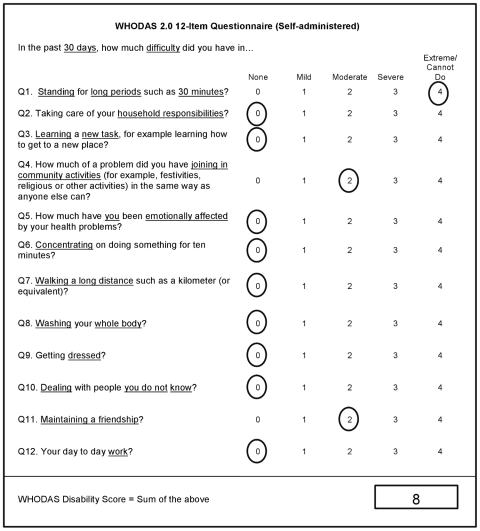
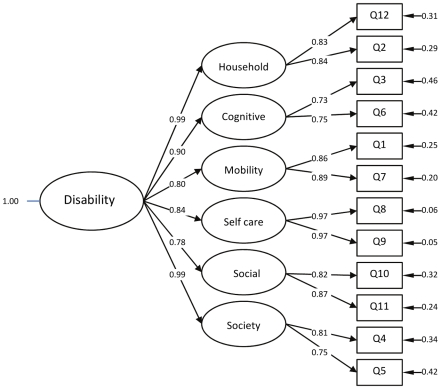
BACKGROUND: The World Health Organization Disability Assessment Schedule (WHODAS 2.0) measures disability due to health conditions including diseases, illnesses, injuries, mental or emotional problems, and problems with alcohol or drugs. METHOD: The 12 Item WHODAS 2.0 was used in the second Australian Survey of Mental Health and Well-being. We report the overall factor structure and the distribution of scores and normative data (means and SDs) for people with any physical disorder, any mental disorder and for people with neither. FINDINGS: A single second order factor justifies the use of the scale as a measure of global disability. People with mental disorders had high scores (mean 6.3, SD 7.1), people with physical disorders had lower scores (mean 4.3, SD 6.1). People with no disorder covered by the survey had low scores (mean 1.4, SD 3.6). INTERPRETATION: The provision of normative data from a population sample of adults will facilitate use of the WHODAS 2.0 12 item scale in clinical and epidemiological research.
Overview
The claims and statistics of this paper haven’t been checked yet.
Free: it reads the open-access text and checks the first 5 claims that cite a source we can check. Create a free account to check every claim.
Integrity signals
Registry
Cites
Statistics
Figures
Verification
Claims the paper makes
The claims and statistics of this paper haven’t been checked yet.
Free: it reads the open-access text and checks the first 5 claims that cite a source we can check. Create a free account to check every claim.
Claims other papers make about this one
Each is checked against this paper’s own text: does it say what the citing paper says it does?
The cited source says what the claim attributes to it.
In the citing paper
“Functional impairment was assessed with the 12-item WHO Disability Assessment Schedule (WHODAS) 2.0 [42].”
From Intolerance-of-uncertainty therapy versus metacognitive therapy for generalized anxiety disorder in primary health care: A randomized controlled pilot trial (2023) · cites this paper as [42]
The cited source says what the claim attributes to it.
In the citing paper
“The questionnaire yields a global disability score and has good psychometric properties (Rehm et al., 1999; Andrews et al., 2009).”
From Online mindfulness-enhanced cognitive behavioural therapy for anxiety and depression: Outcomes of a pilot trial (2018) · cites this paper as Andrews et al., 2009
The check wasn’t confident either way, so it gives no verdict — never disputed.
In the citing paper
“Research suggests that systematic assessment and feedback to clinicians can improve treatment outcomes.41”
From Acceptance-based Behavior Therapy for Depression With Psychosis (2015) · cites this paper as [41]
Experimental — accuracy not yet measured
Self-check
Percentages, sums and reported differences re-computed from the paper’s own numbers.
The self-check needs the paper’s full text.
Citations
Cites
Tabachnick, B. G., & Fidell, L. S. (1983) · Cited by 80,042
STATISTICAL METHODS FOR ASSESSING AGREEMENT BETWEEN TWO METHODS OF CLINICAL MEASUREMENT
Martin Bland, J., & Altman, D. (1986) · The Lancet · doi:10.1016/s0140-6736(86)90837-8 · Cited by 47,965
Statistical methods for assessing agreement between two methods of clinical measurement
Bland, J. M., & Altman, D. G. (2010) · International Journal of Nursing Studies · doi:10.1016/j.ijnurstu.2009.10.001 · Cited by 5,220 · cited 1×
“The data was scored using both scoring methods and compared to each other using Pearson’s correlation and the Bland-Altman method for assessing agreement between two measures [7].”
MethodThe Importance of the Normality Assumption in Large Public Health Data Sets
Lumley, T., Diehr, P., Emerson, S., & Chen, L. (2002) · Annual Review of Public Health · doi:10.1146/annurev.publhealth.23.100901.140546 · Cited by 1,803
2007 National Survey of Mental Health and Wellbeing: Methods and Key Findings
Slade, T., Johnston, A., Oakley Browne, M. A., Andrews, G., & Whiteford, H. (2009) · Australian & New Zealand Journal of Psychiatry · doi:10.1080/00048670902970882 · Cited by 832
Self-citationDisability and treatment of specific mental and physical disorders across the world
Ormel, J., Petukhova, M., Chatterji, S., Aguilar-Gaxiola, S., Alonso, J., Angermeyer, M. C., Bromet, E. J., Burger, H., Demyttenaere, K., de Girolamo, G., et al. (2008) · British Journal of Psychiatry · doi:10.1192/bjp.bp.107.039107 · Cited by 389
Rehm, J., Üstün, T. B., Saxena, S., Nelson, C. B., Chatterji, S., Ivis, F., & Adlaf, E. (1999) · International Journal of Methods in Psychiatric Research · doi:10.1002/mpr.61 · Cited by 287 · cited 2×
“0 [1] with a simple sum scoring method.”
BackgroundMethodFerrie, J. E., Kivimäki, M., Head, J., Shipley, M. J., Vahtera, J., & Marmot, M. G. (2005) · Occupational and Environmental Medicine · doi:10.1136/oem.2004.013896 · Cited by 226
The Accuracy of Self-Reported Disability Days
REVICKI, D. A., IRWIN, D., REBLANDO, J., & SIMON, G. E. (1994) · Medical Care · doi:10.1097/00005650-199404000-00008 · Cited by 137 · cited 1×
“. Furthermore, a growing body of research has evaluated the agreement of self-report measures of disability with objective measures of disability, finding good agreement”
BackgroundValidity of an illness severity measure for headache in a population sample of migraine sufferers
Stewart, W. F., Lipton, R. B., Simon, D., Liberman, J., & Von Korff, M. (1999) · Pain · doi:10.1016/s0304-3959(98)00181-x · Cited by 117
Research works printed but not linked: 1
- [3]3. Von Korff M, Andrews G, Delves M. Progress in assessing activity limitations and global disability among adults. 2009. Proceedings of the 2009 American Psychopathological Association meetings Mar 5–7; New York City, U.S (in press)
Cited by
World Health Organization disability assessment schedule 2.0: An international systematic review
Federici, S., Bracalenti, M., Meloni, F., & Luciano, J. V. (2017) · Disability and Rehabilitation · doi:10.1080/09638288.2016.1223177 · Cited by 498
“[711] Andrews G, Kemp A, Sunderland M, et al.”
BackgroundResultMcEvoy, P. M., & Mahoney, A. E. J. (2011) · Journal of Anxiety Disorders · doi:10.1016/j.janxdis.2010.08.010 · Cited by 412
Cancer-related fatigue and associated disability in post-treatment cancer survivors
Jones, J. M., Olson, K., Catton, P., Catton, C. N., Fleshner, N. E., Krzyzanowska, M. K., McCready, D. R., Wong, R. K. S., Jiang, H., & Howell, D. (2016) · Journal of Cancer Survivorship · doi:10.1007/s11764-015-0450-2 · Cited by 334
Frailty as a Predictor of Death or New Disability After Surgery: A Prospective Cohort Study
McIsaac, D. I., Taljaard, M., Bryson, G. L., Beaulé, P. E., Gagné, S., Hamilton, G., Hladkowicz, E., Huang, A., Joanisse, J. A., Lavallée, L. T., et al. (2020) · Annals of Surgery · doi:10.1097/sla.0000000000002967 · Cited by 279
“If the baseline disability score was 25%, an increase of 8% denoted a significant new disability.(19) This outcome was patient-reported in person at baseline and through a telephone interview at 90 days after surgery with a CRA blinded to frailty status.”
BackgroundHealth anxiety in Australia: prevalence, comorbidity, disability and service use
Sunderland, M., Newby, J. M., & Andrews, G. (2013) · British Journal of Psychiatry · doi:10.1192/bjp.bp.111.103960 · Cited by 280
Self-citationMeasurement of Disability-free Survival after Surgery
Shulman, M. A., Myles, P. S., Chan, M. T. V., McIlroy, D. R., Wallace, S., & Ponsford, J. (2015) · Anesthesiology · doi:10.1097/aln.0000000000000586 · Cited by 245
Lee, K. H., Xu, H., & Wu, B. (2020) · BMC Public Health · doi:10.1186/s12889-020-8212-0 · Cited by 194
Alexopoulos, G. S., Raue, P. J., Kiosses, D. N., Mackin, R. S., Kanellopoulos, D., McCulloch, C., & Areán, P. A. (2011) · Archives of General Psychiatry · doi:10.1001/archgenpsychiatry.2010.177 · Cited by 199
“The 12-item WHODAS II is suitable for frequent administration, and its strong psychometric properties and factor structure justify its use as a measure of global disability.(52,65) Participants in this study had moderate disability at entry; 27, the score approximating the mean baseline WHODAS II score of these partic…”
MethodLambert, T. E., Harvey, L. A., Avdalis, C., Chen, L. W., Jeyalingam, S., Pratt, C. A., Tatum, H. J., Bowden, J. L., & Lucas, B. R. (2017) · Journal of Physiotherapy · doi:10.1016/j.jphys.2017.05.015 · Cited by 189
Dexamethasone and Surgical-Site Infection
Corcoran, T. B., Myles, P. S., Forbes, A. B., Cheng, A. C., Bach, L. A., O’Loughlin, E., Leslie, K., Chan, M. T. V., Story, D., Short, T. G., et al. (2021) · New England Journal of Medicine · doi:10.1056/nejmoa2028982 · Cited by 184
Biritwum, R. B., Minicuci, N., Yawson, A. E., Theou, O., Mensah, G. P., Naidoo, N., Wu, F., Guo, Y., Zheng, Y., Jiang, Y., et al. (2016) · Maturitas · doi:10.1016/j.maturitas.2016.05.012 · Cited by 189
Wijeysundera, D. N., Beattie, W. S., Hillis, G. S., Abbott, T. E. F., Shulman, M. A., Ackland, G. L., Mazer, C. D., Myles, P. S., Pearse, R. M., Cuthbertson, B. H., et al. (2020) · British Journal of Anaesthesia · doi:10.1016/j.bja.2019.11.025 · Cited by 175
“001 NT pro-BNP 100 to <300 ng L 1 403 (31) 67 (37) NT pro-BNP ng L 1 300 ng L 1 138 (11) 51 (28) Revised Cardiac Risk Index, n (%)¶ Class 1 501 (38) 56 (30) <0.”
Newby, J. M., Mackenzie, A., Williams, A. D., McIntyre, K., Watts, S., Wong, N., & Andrews, G. (2013) · Psychological Medicine · doi:10.1017/s0033291713000111 · Cited by 181
“The WHODAS-II possesses good psychometric properties (Andrews et al. 2009) (current sample a=0.”
Self-citationThe impact of disability in survivors of critical illness
Hodgson, C. L., Udy, A. A., Bailey, M., Barrett, J., Bellomo, R., Bucknall, T., Gabbe, B. J., Higgins, A. M., Iwashyna, T. J., Hunt-Smith, J., et al. (2017) · Intensive Care Medicine · doi:10.1007/s00134-017-4830-0 · Cited by 164
“A total score out of 48 was converted to a percentage [25].”
Grant, G. M., O’Donnell, M. L., Spittal, M. J., Creamer, M., & Studdert, D. M. (2014) · JAMA Psychiatry · doi:10.1001/jamapsychiatry.2013.4023 · Cited by 151
Williams, A. D., & Andrews, G. (2013) · PLoS ONE · doi:10.1371/journal.pone.0057447 · Cited by 143
“Each of these domains loads significantly onto one underlying latent factor of global disability [21].”
BackgroundSelf-citationAndrews, G., Davies, M., & Titov, N. (2011) · Australian & New Zealand Journal of Psychiatry · doi:10.3109/00048674.2010.538840 · Cited by 152
Self-citationNewby, J. M., Hobbs, M. J., Mahoney, A. E. J., Wong, S. (., & Andrews, G. (2017) · Journal of Psychosomatic Research · doi:10.1016/j.jpsychores.2017.07.010 · Cited by 148
Self-citationMental illness stigma and suicidality: the role of public and individual stigma
Oexle, N., Waldmann, T., Staiger, T., Xu, Z., & Rüsch, N. (2018) · Epidemiology and Psychiatric Sciences · doi:10.1017/s2045796016000949 · Cited by 125
“…needed to reach a score of ≥17 (range of possible scores: 12– 60) on the WHO-Disability Assessment Schedule 2.0 (Üstün et al. 2010), corresponding approximately to the 85th general population percentile and to the average disability level of persons with one mental disorder (Andrews et al. 2009).”
BackgroundInfluentialSpies, C., Krampe, H., Paul, N., Denke, C., Kiselev, J., Piper, S. K., Kruppa, J., Grunow, J. J., Steinecke, K., Gülmez, T., et al. (2020) · Journal of the Intensive Care Society · doi:10.1177/1751143720923597 · Cited by 152
“0); versions for self-rating and proxy-rating exist for measuring both patient and caretaker evaluation, respectively.(70,71) 5.”
Robinson, J., Dixon, J., Macsween, A., van Schaik, P., & Martin, D. (2015) · BMC Sports Science, Medicine and Rehabilitation · doi:10.1186/s13102-015-0001-1 · Cited by 137
“9; aged 45–54) [50].”
Exercise as an intervention for first‐episode psychosis: a feasibility study
Firth, J., Carney, R., Elliott, R., French, P., Parker, S., McIntyre, R., McPhee, J. S., & Yung, A. R. (2018) · Early Intervention in Psychiatry · doi:10.1111/eip.12329 · Cited by 128
O'Donnell, M. L., Alkemade, N., Nickerson, A., Creamer, M., McFarlane, A. C., Silove, D., Bryant, R. A., & Forbes, D. (2014) · British Journal of Psychiatry · doi:10.1192/bjp.bp.113.135285 · Cited by 131
Insomnia before and after treatment for anxiety and depression
Mason, E. C., & Harvey, A. G. (2014) · Journal of Affective Disorders · doi:10.1016/j.jad.2014.07.020 · Cited by 135
“Disability was assessed by the World Health Organization Disability Assessment Schedule II (WHODAS-II; Andrews et al., 2009).”
MethodMyles, P. S. (2020) · Anaesthesia · doi:10.1111/anae.14786 · Cited by 152
“0 (WHODAS) was developed to measure disability across diverse cultural groups, of all ages and numerous disease states [8, 91].”
BackgroundA Longitudinal Study of Adjustment Disorder After Trauma Exposure
O’Donnell, M. L., Alkemade, N., Creamer, M., McFarlane, A. C., Silove, D., Bryant, R. A., Felmingham, K., Steel, Z., & Forbes, D. (2016) · American Journal of Psychiatry · doi:10.1176/appi.ajp.2016.16010071 · Cited by 113
“Higher scores are associatedwith higher disability (20).”
Disability After Injury: The Cumulative Burden of Physical and Mental Health
O’Donnell, M. L., Varker, T., Holmes, A. C., Ellen, S., Wade, D., Creamer, M., Silove, D., McFarlane, A., Bryant, R. A., & Forbes, D. (2013) · The Journal of Clinical Psychiatry · doi:10.4088/jcp.12m08011 · Cited by 116
Rivan, N. F. M., Singh, D. K. A., Shahar, S., Wen, G. J., Rajab, N. F., Din, N. C., Mahadzir, H., & Kamaruddin, M. Z. A. (2021) · BMC Geriatrics · doi:10.1186/s12877-021-02525-y · Cited by 125
“0, 12-item questionnaire with five-point Likert scale (0: none,1: some, 2: moderate, 3: severe and 4: very severe) assesses restriction in activities of daily living and social participation due to health problems for the past 1 month [30].”
Obbarius, A., van Maasakkers, L., Baer, L., Clark, D. M., Crocker, A. G., de Beurs, E., Emmelkamp, P. M. G., Furukawa, T. A., Hedman-Lagerlöf, E., Kangas, M., et al. (2017) · Quality of Life Research · doi:10.1007/s11136-017-1659-5 · Cited by 116
Shevlin, M., Hyland, P., Vallières, F., Bisson, J., Makhashvili, N., Javakhishvili, J., Shpiker, M., & Roberts, B. (2018) · Acta Psychiatrica Scandinavica · doi:10.1111/acps.12840 · Cited by 115
Cognitive frailty among Malaysian older adults: baseline findings from the LRGS TUA cohort study
Rivan, N. F. M., Shahar, S., Rajab, N. F., Singh, D. K. A., Din, N. C., Mahadzir, H., & Hamid, T. A. (2019) · Clinical Interventions in Aging · doi:10.2147/cia.s211027 · Cited by 115
Habtamu, K., Alem, A., Medhin, G., Fekadu, A., Dewey, M., Prince, M., & Hanlon, C. (2017) · Health and Quality of Life Outcomes · doi:10.1186/s12955-017-0647-3 · Cited by 107
“0 was developed to measure difficulty with daily activities and social participation [9] due to any health condition, including diseases, illnesses, injuries, mental or emotional problems and problems with alcohol or drugs [10, 11].”
BackgroundBindt, C., Appiah‐Poku, J., Bonle, M. T., Schoppen, S., Feldt, T., Barkmann, C., Koffi, M., Baum, J., Nguah, S. B., Tagbor, H. K., et al. (2012) · PLoS ONE · doi:10.1371/journal.pone.0048396 · Cited by 112
“Sawyer et al. (2009) found a mean prevalence of antepartum depression of 11.3%, summarizing five studies from three African countries [22].”
BackgroundInfluentialFirth, J., Carney, R., Jerome, L., Elliott, R., French, P., & Yung, A. R. (2016) · BMC Psychiatry · doi:10.1186/s12888-016-0751-7 · Cited by 92
“0 [19] or ≥21 on the Beck Depression Inventory 2.”
BackgroundVrettou, C. S., Mantziou, V., Vassiliou, A. G., Orfanos, S. E., Kotanidou, Α., & Dimopoulou, I. (2022) · Life · doi:10.3390/life12010107 · Cited by 139
“0) have been proposed for the assessment of HRQOL for patients and caretakers, respectively [16].”
BackgroundMethodMewton, L., Wong, N., & Andrews, G. (2012) · Depression and Anxiety · doi:10.1002/da.21995 · Cited by 94
“(WHODAS) is a health-related quality-of-life instrument that assesses functioning and disability.[18] Scores range from 0 to 60, with higher scores suggesting a greater level of disability.”
BackgroundSelf-citationShahar, S., Vanoh, D., Ludin, A. F. M., Singh, D. K. A., & Hamid, T. A. (2019) · BMC Public Health · doi:10.1186/s12889-019-6866-2 · Cited by 101
Newby, J. M., Mewton, L. R., Williams, A. D., & Andrews, G. (2014) · Journal of Affective Disorders · doi:10.1016/j.jad.2014.04.037 · Cited by 107
Self-citationMeyer, E. C., Walser, R., Hermann, B., La Bash, H., DeBeer, B. B., Morissette, S. B., Kimbrel, N. A., Kwok, O., Batten, S. V., & Schnurr, P. P. (2018) · Journal of Traumatic Stress · doi:10.1002/jts.22322 · Cited by 92
Neuman, M. D., Ellenberg, S. S., Sieber, F. E., Magaziner, J. S., Feng, R., & Carson, J. L. (2016) · BMJ Open · doi:10.1136/bmjopen-2016-013473 · Cited by 94
Who worries most? Worry prevalence and patterns across the lifespan
Gonçalves, D. C., & Byrne, G. J. (2013) · International Journal of Geriatric Psychiatry · doi:10.1002/gps.3788 · Cited by 91
“, 1999), scored through the sum method (Andrews et al., 2009).”
MethodHassett, L., van den Berg, M., Lindley, R. I., Crotty, M., McCluskey, A., van der Ploeg, H. P., Smith, S. T., Schurr, K., Killington, M., Bongers, B., et al. (2016) · BMJ Open · doi:10.1136/bmjopen-2016-012074 · Cited by 90
Ferro, M. A. (2015) · Epidemiology and Psychiatric Sciences · doi:10.1017/s2045796015000700 · Cited by 100
“The WHODAS 2.0 has good psychometric properties (Andrews et al. 2009, Federici & Meloni, 2010, Üstün et al. 2010b, Kimber et al. 2015).”
MethodInfluentialShulman, M. A., Kasza, J., & Myles, P. S. (2020) · Anesthesiology · doi:10.1097/aln.0000000000003240 · Cited by 87
“2 Preexisting medical condition Current smoker 398 (13) 96 (19) 56 (7) 550 (13) Hypertension 1,807 (61) 207 (41) 655 (76) 2,669 (61) Ischemic heart disease 462 (16) 67 (13) 290 (33) 819 (19) Previous myocardial infarction 268 (9) 39 (8) 90 (10) 397 (9) Cardiac failure 104 (4) 25 (5) 197 (23) 326 (8) Stroke or transien…”
Mental health literacy and help-seeking among unemployed people with mental health problems
Waldmann, T., Staiger, T., Oexle, N., & Rüsch, N. (2019) · Journal of Mental Health · doi:10.1080/09638237.2019.1581342 · Cited by 95
Rivan, N. F. M., Shahar, S., Rajab, N. F., Singh, D. K. A., Din, N. C., Mahadzir, H., Sakian, N. I. M., Ishak, W. S., Rahman, M. H. A., Mohammed, Z., et al. (2020) · International Journal of Environmental Research and Public Health · doi:10.3390/ijerph17051547 · Cited by 92
Ferrer, M. L. P., Perracini, M. R., Rebustini, F., & Buchalla, C. M. (2019) · Revista de Saúde Pública · doi:10.11606/s1518-8787.2019053000586 · Cited by 85
Sunderland, M., Wong, N., Hilvert-Bruce, Z., & Andrews, G. (2012) · Behaviour Research and Therapy · doi:10.1016/j.brat.2012.03.005 · Cited by 84
Self-citationMahoney, A. E. J., Hobbs, M. J., Newby, J. M., Williams, A. D., Sunderland, M., & Andrews, G. (2016) · Journal of Affective Disorders · doi:10.1016/j.jad.2016.06.020 · Cited by 84
Self-citationSchmitz, N., Gariépy, G., Smith, K. J., Clyde, M., Malla, A., Boyer, R., Strychar, I., Lesage, A., & Wang, J. (2014) · Diabetes Care · doi:10.2337/dc13-1832 · Cited by 80
“(23) suggested that a WHODAS II score of 21 or greater indicates clinically significant level of poor functioning.”
BackgroundIsHak, W. W., Pan, D., Steiner, A. J., Feldman, E., Mann, A., Mirocha, J., Danovitch, I., & Melmed, G. Y. (2017) · Inflammatory Bowel Diseases · doi:10.1097/mib.0000000000001060 · Cited by 79
Khan, M. N., Hamdani, S. U., Chiumento, A., Dawson, K., Bryant, R. A., Sijbrandij, M., Nazir, H., Akhtar, P., Masood, A., Wang, D., et al. (2019) · Epidemiology and Psychiatric Sciences · doi:10.1017/s2045796017000336 · Cited by 82
“WHODAS 2.0 has been validated cross-culturally and is valid as a screening and outcome measure, displaying good sensitivity to change (Andrews et al. 2009; Sousa et al. 2010).”
BackgroundInfluentialAxelsson, E., Lindsäter, E., Ljótsson, B., Andersson, E., & Hedman-Lagerlöf, E. (2017) · JMIR Mental Health · doi:10.2196/mental.7497 · Cited by 79
“However, we wish to emphasize that this factor solution was solely based on an explorative analysis, that the second-order model with six subfactors [5,6] was not far off the mark, and that additional confirmatory factor analyses based on data from similar samples are warranted to arrive at more…”
InfluentialHassett, L. M., van den Berg, M., Lindley, R. I., Crotty, M., McCluskey, A., van der Ploeg, H. P., Smith, S., Schurr, K., Howard, K., Hackett, M. L., et al. (2020) · PLoS Medicine · doi:10.1371/journal.pmed.1003029 · Cited by 78
“0 (12 to 60; lower score indicates improved activity performance and participation) [32,33]; Short Form 6 dimensions questionnaire subscale scores and health utility score (0 to 1; higher score indicates better quality of life; mean minimal important difference 0.”
BackgroundCarlozzi, N. E., Kratz, A. L., Downing, N. R., Goodnight, S. M., Miner, J. A., Migliore, N., & Paulsen, J. S. (2015) · Quality of Life Research · doi:10.1007/s11136-015-0930-x · Cited by 81
“0, only one was able to confirm the factor structure [25]; the other found support for a one-factor solution (for 6 of 7 developing countries)”
BackgroundResultGonçalves, D. C., Pachana, N. A., & Byrne, G. J. (2011) · Journal of Affective Disorders · doi:10.1016/j.jad.2011.02.023 · Cited by 86
“Functional limitations were measured on the 12-item WHO Disability Assessment Schedule, using the simple summethod to obtain the total score (Andrews et al., 2009).”
MethodDeschênes, S. S., Burns, R. J., & Schmitz, N. (2015) · Journal of Affective Disorders · doi:10.1016/j.jad.2015.03.020 · Cited by 80
“0 and likely reflects clinically significant disability (Andrews et al., 2009).”
BackgroundFrailty and long-term postoperative disability trajectories: a prospective multicentre cohort study
McIsaac, D. I., Taljaard, M., Bryson, G. L., Beaulé, P. E., Gagné, S., Hamilton, G. M., Hladkowicz, E., Huang, A. R., Joanisse, J. A., Lavallée, L. T., et al. (2020) · British Journal of Anaesthesia · doi:10.1016/j.bja.2020.07.003 · Cited by 80
Measurement Invariance of the WHODAS 2.0 in a Population-Based Sample of Youth
Kimber, M., Rehm, J. T., & Ferro, M. A. (2015) · PLoS ONE · doi:10.1371/journal.pone.0142385 · Cited by 75
“For example, work by Andrews et al. (2009) compared a one factor, first-order solution to that of a single secondorder factor solution that included a higher-order disability factor represented by six firstorder factors/domains of disability.”
MethodResultYen, C.-F., Hwang, A., Liou, T., Chiu, T., Hsu, H.-Y., Chi, W., Wu, T., Chang, B.-S., Lu, S.-J., Liao, H., et al. (2014) · Journal of the Formosan Medical Association · doi:10.1016/j.jfma.2014.08.008 · Cited by 72
“9%) were higher than the variance reported in other countries.(28,29,31) The five-factor structure differed from the six-factor structure of the original WHODAS 2.”
ResultGaskin, C. J., Lambert, S., Bowe, S. J., & Orellana, L. (2017) · BMC Medical Research Methodology · doi:10.1186/s12874-017-0309-5 · Cited by 78
“In studies involving adults [7] and older adults [6], two factors were present in some of the samples.”
BackgroundMethodResultInfluentialTyrovolas, S., Koyanagi, A., Garin, N., Olaya, B., Ayuso-Mateos, J. L., Miret, M., Chatterji, S., Tobiasz-Adamczyk, B., Koskinen, S., Leonardi, M., et al. (2015) · Experimental Gerontology · doi:10.1016/j.exger.2015.02.010 · Cited by 70
Derrett, S., Davie, G. S., Ameratunga, S. N., Wyeth, E., Colhoun, S., Wilson, S. J., Samaranayaka, A., Lilley, R., Hokowhitu, B., Hansen, P., et al. (2011) · Injury Prevention · doi:10.1136/injuryprev-2011-040044 · Cited by 70
“Concentrating more than 10 min 173 (6) 674 (24)z”
BackgroundPearcy, B. T. D., McEvoy, P. M., & Roberts, L. D. (2017) · Cyberpsychology Behavior and Social Networking · doi:10.1089/cyber.2016.0304 · Cited by 76
Jayawickreme, N., Jayawickreme, E., Atanasov, P., Goonasekera, M. A., & Foa, E. B. (2012) · Psychological Assessment · doi:10.1037/a0027564 · Cited by 64
Smith, S. L., Franke, M. F., Rusangwa, C., Mukasakindi, H., Nyirandagijimana, B., Bienvenu, R., Uwimana, E., Uwamaliya, C., Ndikubwimana, J. S., Dorcas, S., et al. (2020) · PLoS ONE · doi:10.1371/journal.pone.0228854 · Cited by 63
Strassnig, M., Kotov, R., Fochtmann, L. J., Kalin, M. L., Bromet, E. J., & Harvey, P. D. (2018) · Schizophrenia Research · doi:10.1016/j.schres.2018.02.009 · Cited by 66
Richardson, A., Samaranayaka, A., Sullivan, M., & Derrett, S. (2019) · Journal of Spinal Cord Medicine · doi:10.1080/10790268.2019.1581392 · Cited by 61
Fontenelle, L. F., Albertella, L., Brierley, M.-E., Thompson, E. M., Destrée, L., Chamberlain, S. R., & Yücel, M. (2021) · Journal of Psychiatric Research · doi:10.1016/j.jpsychires.2021.03.046 · Cited by 54
“0) is a self-report instrument that quantifies functional impairments in the past thirty days (Andrews et al., 2009).”
Derrett, S., Samaranayaka, A., Wilson, S. J., Langley, J. D., Ameratunga, S. N., Cameron, I. D., Lilley, R., Wyeth, E., & Davie, G. S. (2012) · PLoS ONE · doi:10.1371/journal.pone.0044909 · Cited by 57
Blackie, L. E. R., Jayawickreme, E., Forgeard, M. J. C., & Jayawickreme, N. (2015) · Psychological Trauma Theory Research Practice and Policy · doi:10.1037/tra0000010 · Cited by 63
Young adults at risk of early work disability: who are they?
Sveinsdóttir, V. Ó., Eriksen, H. R., Baste, V., Hetland, J., & Rème, S. E. (2018) · BMC Public Health · doi:10.1186/s12889-018-6095-0 · Cited by 67
Derrett, S., Wilson, S. J., Samaranayaka, A., Langley, J. D., Wyeth, E., Ameratunga, S. N., Lilley, R., Davie, G. S., & Mauiliu, M. (2013) · PLoS ONE · doi:10.1371/journal.pone.0080194 · Cited by 58
“Scores are as described previously, with a possible range from 0–48 [9,19].”
MethodSjonnesen, K., Bulloch, A. G. M., Williams, J. V. A., Lavorato, D. H., & Patten, S. B. (2016) · The Canadian Journal of Psychiatry · doi:10.1177/0706743716632514 · Cited by 60
“0 scores than the general population.(14) Furthermore, the finding that subjects with schizophrenia endorsed the highest mean disability is consistent with the recent establishments of global disability weights for the Global Burden of Diseases Project, in which out of 220 possible negative health states, the highest…”
Gold, A. K., Otto, M. W., Deckersbach, T., Sylvia, L. G., Nierenberg, A. A., & Kinrys, G. (2018) · American Journal on Addictions · doi:10.1111/ajad.12713 · Cited by 59
Lymphedema Impact and Prevalence International Study: The Canadian Data
Keast, D. H., Moffatt, C. J., & Janmohammad, A. (2019) · Lymphatic Research and Biology · doi:10.1089/lrb.2019.0014 · Cited by 56
Williams, A. D., O'Moore, K., Mason, E., & Andrews, G. (2014) · Internet Interventions · doi:10.1016/j.invent.2014.11.001 · Cited by 53
“Each of these domains loads significantly onto one underlying latent factor of global disability (Andrews et al., 2009).”
BackgroundSelf-citationZheng, Q., Tian, Q., Hao, C., Gu, J., Lucas, R., Tao, J., Liang, Z.-Y., Chen, X., Fang, J., Ruan, J.-H., et al. (2014) · Health and Quality of Life Outcomes · doi:10.1186/1477-7525-12-25 · Cited by 66
“The 12-item World Health Organization Disability Assessment ScheduleII(WHODAS II) was used to assess the severity of disability [33].”
MethodChristiansen, C. L., Miller, M. J., Murray, A. M., Stephenson, R. O., Stevens‐Lapsley, J. E., Hiatt, W. R., & Schenkman, M. L. (2018) · Archives of Physical Medicine and Rehabilitation · doi:10.1016/j.apmr.2018.04.011 · Cited by 56
Kirchberger, I., Braitmayer, K., Coenen, M., Oberhauser, C., & Meisinger, C. (2014) · Population Health Metrics · doi:10.1186/s12963-014-0027-8 · Cited by 56
Kenardy, J., Heron-Delaney, M., Warren, J., & Brown, E. A. (2015) · Archives of Physical Medicine and Rehabilitation · doi:10.1016/j.apmr.2014.10.007 · Cited by 50
Quantifying benefit-risk preferences for new medicines in rare disease patients and caregivers
Morel, T., Aymé, S., Cassiman, D. M., Simoens, S., Morgan, M., & Vandebroek, M. L. (2016) · Orphanet Journal of Rare Diseases · doi:10.1186/s13023-016-0444-9 · Cited by 57
“Although there is no agreed upon cut-off point for identifying individuals with significant disability [45], scores ranging 24–35 and those above 36 are likely to represent moderate-tosevere and severe-to-extreme disability respectively.”
BackgroundStaiger, T., Waldmann, T., Oexle, N., Wigand, M. E., & Rüsch, N. (2018) · Social Psychiatry and Psychiatric Epidemiology · doi:10.1007/s00127-018-1535-9 · Cited by 57
Holmberg, C., Gremyr, A., Torgerson, J., & Mehlig, K. (2021) · BMC Psychiatry · doi:10.1186/s12888-021-03101-9 · Cited by 52
“0, which has been supported by previous research [11, 12].”
BackgroundMethodResultHobbs, M. J., Mahoney, A., & Andrews, G. (2017) · Journal of Anxiety Disorders · doi:10.1016/j.janxdis.2017.09.003 · Cited by 52
Self-citationAttitudes Toward Disclosing a Mental Health Problem and Reemployment: A Longitudinal Study
Rüsch, N., Corrigan, P. W., Waldmann, T., Staiger, T., Bahemann, A., Oexle, N., Wigand, M. E., & Becker, T. M. (2018) · The Journal of Nervous and Mental Disease · doi:10.1097/nmd.0000000000000810 · Cited by 53
Mewton, L., Sachdev, P. S., & Andrews, G. (2013) · PLoS ONE · doi:10.1371/journal.pone.0071825 · Cited by 48
“The WHODAS-II is a health-related quality of life instrument that assesses functioning and disability [20].”
BackgroundSelf-citationCabanas, H., Muraki, K., Staines, D., & Marshall‐Gradisnik, S. (2019) · Frontiers in Immunology · doi:10.3389/fimmu.2019.02545 · Cited by 51
“The 36-Item Short Form Survey (SF-36) and World Health Organization Disability Assessment Schedule (WHODAS) were used to determine participant health-related-quality of life (45, 46).”
MethodHiggins, A. M., Neto, A. S., Bailey, M., Barrett, J. A., Bellomo, R., Cooper, D. J., Gabbe, B. J., Linke, N. J., Myles, P. S., Paton, M., et al. (2021) · Critical Care and Resuscitation · doi:10.51893/2021.1.oa10 · Cited by 60
“27 Based on these methods, our results suggest that the MCID for the WHODAS 2.0 is 10%, which is slightly higher than the 8% MCID in non-surgical populations, 10,28 and higher than the 5% MCID recently reported for a surgical population.”
MethodInfluentialSmith, S. L., Misago, C. N., Osrow, R. A., Franke, M. F., Iyamuremye, J. D., Dusabeyezu, J. D., Mohand, A. A., Manzi, A., Kayiteshonga, Y., & Raviola, G. J. (2017) · BMJ Open · doi:10.1136/bmjopen-2016-014067 · Cited by 45
Elie, D., Marino, A., Torres-Platas, S. G., Noohi, S., Semeniuk, T., Segal, M., Looper, K. J., & Rej, S. (2018) · The American Journal of Geriatric Psychiatry · doi:10.1016/j.jagp.2017.09.018 · Cited by 44
Braden, B. B., Pagni, B. A., Monahan, L., Walsh, M. J. M., Dixon, M. V., Delaney, S., Ballard, L., & Ware, J. E. (2022) · Quality of Life Research · doi:10.1007/s11136-021-03013-x · Cited by 44
O’Dea, B., Lee, R. S. C., McGorry, P. D., Hickie, I. B., Scott, J. L., Hermens, D. F., Mykeltun, A., Purcell, R., Killackey, E. J., Pantelis, C., et al. (2016) · Social Psychiatry and Psychiatric Epidemiology · doi:10.1007/s00127-016-1272-x · Cited by 49
“It is important to note, however, that functional disability remained high in participants, despite the remission of depression [31].”
InfluentialAllen, A. R., Newby, J. M., Mackenzie, A., Smith, J., Boulton, M., Loughnan, S. A., & Andrews, G. (2016) · BJPsych Open · doi:10.1192/bjpo.bp.115.001826 · Cited by 43
Self-citationDawson, K. S., Schafer, A., Anjuri, D., Ndogoni, L., Musyoki, C., Sijbrandij, M., van Ommeren, M., & Bryant, R. A. (2016) · BMC Psychiatry · doi:10.1186/s12888-016-1117-x · Cited by 43
Describing Function in ASD: Using the DSM-5 and Other Methods to Improve Precision
Bal, V. H., Farmer, C., & Thurm, A. E. (2017) · Journal of Autism and Developmental Disorders · doi:10.1007/s10803-017-3204-3 · Cited by 43
Gonçalves, D. C., & Byrne, G. J. (2012) · Depression and Anxiety · doi:10.1002/da.20881 · Cited by 39
“[19] Factor analysis of the WHODAS in the NSMHW2 sample found that a solution with six first order factors (mobility, household, cognitive, society, self-care, and social) fitted the data.[20] Psychological distress was assessed with the Kessler Psychological Distress Scale (K-10),[21] a 10-item scale with scores rang…”
MethodMurukesu, R. R., Singh, D. K. A., Shahar, S., & Subramaniam, P. (2020) · Frontiers in Public Health · doi:10.3389/fpubh.2020.00471 · Cited by 46
Beauchet, O., Launay, C. P., Merjagnan, C., Kabeshova, A., & Annweiler, C. (2014) · PLoS ONE · doi:10.1371/journal.pone.0100636 · Cited by 43
“This approach is also thought to educate people about wellness and promote healthy lifestyles [2–6].”
BackgroundVanoh, D., Shahar, S., Din, N. C., Omar, A., Chin, A., Razali, R., Ibrahim, R., & Hamid, T. A. (2016) · Aging Clinical and Experimental Research · doi:10.1007/s40520-016-0553-2 · Cited by 44
Metadata
- Authors
- Andrews, G., Kemp, A., Sunderland, M., Von Korff, M., & Ustun, T. B.
- Affiliations
- UNSW Sydney (AU)
- Corresponding author
- Andrews, Gavin
- Venue
- PLoS ONE
- Publisher
- Public Library of Science (PLoS)
- Published
- 2009-12-17
- Volume
- 4
- Issue
- 12
- Pages
- e8343
- ISSN
- 1932-6203 (ISSN-L)
- PMC
- PMC2791224
- OpenAlex
- W1993518198
- Semantic Scholar
- e42043e91955e5ff5e03e7372b91bc528696467a
- Cited by
- 437
- References
- 10
- Citations by year
- 2026: 20 · 2025: 26 · 2024: 29 · 2023: 32 · 2022: 45 · 2021: 45 · 2020: 36 · 2019: 31 · 2018: 36 · 2017: 33 · 2016: 38 · 2015: 15 · 2014: 19 · 2013: 14 · 2012: 9
- FWCI
- 13.34
- Type
- journal article
- Language
- en
- Open access
- gold
- doi.org
- Locations
- PLoS ONE (publishedVersion, cc-by)
- PubMed Central (publishedVersion, cc-by)
- PubMed (publishedVersion)
- UNSWorks (University of New South Wales, Sydney, Australia) (submittedVersion, cc-by-nc-nd)
- RePEc: Research Papers in Economics (submittedVersion)
- DOAJ (DOAJ: Directory of Open Access Journals) (submittedVersion, cc-by-sa)
- Funders
- Medical Research Council
- National Health and Medical Research Council (510137)
- Topics
- Social Sciences › Economics, Econometrics and Finance › Economics and Econometrics › Health Systems, Economic Evaluations, Quality of Life
- Health Sciences › Medicine › Public Health, Environmental and Occupational Health › Aging, Health, and Disability
- Social Sciences › Decision Sciences › Management Science and Operations Research › Psychometric Methodologies and Testing
- Keywords
- WHODAS 2.0, disability assessment, reference values, global disability, factor structure, mental illness, physical disorders, adults
- MeSH terms
- Adolescent, Adult, Aged, Aged, 80 and over, Mental Disorders, Disability Evaluation, Persons with Disabilities, Health Surveys, Humans, Middle Aged, Surveys and Questionnaires, World Health Organization, Models, Statistical, Young Adult
About these checks
Registry, retraction, Cites and statistics results are computed, not judged, with one exception: a printed reference that no index lists is read once by a model before it counts as a citation error. Claims are extracted by a model and kept only when their quote appears verbatim in the text; each cited source is then checked, with a model’s help, for whether it says what the claim relies on. Those verdicts can be wrong — read the claim’s quote and the cited source before relying on one.
Statistics and arithmetic are recomputed, not judged.
Confidence bands are shown only for fields calibrated on our annotated test set. None is calibrated yet, so no band is shown.
What counts as a claim ›How we measure confidence ›How we check this ›
Are you an author, or do you see a problem with this page? Request a review
Data sources
Bibliographic data: Semantic Scholar, OpenAlex, Crossref.
Contains information from the Semantic Scholar Academic Graph Datasets, made available under the ODC Attribution License (ODC-BY 1.0).
Semantic Scholar’s data is described in: Kinney, R., et al. (2023). The Semantic Scholar Open Data Platform. arXiv:2301.10140.
