

Site and Strain-Specific Variation in Gut Microbiota Profiles and Metabolism in Experimental Mice
Open accessThe DOI matches its Crossref record; 47 of the 48 references it cites were found in a registry or an index.
Abstract
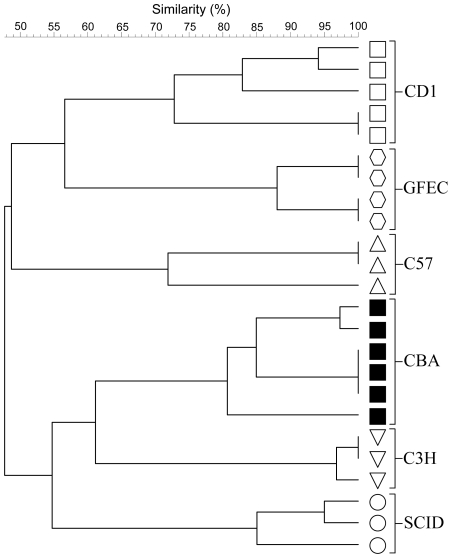
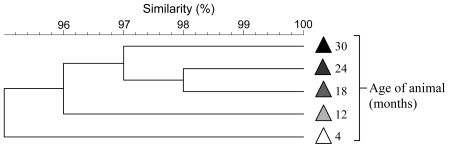
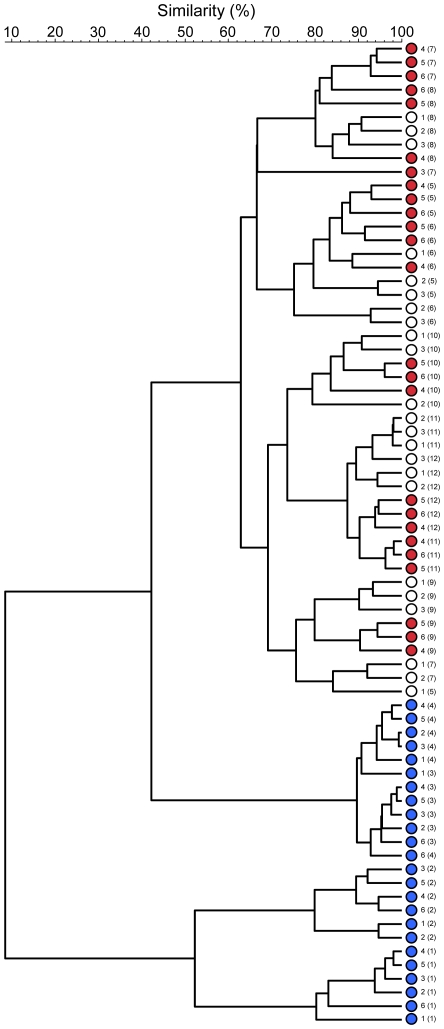
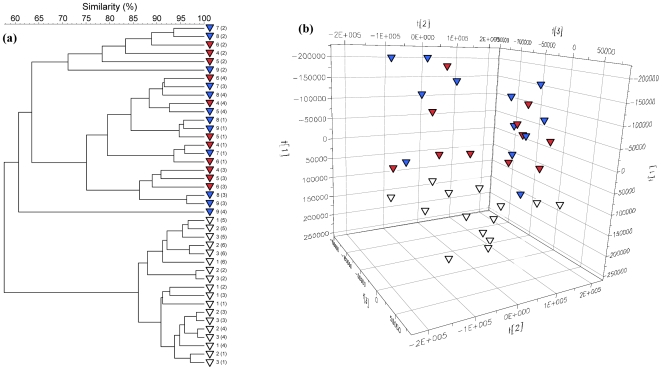
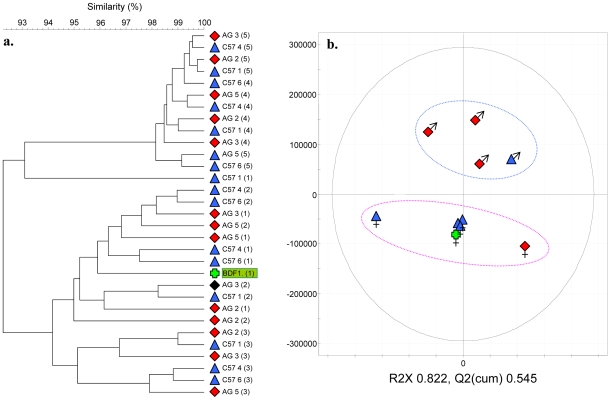
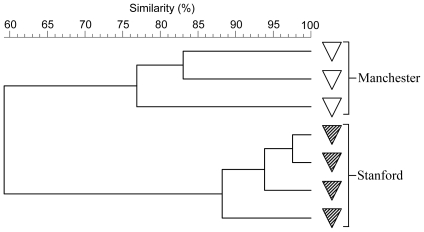
BACKGROUND: The gastrointestinal tract microbiota (GTM) of mammals is a complex microbial consortium, the composition and activities of which influences mucosal development, immunity, nutrition and drug metabolism. It remains unclear whether the composition of the dominant GTM is conserved within animals of the same strain and whether stable GTMs are selected for by host-specific factors or dictated by environmental variables. METHODOLOGY/PRINCIPAL FINDINGS: The GTM composition of six highly inbred, genetically distinct strains of mouse (C3H, C57, GFEC, CD1, CBA nu/nu and SCID) was profiled using eubacterial -specific PCR-DGGE and quantitative PCR of feces. Animals exhibited strain-specific fecal eubacterial profiles that were highly stable (c. >95% concordance over 26 months for C57). Analyses of mice that had been relocated before and after maturity indicated marked, reproducible changes in fecal consortia and that occurred only in young animals. Implantation of a female BDF1 mouse with genetically distinct (C57 and Agoutie) embryos produced highly similar GTM profiles (c. 95% concordance) between mother and offspring, regardless of offspring strain, which was also reflected in urinary metabolite profiles. Marked institution-specific GTM profiles were apparent in C3H mice raised in two different research institutions. CONCLUSION/SIGNIFICANCE: Strain-specific data were suggestive of genetic determination of the composition and activities of intestinal symbiotic consortia. However, relocation studies and uterine implantation demonstrated the dominance of environmental influences on the GTM. This was manifested in large variations between isogenic adult mice reared in different research institutions.
Overview
The claims and statistics of this paper haven’t been checked yet.
Free: it reads the open-access text and checks the first 5 claims that cite a source we can check. Create a free account to check every claim.
Integrity signals
Registry
Cites
Statistics
Figures
Verification
Claims the paper makes
The claims and statistics of this paper haven’t been checked yet.
Free: it reads the open-access text and checks the first 5 claims that cite a source we can check. Create a free account to check every claim.
Claims other papers make about this one
Each is checked against this paper’s own text: does it say what the citing paper says it does?
The cited source says what the claim attributes to it.
In the citing paper
“In rodents the microbiota can be easily altered in early life, but becomes more resistant to change in adulthood.12”
From Probiotics and the gut microbiota in intestinal health and disease (2010) · cites this paper as [12]
Self-check
Percentages, sums and reported differences re-computed from the paper’s own numbers.
The self-check needs the paper’s full text.
Citations
Cites
An obesity-associated gut microbiome with increased capacity for energy harvest
Turnbaugh, P. J., Ley, R. E., Mahowald, M. A., Magrini, V., Mardis, E. R., & Gordon, J. I. (2006) · Nature · doi:10.1038/nature05414 · Cited by 12,444 · cited 3×
“The composition and activities of the mammalian GTM significantly influences host physiology including immune function [36], adiposity [9,37] and drug metabolism [7].”
BackgroundHuman gut microbes associated with obesity
Ley, R. E., Turnbaugh, P. J., Klein, S., & Gordon, J. I. (2006) · Nature · doi:10.1038/4441022a · Cited by 8,785 · cited 2×
“The GTM can therefore be viewed as a versatile prokaryotic metabolic organ [10,11,15].”
BackgroundMetagenomic Analysis of the Human Distal Gut Microbiome
Gill, S. R., Pop, M., DeBoy, R. T., Eckburg, P. B., Turnbaugh, P. J., Samuel, B. S., Gordon, J. I., Relman, D. A., Fraser-Liggett, C. M., & Nelson, K. E. (2006) · Science · doi:10.1126/science.1124234 · Cited by 4,699
Recognition of Commensal Microflora by Toll-Like Receptors Is Required for Intestinal Homeostasis
Rakoff-Nahoum, S., Paglino, J., Eslami-Varzaneh, F., Edberg, S., & Medzhitov, R. (2004) · Cell · doi:10.1016/j.cell.2004.07.002 · Cited by 4,251
Evolution of mammals and their gut microbes
Ley, R. E., Hamady, M., Lozupone, C., Turnbaugh, P. J., Ramey, R. R., Bircher, J. S., Schlegel, M. L., Tucker, T. A., Schrenzel, M. D., Knight, R., et al. (2008) · Science · doi:10.1126/science.1155725 · Cited by 3,747 · cited 1×
“to gain insight into the likely evolution of such associations [43].”
BackgroundDevelopment of the Human Infant Intestinal Microbiota
Palmer, C., Bik, E. M., DiGiulio, D. B., Relman, D. A., & Brown, P. O. (2007) · PLoS Biology · doi:10.1371/journal.pbio.0050177 · Cited by 2,877 · cited 1×
“12 months [34].”
Dethlefsen, L., Huse, S., Sogin, M. L., & Relman, D. A. (2008) · PLoS Biology · doi:10.1371/journal.pbio.0060280 · Cited by 2,361 · cited 1×
“Other environmental variables may significantly influence the composition of the GTM, including antibiotic use where it has for example been shown that oral ciprofloxacin dosing alters the abundance of approximately one third of GTM taxa, decreasing the richness and diversity with profiles returning to re-treatment st…”
BackgroundA Genomic View of the Human- Bacteroides thetaiotaomicron Symbiosis
Xu, J., Bjursell, M. K., Himrod, J., Deng, S., Carmichael, L. K., Chiang, H. C., Hooper, L. V., & Gordon, J. I. (2003) · Science · doi:10.1126/science.1080029 · Cited by 1,353 · cited 1×
“Several recent investigations have demonstrated considerable integration of prokaryotic and mammalian metabolism with respect to polysaccharide metabolism [10,11,12] and other host processes [13,14] which is strong evidence for co-evolution of host and microbiota.”
BackgroundRinttila, T., Kassinen, A., Malinen, E., Krogius, L., & Palva, A. (2004) · Journal of Applied Microbiology · doi:10.1111/j.1365-2672.2004.02409.x · Cited by 1,017 · cited 1×
“243 F: TCGCGTC(C/T)GGTGTGAAAG R: CCACATCCAGC(A/G)TCCAC 58 Rinttila et al [44]”
Kelly, D., Campbell, J. I., King, T. P., Grant, G., Jansson, E. A., Coutts, A. G. P., Pettersson, S., & Conway, S. (2004) · Nature Immunology · doi:10.1038/ni1018 · Cited by 1,003 · cited 1×
“It is also clear that the GTM plays an important role in the development of the immune system from birth onwards [2] and in gastrointestinal mucosal development [3,4,5,6].”
Background
Cited by
Items 101–200 of 206
Advances in comparative genetics: influence of genetics on obesity
Mathes, W. F., Kelly, S. A., & Pomp, D. (2011) · British Journal Of Nutrition · doi:10.1017/s0007114511001905 · Cited by 46
“Friswell et al.((76)) performed uterine transplantations in order to eliminate any non-genetic maternal effects, and found that mice with different genotypes that were born together had similar microbiota.”
BackgroundThe Gut Microbiome and Xenobiotics: Identifying Knowledge Gaps
Sutherland, V. L., McQueen, C. A., Mendrick, D. L., Gulezian, D., Cerniglia, C. E., Foley, S. L., Forry, S., Khare, S., Liang, X., Manautou, J. E., et al. (2020) · Toxicological Sciences · doi:10.1093/toxsci/kfaa060 · Cited by 33
“The compositions of gut microbiota vary among genetically distinct strains of mice (Friswell et al., 2010).”
BackgroundThe role of the gut microbiome in mediating neurotoxic outcomes to PCB exposure
Rude, K. M., Keogh, C. E., & Gareau, M. G. (2019) · NeuroToxicology · doi:10.1016/j.neuro.2019.08.010 · Cited by 34
“, reversibility of the exaggerated stress response can be induced in very young mice, but not in older mice, by restoring MGB axis normalization via microbial colonization during the critical period of neural sensitivity and plasticity (Friswell et al., 2010; Sudo et al., 2004).”
BackgroundChen, Y., Duan, J., Guo, J., Shang, E., Tang, Y., Qian, Y., Tao, W., & Liu, P. (2015) · Journal of Chromatography B · doi:10.1016/j.jchromb.2015.08.024 · Cited by 31
Animal-microbial symbioses in changing environments
Carey, H. V., & Duddleston, K. N. (2014) · Journal of Thermal Biology · doi:10.1016/j.jtherbio.2014.02.015 · Cited by 38
“The abundance and composition of the microbiota are affected by several factors including host genetics and immune status, colonization history, physical aspects of the gut microenvironment and host diet (Campbell et al., 2012; Deloris Alexander et al., 2006; Friswell et al., 2010; Ley et al., 2006).”
BackgroundZeng, B., Li, G., Yuan, J., Li, W., Tang, H., & Wei, H. (2013) · Current Microbiology · doi:10.1007/s00284-013-0360-3 · Cited by 37
“This finding is consistent with previous studies reporting that the composition and activities of gut microbiota vary among specific pathogen-free mice strains (C3H, C57, GFEC, CD1, CBA nu/nu, and SCID) [33].”
ResultThe dialogue between unconventional T cells and the microbiota
Lin, Q., Kuypers, M., Philpott, D. J., & Mallevaey, T. (2020) · Mucosal Immunology · doi:10.1038/s41385-020-0326-2 · Cited by 32
Brodziak, F., Meharg, C., Blaut, M., & Loh, G. (2013) · PLoS ONE · doi:10.1371/journal.pone.0072317 · Cited by 33
“The notion that the host genotype is at least in part responsible for the selection of a host-specific microbiota is supported by a study in six different genetically distinct inbred mouse strains [11].”
Gut Microbes and Host Physiology: What Happens When You Host Billions of Guests?
Pluznick, J. L. (2014) · Frontiers in Endocrinology · doi:10.3389/fendo.2014.00091 · Cited by 30
“Mice of the same strain from different vendors have different microbiota profiles (17), and similarly, the same mice housed at different institutions have different microbiota profiles (18, 19).”
BackgroundYang, J.-W., Park, J., Park, S., Baek, I., & Chun, J. (2019) · Microorganisms · doi:10.3390/microorganisms7110480 · Cited by 36
Yu, Q., Jobin, C., & Thomas, R. M. (2021) · Neoplasia · doi:10.1016/j.neo.2020.12.008 · Cited by 33
CRS-peptides: unique defense peptides of mouse Paneth cells
Andersson, M., Karlsson-Sjöberg, J., & Pütsep, K. (2012) · Mucosal Immunology · doi:10.1038/mi.2012.22 · Cited by 29
Guanylate cyclase C limits systemic dissemination of a murine enteric pathogen
Mann, E. A., Harmel-Laws, E., Cohen, M. B., & Steinbrecher, K. A. (2013) · BMC Gastroenterology · doi:10.1186/1471-230x-13-135 · Cited by 29
“External factors, such as variation in diet and animal husbandry conditions at any given research institute, impact the composition of gut microflora and can have a dominant influence on disease model phenotype [53-55].”
BackgroundCheng, P., Wang, Y., Liang, J. B., Wu, Y., Wright, A. G., & Liao, X. (2018) · Frontiers in Microbiology · doi:10.3389/fmicb.2018.01342 · Cited by 42
Xia, T., Yao, Y., Wang, C., Dong, M., Wu, Y., Li, D., Xie, M., Ni, Q., Zhang, M., & Xu, H. (2020) · Global Ecology and Conservation · doi:10.1016/j.gecco.2020.e01409 · Cited by 30
The Gut Microbiome and Pre-systemic Metabolism: Current State and Evolving Research
Grundmann, O. (2010) · Journal of Drug Metabolism & Toxicology · doi:10.4172/2157-7609.1000104 · Cited by 28
“Although the host genotype contributes to the diversity and specific composition of some bacterial species, environmental factors such as diet and initial colonization after birth show a stronger influence [32].”
BackgroundMercer, K. E., Yeruva, L., Pack, L., Graham, J. L., Stanhope, K. L., Chintapalli, S. V., Wankhade, U. D., Shankar, K., Havel, P. J., Adams, S. H., et al. (2020) · American Journal of Physiology-Gastrointestinal and Liver Physiology · doi:10.1152/ajpgi.00105.2020 · Cited by 29
“These findings concur with previous reports that have documented differences in microbial composition due to disparate mouse genetics (9, 16, 17, 34, 42, 53).”
ResultEffects of Rearing Conditions and Sex on Cecal Microbiota in Ducks
Zhu, C., Xu, W., Tao, Z., Song, W., Liu, H., Zhang, S., & Li, H. (2020) · Frontiers in Microbiology · doi:10.3389/fmicb.2020.565367 · Cited by 29
Manipulating the neonatal gut microbiome: current understanding and future perspectives
Wong, E., Lui, K., Day, A. S., & Leach, S. T. (2021) · Archives of Disease in Childhood Fetal & Neonatal · doi:10.1136/archdischild-2021-321922 · Cited by 33
“35 Genetically distinct embryos were implanted into female mice which resulted in very similar gut microbiota profiles between mother and offspring despite offspring strain.”
BackgroundHashikawa‐Hobara, N., Otsuka, A., Okujima, C., & Hashikawa, N. (2022) · Frontiers in Neuroscience · doi:10.3389/fnins.2022.918953 · Cited by 31
“Accumulating evidence suggests that alterations in the gut microbiota composition are associated with the pathogenesis of depression (Desbonnet et al., 2010; Friswell et al., 2010; Aizawa et al., 2016; Zheng et al., 2020).”
BackgroundIn vitro evaluation of the prebiotic effect of red and white grape polyphenolic extracts
Rodríguez-Costa, S., Cardelle‐Cobas, A., Roca-Saavedra, P., Porto-Arias, J. J., Miranda, J. M., & Cepeda, A. (2017) · Journal of Physiology and Biochemistry · doi:10.1007/s13105-017-0573-1 · Cited by 30
Apatzidou, D. A., Ισκάς, Α. Σ., Konstantinidis, A., Alghamdi, A. M., Tumelty, M., Lappin, D. F., & Nile, C. J. (2018) · Journal Of Clinical Periodontology · doi:10.1111/jcpe.12989 · Cited by 28
Sanjulián, L., Lamas, A., Barreiro, R., Cepeda, A., Fente, C. A., & Regal, P. (2021) · Nutrients · doi:10.3390/nu13072414 · Cited by 27
“Proteobacteria F CATGACGTTACCCGCAGAAGAAG [29] R CTCTACGAGACTCAAGCTTGC Firmicutes F ATGTGGTTTAATTCGAAGCA [30] R AGCTGACGACAACCATGCAC Actinobacteria F GCGKCCTATCAGCTTGTT [31] R CCGCCTACGAGCYCTTTACGC Bacteroidetes F CATGTGGTTTAATTCGATGAT [30] R AGCTGACGACAACCATGCAG Bacteroides F GAGAGGAAGGTCCCCCAC [32] R CGCTACTTGGCTGGTT…”
BackgroundKrishna, M., Engevik, M. A., Queliza, K., Britto, S. L., Shah, R., Ruan, W. H., Wang, H., Versalovic, J. A., & Kellermayer, R. (2021) · FASEB BioAdvances · doi:10.1096/fba.2021-00078 · Cited by 27
Puhl, N. J., Uwiera, R. R. E., Yanke, L. J., Selinger, L. B., & Inglis, G. D. (2011) · Anaerobe · doi:10.1016/j.anaerobe.2011.12.007 · Cited by 31
Patterson, A. M., Plett, P. A., Chua, H. L., Sampson, C. H., Fisher, A., Feng, H., Unthank, J. L., Miller, S. J., Katz, B. P., MacVittie, T. J., et al. (2020) · Health Physics · doi:10.1097/hp.0000000000001344 · Cited by 25
“Variation in gut microbiota has been reported among inbred (Friswell et al. 2010) and outbred strains”
BackgroundTatsuoka, M., Osaki, Y., Ohsaka, F., Tsuruta, T., Kadota, Y., Tochio, T., Hino, S., Morita, T., & Sonoyama, K. (2021) · British Journal Of Nutrition · doi:10.1017/s0007114521001306 · Cited by 24
“Because laboratory mice of the same strain purchased from different suppliers reportedly harbor different microbial communities (25), we examined the colonic 5-HT content and cecal B.”
BackgroundMaternal transmission gives way to social transmission during gut microbiota assembly in wild mice
Wanelik, K. M., Raulo, A., Troitsky, T. S., Husby, A., & Knowles, S. C. L. (2023) · Animal Microbiome · doi:10.1186/s42523-023-00247-7 · Cited by 27
“This has been shown in humans and laboratory mice, where the signal of maternal transmission is strongest after birth and gradually decreases over time [29,30].”
BackgroundImmune Relevant and Immune Deficient Mice: Options and Opportunities in Translational Research
Radaelli, E., Santagostino, S. F., Sellers, R. S., & Brayton, C. F. (2018) · ILAR Journal · doi:10.1093/ilar/ily026 · Cited by 28
Casaro, M. B., Thomas, A. M., Mendes, E., Fukumori, C., Ribeiro, W. R., Oliveira, F. A., Crisma, A. R., Murata, G. M., Bizzarro, B., Sá-Nunes, A., et al. (2021) · Microbiome · doi:10.1186/s40168-021-01081-2 · Cited by 24
“This study found dendrogram concordance in excess of 93% for gut microbiota [75].”
BackgroundChoo, J. M., Trim, P. J., Leong, L. E. X., Abell, G. C. J., Brune, C., Jeffries, N., Wesselingh, S. L., Dear, T. N., Snel, M. F., & Rogers, G. B. (2017) · Frontiers in Microbiology · doi:10.3389/fmicb.2017.00608 · Cited by 30
“The vertical transmission of microbes between dams and pups has been shown to be important in influencing intestinal microbiota composition (Friswell et al., 2010; Daft et al., 2015).”
BackgroundMethodInfluentialValatas, V., He, J., Rivollier, A., Kolios, G. C., Kitamura, K., & Kelsall, B. L. (2012) · Mucosal Immunology · doi:10.1038/mi.2012.102 · Cited by 21
Piccolo, B. D., Graham, J. L., Stanhope, K. L., Nookaew, I., Mercer, K. E., Chintapalli, S. V., Wankhade, U. D., Shankar, K., Havel, P. J., & Adams, S. H. (2018) · American Journal of Physiology-Endocrinology and Metabolism · doi:10.1152/ajpendo.00203.2018 · Cited by 22
“For example, stable gut microbiome communities were observed in transgenerational C57BL/6J mice regardless of ob genotype (39) and between mothers and their transplanted offspring from different genetic backgrounds (23).”
BackgroundMonroe, L. L., Armstrong, M. G., Zhang, X., Hall, J. V., Ozment, T. R., Li, C., Williams, D. L., & Hoover, D. B. (2016) · Shock · doi:10.1097/shk.0000000000000669 · Cited by 25
“The gastrointestinal microbiota of the mouse is composed of many diverse groups of bacteria, including Bacteroides, Enterobacteriaceae, fusobacteria, enterococci, and lactobacilli (37).”
BackgroundMicrobiological Quality Control for Laboratory Rodents and Lagomorphs
Shek, W. R., Smith, A. L., & Pritchett‐Corning, K. R. (2015) · Elsevier eBooks · doi:10.1016/b978-0-12-409527-4.00011-0 · Cited by 27
“So-called next-generation sequencing in which millions of DNA fragments from a single sample are sequenced in unison is already being used to characterize the intestinal microbiome (Friswell et al., 2010), but currently is far too expensive and complicated for routine identification of microbial pathogens in clinical…”
BackgroundMohamed, S. S., Abdeltawab, N. F., Wadie, W., Ahmed, L. A., Ammar, R. M., Rabini, S., Abdel-Aziz, H., & Khayyal, M. T. (2021) · BMC Complementary Medicine and Therapies · doi:10.1186/s12906-021-03337-8 · Cited by 24
“Proteobacteria phylum CAT GAC GTT ACC CGC AGA AGA AG 63 [27]”
BackgroundCross-platform analysis of longitudinal data in metabolomics
Nevedomskaya, E., Mayboroda, O. A., & Deelder, A. M. (2011) · Molecular BioSystems · doi:10.1039/c1mb05280b · Cited by 29
The Howler Monkey as a Model for Exploring Host-Gut Microbiota Interactions in Primates
Amato, K. R., & Righini, N. (2014) · Springer eBooks · doi:10.1007/978-1-4939-1957-4_9 · Cited by 25
Pfuhlmann, K., Pfluger, P. T., Schriever, S. C., Müller, T. D., Tschöp, M. H., & Stemmer, K. (2017) · PLoS ONE · doi:10.1371/journal.pone.0183488 · Cited by 18
Critical design aspects involved in the study of Paneth cells and the intestinal microbiota
Shanahan, M. T., Carroll, I. M., & Gulati, A. (2013) · Gut Microbes · doi:10.4161/gmic.27466 · Cited by 17
Gastrointestinal Colonization of Fungi
Koh, A. Y. (2013) · Current Fungal Infection Reports · doi:10.1007/s12281-013-0133-2 · Cited by 18
The gut microbiota as a biomarker for realistic exposures to pesticides: A critical consideration
Gambarte, P. K., & Wolansky, M. J. (2022) · Neurotoxicology and Teratology · doi:10.1016/j.ntt.2022.107074 · Cited by 15
A metaproteomic pipeline to identify newborn mouse gut phylotypes
CHIERICO, F. D., Petrucca, A., Mortera, S. L., Vernocchi, P., Rosado, M. M., Pieroni, L., Carsetti, R., Urbani, A., & Putignani, L. (2013) · Journal of Proteomics · doi:10.1016/j.jprot.2013.10.025 · Cited by 16
“[14] Friswell MK, Gika H, Stratford IJ, Theodoridis G, Telfer B, Wilson ID, et al.”
BackgroundThe gut microbiome in the fight against obesity: The potential of dietary factors
Ahmad, J., Khan, I. A., Zengin, G., & Mahomoodally, M. F. (2023) · The FASEB Journal · doi:10.1096/fj.202300864rr · Cited by 16
“43,44 Similar to mice models, gut microbial composition differs between obese and lean humans.”
BackgroundInherited nongenetic influences on the gut microbiome and immune system
Knoop, K. A., Holtz, L. R., & Newberry, R. D. (2018) · Birth Defects Research · doi:10.1002/bdr2.1436 · Cited by 13
“Whether the healthy human fetus is sterile, and if not, the origins of the microbes in the fetus, are issues of increasing debate (Funkhouser & Bordenstein, 2013; Perez-Munoz, Arrieta, Ramer-Tait, & Walter, 2017; Willyard, 2018).”
BackgroundSchoeb, T. R., & Bullard, D. C. (2012) · Inflammatory Bowel Diseases · doi:10.1002/ibd.22892 · Cited by 13
“[14] [15] [16] [17] [18] [19] [20] [21] [22] Consequently, simply stating that animals were housed under SPF conditions or in a barrier facility conveys only that their microbiota probably differs from that of the conventional stock from which they were derived, but how it differs, and, importantly, whether difference…”
BackgroundPerinatal exposure to tetracycline contributes to lasting developmental effects on offspring
Hill, E. M., Howard, C. D., Bale, T. L., & Jašarević, E. (2021) · Animal Microbiome · doi:10.1186/s42523-021-00099-z · Cited by 14
Parker, C., Zhao, J., Pearce, D. A., & Kovács, A. (2020) · Archives of Microbiology · doi:10.1007/s00203-020-02007-6 · Cited by 11
Amato, K. R. (2013) · Illinois Digital Environment for Access to Learning and Scholarship (University of Illinois at Urbana-Champaign) · Cited by 12
Papadomichelakis, G., Palamidi, I., Paraskeuas, V. V., Giamouri, E., & Mountzouris, K. C. (2023) · Animals · doi:10.3390/ani13030431 · Cited by 10
Fuglsang, E., Pizzolla, A., Krych, Ł., Nielsen, D. S., Brööks, A. G., Frøkiær, H., & Reading, P. C. (2018) · Frontiers in Cellular and Infection Microbiology · doi:10.3389/fcimb.2018.00319 · Cited by 11
“Studies in mice have characterized the colonization of the gut following birth, investigating the influence of genetic background (Friswell et al., 2010; Hufeldt et al., 2010a; Buhnik-Rosenblau et al., 2011), in utero maternal colonization with gut microbes (Jiménez et al.”
BackgroundMailing, L. J., Allen, J. M., Pence, B. D., Rytych, J. L., Sun, Y., Bhattacharya, T. K., Park, P., Cross, T.-W., McCusker, R. H., Swanson, K. S., et al. (2018) · Behavioural Brain Research · doi:10.1016/j.bbr.2018.09.012 · Cited by 11
Risk of bias assessment tool for systematic review and meta-analysis of the gut microbiome
Lampeter, T., Love, C., Tang, T. T., Marella, A. S., Lee, H. Y., Oganyan, A. K., Moffat, D., Kareem, A., Rusling, M., Massmann, A., et al. (2023) · Gut Microbiome · doi:10.1017/gmb.2023.12 · Cited by 13
“Thismay relate not only to parent genetics but also to the host ofmaternal factors that can affect the development of progeny GMB, including mode of delivery, maternal diet, maternal stress, andmaternal antibiotic use (Bailey et al., 2004; Friswell et al., 2010; Stokholm et al., 2014; Golubeva et al., 2015; Walker et…”
BackgroundThe host genotype actively shapes its microbiome across generations in laboratory mice
Benga, L., Rehm, A., Gougoula, C., Westhoff, P., Wachtmeister, T., Benten, W. P. M., Engelhardt, E., Weber, A. P. M., Köhrer, K., Sager, M., et al. (2024) · Microbiome · doi:10.1186/s40168-024-01954-2 · Cited by 12
Nozu, R., Masami, U. E. N. O., & Hayashimoto, N. (2016) · Journal of Veterinary Medical Science · doi:10.1292/jvms.15-0454 · Cited by 9
Impact of black raspberries on the normal and malignant Apc deficient murine gut microbiome
May, S., McDermott, G., Marchesi, J. R., & Parry, L. (2019) · Journal of Berry Research · doi:10.3233/jbr-180372 · Cited by 8
Lees, H., Swann, J. R., Poucher, S. M., Holmes, E. C., Wilson, I. D., & Nicholson, J. K. (2019) · Journal of Proteome Research · doi:10.1021/acs.jproteome.9b00040 · Cited by 8
Self-citationLin, Y., Chang, P.-E., Shen, S.-Y., & Wang, S.-D. (2023) · Poultry Science · doi:10.1016/j.psj.2023.102731 · Cited by 10
“Bubbles with a relative abundance of less than 1% are not factors play a crucial role in determining gut microbiota composition (Friswell et al., 2010).”
BackgroundTran, N. T., Xiong, F., Hao, Y., Zhang, J., Wu, S.-G., & Wang, G. (2017) · Aquaculture Research · doi:10.1111/are.13248 · Cited by 8
Tartaglione, A. M., Pazienza, V., Calamandrei, G., & Ricceri, L. (2023) · Neuroscience & Biobehavioral Reviews · doi:10.1016/j.neubiorev.2023.105105 · Cited by 8
Ma, Q., Grigorescu, M., Schreiber, A., Kettritz, R., Lindenmeyer, M. T., Anders, H., & Steiger, S. (2021) · Frontiers in Immunology · doi:10.3389/fimmu.2021.673423 · Cited by 8
From Mother to Infant, from Placenta to Gut: Understanding Varied Microbiome Profiles in Neonates
Cheddadi, R., Yeramilli, V. A., & Martin, C. A. (2023) · Metabolites · doi:10.3390/metabo13121184 · Cited by 5
Host Genetics and Gut Microbiota
Buhnik‐Rosenblau, K., Danin‐Poleg, Y., & Kashi, Y. (2011) · Springer eBooks · doi:10.1007/978-3-642-21680-0_21 · Cited by 6
Exploring Functional Products and Early-Life Dynamics of Gut Microbiota
Martínez, A., Per, B. M. L., Andreu, M. L., Rezusta, A., & Arbonés-Mainar, J. M. (2024) · Nutrients · doi:10.3390/nu16121823 · Cited by 5
“Additionally, the substantial impact of environmental factors has been consistently observed in various previous studies, underscoring their role alongside genetics in influencing microbiota composition [104,105].”
ResultIslam, M. R., Schultz, K. A., Varghese, M., Abrishami, S., Villano, J., & Singer, K. (2021) · Journal of the American Association for Laboratory Animal Science · doi:10.30802/aalas-jaalas-20-000139 · Cited by 8
Plé, C., Vandenborght, L., Adele-Dit-Renseville, N., Breton, J., Daniel, C., Ferreira, S., & Foligné, B. (2016) · Gastroenterology Research and Practice · doi:10.1155/2016/6587825 · Cited by 6
Opioid trail: Tracking contributions to opioid use disorder from host genetics to the gut microbiome
Duffy, E. P., Bachtell, R. K., & Ehringer, M. A. (2023) · Neuroscience & Biobehavioral Reviews · doi:10.1016/j.neubiorev.2023.105487 · Cited by 5
Mirfakhraee, H., Sabaei, M., Niksolat, M., Faraji, F., Larijani, S. S., Fard, S. R., Zandieh, Z., & Minaeian, S. (2024) · Molecular Biology Reports · doi:10.1007/s11033-024-09271-5 · Cited by 3
CFP/Yit: An Inbred Mouse Strain with Slow Gastrointestinal Transit
Wagai, G., Togao, M., Kurakawa, T., Nishizaki, H., Otsuka, J., Ohta‐Takada, Y., Kurita, A., Suzuki, T., & Kawakami, K. (2024) · Digestive Diseases and Sciences · doi:10.1007/s10620-024-08420-x · Cited by 3
“Host genetic differences may influence both colonic transit [52] and gut microbiota composition [53, 54].”
Housing influences tissue cytokine levels and the fecal bacterial community structure in rats
Shastri, P., Green, J., Matias, F. M. G., Kalmokoff, M. L., Green-Johnson, J. M., & Brooks, S. P. J. (2017) · Journal of Functional Foods · doi:10.1016/j.jff.2017.10.021 · Cited by 3
“…changes in the dominant lineages of the fecal microbiota were observed when mice were moved to different locations within the same facility (Friswell et al., 2010) and differences have been noted in the same strain bred in different centres (Hufeldt, Nielsen, Vogensen, Midtvedt, & Hansen,…”
BackgroundUnexpected Functions of the Gut Microbiota as a Virtual Organ
Andoh, A. (2015) · Nihon Naika Gakkai Zasshi · doi:10.2169/naika.104.29 · Cited by 3
Wardill, H. R., Bowen, J. M., Sebille, Y. Z. A. V., & Gibson, R. J. (2017) · Gut · doi:10.1136/gutjnl-2016-313486 · Cited by 3
Maternal transmission gives way to social transmission during gut microbiota assembly in wild micePreprint
Wanelik, K. M., Raulo, A., Troitsky, T. S., Husby, A., & Knowles, S. C. L. (2022) · bioRxiv (Cold Spring Harbor Laboratory) · doi:10.1101/2022.08.09.503290 · Cited by 3
Time of Sample Collection Critical for Microbiome ReplicabilityPreprint
Allaband, C., Lingaraju, A., Ramos, S. F., Kumar, T., Javaheri, H., Tiu, M. D., Machado, A. C. D., Richter, R. A., Elijah, E. O., Haddad, G. G., et al. (2022) · bioRxiv (Cold Spring Harbor Laboratory) · doi:10.1101/2022.10.26.513817 · Cited by 3
Shigeno, Y., Liu, H., Sano, C., Inoüe, R., Niimi, K., & Nagaoka, K. (2022) · PLoS ONE · doi:10.1371/journal.pone.0273702 · Cited by 2
Even, G., Mouray, A., Vandenabeele, N., Martel, S., Merlin, S., Lebrun-Ruer, S., Chabé, M., & Audebert, C. (2023) · International Journal of Molecular Sciences · doi:10.3390/ijms24097912 · Cited by 2
“For instance, the intestinal microbiota is a key player in the development of the immune system and mucosa [13].”
BackgroundTang, Y., & Saris, P. E. J. (2014) · Current Microbiology · doi:10.1007/s00284-014-0610-z · Cited by 2
Communication foie/tube digestif: Rôle du microbiote dans la carcinogenèse hépatique
Faivre, J., Bréchot, C., & Moniaux, N. (2013) · médecine/sciences · doi:10.1051/medsci/20132911008 · Cited by 2
A mutation in mouse Krüppel-like factor 15 alters the gut microbiome and response to obesogenic diet
Svenson, K. L., Long, L. L., Ciciotte, S. L., & Adams, M. D. (2019) · PLoS ONE · doi:10.1371/journal.pone.0222536 · Cited by 2
Gohmann, L., Cusick, J. A., Demas, G. E., & Wellman, C. L. (2025) · Developmental Neurobiology · doi:10.1002/dneu.22971 · Cited by 3
“As the maternal microbiome is largely inherited by the offspring, maternal treatment with antibiotics has also been shown to affect the social and aggressive behavior of offspring (Cusick et al. 2022; Friswell et al. 2010; Harshaw et al. 2022).”
Stark, B., Robinson, G. E., & Vernier, C. (2026) · PLoS ONE · doi:10.1371/journal.pone.0340218 · Cited by 2
“…are challenges to isolating and understanding the effects of host genetics and specific environmental factors on gut microbial community composition due to confounds between each other, the physical environment, and maternal inheritance, which may obscure the full impact of these factors [16,17].”
The role of model animals in the study of symbiotic microorganisms
Yaqian, X., Chuan, L., Xiao, L., & BGI-Shenzhen, S. (2019) · Biodiversity Science · doi:10.17520/biods.2019042 · Cited by 1
“…英国桑格中心(Sanger Centre)协同全球 最权威的14家斑马鱼研究机构, 将斑马鱼全基因组 和人类基因组进行比较分析发现, 斑马鱼基因组含 有的26,206个蛋白编码基因与人类基因高度同源, 人类2万多个蛋白编码基因都至少可以在斑马鱼体 内找到1个同源基因与之对应(Howe et al, 2013)。其 独特的生物学、基因组学、遗传学优势及其高度保 守的疾病信号传导路径, 使其成为研究人类疾病信 号传导途径及活体高通量药物筛选的最佳模式生 物之一。 而早在斑马鱼自身的基因组被解析之前,…”
Mother to fetus transfer of probiotic lactobacilli in mice
Hashemi, A. (2017) · TSpace (University of Toronto) · Cited by 2
From Fly to Human: Understanding How Commensal Microorganisms Influence Host Immunity and Health
Round, J. L. (2013) · Wiley eBooks · doi:10.1002/9781118409855.ch10 · Cited by 1
Exploring the breadth and depth of diversity within the canine gut microbiome
Hand, D. (2011) · University of Birmingham Institutional Research Archive (University of Birmingham)
Hotz, R. (2016) · Arizona State University Library Digital Repository (Arizona State University)
Host-Microbial Interactions that Modulate Luminal IgA
Moon, C. (2014) · Open Scholarship Institutional Repository (Washington University in St. Louis) · doi:10.7936/k7v9863z
Characterization of Murine Intestinal Mucus Layer Gene Expression during Postnatal Maturation
Lin, A. (2011) · TSpace (University of Toronto) · Cited by 1
MECHANISMS OF COLONIZATION RESISTANCE TO SHIGELLA FLEXNERI
Kottwitz, H. (2018) · DalSpace (Dalhousie University)
Bhardwaj, A. (2019) · Mspace (University of Manitoba)
Markel, J. (2020) · The Research Repository @ WVU (West Virginia University) · doi:10.33915/etd.7770 · Cited by 1
Analytical strategies to study the gut microbiome in toxicology
Mesnage, R., & Antoniou, M. N. (2021) · Elsevier eBooks · doi:10.1016/b978-0-323-85215-9.00032-5
Cintra, L. (2022) · Digital Library of Theses and Dissertations (Universidade de São Paulo) · doi:10.11606/t.10.2022.tde-30112022-085150
Effect of Shipping on the Microbiome of Donor Mice Used to Reconstitute Germ-Free Recipients
McAdams, Z. L., Yates, J., Turner, G., Dorfmeyer, R. A., Wight‐Carter, M., Amos-Landgraf, J. M., Franklin, C. L., & Ericsson, A. C. (2024) · Gut Microbes Reports · doi:10.1080/29933935.2024.2363858
“6 Following purchase from one of the suppliers of SPF mice, myriad husbandry and institution-specific factors, 7–9 as well as shipping itself, 10 can influence the composition of the microbiome at an individual and colony level.”
InfluentialWanyama, J. W., Okyere, L., Duan, L., & Gaulke, C. A. (2025) · bioRxiv (Cold Spring Harbor Laboratory) · doi:10.1101/2025.05.08.652836
A standardized protocol for assessing immunodeficiency in mouse models
Cappelleri, A., Canesi, S., Capo, V., Zecchillo, A., Notarangelo, L. D., Draghici, E., Bettoni, V., Martini, V., Moretti, P., VILLA, A. M., et al. (2025) · Veterinary Pathology · doi:10.1177/03009858251361517
“…differences in the gut microflora of laboratory mice have been identified and are implicated in the variability of research resu lts. 13,14,21,23,26,43,49,50 Even the most advanced genetic engineering strategies do not come without pitfalls in terms of immune effects that may have unintended…”
Casaro, M. B., Thomas, A. M., Mendes, E., Fukumori, C., Ribeiro, W. R., Oliveira, F. A., Crisma, A. R., Murata, G. M., Bizzarro, B., Sá‐Nunes, A., et al. (2021) · Figshare · doi:10.6084/m9.figshare.14767480
Wanelik, K. M., Raulo, A., Troitsky, T. S., Husby, A., & Knowles, S. C. L. (2023) · Figshare · doi:10.6084/m9.figshare.23273356
Wanelik, K. M., Raulo, A., Troitsky, T. S., Husby, A., & Knowles, S. C. L. (2023) · Figshare · doi:10.6084/m9.figshare.23273353
Metadata
- Authors
- Friswell, M. K., Gika, H., Stratford, I. J., Theodoridis, G., Telfer, B., Wilson, I. D., & McBain, A. J.
- Affiliations
- University of Manchester (GB)
- AstraZeneca (United Kingdom) (GB)
- Corresponding author
- McBain, Andrew J.
- Venue
- PLoS ONE
- Publisher
- Public Library of Science (PLoS)
- Published
- 2010-01-05
- Volume
- 5
- Issue
- 1
- Pages
- e8584
- ISSN
- 1932-6203 (ISSN-L)
- PMC
- PMC2798964
- OpenAlex
- W2109798971
- Cited by
- 207
- References
- 48
- Citations by year
- 2026: 2 · 2025: 4 · 2024: 6 · 2023: 13 · 2022: 7 · 2021: 16 · 2020: 10 · 2019: 15 · 2018: 15 · 2017: 17 · 2016: 12 · 2015: 18 · 2014: 15 · 2013: 24 · 2012: 11
- FWCI
- 7.37
- Type
- journal article
- Language
- en
- Open access
- gold
- doi.org
- Locations
- PLoS ONE (publishedVersion, cc-by)
- Europe PMC (PubMed Central) (publishedVersion, cc-by)
- PubMed Central (publishedVersion, cc-by)
- PubMed (publishedVersion)
- RePEc: Research Papers in Economics (submittedVersion)
- DOAJ (DOAJ: Directory of Open Access Journals) (submittedVersion)
- Research Explorer (The University of Manchester) (submittedVersion, cc-by)
- Spiral (Imperial College London) (submittedVersion, cc-by)
- Funders
- AstraZeneca
- Medical Research Council (G0500366)
- Topics
- Life Sciences › Biochemistry, Genetics and Molecular Biology › Molecular Biology › Gut microbiota and health
- Life Sciences › Agricultural and Biological Sciences › Animal Science and Zoology › Animal Nutrition and Physiology
- Health Sciences › Medicine › Gastroenterology › Gastrointestinal motility and disorders
- Keywords
- gut microbiota, inbred mouse strains, microbial community stability, urinary metabolites, host-microbe interactions
- MeSH terms
- Animals, Electrophoresis, Polyacrylamide Gel, Feces, Intestines, Species Specificity, Polymerase Chain Reaction, Mice
About these checks
Registry, retraction, Cites and statistics results are computed, not judged, with one exception: a printed reference that no index lists is read once by a model before it counts as a citation error. Claims are extracted by a model and kept only when their quote appears verbatim in the text; each cited source is then checked, with a model’s help, for whether it says what the claim relies on. Those verdicts can be wrong — read the claim’s quote and the cited source before relying on one.
Statistics and arithmetic are recomputed, not judged.
Confidence bands are shown only for fields calibrated on our annotated test set. None is calibrated yet, so no band is shown.
What counts as a claim ›How we measure confidence ›How we check this ›
Are you an author, or do you see a problem with this page? Request a review
Data sources
Bibliographic data: Semantic Scholar, OpenAlex, Crossref.
Contains information from the Semantic Scholar Academic Graph Datasets, made available under the ODC Attribution License (ODC-BY 1.0).
Semantic Scholar’s data is described in: Kinney, R., et al. (2023). The Semantic Scholar Open Data Platform. arXiv:2301.10140.
