

Relationship between Sponsorship and Failure Rate of Dental Implants: A Systematic Approach
Open accessThe DOI matches its Crossref record; 39 of the 40 references it cites were found in a registry or an index.
Abstract
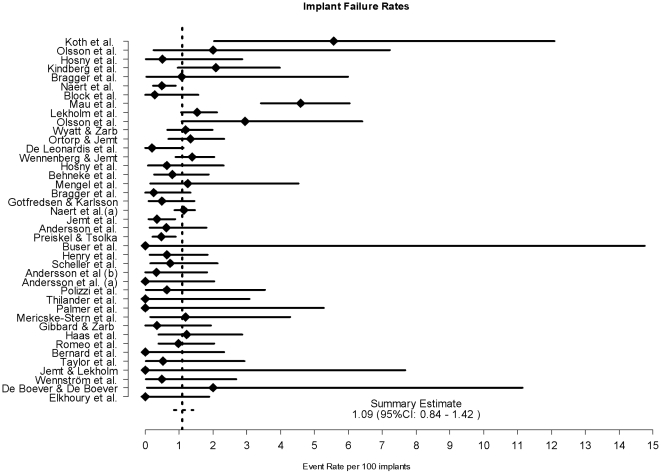
BACKGROUND: The number of dental implant treatments increases annually. Dental implants are manufactured by competing companies. Systematic reviews and meta-analysis have shown a clear association between pharmaceutical industry funding of clinical trials and pro-industry results. So far, the impact of industry sponsorship on the outcomes and conclusions of dental implant clinical trials has never been explored. The aim of the present study was to examine financial sponsorship of dental implant trials, and to evaluate whether research funding sources may affect the annual failure rate. METHODS AND FINDINGS: A systematic approach was used to identify systematic reviews published between January 1993 and December 2008 that specifically deal with the length of survival of dental implants. Primary articles were extracted from these reviews. The failure rate of the dental implants included in the trials was calculated. Data on publication year, Impact Factor, prosthetic design, periodontal status reporting, number of dental implants included in the trials, methodological quality of the studies, presence of a statistical advisor, and financial sponsorship were extracted by two independent reviewers (kappa = 0.90; CI(95%) [0.77-1.00]). Univariate quasi-Poisson regression models and multivariate analysis were used to identify variables that were significantly associated with failure rates. Five systematic reviews were identified from which 41 analyzable trials were extracted. The mean annual failure rate estimate was 1.09%.(CI(95%) [0.84-1.42]). The funding source was not reported in 63% of the trials (26/41). Sixty-six percent of the trials were considered as having a risk of bias (27/41). Given study age, both industry associated (OR = 0.21; CI(95%) [0.12-0.38]) and unknown funding source trials (OR = 0.33; (CI(95%) [0.21-0.51]) had a lower annual failure rates compared with non-industry associated trials. A conflict of interest statement was disclosed in 2 trials. CONCLUSIONS: When controlling for other factors, the probability of annual failure for industry associated trials is significantly lower compared with non-industry associated trials. This bias may have significant implications on tooth extraction decision making, research on tooth preservation, and governmental health care policies.
Overview
The claims and statistics of this paper haven’t been checked yet.
Free: it reads the open-access text and checks the first 5 claims that cite a source we can check. Create a free account to check every claim.
Integrity signals
Registry
Cites
Statistics
Figures
Verification
Claims the paper makes
The claims and statistics of this paper haven’t been checked yet.
Free: it reads the open-access text and checks the first 5 claims that cite a source we can check. Create a free account to check every claim.
Claims other papers make about this one
Each is checked against this paper’s own text: does it say what the citing paper says it does?
The source backs part of the claim, not all of it — or backs it for a different population, condition or comparison.
In the citing paper
“In dentistry, studies on sponsorship bias have shown inconsistent findings: while some found no significant differences between sponsored and non‐sponsored trials, others reported more favourable outcomes in industry‐funded research (Popelut et al. 2010; Schwendicke et al. 2016; Reda et al. 2017; Santos et al. 2019; Saltaji et al. 2021).”
From Sponsorship bias in randomised controlled trials on postoperative pain after third molar extraction: A meta-research study (2026) · cites this paper as Popelut et al. 2010
Experimental — accuracy not yet measuredThe source backs part of the claim, not all of it — or backs it for a different population, condition or comparison.
In the citing paper
“These factors can affect RCTs from conception to the reporting of results and conclusions [13, 32, 33].”
From Assessing transparency practices in dental randomized controlled trials (2024) · cites this paper as [33]
Experimental — accuracy not yet measuredThe cited source says what the claim attributes to it.
In the citing paper
“Industry sponsorship of both original research and review articles is associated with favorable outcomes for the sponsor in a variety of areas including clinical drug trials [29, 30], studies of the health effects of tobacco [31, 32], medical procedures [33, 34] and pre-clinical animal studies [35, 36].”
The cited source says what the claim attributes to it.
In the citing paper
“Our results are also in line with the consolidated evidence that industry sponsorship of various types of research is associated with favorable outcomes for the sponsor in both human [29, 31–34] and animal studies[35, 36].”
The cited source says what the claim attributes to it.
In the citing paper
“For example, bias, as indicated by a prevalence of more favourable outcomes, has been demonstrated for clinical research funded by industry compared with studies funded by other sources [257–259].”
From Reporting animal research: Explanation and elaboration for the ARRIVE guidelines 2.0 (2020) · cites this paper as [258]
1 more claim about this paper
Create a free account to see every claim other papers make about this one.
Self-check
Percentages, sums and reported differences re-computed from the paper’s own numbers.
The self-check needs the paper’s full text.
Citations
Cites
2 retracted
Interventions for replacing missing teeth: different types of dental implants
Esposito, M., Murray-Curtis, L., Grusovin, M. G., Coulthard, P., & Worthington, H. V. (2007) · Cochrane Database of Systematic Reviews · doi:10.1002/14651858.cd003815.pub3 · Cited by 247
RetractedInterventions for replacing missing teeth: different types of dental implants
Esposito, M., Ardebili, Y., & Worthington, H. V. (2019) · Cochrane Database of Systematic Reviews · doi:10.1002/14651858.cd003815.pub5 · Cited by 243
RetractedThe Measurement of Observer Agreement for Categorical Data
Landis, J. R., & Koch, G. G. (1977) · Biometrics · doi:10.2307/2529310 · Cited by 81,148 · cited 1×
“00]) demonstrating an almost prefect degree of agreement [31].”
BackgroundA Coefficient of Agreement for Nominal Scales
Cohen, J. (1960) · Educational and Psychological Measurement · doi:10.1177/001316446002000104 · Cited by 42,398 · cited 1×
“The Kappa statistic [21] was used to assess interrater reliability between the two independent reviewers (A.”
MethodMoher, D., Schulz, K. F., & Altman, D. G. (2001) · The Lancet · doi:10.1016/s0140-6736(00)04337-3 · Cited by 5,373
Osseointegrated implants in the treatment of the edentulous jaw. Experience from a 10-year period.
Brånemark, P. I., Hansson, B. O., Adell, R., Breine, U., Lindström, J., Hallén, O., & ÖHMAN, A. E. (1977) · PubMed · Cited by 3,886
Clinical complications with implants and implant prostheses
Goodacre, C. J., Bernal, G., Rungcharassaeng, K., & Kan, J. Y. K. (2003) · The Journal of Prosthetic Dentistry · doi:10.1016/s0022-3913(03)00212-9 · Cited by 1,138 · cited 1×
“We decided to use the survival rate as the main variable and not the success rate because biological and technical complications were independently recorded in some systematic reviews [7,8].”
MethodBerglundh, T., Persson, L., & Klinge, B. (2002) · Journal of Clinical Periodontology · doi:10.1034/j.1600-051x.29.s3.12.x · Cited by 1,086 · cited 1×
“We decided to use the survival rate as the main variable and not the success rate because biological and technical complications were independently recorded in some systematic reviews [7,8].”
MethodA systematic review of the 5‐year survival and complication rates of implant‐supported single crowns
Jung, R. E., Pjetursson, B. E., Glauser, R., Zembic, A., Zwahlen, M., & Lang, N. P. (2008) · Clinical Oral Implants Research · doi:10.1111/j.1600-0501.2007.01453.x · Cited by 1,063
Linhart, H., & Zucchini, W. (1986) · Cited by 869
Tan, K., Pjetursson, B. E., Lang, N. P., & Chan, E. S. Y. (2004) · Clinical Oral Implants Research · doi:10.1111/j.1600-0501.2004.01119.x · Cited by 769
SIMPLE METHOD TO CALCULATE THE CONFIDENCE INTERVAL OF A STANDARDIZED MORTALITY RATIO (SMR)
ULM, K. (1990) · American Journal of Epidemiology · doi:10.1093/oxfordjournals.aje.a115507 · Cited by 550
Interventions for replacing missing teeth: different times for loading dental implants
Esposito, M., Grusovin, M. G., Maghaireh, H., & Worthington, H. V. (2013) · Cochrane Database of Systematic Reviews · doi:10.1002/14651858.cd003878.pub5 · Cited by 550
Pjetursson, B. E., Tan, K., Lang, N. P., Brägger, U., Egger, M., & Zwahlen, M. (2004) · Clinical Oral Implants Research · doi:10.1111/j.1600-0501.2004.01117.x · Cited by 486
Relationship between Funding Source and Conclusion among Nutrition-Related Scientific Articles
Lesser, L. I., Ebbeling, C. B., Goozner, M., Wypij, D., & Ludwig, D. S. (2007) · PLoS Medicine · doi:10.1371/journal.pmed.0040005 · Cited by 421 · cited 1×
“literature showing that industry sponsoring may affect biomedical research outcomes [16,32].”
BackgroundBias in published cost effectiveness studies: systematic review
Bell, C. M., Urbach, D. R., Ray, J. G., Bayoumi, A., Rosen, A. B., Greenberg, D., & Neumann, P. J. (2006) · BMJ · doi:10.1136/bmj.38737.607558.80 · Cited by 382 · cited 1×
“Our results fully encourage editors of dental journals and authors of future studies in dentistry to be informed of certain initiatives that have been proposed to reduce the sponsorship bias in the biomedical research as well as in the Health Economics studies [15,37].”
BackgroundLang, N. P., Pjetursson, B. E., Tan, K., Brägger, U., Egger, M., & Zwahlen, M. (2004) · Clinical Oral Implants Research · doi:10.1111/j.1600-0501.2004.01118.x · Cited by 359
Waris, T., & Kyösola, K. (1982) · Scandinavian Journal of Plastic and Reconstructive Surgery · doi:10.3109/02844318209006563 · Cited by 350
Esposito, M. A., Hirsch, J., Lekholm, U., & Thomsen, P. (1999) · PubMed · Cited by 318
Torabinejad, M., Anderson, P., Bader, J., Brown, L. J., Chen, L. H., Goodacre, C. J., Kattadiyil, M. T., Kutsenko, D., Lozada, J., Patel, R., et al. (2007) · The Journal of Prosthetic Dentistry · doi:10.1016/s0022-3913(07)60102-4 · Cited by 299 · cited 2×
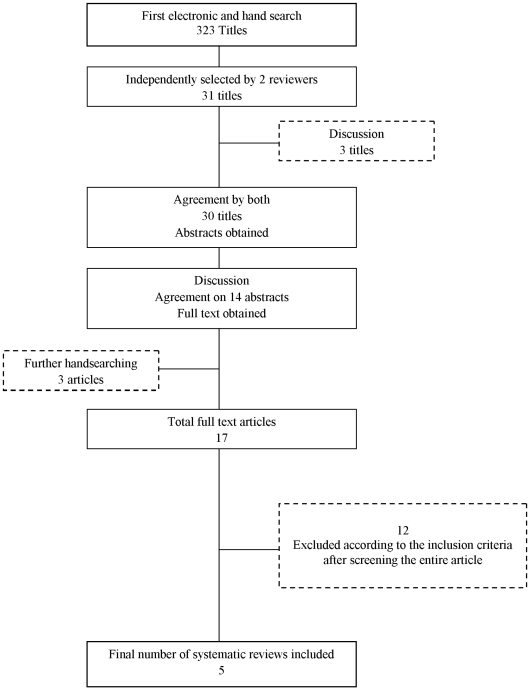
“Therefore, a total of 5 systematic reviews were included to serve as the database from which primary articles were extracted [9,10,22,29,30].”
BackgroundResultA meta‐analysis of implants in partial edentulism
Lindh, T., Gunne, J., Tillberg, A., & Molin, M. (1998) · Clinical Oral Implants Research · doi:10.1034/j.1600-0501.1998.090203.x · Cited by 289
for the CONSORT Group*, Moher, D., Schulz, K. F., & Altman, D. G. (2003) · Clinical Oral Investigations · doi:10.1007/s00784-002-0188-x · Cited by 258 · cited 1×
“So far, only 2 out of 9 dental journals involved in our sample (Journal of Clinical Periodontology and Clinical Oral Implant Research) have adopted the CONSORT guidelines [38].”
Bero, L., Oostvogel, F., Bacchetti, P., & Lee, K. (2007) · PLoS Medicine · doi:10.1371/journal.pmed.0040184 · Cited by 249 · cited 3×
“literature showing that industry sponsoring may affect biomedical research outcomes [16,32].”
BackgroundResultKaroussis, I. K., Kotsovilis, S., & Fourmousis, I. (2007) · Clinical Oral Implants Research · doi:10.1111/j.1600-0501.2007.01406.x · Cited by 222 · cited 1×
“Leaving aside the lack of transparency of the funding source, a number of common weaknesses were identified in the trials'reporting. Lack of inclusion/exclusion criteria, inadequate blinding, and lack of drop-out rates were common, leading to the classification of 66% of the trials as having a risk of bias using our m…”
MethodSystematic review of implant outcomes in treated periodontitis subjects
Ong, C. T. T., Ivanovski, S., Needleman, I. G., Retzepi, M., Moles, D. R., Tonetti, M. S., & Donos, N. (2008) · Journal of Clinical Periodontology · doi:10.1111/j.1600-051x.2008.01207.x · Cited by 217 · cited 1×
“In addition, the periodontal status of the subjects was reported in only 17% of the trials, although a significant difference in mean peri-implant marginal bone loss between patients with a history of periodontitis and periodontally healthy subjects has been shown [33,34].”
BackgroundInterventions for replacing missing teeth: different times for loading dental implants
Esposito, M., Grusovin, M. G., Achille, H., Coulthard, P., & Worthington, H. V. (2009) · Cochrane Database of Systematic Reviews · doi:10.1002/14651858.cd003878.pub4 · Cited by 216
Tonetti, M. S., Hämmerle, C. H. F., & on behalf of the European Workshop on Periodontology Group C (2008) · Journal of Clinical Periodontology · doi:10.1111/j.1600-051x.2008.01268.x · Cited by 167 · cited 1×
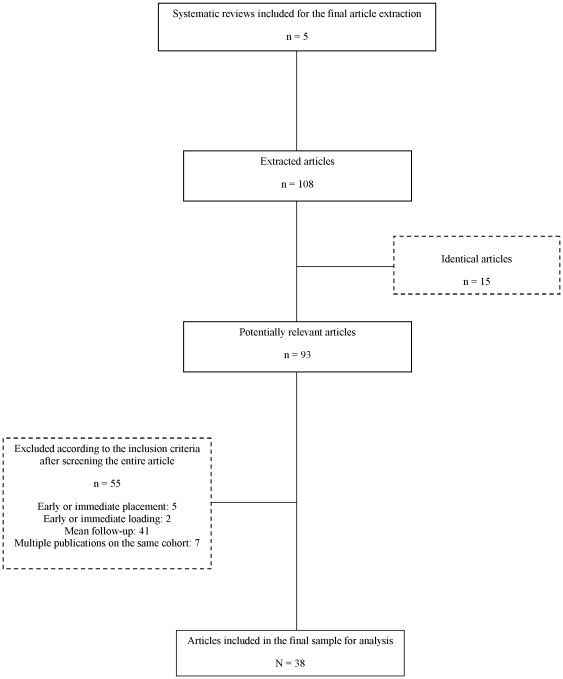
“Fully edentulous patients were excluded from our research. The following dental implants were eliminated from the database because of the suggested increased failure rate: immediate and immediate-delayed dental implants; early and immediate load dental implants; dental implants placed after sinus lift procedures”
BackgroundEsposito, M. A., Koukoulopoulou, A., Coulthard, P., & Worthington, H. V. (2006) · Cochrane Database of Systematic Reviews · doi:10.1002/14651858.cd005968 · Cited by 145
Salinas, T. J., & Eckert, S. E. (2007) · PubMed · Cited by 121
Economic aspects of single‐tooth replacement
Brägger, U., Krenander, P., & Lang, N. P. (2005) · Clinical Oral Implants Research · doi:10.1111/j.1600-0501.2005.01112.x · Cited by 115
Tooth loss and dentures: Patients’ perspectives
Jones, J. A., Orner, M. B., Spiro, A., & Kressin, N. R. (2003) · International Dental Journal · doi:10.1111/j.1875-595x.2003.tb00906.x · Cited by 90 · cited 1×
“It has been shown that tooth replacement improves the quality of life in edentulous patients [2,3].”
BackgroundParadise lost: An introduction to the geography of water pollution in Puerto Rico
Hunter, J. M., & Arbona, S. I. (1995) · Social Science & Medicine · doi:10.1016/0277-9536(94)00255-r · Cited by 90 · cited 1×
“It has been shown that tooth replacement improves the quality of life in edentulous patients [2,3].”
BackgroundNeely, A. L., Holford, T. R., Löe, H., Ånerud, Å., & Boysen, H. (2005) · Journal of Clinical Periodontology · doi:10.1111/j.1600-051x.2005.00797.x · Cited by 76 · cited 1×
“Therefore, tooth replacement is still of paramount importance in health care, even if tremendous efforts have been made by dental researchers in cariology and periodontology to treat and prevent the two main causes of edentulism: dental caries and periodontal diseases [4].”
BackgroundCost‐effectiveness modeling of dental implant vs. bridge
Bouchard, P., Renouard, F., Bourgeois, D. M., Fromentin, O., Jeanneret, M.-H., & Béresniak, A. (2009) · Clinical Oral Implants Research · doi:10.1111/j.1600-0501.2008.01702.x · Cited by 62
Self-citationEvaluating solutions to sponsorship bias
Doucet, M., & Sismondo, S. (2008) · Journal of Medical Ethics · doi:10.1136/jme.2007.022467 · Cited by 57 · cited 2×
“Our results fully encourage editors of dental journals and authors of future studies in dentistry to be informed of certain initiatives that have been proposed to reduce the sponsorship bias in the biomedical research as well as in the Health Economics studies [15,37].”
BackgroundEsposito, M. A., Koukoulopoulou, A., Coulthard, P., & Worthington, H. V. (2006) · Cochrane Database of Systematic Reviews · doi:10.1002/14651858.cd005968.pub2 · Cited by 43
Many Reviews Are Systematic but Some Are More Transparent and Completely Reported than Others
Editors, T. P. M. (2007) · PLoS Medicine · doi:10.1371/journal.pmed.0040147 · Cited by 34
Rogers, W. H. (1992) · Stata technical bulletin · Cited by 4
European Markets for Dental Implants
(2007) · Sage eBooks · doi:10.4135/9781412956239.n60 · Cited by 1
Research works printed but not linked: 3
- [24]Kirkwood BR Sterne JAC 2004 Survival analysis: displaying and comparing survival patterns. Kirkwood BR Sterne JAC Essential Medical Statistics Oxford, Malden Blackwell Science 272 286
- [25]Agresti A 2002 Poisson regression for rates. Agresti A Categorical data analysis New-York Wiley 385 408
- [28]Zuur AF Ieno EN Walker NJ 2009 Model selection in Quasi-Poisson. Zuur AF Ieno EN Walker NJ Mixed effects Models and extensions in Ecology with R New York Springer 227 230
Cited by
Reporting animal research: Explanation and elaboration for the ARRIVE guidelines 2.0
Percie du Sert, N., Ahluwalia, A., Alam, S., Avey, M. T., Baker, M., Browne, W. J., Clark, A., Cuthill, I. C., Dirnagl, U., Emerson, M., et al. (2020) · PLOS Biology · doi:10.1371/journal.pbio.3000411 · Cited by 2,677
Industry sponsorship and research outcome
Lundh, A., Lexchin, J., Mintzes, B., Schroll, J. B., & Bero, L. (2017) · Cochrane Database of Systematic Reviews · doi:10.1002/14651858.mr000033.pub3 · Cited by 1,697
Industry sponsorship and research outcome
Lundh, A., Sismondo, S., Lexchin, J., Busuioc, O. A., & Bero, L. (2012) · Cochrane Database of Systematic Reviews · doi:10.1002/14651858.mr000033.pub2 · Cited by 605
Reporting animal research: Explanation and Elaboration for the ARRIVE guidelines 2019
Percie du Sert, N., Ahluwalia, A., Alam, S., Avey, M. T., Baker, M., Browne, W. J., Clark, A., Cuthill, I. C., Dirnagl, U., Emerson, M., et al. (2019) · bioRxiv (Cold Spring Harbor Laboratory) · doi:10.1101/703355 · Cited by 559
“For example, bias, as indicated by a prevalence of more favourable outcomes, has been demonstrated for clinical research funded by industry compared to studies funded by other sources [239-241].”
ResultWoodruff, T. J., & Sutton, P. (2014) · Environmental Health Perspectives · doi:10.1289/ehp.1307175 · Cited by 427
“…effects of tobacco (Barnes and Bero 1997, 1998), the safety and efficacy of pharmaceuticals (Bero et al. 2007; Lexchin et al. 2003; Lundh et al. 2012), and medical procedures (Popelut et al. 2010; Shah et al. 2005), which have all shown that, on average, source of funding influences study outcome.”
Background
Metadata
- Authors
- Popelut, A., Valet, F., Fromentin, O., Thomas, A., & Bouchard, P.
- Affiliations
- Assistance Publique – Hôpitaux de Paris (FR)
- Institut Curie (FR)
- Université Paris Diderot (FR)
- Corresponding author
- Bouchard, Philippe
- ORCID
- Bouchard, Philippe
- Venue
- PLoS ONE
- Publisher
- Public Library of Science (PLoS)
- Published
- 2010-04-21
- Volume
- 5
- Issue
- 4
- Pages
- e10274
- ISSN
- 1932-6203 (ISSN-L)
- PMC
- PMC2858083
- OpenAlex
- W2000025641
- Cited by
- 86
- References
- 40
- Citations by year
- 2026: 2 · 2025: 1 · 2024: 6 · 2023: 4 · 2022: 4 · 2021: 6 · 2020: 12 · 2019: 7 · 2018: 1 · 2017: 5 · 2016: 6 · 2015: 3 · 2014: 6 · 2013: 8 · 2012: 10
- FWCI
- 7.40
- Type
- journal article
- Language
- en
- Open access
- gold
- doi.org
- Locations
- PLoS ONE (publishedVersion, cc-by)
- PubMed Central (publishedVersion, cc-by)
- PubMed (publishedVersion)
- RePEc: Research Papers in Economics (submittedVersion)
- DOAJ (DOAJ: Directory of Open Access Journals) (submittedVersion, cc-by-sa)
- Figshare (submittedVersion, cc-by)
- DigitalGeorgetown (Georgetown University Library) (submittedVersion)
- Funders
- Université Paris Diderot
- Topics
- Health Sciences › Nursing › Issues, ethics and legal aspects › Pharmaceutical industry and healthcare
- Health Sciences › Dentistry › Oral Surgery › Dental Implant Techniques and Outcomes
- Health Sciences › Medicine › Surgery › Orthopaedic implants and arthroplasty
- Keywords
- dental implants, implant failure rate, industry funding, financial conflicts of interest, research funding sources, bias in clinical trials, systematic reviews, risk of bias, conflict of interest disclosure
- MeSH terms
- Clinical Trials as Topic, Drug Industry, Humans, Research Support as Topic, Review Literature as Topic, Dental Implants, Bias, Conflict of Interest, Dental Restoration Failure
About these checks
Registry, retraction, Cites and statistics results are computed, not judged, with one exception: a printed reference that no index lists is read once by a model before it counts as a citation error. Claims are extracted by a model and kept only when their quote appears verbatim in the text; each cited source is then checked, with a model’s help, for whether it says what the claim relies on. Those verdicts can be wrong — read the claim’s quote and the cited source before relying on one.
Statistics and arithmetic are recomputed, not judged.
Confidence bands are shown only for fields calibrated on our annotated test set. None is calibrated yet, so no band is shown.
What counts as a claim ›How we measure confidence ›How we check this ›
Are you an author, or do you see a problem with this page? Request a review
Data sources
Bibliographic data: Semantic Scholar, OpenAlex, Crossref.
Contains information from the Semantic Scholar Academic Graph Datasets, made available under the ODC Attribution License (ODC-BY 1.0).
Semantic Scholar’s data is described in: Kinney, R., et al. (2023). The Semantic Scholar Open Data Platform. arXiv:2301.10140.
