

The Human Nasal Microbiota and Staphylococcus aureus Carriage
Open accessThe DOI matches its Crossref record; 69 of the 70 references it cites were found in a registry or an index.
Abstract
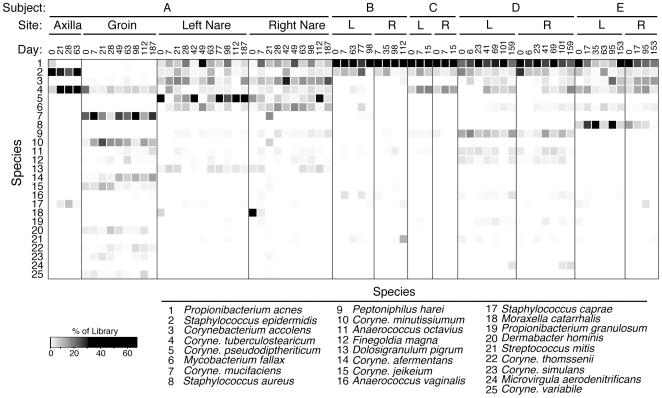
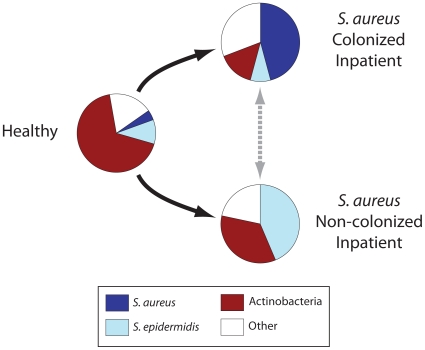
BACKGROUND: Colonization of humans with Staphylococcus aureus is a critical prerequisite of subsequent clinical infection of the skin, blood, lung, heart and other deep tissues. S. aureus persistently or intermittently colonizes the nares of approximately 50% of healthy adults, whereas approximately 50% of the general population is rarely or never colonized by this pathogen. Because microbial consortia within the nasal cavity may be an important determinant of S. aureus colonization we determined the composition and dynamics of the nasal microbiota and correlated specific microorganisms with S. aureus colonization. METHODOLOGY/PRINCIPAL FINDINGS: Nasal specimens were collected longitudinally from five healthy adults and a cross-section of hospitalized patients (26 S. aureus carriers and 16 non-carriers). Culture-independent analysis of 16S rRNA sequences revealed that the nasal microbiota of healthy subjects consists primarily of members of the phylum Actinobacteria (e.g., Propionibacterium spp. and Corynebacterium spp.), with proportionally less representation of other phyla, including Firmicutes (e.g., Staphylococcus spp.) and Proteobacteria (e.g. Enterobacter spp). In contrast, inpatient nasal microbiotas were enriched in S. aureus or Staphylococcus epidermidis and diminished in several actinobacterial groups, most notably Propionibacterium acnes. Moreover, within the inpatient population S. aureus colonization was negatively correlated with the abundances of several microbial groups, including S. epidermidis (p = 0.004). CONCLUSIONS/SIGNIFICANCE: The nares environment is colonized by a temporally stable microbiota that is distinct from other regions of the integument. Negative association between S. aureus, S. epidermidis, and other groups suggests microbial competition during colonization of the nares, a finding that could be exploited to limit S. aureus colonization.
Overview
The claims and statistics of this paper haven’t been checked yet.
Free: it reads the open-access text and checks the first 5 claims that cite a source we can check. Create a free account to check every claim.
Integrity signals
Registry
Cites
Statistics
Figures
Verification
Claims the paper makes
The claims and statistics of this paper haven’t been checked yet.
Free: it reads the open-access text and checks the first 5 claims that cite a source we can check. Create a free account to check every claim.
Claims other papers make about this one
Each is checked against this paper’s own text: does it say what the citing paper says it does?
The source backs part of the claim, not all of it — or backs it for a different population, condition or comparison.
In the citing paper
“The anterior nares are closest to the external environment and are lined with a skin-like keratinized squamous epithelium, including serous and sebaceous glands, the latter of which produces sebum, which leads to the enrichment of lipophilic skin colonizers, including Staphylococcus spp., Propionibacterium spp. and Corynebacterium spp.46,47,48.”
From The microbiota of the respiratory tract: gatekeeper to respiratory health (2017) · cites this paper as [46]
Experimental — accuracy not yet measuredThe cited source says what the claim attributes to it.
In the citing paper
“In healthy adults, bacteria present in the nasal cavity are typically those associated with skin, predominantly members of the Actinobacteria (e.g., Corynebacterium spp., Propionibacterium spp.), followed by Firmicutes (e.g., Staphylococcus spp.), and Proteobacteria”
From Respiratory viral infection-induced microbiome alterations and secondary bacterial pneumonia. (2018) · cites this paper as [67]
In the citing paper
“Competition between S. aureus and S. epidermidis has been implicated as a source of the differences reported between S. aureus carrier and non-carrier communities (Frank et al., 2010).”
From Nasal Microenvironments and Interspecific Interactions Influence Nasal Microbiota Complexity and S. aureus Carriage (2013) · cites this paper as Frank et al., 2010
In the citing paper
“A common feature of microbial ecological studies of the anterior naris has been the dominance of Corynebacterium, Staphylococcus, and Propionibacterium species (Costello et al., 2009; Frank et al., 2010; Grice et al., 2009; TheHumanMicrobiomeProjectConsortium, 2012; Zhou et al., 2013).”
From Nasal Microenvironments and Interspecific Interactions Influence Nasal Microbiota Complexity and S. aureus Carriage (2013) · cites this paper as Frank et al., 2010
In the citing paper
“A negative correlation between S. aureus abundance and Corynebacterium abundance have been previously observed, although no specific mechanisms have been proposed (Frank et al., 2010; Lina et al., 2003; Uehara et al., 2000).”
From Nasal Microenvironments and Interspecific Interactions Influence Nasal Microbiota Complexity and S. aureus Carriage (2013) · cites this paper as Frank et al., 2010
1 more claim about this paper
Create a free account to see every claim other papers make about this one.
Self-check
Percentages, sums and reported differences re-computed from the paper’s own numbers.
The self-check needs the paper’s full text.
Citations
Cites
R: A Language and Environment for Statistical Computing
R Core Team (2025) · doi:10.32614/r.manuals · Cited by 352,181
Naïve Bayesian Classifier for Rapid Assignment of rRNA Sequences into the New Bacterial Taxonomy
Wang, Q., Garrity, G. M., Tiedje, J. M., & Cole, J. R. (2007) · Applied and Environmental Microbiology · doi:10.1128/aem.00062-07 · Cited by 19,885 · cited 2×
“rRNA sequences were provisionally identified by BLAST query of 16S rRNA sequences extracted from the All-Species Living Tree Project database (version LTP_S95; [33]) and results corroborated through the RDP Classifier tool [34,35], parsimony insertion into the SILVA SSURef_98 tree [36], and pairwise distance compariso…”
MethodLane, D. (1991) · Medical Entomology and Zoology · Cited by 12,669
Finding groups in data: an introduction to cluster analysis
(1991) · Choice Reviews Online · doi:10.5860/choice.28-4558 · Cited by 10,474
Nucleic acid techniques in bacterial systematics
Stackebrandt, E. S., & Goodfellow, M. (1991) · Wiley eBooks · Cited by 9,460
Diversity of the Human Intestinal Microbial Flora
Eckburg, P. B., Bik, E. M., Bernstein, C. N., Purdom, E., Dethlefsen, L., Sargent, M., Gill, S. R., Nelson, K. E., & Relman, D. A. (2005) · Science · doi:10.1126/science.1110591 · Cited by 7,913 · cited 1×
“Collectively these microorganisms define a pan-microbiota of the human anterior nares as has been reported for other anatomical sites, including the genitourinary tract [45], gut [38,46,47,48], lung [49], and skin [37,40,41,50,51,52].”
BackgroundBase-Calling of Automated Sequencer Traces Using Phred. I. Accuracy Assessment
Ewing, B., Hillier, L., Wendl, M. C., & Green, P. (1998) · Genome Research · doi:10.1101/gr.8.3.175 · Cited by 6,967 · cited 1×
“Sequence base calling and contig assembly were performed with the applications phred and phrap [56,57], as implemented by XplorSeq [58].”
MethodARB: a software environment for sequence data
Ludwig, W. (2004) · Nucleic Acids Research · doi:10.1093/nar/gkh293 · Cited by 6,702 · cited 2×
“Ambiguities between GenBank and RDP classifications (,0.1% of sequences) were resolved by reference to the results of parsimony insertion into the SILVA guide tree in ARB.”
MethodInfluentialPruesse, E., Quast, C., Knittel, K., Fuchs, B. M., Ludwig, W., Peplies, J., & Glockner, F. O. (2007) · Nucleic Acids Research · doi:10.1093/nar/gkm864 · Cited by 6,668 · cited 2×
“All sequences were aligned to the SILVA SSURef version 98 database using the SINA automated aligner provided by the SILVA web service [36].”
MethodNonparametric estimation of the number of classes in a population
Chao, A. (1984) · Scandinavian Journal of Statistics · Cited by 5,880
Cited by
Items 201–300 of 449
Rudder, C. D., Calatayud, M., Lebeer, S., & de Wiele, T. V. (2018) · Microbiome · doi:10.1186/s40168-018-0462-z · Cited by 27
“aureus carriage observed in hospitalised patients [122].”
Brugger, S. D., Kraemer, J. G., Qi, W., Bomar, L., Oppliger, A., & Hilty, M. (2019) · Frontiers in Genetics · doi:10.3389/fgene.2019.00555 · Cited by 26
“This may indicate the transition toward a more “adult”-like composition of the microbiota as these two families are very often identified within the adult microbiome (Frank et al., 2010; CamarinhaSilva et al., 2014; Bomar et al., 2017).”
BackgroundBacteriocin isolated from the natural inhabitant of Allium cepa against Staphylococcus aureus
Taggar, R., Jangra, M., Dwivedi, A., Bansal, K., Patil, P. B., Bhattacharyya, M. S., Nandanwar, H. S., & Sahoo, D. K. (2021) · World Journal of Microbiology and Biotechnology · doi:10.1007/s11274-020-02989-x · Cited by 25
Walsh, D. M., McCullough, S. D., Yourstone, S., Jones, S., Cairns, B. A., Jones, C. D., Jaspers, I., & Díaz-Sánchez, D. (2017) · PLoS ONE · doi:10.1371/journal.pone.0173848 · Cited by 27
Lensmire, J. M., Wischer, M. R., Zimpel, C. K., Kies, P. J., Sosinski, L. M., Ensink, E., Dodson, J. P., Shook, J. C., Delekta, P. C., Cooper, C., et al. (2023) · PLoS Genetics · doi:10.1371/journal.pgen.1010834 · Cited by 25
Olivo, G., Zakia, L. S., Ribeiro, M. G., da Cunha, M. D. L. R. D. S., Riboli, D. F. M., Mello, P. L., Teixeira, N. B., de Araújo, C. E. T., Oliveira-Filho, J. P., & Borges, A. S. (2024) · Journal of Equine Veterinary Science · doi:10.1016/j.jevs.2024.105031 · Cited by 26
Human nasal microbiota shifts in healthy and chronic respiratory disease conditions
Konovalovas, A., Armalytė, J., Klimkaitė, L., Liveikis, T., Jonaitytė, B., Danila, E., Bironaitė, D., Mieliauskaitė, D., Bagdonas, E., & Aldonytė, R. (2024) · BMC Microbiology · doi:10.1186/s12866-024-03294-5 · Cited by 25
“The human nose houses a complex bacterial community, where bacteria belonging to the phyla Actinobacteria, Firmicutes and Proteobacteria dominate, while Fusobacteria and Bacteroidetes are present in significantly lower amounts [4–6].”
BackgroundImpact of Air-Conditioning Filters on Microbial Growth and Indoor Air Pollution
Alabdalall, A. H., Al-dakheel, S. A., & Al-Abkari, H. A. (2019) · IntechOpen eBooks · doi:10.5772/intechopen.88548 · Cited by 24
Kulkarni, R., Caskey, J., Singh, S. K., Paudel, S., Baral, P., Schexnayder, M., Kim, J., Kim, N., Kośmider, B., Ratner, A. J., et al. (2016) · American Journal of Respiratory Cell and Molecular Biology · doi:10.1165/rcmb.2015-0397oc · Cited by 27
“The microbiota of the human upper respiratory tract is comprised of a variety of commensal microbes and potentially deadly pathogens, such as Staphylococcus aureus (1, 2).”
BackgroundMunier, A., LASTOURS, V. D., Barbier, F., Chau, F., Fantin, B., & Ruimy, R. (2015) · International Journal of Antimicrobial Agents · doi:10.1016/j.ijantimicag.2015.09.004 · Cited by 23
Netsvyetayeva, I., Marusza, W., Olszański, R., Szyller, K., Królak-Ulińska, A., Kopeć, E., Sierdziński, J., Szymonski, Z., & Młynarczyk, G. (2018) · Infection and Drug Resistance · doi:10.2147/idr.s154328 · Cited by 22
“aureus infections.(18) Sample “0” was taken to determine the bacterial flora in the individual, bearing in mind that the presence of pathogens may led to the inflammation.”
BackgroundMardikasari, S. A., Sipos, B., Csóka, I., & Katona, G. (2022) · Journal of Drug Delivery Science and Technology · doi:10.1016/j.jddst.2022.103887 · Cited by 24
Vetor, R., Murray, C. K., Mende, K., Melton-Kreft, R., Akers, K. S., Wenke, J. C., Spirk, T., Guymon, C. H., Zera, W. C., Beckius, M. L., et al. (2016) · BMC Infectious Diseases · doi:10.1186/s12879-016-1651-7 · Cited by 22
“7 and 53 % [18–23] Streptococcus agalactiae was found on 26.”
BackgroundBurnham, C. D., Hogan, P. G., Wallace, M. A., Deych, E., Shannon, W. D., Warren, D. K., & Fritz, S. A. (2016) · Antimicrobial Agents and Chemotherapy · doi:10.1128/aac.01289-16 · Cited by 23
McMurray, C. L., Hardy, K. J., Calus, S., Loman, N. J., & Hawkey, P. M. (2016) · Microbiome · doi:10.1186/s40168-016-0210-1 · Cited by 23
Conjugation of Inulin Improves Anti-Biofilm Activity of Chitosan
Zhang, G., Liu, J., Li, R., Jiao, S., Feng, C., Wang, Z. A., & Du, Y. (2018) · Marine Drugs · doi:10.3390/md16050151 · Cited by 23
“aureus is a Gram-positive bacterium that typically colonizes the anterior nasopharynx and the surface of skin [26,27].”
BackgroundMoran, J. C., Crank, E. L., Ghabban, H., & Horsburgh, M. J. (2016) · Journal of Visualized Experiments · doi:10.3791/54437 · Cited by 22
Epidemiology of Methicillin-SusceptibleStaphylococcus aureusin a Neonatology Ward
Achermann, Y., Seidl, K., Kuster, S. P., Leimer, N., Durisch, N., Ajdler-Schaeffler, E., Karrer, S., Senn, G., Holzmann-Bürgel, A., Wolfensberger, A., et al. (2015) · Infection Control and Hospital Epidemiology · doi:10.1017/ice.2015.184 · Cited by 22
Woloszynek, S., Pastor, S. J., Mell, J. C., Nandi, N., Sokhansanj, B. A., & ROSEN, G. L. (2016) · International review of cytology · doi:10.1016/bs.ircmb.2016.01.003 · Cited by 26
As, L., Azizov, I., & Kozlov, R. S. (2021) · Russian Rhinology · doi:10.17116/rosrino20212901123 · Cited by 22
Profiling of Oral and Nasal Microbiome in Children with Cleft Palate
Zhang, M., Wang, R., Liao, Y., Buijs, M. J., & Li, J. (2015) · The Cleft Palate-Craniofacial Journal · doi:10.1597/14-162 · Cited by 23
“According to the research of Frank et al. (2010), Dolosigranulum species is a common genus in the nares of healthy adults.”
BackgroundMicrobiota Profile of the Nasal Cavity According to Lifestyles in Healthy Adults in Santiago, Chile
Toro‐Ascuy, D., Cárdenas, J. P., Zorondo‐Rodríguez, F., González, D., Silva-Moreno, E., Puebla, C., Nunez-Parra, A., Reyes-Cerpa, S., & Fuenzalida, L. (2023) · Microorganisms · doi:10.3390/microorganisms11071635 · Cited by 20
“The taxonomic assignment results revealed that most samples were dominated by members of the Proteobacteria, Firmicutes, and Actinobacteria phyla (Figure 1A).”
InfluentialTemporal instability of the post-surgical maxillary sinus microbiota
Koutsourelakis, I., Halderman, A. A., Khalil, S. M., Hittle, L. E., Mongodin, E. F., & Lane, A. P. (2018) · BMC Infectious Diseases · doi:10.1186/s12879-018-3272-9 · Cited by 20
Sorbara, M. T., & Pamer, E. G. (2019) · Mucosal Immunology · doi:10.1038/s41385-019-0151-7 · Cited by 20
Aswani, V. H., Tremblay, D. M., Moineau, S., & Shukla, S. K. (2014) · Genome Announcements · doi:10.1128/genomea.00549-14 · Cited by 19
“The microbial ecology of the human anterior nares is complex, as it is a niche in which different bacterial genera, including staphylococci, compete for colonization (1).”
BackgroundAhmed, N., Mahmoud, N., Solyman, S. M., & Hanora, A. (2019) · OMICS A Journal of Integrative Biology · doi:10.1089/omi.2019.0144 · Cited by 19
“Frank et al. (2010) stated that Actinobacteria were found to represent most nasal OTUs (69% of sequences), Firmicutes (27%), and lower abundance of Proteobacteria (4%).”
Nmema, E. E. (2017) · Journal of Advances in Medicine and Medical Research · doi:10.9734/bjmmr/2017/32307 · Cited by 19
Reyes, N., Montes, O., Figueroa, S., Tiwari, R. K., Sollecito, C. C., Emmerich, R., Usyk, M., Geliebter, J., & Burk, R. D. (2020) · F1000Research · doi:10.12688/f1000research.22035.2 · Cited by 18
Shaghayegh, G., Cooksley, C. M., Bouras, G. S., Panchatcharam, B. S., Idrizi, R., Jana, M. K., Ellis, S. L., Psaltis, A. J., Wormald, P., & Vreugde, S. (2022) · Journal of Allergy and Clinical Immunology · doi:10.1016/j.jaci.2022.08.031 · Cited by 18
Habibi, N., Uddin, S., Behbehani, M., Mustafa, A. S., Alfouzan, W. A., Al-Sarawi, H. A., Safar, H. A., Alatar, F., & Sawan, R. A. (2024) · International Journal of Environmental Research and Public Health · doi:10.3390/ijerph21080983 · Cited by 19
Role of respiratory system microbiota in development of lung cancer and clinical application
Li, B., Wang, D., Zhang, C., Wang, Y., Huang, Z., Yang, L., Yang, H., Liang, N., Li, S., & Liu, Z. (2024) · iMeta · doi:10.1002/imt2.232 · Cited by 18
“Two bacterial phyla, Actinobacteria and Firmicutes , are the predominant settlers in the anterior nares [1].”
BackgroundFischer, J., Hille, K., Mellmann, A., Schaumburg, F., Kreienbrock, L., & Köck, R. (2015) · Epidemiology and Infection · doi:10.1017/s0950268815001776 · Cited by 17
“Single reports found that this affects 4 – 38% of the population [7 – 9].”
Nasal Carriage of Methicillin Resistant Staphylococci
Faria, N. A., Conceição, T., Miragaia, M., Bartels, M. D., de LENCASTRE, H., & Westh, H. (2014) · Microbial Drug Resistance · doi:10.1089/mdr.2013.0197 · Cited by 20
“In particular, the immune state of the host or underlying disease, as well as contact with the hospital environment, have been shown to enhance antibiotic resistant bacteria in the nasal flora, often leading to decreased biodiversity.(1,20) On the other hand, both in inpatients and healthy persons, S.”
Libberton, B., Coates‐Brown, R., Brockhurst, M. A., & Horsburgh, M. J. (2014) · Infection and Immunity · doi:10.1128/iai.02025-14 · Cited by 17
“Our study clearly has limitations; first, not culturing the prominent nares resident and aerotolerant anaerobe Propionibacterium acnes (11, 12) and finding low regional frequencies of many taxa suggest that a larger sample size will be required to fully describe the full extent of nasal microbiome effects on S.”
BackgroundInfluentialArmstrong, S. K. (2015) · Microbiology Spectrum · doi:10.1128/microbiolspec.mbp-0007-2014 · Cited by 19
“There have been some recent efforts to map the biogeography of the respiratory bacterial population using 16S rRNA metagenomic approaches (15 – 22).”
BackgroundAlvarez, A., Remy, L., Allix‐Béguec, C., Ligier, C., Dupont, C., Leminor, O., Lawrence, C., Supply, P., Guillemot, D., Gaillard, J., et al. (2013) · Clinical Microbiology and Infection · doi:10.1111/1469-0691.12208 · Cited by 16
Within-host competition causes pathogen molecular evolution and perpetual microbiota dysbiosis
Stevens, E. J., Li, J., Hector, T. E., Drew, G., Hoang, K. L., Greenrod, S. T. E., Paterson, S., & King, K. C. (2025) · The ISME Journal · doi:10.1093/ismejo/wraf071 · Cited by 16
“Pathogenic S. aureus strains are known to infect a diversity of animal host species, including domestic and wild animals [26–28], where they can engage in resource (or in some cases toxin-mediated) competition with other microbes [29, 30].”
Dekkema, G. J., Rutgers, A., Sanders, J., Stegeman, C. A., & Heeringa, P. (2021) · Current Rheumatology Reports · doi:10.1007/s11926-021-01015-9 · Cited by 16
Microbiota and IPF: hidden and detected relationships.
Fabbrizzi, A., Nannini, G., Lavorini, F., Tomassetti, S., & Amedei, A. (2021) · Sarcoidosis vasculitis and diffuse lung diseases · doi:10.36141/svdld.v38i3.11365 · Cited by 17
Upper respiratory tract microbiota dynamics following COVID-19 in adults
Rosas‐Salazar, C., Kimura, K. S., Shilts, M. H., Strickland, B. A., Freeman, M. H., Wessinger, B. C., Gupta, V., Brown, H. M., Boone, H. H., Rajagopala, S. V., et al. (2023) · Microbial Genomics · doi:10.1099/mgen.0.000957 · Cited by 15
Yan, C., Chen, Y., Tian, Y., Hu, S., Wang, H., Zhang, X., Chu, Q., Huang, S., & Sun, W. (2025) · Cellular Oncology · doi:10.1007/s13402-025-01103-3 · Cited by 14
“Firstly, bacterial load generally decreases progressively from the upper respiratory tract to the lower respiratory tract [47, 48].”
Innovative engineering approaches to model host-microbiome interactions in vitro
Azamar, K. M. M., Sudi, S. D., Mohammadalizadeh, Z., Coffin, C., Parker, I., & Porras, A. M. (2025) · Advanced Drug Delivery Reviews · doi:10.1016/j.addr.2025.115677 · Cited by 15
Coelho, E. D., Santiago, A. M., Arrais, J. P., & Oliveira, J. L. (2015) · Journal of Bioinformatics and Computational Biology · doi:10.1142/s0219720015500237 · Cited by 14
Frech, G. C., Munns, D., JENISON, R. D., & Hicke, B. J. (2012) · BMC Research Notes · doi:10.1186/1756-0500-5-430 · Cited by 16
“However, since the nasal environment is known to contain a mixture of multiple bacterial species [37], sequencing of amplification products obtained from nasal swab lysates”
BackgroundStaphylococcus epidermidis Bacteriophages from the Anterior Nares of Humans
Aswani, V. H., Tremblay, D. M., Moineau, S., & Shukla, S. K. (2011) · Applied and Environmental Microbiology · doi:10.1128/aem.05367-11 · Cited by 14
“Staphylococcus epidermidis represents 8% to 43% of staphylococcal abundance in the nares (14), while Staphylococcus aureus represents about 25 to 30% (15).”
BackgroundIntranasal Septal Splints: Prophylactic Antibiotics and Nasal Microbiology
Ritter, A., Alkan, U., Yahav, D., Soudry, E., & Reifen, E. (2019) · Annals of Otology Rhinology & Laryngology · doi:10.1177/0003489419867976 · Cited by 15
Manipulating the microbiome: evolution of a strategy to prevent S. aureus disease in children
Khamash, D. F., Voskertchian, A., & Milstone, A. M. (2017) · Journal of Perinatology · doi:10.1038/jp.2017.155 · Cited by 15
Zhao, N., Khamash, D. F., Koh, H., Voskertchian, A., Egbert, E. R., Mongodin, E. F., White, J. R., Hittle, L. E., Colantuoni, E., & Milstone, A. M. (2021) · Open Forum Infectious Diseases · doi:10.1093/ofid/ofab475 · Cited by 13
Auxotrophic mutant of Staphylococcus aureus interferes with nasal colonization by the wild type
Barbagelata, M. S., Álvarez, L., Gordiola, M., Tuchscherr, L. P. N., von Eiff, C., Becker, K., Sordelli, D. O., & Buzzola, F. R. (2011) · Microbes and Infection · doi:10.1016/j.micinf.2011.06.010 · Cited by 17
Major characteristics of S taphylococcus aureus colonizing J ordanian infants
Shehabi, A. A., Abu‐Yousef, R., Badran, E., Al‐Bakri, A. G., Abu-Qatouseh, L., & Becker, K. (2013) · Pediatrics International · doi:10.1111/ped.12060 · Cited by 12
Davis, M. F., Hu, B., Carroll, K. C., Bilker, W. B., Tolomeo, P., Cluzet, V. C., Baron, P., Ferguson, J. M., Morris, D. O., Rankin, S. C., et al. (2016) · Journal of Clinical Microbiology · doi:10.1128/jcm.00132-16 · Cited by 13
“55 aureus are critical to assess co-colonization outcomes and the presence of animal-associated 56 staphylococci given the potential role for these microbiota to modulate colonization by 57 pathogens (4).”
BackgroundShilts, M. H., Rosas‐Salazar, C., Lynch, C. E., Tovchigrechko, A., Boone, H. H., Russell, P. B., Connolly, A. S., Costello, K., McCollum, M. D., Mai, A., et al. (2020) · Scientific Reports · doi:10.1038/s41598-020-77289-3 · Cited by 13
RAHIM, M. A., Seo, H., Kim, S., Jeong, Y. K., Tajdozian, H., Kim, M., Lee, S., & Song, H. (2021) · Polish Journal of Microbiology · doi:10.33073/pjm-2021-011 · Cited by 12
“Staphylococcus aureus is one of the most common opportunistic pathogens carried by approximately 30–50% of humans and continues to be a leading cause of infection-related deaths, ranging from 6–40% around the globe (Frank et al. 2010; Islam et al. 2020).”
BackgroundMüller, U., Hentschel, J., Janhsen, W. K., Hünniger, K., Hipler, U., Sonnemann, J., Pfister, W., Böer, K., Lehmann, T., & Mainz, J. G. (2015) · Mediators of Inflammation · doi:10.1155/2015/626530 · Cited by 12
The Human Microbiome of Local Body Sites and Their Unique Biology
Aagaard, K. M., Luna, R. A., & Versalovic, J. A. (2015) · Elsevier eBooks · doi:10.1016/b978-1-4557-4801-3.00002-3 · Cited by 16
Frank, D. N. (2010) · Journal of Animal Science · doi:10.2527/jas.2010-3392 · Cited by 13
Self-citationOzkan, J., Willcox, M. D. P., & Coroneo, M. T. (2022) · Experimental Eye Research · doi:10.1016/j.exer.2022.109130 · Cited by 12
Towards the human nasal microbiome: Simulating D. pigrum and S. aureus
Mostolizadeh, R., Gloeckler, M., & Dräger, A. (2022) · Frontiers in Cellular and Infection Microbiology · doi:10.3389/fcimb.2022.925215 · Cited by 11
“Within the nasal microbiome, the presence of S. aureus has been positively or negatively correlated with that of other nasal commensal species, including members of the S. aureus genera Corynebacterium, Propionibacterium, and Dolosigranulum (Uehara et al., 2000; Lina et al., 2003; Frank et al., 2010; Gardner et al., 2…”
InfluentialHaddadin, R. N., Saleh, S., Ayyash, M., & Collier, P. J. (2013) · International Journal of Occupational and Environmental Health · doi:10.1179/2049396713y.0000000035 · Cited by 11
How does Staphylococcus aureus successfully colonize the nasal cavity
Chen, P., Ma, Y., & Xiao, Y. (2025) · Critical Reviews in Microbiology · doi:10.1080/1040841x.2025.2486171 · Cited by 10
“the nasal microbiota of healthy people consists mainly of members of the genus Actinobacteria , followed by Firmicutes and Proteobacteria (Frank et al., 2010; Yan et al., 2013). variability in community composition within habitats between people is much greater than the variability exhibited by…”
InfluentialStaphylococci in high resolution: Capturing diversity within the human nasal microbiota
Ingham, A. C., Ng, D. Y. K., Iversen, S., Liu, C. M., Dinh, K. M., Holtfreter, S., Edslev, S. M., Johannesen, T. B., Rendboe, A. K., Christiansen, M. T., et al. (2025) · Cell Reports · doi:10.1016/j.celrep.2025.115854 · Cited by 10
The world within: living with our microbial guests and guides
Janoff, E. N., Gustafson, C. E., & Frank, D. N. (2012) · Translational research · doi:10.1016/j.trsl.2012.05.005 · Cited by 15
Self-citationMacLaren, R., Radcliffe, R. A., Matre, E. T. V., Robertson, C. E., Ir, D., & Frank, D. N. (2018) · Neuroscience · doi:10.1016/j.neuroscience.2018.11.048 · Cited by 10
Self-citationMackenzie, B. W., Zoing, M., Clow, F., Waite, D. W., Radcliff, F. J., Taylor, M. W., Biswas, K., & Douglas, R. G. (2021) · Scientific Reports · doi:10.1038/s41598-021-01297-0 · Cited by 10
Nasal carriage of Staphylococcus aureus: Frequency and antibiotic resistance in healthy adults
Khorvash, F., Abdi, F., Ataei, B., Neisiani, H. F., Kashani, H. H., & Narimani, T. (2012) · Journal of Research in Medical Sciences · Cited by 10
Ménard, G., Bonnaure‐Mallet, M., & Donnio, P.-Y. (2020) · Journal of Medical Microbiology · doi:10.1099/jmm.0.001248 · Cited by 10
Thanatomicrobiome – State Of The Art And Future Directions
Wójcik, J., Tomsia, M., Drzewiecki, A., & Skowronek, R. (2021) · Postępy Mikrobiologii - Advancements of Microbiology · doi:10.21307/pm-2021.60.1.03 · Cited by 11
My, N. H., Hirao, H., Van, D. U., & Morokuma, K. (2011) · Journal of Chemical Information and Modeling · doi:10.1021/ci2004175 · Cited by 12
Wu, X., Berkow, K. S., Frank, D. N., Li, E., Gulati, A., & Zhu, W. (2013) · BMC Bioinformatics · doi:10.1186/1471-2105-14-79 · Cited by 10
“[16] observed similar results provided by Sanger sequencing and pyrosequencing in the human Nasal Microbiota.”
ResultSelf-citationAydiner, A., Lüsebrink, J., Schildgen, O., & Mattner, F. (2012) · Reviews in Medical Microbiology · doi:10.1097/mrm.0b013e3283538d2e · Cited by 10
“One half of all individuals are persistently or periodically colonized and the other half of the population rarely or are never colonized by this bacterium [2].”
BackgroundToward the Characterization of the Human Core Ocular Surface Microbiome
Morandi, S. C., Uldry, A., Eldridge, N., Kreuzer, M., Herzog, E. L., Zinkernagel, M. S., & Zysset‐Burri, D. C. (2025) · Investigative Ophthalmology & Visual Science · doi:10.1167/iovs.66.9.40 · Cited by 9
Bilici, K., Gerlach, D., Camus, L., & Heilbronner, S. (2025) · The ISME Journal · doi:10.1093/ismejo/wraf248 · Cited by 9
“For example, Corynebacterium spp, S. epidermidis, and S. lugdunensis can antagonize S. aureus colonization [6, 9, 13, 14].”
Mukhtar, F., Guarnieri, A., Naro, M. D., Nicolosi, D., Brancazio, N., Varricchio, A., Varricchio, A., Zubair, M., Didbaridze, T., Petronio, G. P., et al. (2026) · Microorganisms · doi:10.3390/microorganisms14010234 · Cited by 9
“Bifidobacterial activity ensures the integrity and stability of mucus and supports neuronal regeneration, whereas dysbiosis leads to the release of inflammatory cytokines that suppress receptor activity and neural signal transmission [45].”
InfluentialOng’era, E., Kagira, J. M., Maina, N. W., Kiboi, D. M., Waititu, K., Michira, L., & Ngotho, M. (2023) · BioMed Research International · doi:10.1155/2023/3573056 · Cited by 10
“The commensal bacteria function as competitors to pathogenic bacteria and continuously prime the immune system against the pathogenic bacteria [2].”
BackgroundCharacterization of Sinus Microbiota by 16S Sequencing from Swabs
Vickery, T. W., Kofonow, J. M., & Ramakrishnan, V. R. (2017) · Methods in molecular biology · doi:10.1007/978-1-4939-7037-7_2 · Cited by 10
“Each method presented below has been shown to yield comparable results [20, 22].”
BackgroundResultThe Microbiome of Healthy Skin
Samaras, S., & Hoptroff, M. (2020) · Wiley eBooks · doi:10.1002/9781119593058.ch1 · Cited by 14
Tepekule, B., Barcik, W., Staiger, W. I., Bergadà-Pijuan, J., Scheier, T., Brülisauer, L., Hall, A. R., Günthard, H. F., Hilty, M., Kouyos, R. D., et al. (2025) · Proceedings of the National Academy of Sciences · doi:10.1073/pnas.2412742122 · Cited by 8
“Nasal microbiota compositions differ not only between individuals ( 51 ) but also in the individual itself over time ( 24 ), thus explaining the variability seen after the repeat of the one donor.”
A comparison of sampling methods for examining the laryngeal microbiome
Hanshew, A. S., Jetté, M. E., Tadayon, S. N., & Thibeault, S. L. (2017) · PLoS ONE · doi:10.1371/journal.pone.0174765 · Cited by 8
Antimicrobial responses of peripheral and central nervous system glia against Staphylococcus aureus
Choudhury, I. N., Chacko, A., Delbaz, A., Chen, M., Basu, S., John, J. A. S., Huygens, F., & Ekberg, J. A. K. (2021) · Scientific Reports · doi:10.1038/s41598-021-90252-0 · Cited by 8
Surgical site infection among patients with Staphylococcus aureus nasal carriage
Mohammed, A. A., Hussein, N. R., Arif, S. H., & Daniel, S. S. (2020) · International Journal of Surgery Open · doi:10.1016/j.ijso.2020.02.005 · Cited by 14
Nasal microbiota evolution within the congregate setting imposed by military training
Blum, F. C., Whitmire, J. M., Bennett, J. W., Carey, P. M., Ellis, M. W., English, C. E., Law, N. N., Tribble, D. R., Millar, E. V., & Merrell, D. S. (2022) · Scientific Reports · doi:10.1038/s41598-022-15059-z · Cited by 8
Erdmann, N., Schilling, T., Hentschel, J., Lehmann, T., von Bismarck, P., Ankermann, T., Duckstein, F., Baier, M., Zagoya, C., & Mainz, J. G. (2022) · Frontiers in Immunology · doi:10.3389/fimmu.2022.947359 · Cited by 9
“The physiological flora of UAW was defined according to (38, 39).”
Lastória, L. C., Caldeira, S., Moreira, R. G., Akazawa, R. T., Maion, J. C., & Fortaleza, C. M. C. B. (2014) · Revista da Sociedade Brasileira de Medicina Tropical · doi:10.1590/0037-8682-0161-2014 · Cited by 8
Couderc, C., Thiébaut, A. C. M., Lawrence, C., Bouchiat, C., Herrmann, J., Salomon, J., & Guillemot, D. (2015) · Antimicrobial Agents and Chemotherapy · doi:10.1128/aac.01338-15 · Cited by 8
“Indeed, some reported observations suggested microbial competition during nasal colonization (26, 27, 35).”
BackgroundAmaeze, N., Akinbobola, A., Kean, R., Ramage, G., Williams, C., & Mackay, W. G. (2024) · Journal of Hospital Infection · doi:10.1016/j.jhin.2024.03.023 · Cited by 7
“S. aureus is a common cause of a wide range of human infections including, endocarditis, osteomyelitis, meningitis, bacteraemia, pneumonia, skin and soft tissue infections [4].”
BackgroundInterventions targeting the nasal microbiome to eradicate methicilin-resistant Staphylococcus aureus
Bessesen, M. T. (2024) · Clinical Microbiology and Infection · doi:10.1016/j.cmi.2024.10.022 · Cited by 7
Self-citationLi, Y., van Houten, C. B., Boers, S. A., Jansen, R., Cohen, A., Engelhard, D., Kraaij, R., Hiltemann, S., Ju, J., Fernández, D., et al. (2022) · PLoS ONE · doi:10.1371/journal.pone.0267140 · Cited by 7
“Further, novel diagnostic algorithms continue to be developed in spite of the relative success of CRP as a biomarker in clinical decision-making, largely due to the different circumstances in which CRP may be utilised and the ‘grey zone’ that exists in the 20–100 mg/l range [42].”
BackgroundFritz, S. A., Wylie, T., Gula, H., Hogan, P. G., Boyle, M. G., Muenks, C. E., Sullivan, M. L., Burnham, C. D., & Wylie, K. M. (2022) · Microbiology Spectrum · doi:10.1128/spectrum.02672-21 · Cited by 7
Peterson, L. R., Wright, M. O., Beaumont, J. L., Komutanon, V., Patel, P. A., Schora, D. M., Schmitt, B. H., & Robicsek, A. A. (2015) · Antimicrobial Agents and Chemotherapy · doi:10.1128/aac.02046-15 · Cited by 7
“aureus and Staphylococcus epidermidis (30).”
Eggers, S. I., Gennings, C., Malecki, K. M. C., Safdar, N., & Arora, M. (2020) · Environmental Research · doi:10.1016/j.envres.2020.109994 · Cited by 7
Doyle, M. E., Hartmann, F. A., & Wong, A. C. L. (2011) · Cited by 10
Vitamin D and Chronic Rhinosinusitis with Nasal Polyps: A Narrative Review and Perspectives
Philippart, A. I., & Eloy, P. (2025) · Journal of Clinical Medicine · doi:10.3390/jcm14072467 · Cited by 8
“Notably, S. aureus is found in 64% of CRSwNP patients compared to 33% in non-polyp CRS patients and 20% in healthy individuals [31,37].”
Xu, Y., Tao, Y., Pan, H., Wang, Z., Wang, H., & Luo, Q. (2025) · Frontiers in Bioscience-Landmark · doi:10.31083/fbl41531 · Cited by 7
Effect of Antibiotic Exposure on Upper Respiratory Tract Bacterial Flora
Korkmaz, H., Çetinkol, Y., Korkmaz, M., Çalgın, M. K., & Arıcı, Y. K. (2021) · Medical Science Monitor · doi:10.12659/msm.934931 · Cited by 11
“Common bacteria isolated from the normal flora of the anterior nares include Actinobacteria (mainly Propionibacterium and Corynebacterium spp), coagulase-negative Staphylococci, and Staphylococcus aureus [4,5].”
BackgroundThe microbial flora in the nasal septum area prone to perforation
Hulterström, A. K., Sellin, M., & Berggren, D. (2011) · Apmis · doi:10.1111/j.1600-0463.2011.02821.x · Cited by 6
Ghebremedhin, B., & Koenig, W. (2012) · European Journal of Microbiology and Immunology · doi:10.1556/eujmi.2.2012.3.6 · Cited by 7
“epidermidis, and other bacterial species suggests microbial competition during colonization of the nares [14], as was seen in our present study, more significantly in the Eritrean cohort.”
BackgroundMethodResultInfluentialEssigmann, H. T., Hanis, C. L., DeSantis, S. M., Perkison, W. B., Aguilar, D. A., Jun, G., Robinson, D. A., & Brown, E. L. (2022) · Microbiology Spectrum · doi:10.1128/spectrum.00009-22 · Cited by 6
“S taphylococcus aureus is one of the most common residents of the human nasal microbiome (1) and also an opportunistic pathogen of major concern (2).”
BackgroundPotential for Bacteriophage Therapy for Staphylococcus Aureus Pneumonia with Influenza a Coinfection
Speck, P. G., Warner, M. S., Bihari, S., Bersten, A. D., Mitchell, J. G., Tucci, J., & Gordon, D. (2021) · Future Microbiology · doi:10.2217/fmb-2020-0163 · Cited by 6
Liu, S., Chen, K., Chen, C., Lin, Y., & Huang, Y. (2016) · Medicine · doi:10.1097/md.0000000000004040 · Cited by 6
Bacterial Interactions with Mucosal Epithelial Cells
Hurwitz, J. L., Orihuela, C. J., DiRita, V. J., & TUOMANEN, E. I. (2015) · Elsevier eBooks · doi:10.1016/b978-0-12-415847-4.00049-5 · Cited by 6
Metadata
- Authors
- Frank, D. N., Feazel, L. M., Bessesen, M. T., Price, C. S., Janoff, E. N., & Pace, N. R.
- Affiliations
- University of Colorado Boulder (US)
- Veterans Health Administration (US)
- Denver Health Medical Center (US)
- Corresponding author
- Pace, Norman R.
- Venue
- PLoS ONE
- Publisher
- Public Library of Science (PLoS)
- Published
- 2010-05-17
- Volume
- 5
- Issue
- 5
- Pages
- e10598
- ISSN
- 1932-6203 (ISSN-L)
- PMC
- PMC2871794
- OpenAlex
- W2169891354
- Cited by
- 422
- References
- 70
- Citations by year
- 2026: 13 · 2025: 21 · 2024: 20 · 2023: 14 · 2022: 25 · 2021: 20 · 2020: 35 · 2019: 27 · 2018: 30 · 2017: 21 · 2016: 40 · 2015: 42 · 2014: 30 · 2013: 32 · 2012: 30
- FWCI
- 17.42
- Type
- journal article
- Language
- en
- Open access
- gold
- doi.org
- Locations
- PLoS ONE (publishedVersion, cc-by)
- Europe PMC (PubMed Central) (publishedVersion, cc-by)
- PubMed Central (publishedVersion, cc-by)
- PubMed (publishedVersion)
- DOAJ (DOAJ: Directory of Open Access Journals) (submittedVersion, cc-by-sa)
- Figshare (submittedVersion, cc-by)
- Funders
- U.S. Department of Veterans Affairs
- Topics
- Health Sciences › Medicine › Infectious Diseases › Antimicrobial Resistance in Staphylococcus
- Health Sciences › Medicine › Dermatology › Dermatology and Skin Diseases
- Life Sciences › Biochemistry, Genetics and Molecular Biology › Molecular Biology › Bacterial biofilms and quorum sensing
- Keywords
- nasal microbiota, Staphylococcus aureus colonization, Staphylococcus epidermidis, Propionibacterium acnes, actinobacteria, microbial competition, nasal carriage, hospitalized patients, 16S rRNA gene sequencing, skin microbiome
- MeSH terms
- Adult, DNA, Ribosomal, Health, Hospitalization, Humans, Inpatients, Longitudinal Studies, Molecular Sequence Data, Nasal Cavity, Nose, Residence Characteristics, Staphylococcus aureus, Staphylococcus epidermidis, Time Factors, Colony Count, Microbial, Bacterial Typing Techniques, Sequence Analysis, DNA, Biodiversity, Metagenome
About these checks
Registry, retraction, Cites and statistics results are computed, not judged, with one exception: a printed reference that no index lists is read once by a model before it counts as a citation error. Claims are extracted by a model and kept only when their quote appears verbatim in the text; each cited source is then checked, with a model’s help, for whether it says what the claim relies on. Those verdicts can be wrong — read the claim’s quote and the cited source before relying on one.
Statistics and arithmetic are recomputed, not judged.
Confidence bands are shown only for fields calibrated on our annotated test set. None is calibrated yet, so no band is shown.
What counts as a claim ›How we measure confidence ›How we check this ›
Are you an author, or do you see a problem with this page? Request a review
Data sources
Bibliographic data: Semantic Scholar, OpenAlex, Crossref.
Contains information from the Semantic Scholar Academic Graph Datasets, made available under the ODC Attribution License (ODC-BY 1.0).
Semantic Scholar’s data is described in: Kinney, R., et al. (2023). The Semantic Scholar Open Data Platform. arXiv:2301.10140.
