

The Human Nasal Microbiota and Staphylococcus aureus Carriage
Open accessThe DOI matches its Crossref record; 69 of the 70 references it cites were found in a registry or an index.
Abstract
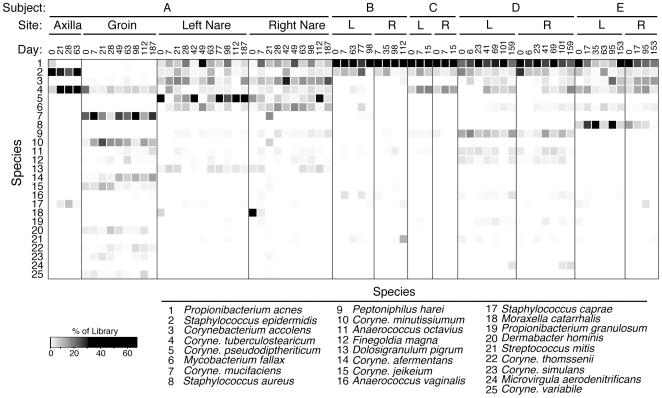
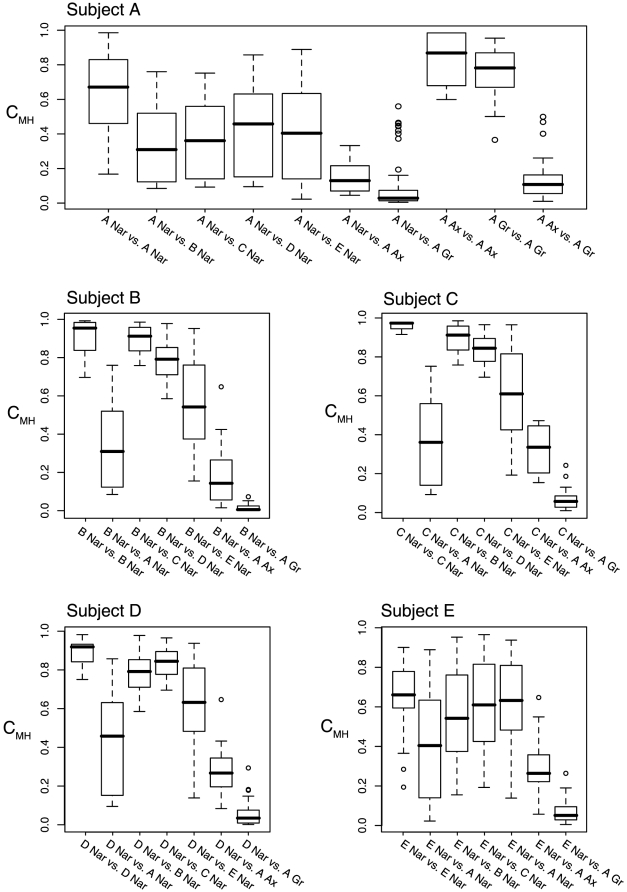
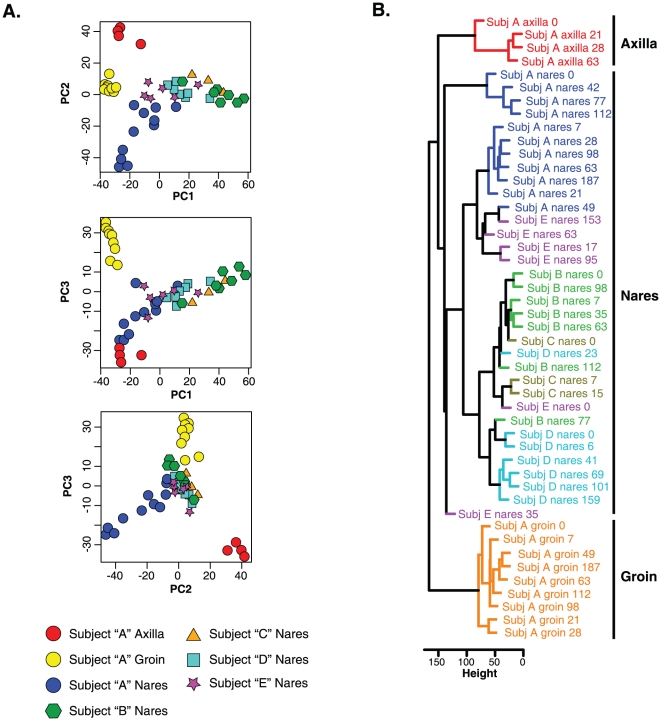
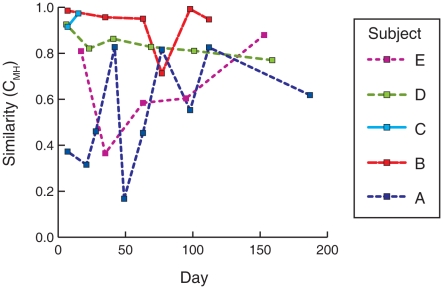
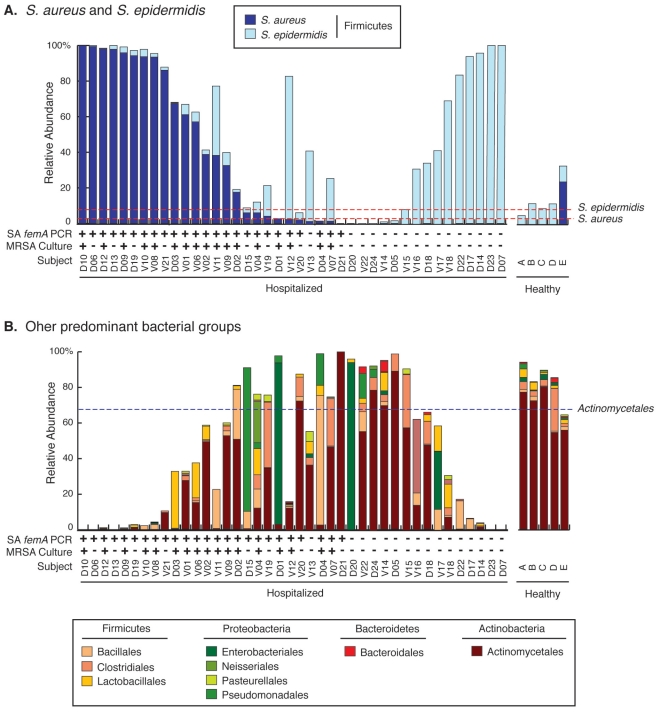
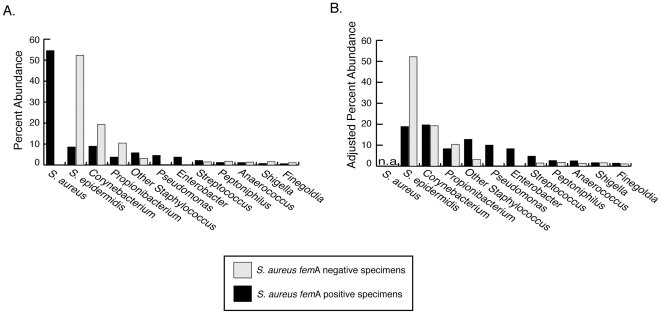
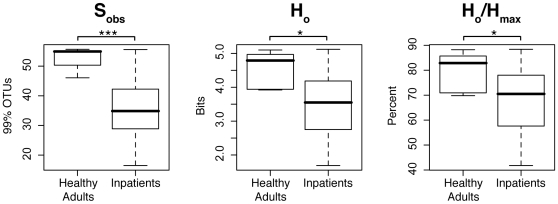
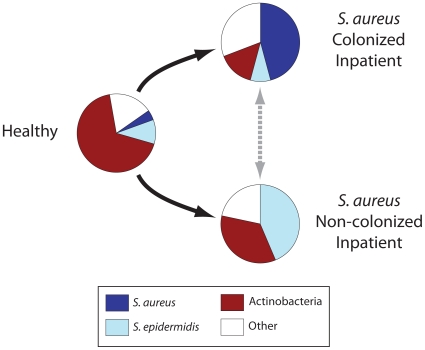
BACKGROUND: Colonization of humans with Staphylococcus aureus is a critical prerequisite of subsequent clinical infection of the skin, blood, lung, heart and other deep tissues. S. aureus persistently or intermittently colonizes the nares of approximately 50% of healthy adults, whereas approximately 50% of the general population is rarely or never colonized by this pathogen. Because microbial consortia within the nasal cavity may be an important determinant of S. aureus colonization we determined the composition and dynamics of the nasal microbiota and correlated specific microorganisms with S. aureus colonization. METHODOLOGY/PRINCIPAL FINDINGS: Nasal specimens were collected longitudinally from five healthy adults and a cross-section of hospitalized patients (26 S. aureus carriers and 16 non-carriers). Culture-independent analysis of 16S rRNA sequences revealed that the nasal microbiota of healthy subjects consists primarily of members of the phylum Actinobacteria (e.g., Propionibacterium spp. and Corynebacterium spp.), with proportionally less representation of other phyla, including Firmicutes (e.g., Staphylococcus spp.) and Proteobacteria (e.g. Enterobacter spp). In contrast, inpatient nasal microbiotas were enriched in S. aureus or Staphylococcus epidermidis and diminished in several actinobacterial groups, most notably Propionibacterium acnes. Moreover, within the inpatient population S. aureus colonization was negatively correlated with the abundances of several microbial groups, including S. epidermidis (p = 0.004). CONCLUSIONS/SIGNIFICANCE: The nares environment is colonized by a temporally stable microbiota that is distinct from other regions of the integument. Negative association between S. aureus, S. epidermidis, and other groups suggests microbial competition during colonization of the nares, a finding that could be exploited to limit S. aureus colonization.
Overview
The claims and statistics of this paper haven’t been checked yet.
Free: it reads the open-access text and checks the first 5 claims that cite a source we can check. Create a free account to check every claim.
Integrity signals
Registry
Cites
Statistics
Figures

Verification
Claims the paper makes
The claims and statistics of this paper haven’t been checked yet.
Free: it reads the open-access text and checks the first 5 claims that cite a source we can check. Create a free account to check every claim.
Claims other papers make about this one
Each is checked against this paper’s own text: does it say what the citing paper says it does?
The source backs part of the claim, not all of it — or backs it for a different population, condition or comparison.
In the citing paper
“The anterior nares are closest to the external environment and are lined with a skin-like keratinized squamous epithelium, including serous and sebaceous glands, the latter of which produces sebum, which leads to the enrichment of lipophilic skin colonizers, including Staphylococcus spp., Propionibacterium spp. and Corynebacterium spp.46,47,48.”
From The microbiota of the respiratory tract: gatekeeper to respiratory health (2017) · cites this paper as [46]
Experimental — accuracy not yet measuredThe cited source says what the claim attributes to it.
In the citing paper
“In healthy adults, bacteria present in the nasal cavity are typically those associated with skin, predominantly members of the Actinobacteria (e.g., Corynebacterium spp., Propionibacterium spp.), followed by Firmicutes (e.g., Staphylococcus spp.), and Proteobacteria”
From Respiratory viral infection-induced microbiome alterations and secondary bacterial pneumonia. (2018) · cites this paper as [67]
In the citing paper
“Competition between S. aureus and S. epidermidis has been implicated as a source of the differences reported between S. aureus carrier and non-carrier communities (Frank et al., 2010).”
From Nasal Microenvironments and Interspecific Interactions Influence Nasal Microbiota Complexity and S. aureus Carriage (2013) · cites this paper as Frank et al., 2010
In the citing paper
“A common feature of microbial ecological studies of the anterior naris has been the dominance of Corynebacterium, Staphylococcus, and Propionibacterium species (Costello et al., 2009; Frank et al., 2010; Grice et al., 2009; TheHumanMicrobiomeProjectConsortium, 2012; Zhou et al., 2013).”
From Nasal Microenvironments and Interspecific Interactions Influence Nasal Microbiota Complexity and S. aureus Carriage (2013) · cites this paper as Frank et al., 2010
In the citing paper
“A negative correlation between S. aureus abundance and Corynebacterium abundance have been previously observed, although no specific mechanisms have been proposed (Frank et al., 2010; Lina et al., 2003; Uehara et al., 2000).”
From Nasal Microenvironments and Interspecific Interactions Influence Nasal Microbiota Complexity and S. aureus Carriage (2013) · cites this paper as Frank et al., 2010
1 more claim about this paper
Create a free account to see every claim other papers make about this one.
Self-check
Percentages, sums and reported differences re-computed from the paper’s own numbers.
The self-check needs the paper’s full text.
Citations
Cites
R: A Language and Environment for Statistical Computing
R Core Team (2025) · doi:10.32614/r.manuals · Cited by 352,181
Naïve Bayesian Classifier for Rapid Assignment of rRNA Sequences into the New Bacterial Taxonomy
Wang, Q., Garrity, G. M., Tiedje, J. M., & Cole, J. R. (2007) · Applied and Environmental Microbiology · doi:10.1128/aem.00062-07 · Cited by 19,885 · cited 2×
“rRNA sequences were provisionally identified by BLAST query of 16S rRNA sequences extracted from the All-Species Living Tree Project database (version LTP_S95; [33]) and results corroborated through the RDP Classifier tool [34,35], parsimony insertion into the SILVA SSURef_98 tree [36], and pairwise distance compariso…”
MethodLane, D. (1991) · Medical Entomology and Zoology · Cited by 12,669
Finding groups in data: an introduction to cluster analysis
(1991) · Choice Reviews Online · doi:10.5860/choice.28-4558 · Cited by 10,474
Nucleic acid techniques in bacterial systematics
Stackebrandt, E. S., & Goodfellow, M. (1991) · Wiley eBooks · Cited by 9,460
Diversity of the Human Intestinal Microbial Flora
Eckburg, P. B., Bik, E. M., Bernstein, C. N., Purdom, E., Dethlefsen, L., Sargent, M., Gill, S. R., Nelson, K. E., & Relman, D. A. (2005) · Science · doi:10.1126/science.1110591 · Cited by 7,913 · cited 1×
“Collectively these microorganisms define a pan-microbiota of the human anterior nares as has been reported for other anatomical sites, including the genitourinary tract [45], gut [38,46,47,48], lung [49], and skin [37,40,41,50,51,52].”
BackgroundBase-Calling of Automated Sequencer Traces Using Phred. I. Accuracy Assessment
Ewing, B., Hillier, L., Wendl, M. C., & Green, P. (1998) · Genome Research · doi:10.1101/gr.8.3.175 · Cited by 6,967 · cited 1×
“Sequence base calling and contig assembly were performed with the applications phred and phrap [56,57], as implemented by XplorSeq [58].”
MethodARB: a software environment for sequence data
Ludwig, W. (2004) · Nucleic Acids Research · doi:10.1093/nar/gkh293 · Cited by 6,702 · cited 2×
“Ambiguities between GenBank and RDP classifications (,0.1% of sequences) were resolved by reference to the results of parsimony insertion into the SILVA guide tree in ARB.”
MethodInfluentialPruesse, E., Quast, C., Knittel, K., Fuchs, B. M., Ludwig, W., Peplies, J., & Glockner, F. O. (2007) · Nucleic Acids Research · doi:10.1093/nar/gkm864 · Cited by 6,668 · cited 2×
“All sequences were aligned to the SILVA SSURef version 98 database using the SINA automated aligner provided by the SILVA web service [36].”
MethodNonparametric estimation of the number of classes in a population
Chao, A. (1984) · Scandinavian Journal of Statistics · Cited by 5,880
Cited by
Sex differences in the gut microbiome drive hormone-dependent regulation of autoimmunity
Markle, J. G. M., Frank, D. N., Mortin-Toth, S., Robertson, C. E., Feazel, L. M., Rolle-Kampczyk, U., von Bergen, M., McCoy, K. D., Macpherson, A. J., & Danska, J. S. (2013) · Science · doi:10.1126/science.1233521 · Cited by 2,025
Self-citationThe microbiota of the respiratory tract: gatekeeper to respiratory health
Man, W. H., de Steenhuijsen Piters, W. A. A., & Bogaert, D. (2017) · Nature Reviews Microbiology · doi:10.1038/nrmicro.2017.14 · Cited by 1,384
Topographical Continuity of Bacterial Populations in the Healthy Human Respiratory Tract
Charlson, E. S., Bittinger, K., Haas, A. R., Fitzgerald, A. S., Frank, I., Yadav, A., Bushman, F. D., & Collman, R. G. (2011) · American Journal of Respiratory and Critical Care Medicine · doi:10.1164/rccm.201104-0655oc · Cited by 1,144
International consensus statement on allergy and rhinology: rhinosinusitis 2021
Orlandi, R. R., Kingdom, T. T., Smith, T. L., Bleier, B., DeConde, A., Luong, A. U., Poetker, D. M., Soler, Z., Welch, K. C., Wise, S. K., et al. (2021) · International Forum of Allergy & Rhinology · doi:10.1002/alr.22741 · Cited by 959
Bäckhed, F., Fraser, C. M., Ringel, Y., Sanders, M. E., Sartor, R. B., Sherman, P. M., Versalovic, J., Young, V., & Finlay, B. B. (2012) · Cell Host & Microbe · doi:10.1016/j.chom.2012.10.012 · Cited by 836
“Many recent studies of the role of the microbiome in human health follow the dynamics of microbial communities (Dethlefsen and Relman, 2011; Frank et al., 2010; Hartman et al., 2009; Human Microbiome Project Consortium, 2012a, 2012b; Morowitz et al., 2011).”
BackgroundBiogeography of the ecosystems of the healthy human body
Zhou, Y., Gao, H., Mihindukulasuriya, K. A., La Rosa, P. S., Wylie, K. M., Vishnivetskaya, T., Podar, M., Warner, B., Tarr, P. I., Nelson, D. E., et al. (2013) · Genome Biology · doi:10.1186/gb-2013-14-1-r1 · Cited by 682
The Gut–Lung Axis in Respiratory Disease
Marsland, B. J., Trompette, A., & Gollwitzer, E. S. (2015) · Annals of the American Thoracic Society · doi:10.1513/annalsats.201503-133aw · Cited by 630
The Role of Lung and Gut Microbiota in the Pathology of Asthma
Barcik, W., Boutin, R. C. T., Sokolowska, M., & Finlay, B. B. (2020) · Immunity · doi:10.1016/j.immuni.2020.01.007 · Cited by 613
“Bacteria of the healthy URT include the genera Staphylococcus, Propionibacterium, Dolosigranulum, Corynebacterium, Moraxella, Streptococcus, Haemophilus, Rothia, Veillonella, Prevotella, and Leptotrichia (Zhou et al., 2014; Frank et al., 2010; Wos-Oxley et al., 2016).”
BackgroundHuman Occupancy as a Source of Indoor Airborne Bacteria
Hospodsky, D., Qian, J., Nazaroff, W. W., Yamamoto, N., Bibby, K., Rismani-Yazdi, H., & Peccia, J. (2012) · PLoS ONE · doi:10.1371/journal.pone.0034867 · Cited by 562
“For indoor air, ventilation duct supply air, floor dust, and HVAC filter dust, 17%, 17.5%, 20%, and 3% respectively, of the total bacterial abundance was comprised of human associated taxa — Propionibacterineae, Staphylococcus, Streptococcus, Enterobacteriaceae, and Corynebacterineae [28,29,30,31,32,37].”
BackgroundInfluentialSakr, A., Brégeon, F., Mège, J.-L., Rolain, J.-M., & Blin, O. (2018) · Frontiers in Microbiology · doi:10.3389/fmicb.2018.02419 · Cited by 555
“The adult nasal microbiota differs between individuals, but species belonging to Corynebacterium, Propionibacterium, and Staphylococcus genera are the most abundant bacteria (Frank et al., 2010; Human Microbiome Project Consortium, 2012; Yan et al., 2013; Kaspar et al., 2016).”
BackgroundHuman Microbiome in Health and Disease
Pflughoeft, K. J., & Versalovic, J. (2012) · Annual Review of Pathology: Mechanisms of Disease · doi:10.1146/annurev-pathol-011811-132421 · Cited by 529
Chapter 12: Human Microbiome Analysis
Morgan, X. C., & Huttenhower, C. (2012) · PLoS Computational Biology · doi:10.1371/journal.pcbi.1002808 · Cited by 496
“Corynebacterium [116]), the oral cavity (dominated by Streptococcus) several hundred taxa (with remarkable diversity even among saliva, tongue, teeth, and other substrates [117,118]) and the gut over 500 taxa with densities over 10(11) cells/g [2,119].”
BackgroundRespiratory viral infection-induced microbiome alterations and secondary bacterial pneumonia.
Hanada, S., Pirzadeh, M., Carver, K. Y., & Deng, J. C. (2018) · Frontiers in Immunology · doi:10.3389/fimmu.2018.02640 · Cited by 495
“In healthy adults, bacteria present in the nasal cavity are typically those associated with skin, predominantly members of the Actinobacteria (e.g., Corynebacterium spp., Propionibacterium spp.), followed by Firmicutes (e.g., Staphylococcus spp.), and Proteobacteria (67) (68) (69) .”
BackgroundAnalysis of Gut Microbiota in Patients with Parkinson’s Disease
Petrov, V. A., Saltykova, I. V., Zhukova, I. A., Alifirova, V. M., Zhukova, N. G., Dorofeeva, Y. B., Tyakht, A. V., Kovarsky, B. A., Alekseev, D. G., Kostryukova, E. S., et al. (2017) · Bulletin of Experimental Biology and Medicine · doi:10.1007/s10517-017-3700-7 · Cited by 487
The microbiome of the upper respiratory tract in health and disease
Kumpitsch, C., Koskinen, K., Schöpf, V., & Moissl-Eichinger, C. (2019) · BMC Biology · doi:10.1186/s12915-019-0703-z · Cited by 465
From Structure to Function: the Ecology of Host-Associated Microbial Communities
Robinson, C. J., Bohannan, B. J. M., & Young, V. B. (2010) · Microbiology and Molecular Biology Reviews · doi:10.1128/mmbr.00014-10 · Cited by 457
Dando, S. J., Mackay-Sim, A., Norton, R., Currie, B. J., St. John, J. A., Ekberg, J. A. K., Batzloff, M., Ulett, G. C., & Beacham, I. R. (2014) · Clinical Microbiology Reviews · doi:10.1128/cmr.00118-13 · Cited by 428
“1014 The epithelium lining the nasal nares (306, 307) and the nasal cavity (308) harbor normal 1015 bacterial flora; and CNS pathogens such as S.”
BackgroundThe commensal lifestyle of Staphylococcus aureus and its interactions with the nasal microbiota
Krismer, B., Weidenmaier, C., Zipperer, A., & Peschel, A. (2017) · Nature Reviews Microbiology · doi:10.1038/nrmicro.2017.104 · Cited by 375
The Lung Microbiome, Immunity, and the Pathogenesis of Chronic Lung Disease
O’Dwyer, D. N., Dickson, R. P., & Moore, B. B. (2016) · The Journal of Immunology · doi:10.4049/jimmunol.1600279 · Cited by 362
Yan, M., Pamp, S. J., Fukuyama, J., Hwang, P. H., Cho, D.-Y., Holmes, S., & Relman, D. A. (2013) · Cell Host & Microbe · doi:10.1016/j.chom.2013.11.005 · Cited by 351
Host–microorganism interactions in lung diseases
Marsland, B. J., & Gollwitzer, E. S. (2014) · Nature Reviews Immunology · doi:10.1038/nri3769 · Cited by 351
Campoccia, D., Montanaro, L., & Arciola, C. R. (2013) · Biomaterials · doi:10.1016/j.biomaterials.2013.07.048 · Cited by 340
Bomar, L., Brugger, S. D., Yost, B. H., Davies, S. S., & Lemon, K. P. (2016) · mBio · doi:10.1128/mbio.01725-15 · Cited by 332
Methicillin-resistant Staphylococcus aureus (MRSA): antibiotic-resistance and the biofilm phenotype
Craft, K. M., Nguyen, J. M., Berg, L. J., & Townsend, S. D. (2019) · MedChemComm · doi:10.1039/c9md00044e · Cited by 332
Sorbara, M. T., & Pamer, E. G. (2019) · Mucosal Immunology · doi:10.1038/s41385-018-0053-0 · Cited by 320
Wang, Y., Kuo, S., Shu, M., Yu, J., Huang, S., Dai, A., Two, A., Gallo, R. L., & Huang, C.-M. (2014) · Applied Microbiology and Biotechnology · doi:10.1007/s00253-013-5394-8 · Cited by 300
Staphylococcus aureus Shifts toward Commensalism in Response to Corynebacterium Species
Ramsey, M. M., Freire, M. O., Gabrilska, R. A., Rumbaugh, K. P., & Lemon, K. P. (2016) · Frontiers in Microbiology · doi:10.3389/fmicb.2016.01230 · Cited by 299
“…Commensal Species of Corynebacterium In addition toC. striatum, S. aureus encounters a number of other commensal species of Corynebacterium in the nasal passages, on skin and in DFIs, e.g., (Citron et al., 2007; Frank et al., 2010; Wos-Oxley et al., 2010; Oh et al., 2012; Kaspar et al., 2016).”
BackgroundResultInfluentialSkin microbiome: genomics-based insights into the diversity and role of skin microbes
Kong, H. H. (2011) · Trends in Molecular Medicine · doi:10.1016/j.molmed.2011.01.013 · Cited by 291
“Staphylococcus aureus is a common pathogen -- approximately 20-30% of healthy individuals are asymptomatic nasal carriers [31-33] -- that can cause both localized and systemic infections.”
BackgroundTLR-Dependent Human Mucosal Epithelial Cell Responses to Microbial Pathogens
McClure, R., & Massari, P. (2014) · Frontiers in Immunology · doi:10.3389/fimmu.2014.00386 · Cited by 287
“The upper respiratory epithelium, which includes the nasal cavity, pharynx, and the larynx, is generally in contact with a high number of (mostly commensal) organisms [up to 107organisms/nostril and up to 108 organisms in the nasopharynx (154)].”
BackgroundThe role of the local microbial ecosystem in respiratory health and disease
de Steenhuijsen Piters, W. A. A., Sanders, E. A. M., & Bogaert, D. (2015) · Philosophical Transactions of the Royal Society B: Biological Sciences · doi:10.1098/rstb.2014.0294 · Cited by 283
“members of the orders Enterobacteriales and Pseudomonadales) [34] and low abundance of members of the class Gammaproteobacteria in healthy adults [32].”
Prevention and treatment of Staphylococcus aureus biofilms
Bhattacharya, M., Wozniak, D. J., Stoodley, P., & Hall-Stoodley, L. (2015) · Expert Review of Anti-infective Therapy · doi:10.1586/14787210.2015.1100533 · Cited by 265
“Staphylococcus aureus is a Gram-positive bacterium that typically colonizes the anterior nasopharynx and the surface of skin.[1,2] This bacterium is found in 30–50% of healthy individuals in the United States, and one in a hundred of these individuals is colonized with methicillin-resistant S.”
BackgroundStaphylococcus aureus: Determinants of human carriage
Sollid, J. U. E., Furberg, A. S., Hanssen, A. M., & Johannessen, M. (2014) · Infection, Genetics and Evolution · doi:10.1016/j.meegid.2013.03.020 · Cited by 257
“epidermidis in the inpatient population without further defining the inhibitory determinant was identified (Frank et al., 2010).”
BackgroundStaphylococcus aureus and the ecology of the nasal microbiome
Liu, C. M., Price, L. B., Hungate, B. A., Abraham, A. G., Larsen, L. A., Christensen, K., Stegger, M., Skov, R., & Andersen, P. S. (2015) · Science Advances · doi:10.1126/sciadv.1400216 · Cited by 253
Brown, A. F., Leech, J. M., Rogers, T. R., & McLoughlin, R. M. (2014) · Frontiers in Immunology · doi:10.3389/fimmu.2013.00507 · Cited by 246
“AUREUS AND NEIGHBORING RESIDENT MICROBES The bacterial community of the nares in adults is variable, but dominated by Corynebacterium, Priopionibacterium, and Staphylococcus species (107, 108).”
BackgroundTemporal Stability and Composition of the Ocular Surface Microbiome
Ozkan, J., Nielsen, S., Diez-Vives, C., Coroneo, M., Thomas, T., & Willcox, M. (2017) · Scientific Reports · doi:10.1038/s41598-017-10494-9 · Cited by 242
Pathogenic Mechanisms and Host Interactions in Staphylococcus epidermidis Device-Related Infection
Sabaté Brescó, M., Harris, L. G., Thompson, K., Stanic, B., Morgenstern, M., O'Mahony, L., Richards, R. G., & Moriarty, T. F. (2017) · Frontiers in Microbiology · doi:10.3389/fmicb.2017.01401 · Cited by 239
“Negative correlations between these two species have been reported in humans, insinuating an antagonism between at least some strains (Frank et al., 2010; Sullivan et al., 2016).”
BackgroundMicrobiome complexity and Staphylococcus aureus in chronic rhinosinusitis
Feazel, L. M., Robertson, C. E., Ramakrishnan, V. R., & Frank, D. N. (2012) · The Laryngoscope · doi:10.1002/lary.22398 · Cited by 234
“Furthermore, the bacterial communities observed in this study of the middle meatus, both by culture and DNA sequence, differed from those previously reported in studies of the anterior nares.(27) For example, representatives of the genus Corynebacterium, a common microbe of the skin and anterior nares, were cultivated…”
ResultSelf-citationThe Influence of Lung Microbiota on Lung Carcinogenesis, Immunity, and Immunotherapy
Ramírez-Labrada, A. G., Isla, D., Artal, A., Arias, M., Rezusta, A., Pardo, J., & Gálvez, E. M. (2020) · Trends in Cancer · doi:10.1016/j.trecan.2019.12.007 · Cited by 233
The nasal cavity microbiota of healthy adults
Bassis, C. M., Tang, A. L., Young, V. B., & Pynnonen, M. A. (2014) · Microbiome · doi:10.1186/2049-2618-2-27 · Cited by 209
“However, many studies have characterized the microbiota of the healthy human nares [6-11], which are adjacent and anterior to the nasal cavity.”
BackgroundThe Microbiome of the Middle Meatus in Healthy Adults
Ramakrishnan, V. R., Feazel, L. M., Gitomer, S. A., Ir, D., Robertson, C. E., & Frank, D. N. (2013) · PLoS ONE · doi:10.1371/journal.pone.0085507 · Cited by 208
“All pyrosequences were screened for nucleotide quality: bases at 5’ and 3’ ends with mean Q<20 over a 10 nucleotide window, sequences with less than 200 nucleotides, and sequences with more than one ambiguous nucleotide were discarded [27,28].”
BackgroundMethodResultInfluentialSelf-citationShaping the oral microbiota through intimate kissing
Kort, R., Caspers, M., van de Graaf, A., van Egmond, W., Keijser, B., & Roeselers, G. (2014) · Microbiome · doi:10.1186/2049-2618-2-41 · Cited by 205
“, [7]).”
Teo, S. M., Tang, H. H. F., Mok, D., Judd, L. M., Watts, S. C., Pham, K., Holt, B. J., Kusel, M., Serralha, M., Troy, N., et al. (2018) · Cell Host & Microbe · doi:10.1016/j.chom.2018.08.005 · Cited by 203
“Other groups have previously reported reduced upper airwaymicrobial diversity during or prior to ARIs (Frank et al., 2010; Santee et al., 2016; Yi et al., 2014); our data support this, in terms of both enrichment of a small number of community profiles (MPGs) during ARI, and a higher abundance of ARI-associated OTUs a…”
Nutrient Limitation Governs Staphylococcus aureus Metabolism and Niche Adaptation in the Human Nose
Krismer, B., Liebeke, M., Janek, D., Nega, M., Rautenberg, M., Hornig, G., Unger, C., Weidenmaier, C., Lalk, M., & Peschel, A. (2014) · PLoS Pathogens · doi:10.1371/journal.ppat.1003862 · Cited by 202
“human nasal microbiome has been shown to be much less complex [31,50] than those of the upper or lower digestive tract,”
BackgroundBacterial microbiota of the upper respiratory tract and childhood asthma
Depner, M., Ege, M. J., Cox, M. J., Dwyer, S., Walker, A. W., Birzele, L. T., Genuneit, J., Horak, E., Braun-Fahrländer, C., Danielewicz, H., et al. (2017) · Journal of Allergy and Clinical Immunology · doi:10.1016/j.jaci.2016.05.050 · Cited by 198
Camarinha‐Silva, A., Jáuregui, R., Chaves‐Moreno, D., Oxley, A. P. A., Schaumburg, F., Becker, K., Wos‐Oxley, M. L., & Pieper, D. H. (2014) · Environmental Microbiology · doi:10.1111/1462-2920.12362 · Cited by 195
Role of probiotics to combat viral infections with emphasis on COVID-19
Sundararaman, A., Ray, M., Ravindra, P. V., & Halami, P. M. (2020) · Applied Microbiology and Biotechnology · doi:10.1007/s00253-020-10832-4 · Cited by 185
“Murine studies have demonstrated bacterial load in the lungs increases over the first 2 weeks of life, and the phyla of organisms found in the lung shifted from Gamma-proteobacteria and Firmicutes towards Bacteriodetes (Frank et al. 2010).”
BackgroundThe culturome of the human nose habitats reveals individual bacterial fingerprint patterns
Kaspar, U., Kriegeskorte, A., Schubert, T., Peters, G., Rudack, C., Pieper, D. H., Wos‐Oxley, M., & Becker, K. (2016) · Environmental Microbiology · doi:10.1111/1462-2920.12891 · Cited by 175
“Anyway, most microbiome 61 studies are exclusively based on molecular data (Frank et al., 2010; Lemon et al., 2010; Yan et al., 62 2013), without validating results by comparison to a different method.”
BackgroundResultInfluentialStaphylococci: Colonizers and Pathogens of Human Skin
Coates‐Brown, R., Moran, J. C., & Horsburgh, M. J. (2013) · Future Microbiology · doi:10.2217/fmb.13.145 · Cited by 186
Staphylococcus aureus determinants for nasal colonization
Weidenmaier, C., Goerke, C., & Wolz, C. (2012) · Trends in Microbiology · doi:10.1016/j.tim.2012.03.004 · Cited by 189
Méric, G., Miragaia, M., de Been, M., Yahara, K., Pascoe, B., Mageiros, L., Mikhail, J., Harris, L. G., Wilkinson, T. S., Rolo, J., et al. (2015) · Genome Biology and Evolution · doi:10.1093/gbe/evv066 · Cited by 161
“…the ubiquity of S. epidermidi s on the skin compared to S. aureus, which is more associated with the anterior nares (van Belkum et al. 2009; Frank et al. 2010; Sollid et al. 2014), may account for its proliferation in high dependency environments such as intensive care and burns units…”
BackgroundJanek, D., Zipperer, A., Kulik, A., Krismer, B., & Peschel, A. (2016) · PLOS Pathogens · doi:10.1371/journal.ppat.1005812 · Cited by 157
Impact of Staphylococcus aureus on Pathogenesis in Polymicrobial Infections
Nair, N., Biswas, R., Götz, F., & Biswas, L. (2014) · Infection and Immunity · doi:10.1128/iai.00059-14 · Cited by 155
Airborne Staphylococcus aureus in different environments—a review
Kozajda, A., Jeżak, K., & Kapsa, A. (2019) · Environmental Science and Pollution Research · doi:10.1007/s11356-019-06557-1 · Cited by 167
Carriage of Staphylococcus aureus among food handlers: An ongoing challenge in public health
Bencardino, D., Amagliani, G., & Brandi, G. (2021) · Food Control · doi:10.1016/j.foodcont.2021.108362 · Cited by 173
Krebs, N. F., Sherlock, L. G., Westcott, J., Culbertson, D., Hambidge, K. M., Feazel, L. M., Robertson, C. E., & Frank, D. N. (2013) · The Journal of Pediatrics · doi:10.1016/j.jpeds.2013.01.024 · Cited by 145
“Polymerase chain reaction yields were normalized using the SequalPrep Kit (Invitrogen, Carlsbad, California), pooled, lyophilized, and gel-purified as described previously.(16) Pooled amplicons were provided to the University of Toronto’s Center for Applied Genomics for pyrosequencing on a GS-FLX instrument using tita…”
Self-citationDetection and clinical relevance of Staphylococcus aureus nasal carriage: an update
Verhoeven, P. O., Gagnaire, J., Botelho-Nevers, E., Grattard, F., Carricajo, A., Lucht, F., Pozzetto, B., & Berthelot, P. (2014) · Expert Review of Anti-infective Therapy · doi:10.1586/14787210.2014.859985 · Cited by 133
Commensal–Pathogen Interactions along the Human Nasal Passages
Brugger, S. D., Bomar, L., & Lemon, K. P. (2016) · PLoS Pathogens · doi:10.1371/journal.ppat.1005633 · Cited by 145
Wollenberg, M. S., Claesen, J., Escapa, I. F., Aldridge, K. L., Fischbach, M. A., & Lemon, K. P. (2014) · mBio · doi:10.1128/mbio.01286-14 · Cited by 127
Apopa, P. L., Alley, L., Penney, R. B., Arnaoutakis, K., Steliga, M. A., Jeffus, S., Bircan, E., Gopalan, B., Jin, J., Patumcharoenpol, P., et al. (2018) · Frontiers in Microbiology · doi:10.3389/fmicb.2018.01757 · Cited by 134
“The existence of Cyanobacteria in human body sites and more specifically in or around the lung tissues have been shown in earlier studies (Eckburg et al., 2005; Kim et al., 2009; Frank et al., 2010; Grice and Segre, 2011).”
ResultThe Role of Staphylococcus aureus in Patients with Chronic Sinusitis and Nasal Polyposis
Vickery, T. W., Ramakrishnan, V. R., & Suh, J. D. (2019) · Current Allergy and Asthma Reports · doi:10.1007/s11882-019-0853-7 · Cited by 136
Pyrosequencing analysis of the human microbiota of healthy Chinese undergraduates
Ling, Z., Liu, X., Luo, Y., Yuan, L., Nelson, K. E., Wang, Y., Xiang, C., & Li, L. (2013) · BMC Genomics · doi:10.1186/1471-2164-14-390 · Cited by 127
“4%), which was consistent with a previous study [48].”
ResultHost–Bacterial Crosstalk Determines Staphylococcus aureus Nasal Colonization
Mulcahy, M. E., & McLoughlin, R. M. (2016) · Trends in Microbiology · doi:10.1016/j.tim.2016.06.012 · Cited by 147
Environmental and mucosal microbiota and their role in childhood asthma
Birzele, L. T., Depner, M., Ege, M. J., Engel, M., Kublik, S., Bernau, C., Loss, G. J., Genuneit, J., Horak, E., Schloter, M., et al. (2017) · Allergy · doi:10.1111/all.13002 · Cited by 124
“Though this Pinaceae Chloroplast OTU was occasionally detected in nasal samples as well, the main nasal taxa were local bacteria such as Moraxella and Streptococcus, which are well known from clinical experience and previous studies (36-38), particularly in children (38).”
BackgroundThe microbiome: Composition and locations
Kennedy, M. S., & Chang, E. B. (2020) · Progress in molecular biology and translational science · doi:10.1016/bs.pmbts.2020.08.013 · Cited by 144
Staphylococcus epidermidis and Other Coagulase-Negative Staphylococci
Rupp, M. E., & Fey, P. D. (2015) · Elsevier eBooks · doi:10.1016/b978-1-4557-4801-3.00197-1 · Cited by 125
Kumar, S., Lekshmi, M., Parvathi, A., Ojha, M., Wenzel, N., & Varela, M. F. (2020) · Microorganisms · doi:10.3390/microorganisms8020266 · Cited by 112
Arora, S., Ahmad, S., Irshad, R., Goyal, Y., Rafat, S., Siddiqui, N., Dev, K., Husain, M., Ali, S., Mohan, A., et al. (2019) · Life Sciences · doi:10.1016/j.lfs.2019.116671 · Cited by 122
“A large number of commensal organisms are in continuous contact with the upper epithelium of respiratory tract which includes nasal cavity, pharynx, larynx [32].”
The nasal microbiome mirrors and potentially shapes olfactory function
Koskinen, K., Reichert, J. L., Hoier, S., Schachenreiter, J., Duller, S., Moissl‐Eichinger, C., & Schöpf, V. (2018) · Scientific Reports · doi:10.1038/s41598-018-19438-3 · Cited by 122
Novel Device to Sample the Esophageal Microbiome—The Esophageal String Test
Fillon, S., Harris, J. K., Wagner, B. D., Kelly, C. J., Stevens, M. J., Moore, W. R., Fang, R., Schroeder, S. R., Masterson, J. C., Robertson, C. E., et al. (2012) · PLoS ONE · doi:10.1371/journal.pone.0042938 · Cited by 116
“While one might expect that the intimate anatomical connections of these organs would lend to their possessing similar microbiomes, our results and that of others have indicated that the nasal microbiome [24,25] is distinct from the oral and esophageal microbiomes [5].”
ResultSelf-citationMicrobial communities in the respiratory tract of patients with interstitial lung disease
Garzoni, C., Brugger, S. D., Qi, W., Wasmer, S., Cusini, A., Dumont, P., Gorgievski-Hrisoho, M., Mühlemann, K., von Garnier, C., & Hilty, M. (2013) · Thorax · doi:10.1136/thoraxjnl-2012-202917 · Cited by 105
Prevention of Virus-Induced Type 1 Diabetes with Antibiotic Therapy
Hara, N., Alkanani, A. K., Ir, D., Robertson, C. E., Wagner, B. D., Frank, D. N., & Zipris, D. (2012) · The Journal of Immunology · doi:10.4049/jimmunol.1201257 · Cited by 107
“PCR yields were normalized using a SequalPrep kit (Invitrogen, Carlsbad, CA), pooled, lyophilized, and purified using a DNA Clean and Concentrator Kit (Zymo, Irvine, CA) (35).”
MethodSelf-citationGouveia, D., Miotello, G., Gallais, F., Gaillard, J., Debroas, S., Bellanger, L., Lavigne, J., Sotto, A., Grenga, L., Pible, O., et al. (2020) · Journal of Proteome Research · doi:10.1021/acs.jproteome.0c00535 · Cited by 108
Physical stress and bacterial colonization
Otto, M. (2014) · FEMS Microbiology Reviews · doi:10.1111/1574-6976.12088 · Cited by 102
“In general, there appears to be a negative correlation between the abundance of corynebacteria – as well as P. acnes and S. epidermidis – and S. aureus colonization, indicating bacterial interference (Frank et al., 2010).”
Lozano, C., Gómez-Sanz, E., Benito, D., Aspíroz, C., Zarazaga, M., & Torres, C. (2011) · International Journal of Medical Microbiology · doi:10.1016/j.ijmm.2011.02.004 · Cited by 119
The Human Microbiome Project, Personalized Medicine and the Birth of Pharmacomicrobiomics
Rizkallah, M. R., Saad, R., & Aziz, R. K. (2010) · Current pharmacogenomics and personalized medicine (Online)/Current pharmacogenomics and personalized medicine · doi:10.2174/187569210792246326 · Cited by 114
Host- and microbe determinants that may influence the success of S. aureus colonization
Johannessen, M., Sollid, J. E., & Hanssen, A.-M. (2012) · Frontiers in Cellular and Infection Microbiology · doi:10.3389/fcimb.2012.00056 · Cited by 114
“…of healthy adults has been shown to consist primarily of members of the phylum Actinobacteria (e.g., Propionibacterium spp. and Corynebacterium spp.), but also Firmicutes (e.g., Staphylococcus spp.) and Proteobacteria (e.g., Enterobacter spp.) (Frank et al., 2010; Wos-Oxley et al., 2010).”
Thirty years of endoscopic sinus surgery: What have we learned?
Tajudeen, B. A., & Kennedy, D. W. (2017) · World Journal of Otorhinolaryngology - Head and Neck Surgery · doi:10.1016/j.wjorl.2016.12.001 · Cited by 105
“aureus has been observed in the nasal cavity supporting the concept of direct competitive inhibition.(22) Additional work has shown that Corynebacterium pseudodiphtheriticum acts as a negative predictor of S.”
BackgroundChronic rhinosinusitis with nasal polyps is characterized by dysbacteriosis of the nasal microbiota
Chalermwatanachai, T., Vilchez‐Vargas, R., Holtappels, G., Lacoere, T., Jáuregui, R., Kerckhof, F., Pieper, D. H., de Wiele, T. V., Vaneechoutte, M., Zele, T. V., et al. (2018) · Scientific Reports · doi:10.1038/s41598-018-26327-2 · Cited by 111
Correa‐Fiz, F., Fraile, L. J., & Aragón, V. (2016) · BMC Genomics · doi:10.1186/s12864-016-2700-8 · Cited by 101
“Additionally, the majority of the studies have focused on the bacterial gut populations, through the analysis of intestinal tract or feces, although body sites such as skin, mouth, nose or vagina have also been investigated [12–15].”
BackgroundParamasivan, S., Bassiouni, A., Shiffer, A., Dillon, M. R., Cope, E. K., Cooksley, C. M., Ramezanpour, M., Moraitis, S., Ali, M. J., Bleier, B. S., et al. (2020) · Allergy · doi:10.1111/all.14276 · Cited by 102
Sialic Acid Catabolism in Staphylococcus aureus
Olson, M. E., King, J., Yahr, T. L., & Horswill, A. R. (2013) · Journal of Bacteriology · doi:10.1128/jb.02294-12 · Cited by 98
“epidermidis, which predominantly colonize the nares and skin, respectively (42, 43).”
BackgroundThe role of the intestinal microbiota in type 1 diabetes
Hara, N., Alkanani, A. K., Ir, D., Robertson, C. E., Wagner, B. D., Frank, D. N., & Zipris, D. (2012) · Clinical Immunology · doi:10.1016/j.clim.2012.12.001 · Cited by 99
Self-citationFrom genotype to phenotype: can systems biology be used to predict Staphylococcus aureus virulence?
Priest, N. K., Rudkin, J. K., Feil, E. J., van den Elsen, J. M. H., Cheung, A., Peacock, S. J., Laabei, M., Lucks, D. A., Recker, M., & Massey, R. C. (2012) · Nature Reviews Microbiology · doi:10.1038/nrmicro2880 · Cited by 88
“Other factors such as intra-and inter species competition during colonization and infection can also affect disease severity [66] [67] [68] [69] [70] [71] [72] [73] [74] [75] [76] [77] .”
BackgroundThe Nasal and Sinus Microbiome in Health and Disease
Wilson, M. T., & Hamilos, D. L. (2014) · Current Allergy and Asthma Reports · doi:10.1007/s11882-014-0485-x · Cited by 86
Time to include the gut microbiota in the hygienic standardisation of laboratory rodents
Bleich, A., & Hansen, A. K. (2012) · Comparative Immunology, Microbiology and Infectious Diseases · doi:10.1016/j.cimid.2011.12.006 · Cited by 82
The evolution of nasal immune systems in vertebrates
Sepahi, A., & Salinas, I. (2015) · Molecular Immunology · doi:10.1016/j.molimm.2015.09.008 · Cited by 89
Facciponte, D. N., Bough, M. W., Seidler, D., Carroll, J. L., Ashare, A., Andrew, A. S., Tsongalis, G. J., Vaickus, L. J., Henegan, P. L., Butt, T. H., et al. (2018) · The Science of The Total Environment · doi:10.1016/j.scitotenv.2018.07.226 · Cited by 81
“02% of in-patient, hospitalized individuals (Frank et al. 2010).”
Varshney, A. K., Kuzmicheva, G. A., Lin, J., Sunley, K. M., Bowling, R. A., Kwan, T.-Y., Mays, H. R., Rambhadran, A., Zhang, Y., Martin, R. L., et al. (2018) · PLoS ONE · doi:10.1371/journal.pone.0190537 · Cited by 84
Tarabichi, Y., Li, K., Hu, S., Nguyen, C., Wang, X., Elashoff, D., Saira, K., Frank, B., Bihan, M., Ghedin, E., et al. (2015) · Microbiome · doi:10.1186/s40168-015-0133-2 · Cited by 77
“[50] found that hospitalized patients had Firmicutes dominant profiles (relative abundance of 71 %) while the relative abundance of Actinobacteria proved smaller (20 %), supporting a pre-pathogenic potential in compromised hosts.”
BackgroundYong, Y. Y., Dykes, G. A., & Choo, W. S. (2019) · Critical Reviews in Microbiology · doi:10.1080/1040841x.2019.1573802 · Cited by 86
“The carriage rate varies with geographic location, age, sex and body niches but nasal carriage is considered to be the most important site of colonization (Frank et al. 2010).”
BackgroundThe sinonasal bacterial microbiome in health and disease
Ramakrishnan, V. R., Hauser, L. J., & Frank, D. N. (2015) · Current Opinion in Otolaryngology & Head & Neck Surgery · doi:10.1097/moo.0000000000000221 · Cited by 81
Self-citationProfiling bacterial community in upper respiratory tracts
Yi, H., Yong, D., Lee, K., Cho, Y.-J., & Chun, J. (2014) · BMC Infectious Diseases · doi:10.1186/s12879-014-0583-3 · Cited by 75
“In the case of the respiratory tract microbiome, a catalogue was initially established in 2009 [2] and then respiratory microorganisms were extensively characterized [3-8].”
BackgroundResultLuna, P. N., Hasegawa, K., Ajami, N. J., Espinola, J. A., Henke, D., Petrosino, J. F., Piedra, P. A., Sullivan, A. F., Camargo, C. A., Shaw, C. A., et al. (2018) · Microbiome · doi:10.1186/s40168-017-0385-0 · Cited by 76
“Although Staphylococcus is often found in the anterior nares of healthy patients [20, 39], studies have found a higher abundance of Staphylococcus in the anterior nares of patients admitted to the intensive care unit [38] and adults with chronic rhinosinusitis [37], which may imply a difference in NS Staphylococcus ab…”
BackgroundMethicillin-resistant staphylococci: implications for our food supply?
Doyle, M. E., Hartmann, F. A., & Wong, A. C. L. (2012) · Animal Health Research Reviews · doi:10.1017/s1466252312000187 · Cited by 91
“aureus is present in nasal passages or skin of about 50% of people and in intestines of about 20% of people in the general population (Acton et al., 2009; Frank et al., 2010).”
BackgroundApplication of Two-Part Statistics for Comparison of Sequence Variant Counts
Wagner, B. D., Robertson, C. E., & Harris, J. K. (2011) · PLoS ONE · doi:10.1371/journal.pone.0020296 · Cited by 69
“This transition is apparent in recent publications [37,38].”
ResultKing, A. M., Zhang, Z., Glassey, E., Siuti, P., Clardy, J., & Voigt, C. A. (2023) · Nature Microbiology · doi:10.1038/s41564-023-01524-6 · Cited by 75
“These approaches can miss interactions or, if found, make it difficult to isolate the molecule and determine the mode of action 73,76–78 .”
BackgroundShilts, M. H., Rosas‐Salazar, C., Tovchigrechko, A., Larkin, E. K., Torralba, M., Akopov, A., Halpin, R., Peebles, R. S., Moore, M. L., Anderson, L. J., et al. (2015) · Microbial Ecology · doi:10.1007/s00248-015-0663-y · Cited by 75
“At the phylum level, the taxonomic profile of the nasal microbiome of infants delivered vaginally more closely matched the previously observed nasal microbiome profile of adults [28, 29] than did the microbiome of those that had been delivered by Cesarean section, supporting the hypothesis that the nasal microbiome of…”
BackgroundResultProbiotics, Photobiomodulation, and Disease Management: Controversies and Challenges
Ailioaie, L. M., & Litscher, G. (2021) · International Journal of Molecular Sciences · doi:10.3390/ijms22094942 · Cited by 75
Staphylococcus aureus in acne pathogenesis: A case-control study
Abdi, F., Kashani, H. H., Naeini, F. F., Narimani, T., & Khorvash, F. (2012) · North American Journal of Medical Sciences · doi:10.4103/1947-2714.103317 · Cited by 74
“[9] It is a pathogen of more concern because of its ability to cause a various array of life‐threatening infections and its capacity to adapt fast to the different environmental conditions.”
BackgroundPyrosequencing Analysis of the Salivary Microbiota of Healthy Chinese Children and Adults
Ling, Z., Liu, X., Wang, Y., Li, L., & Xiang, C. (2012) · Microbial Ecology · doi:10.1007/s00248-012-0123-x · Cited by 73
Metadata
- Authors
- Frank, D. N., Feazel, L. M., Bessesen, M. T., Price, C. S., Janoff, E. N., & Pace, N. R.
- Affiliations
- University of Colorado Boulder (US)
- Veterans Health Administration (US)
- Denver Health Medical Center (US)
- Corresponding author
- Pace, Norman R.
- Venue
- PLoS ONE
- Publisher
- Public Library of Science (PLoS)
- Published
- 2010-05-17
- Volume
- 5
- Issue
- 5
- Pages
- e10598
- ISSN
- 1932-6203 (ISSN-L)
- PMC
- PMC2871794
- OpenAlex
- W2169891354
- Cited by
- 422
- References
- 70
- Citations by year
- 2026: 13 · 2025: 21 · 2024: 20 · 2023: 14 · 2022: 25 · 2021: 20 · 2020: 35 · 2019: 27 · 2018: 30 · 2017: 21 · 2016: 40 · 2015: 42 · 2014: 30 · 2013: 32 · 2012: 30
- FWCI
- 17.42
- Type
- journal article
- Language
- en
- Open access
- gold
- doi.org
- Locations
- PLoS ONE (publishedVersion, cc-by)
- Europe PMC (PubMed Central) (publishedVersion, cc-by)
- PubMed Central (publishedVersion, cc-by)
- PubMed (publishedVersion)
- DOAJ (DOAJ: Directory of Open Access Journals) (submittedVersion, cc-by-sa)
- Figshare (submittedVersion, cc-by)
- Funders
- U.S. Department of Veterans Affairs
- Topics
- Health Sciences › Medicine › Infectious Diseases › Antimicrobial Resistance in Staphylococcus
- Health Sciences › Medicine › Dermatology › Dermatology and Skin Diseases
- Life Sciences › Biochemistry, Genetics and Molecular Biology › Molecular Biology › Bacterial biofilms and quorum sensing
- Keywords
- nasal microbiota, Staphylococcus aureus colonization, Staphylococcus epidermidis, Propionibacterium acnes, actinobacteria, microbial competition, nasal carriage, hospitalized patients, 16S rRNA gene sequencing, skin microbiome
- MeSH terms
- Adult, DNA, Ribosomal, Health, Hospitalization, Humans, Inpatients, Longitudinal Studies, Molecular Sequence Data, Nasal Cavity, Nose, Residence Characteristics, Staphylococcus aureus, Staphylococcus epidermidis, Time Factors, Colony Count, Microbial, Bacterial Typing Techniques, Sequence Analysis, DNA, Biodiversity, Metagenome
About these checks
Registry, retraction, Cites and statistics results are computed, not judged, with one exception: a printed reference that no index lists is read once by a model before it counts as a citation error. Claims are extracted by a model and kept only when their quote appears verbatim in the text; each cited source is then checked, with a model’s help, for whether it says what the claim relies on. Those verdicts can be wrong — read the claim’s quote and the cited source before relying on one.
Statistics and arithmetic are recomputed, not judged.
Confidence bands are shown only for fields calibrated on our annotated test set. None is calibrated yet, so no band is shown.
What counts as a claim ›How we measure confidence ›How we check this ›
Are you an author, or do you see a problem with this page? Request a review
Data sources
Bibliographic data: Semantic Scholar, OpenAlex, Crossref.
Contains information from the Semantic Scholar Academic Graph Datasets, made available under the ODC Attribution License (ODC-BY 1.0).
Semantic Scholar’s data is described in: Kinney, R., et al. (2023). The Semantic Scholar Open Data Platform. arXiv:2301.10140.
