

Evolution of Cooperation on Stochastic Dynamical Networks
Open accessThe DOI matches its Crossref record; 54 of the 58 references it cites were found in a registry or an index.
Abstract
Cooperative behavior that increases the fitness of others at a cost to oneself can be promoted by natural selection only in the presence of an additional mechanism. One such mechanism is based on population structure, which can lead to clustering of cooperating agents. Recently, the focus has turned to complex dynamical population structures such as social networks, where the nodes represent individuals and links represent social relationships. We investigate how the dynamics of a social network can change the level of cooperation in the network. Individuals either update their strategies by imitating their partners or adjust their social ties. For the dynamics of the network structure, a random link is selected and breaks with a probability determined by the adjacent individuals. Once it is broken, a new one is established. This linking dynamics can be conveniently characterized by a Markov chain in the configuration space of an ever-changing network of interacting agents. Our model can be analytically solved provided the dynamics of links proceeds much faster than the dynamics of strategies. This leads to a simple rule for the evolution of cooperation: The more fragile links between cooperating players and non-cooperating players are (or the more robust links between cooperators are), the more likely cooperation prevails. Our approach may pave the way for analytically investigating coevolution of strategy and structure.
Overview
The claims and statistics of this paper haven’t been checked yet.
Free: it reads the open-access text and checks the first 5 claims that cite a source we can check. Create a free account to check every claim.
Integrity signals
Registry
Cites
Statistics
Figures
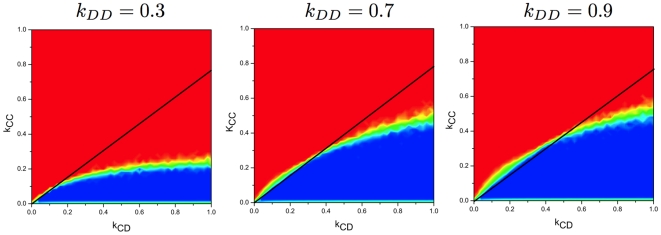
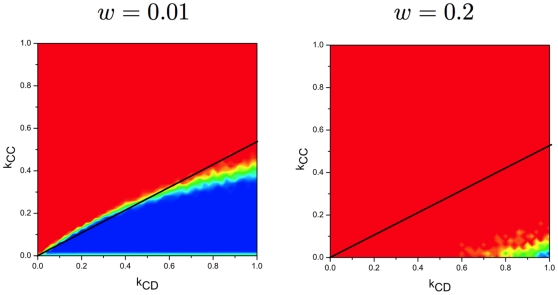
Verification
Claims the paper makes
The claims and statistics of this paper haven’t been checked yet.
Free: it reads the open-access text and checks the first 5 claims that cite a source we can check. Create a free account to check every claim.
Claims other papers make about this one
Each is checked against this paper’s own text: does it say what the citing paper says it does?
The cited source says what the claim attributes to it.
In the citing paper
“Endogenous network transitions often produce predictable results for the evolution of cooperation [17-29].”
From Strategy evolution on dynamic networks (2023) · cites this paper as [21]
Self-check
Percentages, sums and reported differences re-computed from the paper’s own numbers.
The self-check needs the paper’s full text.
Citations
Cites
Axelrod, R., & Hamilton, W. D. (1981) · Science · doi:10.1126/science.7466396 · Cited by 20,065
The genetical evolution of social behaviour. I
Hamilton, W. D. (1964) · Journal of Theoretical Biology · doi:10.1016/0022-5193(64)90038-4 · Cited by 15,725 · cited 1×
“Several mechanisms have been proposed to explain the persistence of cooperative behavior, including kin selection [9], direct [10,11] and indirect reciprocity [12,13], group selection [14,15] as well as the network reciprocity [16–24].”
BackgroundThe Evolution of Reciprocal Altruism
Trivers, R. L. (1971) · The Quarterly Review of Biology · doi:10.1086/406755 · Cited by 11,010 · cited 1×
“Several mechanisms have been proposed to explain the persistence of cooperative behavior, including kin selection [9], direct [10,11] and indirect reciprocity [12,13], group selection [14,15] as well as the network reciprocity [16–24].”
BackgroundEvolution and the Theory of Games
Smith, J. M. (1988) · Did Darwin Get It Right? · doi:10.1007/978-1-4684-7862-4_22 · Cited by 7,906 · cited 1×
“In an evolutionary setting, where payoff determines reproductive fitness, defectors can reproduce faster based on their higher payoff and cooperation diminishes - defection is evolutionary stable [7,8].”
BackgroundEquilibrium points in n -person games
Nash, J. F. (1950) · Proceedings of the National Academy of Sciences · doi:10.1073/pnas.36.1.48 · Cited by 7,560 · cited 1×
“Thus, defection is the Nash Equilibrium [6].”
Evolution and the Theory of Games
Smith, J. M. (1982) · Cambridge University Press eBooks · doi:10.1017/cbo9780511806292 · Cited by 6,922
Nielsen, R. P., & Axelrod, R. (1985) · The Academy of Management Review · doi:10.2307/257983 · Cited by 6,321
Five Rules for the Evolution of Cooperation
Nowak, M. A. (2006) · Science · doi:10.1126/science.1133755 · Cited by 5,894 · cited 1×
“However this cooperative behavior apparently contradicts natural selection [5]: Selfish behavior will be rewarded during competition between individuals, because selfish individuals enjoy the benefits from the cooperation of others, but avoid the associated costs.”
BackgroundEvolutionary Games and Population Dynamics
Hofbauer, J., & Sigmund, K. (1998) · doi:10.1017/cbo9781139173179 · Cited by 5,502
Evolutionary games and spatial chaos
Nowak, M. A., & May, R. M. (1992) · Nature · doi:10.1038/359826a0 · Cited by 4,463 · cited 3×
“Nowak and May first studied the PD game on regular lattices [16].”
Background
Research works printed but not linked: 1
- Sigmund K, ed. (2010) The calculus of selfishness. Princeton, New Jersey: Princeten University Press.
Cited by
Items 101–192 of 192
Quantifying the impact of noise on macroscopic organization of cooperation in spatial games
Du, F., & Fu, F. (2013) · Chaos Solitons & Fractals · doi:10.1016/j.chaos.2013.06.008 · Cited by 10
Self-citationNetwork adaption based on environment feedback promotes cooperation in co-evolutionary games
Guo, Y., Zhang, L., Li, H., Dai, Q., & Yang, J. (2023) · Physica A Statistical Mechanics and its Applications · doi:10.1016/j.physa.2023.128689 · Cited by 12
Tan, E., Corrêa, D., Stemler, T., & SMALL, M. P. (2023) · IEEE Transactions on Network Science and Engineering · doi:10.1109/tnse.2023.3302863 · Cited by 12
“They have also been applied to other systems such as neuron networks [5], [6], power grids [7], [8], epidemic spread [9], and cardiac arrhythmia [10].”
Towards the role of social connectivity and aspiration level on evolutionary game
Tang, C., Wang, Y., Cao, L., Li, X., & Yang, Y. (2013) · The European Physical Journal B · doi:10.1140/epjb/e2012-31030-2 · Cited by 11
Bridging the Gap between Opinion Dynamics and Evolutionary Game Theory: Some Equivalence Results
Wu, B., Du, J., & Wang, L. (2020) · Chinese Control Conference (CCC) · doi:10.23919/ccc50068.2020.9188845 · Cited by 15
“Therefore, the voter model on the evolving network is captured by the replicator equation of the transformed matrix based on [20].”
BackgroundMethodInfluentialSelf-citationEvolution of egalitarian social norm by resource management
Wang, X., Chen, X., & Wang, L. (2020) · PLoS ONE · doi:10.1371/journal.pone.0227902 · Cited by 11
Self-citationWang, X., Wu, T., & Wang, L. (2014) · Physica A Statistical Mechanics and its Applications · doi:10.1016/j.physa.2014.05.048 · Cited by 9
Self-citationEvolution of cooperation driven by majority-pressure based interdependence
Yang, Z., Yu, C. B., Kim, J., Li, Z., & Wang, L. (2018) · New Journal of Physics · doi:10.1088/1367-2630/aadbc1 · Cited by 9
Self-citationThe organization and control of an evolving interdependent population
Vural, D. C., Isakov, A., & Mahadevan, L. (2015) · Journal of The Royal Society Interface · doi:10.1098/rsif.2015.0044 · Cited by 10
Voter model on adaptive networks
Du, J. (2021) · Chinese Physics B · doi:10.1088/1674-1056/ac43b4 · Cited by 8
Learning process in public goods games
Amado, A., Huang, W., Campos, P. R. A., & Ferreira, F. F. (2015) · Physica A Statistical Mechanics and its Applications · doi:10.1016/j.physa.2015.02.077 · Cited by 8
Evolution of cooperation in an epithelium
Renton, J., & Page, K. M. (2019) · Journal of The Royal Society Interface · doi:10.1098/rsif.2018.0918 · Cited by 7
Evolutionary dynamics of the prisoner's dilemma with expellers
Wang, X., Zhang, G., & Kong, W. (2019) · Journal of Physics Communications · doi:10.1088/2399-6528/aafe57 · Cited by 7
Social relationship adjustments within the same sex promote marital bliss
Shan, X., & Wu, B. (2022) · Journal of Theoretical Biology · doi:10.1016/j.jtbi.2022.111225 · Cited by 10
Self-citationClustering drives cooperation on reputation networks, all else fixed
Dávid-Barrett, T. (2023) · Royal Society Open Science · doi:10.1098/rsos.230046 · Cited by 10
“The models are particular instantiations of the literature’s findings, which first appeared stated differently but with the same qualitative meaning, three decades ago [23-26], and has been supported by both theoretical and empirical evidence since [22, 27-41, 44-47].”
BackgroundResult4 Utility Rate Equations of Group Population Dynamics in Biological and Social SystemsPreprint
(2016) · Cited by 7
Evolutionary Game Theory: A General Review
Yolusever, A. (2024) · Yildiz Social Science Review · doi:10.51803/yssr.1525146 · Cited by 8
Human group size puzzle: why it is odd that we live in large societies
Dávid-Barrett, T. (2023) · Royal Society Open Science · doi:10.1098/rsos.230559 · Cited by 9
“Yet, there is an entire library on the origins of costly cooperation [70-77], and the interaction between network structure and cooperative stance [78-99], and even the possible conflict between the dynamics [100-102], represented by the negative relationship between the social cost parameter of this paper, and the ma…”
BackgroundOpinion dynamics on biased dynamical networks: Beyond rare opinion updating
Wang, X., & Wu, B. (2024) · Chaos An Interdisciplinary Journal of Nonlinear Science · doi:10.1063/5.0192642 · Cited by 8
Self-citationAn evolutionary game optimization to vertex cover of dynamic networks
Li, A., Tang, C., & Li, X. (2014) · Chinese Control Conference (CCC) · doi:10.1109/chicc.2014.6897074 · Cited by 6
Effect of network topology on the evolutionary ultimatum game based on the net-profit decision
Ye, S., Wang, L., Jones, M. C., Ye, Y., Wang, M., & Xie, N. (2016) · The European Physical Journal B · doi:10.1140/epjb/e2016-70043-5 · Cited by 6
Self-citationTwo-strategy games with time constraints on regular graphs
Broom, M., & Křivan, V. (2020) · Journal of Theoretical Biology · doi:10.1016/j.jtbi.2020.110426 · Cited by 8
Ecological graph theory: Simulating competition and coexistence on graphs
Kalirad, A., & Sommer, R. J. (2025) · Methods in Ecology and Evolution · doi:10.1111/2041-210x.70121 · Cited by 5
Emergence of parochial altruism in well-mixed populations of multiple groups
Gao, S., Wu, T., Nie, S., & Wang, L. (2015) · Physics Letters A · doi:10.1016/j.physleta.2015.07.032 · Cited by 5
Self-citationXia, H.-J., Li, P., Jian-Hong, K., & Zhen-Quan, L. (2015) · Chinese Physics B · doi:10.1088/1674-1056/24/4/040203 · Cited by 5
Impact of shill intervention on the evolution of cooperation
Sun, C., & Duan, H. (2015) · Physica A Statistical Mechanics and its Applications · doi:10.1016/j.physa.2015.04.013 · Cited by 5
Conditional dissociation as a punishment mechanism in the evolution of cooperation
Qu, X., Zhou, C., Cao, Z., & Yang, X. (2016) · Physica A Statistical Mechanics and its Applications · doi:10.1016/j.physa.2015.12.128 · Cited by 5
Liu, C., & Li, R. (2016) · Physica A Statistical Mechanics and its Applications · doi:10.1016/j.physa.2016.03.051 · Cited by 5
Insurance optimizes complex interactive and cooperative behaviors in public goods games
Du, J. (2018) · PLoS ONE · doi:10.1371/journal.pone.0197574 · Cited by 5
Jian-Hong, K., Li, P.-P., & Lin, Z. (2021) · Physica A Statistical Mechanics and its Applications · doi:10.1016/j.physa.2021.126478 · Cited by 5
Cooperation dynamics in dynamical networks with history-based decisions
Miles, A. L., & Cavaliere, M. (2022) · PLoS ONE · doi:10.1371/journal.pone.0275909 · Cited by 4
Tale of two emergent games: Opinion dynamics in dynamical directed networks
Wang, Y., & Wu, B. (2024) · Physical review. E · doi:10.1103/physreve.109.l062301 · Cited by 6
Self-citationNeighbourhood reaction in the evolution of cooperation
Yang, G., Zhang, W., & Xiu, B. (2015) · Journal of Theoretical Biology · doi:10.1016/j.jtbi.2015.02.022 · Cited by 6
Topological chaos of the spatial prisoner׳s dilemma game on regular networks
Jin, W., & Chen, F. (2015) · Journal of Theoretical Biology · doi:10.1016/j.jtbi.2015.11.016 · Cited by 4
Way of Breaking Links in the Evolution of Cooperation
Liu, A.-Z., Zhang, Y., & Sun, C. (2018) · Chinese Physics Letters · doi:10.1088/0256-307x/35/9/098901 · Cited by 4
A Strategy Adaptive Evolution Approach Based on the Public Goods Game
Li, H., Duan, J., & Sun, Q. (2022) · Electronics · doi:10.3390/electronics11132006 · Cited by 4
Coevolutionary Network Model for Efficient Collaboration in Systems-of-Systems
Boyd, M., Mazzuchi, T. A., & Sarkani, S. (2022) · International Conference on System of Systems Engineering · doi:10.1109/sose55472.2022.9812631 · Cited by 5
“Still more recently, evolutionary game theory and network evolution have been used to show system dynamics and decision-making over time, which joins neatly with agent-based model simulations [11], [12], [13].”
BackgroundEmergence of group cooperation in public goods game on regular small-world network
Zhang, Y., Fan, R., & Luo, M. J. (2017) · Wuhan University Journal of Natural Sciences · doi:10.1007/s11859-017-1284-8 · Cited by 4
Spreading dynamics on complex dynamical networks
Wang, L., Bin, W. U., Yuting, W. E. I., Zhou, D., & Du, J. (2020) · Scientia Sinica Informationis · doi:10.1360/ssi-2020-0087 · Cited by 3
Self-citationA game-theoretical dynamic imitation model on networks
Zhang, H. (2021) · Journal of Mathematical Biology · doi:10.1007/s00285-021-01573-7 · Cited by 4
Symmetry in models of natural selection
Allen, B. (2023) · Journal of The Royal Society Interface · doi:10.1098/rsif.2023.0306 · Cited by 4
Stark, S., Peter, D., & Tutić, A. (2023) · Social Networks · doi:10.1016/j.socnet.2023.11.003 · Cited by 3
Selection of opponents in the prisoner׳s dilemma in dynamic networks
Yonenoh, H., & Akiyama, E. (2014) · Journal of Theoretical Biology · doi:10.1016/j.jtbi.2014.02.006 · Cited by 5
Beyond the Mean Field in Host-Pathogen Spatial EcologyPreprint
Stacey, B. C., Gros, A., & Bar-Yam, Y. (2011) · arXiv (Cornell University) · Cited by 3
Emergence of polarization on dynamical directed social networks
Lin, W., Wang, Y., Liu, Y., & Wu, B. (2025) · Chaos Solitons & Fractals · doi:10.1016/j.chaos.2025.117034 · Cited by 3
Self-citationBayesian multiplex network models in R using STRAND: methods for biologists and social scientists
Ross, C. T., Kajokaite, K., Pinkney, S., & Sosa, S. (2025) · Royal Society Open Science · doi:10.1098/rsos.250555 · Cited by 2
Analysis of a continuous-time adaptive voter model
Kravitzch, E., Hayel, Y., Varma, V. S., & Berthet, A. O. (2023) · Physical review. E · doi:10.1103/physreve.107.054307 · Cited by 3
A necessary and sufficient condition for stable polarization
Wang, Y., & Wu, B. (2024) · Chinese Control Conference (CCC) · doi:10.23919/ccc63176.2024.10661796 · Cited by 2
“[34] The linking dynamics are a Markov chain with state space S .”
BackgroundSelf-citationProximity inheritance explains the evolution of cooperation under natural selection and mutation
Tan, S. (2019) · Proceedings of the Royal Society B Biological Sciences · doi:10.1098/rspb.2019.0690 · Cited by 2
Redes sociais e cooperação: um estudo bibliométrico
Lopes, A. P., de Carvalho, M. M., & Fleury, A. (2013) · Revista Produção Online · doi:10.14488/1676-1901.v13i2.1231 · Cited by 5
Enhance cooperation by catastrophic collapses of rich cooperators in coevolutionary networks
Xia, Q., Liao, X., Li, W., & Hu, G. X. (2010) · Europhysics Letters (EPL) · doi:10.1209/0295-5075/92/40009 · Cited by 2
Opinion Diversity and the Resilience of Cooperation in Dynamical Networks
Miles, A. L., & Cavaliere, M. (2021) · Mathematics · doi:10.3390/math9151801 · Cited by 2
User behavior analysis based on edge evolutionary game model in social network
Chen, J., Yang, H., Wei, N., & Liu, M. (2022) · Cluster Computing · doi:10.1007/s10586-022-03612-4 · Cited by 2
“Wu et al. studied the effect of dynamic networks on the level of network cooperation, the model assumes that the connection dynamic process is faster than the policy dynamic process [25].”
BackgroundZhang, Y. (2022) · Physica D Nonlinear Phenomena · doi:10.1016/j.physd.2023.133846 · Cited by 2
The synergy of elimination and zero-determinant strategy on dynamic games
Wang, J., & Shen, A. (2024) · Chaos Solitons & Fractals · doi:10.1016/j.chaos.2024.114699 · Cited by 2
Evolutionary games of multiplayer cooperation on graphsPreprint
Peña, J., Wu, B., Arranz, J., & Traulsen, A. (2016) · bioRxiv (Cold Spring Harbor Laboratory) · doi:10.1101/038505 · Cited by 2
Self-citationDiscrimination of unknown complex network based on the information of local nodes
Liu, S., Jin, Y., Wu, Y., Li, K., & Zhang, J. (2021) · Chinese Control Conference (CCC) · doi:10.23919/ccc52363.2021.9549900 · Cited by 1
“In the 1950s, Erdos and Renyi put forward a new network model: ER random network [4].”
BackgroundOnline social networking practices and the implications for e-learning solutions
Fishpaw, C. S., & Ketel, M. (2014) · IEEE SoutheastCon · doi:10.1109/secon.2014.6950719 · Cited by 1
Shi, Y., Лю, Б., Kou, X., & Han, X. (2014) · Mathematical Problems in Engineering · doi:10.1155/2014/148915 · Cited by 1
“The other part is to study the structure of the complex network [9–22] such as lattice, small-world, scale-free, and community structure.”
BackgroundFlat-head power-law, size-independent clustering, and scaling of coevolutionary scale-free networks
Zhu, C.-P., Liu, X., & Gu, Z.-M. (2011) · Frontiers of Physics · doi:10.1007/s11467-011-0145-8 · Cited by 1
Tan, S., & Lü, J. (2015) · Understanding complex systems · doi:10.1007/978-3-662-47824-0_17 · Cited by 3
Spatial Dynamics of the Public Goods Game with Probabilistic Participation
Wang, X., & Kong, W. (2020) · Chinese Control Conference (CCC) · doi:10.23919/ccc50068.2020.9189604 · Cited by 1
“[23] B.”
Preliminary Evolutionary Network Model for Efficient Collaboration in Systems-of-Systems
Boyd, M., Mazzuchi, T. A., & Sarkani, S. (2022) · Advances in transdisciplinary engineering · doi:10.3233/atde220663 · Cited by 1
Poza, D. J. (2012) · UVaDOC UVaDOC University of Valladolid Documentary Repository (University of Valladolid) · doi:10.35376/10324/948 · Cited by 1
Utility Rate Equations of Group Population Dynamics in Biological and Social SystemsPreprint
Yukalov, V. I., Yukalova, E. P., & Sornette, D. (2012) · SSRN Electronic Journal · doi:10.2139/ssrn.2186503 · Cited by 1
Evolutionary models in structured populations
Hadjichrysanthou, C. (2012) · UPT. Syiah Kuala University Library (Syiah Kuala University) · Cited by 2
Applying the Graph Model for Conflict Resolution to the Northern Gateway Pipeline Conflict
Szabo, M. W. (2016) · Libraries and Cultural Resources (University of Calgary) · doi:10.11575/prism/24977 · Cited by 1
Collective Dynamics in Physical and Social Networks
Isakov, A. (2016) · Digital Access to Scholarship at Harvard (DASH) (Harvard University) · Cited by 1
The importance of social position in e-learning
Ketel, M., & Fishpaw, C. S. (2014) · ACM Southeast Regional Conference (ACMSE) · doi:10.1145/2638404.2638490
“With so many users utilizing online social networks for communicating across distance and time, online social networking environments show great potential for eLearning uses [1, 4, 10, 12, and 14].”
BackgroundEffect of interaction strength on the evolution of cooperationPreprint
Feng, W., Li, Y., & Yan, J. (2012) · arXiv (Cornell University) · doi:10.48550/arxiv.1209.2612
“For simplicity and without loss of generality,we consider a simpler payoff matrix[13]:”
Homophily, payoff distributions, and truncation selection in replicator dynamics
Morsky, B. (2016) · The Atrium (University of Guelph)
Theoretical and empirical analysis of the evolution of cooperation
Bednarik, P. (2014) · eDiss (Georg-August-Universität Göttingen) · doi:10.53846/goediss-4681
Graph topology and the evolution of cooperation
Li, M. (2015) · Arrow@dit (Dublin Institute of Technology) · doi:10.13025/17070
Truncation selection and diffusion on latticesPreprint
Morsky, B., & Bauch, C. T. (2017) · arXiv (Cornell University) · doi:10.48550/arxiv.1709.00073
“In the behavioural model, vertices may choose to break edges by examining the payoffs earned from neighbours with whom they share them [4, 24], breaking edges with non-cooperating neighbours [27], or form edges with those vertices that have high payoffs [35, 36].”
BackgroundUtility Rate Equations of Group Population Dynamics in Biological and Social SystemsPreprint
Yukalov, V. I., Yukalova, E. P., & Sornette, D. (2014) · arXiv (Cornell University) · doi:10.48550/arxiv.1401.1321
“Thus, computer simulations of cooperator games on lattices have demonstrated that cooperation can evolve in structural populations when cooperators interact more frequently with each other than with defectors, and share benefits of mutual cooperation [58,59], or when individuals interact at different rates with each o…”
BackgroundUtility Rate Equations of Group Population Dynamics in Biological and Social Systems
Yukalov, V. I., Yukalova, E. P., & Sornette, D. (2013) · PLoS ONE · doi:10.1371/journal.pone.0083225 · Cited by 3
“Thus, computer simulations of cooperator games on lattices have demonstrated that cooperation can evolve in structural populations when cooperators interact more frequently with each other than with defectors, and share benefits of mutual cooperation [58,59], or when individuals interact at different rates with each o…”
BackgroundGençağa, D. (2018) · MDPI eBooks · doi:10.3390/books978-3-03842-920-3
Evolutionary graph processes with reshuffling and the promotion of cooperation
Antunes, J. A. (2021) · Digital Repository Service (Northeastern University) · doi:10.17760/d20406227
Variation in network evolution through competitive progress via link connection/disconnection
Sakiyama, T. (2022) · Journal of Complex Networks · doi:10.1093/comnet/cnac044
Machine Learning Inspired Fault Detection of Dynamical Networks
Tan, E., Corrêa, D., Stemler, T., & SMALL, M. P. (2022) · Lecture notes in computer science · doi:10.1007/978-3-031-22695-3_33
Mizobuchi, A. (2021) · Hokengakuzasshi (JOURNAL of INSURANCE SCIENCE) · doi:10.5609/jsis.2021.655_31
Evolutionary Games in Multilayer Spatial Networks Based on Different Dilemma Intensity Distribution
郭, 芳. (2024) · Pure Mathematics · doi:10.12677/pm.2024.145156
Self-organizing social systems: boundaries of cooperation and coordination
Fulker, Z. (2024) · Digital Repository Service (Northeastern University) · doi:10.17760/d20653027
Aiding the resilience of cooperation through the use of network rankings
Miles, A. L., Cavaliere, M., & Yang, G. (2024) · PLoS ONE · doi:10.1371/journal.pone.0313198
“Depending on how fitness is defined within a model, the fitness of individuals can gradually change over time [10], in response to changes in their local environment, can affect how they perform and can also impact the likelihood of reproducing.”
Coordination, Cooperation, Collaboration
Rusch, H. (2020) · mediaTUM (Technical University of Munich)
Dynamique d'opinion en coévolution avec les réseaux adaptatifs
Kravitzch, E. (2024) · theses.fr (ABES) · doi:10.70675/72843ea8z40a2z4880za46cze81779e13285
Dynamics of SIRS epidemic model in heterogeneous hypernetworks
Wang, W., Zhang, J., & Jin, Z. (2026) · Chaos An Interdisciplinary Journal of Nonlinear Science · doi:10.1063/5.0336276
A novel route for saving cooperation on dynamical networks: Enhancing rationality
Liu, Y., & Wu, B. (2026) · Chaos An Interdisciplinary Journal of Nonlinear Science · doi:10.1063/5.0354201
Self-citationNetwork Structures and Norm Stability: A Computational Exploration
Tutlani, A., & Kumar, D. (2026) · Physica A Statistical Mechanics and its Applications · doi:10.1016/j.physa.2026.132135
Fehl, K. (2011) · eDiss (Georg-August-Universität Göttingen) · doi:10.53846/goediss-499
Metadata
- Authors
- Wu, B., Zhou, D., Fu, F., Luo, Q., Wang, L., & Traulsen, A.
- Affiliations
- Peking University (CN)
- Harvard University (US)
- Max Planck Institute for Evolutionary Biology (DE)
- Corresponding author
- Wu, Bin
- Venue
- PLoS ONE
- Publisher
- Public Library of Science (PLoS)
- Published
- 2010-06-30
- Volume
- 5
- Issue
- 6
- Pages
- e11187
- ISSN
- 1932-6203 (ISSN-L)
- PMC
- PMC2894855
- OpenAlex
- W2033485858
- Cited by
- 193
- References
- 58
- Citations by year
- 2026: 3 · 2025: 3 · 2024: 9 · 2023: 11 · 2022: 10 · 2021: 11 · 2020: 7 · 2019: 6 · 2018: 11 · 2017: 6 · 2016: 16 · 2015: 22 · 2014: 20 · 2013: 18 · 2012: 16
- FWCI
- 59.90
- Type
- journal article
- Language
- en
- Open access
- gold
- doi.org
- Locations
- PLoS ONE (publishedVersion, cc-by)
- PubMed Central (publishedVersion, cc-by)
- PubMed (publishedVersion)
- MPG.PuRe (Max Planck Society) (submittedVersion, other-oa)
- RePEc: Research Papers in Economics (submittedVersion)
- DOAJ (DOAJ: Directory of Open Access Journals) (submittedVersion)
- Max Planck Institute for Plasma Physics (submittedVersion)
- Greater South Information System
- Funders
- Deutsche Forschungsgemeinschaft
- National Natural Science Foundation of China (60736022, 10972002)
- China Scholarship Council
- Topics
- Social Sciences › Sociology and Political Science › Evolutionary Game Theory and Cooperation
- Physical Sciences › Physics and Astronomy › Statistical and Nonlinear Physics › Complex Network Analysis Techniques
- Social Sciences › Decision Sciences › Management Science and Operations Research › Game Theory and Applications
- Keywords
- evolution of cooperation, social networks, population structure, link dynamics, strategy updating, imitation, Markov chains, network fragility
- MeSH terms
- Biological Evolution, Markov Chains, Selection, Genetic, Social Behavior, Stochastic Processes
About these checks
Registry, retraction, Cites and statistics results are computed, not judged, with one exception: a printed reference that no index lists is read once by a model before it counts as a citation error. Claims are extracted by a model and kept only when their quote appears verbatim in the text; each cited source is then checked, with a model’s help, for whether it says what the claim relies on. Those verdicts can be wrong — read the claim’s quote and the cited source before relying on one.
Statistics and arithmetic are recomputed, not judged.
Confidence bands are shown only for fields calibrated on our annotated test set. None is calibrated yet, so no band is shown.
What counts as a claim ›How we measure confidence ›How we check this ›
Are you an author, or do you see a problem with this page? Request a review
Data sources
Bibliographic data: Semantic Scholar, OpenAlex, Crossref.
Contains information from the Semantic Scholar Academic Graph Datasets, made available under the ODC Attribution License (ODC-BY 1.0).
Semantic Scholar’s data is described in: Kinney, R., et al. (2023). The Semantic Scholar Open Data Platform. arXiv:2301.10140.
