

Timing of Intervention Affects Brain Electrical Activity in Children Exposed to Severe Psychosocial Neglect
Open accessThe DOI matches its Crossref record; 23 of the 23 references it cites were found in a registry or an index.
Abstract
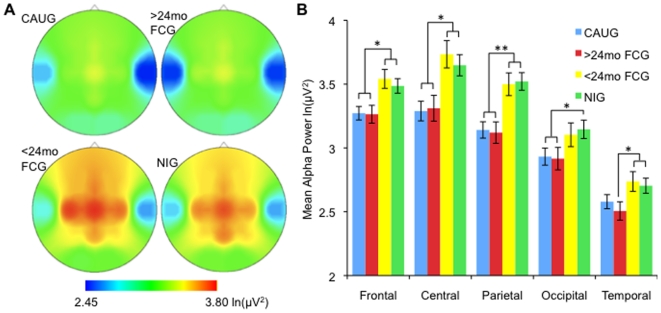
BACKGROUND: Early psychosocial deprivation has profound effects on brain activity in the young child. Previous reports have shown increased power in slow frequencies of the electroencephalogram (EEG), primarily in the theta band, and decreased power in higher alpha and beta band frequencies in infants and children who have experienced institutional care. METHODOLOGY/PRINCIPAL FINDINGS: We assessed the consequences of removing infants from institutions and placing them into a foster care intervention on brain electrical activity when children were 8 years of age. We found the intervention was successful for increasing high frequency EEG alpha power, with effects being most pronounced for children placed into foster care before 24 months of age. CONCLUSIONS/SIGNIFICANCE: The dependence on age of placement for the effects observed on high frequency EEG alpha power suggests a sensitive period after which brain activity in the face of severe psychosocial deprivation is less amenable to recovery.
Overview
The claims and statistics of this paper haven’t been checked yet.
Free: it reads the open-access text and checks the first 5 claims that cite a source we can check. Create a free account to check every claim.
Integrity signals
Registry
Cites
Statistics
Figures
Verification
Claims the paper makes
The claims and statistics of this paper haven’t been checked yet.
Free: it reads the open-access text and checks the first 5 claims that cite a source we can check. Create a free account to check every claim.
Claims other papers make about this one
Each is checked against this paper’s own text: does it say what the citing paper says it does?
The source backs part of the claim, not all of it — or backs it for a different population, condition or comparison.
In the citing paper
“Brain structure and functioning at 8 and 12 years also were enhanced by the intervention [38–41].”
From Alternatives for abandoned children: Insights from the Bucharest Early Intervention Project (2017) · cites this paper as [40]
Experimental — accuracy not yet measuredThe cited source says what the claim attributes to it.
In the citing paper
“First, resting electroencephalogram (EEG) power, especially in the high-frequency alpha band, has been shown to normalize among FCG compared with CAUG by age 8 (22), and persists to age 12 (23).”
From Long-term effects of institutional rearing, foster care, and brain activity on memory and executive functioning (2019) · cites this paper as [22]
In the citing paper
“The effect of timing of placement in foster care became clear by the time the children were 8-years-old; infants placed into foster care before 24 months were indistinguishable from children in the community while those placed after 24 months were identical to the CAUG”
From Normalization of EEG activity among previously institutionalized children placed into foster care: A 12-year follow-up of the Bucharest Early Intervention Project (2016) · cites this paper as Vanderwert et al., 2010
In the citing paper
“When children were observed at age 8 those placed into foster care before 24 months were indistinguishable to never institutionalized children in alpha power (Vanderwert et al., 2010).”
From Normalization of EEG activity among previously institutionalized children placed into foster care: A 12-year follow-up of the Bucharest Early Intervention Project (2016) · cites this paper as Vanderwert et al., 2010
In the citing paper
“EEG abnormalities in children who experienced institutional deprivation include increases in relative power in lower frequency bands and decreased power in high-frequency bands (Marshall et al, 2004(Marshall et al, , 2008;;Tarullo et al, 2011;Vanderwert et al, 2010) compared with typically developing children.”
From Deviations from the expectable environment in early childhood and emerging psychopathology (2015) · cites this paper as Vanderwert et al, 2010
Self-check
Percentages, sums and reported differences re-computed from the paper’s own numbers.
The self-check needs the paper’s full text.
Citations
Cites
EEG alpha and theta oscillations reflect cognitive and memory performance: a review and analysis
Klimesch, W. (1999) · Brain Research Reviews · doi:10.1016/s0165-0173(98)00056-3 · Cited by 6,889
Cognitive Recovery in Socially Deprived Young Children: The Bucharest Early Intervention Project
Nelson, C. A., Zeanah, C. H., Fox, N. A., Marshall, P. J., Smyke, A. T., & Guthrie, D. (2007) · Science · doi:10.1126/science.1143921 · Cited by 951
Self-citationBarry, R. J., Clarke, A. R., & Johnstone, S. J. (2003) · Clinical Neurophysiology · doi:10.1016/s1388-2457(02)00362-0 · Cited by 819 · cited 1×
“The patterns of elevated power in low frequency and decreased power in high-frequency EEG observed in these studies have been interpreted as representing a maturational lag in the development of the EEG [1,7–10].”
BackgroundDevelopment of the EEG from 5 months to 4 years of age
Marshall, P. J., Bar-Haim, Y., & Fox, N. A. (2002) · Clinical Neurophysiology · doi:10.1016/s1388-2457(02)00163-3 · Cited by 633 · cited 2×
“Furthermore, activity in higher frequencies like alpha and beta have long been associated with improved cognitive performance, attention state, and arousal in human infants, children, and adults [13–16].”
BackgroundSelf-citationChugani, H. T., Behen, M. E., Muzik, O., Juhász, C., Nagy, F., & Chugani, D. C. (2001) · NeuroImage · doi:10.1006/nimg.2001.0917 · Cited by 584
Eluvathingal, T. J., Chugani, H. T., Behen, M. E., Juhász, C., Muzik, O., Maqbool, M., Chugani, D. C., & Makki, M. (2006) · Pediatrics · doi:10.1542/peds.2005-1727 · Cited by 451
ZEANAH, C. H., NELSON, C. A., FOX, N. A., SMYKE, A. T., MARSHALL, P., PARKER, S. W., & KOGA, S. (2003) · Development and Psychopathology · doi:10.1017/s0954579403000452 · Cited by 447 · cited 3×
“…intervening years between assessments, there were changes in the living arrangements for a number of children within the CAUG and FCG (e.g. see ref [6]); for the following analyses, we employed an intent-to-treat approach, whereby the data were treated as if each child had remained within their…”
BackgroundMethodInfluentialSelf-citationBeckett, C., Maughan, B., Rutter, M., Castle, J., Colvert, E., Groothues, C., Kreppner, J., Stevens, S., O'Connor, T. G., & Sonuga-Barke, E. J. S. (2006) · Child Development · doi:10.1111/j.1467-8624.2006.00898.x · Cited by 377 · cited 1×
“Other studies of the long-term outcomes of children having adverse early experiences have shown significant ‘‘catch-up’’ in IQ and cognitive abilities after prolonged and intensive interventions [17–19].”
BackgroundThe Effects of Global Severe Privation on Cognitive Competence: Extension and Longitudinal Follow-up
O’Connor, T. G., Rutter, M., Beckett, C., Keaveney, L., Kreppner, J. M., & the English and Romanian Adoptees Study Team (2000) · Child Development · doi:10.1111/1467-8624.00151 · Cited by 353
A Comparison of the Electroencephalogram between Institutionalized and Community Children in Romania
Marshall, P. J., Fox, N. A., & Group, B. C. (2004) · Journal of Cognitive Neuroscience · doi:10.1162/0898929042304723 · Cited by 268 · cited 3×
“For each band absolute power was computed by taking the natural logarithm of power, similar to the procedures at the baseline and 42-month follow-up assessment [1,5].”
BackgroundMethodSelf-citation
Cited by
Early childhood development coming of age: science through the life course
Black, M. M., Walker, S. P., Fernald, L. C. H., Andersen, C. T., DiGirolamo, A. M., Lu, C., McCoy, D. C., Fink, G., Shawar, Y. R., Shiffman, J., et al. (2017) · The Lancet · doi:10.1016/s0140-6736(16)31389-7 · Cited by 3,014
Adversity in childhood is linked to mental and physical health throughout life
Nelson, C. A., Bhutta, Z. A., Burke Harris, N., Danese, A., & Samara, M. (2020) · BMJ · doi:10.1136/bmj.m3048 · Cited by 741
Self-citationEarly Adverse Experiences and the Developing Brain
Bick, J., & Nelson, C. A. (2016) · Neuropsychopharmacology · doi:10.1038/npp.2015.252 · Cited by 559
“Further, only children placed into foster care before age 2 showed evidence for improvement; those that were placed in foster care after 2 years of age were indistinguishable from children who remained in the institution (Vanderwert et al, 2010).”
BackgroundSelf-citationCritical period regulation across multiple timescales
Reh, R. K., Dias, B. G., Nelson, C. A., Kaufer, D., Werker, J. F., Kolb, B., Levine, J. D., & Hensch, T. K. (2020) · Proceedings of the National Academy of Sciences · doi:10.1073/pnas.1820836117 · Cited by 492
Self-citationNelson, C. A., & Gabard-Durnam, L. J. (2020) · Trends in Neurosciences · doi:10.1016/j.tins.2020.01.002 · Cited by 486
“Many of these behavioral sequelae appear to be mediated by a variety of changes in the brain, such as increased/ decreased cortical volume [51,52], increased/decreased cortical thinning [12,53], perturbations in WM integrity [54–56], and increased/decreased brain activity [57,58].”
BackgroundSelf-citationThe Science of Early Life Toxic Stress for Pediatric Practice and Advocacy
Johnson, S. B., Riley, A. W., Granger, D. A., & Riis, J. (2013) · Pediatrics · doi:10.1542/peds.2012-0469 · Cited by 469
Variation in neural development as a result of exposure to institutionalization early in childhood
Sheridan, M. A., Fox, N. A., Zeanah, C. H., McLaughlin, K. A., & Nelson, C. A. (2012) · Proceedings of the National Academy of Sciences · doi:10.1073/pnas.1200041109 · Cited by 432
“In our previous reports we demonstrated that children who were exposed to institutionalization had decreased power in α-power compared with those who were never institutionalized (28).”
BackgroundResultInfluentialSelf-citationResilience in Development: Progress and Transformation
Masten, A. S., & Cicchetti, D. (2016) · Developmental Psychopathology · doi:10.1002/9781119125556.devpsy406 · Cited by 416
The Utility of EEG Band Power Analysis in the Study of Infancy and Early Childhood
Saby, J. N., & Marshall, P. J. (2012) · Developmental Neuropsychology · doi:10.1080/87565641.2011.614663 · Cited by 333
“Wassenaar, D. R. (2006). Commentary: Ethical considerations in international research collaborations: The Bucharest Early Intervention Project.”
BackgroundSelf-citationThe impact of a poverty reduction intervention on infant brain activity
Troller-Renfree, S. V., Costanzo, M. A., Duncan, G. J., Magnuson, K., Gennetian, L. A., Yoshikawa, H., Halpern-Meekin, S., Fox, N. A., & Noble, K. G. (2022) · Proceedings of the National Academy of Sciences · doi:10.1073/pnas.2115649119 · Cited by 300
Self-citationNeglect as a violation of species-expectant experience: neurodevelopmental consequences
McLaughlin, K. A., Sheridan, M. A., & Nelson, C. A. (2017) · Biological Psychiatry · doi:10.1016/j.biopsych.2017.02.1096 · Cited by 295
Self-citationAnnual Research Review: Towards a developmental neuroscience of atypical social cognition
Happé, F., & Frith, U. (2014) · Journal of Child Psychology and Psychiatry · doi:10.1111/jcpp.12162 · Cited by 293
Zeanah, C. H., & Gleason, M. M. (2015) · Journal of Child Psychology and Psychiatry · doi:10.1111/jcpp.12347 · Cited by 265
“These changes may be lasting, but for children placed with families before 24 months, Vanderwert et al. (2010) demonstrated normalization of brain functioning by age 8 years.”
BackgroundSelf-citationToxic Stress: Effects, Prevention and Treatment
Franke, H. (2014) · Children · doi:10.3390/children1030390 · Cited by 248
“begins to wane [43,44].”
Deviations from the expectable environment in early childhood and emerging psychopathology
Humphreys, K. L., & Zeanah, C. H. (2015) · Neuropsychopharmacology · doi:10.1038/npp.2014.165 · Cited by 231
“EEG abnormalities in children who experienced institutional deprivation include increases in relative power in lower frequency bands and decreased power in high-frequency bands (Marshall et al , 2004, 2008; Tarullo et al , 2011; Vanderwert et al , 2010) compared with typically developing children.”
BackgroundSelf-citationSocioeconomic status and the brain: prospects for neuroscience-informed policy
Farah, M. J. (2018) · Nature Reviews Neuroscience · doi:10.1038/s41583-018-0023-2 · Cited by 188
Berens, A. E., & Nelson, C. A. (2015) · The Lancet · doi:10.1016/s0140-6736(14)61131-4 · Cited by 169
Self-citationHow Early Experience Shapes Human Development: The Case of Psychosocial Deprivation
Nelson, C. A., Zeanah, C. H., & Fox, N. A. (2019) · Neural Plasticity · doi:10.1155/2019/1676285 · Cited by 164
“…placed at or below 24 months of age had higher IQ scores at 54 months of age [100], more mature patterns of brain electrical activity at age 8 [90], more secure attachments to their adult care-givers at 42 months of age [101], less indiscriminate behavior through 8 years [102], and healthier…”
Self-citationV. THE NEUROBIOLOGICAL TOLL OF EARLY HUMAN DEPRIVATION
Nelson, C. A., Bos, K., Gunnar, M. R., & Sonuga-Barke, E. J. S. (2011) · Monographs of the Society for Research in Child Development · doi:10.1111/j.1540-5834.2011.00630.x · Cited by 162
“Finally, at 8 years the authors reported that, for high frequency alpha power, the FCG was comparable to the NIG, particularly for children placed in foster care before 24 months; those placed after 24 months more closely resembled the CAUG (Vanderwert et al., 2010).”
InfluentialSelf-citationTan, E., Troller‐Renfree, S. V., Morales, S., Buzzell, G. A., McSweeney, M., Antúnez, M., & Fox, N. A. (2024) · Developmental Cognitive Neuroscience · doi:10.1016/j.dcn.2024.101404 · Cited by 215
“Critically, these brain activity patterns appear to be modifiable through randomized control interventions targeting environmental factors (Debnath et al., 2020; Troller-Renfree et al., 2022; Vanderwert et al., 2010, 2016).”
BackgroundSelf-citationRapid infant prefrontal cortex development and sensitivity to early environmental experience
Hodel, A. S. (2018) · Developmental Review · doi:10.1016/j.dr.2018.02.003 · Cited by 153
Pathways to Integrated Resilience Science
Masten, A. S. (2015) · Psychological Inquiry · doi:10.1080/1047840x.2015.1012041 · Cited by 127
Vanderwert, R. E., Zeanah, C. H., Fox, N. A., & Nelson, C. A. (2016) · Developmental Cognitive Neuroscience · doi:10.1016/j.dcn.2015.12.004 · Cited by 128
“The ffect of timing of placement in foster care became clear by the time he children were 8-years-old; infants placed into foster care before 4 months were indistinguishable from children in the community hile those placed after 24 months were identical to the CAUG Vanderwert et al., 2010).”
InfluentialSelf-citationAvoiding Linguistic Neglect of Deaf Children
Humphries, T., Kushalnagar, P., Mathur, G., Napoli, D. J., Padden, C. A., Rathmann, C., & Smith, S. R. (2016) · Social Service Review · doi:10.1086/689543 · Cited by 149
Almas, A. N., Degnan, K. A., Radulescu, A., Nelson, C. A., Zeanah, C. H., & Fox, N. A. (2012) · Proceedings of the National Academy of Sciences · doi:10.1073/pnas.1121256109 · Cited by 115
“It also is important to note that, by 8 y of age, among the BEIP children in the FCG and those placed before 24 mo of age, alpha power was at a level indistinguishable from the NIG, whereas for children placed in the FCG after 24 mo and children randomized to the CAUG, alpha power remained low at 8 y of age (10).”
ResultSelf-citationAlternatives for abandoned children: Insights from the Bucharest Early Intervention Project
Zeanah, C. H., Humphreys, K. L., Fox, N. A., & Nelson, C. A. (2017) · Current Opinion in Psychology · doi:10.1016/j.copsyc.2017.02.024 · Cited by 115
Self-citationMcLaughlin, K. A., Fox, N. A., Zeanah, C. H., & Nelson, C. A. (2011) · Biological Psychiatry · doi:10.1016/j.biopsych.2011.08.006 · Cited by 108
Self-citationEarly experience and brain development
Bick, J. R., & Nelson, C. A. (2016) · Wiley Interdisciplinary Reviews Cognitive Science · doi:10.1002/wcs.1387 · Cited by 130
“In fact, the institutionally reared children placed into foster care before 2 years of age showed EEG patterns comparable to those of the children raised by their birth parents; those removed from the institution at later ages showed less evidence for recovery (Figure 1).(35) There was also evidence for interventionsu…”
Self-citationGee, D. G. (2016) · New Directions for Child and Adolescent Development · doi:10.1002/cad.20166 · Cited by 103
Martinez, G. J., Appleton, M., Kipp, Z. A., Loria, A. S., Min, B., & Hinds, T. D. (2023) · Physiological Reviews · doi:10.1152/physrev.00021.2023 · Cited by 118
Ameliorating the biological impacts of childhood adversity: A review of intervention programs
Purewal, S. K., Au, V., Koita, K., Oh, D. L., Briner, S., Harris, N. B., & Bucci, M. (2018) · Child Abuse & Neglect · doi:10.1016/j.chiabu.2018.04.014 · Cited by 119
Wade, M., Fox, N. A., Zeanah, C. H., & Nelson, C. A. (2019) · Proceedings of the National Academy of Sciences · doi:10.1073/pnas.1809145116 · Cited by 92
“Following previous investigations (22, 23), the eyes-open condition was chosen for the analysis, as this best represents awake-behaving EEG signal.”
BackgroundMethodSelf-citationDebnath, R., Tang, A., Zeanah, C. H., Nelson, C. A., & Fox, N. A. (2020) · Developmental Science · doi:10.1111/desc.12872 · Cited by 94
“At 8 years (Vanderwert et al., 2010), we showed earlier placement into foster care resulted in greater alpha power.”
BackgroundSelf-citationAdoption: Biological and Social Processes Linked to Adaptation
Grotevant, H. D., & McDermott, J. M. (2013) · Annual Review of Psychology · doi:10.1146/annurev-psych-010213-115020 · Cited by 134
“These results, along with other work tracking changes in brain electrical activity over time (Vanderwert et al. 2010), highlight long-lasting alterations in the neural development in the brain among children experiencing institutionalization.”
ResultChild violence experiences in institutionalised/orphanage care
Sherr, L., Roberts, K. J., & Gandhi, N. (2017) · Psychology, Health & Medicine · doi:10.1080/13548506.2016.1271951 · Cited by 88
Early deprivation alters structural brain development from middle childhood to adolescence
Sheridan, M. A., Mukerji, C. E., Wade, M., Humphreys, K. L., Garrisi, K., Goel, S., Patel, K., Fox, N. A., Zeanah, C. H., Nelson, C. A., et al. (2022) · Science Advances · doi:10.1126/sciadv.abn4316 · Cited by 84
“These findings are consistent with many other examples from this sample where children randomized to foster care earlier versus later exhibit higher IQ (13), reduced blunting of the stress response (23), and more typical neural function (53) in middle childhood and adolescence.”
Self-citationSocial Origins of Developmental Risk for Mental and Physical Illness
Cameron, J. L., Eagleson, K. L., Fox, N. A., Hensch, T. K., & Levitt, P. (2017) · The Journal of Neuroscience · doi:10.1523/jneurosci.1822-17.2017 · Cited by 82
“1A) (Vanderwert et al., 2010).”
BackgroundSelf-citationPierce, L. J., Thompson, B. L., Gharib, A., Schlueter, L., Reilly, E., Valdes, V., Roberts, S., Conroy, K., Levitt, P., & Nelson, C. A. (2019) · JAMA Pediatrics · doi:10.1001/jamapediatrics.2019.0492 · Cited by 76
Self-citationEsposito, E. A., Jones, M. J., Doom, J. R., MacIsaac, J. L., Gunnar, M. R., & Kobor, M. S. (2016) · Development and Psychopathology · doi:10.1017/s0954579416000055 · Cited by 71
Environmental Enrichment Therapy for Autism: Outcomes with Increased Access
Aronoff, E., Hillyer, R., & Leon, M. (2016) · Neural Plasticity · doi:10.1155/2016/2734915 · Cited by 73
“Moreover, the quality of the foster care correlates with better improvements in their outcomes, as does their early transfer into foster care [59, 85, 86].”
BackgroundHazards to Early Development: The Biological Embedding of Early Life Adversity
Nelson, C. A. (2017) · Neuron · doi:10.1016/j.neuron.2017.09.027 · Cited by 73
Self-citationBick, J. R., Palmwood, E. N., Zajac, L. A., Simons, R. F., & Dozier, M. (2018) · Biological Psychiatry · doi:10.1016/j.biopsych.2018.09.020 · Cited by 75
“Studies to date have investigated extreme forms of psychosocial neglect (institutional rearing) and severe maltreatment warranting out-of-home placement (17,19), but these represent only a subset of the contexts in which children may experience early adverse rearing.”
BackgroundMethodResultInfluentialGunnar, M. R., & Reid, B. M. (2019) · Annual Review of Developmental Psychology · doi:10.1146/annurev-devpsych-121318-085013 · Cited by 82
“…research on improving institutional care has found that creating more family-like care within institutions improves child outcomes both while the children are in institutional care and once they are placed in adoptive or foster homes (Groark et al. 2012, Julian & McCall 2012, McCall et al. 2010).”
BackgroundNeuronal networks in the developing brain are adversely modulated by early psychosocial neglect
Stamoulis, C., Vanderwert, R. E., Zeanah, C. H., Fox, N. A., & Nelson, C. A. (2017) · Journal of Neurophysiology · doi:10.1152/jn.00014.2017 · Cited by 59
“The characteristics of these data are described in detail in (Marshall et al. 2008; Stamoulis et al. 2015a; Vanderwert et al. 2010).”
Self-citationInfants of mothers with higher physiological stress show alterations in brain function
Troller‐Renfree, S. V., Brito, N. H., Desai, P. M., Leon‐Santos, A. G., Wiltshire, C. A., Motton, S. N., Meyer, J. S., Isler, J., Fifer, W. P., & Noble, K. G. (2020) · Developmental Science · doi:10.1111/desc.12976 · Cited by 52
“These findings are important given that maturational lags in brain development can be long-lasting and are associated with deficits in cognitive and emotional development (Harmony et al., 1990; Otero et al., 2003; Vanderwert et al., 2010).”
BackgroundAnnual Research Review: Early intervention viewed through the lens of developmental neuroscience
Nelson, C. A., Sullivan, E., & Engelstad, A. (2023) · Journal of Child Psychology and Psychiatry · doi:10.1111/jcpp.13858 · Cited by 84
Self-citationNeuroscience of child and adolescent health development.
Fine, J. G., & Sung, C. Y. Y. (2014) · Journal of Counseling Psychology · doi:10.1037/cou0000033 · Cited by 68
Early adversity alters brain architecture and increases susceptibility to mental health disorders
Nelson, C. A., Sullivan, E., & Valdes, V. (2025) · Nature reviews. Neuroscience · doi:10.1038/s41583-025-00948-9 · Cited by 75
Self-citationPitula, C. E., DePasquale, C. E., Mliner, S. B., & Gunnar, M. R. (2019) · Child Development · doi:10.1111/cdev.12986 · Cited by 56
Whedon, M., Perry, N. B., & Bell, M. A. (2020) · Brain and Cognition · doi:10.1016/j.bandc.2020.105636 · Cited by 53
Early Institutionalization: Neurobiological Consequences and Genetic Modifiers
Sheridan, M., Drury, S., McLaughlin, K., & Almas, A. (2010) · Neuropsychology Review · doi:10.1007/s11065-010-9152-8 · Cited by 45
“Children who had been placed after they were 2 years of age had alpha power contributions that were indistinguishable from children in the CAUG group (Vanderwert et al. 2010).”
The future is now: early life events preset adult behaviour
Patchev, A. V., Rodrigues, A. J., Sousa, N., Spengler, D., & Almeida, O. F. X. (2013) · Acta Physiologica · doi:10.1111/apha.12140 · Cited by 54
“…(www. bucharestearlyinterventionproject.org/), which shows that foster care can, at least partially, reverse impairments in brain activity and cognition suffered by orphaned children (Smyke et al. 2010, Vanderwert et al. 2010, Fox et al. 2011, Sheridan et al. 2012, also see Rutter & O’Connor 2004).”
BackgroundBrett, Z. H., Humphreys, K. L., Smyke, A. T., Gleason, M. M., Nelson, C. A., Zeanah, C. H., Fox, N. A., & Drury, S. S. (2015) · Development and Psychopathology · doi:10.1017/s0954579414001266 · Cited by 42
Self-citationHoye, J. R., Cheishvili, D., Yarger, H. A., Roth, T. L., Szyf, M., & Dozier, M. (2019) · Development and Psychopathology · doi:10.1017/s0954579419001421 · Cited by 57
Doretto, V. F., & Scivoletto, S. (2018) · Brain Sciences · doi:10.3390/brainsci8010010 · Cited by 45
“Once again the effect on EEG alpha activity was greater in those institutionalized children placed into foster care before 2 years of age [70].”
BackgroundStamoulis, C., Vanderwert, R. E., Zeanah, C. H., Fox, N. A., & Nelson, C. A. (2015) · Journal of Cognitive Neuroscience · doi:10.1162/jocn_a_00877 · Cited by 39
“At 96 months, nontask EEG were collected during a 6-min interval during which children sat quietly alternating eyes open and closed in 1-min intervals (Vanderwert et al., 2010).”
BackgroundMethodResultSelf-citationAttachment in adopted adolescents. National adoption in Chile
Escobar, M. J., & Santelices, M. P. (2013) · Children and Youth Services Review · doi:10.1016/j.childyouth.2012.12.011 · Cited by 45
Behavior problems and attachment in adopted and non-adopted adolescents
Escobar, M. J., Pereira, X., & Santelices, M. P. (2014) · Children and Youth Services Review · doi:10.1016/j.childyouth.2014.04.001 · Cited by 50
Meyers, J. L., McCutcheon, V. V., Pandey, A. K., Kamarajan, C., de Viteri, S. S., Chorlian, D. B., Salvatore, J. E., Pandey, G., Almasy, L. A., Anokhin, A. P., et al. (2018) · Journal of the American Academy of Child & Adolescent Psychiatry · doi:10.1016/j.jaac.2018.07.905 · Cited by 36
“Previous research has suggested that exposure to early childhood trauma is associated with a developmental lag in cortical arousal and relatedly behavioral inhibition, and that these neural responses might increase the risk for later onset of psychopathology, including mood, anxiety disorders, and behavioral disorders…”
King, L. S., Guyon-Harris, K. L., Valadez, E. A., Radulescu, A., Fox, N. A., Nelson, C. A., Zeanah, C. H., & Humphreys, K. L. (2023) · American Journal of Psychiatry · doi:10.1176/appi.ajp.20220672 · Cited by 29
Self-citationBuzzell, G. A., Troller-Renfree, S. V., Wade, M., Debnath, R., Morales, S., Bowers, M. E., Zeanah, C. H., Nelson, C. A., & Fox, N. A. (2020) · Developmental Cognitive Neuroscience · doi:10.1016/j.dcn.2020.100777 · Cited by 30
Self-citationNelson, C. A., Fox, N. A., & Zeanah, C. H. (2023) · Current Directions in Psychological Science · doi:10.1177/09637214231201079 · Cited by 39
“Finally, in terms of brain activity, children randomly assigned to foster care showed increased electroencephalogram (EEG) alpha power at rest (Debnath et al., 2020; Marshall et al., 2004, 2008; Vanderwert et al., 2010) and modest increases in white-matter volume (Sheridan et al., 2012).”
BackgroundSelf-citationFox, N. A., Nelson, C. A., & Zeanah, C. H. (2017) · Psychodynamic Psychiatry · doi:10.1521/pdps.2017.45.4.441 · Cited by 29
Self-citationThe Cambridge Handbook of Infant Development: Brain, Behavior, and Cultural Context
Lockman, J. J., & Tamis-LeMonda, C. S. (2020) · Cambridge University Press eBooks · doi:10.1017/9781108351959 · Cited by 35
Bourne, S. V., Korom, M., & Dozier, M. (2022) · Clinical Child and Family Psychology Review · doi:10.1007/s10567-022-00386-4 · Cited by 22
Emotion recognition following early psychosocial deprivation
Nelson, C. A., Westerlund, A., McDermott, J. M., Zeanah, C. H., & Fox, N. A. (2013) · Development and Psychopathology · doi:10.1017/s0954579412001216 · Cited by 37
“Children were seated in front of a computer screen and an electrode cap (Electro-Cap International, Inc., Eaton, OH) was fitted to their heads (for details, see Moulson, Fox, et al., 2009; Moulson, Westerlund, Fox, Zeanah, & Nelson, 2009; Vanderwert et al., 2010).”
Self-citationChildhood sleep disturbances and white matter microstructure in preadolescence
Mulder, T. A., Kocevska, D., Muetzel, R. L., Koopman‐Verhoeff, M. E., Hillegers, M. H. J., White, T. J. H., & Tiemeier, H. W. (2019) · Journal of Child Psychology and Psychiatry · doi:10.1111/jcpp.13085 · Cited by 30
Wang, S., Ding, C., Dou, C., Zhu, Z., Zhang, D., Yi, Q., Wu, H., Xie, L., Zhu, Z., Song, D., et al. (2022) · Psychoneuroendocrinology · doi:10.1016/j.psyneuen.2022.105896 · Cited by 28
“, 2020) and it has been a sensitive period for the full development of social-emotional abilities (Vanderwert et al., 2010).”
BackgroundTroller‐Renfree, S. V., Sperber, J. F., Hart, E. R., Costanzo, M. A., Gennetian, L. A., Meyer, J. S., Fox, N. A., & Noble, K. G. (2023) · Biological Psychology · doi:10.1016/j.biopsycho.2023.108683 · Cited by 33
“…and a relative reduction of high-frequency activity, observed in the context of a stressful environment – has been described as a “ maturational lag ” in neural development (Coming et al., 1982) which may persist over many years (Otero, 1994, 1997; Otero et al., 2003; Vanderwert et al., 2010).”
BackgroundSelf-citationContext of maternal intrusiveness during infancy and associations with preschool executive function
Broomell, A. P. R., Smith, C. L., Calkins, S. D., & Bell, M. A. (2019) · Infant and Child Development · doi:10.1002/icd.2162 · Cited by 36
Bahrick, L. E., Lickliter, R., & Todd, J. T. T. (2020) · Cambridge University Press eBooks · doi:10.1017/9781108351959.011 · Cited by 31
Early deprivation and autonomic nervous system functioning in post‐institutionalized children
Esposito, E. A., Koss, K. J., Donzella, B., & Gunnar, M. R. (2015) · Developmental Psychobiology · doi:10.1002/dev.21373 · Cited by 26
Infants’ neural responses to emotional faces are related to maternal anxiety
Bowman, L. C., McCormick, S. A., Kane‐Grade, F., Xie, W., Enlow, M. B., & Nelson, C. A. (2021) · Journal of Child Psychology and Psychiatry · doi:10.1111/jcpp.13429 · Cited by 26
Self-citationYoung, A., Luyster, R., Fox, N. A., Zeanah, C. H., & Nelson, C. A. (2017) · British Journal of Developmental Psychology · doi:10.1111/bjdp.12185 · Cited by 24
Self-citationThe Neurobiological Basis of Empathy and Its Development in the Context of Our Evolutionary Heritage
Nelson, E. E. (2012) · Oxford University Press eBooks · doi:10.1093/acprof:oso/9780199755059.003.0010 · Cited by 22
Pierce, Z. P., & Black, J. M. (2021) · Trauma Violence & Abuse · doi:10.1177/15248380211048446 · Cited by 59
“…to avoidant, anxious, and disorganized attachment behaviors in adolescence and adulthood (National Scientific Council on the Developing Child, 2007; Feldman & Eidelman, 2007; Nelson, 2017; Vanderwert et al., 2010; Schore, 2008; Schore & Schore, 2010; Fox et al., 2010; Sampaio & Lifter, 2014).”
BackgroundTraumatismes et traces : données expérimentales
Cohen, D. (2011) · Neuropsychiatrie de l Enfance et de l Adolescence · doi:10.1016/j.neurenf.2011.09.005 · Cited by 23
Rakhlin, N., Hein, S., Doyle, N., Hart, L., Macomber, D., Ruchkin, V., Tan, M., & Grigorenko, E. L. (2015) · Journal of Communication Disorders · doi:10.1016/j.jcomdis.2015.08.003 · Cited by 18
Slopen, N., Tang, A., Nelson, C. A., Zeanah, C. H., McDade, T. W., McLaughlin, K. A., & Fox, N. A. (2019) · Psychosomatic Medicine · doi:10.1097/psy.0000000000000696 · Cited by 18
“Childhood neglect—the most frequent form of childhood maltreatment (52), shown to be associated with brain structure (53,54) and function (16,55) and psychopathology (24,56)—is frequently combined with physical and sexual abuse within research studies (52).”
Self-citationAdverse caregiving in early life: The trauma and deprivation distinction in young children
Guyon‐Harris, K. L., Humphreys, K. L., & Zeanah, C. H. (2020) · Infant Mental Health Journal · doi:10.1002/imhj.21892 · Cited by 24
Self-citationNeurobiological Consequences of Neglect and Abuse
Bernard, K., Lind, T., & Dozier, M. (2013) · Child maltreatment · doi:10.1007/978-94-007-7208-3_11 · Cited by 26
Estimating child separation in emergencies: Results from North Kivu
Stark, L., Rubenstein, B. L., Mansourian, H., Spencer, C., Noble, E., & Chisolm‐Straker, M. (2016) · Child Abuse & Neglect · doi:10.1016/j.chiabu.2015.12.012 · Cited by 17
Batra, A., Chen, L. M., Wang, Z., Parent, C. I., Pokhvisneva, I., Patel, S. H., Levitan, R. D., Meaney, M. J., & Silveira, P. P. (2021) · Frontiers in Neuroscience · doi:10.3389/fnins.2021.704785 · Cited by 23
A Systematic Review of Interventions to Ameliorate the Impact of Adversity on Brain Development.
McDermott, C. L., Norton, E., & Mackey, A. (2023) · Neuroscience and Biobehavioral Reviews · doi:10.1016/j.neubiorev.2023.105391 · Cited by 15
Global mental health and the National Institute of Mental Health Research Domain Criteria
Weine, S. M., Langenecker, S. A., & Arënliu, A. (2018) · International Journal of Social Psychiatry · doi:10.1177/0020764018778704 · Cited by 15
Placental Studies for Child Development
O’Connor, T. G., Miller, R. K., & Salafia, C. M. (2019) · Child Development Perspectives · doi:10.1111/cdep.12338 · Cited by 18
Investigating hierarchical critical periods in human neurodevelopment
Sydnor, V. J., Ojha, A., Larsen, B., Martínez, Á., Calabro, F. J., & Luna, B. (2025) · Neuropsychopharmacology · doi:10.1038/s41386-025-02246-5 · Cited by 26
Infant Emotion Development and Temperament
Aktar, E., & Pérez‐Edgar, K. E. (2020) · Cambridge University Press eBooks · doi:10.1017/9781108351959.026 · Cited by 18
Baram, T. Z., & Birnie, M. T. (2024) · Neurobiology of Stress · doi:10.1016/j.ynstr.2024.100669 · Cited by 18
An international approach to research on brain development
Nelson, C. A. (2015) · Trends in Cognitive Sciences · doi:10.1016/j.tics.2015.05.008 · Cited by 13
Self-citationStark, L., MacFarlane, M., Rubenstein, B. L., Yu, G., Jensen, C., & Williamson, K. (2018) · BMJ Global Health · doi:10.1136/bmjgh-2018-000784 · Cited by 14
Mukerji, C., Wade, M., Fox, N. A., Zeanah, C. H., & Nelson, C. A. (2021) · Clinical Psychological Science · doi:10.1177/2167702621993887 · Cited by 14
Self-citationCross-Cultural Perspectives on Parent–Infant Interactions
Bornstein, M. H., & Esposito, G. (2020) · Cambridge University Press eBooks · doi:10.1017/9781108351959.029 · Cited by 12
Debnath, R., Troller-Renfree, S. V., Zeanah, C. H., Nelson, C. A., & Fox, N. A. (2023) · Developmental Cognitive Neuroscience · doi:10.1016/j.dcn.2023.101295 · Cited by 10
Self-citationWhat Is Social Connection in the Context of Human Need: An Interdisciplinary Literature Review
Bauer, K. L., Johnson-Koenke, R. A., & Fort, M. P. (2025) · International Journal of Environmental Research and Public Health · doi:10.3390/ijerph22030363 · Cited by 14
“Severe social deprivation of institutionalized children in Romania resulted in reduced brain activity, which was only improved if children were placed into a community through foster care at earlier ages [67].”
Kouhbanani, S. S., & Arabi, S. M. (2021) · Current Psychology · doi:10.1007/s12144-021-02044-4 · Cited by 11
Mesquita, A. R., Belsky, J., Crego, A., Fachada, I., Oliveira, P., Sampaio, A., & Soares, I. (2015) · Child Development · doi:10.1111/cdev.12371 · Cited by 11
Frenkel, T. I., Koss, K. J., Donzella, B., Frenn, K. A., Lamm, C., Fox, N. A., & Gunnar, M. R. (2016) · Research on Child and Adolescent Psychopathology · doi:10.1007/s10802-016-0208-y · Cited by 13
“This latter age appeared to denote the end of a sensitive period for recovery in the prior FEA study of institutionally-reared children (McLaughlin et al. 2011; Vanderwert et al. 2010).”
Self-citationBlum, S., Mack, J. T., Weise, V., Kopp, M., Asselmann, E., Martini, J., & Garthus‐Niegel, S. (2022) · Frontiers in Psychiatry · doi:10.3389/fpsyt.2022.886347 · Cited by 13
“At the same time, there is evidence that the first 2 years of life are also a period in which psychosocial interventions are most effective in preventing later developmental delays in children (25, 26).”
BackgroundBrain Development in Infants: Structure and Experience
Richards, J. E., & Conte, S. (2020) · Cambridge University Press eBooks · doi:10.1017/9781108351959.004 · Cited by 18
Metadata
- Authors
- Vanderwert, R. E., Marshall, P. J., Nelson, C. A., Zeanah, C. H., & Fox, N. A.
- Affiliations
- University of Maryland, College Park (US)
- Temple University (US)
- Boston Children's Hospital (US)
- Tulane University (US)
- Corresponding author
- Fox, Nathan A.
- Venue
- PLoS ONE
- Publisher
- Public Library of Science (PLoS)
- Published
- 2010-07-01
- Volume
- 5
- Issue
- 7
- Pages
- e11415
- ISSN
- 1932-6203 (ISSN-L)
- PMC
- PMC2895657
- OpenAlex
- W2110224254
- Cited by
- 203
- References
- 23
- Citations by year
- 2026: 5 · 2025: 10 · 2024: 4 · 2023: 10 · 2022: 9 · 2021: 11 · 2020: 59 · 2019: 15 · 2018: 12 · 2017: 9 · 2016: 18 · 2015: 11 · 2014: 10 · 2013: 9 · 2012: 5
- FWCI
- 16.72
- Type
- journal article
- Language
- en
- Open access
- gold
- doi.org
- Locations
- PLoS ONE (publishedVersion, cc-by)
- PubMed Central (publishedVersion, cc-by)
- PubMed (publishedVersion)
- ORCA Online Research @Cardiff (Cardiff University) (acceptedVersion)
- Digital Access to Scholarship at Harvard (DASH) (Harvard University) (submittedVersion, cc-by)
- DOAJ (DOAJ: Directory of Open Access Journals) (submittedVersion, cc-by-sa)
- Funders
- John D. and Catherine T. MacArthur Foundation
- Topics
- Social Sciences › Sociology and Political Science › Child Welfare and Adoption
- Social Sciences › Psychology › Clinical Psychology › Child Abuse and Trauma
- Life Sciences › Neuroscience › Behavioral Neuroscience › Stress Responses and Cortisol
- Keywords
- institutional care, foster care placement, intervention timing, EEG alpha power, brain electrical activity, sensitive period, early deprivation, children
- MeSH terms
- Alpha Rhythm, Brain, Child, Child Abuse, Child, Preschool, Electric Conductivity, Female, Foster Home Care, Humans, Infant, Male, Psychosocial Deprivation, Time Factors, Intention to Treat Analysis
About these checks
Registry, retraction, Cites and statistics results are computed, not judged, with one exception: a printed reference that no index lists is read once by a model before it counts as a citation error. Claims are extracted by a model and kept only when their quote appears verbatim in the text; each cited source is then checked, with a model’s help, for whether it says what the claim relies on. Those verdicts can be wrong — read the claim’s quote and the cited source before relying on one.
Statistics and arithmetic are recomputed, not judged.
Confidence bands are shown only for fields calibrated on our annotated test set. None is calibrated yet, so no band is shown.
What counts as a claim ›How we measure confidence ›How we check this ›
Are you an author, or do you see a problem with this page? Request a review
Data sources
Bibliographic data: Semantic Scholar, OpenAlex, Crossref.
Contains information from the Semantic Scholar Academic Graph Datasets, made available under the ODC Attribution License (ODC-BY 1.0).
Semantic Scholar’s data is described in: Kinney, R., et al. (2023). The Semantic Scholar Open Data Platform. arXiv:2301.10140.
