

The DOI matches its Crossref record; 49 of the 49 references it cites were found in a registry or an index.
Homocysteine-Lowering by B Vitamins Slows the Rate of Accelerated Brain Atrophy in Mild Cognitive Impairment: A Randomized Controlled Trial
Open accessAbstract
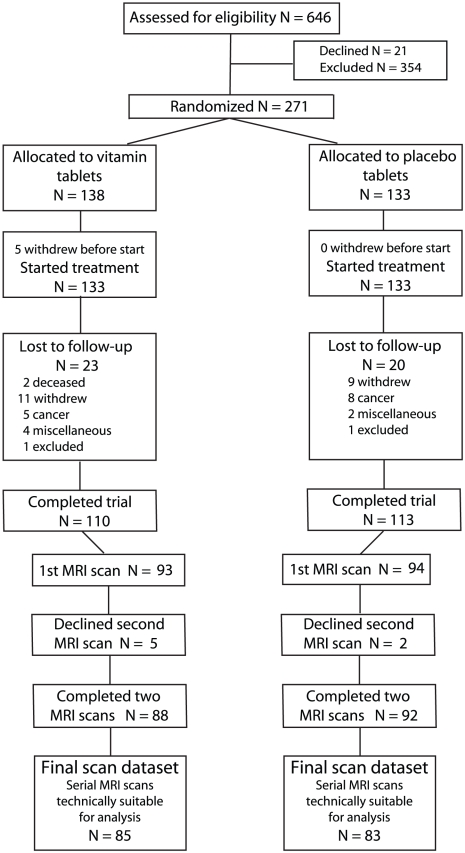
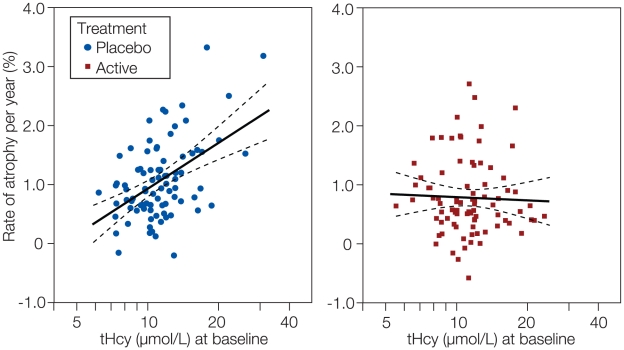
BACKGROUND: An increased rate of brain atrophy is often observed in older subjects, in particular those who suffer from cognitive decline. Homocysteine is a risk factor for brain atrophy, cognitive impairment and dementia. Plasma concentrations of homocysteine can be lowered by dietary administration of B vitamins. OBJECTIVE: To determine whether supplementation with B vitamins that lower levels of plasma total homocysteine can slow the rate of brain atrophy in subjects with mild cognitive impairment in a randomised controlled trial (VITACOG, ISRCTN 94410159). METHODS AND FINDINGS: Single-center, randomized, double-blind controlled trial of high-dose folic acid, vitamins B(6) and B(12) in 271 individuals (of 646 screened) over 70 y old with mild cognitive impairment. A subset (187) volunteered to have cranial MRI scans at the start and finish of the study. Participants were randomly assigned to two groups of equal size, one treated with folic acid (0.8 mg/d), vitamin B(12) (0.5 mg/d) and vitamin B(6) (20 mg/d), the other with placebo; treatment was for 24 months. The main outcome measure was the change in the rate of atrophy of the whole brain assessed by serial volumetric MRI scans. RESULTS: A total of 168 participants (85 in active treatment group; 83 receiving placebo) completed the MRI section of the trial. The mean rate of brain atrophy per year was 0.76% [95% CI, 0.63-0.90] in the active treatment group and 1.08% [0.94-1.22] in the placebo group (P = 0.001). The treatment response was related to baseline homocysteine levels: the rate of atrophy in participants with homocysteine >13 µmol/L was 53% lower in the active treatment group (P = 0.001). A greater rate of atrophy was associated with a lower final cognitive test scores. There was no difference in serious adverse events according to treatment category. CONCLUSIONS AND SIGNIFICANCE: The accelerated rate of brain atrophy in elderly with mild cognitive impairment can be slowed by treatment with homocysteine-lowering B vitamins. Sixteen percent of those over 70 y old have mild cognitive impairment and half of these develop Alzheimer's disease. Since accelerated brain atrophy is a characteristic of subjects with mild cognitive impairment who convert to Alzheimer's disease, trials are needed to see if the same treatment will delay the development of Alzheimer's disease. TRIAL REGISTRATION: Controlled-Trials.com ISRCTN94410159.
Overview
The claims and statistics of this paper haven’t been checked yet.
Run the check — free, no account needed. It reads the open-access text and checks the sources it cites.
Integrity signals
Registry
Cites
Statistics
Figures
Verification
Claims the paper makes
The claims and statistics of this paper haven’t been checked yet.
Run the check — free, no account needed. It reads the open-access text and checks the sources it cites.
Claims other papers make about this one
Each is checked against this paper’s own text: does it say what the citing paper says it does?
The source backs part of the claim, not all of it — or backs it for a different population, condition or comparison.
In the citing paper
“Finally, dietary approaches in terms of nutrition supplementation, such as combined formulation of specific active ingredients or probiotics, or nutritional guidance, such as fasting intermitting or Mediterranean diet, ameliorate both cognition and function of prodromal and mild AD patients [200,201,202].”
From Treatment of Alzheimer’s Disease: Beyond Symptomatic Therapies (2023) · cites this paper as [200]
Experimental — accuracy not yet measuredThe cited source says what the claim attributes to it.
In the citing paper
“While some degree of brain atrophy is common in older age, even in people who are cognitively healthy, atrophy is accelerated in people with Alzheimer's dementia.”
From 2024 Alzheimer's disease facts and figures (2024) · cites this paper as [20]
Self-check
Percentages, sums and reported differences re-computed from the paper’s own numbers.
The self-check needs the paper’s full text.
Citations
Cites
Folstein, M. F., Folstein, S. E., & McHugh, P. R. (1975) · Journal of Psychiatric Research · doi:10.1016/0022-3956(75)90026-6 · Cited by 88,282 · cited 5×
“First, in studies over longer periods (up to 5 years) it has been found that the rate of whole brain atrophy in MCI is correlated with cognitive decline in several tests, including the MMSE [5].”
InfluentialMoms, J. C., Heyman, A., Mohs, R. C., Hughes, J. P., van Belle, G., Fillenbaum, G., Mellits, E. D., & Clark, C. (1989) · Neurology · doi:10.1212/wnl.39.9.1159 · Cited by 4,130 · cited 1×
“…daily living based on the Cambridge Behavioural Inventory [26], an objective memory problem assessed with the ‘Telephone interview of cognitive status, modified’ (TICS-M) [27], a test without a ceiling effect [28], and category fluency [29] based on previously defined cut-off scores for MCI [28].”
Consortium to Establish a Registry for Alzheimer's Disease (CERAD)
Fillenbaum, G., & Heyman, A. (2002) · doi:10.1002/0470846410.ch42(iii · Cited by 2,859
Accurate, Robust, and Automated Longitudinal and Cross-Sectional Brain Change Analysis
Smith, S. M., Zhang, Y., Jenkinson, M., Chen, J. M., Matthews, P. M., Federico, A., & Stefano, N. D. (2002) · NeuroImage · doi:10.1006/nimg.2002.1040 · Cited by 2,013 · cited 3×
“A cross-sectional method (SIENAX) was used to estimate normalized brain volume from a single image, using the skull to normalize spatially, with respect to a standard image [31].”
InfluentialSelf-citationMild Cognitive Impairment: Ten Years Later
Petersen, R. C., Roberts, R. O., Knopman, D. S., Boeve, B. F., Geda, Y. E., Ivnik, R. J., Smith, G. E., & Jack, C. R. (2009) · Archives of Neurology · doi:10.1001/archneurol.2009.266 · Cited by 1,447
Longitudinal Magnetic Resonance Imaging Studies of Older Adults: A Shrinking Brain
Resnick, S. M., Pham, D. L., Kraut, M. A., Zonderman, A. B., & Davatzikos, C. (2003) · The Journal of Neuroscience · doi:10.1523/jneurosci.23-08-03295.2003 · Cited by 1,425 · cited 1×
“The atrophy occurs even in cognitively healthy subjects [1] but is much accelerated in patients suffering from Alzheimer’s disease [2,3,4,5].”
Folate, Vitamin B12, and Serum Total Homocysteine Levels in Confirmed Alzheimer Disease
Clarke, R., Smith, A. D., Jobst, K. A., Refsum, H., Sutton, L., & Ueland, P. M. (1998) · Archives of Neurology · doi:10.1001/archneur.55.11.1449 · Cited by 1,408 · cited 3×
“The results also fit with our earlier finding that raised tHcy predicts the rate of shrinkage of the medial temporal lobe in patients with Alzheimer’s disease [12].”
Self-citationMorris, J. C., Mohs, R. C., Rogers, H., Fillenbaum, G. G., & Heyman, A. (1988) · PubMed · Cited by 1,131
Facts and recommendations about total homocysteine determinations: an expert opinion
Refsum, H., Smith, A. D., Ueland, P. M., Nexo, E., Clarke, R., McPartlin, J., Johnston, C., Engbaek, F., Schneede, J., McPartlin, C., et al. (2004) · Clinical Chemistry · doi:10.1373/clinchem.2003.021634 · Cited by 1,056 · cited 1×
“The tissue and plasma concentrations of homocysteine are largely determined by the body’s status of certain B vitamins (folate, B6 and B12), which are cofactors or substrates for enzymes involved in homocysteine metabolism [22].”
Self-citationPrevalence of Cognitive Impairment without Dementia in the United States
Plassman, B. L., Langa, K. M., Fisher, G. G., Heeringa, S. G., Weir, D. R., Ofstedal, M. B., Burke, J. R., Hurd, M. D., Potter, G. G., Rodgers, W. L., et al. (2008) · Annals of Internal Medicine · doi:10.7326/0003-4819-148-6-200803180-00005 · Cited by 946 · cited 1×
“The prevalence of MCI is between 14% and 18% in those over 70 years-old [24,41], which means that about 5 million people in the USA and 14 million in greater Europe suffer from this condition.”
Comparison of different MRI brain atrophy rate measures with clinical disease progression in AD
Jack, C. R., Shiung, M. M., Gunter, J. L., O’Brien, P. C., Weigand, S. D., Knopman, D. S., Boeve, B. F., Ivnik, R. J., Smith, G. E., Cha, R. H., et al. (2004) · Neurology · doi:10.1212/01.wnl.0000110315.26026.ef · Cited by 827 · cited 9×
“First, in studies over longer periods (up to 5 years) it has been found that the rate of whole brain atrophy in MCI is correlated with cognitive decline in several tests, including the MMSE [5].”
InfluentialDurga, J., van Boxtel, M. P., Schouten, E. G., Kok, F. J., Jolles, J., Katan, M. B., & Verhoef, P. (2007) · The Lancet · doi:10.1016/s0140-6736(07)60109-3 · Cited by 758 · cited 1×
“. Second, when we looked for significant predictors of the final cognitive test score, the rate of atrophy was one of the three main factors determining the final MMSE and TICS-M scores. Third, two other randomised controlled trials of homocysteine-lowering treatments have shown effects on cognition: a trial in which…”
InfluentialMild cognitive impairment: prevalence, prognosis, aetiology, and treatment
DeCarli, C. S. (2002) · The Lancet Neurology · doi:10.1016/s1474-4422(03)00262-x · Cited by 586 · cited 1×
“Since approximately half of those with MCI convert to Alzheimer’s disease or to another form of dementia within 5 years [42], there is an urgent need to identify treatments that will slow down or prevent the conversion [43].”
High-Dose B Vitamin Supplementation and Cognitive Decline in Alzheimer Disease
Aisen, P. S. S. (2008) · JAMA · doi:10.1001/jama.300.15.1774 · Cited by 563 · cited 2×
“An 18-month trial of high doses of the same three vitamins used here showed a slowing of cognitive decline in patients with mild Alzheimer’s disease, although not in patients with moderate Alzheimer’s disease [45].”
Baseline MRI predictors of conversion from MCI to probable AD in the ADNI cohort
Risacher, S., Saykin, A., Wes, J., Shen, L., Firpi, H., & McDonald, B. (2009) · Current Alzheimer Research · doi:10.2174/156720509788929273 · Cited by 538 · cited 1×
“An intermediate rate of atrophy is found in people with mild cognitive impairment (MCI) [6,7,8,9,10,11].”
Type 2 diabetes and atrophy of medial temporal lobe structures on brain MRI
den Heijer, T., Vermeer, S. E., van Dijk, E. J., Prins, N. D., Koudstaal, P. J., Albert Hofman, D., & Breteler, M. M. B. (2003) · Diabetologia · doi:10.1007/s00125-003-1235-0 · Cited by 512 · cited 1×
“A variety of other covariates that might be associated with rate of brain atrophy [5,32,33,34,35,36] or with B vitamin status [37] were identified before the study was analysed.”
Refsum, H., Nurk, E., Smith, A. D., Ueland, P. M., Gjesdal, C. G., Bjelland, I., Tverdal, A., Tell, G. S., Nygard, O. K., & Vollset, S. E. (2006) · Journal of Nutrition · doi:10.1093/jn/136.6.1731s · Cited by 493 · cited 1×
“A variety of other covariates that might be associated with rate of brain atrophy [5,32,33,34,35,36] or with B vitamin status [37] were identified before the study was analysed.”
Self-citationBrain atrophy rates predict subsequent clinical conversion in normal elderly and amnestic MCI
Jack, C. R., Shiung, M. M., Weigand, S. D., O’Brien, P. C., Gunter, J. L., Boeve, B. F., Knopman, D. S., Smith, G. E., Ivnik, R. J., Tangalos, E. G., et al. (2005) · Neurology · doi:10.1212/01.wnl.0000180958.22678.91 · Cited by 492 · cited 1×
“An intermediate rate of atrophy is found in people with mild cognitive impairment (MCI) [6,7,8,9,10,11].”
Utility of TICS‐M for the assessment of cognitive function in older adults
de Jager, C. A., Budge, M. M., & Clarke, R. (2003) · International Journal of Geriatric Psychiatry · doi:10.1002/gps.830 · Cited by 455 · cited 1×
“The diagnosis included a subjective concern about memory that did not interfere with activities of daily living, assessed with 4 questions on subjective memory complaints from the Cambridge Mental Disorders of the Elderly Examination (CAMDEX) [25] and 5 questions relating to activities of daily living based on the Cam…”
Homocysteine Lowering Trialists’ Collaboration (2005) · American Journal of Clinical Nutrition · doi:10.1093/ajcn/82.4.806 · Cited by 454
CAMDEX : the Cambridge examination for mental disorders of the elderly
Roth, M. (1988) · Medical Entomology and Zoology · Cited by 426
Risk factors for progression of brain atrophy in aging
Enzinger, C., Fazekas, F., Matthews, P. M., Ropele, S., Schmidt, H., Smith, S. M., & Schmidt, R. (2005) · Neurology · doi:10.1212/01.wnl.0000161871.83614.bb · Cited by 397
Self-citationCorrelation between rates of brain atrophy and cognitive decline in AD
Fox, N. C., Scahill, R. I., Crum, W. R., & Rossor, M. N. (1999) · Neurology · doi:10.1212/wnl.52.8.1687 · Cited by 342 · cited 1×
“The atrophy occurs even in cognitively healthy subjects [1] but is much accelerated in patients suffering from Alzheimer’s disease [2,3,4,5].”
Homocysteine and brain atrophy on MRI of non-demented elderly
den Heijer, T., Vermeer, S. E., Clarke, R., Oudkerk, M., Koudstaal, P. J., Hofman, A., & Breteler, M. M. B. (2002) · Brain · doi:10.1093/brain/awg006 · Cited by 282 · cited 2×
“Raised tHcy is also associated with both regional and whole brain atrophy, not only in Alzheimer’s disease [12] but also in healthy elderly [17,18,19,20,21].”
Synphilin-1 is present in Lewy bodies in Parkinson's disease
Wakabayashi, K., Engelender, S., Yoshimoto, M., Tsuji, S., Ross, C. A., & Takahashi, H. (2000) · Annals of Neurology · doi:10.1002/1531-8249(200004)47:4 · Cited by 269
CAMDEX, the cambridge examination for mental disorders of the elderly
Derix, M. M. A., & Walstra, G. J. M. (1989) · Journal of the Neurological Sciences · doi:10.1016/0022-510x(89)90064-6 · Cited by 239 · cited 1×
“The diagnosis included a subjective concern about memory that did not interfere with activities of daily living, assessed with 4 questions on subjective memory complaints from the Cambridge Mental Disorders of the Elderly Examination (CAMDEX) [25] and 5 questions relating to activities of daily living based on the Cam…”
The Worldwide Challenge of the Dementias: A Role for B Vitamins and Homocysteine?
Smith, A. D. (2008) · Food and Nutrition Bulletin · doi:10.1177/15648265080292s119 · Cited by 221 · cited 1×
“Moderately elevated concentrations of tHcy have been associated with an increased risk of dementia, notably Alzheimer’s disease, in many cross-sectional and prospective studies [12,13,14,15,16].”
Self-citationImaging the progression of Alzheimer pathology through the brain
Smith, A. D. (2002) · Proceedings of the National Academy of Sciences · doi:10.1073/pnas.082107399 · Cited by 202 · cited 1×
“The atrophy occurs even in cognitively healthy subjects [1] but is much accelerated in patients suffering from Alzheimer’s disease [2,3,4,5].”
Self-citationVitamin B 12 status and rate of brain volume loss in community-dwelling elderly
Vogiatzoglou, A., Refsum, H., Johnston, C., Smith, S. M., Bradley, K. M., de Jager, C., Budge, M. M., & Smith, A. D. (2008) · Neurology · doi:10.1212/01.wnl.0000325581.26991.f2 · Cited by 192 · cited 2×
“A variety of other covariates that might be associated with rate of brain atrophy [5,32,33,34,35,36] or with B vitamin status [37] were identified before the study was analysed.”
Self-citationSeshadri, S. S. (2006) · Journal of Alzheimer s Disease · doi:10.3233/jad-2006-9404 · Cited by 189 · cited 1×
“Moderately elevated concentrations of tHcy have been associated with an increased risk of dementia, notably Alzheimer’s disease, in many cross-sectional and prospective studies [12,13,14,15,16].”
Whole-Brain Atrophy Rate and Cognitive Decline: Longitudinal MR Study of Memory Clinic Patients
Sluimer, J. D., van der Flier, W. M., Karas, G. B., Fox, N. C., Scheltens, P., Barkhof, F., & Vrenken, H. (2008) · Radiology · doi:10.1148/radiol.2482070938 · Cited by 177 · cited 1×
“An intermediate rate of atrophy is found in people with mild cognitive impairment (MCI) [6,7,8,9,10,11].”
Association of Plasma Total Homocysteine Levels With Subclinical Brain Injury
Seshadri, S. S., Wolf, P. A., Beiser, A., Selhub, J., Au, R., Jacques, P. F., Yoshita, M., Rosenberg, I. H., D’Agostino, R. B., & DeCarli, C. S. (2008) · Archives of Neurology · doi:10.1001/archneur.65.5.642 · Cited by 176 · cited 2×
“Raised tHcy is also associated with both regional and whole brain atrophy, not only in Alzheimer’s disease [12] but also in healthy elderly [17,18,19,20,21].”
The utility of the Cambridge Behavioural Inventory in neurodegenerative disease
Wedderburn, C. J., Wear, H., Brown, J. M., Mason, S. J., Barker, R., Hodges, J. R., & Williams‐Gray, C. H. (2007) · Journal of Neurology Neurosurgery & Psychiatry · doi:10.1136/jnnp.2007.122028 · Cited by 171 · cited 1×
“The diagnosis included a subjective concern about memory that did not interfere with activities of daily living, assessed with 4 questions on subjective memory complaints from the Cambridge Mental Disorders of the Elderly Examination (CAMDEX) [25] and 5 questions relating to activities of daily living based on the Cam…”
Ries, M. L., Carlsson, C. M., Rowley, H. A., Sager, M. A., Gleason, C. E., Asthana, S., & Johnson, S. C. (2008) · Journal of the American Geriatrics Society · doi:10.1111/j.1532-5415.2008.01684.x · Cited by 151 · cited 1×
“An intermediate rate of atrophy is found in people with mild cognitive impairment (MCI) [6,7,8,9,10,11].”
Trajectories of brain loss in aging and the development of cognitive impairment
Carlson, N. E., Moore, M. M., Dame, A., Howieson, D., Silbert, L. C., Quinn, J. F., & Kaye, J. A. (2008) · Neurology · doi:10.1212/01.wnl.0000280577.43413.d9 · Cited by 144 · cited 1×
“An intermediate rate of atrophy is found in people with mild cognitive impairment (MCI) [6,7,8,9,10,11].”
Relationship between plasma homocysteine levels and brain atrophy in healthy elderly individuals
Sachdev, P. S., Valenzuela, M., Wang, X. L., Looi, J. C., & Brodaty, H. (2002) · Neurology · doi:10.1212/wnl.58.10.1539 · Cited by 141 · cited 2×
“Raised tHcy is also associated with both regional and whole brain atrophy, not only in Alzheimer’s disease [12] but also in healthy elderly [17,18,19,20,21].”
Relationship between plasma homocysteine levels and brain atrophy in healthy elderly individuals
Bleich, S., & Kornhuber, J. (2003) · Neurology · doi:10.1212/wnl.60.7.1220 · Cited by 137
Hereditary Influences on Cognitive Functioning in Older Men: A Study of 4000 Twin Pairs
Brandt, J. (1993) · Archives of Neurology · doi:10.1001/archneur.1993.00540060039014 · Cited by 131 · cited 9×
“The same factors determined the final TICS-M score: baseline TICS-M (partial r=0.39, P , 0.001), atrophy rate (partial r= 2 0.36, P , 0.001), and age (partial r= 2 0.27, P , 0.001); the adjusted R 2 was 0.39.”
InfluentialA Population-Based Study on Blood Pressure and Brain Atrophy in 85-Year-Olds
Skoog, I. G., Andreasson, L., Landahl, S., & Lernfelt, B. (1998) · Hypertension · doi:10.1161/01.hyp.32.3.404 · Cited by 111 · cited 1×
“A variety of other covariates that might be associated with rate of brain atrophy [5,32,33,34,35,36] or with B vitamin status [37] were identified before the study was analysed.”
Minimal hippocampal width relates to plasma homocysteine in community-dwelling older people
Williams, J. H. H. (2002) · Age and Ageing · doi:10.1093/ageing/31.6.440 · Cited by 89 · cited 2×
“Raised tHcy is also associated with both regional and whole brain atrophy, not only in Alzheimer’s disease [12] but also in healthy elderly [17,18,19,20,21].”
Midlife homocysteine and late-life dementia in women. A prospective population study
Zylberstein, D. E., Lissner, L., Björkelund, C., Mehlig, K., Thelle, D. S., Gustafson, D., Östling, S., Waern, M., Guo, X., & Skoog, I. (2011) · Neurobiology of Aging · doi:10.1016/j.neurobiolaging.2009.02.024 · Cited by 76 · cited 1×
“Moderately elevated concentrations of tHcy have been associated with an increased risk of dementia, notably Alzheimer’s disease, in many cross-sectional and prospective studies [12,13,14,15,16].”
Anstey, K. J., Jorm, A. F., Réglade‐Meslin, C., Maller, J. J., Kumar, R., von Sanden, C., Windsor, T. D., Rodgers, B., Wen, W. X., & Sachdev, P. S. (2006) · Psychosomatic Medicine · doi:10.1097/01.psy.0000237779.56500.af · Cited by 70 · cited 1×
“A variety of other covariates that might be associated with rate of brain atrophy [5,32,33,34,35,36] or with B vitamin status [37] were identified before the study was analysed.”
Serial brain MRI at 3–6 month intervals as a surrogate marker for Alzheimer's disease
Bradley, K. M., Bydder, G. M., Budge, M. M., Hajnal, J. V., White, S., Ripley, B. D., & Smith, A. D. (2002) · British Journal of Radiology · doi:10.1259/bjr.75.894.750506 · Cited by 66 · cited 2×
“The atrophy occurs even in cognitively healthy subjects [1] but is much accelerated in patients suffering from Alzheimer’s disease [2,3,4,5].”
Self-citationPfeiffer, C. M., Osterloh, J., Kennedy‐Stephenson, J., Picciano, M. F., Yetley, E. A. D., Rader, J. I., & Johnson, C. L. (2008) · Clinical Chemistry · doi:10.1373/clinchem.2007.100214 · Cited by 54 · cited 1×
“13 mmol/L in 2003-4 [40], a level at which we found a .”
Bleie, Ø., Refsum, H., Ueland, P. M., Vollset, S. E., Guttormsen, A. B., Nexø, E., Schneede, J., Nordrehaug, J. E., & Nygard, O. K. (2004) · American Journal of Clinical Nutrition · doi:10.1093/ajcn/80.3.641 · Cited by 48 · cited 1×
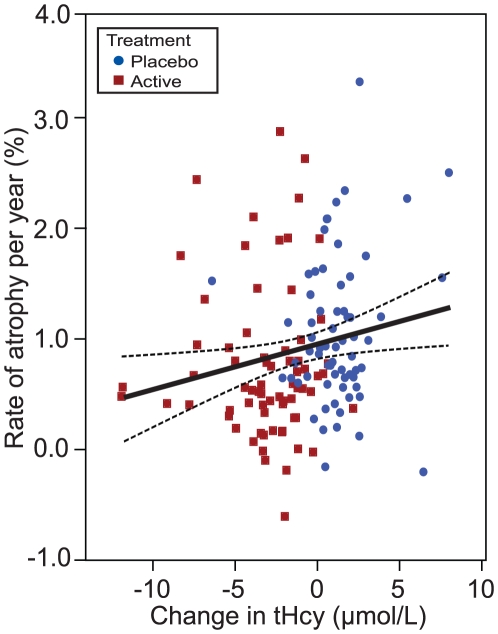
“The lack of association of atrophy with the change in cystathionine levels, a marker of vitamin B6 status [38], may indicate that vitamin B6 is less important as a determinant.”
Self-citationErickson, K. I., Erickson, B. L. S., Prakash, R. S., Colcombe, S. J., McAuley, E., & Kramer, A. F. (2008) · Brain Research · doi:10.1016/j.brainres.2008.01.030 · Cited by 45 · cited 1×
“It is noteworthy that a cross-sectional study found that supplementary intake of vitamin B6 or of vitamin B12, but not of folate, was associated with greater regional gray matter volumes in an elderly cohort [39].”
Yang, L.-K., Wong, K. C. W., Wu, M., Liao, S.-L., Kuo, C.-S., & Huang, R.-F. S. (2007) · Journal of the American College of Nutrition · doi:10.1080/07315724.2007.10719611 · Cited by 27 · cited 2×
“Raised tHcy is also associated with both regional and whole brain atrophy, not only in Alzheimer’s disease [12] but also in healthy elderly [17,18,19,20,21].”
Aisen, P. S. S. (2008) · Neurology · doi:10.1212/01.wnl.0000313380.89894.54 · Cited by 27
Wills, W., Trieman, N., & Leff, J. (1998) · International Journal of Geriatric Psychiatry · doi:10.1002/(sici)1099-1166(199804)13:4
Cited by
Sorted by citations
2024 Alzheimer's disease facts and figures
(2024) · Alzheimer's & Dementia · doi:10.1002/alz.13809 · Cited by 2,536
Aging and aging-related diseases: from molecular mechanisms to interventions and treatments
Guo, J., Huang, X., Dou, L., Yan, M., Shen, T., Tang, W., & Li, J. (2022) · Signal Transduction and Targeted Therapy · doi:10.1038/s41392-022-01251-0 · Cited by 1,976
“However, the use of metformin by older adults can cause deficiencies in folate-related B vitamins, which are associated with reduced cognitive performance.(580) Additionally, impaired ER homeostasis has been found to induce the misfolding of proinsulin and the pathogenesis of diabetes.”
BackgroundDefeating Alzheimer's disease and other dementias: a priority for European science and society
Winblad, B., Amouyel, P., Andrieu, S., Ballard, C., Brayne, C., Brodaty, H., Cedazo-Minguez, A., Dubois, B., Edvardsson, D., Feldman, H., et al. (2016) · The Lancet Neurology · doi:10.1016/s1474-4422(16)00062-4 · Cited by 1,676
Biomarkers of Nutrition for Development—Folate Review
Bailey, L. B., Stover, P. J., McNulty, H., Fenech, M. F., Gregory, J. F., Mills, J. L., Pfeiffer, C. M., Fazili, Z., Zhang, M., Ueland, P. M., et al. (2015) · Journal of Nutrition · doi:10.3945/jn.114.206599 · Cited by 1,170
B Vitamins and the Brain: Mechanisms, Dose and Efficacy—A Review
Kennedy, D. (2016) · Nutrients · doi:10.3390/nu8020068 · Cited by 1,055
“It has also been noted [129] that more consistent evidence exists for lower vitamin B12 status and higher homocysteine levels being associated with decreased brain volume [134,135] and increased white matter lesions [136] and for supplementation with homocysteine lowering B vitamins attenuating the rate of cerebral at…”
Metadata
- Authors
- Smith, A. D., Smith, S. M., de Jager, C. A., Whitbread, P., Johnston, C., Agacinski, G., Oulhaj, A., Bradley, K. M., Jacoby, R., & Refsum, H.
- Affiliations
- University of Oxford (GB)
- University of Oslo (NO)
- Corresponding author
- Smith, A. David
- Venue
- PLoS ONE
- Publisher
- Public Library of Science (PLoS)
- Published
- 2010-09-08
- Volume
- 5
- Issue
- 9
- Pages
- e12244
- ISSN
- 1932-6203 (ISSN-L)
- PMC
- PMC2935890
- OpenAlex
- W2156635660
- Cited by
- 813
- References
- 49
- Citations by year
- 2026: 50 · 2025: 49 · 2024: 34 · 2023: 44 · 2022: 58 · 2021: 58 · 2020: 66 · 2019: 39 · 2018: 43 · 2017: 55 · 2016: 59 · 2015: 49 · 2014: 44 · 2013: 58 · 2012: 59
- FWCI
- 36.35
- Type
- journal article
- Language
- en
- Open access
- gold
- doi.org
- Locations
- PLoS ONE (publishedVersion, cc-by)
- PubMed Central (publishedVersion, cc-by)
- PubMed (publishedVersion)
- ORCA Online Research @Cardiff (Cardiff University) (acceptedVersion)
- DOAJ (DOAJ: Directory of Open Access Journals) (submittedVersion, cc-by-sa)
- Figshare (submittedVersion, cc-by)
- Funders
- Alzheimer's Research Trust
- National Institute for Health and Care Research
- University of Oxford
- Medical Research Council
- Topics
- Health Sciences › Nursing › Nutrition and Dietetics › Folate and B Vitamins Research
- Health Sciences › Medicine › Psychiatry and Mental health › Dementia and Cognitive Impairment Research
- Health Sciences › Medicine › Clinical Neurology › Alcoholism and Thiamine Deficiency
- Keywords
- homocysteine, B vitamins, folic acid, vitamin B6, vitamin B12, brain atrophy, mild cognitive impairment, cognitive decline, dementia prevention, older adults, plasma homocysteine, volumetric MRI, cognitive performance, adverse events
- MeSH terms
- Aged, Aged, 80 and over, Atrophy, Brain, Cognition Disorders, Female, Homocysteine, Humans, Magnetic Resonance Imaging, Male, Radiography, Vitamin B Complex, Treatment Outcome
About these checks
Registry, retraction, Cites and statistics results are computed, not judged, with one exception: a printed reference that no index lists is read once by a model before it counts as a citation error. Claims are extracted by a model and kept only when their quote appears verbatim in the text; each cited source is then checked, with a model’s help, for whether it says what the claim relies on. Those verdicts can be wrong — read the claim’s quote and the cited source before relying on one.
Statistics and arithmetic are recomputed, not judged.
Confidence bands are shown only for fields calibrated on our annotated test set. None is calibrated yet, so no band is shown.
What counts as a claim ›How we measure confidence ›How we check this ›
Are you an author, or do you see a problem with this page? Request a review
