

The DOI matches its Crossref record; 61 of the 61 references it cites were found in a registry or an index; none of the 49 sources its claims cite is checked for support yet.
Phospho-eIF2α Level Is Important for Determining Abilities of BACE1 Reduction to Rescue Cholinergic Neurodegeneration and Memory Defects in 5XFAD Mice
Open accessAbstract
β-Site APP-cleaving enzyme 1 (BACE1) initiates amyloid-β (Aβ) generation and thus represents a prime therapeutic target in treating Alzheimer's disease (AD). Notably, increasing evidence indicates that BACE1 levels become elevated in AD brains as disease progresses; however, it remains unclear how the BACE1 upregulation may affect efficacies of therapeutic interventions including BACE1-inhibiting approaches. Here, we crossed heterozygous BACE1 knockout mice with AD transgenic mice (5XFAD model) and compared the abilities of partial BACE1 reduction to rescue AD-like phenotypes at earlier (6-month-old) and advanced (15-18-month-old) stages of disease, which expressed normal (∼100%) and elevated (∼200%) levels of BACE1, respectively. BACE1(+/-) deletion rescued memory deficits as tested by the spontaneous alternation Y-maze task in 5XFAD mice at the earlier stage and prevented their septohippocampal cholinergic deficits associated with significant neuronal loss. Importantly, BACE1(+/-) deletion was no longer able to rescue memory deficits or cholinergic neurodegeneration in 5XFAD mice at the advanced stage. Moreover, BACE1(+/-) deletion significantly reduced levels of Aβ42 and the β-secretase-cleaved C-terminal fragment (C99) in 6-month-old 5XFAD mouse brains, while these neurotoxic β-cleavage products dramatically elevated with age and were not affected by BACE1(+/-) deletion in 15-18-month-old 5XFAD brains. Interestingly, although BACE1(+/-) deletion lowered BACE1 expression by ∼50% in 5XFAD mice irrespective of age in concordance with the reduction in gene copy number, BACE1 equivalent to wild-type controls remained in BACE1(+/-)·5XFAD mice at the advanced age. In accord, phosphorylation of the translation initiation factor eIF2α, an important mediator of BACE1 elevation, was dramatically increased (∼9-fold) in 15-18-month-old 5XFAD mice and remained highly upregulated (∼6-fold) in age-matched BACE1(+/-)·5XFAD mice. Together, our results indicate that partial reduction of BACE1 is not sufficient to block the phospho-eIF2α-dependent BACE1 elevation during the progression of AD, thus limiting its abilities to reduce cerebral Aβ/C99 levels and rescue memory deficits and cholinergic neurodegeneration.
Overview
AI snapshot
Written from the paper’s full text.
TL;DR
Partial (heterozygous) BACE1 reduction rescued memory deficits and septohippocampal cholinergic neurodegeneration in 6-month-old 5XFAD mice but failed to do so at 15–18 months, when BACE1 and phospho-eIF2α were elevated. The results suggest that phospho-eIF2α-driven BACE1 elevation limits the efficacy of partial BACE1 suppression as Alzheimer’s-like disease progresses.
Key findings
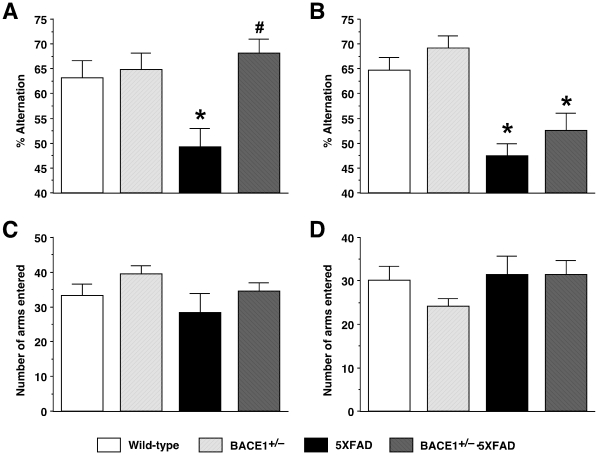
- BACE1+/− deletion rescued spontaneous alternation Y-maze deficits in 6-month-old 5XFAD mice, but not in 15–18-month-old 5XFAD mice (no significant difference between 5XFAD and BACE1+/−·5XFAD, p = 0.24).
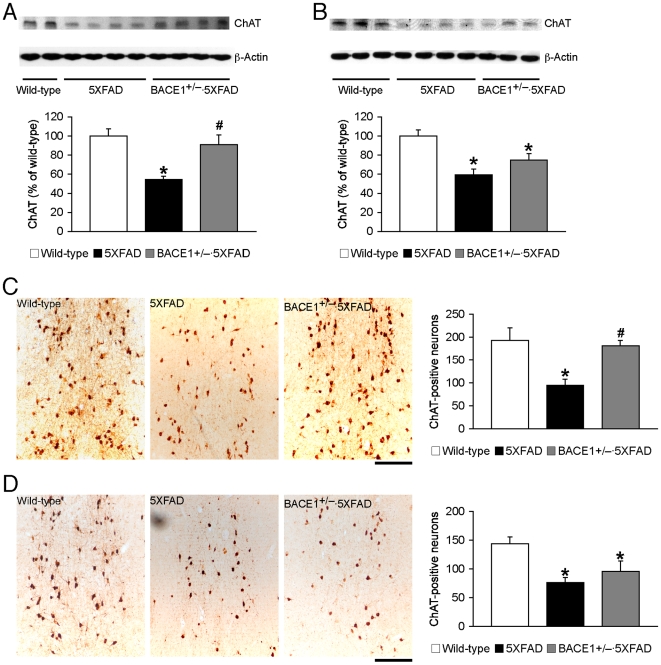
- BACE1+/− deletion restored hippocampal ChAT levels and ChAT-positive Ch1/2 neuron numbers in 6-month-old 5XFAD mice, but not at 15–18 months (ChAT trend p = 0.10; neuron number p = 0.32).
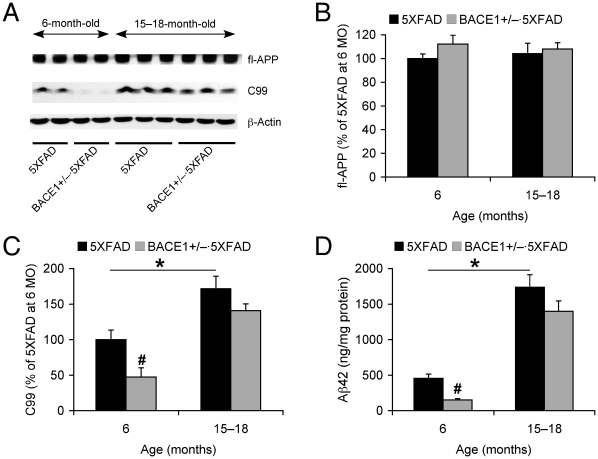
- BACE1+/− deletion reduced C99 by ∼53% and Aβ42 by ∼67% in 6-month-old 5XFAD brains; at 15–18 months, reductions were only ∼18% for C99 and ∼20% for Aβ42 and not significant (p = 0.14 and p = 0.19).
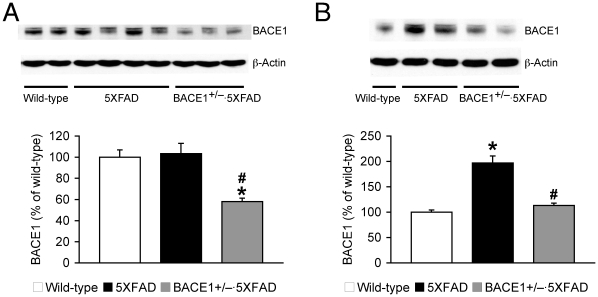
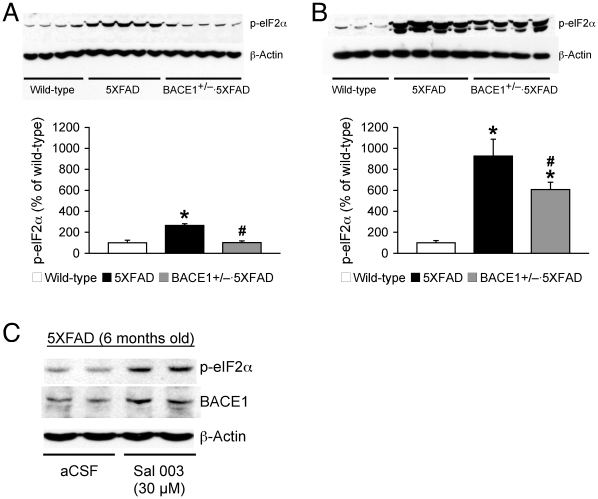
- BACE1 levels were ∼200% of wild-type in 15–18-month-old 5XFAD mice; BACE1+/− reduced BACE1 by ∼50% but residual BACE1 remained equivalent to wild-type. Phospho-eIF2α was ∼9-fold elevated in old 5XFAD and remained ∼6-fold elevated in BACE1+/−·5XFAD; Sal 003-induced phospho-eIF2α elevation increased BACE1 in 6-month-old 5XFAD slices.
Methods
- Crossbred heterozygous BACE1 knockout mice with 5XFAD transgenic mice to generate wild-type, BACE1+/−, 5XFAD, and BACE1+/−·5XFAD genotypes; tested at 6 months and 15–18 months of age.
- Behavioral testing used the spontaneous alternation Y-maze; biochemical measures included immunoblot for BACE1, APP, C99, phospho-eIF2α, ChAT, and β-actin; ChAT immunohistochemistry in medial septum/vertical limb of diagonal band; and Aβ42 sandwich ELISA.
- Brain slices from 6-month-old 5XFAD mice were treated with Sal 003 (30 µM) to inhibit phospho-eIF2α phosphatase; statistical analysis used one-way ANOVA with post-hoc Fisher’s PLSD, p < 0.05.
Limitations
- The paper does not state a dedicated limitations section.
- Evident from the text: findings are restricted to the 5XFAD mouse model and two age points (6 months and 15–18 months), with small group sizes (n = 4–12 per group in reported experiments).
- Evident from the text: BACE1 reduction was achieved by heterozygous genetic deletion, not pharmacological BACE1 inhibition, so direct clinical dosing implications remain untested.
Model-written summary. Check it against the paper before relying on it.
Integrity signals
Registry
Cites
Statistics
Figures
Verification
Claims the paper makes
40 Own result · 22 Own interpretation · 20 Not checked yet · 1 Own method · 1 No basis given
A result the paper reports from its own data — it cites no other source for it, so there is none to check. The quote shows it is in the paper.
In the paper
“ChAT levels in the hippocampus of both 5XFAD and BACE1+/−·5XFAD mice at 15–18 months of age were significantly lower than those of wild-type control mice (F (2,24) = 10.51, p<0.05)”
§ Phospho-eIF2α Level Is Important for Determining Abilities of BACE1 Reduction to Rescue Cholinergic Neurodegeneration and Memory Defects in 5XFAD Mice > Results > Abilities of partial BACE1 reduction to rescue cholinergic neurodegeneration decline with age in 5XFAD mice
plain- Asserted: passes — The authors put it forward as true.
- Checkable: passes — It can be checked against evidence.
- Load-bearing: passes — The paper’s conclusions depend on it.
- Based: passes — The paper gives a reason why it holds.
A result the paper reports from its own data — it cites no other source for it, so there is none to check. The quote shows it is in the paper.
In the paper
“Aβ42 levels were not significantly different between BACE1+/−·5XFAD and 5XFAD mice at 15–18 months of age (F (1,6) = 2.23, p = 0.19).”
§ Phospho-eIF2α Level Is Important for Determining Abilities of BACE1 Reduction to Rescue Cholinergic Neurodegeneration and Memory Defects in 5XFAD Mice > Results > Age-related effects of partial BACE1 reduction on APP processing and Aβ levels in 5XFAD mice
plain- Asserted: passes — The authors put it forward as true.
- Checkable: passes — It can be checked against evidence.
- Load-bearing: passes — The paper’s conclusions depend on it.
- Based: passes — The paper gives a reason why it holds.
A result the paper reports from its own data — it cites no other source for it, so there is none to check. The quote shows it is in the paper.
In the paper
“BACE1+/− ablation significantly lowered excessive levels of Aβ42 in 6-month-old 5XFAD mouse brains (F (1,6) = 23.53, p<0.05).”
§ Phospho-eIF2α Level Is Important for Determining Abilities of BACE1 Reduction to Rescue Cholinergic Neurodegeneration and Memory Defects in 5XFAD Mice > Results > Age-related effects of partial BACE1 reduction on APP processing and Aβ levels in 5XFAD mice
plaindirect- Asserted: passes — The authors put it forward as true.
- Checkable: passes — It can be checked against evidence.
- Load-bearing: passes — The paper’s conclusions depend on it.
- Based: passes — The paper gives a reason why it holds.
A result the paper reports from its own data — it cites no other source for it, so there is none to check. The quote shows it is in the paper.
In the paper
“Levels of the β-secretase-cleaved C-terminal fragment (C99) were significantly reduced in BACE1+/−·5XFAD mice at 6 months of age as compared to 5XFAD mice (F (1,10) = 7.37, p<0.05)”
§ Phospho-eIF2α Level Is Important for Determining Abilities of BACE1 Reduction to Rescue Cholinergic Neurodegeneration and Memory Defects in 5XFAD Mice > Results > Age-related effects of partial BACE1 reduction on APP processing and Aβ levels in 5XFAD mice
plaindirect- Asserted: passes — The authors put it forward as true.
- Checkable: passes — It can be checked against evidence.
- Load-bearing: passes — The paper’s conclusions depend on it.
- Based: passes — The paper gives a reason why it holds.
A result the paper reports from its own data — it cites no other source for it, so there is none to check. The quote shows it is in the paper.
In the paper
“Post-hoc Fisher's PLSD test indicated only a trend toward slight increases in ChAT levels of BACE1+/−·5XFAD mice compared to those of 5XFAD littermates (p = 0.10).”
§ Phospho-eIF2α Level Is Important for Determining Abilities of BACE1 Reduction to Rescue Cholinergic Neurodegeneration and Memory Defects in 5XFAD Mice > Results > Abilities of partial BACE1 reduction to rescue cholinergic neurodegeneration decline with age in 5XFAD mice
hedged- Asserted: passes — The authors put it forward as true.
- Checkable: passes — It can be checked against evidence.
- Load-bearing: passes — The paper’s conclusions depend on it.
- Based: passes — The paper gives a reason why it holds.
A result the paper reports from its own data — it cites no other source for it, so there is none to check. The quote shows it is in the paper.
In the paper
“while it was no longer able to significantly influence levels of these β-products in 15–18-month-old 5XFAD mouse brains (∼18% and ∼20% reductions, respectively).”
§ Phospho-eIF2α Level Is Important for Determining Abilities of BACE1 Reduction to Rescue Cholinergic Neurodegeneration and Memory Defects in 5XFAD Mice > Results > Age-related effects of partial BACE1 reduction on APP processing and Aβ levels in 5XFAD mice
plain- Asserted: passes — The authors put it forward as true.
- Checkable: passes — It can be checked against evidence.
- Load-bearing: passes — The paper’s conclusions depend on it.
- Based: passes — The paper gives a reason why it holds.
A result the paper reports from its own data — it cites no other source for it, so there is none to check. The quote shows it is in the paper.
In the paper
“the spatial working memory deficits were rescued to wild-type levels in 5XFAD mice with BACE1+/− genotype, which exhibited significantly higher spontaneous alternation than did 5XFAD mice (p<0.05)”
§ Phospho-eIF2α Level Is Important for Determining Abilities of BACE1 Reduction to Rescue Cholinergic Neurodegeneration and Memory Defects in 5XFAD Mice > Results > Abilities of partial BACE1 reduction to rescue memory dysfunction decline with age in 5XFAD mice
plaindirect- Asserted: passes — The authors put it forward as true.
- Checkable: passes — It can be checked against evidence.
- Load-bearing: passes — The paper’s conclusions depend on it.
- Based: passes — The paper gives a reason why it holds.
A result the paper reports from its own data — it cites no other source for it, so there is none to check. The quote shows it is in the paper.
In the paper
“the residual levels of BACE1 in older BACE1+/−·5XFAD mouse brains were equivalent to those of wild-type controls.”
§ Phospho-eIF2α Level Is Important for Determining Abilities of BACE1 Reduction to Rescue Cholinergic Neurodegeneration and Memory Defects in 5XFAD Mice > Results > Age-related effects of partial BACE1 reduction on BACE1 and phospho-eIF2α levels in 5XFAD mice
plain- Asserted: passes — The authors put it forward as true.
- Checkable: passes — It can be checked against evidence.
- Load-bearing: passes — The paper’s conclusions depend on it.
- Based: passes — The paper gives a reason why it holds.
A result the paper reports from its own data — it cites no other source for it, so there is none to check. The quote shows it is in the paper.
In the paper
“the elevated levels of C99 were no longer significantly affected by BACE1+/− deletion at this advanced age (F (1,9) = 2.57, p = 0.14).”
§ Phospho-eIF2α Level Is Important for Determining Abilities of BACE1 Reduction to Rescue Cholinergic Neurodegeneration and Memory Defects in 5XFAD Mice > Results > Age-related effects of partial BACE1 reduction on APP processing and Aβ levels in 5XFAD mice
plain- Asserted: passes — The authors put it forward as true.
- Checkable: passes — It can be checked against evidence.
- Load-bearing: passes — The paper’s conclusions depend on it.
- Based: passes — The paper gives a reason why it holds.
A result the paper reports from its own data — it cites no other source for it, so there is none to check. The quote shows it is in the paper.
In the paper
“C99 levels in 15–18-month-old 5XFAD mouse brains were significantly higher than those of 6-month-old 5XFAD brains (∼172%) (F (1,10) = 10.71, p<0.05)”
§ Phospho-eIF2α Level Is Important for Determining Abilities of BACE1 Reduction to Rescue Cholinergic Neurodegeneration and Memory Defects in 5XFAD Mice > Results > Age-related effects of partial BACE1 reduction on APP processing and Aβ levels in 5XFAD mice
plaincorrelational- Asserted: passes — The authors put it forward as true.
- Checkable: passes — It can be checked against evidence.
- Load-bearing: passes — The paper’s conclusions depend on it.
- Based: passes — The paper gives a reason why it holds.
- It may state two separate claims as one. 18
- Probably not a substantial claim. 12
A result the paper reports from its own data — it cites no other source for it, so there is none to check. The quote shows it is in the paper.
In the paper
“At 6 months of age, the 5XFAD-associated increase in phospho-eIF2α level was marginal and it was completely abolished in BACE1+/−·5XFAD mice (F (2,11) = 25.76, p<0.05)”
§ Phospho-eIF2α Level Is Important for Determining Abilities of BACE1 Reduction to Rescue Cholinergic Neurodegeneration and Memory Defects in 5XFAD Mice > Results > Age-related effects of partial BACE1 reduction on BACE1 and phospho-eIF2α levels in 5XFAD mice
plain- Asserted: passes — The authors put it forward as true.
- Checkable: passes — It can be checked against evidence.
- Load-bearing: passes — The paper’s conclusions depend on it.
- Based: passes — The paper gives a reason why it holds.
It may state two separate claims as one.
A result the paper reports from its own data — it cites no other source for it, so there is none to check. The quote shows it is in the paper.
In the paper
“Post-hoc Fisher's PLSD test revealed no significant difference in alternation performances between 5XFAD and BACE1+/−·5XFAD mice (p = 0.24), indicating that BACE1+/− deletion failed to improve the spatial working memory defect in 5XFAD mice at this advanced age.”
§ Phospho-eIF2α Level Is Important for Determining Abilities of BACE1 Reduction to Rescue Cholinergic Neurodegeneration and Memory Defects in 5XFAD Mice > Results > Abilities of partial BACE1 reduction to rescue memory dysfunction decline with age in 5XFAD mice
hedged- Asserted: passes — The authors put it forward as true.
- Checkable: passes — It can be checked against evidence.
- Load-bearing: passes — The paper’s conclusions depend on it.
- Based: passes — The paper gives a reason why it holds.
It may state two separate claims as one.
A result the paper reports from its own data — it cites no other source for it, so there is none to check. The quote shows it is in the paper.
In the paper
“the number of ChAT-immunoreactive neurons in 5XFAD and BACE1+/−·5XFAD mice at 15–18 months of age was significantly lower than that of wild-type control mice (F (2,13) = 8.49, p<0.05) and was indistinguishable from each other according to post-hoc Fisher's PLSD test (p = 0.32).”
§ Phospho-eIF2α Level Is Important for Determining Abilities of BACE1 Reduction to Rescue Cholinergic Neurodegeneration and Memory Defects in 5XFAD Mice > Results > Abilities of partial BACE1 reduction to rescue cholinergic neurodegeneration decline with age in 5XFAD mice
plain- Asserted: passes — The authors put it forward as true.
- Checkable: passes — It can be checked against evidence.
- Load-bearing: passes — The paper’s conclusions depend on it.
- Based: passes — The paper gives a reason why it holds.
It may state two separate claims as one.
A result the paper reports from its own data — it cites no other source for it, so there is none to check. The quote shows it is in the paper.
In the paper
“BACE1+/− deletion significantly suppressed the β-cleavage of APP in 5XFAD mice at 6 months of age resulting in reduced levels of C99 and Aβ42 (by ∼53% and ∼67%, respectively)”
§ Phospho-eIF2α Level Is Important for Determining Abilities of BACE1 Reduction to Rescue Cholinergic Neurodegeneration and Memory Defects in 5XFAD Mice > Results > Age-related effects of partial BACE1 reduction on APP processing and Aβ levels in 5XFAD mice
plaindirect- Asserted: passes — The authors put it forward as true.
- Checkable: passes — It can be checked against evidence.
- Load-bearing: passes — The paper’s conclusions depend on it.
- Based: passes — The paper gives a reason why it holds.
It may state two separate claims as one.
A result the paper reports from its own data — it cites no other source for it, so there is none to check. The quote shows it is in the paper.
In the paper
“Importantly, we found that BACE1+/− deletion restored the cholinergic defects to normal consistent with improvements in hippocampal spatial memory function in 5XFAD mice at 6 months of age.”
§ Phospho-eIF2α Level Is Important for Determining Abilities of BACE1 Reduction to Rescue Cholinergic Neurodegeneration and Memory Defects in 5XFAD Mice > Discussion
plaindirect- Asserted: passes — The authors put it forward as true.
- Checkable: passes — It can be checked against evidence.
- Load-bearing: passes — The paper’s conclusions depend on it.
- Based: passes — The paper gives a reason why it holds.
It may state two separate claims as one.
A result the paper reports from its own data — it cites no other source for it, so there is none to check. The quote shows it is in the paper.
In the paper
“Although heterozygous knockout also reduced BACE1 expression by ∼50% in 15–18-month-old 5XFAD mice in concordance with the reduction in gene copy number, their C99 levels were not significantly lower than age-matched 5XFAD levels.”
§ Phospho-eIF2α Level Is Important for Determining Abilities of BACE1 Reduction to Rescue Cholinergic Neurodegeneration and Memory Defects in 5XFAD Mice > Discussion
plain- Asserted: passes — The authors put it forward as true.
- Checkable: passes — It can be checked against evidence.
- Load-bearing: passes — The paper’s conclusions depend on it.
- Based: passes — The paper gives a reason why it holds.
It may state two separate claims as one.
None of the sources cited for this claim have been checked yet.
In the paper
“5XFAD mice begin to develop visible amyloid deposition as early as 2 months of age and exhibit memory declines on hippocampus-dependent tasks between 4–6 months with moderate Aβ accumulation [8], [28], [29], [30], [31].”
§ Phospho-eIF2α Level Is Important for Determining Abilities of BACE1 Reduction to Rescue Cholinergic Neurodegeneration and Memory Defects in 5XFAD Mice > Introduction
What the sources say
- Not checked yetcites [8] Ohno M Chang L Tseng W Oakley H Citron M 2006 Temporal memory deficits in Alzheimer's mouse models: rescue by genetic deletion of BACE1. Eur J Neurosci 23 251 260 16420434
- Not checked yetcites [28] Oakley H Cole SL Logan S Maus E Shao P 2006 Intraneuronal β-amyloid aggregates, neurodegeneration, and neuron loss in transgenic mice with five familial Alzheimer's disease mutations: potential factors in amyloid plaque formation. J Neurosci 26 10129 10140 17021169 PMC6674618
- Not checked yetcites [29] Kimura R Ohno M 2009 Impairments in remote memory stabilization precede hippocampal synaptic and cognitive failures in 5XFAD Alzheimer mouse model. Neurobiol Dis 33 229 235 19026746 PMC2741400
plaincorrelational- Asserted: passes — The authors put it forward as true.
- Checkable: passes — It can be checked against evidence.
- Load-bearing: passes — The paper’s conclusions depend on it.
- Based: passes — The paper gives a reason why it holds.
It may state two separate claims as one.
None of the sources cited for this claim have been checked yet.
In the paper
“the β-secretase (BACE1: β-site amyloid precursor protein cleaving enzyme 1), which is responsible for initiating the production of Aβ, represents an excellent therapeutic target for the treatment of AD [3], [4], [5], [6].”
§ Phospho-eIF2α Level Is Important for Determining Abilities of BACE1 Reduction to Rescue Cholinergic Neurodegeneration and Memory Defects in 5XFAD Mice > Introduction
What the sources say
- Not checked yetcites [3] Citron M 2004 β-Secretase inhibition for the treatment of Alzheimer's disease–promise and challenge. Trends Pharmacol Sci 25 92 97 15102495
- Not checked yetcites [4] Ohno M 2006 Genetic and pharmacological basis for therapeutic inhibition of β- and γ-secretases in mouse models of Alzheimer's memory deficits. Rev Neurosci 17 429 454 17139843
- Not checked yetcites [5] Ohno M 2008 β-Secretase as a prime therapeutic target for Alzheimer's disease: a perspective from mouse model studies. Araki W Recent Advances in the Biology of Secretases, Key Proteases in Alzheimer's Disease Kerala Research Signpost 1 25
plain- Asserted: passes — The authors put it forward as true.
- Checkable: fails — It may be too vague to check against evidence.
- Load-bearing: passes — The paper’s conclusions depend on it.
- Based: passes — The paper gives a reason why it holds.
Probably not a substantial claim. It may be too vague to check against evidence.
None of the sources cited for this claim have been checked yet.
In the paper
“partial reduction of BACE1 suffices to attenuate Aβ-related pathology and rescue synaptic and memory deficits in mouse models of AD [18], [19], [20], [21], [22].”
§ Phospho-eIF2α Level Is Important for Determining Abilities of BACE1 Reduction to Rescue Cholinergic Neurodegeneration and Memory Defects in 5XFAD Mice > Introduction
What the sources say
- Not checked yetcites [18] Singer O Marr RA Rockenstein E Crews L Coufal NG 2005 Targeting BACE1 with siRNAs ameliorates Alzheimer disease neuropathology in a transgenic model. Nat Neurosci 8 1343 1349 16136043
- Not checked yetcites [19] Chang WP Downs D Huang XP Da H Fung KM 2007 Amyloid-β reduction by memapsin 2 (β-secretase) immunization. FASEB J 21 3184 3196 17494994
- Not checked yetcites [20] McConlogue L Buttini M Anderson JP Brigham EF Chen KS 2007 Partial reduction of BACE1 has dramatic effects on Alzheimer plaque and synaptic pathology in APP transgenic mice. J Biol Chem 282 26326 26334 17616527
boosteddirect- Asserted: passes — The authors put it forward as true.
- Checkable: passes — It can be checked against evidence.
- Load-bearing: passes — The paper’s conclusions depend on it.
- Based: passes — The paper gives a reason why it holds.
Probably not a substantial claim. It may state two separate claims as one.
None of the sources cited for this claim have been checked yet.
In the paper
“evidence is accumulating that BACE1 expression and activity levels are significantly elevated in sporadic AD brains, which is considered a crucial contributing factor in the pathogenesis of this enigmatic disease [23], [24], [25], [26], [27].”
§ Phospho-eIF2α Level Is Important for Determining Abilities of BACE1 Reduction to Rescue Cholinergic Neurodegeneration and Memory Defects in 5XFAD Mice > Introduction
What the sources say
- Not checked yetcites [23] Fukumoto H Cheung BS Hyman BT Irizarry MC 2002 β-Secretase protein and activity are increased in the neocortex in Alzheimer disease. Arch Neurol 59 1381 1389 12223024
- Not checked yetcites [24] Li R Lindholm K Yang LB Yue X Citron M 2004 Amyloid β peptide load is correlated with increased β-secretase activity in sporadic Alzheimer's disease patients. Proc Natl Acad Sci USA 101 3632 3637 14978286 PMC373514
- Not checked yetcites [25] Yang LB Lindholm K Yan R Citron M Xia W 2003 Elevated β-secretase expression and enzymatic activity detected in sporadic Alzheimer disease. Nat Med 9 3 4 12514700
plaindirect- Asserted: passes — The authors put it forward as true.
- Checkable: passes — It can be checked against evidence.
- Load-bearing: passes — The paper’s conclusions depend on it.
- Based: passes — The paper gives a reason why it holds.
It may state two separate claims as one.
In the paper
“previous studies also showed that the effects of BACE1+/− deletion in reducing total Aβ levels and plaque load in PDAPP transgenic mice become smaller during the course of disease progression [20]”
§ Phospho-eIF2α Level Is Important for Determining Abilities of BACE1 Reduction to Rescue Cholinergic Neurodegeneration and Memory Defects in 5XFAD Mice > Discussion
What the sources say
- Not checked yetcites [20] McConlogue L Buttini M Anderson JP Brigham EF Chen KS 2007 Partial reduction of BACE1 has dramatic effects on Alzheimer plaque and synaptic pathology in APP transgenic mice. J Biol Chem 282 26326 26334 17616527
plaindirect- Asserted: passes — The authors put it forward as true.
- Checkable: passes — It can be checked against evidence.
- Load-bearing: passes — The paper’s conclusions depend on it.
- Based: passes — The paper gives a reason why it holds.
Probably not a substantial claim.
In the paper
“complete deletion of BACE1 (BACE1−/−), which abrogates Aβ production, can still rescue impaired spontaneous alternation performance concomitant with the prevention of Aβ deposition and neuronal loss in 5XFAD mice at this advanced age [9].”
§ Phospho-eIF2α Level Is Important for Determining Abilities of BACE1 Reduction to Rescue Cholinergic Neurodegeneration and Memory Defects in 5XFAD Mice > Discussion
What the sources say
- Not checked yetcites [9] Ohno M Cole SL Yasvoina M Zhao J Citron M 2007 BACE1 gene deletion prevents neuron loss and memory deficits in 5XFAD APP/PS1 transgenic mice. Neurobiol Dis 26 134 145 17258906 PMC1876698
plaindirect- Asserted: passes — The authors put it forward as true.
- Checkable: passes — It can be checked against evidence.
- Load-bearing: passes — The paper’s conclusions depend on it.
- Based: passes — The paper gives a reason why it holds.
It may state two separate claims as one.
In the paper
“spontaneous alternation in the Y-maze that represents a measure of spatial working memory [34]”
§ Phospho-eIF2α Level Is Important for Determining Abilities of BACE1 Reduction to Rescue Cholinergic Neurodegeneration and Memory Defects in 5XFAD Mice > Results > Abilities of partial BACE1 reduction to rescue memory dysfunction decline with age in 5XFAD mice
What the sources say
- Not checked yetcites [34] Lalonde R 2002 The neurobiological basis of spontaneous alternation. Neurosci Biobehav Rev 26 91 104 11835987
plain- Asserted: passes — The authors put it forward as true.
- Checkable: passes — It can be checked against evidence.
- Load-bearing: passes — The paper’s conclusions depend on it.
- Based: passes — The paper gives a reason why it holds.
Probably not a substantial claim.
None of the sources cited for this claim have been checked yet.
In the paper
“recent studies suggest that phosphorylation of the eukaryotic translation initiation factor-2α (eIF2α) plays an important role in mediating the post-transcriptional upregulation of BACE1 in human AD and 5XFAD mouse brains [32], [33].”
§ Phospho-eIF2α Level Is Important for Determining Abilities of BACE1 Reduction to Rescue Cholinergic Neurodegeneration and Memory Defects in 5XFAD Mice > Introduction
What the sources say
- Not checked yetcites [32] Chang RC Wong AK Ng HK Hugon J 2002 Phosphorylation of eukaryotic initiation factor-2α (eIF2α) is associated with neuronal degeneration in Alzheimer's disease. Neuroreport 13 2429 2432 12499843
- Not checked yetcites [33] O'Connor T Sadleir KR Maus E Velliquette RA Zhao J 2008 Phosphorylation of the translation initiation factor eIF2α increases BACE1 levels and promotes amyloidogenesis. Neuron 60 988 1009 19109907 PMC2667382
hedgeddirect- Asserted: passes — The authors put it forward as true.
- Checkable: passes — It can be checked against evidence.
- Load-bearing: passes — The paper’s conclusions depend on it.
- Based: passes — The paper gives a reason why it holds.
Probably not a substantial claim.
A conclusion the paper draws from its own results — it cites no other source for it, so there is none to check. The quote shows it is in the paper.
In the paper
“Together, our results indicate that partial reduction of BACE1 is not sufficient to block the phospho-eIF2α-dependent BACE1 elevation during the progression of AD, thus limiting its abilities to reduce cerebral Aβ/C99 levels and rescue memory deficits and cholinergic neurodegeneration.”
§ Phospho-eIF2α Level Is Important for Determining Abilities of BACE1 Reduction to Rescue Cholinergic Neurodegeneration and Memory Defects in 5XFAD Mice > Abstract
hedgeddirect- Asserted: passes — The authors put it forward as true.
- Checkable: passes — It can be checked against evidence.
- Load-bearing: passes — The paper’s conclusions depend on it.
- Based: passes — The paper gives a reason why it holds.
It may state two separate claims as one.
- Rests on an assumption: Approximately 50% BACE1 suppression is likely efficacious.
None of the sources cited for this claim have been checked yet.
In the paper
“genetic deletion of BACE1 prevents AD-like pathologies and improves cognitive impairments in different transgenic mouse models [7], [8], [9], [10].”
§ Phospho-eIF2α Level Is Important for Determining Abilities of BACE1 Reduction to Rescue Cholinergic Neurodegeneration and Memory Defects in 5XFAD Mice > Introduction
What the sources say
- Not checked yetcites [7] Ohno M Sametsky EA Younkin LH Oakley H Younkin SG 2004 BACE1 deficiency rescues memory deficits and cholinergic dysfunction in a mouse model of Alzheimer's disease. Neuron 41 27 33 14715132
- Not checked yetcites [8] Ohno M Chang L Tseng W Oakley H Citron M 2006 Temporal memory deficits in Alzheimer's mouse models: rescue by genetic deletion of BACE1. Eur J Neurosci 23 251 260 16420434
- Not checked yetcites [9] Ohno M Cole SL Yasvoina M Zhao J Citron M 2007 BACE1 gene deletion prevents neuron loss and memory deficits in 5XFAD APP/PS1 transgenic mice. Neurobiol Dis 26 134 145 17258906 PMC1876698
plaindirect- Asserted: passes — The authors put it forward as true.
- Checkable: passes — It can be checked against evidence.
- Load-bearing: passes — The paper’s conclusions depend on it.
- Based: passes — The paper gives a reason why it holds.
Probably not a substantial claim. It may state two separate claims as one.
None of the sources cited for this claim have been checked yet.
In the paper
“the β-secretase (BACE1: β-site amyloid precursor protein cleaving enzyme 1), which is responsible for initiating the production of Aβ, represents an excellent therapeutic target for the treatment of AD [3], [4], [5], [6].”
§ Phospho-eIF2α Level Is Important for Determining Abilities of BACE1 Reduction to Rescue Cholinergic Neurodegeneration and Memory Defects in 5XFAD Mice > Introduction
What the sources say
- Not checked yetcites [3] Citron M 2004 β-Secretase inhibition for the treatment of Alzheimer's disease–promise and challenge. Trends Pharmacol Sci 25 92 97 15102495
- Not checked yetcites [4] Ohno M 2006 Genetic and pharmacological basis for therapeutic inhibition of β- and γ-secretases in mouse models of Alzheimer's memory deficits. Rev Neurosci 17 429 454 17139843
- Not checked yetcites [5] Ohno M 2008 β-Secretase as a prime therapeutic target for Alzheimer's disease: a perspective from mouse model studies. Araki W Recent Advances in the Biology of Secretases, Key Proteases in Alzheimer's Disease Kerala Research Signpost 1 25
plaindirect- Asserted: passes — The authors put it forward as true.
- Checkable: passes — It can be checked against evidence.
- Load-bearing: passes — The paper’s conclusions depend on it.
- Based: passes — The paper gives a reason why it holds.
Probably not a substantial claim.
None of the sources cited for this claim have been checked yet.
In the paper
“The septohippocampal cholinergic pathway has an established role in mediating spatial working memory including spontaneous alternation performance in the Y-maze [35], [36], [37].”
§ Phospho-eIF2α Level Is Important for Determining Abilities of BACE1 Reduction to Rescue Cholinergic Neurodegeneration and Memory Defects in 5XFAD Mice > Results > Abilities of partial BACE1 reduction to rescue cholinergic neurodegeneration decline with age in 5XFAD mice
What the sources say
- Not checked yetcites [35] Ohno M Yamamoto T Watanabe S 1992 Effects of intrahippocampal injections of N-methyl-D-aspartate receptor antagonists and scopolamine on working and reference memory assessed in rats by a three-panel runway task. J Pharmacol Exp Ther 263 943 950 1361577
- Not checked yetcites [36] Feasey-Truger KJ Li BH ten Bruggencate G 1992 Lesions of the medial septum which produce deficits in working/spatial memory do not impair long-term potentiation in the CA3 region of the rat hippocampus in vivo. Brain Res 591 296 304 1446243
- Not checked yetcites [37] Chang Q Gold PE 2004 Impaired and spared cholinergic functions in the hippocampus after lesions of the medial septum/vertical limb of the diagonal band with 192 IgG-saporin. Hippocampus 14 170 179 15098723
boosteddirect- Asserted: passes — The authors put it forward as true.
- Checkable: passes — It can be checked against evidence.
- Load-bearing: passes — The paper’s conclusions depend on it.
- Based: passes — The paper gives a reason why it holds.
Probably not a substantial claim.
None of the sources cited for this claim have been checked yet.
In the paper
“At ≥9 months of age, 5XFAD mice show severe memory deficits together with further developed Aβ pathology and marked synaptic degeneration and neuronal loss [9], [21], [28], [30], [31].”
§ Phospho-eIF2α Level Is Important for Determining Abilities of BACE1 Reduction to Rescue Cholinergic Neurodegeneration and Memory Defects in 5XFAD Mice > Introduction
What the sources say
- Not checked yetcites [9] Ohno M Cole SL Yasvoina M Zhao J Citron M 2007 BACE1 gene deletion prevents neuron loss and memory deficits in 5XFAD APP/PS1 transgenic mice. Neurobiol Dis 26 134 145 17258906 PMC1876698
- Not checked yetcites [21] Devi L Ohno M 2010 Genetic reductions of β-site amyloid precursor protein-cleaving enzyme 1 and amyloid-β ameliorate impairment of conditioned taste aversion memory in 5XFAD Alzheimer's disease model mice. Eur J Neurosci 31 110 118 20092558 PMC2887274
- Not checked yetcites [28] Oakley H Cole SL Logan S Maus E Shao P 2006 Intraneuronal β-amyloid aggregates, neurodegeneration, and neuron loss in transgenic mice with five familial Alzheimer's disease mutations: potential factors in amyloid plaque formation. J Neurosci 26 10129 10140 17021169 PMC6674618
plaincorrelational- Asserted: passes — The authors put it forward as true.
- Checkable: passes — It can be checked against evidence.
- Load-bearing: passes — The paper’s conclusions depend on it.
- Based: passes — The paper gives a reason why it holds.
It may state two separate claims as one.
A conclusion the paper draws from its own results — it cites no other source for it, so there is none to check. The quote shows it is in the paper.
In the paper
“However, these phenotypes are not observed in BACE1+/− knockout mice, suggesting that potential mechanism-based side effects might occur only in completely abolishing BACE1 activity but not in partially inhibiting it.”
§ Phospho-eIF2α Level Is Important for Determining Abilities of BACE1 Reduction to Rescue Cholinergic Neurodegeneration and Memory Defects in 5XFAD Mice > Discussion
hedgedconditional- Asserted: passes — The authors put it forward as true.
- Checkable: passes — It can be checked against evidence.
- Load-bearing: passes — The paper’s conclusions depend on it.
- Based: passes — The paper gives a reason why it holds.
It may state two separate claims as one.
- Rests on an assumption: These phenotypes (liabilities of complete BACE1 deletion) are not observed in BACE1+/− knockout mice.
None of the sources cited for this claim have been checked yet.
In the paper
“In line with the discovery of various BACE1 physiological substrates besides APP such as neuregulins and β-subunits of the voltage-gated sodium channel, recent studies reveal some liabilities of complete BACE1 deletion including hypomyelination and altered synaptic functions or neuronal activities [4], [5], [6].”
§ Phospho-eIF2α Level Is Important for Determining Abilities of BACE1 Reduction to Rescue Cholinergic Neurodegeneration and Memory Defects in 5XFAD Mice > Discussion
What the sources say
- Not checked yetcites [4] Ohno M 2006 Genetic and pharmacological basis for therapeutic inhibition of β- and γ-secretases in mouse models of Alzheimer's memory deficits. Rev Neurosci 17 429 454 17139843
- Not checked yetcites [5] Ohno M 2008 β-Secretase as a prime therapeutic target for Alzheimer's disease: a perspective from mouse model studies. Araki W Recent Advances in the Biology of Secretases, Key Proteases in Alzheimer's Disease Kerala Research Signpost 1 25
- Not checked yetcites [6] Cole SL Vassar R 2007 The Alzheimer's disease β-secretase enzyme, BACE1. Mol Neurodegener 2 22 18005427 PMC2211305
plaindirect- Asserted: passes — The authors put it forward as true.
- Checkable: passes — It can be checked against evidence.
- Load-bearing: passes — The paper’s conclusions depend on it.
- Based: passes — The paper gives a reason why it holds.
It may state two separate claims as one.
None of the sources cited for this claim have been checked yet.
In the paper
“accumulation of the amyloid-β (Aβ) peptide plays a central role in triggering a pathogenic cascade ultimately leading to neuronal death and profound memory deficits [1], [2].”
§ Phospho-eIF2α Level Is Important for Determining Abilities of BACE1 Reduction to Rescue Cholinergic Neurodegeneration and Memory Defects in 5XFAD Mice > Introduction
What the sources say
- Not checked yetcites [1] Hardy JA Higgins GA 1992 Alzheimer's disease: the amyloid cascade hypothesis. Science 256 184 185 1566067
- Not checked yetcites [2] Hardy J Selkoe DJ 2002 The amyloid hypothesis of Alzheimer's disease: progress and problems on the road to therapeutics. Science 297 353 356 12130773
plaindirect- Asserted: passes — The authors put it forward as true.
- Checkable: passes — It can be checked against evidence.
- Load-bearing: passes — The paper’s conclusions depend on it.
- Based: passes — The paper gives a reason why it holds.
Probably not a substantial claim.
A conclusion the paper draws from its own results — it cites no other source for it, so there is none to check. The quote shows it is in the paper.
In the paper
“but also indicate that neurotoxic Aβ42 and/or C99 species are responsible for killing cholinergic neurons.”
§ Phospho-eIF2α Level Is Important for Determining Abilities of BACE1 Reduction to Rescue Cholinergic Neurodegeneration and Memory Defects in 5XFAD Mice > Discussion
hedgeddirect- Asserted: passes — The authors put it forward as true.
- Checkable: passes — It can be checked against evidence.
- Load-bearing: passes — The paper’s conclusions depend on it.
- Based: passes — The paper gives a reason why it holds.
It may state two separate claims as one.
A conclusion the paper draws from its own results — it cites no other source for it, so there is none to check. The quote shows it is in the paper.
In the paper
“Notably, phosphorylation of eIF2α, which increases age-dependently and induces BACE1 elevation in the 5XFAD model, seems to be important for determining the abilities of partial BACE1 reduction to improve cholinergic and mnemonic deficits.”
§ Phospho-eIF2α Level Is Important for Determining Abilities of BACE1 Reduction to Rescue Cholinergic Neurodegeneration and Memory Defects in 5XFAD Mice > Discussion
hedgedconditional- Asserted: passes — The authors put it forward as true.
- Checkable: passes — It can be checked against evidence.
- Load-bearing: passes — The paper’s conclusions depend on it.
- Based: passes — The paper gives a reason why it holds.
It may state two separate claims as one.
None of the sources cited for this claim have been checked yet.
In the paper
“Interestingly, transgenic overexpression or central administration of the potentially amyloidogenic C99 fragments has been reported to induce memory defects and neurodegeneration [45], [46], [47], [48], [49].”
§ Phospho-eIF2α Level Is Important for Determining Abilities of BACE1 Reduction to Rescue Cholinergic Neurodegeneration and Memory Defects in 5XFAD Mice > Discussion
What the sources say
- Not checked yetcites [45] Lee KW Im JY Song JS Lee SH Lee HJ 2006 Progressive neuronal loss and behavioral impairments of transgenic C57BL/6 inbred mice expressing the carboxy terminus of amyloid precursor protein. Neurobiol Dis 22 10 24 16289866
- Not checked yetcites [46] Nalbantoglu J Tirado-Santiago G Lahsaini A Poirier J Goncalves O 1997 Impaired learning and LTP in mice expressing the carboxy terminus of the Alzheimer amyloid precursor protein. Nature 387 500 505 9168112
- Not checked yetcites [47] Berger-Sweeney J McPhie DL Arters JA Greenan J Oster-Granite ML 1999 Impairments in learning and memory accompanied by neurodegeneration in mice transgenic for the carboxyl-terminus of the amyloid precursor protein. Brain Res Mol Brain Res 66 150 162 10095087
plaindirect- Asserted: passes — The authors put it forward as true.
- Checkable: passes — It can be checked against evidence.
- Load-bearing: passes — The paper’s conclusions depend on it.
- Based: passes — The paper gives a reason why it holds.
Probably not a substantial claim.
What the paper did — it cites no source for this, so there is none to check. The quote shows it is in the paper.
In the paper
“All experiments were done blind with respect to the genotype of the mice at 6 and 15–18 months of age, and were conducted with the approval of the Nathan Kline Institute Animal Care and Use Committee (AP2008-268).”
§ Phospho-eIF2α Level Is Important for Determining Abilities of BACE1 Reduction to Rescue Cholinergic Neurodegeneration and Memory Defects in 5XFAD Mice > Materials and Methods > Animals
plain- Asserted: passes — The authors put it forward as true.
- Checkable: passes — It can be checked against evidence.
- Load-bearing: fails — The paper’s conclusions may not depend on it.
- Based: passes — The paper gives a reason why it holds.
Probably not a substantial claim. The paper’s conclusions may not depend on it.
None of the sources cited for this claim have been checked yet.
In the paper
“Consistent with the so-called “cholinergic hypothesis” of AD [50], several APP transgenic mouse models reproduce cholinergic neurodegeneration as evidenced by dystrophic neurites, decreased fiber density in the hippocampus and cortex, and reductions in the medial septum and basal forebrain neuron volume/number [51], [52], [53], [54];”
§ Phospho-eIF2α Level Is Important for Determining Abilities of BACE1 Reduction to Rescue Cholinergic Neurodegeneration and Memory Defects in 5XFAD Mice > Discussion
What the sources say
- Not checked yetcites [51] Bellucci A Luccarini I Scali C Prosperi C Giovannini MG 2006 Cholinergic dysfunction, neuronal damage and axonal loss in TgCRND8 mice. Neurobiol Dis 23 260 272 16766197
- Not checked yetcites [52] Christensen DZ Bayer TA Wirths O 2010 Intracellular Aβ triggers neuron loss in the cholinergic system of the APP/PS1KI mouse model of Alzheimer's disease. Neurobiol Aging 31 1153 1163 18771817
- Not checked yetcites [53] Boncristiano S Calhoun ME Kelly PH Pfeifer M Bondolfi L 2002 Cholinergic changes in the APP23 transgenic mouse model of cerebral amyloidosis. J Neurosci 22 3234 3243 11943824 PMC6757538
plaindirect- Asserted: passes — The authors put it forward as true.
- Checkable: passes — It can be checked against evidence.
- Load-bearing: fails — The paper’s conclusions may not depend on it.
- Based: passes — The paper gives a reason why it holds.
Probably not a substantial claim. The paper’s conclusions may not depend on it.
A conclusion the paper draws from its own results — it cites no other source for it, so there is none to check. The quote shows it is in the paper.
In the paper
“The failure of BACE1+/− ablation to rescue the septohippocampal degeneration found in 15–18-month-old 5XFAD mice in parallel with no amelioration of memory function supports the view that Aβ/C99-dependent cholinergic dysfunction represents a critical mechanism responsible for memory impairments in 5XFAD mice.”
§ Phospho-eIF2α Level Is Important for Determining Abilities of BACE1 Reduction to Rescue Cholinergic Neurodegeneration and Memory Defects in 5XFAD Mice > Discussion
plaindirect- Asserted: passes — The authors put it forward as true.
- Checkable: passes — It can be checked against evidence.
- Load-bearing: passes — The paper’s conclusions depend on it.
- Based: passes — The paper gives a reason why it holds.
It may state two separate claims as one.
The paper relies on this without support.
Approximately 50% BACE1 suppression is likely efficacious.
“Given ∼50% BACE1 suppression generally accepted as it is likely efficacious, we used BACE1+/− mice as a model system to evaluate the efficacies of partial and therapeutic inhibition of BACE1.”
The paper relies on this without support.
C99 is a direct β-cleavage metabolite of APP.
“Since C99 is a direct β-cleavage metabolite of APP, the high residual levels of C99 may reflect some accumulating species of C99 (similar to Aβ peptides) that could be less sensitive to reduction by BACE1+/− deletion in 15–18-month-old 5XFAD mice.”
The paper relies on this without support.
These phenotypes (liabilities of complete BACE1 deletion) are not observed in BACE1+/− knockout mice.
“However, these phenotypes are not observed in BACE1+/− knockout mice, suggesting that potential mechanism-based side effects might occur only in completely abolishing BACE1 activity but not in partially inhibiting it.”
The paper relies on this without support.
The mechanisms for cholinergic neuron loss in AD are largely unknown.
“however, the mechanisms for cholinergic neuron loss is yet largely unknown.”
Claims other papers make about this one
Each is checked against this paper’s own text: does it say what the citing paper says it does?
In the citing paper
“Significant memory impairment is observed before six months of age [35,37,38]”
From Centella Asiatica Improves Memory and Promotes Antioxidative Signaling in 5XFAD Mice (2019) · cites this paper as [37]
Statistics recomputed
Every reported test result, recomputed from its test statistic and degrees of freedom. A result shows as not adding up only once an independent check has confirmed it.
- ConsistentF(3, 32) = 4.78reported p < .05 · recomputed p = .007
“F (3,32) = 4.78, p < .05”
- ConsistentF(3, 33) = 11.38reported p < .05 · recomputed p < .001
“F (3,33) = 11.38, p < .05”
- ConsistentF(2, 18) = 8.89reported p < .05 · recomputed p = .002
“F (2,18) = 8.89, p < .05”
- ConsistentF(2, 24) = 10.51reported p < .05 · recomputed p < .001
“F (2,24) = 10.51, p < .05”
- ConsistentF(2, 13) = 9.8reported p < .05 · recomputed p = .003
“F (2,13) = 9.80, p < .05”
- ConsistentF(2, 13) = 8.49reported p < .05 · recomputed p = .004
“F (2,13) = 8.49, p < .05”
- ConsistentF(1, 10) = 7.37reported p < .05 · recomputed p = .022
“F (1,10) = 7.37, p < .05”
- ConsistentF(1, 10) = 10.71reported p < .05 · recomputed p = .008
“F (1,10) = 10.71, p < .05”
- ConsistentF(1, 9) = 2.57reported p = .14 · recomputed p = .143
“F (1,9) = 2.57, p = .14”
- ConsistentF(1, 6) = 48.41reported p < .05 · recomputed p < .001
“F (1,6) = 48.41, p < .05”
- ConsistentF(1, 6) = 23.53reported p < .05 · recomputed p = .003
“F (1,6) = 23.53, p < .05”
- ConsistentF(1, 6) = 2.23reported p = .19 · recomputed p = .186
“F (1,6) = 2.23, p = .19”
- ConsistentF(2, 18) = 11.25reported p < .05 · recomputed p < .001
“F (2,18) = 11.25, p < .05”
- ConsistentF(2, 11) = 31.91reported p < .05 · recomputed p < .001
“F (2,11) = 31.91, p < .05”
- ConsistentF(2, 11) = 25.76reported p < .05 · recomputed p < .001
“F (2,11) = 25.76, p < .05”
- ConsistentF(2, 21) = 11.72reported p < .05 · recomputed p < .001
“F (2,21) = 11.72, p < .05”
Self-check
Percentages, sums and reported differences re-computed from the paper’s own numbers.
Self-check results appear here once an independent check has confirmed them.
Citations
Cites
The mouse brain in stereotaxic coordinates
Konsman, J. (2003) · Psychoneuroendocrinology · doi:10.1016/s0306-4530(03)00088-x · Cited by 16,796 · cited 1×
“Mice were transcardially perfused with 4% paraformaldehyde in phosphate buffered saline (PBS) under deep isoflurane anesthesia. The brain was removed and sectioned coronally at 40 µm on a vibratome (VT1200, Leica Microsystems), and successive sections were stored in PBS containing 0.01% sodium azide at 4°C. Four secti…”
MethodInfluentialThe Amyloid Hypothesis of Alzheimer’s Disease: Progress and Problems on the Road to Therapeutics
Hardy, J., & Selkoe, D. J. (2002) · Science · doi:10.1126/science.1072994 · Cited by 13,864
The Mouse Brain in Stereotaxic Coordinates
Paxinos, G. (2001) · Cited by 12,859
Alzheimer's disease: the amyloid cascade hypothesis
Hardy, J. A., & Higgins, G. A. (1992) · Science · doi:10.1126/science.1566067 · Cited by 7,484 · cited 1×
“in triggering a pathogenic cascade ultimately leading to neuronal death and profound memory deficits [1,2].”
BackgroundOakley, H., Cole, S. L., Logan, S., Maus, E., Shao, P., Craft, J., Guillozet-Bongaarts, A., Ohno, M., Disterhoft, J., Van Eldik, L., et al. (2006) · The Journal of Neuroscience · doi:10.1523/jneurosci.1202-06.2006 · Cited by 3,530
Self-citationHébert, S. S., Horré, K., Nicolaï, L., Papadopoulou, A. S., Mandemakers, W., Silahtaroglu, A. N., Kauppinen, S., Delacourte, A., & De Strooper, B. (2008) · Proceedings of the National Academy of Sciences · doi:10.1073/pnas.0710263105 · Cited by 1,183
BACE1 is the major β-secretase for generation of Aβ peptides by neurons
Cai, H., Wang, Y., McCarthy, D. B., Wen, H., Borchelt, D., Price, D. L., & Wong, P. C. (2001) · Nature Neuroscience · doi:10.1038/85064 · Cited by 1,087
The neurobiological basis of spontaneous alternation
Lalonde, R. (2002) · Neuroscience & Biobehavioral Reviews · doi:10.1016/s0149-7634(01)00041-0 · Cited by 857 · cited 1×
“represents a measure of spatial working memory [34] (Fig.”
BackgroundThe secretases: enzymes with therapeutic potential in Alzheimer disease
De Strooper, B., Vassar, R., & Golde, T. (2010) · Nature Reviews Neurology · doi:10.1038/nrneurol.2009.218 · Cited by 799
Elevated β-secretase expression and enzymatic activity detected in sporadic Alzheimer disease
Yang, L.-B., Lindholm, K., Yan, R., Citron, M., Xia, W., Yang, X.-L., Beach, T., Sue, L., Wong, P., Price, D., et al. (2003) · Nature Medicine · doi:10.1038/nm0103-3 · Cited by 729
Wang, W.-X., Rajeev, B. W., Stromberg, A. J., Ren, N., Tang, G., Huang, Q., Rigoutsos, I., & Nelson, P. T. (2008) · The Journal of Neuroscience · doi:10.1523/jneurosci.5065-07.2008 · Cited by 701
Jawhar, S., Trawicka, A., Jenneckens, C., Bayer, T. A., & Wirths, O. (2012) · Neurobiology of Aging · doi:10.1016/j.neurobiolaging.2010.05.027 · Cited by 623 · cited 1×
“memory declines on hippocampus-dependent tasks between 4–6 months with moderate Ab accumulation [8,28,29,30,31].”
Backgroundβ-Secretase Protein and Activity Are Increased in the Neocortex in Alzheimer Disease
Fukumoto, H. (2002) · Archives of Neurology · doi:10.1001/archneur.59.9.1381 · Cited by 575
The Alzheimer's disease Beta-secretase enzyme, BACE1
Cole, S. L., & Vassar, R. (2007) · Molecular Neurodegeneration · doi:10.1186/1750-1326-2-22 · Cited by 550
Ohno, M., Sametsky, E. A., Younkin, L. H., Oakley, H., Younkin, S. G., Citron, M., Vassar, R., & Disterhoft, J. F. (2004) · Neuron · doi:10.1016/s0896-6273(03)00810-9 · Cited by 549 · cited 3×
“Meanwhile, the percent alternation was indistinguishable between BACE1 and wild-type mice at 6 or 15–18 months of age, demonstrating that BACE1 mice were normal in spatial working memory function in contrast to BACE1 mice that exhibited poor spontaneous alternation performance in the Ymaze in our previous studies [7,9…”
MethodResultSelf-citationLaird, F. M., Cai, H., Savonenko, A. V., Farah, M. H., He, K., Melnikova, T., Wen, H., Chiang, H.-C., Xu, G., Koliatsos, V. E., et al. (2005) · The Journal of Neuroscience · doi:10.1523/jneurosci.2766-05.2005 · Cited by 521
Li, R., Lindholm, K., Yang, L., Yue, X., Citron, M., Yan, R., Beach, T. G., Sue, L. I., Sabbagh, M. N., Cai, H., et al. (2004) · Proceedings of the National Academy of Sciences · doi:10.1073/pnas.0205689101 · Cited by 505
O’Connor, T., Sadleir, K. R., Maus, E., Velliquette, R. A., Zhao, J., Cole, S. L., Eimer, W. A., Hitt, B. D., Bembinster, L. A., Lammich, S., et al. (2008) · Neuron · doi:10.1016/j.neuron.2008.10.047 · Cited by 429
Targeting BACE1 with siRNAs ameliorates Alzheimer disease neuropathology in a transgenic model
Singer, O., Marr, R. A., Rockenstein, E. M., Crews, L. A., Coufal, N. G., Gage, F. H., Verma, I. M., & Masliah, E. (2005) · Nature Neuroscience · doi:10.1038/nn1531 · Cited by 420 · cited 1×
“Emerging evidence suggests that partial reduction of BACE1, which is induced by BACE1 gene deletion [21,22], siRNA targeting BACE1 [18] and immunization with BACE1 ectodomain [19], can diminish brain Ab levels and amyloid-related”
BackgroundZhao, J., Fu, Y., Yasvoina, M., Shao, P., Hitt, B., O'Connor, T., Logan, S., Maus, E., Citron, M., Berry, R., et al. (2007) · The Journal of Neuroscience · doi:10.1523/jneurosci.4396-06.2007 · Cited by 365
Nalbantoglu, J. N., Santiago, G. T., Lahsaïni, A., Poirier, J., Goncalves, O., Verge, G. M., Momoli, F., Welner, S. A., Massicotte, G., Julien, J., et al. (1997) · Nature · doi:10.1038/387500a0 · Cited by 342 · cited 1×
“induce memory defects and neurodegeneration [45,46,47,48,49].”
Depletion of GGA3 Stabilizes BACE and Enhances β-Secretase Activity
Tesco, G., Koh, Y. H., Kang, E. L., Cameron, A. N., Das, S., Sena-Esteves, M., Hiltunen, M., Yang, S.-H., Zhong, Z., Shen, Y., et al. (2007) · Neuron · doi:10.1016/j.neuron.2007.05.012 · Cited by 337
Kimura, R., & Ohno, M. (2009) · Neurobiology of Disease · doi:10.1016/j.nbd.2008.10.006 · Cited by 333 · cited 2×
“memory declines on hippocampus-dependent tasks between 4–6 months with moderate Ab accumulation [8,28,29,30,31].”
BackgroundSelf-citationMcConlogue, L., Buttini, M., Anderson, J. P., Brigham, E. F., Chen, K. S., Freedman, S. B., Games, D., Johnson-Wood, K., Lee, M., Zeller, M., et al. (2007) · Journal of Biological Chemistry · doi:10.1074/jbc.m611687200 · Cited by 300 · cited 1×
“the course of disease progression [20]; however, the underlying”
BackgroundTemporal memory deficits in Alzheimer’s mouse models: Rescue by genetic deletion of BACE1
Ohno, M., Chang, L., Tseng, W., Oakley, H., Citron, M., Klein, W. L., Vassar, R., & Disterhoft, J. F. (2006) · European Journal of Neuroscience · doi:10.1111/j.1460-9568.2005.04551.x · Cited by 298 · cited 2×
“memory declines on hippocampus-dependent tasks between 4–6 months with moderate Ab accumulation [8,28,29,30,31].”
BackgroundMethodSelf-citationBACE1 gene deletion prevents neuron loss and memory deficits in 5XFAD APP/PS1 transgenic mice
Ohno, M., Cole, S. L., Yasvoina, M., Zhao, J., Citron, M., Berry, R., Disterhoft, J. F., & Vassar, R. (2007) · Neurobiology of Disease · doi:10.1016/j.nbd.2006.12.008 · Cited by 290 · cited 4×
“Meanwhile, the percent alternation was indistinguishable between BACE1 and wild-type mice at 6 or 15–18 months of age, demonstrating that BACE1 mice were normal in spatial working memory function in contrast to BACE1 mice that exhibited poor spontaneous alternation performance in the Ymaze in our previous studies [7,9…”
BackgroundResultInfluentialSelf-citationChang, R. C. C., Wong, A. K. Y., Ng, H.-K., & Hugon, J. (2002) · NeuroReport · doi:10.1097/00001756-200212200-00011 · Cited by 289 · cited 1×
“. Furthermore, recent studies suggest that phosphorylation of the eukaryotic translation initiation factor-2α (eIF2α) plays an important role in mediating the post-transcriptional upregulation of BACE1 in human AD and 5XFAD mouse brains”
BackgroundShinoe, T., Matsui, M., Taketo, M. M., & Manabe, T. (2005) · Journal of Neuroscience · doi:10.1523/jneurosci.2338-05.2005 · Cited by 237 · cited 1×
“A growing body of in vitro and in vivo evidence demonstrates physiological roles of the septohippocampal cholinergic inputs in positively modulating various forms of long-lasting synaptic enhancement at CA1 glutamatergic pathways [55,56,57,58].”
BackgroundTranscriptional Regulation of β-Secretase by p25/cdk5 Leads to Enhanced Amyloidogenic Processing
Wen, Y., Yu, W. H., Maloney, B., Bailey, J. A., Ma, J., Marié, I., Maurin, T., Wang, L., Figueroa, H. Y., Herman, M., et al. (2008) · Neuron · doi:10.1016/j.neuron.2008.02.024 · Cited by 201
β-Secretase inhibition for the treatment of Alzheimer's disease – promise and challenge
Citron, M. (2004) · Trends in Pharmacological Sciences · doi:10.1016/j.tips.2003.12.004 · Cited by 199
Hussain, I., Hawkins, J., Harrison, D. C., Hille, C. J., Wayne, G. J., Cutler, L., Buck, T., Walter, D. S., Demont, E. H., Howes, C., et al. (2006) · Journal of Neurochemistry · doi:10.1111/j.1471-4159.2006.04260.x · Cited by 197 · cited 1×
“. In particular, the larger active site of BACE1 renders it extremely difficult to inhibit this aspartic protease with small-molecule compounds that can pass the blood-brain barrier. Given that central lowering of Aβ levels following systemic administration of future BACE1 inhibitor drugs may be limited”
Backgroundp25/Cyclin-Dependent Kinase 5 Induces Production and Intraneuronal Accumulation of Amyloid βIn Vivo
Cruz, J. C., Kim, D., Moy, L. Y., Dobbin, M. M., Sun, X., Bronson, R. T., & Tsai, L. (2006) · Journal of Neuroscience · doi:10.1523/jneurosci.3133-06.2006 · Cited by 197
β-Secretase as a Therapeutic Target for Alzheimer's Disease
Ghosh, A. K., Gemma, S., & Tang, J. (2008) · Neurotherapeutics · doi:10.1016/j.nurt.2008.05.007 · Cited by 183
Cholinergic Changes in the APP23 Transgenic Mouse Model of Cerebral Amyloidosis
Boncristiano, S., Calhoun, M. E., Kelly, P. H., Pfeifer, M., Bondolfi, L., Stalder, M., Phinney, A. L., Abramowski, D., Sturchler-Pierrat, C., Enz, A., et al. (2002) · The Journal of Neuroscience · doi:10.1523/jneurosci.22-08-03234.2002 · Cited by 160 · cited 1×
“Consistent with the so-called ‘‘cholinergic hypothesis’’ of AD [50], several APP transgenic mouse models reproduce cholinergic neurodegeneration as evidenced by dystrophic neurites, decreased fiber density in the hippocampus and cortex, and reductions in the medial septum and basal forebrain neuron volume/number [51,5…”
BackgroundOvsepian, S. V., Anwyl, R., & Rowan, M. J. (2004) · European Journal of Neuroscience · doi:10.1111/j.1460-9568.2004.03582.x · Cited by 153 · cited 1×
“A growing body of in vitro and in vivo evidence demonstrates physiological roles of the septohippocampal cholinergic inputs in positively modulating various forms of long-lasting synaptic enhancement at CA1 glutamatergic pathways [55,56,57,58].”
Backgroundde Sevilla, D. F., Núñez, Á., Borde, M., Malinow, R., & Buño, W. (2008) · Journal of Neuroscience · doi:10.1523/jneurosci.2723-07.2008 · Cited by 147 · cited 1×
“A growing body of in vitro and in vivo evidence demonstrates physiological roles of the septohippocampal cholinergic inputs in positively modulating various forms of long-lasting synaptic enhancement at CA1 glutamatergic pathways [55,56,57,58].”
BackgroundKimura, R., Devi, L., & Ohno, M. (2010) · Journal of Neurochemistry · doi:10.1111/j.1471-4159.2010.06608.x · Cited by 147 · cited 4×
“Emerging evidence suggests that partial reduction of BACE1, which is induced by BACE1 gene deletion [21,22], siRNA targeting BACE1 [18] and immunization with BACE1 ectodomain [19], can diminish brain Ab levels and amyloid-related”
BackgroundMethodInfluentialSelf-citationBACE1 and BACE2 enzymatic activities in Alzheimer’s disease
Ahmed, R. R., Holler, C. J., Webb, R. L., Li, F., Beckett, T. L., & Murphy, M. P. (2009) · Journal of Neurochemistry · doi:10.1111/j.1471-4159.2009.06528.x · Cited by 133
Cholinergic dysfunction, neuronal damage and axonal loss in TgCRND8 mice
Bellucci, A., Luccarini, I., Scali, C., Prosperi, C., Giovannini, M. G., Pepeu, G., & Casamenti, F. (2006) · Neurobiology of Disease · doi:10.1016/j.nbd.2006.03.012 · Cited by 131 · cited 1×
“Consistent with the so-called ‘‘cholinergic hypothesis’’ of AD [50], several APP transgenic mouse models reproduce cholinergic neurodegeneration as evidenced by dystrophic neurites, decreased fiber density in the hippocampus and cortex, and reductions in the medial septum and basal forebrain neuron volume/number [51,5…”
BackgroundZhang, X., Cai, Y., Xiong, K., Cai, H., Luo, X., Feng, J., Clough, R. W., Struble, R. G., Patrylo, P. R., & Yan, X. (2009) · European Journal of Neuroscience · doi:10.1111/j.1460-9568.2009.07017.x · Cited by 120
Sankaranarayanan, S., Holahan, M. A., Colussi, D. J., Crouthamel, M., Devanarayan, V., Ellis, J. D., Espeseth, A. S., Gates, A. T., Graham, S. L., Gregro, A. R., et al. (2008) · Journal of Pharmacology and Experimental Therapeutics · doi:10.1124/jpet.108.143628 · Cited by 107
Towards Disease-Modifying Treatment of Alzheimers Disease: Drugs Targeting β -Amyloid
Frisardi, V., Solfrizzi, V., Imbimbo, B. P., Capurso, C. A., D’Introno, A., Colacicco, A. M., Vendemiale, G., Seripa, D., Pilotto, A., Capurso, C. A., et al. (2010) · Current Alzheimer Research · doi:10.2174/156720510790274400 · Cited by 107
Cholinergic forebrain degeneration in the APPswe/PS1ΔE9 transgenic mouse
Perez, S. E., Dar, S., Ikonomović, M. D., DeKosky, S. T., & Mufson, E. J. (2007) · Neurobiology of Disease · doi:10.1016/j.nbd.2007.06.015 · Cited by 100
Failures to reconsolidate memory in a mouse model of Alzheimer’s disease
Ohno, M. (2009) · Neurobiology of Learning and Memory · doi:10.1016/j.nlm.2009.05.001 · Cited by 95 · cited 1×
“memory declines on hippocampus-dependent tasks between 4–6 months with moderate Ab accumulation [8,28,29,30,31].”
BackgroundSelf-citationOhno, M., Yamamoto, T. T., & Watanabe, S. (1992) · Journal of Pharmacology and Experimental Therapeutics · doi:10.1016/s0022-3565(25)10500-4 · Cited by 93 · cited 10×
“Spontaneous alternation Y-maze test Spontaneous alternation performance was tested using a symmetrical Y-maze, as described previously [7,22].”
InfluentialSelf-citationBerger-Sweeney, J. E., McPhie, D. L., Arters, J., Greenan, J., Oster‐Granite, M. L., & Neve, R. L. (1999) · Molecular Brain Research · doi:10.1016/s0169-328x(99)00014-5 · Cited by 91 · cited 1×
“induce memory defects and neurodegeneration [45,46,47,48,49].”
Chang, Q., & Gold, P. E. (2004) · Hippocampus · doi:10.1002/hipo.10160 · Cited by 89 · cited 10×
“Spontaneous alternation Y-maze test Spontaneous alternation performance was tested using a symmetrical Y-maze, as described previously [7,22].”
InfluentialCell biology, regulation and inhibition of β‐secretase (BACE‐1)
Hunt, C. E., & Turner, A. J. (2009) · FEBS Journal · doi:10.1111/j.1742-4658.2009.06929.x · Cited by 78
Christensen, D. Z., Bayer, T. A., & Wirths, O. (2010) · Neurobiology of Aging · doi:10.1016/j.neurobiolaging.2008.07.022 · Cited by 77
Devi, L., & Ohno, M. (2009) · European Journal of Neuroscience · doi:10.1111/j.1460-9568.2009.07031.x · Cited by 67
Self-citationSarajärvi, T., Haapasalo, A., Viswanathan, J., Mäkinen, P. M., Laitinen, M. H., Soininen, H. S., & Hiltunen, M. (2009) · Journal of Biological Chemistry · doi:10.1074/jbc.m109.036202 · Cited by 65 · cited 1×
“of BACE1 [38,39], increased phosphorylation of the translation initiation factor eIF2a [33], transcriptional upregulation mediated”
BackgroundContestabile, A., Ciani, E., & Contestabile, A. (2007) · Neurochemical Research · doi:10.1007/s11064-007-9497-4 · Cited by 64 · cited 1×
“Consistent with the so-called ‘‘cholinergic hypothesis’’ of AD [50], several APP transgenic mouse models reproduce cholinergic neurodegeneration as evidenced by dystrophic neurites, decreased fiber density in the hippocampus and cortex, and reductions in the medial septum and basal forebrain neuron volume/number [51,5…”
BackgroundSong, D. ‐., Won, M. ‐., Jung, J. ‐., Lee, J. ‐., Kang, T. ‐., Suh, H. ‐., Huh, S. ‐., Paek, S. ‐., Kim, Y. ‐., Kim, S. ‐., et al. (1998) · Journal of Neurochemistry · doi:10.1046/j.1471-4159.1998.71020875.x · Cited by 58
Human β-secretase (BACE) and BACE Inhibitors: Progress Report
John, V. (2006) · Current Topics in Medicinal Chemistry · doi:10.2174/156802606776743084 · Cited by 56 · cited 1×
“. However, since the discovery of BACE1, medicinal chemistry toward the development of efficacious inhibitors has proved to be a challenging task”
BackgroundChoi, S. H., Park, C. H., Koo, J. W., Seo, J., Kim, H., Jeong, S., Lee, J., Kim, S. S., & Suh, Y. (2001) · The FASEB Journal · doi:10.1096/fj.00-0859fje · Cited by 49
Lee, K.-W., Im, J., Song, J.-S., Lee, S. H., Lee, H.-J., Ha, H.-Y., Koh, J., Gwag, B. J., Yang, S.-D., Paik, S., et al. (2005) · Neurobiology of Disease · doi:10.1016/j.nbd.2005.09.011 · Cited by 48 · cited 1×
“induce memory defects and neurodegeneration [45,46,47,48,49].”
Amyloid‐beta reduction by memapsin 2 (beta‐secretase) immunization
Chang, W., Downs, D., Huang, X., Da, H., Fung, K.-M. A., & Tang, J. (2007) · The FASEB Journal · doi:10.1096/fj.06-7993com · Cited by 40
Ohno, M. (2006) · Reviews in the Neurosciences · doi:10.1515/revneuro.2006.17.4.429 · Cited by 32
Self-citationSanchez, G. M., Alvares, L. D. O., Oberholzer, M. V., Genro, B. P., Quillfeldt, J. A., da Costa, J. C., Červeñanský, C., Jerusalinsky, D. A., & Kornisiuk, E. E. (2008) · Journal of Neuroscience Research · doi:10.1002/jnr.21876 · Cited by 28
Feasey‐Truger, K. J., Li, B.-H., & ten Bruggencate, G. (1992) · Brain Research · doi:10.1016/0006-8993(92)91711-m · Cited by 24
篠江, 徹. (2006) · Medical Entomology and Zoology · Cited by 17
Cited by
Sorted by citations
Microglia in Neuroinflammation and Neurodegeneration: From Understanding to Therapy
Muzio, L., Viotti, A., & Martino, G. (2021) · Frontiers in Neuroscience · doi:10.3389/fnins.2021.742065 · Cited by 581
Devi, L., & Ohno, M. (2012) · Neuropsychopharmacology · doi:10.1038/npp.2011.191 · Cited by 282
“…laboratory and others have demonstrated that elevations in BACE1 have an important role in accelerating disease progression in 5XFAD mouse brains (Devi and Ohno, 2010b; O'Connor et al, 2008; Ohno et al, 2007; Zhang et al, 2009; Zhao et al, 2007) as well as in sporadic AD brains (Fukumoto et al,…”
BackgroundMethodResultInfluentialSelf-citationGenetic mouse models of brain ageing and Alzheimer's disease
Bilkei‐Gorzó, A. (2013) · Pharmacology & Therapeutics · doi:10.1016/j.pharmthera.2013.12.009 · Cited by 253
Kocahan, S., & Doğan, Z. (2017) · Clinical Psychopharmacology and Neuroscience · doi:10.9758/cpn.2017.15.1.1 · Cited by 246
Aβ reduction in BACE1 heterozygous null 5XFAD mice is associated with transgenic APP level
Sadleir, K. R., Eimer, W. A., Cole, S. L., & Vassar, R. (2015) · Molecular Neurodegeneration · doi:10.1186/1750-1326-10-1 · Cited by 213
“The BACE1 heterozygous null mouse is a useful model for 50% BACE1 inhibition, and several publications have described BACE1 mice on various backgrounds of APP transgenic mouse models, with most observing some reduction in Aβ levels, but the degree of Aβ lowering varies from model to model [5,14,21-26].”
BackgroundResultInfluential
Metadata
- Authors
- Devi, L., & Ohno, M.
- Affiliations
- New York University (US)
- Corresponding author
- Ohno, Masuo
- ORCID
- Ohno, Masuo
- Venue
- PLoS ONE
- Publisher
- Public Library of Science (PLoS)
- Published
- 2010-09-23
- Volume
- 5
- Issue
- 9
- Pages
- e12974
- ISSN
- 1932-6203 (ISSN-L)
- PMC
- PMC2944882
- OpenAlex
- W2012590437
- Cited by
- 140
- References
- 61
- Citations by year
- 2026: 8 · 2025: 8 · 2024: 14 · 2023: 9 · 2022: 16 · 2021: 11 · 2020: 8 · 2019: 8 · 2018: 5 · 2017: 9 · 2016: 6 · 2015: 12 · 2014: 10 · 2013: 6 · 2012: 4
- FWCI
- 3.25
- Type
- journal article
- Language
- en
- Open access
- gold
- doi.org
- Locations
- PLoS ONE (publishedVersion, cc-by)
- PubMed Central (publishedVersion, cc-by)
- PubMed (publishedVersion)
- DOAJ (DOAJ: Directory of Open Access Journals) (submittedVersion, cc-by-sa)
- Funders
- Alzheimer's Association (IIRG-08-91231)
- National Institutes of Health
- National Institute of Mental Health (R01MH067251)
- Topics
- Life Sciences › Neuroscience › Cellular and Molecular Neuroscience › Alzheimer's disease research and treatments
- Health Sciences › Medicine › Psychiatry and Mental health › Dementia and Cognitive Impairment Research
- Health Sciences › Medicine › Pharmacology (medical) › Cholinesterase and Neurodegenerative Diseases
- Keywords
- eIF2α phosphorylation, Alzheimer's disease, 5xFAD mice, amyloid-beta, cholinergic neurodegeneration, memory impairment, C99, amyloid-beta 42, translation initiation, gene dosage, BACE1 inhibition
- MeSH terms
- Alzheimer Disease, Animals, Cholinergic Fibers, Disease Models, Animal, Female, Humans, Male, Memory, Mice, Inbred C57BL, Mice, Transgenic, Nerve Degeneration, Phosphorylation, Eukaryotic Initiation Factor-2, Aspartic Acid Endopeptidases, Mice, Knockout, Mice, Amyloid Precursor Protein Secretases
About these checks
Registry, retraction, Cites and statistics results are computed, not judged, with one exception: a printed reference that no index lists is read once by a model before it counts as a citation error. Claims are extracted by a model and kept only when their quote appears verbatim in the text; each cited source is then checked, with a model’s help, for whether it says what the claim relies on. Those verdicts can be wrong — read the claim’s quote and the cited source before relying on one.
A language model drew the claims from the paper on 2026-10-10, under version 3 of the claim definition (model deepseek-v4.1-flash, prompt extract-v3).
A second model labelled each claim on 2026-10-10 (model jev-1.13-20260917, definition revision gold-guideline-v0.2).
Statistics and arithmetic are recomputed, not judged.
Confidence bands are shown only for fields calibrated on our annotated test set. None is calibrated yet, so no band is shown.
What counts as a claim ›How we measure confidence ›How we check this ›
Are you an author, or do you see a problem with this page? Request a review
