

The Association of AMPK with ULK1 Regulates Autophagy
Open accessThe DOI matches its Crossref record; 39 of the 40 references it cites were found in a registry or an index.
Abstract
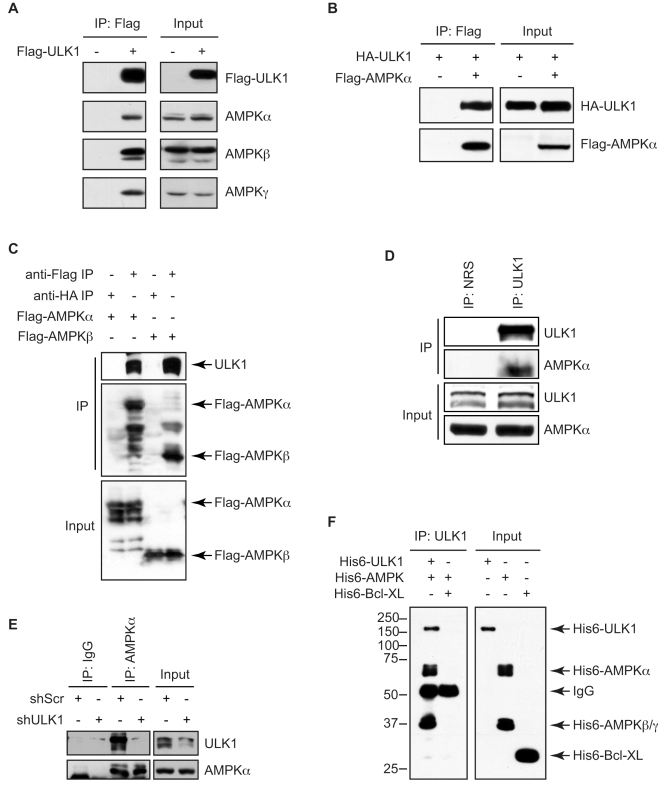
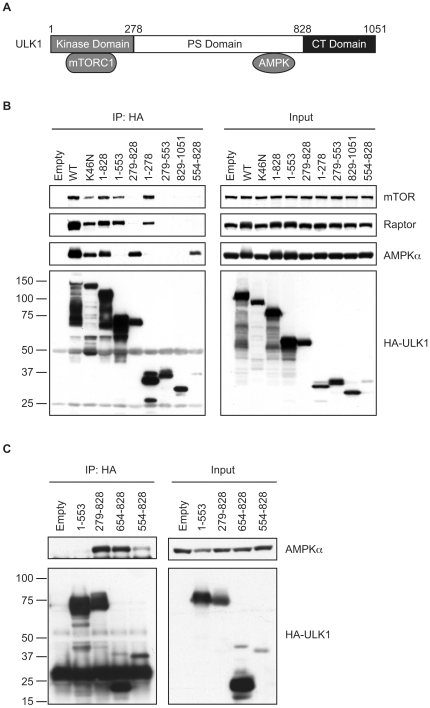
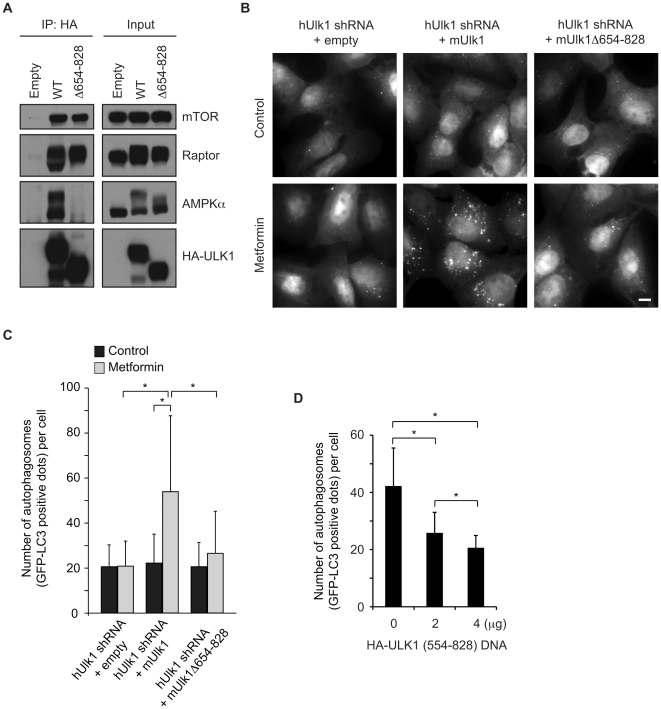
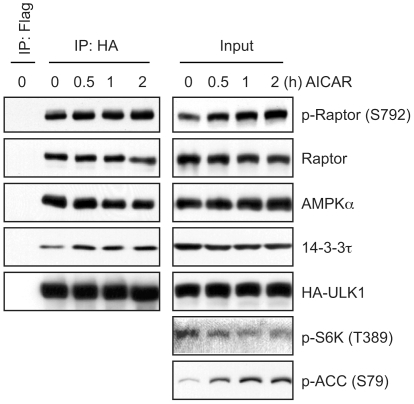
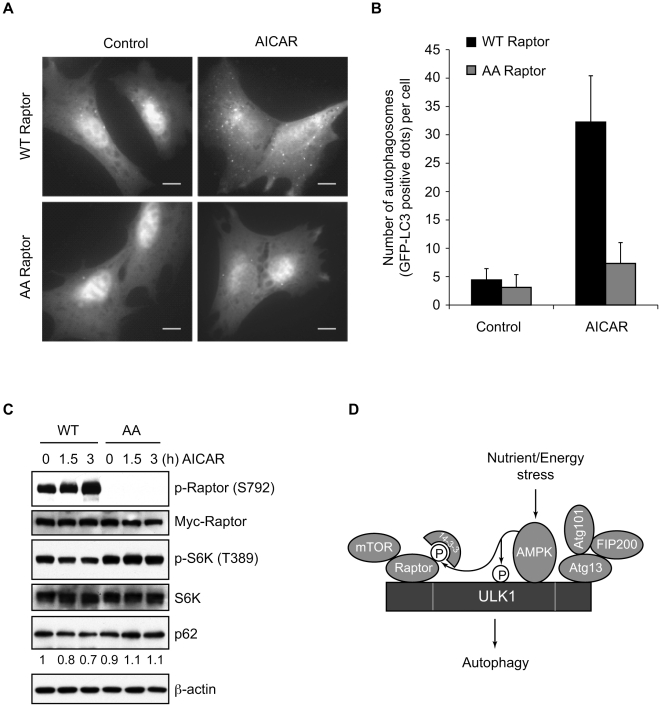
Autophagy is a highly orchestrated intracellular bulk degradation process that is activated by various environmental stresses. The serine/threonine kinase ULK1, like its yeast homologue Atg1, is a key initiator of autophagy that is negatively regulated by the mTOR kinase. However, the molecular mechanism that controls the inhibitory effect of mTOR on ULK1-mediated autophagy is not fully understood. Here we identified AMPK, a central energy sensor, as a new ULK1-binding partner. We found that AMPK binds to the PS domain of ULK1 and this interaction is required for ULK1-mediated autophagy. Interestingly, activation of AMPK by AICAR induces 14-3-3 binding to the AMPK-ULK1-mTORC1 complex, which coincides with raptor Ser792 phosphorylation and mTOR inactivation. Consistently, AICAR induces autophagy in TSC2-deficient cells expressing wild-type raptor but not the mutant raptor that lacks the AMPK phosphorylation sites (Ser722 and Ser792). Taken together, these results suggest that AMPK association with ULK1 plays an important role in autophagy induction, at least in part, by phosphorylation of raptor to lift the inhibitory effect of mTOR on the ULK1 autophagic complex.
Overview
The claims and statistics of this paper haven’t been checked yet.
Free: it reads the open-access text and checks the first 5 claims that cite a source we can check. Create a free account to check every claim.
Integrity signals
Registry
Cites
Statistics
Figures
Verification
Claims the paper makes
The claims and statistics of this paper haven’t been checked yet.
Free: it reads the open-access text and checks the first 5 claims that cite a source we can check. Create a free account to check every claim.
Claims other papers make about this one
Each is checked against this paper’s own text: does it say what the citing paper says it does?
In the citing paper
“Active AMPK induces autophagy through direct phosphorylation of ULK1, or through the phosphorylation of tuberin or regulatory-associated protein of mTOR (RAPTOR; encoded by RPTOR) to inhibit mTORC1”
From Autophagy in kidney homeostasis and disease (2020) · cites this paper as [24]
Self-check
Percentages, sums and reported differences re-computed from the paper’s own numbers.
The self-check needs the paper’s full text.
Citations
Cites
Autophagy fights disease through cellular self-digestion
Mizushima, N., Levine, B., Cuervo, A. M., & Klionsky, D. J. (2008) · Nature · doi:10.1038/nature06639 · Cited by 6,452 · cited 1×
“neurodegeneration, cancer, and aging [1,2].”
TOR signaling in growth and metabolism
Wullschleger, S., Loewith, R., & Hall, M. N. (2006) · Cell · doi:10.1016/j.cell.2006.01.016 · Cited by 5,787
TSC2 Mediates Cellular Energy Response to Control Cell Growth and Survival
Inoki, K., Zhu, T., & Guan, K.-L. (2003) · Cell · doi:10.1016/s0092-8674(03)00929-2 · Cited by 3,914
AMPK Phosphorylation of Raptor Mediates a Metabolic Checkpoint
Gwinn, D. M., Shackelford, D. B., Egan, D. F., Mihaylova, M. M., Mery, A., Vasquez, D. S., Turk, B. E., & Shaw, R. J. (2008) · Molecular Cell · doi:10.1016/j.molcel.2008.03.003 · Cited by 3,849
Kim, D.-H., Sarbassov, D. D., Ali, S. M., King, J. E., Latek, R. R., Erdjument-Bromage, H., Tempst, P., & Sabatini, D. M. (2002) · Cell · doi:10.1016/s0092-8674(02)00808-5 · Cited by 2,986
Nutrient-dependent mTORC1 Association with the ULK1–Atg13–FIP200 Complex Required for Autophagy
Hosokawa, N., Hara, T., Kaizuka, T., Kishi, C., Takamura, A., Miura, Y., Iemura, S.-I., Natsume, T., Takehana, K., Yamada, N., et al. (2009) · Molecular Biology of the Cell · doi:10.1091/mbc.e08-12-1248 · Cited by 2,076
ULK-Atg13-FIP200 Complexes Mediate mTOR Signaling to the Autophagy Machinery
Jung, C. H., Jun, C. B., Ro, S.-H., Kim, Y.-M., Otto, N. M., Cao, J., Kundu, M., & Kim, D.-H. (2009) · Molecular Biology of the Cell · doi:10.1091/mbc.e08-12-1249 · Cited by 2,025
The LKB1-AMPK pathway: metabolism and growth control in tumour suppression
Shackelford, D. B., & Shaw, R. J. (2009) · Nature Reviews Cancer · doi:10.1038/nrc2676 · Cited by 1,943 · cited 1×
“hypoxia [6].”
Rheb GTPase is a direct target of TSC2 GAP activity and regulates mTOR signaling
Inoki, K., Li, Y., Xu, T., & Guan, K.-L. (2003) · Genes & Development · doi:10.1101/gad.1110003 · Cited by 1,911 · cited 1×
“and activates the mTORC1 kinase [7,8].”
Isolation and characterization of autophagy‐defective mutants of Saccharomyces cerevisiae
Tsukada, M., & Ohsumi, Y. (1993) · FEBS Letters · doi:10.1016/0014-5793(93)80398-e · Cited by 1,772
Cited by
Items 201–300 of 484
Targeted therapy and drug resistance in thyroid cancer
Zhang, Y., Xing, Z., Liu, T., Tang, M., Mi, L., Zhu, J., Wu, W., & Wei, T. (2022) · European Journal of Medicinal Chemistry · doi:10.1016/j.ejmech.2022.114500 · Cited by 61
14-3-3 Protects against stress-induced apoptosis
Clapp, C., Portt, L., Khoury, C. M., Sheibani, S., Norman, G., Ebner, P., Eid, R., Vali, H., Mandato, C. A., Madeo, F., et al. (2012) · Cell Death and Disease · doi:10.1038/cddis.2012.90 · Cited by 57
Therapeutic targeting of autophagy in cancer. Part I: Molecular pathways controlling autophagy
Nagelkerke, A., Sweep, F. C. G. J., Geurts-Moespot, A. J., Bussink, J., & Span, P. N. (2014) · Seminars in Cancer Biology · doi:10.1016/j.semcancer.2014.05.004 · Cited by 57
Joseph, A.-M., Malamo, A. G., Silvestre, J., Wawrzyniak, N., Carey-Love, S., Nguyen, L. M.-D., Dutta, D., Xu, J., Leeuwenburgh, C., & Adhihetty, P. J. (2013) · Experimental Gerontology · doi:10.1016/j.exger.2013.05.061 · Cited by 55
Zhang, X., Yin, H., Li, Z., Zhang, T., & Yang, Z. R. (2016) · Cell Biology and Toxicology · doi:10.1007/s10565-016-9352-y · Cited by 54
Mechanisms of TLR4-Mediated Autophagy and Nitroxidative Stress
Zhang, K., Huang, Q., Deng, S., Yang, Y., Li, J., & Wang, S. (2021) · Frontiers in Cellular and Infection Microbiology · doi:10.3389/fcimb.2021.766590 · Cited by 65
Intrinsic Mechanisms Regulating Neuronal Migration in the Postnatal Brain
Bressan, C., & Saghatelyan, A. (2021) · Frontiers in Cellular Neuroscience · doi:10.3389/fncel.2020.620379 · Cited by 61
Zhao, H., WANG, Z.-C., WANG, K.-F., & Chen, X. (2015) · Molecular Medicine Reports · doi:10.3892/mmr.2015.3781 · Cited by 53
Glucose and palmitate uncouple AMPK from autophagy in human aortic endothelial cells
Weikel, K. A., Cacicedo, J. M., Ruderman, N. B., & Ido, Y. (2015) · American Journal of Physiology-Cell Physiology · doi:10.1152/ajpcell.00265.2014 · Cited by 53
The interplay between autophagy and cGAS-STING signaling and its implications for cancer
Schmid, M., Fischer, P., Engl, M., Widder, J., Gruber, S., & Slade, D. (2024) · Frontiers in Immunology · doi:10.3389/fimmu.2024.1356369 · Cited by 68
Ljubicic, V., & Jasmin, B. J. (2013) · Trends in Molecular Medicine · doi:10.1016/j.molmed.2013.07.002 · Cited by 58
Takahashi, Y., Tsotakos, N., Liu, Y., Young, M. M., Serfass, J. M., Tang, Z., Abraham, T., & Wang, H. (2016) · Oncotarget · doi:10.18632/oncotarget.8028 · Cited by 57
Self-citationCastets, P., Frank, S., Sinnreich, M., & Rüegg, M. A. (2016) · Journal of Neuromuscular Diseases · doi:10.3233/jnd-160153 · Cited by 49
“Notably, both autophagosome maturation and lysosome biogenesis involve a tight interaction with the endocytic system, highly dynamic Fi g. 2.”
BackgroundMetformin: review of epidemiology and mechanisms of action in pancreatic cancer
Eibl, G., & Rozengurt, E. (2021) · Cancer and Metastasis Reviews · doi:10.1007/s10555-021-09977-z · Cited by 55
Autophagy in Plant Health and Disease
Gross, A. S., Raffeiner, M., Zeng, Y., Üstün, Ş., & Dagdas, Y. (2025) · Annual Review of Plant Biology · doi:10.1146/annurev-arplant-060324-094912 · Cited by 59
AMP-Activated Protein Kinase: Potential Role in Cardiac Electrophysiology and Arrhythmias
Harada, M., Nattel, S. N., & Nattel, S. (2012) · Circulation Arrhythmia and Electrophysiology · doi:10.1161/circep.112.972265 · Cited by 52
Denisenko, T. V., Pivnyuk, A. D., & Zhivotovsky, B. (2018) · Cancers · doi:10.3390/cancers10050148 · Cited by 54
Yim, N., Hwang, Y., Liang, C., & Yeul, J. (2016) · Journal of Ethnopharmacology · doi:10.1016/j.jep.2016.10.078 · Cited by 51
AMPK in Cardiovascular Diseases
Daskalopoulos, E. P., Dufeys, C., Beauloye, C., Bertrand, L., & Horman, S. (2016) · Proceedings of the Fourth International Symposium on Polarization Phenomena in Nuclear Reactions · doi:10.1007/978-3-319-43589-3_8 · Cited by 52
Molecular and biochemical regulation of skeletal muscle metabolism
Zumbaugh, M. D., Johnson, S., Shi, T. H., & Gerrard, D. E. (2022) · Journal of Animal Science · doi:10.1093/jas/skac035 · Cited by 58
Autophagy contributes to gefitinib-induced glioma cell growth inhibition
Chang, C.-Y., Kuan, Y., Ou, Y., Li, J., Wu, C.-C., Pan, P., Chen, W., Huang, H.-Y., & Chen, C. (2014) · Experimental Cell Research · doi:10.1016/j.yexcr.2014.05.011 · Cited by 45
Perumpail, R. B., Liu, A., Wong, R. J., Ahmed, A., & Harrison, S. A. (2015) · World Journal of Hepatology · doi:10.4254/wjh.v7.i22.2384 · Cited by 49
Endorepellin-evoked Autophagy Contributes to Angiostasis
Goyal, A., Gubbiotti, M. A., Chery, D. R., Han, L., & Iozzo, R. V. (2016) · Journal of Biological Chemistry · doi:10.1074/jbc.m116.740266 · Cited by 44
Liu, X., Hu, X., Kuang, Y., Yan, P., Li, L., Li, C., Tao, Q., & Cai, X. (2017) · Cancer Letters · doi:10.1016/j.canlet.2017.02.030 · Cited by 48
Sameiyan, E., Hayes, A. W., & Karimi, G. (2019) · European Journal of Pharmacology · doi:10.1016/j.ejphar.2019.04.001 · Cited by 47
HU, M., Huang, H., Zhao, R., Li, P., Li, M., Miao, H., Chen, N., & Chen, M. (2013) · Oncology Reports · doi:10.3892/or.2013.2890 · Cited by 45
Desjardins, E. M., Smith, B. K., Day, E. A., Ducommun, S., Sanders, M. J., Nederveen, J. P., Ford, R. J., Pinkosky, S. L., Townsend, L. K., Gutgesell, R. M., et al. (2022) · Proceedings of the National Academy of Sciences · doi:10.1073/pnas.2119824119 · Cited by 51
Dysregulated autophagy: A key player in the pathophysiology of type 2 diabetes and its complications
Sehrawat, A., Mishra, J., Mastana, S. S., Navik, U., Bhatti, G. K., Reddy, P. H., & Bhatti, J. S. (2023) · Biochimica et Biophysica Acta (BBA) - Molecular Basis of Disease · doi:10.1016/j.bbadis.2023.166666 · Cited by 50
Aghamohammadzadeh, R., Zhang, Y., Stephens, T. E., Arons, E., Zaman, P., Polach, K. J., Matar, M. M., Yung, L., Yu, P. B., Bowman, F. P., et al. (2016) · The FASEB Journal · doi:10.1096/fj.201500042 · Cited by 45
Modulating the catalytic activity of AMPK has neuroprotective effects against α-synuclein toxicity
Bobela, W., Nazeeruddin, S., Knott, G. W., Aebischer, P., & Schneider, B. L. (2017) · Molecular Neurodegeneration · doi:10.1186/s13024-017-0220-x · Cited by 46
Sphingolipids as Regulators of Autophagy and Endocytic Trafficking
Young, M. M., & Wang, H. (2018) · Advances in cancer research · doi:10.1016/bs.acr.2018.04.008 · Cited by 46
Self-citationLi, H., Pan, Y., Liu, L., Li, Y.-L., Huang, X.-Q., Zhong, Y., Tang, T., Zhang, J., Chu, W., & Shen, Y. (2019) · Aquaculture · doi:10.1016/j.aquaculture.2019.734228 · Cited by 46
Yang, Q., Wang, L., Hu, T., Yin, D., He, H., & He, M. (2021) · Frontiers in Pharmacology · doi:10.3389/fphar.2021.659015 · Cited by 47
Hyttinen, J. M. T., Petrovski, G., Salminen, A., & Kaarniranta, K. (2011) · Rejuvenation Research · doi:10.1089/rej.2011.1220 · Cited by 44
Role of AMPK and its molecular intermediates in subjugating cancer survival mechanism
Thirupathi, A., & Chang, Y. (2019) · Life Sciences · doi:10.1016/j.lfs.2019.04.039 · Cited by 44
Zhou, D., Zhou, M., Wang, Z., Fu, Y., Jia, M., Wang, X., Liu, M., Zhang, Y., Sun, Y., Zhou, Y., et al. (2019) · Journal of Molecular Medicine · doi:10.1007/s00109-019-01828-3 · Cited by 46
The potential of herbal drugs to treat heart failure: The roles of Sirt1/AMPK
Zhang, T., Xu, L., Guo, X., Tao, H., Liu, Y., Liu, X., Zhang, Y., & Meng, X. (2023) · Journal of Pharmaceutical Analysis · doi:10.1016/j.jpha.2023.09.001 · Cited by 47
Szymańska-Rożek, P., Martin, K. R., MacKeigan, J. P., Hlavacek, W. S., & Lipniacki, T. (2015) · PLoS ONE · doi:10.1371/journal.pone.0116550 · Cited by 45
Sueda, T., Sakai, D., Kawamoto, K., Konno, M., Nishida, N., Koseki, J., Colvin, H. S., Takahashi, H., Haraguchi, N., Nishimura, J., et al. (2016) · Scientific Reports · doi:10.1038/srep18949 · Cited by 44
Karunasagara, S., Hong, G.-L., Park, S.-R., Lee, N., Jung, D.-Y., Kim, T., & Jung, J. (2020) · Journal of Ethnopharmacology · doi:10.1016/j.jep.2020.112693 · Cited by 46
Self-citationLi, I., Ma, K., Weng, S., Huang, S.-S., Liang, C., & Huang, Y. (2014) · PLoS ONE · doi:10.1371/journal.pone.0116565 · Cited by 42
Autophagy and Age-Related Eye Diseases
Yang, X., Pan, X., Zhao, X., Jin, L., Xu, M., Bai, D., Hu, Y., Liu, X., Yu, Q., & Gao, D. (2019) · BioMed Research International · doi:10.1155/2019/5763658 · Cited by 48
Yu, L., Zhao, Y., & Zhao, Y. (2023) · Frontiers in Pharmacology · doi:10.3389/fphar.2023.1240820 · Cited by 40
ASIC1a Promotes Acid-Induced Autophagy in Rat Articular Chondrocytes through the AMPK/FoxO3a Pathway
Dai, B., Zhu, F., Chen, Y., Zhou, R., Wang, Z., Xie, Y., Wu, X., Zu, S., Li, G., Ge, J., et al. (2017) · International Journal of Molecular Sciences · doi:10.3390/ijms18102125 · Cited by 40
Exploiting cancer vulnerabilities: mTOR, autophagy, and homeostatic imbalance
Johnson, C. E., & Tee, A. R. (2017) · Essays in Biochemistry · doi:10.1042/ebc20170056 · Cited by 42
Inhibition of autophagy; an opportunity for the treatment of cancer resistance
Tonkin-Reeves, A., Giuliani, C. M., & Price, J. T. (2023) · Frontiers in Cell and Developmental Biology · doi:10.3389/fcell.2023.1177440 · Cited by 46
Stellrecht, C. M., Vangapandu, H. V., Le, X., Mao, W., & Shentu, S. (2014) · Journal of Hematology & Oncology · doi:10.1186/1756-8722-7-23 · Cited by 40
Regulation of autophagy through SnRK1 and TOR signaling pathways
Pu, Y., Soto-Burgos, J., & Bassham, D. C. (2017) · Plant Signaling & Behavior · doi:10.1080/15592324.2017.1395128 · Cited by 37
Oligonol promotes anti-aging pathways via modulation of SIRT1-AMPK-Autophagy Pathway
Park, S.-K., Seong, R.-K., Kim, J.-A., Son, S.-J., Kim, Y., Yokozawa, T., & Shin, O. S. (2016) · Nutrition Research and Practice · doi:10.4162/nrp.2016.10.1.3 · Cited by 37
Self-citationTang, Y., Blomenkamp, K., Fickert, P., Trauner, M., & Teckman, J. H. (2018) · PLoS ONE · doi:10.1371/journal.pone.0200897 · Cited by 38
Zhong, Y., Pan, Y., Liu, L., Li, H., Li, Y., Jiang, J., Xiang, J., Zhang, J., & Chu, W. (2019) · Comparative Biochemistry and Physiology Part B Biochemistry and Molecular Biology · doi:10.1016/j.cbpb.2019.110331 · Cited by 37
Barroso‐Chinea, P., Luis-Ravelo, D., Fumagallo-Reading, F., Castro‐Hernández, J., Salas-Hernández, J., Rodríguez-Núñez, J., Febles-Casquero, A., Cruz‐Muros, I., Afonso‐Oramas, D., Abreu-González, P., et al. (2019) · Autophagy · doi:10.1080/15548627.2019.1668606 · Cited by 38
Zhang, M., Zhang, Y., Xiao, D., Zhang, J., Wang, X., Guan, F., Zhang, M., & Chen, L. (2020) · European Journal of Pharmacology · doi:10.1016/j.ejphar.2020.172955 · Cited by 37
Role of Ceramides and Sphingolipids in Parkinson's Disease
Vos, M. H., Klein, C., & Hicks, A. A. (2023) · Journal of Molecular Biology · doi:10.1016/j.jmb.2023.168000 · Cited by 49
High expression levels of unc-51-like kinase 1 as a predictor of poor prognosis in colorectal cancer
Zou, Y., Chen, Z., He, X., He, X., Wu, X., Chen, Y., Wu, X., Wang, J., & Lan, P. (2015) · Oncology Letters · doi:10.3892/ol.2015.3417 · Cited by 35
Peralta, S., García, S., Yin, H. Y., Arguello, T., Díaz, F., & Moraes, C. T. (2016) · Human Molecular Genetics · doi:10.1093/hmg/ddw167 · Cited by 36
Dower, C. M., Bhat, N., Wang, W., & Wang, H. (2016) · Cancer Research · doi:10.1158/0008-5472.can-15-3458 · Cited by 36
Self-citationLi, M., Sharma, A., Yin, C., Tan, X., & Xiao, Y. (2017) · Molecular Medicine Reports · doi:10.3892/mmr.2017.6637 · Cited by 38
Targeting autophagy in liver cancer
Fazio, P. D., & Matrood, S. (2018) · Translational Gastroenterology and Hepatology · doi:10.21037/tgh.2018.06.09 · Cited by 39
Kwon, I., Song, W., Jang, Y., Choi, M. D., Vinci, D. M., & Lee, Y. (2019) · Annals of Hepatology · doi:10.1016/j.aohep.2019.08.010 · Cited by 36
Catabolic degradation of endothelial VEGFA via autophagy
Neill, T., Chen, C. G., Buraschi, S., & Iozzo, R. V. (2020) · Journal of Biological Chemistry · doi:10.1074/jbc.ra120.012593 · Cited by 36
Function and regulation of ULK1: From physiology to pathology
Rong, Z., Zheng, K., Chen, J., & Jin, X. (2022) · Gene · doi:10.1016/j.gene.2022.146772 · Cited by 40
Contrasting views on the role of AMPK in autophagy
Kim, D. (2024) · BioEssays · doi:10.1002/bies.202300211 · Cited by 225
Watanabe, T., Takemura, G., Kanamori, H., Goto, K., Tsujimoto, A., Okada, H., Kawamura, I., Ogino, A., Takeyama, T., Kawaguchi, T., et al. (2014) · American Journal Of Pathology · doi:10.1016/j.ajpath.2014.01.011 · Cited by 35
Involvement of autophagy in the outcome of mitotic catastrophe
Sorokina, I. V., Denisenko, T. V., Imreh, G., Tyurin‐Kuzmin, P. A., Kaminskyy, V. O., Gogvadze, V. G., & Zhivotovsky, B. (2017) · Scientific Reports · doi:10.1038/s41598-017-14901-z · Cited by 38
Targeted elimination of senescent Ras-transformed cells by suppression of MEK/ERK pathway
Kochetkova, E. Y., Blinova, G. I., Bystrova, O. A., Martynova, M. G., Pospelov, V. A., & Pospelova, T. V. (2017) · Aging · doi:10.18632/aging.101325 · Cited by 36
Mukhopadhyay, R., Venkatadri, R., Katsnelson, J., & Arav‐Boger, R. (2018) · Journal of Virology · doi:10.1128/jvi.01861-17 · Cited by 36
Song, C., Qi, H., Liu, Y., Chen, Y., Shi, P., Zhang, S., Ren, J., Wang, L., Cao, Y., & Sun, H. (2020) · Molecular Therapy · doi:10.1016/j.ymthe.2020.10.024 · Cited by 34
The Role of Autophagy in Eye Diseases
Fernández‐Albarral, J. A., de Julián-López, E., Soler-Domínguez, C., de Hoz, R., López‐Cuenca, I., Salobrar‐García, E., Ramirez, J. M., Pinazo-Duran, M. D., Salazar, J. J., & Ramirez, A. I. (2021) · Life · doi:10.3390/life11030189 · Cited by 39
Oxytocin modulates mTORC1 pathway in the gut
Klein, B. Y., Tamir, H., Hirschberg, D. L., Glickstein, S. B., & Welch, M. G. (2013) · Biochemical and Biophysical Research Communications · doi:10.1016/j.bbrc.2013.01.121 · Cited by 33
AMPK in the central nervous system: physiological roles and pathological implications
Segatto, M., Rosso, P., Fioramonti, M., Fracassi, A., Marangoni, M., Taglietti, V., & Siteni, S. (2016) · Research and Reports in Biology · doi:10.2147/rrb.s90858 · Cited by 47
Gastrin activates autophagy and increases migration and survival of gastric adenocarcinoma cells
Rao, S. V., Solum, G., Niederdorfer, B., Nørsett, K. G., Bjørkøy, G., & Thommesen, L. (2017) · BMC Cancer · doi:10.1186/s12885-017-3055-5 · Cited by 37
Xue, H., Ji, Y., Wei, S., Yu, Y., Yan, X., Liu, S., Zhang, M., Fan, Y., Lan, X., & Chen, L. (2016) · Life Sciences · doi:10.1016/j.lfs.2016.04.004 · Cited by 33
Gao, X., Li, J.-Q., Dong, Y., Cheng, E., Gong, J., Qin, Y.-L., Huang, Y., Yang, J., Wang, S., & An, D. (2018) · Cytokine · doi:10.1016/j.cyto.2018.05.016 · Cited by 33
TOR mediates the autophagy response to altered nucleotide homeostasis in an RNase mutant
Kazibwe, Z., Soto-Burgos, J., MacIntosh, G. C., & Bassham, D. C. (2020) · Journal of Experimental Botany · doi:10.1093/jxb/eraa410 · Cited by 36
Astaxanthin protects retinal ganglion cells from acute glaucoma via the Nrf2/HO-1 pathway
Li, Y., Wang, Q., Chu, C., & Liu, S. (2020) · Journal of Chemical Neuroanatomy · doi:10.1016/j.jchemneu.2020.101876 · Cited by 34
Valproic acid sensitizes human glioma cells to gefitinib‐induced autophagy
Chang, C., Li, J., Wu, C., Ou, Y., Chen, W., Kuan, Y., Wang, W., & Chen, C. (2015) · IUBMB Life · doi:10.1002/iub.1445 · Cited by 34
Eriau, E., Paillet, J., Kroemer, G., & Pol, J. G. (2021) · Cancers · doi:10.3390/cancers13061260 · Cited by 33
Singhal, J., Agrawal, N., Vashishta, M., Priya, N. G., Tiwari, B. K., Singh, Y. P., Rajagopal, R., & Natarajan, K. (2012) · Journal of Biological Chemistry · doi:10.1074/jbc.m111.300319 · Cited by 31
Inactivation/deficiency of DHODH induces cell cycle arrest and programed cell death in melanoma
Liu, L., Dong, Z., Lei, Q., Yang, J., Hu, H., Li, Q., Ji, Y., Guo, L., Zhang, Y., Liu, Y., et al. (2017) · Oncotarget · doi:10.18632/oncotarget.19379 · Cited by 33
Coelho, B. P., Fernandes, C. F. D. L., Boccacino, J. M., Souza, M. C. D. S., Melo-Escobar, M. I., Alves, R. N., Prado, M. B., Iglesia, R. P., Cangiano, G., Mazzaro, G. L. R., et al. (2020) · Frontiers in Oncology · doi:10.3389/fonc.2020.597743 · Cited by 34
Kakhlon, O., Glickstein, H., Feinstein, N., Liu, Y., Baba, O., Terashima, T., Akman, H. O., DiMauro, S., & Lossos, A. (2013) · Journal of Neurochemistry · doi:10.1111/jnc.12277 · Cited by 35
Viswakarma, N., Jia, Y., Bai, L., Gao, Q., Lin, B., Zhang, X., Misra, P., Rana, A., Jain, S. R., Gonzalez, F. J., et al. (2013) · Journal of Biological Chemistry · doi:10.1074/jbc.m113.486696 · Cited by 28
Kim, A., Im, M., Yim, N., Kim, T. S., & Yeul, J. (2014) · PLoS ONE · doi:10.1371/journal.pone.0098703 · Cited by 31
RetractedAutophagy and amino acid metabolism in the brain: implications for epilepsy
Bejarano, E., & Rodríguez‐Navarro, J. A. (2014) · Amino Acids · doi:10.1007/s00726-014-1822-z · Cited by 35
Wang, Q., Yang, L., Hua, Y., Nair, S., Xu, X., & Ren, J. T. (2014) · Toxicological Sciences · doi:10.1093/toxsci/kfu158 · Cited by 31
Gaugel, A., Bakula, D., Hoffmann, A., & Proikas‐Cezanne, T. (2012) · Journal of Molecular Signaling · doi:10.1186/1750-2187-7-16 · Cited by 33
Protective role of green tea on diabetic nephropathy—A review
Mohib, M. M., Rabby, S. M. F., Paran, T. Z., Hasan, M. M., Ahmed, I., Hasan, N., Sagor, M. A. T., & Mohiuddin, M. S. (2016) · Cogent Biology · doi:10.1080/23312025.2016.1248166 · Cited by 32
Ye, L., Feng, Z., Doycheva, D. M., Malaguit, J., Dixon, B. J., Xu, N., Zhang, J. H., & Tang, J. (2017) · Experimental Neurology · doi:10.1016/j.expneurol.2017.12.008 · Cited by 31
Huo, H., Wang, B., Qin, J., Guo, S., Liu, W.-Y., & Gu, Y. (2013) · Molecular and Cellular Biochemistry · doi:10.1007/s11010-013-1608-8 · Cited by 31
Resistin inhibits neuronal autophagy through Toll-like receptor 4
Miao, J., Benomar, Y., Rifai, S. A., Poizat, G., Riffault, L., Crépin, D., & Taouis, M. (2018) · Journal of Endocrinology · doi:10.1530/joe-18-0096 · Cited by 30
AMP kinase in exercise adaptation of skeletal muscle
Jessen, N., Sundelin, E. I. O., & Møller, A. B. (2014) · Drug Discovery Today · doi:10.1016/j.drudis.2014.03.009 · Cited by 28
Lv, S., Xu, Q., Sun, E., Zhang, J., & Wu, D. (2016) · Scientific Reports · doi:10.1038/srep23130 · Cited by 28
Bi, S., Wang, H., & Kuang, W. (2018) · Mechanisms of Ageing and Development · doi:10.1016/j.mad.2018.07.005 · Cited by 28
Self-citationOst, M., Werner, F., Dokas, J., Klaus, S., & Voigt, A. (2014) · PLoS ONE · doi:10.1371/journal.pone.0094689 · Cited by 27
“A major signaling pathway in AMPK-induced skeletal muscle mitophagy concerns the activation of the ULK1, which promotes the initial steps of mitophagy induction [79,80], thus triggering that damaged or defective mitochondria are engulfed and degraded by autophagosomes, and their contents recycled for re-use [81–83].”
Khan, S. H., & Kumar, R. (2011) · Molecular BioSystems · doi:10.1039/c1mb05265a · Cited by 30
MicroRNA‐93 Regulates Hypoxia‐Induced Autophagy by Targeting ULK1
Li, W., Yang, Y., Ba, Z., Li, S., Chen, H., Hou, X., Ma, L., He, P., Jiang, L., Li, L., et al. (2017) · Oxidative Medicine and Cellular Longevity · doi:10.1155/2017/2709053 · Cited by 27
Zhang, Z., Tan, R., Xiong, Z., Feng, Y., & Chen, L. (2025) · Frontiers in Pharmacology · doi:10.3389/fphar.2025.1562845 · Cited by 46
Admyre, T., Amrot-Fors, L., Andersson, M., Bauer, M., Bjursell, M., Drmota, T., Hallén, S., Hartleib‐Geschwindner, J., Lindmark, B., Liu, J., et al. (2014) · Chemistry & Biology · doi:10.1016/j.chembiol.2014.09.011 · Cited by 28
Park, S.-W., Park, M. Y., Park, H. G., Lee, K. J., Kook, M.-S., Kim, W. J., & Jung, J. (2016) · International Endodontic Journal · doi:10.1111/iej.12616 · Cited by 26
Self-citation
Metadata
- Authors
- Lee, J. W., Park, S., Takahashi, Y., & Wang, H.-G.
- Affiliations
- Pennsylvania State University (US)
- Corresponding author
- Wang, Hong-Gang
- Venue
- PLoS ONE
- Publisher
- Public Library of Science (PLoS)
- Published
- 2010-11-03
- Volume
- 5
- Issue
- 11
- Pages
- e15394
- ISSN
- 1932-6203 (ISSN-L)
- PMC
- PMC2972217
- OpenAlex
- W2088355841
- Cited by
- 482
- References
- 40
- Citations by year
- 2026: 14 · 2025: 8 · 2024: 18 · 2023: 18 · 2022: 27 · 2021: 36 · 2020: 31 · 2019: 23 · 2018: 39 · 2017: 38 · 2016: 35 · 2015: 30 · 2014: 40 · 2013: 42 · 2012: 40
- FWCI
- 29.08
- Type
- journal article
- Language
- en
- Open access
- gold
- doi.org
- Locations
- PLoS ONE (publishedVersion, cc-by)
- Europe PMC (PubMed Central) (publishedVersion, cc-by)
- PubMed Central (publishedVersion, cc-by)
- PubMed (publishedVersion)
- DOAJ (DOAJ: Directory of Open Access Journals) (submittedVersion, cc-by-sa)
- Funders
- Flight Attendant Medical Research Institute
- Tokyo Medical and Dental University
- National Institutes of Health
- National Cancer Institute (CA129682, R01CA129682, CA-82197, R01CA082197)
- Topics
- Life Sciences › Biochemistry, Genetics and Molecular Biology › Cell Biology › Autophagy in Disease and Therapy
- Life Sciences › Biochemistry, Genetics and Molecular Biology › Molecular Biology › PI3K/AKT/mTOR signaling in cancer
- Life Sciences › Biochemistry, Genetics and Molecular Biology › Molecular Biology › Metabolism, Diabetes, and Cancer
- Keywords
- AMPK, ULK1, autophagy, mTORC1, Raptor phosphorylation, 14-3-3 binding, AICAR, TSC2, energy sensing, autophagy initiation
- MeSH terms
- Autophagy-Related Protein-1 Homolog, Mechanistic Target of Rapamycin Complex 1, Regulatory-Associated Protein of mTOR, Animals, Autophagy, Binding Sites, Cell Line, Cells, Cultured, Humans, Microscopy, Fluorescence, Mutation, Phosphorylation, Protein Binding, Proteins, Transfection, Immunoblotting, Protein Serine-Threonine Kinases, Mice, Knockout, Protein Subunits, RNA Interference, Cell Line, Tumor, Multiprotein Complexes, Immunoprecipitation, Intracellular Signaling Peptides and Proteins, Adaptor Proteins, Signal Transducing, 14-3-3 Proteins, Mice, AMP-Activated Protein Kinases, HEK293 Cells, TOR Serine-Threonine Kinases
About these checks
Registry, retraction, Cites and statistics results are computed, not judged, with one exception: a printed reference that no index lists is read once by a model before it counts as a citation error. Claims are extracted by a model and kept only when their quote appears verbatim in the text; each cited source is then checked, with a model’s help, for whether it says what the claim relies on. Those verdicts can be wrong — read the claim’s quote and the cited source before relying on one.
Statistics and arithmetic are recomputed, not judged.
Confidence bands are shown only for fields calibrated on our annotated test set. None is calibrated yet, so no band is shown.
What counts as a claim ›How we measure confidence ›How we check this ›
Are you an author, or do you see a problem with this page? Request a review
Data sources
Bibliographic data: Semantic Scholar, OpenAlex, Crossref.
Contains information from the Semantic Scholar Academic Graph Datasets, made available under the ODC Attribution License (ODC-BY 1.0).
Semantic Scholar’s data is described in: Kinney, R., et al. (2023). The Semantic Scholar Open Data Platform. arXiv:2301.10140.
