

The Association of AMPK with ULK1 Regulates Autophagy
Open accessThe DOI matches its Crossref record; 39 of the 40 references it cites were found in a registry or an index.
Abstract
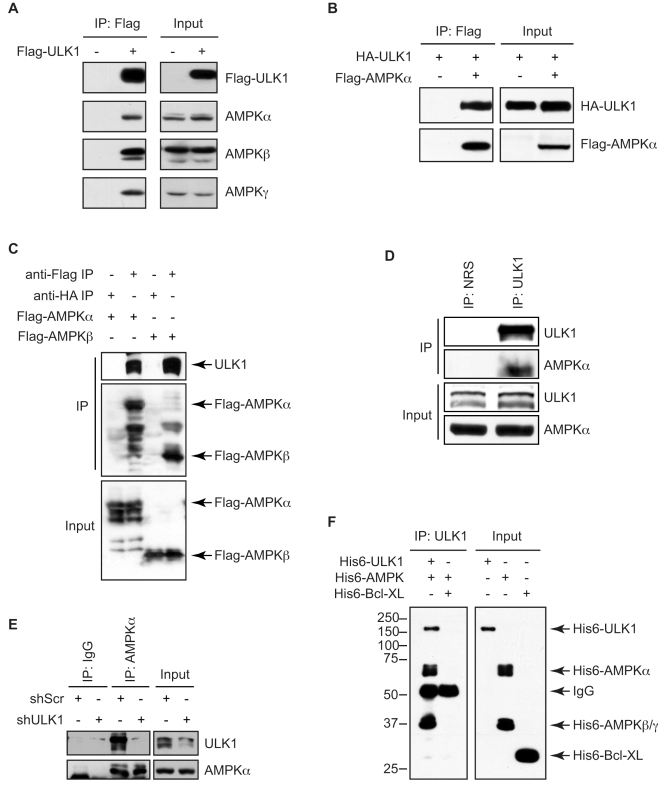
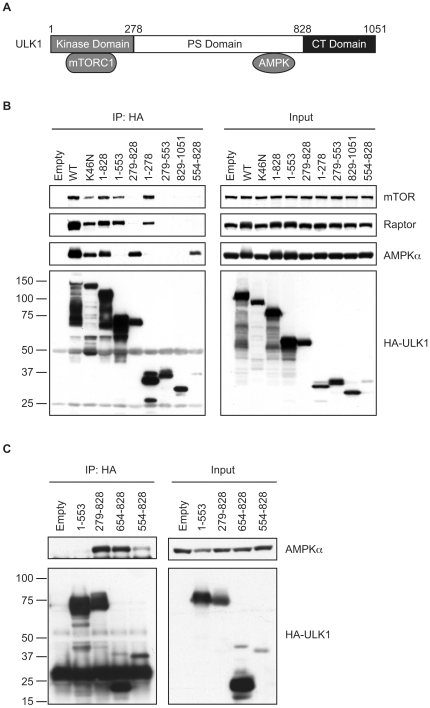
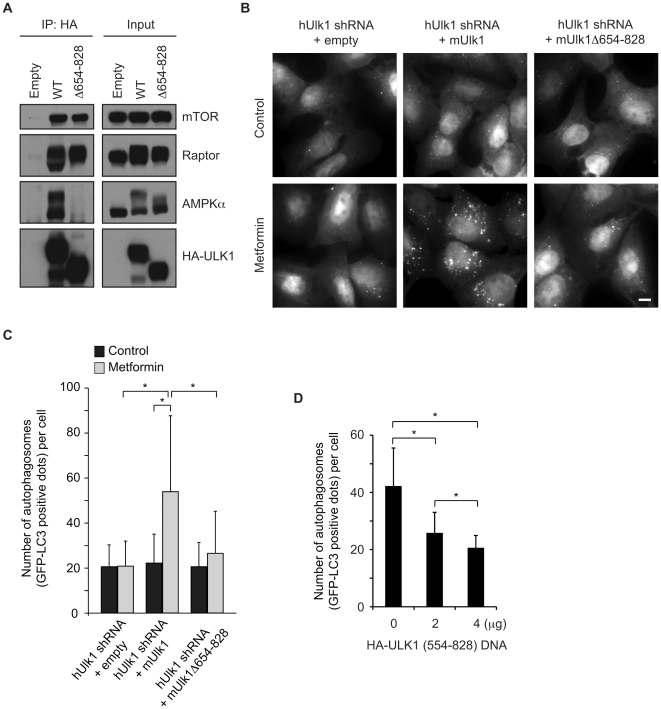
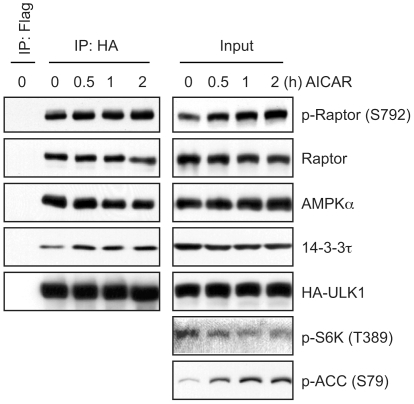
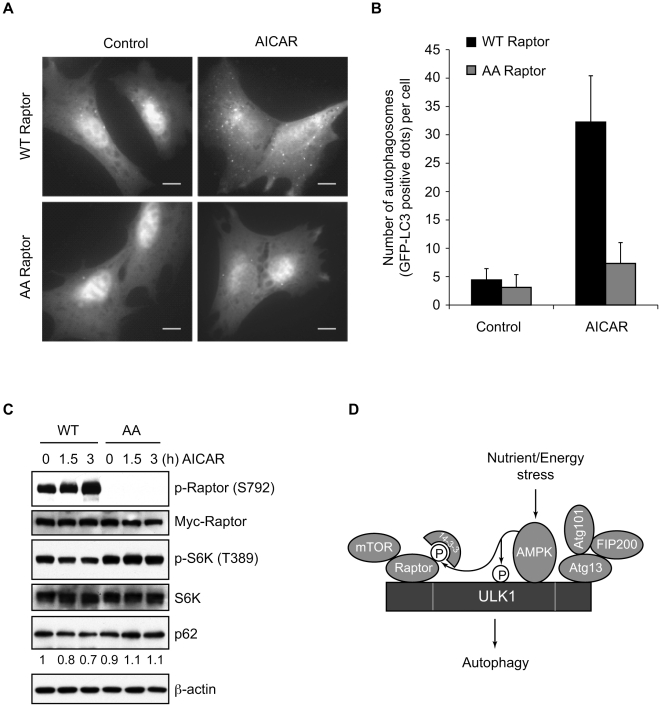
Autophagy is a highly orchestrated intracellular bulk degradation process that is activated by various environmental stresses. The serine/threonine kinase ULK1, like its yeast homologue Atg1, is a key initiator of autophagy that is negatively regulated by the mTOR kinase. However, the molecular mechanism that controls the inhibitory effect of mTOR on ULK1-mediated autophagy is not fully understood. Here we identified AMPK, a central energy sensor, as a new ULK1-binding partner. We found that AMPK binds to the PS domain of ULK1 and this interaction is required for ULK1-mediated autophagy. Interestingly, activation of AMPK by AICAR induces 14-3-3 binding to the AMPK-ULK1-mTORC1 complex, which coincides with raptor Ser792 phosphorylation and mTOR inactivation. Consistently, AICAR induces autophagy in TSC2-deficient cells expressing wild-type raptor but not the mutant raptor that lacks the AMPK phosphorylation sites (Ser722 and Ser792). Taken together, these results suggest that AMPK association with ULK1 plays an important role in autophagy induction, at least in part, by phosphorylation of raptor to lift the inhibitory effect of mTOR on the ULK1 autophagic complex.
Overview
The claims and statistics of this paper haven’t been checked yet.
Free: it reads the open-access text and checks the first 5 claims that cite a source we can check. Create a free account to check every claim.
Integrity signals
Registry
Cites
Statistics
Figures
Verification
Claims the paper makes
The claims and statistics of this paper haven’t been checked yet.
Free: it reads the open-access text and checks the first 5 claims that cite a source we can check. Create a free account to check every claim.
Claims other papers make about this one
Each is checked against this paper’s own text: does it say what the citing paper says it does?
In the citing paper
“Active AMPK induces autophagy through direct phosphorylation of ULK1, or through the phosphorylation of tuberin or regulatory-associated protein of mTOR (RAPTOR; encoded by RPTOR) to inhibit mTORC1”
From Autophagy in kidney homeostasis and disease (2020) · cites this paper as [24]
Self-check
Percentages, sums and reported differences re-computed from the paper’s own numbers.
The self-check needs the paper’s full text.
Citations
Cites
Autophagy fights disease through cellular self-digestion
Mizushima, N., Levine, B., Cuervo, A. M., & Klionsky, D. J. (2008) · Nature · doi:10.1038/nature06639 · Cited by 6,452 · cited 1×
“neurodegeneration, cancer, and aging [1,2].”
TOR signaling in growth and metabolism
Wullschleger, S., Loewith, R., & Hall, M. N. (2006) · Cell · doi:10.1016/j.cell.2006.01.016 · Cited by 5,787
TSC2 Mediates Cellular Energy Response to Control Cell Growth and Survival
Inoki, K., Zhu, T., & Guan, K.-L. (2003) · Cell · doi:10.1016/s0092-8674(03)00929-2 · Cited by 3,914
AMPK Phosphorylation of Raptor Mediates a Metabolic Checkpoint
Gwinn, D. M., Shackelford, D. B., Egan, D. F., Mihaylova, M. M., Mery, A., Vasquez, D. S., Turk, B. E., & Shaw, R. J. (2008) · Molecular Cell · doi:10.1016/j.molcel.2008.03.003 · Cited by 3,849
Kim, D.-H., Sarbassov, D. D., Ali, S. M., King, J. E., Latek, R. R., Erdjument-Bromage, H., Tempst, P., & Sabatini, D. M. (2002) · Cell · doi:10.1016/s0092-8674(02)00808-5 · Cited by 2,986
Nutrient-dependent mTORC1 Association with the ULK1–Atg13–FIP200 Complex Required for Autophagy
Hosokawa, N., Hara, T., Kaizuka, T., Kishi, C., Takamura, A., Miura, Y., Iemura, S.-I., Natsume, T., Takehana, K., Yamada, N., et al. (2009) · Molecular Biology of the Cell · doi:10.1091/mbc.e08-12-1248 · Cited by 2,076
ULK-Atg13-FIP200 Complexes Mediate mTOR Signaling to the Autophagy Machinery
Jung, C. H., Jun, C. B., Ro, S.-H., Kim, Y.-M., Otto, N. M., Cao, J., Kundu, M., & Kim, D.-H. (2009) · Molecular Biology of the Cell · doi:10.1091/mbc.e08-12-1249 · Cited by 2,025
The LKB1-AMPK pathway: metabolism and growth control in tumour suppression
Shackelford, D. B., & Shaw, R. J. (2009) · Nature Reviews Cancer · doi:10.1038/nrc2676 · Cited by 1,943 · cited 1×
“hypoxia [6].”
Rheb GTPase is a direct target of TSC2 GAP activity and regulates mTOR signaling
Inoki, K., Li, Y., Xu, T., & Guan, K.-L. (2003) · Genes & Development · doi:10.1101/gad.1110003 · Cited by 1,911 · cited 1×
“and activates the mTORC1 kinase [7,8].”
Isolation and characterization of autophagy‐defective mutants of Saccharomyces cerevisiae
Tsukada, M., & Ohsumi, Y. (1993) · FEBS Letters · doi:10.1016/0014-5793(93)80398-e · Cited by 1,772
Cited by
Items 101–200 of 484
Pterostilbene alleviated NAFLD via AMPK/mTOR signaling pathways and autophagy by promoting Nrf2
Shen, B., Wang, Y., Cheng, J., Peng, Y., Zhang, Q., Li, Z., Zhao, L., Deng, X., & Feng, H. (2022) · Phytomedicine · doi:10.1016/j.phymed.2022.154561 · Cited by 143
Autophagy and inflammatory diseases
Jones, S. A., Mills, K. H. G., & Harris, J. (2013) · Immunology and Cell Biology · doi:10.1038/icb.2012.82 · Cited by 136
The kinase triad, AMPK, mTORC1 and ULK1, maintains energy and nutrient homoeostasis
Dunlop, E. A., & Tee, A. R. (2013) · Biochemical Society Transactions · doi:10.1042/bst20130030 · Cited by 122
Weerasekara, V. K., Panek, D. J., Broadbent, D. G., Mortenson, J. B., Mathis, A. D., Logan, G. N., Prince, J. T., Thomson, D. M., Thompson, J. W., & Andersen, J. L. (2014) · Molecular and Cellular Biology · doi:10.1128/mcb.00740-14 · Cited by 120
Hypothalamic AMPK-induced autophagy increases food intake by regulating NPY and POMC expression
Oh, T. S., Cho, H., Cho, J. H., Yu, S.-W., & Kim, E. K. (2016) · Autophagy · doi:10.1080/15548627.2016.1215382 · Cited by 132
Atg1 family kinases in autophagy initiation
Noda, N. N., & Fujioka, Y. (2015) · Cellular and Molecular Life Sciences · doi:10.1007/s00018-015-1917-z · Cited by 121
Dynamics of Autophagosome Formation
Soto-Burgos, J., Zhuang, X., Jiang, L., & Bassham, D. C. (2017) · PLANT PHYSIOLOGY · doi:10.1104/pp.17.01236 · Cited by 133
Wu, L., Feng, Z., Cui, S., Hou, K., Tang, L., Zhou, J., Cai, G., Xie, Y., Hong, Q., Fu, B., et al. (2013) · PLoS ONE · doi:10.1371/journal.pone.0063799 · Cited by 117
Sanchez, A. M. J., Candau, R. B., Csibi, A., Pagano, A. F., Raibon, A., & Bernardi, H. (2012) · American Journal of Physiology-Cell Physiology · doi:10.1152/ajpcell.00125.2012 · Cited by 116
Yang, B., Zhou, Y., Wu, M., Li, X., Mai, K., & Ai, Q. (2020) · Cell Death and Disease · doi:10.1038/s41419-020-02750-0 · Cited by 123
She, C., Zhu, L., Zhen, Y.-F., Wang, X., & Dong, Q. (2013) · Cellular Signalling · doi:10.1016/j.cellsig.2013.08.046 · Cited by 122
Instructive Roles of Extracellular Matrix on Autophagy
Neill, T., Schaefer, L., & Iozzo, R. V. (2014) · The American Journal of Pathology · doi:10.1016/j.ajpath.2014.05.010 · Cited by 110
Autophagy as a Therapeutic Target in Diabetic Nephropathy
Tanaka, Y., Kume, S., Kitada, M., Kanasaki, K., Uzu, T., Maegawa, H., & Koya, D. (2012) · Experimental Diabetes Research · doi:10.1155/2012/628978 · Cited by 111
Autophagy Controls p38 Activation to Promote Cell Survival under Genotoxic Stress
Qiang, L., Wu, C., Ming, M., Viollet, B., & He, Y.-Y. (2013) · Journal of Biological Chemistry · doi:10.1074/jbc.m112.415224 · Cited by 110
Li, C., Wang, Y., Wang, C., Yi, X., Ming-ya, L., & He, X. (2017) · Phytomedicine · doi:10.1016/j.phymed.2017.02.008 · Cited by 119
Autophagy as a Potential Target for Sarcopenia: AUTOPHAGY REGULATION IN SARCOPENIA
Fan, J., Kou, X., Jia, S., Yang, X., Yang, Y., & Chen, N. (2016) · Journal of Cellular Physiology · doi:10.1002/jcp.25260 · Cited by 101
Sinnett-Smith, J., Kisfalvi, K., Kui, R., & Rozengurt, E. (2013) · Biochemical and Biophysical Research Communications · doi:10.1016/j.bbrc.2012.11.010 · Cited by 105
Augmenting Autophagy to Treat Acute Kidney Injury during Endotoxemia in Mice
Howell, G. M., Gomez, H., Collage, R. D., Loughran, P., Zhang, X., Escobar, D. A., Billiar, T. R., Zuckerbraun, B. S., & Rosengart, M. R. (2013) · PLoS ONE · doi:10.1371/journal.pone.0069520 · Cited by 105
“Young mice receiving AICAR 24 hours prior to CLP had significantly lower cystatin (280 vs. 635 ng/mL, p = 0.02) concentrations at 48 hours, compared with animals that received diluent control prior to CLP (Fig.”
MethodInfluentialCellular and molecular effects of the mTOR inhibitor everolimus
Saran, U., Foti, M., & Dufour, J. (2015) · Clinical Science · doi:10.1042/cs20150149 · Cited by 116
Autophagy in Pulmonary Diseases
Ryter, S. W., Nakahira, K., Haspel, J. A., & Choi, A. M. K. (2011) · Annual Review of Physiology · doi:10.1146/annurev-physiol-020911-153348 · Cited by 108
Regulation of protein turnover by heat shock proteins
Bozaykut, P., Özer, N. K., & Karademir-Yilmaz, B. (2014) · Free Radical Biology and Medicine · doi:10.1016/j.freeradbiomed.2014.08.012 · Cited by 130
Autophagy in Plants: Both a Puppet and a Puppet Master of Sugars
van Rensburg, H. C. J., den Ende, W. V., & Signorelli, S. (2019) · Frontiers in Plant Science · doi:10.3389/fpls.2019.00014 · Cited by 107
Fritzen, A. M., Madsen, A. B., Kleinert, M., Treebak, J. T., Lundsgaard, A., Jensen, T. E., Richter, E. A., Wojtaszewski, J., Kiens, B., & Frøsig, C. (2016) · The Journal of Physiology · doi:10.1113/jp271405 · Cited by 100
14-3-3 proteins in neurodegeneration
Steinacker, P., Aitken, A., & Otto, M. (2011) · Seminars in Cell and Developmental Biology · doi:10.1016/j.semcdb.2011.08.005 · Cited by 99
Molecular mechanisms of mTOR regulation by stress
Heberle, A. M., Prentzell, M. T., van Eunen, K., Bakker, B. M., Grellscheid, S. N., & Thedieck, K. (2015) · Molecular & Cellular Oncology · doi:10.4161/23723548.2014.970489 · Cited by 97
Kinase regulation by liquid–liquid phase separation
López-Palacios, T. P., & Andersen, J. L. (2022) · Trends in Cell Biology · doi:10.1016/j.tcb.2022.11.009 · Cited by 98
Decorin activates AMPK, an energy sensor kinase, to induce autophagy in endothelial cells
Goyal, A., Neill, T., Owens, R. T., Schaefer, L., & Iozzo, R. V. (2014) · Matrix Biology · doi:10.1016/j.matbio.2013.12.011 · Cited by 105
Targeting mTOR for fighting diseases: A revisited review of mTOR inhibitors
Xu, T., Sun, D., Chen, Y., & Ouyang, L. (2020) · European Journal of Medicinal Chemistry · doi:10.1016/j.ejmech.2020.112391 · Cited by 101
Frontier of Epilepsy Research - mTOR signaling pathway
Cho, C.-H. (2011) · Experimental and Molecular Medicine · doi:10.3858/emm.2011.43.5.032 · Cited by 93
Bloemberg, D., & Quadrilatero, J. (2019) · American Journal of Physiology-Cell Physiology · doi:10.1152/ajpcell.00261.2018 · Cited by 105
Distinct functions ofUlk1andUlk2in the regulation of lipid metabolism in adipocytes
Ro, S.-H., Jung, C. H., Hahn, W. S., Xu, X., Kim, Y.-M., Yun, Y. S., Park, J.-M., Kim, K. H., Seo, M., Ha, T.-Y., et al. (2013) · Autophagy · doi:10.4161/auto.26563 · Cited by 93
Holczer, M., Hajdú, B., Lőrincz, T., Szarka, A., Bánhegyi, G., & Kapuy, O. (2019) · International Journal of Molecular Sciences · doi:10.3390/ijms20225543 · Cited by 105
Shiau, J., Chuang, Y.-T., Tang, J., Yang, K., Chang, F., Hou, M., Yen, C., & Chang, H. (2022) · Antioxidants · doi:10.3390/antiox11091845 · Cited by 106
Reactive Oxygen Species Regulation of Autophagy in Skeletal Muscles
Rahman, M., Mofarrahi, M., Kristof, A. S., Nkengfac, B., Harel, S., & Hussain, S. N. A. (2014) · Antioxidants & Redox Signaling · doi:10.1089/ars.2013.5410 · Cited by 91
Alers, S., Löffler, A. S., Wesselborg, S., & Stork, B. (2012) · Cell Communication and Signaling · doi:10.1186/1478-811x-10-7 · Cited by 89
Posttranslational Modification and Quality Control
Wang, X., Pattison, J. S., & Su, H. (2013) · Circulation Research · doi:10.1161/circresaha.112.268706 · Cited by 112
Promoting Autophagic Clearance: Viable Therapeutic Targets in Alzheimer's Disease
Friedman, L. G., Qureshi, Y. H., & Yu, W. H. (2014) · Neurotherapeutics · doi:10.1007/s13311-014-0320-z · Cited by 98
Insulin-Like Growth Factor II Targets the mTOR Pathway to Reverse Autism-Like Phenotypes in Mice
Steinmetz, A. B., Stern, S. A., Kohtz, A. S., Descalzi, G., & Alberini, C. M. (2018) · The Journal of Neuroscience · doi:10.1523/jneurosci.2010-17.2017 · Cited by 87
Autophagy in Skeletal Muscle Homeostasis and in Muscular Dystrophies
Grumati, P., & Bonaldo, P. (2012) · Cells · doi:10.3390/cells1030325 · Cited by 87
KRAS, YAP, and obesity in pancreatic cancer: A signaling network with multiple loops
Eibl, G., & Rozengurt, E. (2019) · Seminars in Cancer Biology · doi:10.1016/j.semcancer.2017.10.007 · Cited by 85
Autophagy-dependent senescence in response to DNA damage and chronic apoptotic stress
Singh, K., Matsuyama, S., Drazba, J. A., & Almasan, A. (2012) · Autophagy · doi:10.4161/auto.8.2.18600 · Cited by 78
Activation of AMPK-induced autophagy ameliorates Huntington disease pathology in vitro
Walter, C., Clemens, L. E., Müller, A. J., Fallier‐Becker, P., Proikas‐Cezanne, T., Rieß, O., Metzger, S., & Nguyen, H. P. (2016) · Neuropharmacology · doi:10.1016/j.neuropharm.2016.04.041 · Cited by 90
Autophagy in Pulmonary Diseases
Nakahira, K., Pabon Porras, M. A., & Choi, A. M. K. (2016) · American Journal of Respiratory and Critical Care Medicine · doi:10.1164/rccm.201512-2468so · Cited by 78
Mitochondrial function in vascular endothelial cell in diabetes
Pangare, M., & Makino, A. (2012) · Journal of Smooth Muscle Research · doi:10.1540/jsmr.48.1 · Cited by 84
AMPK Activates Autophagy by Phosphorylating ULK1
Mao, K., & Klionsky, D. J. (2011) · Circulation Research · doi:10.1161/res.0b013e3182194c29 · Cited by 84
Karabiyik, C., Vicinanza, M., Son, S. M., & Rubinsztein, D. C. (2021) · Developmental Cell · doi:10.1016/j.devcel.2021.05.010 · Cited by 93
Molecular machinery of macroautophagy and its deregulation in diseases
Wong, A. S. L., Cheung, Z. H., & Ip, N. Y. (2011) · Biochimica et Biophysica Acta (BBA) - Molecular Basis of Disease · doi:10.1016/j.bbadis.2011.07.005 · Cited by 104
mTOR: A Potential Therapeutic Target in Osteoarthritis?
Pal, B., Endisha, H., Zhang, Y., & Kapoor, M. (2015) · Drugs in R&D · doi:10.1007/s40268-015-0082-z · Cited by 83
Zhu, B., Zhou, Y., Xu, F., Shuai, J., Li, X., & Fang, W. (2012) · Journal of Virology · doi:10.1128/jvi.01434-12 · Cited by 86
Role of AMPK in regulation of LC3 lipidation as a marker of autophagy in skeletal muscle
Fritzen, A. M., Frøsig, C., Jeppesen, J. F., Jensen, T. E., Lundsgaard, A., Serup, A. K., Schjerling, P., Proud, C. G., Richter, E. A., & Kiens, B. (2016) · Cellular Signalling · doi:10.1016/j.cellsig.2016.03.005 · Cited by 93
Metformin upregulates mitophagy in patients with T2DM: A randomized placebo‐controlled study
Bhansali, S., Bhansali, A. K., Dutta, P. R., Walia, R., & Dhawan, V. (2020) · Journal of Cellular and Molecular Medicine · doi:10.1111/jcmm.14834 · Cited by 85
The autophagy conundrum in cancer: influence of tumorigenic metabolic reprogramming
Eng, C. H., & Abraham, R. T. (2011) · Oncogene · doi:10.1038/onc.2011.220 · Cited by 86
Autophagy in axonal degeneration in glaucomatous optic neuropathy
Munemasa, Y., & Kitaoka, Y. (2015) · Progress in Retinal and Eye Research · doi:10.1016/j.preteyeres.2015.03.002 · Cited by 84
GSK-3β controls autophagy by modulating LKB1-AMPK pathway in prostate cancer cells
Sun, A., Li, C., Chen, R., Huang, Y., Chen, Q., Cui, X., Liu, H., Thrasher, J. B., & Li, B. (2015) · The Prostate · doi:10.1002/pros.23106 · Cited by 91
Autophagic flux and oxidative capacity of skeletal muscles during acute starvation
Mofarrahi, M., Guo, Y., Haspel, J. A., Choi, A. M., Davis, E. C., Gouspillou, G., Hepple, R. T., Godin, R., Burelle, Y., & Hussain, S. N. (2013) · Autophagy · doi:10.4161/auto.25955 · Cited by 80
Autophagy, signaling and obesity
Lavallard, V., Meijer, A. J., Codogno, P., & Gual, P. (2012) · Pharmacological Research · doi:10.1016/j.phrs.2012.09.003 · Cited by 93
Dower, C. M., Bhat, N., Gebru, M. T., Chen, L., Wills, C. A., Miller, B. A., & Wang, H. (2018) · Molecular Cancer Therapeutics · doi:10.1158/1535-7163.mct-18-0176 · Cited by 84
Self-citationNovel compounds for the modulation of mTOR and autophagy to treat neurodegenerative diseases
Heras-Sandoval, D., Pérez-Rojas, J. M., & Pedraza-Chaverri, J. (2020) · Cellular Signalling · doi:10.1016/j.cellsig.2019.109442 · Cited by 80
Fox, M. M., Phoenix, K. N., Kopsiaftis, S., & Claffey, K. P. (2013) · Genes & Cancer · doi:10.1177/1947601913486346 · Cited by 81
Identification of natural products with neuronal and metabolic benefits through autophagy induction
Fan, Y., Wang, N., Rocchi, A., Zhang, W., Vassar, R. J., Zhou, Y., & He, C. (2016) · Autophagy · doi:10.1080/15548627.2016.1240855 · Cited by 79
The Role of Autophagy in Drosophila Metamorphosis
Tracy, K., & Baehrecke, E. H. (2013) · Current Topics in Developmental Biology · doi:10.1016/b978-0-12-385979-2.00004-6 · Cited by 76
Boglev, Y., Badrock, A. P., Trotter, A. J., Du, Q., Richardson, E. J., Parslow, A. C., Markmiller, S., Hall, N. E., de Jong–Curtain, T. A., Ng, A., et al. (2013) · PLoS Genetics · doi:10.1371/journal.pgen.1003279 · Cited by 81
Agarwal, S., Tiwari, S. K., Seth, B., Yadav, A., Singh, A., Mudawal, A., Chauhan, L. K. S., Gupta, S. K., Choubey, V., Tripathi, A., et al. (2015) · Journal of Biological Chemistry · doi:10.1074/jbc.m115.648998 · Cited by 75
RetractedCell Apoptosis and Autophagy in Renal Fibrosis
Zhao, X., Livingston, M. J., Liang, X., & Dong, Z. (2019) · Advances in experimental medicine and biology · doi:10.1007/978-981-13-8871-2_28 · Cited by 78
Dual role of autophagy in HIV-1 replication and pathogenesis
Killian, M. S. (2012) · AIDS Research and Therapy · doi:10.1186/1742-6405-9-16 · Cited by 79
Reciprocal Regulation of AMP-activated Protein Kinase and Phospholipase D
Mukhopadhyay, S., Saqcena, M., Chatterjee, A., Garcia, A., Frías, M. A., & Foster, D. A. (2015) · Journal of Biological Chemistry · doi:10.1074/jbc.m114.622571 · Cited by 74
Cao, H., Miao, C., Sang, L., Huang, Y., Zhang, R., Sun, L., & Jiang, Z. (2020) · Life Sciences · doi:10.1016/j.lfs.2020.117255 · Cited by 74
Autophagy: Regulation by Energy Sensing
Meijer, A. J., & Codogno, P. (2011) · Current Biology · doi:10.1016/j.cub.2011.02.007 · Cited by 79
Oncosuppressive functions of decorin
Neill, T., Schaefer, L., & Iozzo, R. V. (2015) · Molecular & Cellular Oncology · doi:10.4161/23723556.2014.975645 · Cited by 75
Ketosis may promote brain macroautophagy by activating Sirt1 and hypoxia-inducible factor-1
McCarty, M. F., DiNicolantonio, J. J., & O’Keefe, J. H. (2015) · Medical Hypotheses · doi:10.1016/j.mehy.2015.08.002 · Cited by 75
Redox regulation of autophagy in skeletal muscle
Rodney, G. G., Pal, R., & Abo-Zahrah, R. (2016) · Free Radical Biology and Medicine · doi:10.1016/j.freeradbiomed.2016.05.010 · Cited by 71
Autophagy Contributes to the Death/Survival Balance in Cancer PhotoDynamic Therapy
Inguscio, V., Panzarini, E., & Dini, L. (2012) · Cells · doi:10.3390/cells1030464 · Cited by 77
Autophagy: Emerging Therapeutic Target for Diabetic Nephropathy
Kume, S., Yamahara, K., Yasuda, M., Maegawa, H., & Koya, D. (2013) · Seminars in Nephrology · doi:10.1016/j.semnephrol.2013.11.003 · Cited by 68
Johnson, R., Shabalala, S. C., Louw, J., Kappo, A. P., & Muller, C. J. F. (2017) · Molecules · doi:10.3390/molecules22101589 · Cited by 69
14-3-3 Proteins are Regulators of Autophagy
Pozuelo-Rubio, M. (2012) · Cells · doi:10.3390/cells1040754 · Cited by 69
Lin, C., Blessing, A. M., Pulliam, T. L., Shi, Y., Wilkenfeld, S. R., Han, J. J., Murray, M. M., Pham, A. H., Duong, K., Brun, S. N., et al. (2021) · Oncogene · doi:10.1038/s41388-021-01658-z · Cited by 69
Liu, H., Wang, Q., Shi, G., Yang, W., Zhang, Y., Chen, W., Wan, S., Xiong, F., & Wang, Z. (2021) · Diabetes Metabolic Syndrome and Obesity · doi:10.2147/dmso.s299375 · Cited by 71
Kim, D., Kim, Y., Cho, D.-H., Jeong, S., Kim, S., Suh, N., Lee, J. S., Choi, E. K., Koh, J., Hwang, J. J., et al. (2014) · Molecules and Cells · doi:10.14348/molcells.2015.2193 · Cited by 69
Self-citationRage induces hepatocellular carcinoma proliferation and sorafenib resistance by modulating autophagy
Li, J., Wu, P., Zhou, Y., Dai, B., Zhang, P., Zhang, Y., Liu, Y., & Shi, X. (2018) · Cell Death and Disease · doi:10.1038/s41419-018-0329-z · Cited by 69
Nutraceutical Activation of Sirt1: A Review
DiNicolantonio, J. J., McCarty, M. F., & O'Keefe, J. H. (2022) · Open Heart · doi:10.1136/openhrt-2022-002171 · Cited by 65
Regulation and Function of Uncoordinated-51 Like Kinase Proteins
Chan, E. Y. W. (2011) · Antioxidants and Redox Signaling · doi:10.1089/ars.2011.4396 · Cited by 72
Sirtuins in mitochondrial stress: Indispensable helpers behind the scenes
Lin, S., Xing, H., Zang, T., Ruan, X., Wo, L., & He, M. (2018) · Ageing Research Reviews · doi:10.1016/j.arr.2018.03.006 · Cited by 67
Mitochondria: Potential Targets for Protection in Age-Related Macular Degeneration
Brown, E. E., Lewin, A. S., & Ash, J. D. (2018) · Advances in experimental medicine and biology · doi:10.1007/978-3-319-75402-4_2 · Cited by 68
Kannangara, A. R., Poole, D. M., McEwan, C. M., Youngs, J. C., Weerasekara, V. K., Thornock, A. M., Lazaro, M. T., Balasooriya, E. R., Oh, L. M., Soderblom, E. J., et al. (2021) · EMBO reports · doi:10.15252/embr.202051136 · Cited by 64
Self-citationA positive feedback regulation of SnRK1 signaling by autophagy in plants
Yang, C., Li, X., Yang, L., Chen, S., Liao, J., Li, K., Zhou, J. M., Shen, W., Zhuang, X., Bai, M., et al. (2023) · Molecular Plant · doi:10.1016/j.molp.2023.07.001 · Cited by 72
Rozengurt, E. (2014) · Frontiers in Physiology · doi:10.3389/fphys.2014.00357 · Cited by 71
Astaxanthin Modulation of Signaling Pathways That Regulate Autophagy
Kim, S. H., & Kim, H. (2019) · Marine Drugs · doi:10.3390/md17100546 · Cited by 68
Autophagy in cancer: a complex relationship
Wilde, L. R., Tanson, K., Curry, J., & Martinez‐Outschoorn, U. (2018) · Biochemical Journal · doi:10.1042/bcj20170847 · Cited by 66
Yang, Y., Ji, C., Zhi-gang, B., Lu, C., Wang, R., Gu, B., & Cheng, L. (2013) · PLoS ONE · doi:10.1371/journal.pone.0054736 · Cited by 62
Target of Rapamycin in Control of Autophagy: Puppet Master and Signal Integrator
Mugume, Y., Kazibwe, Z., & Bassham, D. C. (2020) · International Journal of Molecular Sciences · doi:10.3390/ijms21218259 · Cited by 66
González, C. D., Negueruela, M. P. C., Santamarina, C. N., Resnik, R., & Vaccaro, M. I. (2021) · Cells · doi:10.3390/cells10092497 · Cited by 65
A novel proteolysis-resistant cyclic helix B peptide ameliorates kidney ischemia reperfusion injury
Yang, C., Xu, Z., Zhao, Z., Li, L., Zhao, T., Peng, D., Xu, M., Rong, R., Long, Y., & Zhu, T. (2014) · Biochimica et Biophysica Acta (BBA) - Molecular Basis of Disease · doi:10.1016/j.bbadis.2014.09.001 · Cited by 60
Phillipson, O. T. (2017) · Ageing Research Reviews · doi:10.1016/j.arr.2017.09.006 · Cited by 67
Glutamate induces autophagy via the two-pore channels in neural cells
Pereira, G. J. S., Antonioli, M., Hirata, H., Ureshino, R. P., Nascimento, A. R., Bincoletto, C., Vescovo, T., Piacentini, M., Fimia, G. M., & Smaili, S. S. (2017) · Oncotarget · doi:10.18632/oncotarget.14404 · Cited by 57
The circadian rhythm in intervertebral disc degeneration: an autophagy connection
Zhang, T., Li, Z., Dong, J., & Jiang, L. (2020) · Experimental & Molecular Medicine · doi:10.1038/s12276-019-0372-6 · Cited by 62
Metformin Inhibits Skin Tumor Promotion in Overweight and Obese Mice
Checkley, L. A., Rho, O., Angel, J. M., Cho, J., Blando, J., Beltran, L., Hursting, S. D., & DiGiovanni, J. (2014) · Cancer Prevention Research · doi:10.1158/1940-6207.capr-13-0110 · Cited by 57
Neill, T., Sharpe, C., Owens, R. T., & Iozzo, R. V. (2017) · Journal of Biological Chemistry · doi:10.1074/jbc.m116.769950 · Cited by 65
Sotthibundhu, A., Promjuntuek, W., Liu, M., Shen, S., & Noisa, P. (2018) · Cell and Tissue Research · doi:10.1007/s00441-018-2829-7 · Cited by 64
Digesting the genetics of inflammatory bowel disease: Insights from studies of autophagy risk genes
Kabi, A., Nickerson, K. P., Homer, C. R., & McDonald, C. (2012) · Inflammatory Bowel Diseases · doi:10.1002/ibd.21868 · Cited by 56
CCCP induces autophagy in an AMPK-independent manner
Kwon, K.-Y., Viollet, B., & Yoo, O. J. (2011) · Biochemical and Biophysical Research Communications · doi:10.1016/j.bbrc.2011.11.038 · Cited by 55
Metadata
- Authors
- Lee, J. W., Park, S., Takahashi, Y., & Wang, H.-G.
- Affiliations
- Pennsylvania State University (US)
- Corresponding author
- Wang, Hong-Gang
- Venue
- PLoS ONE
- Publisher
- Public Library of Science (PLoS)
- Published
- 2010-11-03
- Volume
- 5
- Issue
- 11
- Pages
- e15394
- ISSN
- 1932-6203 (ISSN-L)
- PMC
- PMC2972217
- OpenAlex
- W2088355841
- Cited by
- 482
- References
- 40
- Citations by year
- 2026: 14 · 2025: 8 · 2024: 18 · 2023: 18 · 2022: 27 · 2021: 36 · 2020: 31 · 2019: 23 · 2018: 39 · 2017: 38 · 2016: 35 · 2015: 30 · 2014: 40 · 2013: 42 · 2012: 40
- FWCI
- 29.08
- Type
- journal article
- Language
- en
- Open access
- gold
- doi.org
- Locations
- PLoS ONE (publishedVersion, cc-by)
- Europe PMC (PubMed Central) (publishedVersion, cc-by)
- PubMed Central (publishedVersion, cc-by)
- PubMed (publishedVersion)
- DOAJ (DOAJ: Directory of Open Access Journals) (submittedVersion, cc-by-sa)
- Funders
- Flight Attendant Medical Research Institute
- Tokyo Medical and Dental University
- National Institutes of Health
- National Cancer Institute (CA129682, R01CA129682, CA-82197, R01CA082197)
- Topics
- Life Sciences › Biochemistry, Genetics and Molecular Biology › Cell Biology › Autophagy in Disease and Therapy
- Life Sciences › Biochemistry, Genetics and Molecular Biology › Molecular Biology › PI3K/AKT/mTOR signaling in cancer
- Life Sciences › Biochemistry, Genetics and Molecular Biology › Molecular Biology › Metabolism, Diabetes, and Cancer
- Keywords
- AMPK, ULK1, autophagy, mTORC1, Raptor phosphorylation, 14-3-3 binding, AICAR, TSC2, energy sensing, autophagy initiation
- MeSH terms
- Autophagy-Related Protein-1 Homolog, Mechanistic Target of Rapamycin Complex 1, Regulatory-Associated Protein of mTOR, Animals, Autophagy, Binding Sites, Cell Line, Cells, Cultured, Humans, Microscopy, Fluorescence, Mutation, Phosphorylation, Protein Binding, Proteins, Transfection, Immunoblotting, Protein Serine-Threonine Kinases, Mice, Knockout, Protein Subunits, RNA Interference, Cell Line, Tumor, Multiprotein Complexes, Immunoprecipitation, Intracellular Signaling Peptides and Proteins, Adaptor Proteins, Signal Transducing, 14-3-3 Proteins, Mice, AMP-Activated Protein Kinases, HEK293 Cells, TOR Serine-Threonine Kinases
About these checks
Registry, retraction, Cites and statistics results are computed, not judged, with one exception: a printed reference that no index lists is read once by a model before it counts as a citation error. Claims are extracted by a model and kept only when their quote appears verbatim in the text; each cited source is then checked, with a model’s help, for whether it says what the claim relies on. Those verdicts can be wrong — read the claim’s quote and the cited source before relying on one.
Statistics and arithmetic are recomputed, not judged.
Confidence bands are shown only for fields calibrated on our annotated test set. None is calibrated yet, so no band is shown.
What counts as a claim ›How we measure confidence ›How we check this ›
Are you an author, or do you see a problem with this page? Request a review
Data sources
Bibliographic data: Semantic Scholar, OpenAlex, Crossref.
Contains information from the Semantic Scholar Academic Graph Datasets, made available under the ODC Attribution License (ODC-BY 1.0).
Semantic Scholar’s data is described in: Kinney, R., et al. (2023). The Semantic Scholar Open Data Platform. arXiv:2301.10140.
