

The Association of AMPK with ULK1 Regulates Autophagy
Open accessThe DOI matches its Crossref record; 39 of the 40 references it cites were found in a registry or an index.
Abstract
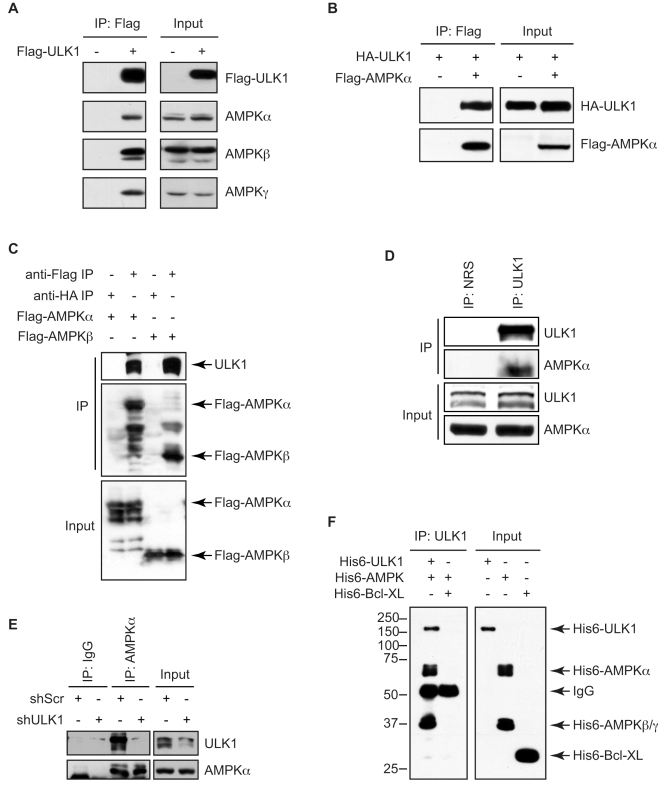
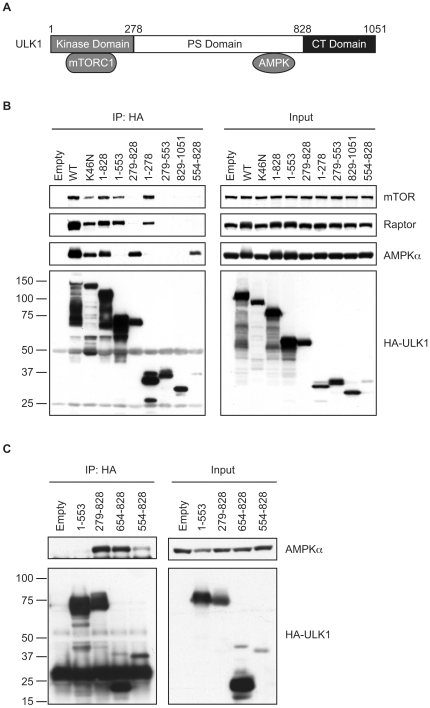
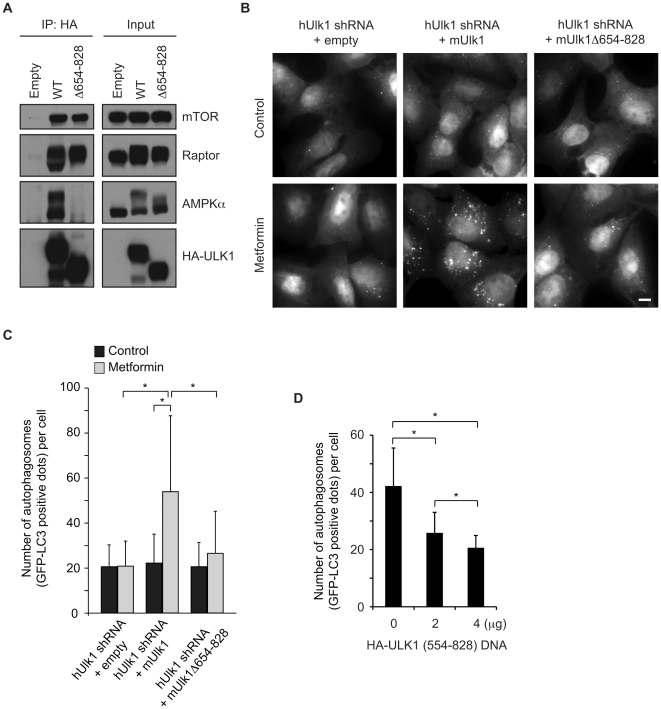
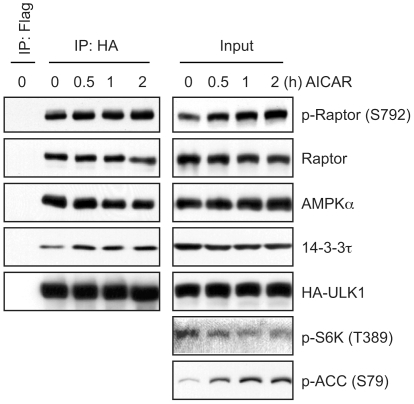
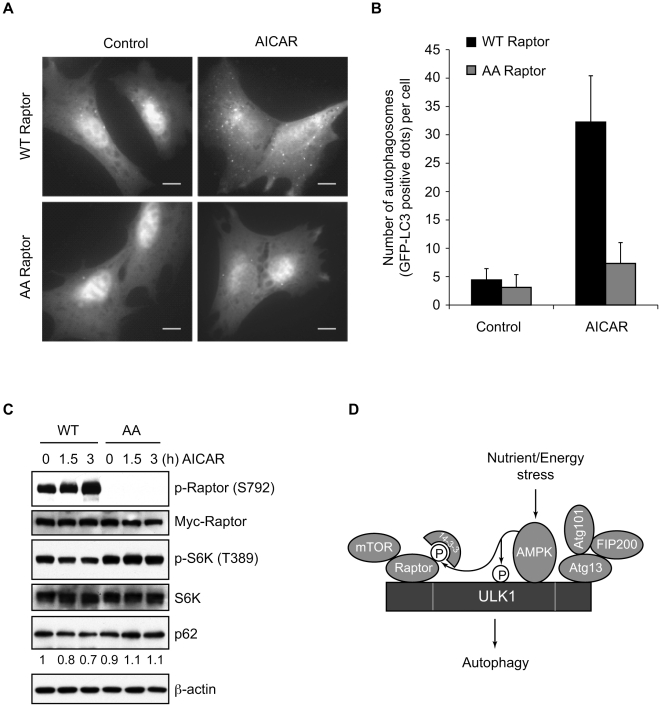
Autophagy is a highly orchestrated intracellular bulk degradation process that is activated by various environmental stresses. The serine/threonine kinase ULK1, like its yeast homologue Atg1, is a key initiator of autophagy that is negatively regulated by the mTOR kinase. However, the molecular mechanism that controls the inhibitory effect of mTOR on ULK1-mediated autophagy is not fully understood. Here we identified AMPK, a central energy sensor, as a new ULK1-binding partner. We found that AMPK binds to the PS domain of ULK1 and this interaction is required for ULK1-mediated autophagy. Interestingly, activation of AMPK by AICAR induces 14-3-3 binding to the AMPK-ULK1-mTORC1 complex, which coincides with raptor Ser792 phosphorylation and mTOR inactivation. Consistently, AICAR induces autophagy in TSC2-deficient cells expressing wild-type raptor but not the mutant raptor that lacks the AMPK phosphorylation sites (Ser722 and Ser792). Taken together, these results suggest that AMPK association with ULK1 plays an important role in autophagy induction, at least in part, by phosphorylation of raptor to lift the inhibitory effect of mTOR on the ULK1 autophagic complex.
Overview
The claims and statistics of this paper haven’t been checked yet.
Free: it reads the open-access text and checks the first 5 claims that cite a source we can check. Create a free account to check every claim.
Integrity signals
Registry
Cites
Statistics
Figures
Verification
Claims the paper makes
The claims and statistics of this paper haven’t been checked yet.
Free: it reads the open-access text and checks the first 5 claims that cite a source we can check. Create a free account to check every claim.
Claims other papers make about this one
Each is checked against this paper’s own text: does it say what the citing paper says it does?
In the citing paper
“Active AMPK induces autophagy through direct phosphorylation of ULK1, or through the phosphorylation of tuberin or regulatory-associated protein of mTOR (RAPTOR; encoded by RPTOR) to inhibit mTORC1”
From Autophagy in kidney homeostasis and disease (2020) · cites this paper as [24]
Self-check
Percentages, sums and reported differences re-computed from the paper’s own numbers.
The self-check needs the paper’s full text.
Citations
Cites
Autophagy fights disease through cellular self-digestion
Mizushima, N., Levine, B., Cuervo, A. M., & Klionsky, D. J. (2008) · Nature · doi:10.1038/nature06639 · Cited by 6,452 · cited 1×
“neurodegeneration, cancer, and aging [1,2].”
TOR signaling in growth and metabolism
Wullschleger, S., Loewith, R., & Hall, M. N. (2006) · Cell · doi:10.1016/j.cell.2006.01.016 · Cited by 5,787
TSC2 Mediates Cellular Energy Response to Control Cell Growth and Survival
Inoki, K., Zhu, T., & Guan, K.-L. (2003) · Cell · doi:10.1016/s0092-8674(03)00929-2 · Cited by 3,914
AMPK Phosphorylation of Raptor Mediates a Metabolic Checkpoint
Gwinn, D. M., Shackelford, D. B., Egan, D. F., Mihaylova, M. M., Mery, A., Vasquez, D. S., Turk, B. E., & Shaw, R. J. (2008) · Molecular Cell · doi:10.1016/j.molcel.2008.03.003 · Cited by 3,849
Kim, D.-H., Sarbassov, D. D., Ali, S. M., King, J. E., Latek, R. R., Erdjument-Bromage, H., Tempst, P., & Sabatini, D. M. (2002) · Cell · doi:10.1016/s0092-8674(02)00808-5 · Cited by 2,986
Nutrient-dependent mTORC1 Association with the ULK1–Atg13–FIP200 Complex Required for Autophagy
Hosokawa, N., Hara, T., Kaizuka, T., Kishi, C., Takamura, A., Miura, Y., Iemura, S.-I., Natsume, T., Takehana, K., Yamada, N., et al. (2009) · Molecular Biology of the Cell · doi:10.1091/mbc.e08-12-1248 · Cited by 2,076
ULK-Atg13-FIP200 Complexes Mediate mTOR Signaling to the Autophagy Machinery
Jung, C. H., Jun, C. B., Ro, S.-H., Kim, Y.-M., Otto, N. M., Cao, J., Kundu, M., & Kim, D.-H. (2009) · Molecular Biology of the Cell · doi:10.1091/mbc.e08-12-1249 · Cited by 2,025
The LKB1-AMPK pathway: metabolism and growth control in tumour suppression
Shackelford, D. B., & Shaw, R. J. (2009) · Nature Reviews Cancer · doi:10.1038/nrc2676 · Cited by 1,943 · cited 1×
“hypoxia [6].”
Rheb GTPase is a direct target of TSC2 GAP activity and regulates mTOR signaling
Inoki, K., Li, Y., Xu, T., & Guan, K.-L. (2003) · Genes & Development · doi:10.1101/gad.1110003 · Cited by 1,911 · cited 1×
“and activates the mTORC1 kinase [7,8].”
Isolation and characterization of autophagy‐defective mutants of Saccharomyces cerevisiae
Tsukada, M., & Ohsumi, Y. (1993) · FEBS Letters · doi:10.1016/0014-5793(93)80398-e · Cited by 1,772
Cited by
AMPK and mTOR regulate autophagy through direct phosphorylation of Ulk1
Kim, J., Kundu, M., Viollet, B., & Guan, K.-L. (2011) · Nature Cell Biology · doi:10.1038/ncb2152 · Cited by 7,227
The Role of Atg Proteins in Autophagosome Formation
Mizushima, N., Yoshimori, T., & Ohsumi, Y. (2011) · Annual Review of Cell and Developmental Biology · doi:10.1146/annurev-cellbio-092910-154005 · Cited by 2,978
The AMPK signalling pathway coordinates cell growth, autophagy and metabolism
Mihaylova, M. M., & Shaw, R. J. (2011) · Nature Cell Biology · doi:10.1038/ncb2329 · Cited by 2,923
An Overview of Autophagy: Morphology, Mechanism, and Regulation
Parzych, K. R., & Klionsky, D. J. (2014) · Antioxidants & Redox Signaling · doi:10.1089/ars.2013.5371 · Cited by 2,521
Molecular definitions of autophagy and related processes
Galluzzi, L., Baehrecke, E. H., Ballabio, A., Boya, P., Bravo‐San Pedro, J. M., Cecconi, F., Choi, A. M., Chu, C. T., Codogno, P., Colombo, M. I., et al. (2017) · The EMBO Journal · doi:10.15252/embj.201796697 · Cited by 1,646
Role of AMPK-mTOR-Ulk1/2 in the regulation of autophagy: cross talk, shortcuts, and feedbacks
Alers, S., Löffler, A. S., Wesselborg, S., & Stork, B. (2012) · Molecular and Cellular Biology · doi:10.1128/mcb.06159-11 · Cited by 1,483
“Interestingly, various subunits of the AMPK complex have been identified as additional components of the Ulk1 kinase network (5), and several studies could meanwhile confirm the direct interaction between AMPK and Ulk1 as well as a positive regulation of Ulk1 activity through AMPK-dependent phosphorylation (21, 55, 64…”
BackgroundInfluentialAMP-Activated Protein Kinase (AMPK) Controls the Aging Process via an Integrated Signaling Network
Salminen, A., & Kaarniranta, K. (2012) · Ageing Research Reviews · doi:10.1016/j.arr.2011.12.005 · Cited by 860
AMPK and mTOR in Cellular Energy Homeostasis and Drug Targets
Inoki, K., Kim, J., & Guan, K.-L. (2012) · Annual Review of Pharmacology and Toxicology · doi:10.1146/annurev-pharmtox-010611-134537 · Cited by 791
AMP-activated protein kinase: the current landscape for drug development
Steinberg, G. R., & Carling, D. (2019) · Nature Reviews Drug Discovery · doi:10.1038/s41573-019-0019-2 · Cited by 754
Autophagy in the Cellular Energetic Balance
Singh, R., & Cuervo, A. M. (2011) · Cell Metabolism · doi:10.1016/j.cmet.2011.04.004 · Cited by 788
Glycogen and its metabolism: some new developments and old themes
Roach, P. J., Depaoli-Roach, A. A., Hurley, T. D., & Tagliabracci, V. S. (2012) · Biochemical Journal · doi:10.1042/bj20111416 · Cited by 709
mTORC1 signaling and the metabolic control of cell growth
Ben-Sahra, I., & Manning, B. D. (2017) · Current Opinion in Cell Biology · doi:10.1016/j.ceb.2017.02.012 · Cited by 644
An Autophagic Flux Probe that Releases an Internal Control
Kaizuka, T., Morishita, H., Hama, Y., Tsukamoto, S., Matsui, T., Toyota, Y., Kodama, A., Ishihara, T., Mizushima, T., & Mizushima, N. (2016) · Molecular Cell · doi:10.1016/j.molcel.2016.09.037 · Cited by 575
Autophagy: The spotlight for cellular stress responses
Ravanan, P., Srikumar, I. F., & Talwar, P. (2017) · Life Sciences · doi:10.1016/j.lfs.2017.08.029 · Cited by 580
Shang, L., Chen, S., Du, F., Li, S., Zhao, L., & Wang, X. (2011) · Proceedings of the National Academy of Sciences · doi:10.1073/pnas.1100844108 · Cited by 517
Fighting neurodegeneration with rapamycin: mechanistic insights
Bové, J., Martínez-Vicente, M., & Vila, M. (2011) · Nature Reviews Neuroscience · doi:10.1038/nrn3068 · Cited by 525
Laker, R. C., Drake, J. C., Wilson, R. J., Lira, V. A., Lewellen, B. M., Ryall, K. A., Fisher, C. C., Zhang, M., Saucerman, J. J., Goodyear, L. J., et al. (2017) · Nature Communications · doi:10.1038/s41467-017-00520-9 · Cited by 529
Inflammaging: disturbed interplay between autophagy and inflammasomes
Salminen, A., Kaarniranta, K., & Kauppinen, A. (2012) · Aging · doi:10.18632/aging.100444 · Cited by 453
The MAPK and AMPK signalings: interplay and implication in targeted cancer therapy
Yuan, J., Dong, X., Yap, J., & Hu, J. (2020) · Journal of Hematology & Oncology · doi:10.1186/s13045-020-00949-4 · Cited by 493
AMPK in skeletal muscle function and metabolism
Kjøbsted, R., Hingst, J. R., Fentz, J., Foretz, M., Sanz, M., Pehmøller, C., Shum, M., Marette, A., Mounier, R., Treebak, J. T., et al. (2018) · The FASEB Journal · doi:10.1096/fj.201700442r · Cited by 496
The ULK1 complex: Sensing nutrient signals for autophagy activation
Wong, P.-M., Puente, C., Ganley, I. G., & Jiang, X. (2013) · Autophagy · doi:10.4161/auto.23323 · Cited by 497
Autophagy in kidney homeostasis and disease
Tang, C., Livingston, M. J., Liu, Z., & Dong, Z. (2020) · Nature Reviews Nephrology · doi:10.1038/s41581-020-0309-2 · Cited by 496
Autophagy in cancer metastasis
Mowers, E. E., Sharifi, M. N., & Macleod, K. F. (2017) · Oncogene · doi:10.1038/onc.2016.333 · Cited by 475
Crosstalk between Oxidative Stress and SIRT1: Impact on the Aging Process
Salminen, A., Kaarniranta, K., & Kauppinen, A. (2013) · International Journal of Molecular Sciences · doi:10.3390/ijms14023834 · Cited by 452
mTOR and autophagy: A dynamic relationship governed by nutrients and energy
Dunlop, E. A., & Tee, A. R. (2014) · Seminars in Cell & Developmental Biology · doi:10.1016/j.semcdb.2014.08.006 · Cited by 441
Regulation and Function of Autophagy during Cell Survival and Cell Death
Das, G., Shravage, B. V., & Baehrecke, E. H. (2012) · Cold Spring Harbor Perspectives in Biology · doi:10.1101/cshperspect.a008813 · Cited by 408
Autophagy in metabolic disease and ageing
Kitada, M., & Koya, D. (2021) · Nature Reviews Endocrinology · doi:10.1038/s41574-021-00551-9 · Cited by 399
Harris, J. (2011) · Cytokine · doi:10.1016/j.cyto.2011.08.022 · Cited by 391
Park, J.-M., Jung, C. H., Seo, M., Otto, N. M., Grunwald, D., Kim, K. H., Moriarity, B., Kim, Y.-M., Starker, C., Nho, R. S., et al. (2016) · Autophagy · doi:10.1080/15548627.2016.1140293 · Cited by 341
Sanchez, A. M., Csibi, A., Raibon, A., Cornille, K., Gay, S., Bernardi, H., & Candau, R. (2012) · Journal of Cellular Biochemistry · doi:10.1002/jcb.23399 · Cited by 306
The AMPK-MFN2 axis regulates MAM dynamics and autophagy induced by energy stresses
Hu, Y., Chen, H., Zhang, L., Lin, X., Li, X., Zhuang, H., Fan, H., Meng, T., He, Z., Huang, H., et al. (2021) · Autophagy · doi:10.1080/15548627.2020.1749490 · Cited by 327
Posttranslational modification of autophagy-related proteins in macroautophagy
Xie, Y., Kang, R., Sun, X., Zhong, M., Huang, J., Klionsky, D. J., & Tang, D. (2015) · Autophagy · doi:10.4161/15548627.2014.984267 · Cited by 302
Autophagy in diabetic nephropathy
Ding, Y., & Choi, M. E. (2015) · Journal of Endocrinology · doi:10.1530/joe-14-0437 · Cited by 306
mTOR Pathways in Cancer and Autophagy
Paquette, M., El-Houjeiri, L., & Pause, A. (2018) · Cancers · doi:10.3390/cancers10010018 · Cited by 297
Leucine and mTORC1: a complex relationship
Dodd, K. M., & Tee, A. R. (2012) · American Journal of Physiology-Endocrinology and Metabolism · doi:10.1152/ajpendo.00525.2011 · Cited by 293
Programmed cell death and its role in inflammation
Yang, Y., Jiang, G., Zhang, P., & Fan, J. (2015) · Military Medical Research · doi:10.1186/s40779-015-0039-0 · Cited by 290
Crosstalk between mitochondrial biogenesis and mitophagy to maintain mitochondrial homeostasis
Liu, L., Li, Y., Chen, G., & Chen, Q. (2023) · Journal of Biomedical Science · doi:10.1186/s12929-023-00975-7 · Cited by 286
The Emerging Roles of mTORC1 in Macromanaging Autophagy
Dossou, A. S., & Basu, A. (2019) · Cancers · doi:10.3390/cancers11101422 · Cited by 288
Calorie Restriction: Is AMPK a Key Sensor and Effector
Cantó, C., & Auwerx, J. (2011) · Physiology · doi:10.1152/physiol.00010.2011 · Cited by 282
Autophagosome formation—The role of ULK1 and Beclin1–PI3KC3 complexes in setting the stage
Wirth, M., Joachim, J., & Tooze, S. A. (2013) · Seminars in Cancer Biology · doi:10.1016/j.semcancer.2013.05.007 · Cited by 275
Vara, D., Salazar, M., Olea-Herrero, N., Guzmán, M., Velasco, G., & Díaz-Laviada, I. (2011) · Cell Death & Differentiation · doi:10.1038/cdd.2011.32 · Cited by 268
The Role of AMPK in the Regulation of Skeletal Muscle Size, Hypertrophy, and Regeneration
Thomson, D. M. (2018) · International Journal of Molecular Sciences · doi:10.3390/ijms19103125 · Cited by 267
“Nonetheless, it appears that AMPK generally supports and promotes autophagy [64,65], and this is true in skeletal muscle [66].”
BackgroundA molecular perspective of mammalian autophagosome biogenesis
Mercer, T. J., Gubas, A., & Tooze, S. A. (2018) · Journal of Biological Chemistry · doi:10.1074/jbc.r117.810366 · Cited by 265
Autophagy in diabetic kidney disease: regulation, pathological role and therapeutic potential
Yang, D., Livingston, M. J., Liu, Z., Dong, G., Zhang, M., Chen, J.-K., & Dong, Z. (2018) · Cellular and Molecular Life Sciences · doi:10.1007/s00018-017-2639-1 · Cited by 252
“On one hand, AMPK can directly phosphorylate ULK1 to promote autophagy [68, 87].”
BackgroundUlk1-mediated phosphorylation of AMPK constitutes a negative regulatory feedback loop
Löffler, A. S., Alers, S., Dieterle, A. M., Keppeler, H., Franz-Wachtel, M., Kundu, M., Campbell, D. G., Wesselborg, S., Alessi, D. R., & Stork, B. (2011) · Autophagy · doi:10.4161/auto.7.7.15451 · Cited by 258
Heat shock response and autophagy—cooperation and control
Dokladny, K., Myers, O. B., & Moseley, P. L. (2015) · Autophagy · doi:10.1080/15548627.2015.1009776 · Cited by 255
The serine/threonine kinase ULK1 is a target of multiple phosphorylation events
Bach, M., Larance, M., James, D. E., & Ramm, G. (2011) · Biochemical Journal · doi:10.1042/bj20101894 · Cited by 233
Emerging role of autophagy in kidney function, diseases and aging
Huber, T. B., Edelstein, C. L., Hartleben, B., Inoki, K., Jiang, M., Koya, D., Kume, S., Lieberthal, W., Pallet, N., Quiroga, A., et al. (2012) · Autophagy · doi:10.4161/auto.19821 · Cited by 253
Pierotti, M. A., Berrino, F., Gariboldi, M., Melani, C., Mogavero, A., Negri, T., Pasanisi, P., & Pilotti, S. (2013) · Oncogene · doi:10.1038/onc.2012.181 · Cited by 250
Autophagy in bone homeostasis and the onset of osteoporosis
Yin, X., Zhou, C., Li, J., Liu, R., Shi, B., Yuan, Q., & Zou, S. (2019) · Bone Research · doi:10.1038/s41413-019-0058-7 · Cited by 235
Autophagy signal transduction by ATG proteins: from hierarchies to networks
Wesselborg, S., & Stork, B. (2015) · Cellular and Molecular Life Sciences · doi:10.1007/s00018-015-2034-8 · Cited by 229
Targeting autophagy in disease: established and new strategies
Kocak, M., Ezazi Erdi, S., Jorba, G., Maestro, I., Farrés, J., Kirkin, V., Martinez, A., & Pless, O. (2022) · Autophagy · doi:10.1080/15548627.2021.1936359 · Cited by 228
AMPK Activation Stimulates Autophagy and Ameliorates Muscular Dystrophy in the mdx Mouse Diaphragm
Pauly, M., Daussin, F., Burelle, Y., Li, T., Godin, R., Fauconnier, J., Koechlin-Ramonatxo, C., Hugon, G., Lacampagne, A., Coisy-Quivy, M., et al. (2012) · The American Journal of Pathology · doi:10.1016/j.ajpath.2012.04.004 · Cited by 225
AMP‐activated protein kinase: a potential player in Alzheimer’s disease
Salminen, A., Kaarniranta, K., Haapasalo, A., Soininen, H., & Hiltunen, M. (2011) · Journal of Neurochemistry · doi:10.1111/j.1471-4159.2011.07331.x · Cited by 222
AMPK-dependent phosphorylation of ULK1 regulates ATG9 localization
Mack, H. I. D., Zheng, B., Asara, J. M., & Thomas, S. M. (2012) · Autophagy · doi:10.4161/auto.20586 · Cited by 221
“observed increased amounts of endogenous YWHAZ coprecipitating with exogenous ULK1 upon AMPK activation.(63) It is unclear whether YWHAZ binds directly to ULK1 or to one of its interacting proteins, in particular to RPTOR, a component of the MTORC1 complex.”
Dunlop, E. A., Hunt, D. K., Acosta-Jaquez, H. A., Fingar, D. C., & Tee, A. R. (2011) · Autophagy · doi:10.4161/auto.7.7.15491 · Cited by 219
Post-translational modifications of Beclin 1 provide multiple strategies for autophagy regulation
Hill, S. M., Wrobel, L., & Rubinsztein, D. C. (2019) · Cell Death & Differentiation · doi:10.1038/s41418-018-0254-9 · Cited by 216
SnRK1 activates autophagy via the TOR signaling pathway in Arabidopsis thaliana
Soto-Burgos, J., & Bassham, D. C. (2017) · PLOS ONE · doi:10.1371/journal.pone.0182591 · Cited by 215
Nguyen, H. G., Yang, J. C., Kung, H.-J., Shi, X.-B., Tilki, D., Lara, P. N., DeVere White, R. W., Gao, A. C., & Evans, C. P. (2014) · Oncogene · doi:10.1038/onc.2014.25 · Cited by 212
Iorio, R., Celenza, G., & Petricca, S. (2021) · Cells · doi:10.3390/cells11010030 · Cited by 209
Yang, Y., Fiskus, W., Yong, B., Atadja, P., Takahashi, Y., Pandita, T. K., Wang, H.-G., & Bhalla, K. N. (2013) · Proceedings of the National Academy of Sciences · doi:10.1073/pnas.1217692110 · Cited by 204
Self-citationMutant HTT (huntingtin) impairs mitophagy in a cellular model of Huntington disease
Franco-Iborra, S., Plaza-Zabala, A., Montpeyo, M., Sebastian, D., Vila, M., & Martinez-Vicente, M. (2021) · Autophagy · doi:10.1080/15548627.2020.1728096 · Cited by 196
Autophagy in cellular metabolism and cancer
Jiang, X., Overholtzer, M., & Thompson, C. B. (2015) · Journal of Clinical Investigation · doi:10.1172/jci73942 · Cited by 197
Mechanisms and context underlying the role of autophagy in cancer metastasis
Dower, C. M., Wills, C. A., Frisch, S. M., & Wang, H.-G. (2018) · Autophagy · doi:10.1080/15548627.2018.1450020 · Cited by 198
Self-citationTumor Suppression and Promotion by Autophagy
Ávalos, Y., Canales, J., Bravo-Sagua, R., Criollo, A., Lavandero, S., & Quest, A. F. G. (2014) · BioMed Research International · doi:10.1155/2014/603980 · Cited by 196
Roles of AMP-activated Protein Kinase in Alzheimer’s Disease
Cai, Z., Yan, L.-J., Li, K., Quazi, S. H., & Zhao, B. (2012) · NeuroMolecular Medicine · doi:10.1007/s12017-012-8173-2 · Cited by 193
Epigallocatechin Gallate (EGCG) Stimulates Autophagy in Vascular Endothelial Cells
Kim, H.-S., Montana, V., Jang, H.-J., Parpura, V., & Kim, J.-A. (2013) · Journal of Biological Chemistry · doi:10.1074/jbc.m113.477505 · Cited by 193
Role and regulation of autophagy in cancer
Rakesh, R., PriyaDharshini, L. C., Sakthivel, K. M., & Rasmi, R. R. (2022) · Biochimica et Biophysica Acta (BBA) - Molecular Basis of Disease · doi:10.1016/j.bbadis.2022.166400 · Cited by 192
Mechanisms of mitochondria and autophagy crosstalk
Rambold, A. S., & Lippincott-Schwartz, J. (2011) · Cell Cycle · doi:10.4161/cc.10.23.18384 · Cited by 189
Beauloye, C., Bertrand, L., Horman, S., & Hue, L. (2011) · Cardiovascular Research · doi:10.1093/cvr/cvr034 · Cited by 187
Role of Autophagy in Cancer Prevention
Chen, H.-Y., & White, E. (2011) · Cancer Prevention Research · doi:10.1158/1940-6207.capr-10-0387 · Cited by 185
The Role of the Mammalian Target of Rapamycin (mTOR) in Pulmonary Fibrosis
Lawrence, J., & Nho, R. (2018) · International Journal of Molecular Sciences · doi:10.3390/ijms19030778 · Cited by 183
Wei, K., Wang, P., & Miao, C. (2012) · CNS Neuroscience & Therapeutics · doi:10.1111/cns.12005 · Cited by 181
Regulation of Autophagy by Kinases
Sridharan, S., Jain, K., & Basu, A. (2011) · Cancers · doi:10.3390/cancers3022630 · Cited by 181
ULK1 inhibits the kinase activity of mTORC1 and cell proliferation
Jung, C. H., Seo, M., Otto, N. M., & Kim, D.-H. (2011) · Autophagy · doi:10.4161/auto.7.10.16660 · Cited by 175
Kawaguchi, T., Takemura, G., Kanamori, H., Takeyama, T., Watanabe, T., Morishita, K., Ogino, A., Tsujimoto, A., Goto, K., Maruyama, R., et al. (2012) · Cardiovascular Research · doi:10.1093/cvr/cvs282 · Cited by 172
PGC-1α buffers ROS-mediated removal of mitochondria during myogenesis
Baldelli, S., Aquilano, K., & Ciriolo, M. R. (2014) · Cell Death & Disease · doi:10.1038/cddis.2014.458 · Cited by 171
ULK1 phosphorylates Ser30 of BECN1 in association with ATG14 to stimulate autophagy induction
Park, J.-M., Seo, M., Jung, C. H., Grunwald, D., Stone, M., Otto, N. M., Toso, E., Ahn, Y., Kyba, M., Griffin, T. J., et al. (2018) · Autophagy · doi:10.1080/15548627.2017.1422851 · Cited by 168
Dynamic Modelling of Pathways to Cellular Senescence Reveals Strategies for Targeted Interventions
Dalle Pezze, P., Nelson, G., Otten, E. G., Korolchuk, V. I., Kirkwood, T. B. L., von Zglinicki, T., & Shanley, D. P. (2014) · PLoS Computational Biology · doi:10.1371/journal.pcbi.1003728 · Cited by 166
Killing a cancer: what are the alternatives?
Kreuzaler, P., & Watson, C. J. (2012) · Nature Reviews Cancer · doi:10.1038/nrc3264 · Cited by 161
Apoptosis, autophagy and atherosclerosis: Relationships and the role of Hsp27
Shan, R., Liu, N., Yan, Y., & Liu, B. (2021) · Pharmacological Research · doi:10.1016/j.phrs.2020.105169 · Cited by 161
Joseph, A.-M., Adhihetty, P. J., Wawrzyniak, N. R., Wohlgemuth, S. E., Picca, A., Kujoth, G. C., Prolla, T. A., & Leeuwenburgh, C. (2013) · PLoS ONE · doi:10.1371/journal.pone.0069327 · Cited by 161
The AMP-Activated Protein Kinase KIN10 Is Involved in the Regulation of Autophagy in Arabidopsis
Chen, L., Su, Z.-Z., Huang, L., Xia, F.-N., Qi, H., Xie, L.-J., Xiao, S., & Chen, Q.-F. (2017) · Frontiers in Plant Science · doi:10.3389/fpls.2017.01201 · Cited by 159
Insights into the key roles of proteoglycans in breast cancer biology and translational medicine
Theocharis, A. D., Skandalis, S. S., Neill, T., Multhaupt, H. A. B., Hubo, M., Frey, H., Gopal, S., Gomes, A. M., Afratis, N. A., Lim, H. C., et al. (2015) · Biochimica et Biophysica Acta (BBA) - Reviews on Cancer · doi:10.1016/j.bbcan.2015.03.006 · Cited by 182
Roach, P. J. (2011) · Molecular and Cellular Biology · doi:10.1128/mcb.05565-11 · Cited by 155
AMPK-Dependent Phosphorylation of ULK1 Induces Autophagy
Zhao, M., & Klionsky, D. J. (2011) · Cell Metabolism · doi:10.1016/j.cmet.2011.01.009 · Cited by 153
Transcriptional up-regulation of ULK1 by ATF4 contributes to cancer cell survival
Pike, L. R. G., Singleton, D. C., Buffa, F., Abramczyk, O., Phadwal, K., Li, J.-L., Simon, A. K., Murray, J. T., & Harris, A. L. (2013) · Biochemical Journal · doi:10.1042/bj20120972 · Cited by 148
The 14-3-3 proteins in regulation of cellular metabolism
Kleppe, R., Martinez, A., Døskeland, S. O., & Haavik, J. (2011) · Seminars in Cell & Developmental Biology · doi:10.1016/j.semcdb.2011.08.008 · Cited by 147
Role of autophagy in the pathogenesis of inflammatory bowel disease
Iida, T., Onodera, K., & Nakase, H. (2017) · World Journal of Gastroenterology · doi:10.3748/wjg.v23.i11.1944 · Cited by 157
Autophagy is essential to support skeletal muscle plasticity in response to endurance exercise
Sanchez, A. M. J., Bernardi, H., Py, G., & Candau, R. B. (2014) · American Journal of Physiology-Regulatory, Integrative and Comparative Physiology · doi:10.1152/ajpregu.00187.2014 · Cited by 125
Mohammed, A., Janakiram, N. B., Brewer, M., Ritchie, R. L., Marya, A., Lightfoot, S., Steele, V. E., & Rao, C. V. (2013) · Translational Oncology · doi:10.1593/tlo.13556 · Cited by 142
Advances in Autophagy Regulatory Mechanisms
Gallagher, L. E., Williamson, L. E., & Chan, E. Y. W. (2016) · Cells · doi:10.3390/cells5020024 · Cited by 148
Autophagy in lung disease pathogenesis and therapeutics
Ryter, S. W., & Choi, A. M. K. (2015) · Redox Biology · doi:10.1016/j.redox.2014.12.010 · Cited by 135
Glioblastoma, hypoxia and autophagy: a survival-prone ‘ménage-à-trois’
Jawhari, S., Ratinaud, M., & Verdier, M. (2016) · Cell Death and Disease · doi:10.1038/cddis.2016.318 · Cited by 153
Mechanism of autophagic regulation in carcinogenesis and cancer therapeutics
Panda, P. K., Mukhopadhyay, S., Das, D. N., Sinha, N., Naik, P. P., & Bhutia, S. K. (2015) · Seminars in Cell and Developmental Biology · doi:10.1016/j.semcdb.2015.02.013 · Cited by 151
AMPK/mTOR Signaling in Autophagy Regulation During Cisplatin-Induced Acute Kidney Injury
Wang, Y. X., Liu, Z., Shu, S., Cai, J., Tang, C., & Dong, Z. (2020) · Frontiers in Physiology · doi:10.3389/fphys.2020.619730 · Cited by 153
Huang, H., Kang, R., Wang, J., Luo, G. G., Yang, W. Z., & Zhao, Z. (2013) · Autophagy · doi:10.4161/auto.22791 · Cited by 134
Nephroprotective Effects of Metformin in Diabetic Nephropathy
Ravindran, S., Kuruvilla, V., Wilbur, K., & Munusamy, S. (2017) · Journal of Cellular Physiology · doi:10.1002/jcp.25598 · Cited by 132
So Many Roads: the Multifaceted Regulation of Autophagy Induction
Velazquez, A. C., & Jackson, W. T. (2018) · Molecular and Cellular Biology · doi:10.1128/mcb.00303-18 · Cited by 134
Dengue Virus Activates the AMP Kinase-mTOR Axis To Stimulate a Proviral Lipophagy
Jordan, T. X., & Randall, G. C. (2017) · Journal of Virology · doi:10.1128/jvi.02020-16 · Cited by 145
Metadata
- Authors
- Lee, J. W., Park, S., Takahashi, Y., & Wang, H.-G.
- Affiliations
- Pennsylvania State University (US)
- Corresponding author
- Wang, Hong-Gang
- Venue
- PLoS ONE
- Publisher
- Public Library of Science (PLoS)
- Published
- 2010-11-03
- Volume
- 5
- Issue
- 11
- Pages
- e15394
- ISSN
- 1932-6203 (ISSN-L)
- PMC
- PMC2972217
- OpenAlex
- W2088355841
- Cited by
- 482
- References
- 40
- Citations by year
- 2026: 14 · 2025: 8 · 2024: 18 · 2023: 18 · 2022: 27 · 2021: 36 · 2020: 31 · 2019: 23 · 2018: 39 · 2017: 38 · 2016: 35 · 2015: 30 · 2014: 40 · 2013: 42 · 2012: 40
- FWCI
- 29.08
- Type
- journal article
- Language
- en
- Open access
- gold
- doi.org
- Locations
- PLoS ONE (publishedVersion, cc-by)
- Europe PMC (PubMed Central) (publishedVersion, cc-by)
- PubMed Central (publishedVersion, cc-by)
- PubMed (publishedVersion)
- DOAJ (DOAJ: Directory of Open Access Journals) (submittedVersion, cc-by-sa)
- Funders
- Flight Attendant Medical Research Institute
- Tokyo Medical and Dental University
- National Institutes of Health
- National Cancer Institute (CA129682, R01CA129682, CA-82197, R01CA082197)
- Topics
- Life Sciences › Biochemistry, Genetics and Molecular Biology › Cell Biology › Autophagy in Disease and Therapy
- Life Sciences › Biochemistry, Genetics and Molecular Biology › Molecular Biology › PI3K/AKT/mTOR signaling in cancer
- Life Sciences › Biochemistry, Genetics and Molecular Biology › Molecular Biology › Metabolism, Diabetes, and Cancer
- Keywords
- AMPK, ULK1, autophagy, mTORC1, Raptor phosphorylation, 14-3-3 binding, AICAR, TSC2, energy sensing, autophagy initiation
- MeSH terms
- Autophagy-Related Protein-1 Homolog, Mechanistic Target of Rapamycin Complex 1, Regulatory-Associated Protein of mTOR, Animals, Autophagy, Binding Sites, Cell Line, Cells, Cultured, Humans, Microscopy, Fluorescence, Mutation, Phosphorylation, Protein Binding, Proteins, Transfection, Immunoblotting, Protein Serine-Threonine Kinases, Mice, Knockout, Protein Subunits, RNA Interference, Cell Line, Tumor, Multiprotein Complexes, Immunoprecipitation, Intracellular Signaling Peptides and Proteins, Adaptor Proteins, Signal Transducing, 14-3-3 Proteins, Mice, AMP-Activated Protein Kinases, HEK293 Cells, TOR Serine-Threonine Kinases
About these checks
Registry, retraction, Cites and statistics results are computed, not judged, with one exception: a printed reference that no index lists is read once by a model before it counts as a citation error. Claims are extracted by a model and kept only when their quote appears verbatim in the text; each cited source is then checked, with a model’s help, for whether it says what the claim relies on. Those verdicts can be wrong — read the claim’s quote and the cited source before relying on one.
Statistics and arithmetic are recomputed, not judged.
Confidence bands are shown only for fields calibrated on our annotated test set. None is calibrated yet, so no band is shown.
What counts as a claim ›How we measure confidence ›How we check this ›
Are you an author, or do you see a problem with this page? Request a review
Data sources
Bibliographic data: Semantic Scholar, OpenAlex, Crossref.
Contains information from the Semantic Scholar Academic Graph Datasets, made available under the ODC Attribution License (ODC-BY 1.0).
Semantic Scholar’s data is described in: Kinney, R., et al. (2023). The Semantic Scholar Open Data Platform. arXiv:2301.10140.
