

The Association of AMPK with ULK1 Regulates Autophagy
Open accessThe DOI matches its Crossref record; 39 of the 40 references it cites were found in a registry or an index.
Abstract
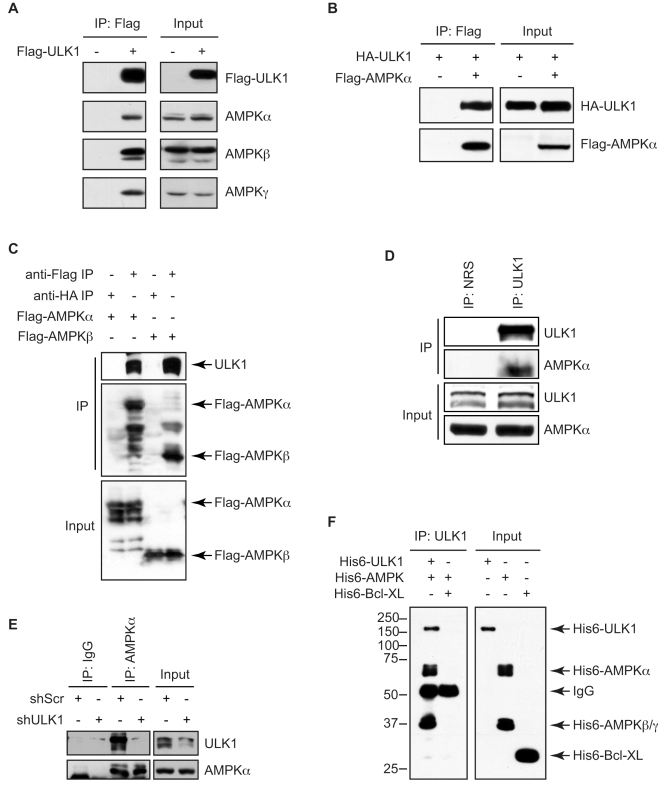
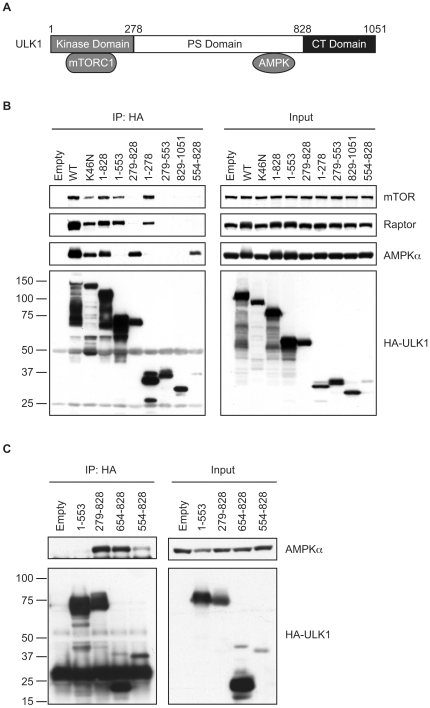
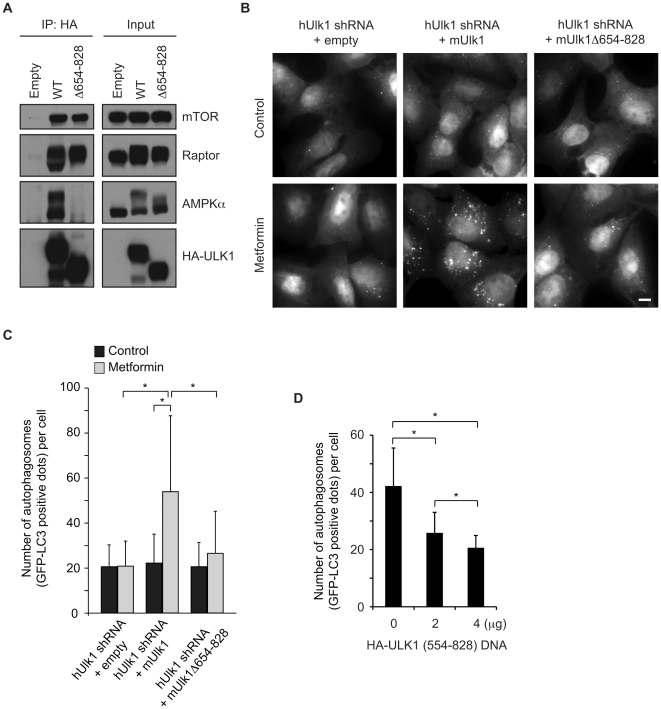
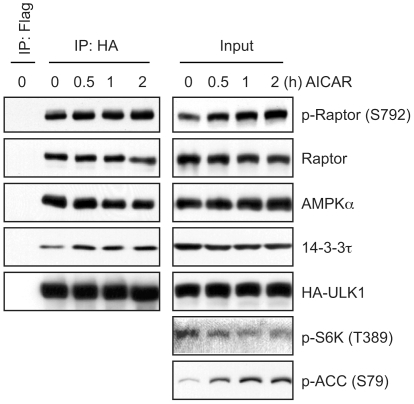
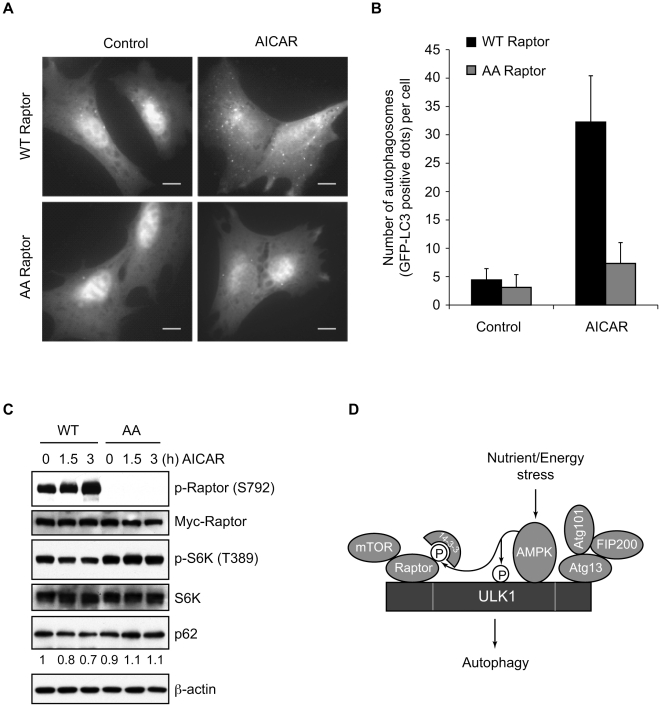
Autophagy is a highly orchestrated intracellular bulk degradation process that is activated by various environmental stresses. The serine/threonine kinase ULK1, like its yeast homologue Atg1, is a key initiator of autophagy that is negatively regulated by the mTOR kinase. However, the molecular mechanism that controls the inhibitory effect of mTOR on ULK1-mediated autophagy is not fully understood. Here we identified AMPK, a central energy sensor, as a new ULK1-binding partner. We found that AMPK binds to the PS domain of ULK1 and this interaction is required for ULK1-mediated autophagy. Interestingly, activation of AMPK by AICAR induces 14-3-3 binding to the AMPK-ULK1-mTORC1 complex, which coincides with raptor Ser792 phosphorylation and mTOR inactivation. Consistently, AICAR induces autophagy in TSC2-deficient cells expressing wild-type raptor but not the mutant raptor that lacks the AMPK phosphorylation sites (Ser722 and Ser792). Taken together, these results suggest that AMPK association with ULK1 plays an important role in autophagy induction, at least in part, by phosphorylation of raptor to lift the inhibitory effect of mTOR on the ULK1 autophagic complex.
Overview
The claims and statistics of this paper haven’t been checked yet.
Free: it reads the open-access text and checks the first 5 claims that cite a source we can check. Create a free account to check every claim.
Integrity signals
Registry
Cites
Statistics
Figures
Verification
Claims the paper makes
The claims and statistics of this paper haven’t been checked yet.
Free: it reads the open-access text and checks the first 5 claims that cite a source we can check. Create a free account to check every claim.
Claims other papers make about this one
Each is checked against this paper’s own text: does it say what the citing paper says it does?
In the citing paper
“Active AMPK induces autophagy through direct phosphorylation of ULK1, or through the phosphorylation of tuberin or regulatory-associated protein of mTOR (RAPTOR; encoded by RPTOR) to inhibit mTORC1”
From Autophagy in kidney homeostasis and disease (2020) · cites this paper as [24]
Self-check
Percentages, sums and reported differences re-computed from the paper’s own numbers.
The self-check needs the paper’s full text.
Citations
Cites
Autophagy fights disease through cellular self-digestion
Mizushima, N., Levine, B., Cuervo, A. M., & Klionsky, D. J. (2008) · Nature · doi:10.1038/nature06639 · Cited by 6,452 · cited 1×
“neurodegeneration, cancer, and aging [1,2].”
TOR signaling in growth and metabolism
Wullschleger, S., Loewith, R., & Hall, M. N. (2006) · Cell · doi:10.1016/j.cell.2006.01.016 · Cited by 5,787
TSC2 Mediates Cellular Energy Response to Control Cell Growth and Survival
Inoki, K., Zhu, T., & Guan, K.-L. (2003) · Cell · doi:10.1016/s0092-8674(03)00929-2 · Cited by 3,914
AMPK Phosphorylation of Raptor Mediates a Metabolic Checkpoint
Gwinn, D. M., Shackelford, D. B., Egan, D. F., Mihaylova, M. M., Mery, A., Vasquez, D. S., Turk, B. E., & Shaw, R. J. (2008) · Molecular Cell · doi:10.1016/j.molcel.2008.03.003 · Cited by 3,849
Kim, D.-H., Sarbassov, D. D., Ali, S. M., King, J. E., Latek, R. R., Erdjument-Bromage, H., Tempst, P., & Sabatini, D. M. (2002) · Cell · doi:10.1016/s0092-8674(02)00808-5 · Cited by 2,986
Nutrient-dependent mTORC1 Association with the ULK1–Atg13–FIP200 Complex Required for Autophagy
Hosokawa, N., Hara, T., Kaizuka, T., Kishi, C., Takamura, A., Miura, Y., Iemura, S.-I., Natsume, T., Takehana, K., Yamada, N., et al. (2009) · Molecular Biology of the Cell · doi:10.1091/mbc.e08-12-1248 · Cited by 2,076
ULK-Atg13-FIP200 Complexes Mediate mTOR Signaling to the Autophagy Machinery
Jung, C. H., Jun, C. B., Ro, S.-H., Kim, Y.-M., Otto, N. M., Cao, J., Kundu, M., & Kim, D.-H. (2009) · Molecular Biology of the Cell · doi:10.1091/mbc.e08-12-1249 · Cited by 2,025
The LKB1-AMPK pathway: metabolism and growth control in tumour suppression
Shackelford, D. B., & Shaw, R. J. (2009) · Nature Reviews Cancer · doi:10.1038/nrc2676 · Cited by 1,943 · cited 1×
“hypoxia [6].”
Rheb GTPase is a direct target of TSC2 GAP activity and regulates mTOR signaling
Inoki, K., Li, Y., Xu, T., & Guan, K.-L. (2003) · Genes & Development · doi:10.1101/gad.1110003 · Cited by 1,911 · cited 1×
“and activates the mTORC1 kinase [7,8].”
Isolation and characterization of autophagy‐defective mutants of Saccharomyces cerevisiae
Tsukada, M., & Ohsumi, Y. (1993) · FEBS Letters · doi:10.1016/0014-5793(93)80398-e · Cited by 1,772
Cited by
Items 401–484 of 484
Wang, Y., Luo, S., Sun, H., Huang, S., Shan, L., & Zhang, J.-F. (2025) · Drug Discovery Today · doi:10.1016/j.drudis.2025.104347 · Cited by 4
da Silva, H. N. M., Fernandes, E. M., Pereira, V. A., Mizobuti, D. S., Covatti, C., da Rocha, G. L., & Minatel, E. (2024) · PLoS ONE · doi:10.1371/journal.pone.0300006 · Cited by 6
Autophagy and GLUT4: The missing pieces
Elhassan, S. A. M., Candasamy, M., Chan, E. W. L., & Bhattamisra, S. K. (2018) · Diabetes & Metabolic Syndrome Clinical Research & Reviews · doi:10.1016/j.dsx.2018.05.020 · Cited by 5
Jordan, T. X., & Randall, G. C. (2014) · Wiley eBooks · doi:10.1002/9781118677551.ch6 · Cited by 5
Mechanism of endoplasmic reticulum stress: Insights for potential therapeutic benefits in burns
Tang, S., Ren, Z., 朱斌, & Li, K. (2026) · Tissue and Cell · doi:10.1016/j.tice.2026.103378 · Cited by 4
Kim, M., Suh, D. H., Kim, B., & Song, Y. S. (2013) · Phytochemistry Reviews · doi:10.1007/s11101-013-9307-3 · Cited by 4
Autophagy in Diabetes and the Metabolic Syndrome
Graham, T. E., & Abel, E. D. (2012) · Elsevier eBooks · doi:10.1016/b978-0-12-385101-7.00008-5 · Cited by 5
Li, H., Bao, L., Deng, S., Liu, L., Cheng, J. R., Cheng, X. J., Pan, Y., Zhang, J., & Chu, W. (2021) · Scientific Reports · doi:10.1038/s41598-021-83388-6 · Cited by 4
Models and Mechanisms of High-Fat Diet (HFD) Promotion of Pancreatic Cancer
Chang, H.-H., Eibl, G., & Rozengurt, E. (2015) · Energy balance and cancer · doi:10.1007/978-3-319-16733-6_10 · Cited by 2
Molecular Machinery and Genetics of the Autophagy Pathway
Herr, D. R., & Finley, K. D. (2012) · Elsevier eBooks · doi:10.1016/b978-0-12-385101-7.00002-4 · Cited by 2
The Mechanism of Autophagy Regulation and The Role of Autophagy in Alzheimer′s Disease*
Liu, Z., Chen, J., & Zhang, D. (2012) · PROGRESS IN BIOCHEMISTRY AND BIOPHYSICS · doi:10.3724/sp.j.1206.2012.00363 · Cited by 2
The Regulation of Mammalian Target of Rapamycin
Xie, J. (2012) · OpenGrey (Institut de l'Information Scientifique et Technique) · Cited by 2
Autophagy and primary cilium: A dynamic duo in cellular homeostasis and disease
Acevedo-Valdivieso, J., Sandoval-Valenzuela, C., Pinto-Núñez, D., Reyes-Risso, I., Cheuquemilla, Y., Acuña-Catalán, D., Burgos, P. V., & Morselli, E. (2025) · International review of cytology · doi:10.1016/bs.ircmb.2025.08.005 · Cited by 1
Wang, Y., Zhang, Z., Chen, S., Zhang, Y., Cao, Y., Peng, Y., Zhao, J., Chen, A., & Wu, Y. (2026) · Scientific Reports · doi:10.1038/s41598-026-41950-0 · Cited by 1
Understanding Different Signaling Involved During Oxidative Stress
Shelke, P., Buradi, R., & Mishra, A. (2026) · Oxidative stress in applied basic research and clinical practice · doi:10.1007/978-3-032-19837-2_3 · Cited by 1
Wu, S., Chang, Z., Ye, X., Huang, Y., Yuan, H., Wang, H., Chen, S., Zhang, N., & Wang, S. (2026) · International Immunopharmacology · doi:10.1016/j.intimp.2026.116902 · Cited by 1
Self-citationAutophagy Modulation in Cancer Therapy: Navigating the Dual Roles to Overcome Chemoresistance
Mohiuddin, M., & Ahsan, M. A. M. (2026) · Health Science Reports · doi:10.1002/hsr2.72910 · Cited by 1
Nutrient Sensors Regulating Peptides
Çakır, I., & Nillni, E. A. (2018) · Springer eBooks · doi:10.1007/978-3-319-89506-2_6 · Cited by 1
Atg1/ULK1 complex in autophagy process and regulation
Bhol, C. S., & Bhutia, S. K. (2023) · Elsevier eBooks · doi:10.1016/b978-0-323-90142-0.00003-7 · Cited by 3
Sen, M. G., Sanislav, O., Fisher, P. R., & Annesley, S. J. (2024) · Cells · doi:10.3390/cells13141191 · Cited by 1
The Role of Autophagy in Lung Disease
Davies, M. P. A., & Wilson, C. M. (2016) · InTech eBooks · doi:10.5772/64167 · Cited by 1
Participation of AMPK in the Control of Skeletal Muscle Mass
Egawa, T. (2017) · Springer eBooks · doi:10.1007/978-981-10-3292-9_12 · Cited by 1
Autophagy and Cancer: Current Biology and Drug Development
Theiss, A. L. (2021) · Physiology in health and disease · doi:10.1007/978-3-030-67951-4_12 · Cited by 1
Canonical versus noncanonical autophagy
Petroni, G., & Galluzzi, L. (2021) · Elsevier eBooks · doi:10.1016/b978-0-12-820538-9.00008-9 · Cited by 1
Kochetkova, E. Y., Pospelov, V. A., & Pospelova, T. V. (2022) · Methods in molecular biology · doi:10.1007/978-1-0716-2071-7_10 · Cited by 1
Nucleotide regulation of AMP-activated protein kinase
Underwood, E. (2013) · UCL Discovery (University College London) · Cited by 1
Examining Autophagy and Mitophagy as Inducible Mechanisms of Cellular Remodelling
Bloemberg, D. (2017) · UWSpace (University of Waterloo) · Cited by 3
Impairment of neuronal mitophagy by mutant huntingtinPreprint
Franco-Iborra, S., Plaza‐Zabala, A., Sebastián, D., Vila, M., & Martínez‐Vicente, M. (2018) · bioRxiv (Cold Spring Harbor Laboratory) · doi:10.1101/330001 · Cited by 1
Unc 51–like autophagy-activating kinase (ULK1) mediates clearance of free α-globin in β-thalassemiaPreprint
Lechauve, C., Keith, J., Khandros, E., Fowler, S., Mayberry, K., Freiwan, A., Thom, C. S., Delbini, P., Romero, E. B., Zhang, J., et al. (2018) · bioRxiv (Cold Spring Harbor Laboratory) · doi:10.1101/454652 · Cited by 1
Li, Z., Miao, Z., Ding, L., Bao, J., & Xiao-hua, T. (2020) · Research Square · doi:10.21203/rs.3.rs-114503/v1 · Cited by 1
Nath, L. R., Swetha, M., Vijayakurup, V., Thangarasu, A. K., Haritha, N. H., Aiswarya, S. U. D., Rayginia, T. P., Keerthana, C. K., Kalishwaralal, K., Sundaram, S., et al. (2021) · SSRN Electronic Journal · doi:10.2139/ssrn.3942642 · Cited by 1
Sutter, S. O., Jetzer, S., Lkharrazi, A., Pedersen, S., Schraner, E. M., Vogt, B., Büning, H., & Fraefel, C. (2024) · bioRxiv (Cold Spring Harbor Laboratory) · doi:10.1101/2024.01.08.574727 · Cited by 1
SIX1-dependent myofiber typology and metabolism controls muscle hypertrophyPreprint
Gallo, M. D., Delivry, L., Pereira, D., Jauliac, E., Macaux, G., Guilbert, T., Denis, R., Backer, S., Saintpierre, M., Adoux, L., et al. (2026) · bioRxiv (Cold Spring Harbor Laboratory) · doi:10.64898/2026.02.03.703490 · Cited by 1
Metabolic and cellular effects of calorie restriction and whey proteins in experimental obesity
Kurki, E. (2013) · Helda - University of Helsinki Institutional Repository
Pre-clinical cancer studies:mTOR signalling mechanisms as a therapeutic target
Hunt, D. K. (2014) · ORCA Online Research @Cardiff (Cardiff University)
6-phosphofructo-2-kinase inhibition induces autophagy as a survival mechanism.
Klarer, A. C. (2013) · ThinkIR: The University of Louisville's Institutional Repository (University of Louisville) · doi:10.18297/etd/760
Autophagy in Cancer Therapy: Progress and Issues
Shi, J.-J., & Meng, L. (2015) · Journal of cancer research updates · doi:10.6000/1929-2279.2015.04.01.1
Characterising the tumour suppression function of folliculin
Preston, R. S. (2013) · ORCA Online Research @Cardiff (Cardiff University)
« Se manger soi-même » pour survivre
Viollet, B., & Foretz, M. (2011) · médecine/sciences · doi:10.1051/medsci/2011276002
Reactive oxygen species mediated regulation of autophagy in skeletal muscles
Rahman, M. (2014) · eScholarship@McGill (McGill) · doi:10.82308/18633
Weisová, P., Pfeiffer, S., & Prehn, J. H. M. (2015) · Wiley eBooks · doi:10.1002/9781119017127.ch5
Signal Transduction Regulation of Autophagy
Wong, P., & Jiang, X. (2013) · Springer eBooks · doi:10.1007/978-1-4614-6561-4_4
Sim, J. P. L. (2014) · DR-NTU (Nanyang Technological University) · doi:10.32657/10356/64797
Vara‐Ciruelos, D., Salazar‐Roa, M., Olea‐Herrero, N., & Velasco, G. (2011)
Exploiting Cancer Cell Signaling and Metabolism: Implications for Therapeutic Approach
Mukhopadhyay, S. (2015) · CUNY Academic Works (City University of New York) · doi:10.13140/rg.2.1.4721.3848
Karanasios, E., & Ktistakis, N. T. (2016) · Springer eBooks · doi:10.1007/978-3-319-33145-4_3
Trauma, Regulated Cell Death, and Inflammation
Fan, J., & Fan, L. (2016) · Springer eBooks · doi:10.1007/978-981-10-2425-2_16 · Cited by 1
Rahman, H. (2012) · eDiss (Georg-August-Universität Göttingen) · doi:10.53846/goediss-528
Földvári-Nagy, L. (2016) · Eötvös Loránd Tudományegyetem · doi:10.15476/elte.2015.206
Autofagia: un processo fisiopatologico di autodigestione cellulare
Maellaro, E. (2018) · La Rivista Italiana della Medicina di Laboratorio - Italian Journal of Laboratory Medicine · doi:10.1007/s13631-018-0194-x
Heberle, A. M. (2019) · University of Groningen research database (University of Groningen / Centre for Information Technology)
Investigating the neuroprotective role of OGA inhibition by Thiamet-G against Alzheimer\'s disease
Li, Z. (2018) · Summit (Simon Fraser University)
Sternlieb, T., Schoijet, A. C., Genta, P. D., & Alonso, G. (2020) · bioRxiv (Cold Spring Harbor Laboratory) · doi:10.1101/2020.04.08.032284
McPhee, M. J. (2019) · DalSpace (Dalhousie University)
Targeting autophagy: lifestyle and pharmacological approaches
Briones‐Herrera, A., Gómez‐Sierra, T., Martínez‐Klimova, E., Bellido, B., & Pedraza‐Chaverrí, J. (2021) · Elsevier eBooks · doi:10.1016/b978-0-12-822003-0.00010-3
Hardman, S. E. (2014) · ScholarsArchive (Brigham Young University)
Klionsky, D. J. (2011) · Faculty Opinions – Post-Publication Peer Review of the Biomedical Literature · doi:10.3410/f.8875956.9424055
Quantitative LC-MS/MS Uncovers The Regulatory Role of Autophagy in Immune ThrombocytopeniaPreprint
Sun, R., Yuan, D., Yin, D.-M., Liu, S., Zhu, J., & Shan, N. (2020) · Research Square · doi:10.21203/rs.3.rs-105355/v1
Sahin, K. B. (2022) · Queensland University of Technology · doi:10.5204/thesis.eprints.231468 · Cited by 1
Regulation des Autophagieproteins ULK1 im MPTP-Mausmodell des Morbus Parkinson
Balke, D. (2022) · eDiss (Georg-August-Universität Göttingen) · doi:10.53846/goediss-9531
The Role of Autophagy in Renal Fibrosis
解, 雅. (2022) · Advances in Clinical Medicine · doi:10.12677/acm.2022.12111515
ULK1/2 Inhibitor: Essential Component of Autophagic Cell Death Machinery
Sidat, P. S., Noolvi, M. N., Patil, R., & Rathod, S. (2022) · Journal of Pharmaceutical Research · doi:10.18579/jopcr/v21i3.4
Zubova, S. G., & Morshneva, A. V. (2024) · Tsitologiya · doi:10.31857/s0041377124010023
Su, J., Chen, W., Zhang, H., Li, H., Pan, B., Ma, Z., Wang, Y., Cui, H., & Lv, S. (2024) · Natural Product Communications · doi:10.1177/1934578x241286968
Basal State Calibration of a Chemical Reaction Network Model for Autophagy
Hajdú, B., Kapuy, O., & Nagy, T. Z. (2024) · International Journal of Molecular Sciences · doi:10.3390/ijms252011316 · Cited by 1
Watany, M. M., El‐Horany, H. E., Elhosary, M. M., & Elhadidy, A. A. (2023) · Figshare · doi:10.6084/m9.figshare.22615484
Curcumin as a Natural Mammalian Target of Rapamycin and Autophagy Modulator
Elvitigala, C., Bowange, T., Wijekoon, N., & Gonawala, L. (2026) · Springer eBooks · doi:10.1007/978-981-95-4751-7_6
The regulatory effects of circulating normal immunoglobulins on autophagy and Th17 response
Das, M. (2017) · theses.fr (ABES) · doi:10.70675/ea6bb914zc789z45bez864fz4c3386135691 · Cited by 2
Contrôle de la mitophagie dans la maladie de Parkinson : Dialogue fonctionnel entre XBP1 et PINK1
Manaa, W. E. (2019) · theses.fr (ABES) · doi:10.70675/3428bd72z68cdz42f6za6d1z35ce71263711
Role of p27/Kip1 in auphagy under metabolic stress conditions
Nowosad, A. (2018) · theses.fr (ABES) · doi:10.70675/11eb36d1zc3baz4d74z8d00zc049667c5976
Mitochondrial Metabolism Governs Spermatogonial Stem Cell Fate Decisions
Zx, M., Geng, Q., Zhu, H., Zou, D., Chen, D., Li, K., & Song, W. H. (2026) · Andrology · doi:10.1111/andr.70241
Samanta, S., & Bishayi, B. (2026) · The International Journal of Biochemistry & Cell Biology · doi:10.1016/j.biocel.2026.106985
Tang, C., Su, K., Zhan, Z., Huang, R., Luo, M., & Li, J. (2026) · Oncogene · doi:10.1038/s41388-026-03945-z
Complement Signaling and Regulated Cell Death in Immune-Mediated Glomerular Injury
Tzali, E., Pleros, C., Stylianou, K., & Petrakis, I. (2026) · Medicina · doi:10.3390/medicina62101924
The AMPK signaling pathway in cell metabolism and human diseases
Zhang, Z., Gu, Y., He, H., Qiao, S., Shao, Y., 龙先铭, Huang, J., Zhang, L., & Zhou, F. (2026) · Signal Transduction and Targeted Therapy · doi:10.1038/s41392-026-02790-6 · Cited by 1
BindingDB (2024) · UC San Diego · doi:10.7270/q20g3qc6
The Senescent Cell Induced Bystander Effect
Wordsworth, J. (2014)
Metadata
- Authors
- Lee, J. W., Park, S., Takahashi, Y., & Wang, H.-G.
- Affiliations
- Pennsylvania State University (US)
- Corresponding author
- Wang, Hong-Gang
- Venue
- PLoS ONE
- Publisher
- Public Library of Science (PLoS)
- Published
- 2010-11-03
- Volume
- 5
- Issue
- 11
- Pages
- e15394
- ISSN
- 1932-6203 (ISSN-L)
- PMC
- PMC2972217
- OpenAlex
- W2088355841
- Cited by
- 482
- References
- 40
- Citations by year
- 2026: 14 · 2025: 8 · 2024: 18 · 2023: 18 · 2022: 27 · 2021: 36 · 2020: 31 · 2019: 23 · 2018: 39 · 2017: 38 · 2016: 35 · 2015: 30 · 2014: 40 · 2013: 42 · 2012: 40
- FWCI
- 29.08
- Type
- journal article
- Language
- en
- Open access
- gold
- doi.org
- Locations
- PLoS ONE (publishedVersion, cc-by)
- Europe PMC (PubMed Central) (publishedVersion, cc-by)
- PubMed Central (publishedVersion, cc-by)
- PubMed (publishedVersion)
- DOAJ (DOAJ: Directory of Open Access Journals) (submittedVersion, cc-by-sa)
- Funders
- Flight Attendant Medical Research Institute
- Tokyo Medical and Dental University
- National Institutes of Health
- National Cancer Institute (CA129682, R01CA129682, CA-82197, R01CA082197)
- Topics
- Life Sciences › Biochemistry, Genetics and Molecular Biology › Cell Biology › Autophagy in Disease and Therapy
- Life Sciences › Biochemistry, Genetics and Molecular Biology › Molecular Biology › PI3K/AKT/mTOR signaling in cancer
- Life Sciences › Biochemistry, Genetics and Molecular Biology › Molecular Biology › Metabolism, Diabetes, and Cancer
- Keywords
- AMPK, ULK1, autophagy, mTORC1, Raptor phosphorylation, 14-3-3 binding, AICAR, TSC2, energy sensing, autophagy initiation
- MeSH terms
- Autophagy-Related Protein-1 Homolog, Mechanistic Target of Rapamycin Complex 1, Regulatory-Associated Protein of mTOR, Animals, Autophagy, Binding Sites, Cell Line, Cells, Cultured, Humans, Microscopy, Fluorescence, Mutation, Phosphorylation, Protein Binding, Proteins, Transfection, Immunoblotting, Protein Serine-Threonine Kinases, Mice, Knockout, Protein Subunits, RNA Interference, Cell Line, Tumor, Multiprotein Complexes, Immunoprecipitation, Intracellular Signaling Peptides and Proteins, Adaptor Proteins, Signal Transducing, 14-3-3 Proteins, Mice, AMP-Activated Protein Kinases, HEK293 Cells, TOR Serine-Threonine Kinases
About these checks
Registry, retraction, Cites and statistics results are computed, not judged, with one exception: a printed reference that no index lists is read once by a model before it counts as a citation error. Claims are extracted by a model and kept only when their quote appears verbatim in the text; each cited source is then checked, with a model’s help, for whether it says what the claim relies on. Those verdicts can be wrong — read the claim’s quote and the cited source before relying on one.
Statistics and arithmetic are recomputed, not judged.
Confidence bands are shown only for fields calibrated on our annotated test set. None is calibrated yet, so no band is shown.
What counts as a claim ›How we measure confidence ›How we check this ›
Are you an author, or do you see a problem with this page? Request a review
Data sources
Bibliographic data: Semantic Scholar, OpenAlex, Crossref.
Contains information from the Semantic Scholar Academic Graph Datasets, made available under the ODC Attribution License (ODC-BY 1.0).
Semantic Scholar’s data is described in: Kinney, R., et al. (2023). The Semantic Scholar Open Data Platform. arXiv:2301.10140.
