

Necessity of Hippocampal Neurogenesis for the Therapeutic Action of Antidepressants in Adult Nonhuman Primates
Open accessThe DOI matches its Crossref record; 62 of the 62 references it cites were found in a registry or an index.
Abstract
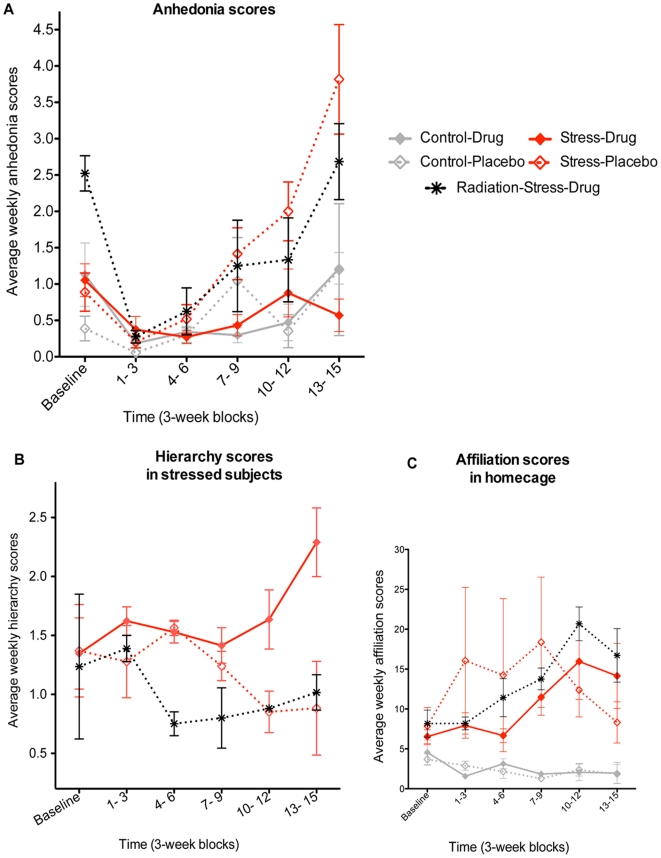
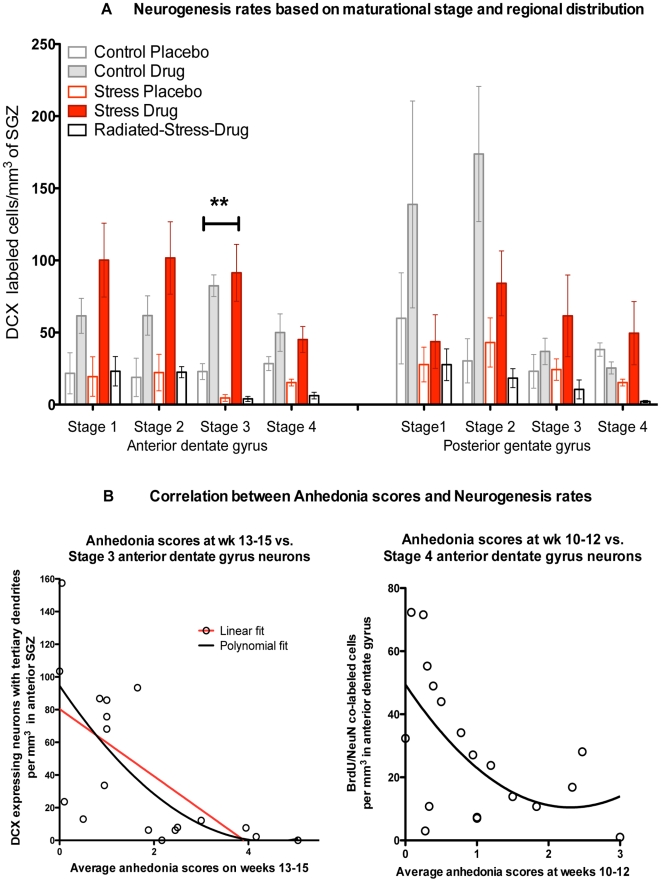
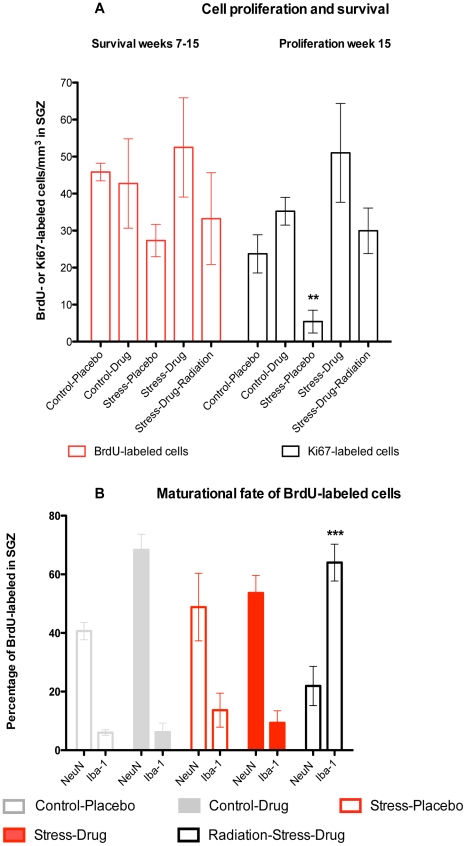
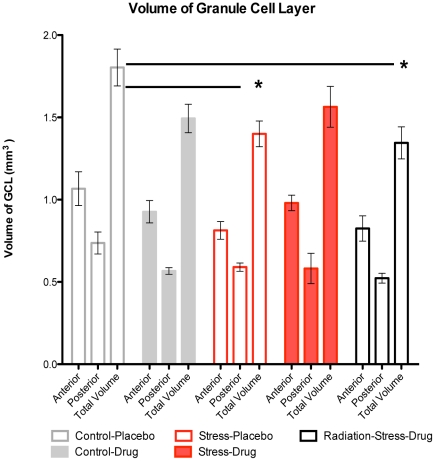
BACKGROUND: Rodent studies show that neurogenesis is necessary for mediating the salutary effects of antidepressants. Nonhuman primate (NHP) studies may bridge important rodent findings to the clinical realm since NHP-depression shares significant homology with human depression and kinetics of primate neurogenesis differ from those in rodents. After demonstrating that antidepressants can stimulate neurogenesis in NHPs, our present study examines whether neurogenesis is required for antidepressant efficacy in NHPs. MATERIALS/METHODOLOGY: Adult female bonnets were randomized to three social pens (N = 6 each). Pen-1 subjects were exposed to control-conditions for 15 weeks with half receiving the antidepressant fluoxetine and the rest receiving saline-placebo. Pen-2 subjects were exposed to 15 weeks of separation-stress with half receiving fluoxetine and half receiving placebo. Pen-3 subjects 2 weeks of irradiation (N = 4) or sham-irradiation (N = 2) and then exposed to 15 weeks of stress and fluoxetine. Dependent measures were weekly behavioral observations and postmortem neurogenesis levels. RESULTS: Exposing NHPs to repeated separation stress resulted in depression-like behaviors (anhedonia and subordinance) accompanied by reduced hippocampal neurogenesis. Treatment with fluoxetine stimulated neurogenesis and prevented the emergence of depression-like behaviors. Ablation of neurogenesis with irradiation abolished the therapeutic effects of fluoxetine. Non-stressed controls had normative behaviors although the fluoxetine-treated controls had higher neurogenesis rates. Across all groups, depression-like behaviors were associated with decreased rates of neurogenesis but this inverse correlation was only significant for new neurons in the anterior dentate gyrus that were at the threshold of completing maturation. CONCLUSION: We provide evidence that induction of neurogenesis is integral to the therapeutic effects of fluoxetine in NHPs. Given the similarity between monkeys and humans, hippocampal neurogenesis likely plays a similar role in the treatment of clinical depression. Future studies will examine several outstanding questions such as whether neuro-suppression is sufficient for producing depression and whether therapeutic neuroplastic effects of fluoxetine are specific to antidepressants.
Overview
The claims and statistics of this paper haven’t been checked yet.
Free: it reads the open-access text and checks the first 5 claims that cite a source we can check. Create a free account to check every claim.
Integrity signals
Registry
Cites
Statistics
Figures
Verification
Claims the paper makes
The claims and statistics of this paper haven’t been checked yet.
Free: it reads the open-access text and checks the first 5 claims that cite a source we can check. Create a free account to check every claim.
Claims other papers make about this one
Each is checked against this paper’s own text: does it say what the citing paper says it does?
The cited source says what the claim attributes to it.
In the citing paper
“Several data indicate that the effect of antidepressants depends on their ability to induce hippocampal neurogenesis in rodents as well as in non-human primates (Santarelli et al., 2003;Kong et al., 2009;Mateus-Pinheiro et al., 2013;Perera et al., 2011).”
From Depression and adult neurogenesis: Positive effects of the antidepressant fluoxetine and of physical exercise (2018) · cites this paper as Perera et al., 2011
Self-check
Percentages, sums and reported differences re-computed from the paper’s own numbers.
The self-check needs the paper’s full text.
Citations
Cites
Kessler, R. C., Berglund, P., Demler, O., Jin, R., Koretz, D., Merikangas, K. R., Rush, A. J., Walters, E. E., & Wang, P. S. (2003) · JAMA · doi:10.1001/jama.289.23.3095 · Cited by 7,988 · cited 1×
“This behavior of the NHPs in the setting of repeated social separation stress parallels clinical depression, as interpersonal loss is the predominant trigger of depression in humans [35] and chronic stress is a major epidemiological risk factor for major depression and chronic anxiety disorders [37].”
BackgroundAChE-stained horizontal sections of the rat brain in stereotaxic coordinates
Paxinos, G., Watson, C. R. R., & Emson, P. C. (1980) · Journal of Neuroscience Methods · doi:10.1016/0165-0270(80)90021-7 · Cited by 4,497 · cited 1×
“. The anterior dentate gyrus was defined by coronal levels resembling Bregma-10.88 mm through Bregma-13.50 mm in the rhesus macaque brain atlas by Paxinos et al.”
MethodInfluentialRequirement of hippocampal neurogenesis for the behavioral effects of antidepressants
Santarelli, L., Saxe, M., Gross, C., Surget, A., Battaglia, F., Dulawa, S., Weisstaub, N., Lee, J., Duman, R., Arancio, O., et al. (2003) · Science · doi:10.1126/science.1083328 · Cited by 4,321 · cited 7×
“The neurosuppressive effect of irradiation was subtler in the monkeys than in mice, where irradiation abolished all possibility of neurogenesis for months [18], [19].”
BackgroundMethodResultSelf-citationChronic antidepressant treatment increases neurogenesis in adult rat hippocampus
Malberg, J. E., Eisch, A. J., Nestler, E. J., & Duman, R. S. (2000) · The Journal of Neuroscience · doi:10.1523/jneurosci.20-24-09104.2000 · Cited by 3,111 · cited 3×
“Interventions that ameliorate major depression, including antidepressant medications, electroconvulsive therapy (ECT) [7], exercise, and environmental enrichment [8] stimulate dentate gyrus neurogenesis.”
BackgroundInflammatory Blockade Restores Adult Hippocampal Neurogenesis
Monje, M. L., Toda, H., & Palmer, T. D. (2003) · Science · doi:10.1126/science.1088417 · Cited by 2,426 · cited 2×
“The predominance of microglia in this population raises the question of whether these mitotic cells represented an inflammatory reaction to irradiation, as has been reported in rodents [42].”
BackgroundMethodExercise enhances learning and hippocampal neurogenesis in aged mice
van Praag, H., Shubert, T., Zhao, C., & Gage, F. H. (2005) · The Journal of Neuroscience · doi:10.1523/jneurosci.1731-05.2005 · Cited by 2,078
Transient expression of doublecortin during adult neurogenesis
Brown, J. P., Couillard‐Després, S., Cooper‐Kuhn, C. M., Winkler, J., Aigner, L., & Kuhn, H. G. (2003) · Journal of Comparative Neurology · doi:10.1002/cne.10874 · Cited by 1,496 · cited 17×
“Using standard peroxidase methods we determined the following: granule cells proliferating at the time of sacrifice (on week-15) identified by the expression of the mitotic marker Ki67 (mouse anti-Ki67 antibody, 1:200; Vector Laboratories, Burlingame, CA); mitotic cells that took up BrdU at the time of injection (week…”
MethodInfluentialGould, E., Tanapat, P., McEwen, B. S., Flügge, G., & Fuchs, E. (1998) · Proceedings of the National Academy of Sciences · doi:10.1073/pnas.95.6.3168 · Cited by 1,395 · cited 2×
“Nonetheless, the fact that granule cells that were presumably 6–7 weeks old displayed an immature histological profile is surprising because in our previous study approximately 50% of 4-week old granule cells expressed NeuN following ECS treatment [16], and this rate of maturation is consistent with several other stud…”
BackgroundResultGABA regulates synaptic integration of newly generated neurons in the adult brain
Ge, S., Goh, E. L. K., Sailor, K. A., Kitabatake, Y., Ming, G.-L., & Song, H. (2006) · Nature · doi:10.1038/nature04404 · Cited by 1,264 · cited 3×
“that were at a hyperplastic stage of neuronal maturation by labeling for the NMDA receptor subunit II [26] (mouse anti-”
BackgroundUntreated Depression and Hippocampal Volume Loss
Sheline, Y. I., Gado, M. H., & Kraemer, H. C. (2003) · American Journal of Psychiatry · doi:10.1176/appi.ajp.160.8.1516 · Cited by 1,180 · cited 1×
“Major depression is consistently associated with decreased hippocampal volumes and deficits in hippocampus-dependent cognition [1], [2].”
Background
Research works printed but not linked: 1
- Perera TD Park S Nemirovskaya Y 2008 Cognitive role of neurogenesis in depression and antidepressant treatment. Neuroscientist 14 326 338 18612087 · DOI · Paper page
Cited by
Items 201–250 of 250
Is a Combination of Pharmacotherapy and Psychotherapy Superior to Each Alone?
Choi, K., & Kim, Y. (2017) · Springer eBooks · doi:10.1007/978-981-10-6577-4_21 · Cited by 4
Influence of Vagus Nerve Stimulation on Mood and Associated Disorders
Bottari, S. A., Rodriguez, A., & Williamson, J. B. (2023) · Neuromethods · doi:10.1007/978-1-0716-3465-3_7 · Cited by 6
Competition on presynaptic resources enhances the discrimination of interfering memories
Fung, C. C. A., & Fukai, T. (2023) · PNAS Nexus · doi:10.1093/pnasnexus/pgad161 · Cited by 4
GluN2B on Adult-Born Granule Cells Modulates (R,S)-Ketamine’s Rapid-Acting Effects in Mice
Bulthuis, N. E., McGowan, J. C., Ladner, L. R., LaGamma, C. T., Lim, S. C., Shubeck, C., Brachman, R. A., Sydnor, E., Pavlova, I. P., Seo, D.-O., et al. (2024) · The International Journal of Neuropsychopharmacology · doi:10.1093/ijnp/pyae036 · Cited by 4
“While this study and others (Santarelli et al., 2003; Perera et al., 2011; Yamada and Jinno, 2019; Planchez et al., 2021) suggest a critical role for neurogenesis in MDD, only antidepressants currently on the market were examined.”
The extraordinary “ordinary magic” of resilience
Grigorenko, E. L. (2024) · Development and Psychopathology · doi:10.1017/s0954579424000841 · Cited by 3
Inflammation and treatment resistance in major depression: A perfect storm
Miller, A. H. (2011) · Brain Behavior and Immunity · doi:10.1016/j.bbi.2011.07.214 · Cited by 3
ROLE OF HIPPOCAMPAL NEUROGENESIS IN THE PATHOPHYSIOLOGY AND TREATMENT OF DEPRESSION
(2014) · BENTHAM SCIENCE PUBLISHERS eBooks · doi:10.2174/9781608054671114010012 · Cited by 3
The neural substrates of different depression symptoms: Animal and human studies
Ünal, G., & Moustafa, A. A. (2020) · Elsevier eBooks · doi:10.1016/b978-0-12-817676-4.00004-3 · Cited by 4
Adult Neurogenesis and Social Behavior: A Reciprocal Relationship
Jorgensen, C., & Wang, Z. (2024) · Masterclass in neuroendocrinology · doi:10.1007/978-3-031-51112-7_6 · Cited by 3
Liu, Y., Zhang, J., Gu, X., & Jia, S. (2024) · Frontiers in Neuroscience · doi:10.3389/fnins.2024.1416738 · Cited by 2
Changes in adult neurogenesis in the hippocampus during depressive disorders in humans
Aniol, V. A., & Gulyaeva, N. V. (2015) · Neurochemical Journal · doi:10.1134/s181971241501002x · Cited by 4
Relationship between Age and Neurogenesis in Old World Monkeys
Perera, T. D., Yaretskiy, A., Rozenboym, A. V., Audi, Z., Lipira, C. M., Tang, J. E., Hill, J. D., Thirumangalakudi, L., Lee, D. C., Dwork, A. J., et al. (2013) · Neuroscience & Medicine · doi:10.4236/nm.2013.43028 · Cited by 1
““Fluoxetine” Study Study of the effects of fluoxetine treatment on neurogenesis in normally reared primates and subjects exposed to separation stress conditions [13].”
BackgroundMethodSelf-citationIMPACT OF EARLY LIFE STRESS ON ANTI-DEPRESSANT SENSITIVITY
Vokina, V. A. (2021) · Ulyanovsk Medico-biological Journal · doi:10.34014/2227-1848-2021-1-123-132 · Cited by 1
Effect of fluid control on the affective state of laboratory macaquesPreprint
Bueno, J. C., Paraskevopoulou, A., Miller, C. W., Petkov, C. I., Schmid, M. C., Thiele, A., Bateson, M., & Poirier, C. (2025) · bioRxiv (Cold Spring Harbor Laboratory) · doi:10.1101/2025.10.10.681594 · Cited by 1
Psychosocial influences on the dynamics of adult hippocampal neurogenesis
Kirste, I. (2012) · Universitätsbibliothek der FU Berlin Hochschulschriftenstelle u. Dokumentenserver · doi:10.17169/refubium-14987
Role Of Hippocampal Neurogenesis In The Etiology And Treatment Of Mood & Anxiety Disorders
Onksen, J. L. (2011) · ScholarlyCommons (University of Pennsylvania)
Genetics in the Pathogenesis and Treatment of Panic and Anxiety
Wilson, J. (2014) · Otago University Research Archive (University of Otago)
Phillips, J. L. (2015) · uO Research (University of Ottawa) · doi:10.20381/ruor-2800
“, 2000; Dranovsky and Hen, 2006) and that hippocampal neurogenesis is necessary for mediating the response to antidepressant treatment (Santarelli et al., 2003; Perera et al., 2011), suggesting a mechanism that could drive volume recovery in this area.”
Background[Pathogenesis of peripheral cytopenias in hemophiliac patients].
Magallón, M., Bello, J., Herruzo, R., Ortega, F., & Villar, J. M. (1989) · PubMed
Antidepressant-like Effects of Peripheral Reelin Administration in a Preclinical Model of Depression
Mitchell, M. A. (2017) · University Library - University of Saskatchewan (University of Saskatchewan)
Littlejohn, E. L. (2018) · UKnowledge (University of Kentucky) · doi:10.13023/etd.2018.292
Kajimoto, K. (2014) · UNM’s Digital Repository (University of New Mexico)
Effects of antidepressants on the ventral dentate gyrus
Arias, E. C. (2021) · Columbia Academic Commons (Columbia University) · doi:10.7916/d8-4gaa-1e71
Doan, J. (2020) · theses.fr (ABES) · doi:10.70675/4cac5eccz728az41a4z8461z85b9e8ddfa1e · Cited by 1
Neural and genetic correlates of cognitive deficits in major depressive disorder
Herzallah, M. M., Miezah, D., & Moustafa, A. A. (2020) · Elsevier eBooks · doi:10.1016/b978-0-12-817676-4.00002-x
Dunne, R. A., & McLoughlin, D. M. (2012) · Medicine · doi:10.1016/j.mpmed.2012.09.004
Stranger Danger! The Role of Ghrelin in Modulation of Social Behavior
Park, S. (2017) · Carleton University's Institutional Repository (MacOdrum Library, Carleton University) · doi:10.22215/etd/2017-12211
Postnatal neurogenesis in the neuroproliferative areas of the brain
Khodak, T., Tykholaz, V. O., & Shevchenko, V. M. (2022) · Reports of Vinnytsia National Medical University · doi:10.31393/reports-vnmedical-2022-26(4)-27
Kim, D., & Fulton, S. L. (2022) · Journal of Emerging Investigators · doi:10.59720/21-069
“Previously, our laboratory has utilized a NHP model of social isolation stress-induced MDD called adult-separation stress to investigate the cellular changes that occur during stress in the monkey hippocampus (15, 16).”
BackgroundMethodResultInfluentialRôles normal et pathologique des phosphorylations de la huntingtine par Cdk5
M’Barek, K. B. (2012) · theses.fr (ABES) · doi:10.70675/53a5c6a1zd813z445bza73bza84d5d3008fa
Wische-Fernandez, L. A., & Selek, S. (2025) · Cambridge University Press eBooks · doi:10.1017/9781009334730.010
Shtrahman, M., Parylak, S., Toda, T., & Gage, F. H. (2025) · Oxford University Press eBooks · doi:10.1093/med/9780190065324.003.0009
Popov, M. Y., & Lepik, O. V. (2025) · Психофармакология и биологическая наркология · doi:10.17816/phbn695539
The influence of cyclin D2 gene knockout on the hippocampus-dependent behavior in mice
Jedynak, P. (2014) · Figshare · doi:10.6084/m9.figshare.1120616
Orvoën, S. (2012) · theses.fr (ABES) · doi:10.70675/fc4072b8z23c7z4c2bzb5adz05babcfc2144
Dutheil, S. (2012) · theses.fr (ABES) · doi:10.70675/188d9a32z73ecz4b0ez8282z8ba8e7c3a8a4 · Cited by 1
Lormant, F. (2018) · theses.fr (ABES) · doi:10.70675/7d72b39dz4b8dz4db4zae27z25895fae46c2 · Cited by 1
Coutens, B. (2022) · theses.fr (ABES) · doi:10.70675/7ffbfd7ezefb5z4e4ez82f4z42a6ac0ff754 · Cited by 1
Estudo do efeito do dmt (n,n-dimetiltriptamina) na neurogênese de primatas não-humanos adultos
França, L. E. F. (2025) · RIUnB Institutional Repository (University of Brasília)
Proliferative Effects of the Psychedelic N,N -Dimethyltryptamine (DMT) in Human Neural Stem Cells
Salerno, J. A., Dominguez, E. R., Karmirian, K., Arrais, B. A. B. M. S., Alves, J., Erjautz, G., Kroening, K., Souza, L. R. Q., Ornelas, I. M., & Rehen, S. K. (2026) · ACS Chemical Neuroscience · doi:10.1021/acschemneuro.6c00209
Hippocampal Structural Plasticity
Poirier, C. (2026) · Wiley eBooks · doi:10.1002/9781394182237.ch13 · Cited by 1
Simard, S., & Mechawar, N. (2026) · Molecular Psychiatry · doi:10.1038/s41380-026-03896-7
Planchez, B., Kaci, M.-L., Legrand, M., Sakai, Y., Meriau, P., Pena, L., Morel, L., Picquet, S., Frerot, A., Brizard, B., et al. (2026) · Biological Psychiatry · doi:10.1016/j.biopsych.2026.09.017
Self-citationGoldstein, A. (2014) · MacSphere (McMaster University) · doi:10.71548/16898
Metadata
- Authors
- Perera, T. D., Dwork, A. J., Keegan, K. A., Thirumangalakudi, L., Lipira, C. M., Joyce, N., Lange, C., Higley, J. D., Rosoklija, G., Hen, R., Sackeim, H. A., & Coplan, J. D.
- Affiliations
- Columbia University Irving Medical Center (US)
- State University of New York (US)
- Brigham Young University (US)
- Macedonian Academy of Sciences and Arts (MK)
- Corresponding author
- Perera, Tarique D.
- Venue
- PLoS ONE
- Publisher
- Public Library of Science (PLoS)
- Published
- 2011-04-15
- Volume
- 6
- Issue
- 4
- Pages
- e17600
- ISSN
- 1932-6203 (ISSN-L)
- PMC
- PMC3078107
- OpenAlex
- W2060709606
- Cited by
- 244
- References
- 62
- Citations by year
- 2026: 5 · 2025: 7 · 2024: 13 · 2023: 4 · 2022: 11 · 2021: 10 · 2020: 12 · 2019: 18 · 2018: 16 · 2017: 18 · 2016: 18 · 2015: 16 · 2014: 26 · 2013: 24 · 2012: 28
- FWCI
- 9.95
- Type
- journal article
- Language
- en
- Open access
- gold
- doi.org
- Locations
- PLoS ONE (publishedVersion, cc-by)
- Europe PMC (PubMed Central) (publishedVersion, cc-by)
- PubMed Central (publishedVersion, cc-by)
- PubMed (publishedVersion)
- ScholarsArchive (Brigham Young University) (submittedVersion)
- DOAJ (DOAJ: Directory of Open Access Journals) (submittedVersion, cc-by-sa)
- Figshare (submittedVersion, cc-by)
- SUNY Digital Repository Support (State University of New York System) (submittedVersion, cc-by)
- Columbia Academic Commons (Columbia University)
- Funders
- National Alliance for Research on Schizophrenia and Depression
- National Institute of Mental Health (R01MH064168, R01MH059990, R01MH59990, K08MH070954, KO8 MH70954)
- Topics
- Life Sciences › Neuroscience › Developmental Neuroscience › Neurogenesis and neuroplasticity mechanisms
- Health Sciences › Medicine › Pharmacology (medical) › Treatment of Major Depression
- Life Sciences › Neuroscience › Behavioral Neuroscience › Stress Responses and Cortisol
- Keywords
- hippocampal neurogenesis, antidepressant efficacy, fluoxetine, depression-like behavior, separation stress, bonnet monkey, dentate gyrus, anhedonia, social subordination, neuroplasticity
- MeSH terms
- Doublecortin Domain Proteins, Aging, Animals, Antidepressive Agents, Behavior, Animal, Cell Survival, Female, Hippocampus, Humans, Microtubule-Associated Proteins, Neurons, Neuropeptides, Primates, Cell Size, Neurogenesis
About these checks
Registry, retraction, Cites and statistics results are computed, not judged, with one exception: a printed reference that no index lists is read once by a model before it counts as a citation error. Claims are extracted by a model and kept only when their quote appears verbatim in the text; each cited source is then checked, with a model’s help, for whether it says what the claim relies on. Those verdicts can be wrong — read the claim’s quote and the cited source before relying on one.
Statistics and arithmetic are recomputed, not judged.
Confidence bands are shown only for fields calibrated on our annotated test set. None is calibrated yet, so no band is shown.
What counts as a claim ›How we measure confidence ›How we check this ›
Are you an author, or do you see a problem with this page? Request a review
Data sources
Bibliographic data: Semantic Scholar, OpenAlex, Crossref.
Contains information from the Semantic Scholar Academic Graph Datasets, made available under the ODC Attribution License (ODC-BY 1.0).
Semantic Scholar’s data is described in: Kinney, R., et al. (2023). The Semantic Scholar Open Data Platform. arXiv:2301.10140.
