

Dispersal of Group A Streptococcal Biofilms by the Cysteine Protease SpeB Leads to Increased Disease Severity in a Murine Model
Open accessThe DOI matches its Crossref record; 71 of the 71 references it cites were found in a registry or an index.
Abstract
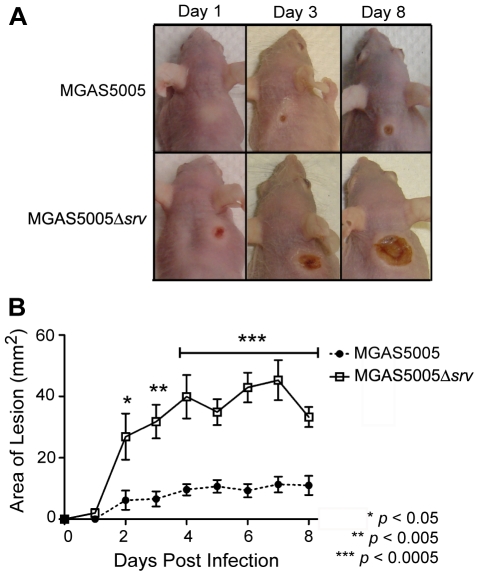
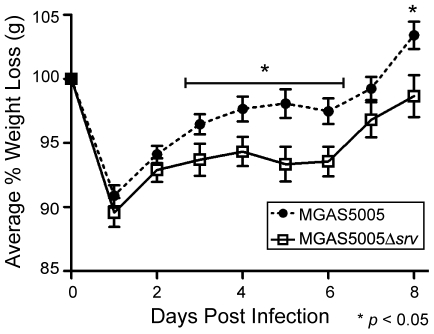
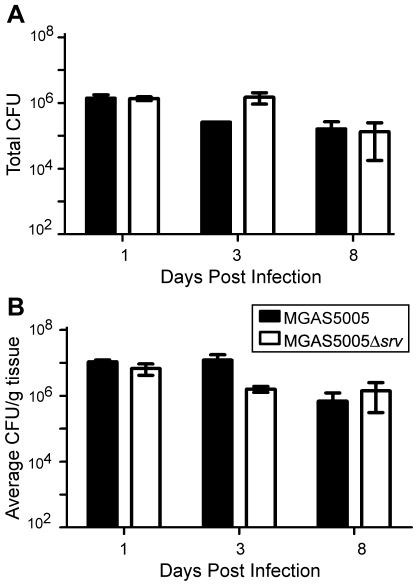
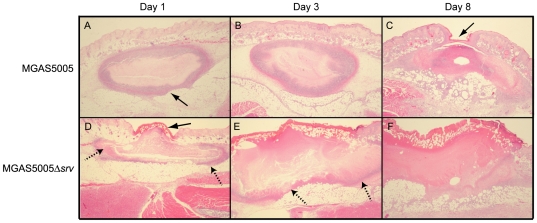
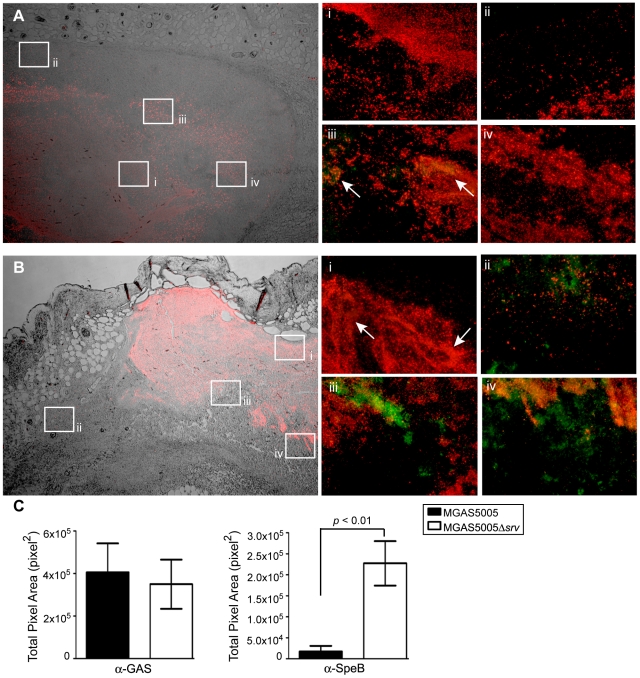
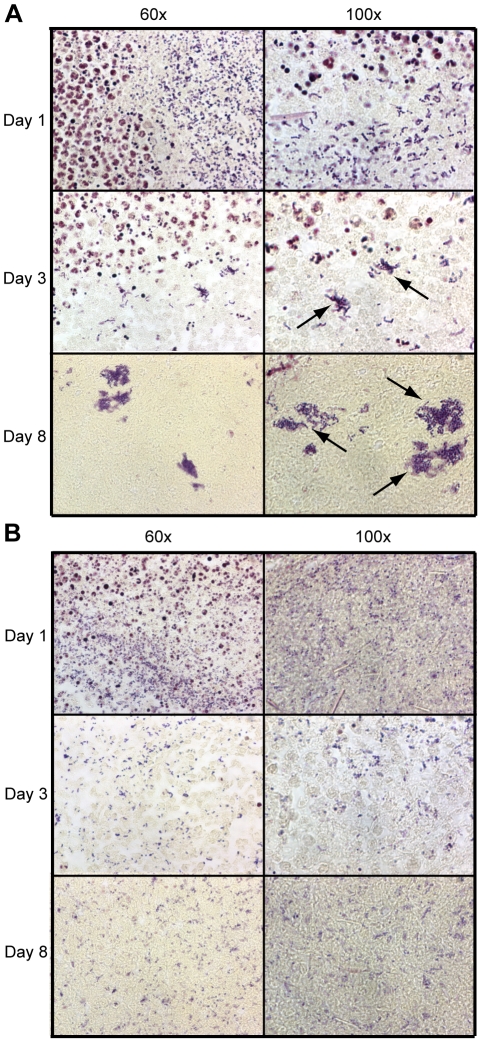
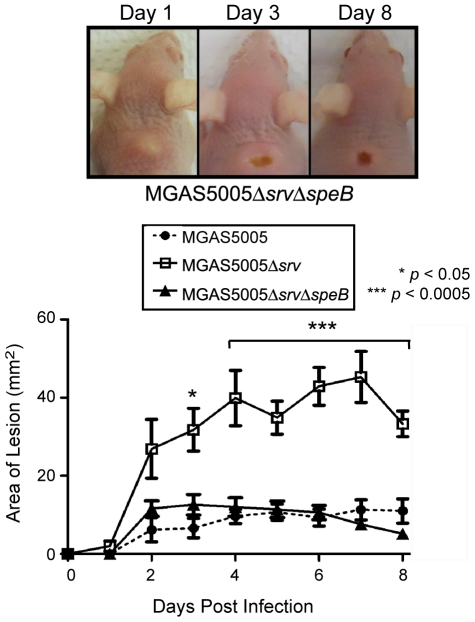
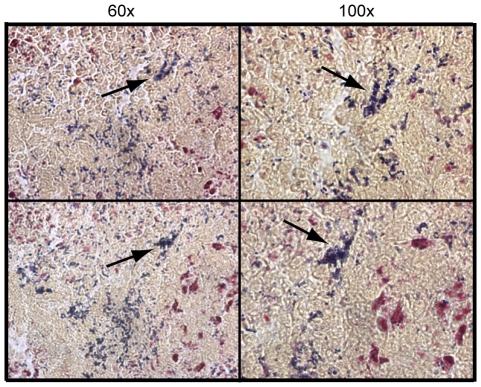
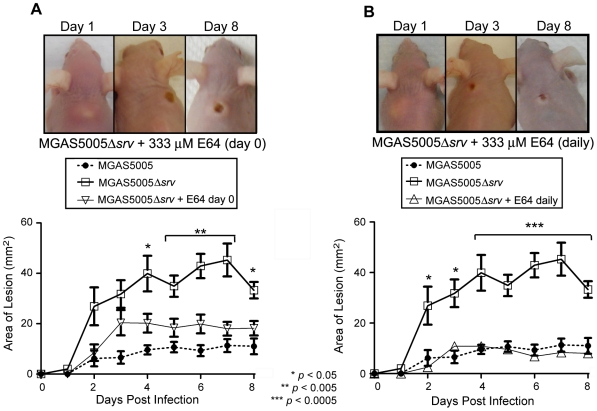
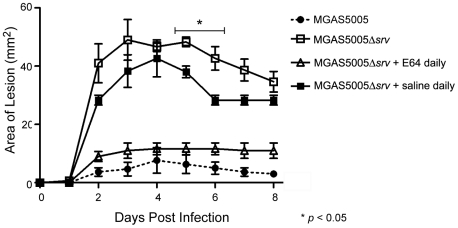
Group A Streptococcus (GAS) is a Gram-positive human pathogen best known for causing pharyngeal and mild skin infections. However, in the 1980's there was an increase in severe GAS infections including cellulitis and deeper tissue infections like necrotizing fasciitis. Particularly striking about this elevation in the incidence of severe disease was that those most often affected were previously healthy individuals. Several groups have shown that changes in gene content or regulation, as with proteases, may contribute to severe disease; yet strains harboring these proteases continue to cause mild disease as well. We and others have shown that group A streptococci (MGAS5005) reside within biofilms both in vitro and in vivo. That is to say that the organism colonizes a host surface and forms a 3-dimensional community encased in a protective matrix of extracellular protein, DNA and polysaccharide(s). However, the mechanism of assembly or dispersal of these structures is unclear, as is the relationship of these structures to disease outcome. Recently we reported that allelic replacement of the streptococcal regulator srv resulted in constitutive production of the streptococcal cysteine protease SpeB. We further showed that the constitutive production of SpeB significantly decreased MGAS5005Δsrv biofilm formation in vitro. Here we show that mice infected with MGAS5005Δsrv had significantly larger lesion development than wild-type infected animals. Histopathology, Gram-staining and immunofluorescence link the increased lesion development with lack of disease containment, lack of biofilm formation, and readily detectable levels of SpeB in the tissue. Treatment of MGAS5005Δsrv infected lesions with a chemical inhibitor of SpeB significantly reduced lesion formation and disease spread to wild-type levels. Furthermore, inactivation of speB in the MGAS5005Δsrv background reduced lesion formation to wild-type levels. Taken together, these data suggest a mechanism by which GAS disease may transition from mild to severe through the Srv mediated dispersal of GAS biofilms.
Overview
The claims and statistics of this paper haven’t been checked yet.
Free: it reads the open-access text and checks the first 5 claims that cite a source we can check. Create a free account to check every claim.
Integrity signals
Registry
Cites
Statistics
Figures
Verification
Claims the paper makes
The claims and statistics of this paper haven’t been checked yet.
Free: it reads the open-access text and checks the first 5 claims that cite a source we can check. Create a free account to check every claim.
Self-check
Percentages, sums and reported differences re-computed from the paper’s own numbers.
The self-check needs the paper’s full text.
Citations
Cites
Biofilms: Survival Mechanisms of Clinically Relevant Microorganisms
Donlan, R. M., & Costerton, J. W. (2002) · Clinical Microbiology Reviews · doi:10.1128/cmr.15.2.167-193.2002 · Cited by 6,644 · cited 2×
“Some estimates suggest that upwards of 60% of all bacterial infections involve biofilms, including soft tissue infection and necrotizing fasciitis [14,32,35].”
BackgroundPathogenesis of Group A Streptococcal Infections
Cunningham, M. W. (2000) · Clinical Microbiology Reviews · doi:10.1128/cmr.13.3.470 · Cited by 2,261 · cited 1×
“(GAS) is a Gram-positive human pathogen that is capable of causing a variety of infections in the human host, and is often associated with cellulitis and other soft tissue infections ranging in severity from impetigo to severe necrotizing fasciitis”
BackgroundPractice Guidelines for the Diagnosis and Management of Skin and Soft-Tissue Infections
Stevens, D. L., Bisno, A. L., Chambers, H. F., Everett, E. D., Dellinger, P., Goldstein, E. J. C., Gorbach, S. L., Hirschmann, J. V., Kaplan, E. L., Montoya, J. G., et al. (2005) · Clinical Infectious Diseases · doi:10.1086/497143 · Cited by 1,602
Barrett, A. J., Kembhavi, A. A., Brown, M. A., Kirschke, H., Knight, C. G., Tamai, M., & Hanada, K. (1982) · Biochemical Journal · doi:10.1042/bj2010189 · Cited by 1,026
Buchanan, J. T., Simpson, A. J., Aziz, R. K., Liu, G. Y., Kristian, S. A., Kotb, M., Feramisco, J., & Nizet, V. (2006) · Current Biology · doi:10.1016/j.cub.2005.12.039 · Cited by 682 · cited 1×
“It has been hypothesized that downregulation of SpeB in DcovS strains would prevent cleavage and degradation of virulence factors that may aid in GAS transitioning from a localized to a systemic infection [45,54,56,57,64,65].”
BackgroundBiofilm Susceptibility to Antimicrobials
Gilbert, P., Das, J., & Foley, I. (1997) · Advances in Dental Research · doi:10.1177/08959374970110010701 · Cited by 493 · cited 1×
“Biofilms are believed to be inherently tolerant to host defenses and antibiotic therapies and often linked to chronic illness due to impaired clearance [33,34].”
BackgroundSumby, P., Whitney, A. R., Graviss, E. A., DeLeo, F. R., & Musser, J. M. (2006) · PLoS Pathogens · doi:10.1371/journal.ppat.0020005 · Cited by 459
DNase Sda1 provides selection pressure for a switch to invasive group A streptococcal infection
Walker, M. J., Hollands, A., Sanderson-Smith, M. L., Cole, J. N., Kirk, J. K., Henningham, A., McArthur, J. D., Dinkla, K., Aziz, R. K., Kansal, R. G., et al. (2007) · Nature Medicine · doi:10.1038/nm1612 · Cited by 426
Bisno, A. L. (2001) · New England Journal of Medicine · doi:10.1056/nejm200101183440308 · Cited by 394
Sumby, P., Porcella, S. F., Madrigal, A. G., Barbian, K. D., Virtaneva, K., Ricklefs, S. M., Sturdevant, D. E., Graham, M. R., Vuopio‐Varkila, J., Hoe, N. P., et al. (2005) · The Journal of Infectious Diseases · doi:10.1086/432514 · Cited by 360 · cited 1×
“frequency and disease severity in the mid-1980’s [12].”
Background
Cited by
Roy, R., Tiwari, M., Donelli, G., & Tiwari, V. (2018) · Virulence · doi:10.1080/21505594.2017.1313372 · Cited by 1,523
“169 Additionally, Connolly et al.170 and Park et al.171 reported the use of cysteine protease SpeB and proteases from Group A Streptococcus and P. aeruginosa, respectively, for the biofilm dispersal.”
Strategies for combating bacterial biofilm infections
Wu, H., Moser, C., Wang, H.-Z., Høiby, N., & Song, Z.-J. (2015) · International Journal of Oral Science · doi:10.1038/ijos.2014.65 · Cited by 925
Biofilm infections, their resilience to therapy and innovative treatment strategies
Römling, U., & Balsalobre, C. (2012) · Journal of Internal Medicine · doi:10.1111/joim.12004 · Cited by 865
Biofilms as Promoters of Bacterial Antibiotic Resistance and Tolerance
Uruén, C., Chopo-Escuin, G., Tommassen, J., Mainar-Jaime, R. C., & Arenas, J. (2020) · Antibiotics · doi:10.3390/antibiotics10010003 · Cited by 769
“Additionally, proteases that cleave proteins of the ECM or proteins located at the bacterial cell surface with a function in biofilm formation disrupted streptococcal [279] and S.”
BackgroundChua, S. L., Liu, Y., Yam, J. K. H., Chen, Y., Vejborg, R. M., Tan, B. G. C., Kjelleberg, S., Tolker-Nielsen, T., Givskov, M., & Yang, L. (2014) · Nature Communications · doi:10.1038/ncomms5462 · Cited by 421
“Bis-(30-50)-cyclic dimeric GMP (c-di-GMP) is an essential secondary messenger that many bacterial species employ in the control of biofilm formation and dispersal11.”
Background
Metadata
- Authors
- Connolly, K. L., Roberts, A. L., Holder, R. C., & Reid, S. D.
- Affiliations
- Wake Forest University Health Sciences (US)
- Corresponding author
- Reid, Sean D.
- Venue
- PLoS ONE
- Publisher
- Public Library of Science (PLoS)
- Published
- 2011-04-25
- Volume
- 6
- Issue
- 4
- Pages
- e18984
- ISSN
- 1932-6203 (ISSN-L)
- PMC
- PMC3081844
- OpenAlex
- W2126657273
- Cited by
- 77
- References
- 71
- Citations by year
- 2026: 3 · 2023: 4 · 2022: 4 · 2021: 3 · 2020: 8 · 2019: 9 · 2018: 4 · 2017: 7 · 2016: 7 · 2015: 7 · 2014: 7 · 2013: 5 · 2012: 5
- FWCI
- 6.60
- Type
- journal article
- Language
- en
- Open access
- gold
- doi.org
- Locations
- PLoS ONE (publishedVersion, cc-by)
- Europe PMC (PubMed Central) (publishedVersion, cc-by)
- PubMed Central (publishedVersion, cc-by)
- PubMed (publishedVersion)
- DOAJ (DOAJ: Directory of Open Access Journals) (submittedVersion, cc-by-sa)
- Funders
- Ohio State University
- Wake Forest University
- National Institutes of Health
- National Institute of Allergy and Infectious Diseases (R01AI063453)
- Topics
- Health Sciences › Medicine › Infectious Diseases › Streptococcal Infections and Treatments
- Life Sciences › Biochemistry, Genetics and Molecular Biology › Molecular Biology › Bacterial biofilms and quorum sensing
- Health Sciences › Medicine › Infectious Diseases › Antimicrobial Resistance in Staphylococcus
- Keywords
- Streptococcus pyogenes, biofilm dispersal, necrotizing fasciitis, disease severity, streptococcal virulence, extracellular matrix
- MeSH terms
- Animals, Cysteine Endopeptidases, Female, Streptococcal Infections, Streptococcus, Virulence, Biofilms, Mice
About these checks
Registry, retraction, Cites and statistics results are computed, not judged, with one exception: a printed reference that no index lists is read once by a model before it counts as a citation error. Claims are extracted by a model and kept only when their quote appears verbatim in the text; each cited source is then checked, with a model’s help, for whether it says what the claim relies on. Those verdicts can be wrong — read the claim’s quote and the cited source before relying on one.
Statistics and arithmetic are recomputed, not judged.
Confidence bands are shown only for fields calibrated on our annotated test set. None is calibrated yet, so no band is shown.
What counts as a claim ›How we measure confidence ›How we check this ›
Are you an author, or do you see a problem with this page? Request a review
Data sources
Bibliographic data: Semantic Scholar, OpenAlex, Crossref.
Contains information from the Semantic Scholar Academic Graph Datasets, made available under the ODC Attribution License (ODC-BY 1.0).
Semantic Scholar’s data is described in: Kinney, R., et al. (2023). The Semantic Scholar Open Data Platform. arXiv:2301.10140.
