

Nocturnal Hypoxia and Loss of Kidney Function
Open accessThe DOI matches its Crossref record; 45 of the 45 references it cites were found in a registry or an index.
Abstract
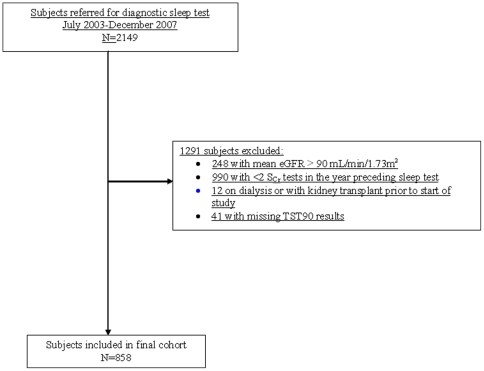
BACKGROUND: Although obstructive sleep apnea (OSA) is more common in patients with kidney disease, whether nocturnal hypoxia affects kidney function is unknown. METHODS: We studied all adult subjects referred for diagnostic testing of sleep apnea between July 2005 and December 31 2007 who had serial measurement of their kidney function. Nocturnal hypoxia was defined as oxygen saturation (SaO2) below 90% for ≥12% of the nocturnal monitoring time. The primary outcome, accelerated loss of kidney function, was defined as a decline in estimated glomerular filtration rate (eGFR) ≥4 ml/min/1.73 m(2) per year. RESULTS: 858 participants were included and followed for a mean study period of 2.1 years. Overall 374 (44%) had nocturnal hypoxia, and 49 (5.7%) had accelerated loss of kidney function. Compared to controls without hypoxia, patients with nocturnal hypoxia had a significant increase in the adjusted risk of accelerated kidney function loss (odds ratio (OR) 2.89, 95% confidence interval [CI] 1.25, 6.67). CONCLUSION: Nocturnal hypoxia was independently associated with an increased risk of accelerated kidney function loss. Further studies are required to determine whether treatment and correction of nocturnal hypoxia reduces loss of kidney function.
Overview
The claims and statistics of this paper haven’t been checked yet.
Free: it reads the open-access text and checks the first 5 claims that cite a source we can check. Create a free account to check every claim.
Integrity signals
Registry
Cites
Statistics
Figures
Verification
Claims the paper makes
The claims and statistics of this paper haven’t been checked yet.
Free: it reads the open-access text and checks the first 5 claims that cite a source we can check. Create a free account to check every claim.
Claims other papers make about this one
Each is checked against this paper’s own text: does it say what the citing paper says it does?
The cited source says what the claim attributes to it.
In the citing paper
“Obstructive sleep apnea can also contribute to CKD (Ahmed et al., 2011)”
From Obstructive sleep apnea: transition from pathophysiology to an integrative disease model (2022) · cites this paper as Ahmed et al., 2011
Self-check
Percentages, sums and reported differences re-computed from the paper’s own numbers.
The self-check needs the paper’s full text.
Citations
Cites
Epidemiology of Obstructive Sleep Apnea: A Population Health Perspective
Young, T., Peppard, P. E., & Gottlieb, D. J. (2002) · American Journal of Respiratory and Critical Care Medicine · doi:10.1164/rccm.2109080 · Cited by 4,244 · cited 2×
“However, we were able to control for important clinical data that have been shown to impact loss of kidney function, including hypertension [27], use of ACE-I or ARBs [14] and use of non-steroidal antiinflammatory drugs [28].”
BackgroundNieto, F. J. (2000) · JAMA · doi:10.1001/jama.283.14.1829 · Cited by 3,369
Adult Obstructive Sleep Apnea Task Force of the American Academy of Sleep Medicine, Epstein, L. J., Kristo, D., Strollo, P. J., Friedman, N., Malhotra, A., Patil, S. P., Ramar, K., Rogers, R., Schwab, R. J., et al. (2009) · Journal of Clinical Sleep Medicine · doi:10.5664/jcsm.27497 · Cited by 3,360 · cited 3×
“Hypopnea was defined as an abnormal respiratory event lasting 10 s or more, with at least a 30% reduction in thoraco-abdominal movement or airflow compared with baseline and associated with at least a 4% oxygen desaturation [25].”
BackgroundMethodInfluentialHux, J. E., Ivis, F., Flintoft, V., & Bica, A. (2002) · Diabetes Care · doi:10.2337/diacare.25.3.512 · Cited by 1,290 · cited 2×
“However, we were able to control for important clinical data that have been shown to impact loss of kidney function, including hypertension [27], use of ACE-I or ARBs [14] and use of non-steroidal antiinflammatory drugs [28].”
MethodChronic Hypoxia and Tubulointerstitial Injury: A Final Common Pathway to End-Stage Renal Failure
Nangaku, M. (2006) · Journal of the American Society of Nephrology · doi:10.1681/asn.2005070757 · Cited by 1,135 · cited 3×
“The increasingly high prevalence of sleep-disordered breathing in the general community [14] coupled with the potential for nocturnal hypoxia to cause deterioration in kidney function [1,2,3] prompted our investigation of the relationship between nocturnal hypoxia and loss of kidney function in a cohort referred for e…”
BackgroundKokotailo, R. A., & Hill, M. D. (2005) · Stroke · doi:10.1161/01.str.0000174293.17959.a1 · Cited by 709 · cited 1×
“Validated algorithms using administrative data were employed to define diabetes [27], asthma [28], stroke [29], myocardial infarction [30], heart failure [31], and hypertension [32].”
MethodImprovement of Sleep Apnea in Patients with Chronic Renal Failure Who Undergo Nocturnal Hemodialysis
Hanly, P. J., & Pierratos, A. (2001) · New England Journal of Medicine · doi:10.1056/nejm200101113440204 · Cited by 575
Self-citationAccuracy of administrative databases in identifying patients with hypertension.
Tu, K., Campbell, N. R. C., Chen, Z., Cauch‐Dudek, K., & McAlister, F. A. (2007) · PubMed Central · Cited by 553
Austin, P. C., Daly, P. A., & Tu, J. V. (2002) · American Heart Journal · doi:10.1067/mhj.2002.123839 · Cited by 525 · cited 1×
“Validated algorithms using administrative data were employed to define diabetes [27], asthma [28], stroke [29], myocardial infarction [30], heart failure [31], and hypertension [32].”
MethodFine, L. G., & Norman, J. T. (2008) · Kidney International · doi:10.1038/ki.2008.350 · Cited by 515 · cited 3×
“The increasingly high prevalence of sleep-disordered breathing in the general community [14] coupled with the potential for nocturnal hypoxia to cause deterioration in kidney function [1,2,3] prompted our investigation of the relationship between nocturnal hypoxia and loss of kidney function in a cohort referred for e…”
Background
Research works printed but not linked: 1
- Levey AS Greene T Kusek JW Beck GL 2000 MDRD Study Group. A simplified equation to predict glomerular filtration rate from serum creatinine (abstract) J Am Soc Nephrol 11 155A
Cited by
Obstructive sleep apnea and comorbidities: a dangerous liaison
Bonsignore, M. R., Baiamonte, P., Mazzuca, E., Castrogiovanni, A., & Marrone, O. (2019) · Multidisciplinary Respiratory Medicine · doi:10.1186/s40248-019-0172-9 · Cited by 258
“Another longitudinal study on patients recruited in a sleep laboratory found that an accelerated decline in eGFR was more common among subjects who spent >12% of sleep time with oxygen saturation <90% than in less hypoxic subjects [97].”
BackgroundLiu, H., Liu, S., Li, Y., Wang, X., Xue, W., Ge, G., & Luo, X. (2012) · PLoS ONE · doi:10.1371/journal.pone.0034608 · Cited by 262
“syndrome [7].”
Declining Kidney Function Increases the Prevalence of Sleep Apnea and Nocturnal Hypoxia
Nicholl, D. D. M., Ahmed, S. B., Loewen, A. H. S., Hemmelgarn, B. R., Sola, D. Y., Beecroft, J. M., Turin, T. C., & Hanly, P. J. (2012) · Chest · doi:10.1378/chest.11-1809 · Cited by 205
Self-citationBidirectional relationships of comorbidity with obstructive sleep apnoea
Gleeson, M., & McNicholas, W. T. (2022) · European Respiratory Review · doi:10.1183/16000617.0256-2021 · Cited by 203
Obstructive Sleep Apnea and Kidney Disease: A Potential Bidirectional Relationship?
Abuyassin, B., Sharma, K., Ayas, N. T., & Laher, I. (2015) · Journal of Clinical Sleep Medicine · doi:10.5664/jcsm.4946 · Cited by 165
Hypoxia: The Force that Drives Chronic Kidney Disease
Fu, Q., Colgan, S. P., & Shelley, C. S. (2016) · Clinical Medicine & Research · doi:10.3121/cmr.2015.1282 · Cited by 153
Obstructive sleep apnea: transition from pathophysiology to an integrative disease model
McNicholas, W. T., & Pevernagie, D. (2022) · Journal of Sleep Research · doi:10.1111/jsr.13616 · Cited by 153
“Obstructive sleep apnea can also contribute to CKD (Ahmed et al., 2011), and possible mechanisms include hypertension and intrarenal hypoxaemia with glomerular hyperfiltration (Abuyassin et al., 2015).”
BackgroundSleep Apnea and Chronic Kidney Disease
Lin, C.-H., Lurie, R. C., & Lyons, O. D. (2019) · CHEST Journal · doi:10.1016/j.chest.2019.09.004 · Cited by 135
“In a prospective observational study of 858 subjects referred for diagnostic sleep testing, unselected for the presence or absence of CKD, GFR was measured at baseline and followed up for 2 years.(39) At baseline, the mean GFR of the cohort was mildly reduced (71 12 mL/min/1.”
BackgroundNicholl, D. D. M., Hanly, P. J., Poulin, M. J., Handley, G. B., Hemmelgarn, B. R., Sola, D. Y., & Ahmed, S. B. (2014) · American Journal of Respiratory and Critical Care Medicine · doi:10.1164/rccm.201403-0526oc · Cited by 119
Self-citationEstimating Glomerular Filtration Rate in Older People
Garasto, S., Fusco, S., Corica, F., Rosignuolo, M., Marino, A., Montesanto, A., Rango, F. D., Maggio, M. G., Mari, V., Corsonello, A., et al. (2014) · BioMed Research International · doi:10.1155/2014/916542 · Cited by 112
“OSA may also accelerate the deterioration of renal function in patients with CKD directly through the effect of hypoxia on the kidney [107] or indirectly by increasing systemic blood pressure, inflammatory cytokines, and sympathetic nervous system activity [108].”
BackgroundObesity-related kidney disease: Beyond hypertension and insulin-resistance
Arabi, T. Z., Shafqat, A., Sabbah, B. N., Ashraf, N., Shah, H., Abdulkader, H. S., Razak, A., Sabbah, A. N., & Arabi, Z. (2023) · Frontiers in Endocrinology · doi:10.3389/fendo.2022.1095211 · Cited by 117
Sleep disorders in chronic kidney disease
Lyons, O. D. (2024) · Nature Reviews Nephrology · doi:10.1038/s41581-024-00848-8 · Cited by 105
“One prospective study enrolled 858 patients who underwent diagnostic sleep testing 111 and measured estimated GFR (eGFR) over 2 years; 18% of participants had eGFR <60 ml/min/1.73 m 2 , meeting the definition of CKD. Patients with hypoxia (defined as ≥12% of the recording time with oxygen…”
InfluentialHanly, P. J., & Ahmed, S. B. (2014) · CHEST Journal · doi:10.1378/chest.14-0596 · Cited by 94
Self-citationNocturnal Hypoxemia Severity and Renin–Angiotensin System Activity in Obstructive Sleep Apnea
Zalucky, A. A., Nicholl, D. D. M., Hanly, P. J., Poulin, M. J., Turin, T. C., Walji, S., Handley, G. B., Raneri, J. K., Sola, D. Y., & Ahmed, S. B. (2015) · American Journal of Respiratory and Critical Care Medicine · doi:10.1164/rccm.201502-0383oc · Cited by 77
Self-citationChronic kidney disease in European patients with obstructive sleep apnea: the ESADA cohort study
Marrone, O., Battaglia, S. L., Steiropoulos, P., Başoğlu, Ö. K., Kvamme, J. A., Ryan, S., Pépin, J., Verbraecken, J. A., Grote, L., Hedner, J. A., et al. (2016) · Journal of Sleep Research · doi:10.1111/jsr.12426 · Cited by 80
Association of Nocturnal Hypoxemia with Progression of CKD
Sakaguchi, Y., Hatta, T., Hayashi, T., Shoji, T., Suzuki, A., Tomida, K., Okada, N., Rakugi, H., Isaka, Y., & Tsubakihara, Y. (2013) · Clinical Journal of the American Society of Nephrology · doi:10.2215/cjn.11931112 · Cited by 71
Diagnostic Value of Screening Instruments for Identifying Obstructive Sleep Apnea in Kidney Failure
Nicholl, D. D. M., Ahmed, S. B., Loewen, A. H. S., Hemmelgarn, B. R., Sola, D. Y., Beecroft, J. M., Turin, T. C., & Hanly, P. J. (2013) · Journal of Clinical Sleep Medicine · doi:10.5664/jcsm.2334 · Cited by 75
“420 O: Has anyone ever observed you stop breathing during your sleep? 15 (14) 10 (24) 5 (7) 0.”
Self-citationMetallothionein deletion exacerbates intermittent hypoxia-induced renal injury in mice
Wu, H., Zhou, S., Kong, L., Chen, J., Feng, W., Cai, J., Miao, L., & Tan, Y. (2014) · Toxicology Letters · doi:10.1016/j.toxlet.2014.11.015 · Cited by 64
Abuyassin, B., Badran, M., Ayas, N., & Laher, I. (2018) · PLoS ONE · doi:10.1371/journal.pone.0192084 · Cited by 65
Obstructive sleep apnea and chronic kidney disease
Lin, C.-H., Perger, E., & Lyons, O. D. (2018) · Current Opinion in Pulmonary Medicine · doi:10.1097/mcp.0000000000000525 · Cited by 61
“In one prospective study of 858 patients, unselected for the presence or absence of CKD, who underwent diagnostic sleep testing, GFR was measured at baseline and then followed over 2 years [23].”
BackgroundClinical Presentation of Obstructive Sleep Apnea in Patients with Chronic Kidney Disease
Nicholl, D. D. M., Ahmed, S. B., Loewen, A. H. S., Hemmelgarn, B. R., Sola, D. Y., Beecroft, J. M., Turin, T. C., & Hanly, P. J. (2012) · Journal of Clinical Sleep Medicine · doi:10.5664/jcsm.2028 · Cited by 60
Self-citationEmerging co-morbidities of obstructive sleep apnea: cognition, kidney disease, and cancer
Gildeh, N., Drakatos, P., Higgins, S. E., Rosenzweig, I., & Kent, B. D. (2016) · Journal of Thoracic Disease · doi:10.21037/jtd.2016.09.23 · Cited by 55
“89 for accelerated loss of renal function was observed among subjects with nocturnal hypoxemia (defined as spending ≥12% of study time with an SpO2 <90%) in another retrospective cohort study involving 858 subjects referred to a Canadian sleep unit (79).”
BackgroundComorbidity of patients with noncommunicable diseases in general practice. Eurasian guidelines
Drapkina, O. M., Васильевна, К. А., Калинина, А. М., Avdeev, S. N., Викторович, А. М., Алексеева, Л. И., Almazova, I. I., Andreenko, Е. Y., Antipushina, D. N., Balanova, Y. А., et al. (2024) · CARDIOVASCULAR THERAPY AND PREVENTION · doi:10.15829/1728-8800-2024-3996 · Cited by 65
Sun, W., Yin, X., Wang, Y., Tan, Y., Cai, L., Wang, B., Cai, J., & Fu, Y. (2012) · Dose-Response · doi:10.2203/dose-response.12-027.cai · Cited by 60
“Compared to subjects without nocturnal hypoxia, subjects with nocturnal hypoxia demonstrated an almost three-fold increase in the risk of accelerated loss of kidney function (Ahmed et al. 2011).”
BackgroundObstructive sleep apnea and kidney disease: is there any direct link?
Mirrakhimov, A. E. (2011) · Sleep And Breathing · doi:10.1007/s11325-011-0624-8 · Cited by 57
“Nocturnal hypoxia seen in OSA may be a significant risk factor for accelerated loss of kidney function [65].”
Lin, Y., Liu, P., Lin, S., Chuang, L., Ho, W., Chou, Y.-T., Juan, K.-C., Lo, M., Chu, P., & Chen, N. (2016) · Sleep And Breathing · doi:10.1007/s11325-016-1376-2 · Cited by 53
Obstructive sleep apnoea in relation to rheumatic disease
Taylor‐Gjevre, R. M., Nair, B. V., & Gjevre, J. A. (2012) · Rheumatology · doi:10.1093/rheumatology/kes210 · Cited by 50
Furukawa, S., Saito, I., Yamamoto, S., Miyake, T., Ueda, T., Niiya, T., Torisu, M., Kumagi, T., Sakai, T., Minami, H., et al. (2013) · European Journal of Endocrinology · doi:10.1530/eje-13-0086 · Cited by 52
Chronic kidney disease in patients with obstructive sleep apnea. A narrative review
Voulgaris, A., Marrone, O., Bonsignore, M. R., & Steiropoulos, P. (2019) · Sleep Medicine Reviews · doi:10.1016/j.smrv.2019.07.001 · Cited by 51
“urine protein or albumin excretion [31,35], eGFR [30], or rate of eGFR decline [15,16] in OSA patients.”
BackgroundLoffler, K. A., Heeley, E., Freed, R., Anderson, C. S., Brockway, B., Corbett, A., Chang, C. L., Douglas, J. A., Ferrier, K., Graham, N., et al. (2017) · American Journal of Respiratory and Critical Care Medicine · doi:10.1164/rccm.201703-0603oc · Cited by 46
“Total, n = 200 102 98 Male sex, n (%) 90 (88) 92 (94) Caucasian/European ethnicity, n (%) 94 (92) 87 (89) Never smoker, n (%) 29 (28) 29 (30) Past smoker, n (%) 64 (63) 66 (67) Current smoker, n (%) 9 (9) 3 (3) Cardiac disease history only, n (%) 90 (88) 82 (84) Cerebrovascular disease history only, n (%) 9 (9) 13 (13…”
BackgroundSelf-citationRisk of chronic kidney disease in patients with obstructive sleep apnea
Beaudin, A. E., Raneri, J. K., Ahmed, S. B., Allen, A. J. M. H., Nocon, A., Gomes, T., Gakwaya, S., Sériès, F., Kimoff, J. R., Skomro, R. P., et al. (2021) · SLEEP · doi:10.1093/sleep/zsab267 · Cited by 49
Self-citationThe association of obstructive sleep apnea and renal outcomes—a systematic review and meta-analysis
Hwu, D., Lin, K., Lin, K., Lee, Y., & Chang, Y. (2017) · BMC Nephrology · doi:10.1186/s12882-017-0731-2 · Cited by 54
“, over 200 ml/min [26], 2 had fewer than 10 subgroup participants [27, 28]), 3 had missing data [6, 7, 29], and 1 focused only on the OSA population without a control group [30].”
BackgroundJackson, C. L., Umesi, C., Gaston, S. A., Azarbarzin, A., Lunyera, J., McGrath, J. A., Jackson, W. B., Diamantidis, C. J., Boulware, L. E., Lutsey, P. L., et al. (2020) · Thorax · doi:10.1136/thoraxjnl-2020-214713 · Cited by 48
The Impact of Hypoxemia on Nephropathy in Extremely Obese Patients with Type 2 Diabetes Mellitus
Leong, W. B., Nolen, M., Thomas, G. N., Adab, P., Banerjee, D., & Taheri, S. (2014) · Journal of Clinical Sleep Medicine · doi:10.5664/jcsm.3870 · Cited by 47
The HMGB1‑RAGE/TLR‑TNF‑α signaling pathway may contribute to kidney injury induced by hypoxia
Zhang, C., Dong, H. F., Chen, F., Wang, Y., Ma, J., & Wang, G. (2018) · Experimental and Therapeutic Medicine · doi:10.3892/etm.2018.6932 · Cited by 57
“Previously, the association between sleep apnea and CKD has been widely discussed.”
BackgroundInfluentialMarrone, O., Cibella, F., Pépin, J.-L., Grote, L., Verbraecken, J., Saaresranta, T., Kvamme, J. A., Basoglu, O. K., Lombardi, C., McNicholas, W. T., et al. (2018) · Chest · doi:10.1016/j.chest.2018.04.020 · Cited by 42
A systematic review on the association between obstructive sleep apnea and chronic kidney disease
Umbro, I., Fabiani, V., Fabiani, M., Angelico, F., & Ben, M. D. (2020) · Sleep Medicine Reviews · doi:10.1016/j.smrv.2020.101337 · Cited by 42
Effect of CPAP Therapy on Kidney Function in Patients With Chronic Kidney Disease
Rimke, A. N., Ahmed, S. B., Turin, T. C., Pendharkar, S. R., Raneri, J. K., Lynch, E. J., & Hanly, P. J. (2021) · Chest · doi:10.1016/j.chest.2020.11.052 · Cited by 37
Self-citationImpact of sleep disturbances on kidney function decline in the elderly
Jaussent, I., Cristol, J., Stengel, B., Ancelin, M., Dupuy, A., Besset, A., Helmer, C., Ritchie, K. A., Berr, C., & Dauvilliers, Y. A. (2015) · European Respiratory Journal · doi:10.1183/13993003.01147-2015 · Cited by 34
“This notably differs from the direct nocturnal hypoxia effect already reported on the progression of CKD through a renin-angiotensin-aldosterone system hyperactivation [24, 25].”
BackgroundThe effect of sleep apnea on all-cause mortality in nondialyzed chronic kidney disease patients
Xu, J., Yoon, I. Y., & Chin, H. J. (2016) · Sleep Medicine · doi:10.1016/j.sleep.2016.07.026 · Cited by 33
Compromiso multisistémico en apnea obstructiva del sueño
Gonzalo Labarca, T., Rodrigo Cruz, N., & Fernando Descalzi, M. (2014) · Revista médica de Chile · doi:10.4067/s0034-98872014000600009 · Cited by 38
Peres, B. U., Allen, A. H., Fox, N., Laher, I., Hanly, P. J., Skomro, R., Almeida, F. R., & Ayas, N. (2018) · Sleep Medicine Reviews · doi:10.1016/j.smrv.2018.12.004 · Cited by 38
Self-citationCanales, M. T., Hagen, E. W., Barnet, J. H., Peppard, P. E., & Derose, S. F. (2018) · Sleep · doi:10.1093/sleep/zsx181 · Cited by 29
“73 m2/year), respectively.(9) However, in multivariate analysis, only nocturnal hypoxemia defined by % total sleep time < 90% oxygen saturation ≥ 12% was associated with greater odds of rapid decline, independent of AHI and other key factors.”
BackgroundResultMurase, K., Mori, K., Yoshimura, C., Aihara, K., Chihara, Y., Azuma, M., Harada, Y., Toyama, Y., Tanizawa, K., Handa, T., et al. (2013) · PLoS ONE · doi:10.1371/journal.pone.0054184 · Cited by 33
“[14–17] From an in vitro model of OSA, it was suggested that the pro-inflammatory transcription factor, nuclear factorkappa B (NF-kB), plays an important role in the inflammatory”
BackgroundPallayová, M., Banerjee, D., & Taheri, S. (2014) · Diabetes Research and Clinical Practice · doi:10.1016/j.diabres.2014.01.007 · Cited by 29
“suggests that increased severity of OSA is associated with decreased kidney function independent of established kidney disease progression risk factors [58–60].”
BackgroundThe relationships of sleep apnea, hypertension, and resistant hypertension on chronic kidney disease
Chang, C.-P., Li, T., Hang, L., Liang, S., Lin, J.-J., Chou, C., Tsai, J. J. P., Ko, P.-Y., & Chang, C.-T. (2016) · Medicine · doi:10.1097/md.0000000000003859 · Cited by 28
Kasai, T., Kohno, T., Shimizu, W., Ando, S., Joho, S., Osada, N., Kato, M., Kario, K., Shiina, K., Tamura, A., et al. (2024) · Circulation Journal · doi:10.1253/circj.cj-23-0489 · Cited by 28
Cystatin C Levels in Middle-Aged Patients with Obstructive Sleep Apnea Syndrome
Archontogeorgis, K., Nena, E., Tsigalou, C., Voulgaris, A., Xanthoudaki, M., Froudarakis, Μ. E., & Steiropoulos, P. (2016) · Pulmonary Medicine · doi:10.1155/2016/8081723 · Cited by 26
“67) after adjustment for confounding factors [47].”
Adeva‐Andany, M. M., Domínguez-Montero, A., Castro-Quintela, E., Funcasta-Calderón, R., & Fernández‐Fernández, C. (2024) · Reviews in Cardiovascular Medicine · doi:10.31083/j.rcm2506231 · Cited by 28
Beaudin, A. E., Raneri, J. K., Ahmed, S. B., Allen, A. J. H., Nocon, A., Gomes, T., Gakwaya, S., Sériès, F., Kimoff, J. R., Skomro, R., et al. (2022) · SLEEP · doi:10.1093/sleep/zsac088 · Cited by 31
Self-citationFull, K. M., Jackson, C. L., Rebholz, C. M., Matsushita, K., & Lutsey, P. L. (2020) · Journal of the American Society of Nephrology · doi:10.1681/asn.2020010024 · Cited by 24
Nicholl, D. D. M., Hanly, P. J., Zalucky, A. A., Handley, G. B., Sola, D. Y., & Ahmed, S. B. (2020) · SLEEP · doi:10.1093/sleep/zsaa228 · Cited by 25
Self-citationVoulgaris, A., Archontogeorgis, K., Nena, E., Tsigalou, C., Xanthoudaki, M., Kouratzi, M., Trιpsianis, G., Froudarakis, Μ. E., & Steiropoulos, P. (2018) · Sleep And Breathing · doi:10.1007/s11325-018-1677-8 · Cited by 24
Renal and hepatobiliary dysfunction in chronic obstructive pulmonary disease
Mapel, D. W. (2013) · Current Opinion in Pulmonary Medicine · doi:10.1097/mcp.0000000000000024 · Cited by 22
Zhang, X., Jiang, X.-T., Lin, Q., Chen, X., & Zeng, H. (2014) · International Urology and Nephrology · doi:10.1007/s11255-014-0779-x · Cited by 25
Li, X., Liu, C., Zhang, H., Zhang, J., Zhao, M., Sun, D., Xia, M., & Han, M. (2019) · Medicine · doi:10.1097/md.0000000000014545 · Cited by 25
“Other reports demonstrated a correlation between the increase of nocturnal hypoxia and the decrease of kidney function over time, and reported that OSA is a significant predictor of accelerated loss of kidney function.([17]) Nasal continuous positive airway pressure (nCPAP) is the primary treatment used to improve noc…”
BackgroundLiu, T., Zhan, Y., Wang, Y., Li, Q., & Mao, H. (2020) · Sleep And Breathing · doi:10.1007/s11325-020-02090-5 · Cited by 22
“Furthermore, hypoxia can induce renal damage by activating sympathetic nervous system or renin-angiotensin-aldosterone system (RAAS), and eventually progresses into CKD [41, 42].”
BackgroundObstructive sleep apnea and the risk of gout: a population-based case-control study
van Durme, C. M., Spaetgens, B., Driessen, J. H. M., Nielen, J. T. H., Sastry, M., Boonen, A. E. R. C. H., & de Vries, F. (2020) · Arthritis Research & Therapy · doi:10.1186/s13075-020-02176-1 · Cited by 22
Interrelationship among Obstructive Sleep Apnea, Renal Function and Survival: A Cohort Study
Pochetti, P., Azzolina, D., Ragnoli, B., Tillio, P. A., Cantaluppi, V., & Malerba, M. (2020) · International Journal of Environmental Research and Public Health · doi:10.3390/ijerph17144922 · Cited by 25
Prospective analyses of volatile organic compounds in obstructive sleep apnea patients
Aoki, T., Nagaoka, T., Kobayashi, N., Kurahashi, M., Tsuji, C., Takiguchi, H., Tomomatsu, K., Oguma, T., Kobayashi, N., Magatani, K., et al. (2016) · Toxicological Sciences · doi:10.1093/toxsci/kfw260 · Cited by 28
“, 2011; Kohler and Stradling, 2010), and renal dysfunction (Ahmed et al., 2011; Nicholl et al., 2012) due to nocturnal hypoxia, arousal, and chronic inflammation (Ryan et al.”
BackgroundDiabetic kidney disease and obstructive sleep apnea: a new frontier?
Mawed, S. A., & Unruh, M. L. (2015) · Current Opinion in Pulmonary Medicine · doi:10.1097/mcp.0000000000000230 · Cited by 19
“[14], 858 patients were referred for diagnostic OSA testing.”
BackgroundObstructive Sleep Apnoea and Vascular Disease in Patients with Type 2 Diabetes
Tahrani, A. A. (2015) · touchREVIEWS in Endocrinology · doi:10.17925/ee.2015.11.02.81 · Cited by 22
Liu, M., Heizhati, M., Li, N., Lin, M., Gan, L., Zhu, Q., Cai, L., Yuan, Y., Yao, L., Li, M., et al. (2023) · Sleep Medicine · doi:10.1016/j.sleep.2023.05.020 · Cited by 19
Abuyassin, B., Badran, M., Ayas, N., & Laher, I. (2019) · SLEEP · doi:10.1093/sleep/zsz066 · Cited by 18
Rimke, A. N., Ahmed, S. B., Turin, T. C., Pendharkar, S. R., Raneri, J. K., Lynch, E. J., & Hanly, P. J. (2019) · BMJ Open · doi:10.1136/bmjopen-2018-024632 · Cited by 21
“67).(17) We have also shown that OSA is associated with activation of the renal RAS,(18) which may lead to kidney damage by facilitating glomerular and systemic hypertension,(19) and ultimately inflammation and fibrosis(20) within the kidney(21).”
BackgroundSelf-citationWong, J., Mariano, E. R., Doufas, A. G., Olejniczak, M. J., & Kushida, C. A. (2016) · Journal of Cardiothoracic and Vascular Anesthesia · doi:10.1053/j.jvca.2016.11.016 · Cited by 16
Nicholl, D. D. M., Hanly, P. J., Zalucky, A. A., Handley, G. B., Sola, D. Y., & Ahmed, S. B. (2019) · American Journal of Physiology-Renal Physiology · doi:10.1152/ajprenal.00290.2019 · Cited by 16
Self-citationThe impact of high altitude (hypobaric hypoxia) on insulin resistance in humans
Adeva‐Andany, M. M., Adeva-Contreras, L., Carneiro-Freire, N., Ameneiros-Rodríguez, E., Vila-Altesor, M., & Calvo‐Castro, I. (2025) · Journal of Physiology and Biochemistry · doi:10.1007/s13105-025-01069-8 · Cited by 16
Miao, H., Li, Y., Ye, J., Zhuang, Z., & Wang, W. (2020) · Annals of Palliative Medicine · doi:10.21037/apm.2020.03.21 · Cited by 15
“(15) followed up 858 patients with no history of CKD and with suspected sleep apnea for an average 2.”
BackgroundOh, Y. J., Jung, J. Y., Kim, S. S., Chae, K.-S., Rhu, J., & Lee, C. (2017) · BMC Nephrology · doi:10.1186/s12882-017-0481-1 · Cited by 14
Lee, Y., Jang, H. R., Huh, W., Kim, Y.-G., Kim, D. J., Oh, H. Y., Joo, E. Y., & Lee, J. E. (2017) · Journal of Clinical Sleep Medicine · doi:10.5664/jcsm.6758 · Cited by 15
“30 Saka-guchi et al. showed similar findings in nonobese patients with CKD. 31 However, the study by Canales et al. did not find a significant association between renal function and sleep-dis - ordered breathing.”
Choi, H. S., Kim, H. Y., Han, K., Jung, J., Kim, C. S., Bae, E. H., Kwon, S., & Kim, S. W. (2019) · Clinical and Experimental Nephrology · doi:10.1007/s10157-019-01779-6 · Cited by 15
Kanbay, M., Ureche, C., Çöpür, S., Covic, A. M., Tanrıöver, C., Esen, B. H., Sekmen, M., Kanbay, A., & Covic, A. C. (2023) · Sleep And Breathing · doi:10.1007/s11325-023-02803-6 · Cited by 13
“In addition, multiple studies have shown an association between OSA-induced nocturnal hypoxemia and kidney injury as well as loss of renal function [10, 11].”
BackgroundHigh prevalence of gout with sleep apnea
Abrams, B. (2011) · Medical Hypotheses · doi:10.1016/j.mehy.2011.10.029 · Cited by 12
Mirrakhimov, A. E. (2012) · Sleep And Breathing · doi:10.1007/s11325-012-0755-6 · Cited by 14
“Others have shown that OSA can be an independent risk factor for renal disease [80, 81], even in the absence of AH and DM [82].”
BackgroundMcMullan, C. J., Yano, Y., Bakris, G. L., Kario, K., Phillips, R. A., & Forman, J. P. (2015) · Journal of the American Society of Hypertension · doi:10.1016/j.jash.2015.02.005 · Cited by 12
Prevalence and correlates of sleep apnea among US Veterans with chronic kidney disease
Canales, M. T., Bozorgmehri, S., Ishani, A., Weiner, I. D., Berry, R. B., & Beyth, R. J. (2020) · Journal of Sleep Research · doi:10.1111/jsr.12981 · Cited by 13
“Also, we identified other key factors that are specifically associated with SA-related NH. Independent of AHI, SA-related NH has been shown to predict rapid decline in renal function and other cardiometabolic diseases (Ahmed et al., 2011).”
BackgroundHanly, P. J., Ahmed, S. B., Fjell, C. D., Handley, G. B., Sola, D. Y., Nicholl, D. D. M., & Zalucky, A. A. (2020) · Physiological Reports · doi:10.14814/phy2.14376 · Cited by 12
“Nocturnal hypoxemia due to OSA has been associated with an accelerated loss of kidney function (Ahmed et al., 2011), and there is evidence from experimental animal (Fletcher, Orolinova, & Bader, 1985) and human (Foster et al.”
BackgroundSelf-citationUrinary proteomic profiling in severe obesity and obstructive sleep apnoea with CPAP treatment
Seetho, I. W., Ramírez‐Torres, A., Albalat, A., Mullen, W., Mischak, H., Parker, R., Craig, S., Duffy, N., Hardy, K. J., Burniston, J. G., et al. (2015) · Sleep Science · doi:10.1016/j.slsci.2015.06.004 · Cited by 10
“Nocturnal hypoxia may be associated with loss of kidney function [8], and a positive relationship has been observed between impaired glomerular fi ltration and desaturation frequency, suggesting an association between OSA and chronic kidney impairment [9].”
Ahmed, S. B., & Dumanski, S. M. (2019) · Canadian Journal of Cardiology · doi:10.1016/j.cjca.2019.06.033 · Cited by 12
Self-citationSleep Disorders in Chronic Kidney Disease
Brown, L. K., & Unruh, M. L. (2019) · Elsevier eBooks · doi:10.1016/b978-0-12-815876-0.00036-x · Cited by 11
Marrone, O., & Bonsignore, M. R. (2018) · Journal of Thoracic Disease · doi:10.21037/jtd.2017.12.12 · Cited by 11
Sleep disordered breathing in patients with chronic kidney diseases: How far the problem?
Aaty, H. E. S. A. E., El-Aziz, A. A., Aora, M., El-Helbawy, R., & El-Refaey, R. (2014) · Egyptian Journal of Chest Diseases and Tuberculosis · doi:10.1016/j.ejcdt.2014.11.018 · Cited by 10
“In other studies [51,53,54] multivariate analysis revealed that COPD was associated with nocturnal hypoxia, but cardiovascular disease and use of sedatives and narcotics were not.”
BackgroundLitbarg, N. O. (2017) · Elsevier eBooks · doi:10.1016/b978-0-323-35868-2.00040-2 · Cited by 13
Marrone, O., & Bonsignore, M. R. (2020) · Current Sleep Medicine Reports · doi:10.1007/s40675-020-00176-w · Cited by 10
Chronic Kidney Disease and Sleeping Disordered Breathing (SDB)
Santos, R. S. S., Motwani, S. S., & Elias, R. M. (2016) · Current Hypertension Reviews · doi:10.2174/1573402112666160114094222 · Cited by 12
“This is mediated by intra-renal hypoxia [24, 25] and activation of RAS [21] as primary mechanisms.”
BackgroundComorbidity and healthcare costs in patients with obstructive sleep apnoea
Ronksley, P. E., Hemmelgarn, B. R., & Tsai, W. H. (2011) · Breathe · doi:10.1183/20734735.011311 · Cited by 11
“Measures of nocturnal hypoxaemia derived from polysomnography or ambulatory monitoring have been shown to be independent predictors of cardiovascular and metabolic outcomes in OSA patients [38, 58, 59].”
MethodSelf-citationVoulgaris, A., Bonsignore, M. R., Schiza, S. E., Marrone, O., & Steiropoulos, P. (2021) · Sleep Medicine · doi:10.1016/j.sleep.2021.08.009 · Cited by 8
Wang, J., Wang, X., Yu, W., Zhang, K., & Wei, Y. (2020) · Journal of Thoracic Disease · doi:10.21037/jtd-20-2037 · Cited by 6
“In addition, previous study also reported nocturnal hypoxemia in OSA patients is correlated to accelerated renal dysfunction, possibly because of increased activity of the renal renin-angiotensin system (RAS) as well as glomerular hypertension (45).”
BackgroundPerioperative Management of Obstructive Sleep Apnea
Abdullah, H. R., & Chung, F. F. (2013) · Current anesthesiology reports · doi:10.1007/s40140-013-0039-0 · Cited by 7
“[19] reportinf a 53 % incidence of postoperative delirium in OSA patients versus 20 % in non-OSA patients, and more studies are emerging linking OSA with renal impairment [20, 21], although more research looking at these issues in the perioperative context are needed.”
BackgroundSumida, K., Hoshino, J., Suwabe, T., Kasai, T., Hayami, N., Mise, K., Kawada, M., Imafuku, A., Hiramatsu, R., Hasegawa, E., et al. (2015) · Clinical Journal of the American Society of Nephrology · doi:10.2215/cjn.06930714 · Cited by 5
“Roumelioti et al. reported 22.5% and 25.7% prevalences of severe SDB defined as having an apnea/hypopnea index (AHI; number of apnea and hypopnea occurrences per hour of sleep) $30 events per hour using polysomnography (PSG) in a cross-sectional study of 89 patients with advanced CKD (stages 4–5) and 75 HD patients, r…”
BackgroundInfluentialGoulet, N., Tetzlaff, E. J., Morin, R., Mauger, J., Amaratunga, R., Kenny, G. P., & Imbeault, P. (2023) · Physiological Reports · doi:10.14814/phy2.15804 · Cited by 5
“Perturbations in oxygen delivery to the kidney may contribute to the progressive deterioration of kidney function in individuals with OSA, as clinical studies have independently associated the severity of intermittent hypoxemia with an increased risk of kidney function loss (Ahmed et al., 2011).”
BackgroundUrinary Neutrophil Gelatinase-Associated Lipocalin (NGAL) in Patients with Obstructive Sleep Apnea
Maski, M. R., THOMAS, R. J., Karumanchi, S. A., & Parikh, S. M. (2016) · PLoS ONE · doi:10.1371/journal.pone.0154503 · Cited by 5
“In particular, hemodynamic studies in OSA patients have demonstrated reduced diurnal renal blood flow that improves after treatment with continuous positive airway pressure (CPAP) [5,22], as well as impaired renal arterial vasodilating capacity [21].”
BackgroundAhmed, S. B. (2017) · American Journal of Respiratory and Critical Care Medicine · doi:10.1164/rccm.201708-1591ed · Cited by 5
Self-citationAbrams, B. (2023) · Exploration of Musculoskeletal Diseases · doi:10.37349/emd.2023.00015 · Cited by 4
Consider the Kidney when Managing Obstructive Sleep Apnea
Hanly, P. J. (2015) · Journal of Clinical Sleep Medicine · doi:10.5664/jcsm.4928 · Cited by 4
Self-citationBidirectional Interactions Between Obstructive Sleep Apnea and Chronic Kidney Disease- A Review
Paramasivan, V. K., & Manimaran, V. (2024) · Indian Journal of Otolaryngology and Head & Neck Surgery · doi:10.1007/s12070-024-04976-2 · Cited by 3
“Studies have shown that nocturnal hypoxia resulted in accelerated decline of kidney function in 5.7% of study participants suffering from OSA [15].”
InfluentialObesity, insulin resistance, and obstructive sleep apnea
Oduro‐Donkor, D., & Barber, T. M. (2023) · Elsevier eBooks · doi:10.1016/b978-0-323-96120-2.00012-1 · Cited by 4
Obstructive sleep apnea in adult dialysis patients: A review
Sutton, J., & Sayegh, S. E. E. (2025) · Respiratory Medicine · doi:10.1016/j.rmed.2025.108341 · Cited by 2
Rimke, A. N., Ahmed, S. B., Turin, T. C., Pendharkar, S. R., Raneri, J. K., Lynch, E. J., & Hanly, P. J. (2021) · Journal of Sleep Research · doi:10.1111/jsr.13384 · Cited by 2
Self-citation
Metadata
- Authors
- Ahmed, S. B., Ronksley, P. E., Hemmelgarn, B. R., Tsai, W. H., Manns, B. J., Tonelli, M., Klarenbach, S. W., Chin, R., Clement, F. M., & Hanly, P. J.
- Affiliations
- University of Calgary (CA)
- University of Alberta (CA)
- Corresponding author
- Ahmed, Sofia B.
- ORCID
- Venue
- PLoS ONE
- Publisher
- Public Library of Science (PLoS)
- Published
- 2011-04-29
- Volume
- 6
- Issue
- 4
- Pages
- e19029
- ISSN
- 1932-6203 (ISSN-L)
- PMC
- PMC3084745
- OpenAlex
- W2086132389
- Semantic Scholar
- e9679ca17686c3258c4586d3e4b267354d7e5e79
- Cited by
- 132
- References
- 45
- Citations by year
- 2026: 3 · 2025: 4 · 2024: 8 · 2023: 9 · 2022: 4 · 2021: 4 · 2020: 16 · 2019: 13 · 2018: 8 · 2017: 8 · 2016: 15 · 2015: 12 · 2014: 11 · 2013: 6 · 2012: 8
- FWCI
- 6.11
- Type
- journal article
- Language
- en
- Open access
- gold
- doi.org
- Locations
- PLoS ONE (publishedVersion, cc-by)
- Europe PMC (PubMed Central) (publishedVersion, cc-by)
- PubMed Central (publishedVersion, cc-by)
- PubMed (publishedVersion)
- DOAJ (DOAJ: Directory of Open Access Journals) (submittedVersion, cc-by-sa)
- Funders
- Canadian Health Services Research Foundation
- Fondation pour la Recherche Médicale
- Canadian Institutes of Health Research
- Topics
- Health Sciences › Medicine › Physiology (medical) › Obstructive Sleep Apnea Research
- Health Sciences › Medicine › Nephrology › Chronic Kidney Disease and Diabetes
- Health Sciences › Medicine › Pulmonary and Respiratory Medicine › Chronic Obstructive Pulmonary Disease (COPD) Research
- Keywords
- nocturnal hypoxia, obstructive sleep apnea, renal function decline, estimated glomerular filtration rate, chronic kidney disease, oxygen saturation, sleep-disordered breathing
- MeSH terms
- Adult, Aged, Hypoxia, Female, Glomerular Filtration Rate, Humans, Kidney, Kidney Diseases, Male, Middle Aged, Oxygen, Respiration, Risk, Cohort Studies, Comorbidity, Sleep Apnea, Obstructive
About these checks
Registry, retraction, Cites and statistics results are computed, not judged, with one exception: a printed reference that no index lists is read once by a model before it counts as a citation error. Claims are extracted by a model and kept only when their quote appears verbatim in the text; each cited source is then checked, with a model’s help, for whether it says what the claim relies on. Those verdicts can be wrong — read the claim’s quote and the cited source before relying on one.
Statistics and arithmetic are recomputed, not judged.
Confidence bands are shown only for fields calibrated on our annotated test set. None is calibrated yet, so no band is shown.
What counts as a claim ›How we measure confidence ›How we check this ›
Are you an author, or do you see a problem with this page? Request a review
Data sources
Bibliographic data: Semantic Scholar, OpenAlex, Crossref.
Contains information from the Semantic Scholar Academic Graph Datasets, made available under the ODC Attribution License (ODC-BY 1.0).
Semantic Scholar’s data is described in: Kinney, R., et al. (2023). The Semantic Scholar Open Data Platform. arXiv:2301.10140.
