

Artificial Astrocytes Improve Neural Network Performance
Open accessThe DOI matches its Crossref record; 19 of the 19 references it cites were found in a registry or an index.
Abstract
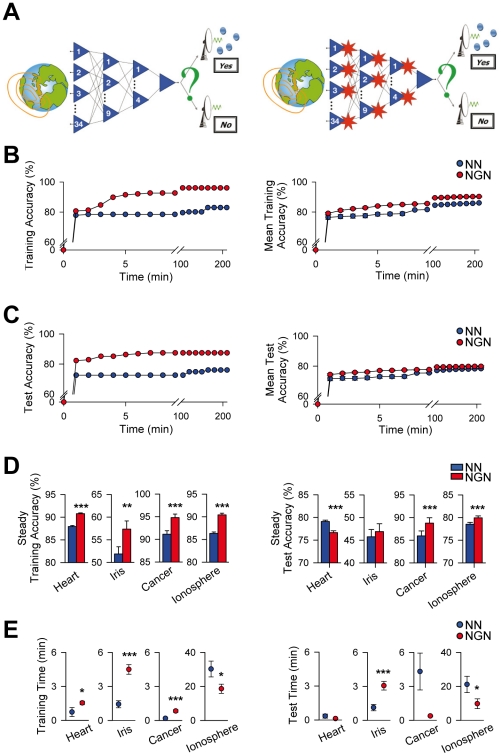
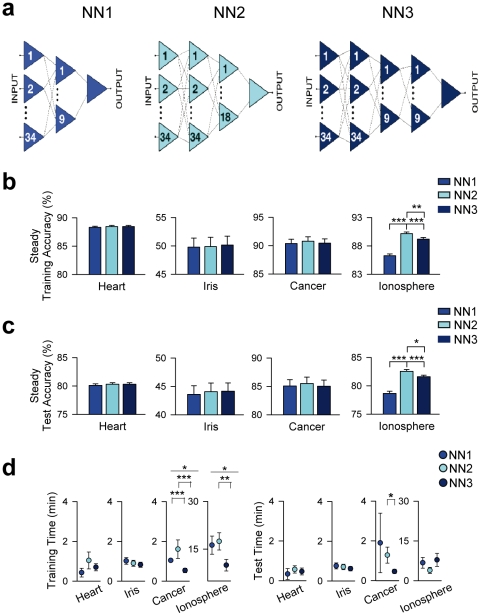
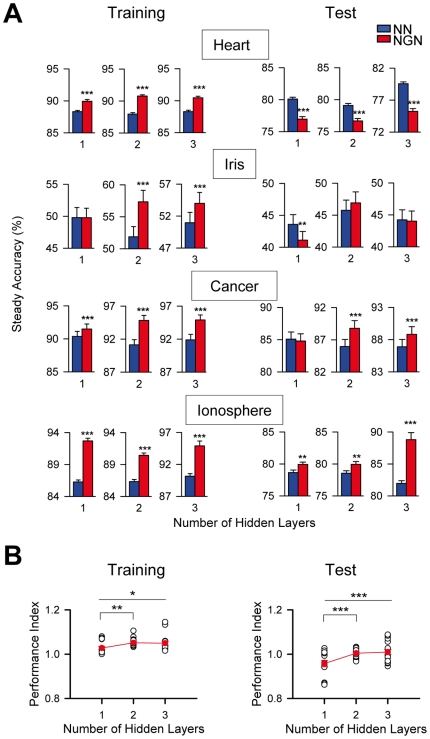
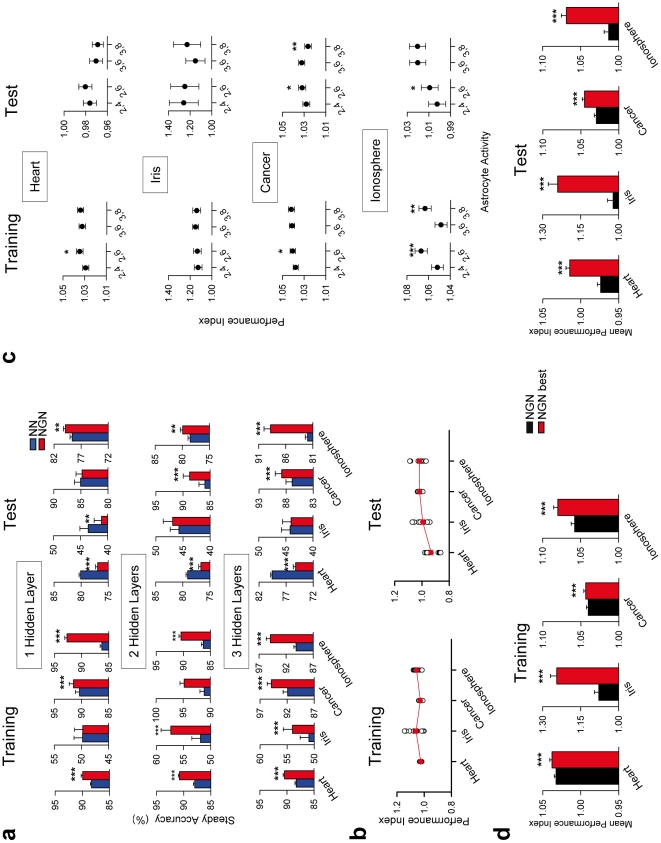
Compelling evidence indicates the existence of bidirectional communication between astrocytes and neurons. Astrocytes, a type of glial cells classically considered to be passive supportive cells, have been recently demonstrated to be actively involved in the processing and regulation of synaptic information, suggesting that brain function arises from the activity of neuron-glia networks. However, the actual impact of astrocytes in neural network function is largely unknown and its application in artificial intelligence remains untested. We have investigated the consequences of including artificial astrocytes, which present the biologically defined properties involved in astrocyte-neuron communication, on artificial neural network performance. Using connectionist systems and evolutionary algorithms, we have compared the performance of artificial neural networks (NN) and artificial neuron-glia networks (NGN) to solve classification problems. We show that the degree of success of NGN is superior to NN. Analysis of performances of NN with different number of neurons or different architectures indicate that the effects of NGN cannot be accounted for an increased number of network elements, but rather they are specifically due to astrocytes. Furthermore, the relative efficacy of NGN vs. NN increases as the complexity of the network increases. These results indicate that artificial astrocytes improve neural network performance, and established the concept of Artificial Neuron-Glia Networks, which represents a novel concept in Artificial Intelligence with implications in computational science as well as in the understanding of brain function.
Overview
The claims and statistics of this paper haven’t been checked yet.
Free: it reads the open-access text and checks the first 5 claims that cite a source we can check. Create a free account to check every claim.
Integrity signals
Registry
Cites
Statistics
Figures
Verification
Claims the paper makes
The claims and statistics of this paper haven’t been checked yet.
Free: it reads the open-access text and checks the first 5 claims that cite a source we can check. Create a free account to check every claim.
Claims other papers make about this one
Each is checked against this paper’s own text: does it say what the citing paper says it does?
The cited source says what the claim attributes to it.
In the citing paper
“This is what computational models predict, i.e. that integration of astrocytes improves network performance 131 .”
From Astrocyte function from information processing to cognition and cognitive impairment (2019) · cites this paper as [131]
Self-check
Percentages, sums and reported differences re-computed from the paper’s own numbers.
The self-check needs the paper’s full text.
Citations
Cites
Holland, J. H. (1992) · The MIT Press eBooks · doi:10.7551/mitpress/1090.001.0001 · Cited by 47,002
Neural networks and physical systems with emergent collective computational abilities.
Hopfield, J. J. (1982) · Proceedings of the National Academy of Sciences · doi:10.1073/pnas.79.8.2554 · Cited by 19,270 · cited 1×
“In Artificial Intelligence, connectionist systems are based on networks of interconnected artificial neurons that emulate brain neuronal networks [1,2].”
BackgroundA logical calculus of the ideas immanent in nervous activity
McCulloch, W. S., & Pitts, W. (1943) · The Bulletin of Mathematical Biophysics · doi:10.1007/bf02478259 · Cited by 18,566
Individual Comparisons by Ranking Methods
Wilcoxon, F. (1945) · Biometrics Bulletin · doi:10.2307/3001968 · Cited by 15,354
Approximate Statistical Tests for Comparing Supervised Classification Learning Algorithms
Dietterich, T. G. (1998) · Neural Computation · doi:10.1162/089976698300017197 · Cited by 3,840
Evolving artificial neural networks
Yao, X. (1999) · Proceedings of the IEEE · doi:10.1109/5.784219 · Cited by 2,981
Tripartite synapses: astrocytes process and control synaptic information
Perea, G., Navarrete, M., & Araque, A. (2009) · Trends in Neurosciences · doi:10.1016/j.tins.2009.05.001 · Cited by 1,820 · cited 3×
“Several mechanisms and physiological consequences of astro-cyte-neuron communication occur [6,17].”
BackgroundSelf-citationNew roles for astrocytes: redefining the functional architecture of the brain.
Nedergaard, M., Ransom, B., & Goldman, S. A. (2003) · Trends in Neurosciences · doi:10.1016/j.tins.2003.08.008 · Cited by 1,334 · cited 1×
“. The improvement provided by artificial astrocytes increases as the network complexity increases, which agrees with the gradual increase of the glia proportion observed in the phylogeny as the nervous system complexity increases”
BackgroundAstrocyte Control of Synaptic Transmission and Neurovascular Coupling
Haydon, P. G., & Carmignoto, G. (2006) · Physiological Reviews · doi:10.1152/physrev.00049.2005 · Cited by 1,323
Pasti, L., Volterra, A., Pozzan, T., & Carmignoto, G. (1997) · The Journal of Neuroscience · doi:10.1523/jneurosci.17-20-07817.1997 · Cited by 793
Research works printed but not linked: 1
- Holland JH 1975 Adaptation in Natural and Artificial Systems. Ann Arbor, MI Univ. Michigan Press
Cited by
Astrocyte function from information processing to cognition and cognitive impairment
Santello, M., Toni, N., & Volterra, A. (2019) · Nature Neuroscience · doi:10.1038/s41593-018-0325-8 · Cited by 737
Astrocytes: Orchestrating synaptic plasticity?
De Pittà, M., Brunel, N., & Volterra, A. (2016) · Neuroscience · doi:10.1016/j.neuroscience.2015.04.001 · Cited by 265
Neuron-glia networks: integral gear of brain function
Perea, G., Sur, M., & Araque, A. (2014) · Frontiers in Cellular Neuroscience · doi:10.3389/fncel.2014.00378 · Cited by 231
Self-citationGeissler, M., Gottschling, C., Aguado, A., Rauch, U., Wetzel, C. H., Hatt, H., & Faissner, A. (2013) · The Journal of Neuroscience · doi:10.1523/jneurosci.3275-12.2013 · Cited by 140
Astroglia-specific contributions to the regulation of synapses, cognition and behaviour
Augusto-Oliveira, M., Arrifano, G. P., Takeda, P. Y., Lopes-Araújo, A., Santos-Sacramento, L., Anthony, D. C., Verkhratsky, A., & Crespo-Lopez, M. E. (2020) · Neuroscience & Biobehavioral Reviews · doi:10.1016/j.neubiorev.2020.07.039 · Cited by 109
Pastur-Romay, L., Cedrón, F., Pazos, A., & Porto-Pazos, A. (2016) · International Journal of Molecular Sciences · doi:10.3390/ijms17081313 · Cited by 109
Self-citationAmiri, M., Hosseinmardi, N., Bahrami, F., & Janahmadi, M. (2013) · Journal of Computational Neuroscience · doi:10.1007/s10827-012-0432-6 · Cited by 99
Modulation of Synaptic Plasticity by Glutamatergic Gliotransmission: A Modeling Study
De Pittà, M., & Brunel, N. (2016) · Neural Plasticity · doi:10.1155/2016/7607924 · Cited by 95
“Therefore, it would ultimately be interesting to understand how this stochasticity could affect neuronal activity and shape learning [133].”
BackgroundThe computational power of astrocyte mediated synaptic plasticity
Min, R., Santello, M., & Nevian, T. (2012) · Frontiers in Computational Neuroscience · doi:10.3389/fncom.2012.00093 · Cited by 93
“Another recent study shows the learning potential of neuron-glia networks (Porto-Pazos et al., 2011).”
BackgroundA roadmap to integrate astrocytes into Systems Neuroscience
Kastanenka, K. V., Moreno‐Bote, R., De Pittà, M., Perea, G., Eraso‐Pichot, A., Masgrau, R., Poskanzer, K. E., & Galea, E. (2020) · Glia · doi:10.1002/glia.23632 · Cited by 87
“Support for the hypothesis that astrocytes perform canonical computations comes from studies showing that astrocyte-based computations such as synaptic potentiation, a type of gain control, improve the performance of ANNs (Alvarellos-Gonzalez et al., 2012; Porto-Pazos et al., 2011).”
BackgroundXing, L., He, J., Li, Y., Wu, Y., Yuan, J., & Gu, X. (2019) · Accident Analysis & Prevention · doi:10.1016/j.aap.2019.105343 · Cited by 81
From in silico astrocyte cell models to neuron-astrocyte network models: A review
Oschmann, F., Berry, H., Obermayer, K., & Lenk, K. (2017) · Brain Research Bulletin · doi:10.1016/j.brainresbull.2017.01.027 · Cited by 84
“Alvarellos-González et al., 2012; Porto-Pazos et al., 2011).”
A mathematical model of the tripartite synapse: astrocyte-induced synaptic plasticity
Tewari, S. G., & Majumdar, K. K. (2012) · Journal of Biological Physics · doi:10.1007/s10867-012-9267-7 · Cited by 77
“[84] recently performed a study where they highlighted the importance of artificial astrocytes in modulating an artificial neural network.”
BackgroundThe stability of memories during brain remodeling: A perspective
Blackiston, D. J., Shomrat, T., & Levin, M. (2015) · Communicative & Integrative Biology · doi:10.1080/19420889.2015.1073424 · Cited by 60
A Mathematical Model of the Tripartite Synapse: AstrocyteInduced Synaptic Plasticity
Tewari, S. G., & Majumdar, K. (2016) · Cited by 57
The Cajal school and the physiological role of astrocytes: a way of thinking
Navarrete, M. (2014) · Frontiers in Neuroanatomy · doi:10.3389/fnana.2014.00033 · Cited by 54
“Moreover, astrocyte signaling can regulate neural network function (Porto-Pazos et al., 2011), as recently described in the cortex where astrocytes regulate UP states (Poskanzer and Yuste, 2011; for a review see Araque and Navarrete, 2010) (Figure 2).”
BackgroundSelf-citationAstrocytes in the rat medial amygdala are responsive to adult androgens
Johnson, R. T., Schneider, A., DonCarlos, L. L., Breedlove, S. M., & Jordan, C. L. (2012) · Journal of Comparative Neurology · doi:10.1002/cne.23061 · Cited by 54
“Computer simulations in artificial neuron–neuron and neuron–glia networks suggest that the presence and number of astrocytes improves network performance, particularly as the network increases in complexity (Porto-Pazos et al., 2011).”
BackgroundAnsari, A., & Bakar, A. A. (2014) · doi:10.1109/icaiet.2014.15 · Cited by 46
“Artificial Intelligence connectionist systems are based on interconnected artificial neurons networks, which imitate brain neuronal networks [33].”
BackgroundHeikkinen, A., Pihlajaniemi, T., Faissner, A., & Yuzaki, M. (2014) · Progress in Brain Research · doi:10.1016/b978-0-444-63486-3.00002-5 · Cited by 42
Alvarellos, A., Pazos, A., & Porto-Pazos, A. B. (2012) · Computational and Mathematical Methods in Medicine · doi:10.1155/2012/476324 · Cited by 47
“Furthermore, the relative efficacy of ANGN versus ANN increased as the complexity of the network increased [9].”
BackgroundMethodInfluentialSelf-citationArtificial Neuron–Glia Networks Learning Approach Based on Cooperative Coevolution
Mesejo, P., Ibáñez, O. C., Fernández-Blanco, E., Cedrón, F., Pazos, A., & Porto-Pazos, A. B. (2015) · International Journal of Neural Systems · doi:10.1142/s0129065715500124 · Cited by 44
Self-citationHigh-order couplings in geometric complex networks of neurons
Tlaie, A., Leyva, I., & Sendiña–Nadal, I. (2019) · Physical review. E · doi:10.1103/physreve.100.052305 · Cited by 35
The computational power of the human brain
Gebicke‐Haerter, P. J. (2023) · Frontiers in Cellular Neuroscience · doi:10.3389/fncel.2023.1220030 · Cited by 41
“Networks are tuned to oscillatory rhythms underlying memory processing (Tewari and Parpura, 2013), and integration of astrocytes improves network performance (Porto-Pazos et al., 2011; Fields et al., 2014).”
BackgroundAnalysis of Network Models with Neuron-Astrocyte Interactions
Manninen, T., Aćimović, J., & Linne, M. (2023) · Neuroinformatics · doi:10.1007/s12021-023-09622-w · Cited by 32
“Porto-Pazos et al. (2011), Mesejo et al. (2015), and Rastogi et al. (2021) demonstrated how various mechanisms of neuron-astrocyte interaction can be used to improve performance in classification tasks.”
BackgroundChhabria, K., & Chakravarthy, V. S. (2016) · Frontiers in Neurology · doi:10.3389/fneur.2016.00024 · Cited by 26
The Memory Orchestra: Contribution of Astrocytes
Chen, Y., Jin, S., Yang, J., & Gao, T. (2023) · Neuroscience Bulletin · doi:10.1007/s12264-023-01024-x · Cited by 25
New role for astroglia in learning: Formation of muscle memory
Hassanpoor, H., Fallah, A., & Raza, M. (2012) · Medical Hypotheses · doi:10.1016/j.mehy.2012.08.025 · Cited by 23
“In recent decade several studies with mathematical models of neural pathway and astrocyte network have significantly enhanced current status of knowledge and have changed our understanding of the role of astrocytes in cognitive function [13,14].”
BackgroundPittà, M. D. (2020) · Springer eBooks · doi:10.1007/978-1-4614-7320-6_100691-1 · Cited by 23
“Porto-Pazos and collaborators investigated performance of an astrocyte-inspired learning rule to train deep networks in data classification (Porto-Pazos et al, 2011; Alvarellos-González et al, 2012; Mesejo et al, 2015).”
BackgroundAstrocytes enable amygdala neural representations supporting memory
Bukalo, O., O’Sullivan, R., Tanisumi, Y., Mendez, A., Weinholtz, C. A., Zimmerman, S., Offenberg, V., Carpenter, O., Bhagwat, H., Mosley, S., et al. (2026) · Nature · doi:10.1038/s41586-025-10068-0 · Cited by 31
Qualitative Information Processing in Tripartite Synapses: A Hypothetical Model
Mitterauer, B. (2011) · Cognitive Computation · doi:10.1007/s12559-011-9115-2 · Cited by 19
Valenza, G., Tedesco, L., Lanatà, A., Rossi, D. D., & Scilingo, E. P. (2013) · Annual International Conference of the IEEE Engineering in Medicine and Biology Society (EMBC) · doi:10.1109/embc.2013.6611058 · Cited by 18
“However, none of the mentioned models have been applied to implement more complex artificial spiking neuron-astrocyte network (SNAN), although the role of astrocytes has been already proven to improve the traditional neural network performances [9], [10].”
MethodEnergetic Constraints Produce Self-sustained Oscillatory Dynamics in Neuronal Networks
Burroni, J., Taylor, P., Corey, C., Vachnadze, T., & Siegelmann, H. T. (2017) · Frontiers in Neuroscience · doi:10.3389/fnins.2017.00080 · Cited by 21
“Glia Models: Non-energetic In addition to metabolic support, glia possibly play bulk neuromodulatory role in neuronal processing, and few studies have attempted to model this algorithmically, though without the primary goal of exploring energy requirements on spiking networks (Porto-Pazos et al., 2011; Allam et al., 2…”
BackgroundManninen, T., Havela, R., & Linne, M. (2019) · Springer series in computational neuroscience · doi:10.1007/978-3-030-00817-8_16 · Cited by 18
Assessing Self-Repair on FPGAs with Biologically Realistic Astrocyte-Neuron Networks
Karim, S., Harkin, J., Mcdaid, L. J., Gardiner, B., Liu, J., Halliday, D. M., Tyrrell, A. M., Timmis, J., Millard, A. G., & Johnson, A. P. (2017) · IEEE Computer Society Annual Symposium on VLSI · doi:10.1109/isvlsi.2017.80 · Cited by 18
Electrophysiological In Vitro Study of Long‐Range Signal Transmission by Astrocytic Networks
Hastings, N., Yu, Y., Huang, B., Middya, S., Inaoka, M., Erkamp, N. A., Mason, R. J., Carnicer‐Lombarte, A., Rahman, S., Knowles, T. P. J., et al. (2023) · Advanced Science · doi:10.1002/advs.202301756 · Cited by 14
Yang, M., Li, X.-M., Li, Z., Ou, Z., Liu, M., Liu, S., Li, X., & Yang, S. (2013) · PLoS ONE · doi:10.1371/journal.pone.0084253 · Cited by 14
“In the past few years, many multivariate data analysis methods have been developed and applied to extract the full potential from microarray experiments including cluster analysis [1,2], support vector machine (SVM) [3,4], self-organizing maps (SOMs) [5,6], artificial neural networks (ANN) [7,8], partial least squares…”
BackgroundLones, M. A., Turner, A. P., Fuente, L. A., Stepney, S., Caves, L. S. D., & Tyrrell, A. M. (2013) · Natural Computing · doi:10.1007/s11047-013-9400-y · Cited by 17
“There are also neural networks which model non-synaptic communication within the brain: examples include GasNets (Husbands et al. 1998), which capture the action of diffusive neurotransmitters; and artificial neurone–glia networks (Porto-Pazos et al. 2011), which capture the role of glial cells.”
BackgroundA Neuron–Glial Perspective for Computational Neuroscience
Pittà, M. D., & Berry, H. (2019) · Springer series in computational neuroscience · doi:10.1007/978-3-030-00817-8_1 · Cited by 16
Spiking Neuron-Astrocyte Networks for Image Recognition
Lorenzo, J., Rico‐Gallego, J., Binczak, S., & Jacquir, S. (2025) · Neural Computation · doi:10.1162/neco_a_01740 · Cited by 13
Shining the Light on Astrocytic Ensembles
Delgado, L., & Navarrete, M. (2023) · Cells · doi:10.3390/cells12091253 · Cited by 13
Self-citationConceptual Network Model From Sensory Neurons to Astrocytes of the Human Nervous System
Yang, Y., & Yeo, C. K. (2015) · IEEE Transactions on Biomedical Engineering · doi:10.1109/tbme.2015.2405549 · Cited by 11
Tang, G., Polykretis, I., Ivanov, V. A., Shah, A., & Michmizos, K. P. (2019) · Neuro Inspired Computational Elements Conference (NICE) · doi:10.1145/3320288.3320302 · Cited by 15
“ously sensing for the transition between order and chaos in the neuronal component. With NANs already showing their potential in a growing number of applications as reinforcement to neuronal networks [31, 54, 67], the proposed Loihi module can become a computational framework for exploring and exploiting the unique co…”
BackgroundA New Computational Model for Astrocytes and Their Role in Biologically Realistic Neural Networks
Sajedinia, Z., & Hélie, S. (2018) · Computational Intelligence and Neuroscience · doi:10.1155/2018/3689487 · Cited by 12
“In the past few years, very simple models of astrocytes were successfully added to artificial neural networks [24, 33, 34, 48].”
BackgroundYamamoto, M., & Takano, T. (2025) · Cells · doi:10.3390/cells14241936 · Cited by 14
“Emerging frameworks, exemplified by the NAAM model, propose that information can be stored not only in neuronal synaptic weights but also in dynamic Ca 2+ states within astrocytic processes [31–34].”
Artificial glial cells in artificial neuronal networks: a systematic review
Alvarez-Gonzalez, S., Cedrón, F., Pazos, A., & Porto-Pazos, A. B. (2023) · Artificial Intelligence Review · doi:10.1007/s10462-023-10586-1 · Cited by 8
“On the one hand, in the works of Porto’s group (Pastur-Romay et al. 2017; Mesejo et al. 2015; Alvarellos-González et al. 2012; Porto-Pazos et al. 2011; Porto et al. 2007) they postulate a hybrid algorithm, based on a first part of unsupervised learning in which it is going to be modulated through…”
BackgroundMethodSelf-citationParallel Computing for Brain Simulation
Pastur-Romay, L. A., Porto-Pazos, A. B., Cedrón, F., & Pazos, A. (2016) · Current Topics in Medicinal Chemistry · doi:10.2174/1568026617666161104105725 · Cited by 14
Self-citationAstrocytes Organize Associative Memory
Gordleeva, S. Y., Lotareva, Y. A., Krivonosov, M., Zaikin, A. A., Ivanchenko, M., & Gorban, A. N. (2019) · Studies in computational intelligence · doi:10.1007/978-3-030-30425-6_45 · Cited by 7
The Mandala of the Present Moment
Gordon, W. V., Shonin, E., & García‐Campayo, J. (2017) · Mindfulness · doi:10.1007/s12671-017-0779-x · Cited by 11
Polykretis, I., Ivanov, V., & Michmizos, K. P. (2018) · International Conference on Neuromorphic Systems (ICONS) · doi:10.1145/3229884.3229890 · Cited by 9
“Surprisingly, rather sporadic efforts for translating the astrocytic mechanisms into AI currently exist, mainly focused on improving the classification performance of classical neural networks, through synaptic potentiation[1, 71].”
BackgroundSchmid, G. B. (2015) · Schweizerische Zeitschrift für Ganzheitsmedizin / Swiss Journal of Integrative Medicine · doi:10.1159/000365558 · Cited by 5
(2020) · International Journal of Advanced Trends in Computer Science and Engineering · doi:10.30534/ijatcse/2020/206952020 · Cited by 5
Real time astrocyte in spiking neural network
Abed, B. A.-R., Ismail, A. R., & Aziz, N. A. (2015) · SAI Intelligent Systems Conference · doi:10.1109/intellisys.2015.7361196 · Cited by 5
“00 ©2015 IEEE science literature g to add a value ANN but these ich is based on instance, [18] enetic algorithm astrocyte-neuron ilayer ANGN in pe of ANGN in ected to neurons n problem, also ith one of the rk [16], impulse glial chain [25], ulse glial chain 5].”
BackgroundHassanpoor, H., & Saidi, M. (2019) · Journal of Theoretical Biology · doi:10.1016/j.jtbi.2019.110114 · Cited by 4
Fountain, A. G., & Merkel, C. E. (2022) · Neuromorphic Computing and Engineering · doi:10.1088/2634-4386/ac5d1f · Cited by 5
“In [10], the authors modeled the influence of astrocytes on synaptic efficacy based on neuron spiking activity.”
BackgroundMethodNeuro-Glial Interaction: SONG-Net
Marzouki, K. (2015) · Lecture notes in computer science · doi:10.1007/978-3-319-26555-1_70 · Cited by 4
Investigating Biologically Plausible Neural Networks for Reservoir Computing Solutions
Schöfmann, C. M., Fasli, M., & Barros, M. T. (2024) · IEEE Access · doi:10.1109/access.2024.3385339 · Cited by 8
“In [23], the authors investigated how the synaptic processes of neurons and astrocytes can inspire new Hebbian training rules and demonstrate benefits in multimodal data classification.”
Multi-Layer Perceptron with Pulse Glial Chain
Ikuta, C., Uwate, Y., Nishio, Y., & Yang, Y. (2016) · IEICE Transactions on Fundamentals of Electronics Communications and Computer Sciences · doi:10.1587/transfun.e99.a.742 · Cited by 4
Artificial Astrocyte Networks, as Components in Artificial Neural Networks
Sajedinia, Z. (2014) · Lecture notes in computer science · doi:10.1007/978-3-319-08123-6_26 · Cited by 8
“The results showed that adding artificial astrocytes to typical ANNs improves performance of the network, but it is highly dependent on the complexity of the problem [23].”
BackgroundMethodInfluentialTang, G., Polykretis, I., Ivanov, V. A., Shah, A., & Michmizos, K. P. (2019) · arXiv (Cornell University) · doi:10.48550/arxiv.1907.01620 · Cited by 5
“ously sensing for the transition between order and chaos in the neuronal component. With NANs already showing their potential in a growing number of applications as reinforcement to neuronal networks [31, 54, 67], the proposed Loihi module can become a computational framework for exploring and exploiting the unique co…”
BackgroundComputational Intelligence Techniques for Big Data Analytics: A Contemplative Perspective
Divya, Sıngh, V., & Dahiya, N. (2022) · Lecture notes in electrical engineering · doi:10.1007/978-981-16-8248-3_32 · Cited by 3
Energy Constraints Improve Liquid State Machine Performance
Fountain, A. G., & Merkel, C. E. (2020) · International Conference on Neuromorphic Systems (ICONS) · doi:10.1145/3407197.3407206 · Cited by 3
“They found that, for the most part, their artificial astrocytes improved the performance of their multilayer, feedforward network [16].”
BackgroundInfluentialPolykretis, I., Ivanov, V., & Michmizos, K. P. (2018) · arXiv (Cornell University) · doi:10.48550/arxiv.1807.02514 · Cited by 5
“Surprisingly, rather sporadic efforts for translating the astrocytic mechanisms into AI currently exist, mainly focused on improving the classification performance of classical neural networks, through synaptic potentiation[1, 71].”
BackgroundPittà, M. D. (2022) · Springer eBooks · doi:10.1007/978-1-0716-1006-0_100691 · Cited by 3
Artificial Astrocytic Modulation of Neuron’s Output
Pastur-Romay, L. A., Cedrón, F., & Porto-Pazos, A. B. (2017) · World Congress on Medical Physics and Biomedical Engineering, September 7 - 12, 2009, Munich, Germany · doi:10.1007/978-981-10-5122-7_228 · Cited by 3
Self-citationHubbard, J. A., & Binder, D. K. (2016) · Elsevier eBooks · doi:10.1016/b978-0-12-802401-0.00003-x · Cited by 2
Self organizing neuro-glial network, SONG-Net
Landolsi, H., & Marzouki, K. (2014) · IEEE Symposium on Computational Intelligence, Cognitive Algorithms, Mind, and Brain (CCMB) · doi:10.1109/ccmb.2014.7020698 · Cited by 2
Modeling Astrocyte-Neuron Interactions
Chikha, S. B., Marzouki, K., & Ahmed, S. B. (2015) · Lecture notes in computer science · doi:10.1007/978-3-319-26555-1_35 · Cited by 2
Computational Models of the Brain
Porto-Pazos, A. B., Pastur-Romay, L. A., Cedrón, F., & Pazos, A. (2015) · MOL2NET International Conference on Multidisciplinary Sciences (MOL2NET) · doi:10.3390/mol2net-1-e009 · Cited by 3
Self-citationComputational Role of Astrocytes in Bayesian Inference and Probability Distribution Encoding
Dimkovski, M., & An, A. (2016) · Lecture notes in computer science · doi:10.1007/978-3-319-47103-7_3 · Cited by 2
Investigating the Role of Astrocyte Units in a Feedforward Neural Network
Gergeľ, P., & Farkaš, I. (2018) · Lecture notes in computer science · doi:10.1007/978-3-030-01424-7_8 · Cited by 5
“Similar approach was taken in [13] and [2] where instead of modeling the neuronal regulation, the authors focused on modeling synaptic plasticity driven solely by astrocytes.”
MethodWhat can astrocytes compute?Preprint
Peterson, E. J. (2021) · bioRxiv (Cold Spring Harbor Laboratory) · doi:10.1101/2021.10.20.465192 · Cited by 2
Astrocyte Regulation of Spinal Circuit Function
Duff, M. K., Li, M. J., & Nimmerjahn, A. (2026) · Journal of Neurochemistry · doi:10.1111/jnc.70366 · Cited by 2
“As we capture richer measurements from astrocyte metamodulatory networks, we can begin to construct comparable artificial glial networks as complementary counterparts (Porto-Pazos et al. 2011).”
Astrocytes in modulating subcellular, cellular and intercellular molecular neuronal communication
Hyttinen, J., Genocchi, B., Ahtiainen, A., Tanskanen, J. M. A., Lenk, K., & Barros, M. T. (2021) · ACM International Conference on Nanoscale Computing and Communication (NANOCOM) · doi:10.1145/3477206.3477460 · Cited by 2
“Moreover, the role of astrocytes in learning has been proposed and demonstrated in artificial neuronal networks and classification tasks [32].”
BackgroundGCSNN: Glia-Coupled Spiking Neural Network
He, J., Fan, J., Zheng, Y., Liu, Y., Zhang, H., & Peng, H. (2023) · China Automation Congress (CAC) · doi:10.1109/cac59555.2023.10452072 · Cited by 1
“Porto-Pazos et al. built a 3-5 layer GCANN and validated its remarkable classification performance in comparison with conventional Artificial Neuron-Glia Networks (ANN) using datasets associated with heart disease, breast cancer, Iris Flower (IF),and Ionosphere (IS) [1].”
MethodEfficient Implementation of Multilayer Perceptrons: Reducing Execution Time and Memory Consumption
Cedrón, F., Alvarez-Gonzalez, S., Ribas-Rodriguez, A., Rodríguez, S., & Porto-Pazos, A. B. (2024) · Applied Sciences · doi:10.3390/app14178020 · Cited by 2
Self-citationAstrocyte-Synapse Receptor Coupling in Tripartite Synapses: A Mechanism for Self-Observing Robots
Mitterauer, B. (2018) · Advances in Bioscience and Biotechnology · doi:10.4236/abb.2018.92006 · Cited by 2
“Based on physiological or biophysical experiments mathematical modeling and computer simulations will probably be helpful for testing predictions on functions of astrocytes in neuronal networks [27].”
BackgroundGlial Dysregulation in Addiction
Hess, E. M., Madayag, A., Hearing, M. C., & Baker, D. L. (2018) · Elsevier eBooks · doi:10.1016/b978-0-12-812202-0.00016-6 · Cited by 1
Echo State Networks with Artificial Astrocytes and Hebbian Connections
Gergeľ, P., & Farkaš, I. (2019) · Lecture notes in computer science · doi:10.1007/978-3-030-20521-8_38 · Cited by 1
Biologically Plausible Neural Networks for Reservoir Computing SolutionsPreprint
Schöfmann, C. M., Fasli, M., & Barros, M. T. (2024) · doi:10.36227/techrxiv.171036623.34011701/v1 · Cited by 1
Modeling of bio-nano communication networks for the human body
Yang, Y. (2015) · DR-NTU (Nanyang Technological University) · doi:10.32657/10356/65639
“The findings thereby establish the concept of Artificial Neuron-Glia Networks [100].”
BackgroundAnalyzing Microarray Data with Classification and Clustering Methods
Wan, S. (2015) · International Conference on Advanced Cloud and Big Data · doi:10.1109/cbd.2015.36
“In the past few years, many multivariate data analysis methods have been developed and applied to extract the full potential from microarray experiments including cluster analysis [1], [2], support vector machine (SVM) [3], [4], self-organizing maps (SOMs) [5], [6], artificial neural networks (ANN) [7], [8], partial l…”
BackgroundSimulating Cognitive Deficits in Parkinson’s Disease
Hélie, S., & Sajedinia, Z. (2019) · Springer series in cognitive and neural systems · doi:10.1007/978-3-030-18830-6_10
Energy Constraints Improve Liquid State Machine PerformancePreprint
Fountain, A. G., & Merkel, C. E. (2020) · arXiv (Cornell University) · doi:10.48550/arxiv.2006.04716 · Cited by 1
“They found that, for the most part, their artificial astrocytes improved the performance of their multilayer, feedforward network [16].”
BackgroundInfluentialComplexity, synchronization and network structure inference: an application to neural dynamics
Tlaie, A. (2020) · UPM Digital Archive (Technical University of Madrid) · doi:10.20868/upm.thesis.62690
Nanoinformatics approaches for information extraction and text mining in nanomedical research texts
Jimenez, D. D. L. I. (2014) · UPM Digital Archive (Technical University of Madrid) · doi:10.20868/upm.thesis.33480
Enhancing Vision Transformer Explainability using Artificial Astrocytes
Echevarrieta-Catalan, N., Ribas-Rodriguez, A., Cedrón, F., Schwartz, O., & Aguiar‐Pulido, V. (2025) · IEEE/CVF Conference on Computer Vision and Pattern Recognition Workshops (CVPRW) · doi:10.1109/cvprw67362.2025.00011 · Cited by 2
“Astrocytes have been utilized in artificial intelligence for some time, from their initial incorporation into multilayer perceptrons (MLPs) [6, 7], to more recent applications in CNNs [8], spiking neural networks [9], and dual neuron-astrocyte networks [10, 11].”
Evolving principes of artificial neural design
Wilson, D. G. (2019) · theses.fr (ABES) · doi:10.70675/b678f35dz7ee5z441ez93f3ze801472a9a28
The 3-Body Problem: How Astrocytes May Govern Plasticity
Watanabe, A., Guo, C., & Sjöström, P. J. (2026) · The Neuroscientist · doi:10.1177/10738584261445371
“These properties have prompted the idea that astrocytes could contribute not only to biological learning but also to improved learning mechanisms in artificial systems that incorporate neuron– glia interactions (Porto-Pazos et al 2011).”
Ganti, S. R. (2026) · Cognitive Models and Artificial Intelligence Conference (AICCONF) · doi:10.1109/aicconf69182.2026.11600743
“The Astrocyte Modulator module, grounded in the work of Porto-Pazos et al. [4], provides global regulatory feedback that stabilizes the system’s overall dynamics and adjusts network excitability in response to contextual signals and novelty.”
Influential
Metadata
- Authors
- Porto-Pazos, A. B., Veiguela, N., Mesejo, P., Navarrete, M., Alvarellos, A., Ibáñez, O., Pazos, A., & Araque, A.
- Affiliations
- Universidade da Coruña (ES)
- Consejo Superior de Investigaciones Científicas (ES)
- Corresponding author
- Porto-Pazos, Ana B.
- ORCID
- Venue
- PLoS ONE
- Publisher
- Public Library of Science (PLoS)
- Published
- 2011-04-19
- Volume
- 6
- Issue
- 4
- Pages
- e19109
- ISSN
- 1932-6203 (ISSN-L)
- PMC
- PMC3079756
- OpenAlex
- W1985943544
- Cited by
- 89
- References
- 19
- Citations by year
- 2026: 4 · 2025: 3 · 2024: 3 · 2023: 7 · 2022: 3 · 2021: 2 · 2020: 6 · 2019: 13 · 2018: 6 · 2017: 5 · 2016: 8 · 2015: 11 · 2014: 7 · 2013: 4 · 2012: 6
- FWCI
- 5.29
- Type
- journal article
- Language
- en
- Open access
- gold
- doi.org
- Locations
- PLoS ONE (publishedVersion, cc-by)
- Europe PMC (PubMed Central) (publishedVersion, cc-by)
- PubMed Central (publishedVersion, cc-by)
- PubMed (publishedVersion)
- HAL (submittedVersion)
- DIGITAL.CSIC (Spanish National Research Council (CSIC)) (submittedVersion)
- DOAJ (DOAJ: Directory of Open Access Journals) (submittedVersion, cc-by-sa)
- Funders
- European Commission (202167)
- Ministerio de Ciencia e Innovación
- CYTED Ciencia y Tecnología para el Desarrollo (08SIN010105PR, 209RT0366, REGICC 2009/58)
- Xunta de Galicia
- Norwegian Biodiversity Information Centre
- Topics
- Physical Sciences › Computer Science › Artificial Intelligence › Neural Networks and Applications
- Life Sciences › Neuroscience › Cognitive Neuroscience › Neural dynamics and brain function
- Physical Sciences › Engineering › Electrical and Electronic Engineering › Advanced Memory and Neural Computing
- Keywords
- astrocyte-neuron communication, artificial neural networks, classification, network architecture, network complexity, evolutionary algorithms, connectionist networks, brain function
- MeSH terms
- Astrocytes, Neurons, Neural Networks, Computer, Artificial Cells
About these checks
Registry, retraction, Cites and statistics results are computed, not judged, with one exception: a printed reference that no index lists is read once by a model before it counts as a citation error. Claims are extracted by a model and kept only when their quote appears verbatim in the text; each cited source is then checked, with a model’s help, for whether it says what the claim relies on. Those verdicts can be wrong — read the claim’s quote and the cited source before relying on one.
Statistics and arithmetic are recomputed, not judged.
Confidence bands are shown only for fields calibrated on our annotated test set. None is calibrated yet, so no band is shown.
What counts as a claim ›How we measure confidence ›How we check this ›
Are you an author, or do you see a problem with this page? Request a review
Data sources
Bibliographic data: Semantic Scholar, OpenAlex, Crossref.
Contains information from the Semantic Scholar Academic Graph Datasets, made available under the ODC Attribution License (ODC-BY 1.0).
Semantic Scholar’s data is described in: Kinney, R., et al. (2023). The Semantic Scholar Open Data Platform. arXiv:2301.10140.
