

The DOI matches its Crossref record; 35 of the 35 references it cites were found in a registry or an index.
Cholinergic Interneurons Mediate Fast VGluT3-Dependent Glutamatergic Transmission in the Striatum
Open accessAbstract
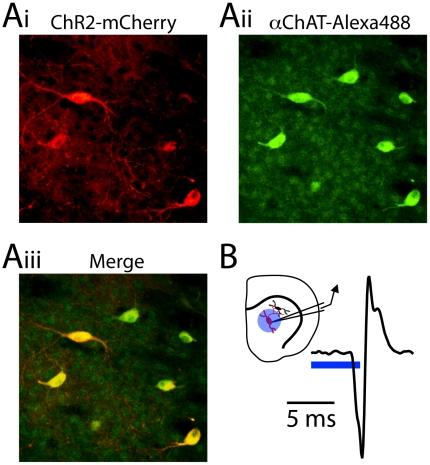
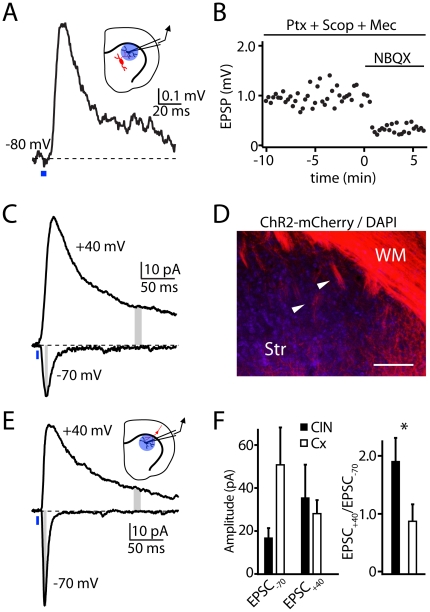
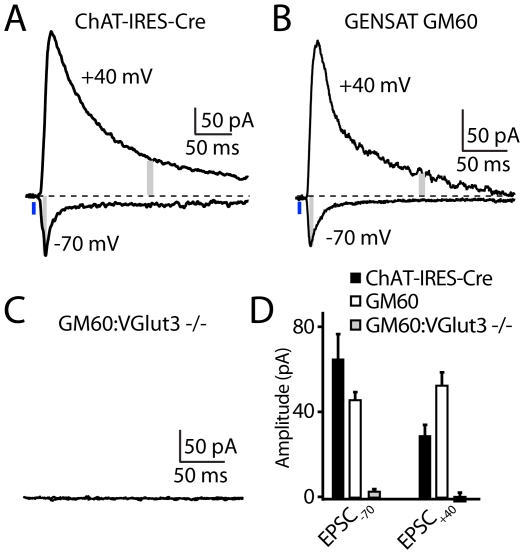
The neurotransmitter glutamate is released by excitatory projection neurons throughout the brain. However, non-glutamatergic cells, including cholinergic and monoaminergic neurons, express markers that suggest that they are also capable of vesicular glutamate release. Striatal cholinergic interneurons (CINs) express the Type-3 vesicular glutamate transporter (VGluT3), although whether they form functional glutamatergic synapses is unclear. To examine this possibility, we utilized mice expressing Cre-recombinase under control of the endogenous choline acetyltransferase locus and conditionally expressed light-activated Channelrhodopsin2 in CINs. Optical stimulation evoked action potentials in CINs and produced postsynaptic responses in medium spiny neurons that were blocked by glutamate receptor antagonists. CIN-mediated glutamatergic responses exhibited a large contribution of NMDA-type glutamate receptors, distinguishing them from corticostriatal inputs. CIN-mediated glutamatergic responses were insensitive to antagonists of acetylcholine receptors and were not seen in mice lacking VGluT3. Our results indicate that CINs are capable of mediating fast glutamatergic transmission, suggesting a new role for these cells in regulating striatal activity.
Overview
The claims and statistics of this paper haven’t been checked yet.
Run the check — free, no account needed. It reads the open-access text and checks the sources it cites.
Integrity signals
Registry
Cites
Statistics
Figures
Verification
Claims the paper makes
The claims and statistics of this paper haven’t been checked yet.
Run the check — free, no account needed. It reads the open-access text and checks the sources it cites.
Claims other papers make about this one
Each is checked against this paper’s own text: does it say what the citing paper says it does?
In the citing paper
“Glutamate release onto SPNs activates postsynaptic ionotropic glutamate receptors with distinct AMPA/NMDA ratios compared with cortico-striatal synapses, suggesting distinct plasticity rules from these disparate inputs.60”
From Synaptic and circuit functions of multitransmitter neurons in the mammalian brain (2023) · cites this paper as [60]
In the citing paper
“Striatal cholinergic interneurons (CINs) cotransmit Ach and glutamate locally onto spiny projection neurons (SPNs) 60 and dopaminergic axonal terminals.[61][62][63]”
From Synaptic and circuit functions of multitransmitter neurons in the mammalian brain (2023) · cites this paper as [60]
Self-check
Percentages, sums and reported differences re-computed from the paper’s own numbers.
The self-check needs the paper’s full text.
Citations
Cites
Phasic Firing in Dopaminergic Neurons Is Sufficient for Behavioral Conditioning
Tsai, H.-C., Zhang, F., Adamantidis, A., Stuber, G. D., Bonci, A., de Lecea, L., & Deisseroth, K. (2009) · Science · doi:10.1126/science.1168878 · Cited by 1,266 · cited 1×
“Intracranial injection of adeno-associated virus encoding a Credependent (double floxed inverted) Channelrhodopsin2-mCherry fusion protein (DFI-ChR2-mCherry) [25,26] into the striatum of these mice enabled the CIN-specific expression of the lightactivated excitatory ChR2, which was clearly observed 7–14 days after inj…”
BackgroundStriatal Plasticity and Basal Ganglia Circuit Function
Kreitzer, A. C., & Malenka, R. C. (2008) · Neuron · doi:10.1016/j.neuron.2008.11.005 · Cited by 1,071 · cited 1×
“Synaptic plasticity in the striatum is thought to be critical for normal motor learning, and many forms are dependent on activation of both NMDARs and metabotropic glutamate receptors [33].”
BackgroundGong, S., Doughty, M., Harbaugh, C. R., Cummins, A., Hatten, M. E., Heintz, N., & Gerfen, C. R. (2007) · The Journal of Neuroscience · doi:10.1523/jneurosci.2707-07.2007 · Cited by 977 · cited 10×
“To examine this possibility, we utilized mice expressing Cre-recombinase under control of the endogenous choline acetyltransferase locus and conditionally expressed light-activated Channelrhodopsin2 in CINs.”
MethodInfluentialOttersen, O. P., & Storm‐Mathisen, J. (1984) · The Journal of Comparative Neurology · doi:10.1002/cne.902290308 · Cited by 848 · cited 1×
“brainstem and mesencephalon [1] and revealed the presence of”
BackgroundOptogenetic interrogation of neural circuits: technology for probing mammalian brain structures
Zhang, F., Gradinaru, V., Adamantidis, A. R., Durand, R., Airan, R. D., de Lecea, L., & Deisseroth, K. (2010) · Nature Protocols · doi:10.1038/nprot.2009.226 · Cited by 692 · cited 1×
“The virus carried either a double-floxed-inverted Channelrhodopsin2-mCherry construct under control of the Ef1a promoter (CINs) or non-conditional construct coding for Channelrhodopsin2-mCherry under the synapsin promoter (corticostriatal) [34].”
Rossi, J., Balthasar, N., Olson, D., Scott, M., Berglund, E., Lee, C. E., Choi, M. J., Lauzon, D., Lowell, B. B., & Elmquist, J. K. (2011) · Cell Metabolism · doi:10.1016/j.cmet.2011.01.010 · Cited by 672
Self-citationPatneau, D. K., & Mayer, M. (1990) · Journal of Neuroscience · doi:10.1523/jneurosci.10-07-02385.1990 · Cited by 653 · cited 2×
“2C), estimating the contribution of AMPARs.”
BackgroundA third vesicular glutamate transporter expressed by cholinergic and serotoninergic neurons
Gras, C., Herzog, E., Bellenchi, G. C., Bernard, V., Ravassard, P., Pohl, M., Gasnier, B., Giros, B., & El Mestikawy, S. (2002) · The Journal of Neuroscience · doi:10.1523/jneurosci.22-13-05442.2002 · Cited by 639 · cited 4×
“the vesicular glutamate transporter VGluT3, which co-localizes with the vesicular ACh transporter in the same presynaptic terminals [6,7,9].”
BackgroundInfluentialAtasoy, D., Aponte, Y., Su, H. H., & Sternson, S. M. (2008) · Journal of Neuroscience · doi:10.1523/jneurosci.1954-08.2008 · Cited by 635 · cited 1×
“Intracranial injection of adeno-associated virus encoding a Credependent (double floxed inverted) Channelrhodopsin2-mCherry fusion protein (DFI-ChR2-mCherry) [25,26] into the striatum of these mice enabled the CIN-specific expression of the lightactivated excitatory ChR2, which was clearly observed 7–14 days after inj…”
BackgroundCoincident but Distinct Messages of Midbrain Dopamine and Striatal Tonically Active Neurons
Morris, G., Arkadir, D., Nevet, A., Vaadia, E., & Bergman, H. (2004) · Neuron · doi:10.1016/j.neuron.2004.06.012 · Cited by 574
Cited by
Sorted by citations
Items 101–175 of 175
Transcriptomic and spatial organization of telencephalic GABAergic neurons
van Velthoven, C. T. J., Gao, Y., Kunst, M., Lee, C., McMillen, D., Chakka, A. B., Casper, T., Clark, M., Chakrabarty, R., Daniel, S. F., et al. (2025) · Nature · doi:10.1038/s41586-025-09296-1 · Cited by 32
Sokhadze, G. E., Seabrook, T. A., & Guido, W. (2018) · Neural Development · doi:10.1186/s13064-018-0124-7 · Cited by 26
Licheri, V., Lagström, O., Lotfi, A., Patton, M. H., Wigström, H., Mathur, B. N., & Adermark, L. (2018) · Journal of Neuroscience · doi:10.1523/jneurosci.0071-18.2018 · Cited by 29
Guzmán, M. S., Jaeger, X. D., Drangova, M., Prado, M. A. M., Gros, R., & Prado, V. F. (2012) · Journal of Neurochemistry · doi:10.1111/jnc.12128 · Cited by 26
Ibrahim, K. S., Abd‐Elrahman, K. S., Mestikawy, S. E., & Ferguson, S. S. G. (2020) · Molecular Pharmacology · doi:10.1124/mol.120.000089 · Cited by 23
“These currents are notably attenuated by the loss of VGLUT3 expression in neurons (Higley et al., 2011; Nelson et al., 2014).”
BackgroundInfluentialProbing striatal microcircuitry to understand the functional role of cholinergic interneurons
Girasole, A. E., & Nelson, A. (2015) · Movement Disorders · doi:10.1002/mds.26340 · Cited by 23
“First, cholinergic interneurons appear to release glutamate.(137,138) This recent finding was fueled by the observation that striatal cholinergic interneurons express the glutamate transporter VGlut3.”
BackgroundAccumbal Cholinergic Interneurons Differentially Influence Motivation Related to Satiety Signaling
Aitta‐aho, T., Phillips, B. U., Pappa, E., Hay, Y. A., Harnischfeger, F., Heath, C. J., Saksida, L. M., Bussey, T. J., & Apergis‐Schoute, J. (2017) · eNeuro · doi:10.1523/eneuro.0328-16.2017 · Cited by 22
“However, CIN communication is not restricted to ACh release, as CINs are known to excite postsynaptic targets by releasing glutamate (Higley et al., 2011; Nelson et al., 2014a, b).”
BackgroundVaraschin, R. K., Osterstock, G., Ducrot, C., Leino, S., Bourque, M.-J., Prado, M. A. M., Prado, V. F., Salminen, O., Nuutinen), S. R. (., & Trudeau, L. (2018) · Neuroscience · doi:10.1016/j.neuroscience.2018.01.027 · Cited by 24
“Cholinergic interneurons also express VGluT3 and are capable of releasing glutamate (Higley et al., 2011) and may decrease local glutamate release via mGluR activation (Sakae et al., 2015).”
BackgroundLi, J., Zhou, Y., Yin, F., Du, Y., Xu, J., Fan, S., Li, Z., Wang, X., Shen, Q., Zhu, Y., et al. (2024) · Biological Psychiatry · doi:10.1016/j.biopsych.2024.10.005 · Cited by 22
Ramet, L., Zimmermann, J., Bersot, T., Poirel, O., Gois, S. D., Silm, K., Sakae, D. Y., Mansouri-Guilani, N., Bourque, M.-J., Trudeau, L., et al. (2017) · Journal of Neuroscience · doi:10.1523/jneurosci.0282-16.2017 · Cited by 20
“Secondary structures were predicted using the membrane protein topology prediction method TransMembrane prediction using Hidden Markov Models and a Hidden Markov Model for Topology Prediction (Krogh et al., 2001; Tusnády and Simon, 2001).”
MethodVGLUT 3 gates psychomotor effects induced by amphetamine
Mansouri-Guilani, N., Bernard, V., Vigneault, É., Vialou, V., Daumas, S., Mestikawy, S. E., & Gangarossa, G. (2018) · Journal of Neurochemistry · doi:10.1111/jnc.14644 · Cited by 21
Liang, J., Marty, V. N., Mulpuri, Y., Olsen, R. W., & Spigelman, I. (2014) · Journal of Neurophysiology · doi:10.1152/jn.00564.2013 · Cited by 19
Glutamic Acid Transporters: Targets for Neuroprotective Therapies in Parkinson’s Disease
Li, X., Wang, W., Yan, J., & Zeng, F. (2021) · Frontiers in Neuroscience · doi:10.3389/fnins.2021.678154 · Cited by 19
Carbonell-Roig, J., Aaltonen, A., Wilson, K., Molinari, M., Cartocci, V., McGuirt, A. F., Mosharov, E. V., Kehr, J., Lieberman, O. J., Sulzer, D., et al. (2024) · Cell Reports · doi:10.1016/j.celrep.2024.114997 · Cited by 17
The Cholinergic Interneuron of the Striatum
Goldberg, J. A., & Wilson, C. J. (2016) · Handbook of behavioral neuroscience · doi:10.1016/b978-0-12-802206-1.00007-6 · Cited by 20
Anatomy of graft-induced dyskinesias: Circuit remodeling in the parkinsonian striatum
Steece‐Collier, K., Rademacher, D. J., & Soderstrom, K. E. (2012) · Basal Ganglia · doi:10.1016/j.baga.2012.01.002 · Cited by 17
Leveraging VGLUT3 Functions to Untangle Brain Dysfunctions
Favier, M., Pietrancosta, N., Mestikawy, S. E., & Gangarossa, G. (2021) · Trends in Pharmacological Sciences · doi:10.1016/j.tips.2021.03.003 · Cited by 17
Kolpakova, J., van der Vinne, V., Giménez‐Gómez, P., Le, T., & Martin, G. E. (2022) · Frontiers in Cellular Neuroscience · doi:10.3389/fncel.2022.1010121 · Cited by 17
“, 2019), glutamatergic (Higley et al., 2011; Assous, 2021) and dopaminergic synaptic transmission (Threlfell et al.”
BackgroundEinstein, E. B., Asaka, Y., Yeckel, M. F., Higley, M. J., & Picciotto, M. R. (2013) · European Journal of Neuroscience · doi:10.1111/ejn.12151 · Cited by 15
Yoshida, K., Tsutsui‐Kimura, I., Kono, A., Yamanaka, A., Kobayashi, K., Watanabe, M., Mimura, M., & Tanaka, K. F. (2020) · Cell Reports · doi:10.1016/j.celrep.2020.107829 · Cited by 15
Ranjbar‐Slamloo, Y., Ahmed, N. Y., Abed, A. S. A., Gao, L., Sontani, Y., Rcom-H'cheo-Gauthier, A. N., Arabzadeh, E., & Dehorter, N. (2021) · Journal of Neuroscience · doi:10.1523/jneurosci.0967-20.2021 · Cited by 16
“We found that the density of boutons expressing the specific CIN synaptic terminal marker vGluT3 (Gras et al., 2008; Higley et al., 2011; Nelson et al., 2014) was increased at P30 (soma, control; n= 14 cells, 3 mice, Er81 cKO; n= 15 cells, 3 mice, t(27) = 2.24, p= 0.033; Fig.”
BackgroundInfluentialPittman-Polletta, B., Quach, A., Mohammed, A., Romano, M. F., Kondabolu, K., Kopell, N., Han, X., & McCarthy, M. M. (2018) · European Journal of Neuroscience · doi:10.1111/ejn.13906 · Cited by 15
“Increased levels of ACh occur in the striatum of both the 6-OHDA rat model of Parkinson’s disease (PD) as well as after acute antagonism of dopamine D2 receptors [2].”
BackgroundInfluentialStensrud, M. J., Sogn, C. J., & Gundersen, V. (2015) · The Journal of Comparative Neurology · doi:10.1002/cne.23811 · Cited by 13
“Recent physiological evidence suggests that these cells are also able to release glutamate, with a preference to act on Nmethyl-D-aspartate (NMDA)- versus AMPA-glutamate receptors (Higley et al., 2011; Nelson et al., 2014).”
BackgroundVocal learning in songbirds requires cholinergic signaling in a motor cortex-like nucleus
Puzerey, P. A., Maher, K., Prasad, N., & Goldberg, J. H. (2018) · Journal of Neurophysiology · doi:10.1152/jn.00078.2018 · Cited by 12
“We used concentrations in the probes (10 mM) that were ~500-fold higher than what is necessary to block cholinergic signaling in brain slice (Higley et al. 2011; Konopacki et al. 1992).”
MethodExtrinsic and intrinsic control of striatal cholinergic interneuron activity
Ratna, D., & Francis, T. C. (2025) · Frontiers in Molecular Neuroscience · doi:10.3389/fnmol.2025.1528419 · Cited by 13
Jiang, L., López‐Hernández, G. Y., Lederman, J., Talmage, D. A., & Role, L. W. (2014) · Reviews in the Neurosciences · doi:10.1515/revneuro-2014-0032 · Cited by 12
“This has been assessed using optogenetic techniques in a series of recent studies (Higley et al., 2011; Ren et al., 2011; Cachope et al., 2012; English et al., 2012; Threlfell et al., 2012).”
Kljakic, O., Janíčková, H., Skirzewski, M., Reichelt, A., Memar, S., Mestikawy, S. E., Li, Y., Saksida, L. M., Bussey, T. J., Prado, V. F., et al. (2022) · The FASEB Journal · doi:10.1096/fj.202101425r · Cited by 11
“0787; Figure 6G; Two- way RM ANOVA; main effect of genotype: F(1,26) = 12.”
MethodUpmanyu, N., Jin, J., von der Emde, H., Ganzella, M., Bösche, L., Malviya, V. N., Zhuleku, E., Politi, A. Z., Ninov, M., Silbern, I., et al. (2021) · bioRxiv (Cold Spring Harbor Laboratory) · doi:10.1101/2021.06.30.449903 · Cited by 11
Ibrahim, K. S., Mestikawy, S. E., Abd‐Elrahman, K. S., & Ferguson, S. S. G. (2023) · Journal of Neuroscience · doi:10.1523/jneurosci.0014-23.2023 · Cited by 10
BACHD Mice Recapitulate the Striatal Parvalbuminergic Interneuron Loss Found in Huntington’s Disease
Rallapalle, V., King, A. C., & Gray, M. (2021) · Frontiers in Neuroanatomy · doi:10.3389/fnana.2021.673177 · Cited by 10
“Cholinergic interneurons possess VGLUT3 which exert a glutamatergic effect on PV+ cells, and this excitatory influence on PV+ cells could also be reduced if cholinergic interneurons are not functioning at optimal levels (Higley et al., 2011; Nelson et al., 2014).”
BackgroundZhao, X., Guo, J., Wang, Y., & Yi, X. (2024) · Microbiome · doi:10.1186/s40168-024-01849-2 · Cited by 9
“Additionally, VGLUT3 is capable of promoting the vesicular accumulation and transmission of 5-HT and endows 5-HT fibers with the ability to use glutamate in fast excitatory neurotransmission [102, 103].”
BackgroundFazekas, C. L., Szabó, A., Török, B., Bánrévi, K., Correia, P., Chaves, T., Daumas, S., & Zelena, D. (2022) · International Journal of Molecular Sciences · doi:10.3390/ijms23020790 · Cited by 10
“In the striatum, VGLUT3 plays a crucial role in the vesicular loading of ACh [42,43] and excites local fast-spiking Int.”
BackgroundInfluentialThibault, D., Giguère, N., Loustalot, F., Bourque, M.-J., Ducrot, C., Mestikawy, S. E., & Trudeau, L. (2015) · Brain Structure and Function · doi:10.1007/s00429-015-1029-4 · Cited by 8
Chancey, J. H., Kellendonk, C., Javitch, J. A., & Lovinger, D. M. (2023) · bioRxiv (Cold Spring Harbor Laboratory) · doi:10.1101/2023.08.28.554807 · Cited by 8
Gap Junctions Between Striatal D1 Neurons and Cholinergic Interneurons
Ren, Y., Liu, Y., & Luo, M. (2021) · Frontiers in Cellular Neuroscience · doi:10.3389/fncel.2021.674399 · Cited by 7
Favier, M., Martín‐García, E., Icick, R., de Almeida, C., Jehl, J., Desplanque, M., Zimmermann, J., Henrion, A., Mansouri-Guilani, N., Mounier, C., et al. (2024) · Nature Communications · doi:10.1038/s41467-024-49371-1 · Cited by 8
“The main function of VGLUT3 is to accumulate glutamate inside synaptic vesicles, therefore allowing exocytotic release of glutamate by ChIs 11,48 .”
Processing of information from the parafascicular nucleus of the thalamus through the basal ganglia
Hanini‐Daoud, M., Jaouen, F., Salin, P., Goff, L. K., & Maurice, N. (2022) · Journal of Neuroscience Research · doi:10.1002/jnr.25046 · Cited by 6
“For (Higley et al., 2011) and indirectly via the con-trol of GABA release by dopaminergic terminals (Nelson et al., 2014) and interneurons via nicotinic receptors (English et al., 2012 ; Faust et al., 2015, 2016 ; Luo et al., 2013).”
BackgroundTeneqexhi, P., Khalid, A., Nisbett, K. E., Job, G. A., Messer, W. S., & Ragozzino, M. E. (2023) · ACS Chemical Neuroscience · doi:10.1021/acschemneuro.3c00260 · Cited by 6
Asynaptic and Synaptic Innervation by Acetylcholine Neurons of the Central Nervous System
Descarries, L., & Parent, M. (2014) · Elsevier eBooks · doi:10.1016/b978-0-12-418675-0.00014-6 · Cited by 6
Deconstructing the neural and ionic involvement of seizure-like events in the striatal network
Yu, W., Calos, M. E., Pilitsis, J. G., & Shin, D. S.-H. (2012) · Neurobiology of Disease · doi:10.1016/j.nbd.2012.11.019 · Cited by 6
Chemogenetic activation of VGLUT3-expressing neurons decreases movement
Kljakic, O., Hogan-Cann, A. E., Yang, H., Dover, B., Al‐Onaizi, M., Prado, M. A. M., & Prado, V. F. (2022) · European Journal of Pharmacology · doi:10.1016/j.ejphar.2022.175298 · Cited by 6
The transcriptomic and spatial organization of telencephalic GABAergic neuronal typesPreprint
van Velthoven, C. T. J., Gao, Y., Kunst, M., Lee, C., McMillen, D., Chakka, A. B., Casper, T., Clark, M., Chakrabarty, R., Daniel, S. F., et al. (2024) · bioRxiv (Cold Spring Harbor Laboratory) · doi:10.1101/2024.06.18.599583 · Cited by 6
Cristofari, P., Desplanque, M., Poirel, O., Hébert, A., Dumas, S., Herzog, É., Danglot, L., Gény, D., Gilles, J.-F., Geeverding, A., et al. (2022) · Frontiers in Molecular Neuroscience · doi:10.3389/fnmol.2022.991732 · Cited by 6
“For example, cholinergic neurons from the medial habenula, projecting to the interpeduncular nucleus, corelease ACh and Glut (Ren et al., 2011; Frahm et al., 2015; Souter et al., 2022).”
BackgroundInfluentialAbsence of VGLUT3 Expression Leads to Impaired Fear Memory in Mice
de Almeida, C., Chabbah, N., Eyraud, C., Fasano, C., Bernard, V., Pietrancosta, N., Fabre, V., Mestikawy, S. E., & Daumas, S. (2023) · eNeuro · doi:10.1523/eneuro.0304-22.2023 · Cited by 7
“, 2020) whereas others showed the abolition of a glutamatergic ionotropic currents (Varga et al., 2009; Higley et al., 2011).”
BackgroundThe Song Circuit as a Model of Basal Ganglia Function
Leblois, A., & Perkel, D. J. (2020) · Springer handbook of auditory research · doi:10.1007/978-3-030-34683-6_4 · Cited by 5
Sizer, S. E., Price, M. E., Parrish, B. C., Barth, S. H., Heaney, C. F., Raab‐Graham, K. F., & McCool, B. A. (2022) · eNeuro · doi:10.1523/eneuro.0164-22.2022 · Cited by 6
Increased VGLUT3 involved in visceral hyperalgesia in a rat model of irritable bowel syndrome
Yang, C. (2015) · World Journal of Gastroenterology · doi:10.3748/wjg.v21.i10.2959 · Cited by 5
Muñoz, B., & Atwood, B. K. (2023) · Neuropharmacology · doi:10.1016/j.neuropharm.2023.109696 · Cited by 4
Frog retinal ganglion cells projecting to the tectum layer F release acetylcholine as co-mediator
Baginskas, A., Kuraitė, V., & Kuras, A. (2012) · Neuroscience Letters · doi:10.1016/j.neulet.2012.06.028 · Cited by 4
Optogenetic Analysis of Striatal Connections to Determine Functional Connectomes
Chuhma, N. (2015) · Springer eBooks · doi:10.1007/978-4-431-55516-2_18 · Cited by 3
Striatal cholinergic interneuron development in models of DYT1 dystonia
Miterko, L. N. (2024) · Dystonia · doi:10.3389/dyst.2024.12413 · Cited by 2
Kim, B., Kim, H., Woo, J., Lee, H., Kim, T. K., Min, H., Lee, C. J., & Im, H. (2024) · Advanced Science · doi:10.1002/advs.202402274 · Cited by 2
Gittis, A. H., Hooks, B. M., & Gerfen, C. R. (2020) · Elsevier eBooks · doi:10.1016/b978-0-12-814411-4.00010-x · Cited by 4
VGLUT3 Ablation Differentially Modulates Glutamate Receptor Densities in Mouse Brain
Ibrahim, K. S., Mestikawy, S. E., Abd-Elrahman, K. S., & Ferguson, S. S. G. (2022) · eNeuro · doi:10.1523/eneuro.0041-22.2022 · Cited by 2
“Both NMDAR and AMPAR mediate VGLUT3 signaling in different brain areas (Higley et al., 2011; Nelson et al., 2014; Wang et al., 2019).”
BackgroundInfluentialFunctional Connectome Analysis of the Striatum with Optogenetics
Chuhma, N. (2021) · Advances in experimental medicine and biology · doi:10.1007/978-981-15-8763-4_27 · Cited by 2
Pyramidal tract neurons drive feed-forward excitation of striatum through cholinergic interneuronsPreprint
Morgenstern, N. A., Isidro, A. F., Israely, I., & Costa, R. M. (2020) · bioRxiv (Cold Spring Harbor Laboratory) · doi:10.1101/2020.12.14.422716 · Cited by 2
Suo, X., Zhang, Y., Li, X., Xu, Z., Zeng, L., Lei, L., Zhang, M., Luo, Z., Xia, L., Zeng, X., et al. (2025) · Behavioural Brain Research · doi:10.1016/j.bbr.2025.115962 · Cited by 1
A non-canonical cholinergic pathway from the dorsal tail of the striatum to the auditory cortex
Bertero, A., & Apicella, A. J. (2026) · Nature Communications · doi:10.1038/s41467-026-72939-y · Cited by 2
“Given the recent debates regarding the role of cholinergic signaling itself, as opposed to other co-released neurotransmitters in the striatum and cortex 61 – 63 , we next determined the neurotransmitter identity of these photo-evoked currents.”
Generation of BAC Transgenic Mice for Functional Analysis of Neural Circuits
Ting, J. T., & Feng, G. (2014) · Neuromethods · doi:10.1007/978-1-4939-1963-5_9 · Cited by 1
Accumbal Dopamine and Acetylcholine Dynamics during Psychostimulant SensitizationPreprint
Lange, G., Gnazzo, F. G., Faust, R. P., & Beeler, J. A. (2025) · bioRxiv (Cold Spring Harbor Laboratory) · doi:10.1101/2025.03.29.646091 · Cited by 1
“As CINs release both glutamate and acetylcholine [56], the diminished cCPP observed by Witten et al [35] when inhibiting CINs could be mediated by decreased CIN glutamate release, not ACh release, which reconciles those results with the conflicting findings from Guzman et al [52] who found no…”
Dual cholinergic mechanisms for sculpting striatal dopamine in vivoPreprint
Flink, D., Faturos, N., Zhang, H., & Hamid, A. (2025) · bioRxiv (Cold Spring Harbor Laboratory) · doi:10.64898/2025.12.19.695021 · Cited by 3
“2c , left ), although a small, yet significant, delayed peak persisted at both dosages, pointing to a non-cholinergic CIN messenger 45–47 that can evoke DA release in vivo .”
Dani, J. A., & Doyon, W. M. (2012) · Faculty Opinions – Post-Publication Peer Review of the Biomedical Literature · doi:10.3410/f.717952718.793466332
Hegedüs, P., Sviatkó, K., Király, B., Martínez‐Bellver, S., & Hangya, B. (2022) · bioRxiv (Cold Spring Harbor Laboratory) · doi:10.1101/2022.07.05.498795
Axonal regulation of dopamine transmission by striatal neuromodulators
Cragg, S. J., Sulzer, D., & Todd, K. (2025) · Handbook of behavioral neuroscience · doi:10.1016/b978-0-443-29867-7.00005-0
Saidi, L., Rioux, V., Wallman, M., Rajan, S. S., Metzakopian, E., Lévesque, M., Proulx, C. D., & Parent, M. (2026) · bioRxiv (Cold Spring Harbor Laboratory) · doi:10.64898/2026.02.23.707446
Regulation of the protein synthesis machinery in the striatum
Biever, A. (2016) · theses.fr (ABES) · doi:10.70675/d51e3b2cz4ba2z4930z8686z2d89c7f3949d
Mansouri-Guilani, N. (2017) · theses.fr (ABES) · doi:10.70675/99ced3b5zeac6z4eb2z8e6cz01bcad7cf2d9
Network dynamic of basal ganglia circuits in normal and parkinsonian conditions
Guilhemsang, L. (2022) · theses.fr (ABES) · doi:10.70675/5aef585bz9e13z4c2azb362z88cbd3805666
The role of VGLUT3 in behaviour, with a focus on VGLUT3 positive neurons of the median raphe region
Fazekas, C. L. (2023) · theses.fr (ABES) · doi:10.70675/517bbedbz9f8ez4541z9f7dzead2ac6bb84e
Hooks, B. M., Gittis, A. H., & Gerfen, C. R. (2026) · Elsevier eBooks · doi:10.1016/b978-0-443-24078-2.00015-2
Pujol, M., Bernard, V., Mestikawy, S. E., Fabre, V., & Daumas, S. (2026) · bioRxiv (Cold Spring Harbor Laboratory) · doi:10.64898/2026.09.09.750466
“This dual neurotransmitter phenotype arises from the expression of both the vesicular acetylcholine transporter (VAChT) and the vesicular glutamate transporter 3 (VGLUT3) [25–28].”
Metadata
- Authors
- Higley, M. J., Gittis, A. H., Oldenburg, I. A., Balthasar, N., Seal, R. P., Edwards, R. H., Lowell, B. B., Kreitzer, A. C., & Sabatini, B. L.
- Affiliations
- Howard Hughes Medical Institute (US)
- University of California, San Francisco (US)
- Beth Israel Deaconess Medical Center (US)
- Corresponding author
- Sabatini, Bernardo L.
- ORCID
- Venue
- PLoS ONE
- Publisher
- Public Library of Science (PLoS)
- Published
- 2011-04-22
- Volume
- 6
- Issue
- 4
- Pages
- e19155
- ISSN
- 1932-6203 (ISSN-L)
- PMC
- PMC3081336
- OpenAlex
- W2137833675
- Cited by
- 175
- References
- 35
- Citations by year
- 2026: 4 · 2025: 6 · 2024: 8 · 2023: 10 · 2022: 14 · 2021: 11 · 2020: 14 · 2019: 10 · 2018: 12 · 2017: 16 · 2016: 14 · 2015: 16 · 2014: 12 · 2013: 10 · 2012: 13
- FWCI
- 5.30
- Type
- journal article
- Language
- en
- Open access
- gold
- doi.org
- Locations
- PLoS ONE (publishedVersion, cc-by)
- Europe PMC (PubMed Central) (publishedVersion, cc-by)
- PubMed Central (publishedVersion, cc-by)
- PubMed (publishedVersion)
- Explore Bristol Research (publishedVersion)
- Figshare (submittedVersion, cc-by)
- Digital Access to Scholarship at Harvard (DASH) (Harvard University) (submittedVersion, cc-by)
- KiltHub Repository (submittedVersion, other-oa)
- DOAJ (DOAJ: Directory of Open Access Journals) (submittedVersion)
- eScholarship (California Digital Library) (submittedVersion)
- eScholarship (California Digital Library) (submittedVersion, cc-by)
- Bristol Research (University of Bristol) (submittedVersion)
- KiltHub Repository (cc-by)
- Funders
- Howard Hughes Medical Institute
- W. M. Keck Foundation
- Parkinson's Disease Foundation
- National Alliance for Research on Schizophrenia and Depression
- National Institutes of Health (DK057521, DK046200, DA10154, NS046579)
- National Institute of Mental Health (F32MH068085, MH50712, R01MH050712, R37MH050712, F31MH093026)
- National Institute on Drug Abuse (P01DA010154, DA-10154)
- National Institute of Diabetes and Digestive and Kidney Diseases (P30DK057521, R01DK075632, P30DK046200, DK075632)
- National Institute of Neurological Disorders and Stroke (NS064984, R01NS046579, F32NS063663, R01NS064984, R37NS046579, NS063663, NS046579)
- Topics
- Life Sciences › Neuroscience › Cellular and Molecular Neuroscience › Neuroscience and Neuropharmacology Research
- Life Sciences › Neuroscience › Cellular and Molecular Neuroscience › Neurotransmitter Receptor Influence on Behavior
- Health Sciences › Medicine › Clinical Neurology › Deep Brain Stimulation and Movement Disorders
- Keywords
- cholinergic interneurons, striatum, VGLUT3, glutamatergic neurotransmission, medium spiny neurons, NMDA receptor, choline acetyltransferase, channelrhodopsin-2, optogenetic stimulation
- MeSH terms
- Channelrhodopsins, Central Nervous System Stimulants, Animals, Corpus Striatum, Evoked Potentials, Female, Interneurons, Male, Mecamylamine, Picrotoxin, Receptors, Cholinergic, Scopolamine, Receptors, N-Methyl-D-Aspartate, Amino Acid Transport Systems, Acidic, Mice
About these checks
Registry, retraction, Cites and statistics results are computed, not judged, with one exception: a printed reference that no index lists is read once by a model before it counts as a citation error. Claims are extracted by a model and kept only when their quote appears verbatim in the text; each cited source is then checked, with a model’s help, for whether it says what the claim relies on. Those verdicts can be wrong — read the claim’s quote and the cited source before relying on one.
Statistics and arithmetic are recomputed, not judged.
Confidence bands are shown only for fields calibrated on our annotated test set. None is calibrated yet, so no band is shown.
What counts as a claim ›How we measure confidence ›How we check this ›
Are you an author, or do you see a problem with this page? Request a review
