

Self-Guided Psychological Treatment for Depressive Symptoms: A Meta-Analysis
Open accessThe DOI matches its Crossref record; 43 of the 43 references it cites were found in a registry or an index.
Abstract
BACKGROUND: A number of trials have examined the effects of self-guided psychological intervention, without any contact between the participants and a therapist or coach. The results and sizes of these trials have been mixed. This is the first quantitative meta-analysis, aimed at organizing and evaluating the literature, and estimating effect size. METHOD: We conducted systematic literature searches in PubMed, PsycINFO and Embase up to January 2010, and identified additional studies through earlier meta-analyses, and the references of included studies. We identified seven randomized controlled trials that met our inclusion criteria, with a total of 1,362 respondents. The overall quality of the studies was high. A post-hoc power calculation showed that the studies had sufficient statistical power to detect an effect size of d = 0.19. RESULTS: The overall mean effect size indicating the difference between self-guided psychological treatment and control groups at post-test was d = 0.28 (p<0.001), which corresponds to a NNT of 6.41. At 4 to 12 months follow-up the effect size was d = 0.23. There was no indication for significant publication bias. CONCLUSIONS: We found evidence that self-guided psychological treatment has a small but significant effect on participants with increased levels of depressive symptomatology.
Overview
The claims and statistics of this paper haven’t been checked yet.
Free: it reads the open-access text and checks the first 5 claims that cite a source we can check. Create a free account to check every claim.
Integrity signals
Registry
Cites
Statistics
Figures
Verification
Claims the paper makes
The claims and statistics of this paper haven’t been checked yet.
Free: it reads the open-access text and checks the first 5 claims that cite a source we can check. Create a free account to check every claim.
Claims other papers make about this one
Each is checked against this paper’s own text: does it say what the citing paper says it does?
The source backs part of the claim, not all of it — or backs it for a different population, condition or comparison.
In the citing paper
“low-intensity interventions, such as guided self-help via written materials, limited professional support, or internet-delivered interventions are effective in non-postpartum patients with MDD, even when depression is severe (Andrews et al. 2010; Bower et al. 2013; Cuijpers et al. 2011).”
From Perinatal Dyadic Psychotherapy for postpartum depression: a randomized controlled pilot trial (2015) · cites this paper as Cuijpers et al. 2011
Experimental — accuracy not yet measuredThe source backs part of the claim, not all of it — or backs it for a different population, condition or comparison.
In the citing paper
“Our finding that usual care with depression monitoring may be an effective intervention is supported by a number of studies which have shown that low-intensity interventions, such as guided self-help via written materials, limited professional support, or internet-delivered interventions are effective in non-postpartum patients with MDD, even when depression is severe (Andrews et al. 2010; Bower”
From Perinatal Dyadic Psychotherapy for postpartum depression: a randomized controlled pilot trial (2015) · cites this paper as Cuijpers et al. 2011
Experimental — accuracy not yet measuredThe source backs part of the claim, not all of it — or backs it for a different population, condition or comparison.
In the citing paper
“online treatment is clearly better than nothing, according to recent studies. [17-19,32]”
From The more it is needed, the less it is wanted: Attitudes toward face-to-face intervention among depressed patients undergoing online treatment (2013) · cites this paper as [18]
Experimental — accuracy not yet measuredThe source backs part of the claim, not all of it — or backs it for a different population, condition or comparison.
In the citing paper
“Effect sizes have been estimated at d=0.44-1.90 for clinician-supported, and d=0.21-0.70 for self-guided, interventions [42-45,47,48].”
From MoodHacker Mobile Web App With Email for Adults to Self-Manage Mild-to-Moderate Depression: Randomized Controlled Trial (2016) · cites this paper as [44]
Experimental — accuracy not yet measuredThe cited source says what the claim attributes to it.
In the citing paper
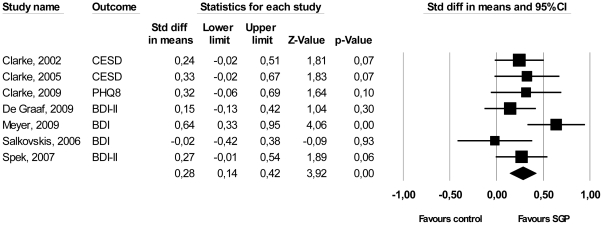
“This result was mirrored by a meta-analysis on self-guided psychological treatments (not necessarily internet based or computer based) [9], which found an overall effect size of d = 0.28 (95% CI: 0.14-0.42).”
From Internet-based psychological treatments for depression (2012) · cites this paper as [9]
5 more claims about this paper
Create a free account to see every claim other papers make about this one.
Self-check
Percentages, sums and reported differences re-computed from the paper’s own numbers.
The self-check needs the paper’s full text.
Citations
Cites
Measuring inconsistency in meta-analyses
Higgins, J. P. T., Thompson, S. G., Deeks, J. J., & Altman, D. G. (2003) · BMJ · doi:10.1136/bmj.327.7414.557 · Cited by 63,139 · cited 1×
“A value of 0% indicates no observed heterogeneity, and larger values show increasing heterogeneity, with 25% as low, 50% as moderate, and 75% as high heterogeneity [30].”
BackgroundStatistical Power Analysis for the Behavioral Sciences (2nd ed.).
Lachenbruch, P. A., & Cohen, J. (1989) · Journal of the American Statistical Association · doi:10.2307/2290095 · Cited by 37,395
Borenstein, M., Hedges, L. V., Higgins, J. P. T., & Rothstein, H. R. (2009) · doi:10.1002/9780470743386 · Cited by 14,225
Duval, S., & Tweedie, R. (2000) · Biometrics · doi:10.1111/j.0006-341x.2000.00455.x · Cited by 14,099 · cited 1×
“Publication bias was tested by inspecting the funnel plot on primary outcome measures, and by Duval and Tweedie’s trim and fill procedure [31], which yields an estimate of the effect size after the publication bias has been taken into account (as implemented in Comprehensive Meta-analysis, version 2.”
MethodBorenstein, M., Hedges, L. V., Higgins, J. P. T., & Rothstein, H. R. (2021) · doi:10.1002/9781119558378 · Cited by 9,799
Evidence-Based Medicine: How to Practice and Teach EBM
Sackett, D. L. (2000) · Cited by 5,950
Internet-based cognitive behaviour therapy for symptoms of depression and anxiety: A meta-analysis
SPEK, V., CUIJPERS, P., NYKLÍČEK, I., RIPER, H., KEYZER, J., & POP, V. (2007) · Psychological Medicine · doi:10.1017/s0033291706008944 · Cited by 1,586
Self-citationInternet-Based and Other Computerized Psychological Treatments for Adult Depression: A Meta-Analysis
Andersson, G., & Cuijpers, P. (2009) · Cognitive Behaviour Therapy · doi:10.1080/16506070903318960 · Cited by 1,368 · cited 2×
“Finally, a recent meta-analysis on computerized treatments for depression included studies on guided and unguided computerized treatments [15], but did not include other self-help studies and at least three additional studies have been published following the search period for that meta-analysis.”
BackgroundSelf-citationDelivering interventions for depression by using the internet: randomised controlled trial
Christensen, H. (2004) · BMJ · doi:10.1136/bmj.37945.566632.ee · Cited by 928 · cited 1×
“This meant that studies in which telephone support was given were excluded, even if the support was not of a therapeutic nature [17].”
BackgroundSize of Treatment Effects and Their Importance to Clinical Research and Practice
Kraemer, H. C., & Kupfer, D. J. (2006) · Biological Psychiatry · doi:10.1016/j.biopsych.2005.09.014 · Cited by 850 · cited 1×
“As the standardized mean difference is not easy to interpret from a clinical point of view and so we also calculated the numbers-needed-to-be-treated (NNT), using the formulae provided by Kraemer and Kupfer [28].”
Method
Cited by
Items 101–200 of 250
Kulpa, M., Kosowicz, M., Stypuła-Ciuba, B. J., & Kazalska, D. (2014) · Gastroenterology Review · doi:10.5114/pg.2014.47895 · Cited by 29
“The study was conducted using a questionnaire consisting of: • Demographic questionnaire (age, type of illness, type of treatment); • Hospital Anxiety and Depression Scale (HADS) [15]; • Polish adaptation of Mini-Mental Adjustment to Can- cer (Mini-MAC) [16, 17]; • Multidimensional Health Locus of Control (MHLC) [13].”
InfluentialFuhr, K., Fahse, B., Hautzinger, M., & Gulewitsch, M. D. (2018) · PPmP - Psychotherapie · Psychosomatik · Medizinische Psychologie · doi:10.1055/s-0043-122241 · Cited by 26
“[2] Cuijpers P, Donker T, Johansson R et al.”
BackgroundUnguided Mental Health Self-help Apps: Reflections on Challenges through a Clinician's Lens
Mehrotra, S., Kumar, S., Sudhir, P. M., Rao, G. N., Thirthalli, J., & Gandotra, A. (2017) · Indian Journal of Psychological Medicine · doi:10.4103/ijpsym.ijpsym_151_17 · Cited by 32
“There is cumulative evidence suggesting superiority of professionally assisted internet-based interventions, especially in the context of depression and anxiety though unguided interventions have also been found to serve useful purposes.[1,6-8] A bulk of mobile-based self-help intervention programs, especially in deve…”
BackgroundForchuk, C., Reiss, J., Eichstedt, J., Singh, D., Collins, K., Rudnick, A., Walsh, J., Ethridge, P., Kutcher, S., & Fisman, S. (2016) · International Journal of Mental Health · doi:10.1080/00207411.2016.1204823 · Cited by 25
Gaudiano, B. A., Davis, C. H., Miller, I. W., & Uebelacker, L. A. (2017) · Behavior Modification · doi:10.1177/0145445517738932 · Cited by 30
Klein, J. P., Späth, C., Schröder, J., Meyer, B., Greiner, W., Hautzinger, M., Lutz, W., Rose, M., Vettorazzi, E., Andersson, G., et al. (2017) · Behaviour Research and Therapy · doi:10.1016/j.brat.2017.07.013 · Cited by 26
Self-citation(2024) · doi:10.2196/47515 · Cited by 24
Self-citationKlein, J. P., Gamon, C., Späth, C., Berger, T., Meyer, B., Hohagen, F., Hautzinger, M., Lutz, W., Vettorazzi, E., Moritz, S., et al. (2017) · BMJ Open · doi:10.1136/bmjopen-2016-015391 · Cited by 24
“2 However, most participants in these studies have been recruited through media advertisements,(7) 9 so it remains unclear whether they are similar to those seeking face-to-face treatment in regular clinical settings(7) and whether the effects for internet interventions generalise across different recruitment settings…”
BackgroundMindfulness for female outpatients with chronic primary headaches: an internet-based bibliotherapy
Tavallaei, V., Rezapour-Mirsaleh, Y., Rezaiemaram, P., & Saadat, S. H. (2018) · European Journal of Translational Myology · doi:10.4081/ejtm.2018.7380 · Cited by 23
“Many studies have even shown that self-helped therapies have the same effects of in-person treatments.(62) Therefore, the aim of this study was to investigate effectiveness of MBSR in Internetbased bibliotherapy on severity of pain, distress, disability, and mindfulness in women with tension and migraine headaches.”
BackgroundGräfe, V., Moritz, S., & Greiner, W. (2020) · Health Economics Review · doi:10.1186/s13561-020-00273-0 · Cited by 24
“This form of intervention is particularly relevant as a treatment for mild to moderate depression [17, 18].”
BackgroundBrog, N. A., Hegy, J. K., Berger, T., & Znoj, H. (2021) · Trials · doi:10.1186/s13063-021-05089-9 · Cited by 26
Corpas, J., Gilbody, S. M., & McMillan, D. (2022) · Journal of Affective Disorders · doi:10.1016/j.jad.2022.04.085 · Cited by 28
From Digital Mental Health Interventions to Digital “Addiction”: Where the Two Fields Converge
Aboujaoude, E. N., & Gega, L. (2020) · Frontiers in Psychiatry · doi:10.3389/fpsyt.2019.01017 · Cited by 31
“There is ample evidence, though, to suggest that some clinician support is better than none when it comes to outcomes with digital interventions (44 – 48); in fact, the greater the therapist input, the more effective the interventions seem to be (49, 50).”
BackgroundDíaz-García, A., González-Robles, A., Fernández-Álvarez, J., García-Palacios, A., Baños, R. M., & Botella, C. (2017) · BMC Psychiatry · doi:10.1186/s12888-017-1297-z · Cited by 22
Tong, L., Panagiotopoulou, O.-M., Cuijpers, P. J., & Karyotaki, E. (2024) · EBioMedicine · doi:10.1016/j.ebiom.2024.105208 · Cited by 33
Self-citationInternetbasierte psychologische Behandlung bei Depressionen
Klein, J. P., & Berger, T. (2013) · Verhaltenstherapie · doi:10.1159/000354046 · Cited by 22
“Im Schnitt führte dies in einer Metaanalyse zum Ergebnis, dass ungeleitete Selbsthilfeprogramme einen kleinen aber statistisch signifikanten Effekt haben (d = 0,28; «numbers needed to treat» = 6,41) [Cuijpers et al., 2011].”
BackgroundMoritz, S., Quaquebeke, N. V., Hauschildt, M., Jelinek, L., & Gönner, S. (2012) · Journal of Obsessive-Compulsive and Related Disorders · doi:10.1016/j.jocrd.2012.07.001 · Cited by 24
Weymann, N., Härter, M. C., Petrak, & Dirmaier, J. (2013) · Patient Preference and Adherence · doi:10.2147/ppa.s46924 · Cited by 24
“This dialogue format has been found to be effective in depression and acute low back pain, 55–58 but has not been applied to diabetes websites so far.”
Lüdtke, T., Westermann, S., Pult, L. K., Schneider, B. C., Pfuhl, G., & Moritz, S. (2018) · Internet Interventions · doi:10.1016/j.invent.2018.06.004 · Cited by 18
Kordy, H., Backenstraß, M., Hüsing, J., Wolf, M., Aulich, K., Bürgy, M., Puschner, B., Rummel‐Kluge, C., & Vedder, H. (2013) · Contemporary Clinical Trials · doi:10.1016/j.cct.2013.08.005 · Cited by 25
“There is growing evidence that health services for depressive disorders can be effectively delivered online [21–30].”
BackgroundDeady, M., Kay-Lambkin, F., Teesson, M., & Mills, K. (2014) · Internet Interventions · doi:10.1016/j.invent.2014.06.004 · Cited by 21
Späth, C., Hapke, U., Maske, U., Schröder, J., Moritz, S., Berger, T., Meyer, B., Rose, M., Nolte, S., & Klein, J. P. (2017) · Internet Interventions · doi:10.1016/j.invent.2017.05.003 · Cited by 23
“The e ffi cacy of a range of Internet interventions for depression has been demonstrated in a number of meta-analyses (Bower et al., 2013; Cuijpers et al., 2011; Karyotaki et al., 2017; Richards and Richardson, 2012), although the methodological quality of many trials has been criticized (e.g.,…”
Hirsch, A., Luellen, J., Holder, J. M., Steinberg, G., Dubiel, T., Blazejowskyj, A., & Schladweiler, K. (2017) · JMIR Research Protocols · doi:10.2196/resprot.7203 · Cited by 20
Jia, E., Macon, J., Doering, M. M., & Abraham, J. (2025) · Journal of Medical Internet Research · doi:10.2196/68054 · Cited by 26
“Research on digital therapeutics has identified factors such as reduced motivation, user fatigue, and the loss of novelty in using the app as common obstacles to long-term adherence and effectiveness [53].”
A Mobile App for Chronic Disease Self-Management: Protocol for a Randomized Controlled Trial
Ownby, R. L., Acevedo, A., Waldrop‐Valverde, D., Caballero, J., Simonson, M. R., Davenport, R., Kondwani, K., & Jacobs, R. J. (2017) · JMIR Research Protocols · doi:10.2196/resprot.7272 · Cited by 18
Intervenciones basadas en internet para los trastornos depresivos: Una visión general
Cuijpers, P., & Riper, H. (2015) · Revista de Psicopatología y Psicología Clínica · doi:10.5944/rppc.vol.19.num.3.2014.13902 · Cited by 19
Self-citationReducing Depression Through an Online Intervention: Benefits From a User Perspective
Crisp, D. A., & Griffiths, K. M. (2016) · JMIR Mental Health · doi:10.2196/mental.4356 · Cited by 22
Görges, F., Oehler, C., von Hirschhausen, E., Hegerl, U., & Rummel‐Kluge, C. (2018) · Internet Interventions · doi:10.1016/j.invent.2018.03.001 · Cited by 23
Smoktunowicz, E., Lesnierowska, M., Cieślak, R., Carlbring, P., & Andersson, G. (2019) · Trials · doi:10.1186/s13063-019-3401-9 · Cited by 26
Self-citationCarrera-Arce, M., Cabero, A., González, S., Rodríguez, N., García, C., Hernández, L., & Manjón, J. (2015) · Psychology and Psychotherapy Theory Research and Practice · doi:10.1111/papt.12085 · Cited by 21
Deady, M., Johnston, D. A., Glozier, N., Milne, D., Choi, I., Mackinnon, A., Mykletun, A., Calvo, R. A., Gayed, A., Bryant, R., et al. (2018) · BMJ Open · doi:10.1136/bmjopen-2017-020510 · Cited by 14
“25,(77) consistent with the findings from a meta-analysis published more recently.(78) Power calculations were carried out using the R package simR, which can undertake power calculations for mixed models such as those proposed to use in this study using simulation techniques.”
MethodBijker, L., Kleiboer, A. M., Riper, H. M., Cuijpers, P. J., & Donker, T. (2017) · Internet Interventions · doi:10.1016/j.invent.2017.06.003 · Cited by 18
Self-citationPrevention of common mental disorders: conceptual framework and effective interventions
D’Arcy, C., & Meng, X. (2014) · Current Opinion in Psychiatry · doi:10.1097/yco.0000000000000076 · Cited by 23
Self Managing Heart Failure in Remote Australia - Translating Concepts into Clinical Practice
Iyngkaran, P., Toukhsati, S. R., Harris, M., Connors, C. M., Kangaharan, N., Ilton, M. K., Nagel, T. M., Moser, D. K., & Battersby, M. (2016) · Current Cardiology Reviews · doi:10.2174/1573403x12666160703183001 · Cited by 17
“Positive outcomes of CDSMP have been reported in a variety of chronic conditions, such as asthma and chronic airways diseases, anxiety and depression, diabetes, hypertension, rheumatologic and chronic pain [19-30].”
BackgroundKhanna, D., Hays, R. D., & Furst, D. E. (2017) · Rheumatology · doi:10.1093/rheumatology/kex193 · Cited by 18
A pilot randomized controlled trial of self-help relaxation to reduce post-stroke depression
Golding, K., Fife‐Schaw, C., & Kneebone, I. (2017) · Clinical Rehabilitation · doi:10.1177/0269215517741947 · Cited by 20
Young, C., Mohebbi, M., Staudacher, H. M., Berk, M., Jacka, F. N., & O'Neil, A. E. (2021) · International Review of Psychiatry · doi:10.1080/09540261.2020.1854193 · Cited by 20
“Attrition rates of greater than 50% are not uncommon in both e-Health and m-Health programs (Cuijpers et al., 2011; Geraghty et al., 2013; Melville et al., 2010; Torous et al., 2020).”
BackgroundHollis, C. P., Hall, C. L., Khan, K., Novere, M. L., Marston, L., Jones, R., Hunter, R. M., Brown, B. J., Sanderson, C., Andrén, P., et al. (2023) · Health Technology Assessment · doi:10.3310/cpms3211 · Cited by 17
Tait, R. J., Kirkman, J. J. L., & Schaub, M. P. (2018) · JMIR Research Protocols · doi:10.2196/resprot.9982 · Cited by 18
Young, C., Mohebbi, M., Staudacher, H. M., KAY‐LAMBKIN, F. J., Berk, M., Jacka, F. N., & O'Neil, A. E. (2021) · JMIR Mental Health · doi:10.2196/24871 · Cited by 17
“Attrition rates greater than 50% are not uncommon in both eHealth and mHealth programs [24-27].”
Talbot, F. (2012) · Behaviour Change · doi:10.1017/bec.2012.4 · Cited by 15
“Outcomes of guided SATs have also been found comparable to therapist administered therapies (TATs) for the treatment of anxiety and depression (Cuijpers et al., 2011).”
ResultMontague, A. E., Varcin, K. J., & Parker, A. G. (2014) · Victoria University Research Repository (Victoria University) · Cited by 17
Bielinski, L. L., & Berger, T. (2020) · Counseling Psychology and Psychotherapy · doi:10.17759/cpp.2020280305 · Cited by 21
Zill, J. M., Meyer, B., Topp, J., Daubmann, A., Härter, M. C., & Dirmaier, J. (2016) · BMC Psychiatry · doi:10.1186/s12888-016-0725-9 · Cited by 17
Gräfe, V., Berger, T., Hautzinger, M., Hohagen, F., Lutz, W., Meyer, B., Moritz, S., Rose, M., Schröder, J., Späth, C., et al. (2019) · Health Economics Review · doi:10.1186/s13561-019-0233-y · Cited by 14
Kenter, R. M., van Straten, A., Hobbel, S., Smit, F., Bosmans, J., Beekman, A., & Cuijpers, P. (2013) · Trials · doi:10.1186/1745-6215-14-412 · Cited by 13
“Earlier research shows that self-help without any form of guidance only results in a small effect on participants with increased levels of depressive symptoms [16].”
BackgroundSelf-citationCampos, D., Bretón-López, J., Botella, C., Mira, A., Castilla, D., Baños, R., Tortella-Feliu, M., & Quero, S. (2016) · BMC Psychiatry · doi:10.1186/s12888-016-0996-1 · Cited by 13
Johansson, R. (2013) · Linköping studies in behavioural science · doi:10.3384/diss.diva-100385 · Cited by 18
Self-citationLinardon, J., Liu, C., McClure, Z., Jarman, H. K., Messer, M., Anderson, C., & Fuller‐Tyszkiewicz, M. (2025) · European Eating Disorders Review · doi:10.1002/erv.3201 · Cited by 15
Zwerenz, R., Becker, J., Knickenberg, R. J., Hagen, K., Dreier, M., Wölfling, K., & Beutel, M. E. (2015) · Trials · doi:10.1186/s13063-015-0620-6 · Cited by 16
“28, seven randomized controlled trials [3]) and moderate effects (d = 0.”
BackgroundPhase II trial of a depression self-care intervention for adult cancer survivors
McCusker, J., Yaffe⃰, M. J., Faria, R., Lambert, S., Li, M., Poirier-Bisson, J., Magalhaes, M., & de Raad, M. (2017) · European Journal of Cancer Care · doi:10.1111/ecc.12763 · Cited by 13
E-Health in Diagnostik und Therapie psychischer Störungen: Werden Therapeuten bald überflüssig?
Lüttke, S., Hautzinger, M., & Fuhr, K. (2018) · Bundesgesundheitsblatt - Gesundheitsforschung - Gesundheitsschutz · doi:10.1007/s00103-017-2684-9 · Cited by 14
Mills, L., Meiser, B., Ahmad, R., Schofield, P. R., Peate, M., Levitan, C., Trevena, L. J., Barlow-Stewart, K. K., Dobbins, T., Christensen, H. M., et al. (2019) · BMC Psychiatry · doi:10.1186/s12888-018-1994-2 · Cited by 15
Moshe, I., Terhorst, Y., Cuijpers, P. J., Cristea, I. A., Pulkki-Råbäck, L., & Sander, L. (2020) · JMIR Research Protocols · doi:10.2196/14860 · Cited by 15
Self-citationInternetbasierte Therapie in der Versorgung von Patienten mit depressiven Störungen: Ein Überblick
Backenstraß, M., & Wolf, M. (2017) · Zeitschrift für Psychiatrie Psychologie und Psychotherapie · doi:10.1024/1661-4747/a000339 · Cited by 12
Bourne, J., Harrison, T. L., Wigham, S., Morison, C.-J., & Hackett, S. (2021) · Journal of Applied Research in Intellectual Disabilities · doi:10.1111/jar.12919 · Cited by 15
Farahimanesh, S., Serino, S., Tuena, C., Lernia, D. D., Wiederhold, B. K., Bernardelli, L., Riva, G., & Moradi, A. (2023) · Journal of Clinical Medicine · doi:10.3390/jcm12052006 · Cited by 13
“A consistent body of literature suggests that digital self-help interventions are effective in several clinical populations, including treating depressive symptoms [12,18,19] and anxiety disorders [20–22].”
BackgroundRay, J. M., Kemp, L., Hubbard, A., & Cucciare, M. A. (2017) · Behavioural and Cognitive Psychotherapy · doi:10.1017/s1352465816000539 · Cited by 14
“…interventions can result in small but significant reductions in depressive symptoms post-treatment (Cohen’s d = 0.28), with treatment effects sustained at 12-month follow-up (Cohen’s d = 0.27) for adults with subthreshold levels of depression or major depressive disorder (Cuijpers et al., 2011).”
BackgroundInfluentialAre Digitally Delivered Psychological Interventions for Depression the Way Forward? A Review
Stefanopoulou, E., Lewis, D., Taylor, M., Broscombe, J., Ahmad, J., & Larkin, J. (2018) · Psychiatric Quarterly · doi:10.1007/s11126-018-9576-5 · Cited by 12
Krämer, R., & Köhler, S. (2021) · Trials · doi:10.1186/s13063-021-05218-4 · Cited by 14
Psychological Benefits of Self-Guided Forest Healing Program Using Campus Forests
Shin, W.-S., Seong, I.-K., & Kim, J.-G. (2023) · Forests · doi:10.3390/f14020336 · Cited by 15
“Cui-jpers et al. [27] also showed the positive benefits of self-guided treatment programs on depression management.”
BackgroundYoung, D. K. W., Carlbring, P., Petrus Yat-nam, N. G., & Chen, Q.-R. J. (2022) · Research on Social Work Practice · doi:10.1177/10497315221087904 · Cited by 13
“Also, the BDI has been used as an outcome assessment tool in various research work on iCBT with satisfactory results (Cuijpers et al., 2011; Johansson & Andersson, 2012).”
MethodResultInfluentialMcCusker, J., Cole, M. G., Yaffe⃰, M. J., Strumpf, E., Sewitch, M. J., Sussman, T., Ciampi, A., Lavoie, K., Platt, R. W., & Belzile, É. (2016) · General Hospital Psychiatry · doi:10.1016/j.genhosppsych.2016.02.004 · Cited by 11
Use of a self-guided computerized cognitive behavioral tool during COVID-19: evaluation study
Detweiler Guarino, I., Cowan, D. R., Fellows, A. M., & Buckey, J. C. (2021) · JMIR Formative Research · doi:10.2196/26989 · Cited by 10
“Meta-analytic studies have shown that self-guided web-based interventions (defined as interventions that patients work through on their own without support or guidance) exhibit less promising results than guided web-based interventions (defined as interventions that are delivered with support from a therapist or coach…”
BackgroundMartin, K.-J., Golijani-Moghaddam, N., & dasNair, R. (2018) · International Journal of Therapy and Rehabilitation · doi:10.12968/ijtr.2018.25.2.82 · Cited by 10
Renzi, C., Perinel, G., Arnaboldi, P., Gandini, S., Vadilonga, V., Rotmensz, N., Tagini, A., Didier, F., & Pravettoni, G. (2017) · BMC Psychology · doi:10.1186/s40359-017-0206-z · Cited by 16
“Critically, the use of a hopelessness/helplessness coping style in cancer patients positively correlates with the presence of depression and anxiety while the opposite is found for fighting spirit coping [47, 48].”
Botella, C., Mira, A., Herrero, R., García‐Palacios, A., & Baños, R. (2015) · Aloma: revista de psicologia, ciències de l'educació i de l'esport Blanquerna · doi:10.51698/aloma.2015.33.2.39-48 · Cited by 22
Kann die Online-Therapie die Psychotherapie sinnvoll ergänzen? Pro
Hautzinger, M., & Fuhr, K. (2017) · Der Nervenarzt · doi:10.1007/s00115-017-0379-y · Cited by 10
“[9, 10]) undmehrereMetaanalysen [1, 3, 7] belegen die Wirksamkeit der internetbasierten Psychotherapie.”
BackgroundPsychological impact of an intensive care admission for COVID-19 on patients in the United Kingdom
Waite, A., Cherry, M. G., Brown, S. L., Williams, K., Boyle, A. J., Johnston, B. W., Jones, C., Fisher, P., Welters, I. D., & TRIC Network, P.-C. I. (2025) · Journal of the Intensive Care Society · doi:10.1177/17511437241312113 · Cited by 9
Riva, G., Lernia, D. D., Tuena, C., Bernardelli, L., Gutiérrez‐Maldonado, J., Ferrer‐García, M., Porras-García, B., Meyer, M. L., Shiban, Y., Castelnuovo, G., et al. (2023) · Psychosomatic Medicine · doi:10.1097/psy.0000000000001198 · Cited by 12
Deady, M., Teesson, M., KAY‐LAMBKIN, F. J., & Mills, K. L. (2014) · JMIR Research Protocols · doi:10.2196/resprot.3192 · Cited by 11
Rogala, A., Szczepaniak, M., Michalak, N., & Andersson, G. (2020) · Internet Interventions · doi:10.1016/j.invent.2020.100322 · Cited by 9
“Based on previous studies on unguided interventions we expect a dropout rate between 5 and 45% (Cuijpers et al., 2011).”
Self-citationArtificial Intelligence (AI) Psychotherapy: Coming Soon to a Consultation Room Near You?
Swartz, H. A. (2023) · American Journal of Psychotherapy · doi:10.1176/appi.psychotherapy.20230018 · Cited by 8
Stewart, B. J., Turnbull, D. A., Mikocka‐Walus, A. A., Harley, H. A. J., & Andrews, J. M. (2013) · Journal of Clinical Psychology in Medical Settings · doi:10.1007/s10880-012-9339-7 · Cited by 8
Young, D. K. W., Carlbring, P., Petrus, Y. N. N. G., & Chen, Q.-R. J. (2022) · Research on Social Work Practice · doi:10.1177/10497315221079236 · Cited by 9
“…of the telephone-supported iCBT distinguished the telephone-supported iCBT from other CBT programs, such as traditional face-to-face CBT (Beck, 2011), unguided iCBT (Beevers et al., 2017; Cuijpers et al., 2011), and iCBT with therapist-delivered asynchronous email (Richard, Timulak, & Hevey, 2012).”
BackgroundBooket, E. J., Dehghan, F., & Alizadeh, Z. (2018) · Cogent Psychology · doi:10.1080/23311908.2018.1527200 · Cited by 7
Aller, T. B., Russo, R. B., Kelley, H. H., Bates, L., & Fauth, E. B. (2023) · Intellectual and developmental disabilities · doi:10.1352/1934-9556-61.1.49 · Cited by 8
Lutz-Kopp, C., Luka-Krausgrill, U., Honsbrok, B., Meinhardt‐Injac, B., & Gropalis, M. (2021) · International Journal of Environmental Research and Public Health · doi:10.3390/ijerph18031179 · Cited by 8
Wang, S., Xia, W., Zhang, J., Wu, M., & Tian, L. (2025) · General Hospital Psychiatry · doi:10.1016/j.genhosppsych.2025.02.022 · Cited by 8
Cheng, A. L., Leo, A. J., Calfee, R. P., Dy, C. J., Armbrecht, M. A., & Abraham, J. (2023) · BMC Psychiatry · doi:10.1186/s12888-023-04868-9 · Cited by 7
Maideen, S. F. K., Sidik, S. M., Rampal, L. R. G., Mukhtar, F., Ibrahim, N., Phang, C.-K., Tan, K., & Ahmad, R. (2016) · JMIR Research Protocols · doi:10.2196/resprot.4622 · Cited by 10
Kann die Online-Therapie die Psychotherapie sinnvoll ergänzen? Kontra
Noack, R., & Weidner, K. (2017) · Der Nervenarzt · doi:10.1007/s00115-017-0380-5 · Cited by 6
“– Entwicklung des Inventars zur Erfassung Negativer Effekte von Psychotherapie (INEP).”
BackgroundInfluentialTrained lay coaches and self-care cognitive-behavioral tools improve depression outcomes
McCusker, J., Lambert, S., Ciampi, A., Jones, J. M., Li, M., Yaffe⃰, M. J., Pelland, M., Belzile, É., & de Raad, M. (2022) · Patient Education and Counseling · doi:10.1016/j.pec.2022.03.021 · Cited by 6
“001 [1-5],[2-5],[4-5] Symptom reduction(3,6) 55.”
BackgroundResultInfluentialUso de las tecnologías de la información y la comunicación en psicología clínica
Botella, C., & Bretón-López, J. M. (2015) · Revista de Psicopatología y Psicología Clínica · doi:10.5944/rppc.vol.19.num.3.2014.13897 · Cited by 9
“Systematic reviews show that treatments over the internet are effective (Andrews et al., 2010; Cuijpers et al., 2010, 2011; Spek et al., 2007; Richard & Richardson, 2012).”
BackgroundValidation of the Italian Version of the Web Screening Questionnaire for Common Mental Disorders
Pietrabissa, G., Semonella, M., Marchesi, G., Mannarini, S., Castelnuovo, G., Andersson, G., & Rossi, A. A. (2024) · Journal of Clinical Medicine · doi:10.3390/jcm13041170 · Cited by 5
“…shown that Internet-based interventions can be as effective as face-to-face psychotherapy for a variety of psychological issues [2–5]—such as anxiety [6,7], depression [8], eating disorders [9], and adjustment disorders [10]—not only in controlled trials but also in routine clinical care [11,12].”
BackgroundSelf-citationLo, H. K. Y., Ho, F. Y., Yeung, J. W.-F., Ng, S. T.-W., Wong, E. Y.-T., & Chung, K. (2024) · Family Practice · doi:10.1093/fampra/cmae036 · Cited by 7
Internetbasierte psychologische Behandlungen bei Depressionen und Angststörungen
Moritz, S., Berger, T., & Klein, J. P. (2014) · Nervenheilkunde · doi:10.1055/s-0038-1633387 · Cited by 6
A Psycho‐Educational Intervention for People with a Family History of Depression: Pilot Results
Meiser, B., Peate, M., Levitan, C., Mitchell, P. B., Trevena, L. J., Barlow-Stewart, K. K., Dobbins, T., Christensen, H. M., Sherman, K. A., Dunlop, K. L. A., et al. (2016) · Journal of Genetic Counseling · doi:10.1007/s10897-016-0011-5 · Cited by 5
“Studies show that cognitive behavioral and other psychological therapies are particularly effective in people with a family history of depression (Cuijpers et al. 2008; Marry et al. 2004; Barrera et al. 2007; Beardslee et al. 2013; Cuijpers et al. 2011).”
BackgroundUser Experiences and Perceptions of Internet Interventions for Depression
Drozd, F., Andersen, C. E., Haga, S. M., Slinning, K., & Bjørkli, C. A. (2017) · Advances in psychology, mental health, and behavioral studies (APMHBS) book series · doi:10.4018/978-1-5225-3241-5.ch002 · Cited by 5
“Systematic reviews show that both unguided and therapist-supported internet interventions can be of benefit for people with depression (Cuijpers et al., 2011; Cuijpers, Donker, van Straten, Li, & Andersson, 2010).”
BackgroundZarbo, C., Brugnera, A., Cipresso, P., Brignoli, O., Cricelli, C. A., Rabboni, M., Bondi, E., & Compare, A. (2017) · Frontiers in Psychology · doi:10.3389/fpsyg.2017.00118 · Cited by 5
“Computerized and technology-assisted interventions seem to be acceptable and effective in treating common mental health problems in adults, such as anxiety and depression (Andrews et al., 2010; Cuijpers et al., 2011).”
Background[Patients' perspective on self-management during recovery from depression].
van Grieken, R. A., Kirkenier, A. C. E., Koeter, M. W. J., Nabitz, U. W., & Schene, A. H. (2012) · PubMed · Cited by 4
The Internet and CBT: A New Clinical Application of an Effective Therapy
Gratzer, D., Khalid-Khan, F., & Balasingham, S. (2018) · InTech eBooks · doi:10.5772/intechopen.72146 · Cited by 7
Ayorinde, A., Williams, I., Mannion, R., Song, F., Skrybant, M., Lilford, R. J., & Chen, Y. (2020) · Health Services and Delivery Research · doi:10.3310/hsdr08330 · Cited by 6
Brog, N. A., Hegy, J. K., Berger, T., & Znoj, H. (2022) · Frontiers in Public Health · doi:10.3389/fpubh.2022.835356 · Cited by 4
Semonella, M., Marchesi, G., Castelnuovo, G., Andersson, G., & Pietrabissa, G. (2024) · Digital Health · doi:10.1177/20552076241258419 · Cited by 3
Self-citationAdaptation and outcomes of a lay-guided mental health self-care model: Results of six trials
McCusker, J., Lambert, S., Yaffe⃰, M. J., Schwartz, H. R., Haggerty, J. L., Belzile, É., Pelland, M., Minotti, S. C., & de Raad, M. (2023) · General Hospital Psychiatry · doi:10.1016/j.genhosppsych.2023.09.010 · Cited by 3
Hollister, B. A., Crabb, R. M., & Areán, P. A. (2024) · Psychiatric Services · doi:10.1176/appi.ps.20230027 · Cited by 3
Sozialpsychiatrie: Trends und Herausforderungen
Gruber, D., Böhm, M., Wallner, M., & Koren, G. (2017) · Springer eBooks · doi:10.1007/978-3-662-54626-0_9 · Cited by 4
Persönlichkeitsdiagnostik in der Online-Psychotherapieforschung
Tibubos, A. N., Zwerenz, R., Brähler, E., & Beutel, M. E. (2018) · Zeitschrift für Psychiatrie Psychologie und Psychotherapie · doi:10.1024/1661-4747/a000353 · Cited by 3
Areán, P. A., & Allred, R. (2022) · Elsevier eBooks · doi:10.1016/b978-0-323-90045-4.00011-3 · Cited by 3
Metadata
- Authors
- Cuijpers, P., Donker, T., Johansson, R., Mohr, D. C., van Straten, A., & Andersson, G.
- Affiliations
- Vrije Universiteit Amsterdam (NL)
- Linköping University (SE)
- Northwestern University (US)
- Corresponding author
- Cuijpers, Pim
- Venue
- PLoS ONE
- Publisher
- Public Library of Science (PLoS)
- Published
- 2011-06-21
- Volume
- 6
- Issue
- 6
- Pages
- e21274
- ISSN
- 1932-6203 (ISSN-L)
- PMC
- PMC3119687
- OpenAlex
- W2171936412
- Semantic Scholar
- 93e4beb1b8665d8be72ce045f756d83c8a6d6b3f
- Cited by
- 250
- References
- 43
- Citations by year
- 2026: 1 · 2025: 9 · 2024: 9 · 2023: 14 · 2022: 13 · 2021: 19 · 2020: 14 · 2019: 16 · 2018: 20 · 2017: 41 · 2016: 24 · 2015: 18 · 2014: 21 · 2013: 22 · 2012: 8
- FWCI
- 2.89
- Type
- journal article
- Language
- en
- Open access
- gold
- doi.org
- Locations
- PLoS ONE (publishedVersion, cc-by)
- PubMed Central (publishedVersion, cc-by)
- PubMed (publishedVersion)
- DiVA (Linkoping University) (submittedVersion, other-oa)
- RePEc: Research Papers in Economics (submittedVersion)
- Digital Academic REpository of VU University Amsterdam (Vrije Universiteit Amsterdam) (submittedVersion)
- DOAJ (DOAJ: Directory of Open Access Journals) (submittedVersion, cc-by-sa)
- VU Research Portal (submittedVersion, other-oa)
- Data Archiving and Networked Services (DANS) (submittedVersion, other-oa)
- Funders
- National Center for Research Resources (UL1RR025741)
- Eunice Kennedy Shriver National Institute of Child Health and Human Development (RL1HD058295)
- Topics
- Social Sciences › Psychology › Applied Psychology › Digital Mental Health Interventions
- Social Sciences › Psychology › Experimental and Cognitive Psychology › Anxiety, Depression, Psychometrics, Treatment, Cognitive Processes
- Health Sciences › Medicine › Psychiatry and Mental health › Mental Health Treatment and Access
- Keywords
- depressive symptoms, online intervention, self-help, depression, effect size, follow-up outcomes
- MeSH terms
- Adult, Depression, Female, Humans, Male, Middle Aged, Self Care, Randomized Controlled Trials as Topic, Databases, Factual, Young Adult
About these checks
Registry, retraction, Cites and statistics results are computed, not judged, with one exception: a printed reference that no index lists is read once by a model before it counts as a citation error. Claims are extracted by a model and kept only when their quote appears verbatim in the text; each cited source is then checked, with a model’s help, for whether it says what the claim relies on. Those verdicts can be wrong — read the claim’s quote and the cited source before relying on one.
Statistics and arithmetic are recomputed, not judged.
Confidence bands are shown only for fields calibrated on our annotated test set. None is calibrated yet, so no band is shown.
What counts as a claim ›How we measure confidence ›How we check this ›
Are you an author, or do you see a problem with this page? Request a review
Data sources
Bibliographic data: Semantic Scholar, OpenAlex, Crossref.
Contains information from the Semantic Scholar Academic Graph Datasets, made available under the ODC Attribution License (ODC-BY 1.0).
Semantic Scholar’s data is described in: Kinney, R., et al. (2023). The Semantic Scholar Open Data Platform. arXiv:2301.10140.
