

The DOI matches its Crossref record; 48 of the 48 references it cites were found in a registry or an index.
Exercise-Induced Splanchnic Hypoperfusion Results in Gut Dysfunction in Healthy Men
Open accessAbstract
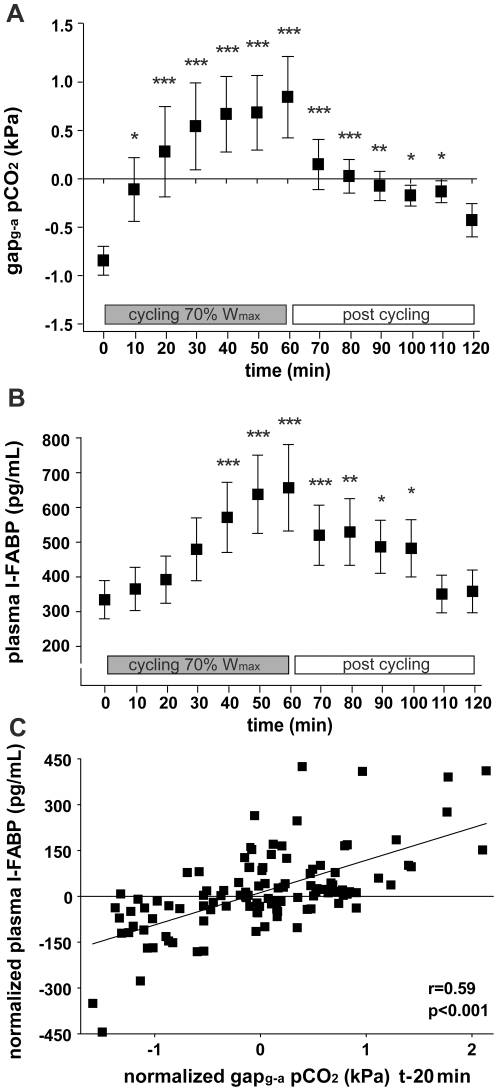
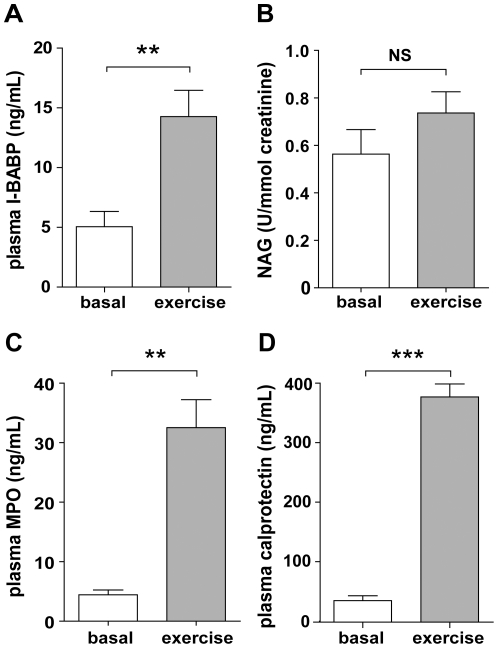
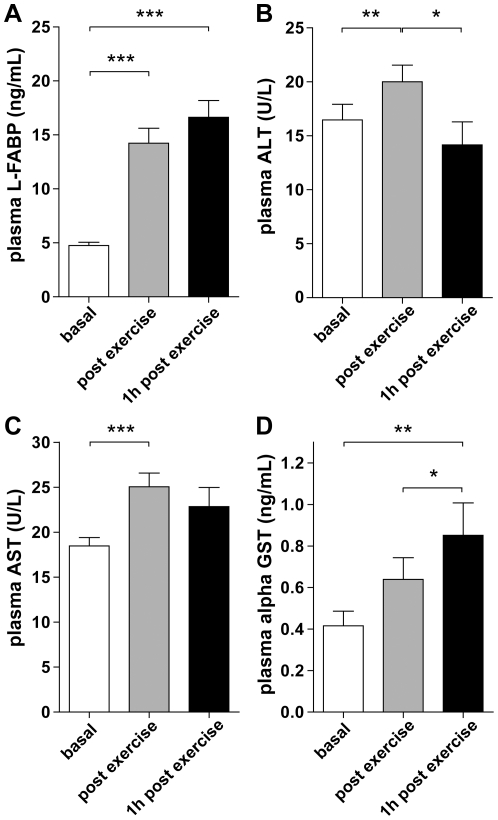
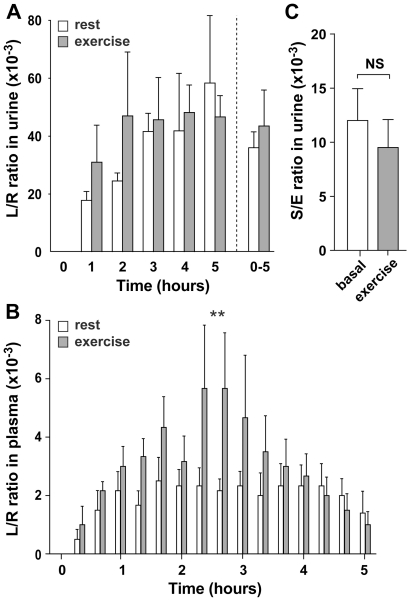
BACKGROUND: Splanchnic hypoperfusion is common in various pathophysiological conditions and often considered to lead to gut dysfunction. While it is known that physiological situations such as physical exercise also result in splanchnic hypoperfusion, the consequences of flow redistribution at the expense of abdominal organs remained to be determined. This study focuses on the effects of splanchnic hypoperfusion on the gut, and the relationship between hypoperfusion, intestinal injury and permeability during physical exercise in healthy men. METHODS AND FINDINGS: Healthy men cycled for 60 minutes at 70% of maximum workload capacity. Splanchnic hypoperfusion was assessed using gastric tonometry. Blood, sampled every 10 minutes, was analyzed for enterocyte damage parameters (intestinal fatty acid binding protein (I-FABP) and ileal bile acid binding protein (I-BABP)). Changes in intestinal permeability were assessed using sugar probes. Furthermore, liver and renal parameters were assessed. Splanchnic perfusion rapidly decreased during exercise, reflected by increased gap(g-a)pCO(2) from -0.85±0.15 to 0.85±0.42 kPa (p<0.001). Hypoperfusion increased plasma I-FABP (615±118 vs. 309±46 pg/ml, p<0.001) and I-BABP (14.30±2.20 vs. 5.06±1.27 ng/ml, p<0.001), and hypoperfusion correlated significantly with this small intestinal damage (r(S) = 0.59; p<0.001). Last of all, plasma analysis revealed an increase in small intestinal permeability after exercise (p<0.001), which correlated with intestinal injury (r(S) = 0.50; p<0.001). Liver parameters, but not renal parameters were elevated. CONCLUSIONS: Exercise-induced splanchnic hypoperfusion results in quantifiable small intestinal injury. Importantly, the extent of intestinal injury correlates with transiently increased small intestinal permeability, indicating gut barrier dysfunction in healthy individuals. These physiological observations increase our knowledge of splanchnic hypoperfusion sequelae, and may help to understand and prevent these phenomena in patients.
Overview
The claims and statistics of this paper haven’t been checked yet.
Run the check — free, no account needed. It reads the open-access text and checks the sources it cites.
Integrity signals
Registry
Cites
Statistics
Figures
Verification
Claims the paper makes
The claims and statistics of this paper haven’t been checked yet.
Run the check — free, no account needed. It reads the open-access text and checks the sources it cites.
Claims other papers make about this one
Each is checked against this paper’s own text: does it say what the citing paper says it does?
In the citing paper
“Exercise-induced redistribution of blood can result in splanchnic hypoperfusion as a possible mechanism for gut dysfunction [128, 129].”
From International Society of Sports Nutrition Position Stand: Probiotics (2019) · cites this paper as [129]
In the citing paper
“Symptoms such as nausea, cramping, bloating, and diarrhea most likely reflect redistribution of blood flow from the gut to the skin for cooling purposes.”
From International Society of Sports Nutrition Position Stand: Probiotics (2019) · cites this paper as [129]
In the citing paper
“It has been shown that exercise induced GI hypoperfusion may provoke transient damage to the gut epithelium [6]”
In the citing paper
“The pathophysiology of GI distress during ultra-marathon training and racing is multifactorial, but is likely the result of reduced mesenteric blood flow [131, 132], leading to relative GI hypoperfusion [133].”
From International Society of Sports Nutrition Position Stand: nutritional considerations for single-stage ultra-marathon training and racing (2019) · cites this paper as [133]
Self-check
Percentages, sums and reported differences re-computed from the paper’s own numbers.
The self-check needs the paper’s full text.
Citations
Cites
Muscle as an Endocrine Organ: Focus on Muscle-Derived Interleukin-6
Pedersen, B. K., & Febbraio, M. A. (2008) · Physiological Reviews · doi:10.1152/physrev.90100.2007 · Cited by 2,388 · cited 1×
“Since evidence is accumulating that inflammatory products are produced in contracting and skeletal muscle [32,45], we determined both circulating and faecal calprotectin.”
BackgroundVogl, T., Tenbrock, K., Ludwig, S., Leukert, N., Ehrhardt, C., van Zoelen, M. A. D., Nacken, W., Foell, D., van der Poll, T., Sorg, C., et al. (2007) · Nature Medicine · doi:10.1038/nm1638 · Cited by 1,418 · cited 1×
“MPO plays a role in oxidative processes, while calprotectin and one of its constituents, myeloid-related protein-8 (Mrp8, S100A8), are identified as strong activators of the innate Toll-like receptor 4 signaling pathway, resulting in the expression of pro-inflammatory cytokines [30].”
BackgroundEvaluation of Abnormal Liver-Enzyme Results in Asymptomatic Patients
Pratt, D. S., & Kaplan, M. M. (2000) · New England Journal of Medicine · doi:10.1056/nejm200004273421707 · Cited by 1,203 · cited 1×
“Alternatively, muscle transaminase release is expected in response to (exerciseinduced) muscle injury [23,24], while L-FABP release could be due to intestinal damage.”
BackgroundAltered intestinal function in patients with chronic heart failure
Sandek, A., Bauditz, J., Swidsinski, A., Buhner, S., Weber-Eibel, J., von Haehling, S., Schroedl, W., Karhausen, T., Doehner, W., Rauchhaus, M., et al. (2007) · Journal of the American College of Cardiology · doi:10.1016/j.jacc.2007.07.016 · Cited by 661 · cited 1×
“In patients with compromised vascular function, hypoperfusion-induced epithelial dysfunction may give rise to endotoxaemia, thereby enhancing their state of chronic inflammation, as suggested by the group of Anker for patients with chronic heart failure [6,37].”
BackgroundRestoration of Barrier Function in Injured Intestinal Mucosa
Blikslager, A. T., Moeser, A. J., Gookin, J. L., Jones, S. L., & Odle, J. (2007) · Physiological Reviews · doi:10.1152/physrev.00012.2006 · Cited by 586 · cited 1×
“The susceptibility of the mature enterocyte population to low-flow states and ischemic events has been explained by the counter current exchange mechanism in the villus [18,19], creating a constant low oxygen environment at the villus tip.”
BackgroundLiangos, O., Perianayagam, M. C., Vaidya, V. S., Han, W. K., Wald, R., Tighiouart, H., MacKinnon, R. W., Li, L., Balakrishnan, V. S., Pereira, B. J. G., et al. (2007) · Journal of the American Society of Nephrology · doi:10.1681/asn.2006030221 · Cited by 511
A simple method for assessing intestinal inflammation in Crohn's disease
Tibble, J. A., Teahon, K., Thjodleifsson, B., Roseth, A., Sigthorsson, G., Bridger, S., Foster, R., Sherwood, R. A., Fagerhol, M. K., & Bjarnason, I. (2000) · Gut · doi:10.1136/gut.47.4.506 · Cited by 493 · cited 1×
“The latter is considered a strong indicator of intestinal inflammation in specific, and has been found to correlate to other parameters of intestinal inflammation in inflammatory bowel disease [46] and enteropathy induced by non-steroidal anti-inflammatory drugs (NSAID) [47].”
BackgroundFatty acid-binding proteins as plasma markers of tissue injury
Pelsers, M. M. A. L., Hermens, W. T., & Glatz, J. F. C. (2004) · Clinica Chimica Acta · doi:10.1016/j.cccn.2004.09.001 · Cited by 488 · cited 1×
“However, as expression of L-FABP has been described in renal and intestinal epithelium [40], this marker was combined with the classically used parameters ALT and AST.”
MethodThermoregulatory and blood responses during exercise at graded hypohydration levels
Sawka, M. N., Young, A. J., Francesconi, R. P., Muza, S. R., & PANDOLF, K. B. (1985) · Journal of Applied Physiology · doi:10.1152/jappl.1985.59.5.1394 · Cited by 402 · cited 1×
“transpiration and inadequate fluid intake, can decrease cardiac output and compromise splanchnic perfusion even more [9].”
BackgroundSerum alanine aminotransferase in skeletal muscle diseases†
Nathwani, R. A., Pais, S. A., Reynolds, T. B., & Kaplowitz, N. (2005) · Hepatology · doi:10.1002/hep.20548 · Cited by 400 · cited 1×
“Alternatively, muscle transaminase release is expected in response to (exerciseinduced) muscle injury [23,24], while L-FABP release could be due to intestinal damage.”
Background
Cited by
Sorted by citations
Items 101–200 of 358
King, J. A., Wasse, L. K., & Stensel, D. J. (2012) · Appetite · doi:10.1016/j.appet.2012.10.018 · Cited by 39
“Recent research demonstrates acute exercise of a similar duration and intensity to the present study causes up to an 80% reduction in gut blood flow which recovers within 60 minutes after exercise (Rehrer, Smets, Reynaert, Goes & De Meirleir,2001; van Wijck et al., 2011).”
BackgroundAcute haemodynamic changes during haemodialysis do not exacerbate gut hyperpermeability
Wong, J., Lenaerts, K., Meesters, D. M., Damink, S. W. M. O., van Eijk, H. M. H., Vilar, E., & Farrington, K. (2019) · Bioscience Reports · doi:10.1042/bsr20181704 · Cited by 38
Self-citationAl‐Beltagi, M., Saeed, N. K., Bediwy, A. S., El-Sawaf, Y., Elbatarny, A. M., & Elbeltagi, R. M. (2025) · World Journal of Gastroenterology · doi:10.3748/wjg.v31.i22.106835 · Cited by 61
Regional susceptibility to stress-induced intestinal injury in the mouse
Novosad, V. L., Richards, J. L., Phillips, N. A., King, M. A., & Clanton, T. L. (2013) · American Journal of Physiology-Gastrointestinal and Liver Physiology · doi:10.1152/ajpgi.00166.2013 · Cited by 38
“Even milder stress conditions, such as prolonged endurance exercise (47, 58) and chronic psychological stress (56), can induce intestinal barrier dysfunction.”
BackgroundEndurance Exercise Attenuates Postprandial Whole-Body Leucine Balance in Trained Men
Mazzulla, M., Parel, J. T., Beals, J. W., van Vliet, S., Sawan, S. A., West, D. W. D., Paluska, S. A., ULANOV, A. V., Moore, D. R., & Burd, N. A. (2017) · Medicine & Science in Sports & Exercise · doi:10.1249/mss.0000000000001394 · Cited by 38
Primary, Secondary, and Tertiary Effects of Carbohydrate Ingestion During Exercise
Rollo, I., Gonzalez, J. T., Fuchs, C. J., van Loon, L. J. C., & Williams, C. (2020) · Sports Medicine · doi:10.1007/s40279-020-01343-3 · Cited by 38
Sucrose but Not Nitrate Ingestion Reduces Strenuous Cycling–induced Intestinal Injury
Jonvik, K. L., Lenaerts, K., Smeets, J. S. J., Kolkman, J. J., van Loon, L. J. C., & Verdijk, L. B. (2018) · Medicine & Science in Sports & Exercise · doi:10.1249/mss.0000000000001800 · Cited by 38
Self-citationBaldanzi, G., Sayols-Baixeras, S., Ekblom‐Bak, E., Ekblom, Ö. B., Dekkers, K. F., Hammar, U., Nguyen, D. T., Ahmad, S., Ericson, U., Arvidsson, D., et al. (2024) · EBioMedicine · doi:10.1016/j.ebiom.2024.104989 · Cited by 37
Mikulski, T., Dąbrowski, J., Hilgier, W., Ziemba, A. W., & Krzeminski, K. (2015) · Folia Neuropathologica · doi:10.5114/fn.2015.56552 · Cited by 35
“After cessation of exercise when liver blood flow increased [46,53] ammonia degradation became significantly faster in BCAA + OA than in the placebo trial.”
BackgroundHuman small intestine is capable of restoring barrier function after short ischemic periods
Schellekens, D. H. S. M., Hundscheid, I. H. R., Leenarts, C. A., Grootjans, J., Lenaerts, K., Buurman, W. A., Dejong, C. H. C., & Derikx, J. P. M. (2017) · World Journal of Gastroenterology · doi:10.3748/wjg.v23.i48.8452 · Cited by 35
Self-citationMetabolic networks of the human gut microbiota
Selber‐Hnatiw, S., Sultana, T., Tse, W., Abdollahi, N., Abdullah, S., Rahbani, J. A., Alazar, D., Alrumhein, N. J., Aprikian, S., Arshad, R., et al. (2019) · Microbiology · doi:10.1099/mic.0.000853 · Cited by 38
McKenna, Z. J., Fennel, Z. J., Berkemeier, Q. N., Nava, R. C., Amorim, F. T., Deyhle, M. R., & Mermier, C. M. (2022) · Experimental Physiology · doi:10.1113/ep090266 · Cited by 37
“Together hypoperfusion and hypoxaemia result in hypoxic and ischaemia–reperfusion stress which has the potential to injure intestinal epithelial cells and disrupt tight junction protein complexes, resulting in increased intestinal permeability (Lian et al., 2021; van Wijck et al., 2011).”
BackgroundRauch, C., Mika, A. S., McCubbin, A. J., Huschtscha, Z., & Costa, R. J. S. (2022) · Frontiers in Nutrition · doi:10.3389/fnut.2022.1003620 · Cited by 36
Ribichini, E., Scalese, G., Cesarini, A., Mocci, C., Pallotta, N., Severi, C., & Corazziari, E. S. (2023) · Dietetics · doi:10.3390/dietetics2030021 · Cited by 44
“Increased age may protect against GI symptoms due to reduced splanchnic vasoconstriction through impaired catecholamine response and consequently increased oxygen supply [86].”
InfluentialMorella, I., Negro, M., Dossena, M., Brambilla, R., & D’Antona, G. (2023) · Neuropharmacology · doi:10.1016/j.neuropharm.2023.109718 · Cited by 36
Adaptation of exercise‐induced stress in well‐trained healthy young men
JanssenDuijghuijsen, L. M., Keijer, J., Mensink, M., Lenaerts, K., Ridder, L., Nierkens, S., Kartaram, S. W., Verschuren, M. C. M., Pieters, R. H. H., Bas, R., et al. (2016) · Experimental Physiology · doi:10.1113/ep086025 · Cited by 34
“Exercise-induced changes in gut barrier function have been studied in several experimental settings (Øktedalen et al. 1992; Ryan et al. 1996; Pals et al. 1997; van Nieuwenhoven et al. 1999a; Marchbank et al. 2011; Van Wijck et al. 2011a).”
BackgroundMethodSelf-citationKerminen, H., Huhtala, H., Jäntti, P., Valvanne, J., & Jämsen, E. (2020) · BMC Geriatrics · doi:10.1186/s12877-020-01550-7 · Cited by 34
Hädrich, G., Vaz, G. R., Maidana, M., Kratz, J. M., Loch-Neckel, G., Favarin, D. C., Rogério, A. D. P., Júnior, F. M. R. D. S., Muccillo-Baisch, A. L., & Dora, C. L. (2015) · Pharmaceutical Research · doi:10.1007/s11095-015-1844-6 · Cited by 34
Exercises in Hot and Humid Environment Caused Liver Injury in a Rat Model
Li, D., Wang, X. D., Liu, B., Liu, Y., Zeng, Z., Lu, L., Zheng, Z.-Y., Li, B., & Zheng, Z.-F. (2014) · PLoS ONE · doi:10.1371/journal.pone.0111741 · Cited by 33
“Exercise related splanchnic hypoperfusion as a cause of intestine damages [27] is similar to heat stroke induced intestinal mucosal injury and hyperpermeability changes, which leads to leakage of endotoxins and increased production of inflammatory cytokines such as TNF- a like during sepsis [8].”
BackgroundChanges in gastrointestinal cell integrity after marathon running and exercise-associated collapse
Walter, E. J., Gibson, O. R., Stacey, M. J., Hill, N. E., Parsons, I., & Woods, D. R. (2021) · European Journal of Applied Physiology · doi:10.1007/s00421-021-04603-w · Cited by 35
McKenna, Z. J., Berkemeier, Q., Naylor, A., Kleint, A., Pereira, F. G., Ng, J., Kim, J.-K., Sullivan, S., & Gillum, T. (2017) · European Journal of Applied Physiology · doi:10.1007/s00421-017-3743-5 · Cited by 33
Gut Alterations in Septic Patients: A Biochemical Literature Review
Longhitano, Y., Zanza, C., Thangathurai, D., Taurone, S., Kozel, D., Racca, F., Audo, A., Ravera, E., Migneco, A., Piccioni, A., et al. (2020) · Reviews on Recent Clinical Trials · doi:10.2174/1574887115666200811105251 · Cited by 32
An Updated View of the Effect of Probiotic Supplement on Sports Performance: A Detailed Review
Aykut, M. N., Erdoğan, E. N., Çelik, M. N., & Gürbüz, M. (2024) · Current Nutrition Reports · doi:10.1007/s13668-024-00527-x · Cited by 31
March, D. S., Graham-Brown, M. P. M., Stover, C. M., BISHOP, N. C., & Burton, J. O. (2017) · BioMed Research International · doi:10.1155/2017/5765417 · Cited by 31
Ogden, H. B., Fallowfield, J. L., Child, R. B., Davison, G., Fleming, S. C., Edinburgh, R. M., Delves, S. K., Millyard, A., Westwood, C. S., & Layden, J. D. (2020) · Physiological Reports · doi:10.14814/phy2.14374 · Cited by 33
“The serum DSAT is a valid alternative of the traditional urine DSAT (Fleming et al., 1996; van Wijck et al., 2011), whilst offering improved sensitivity to detect transient losses in GI barrier integrity following exercise (JanssenDuijghuijsen et al., 2016; Pugh et al., 2017).”
BackgroundMethodInfluentialParadoxical second-meal phenomenon in the acute postexercise period
Gonzalez, J. T. (2013) · Nutrition · doi:10.1016/j.nut.2013.12.001 · Cited by 30
“Cycling (70% maximum power output) for 60 min increases small intestine permeability [53], with evidence of intestinal cell damage (indicated by elevated circulating concentrations of intestinal fatty acidbinding protein), which positively correlates with the degree of splanchnic hypoperfusion.”
BackgroundDoes widowhood explain gender differences in out-of-pocket medical spending among the elderly?
Goda, G. S., Shoven, J. B., & SLAVOV, S. N. (2012) · Journal of Health Economics · doi:10.1016/j.jhealeco.2012.10.011 · Cited by 29
JanssenDuijghuijsen, L., van Norren, K., Grefte, S., Koppelman, S. J., Lenaerts, K., Keijer, J., Witkamp, R. F., & Wichers, H. J. (2017) · Nutrients · doi:10.3390/nu9010084 · Cited by 29
Self-citationWiffin, M., Smith, L., Antonio, J., Johnstone, J., Beasley, L., & Roberts, J. (2019) · Journal of the International Society of Sports Nutrition · doi:10.1186/s12970-019-0268-9 · Cited by 27
“However, rapid changes as observed in the previous study [22] indicate that GI damage is highly transient, and possibly only in response to exercisebased hypoperfusion, which may explain the lack of significant residual findings under resting conditions in the current study.”
BackgroundSadowska‐Krępa, E., Rozpara, M., Rzetecki, A., Bańkowski, S., Żebrowska, A., & Pilch, W. (2021) · PLoS ONE · doi:10.1371/journal.pone.0249183 · Cited by 30
“redistribution of blood away from the splanchnic area leads to rapid reperfusion resulting in inflammation and metabolic stress that may disrupt the integrity of the intestinal barrier [12, 15, 38].”
BackgroundAcetaminophen (Paracetamol): Use beyond Pain Management and Dose Variability
Esh, C., Mauger, A. R., Palfreeman, R., Al-Janubi, H., & Taylor, L. K. (2017) · Frontiers in Physiology · doi:10.3389/fphys.2017.01092 · Cited by 28
“Given the propensity of exercise stress to induce endotoxemia, intestinal hypoperfusion, and intestinal cellular injury/damage (van Wijck et al., 2011; ter Steege et al., 2012; March et al., 2017), a result of redistribution of blood flow during exercise compromising the intestinal mucosa wall (Van…”
BackgroundExhaustive Exercise Induces Gastrointestinal Syndrome through Reduced ILC3 and IL-22 in Mouse Model
Hou, P., Zhou, X., Yu, L., Yao, Y., Zhang, Y., Huang, Y., Chen, M., Yi, L., & Mi, M. (2020) · Medicine & Science in Sports & Exercise · doi:10.1249/mss.0000000000002298 · Cited by 27
“Hypoxia–ischemia could occur as early as 10 min of high-intensity exercise, and splanchnic hypoperfusion could occur 20 min into a 60-min bout of cycling at 70% V̇O2max (31).”
BackgroundNon-invasive Assessment of Fecal Stress Biomarkers in Hunting Dogs During Exercise and at Rest
Zannoni, A., Pietra, M., Gaspardo, A., Accorsi, P. A., Barone, M., Turroni, S., Laghi, L., Zhu, C., Brigidi, P., & Forni, M. (2020) · Frontiers in Veterinary Science · doi:10.3389/fvets.2020.00126 · Cited by 28
“Multiple studies involving humans have reported an exercise-induced increase in intestinal permeability (13).”
BackgroundProbiotics and Gut Health in Athletes
Miles, M. P. (2020) · Current Nutrition Reports · doi:10.1007/s13668-020-00316-2 · Cited by 36
Protein Requirements for Master Athletes: Just Older Versions of Their Younger Selves
Moore, D. R. (2021) · Sports Medicine · doi:10.1007/s40279-021-01510-0 · Cited by 33
van Wijck, K., Bessems, M., van Eijk, Buurman, Dejong, & Lenaerts, K. (2012) · Clinical and Experimental Gastroenterology · doi:10.2147/ceg.s31799 · Cited by 28
Self-citationBandegan, A., Courtney-Martin, G., Rafii, M., Pencharz, P. B., & Lemon, P. W. R. (2019) · American Journal of Physiology-Endocrinology and Metabolism · doi:10.1152/ajpendo.00174.2018 · Cited by 26
Costa, R. J. S., Gaskell, S. K., Henningsen, K., JEACOCKE, N. A., Martinez, I. G., Mika, A. S., Scheer, V., Scrivin, R., Snipe, R. M. J., Wallett, A. M., et al. (2025) · Sports Medicine · doi:10.1007/s40279-025-02186-6 · Cited by 34
From dysbiosis to longevity: a narrative review into the gut microbiome’s impact on aging
Tseng, C., & Wu, C. (2025) · Journal of Biomedical Science · doi:10.1186/s12929-025-01179-x · Cited by 31
Santibañez-Gutierrez, A., Fernández-Landa, J., Calleja-González, J., Delextrat, A. A., & Mielgo‐Ayuso, J. (2022) · Nutrients · doi:10.3390/nu14030622 · Cited by 29
“In this context, when exercise intensity is 65% of the VO2max, fatty acids provided 50% of the energy substrate, while the remaining 50% was obtained from Nutrients 2022, 14, 622 16 of 24 carbohydrates (CHO) [51].”
BackgroundInfluentialCai, Y., Liu, Y., Wu, Z., Wang, J., & Zhang, X. (2023) · Nutrients · doi:10.3390/nu15122743 · Cited by 29
“During strenuous exercise, the body redistributes blood from the visceral circulation to respiratory and muscle tissues, and prolonged insufficient blood supply can easily cause vomiting, abdominal pain and diarrhea [61].”
BackgroundAntónio, J., Evans, C., Ferrando, A. A., Stout, J. R., Antonio, B. B., Cintineo, H. P., Harty, P. S., Arent, S. M., Candow, D. G., Forbes, S. C., et al. (2024) · Journal of the International Society of Sports Nutrition · doi:10.1080/15502783.2024.2341903 · Cited by 35
“Additionally, small intestine injury can result from more prolonged or intense endurance training related to hypoxia [186].”
BackgroundKartaram, S. W., Mensink, M., Teunis, M., Schoen, E. D., Witte, G., Duijghuijsen, L. J., Verschuren, M. C. M., Mohrmann, K., M’Rabet, L., Knipping, K., et al. (2018) · Clinical Nutrition · doi:10.1016/j.clnu.2018.09.029 · Cited by 26
Gut check: Unveiling the influence of acute exercise on the gut microbiota
Grosicki, G. J., Langan, S. P., Bagley, J. R., Galpin, A. J., Garner, D., Hampton‐Marcell, J., Allen, J. M., & Robinson, A. T. (2023) · Experimental Physiology · doi:10.1113/ep091446 · Cited by 27
“…chronic physio-logicalresponsestoexercisevarysubstantiallyasafunctionofexercise intensity and duration, and it seems likely that intensity-and duration-dependent exercise-induced splanchnic hypoperfusion may contribute to differential remodelling of gut microbial ecology (van Wijck et al., 2011).”
BackgroundPaton, S. E. J., Solano, J. L., Coulombe-Rozon, F., Lebel, M., & Ménard, C. (2023) · Journal of Psychiatry and Neuroscience · doi:10.1503/jpn.220218 · Cited by 24
Chantler, S., Griffiths, A., Matu, J., Davison, G., Holliday, A., & Jones, B. L. (2022) · PLoS ONE · doi:10.1371/journal.pone.0266379 · Cited by 31
“Exercise-associated splanchnic hypoperfusion leads to localised hypoxia and damage of the gastric endothelial cells [4].”
BackgroundLee, J. E., Walton, D. M., O’Connor, C. P., Wammes, M., Burton, J. P., & Osuch, E. A. (2022) · International Journal of Molecular Sciences · doi:10.3390/ijms23126643 · Cited by 27
Boytar, A. N., Nitert, M. D., Morrison, M., Skinner, T. L., & Jenkins, D. G. (2022) · The Journal of Physiology · doi:10.1113/jp283702 · Cited by 28
“…skeletal muscle may interact with the gut (Dainese et al., 2004; Egan & Zierath, 2013; Fehrenbach et al., 2000; Freeman et al., 2006; Kakiyama et al., 2013; Karol et al., 2006; Lira et al., 2010; Meissner et al., 2011; Otte et al., 2001; Song et al., 2012; Vital et al., 2014;Wijck et al., 2011).”
BackgroundMartinez, I. G., Mika, A. S., Biesiekierski, J. R., & Costa, R. J. S. (2023) · Sports Medicine · doi:10.1007/s40279-023-01841-0 · Cited by 35
“Changes in circulating concentrations of I-FABP are reflective of intestinal epithelial cell injury, as this protein is released when cells such as enterocytes are damaged and this has been shown to substantially increase with exertion and exertional-heat stress [63, 64].”
BackgroundThe influence of exercise intensity and exercise mode on gastrointestinal damage
Edwards, K. H., Ahuja, K., Watson, G., Dowling, C., Musgrave, H., Reyes, J., Cherry, J., & Kitic, C. M. (2021) · Applied Physiology, Nutrition, and Metabolism · doi:10.1139/apnm-2020-0883 · Cited by 23
“…in intestinal permeability (using a sugar probe) and/or I-FABP concentrations have been detected after as little as 20 minutes running at 80% V̇O2max (March et al. 2017), cycling for 60 minutes at 70% V̇O2max (Van Wijck et al. 2011) and running for 45 minutes at 70% V̇O2max (Lambert et al. 2008).”
BackgroundKnight, K. A., Moug, S. J., & West, M. A. (2017) · Techniques in Coloproctology · doi:10.1007/s10151-017-1589-9 · Cited by 23
Tominaga, T., Ma, S., Sugama, K., Kanda, K., Omae, C., Choi, W., Hashimoto, S., Aoyama, K., Yoshikai, Y., & Suzuki, K. (2021) · Antioxidants · doi:10.3390/antiox10010079 · Cited by 25
“Several previous studies have reported that endurance exercise increases I-FABP and I-BABP in the circulation [7,31].”
BackgroundErlandson, K. M., Wilson, M. P., MaWhinney, S., Rapaport, E. L., Liu, J., Wilson, C. C., Rahkola, J., Janoff, E. N., Brown, T. T., Campbell, T., et al. (2020) · The Journal of Infectious Diseases · doi:10.1093/infdis/jiaa494 · Cited by 21
“The decrease in I-FABP among PWH and lack of exacerbation of other systemic inflammatory markers does not suggest a detrimental effect on barrier function.”
BackgroundInfluentialExercise Is Medicine? The Cardiorespiratory Implications of Ultra-marathon
Tiller, N. B., Stewart, G. M., Illidi, C. R., & Levine, B. D. (2020) · Current Sports Medicine Reports · doi:10.1249/jsr.0000000000000738 · Cited by 22
“The pathophysiology of GI distress in ultra-marathon is multifactorial, but is likely attributable to reduced mesenteric blood flow and a relative GI hypoperfusion (73).”
BackgroundKip, A. M., Grootjans, J., Manca, M., Hadfoune, M., Boonen, B., Derikx, J. P. M., Biessen, E. A. L., Damink, S. W. M. O., Dejong, C. H. C., Buurman, W. A., et al. (2021) · Cellular and Molecular Gastroenterology and Hepatology · doi:10.1016/j.jcmgh.2021.11.001 · Cited by 21
“Under physiologic conditions, the intestinal mucosa experiences profound fluctuations in blood flow (eg, intestinal perfusion is enhanced after meal ingestion and is diminished considerably during physical exercise).(2,3) In pathologic conditions, more severe impairment of intestinal”
BackgroundSelf-citationNotley, S. R., Meade, R. D., Looney, D. P., Chapman, C. L., Potter, A. W., Fogarty, A. L., Howlader, T., Main, L. C., Friedl, K. E., & Kenny, G. P. (2025) · Applied Physiology, Nutrition, and Metabolism · doi:10.1139/apnm-2024-0395 · Cited by 25
Chen, Y., Wang, I., Zhu, X., Chiu, W., & Chiu, Y.-S. (2021) · Frontiers in Nutrition · doi:10.3389/fnut.2021.623698 · Cited by 20
Costa, R. J. S., Mika, A. S., & McCubbin, A. J. (2022) · Journal of science and medicine in sport · doi:10.1016/j.jsams.2022.07.003 · Cited by 20
The Impact of Hyperthermia on Receptor-Mediated Interleukin-6 Regulation in Mouse Skeletal Muscle
Welc, S. S., Morse, D. A., Mattingly, A. J., Laitano, O., King, M. A., & Clanton, T. L. (2016) · PLoS ONE · doi:10.1371/journal.pone.0148927 · Cited by 20
“For example, in heavy endurance exercise, circulating levels of catecholamines [21], endotoxin [22] or damage-associated molecular patterns (DAMPs) [11,12] have often been reported, and there are simultaneous elevations in muscle temperature.”
BackgroundWang, R., Cai, Y., Li, J., Yau, S., Lu, W., Stubbs, B., Su, K., Xu, G., So, K., Lin, K., et al. (2021) · Journal of Affective Disorders · doi:10.1016/j.jad.2021.06.025 · Cited by 21
Amino acids and sport: a true love story?
Goron, A., & Moinard, C. (2018) · Amino Acids · doi:10.1007/s00726-018-2591-x · Cited by 29
Acute glutamine supplementation does not improve 20-km self-paced cycling performance in the heat
Osborne, J. O., Stewart, I. B., Beagley, K. W., Borg, D. N., & Minett, G. M. (2019) · European Journal of Applied Physiology · doi:10.1007/s00421-019-04234-2 · Cited by 19
McKenna, Z. J., Houck, J. M., Ducharme, J. B., Li, Z., Berkemeier, Q., Fennel, Z. J., Wells, A. D., Mermier, C. M., Deyhle, M. R., Laitano, O., et al. (2022) · European Journal of Applied Physiology · doi:10.1007/s00421-022-05049-4 · Cited by 18
Gastrointestinal bleeding in athletes
Papantoniou, K. (2023) · Annals of Gastroenterology · doi:10.20524/aog.2023.0788 · Cited by 21
“This makes enterocytes at the tips of the villi very susceptible to low-flow states and ischemic events, such as the ones that take place during intense exercise [40].”
BackgroundHenningsen, K., Mika, A. S., Alcock, R., Gaskell, S. K., Parr, A., Rauch, C., Russo, I., Snipe, R. M. J., & Costa, R. J. S. (2023) · Temperature · doi:10.1080/23328940.2023.2213625 · Cited by 18
Peng, M., Zou, R., Yao, S., Meng, X., Wu, W., Zeng, F., Chen, Z., Yuan, S., Zhao, F., & Liu, W. (2024) · Life Sciences · doi:10.1016/j.lfs.2024.122871 · Cited by 20
Sheahen, B., Fell, J. W., Zadow, E. K., Hartley, T. F., & Kitic, C. M. (2018) · Applied Physiology, Nutrition, and Metabolism · doi:10.1139/apnm-2018-0057 · Cited by 19
“Just 10 min of cycling at 70% V̇O2max significantly reduces splanchnic perfusion (determined via gastric-arterialized pCO2) (van Wijck et al. 2011) and this reduction in blood flow is significantly correlated with an increase in circulating marker of intestinal damage, intestinal fatty-acid binding…”
BackgroundKashima, H., Harada, N., Miyamoto, K., Fujimoto, M., Fujita, C., Endo, M. Y., Kobayashi, T., Miura, A., & Fukuba, Y. (2017) · Journal of Applied Physiology · doi:10.1152/japplphysiol.00247.2017 · Cited by 18
“Strenuous exercise of high intensity and/or prolonged duration often causes a reduction of celiac artery blood flow (CABF) (28), superior mesenteric artery blood flow (SMABF) (28, 30), as well as blood flow in the gastric mucosa (27, 39, 44, 46), portal vein (31), and whole viscera (26, 33), resulting in serious damag…”
BackgroundMethodResultInfluentialGaskell, S. K., Henningsen, K., Young, P., Gill, P. A., Muir, J. G., Henry, R., & Costa, R. J. S. (2023) · Nutrients · doi:10.3390/nu15153376 · Cited by 19
Ogden, H. B., Fallowfield, J. L., Child, R. B., Davison, G., Fleming, S. C., Delves, S. K., Millyard, A., Westwood, C. S., & Layden, J. D. (2020) · European Journal of Applied Physiology · doi:10.1007/s00421-020-04455-w · Cited by 17
Bodelier, A. G. L., Pierik, M. J., Lenaerts, K., de Boer, E., Damink, S. W. M. O., Hameeteman, W. M., Masclee, A., & Jonkers, D. M. A. E. (2016) · European Journal of Gastroenterology & Hepatology · doi:10.1097/meg.0000000000000616 · Cited by 17
Self-citationChaves, F. M., Baptista, I. L., Simabuco, F. M., Quaresma, P. G. F., Pena, F. D. L., Bezerra, R. M. N., Pauli, J. R., da Cunha, D. T., de Campos‐Ferraz, P. L., & Antunes, A. E. C. (2018) · British Journal Of Nutrition · doi:10.1017/s0007114518000594 · Cited by 17
Pretransplant Serum Citrulline Predicts Acute Graft-versus-Host Disease
Rashidi, A., Shanley, R., Holtan, S. G., MacMillan, M. L., Blazar, B. R., Khoruts, A., & Weisdorf, D. J. (2018) · Transplantation and Cellular Therapy · doi:10.1016/j.bbmt.2018.06.036 · Cited by 17
Álvarez‐Herms, J., González-Benito, A., Corbi, F., & Odriozola, A. (2023) · European Journal of Applied Physiology · doi:10.1007/s00421-023-05331-z · Cited by 16
“Impair epithelial permeability (gut leaky syndrome), and promote changes in the gut microbiota (GM) ecosystem (van Wijck et al. 2011; Mach and Fuster-Botella 2017; Fernández et al. 2021; Ribeiro et al. 2021).”
InfluentialPhysiological and Pathophysiological Consequences of a 25-Day Ultra-Endurance Exercise Challenge
Tiller, N. B., Chiesa, S. T., Roberts, J., Turner, L. A., Jones, S. H., & Romer, L. M. (2019) · Frontiers in Physiology · doi:10.3389/fphys.2019.00589 · Cited by 16
A Bibliometric Analysis on the Research Trend of Exercise and the Gut Microbiome
Deng, R., Wang, M., Song, Y., & Shi, Y. (2023) · Microorganisms · doi:10.3390/microorganisms11040903 · Cited by 21
“Taking part in 10 min of high-intensity exercise can reduce intestinal blood flow by more than 50% and cause significant gut ischemia [94].”
BackgroundLee, B., Flood, T. R., Galán-López, N., McCormick, J. J., King, K. E., Fujii, N., & Kenny, G. P. (2023) · European Journal of Applied Physiology · doi:10.1007/s00421-023-05329-7 · Cited by 15
“%) are comparable to shorter, more intense bouts of work (van Wijck et al. 2011a, 2014), but can be considered negligible in nature, and likely of little clinical relevance (Costa et al. 2017a, b).”
Liu, Y., Hu, Y., Ma, B., Wang, Z., & Wei, B. (2025) · Microbial Ecology · doi:10.1007/s00248-025-02529-w · Cited by 19
Ma, S., Tominaga, T., Kanda, K., Sugama, K., Omae, C., Hashimoto, S., Aoyama, K., Yoshikai, Y., & Suzuki, K. (2020) · Biomedicines · doi:10.3390/biomedicines8030051 · Cited by 15
Running at Increasing Intensities in the Heat Induces Transient Gut Perturbations
Wallett, A. M., Etxebarria, N., Beard, N. A., Saunders, P. U., Welvaert, M., Périard, J. D., McKune, A. J., & Pyne, D. B. (2020) · International Journal of Sports Physiology and Performance · doi:10.1123/ijspp.2019-0973 · Cited by 14
Exercise Differentially Regulates Renalase Expression in Skeletal Muscle and Kidney
Czarkowska‐Pączek, B., Żendzian‐Piotrowska, M., Gala, K., Sobol, M., & Pączek, L. (2013) · The Tohoku Journal of Experimental Medicine · doi:10.1620/tjem.231.321 · Cited by 14
“Another cardiovascular adaptation to exercise comprises functional renal hypoperfusion, which results from blood redistribution to supply adequate oxygen and energy substrates to working muscles (van Wijck et al. 2011).”
Hudson, A. S. R., Soares, A. D. N., Horta, N. A. C., Fuscaldi, L. L., Machado-Moreira, C. A., Soares, D. D., Coimbra, C. C., Poletini, M. O., Cardoso, V. N., & Wanner, S. P. (2020) · Journal of Thermal Biology · doi:10.1016/j.jtherbio.2020.102610 · Cited by 13
Hart, T. L., Townsend, J. R., Grady, N., Johnson, K. D., Littlefield, L. A., Vergne, M. J., & Fundaro, G. (2022) · Medicine & Science in Sports & Exercise · doi:10.1249/mss.0000000000002967 · Cited by 13
“Such increases in I-FABP after exercise have also been correlated with the magnitude of intestinal permeability (5).”
BackgroundResultInfluentialKarolkiewicz, J., Nieman, D. C., Cisoń, T., Szurkowska, J., Gałęcka, M., Sitkowski, D., & Szyguła, Z. (2022) · BMC Sports Science Medicine and Rehabilitation · doi:10.1186/s13102-022-00497-z · Cited by 13
“This may exert tensional stress on tight junctions leading to disturbances in intestinal barrier and transport protein function, secretory IgA (sIgA) production, and levels of mucins, antimicrobial molecules, and cytokines involved in zonulin regulation [4, 14].”
BackgroundCheng, J., Sun, Y., Zhao, Y., Guo, Q., Wang, Z., & Wang, R. (2023) · Current Drug Delivery · doi:10.2174/1567201820666230309090241 · Cited by 13
Role of prior feeding status in mediating the effects of exercise on blood glucose kinetics
Moreno‐Cabañas, A., & Gonzalez, J. T. (2023) · American Journal of Physiology-Cell Physiology · doi:10.1152/ajpcell.00271.2023 · Cited by 15
Rubio, M. F. R., Folkesson, M., Kremp, C., Evertsson, N., Repsilber, D., Eriksson, U., Mall, J. G., Kadi, F., Brummer, R. J., & König, J. (2024) · Physiological Reports · doi:10.14814/phy2.16087 · Cited by 14
“…et al., 2021; Costa et al., 2017), albeit studies investigating correlations between intestinal barrier function and symptoms have shown inconsistent results (Jeukendrup et al., 2000; Karhu et al., 2017; Pugh et al., 2017, 2019; van Nieuwenhoven et al., 2004; van Wijck, Lenaerts, et al., 2011).”
ResultFeng, V., Bawa, K. K., Marzolini, S., Kiss, A., OH, P. I., Herrmann, N., Lanctôt, K. L., & Gallagher, D. (2021) · PLoS ONE · doi:10.1371/journal.pone.0260165 · Cited by 13
“Possible mechanisms underlying increased intestinal permeability during acute exercise include a decrease in splanchnic blood flow as blood is diverted away from the gut to prioritize other organs potentially resulting in hypoxia and reperfusion injury of gut epithelial cells following acute exercise [18].”
BackgroundCrutsinger, G. M., González, A. L., Crawford, K. M., & Sanders, N. J. (2013) · PeerJ · doi:10.7717/peerj.100 · Cited by 13
Physical Activity as an Adjunct Treatment for People Living with HIV?
Enichen, E. J., Adams, R. B., & Demmig‐Adams, B. (2022) · American Journal of Lifestyle Medicine · doi:10.1177/15598276221078222 · Cited by 15
Role of cholecystokinin and oxytocin in slower gastric emptying induced by physical exercise in rats
da Silva, M. T. B., Palheta, R. C., Silva, C. M. S., Cavalcante, A. K. M., Quetz, J. D. S., Havt, A., de Lima, J. B. M., Mecawi, A. S., de Castro, M., Antunes‐Rodrigues, J., et al. (2021) · Physiology & Behavior · doi:10.1016/j.physbeh.2021.113355 · Cited by 13
Tominaga, T., Ikemura, T., Yada, K., Kanda, K., Sugama, K., Ma, S., Choi, W., Araya, M., Huang, J., Nakamura, N., et al. (2021) · Antioxidants · doi:10.3390/antiox10060866 · Cited by 12
“However, 1 h of exercise induces intestinal hyperpermeability and damage but does not result in endotoxemia [32].”
BackgroundAune, S. K., Cwikiel, J., Flaa, A., Arnesen, H., Solheim, S., Awoyemi, A., Trøseid, M., Seljeflot, I., & Helseth, R. (2021) · Cells · doi:10.3390/cells10092193 · Cited by 12
“As I-FABP is an intracellular protein, it increases in the circulation in the case of intestinal cell damage [25].”
BackgroundAssis, V., Neto, I. V. D. S., Ribeiro, F. M., Marqueti, R. D. C., Franco, O. L., Aguiar, S. D. S., & Petriz, B. A. (2022) · International Journal of Environmental Research and Public Health · doi:10.3390/ijerph19137810 · Cited by 12
Effects of Ibuprofen during Exertional Heat Stroke in Mice
Garcia, C. K., Sheikh, L., Iwaniec, J., Robinson, G. P., Berlet, R., Mattingly, A. J., Murray, K. O., Laitano, O., & Clanton, T. L. (2020) · Medicine & Science in Sports & Exercise · doi:10.1249/mss.0000000000002329 · Cited by 11
Exercise and Heat Stress: Inflammation and the Iron Regulatory Response
McKay, A. K. A., McCormick, R., Tee, N., & Peeling, P. (2021) · International Journal of Sport Nutrition and Exercise Metabolism · doi:10.1123/ijsnem.2021-0080 · Cited by 12
Pugh, J. N., Phelan, M. M., Caamaño‐Gutiérrez, E., Sparks, S. A., Morton, J. P., Close, G. L., & Owens, D. J. (2021) · Metabolites · doi:10.3390/metabo11080535 · Cited by 12
“Endurance exercise and high-intensity interval exercise both cause gut damage and GI distress, presumably due to splanchnic hypoxia, oxidative stress, hyperthermia and mechanical stress related to exercise and malabsorption of CHO consumed before and during exercise [3,4,16].”
BackgroundRole of the TNF‐α receptor type 1 on prostate carcinogenesis in knockout mice
Galheigo, M. R. U., Cruz, A. R., Cabral, Á. S., de Faria, P. R., Cordeiro, R. S., Silva, M. J. B., Tomiosso, T. C., Gonçalves, B. F., Pinto‐Fochi, M. E., Taboga, S. R., et al. (2016) · The Prostate · doi:10.1002/pros.23181 · Cited by 12
Hayashi, N., Endo, M. Y., Someya, N., & Fukuba, Y. (2012) · The Journal of Physical Fitness and Sports Medicine · doi:10.7600/jpfsm.1.281 · Cited by 11
The effect of cycling in the heat on gastrointestinal-induced damage and neuromuscular fatigue
Osborne, J. O., Stewart, I. B., Beagley, K. W., & Minett, G. M. (2019) · European Journal of Applied Physiology · doi:10.1007/s00421-019-04172-z · Cited by 11
Metadata
- Authors
- van Wijck, K., Lenaerts, K., van Loon, L. J. C., Peters, W. H. M., Buurman, W. A., & Dejong, C. H. C.
- Affiliations
- Maastricht University Medical Centre (NL)
- Radboud University Nijmegen (NL)
- Corresponding author
- Lenaerts, Kaatje
- Venue
- PLoS ONE
- Publisher
- Public Library of Science (PLoS)
- Published
- 2011-07-21
- Volume
- 6
- Issue
- 7
- Pages
- e22366
- ISSN
- 1932-6203 (ISSN-L)
- PMC
- PMC3141050
- OpenAlex
- W1986330043
- Cited by
- 359
- References
- 48
- Citations by year
- 2026: 26 · 2025: 28 · 2024: 21 · 2023: 32 · 2022: 32 · 2021: 33 · 2020: 30 · 2019: 24 · 2018: 24 · 2017: 27 · 2016: 18 · 2015: 12 · 2014: 17 · 2013: 18 · 2012: 15
- FWCI
- 16.54
- Type
- journal article
- Language
- en
- Open access
- gold
- doi.org
- Locations
- PLoS ONE (publishedVersion, cc-by)
- Europe PMC (PubMed Central) (publishedVersion, cc-by)
- PubMed Central (publishedVersion, cc-by)
- PubMed (publishedVersion)
- Radboud Repository (Radboud University) (submittedVersion, other-oa)
- Research Bank (Australian Catholic University) (submittedVersion, cc-by)
- Research Publications (Maastricht University) (submittedVersion, cc-by)
- DOAJ (DOAJ: Directory of Open Access Journals) (submittedVersion, cc-by-sa)
- Figshare (submittedVersion, cc-by)
- Radboud Repository (Radboud University) (submittedVersion)
- Research Publications (Maastricht University) (submittedVersion, other-oa)
- Funders
- GlaxoSmithKline
- Topics
- Health Sciences › Medicine › Physiology (medical) › Exercise and Physiological Responses
- Health Sciences › Medicine › Gastroenterology › Gastrointestinal motility and disorders
- Health Sciences › Medicine › Physiology (medical) › Cardiovascular and exercise physiology
- Keywords
- splanchnic hypoperfusion, physical activity, gastrointestinal dysfunction, intestinal injury, intestinal permeability, intestinal barrier dysfunction, gastric tonometry, intestinal fatty acid binding protein, ileal bile acid binding protein, small intestine, healthy men
- MeSH terms
- Bacteria, Health, Humans, Inflammation, Kidney, Liver, Male, Perfusion, Permeability, Splanchnic Circulation, Exercise, Gastrointestinal Tract, Young Adult
About these checks
Registry, retraction, Cites and statistics results are computed, not judged, with one exception: a printed reference that no index lists is read once by a model before it counts as a citation error. Claims are extracted by a model and kept only when their quote appears verbatim in the text; each cited source is then checked, with a model’s help, for whether it says what the claim relies on. Those verdicts can be wrong — read the claim’s quote and the cited source before relying on one.
Statistics and arithmetic are recomputed, not judged.
Confidence bands are shown only for fields calibrated on our annotated test set. None is calibrated yet, so no band is shown.
What counts as a claim ›How we measure confidence ›How we check this ›
Are you an author, or do you see a problem with this page? Request a review
