

The DOI matches its Crossref record; 37 of the 37 references it cites were found in a registry or an index.
Nicotinamide Phosphoribosyltransferase/Visfatin Does Not Catalyze Nicotinamide Mononucleotide Formation in Blood Plasma
Open accessAbstract
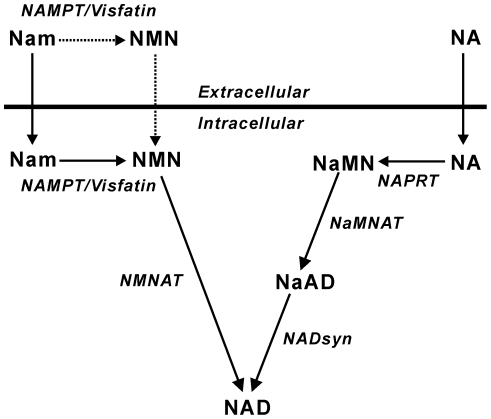
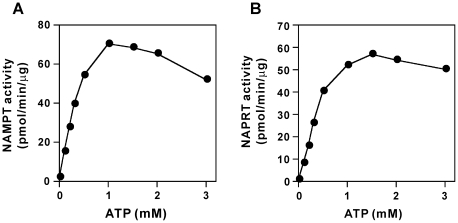
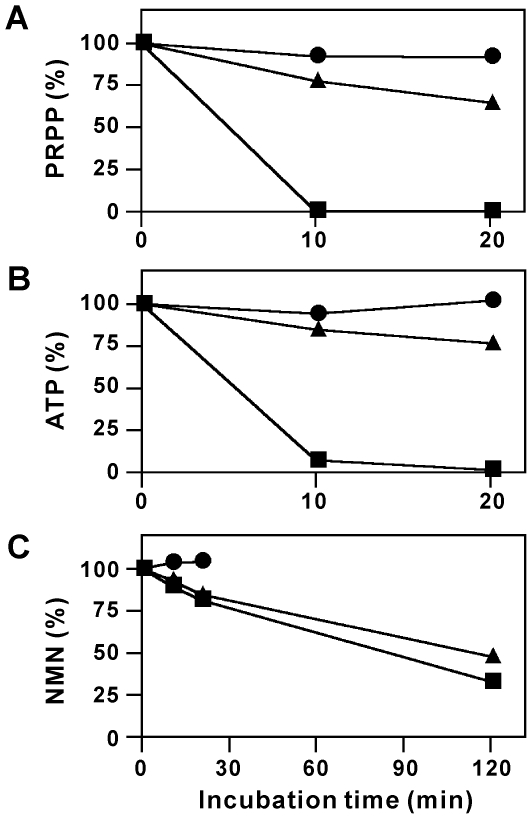
Nicotinamide (Nam) phosphoribosyltransferase (NAMPT) is the rate-limiting enzyme in mammalian NAD synthesis, catalyzing nicotinamide mononucleotide (NMN) formation from Nam and 5-phosphoribosyl 1-pyrophosphate (PRPP). NAMPT has also been described as an adipocytokine visfatin with a variety of actions, although physiological significance of this protein remains unclear. It has been proposed that possible actions of visfatin are mediated through the extracellular formation of NMN. However, we did not detect NMN in mouse blood plasma, even with a highly specific and sensitive liquid chromatography/tandem mass spectrometry. Furthermore, there is no or little ATP, the activator of NAMPT, in extracellular spaces. We thus questioned whether visfatin catalyzes the in situ formation of NMN under such extracellular milieus. To address this question, we here determined K(m) values for the substrates Nam and PRPP in the NAMPT reaction without or with ATP using a recombinant human enzyme and found that 1 mM ATP dramatically decreases K(m) values for the substrates, in particular PRPP to its intracellular concentration. Consistent with the kinetic data, only when ATP is present at millimolar levels, NAMPT efficiently catalyzed the NMN formation at the intracellular concentrations of the substrates. Much lower concentrations of Nam and almost the absence of PRPP and ATP in the blood plasma suggest that NAMPT should not efficiently catalyze its reaction under the extracellular milieu. Indeed, NAMPT did not form NMN in the blood plasma. From these kinetic analyses of the enzyme and quantitative determination of its substrates, activator, and product, we conclude that visfatin does not participate in NMN formation under the extracellular milieus. Together with the absence of NMN in the blood plasma, our conclusion does not support the concept of "NAMPT-mediated systemic NAD biosynthesis." Our study would advance current understanding of visfatin physiology.
Overview
The claims and statistics of this paper haven’t been checked yet.
Run the check — free, no account needed. It reads the open-access text and checks the sources it cites.
Integrity signals
Registry
Cites
Statistics
Figures
Verification
Claims the paper makes
The claims and statistics of this paper haven’t been checked yet.
Run the check — free, no account needed. It reads the open-access text and checks the sources it cites.
Claims other papers make about this one
Each is checked against this paper’s own text: does it say what the citing paper says it does?
The cited source says what the claim attributes to it.
In the citing paper
“Whereas NMN concentration has been reported to reach around 50 μM in plasma14, our study and others13 have failed to detect comparable levels of circulating NMN.”
From NRK1 controls nicotinamide mononucleotide and nicotinamide riboside metabolism in mammalian cells (2016) · cites this paper as [13]
Self-check
Percentages, sums and reported differences re-computed from the paper’s own numbers.
The self-check needs the paper’s full text.
Citations
Cites
1 retracted
Visfatin: A Protein Secreted by Visceral Fat That Mimics the Effects of Insulin
Fukuhara, A., Matsuda, M., Nishizawa, M., Segawa, K., Tanaka, M., Kishimoto, K., Matsuki, Y., Murakami, M., Ichisaka, T., Murakami, H., et al. (2005) · Science · doi:10.1126/science.1097243 · Cited by 1,906
RetractedCox, B. M., Opheim, K. E., Teschemacher, H., & D, A. G. M. (1975) · Life Sciences · doi:10.1016/0024-3205(75)90272-6 · Cited by 1,708
Yegutkin, G. G. (2008) · Biochimica et Biophysica Acta (BBA) - Molecular Cell Research · doi:10.1016/j.bbamcr.2008.01.024 · Cited by 1,155
Bours, M. J. L., Swennen, E. L. R., Di Virgilio, F., Cronstein, B. N., & Dagnelie, P. C. (2006) · Pharmacology & Therapeutics · doi:10.1016/j.pharmthera.2005.04.013 · Cited by 1,030
Cloning and Characterization of the cDNA Encoding a Novel Human pre-B-Cell Colony-enhancing Factor
Samal, B. B., Sun, Y., Stearns, G., Xie, C., Suggs, S. V., & McNiece, I. (1994) · Molecular and Cellular Biology · doi:10.1128/mcb.14.2.1431 · Cited by 1,025
Visfatin, an Adipocytokine with Proinflammatory and Immunomodulating Properties
Moschen, A. R., Kaser, A., Enrich, B., Mosheimer, B. A., Theurl, M., Niederegger, H., & Tilg, H. (2007) · The Journal of Immunology · doi:10.4049/jimmunol.178.3.1748 · Cited by 957
Nampt/PBEF/Visfatin Regulates Insulin Secretion in β Cells as a Systemic NAD Biosynthetic Enzyme
Revollo, J. R., Körner, A., Mills, K. F., Satoh, A., Wang, T., Garten, A., Dasgupta, B., Sasaki, Y., Wolberger, C., Townsend, R. R., et al. (2007) · Cell Metabolism · doi:10.1016/j.cmet.2007.09.003 · Cited by 911
Nampt: linking NAD biology, metabolism and cancer
Garten, A., Petzold-Quinque, S., Körner, A., Imai, S., & Kieß, W. (2008) · Trends in Endocrinology and Metabolism · doi:10.1016/j.tem.2008.10.004 · Cited by 399
Pathways and Subcellular Compartmentation of NAD Biosynthesis in Human Cells
Nikiforov, A., Dölle, C., Niere, M., & Ziegler, M. (2011) · Journal of Biological Chemistry · doi:10.1074/jbc.m110.213298 · Cited by 326
Wang, P., Xu, T., Guan, Y., Su, D., Fan, G., & Miao, C. (2008) · Cardiovascular Research · doi:10.1093/cvr/cvn288 · Cited by 304
Cited by
Sorted by citations
Cantó, C., Menzies, K. J., & Auwerx, J. (2015) · Cell Metabolism · doi:10.1016/j.cmet.2015.05.023 · Cited by 1,648
NAD+ metabolism and its roles in cellular processes during ageing
Covarrubias, A. J., Perrone, R., Grozio, A., & Verdin, E. (2021) · Nature Reviews Molecular Cell Biology · doi:10.1038/s41580-020-00313-x · Cited by 1,617
Cantó, C., Houtkooper, R. H., Pirinen, E., Youn, D. Y., Oosterveer, M. H., Cen, Y., Fernandez-Marcos, P. J., Yamamoto, H., Andreux, P. A., Cettour-Rose, P., et al. (2012) · Cell Metabolism · doi:10.1016/j.cmet.2012.04.022 · Cited by 1,238
NAD+ Intermediates: The Biology and Therapeutic Potential of NMN and NR
Yoshino, J., Baur, J. A., & Imai, S.-I. (2018) · Cell Metabolism · doi:10.1016/j.cmet.2017.11.002 · Cited by 1,061
Therapeutic Potential of NAD-Boosting Molecules: The In Vivo Evidence
Rajman, L., Chwalek, K., & Sinclair, D. A. (2018) · Cell Metabolism · doi:10.1016/j.cmet.2018.02.011 · Cited by 865
Physiological and pathophysiological roles of NAMPT and NAD metabolism.
Garten, A., Schuster, S., Penke, M., Gorski, T., de Giorgis, T., & Kiess, W. (2015) · Nature Reviews Endocrinology · doi:10.1038/nrendo.2015.117 · Cited by 708
The NAD metabolome — a key determinant of cancer cell biology
Chiarugi, A., Dölle, C., Felici, R., & Ziegler, M. (2012) · Nature reviews. Cancer · doi:10.1038/nrc3340 · Cited by 660
The dynamic regulation of NAD metabolism in mitochondria
Stein, L. R., & Imai, S. (2012) · Trends in Endocrinology and Metabolism · doi:10.1016/j.tem.2012.06.005 · Cited by 558
NAD+ metabolism governs the proinflammatory senescence-associated secretome
Nacarelli, T., Lau, L., Fukumoto, T., Zundell, J., Fatkhutdinov, N., Wu, S., Aird, K. M., Iwasaki, O., Kossenkov, A. V., Schultz, D., et al. (2019) · Nature Cell Biology · doi:10.1038/s41556-019-0287-4 · Cited by 402
NRK1 controls nicotinamide mononucleotide and nicotinamide riboside metabolism in mammalian cells
Ratajczak, J., Joffraud, M., Trammell, S. A. J., Ras, R., Canela, N., Boutant, M., Kulkarni, S. S., Rodrigues, M., Redpath, P., Migaud, M. E., et al. (2016) · Nature Communications · doi:10.1038/ncomms13103 · Cited by 378
Inhibition of nicotinamide phosphoribosyltransferase (NAMPT) as a therapeutic strategy in cancer
Sampath, D., Zabka, T. S., Misner, D. L., O’Brien, T., & Dragovich, P. S. (2015) · Pharmacology & Therapeutics · doi:10.1016/j.pharmthera.2015.02.004 · Cited by 258
The importance of NAMPT / NAD / SIRT1 in the systemic regulation of metabolism and ageing
Imai, S., & Yoshino, J. (2013) · Diabetes Obesity and Metabolism · doi:10.1111/dom.12171 · Cited by 240
Implications of altered NAD metabolism in metabolic disorders
Okabe, K., Yaku, K., Tobe, K., & Nakagawa, T. (2019) · Journal of Biomedical Science · doi:10.1186/s12929-019-0527-8 · Cited by 223
NAMPT and NAPRT: Two Metabolic Enzymes With Key Roles in Inflammation
Audrito, V., Messana, V. G., & Deaglio, S. (2020) · Frontiers in Oncology · doi:10.3389/fonc.2020.00358 · Cited by 215
Audrito, V., Serra, S., Brusa, D., Mazzola, F., Arruga, F., Vaisitti, T., Coscia, M., Maffei, R., Rossi, D., Wang, T., et al. (2014) · Blood · doi:10.1182/blood-2014-07-589069 · Cited by 199
TARGETED, LCMS-BASED METABOLOMICS FOR QUANTITATIVE MEASUREMENT OF NAD + METABOLITES
Trammell, S. A. J., & Brenner, C. (2013) · Computational and Structural Biotechnology Journal · doi:10.5936/csbj.201301012 · Cited by 193
Visfatin/NAMPT: A Multifaceted Molecule with Diverse Roles in Physiology and Pathophysiology
Dahl, T. B., Holm, S., Aukrust, P., & Halvorsen, B. L. (2012) · Annual Review of Nutrition · doi:10.1146/annurev-nutr-071811-150746 · Cited by 190
Nicotinamide is an inhibitor of SIRT1 in vitro, but can be a stimulator in cells
Hwang, E. S., & Song, S. B. (2017) · Cellular and Molecular Life Sciences · doi:10.1007/s00018-017-2527-8 · Cited by 181
McReynolds, M. R., Chellappa, K., & Baur, J. A. (2020) · Experimental Gerontology · doi:10.1016/j.exger.2020.110888 · Cited by 179
Grozio, A., Sociali, G., Sturla, L., Caffa, I., Soncini, D., Salis, A., Raffaelli, N., De Flora, A., Nencioni, A., & Bruzzone, S. (2013) · Journal of Biological Chemistry · doi:10.1074/jbc.m113.470435 · Cited by 158
“NMN has also been detected in plasma (33, 34), although it remains controversial whether extracellular NMN is synthesized extracellularly by NAMPT (35).”
BackgroundMedicinal Chemistry of Nicotinamide Phosphoribosyltransferase (NAMPT) Inhibitors
Galli, U., Travelli, C., Massarotti, A., Fakhfouri, G., Rahimian, R., Tron, G. C., & Genazzani, A. A. (2013) · Journal of Medicinal Chemistry · doi:10.1021/jm4001049 · Cited by 157
The role of NAD+ metabolism and its modulation of mitochondria in aging and disease
Yusri, K., Jose, S., Vermeulen, K. S., Tan, T. C. M., & Sorrentino, V. (2025) · npj Metabolic Health and Disease · doi:10.1038/s44324-025-00067-0 · Cited by 194
Possible Adverse Effects of High-Dose Nicotinamide: Mechanisms and Safety Assessment
Hwang, E., & Song, S. (2020) · Biomolecules · doi:10.3390/biom10050687 · Cited by 144
Recent Advances in NAMPT Inhibitors: A Novel Immunotherapic Strategy
Galli, U., Colombo, G., Travelli, C., Tron, G. C., Genazzani, A. A., & Grolla, A. A. (2020) · Frontiers in Pharmacology · doi:10.3389/fphar.2020.00656 · Cited by 162
Nicotinamide Phosphoribosyltransferase in Malignancy: A Review
Shackelford, R. E., Mayhall, K., Maxwell, N. M., Kandil, E. H., & Coppola, D. (2013) · Genes & Cancer · doi:10.1177/1947601913507576 · Cited by 127
Extracellular nicotinamide phosphoribosyltransferase, a new cancer metabokine
Grolla, A. A., Travelli, C., Genazzani, A. A., & Sethi, J. K. (2016) · British Journal of Pharmacology · doi:10.1111/bph.13505 · Cited by 120
Regulation and Function of Extracellular Nicotinamide Phosphoribosyltransferase/Visfatin
Carbone, F., Liberale, L., Bonaventura, A., Vecchié, A., Casula, M., Cea, M., Monacelli, F., Caffa, I., Bruzzone, S., Montecucco, F., et al. (2017) · Comprehensive physiology · doi:10.1002/cphy.c160029 · Cited by 119
Targeting NAD+ in Metabolic Disease: New Insights Into an Old Molecule
Elhassan, Y., Philp, A., & Lavery, G. G. (2017) · Journal of the Endocrine Society · doi:10.1210/js.2017-00092 · Cited by 93
Dalamaga, Μ., Christodoulatos, G. S., & Mantzoros, C. S. (2018) · Metabolism · doi:10.1016/j.metabol.2018.01.001 · Cited by 92
Fan, L., Cacicedo, J. M., & Ido, Y. (2020) · Journal of Diabetes Investigation · doi:10.1111/jdi.13303 · Cited by 86
NAMPT: A pleiotropic modulator of monocytes and macrophages
Travelli, C., Colombo, G., Mola, S., Genazzani, A. A., & Porta, C. (2018) · Pharmacological Research · doi:10.1016/j.phrs.2018.06.022 · Cited by 91
Hu, Q., Manaenko, A., Bian, H., Guo, Z., Huang, J., Guo, Z., Yang, P., Tang, J., & Zhang, J. H. (2017) · Stroke · doi:10.1161/strokeaha.116.015753 · Cited by 85
Mateuszuk, Ł., Campagna, R., Kutryb-Zając, B., Kuś, K., Słominska, E. M., Smolenski, R. T., & Chlopicki, S. (2020) · Biochemical Pharmacology · doi:10.1016/j.bcp.2020.114019 · Cited by 81
NAD Biosynthesis in Humans - Enzymes, Metabolites and Therapeutic Aspects
Dölle, C., Skoge, R. H., VanLinden, M. R., & Ziegler, M. (2013) · Current Topics in Medicinal Chemistry · doi:10.2174/15680266113136660206 · Cited by 80
NAMPT: A critical driver and therapeutic target for cancer
Gasparrini, M., & Audrito, V. (2022) · The International Journal of Biochemistry & Cell Biology · doi:10.1016/j.biocel.2022.106189 · Cited by 81
Koizumi, M., Tatebe, J., Watanabe, I., Yamazaki, J., Ikeda, T., & Morita, T. (2014) · Journal of Atherosclerosis and Thrombosis · doi:10.5551/jat.23663 · Cited by 76
Grolla, A. A., Torretta, S., Gnemmi, I., Amoruso, A., Orsomando, G., Gatti, M., Caldarelli, A., Lim, D., Penengo, L., Brunelleschi, S., et al. (2015) · Pigment Cell & Melanoma Research · doi:10.1111/pcmr.12420 · Cited by 72
Ruggieri, S., Orsomando, G., Sorci, L., & Raffaelli, N. (2015) · Biochimica et Biophysica Acta (BBA) - Proteins and Proteomics · doi:10.1016/j.bbapap.2015.02.021 · Cited by 71
Mericskay, M. (2015) · Archives of cardiovascular diseases · doi:10.1016/j.acvd.2015.10.004 · Cited by 69
Audrito, V., Managò, A., Gaudino, F., Sorci, L., Messana, V. G., Raffaelli, N., & Deaglio, S. (2019) · Frontiers in Immunology · doi:10.3389/fimmu.2019.01720 · Cited by 67
Cellular Compartmentation and the Redox/Nonredox Functions of NAD +
Kulkarni, C. A., & Brookes, P. S. (2019) · Antioxidants and Redox Signaling · doi:10.1089/ars.2018.7722 · Cited by 68
Shi, W., Hegeman, M. A., van Dartel, D. A. M., Tang, J., Suarez, M., Swarts, H., van der Hee, B., Arola, L., & Keijer, J. (2017) · Molecular Nutrition & Food Research · doi:10.1002/mnfr.201600878 · Cited by 62
Zhao, Y., Liu, X., Tian, W., Guan, Y., Wang, P., & Miao, C. (2014) · CNS Neuroscience & Therapeutics · doi:10.1111/cns.12273 · Cited by 62
Diversification of NAD biological role : the importance of location
Stefano, M. D., & Conforti, L. (2013) · FEBS Journal · doi:10.1111/febs.12433 · Cited by 62
Colombo, G., Clemente, N., Zito, A., Bracci, C., Colombo, F., Sangaletti, S., Jachetti, E., Ribaldone, D. G., Caviglia, G. P., Pastorelli, L., et al. (2020) · Journal of Molecular Medicine · doi:10.1007/s00109-020-01892-0 · Cited by 60
Mitochondrial regulation of diabetic vascular disease: an emerging opportunity
Widlansky, M. E., & Hill, R. B. (2018) · Translational research · doi:10.1016/j.trsl.2018.07.015 · Cited by 58
Semerena, E., Nencioni, A., & Masternak, K. (2023) · Frontiers in Immunology · doi:10.3389/fimmu.2023.1268756 · Cited by 54
New strategies to maximize therapeutic opportunities for NAMPT inhibitors in oncology
Roulston, A., & Shore, G. C. (2015) · Molecular & Cellular Oncology · doi:10.1080/23723556.2015.1052180 · Cited by 54
NAD+: A key metabolic regulator with great therapeutic potential
Sultani, G., Samsudeen, A., Osborne, B., & Turner, N. A. (2017) · Journal of Neuroendocrinology · doi:10.1111/jne.12508 · Cited by 54
Nicotinamide Phosphoribosyltransferase May Be Involved in Age-Related Brain Diseases
Liu, L.-Y., Wang, F., Zhang, X.-Y., Huang, P., Lu, Y., Wei, E.-Q., & Zhang, W.-P. (2012) · PLoS ONE · doi:10.1371/journal.pone.0044933 · Cited by 52
SIRT1 and NAD as regulators of ageing
Rehan, L., Laszki‐Szcząchor, K., Sobieszczańska, M. I., & Polak‐Jonkisz, D. (2014) · Life Sciences · doi:10.1016/j.lfs.2014.03.015 · Cited by 54
Enzymology of extracellular NAD metabolism
Gasparrini, M., Sorci, L., & Raffaelli, N. (2021) · Cellular and Molecular Life Sciences · doi:10.1007/s00018-020-03742-1 · Cited by 55
NAMPT-Mediated Salvage Synthesis of NAD+ Controls Morphofunctional Changes of Macrophages
Venter, G., Oerlemans, F. T. J. J., Willemse, M. P., Wijers, M., Fransen, J. A. M., & Wieringa, B. (2014) · PLoS ONE · doi:10.1371/journal.pone.0097378 · Cited by 51
The NAD + -Dependent Family of Sirtuins in Cerebral Ischemia and Preconditioning
Khoury, N., Koronowski, K. B., Young, J. I., & Pérez‐Pinzón, M. A. (2017) · Antioxidants and Redox Signaling · doi:10.1089/ars.2017.7258 · Cited by 51
Zamporlini, F., Ruggieri, S., Mazzola, F., Amici, A., Orsomando, G., & Raffaelli, N. (2014) · FEBS Journal · doi:10.1111/febs.13050 · Cited by 48
Kieswich, J. E., Sayers, S. R., Silvestre, M. P., Harwood, S., Yaqoob, M. M., & Caton, P. (2016) · Diabetologia · doi:10.1007/s00125-016-4076-3 · Cited by 47
NAD+ and cardiovascular diseases
Lin, Q., Zuo, W., Liu, Y., Wu, K., & Liu, Q. (2021) · Clinica Chimica Acta · doi:10.1016/j.cca.2021.01.012 · Cited by 49
Behrouzfar, K., Alaee, M. R., Nourbakhsh, M., Gholinejad, Z., & Golestani, A. (2017) · Cell Biochemistry and Function · doi:10.1002/cbf.3279 · Cited by 45
NAD+ Metabolism and Immune Regulation: New Approaches to Inflammatory Bowel Disease Therapies
Chen, C., Yan, W., Tao, M., & Fu, Y. (2023) · Antioxidants · doi:10.3390/antiox12061230 · Cited by 44
NAD+ Precursors: A Questionable Redundancy
Cantó, C. (2022) · Metabolites · doi:10.3390/metabo12070630 · Cited by 41
Balancing NAD+ deficits with nicotinamide riboside: therapeutic possibilities and limitations
Cercillieux, A., Ciarlo, E., & Cantó, C. (2022) · Cellular and Molecular Life Sciences · doi:10.1007/s00018-022-04499-5 · Cited by 42
The emergence of the nicotinamide riboside kinases in the regulation of NAD+ metabolism
Fletcher, R. S., & Lavery, G. G. (2018) · Journal of Molecular Endocrinology · doi:10.1530/jme-18-0085 · Cited by 40
AMPK phosphorylates NAMPT to regulate NAD + homeostasis under ionizing radiation
Liao, X., Huang, X., Li, X., Qiu, X., Li, M., Liu, R. R., He, T., & Tang, Q. (2022) · Open Biology · doi:10.1098/rsob.220213 · Cited by 37
The Extracellular NADome Modulates Immune Responses
Audrito, V., Messana, V. G., Brandimarte, L., & Deaglio, S. (2021) · Frontiers in Immunology · doi:10.3389/fimmu.2021.704779 · Cited by 35
NAD+ precursor supplementation in human ageing: clinical evidence and challenges
Vinten, K. T., Trętowicz, M. M., Coskun, E., van Weeghel, M., Cantó, C., Perez, R. Z., Janssens, G. E., & Houtkooper, R. H. (2025) · Nature Metabolism · doi:10.1038/s42255-025-01387-7 · Cited by 40
Gasparrini, M., Mazzola, F., Cuccioloni, M., Sorci, L., Audrito, V., Zamporlini, F., Fortunato, C., Amici, A., Cianci, M., Deaglio, S., et al. (2022) · Journal of Biological Chemistry · doi:10.1016/j.jbc.2022.101669 · Cited by 29
Design of an in vitro multienzyme cascade system for the biosynthesis of nicotinamide mononucleotide
Zhou, C.-L., Feng, J., Wang, J., Hao, N., Wang, X., & Chen, K. (2022) · Catalysis Science & Technology · doi:10.1039/d1cy01798e · Cited by 31
Can adipokine visfatin be a novel marker of pregnancy‐related disorders in women with obesity?
Wnuk, A., Stangret, A., Wątroba, M., Platek, A. E., Skoda, M., Cendrowski, K., Sawicki, W., & Szukiewicz, D. (2020) · Obesity Reviews · doi:10.1111/obr.13022 · Cited by 32
Li, Q., Meng, D., & You, C. (2022) · Enzyme and Microbial Technology · doi:10.1016/j.enzmictec.2022.110122 · Cited by 27
Channeling Nicotinamide Phosphoribosyltransferase (NAMPT) to Address Life and Death
Reddy, V. G., Krider, I. S., Alves, E. T. M., Courey, J. M., Laham, M. S., & Thatcher, G. R. J. (2024) · Journal of Medicinal Chemistry · doi:10.1021/acs.jmedchem.3c02112 · Cited by 27
Circulating blood eNAMPT drives the circadian rhythms in locomotor activity and energy expenditure
Park, J.-W., Roh, E., Kang, G. M., Gil, S. Y., Kim, H. K., Lee, C. H., Jang, W. H., Park, S. E., Moon, S. Y., Kim, S. J., et al. (2023) · Nature Communications · doi:10.1038/s41467-023-37517-6 · Cited by 26
Elias-Miró, M., Mendes-Braz, M., Cereijo, R., Villarroya, F., Jiménez‐Castro, M. B., Gracia‐Sancho, J., Guixé‐Muntet, S., Massip‐Salcedo, M., Domingo, J. C., Bermudo, R., et al. (2013) · Journal of Hepatology · doi:10.1016/j.jhep.2013.07.041 · Cited by 25
Benjamin, C., & Crews, R. (2024) · Metabolites · doi:10.3390/metabo14060341 · Cited by 25
Amici, A., Grolla, A. A., Grosso, E. D., Bellini, R., Bianchi, M., Travelli, C., Garavaglia, S., Sorci, L., Raffaelli, N., Ruggieri, S., et al. (2017) · Cell chemical biology · doi:10.1016/j.chembiol.2017.03.010 · Cited by 24
Poljšak, B. (2017) · Rejuvenation Research · doi:10.1089/rej.2017.1975 · Cited by 24
Travelli, C., Aprile, S., Mattoteia, D., Colombo, G., Clemente, N., Scanziani, E., Terrazzino, S., Alisi, M. A., Polenzani, L., Grosa, G., et al. (2019) · European Journal of Medicinal Chemistry · doi:10.1016/j.ejmech.2019.111576 · Cited by 22
Proteomic analysis reveals microvesicles containing NAMPT as mediators of radioresistance in glioma
Panizza, E., Regalado, B. D., Wang, F., Nakano, I., Vacanti, N. M., Cerione, R. A., & Antonyak, M. A. (2023) · Life Science Alliance · doi:10.26508/lsa.202201680 · Cited by 21
From Rate-Limiting Enzyme to Therapeutic Target: The Promise of NAMPT in Neurodegenerative Diseases
Zhu, Y., Xu, P., Huang, X., Wen, S., Liu, L., Zhang, S., Zhao, R., Hu, X., & Wang, G. (2022) · Frontiers in Pharmacology · doi:10.3389/fphar.2022.920113 · Cited by 21
Hara, N., Osago, H., Hiyoshi, M., Kobayashi‐Miura, M., & Tsuchiya, M. (2019) · PLoS ONE · doi:10.1371/journal.pone.0214000 · Cited by 21
Self-citationQuantitation of NAD+: Why do we need to measure it?
Liu, Y., Clement, J., Grant, R., Sachdev, P. S., & Braidy, N. (2018) · Biochimica et Biophysica Acta (BBA) - General Subjects · doi:10.1016/j.bbagen.2018.07.023 · Cited by 21
Acute exercise boosts NAD+ metabolism of human peripheral blood mononuclear cells
Walzik, D., Joisten, N., Schenk, A., Trebing, S., Schaaf, K., Metcalfe, A. J., Spiliopoulou, P., Hiefner, J., McCann, A., Watzl, C., et al. (2024) · Brain Behavior and Immunity · doi:10.1016/j.bbi.2024.11.004 · Cited by 16
Luo, S., Zhao, J., Zheng, Y., Chen, T., & Wang, Z. (2023) · Fermentation · doi:10.3390/fermentation9070594 · Cited by 17
The Role of Nicotinamide Phosphoribosyltransferase in Cerebral Ischemia
Chen, X., Zhao, S., Song, Y., Shi, Y., Leak, R. K., & Cao, G. (2015) · Current Topics in Medicinal Chemistry · doi:10.2174/1568026615666150610142234 · Cited by 17
Yang, N.-C., Song, T., Chang, Y., Chen, M.-Y., & Hu, M. (2014) · Biogerontology · doi:10.1007/s10522-014-9528-x · Cited by 17
NAD+ metabolism in peripheral neuropathic pain
Dai, Y., Lin, J., Ren, J., Zhu, B., Wu, C., & Yu, L. (2022) · Neurochemistry International · doi:10.1016/j.neuint.2022.105435 · Cited by 15
Yuan, Q., Wu, M., Liao, Y.-B., Liang, S., Lu, Y., & Lin, Y. C. (2022) · Biotechnology and Bioengineering · doi:10.1002/bit.28326 · Cited by 15
Zhong, L., Yeh, T.-Y. J., Hao, J., Pourtabatabaei, N., Mahata, S. K., Shao, J., Chessler, S. D., & Chi, N. (2015) · PLoS ONE · doi:10.1371/journal.pone.0122948 · Cited by 15
Ren, C., Shuang, Z., Chen, Y., Deng, K., Kuang, M., Gong, Z., Zhang, K., Wang, P., Huang, P., Zhou, Z., et al. (2024) · The FASEB Journal · doi:10.1096/fj.202400453r · Cited by 14
Structure-Based Identification and Biological Characterization of New NAPRT Inhibitors
Franco, J., Piacente, F., Walter, M., Fratta, S., Ghanem, M. S., Benzi, A., Caffa, I., Kurkin, A. V., Altieri, A., Herr, P., et al. (2022) · Pharmaceuticals · doi:10.3390/ph15070855 · Cited by 14
Yeung, C. L. S., Ng, T. H., Lai, C. J., Xue, T., Mao, X., Tey, S. K., Lo, R. C., Sin, C., Ng, K. M., Wong, D. K.-H., et al. (2025) · Journal of Extracellular Vesicles · doi:10.1002/jev2.70071 · Cited by 12
Importance of NAD+ Anabolism in Metabolic, Cardiovascular and Neurodegenerative Disorders
Helman, T. J., & Braidy, N. (2022) · Drugs & Aging · doi:10.1007/s40266-022-00989-0 · Cited by 13
Zhou, Y., Pang, N., Li, W., Li, Q., Luo, J., Gu, Y., Hu, Q., Ding, Y., Sun, Y., Pan, J., et al. (2024) · Redox Biology · doi:10.1016/j.redox.2024.103274 · Cited by 11
Iwatani, Y., Hayashi, H., Yamamoto, H., Minamikawa, H., Ichikawa, M., Orikawa, H., Masuda, A., Tada, N., Moriyama, Y., & Takagi, N. (2023) · Experimental Neurology · doi:10.1016/j.expneurol.2023.114584 · Cited by 8
Fragment-based discovery of a potent NAMPT inhibitor
Korepanova, A. V., Longenecker, K. L., Pratt, S. D., Panchal, S. C., Clark, R. F., Lake, M. R., Gopalakrishnan, S. M., Raich, D., Sun, C. C., & Petros, A. M. (2017) · Bioorganic & Medicinal Chemistry Letters · doi:10.1016/j.bmcl.2017.12.023 · Cited by 8
Nicotinamide phosphoribosyltransferase and the hypothalamic-pituitary-adrenal axis of the rat
Celichowski, P., Jopek, K., Milecka, P., Szyszka, M., Tyczewska, M., Malendowicz, L. K., & Ruciński, M. (2018) · Molecular Medicine Reports · doi:10.3892/mmr.2018.8569 · Cited by 9
An NAD+ biosynthetic pathway enzyme functions cell non‐autonomously in C. elegans development
Crook, M., McReynolds, M. R., Wang, W., & Hanna‐Rose, W. (2014) · Developmental Dynamics · doi:10.1002/dvdy.24139 · Cited by 7
Brose, S. A., & Golovko, M. Y. (2012) · Rapid Communications in Mass Spectrometry · doi:10.1002/rcm.6367 · Cited by 4
Vo, G. T. T., & Kim, B. S. (2025) · Chemical Engineering Science · doi:10.1016/j.ces.2025.122267 · Cited by 3
The Role of Visfatin in Gastric and Esophageal Cancer: From Biomarker to Therapeutic Target
Mylonakis, A., Kozadinos, A., Frountzas, M., Kapetanakis, E. I., Lidoriki, I., Despotidis, M., Karanikki, E., Triantafyllou, T., Theodorou, D. A., Toutouzas, K. G., et al. (2025) · Cancers · doi:10.3390/cancers17081377 · Cited by 3
Mechanism of Nampt gene expression regulation
Huang, R., Zi-Ru, W. A. N. G., Sun, Y. N., Zhang, G., & Lü, Y.-P. (2012) · Hereditas (Beijing) · doi:10.3724/sp.j.1005.2012.01561 · Cited by 3
Metadata
- Authors
- Hara, N., Yamada, K., Shibata, T., Osago, H., & Tsuchiya, M.
- Affiliations
- Shimane University (JP)
- Corresponding author
- Hara, Nobumasa
- Venue
- PLoS ONE
- Publisher
- Public Library of Science (PLoS)
- Published
- 2011-08-03
- Volume
- 6
- Issue
- 8
- Pages
- e22781
- ISSN
- 1932-6203 (ISSN-L)
- PMC
- PMC3149623
- OpenAlex
- W2131005104
- Cited by
- 116
- References
- 37
- Citations by year
- 2025: 7 · 2024: 7 · 2023: 7 · 2022: 12 · 2021: 4 · 2020: 9 · 2019: 6 · 2018: 8 · 2017: 14 · 2016: 4 · 2015: 9 · 2014: 8 · 2013: 10 · 2012: 11
- FWCI
- 4.57
- Type
- journal article
- Language
- en
- Open access
- gold
- doi.org
- Locations
- PLoS ONE (publishedVersion, cc-by)
- PubMed Central (publishedVersion, cc-by)
- PubMed (publishedVersion)
- Institutional Repositories DataBase (IRDB) (submittedVersion)
- DOAJ (DOAJ: Directory of Open Access Journals) (submittedVersion, cc-by-sa)
- Funders
- Japan Society for the Promotion of Science (21580139)
- Topics
- Health Sciences › Medicine › Geriatrics and Gerontology › Sirtuins and Resveratrol in Medicine
- Life Sciences › Biochemistry, Genetics and Molecular Biology › Molecular Biology › Biochemical and Molecular Research
- Health Sciences › Nursing › Nutrition and Dietetics › Folate and B Vitamins Research
- Keywords
- visfatin, nicotinamide mononucleotide, NAD biosynthesis, blood plasma, enzyme kinetics, substrate Km, ATP stimulation, 5-phosphoribosyl-1-pyrophosphate, nicotinamide
- MeSH terms
- Animals, Humans, Mice, Inbred C57BL, Niacinamide, Nicotinamide Mononucleotide, Organophosphorus Compounds, Plasma, Mice, Nicotinamide Phosphoribosyltransferase
About these checks
Registry, retraction, Cites and statistics results are computed, not judged, with one exception: a printed reference that no index lists is read once by a model before it counts as a citation error. Claims are extracted by a model and kept only when their quote appears verbatim in the text; each cited source is then checked, with a model’s help, for whether it says what the claim relies on. Those verdicts can be wrong — read the claim’s quote and the cited source before relying on one.
Statistics and arithmetic are recomputed, not judged.
Confidence bands are shown only for fields calibrated on our annotated test set. None is calibrated yet, so no band is shown.
What counts as a claim ›How we measure confidence ›How we check this ›
Are you an author, or do you see a problem with this page? Request a review
