

The DOI matches its Crossref record; 76 of the 76 references it cites were found in a registry or an index.
Intestinal Microbiota in Healthy Adults: Temporal Analysis Reveals Individual and Common Core and Relation to Intestinal Symptoms
Open accessAbstract
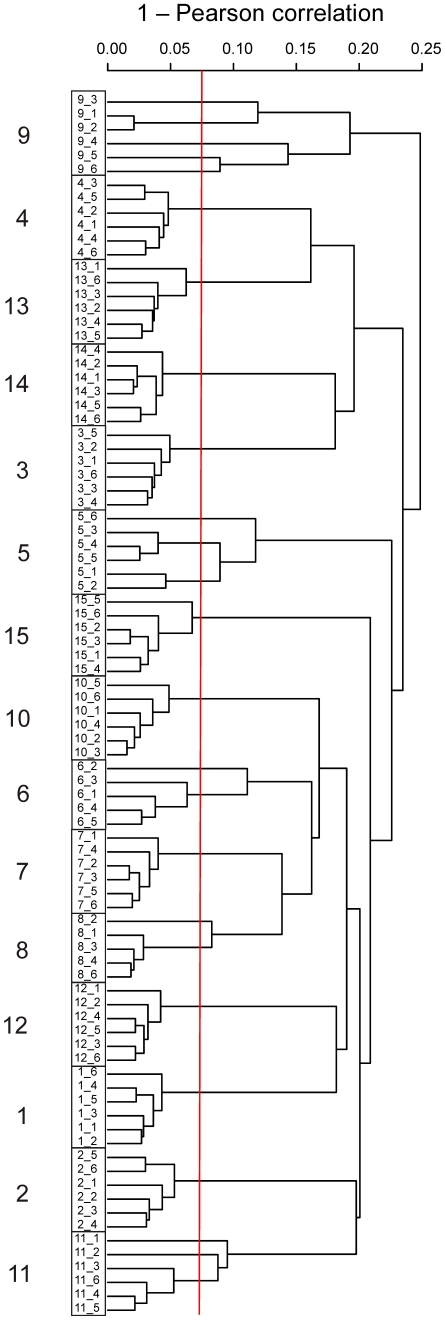
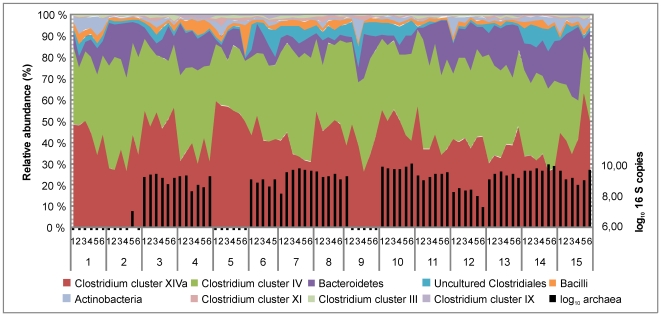
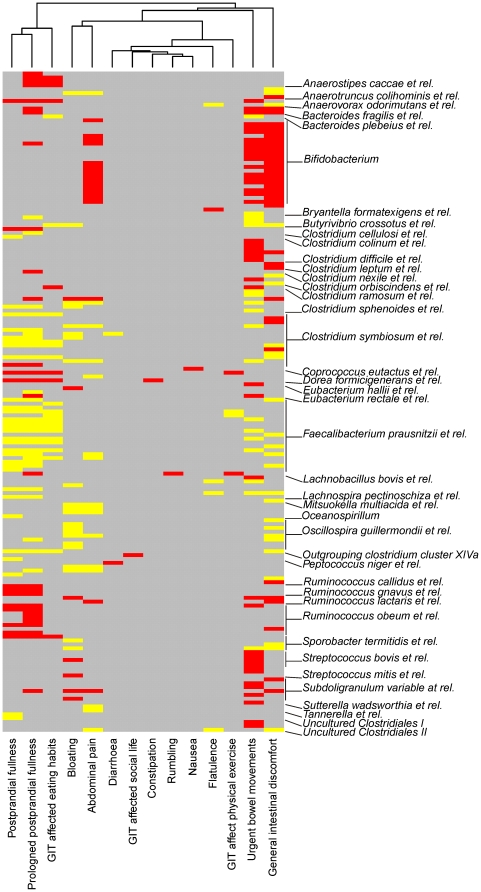
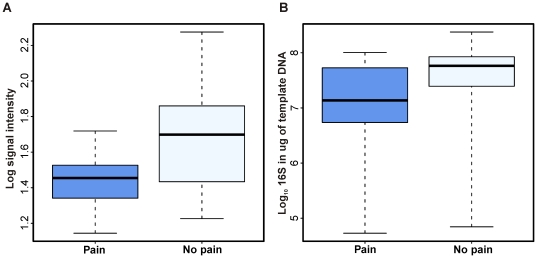
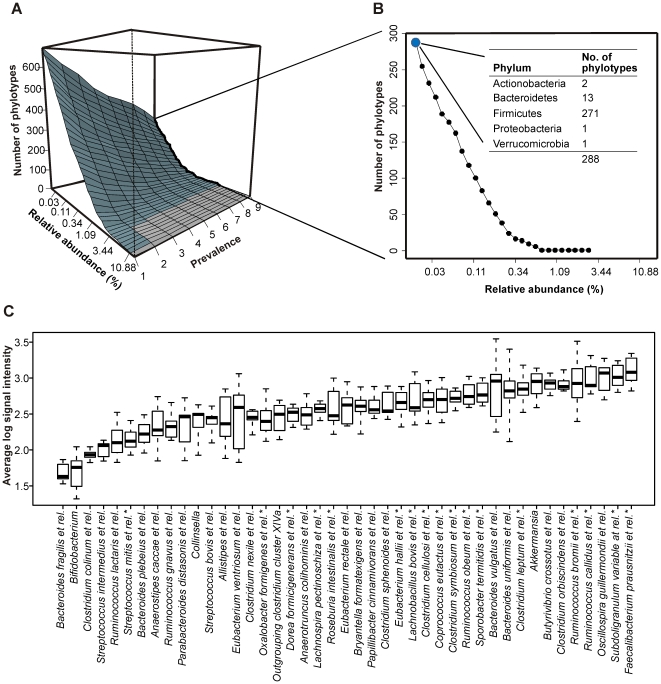
BACKGROUND: While our knowledge of the intestinal microbiota during disease is accumulating, basic information of the microbiota in healthy subjects is still scarce. The aim of this study was to characterize the intestinal microbiota of healthy adults and specifically address its temporal stability, core microbiota and relation with intestinal symptoms. We carried out a longitudinal study by following a set of 15 healthy Finnish subjects for seven weeks and regularly assessed their intestinal bacteria and archaea with the Human Intestinal Tract (HIT) Chip, a phylogenetic microarray, in conjunction with qPCR analyses. The health perception and occurrence of intestinal symptoms was recorded by questionnaire at each sampling point. PRINCIPAL FINDINGS: A high overall temporal stability of the microbiota was observed. Five subjects showed transient microbiota destabilization, which correlated not only with the intake of antibiotics but also with overseas travelling and temporary illness, expanding the hitherto known factors affecting the intestinal microbiota. We identified significant correlations between the microbiota and common intestinal symptoms, including abdominal pain and bloating. The most striking finding was the inverse correlation between Bifidobacteria and abdominal pain: subjects who experienced pain had over five-fold less Bifidobacteria compared to those without pain. Finally, a novel computational approach was used to define the common core microbiota, highlighting the role of the analysis depth in finding the phylogenetic core and estimating its size. The in-depth analysis suggested that we share a substantial number of our intestinal phylotypes but as they represent highly variable proportions of the total community, many of them often remain undetected. CONCLUSIONS/SIGNIFICANCE: A global and high-resolution microbiota analysis was carried out to determine the temporal stability, the associations with intestinal symptoms, and the individual and common core microbiota in healthy adults. The findings provide new approaches to define intestinal health and to further characterize the microbial communities inhabiting the human gut.
Overview
The claims and statistics of this paper haven’t been checked yet.
Run the check — free, no account needed. It reads the open-access text and checks the sources it cites.
Integrity signals
Registry
Cites
Statistics
Figures
Verification
Claims the paper makes
The claims and statistics of this paper haven’t been checked yet.
Run the check — free, no account needed. It reads the open-access text and checks the sources it cites.
Claims other papers make about this one
Each is checked against this paper’s own text: does it say what the citing paper says it does?
In the citing paper
“A strong association was evident between protein intake and Bacteroides and, in particular, Ruminococcaceae and Lachnospiraceae, two of the most abundant families in human gut environments [188], in explaining community diversity.”
From The athletic gut microbiota (2020) · cites this paper as [188]
In the citing paper
“These correlations are in agreement with previous findings from a longitudinal study in healthy individuals, where higher Bifidobacterium abundance was inversely associated with abdominal pain and intestinal discomfort.”
From Adaptation to tolerate high doses of arabinoxylan is associated with fecal levels of Bifidobacterium longum (2024) · cites this paper as [59]
Self-check
Percentages, sums and reported differences re-computed from the paper’s own numbers.
The self-check needs the paper’s full text.
Citations
Cites
R: A Language and Environment for Statistical Computing
R Core Team (2000) · doi:10.32614/r.manuals · Cited by 355,893
A human gut microbial gene catalogue established by metagenomic sequencing
MetaHIT Consortium, Qin, J., Li, R., Raes, J., Arumugam, M., Burgdorf, K. S., Manichanh, C., Nielsen, T., Pons, N., Levenez, F., et al. (2010) · Nature · doi:10.1038/nature08821 · Cited by 11,624
Mixed-Effects Models in Sand S-PLUS
Pinheiro, J. C., & Bates, D. M. (2000) · Statistics and Computing · doi:10.1007/978-1-4419-0318-1 · Cited by 11,187
Mixed-Effects Models in S and S-PLUS
(2001) · Technometrics · doi:10.1198/tech.2001.s574 · Cited by 9,278
Bolstad, B. M., Irizarry, R. A., Åstrand, M., & Speed, T. P. (2003) · Bioinformatics · doi:10.1093/bioinformatics/19.2.185 · Cited by 8,328
Diversity of the Human Intestinal Microbial Flora
Eckburg, P. B., Bik, E. M., Bernstein, C. N., Purdom, E., Dethlefsen, L., Sargent, M., Gill, S. R., Nelson, K. E., & Relman, D. A. (2005) · Science · doi:10.1126/science.1110591 · Cited by 7,913
A core gut microbiome in obese and lean twins
Turnbaugh, P. J., Hamady, M., Yatsunenko, T., Cantarel, B. L., Duncan, A., Ley, R. E., Sogin, M. L., Jones, W. J., Roe, B. A., Affourtit, J. P., et al. (2009) · Nature · doi:10.1038/nature07540 · Cited by 7,823
Nonparametric Statistical Methods
(1999) · Technometrics · doi:10.1080/00401706.1999.10485954 · Cited by 6,118
A Direct Approach to False Discovery Rates
Storey, J. D. (2002) · Journal of the Royal Statistical Society Series B: Statistical Methodology · doi:10.1111/1467-9868.00346 · Cited by 5,603
Host-Bacterial Mutualism in the Human Intestine
Bäckhed, F., Ley, R. E., Sonnenburg, J. L., Peterson, D. A., & Gordon, J. I. (2005) · Science · doi:10.1126/science.1104816 · Cited by 5,277
Research works printed but not linked: 1
- C Liu, 2008, International Journal of Systematic and Evolutionary Microbiology, International Journal of Systematic and Evolutionary Microbiology, 58, 1896
Cited by
Sorted by citations
The interplay between the intestinal microbiota and the brain
Collins, S. M., Surette, M., & Bercik, P. (2012) · Nature Reviews Microbiology · doi:10.1038/nrmicro2876 · Cited by 1,611
Consumption of fermented milk product with probiotic modulates brain activity
Tillisch, K., Labus, J., Kilpatrick, L., Jiang, Z., Stains, J., Ebrat, B., Guyonnet, D., Legrain–Raspaud, S., Trotin, B., Naliboff, B., et al. (2013) · Gastroenterology · doi:10.1053/j.gastro.2013.02.043 · Cited by 1,192
The first 1000 cultured species of the human gastrointestinal microbiota
Rajilić-Stojanović, M., & de Vos, W. M. (2014) · FEMS Microbiology Reviews · doi:10.1111/1574-6976.12075 · Cited by 1,182
Impacts of gut bacteria on human health and diseases
Zhang, Y.-J., Li, S., Gan, R.-Y., Zhou, T., Xu, D.-P., & Li, H.-B. (2015) · International Journal of Molecular Sciences · doi:10.3390/ijms16047493 · Cited by 1,055
Kootte, R. S., Levin, E., Salojärvi, J., Smits, L. P., Hartstra, A. V., Udayappan, S. D., Hermes, G., Bouter, K. E., Koopen, A. M., Holst, J. J., et al. (2017) · Cell Metabolism · doi:10.1016/j.cmet.2017.09.008 · Cited by 1,039
Metadata
- Authors
- Jalanka-Tuovinen, J., Salonen, A., Nikkilä, J., Immonen, O., Kekkonen, R., Lahti, L., Palva, A., & de Vos, W. M.
- Affiliations
- University of Helsinki (FI)
- Valio (Finland) (FI)
- Corresponding author
- Salonen, Anne
- Venue
- PLoS ONE
- Publisher
- Public Library of Science (PLoS)
- Published
- 2011-07-28
- Volume
- 6
- Issue
- 7
- Pages
- e23035
- ISSN
- 1932-6203 (ISSN-L)
- PMC
- PMC3145776
- OpenAlex
- W2157800726
- Cited by
- 340
- References
- 75
- Citations by year
- 2026: 2 · 2025: 7 · 2024: 19 · 2023: 17 · 2022: 23 · 2021: 20 · 2020: 23 · 2019: 19 · 2018: 19 · 2017: 34 · 2016: 32 · 2015: 28 · 2014: 31 · 2013: 44 · 2012: 20
- FWCI
- 12.61
- Type
- journal article
- Language
- en
- Open access
- gold
- doi.org
- Locations
- PLoS ONE (publishedVersion, cc-by)
- Europe PMC (PubMed Central) (publishedVersion, cc-by)
- PubMed Central (publishedVersion, cc-by)
- PubMed (publishedVersion)
- Socio-Environmental Systems Modeling (acceptedVersion)
- Työväentutkimus Vuosikirja (submittedVersion)
- DOAJ (DOAJ: Directory of Open Access Journals) (submittedVersion, cc-by-sa)
- Figshare (submittedVersion, cc-by)
- Data Archiving and Networked Services (DANS) (submittedVersion, other-oa)
- Funders
- Tekes
- Valio
- Wageningen University and Research
- Topics
- Life Sciences › Biochemistry, Genetics and Molecular Biology › Molecular Biology › Gut microbiota and health
- Health Sciences › Medicine › Gastroenterology › Gastrointestinal motility and disorders
- Life Sciences › Agricultural and Biological Sciences › Food Science › Probiotics and Fermented Foods
- Keywords
- gut microbiota, healthy adults, temporal stability, core microbiome, intestinal symptoms, abdominal pain, bloating, Bifidobacterium, antibiotics, archaea, gut health
- MeSH terms
- Adult, Bacteria, DNA, Bacterial, Double-Blind Method, Feces, Female, Humans, Intestinal Diseases, Intestines, Longitudinal Studies, Male, Middle Aged, Phylogeny, RNA, Messenger, RNA, Ribosomal, 16S, Biomarkers, Reverse Transcriptase Polymerase Chain Reaction, Oligonucleotide Array Sequence Analysis, Gene Expression Profiling, Biodiversity, Metagenome
About these checks
Registry, retraction, Cites and statistics results are computed, not judged, with one exception: a printed reference that no index lists is read once by a model before it counts as a citation error. Claims are extracted by a model and kept only when their quote appears verbatim in the text; each cited source is then checked, with a model’s help, for whether it says what the claim relies on. Those verdicts can be wrong — read the claim’s quote and the cited source before relying on one.
Statistics and arithmetic are recomputed, not judged.
Confidence bands are shown only for fields calibrated on our annotated test set. None is calibrated yet, so no band is shown.
What counts as a claim ›How we measure confidence ›How we check this ›
Are you an author, or do you see a problem with this page? Request a review
