

The RelA/SpoT homolog (RSH) superfamily: distribution and functional evolution of ppGpp synthetases and hydrolases across the tree of life.
Open accessThe DOI matches its Crossref record; 102 of the 102 references it cites were found in a registry or an index.
Abstract
RelA/SpoT Homologue (RSH) proteins, named for their sequence similarity to the RelA and SpoT enzymes of Escherichia coli, comprise a superfamily of enzymes that synthesize and/or hydrolyze the alarmone ppGpp, activator of the "stringent" response and regulator of cellular metabolism. The classical "long" RSHs Rel, RelA and SpoT with the ppGpp hydrolase, synthetase, TGS and ACT domain architecture have been found across diverse bacteria and plant chloroplasts, while dedicated single domain ppGpp-synthesizing and -hydrolyzing RSHs have also been discovered in disparate bacteria and animals respectively. However, there is considerable confusion in terms of nomenclature and no comprehensive phylogenetic and sequence analyses have previously been carried out to classify RSHs on a genomic scale. We have performed high-throughput sensitive sequence searching of over 1000 genomes from across the tree of life, in combination with phylogenetic analyses to consolidate previous ad hoc identification of diverse RSHs in different organisms and provide a much-needed unifying terminology for the field. We classify RSHs into 30 subgroups comprising three groups: long RSHs, small alarmone synthetases (SASs), and small alarmone hydrolases (SAHs). Members of nineteen previously unidentified RSH subgroups can now be studied experimentally, including previously unknown RSHs in archaea, expanding the "stringent response" to this domain of life. We have analyzed possible combinations of RSH proteins and their domains in bacterial genomes and compared RSH content with available RSH knock-out data for various organisms to determine the rules of combining RSHs. Through comparative sequence analysis of long and small RSHs, we find exposed sites limited in conservation to the long RSHs that we propose are involved in transmitting regulatory signals. Such signals may be transmitted via NTD to CTD intra-molecular interactions, or inter-molecular interactions either among individual RSH molecules or among long RSHs and other binding partners such as the ribosome.
Overview
The claims and statistics of this paper haven’t been checked yet.
Free: it reads the open-access text and checks the first 5 claims that cite a source we can check. Create a free account to check every claim.
Integrity signals
Registry
Cites
Statistics
Figures
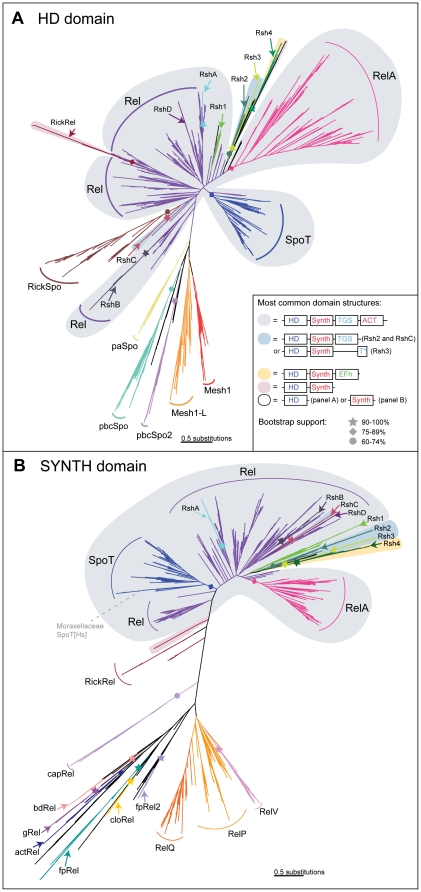
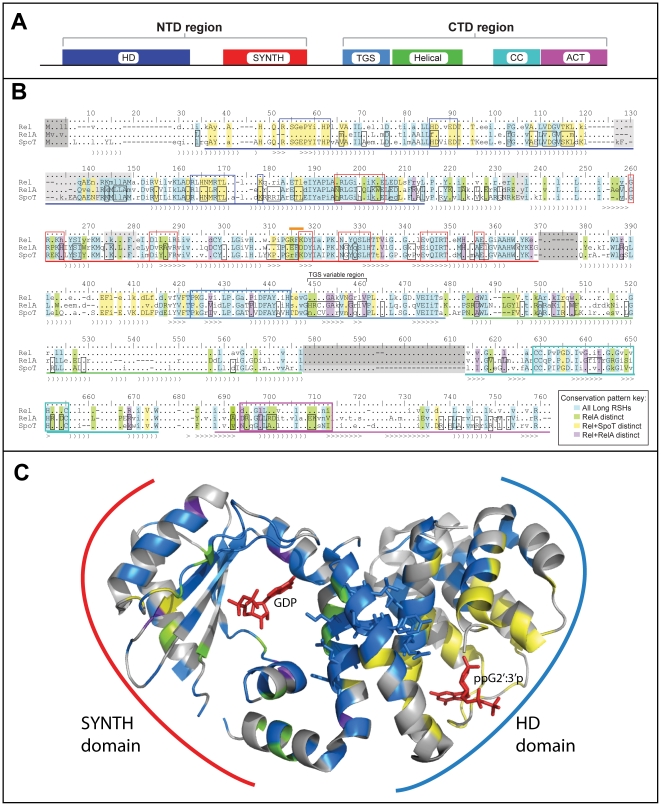
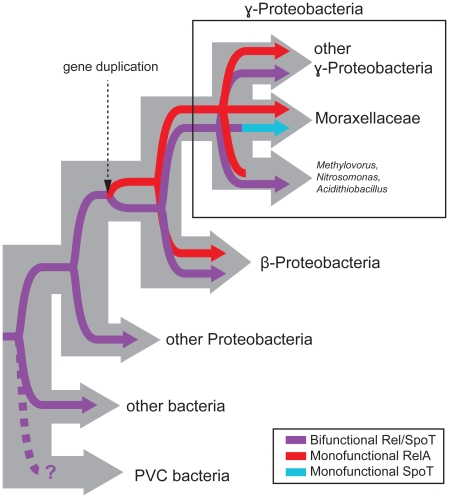
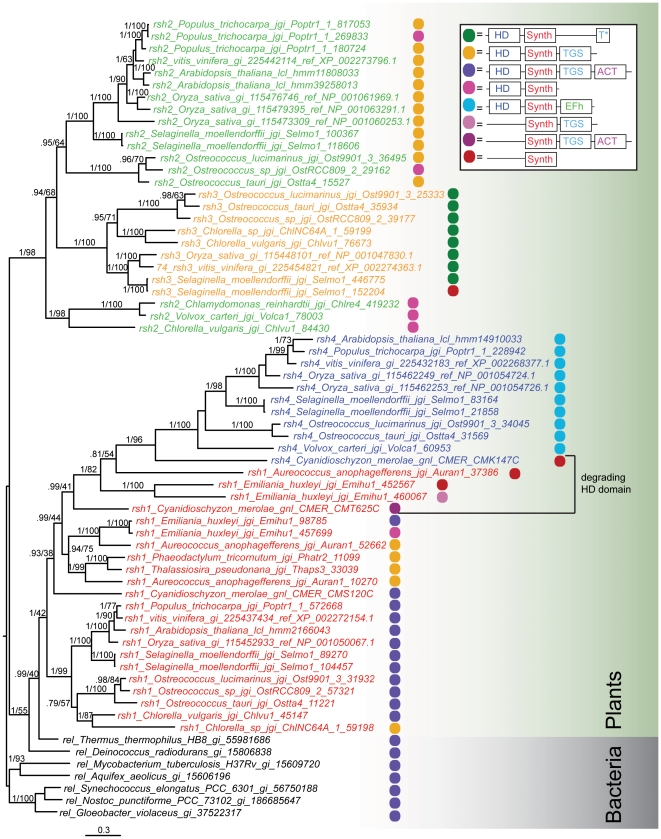
Verification
Claims the paper makes
The claims and statistics of this paper haven’t been checked yet.
Free: it reads the open-access text and checks the first 5 claims that cite a source we can check. Create a free account to check every claim.
Claims other papers make about this one
Each is checked against this paper’s own text: does it say what the citing paper says it does?
The cited source says what the claim attributes to it.
In the citing paper
“In E. coli, the levels of the two alarmones ppGpp and pppGpp are mainly controlled by the activity of two enzymes, RelA and SpoT (Atkinson et al., 2011; Potrykus and Cashel, 2018; Pausch et al., 2020).”
From The Dynamic SecYEG Translocon (2021) · cites this paper as Atkinson et al., 2011
Self-check
Percentages, sums and reported differences re-computed from the paper’s own numbers.
The self-check needs the paper’s full text.
Citations
Cites
MrBayes 3: Bayesian phylogenetic inference under mixed models
Ronquist, F., & Huelsenbeck, J. P. (2003) · Bioinformatics · doi:10.1093/bioinformatics/btg180 · Cited by 29,077 · cited 1×
“2 [50] on the Cipres server 2.”
The PyMOL Molecular Graphics System
DeLano, W. L. (2002) · Medical Entomology and Zoology · Cited by 18,147
RAxML-VI-HPC: maximum likelihood-based phylogenetic analyses with thousands of taxa and mixed models
Stamatakis, A. (2006) · Bioinformatics · doi:10.1093/bioinformatics/btl446 · Cited by 15,582 · cited 1×
“4 [47] maximum likelihood (ML) tree was generated.”
BackgroundOhno, S. (1970) · doi:10.1007/978-3-642-86659-3 · Cited by 7,833 · cited 1×
“Gene duplication results in a redundant copy of the original gene that is free from selective pressure and able to diverge in sequence [100].”
BackgroundEddy, S. R. (1998) · Bioinformatics · doi:10.1093/bioinformatics/14.9.755 · Cited by 5,515
MAFFT version 5: improvement in accuracy of multiple sequence alignment
Katoh, K. (2005) · Nucleic Acids Research · doi:10.1093/nar/gki198 · Cited by 4,837 · cited 1×
“626b [46].”
Predicting Subcellular Localization of Proteins Based on their N-terminal Amino Acid Sequence
Emanuelsson, O., Nielsen, H., Brunak, S., & von Heijne, G. (2000) · Journal of Molecular Biology · doi:10.1006/jmbi.2000.3903 · Cited by 4,263 · cited 1×
“Scans of eukaryotic Mesh1[H]s on the TargetP server [55] show no mitochondrial target peptides, suggesting they are cytoplasmic proteins.”
BackgroundNetwork motifs: theory and experimental approaches
Alon, U. (2007) · Nature Reviews Genetics · doi:10.1038/nrg2102 · Cited by 3,279 · cited 1×
“By analyzing possible combinations of RSH proteins and their domains in bacterial genomes, and comparing RSH content with available RSH knock-out data for various organisms [18,28,68], we attempt to interpret the functional consequences of RSH gain and loss and rationalize the design rules of RSH sensory systems [69].”
MethodBacterial Persistence as a Phenotypic Switch
Balaban, N. Q., Merrin, J., Chait, R., Kowalik, L., & Leibler, S. (2004) · Science · doi:10.1126/science.1099390 · Cited by 2,952
Pfam: clans, web tools and services
Finn, R. D. (2006) · Nucleic Acids Research · doi:10.1093/nar/gkj149 · Cited by 2,302 · cited 1×
“For the first-pass survey, the full alignment of the synthetase domain was downloaded from Pfam (RelA_SpoT, PF04607 [45]).”
Method
Cited by
Items 101–200 of 454
Metabolic Reprogramming and Longevity in Quiescence
Dworkin, J. E., & Harwood, C. S. (2022) · Annual Review of Microbiology · doi:10.1146/annurev-micro-041320-111014 · Cited by 52
Anguluri, K., China, S. L., Brugnoli, M., Cassanelli, S., & Gullo, M. (2022) · Frontiers in Microbiology · doi:10.3389/fmicb.2022.994097 · Cited by 49
“High level of pppGpp induce a process recognized as “stringent response,” a major cellular reprogramming in which the rRNA and tRNA synthesis is down regulated, stress-related genes upregulated and the limiting resource allocation is optimized (Atkinson et al., 2011; Gaca et al., 2013).”
BackgroundGhosh, R., Barman, S., & Mandal, N. C. (2019) · Scientific Reports · doi:10.1038/s41598-019-41726-9 · Cited by 51
A nucleotide-switch mechanism mediates opposing catalytic activities of Rel enzymes
Tamman, H., Nerom, K. V., Takada, H., Vandenberk, N., Scholl, D., Polikanov, Y. S., Hofkens, J., Talavera, A., Hauryliuk, V., Hendrix, J., et al. (2020) · Nature Chemical Biology · doi:10.1038/s41589-020-0520-2 · Cited by 46
Self-citationThe RelA hydrolase domain acts as a molecular switch for (p)ppGpp synthesis
Sinha, A. K., & Winther, K. S. (2021) · Communications Biology · doi:10.1038/s42003-021-01963-z · Cited by 46
ppGpp functions as an alarmone in metazoa
Ito, D., Kawamura, H., Oikawa, A., Ihara, Y., Shibata, T., Nakamura, N., Asano, T., Kawabata, S.-I., Suzuki, T., & Masuda, S. (2020) · Communications Biology · doi:10.1038/s42003-020-01368-4 · Cited by 50
Roghanian, M., Nerom, K. V., Takada, H., Caballero-Montes, J., Tamman, H., Kudrin, P., Talavera, A., Dzhygyr, I., Ekström, S., Atkinson, G. C., et al. (2021) · Molecular Cell · doi:10.1016/j.molcel.2021.07.026 · Cited by 47
Self-citationBeljantseva, J., Kudrin, P., Andresen, L., Shingler, V., Atkinson, G. C., Tenson, T., & Hauryliuk, V. (2017) · Proceedings of the National Academy of Sciences · doi:10.1073/pnas.1617868114 · Cited by 44
“In the last decade, the repertoire of RSH enzymes has been expanded by the discovery of small, single-domain, monofunctional enzymes that either synthesize [small alarmone synthetases (SASs)] (12–14) or hydrolyze [small alarmone hydrolases (SAHs)] (15, 16) (p)ppGpp.”
BackgroundSelf-citationHorvatek, P., Salzer, A., Hanna, A. M. F., Gratani, F. L., Keinhörster, D., Korn, N., Borisova, M., Mayer, C., Rejman, D., Mäder, U., et al. (2020) · PLoS Genetics · doi:10.1371/journal.pgen.1009282 · Cited by 47
“…originating from ATP to the 3’ OH group of GTP, GDP or GMP. RSH enzymes are present in nearly all bacteria and show a conserved molecular architecture composed of a C-terminal sensory domain and an N-terminus with distinct (pp)pGpp hydrolase and synthetase domains (Atkinson et al., 2011).”
BackgroundDissection of the molecular circuitry controlling virulence in Francisella tularensisPreprint
Cuthbert, B. J., Ross, W., Rohlfing, A. E., Dove, S. L., Gourse, R. L., Brennan, R. G., & Schumacher, M. A. (2017) · Genes & Development · doi:10.1101/gad.303701.117 · Cited by 44
“Enzymes that synthesize ppGpp (RelA/SpoT homologs, referred to as RSH enzymes) are almost universally conserved among all bacteria (Atkinson et al. 2011).”
Abdelkefi, H., Sugliani, M., Ke, H., Harchouni, S., Soubigou‐Taconnat, L., Citerne, S., Mouille, G., Fakhfakh, H., Robaglia, C., & Field, B. (2017) · Molecular Plant Pathology · doi:10.1111/mpp.12548 · Cited by 52
“Plants possess several conserved families of nucleus encoded RSH enzymes that possess functional (p)ppGpp hydrolase and/or synthase domains (Atkinson et al., 2011).”
BackgroundppGpp Controls Global Gene Expression in Light and in Darkness in S. elongatus
Puszynska, A. M., & O’Shea, E. K. (2017) · Cell Reports · doi:10.1016/j.celrep.2017.11.067 · Cited by 44
Plaza, J. J. G. (2020) · Frontiers in Molecular Biosciences · doi:10.3389/fmolb.2020.00101 · Cited by 45
The role of RNA‐binding proteins in mediating adaptive responses in Gram‐positive bacteria
Christopoulou, N., & Granneman, S. (2021) · FEBS Journal · doi:10.1111/febs.15810 · Cited by 47
“SASs are widely distributed bacterial enzymes that belong to the RelA/SpoT homolog (RSH) protein family and synthesize the alarmone nucleotides guanosine tetraphosphate and pentaphosphate ((p)ppGpp) [147,148].”
BackgroundLangton, M., Sun, S., Ueda, C., Markey, M., Chen, J., Paddy, I. A., Jiang, P. Y., Chin, N., Milne, A. C., & Pandelia, M. (2020) · Catalysts · doi:10.3390/catal10101191 · Cited by 45
Bugrysheva, J. V., Pappas, C. J., Terekhova, D. A., Iyer, R., Godfrey, H. P., Schwartz, I. S., & Cabello, F. C. (2015) · PLoS ONE · doi:10.1371/journal.pone.0118063 · Cited by 44
“burgdorferi, a single gene, rel or rsh (rel/spo homolog), encodes an enzyme with both synthase and hydrolase activities [6–8].”
BackgroundChatnaparat, T., Li, Z., Korban, S. S., & Zhao, Y. F. (2015) · Molecular Plant-Microbe Interactions · doi:10.1094/mpmi-11-14-0378-r · Cited by 50
Takada, H., Roghanian, M., Caballero-Montes, J., Nerom, K. V., Jimmy, S., Kudrin, P., Trebini, F., Murayama, R., Akanuma, G., García-Pino, A., et al. (2020) · Nucleic Acids Research · doi:10.1093/nar/gkaa1187 · Cited by 41
“…per Love-land et al. (14)), ZFD (Zinc Finger Domain; equivalent to CC, Conserved Cysteine as per Atkinson et al. (5) and RIS, Ribosome-InterSubunit as per Loveland et al. (14)) and RRM (RNA recognition motif; equivalent to ACT, as-partokinase, chorismate mutase and TyrA as per Atkinson et al. (5)).”
InfluentialSelf-citationInhibition of SRP-dependent protein secretion by the bacterial alarmone (p)ppGpp
Czech, L., Mais, C.-N., Kratzat, H., Sarmah, P., Giammarinaro, P. I., Freibert, S., Esser, H., Musial, J., Berninghausen, O., Steinchen, W., et al. (2022) · Nature Communications · doi:10.1038/s41467-022-28675-0 · Cited by 44
Feedforward growth rate control mitigates gene activation burden
Barajas, C., Huang, H.-H., Gibson, J., Sandoval, L., & Vecchio, D. D. (2022) · Nature Communications · doi:10.1038/s41467-022-34647-1 · Cited by 45
Recent Advances in Bacterial Persistence Mechanisms
Pan, X., Liu, W., Du, Q., Zhang, H., & Han, D. (2023) · International Journal of Molecular Sciences · doi:10.3390/ijms241814311 · Cited by 44
“maintained by RelA and SpoT, while the former is a synthase, and the latter is a hydrolase with weak synthetic activity [48,49].”
BackgroundRole of RelA and SpoT in Burkholderia pseudomallei Virulence and Immunity
Müller, C., Conejero, L., Spink, N., Wand, M. E., Bancroft, G. J., & Titball, R. W. (2012) · Infection and Immunity · doi:10.1128/iai.00178-12 · Cited by 43
“ppGpp signaling is widespread across various genera of the bacterial kingdom but can also be found in plant chloroplasts (4).”
BackgroundNomura, Y., Izumi, A., Fukunaga, Y., Kusumi, K., Iba, K., Watanabe, S., Nakahira, Y., Weber, A. P. M., Nozawa, A., & Tozawa, Y. (2014) · Journal of Biological Chemistry · doi:10.1074/jbc.m113.534768 · Cited by 44
Emergence of the fungal immune system
Daskalov, A. (2023) · iScience · doi:10.1016/j.isci.2023.106793 · Cited by 43
“RSH control the production of the alarmones guanosine penta- and tetraphosphate – (p)ppGpp – and regulate stress-induced metabolic adaptations termed the ‘stringent response’.(171,172) The role of these two metabolites in fungi is poorly documented, although their presence has been detected in yeast.”
BackgroundStress Responses of Bacterial Cells as Mechanism of Development of Antibiotic Tolerance (Review)
Ткаченко, А. Г. (2018) · Applied Biochemistry and Microbiology · doi:10.1134/s0003683818020114 · Cited by 39
RelZ-Mediated Stress Response in Mycobacterium smegmatis : pGpp Synthesis and Its Regulation
Petchiappan, A., Naik, S., & Chatterji, D. (2019) · Journal of Bacteriology · doi:10.1128/jb.00444-19 · Cited by 43
“The synthesis and hydrolysis of (p)ppGpp are catalyzed by the proteins of the RelA-SpoT homologue (RSH) family (4, 6).”
BackgroundDiversity in E. coli (p)ppGpp Levels and Its Consequences
Spira, B., & Ospino, K. (2020) · Frontiers in Microbiology · doi:10.3389/fmicb.2020.01759 · Cited by 42
“These proteins evolved by duplication from a bifunctional ancestral RelA/SpoT Homolog (RSH) possessing both (p)ppGpp synthetic and hydrolytic capabilities, resulting in two proteins with overlapping functionalities (Mittenhuber, 2001; Atkinson et al., 2011).”
BackgroundSurvival of the Fittest: The Relationship of (p)ppGpp With Bacterial Virulence
Kundra, S., Colomer‐Winter, C., & Lemos, J. A. C. (2020) · Frontiers in Microbiology · doi:10.3389/fmicb.2020.601417 · Cited by 41
“It should be noted that relacin does not inhibit the activity of the purified E. faecalis RelQ enzyme (Gaca et al., 2015b), such that production of (p)ppGpp will most likely not be completely abolished in organisms that encode SASs when treated with relacin or its current analogs.”
BackgroundMethodInfluentialFatty acid starvation activates RelA by depleting lysine precursor pyruvate
Sinha, A. K., Winther, K. S., Roghanian, M., & Gerdes, K. (2019) · Molecular Microbiology · doi:10.1111/mmi.14366 · Cited by 39
“…from a common ancestor, the bifunctional rel/rsh gene by duplication in proteobacteria and sequence analysis of SpoT in the Moraxellaceae family of gammaproteobacteria suggests that its synthetase activity has been gradually weakened during evolution (Mittenhuber, 2001, Atkinson et al., 2011).”
BackgroundKim, H., & Davey, M. E. (2020) · npj Biofilms and Microbiomes · doi:10.1038/s41522-020-0115-4 · Cited by 41
Mandelli, F., Couger, M. B., Paixão, D. A. A., Machado, C. B., Carnielli, C. M., Aricetti, J. A., Polikarpov, I., Prade, R. A., Caldana, C., Leme, A. F. P., et al. (2017) · Extremophiles · doi:10.1007/s00792-017-0942-2 · Cited by 41
“1) is a key enzyme involved in the stringent response of most bacteria to various environmental stimuli (Atkinson et al. 2011).”
BackgroundThe impact of the stringent response on TRAFAC GTPases and prokaryotic ribosome assembly.
Bennison, D. J., Irving, S. E., & Corrigan, R. M. (2019) · Cells · doi:10.3390/cells8111313 · Cited by 37
“There are three groups of proteins responsible for the synthesis and hydrolysis of (p)ppGpp in the cell: small alarmone synthetases (SASs), small alarmone hydrolases (SAHs) and long RelA/SpoT homologues (long-RSHs) [15,16].”
BackgroundLibby, E. A., Reuveni, S., & Dworkin, J. E. (2019) · Nature Communications · doi:10.1038/s41467-019-13127-z · Cited by 40
Pletzer, D., Blimkie, T. M., Wolfmeier, H., Li, Y., Baghela, A. S., Lee, A. H., Falsafi, R., & Hancock, R. E. W. (2020) · mSystems · doi:10.1128/msystems.00495-20 · Cited by 41
Ткаченко, А. Г., Kashevarova, N. M., Sidorov, R. Y., Nesterova, L. Y., Ахова, А. В., Tsyganov, I. V., Vaganov, V. Y., Shipilovskikh, S. A., Rubtsov, A. E., & Malkov, A. V. (2021) · Cell chemical biology · doi:10.1016/j.chembiol.2021.01.018 · Cited by 40
Intestinal biofilms: pathophysiological relevance, host defense, and therapeutic opportunities
Jandl, B., Dighe, S. N., Gasché, C., Makristathis, A., & Muttenthaler, M. (2024) · Clinical Microbiology Reviews · doi:10.1128/cmr.00133-23 · Cited by 39
“Hydrolysis of the alarmone ppGpp is facilitated by the RelA/SpoT homolog, a protein superfamily comprising several enzymes with such activity (107).”
Antibiotic tolerance among clinical isolates: mechanisms, detection, prevalence, and significance
Deventer, A. T., Stevens, C. E., Stewart, A., & Hobbs, J. K. (2024) · Clinical Microbiology Reviews · doi:10.1128/cmr.00106-24 · Cited by 40
“In most bacteria, the stringent response is mediated by a bifunctional (p)ppGpp synthetase/hydrolase known as Rel, RelA, or RSH (for RelA/SpoT homolog) (80).”
Arrigoni, R., Ballini, A., Topi, S., Bottalico, L., Jirillo, E., & Santacroce, L. (2022) · Antibiotics · doi:10.3390/antibiotics11101431 · Cited by 42
“In Mycobacteria, the alarmones are regulated by the enzyme Rel, which is encoded by the gene rv2583c [79].”
BackgroundImamura, S., Nomura, Y., Takemura, T., Pancha, I., Taki, K., Toguchi, K., Tozawa, Y., & Tanaka, K. (2018) · The Plant Journal · doi:10.1111/tpj.13859 · Cited by 40
“Orthologs of these two enzymes have been identified in almost all bacteria (Atkinson et al., 2011).”
BackgroundInfluentialHonoki, R., Ono, S., Oikawa, A., Saito, K., & Masuda, S. (2017) · Photosynthesis Research · doi:10.1007/s11120-017-0402-y · Cited by 37
“Many metabolic enzymes as well as signaling proteins are also directly regulated by (p)ppGpp (Atkinson et al. 2011; Hauryliuk et al. 2015).”
BackgroundZhang, Y., Teper, D., Xu, J. H., & Wang, N. (2019) · Molecular Plant Pathology · doi:10.1111/mpp.12865 · Cited by 38
“The cellular (p)ppGpp level is controlled by protein family RelA-SpoT homologue (RSH), small alarmone synthetase (SAS) and small alarmone hydrolase (SAH) (Atkinson et al., 2011).”
BackgroundCharacterization of RelA inAcinetobacter baumannii
Pérez−Varela, M., Tierney, A. R. P., Kim, J.-S., Vázquez‐Torres, A., & Rather, P. N. (2020) · Journal of Bacteriology · doi:10.1128/jb.00045-20 · Cited by 37
rRNA regulation during growth and under stringent conditions in S taphylococcus aureus
Kästle, B., Geiger, T., Gratani, F. L., Reisinger, R., Goerke, C., Borisova, M., Mayer, C., & Wolz, C. (2015) · Environmental Microbiology · doi:10.1111/1462-2920.12867 · Cited by 37
“In Firmicutes, (p)ppGpp is synthesized by the bi-functional RelA/SpoT homoloue (RSH), an enzyme possessing a (p)ppGpp synthase and hydrolase activity, and/or by the small (p)ppGpp synthases RelP and RelQ (Wolz et al., 2010; Atkinson et al., 2011; Liu et al., 2015).”
BackgroundThe Streptococcus agalactiae Stringent Response Enhances Virulence and Persistence in Human Blood
Hooven, T. A., Catomeris, A. J., Bonakdar, M., Tallon, L. J., Santana-Cruz, I., Ott, S. H., Daugherty, S. C., Tettelin, H., & Ratner, A. J. (2017) · Infection and Immunity · doi:10.1128/iai.00612-17 · Cited by 35
“RelA is a ribosome-associated enzyme that detects stalled protein translation, which can be the result of depleted micronutrients, antibiotic exposure, or immunologic pressure, such as exposure to antimicrobial peptides (23, 36, 37).”
Dasgupta, S., Das, S., Biswas, A., Bhadra, R. K., & Das, S. (2019) · Cellular Microbiology · doi:10.1111/cmi.13034 · Cited by 34
“…after threonyl t‐RNA synthetase, GTPases, and SpoT proteins, where this domain is conserved) and ACT (conserved in acetolactate synthase, chorismate mutase, and TyrR proteins; Hogg, Mechold, Malke, Cashel, & Hilgenfeld, 2004; Potrykus & Cashel, 2008; Atkinson et al., 2011; Steinchen & Bange, 2016).”
BackgroundStructure and activity of PPX/GppA homologs from Escherichia coli and Helicobacter pylori
Song, H., Dharmasena, M. N., Wang, C., Shaw, G. X., Cherry, S., Tropea, J. E., Jin, D. J., & Ji, X. (2019) · FEBS Journal · doi:10.1111/febs.15120 · Cited by 35
Romand, S., Abdelkefi, H., Lecampion, C., Belaroussi, M., Dussenne, M., Ksas, B., Citerne, S., Caïus, J., D’Alessandro, S., Fakhfakh, H., et al. (2022) · eLife · doi:10.7554/elife.75041 · Cited by 34
“The accumulation of ppGpp is controlled by the ppGpp synthesis and hydrolysis activity of three families of chloroplast targeted RSH enzyme, RSH1, RSH2/3, and RSH4/CRSH (Atkinson et al., 2011; Ito et al., 2017; Avilan et al., 2019).”
Shi, J., Jin, Y., Bian, T., Li, K., Sun, Z., Cheng, Z., Jin, S., & Wu, W. (2015) · Molecular Microbiology · doi:10.1111/mmi.13126 · Cited by 38
“RelA or SpoT binds to the stalled ribosome and synthesises the alarmone molecules guanosine 5′, 3′-(bis)diphosphate (ppGpp) and guanosine 5′-triphosphate, 3′-diphosphate (pppGpp), which globally reprogram transcription, translation and replication (Atkinson et al., 2011).”
BackgroundMożejko‐Ciesielska, J., Dabrowska, D., Szalewska-Pałasz, A., & Ciesielski, S. (2017) · AMB Express · doi:10.1186/s13568-017-0396-z · Cited by 34
Bryson, D., Hettle, A. G., Boraston, A. B., & Hobbs, J. K. (2019) · Antimicrobial Agents and Chemotherapy · doi:10.1128/aac.02103-19 · Cited by 35
“Using chemical inducers of the SR (e.g., mupirocin, an isoleucyl-tRNA synthetase inhibitor, or the serine analog serine hydroxamate) or overexpression of Rel/RelA, activation of the SR in planktonic cultures of both Gram-positives and Gram-negatives has been shown to confer tolerance to -lactams, fluoroquinolones, and…”
BackgroundHow to save a bacterial ribosome in times of stress
Zegarra, V., Bedrunka, P., Bange, G., & Czech, L. (2022) · Seminars in Cell and Developmental Biology · doi:10.1016/j.semcdb.2022.03.015 · Cited by 35
Intramolecular Interactions Dominate the Autoregulation of Escherichia coli Stringent Factor RelA
Turnbull, K. J., Dzhygyr, I., Lindemose, S., Hauryliuk, V., & Roghanian, M. (2019) · Frontiers in Microbiology · doi:10.3389/fmicb.2019.01966 · Cited by 33
“RelA/SpoT homolog (RSH) are ubiquitous bacterial enzymes responsible for synthesis and 39 degradation of (p)ppGpp (Atkinson et al., 2011;Jimmy et al., 2019).”
BackgroundInfluentialSelf-citationRibosomal Hibernation-Associated Factors in Escherichia coli
Maki, Y., & Yoshida, H. (2021) · Microorganisms · doi:10.3390/microorganisms10010033 · Cited by 35
“Intracellular (p)ppGpp levels are regulated by enzymes belonging to the RelA/SpoT homolog family [40].”
BackgroundMicrobial Primer: What is the stringent response and how does it allow bacteria to survive stress?
Urwin, L., Savva, O., & Corrigan, R. M. (2024) · Microbiology · doi:10.1099/mic.0.001483 · Cited by 36
Molecular mutagenesis of ppGpp: turning a RelA activator into an inhibitor
Beljantseva, J., Kudrin, P., Jimmy, S., Ehn, M., Pohl, R., Varik, V., Tozawa, Y., Shingler, V., Tenson, T., Rejman, D., et al. (2017) · Scientific Reports · doi:10.1038/srep41839 · Cited by 36
Self-citationSobala, M., Bruhn‐Olszewska, B., Cashel, M., & Potrykus, K. (2019) · Frontiers in Microbiology · doi:10.3389/fmicb.2019.00859 · Cited by 32
“coli, and other γ- as well as β-proteobacteria, (p)ppGpp synthesis is catalyzed by two enzymes – RelA, activated by amino acid deprivation, and SpoT, activated by other environmental stresses (Potrykus and Cashel, 2008; Atkinson et al., 2011).”
BackgroundMethodNovel pppGpp binding site at the C‐terminal region of the Rel enzyme from Mycobacterium smegmatis
Syal, K., Joshi, H. N., Chatterji, D., & Jain, V. P. (2015) · FEBS Journal · doi:10.1111/febs.13373 · Cited by 31
Diverse molecular mechanisms of transcription regulation by the bacterial alarmone ppGpp
Travis, B. A., & Schumacher, M. A. (2021) · Molecular Microbiology · doi:10.1111/mmi.14860 · Cited by 31
“The reduction in GTP levels associated with ppGpp synthesis also regulates the transcription of branched chain amino acid (BCAA) genes by inactivating the transcriptional repressor, CodY, which requires GTP for full activation (Bange & Bedrunka, 2020; Handke et al., 2008; Kriel et al., 2014).”
BackgroundKrishnan, S., Petchiappan, A., Singh, A., Bhatt, A., & Chatterji, D. (2016) · Molecular Microbiology · doi:10.1111/mmi.13453 · Cited by 31
“They are mostly single domain, monofunctional proteins either with short alarmone synthetase (SAS) or short alarmone hydrolase activity (Sun et al., 2010; Atkinson et al., 2011).”
BackgroundRestrepo-Pineda, S., Pérez, N. O., Valdez‐Cruz, N. A., & Trujillo‐Roldán, M. A. (2021) · FEMS Microbiology Reviews · doi:10.1093/femsre/fuab023 · Cited by 34
Li, H., Bhattarai, B., Barber, M. E., & Goel, R. K. (2023) · Environmental Science & Technology · doi:10.1021/acs.est.3c03114 · Cited by 32
Different effects of ppGpp on Escherichia coli DNA replication in vivo and in vitro
Maciąg-Dorszyńska, M., Szalewska-Pałasz, A., & Węgrzyn, G. (2013) · FEBS Open Bio · doi:10.1016/j.fob.2013.03.001 · Cited by 30
“However, recent analyses indicated occurrence of homologues of genes coding for enzymes of ppGpp metabolism in various organisms, from bacteria, through protists and plants, to animals, including Homo sapiens [3], implicating possible regulatory roles of ppGpp (in bacteria) or putative related nucleotides (in eukaryot…”
BackgroundFida, T. T., Moreno‐Forero, S. K., Heipieper, H. J., & Springael, D. (2013) · Microbiology · doi:10.1099/mic.0.065870-0 · Cited by 31
“, 2003), and increased expression of a gene encoding (p)ppGpp synthase (Atkinson et al., 2011).”
BackgroundVarik, V., Oliveira, S. R. A., Hauryliuk, V., & Tenson, T. (2016) · Scientific Reports · doi:10.1038/srep22308 · Cited by 32
Self-citationKaspar, J. R., Kim, J. N., Ahn, S., & Burne, R. A. (2016) · Frontiers in Microbiology · doi:10.3389/fmicb.2016.01162 · Cited by 29
“In Gram-positive bacteria, synthetase and hydrolase activities are combined into single, bifunctional enzymes referred to as a Rel/SpoT homolog (RSH) or Rel enzymes (Atkinson et al., 2011).”
BackgroundPhylogenetic analysis of proteins involved in the stringent response in plant cells
Ito, D., Ihara, Y., Nishihara, H., & Masuda, S. (2017) · Journal of Plant Research · doi:10.1007/s10265-017-0922-8 · Cited by 29
Westbye, A. B., O'Neill, Z., Schellenberg-Beaver, T., & Beatty, J. T. (2017) · Microbiology · doi:10.1099/mic.0.000519 · Cited by 28
Galperin, M. Y., & Chou, S. (2021) · Journal of Bacteriology · doi:10.1128/jb.00561-21 · Cited by 33
“The only enzymes with the “classical” HD domains with a role in signal transduction were the (p)ppGpp-hydrolyzing enzymes of the RelA/SpoT Homologue (RSH) family and c-di-AMP-hydrolyzing enzymes of the PgpH family (88, 89) (Fig.”
BackgroundWang, X., Wang, J., Liu, S., Guo, J., Fang, F., Chen, Y., & Yan, P. (2023) · Journal of Hazardous Materials · doi:10.1016/j.jhazmat.2023.130941 · Cited by 29
Angelini, S., My, L., & Bouveret, E. (2012) · PLoS ONE · doi:10.1371/journal.pone.0036111 · Cited by 28
“The recently published phylogenetic study of the RelA/ SpoT homolog family will help us to decipher the specificities of SpoT that might account for ACP recognition [32].”
BackgroundA shared alarmone–GTP switch controls persister formation in bacteria
Fung, D. K. C., Barra, J. T., Yang, J., Schroeder, J. W., She, F., Young, M. K. M., Ying, D., Stevenson, D. M., Amador‐Noguez, D., & Wang, J. D. (2025) · Nature Microbiology · doi:10.1038/s41564-025-02015-6 · Cited by 34
Steinchen, W., Ahmad, S., Valentini, M., Eilers, K., Majkini, M., Altegoer, F., Lechner, M., Filloux, A., Whitney, J. C. C., & Bange, G. (2021) · Molecular Microbiology · doi:10.1111/mmi.14684 · Cited by 29
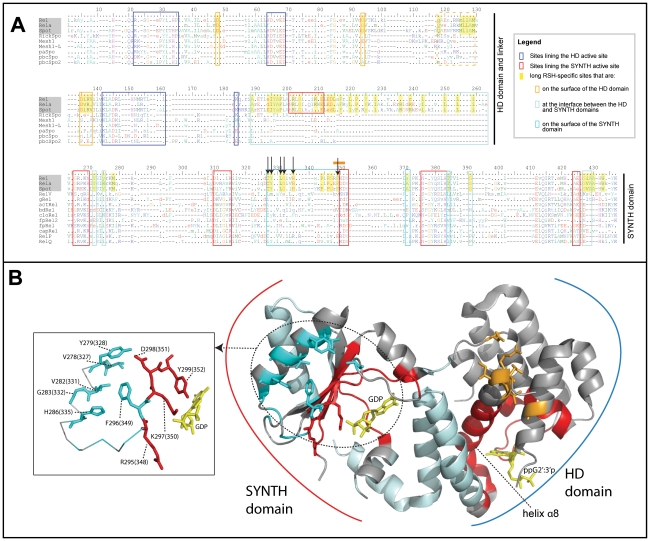
“…of a water molecule for subsequent nucleophilic attack as postulated by Hilgenfeld and coworkers (Hogg et al., 2004) would be enabled by the aspartate/glutamate pair found in HD motif four strictly invariant in all hydrolase domains of the RSH family (Aravind & Koonin, 1998; Atkinson et al., 2011).”
BackgroundStringent Response in Mycobacteria: From Biology to Therapeutic Potential
Gupta, K. R., Arora, G., Mattoo, A. R., & Sajid, A. (2021) · Pathogens · doi:10.3390/pathogens10111417 · Cited by 27
“Thus, RelA, SpoT and Rel proteins have similar domain architecture and have been characterized as the RelA Spo Homology (RSH) superfamily of proteins [43].”
BackgroundInfluentialMehrez, M., Romand, S., & Field, B. (2022) · New Phytologist · doi:10.1111/nph.18604 · Cited by 31
“Indeed, the RSH1 family groups with RSH from the Deinococcus–Thermus bacteria (Atkinson et al., 2011; Ito et al., 2017; Avilan et al., 2019), and there are signs of the more recent emergence of clades of diatom RSH that may have involved lateral gene transfer from bacteria (Avilan et al.”
BackgroundInfluentialVirulence-Related Transcriptional Regulators of Streptococcus pyogenes
Vega, L. A., Malke, H., & McIver, K. S. (2016) · Cited by 31
Moya-Beltrán, A., Rojas-Villalobos, C., Díaz, M., Guiliani, N., Quatrini, R., & Castro, M. (2019) · Frontiers in Microbiology · doi:10.3389/fmicb.2019.00381 · Cited by 29
mRNA Degradation Rates Are Coupled to Metabolic Status in Mycobacterium smegmatis
Vargas-Blanco, D. A., Zhou, Y., Zamalloa, L. G., Antonelli, T., & Shell, S. S. (2019) · mBio · doi:10.1128/mbio.00957-19 · Cited by 33
Stringent response protein as a potential target to intervene persistent bacterial infection
Kushwaha, G. S., Oyeyemi, B. F., & Bhavesh, N. S. (2019) · Biochimie · doi:10.1016/j.biochi.2019.07.006 · Cited by 30
Nucleotide second messengers in Streptomyces
Latoscha, A., Wörmann, M. E., & Tschowri, N. (2019) · Microbiology · doi:10.1099/mic.0.000846 · Cited by 27
Hanawa, T., Kamachi, K., Yonezawa, H., Fukutomi, T., Kawakami, H., & Kamiya, S. (2015) · Journal of Bacteriology · doi:10.1128/jb.00596-15 · Cited by 28
“Since other genes encoding RSH proteins except for relA and spoT have not been found in B. pertussis (19), strain PMK21 did not synthesize detectable (p)ppGpp even in the presence of serine hydroxamate, a strong (p)ppGpp inducer, and it showed significantly decreased production of Bsp22 (19).”
BackgroundInfluentialKushwaha, G. S., Bange, G., & Bhavesh, N. S. (2019) · Current Genetics · doi:10.1007/s00294-019-00966-y · Cited by 29
Structure of SpoT reveals evolutionary tuning of catalysis via conformational constraint
Tamman, H., Ernits, K., Roghanian, M., Ainelo, A., Julius, C., Perrier, A., Talavera, A., Ainelo, H., Dugauquier, R., Zedek, S., et al. (2022) · Nature Chemical Biology · doi:10.1038/s41589-022-01198-x · Cited by 30
Self-citationNature-inspired and medicinally relevant short peptides
Ciulla, M. G., Civera, M., Sattin, S., & Kumar, K. (2023) · Exploration of Drug Science · doi:10.37349/eds.2023.00011 · Cited by 28
Functional Characterization of a Small Alarmone Hydrolase in Corynebacterium glutamicum
Ruwe, M., Rückert, C., Kalinowski, J., & Persicke, M. (2018) · Frontiers in Microbiology · doi:10.3389/fmicb.2018.00916 · Cited by 26
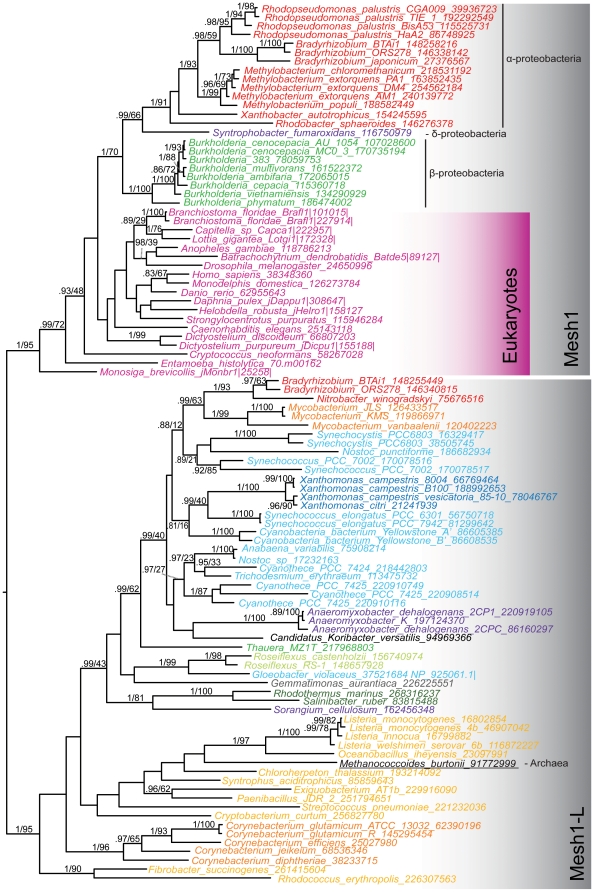
“Based on a phylogenetic analysis of all SAH candidates found, Atkinson et al. (2011) proposed a differentiation of seven SAH subgroups and classified cg1485 as a member of the Mesh1L subgroup.”
BackgroundMethodResultInfluentialThe Ps and Qs of alarmone synthesis in Staphylococcus aureus
Yang, N., Xie, S., Tang, N. Y., Choi, M. Y., Wang, Y., & Watt, R. M. (2019) · PLoS ONE · doi:10.1371/journal.pone.0213630 · Cited by 26
“The results presented here confirm that RelP and RelQ protein homologues have notably distinct alarmone synthesis activities and alarmone-regulated properties, validating their assignments as distinct protein families [14, 33].”
InfluentialThe Stringent Response-Regulated sRNA Transcriptome of Borrelia burgdorferi
Drecktrah, D., Hall, L. S., Rescheneder, P., Lybecker, M. C., & Samuels, D. S. (2018) · Frontiers in Cellular and Infection Microbiology · doi:10.3389/fcimb.2018.00231 · Cited by 25
“The enzymes RelA and SpoT, as well as their homologs, control the levels of (p)ppGpp (Potrykus and Cashel, 2008; Atkinson et al., 2011; Dalebroux and Swanson, 2012; Hauryliuk et al., 2015).”
BackgroundPhotoaffinity Capture Compounds to Profile the Magic Spot Nucleotide Interactomes**
Haas, T., Laventie, B., Lagies, S., Harter, C., Prucker, I., Ritz, D., Saleem-Batcha, R., Qiu, D., Hüttel, W., Andexer, J. N., et al. (2022) · Angewandte Chemie International Edition · doi:10.1002/anie.202201731 · Cited by 28
Giengkam, S., Kullapanich, C., Wongsantichon, J., Adcox, H. E., Gillespie, J. J., & Salje, J. (2023) · mSphere · doi:10.1128/msphere.00268-23 · Cited by 28
SpoT Induces Intracellular Salmonella Virulence Programs in the Phagosome
Fitzsimmons, L. F., Liu, L., Kant, S., Kim, J.-S., Till, J. K. A., Jones‐Carson, J., Porwollik, S., McClelland, M., & Vázquez‐Torres, A. (2020) · mBio · doi:10.1128/mbio.03397-19 · Cited by 26
“In betaproteobacteria and gammaproteobacteria, the relA and spoT paralogs originated by duplication and have since diverged for specialized roles (12).”
BackgroundImholz, N. C. E., Noga, M. J., van den Broek, N. J. F., & Bokinsky, G. (2020) · Frontiers in Microbiology · doi:10.3389/fmicb.2020.574872 · Cited by 27
Bag, S., Das, B., Dasgupta, S., & Bhadra, R. K. (2014) · Archives of Microbiology · doi:10.1007/s00203-014-0996-9 · Cited by 24
ppGpp influences protein protection, growth and photosynthesis in Phaeodactylum tricornutum
Avilán, L., Lebrun, R., Puppo, C., Citerne, S., Cuiné, S., Li‐Beisson, Y., Menand, B., Field, B., & Gontero, B. (2021) · New Phytologist · doi:10.1111/nph.17286 · Cited by 27
“photosynthetic eukaryotes (Atkinson et al., 2011; Ito et al., 2017; Avilan et al., 2019).”
BackgroundBai, K., Yan, H., Chen, X., Lyu, Q., Jiang, N., Li, J., & Luo, L. (2021) · Microbiology Spectrum · doi:10.1128/spectrum.02057-21 · Cited by 30
“The putative Xcc RelA and SpoT sequences identified in a previous survey of the RelA/SpoT superfamily (16) were retrieved from the Xcc 8004 genome database (NCBI).”
BackgroundMethodChen, J., Bang, W. Y., Lee, Y., Kim, S., Lee, K. W., Kim, S. W., Son, Y. S., Kim, D., Akhter, S., & Bahk, J. D. (2013) · Plant Physiology and Biochemistry · doi:10.1016/j.plaphy.2013.10.022 · Cited by 23
“Based on their primary structures, of the four AtRSHs in Arabidopsis, only AtRSH1, which contains the conserved TGS (threonyl-tRNA synthetase-GTPase-SpoT proteins) and ACT (aspartate kinasechorismate mutase-TyrA) domains, is equivalent to bacterial RelA/ SpoT (Atkinson et al., 2011).”
BackgroundDksA plays an essential role in regulating the virulence of Borrelia burgdorferi
Mason, C., Thompson, C., & Ouyang, Z. (2020) · Molecular Microbiology · doi:10.1111/mmi.14504 · Cited by 23
“In B. burgdorferi and many others, a single enzyme with both synthase and hydrolase activities called Rel or RSH (RelA/SpoT homolog) catalyzes the production of (p)ppGpp (Concepcion and Nelson, 2003; Bugrysheva et al., 2005; Atkinson et al., 2011).”
BackgroundYin, W.-L., Zhang, N., He, X., Gong, X., Long, H., Ren, W., Zhang, X., Cai, X., Huang, A., & Xie, Z. (2021) · Microbiological Research · doi:10.1016/j.micres.2021.126883 · Cited by 25
(p)ppGpp synthetases regulate the pathogenesis of zoonotic Streptococcus suis
Zhu, J., Zhāng, T., Su, Z., Li, L., Wang, D., Xiao, R., Teng, M.-Y., Tan, M., & Zhou, R. (2016) · Microbiological Research · doi:10.1016/j.micres.2016.05.007 · Cited by 25
Nazir, A., & Harinarayanan, R. (2015) · Journal of Bacteriology · doi:10.1128/jb.00693-15 · Cited by 26
“coli, relA and spoT genes are involved in (p)ppGpp metabolism and are part of the RSH 56 (Rel-Spo Homolog) superfamily of genes conserved in eubacteria and plants (3, 8).”
BackgroundAggarwal, S. D., Lloyd, A. J., Yerneni, S. S., Narciso, A. R., Shepherd, J., Roper, D. I., Dowson, C. G., Filipe, S. R., & Hiller, N. L. (2021) · Proceedings of the National Academy of Sciences · doi:10.1073/pnas.2018089118 · Cited by 21
“To confirm that this assay did indeed follow posttransfer editing, we repeated these assays with AlaRS from which the posttransfer editing domain had been removed (AlaRS(1-463)).”
BackgroundMethodUnderstanding the Stringent Response: Experimental Context Matters
Dworkin, J. E. (2023) · mBio · doi:10.1128/mbio.03404-22 · Cited by 27
Metadata
- Authors
- Atkinson, G. C., Tenson, T., & Hauryliuk, V.
- Affiliations
- University of Tartu (EE)
- Corresponding author
- Atkinson, Gemma C.
- Venue
- PLoS ONE
- Publisher
- Public Library of Science (PLoS)
- Published
- 2011-08-09
- Volume
- 6
- Issue
- 8
- Pages
- e23479
- ISSN
- 1932-6203 (ISSN-L)
- PMC
- PMC3153485
- OpenAlex
- W1964979713
- Cited by
- 447
- References
- 101
- Citations by year
- 2026: 18 · 2025: 22 · 2024: 31 · 2023: 40 · 2022: 38 · 2021: 44 · 2020: 56 · 2019: 50 · 2018: 34 · 2017: 22 · 2016: 24 · 2015: 28 · 2014: 13 · 2013: 17 · 2012: 8
- FWCI
- 7.78
- Type
- journal article
- Language
- en
- Open access
- gold
- doi.org
- Locations
- PLoS ONE (publishedVersion, cc-by)
- Europe PMC (PubMed Central) (publishedVersion, cc-by)
- PubMed Central (publishedVersion, cc-by)
- PubMed (publishedVersion)
- RePEc: Research Papers in Economics (submittedVersion)
- DOAJ (DOAJ: Directory of Open Access Journals) (submittedVersion, cc-by-sa)
- Figshare (submittedVersion, cc-by)
- Funders
- Eesti Teadusfondi (MJD99)
- European Regional Development Fund
- Topics
- Life Sciences › Biochemistry, Genetics and Molecular Biology › Genetics › Bacterial Genetics and Biotechnology
- Life Sciences › Biochemistry, Genetics and Molecular Biology › Molecular Biology › Genomics and Phylogenetic Studies
- Life Sciences › Biochemistry, Genetics and Molecular Biology › Molecular Biology › Biochemical and Molecular Research
- Keywords
- alarmone, stringent response, archaea, chloroplasts, domain architecture, signal transduction, ribosome
- MeSH terms
- Amino Acid Sequence, Animals, Bacteria, Ligases, Models, Molecular, Molecular Sequence Data, Phylogeny, Pyrophosphatases, Sequence Alignment, Sequence Homology, Amino Acid, Protein Structure, Tertiary, Evolution, Molecular, Databases, Genetic, Eukaryota
About these checks
Registry, retraction, Cites and statistics results are computed, not judged, with one exception: a printed reference that no index lists is read once by a model before it counts as a citation error. Claims are extracted by a model and kept only when their quote appears verbatim in the text; each cited source is then checked, with a model’s help, for whether it says what the claim relies on. Those verdicts can be wrong — read the claim’s quote and the cited source before relying on one.
Statistics and arithmetic are recomputed, not judged.
Confidence bands are shown only for fields calibrated on our annotated test set. None is calibrated yet, so no band is shown.
What counts as a claim ›How we measure confidence ›How we check this ›
Are you an author, or do you see a problem with this page? Request a review
Data sources
Bibliographic data: Semantic Scholar, OpenAlex, Crossref.
Contains information from the Semantic Scholar Academic Graph Datasets, made available under the ODC Attribution License (ODC-BY 1.0).
Semantic Scholar’s data is described in: Kinney, R., et al. (2023). The Semantic Scholar Open Data Platform. arXiv:2301.10140.
