

The RelA/SpoT homolog (RSH) superfamily: distribution and functional evolution of ppGpp synthetases and hydrolases across the tree of life.
Open accessThe DOI matches its Crossref record; 102 of the 102 references it cites were found in a registry or an index.
Abstract
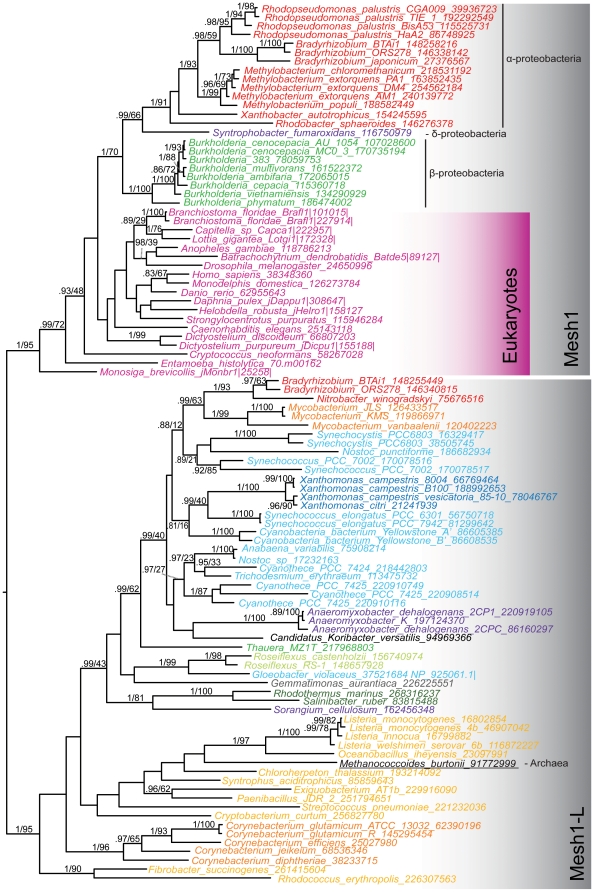
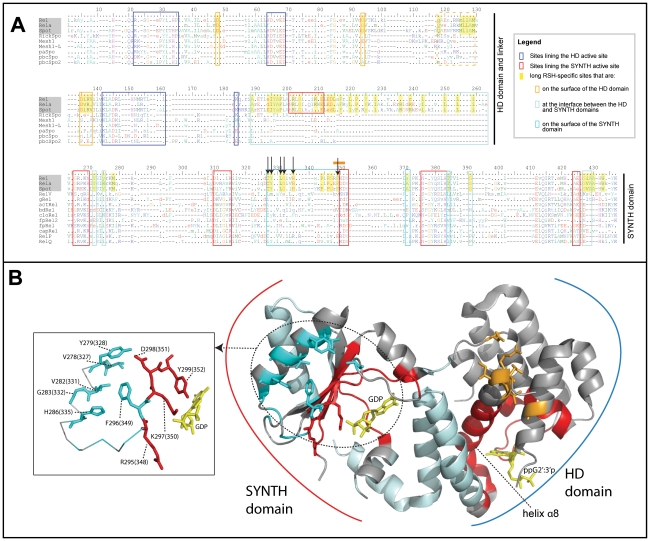
RelA/SpoT Homologue (RSH) proteins, named for their sequence similarity to the RelA and SpoT enzymes of Escherichia coli, comprise a superfamily of enzymes that synthesize and/or hydrolyze the alarmone ppGpp, activator of the "stringent" response and regulator of cellular metabolism. The classical "long" RSHs Rel, RelA and SpoT with the ppGpp hydrolase, synthetase, TGS and ACT domain architecture have been found across diverse bacteria and plant chloroplasts, while dedicated single domain ppGpp-synthesizing and -hydrolyzing RSHs have also been discovered in disparate bacteria and animals respectively. However, there is considerable confusion in terms of nomenclature and no comprehensive phylogenetic and sequence analyses have previously been carried out to classify RSHs on a genomic scale. We have performed high-throughput sensitive sequence searching of over 1000 genomes from across the tree of life, in combination with phylogenetic analyses to consolidate previous ad hoc identification of diverse RSHs in different organisms and provide a much-needed unifying terminology for the field. We classify RSHs into 30 subgroups comprising three groups: long RSHs, small alarmone synthetases (SASs), and small alarmone hydrolases (SAHs). Members of nineteen previously unidentified RSH subgroups can now be studied experimentally, including previously unknown RSHs in archaea, expanding the "stringent response" to this domain of life. We have analyzed possible combinations of RSH proteins and their domains in bacterial genomes and compared RSH content with available RSH knock-out data for various organisms to determine the rules of combining RSHs. Through comparative sequence analysis of long and small RSHs, we find exposed sites limited in conservation to the long RSHs that we propose are involved in transmitting regulatory signals. Such signals may be transmitted via NTD to CTD intra-molecular interactions, or inter-molecular interactions either among individual RSH molecules or among long RSHs and other binding partners such as the ribosome.
Overview
The claims and statistics of this paper haven’t been checked yet.
Free: it reads the open-access text and checks the first 5 claims that cite a source we can check. Create a free account to check every claim.
Integrity signals
Registry
Cites
Statistics
Figures
Verification
Claims the paper makes
The claims and statistics of this paper haven’t been checked yet.
Free: it reads the open-access text and checks the first 5 claims that cite a source we can check. Create a free account to check every claim.
Claims other papers make about this one
Each is checked against this paper’s own text: does it say what the citing paper says it does?
The cited source says what the claim attributes to it.
In the citing paper
“In E. coli, the levels of the two alarmones ppGpp and pppGpp are mainly controlled by the activity of two enzymes, RelA and SpoT (Atkinson et al., 2011; Potrykus and Cashel, 2018; Pausch et al., 2020).”
From The Dynamic SecYEG Translocon (2021) · cites this paper as Atkinson et al., 2011
Self-check
Percentages, sums and reported differences re-computed from the paper’s own numbers.
The self-check needs the paper’s full text.
Citations
Cites
MrBayes 3: Bayesian phylogenetic inference under mixed models
Ronquist, F., & Huelsenbeck, J. P. (2003) · Bioinformatics · doi:10.1093/bioinformatics/btg180 · Cited by 29,077 · cited 1×
“2 [50] on the Cipres server 2.”
The PyMOL Molecular Graphics System
DeLano, W. L. (2002) · Medical Entomology and Zoology · Cited by 18,147
RAxML-VI-HPC: maximum likelihood-based phylogenetic analyses with thousands of taxa and mixed models
Stamatakis, A. (2006) · Bioinformatics · doi:10.1093/bioinformatics/btl446 · Cited by 15,582 · cited 1×
“4 [47] maximum likelihood (ML) tree was generated.”
BackgroundOhno, S. (1970) · doi:10.1007/978-3-642-86659-3 · Cited by 7,833 · cited 1×
“Gene duplication results in a redundant copy of the original gene that is free from selective pressure and able to diverge in sequence [100].”
BackgroundEddy, S. R. (1998) · Bioinformatics · doi:10.1093/bioinformatics/14.9.755 · Cited by 5,515
MAFFT version 5: improvement in accuracy of multiple sequence alignment
Katoh, K. (2005) · Nucleic Acids Research · doi:10.1093/nar/gki198 · Cited by 4,837 · cited 1×
“626b [46].”
Predicting Subcellular Localization of Proteins Based on their N-terminal Amino Acid Sequence
Emanuelsson, O., Nielsen, H., Brunak, S., & von Heijne, G. (2000) · Journal of Molecular Biology · doi:10.1006/jmbi.2000.3903 · Cited by 4,263 · cited 1×
“Scans of eukaryotic Mesh1[H]s on the TargetP server [55] show no mitochondrial target peptides, suggesting they are cytoplasmic proteins.”
BackgroundNetwork motifs: theory and experimental approaches
Alon, U. (2007) · Nature Reviews Genetics · doi:10.1038/nrg2102 · Cited by 3,279 · cited 1×
“By analyzing possible combinations of RSH proteins and their domains in bacterial genomes, and comparing RSH content with available RSH knock-out data for various organisms [18,28,68], we attempt to interpret the functional consequences of RSH gain and loss and rationalize the design rules of RSH sensory systems [69].”
MethodBacterial Persistence as a Phenotypic Switch
Balaban, N. Q., Merrin, J., Chait, R., Kowalik, L., & Leibler, S. (2004) · Science · doi:10.1126/science.1099390 · Cited by 2,952
Pfam: clans, web tools and services
Finn, R. D. (2006) · Nucleic Acids Research · doi:10.1093/nar/gkj149 · Cited by 2,302 · cited 1×
“For the first-pass survey, the full alignment of the synthetase domain was downloaded from Pfam (RelA_SpoT, PF04607 [45]).”
Method
Cited by
Items 301–400 of 454
Li, Y., Majumdar, S., Treen, R. Z., Sharma, M. R., Corro, J. H., Gamper, H., Manjari, S. R., Prusa, J., Banavali, N. K., Stallings, C. L., et al. (2023) · Proceedings of the National Academy of Sciences · doi:10.1073/pnas.2302006120 · Cited by 8
Cellular dormancy: A widespread phenomenon that perpetuates infectious diseases
da Silva, C. V., Velikkakam, T., de Oliveira, E. C. M., Silveira, A. C. A., Júnior, J. P. D. L., Uombe, N. P. I., Silva, P., & Borges, B. C. (2023) · Journal of Basic Microbiology · doi:10.1002/jobm.202300389 · Cited by 6
“Members of the RelA/ SpoT homology (RSH) ‐ type protein family play a central role in the metabolism of (p)ppGpp [12].”
BackgroundZhao, Q., Wang, W., Gao, S., & Sun, Y. (2018) · Journal of Radiation Research · doi:10.1093/jrr/rry053 · Cited by 7
“Oxo-phytodienoic acid reductase and cinnamoyl-coA reductase, which altered following LDR exposure, are associated with biosynthetic pathways [40], whereas DUF23 family protein, heavy metal transport/detoxification protein domain-containing protein and RSH2, which altered following HDR exposure, are involved in respons…”
BackgroundBisiak, F., Chrenková, A., Zhang, S., Pedersen, J. N., Otzen, D. E., Zhang, Y. E., & Brodersen, D. E. (2022) · Journal of Biological Chemistry · doi:10.1016/j.jbc.2022.102142 · Cited by 6
“In addition to the bifunctional RSHs, many bacterial species encode monofunctional variants known as small alarmone hydrolases (SAHs) and small alarmone synthetases (SASs) that lack any regulatory domains (20).”
BackgroundInfluential(p)ppGpp is required for virulence of Shigella flexneri
Kago, G., Turnbough, C. L., Salazar, J. C., & Payne, S. M. (2023) · Infection and Immunity · doi:10.1128/iai.00334-23 · Cited by 6
“…guanosine pentaphos phate (pppGpp) (39) collectively referred to as (p)ppGpp. Intracellular concentrations of (p)ppGpp increase from micromolar to millimolar levels upon nutrient limitation (40–42), and they are synthesized by proteins which belong to the RelA/SpoT Homologue (RSH) family (43–45).”
BackgroundBiological Significance of Nascent Polypeptides That Stall the Ribosome
Ito, K., & Chiba, S. (2014) · Springer eBooks · doi:10.1007/978-4-431-55052-5_1 · Cited by 6
Cyclic di-GMP Signaling in Extreme Acidophilic Bacteria
Castro, M., Díaz, M., Moya-Beltrán, A., & Guiliani, N. (2020) · Springer eBooks · doi:10.1007/978-3-030-33308-9_21 · Cited by 11
Hands-On Growth Laws Theory Cookbook
Droghetti, R., Corigliano, M., Calabrese, L., Fuchs, P., Vaidyanathan, A., Keisers, J., Micali, G., Lagomarsino, M. C., & Ciandrini, L. (2026) · PRX Life · doi:10.1103/x33x-srz4 · Cited by 5
Potrykus, K., Bryszkowska, K., Gąsior, F., & Klasa, W. (2026) · Microbiology and Molecular Biology Reviews · doi:10.1128/mmbr.00413-25 · Cited by 5
“…NTD is comprised of 385 amino acids (RelA residues 1–385), while its CTD is comprised of 344 residues (RelA amino acids 400–744) (36); however, there are variations in length of the CTD among different species, which, for example, may lack ACT, as in the case of Francisella tularensis Rel (17).”
InfluentialLu, Z., Li, W., xin, Y., & Huang, Y. (2022) · Environmental Pollution · doi:10.1016/j.envpol.2023.121315 · Cited by 5
The YmgB-SpoT interaction triggers the stringent response in Escherichia coli
Guiraud, P., Germain, E., Byrne, D., & Maisonneuve, E. (2023) · Journal of Biological Chemistry · doi:10.1016/j.jbc.2023.105429 · Cited by 6
“1, 4, and 5).”
BackgroundCantlay, S., Garrison, N. L., Patterson, R., Wagner, K., Kirk, Z., Fan, J., Primerano, D. A., Sullivan, M. L. G., Franks, J. M., Stolz, D. B., et al. (2024) · Frontiers in Microbiology · doi:10.3389/fmicb.2024.1347488 · Cited by 6
(p) ppGpp Buffers Cell Division When Membrane Fluidity Decreases in Escherichia coli
Singh, V., & Harinarayanan, R. (2024) · Molecular Microbiology · doi:10.1111/mmi.15323 · Cited by 6
“…phosphate) and ppGpp (guanosine tetra phosphate), collectively referred to as (p)ppGpp are synthesized by the widely conserved RSH protein family (Atkinson, Tenson, and Hauryliuk 2011) and elicit stringent response to a variety of nutritional stresses (Potrykus and Cashel 2008; Liu, Bittner, and…”
Kurata, T., Takegawa, M., Ohira, T., Syroegin, E. A., Atkinson, G. C., Johansson, M., Polikanov, Y. S., García-Pino, A., Suzuki, T., & Hauryliuk, V. (2024) · Science Advances · doi:10.1126/sciadv.adr9624 · Cited by 5
“These toxins are members of RelA/SpoT homolog superfamily and carry a catalytic domain—toxSYNTH—related to the (pp)pGpp alarmone synthetase domain ( 22 , 23 ). toxSASs use two distinct mechanisms of growth inhibition.”
Self-citationHegde, V., Raman, A. S., Patil, P. R., & Prakash, B. (2020) · Protein Expression and Purification · doi:10.1016/j.pep.2020.105760 · Cited by 5
Bai, K., Chen, X., Jiang, N., Lyu, Q., Li, J., & Luo, L. (2021) · Brazilian Journal of Microbiology · doi:10.1007/s42770-021-00488-1 · Cited by 5
“Enzymes related to (p)ppGpp metabolism can be divided into three major groups: long RelA/SpoT homolog proteins (RSH), small alarmone synthetases (SAS), and small alarmone hydrolases (SAH) [10].”
BackgroundInfluentialStringent Response in Bacteria and Plants with Infection
Petrova, O., Parfirova, O., Gogolev, Y., & Gorshkov, V. Y. (2021) · Phytopathology · doi:10.1094/phyto-11-20-0510-r · Cited by 5
de la Rosa, J. M. O., Martín-Gutiérrez, G., Casimiro‐Soriguer, C. S., Gimeno-Gascón, M. A., Cisneros, J. M., de Alarcón, A., & Lepe, J. A. (2024) · Antimicrobial Agents and Chemotherapy · doi:10.1128/aac.01083-23 · Cited by 5
“1) (18, 20, 21).”
Homology Model of a Catalytically Competent Bifunctional Rel Protein
Civera, M., & Sattin, S. (2021) · Frontiers in Molecular Biosciences · doi:10.3389/fmolb.2021.628596 · Cited by 6
“The synthesis and hydrolysis of (p)ppGpp are regulated by a superfamily of enzymes called RSH (RelA/SpoT Homologue), or Rel proteins, that can be divided in two main classes based on their domain composition and size: long and short RSHs (Atkinson et al., 2011; Ronneau and Hallez, 2019).”
BackgroundShin, J. S., Singal, B., Grüber, A., Wong, D. M. K., Ragunathan, P., & Grüber, G. (2021) · FEBS Letters · doi:10.1002/1873-3468.14236 · Cited by 5
Putative nucleotide-based second messengers in archaea
van der Does, C., Braun, F., Ren, H., & Albers, S. (2023) · microLife · doi:10.1093/femsml/uqad027 · Cited by 5
“A study on the distribution of (p)ppGpp synthetases and hydrolases across the tree of life also suggests that these enzymes are generally rare in archaea (Atkinson et al. 2011 ) .”
BackgroundMorar, M., Evdokimova, E., Chang, C., Ensminger, A. W., & Savchenko, A. V. (2015) · Proteins Structure Function and Bioinformatics · doi:10.1002/prot.24933 · Cited by 5
ppGpp Is Present in and Functions to Regulate Sleep in DrosophilaPreprint
Young, W., Zhang, X., Daixi, H., Zhou, E., Liu, Y., Wang, T., Zhang, W., Zhang, X., & Rao, Y. (2021) · bioRxiv (Cold Spring Harbor Laboratory) · doi:10.1101/2021.09.16.460595 · Cited by 5
“More than 30 members of the RSHs have been found in bacteria and plants (Atkinson et al., 2011; Field, 2018).”
BackgroundSantos, D. D. S., de Freitas, N. S. A., de Morais, M. A., & Mendonça, A. A. (2024) · Journal of Molecular Evolution · doi:10.1007/s00239-024-10189-6 · Cited by 5
“Unlike SAS proteins, the RelA protein is considered bifunctional because it also performs the pyrophosphohydrolase reaction, working on the balance between synthesis and hydrolysis of alarmone during cell growth (Atkinson et al. 2011) (Fig.”
InfluentialA binuclear metallohydrolase model for RelA/SpoT-Homolog (RSH) hydrolases
Zhou, R. W., Manisa, B., & Wang, B. (2024) · Journal of Biological Chemistry · doi:10.1016/j.jbc.2024.107841 · Cited by 5
Onuma, Y., Prasetyo, E. A., Widiyatno, W., Indrioko, S., Na’iem, M., Tani, N., & Tsumura, Y. (2025) · Forest Science and Technology · doi:10.1080/21580103.2025.2519469 · Cited by 5
“…synthase 10 (Tg05g03670.t1) (Wang et al. 2023b), ABA-responsive element binding protein 3 (Tg05g07750. t1) (https://www.ncbi.nlm.nih.gov/gene?Cmd=DetailsSe arch&Term=824852) and RELA/SPOT homolog 1 (Tg05g08800.t1) (Atkinson et al. 2011) related to drought response and resistance were detected.”
Preferential Cellular Accumulation of ppGpp or pppGpp inEscherichia Coli
Potrykus, K., & Cashel, M. (2016) · Wiley eBooks · doi:10.1002/9781119004813.ch44 · Cited by 4
Saito, R., Talukdar, P. K., Alanazi, S. S., & Sarker, M. R. (2018) · Microbiology · doi:10.1099/mic.0.000655 · Cited by 4
Li, G., Zhao, Q., Luan, T., Hu, Y., Zhang, Y., Li, T., Wang, C., Xie, F., Zhang, W., Langford, P. R., et al. (2020) · Journal of Bacteriology · doi:10.1128/jb.00640-19 · Cited by 4
“The RelA/SpoT homologue (RSH) proteins, which synthesize or degrade (p)ppGpp, have been found throughout the tree of life (11, 12).”
BackgroundrelA Inactivation Converts Sulfonamides Into Bactericidal Compounds
Si, L., Gu, J., Wen, M., Wang, R. L., Fleming, J., Li, J., Xu, J., Bi, L., & Deng, J. (2021) · Frontiers in Microbiology · doi:10.3389/fmicb.2021.698468 · Cited by 4
Veetilvalappil, V., Aranjani, J. M., Mahammad, F. S., & Joseph, A. (2021) · Current Genetics · doi:10.1007/s00294-021-01221-z · Cited by 4
“SpoT is responsible for the synthesis of ppGpp during carbon source starvation and is also responsible for the degradation of ppGpp (bifunctional).”
BackgroundInfluentialIdentification and characterization of RNA binding sites for (p)ppGpp using RNA-DRaCALA
Jagodnik, J., Tjaden, B. C., Ross, W., & Gourse, R. L. (2023) · Nucleic Acids Research · doi:10.1093/nar/gkac1224 · Cited by 4
Nonhydrolysable Analogues of (p)ppGpp and (p)ppApp Alarmone Nucleotides as Novel Molecular Tools
Mojr, V., Roghanian, M., Tamman, H., Pham, D. D. D., Petrová, M., Pohl, R., Takada, H., Nerom, K. V., Ainelo, H., Caballero-Montes, J., et al. (2021) · ACS Chemical Biology · doi:10.1021/acschembio.1c00398 · Cited by 4
Self-citationEvolution and Function of the RelA/SpoT Homologue ( RSH ) Proteins
Atkinson, G. C., & Hauryliuk, V. (2012) · Wiley eBooks · doi:10.1002/9780470015902.a0023959 · Cited by 4
“These are classified as SAHs (paSpo, pbcSpo, pbcSpo2, Mesh1, Mesh1L, rickSpo, divSpo, Figure 3a) and SASs (actRel, bdRel, cloRel, fpRel, fpRel2, RelV, gRel, capRel, rickRel, RelP, RelQ and divRel, Figure 3b) (Atkinson et al., 2011).”
BackgroundSelf-citationAntibiotic Resistance in Mycobacterium Tuberculosis and Non-Tuberculous Mycobacteria
Wamalwa, R., Guyah, B., & Shaviya, N. (2024) · African Journal of Empirical Research · doi:10.51867/ajernet.5.4.83 · Cited by 7
Liu, X. F., Wang, P., Dong, Z., Zu, Y., Wang, X., Zhai, Y., Wudong, G., Yang, Y., Hao, M., Zhou, D., et al. (2025) · International Journal of Biological Macromolecules · doi:10.1016/j.ijbiomac.2025.140022 · Cited by 3
Functional interplay between (p)ppGpp and RNAP in Acinetobacter baumannii
Perrier, A., Budin‐Verneuil, A., & Hallez, R. (2025) · PLoS Pathogens · doi:10.1371/journal.ppat.1013795 · Cited by 3
“Interestingly, based on in silico analyses and experimental evidence, the Moraxellaceae family to which belongs the genus Acinetobacter seems to have two long monofunctional RSH, RelA and SpoT displaying respectively functional synthetase and hydrolase activities [3,4].”
Metabolic Engineering of Bacillus – New Tools, Strains, and Concepts
Appelbaum, M., & Schweder, T. (2021) · Wiley eBooks · doi:10.1002/9783527823468.ch13 · Cited by 3
Hidese, R., Ohbayashi, R., Kato, Y., Matsuda, M., Tanaka, K., Imamura, S., Ashida, H., Kondo, A., & Hasunuma, T. (2023) · Communications Biology · doi:10.1038/s42003-023-05632-1 · Cited by 6
“OH position of guanosine 5 ’ - triphosphate (GTP) or guanosine 5 ’ -diphosphate (GDP) ribose 5 – 7 .”
Zhang, C., Liu, J., Liu, X., Xu, Y., Gan, Q., Cheng, Q., Liu, W., Gao, X., & Wu, S. (2024) · Frontiers in Microbiology · doi:10.3389/fmicb.2024.1430038 · Cited by 4
Phylogenetic relationship of the stringent response-related genes of marine bacteria
Guzow‐Krzemińska, B., Gąsior, T., & Szalewska-Pałasz, A. (2015) · Acta Biochimica Polonica · doi:10.18388/abp.2015_1132 · Cited by 3
“In case of RelA homologs from marine bacteria, the hydrolytic domain is highly mutated and that leads to loss of its activity as was also reported for other bacterial species (e.g. Atkinson et al., 2011), but the synthesis domain of RelA is conserved (Fig.”
BackgroundMethodInfluentialCoordination of Chloroplast Activity with Plant Growth: Clues Point to TOR
D’Alessandro, S. (2022) · Plants · doi:10.3390/plants11060803 · Cited by 5
“Thus, although ppGpp is only metabolized in the chloroplast, both the synthetases and hydrolases that allow fine control of ppGpp homeostasis must be imported [57,58].”
BackgroundSidorov, R. Y., & Ткаченко, А. Г. (2023) · BIO Web of Conferences · doi:10.1051/bioconf/20235708002 · Cited by 4
Turkan, S., Mierek‐Adamska, A., Głowacka, K., Szydłowska‐Czerniak, A., Rewers, M., Jędrzejczyk, I., & Dąbrowska, G. B. (2023) · Industrial Crops and Products · doi:10.1016/j.indcrop.2023.116439 · Cited by 3
Antelmann, H. (2024) · Elsevier eBooks · doi:10.1016/b978-0-12-818619-0.00051-4 · Cited by 7
Lee, J. H., & Oh, H. (2024) · The Journal of Microbiology · doi:10.1007/s12275-024-00125-0 · Cited by 3
“For example, when mazG is expressed, spoT/relA expression decreases, and vice versa, when mazG is inhibited, spoT/relA expression increases (Atkinson et al., 2011).”
Cross Talk between Cellular Regulatory Networks Mediated by Shared Proteins
Dolde, C. E., Lu, J., & Suter, B. (2014) · Advances in Biology · doi:10.1155/2014/274196 · Cited by 3
“In Gram-positive bacteria, production and hydrolysis of (p)ppGpp are regulated by the same bifunctional enzyme, Rel (Msm), which consists of a single polypeptide that is able to perform (p)ppGpp synthesis through its SYNTHdomain and hydrolysis through a domain present at the C terminus [4].”
BackgroundFernández‐Coll, L., & Cashel, M. (2019) · Journal of Visualized Experiments · doi:10.3791/59595 · Cited by 3
Basu, P., & Altuvia, S. (2021) · Molecular Microbiology · doi:10.1111/mmi.14812 · Cited by 4
Jácome, R. (2024) · Journal of Molecular Evolution · doi:10.1007/s00239-024-10207-7 · Cited by 3
Genetic Blueprint for Stringent Response in Betaproteobacterial Aromatoleum/Azoarcus/Thauera Cluster
Becker, P., Ruickoldt, J., Wendler, P., Reinhold‐Hurek, B., & Rabus, R. (2025) · Microbial Physiology · doi:10.1159/000546200 · Cited by 2
“1c) [49, 58].”
Rojas‐Andrade, M. D., & Hochbaum, A. I. (2025) · Springer series on biofilms · doi:10.1007/978-3-031-82202-5_2 · Cited by 3
(p)ppGpp Binding to the Bifunctional Enzyme RelSeq Increases Its Conformational Stability
Vinogradova, D. S., Spiridonova, Z. A., Antysheva, T. A., Сидорова, Ж. Ю., Kasatsky, P. S., Tolstyko, E. A., Paleskava, A., & Konevega, A. L. (2025) · Nanobiotechnology Reports · doi:10.1134/s2635167625601895 · Cited by 2
Zhang, C., Hao, Q., Zhang, T., Sun, T., Hou, N., Zhao, X., & Li, D. (2026) · Journal of Hazardous Materials · doi:10.1016/j.jhazmat.2026.142389 · Cited by 2
Host Defense Peptides: Multifront Attack on Biofilms
Dostert, M., Pedraz, L., & Hancock, R. E. W. (2022) · Springer series on biofilms · doi:10.1007/978-3-031-10992-8_12 · Cited by 2
ppGpp is present in, and functions to regulate sleep of, Drosophila
Dai, X., Yang, W., Zhang, X., Zhou, E., Mao, R., Liu, Y., Wang, T., Zhang, W., Zhang, X., & Rao, Y. (2023) · hLife · doi:10.1016/j.hlife.2023.10.004 · Cited by 3
Direct detection of stringent alarmones (pp)pGpp using malachite green
Schicketanz, M. L., Petrová, M., Rejman, D., Sosio, M., Donadio, S., & Zhang, Y. E. (2024) · Microbial Cell · doi:10.15698/mic2024.08.834 · Cited by 3
Genetics and Pathogenicity Factors of Group C and G Streptococci
Malke, H. (2019) · Microbiology Spectrum · doi:10.1128/microbiolspec.gpp3-0002-2017 · Cited by 4
“In fact, Rel Seq has proved to be of seminal importance to the subsequent establishment of the RelA/SpoT homolog (Rsh) superfamily of bifunctional [(p)ppGpp] synthetases and hydrolases and their distribution and function across all living organisms (249).”
BackgroundMolecular Basis of the Stringent Response in Vibrio Cholerae
Dasgupta, S., Das, B., Basu, P., & Bhadra, R. K. (2016) · Wiley eBooks · doi:10.1002/9781119004813.ch47 · Cited by 2
Jerry, R., Sullivan-Brown, J., & Yoder, M. D. (2019) · Gene Expression Patterns · doi:10.1016/j.gep.2019.02.002 · Cited by 2
Stress Responses in Foodborne Bacteria
Diez‐Gonzalez, F. (2019) · ASM Press eBooks · doi:10.1128/9781555819972.ch4 · Cited by 2
Roop, R. M., Pitzer, J. E., Baumgartner, J. E., & Martin, D. W. (2017) · Springer eBooks · doi:10.1007/978-3-319-53622-4_3 · Cited by 2
Barik, S. (2023) · International Journal of Molecular Sciences · doi:10.3390/ijms24043999 · Cited by 2
“The small alarmone class of synthetases and hydrolases (SAS, SAH), mentioned earlier, is found in prokaryotes and a few lower eukaryotes, but is absent in the metazoa, including all vertebrates such as humans [17].”
BackgroundInfluentialXu, X., Bai, K., Shi, J. L., Yu, C., Song, S., Jiang, N., Li, J., & Luo, L. (2025) · mSystems · doi:10.1128/msystems.00135-25 · Cited by 1
“…of which there are three types: long RSH enzymes that contain both synthetase and hydrolase domains as well as four characteristic regulatory regions; small molecule synthetases, which only perform a synthetase function; and small molecule hydrolases that contain only a hydrolase domain (20).”
Boniecka, J., Dziurka, M., & Chojnowski, M. (2025) · Physiologia Plantarum · doi:10.1111/ppl.70457 · Cited by 1
“…~80% amino-acid identity, and these proteins are placed in a single RSH2/RSH3 group) are considered major (p)ppGpp synthases; and CRSHs are considered calcium-dependent (p)ppGpp synthases because their synthase activity requires Ca 2+ (Atkinson et al. 2011; Boniecka et al. 2017; Ito et al. 2017).”
Togănel, R. O., Coșeriu, R. L., Mare, A. D., Vintilă, C., Sîrbu, I. O., Chiş, A. R., Gîrbovan, E. C., & Man, A. (2025) · Infectious Disease Reports · doi:10.3390/idr17050114 · Cited by 1
“Furthermore, Yin et al. (2022) related that the spoT deficiency in Vibrio alginolyticus may lead to morphological abnormalities (loss of flagella), and, consequently, delays in biofilm formation, probably due to the flagellar aggregation [67–69].”
Kurata, T., & Takada, H. (2026) · Bioscience Biotechnology and Biochemistry · doi:10.1093/bbb/zbag003 · Cited by 2
Bai, K., Xu, X., Yu, C., Yan, H., Lyu, M., Jiang, N., Li, J., Zhang, J., Wang, Z., & Luo, L. (2026) · npj Biofilms and Microbiomes · doi:10.1038/s41522-026-00926-8 · Cited by 1
Nerom, K. V., Ainelo, A., Wallant, K. C. ’., Talavera, A., Echemendia-Blanco, D., Peeters, S., Oulali, B. E. K., Tamman, H., Kurata, T., Roghanian, M., et al. (2026) · Nature Communications · doi:10.1038/s41467-026-73059-3 · Cited by 1
“homeostasis are long Rel/RelA-SpoT homolog enzymes, collectively known as long RSHs 14,15 .”
InfluentialSelf-citationFalling asleep: the importance of ribosome hibernation in bacteria
Njenga, R. K., & Koch, H. (2026) · Microbiology and Molecular Biology Reviews · doi:10.1128/mmbr.00159-25 · Cited by 4
“In E. coli , (p)ppGpp synthesis is catalyzed by two enzymes, the ribosome-associated GTP pyrophosphokinase RelA and the bifunctional (p)ppGpp synthetase/hydrolase SpoT (30, 195, 196) (Fig.”
The bacterial immune system: identifying evolved defense adaptations
Alseth, E., & Brown, S. P. (2026) · Trends in Microbiology · doi:10.1016/j.tim.2026.08.006 · Cited by 1
Martucci, N. M., Lamberti, A., Vitagliano, L., Cantiello, P., Ruggiero, I., Arcari, P., & Masullo, M. (2012) · Extremophiles · doi:10.1007/s00792-012-0470-z · Cited by 1
“Furthermore, the identification of such proteins in the genome of several sources including some archaea allowed the analysis of phylogenetic relationships among these proteins in the tree of life (Atkinson et al. 2011).”
InfluentialPurification and Characterization of Authentic 30S Ribosomal Precursors Induced by Heat Shock
Giudice, E., Georgeault, S., Lavigne, R., Pineau, C., Trautwetter, A., Ermel, G., Blanco, C., & Gillet, R. (2023) · International Journal of Molecular Sciences · doi:10.3390/ijms24043491 · Cited by 1
Photoaffinity Capture Compounds to Profile the Magic Spot Nucleotide Interactomes**
Haas, T., Laventie, B., Lagies, S., Harter, C., Prucker, I., Ritz, D., Saleem-Batcha, R., Qiu, D., Hüttel, W., Andexer, J. N., et al. (2022) · Angewandte Chemie · doi:10.1002/ange.202201731 · Cited by 1
Kashevarova, N. M., Ахова, А. В., Хаова, Е. А., & Ткаченко, А. Г. (2022) · Бюллетень Восточно-Сибирского научного центра Сибирского отделения Российской академии медицинских наук · doi:10.29413/abs.2022-7.3.17 · Cited by 1
“The RelA/SpoT Homolog (RSH) superfamily: Distribution and functional evolution of ppGpp synthetases and hydrolases across the tree of life.”
InfluentialPorcher, A., Guérin, V., Macherel, D., Lebrec, A., Satour, P., Lothier, J., & Vian, A. (2022) · Plant and Cell Physiology · doi:10.1093/pcp/pcac153 · Cited by 1
Chrenková, A., Bisiak, F., & Brodersen, D. E. (2024) · Trends in Microbiology · doi:10.1016/j.tim.2023.12.011 · Cited by 2
Significance of the plastidial stringent response for plant growth on soil
Goto, M., Imamura, S., Takaya, K., & Masuda, S. (2024) · Plant Growth Regulation · doi:10.1007/s10725-023-01109-7 · Cited by 1
“Recent studies have shown that RelA and SpoT homologs (RSHs) are conserved in eukaryotes including plants and metazoa (Atkinson et al. 2011; Ito et al. 2017; Chi and Zhou 2023), suggesting that the bacterial-like stringent response is conserved in eukaryotes, although physiological functions of the…”
Sidorov, R. Y., & Ткаченко, А. Г. (2024) · Biochemistry (Moscow) · doi:10.1134/s0006297924030027 · Cited by 2
“Although small alar-mone synthetases have been discovered recently [32], a growing body of evidence has demonstrated their important role in the metabolism of (p)ppGpp alarmones and adaptive mechanisms in various bacterial species [12], including Staphylococcus aureus [33] and Vibrio cholerae [34].”
InfluentialCaracterização bioquímica e funcional de diguanilato ciclases de Xanthomonas citri subsp. citri
Oliveira, M. C. (2015) · Digital Library of Theses and Dissertations (Universidade de São Paulo) · doi:10.11606/t.46.2015.tde-20072015-110032 · Cited by 1
Synthetase and Hydrolase Specificity Collectively Excludes 2’-Deoxyguanosine from Bacterial AlarmonePreprint
Zhou, R. W., Gordon, I. J., Hei, Y., & Wang, B. (2024) · bioRxiv (Cold Spring Harbor Laboratory) · doi:10.1101/2024.01.06.574488 · Cited by 1
Loris, R. (2024) · Nature Chemical Biology · doi:10.1038/s41589-024-01788-x · Cited by 1
ppGpp-based stringent response inhibitors: characterization in vivo and in vitro
Saltõkova, K. B. (2013) · DSpace repository (University of Tartu)
Nath, I. V. A., LokaBharathi, P. A., & Deobagkar, D. D. (2014)
Estudo de proteínas GGDEF-EAL em vias de sinalização de c-di-GMP em Xanthomonas citri subsp. citri
Teixeira, R. D. (2015) · Digital Library of Theses and Dissertations (Universidade de São Paulo) · doi:10.11606/t.46.2015.tde-20072015-114331 · Cited by 1
Bacterial Xanthine Dehydrogenase Regulators
Sivapragasam, S. (2015) · Louisiana State University · doi:10.31390/gradschool_dissertations.2197
“There are several homologs of this protein present in bacteria (Atkinson et al., 2011).”
BackgroundTrufen, C. E. M. (2018) · Digital Library of Theses and Dissertations (Universidade de São Paulo) · doi:10.11606/d.95.2018.tde-16032018-144403
Pulschen, A. A. (2018) · Digital Library of Theses and Dissertations (Universidade de São Paulo) · doi:10.11606/t.46.2018.tde-27042018-082620
SpoT and GppA hydrolases prevent the gratuitous activation of RelA by pppGpp in Escherichia coliPreprint
Sanyal, R., & Harinarayanan, R. (2018) · bioRxiv (Cold Spring Harbor Laboratory) · doi:10.1101/350843 · Cited by 1
“…sometimes referred to as an ‘alarmone’, consist of a pair of molecules - guanosine tetraphosphate (ppGpp) and guanosine pentaphosphate (pppGpp), which are synthesized by the transfer of a pyrophosphate moiety from ATP to GDP or GTP respectively (Potrykus and Cashel, 2008; Atkinson et al., 2011).”
BackgroundFunctional studies of Escherichia coli stringent response factor RelA
Dzhygyr, I. (2018) · DiVA at Umeå University (Umeå University)
Escherichia coli ribosoomi valgu bL31 paraloogide tähtsusest stressitingimustel
Volõnkin, P. (2018) · DSpace repository (University of Tartu)
Bakterien unter Stress - die stringent response
Steinchen, W., & Bange, G. (2020) · BIOspektrum · doi:10.1007/s12268-020-1398-y
“„Lange“ RSH(RelA/SpoT homolog)-Proteine wie Rel, RelA und SpoT sind hochkonserviert in Bakterien und Chloroplasten [4].”
BackgroundInfluentialStructural and mechanistic insights into the Rel protein of Mycobacterium tuberculosis
Singal, B. (2020) · DR-NTU (Nanyang Technological University) · doi:10.32657/10356/142669
Coupling between transfer RNA maturation and ribosomal RNA processing in Bacillus subtilis
Trinquier, A. (2019) · theses.fr (ABES) · doi:10.70675/35203b19z4748z41b6zab6cz5dd6bc2a86a5
Numerical Simulation of Ultra-Fast Pulse Propagation in Two-Photon Absorbing Medium
Stern, R., & Rebane, A. K. (2011)
Hammond, M. C., & Su, Y. (2019) · Faculty Opinions – Post-Publication Peer Review of the Biomedical Literature · doi:10.3410/f.734655915.793565125
Waters, C. M. (2019) · Faculty Opinions – Post-Publication Peer Review of the Biomedical Literature · doi:10.3410/f.736859989.793567032
Tailor, K., Sagar, P., Dave, K., & Pohnerkar, J. (2022) · Molecular Genetics and Genomics · doi:10.1007/s00438-022-01873-7
Bai, K., Chen, X., Jiang, N., Lyu, Q., Li, J., & Luo, L. (2020) · Research Square · doi:10.21203/rs.3.rs-58805/v1
“Enzymes related to (p)ppGpp metabolism can be divided into three major groups: long RelA/SpoT homologue proteins (RSH), small alarmone synthetases (SAS) and small alarmone hydrolases (SAH) (Atkinson et al. 2011).”
BackgroundCashel, M., & Potrykus, K. (2001) · Elsevier eBooks · doi:10.1016/b978-0-12-374984-0.01486-8
Metadata
- Authors
- Atkinson, G. C., Tenson, T., & Hauryliuk, V.
- Affiliations
- University of Tartu (EE)
- Corresponding author
- Atkinson, Gemma C.
- Venue
- PLoS ONE
- Publisher
- Public Library of Science (PLoS)
- Published
- 2011-08-09
- Volume
- 6
- Issue
- 8
- Pages
- e23479
- ISSN
- 1932-6203 (ISSN-L)
- PMC
- PMC3153485
- OpenAlex
- W1964979713
- Cited by
- 447
- References
- 101
- Citations by year
- 2026: 18 · 2025: 22 · 2024: 31 · 2023: 40 · 2022: 38 · 2021: 44 · 2020: 56 · 2019: 50 · 2018: 34 · 2017: 22 · 2016: 24 · 2015: 28 · 2014: 13 · 2013: 17 · 2012: 8
- FWCI
- 7.78
- Type
- journal article
- Language
- en
- Open access
- gold
- doi.org
- Locations
- PLoS ONE (publishedVersion, cc-by)
- Europe PMC (PubMed Central) (publishedVersion, cc-by)
- PubMed Central (publishedVersion, cc-by)
- PubMed (publishedVersion)
- RePEc: Research Papers in Economics (submittedVersion)
- DOAJ (DOAJ: Directory of Open Access Journals) (submittedVersion, cc-by-sa)
- Figshare (submittedVersion, cc-by)
- Funders
- Eesti Teadusfondi (MJD99)
- European Regional Development Fund
- Topics
- Life Sciences › Biochemistry, Genetics and Molecular Biology › Genetics › Bacterial Genetics and Biotechnology
- Life Sciences › Biochemistry, Genetics and Molecular Biology › Molecular Biology › Genomics and Phylogenetic Studies
- Life Sciences › Biochemistry, Genetics and Molecular Biology › Molecular Biology › Biochemical and Molecular Research
- Keywords
- alarmone, stringent response, archaea, chloroplasts, domain architecture, signal transduction, ribosome
- MeSH terms
- Amino Acid Sequence, Animals, Bacteria, Ligases, Models, Molecular, Molecular Sequence Data, Phylogeny, Pyrophosphatases, Sequence Alignment, Sequence Homology, Amino Acid, Protein Structure, Tertiary, Evolution, Molecular, Databases, Genetic, Eukaryota
About these checks
Registry, retraction, Cites and statistics results are computed, not judged, with one exception: a printed reference that no index lists is read once by a model before it counts as a citation error. Claims are extracted by a model and kept only when their quote appears verbatim in the text; each cited source is then checked, with a model’s help, for whether it says what the claim relies on. Those verdicts can be wrong — read the claim’s quote and the cited source before relying on one.
Statistics and arithmetic are recomputed, not judged.
Confidence bands are shown only for fields calibrated on our annotated test set. None is calibrated yet, so no band is shown.
What counts as a claim ›How we measure confidence ›How we check this ›
Are you an author, or do you see a problem with this page? Request a review
Data sources
Bibliographic data: Semantic Scholar, OpenAlex, Crossref.
Contains information from the Semantic Scholar Academic Graph Datasets, made available under the ODC Attribution License (ODC-BY 1.0).
Semantic Scholar’s data is described in: Kinney, R., et al. (2023). The Semantic Scholar Open Data Platform. arXiv:2301.10140.
